







Abstract
Factors that affect environmentally sustainable travel behavior (or “green travel”) and their mechanisms of action are important to understand to conserve energy and reduce emissions. We constructed a model by integrating the theory of planned behavior (TPB) and the pressure-state-response (PSR) model with individual cognition of green travel policies (external pressure) and sensitivity of environmental problems (internal pressure). Then, an empirical study of 796 urban residents in eastern China was conducted. The results show that, with regard to the TPB, attitude has a direct and significant impact on self-practiced and interpersonal intentions, while perceived behavior control has a similar effect on self-practiced green travel intentions. Further, our results also indicate that subjective norms have indirect influence on both self-practiced and interpersonal intentions by affecting attitudes. With regard to the PSR model, urban residents’ cognitions of external and internal pressures affect their green travel intentions in various ways. Based on the results, some relevant policy recommendations aimed at promoting green travel are proposed.
Keywords
Energy conservation and emission reduction has always been a global topic. According to the Global Energy Review (1), released by the International Energy Agency (IEA), owing to its immense oil consumption, the transport sector makes a great contribution to global carbon emissions. In its report, the IEA noted that a sharp 8.6% drop in global oil demand in 2020 because of the COVID-19 pandemic hitting resulted in a plunge in carbon emissions of nearly 1.1 billion tons, more than half of the global reduction. However, the month-by-month data suggests that the haze of COVID-19 has gradually dissipated. As social activities resumed, carbon emissions rebounded to 2019 levels and finally surpassed them in December 2020. The China Mobile Source Environmental Management Annual Report (2) points out that China has been the world’s largest producer and seller of motor vehicles for 12 consecutive years, and mobile source pollution accounts for a large proportion of air pollution. Moreover, the report indicates that the total air pollution of CO, HC, NO x , and PM emitted by motor vehicles has reached 15.93 million tons, of which automobile pollutants account for over 90%. According to the Statistics Bulletin of National Economic and Social Development (3), automobile ownership in China was 262.46 million, accounting for 87.05% of the total number of civilian vehicles. With new-energy vehicles being heavily promoted today, gasoline vehicles remain in an unassailable position among private cars, with new-energy vehicle sales in China only surpassing 5% for the first time in 2020.
In this case, as a travel mode with less impact on the environment, green travel was propagandized vigorously to conserve energy, boost energy efficiency, and drive down pollution in China. At the United Nations (UN) General Assembly in September 2020, China announced to the world the goals of “carbon peak” and “carbon neutral.” The “carbon peak” target refers to China’s commitment to halt the rise of its carbon dioxide (CO2) emissions by 2030, and “carbon neutral” targets at gradually offsetting China’s CO2 emissions through other forms of emissions reduction until 2060. The government called on the public to embrace green travel, because an eco-friendly lifestyle and low-carbon behaviors are conducive to achieving “dual carbon” goals.
Green travel has been widely studied in China and other countries. For example, Yang et al. ( 4 ) studied the impact of different consciousness factors and situational factors on urban residents’ green travel behavior in the context of Chinese culture. Liao and Ke ( 5 ) also pointed out that the stronger the green values of urban residents, the more positive their attitude toward green travel will be. Zheng et al. ( 6 ) explored the group green travel behavior of bounded rational individuals by a complex social network. Based on 759 questionnaires collected from different cities in China, Li et al. ( 7 ) discussed regional and generational heterogeneity in low-carbon travel behavior intention. Besides, Agag et al. ( 8 ) further explored the effects of specific combinations of factors of green travel to close the intention–behavior gap. Dällenbach ( 9 ) studied the determining factors of low-carbon travel mode choices from the two perspectives of time perceptions and familiarity. Zhang et al. ( 10 ) investigated green travel mobility through a constructed complex network of bike sharing based on grid divisions.
However, at present, there are relatively few studies on the impact of policies and individual policy cognition on green travel behavior. Furthermore, most such studies are the evaluations of a single transport policy ( 11 ), and research about the impact of multiple policy cognition on residents’ behavior is lacking. Moreover, policy is the main method by which green travel is advocated in China. Whether green travel policy is effective depends mainly on residents’ subjective cognition, understanding, and actual implementation of policy information.
Therefore, according to cognitive behavioral theory and motivation theory, we studied the influence mechanism of urban residents’ cognition of green travel policy as external pressure on their behavior and their cognition of environmental problems as internal pressure. In other words, we tried to explore ways of encouraging and guiding urban residents to travel in a more sustainable manner from the perspective of policy and information interventions. This article provides a theoretical and empirical basis for government to formulate policies and information interventions that could promote green travel.
The rest of this paper is arranged as follows. The second section reviews the relevant theories of green travel behavior and presents the research framework and hypotheses of this study. The third section introduces the research methods. The fourth section presents the data analysis and results. The fifth section discusses outcomes and policy recommendations. The sixth section concludes the paper and discusses limitations.
Theoretical Model and Research Hypotheses
Theoretical Model
The theory of planned behavior (TPB) treats human behavior as the result of a well-thought-out plan. The theory holds that human behavioral intention is the only direct psychological determinant of actual behavior and is controlled by three major psycho-social determinants, namely, attitudes, subjective norms, and perceived behavior control ( 12 ). Attitudes refer to an individual’s negative or positive evaluations of specific behavior. Subjective norms refer to the perception of social pressure from others. Perceived behavioral control refers to the individual’s evaluation of self-efficacy and perceived control in the process of behavior implementation. The TPB has been widely used to study pro-environmental behavior and behavioral intentions, including energy-saving behavior ( 13 ), garbage reduction and classification behavior ( 14 , 15 ), recycling behavior ( 16 , 17 ), and green travel behavior ( 18 , 19 ).
By analyzing the TPB and the related literature, we found that attitudes are considered to have the most direct effect on intentions. Si et al. ( 20 ) discovered that behavioral attitudes present significant positive effects on the sustainable usage intention of bike sharing. Ha and Janda ( 21 ) also found that consumers’ attitudes are among the most relevant predictors of various ecological behavioral intentions. Most research merely discusses the direct impact of attitudes and other factors on will ( 22 , 23 ). However, the formation of attitudes is a complex process influenced by multiple factors ( 12 , 24 ). For example, Ali et al. ( 25 ) discussed the influence of four factors (optimism, innovation, insecurity, and discomfort) on individual attitudes toward purchasing energy-saving products from the perspective of individual characteristics. Higueras-Castillo et al. ( 26 ) demonstrated that incentives can significantly positively affect attitudes toward electric or hybrid vehicles. Zhang et al. ( 27 ) found that individual perceptions of environmental responsibilities significantly affect attitudes toward garbage classification, which in turn affect the intentions to sort garbage. Wang et al. ( 16 ) explored the relationship between publicizing information and e-waste recycling behavior, and found that information propaganda is a pre-influencing factor for attitudes. In other words, information propaganda affects intentions by affecting attitudes. Wang et al. ( 28 ) established a theoretical model of influencing factors of residents’ willingness to purchase eco-friendly vehicles, and found that perceived risk and perceived usefulness are the pre-factors of attitudes. Yin ( 29 ) proposed a comprehensive model of residents’ attitudes toward traffic choice, which took personal attributes, family attributes, and urban transport policy attributes as pre-factors.
Moreover, government is an important advocate of green travel. Green travel policy is the main advocacy method of government, and plays a decisive role in the decision-making process of residents. Kaffashi and Shamsudin ( 30 ) pointed out that incentives and punishment adopted by government could guide the public to choose low-carbon modes of transportation. Similarly, Yang et al. ( 31 ) and Wang et al. ( 32 ) divided electric car promotion policies into informational policies and subsidy-based policies. Their research on Chinese urban residents found that these policies significantly influenced cognitive intentions. Coad et al. ( 33 ) proposed that legislative and economic policies would significantly affect consumers’ purchasing behavior, especially their attitudes toward purchasing electric vehicles. Moreover, green travel policy has significant impact on green tourism. For example, Cervero et al. ( 34 ) found in their research on the evolution of urban transportation in the U.S.A. that the promotion of green transportation policies and regulations improved the rate of green travel to a certain extent. Subjective understandings of relevant policy information largely determine the attitudes of residents and the actual implementation of green travel. Wang et al. ( 32 ) found that in cases where consumers do not understand or misunderstand many relevant policies, information provision policies are useful for encouraging consumers to adopt electric vehicles.
In addition to the TPB, we adopted the analysis idea of the pressure-state-response (PSR) model to explore the formation of intentions by residents with regard to green travel. The PSR model is a framework for assessing environmental problems. The model reflects the interaction between humans and the environment. Humans exploit resources and influence the environment in the process (pressure). Changes in nature and environmental conditions affect human socioeconomic activity (state). As such, environmental policies, economic policies, and departmental policies—as well as changes in human awareness and behavior—react to these environmental changes (response). The PSR model has been applied in the field of policy analysis in recent years. For example, Zhu ( 35 ) proposed that the model provides insights into policy analysis. Based on the PSR model, Zhou and Wang ( 36 ) analyzed the policy response to the pressure brought by human activities and ecological change, and found that influenced by such policy, the ecological quality of the Yangtze River Economic Belt tended to be optimized in general. Xiong et al. ( 37 ) studied the ecosystem health of the southeast side of the Hu Line by using the PSR model. They found that the average state score of the ecosystem significantly improved because of policy pressure from regulating human activity through public policies.
As shown in Figure 1, drawing on the analytical thinking from the PSR model, we constructed a research framework of the green travel intentions of urban residents based on the TPB. We explored the influence of policy cognition as external pressure and sensitivity to environmental problems as internal pressure on green travel behavior intentions through psychological factors (attitudes, subjective norms, and perceived behavior control). Based on our previous research, green travel intentions can be divided into two categories: self-practiced green travel intentions and interpersonal promotion green travel intentions ( 38 ). Self-practiced green travel intentions refer to the intentions of individual residents to directly implement green travel in daily commuting where the adoption of public transportation, walking, cycling, or carpooling is preferred instead of traveling by private car. Interpersonal promotion green travel intentions refer to the intentions of individual residents to lobby and persuade others to adopt green travel and to participate in public welfare activities related to green travel. Three types of cognitive policy variables (viz., economic policy cognition, restrictive policy cognition, and informational policy cognition) ( 39 ), along with environmental awareness variables, were used to verify their direct and indirect effects on the two types of green travel intentions.
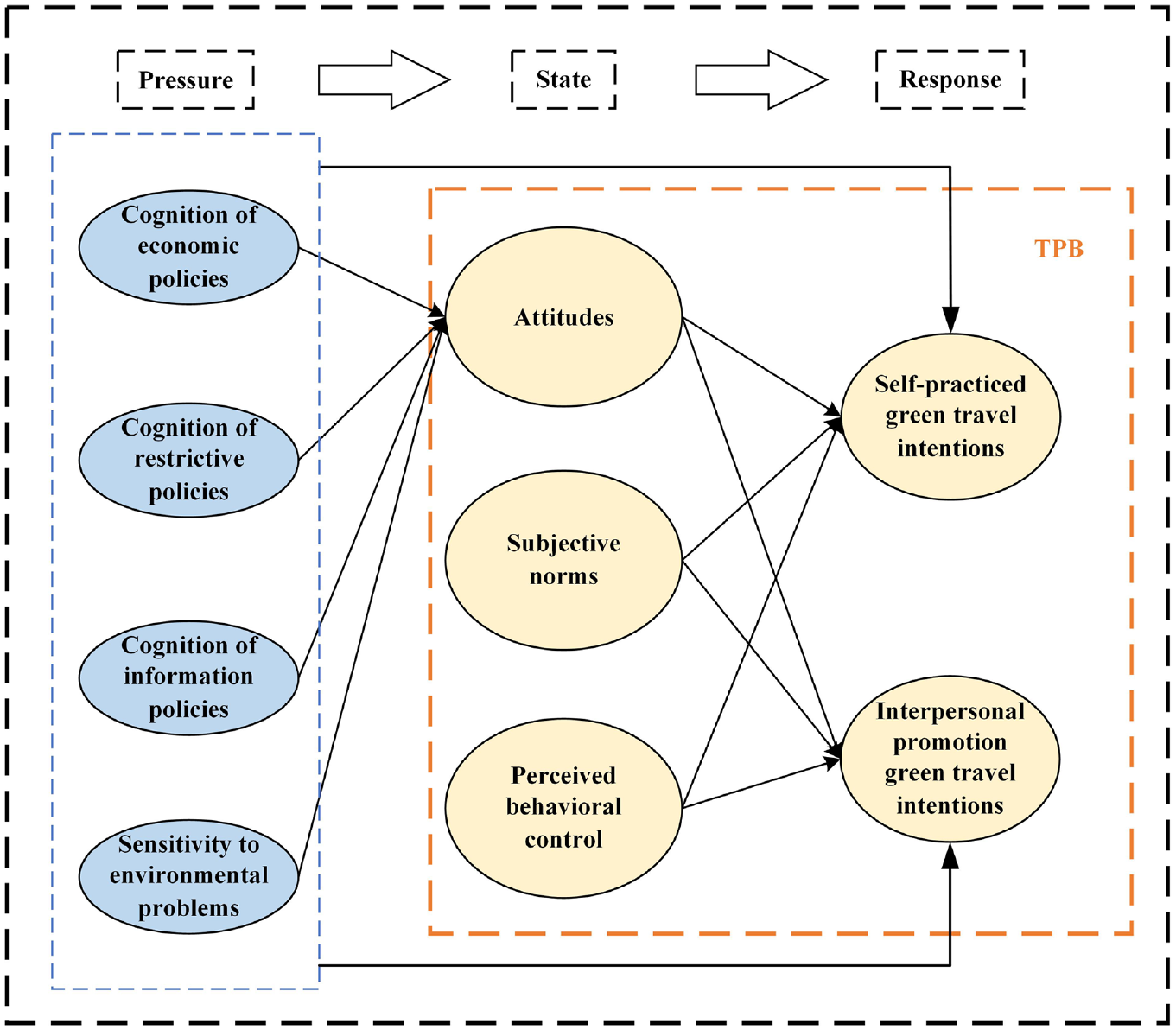
Extended pressure-state-response-theory of planned behavior (TPB) comprehensive theoretical model.
Research Hypotheses
Analysis of “Pressure-state”
The pressure index in the PSR model represents the impact of human activity on the environment ( 40 ). The state index refers to the environmental state and environmental changes in a certain period and under certain pressures. With regard to individual behavior, the theory of motivation in psychology indicates that human behavior is driven by both extrinsic and intrinsic motivations ( 41 ). According to the above theory, Hattie et al. ( 42 ) suggested that a greater focus on individuals’ motivation profiles will lead to a clearer picture of behavioral decisions, and motivation is determined by a complex interplay of internal and external factors. Extrinsic motivation refers to motivation generated under external pressure, and intrinsic motivation is caused by the internal needs of the individual. In addition, by referring to Zhu ( 35 ), residents’ cognition of policies and environmental problems may influence the formation of their behavioral attitudes toward green travel. Therefore, a “pressure-state” analysis was carried out. Government policy is an important external factor that affects individual environmental protection behavior, and its positive impact on the eco-friendly behavior of residents has been discussed in previous studies ( 43 , 44 ). Moreover, scholars have classified policy measures into different types and specifically discussed the effects of each type. Biresselioglu et al. ( 45 ) divided the policy measures aiming at reducing PM2.5 emission behaviors of Chinese consumers into three categories: command and control-based policies, economic incentive-based policies, and educational guidance-based policies. Wang et al. ( 46 ) conducted an empirical study on residents’ purchasing behaviors of electric vehicles in Hefei and Shanghai in China, and found that economic incentives and information policies for electric vehicles have an important effect on the purchasing intentions of residents. However, little attention has been paid to the indirect influence of policy factors on behavioral intention. Thus, we studied the impact of economic policies (economic incentive-based measures adopted by the government, such as subsidies, etc.), restrictive policies (mandatory measures adopted by the government, such as restrictions on the number of vehicles, etc.), and information policies (popular information intervention methods adopted by the government, such as public service advertising, civil slogans, etc.) on the intentions of residents to adopt green travel.
We also focused on the indirect influence of cognitive factors of policy on behavioral intentions under the mediation of attitudes ( 47 ). Li et al. ( 48 ) discovered that knowledge of the electricity price policy indirectly affects urban residents’ intentions of habitual electricity-saving behavior by affecting their attitudes through an empirical study in China. Thus, we believe that the deeper residents understand the policies related to green travel, the more positive their attitudes toward green travel will be. In addition, awareness of environmental problems is a significant factor affecting environmental behavior and intentions ( 49 , 50 ). However, few scholars have paid attention to its indirect influence on intentions through attitudes ( 51 , 52 ). Therefore, we propose the following hypotheses.
H1: Cognition of economic policies significantly positively affects green travel attitudes.
H2: Cognition of restrictive policies significantly negatively affects green travel attitudes.
H3: Cognition of information policies significantly positively affects green travel attitudes.
H4: Sensitivity to environmental problems significantly positively affects green travel attitudes.
Analysis of “State-response”
The state index in the PSR model refers to the environmental state and environmental changes in a specific period under certain pressures. The response index represents the impact of the state of a system on society and countermeasures taken by humans in response to environmental impact. Subjective norms, perceived behavior control, and green travel attitudes under the pressure of policy cognition and environmental problems were taken as states in this study. Moreover, green travel intentions were regarded as the individual’s responses to these states.
According to the TPB, attitudes, subjective norms, and perceived behavioral control have significant influence on individual behavioral intentions. Many studies have confirmed that attitudes have a positive impact on environmental intentions and behavior, such as green purchasing behavior ( 26 ) and green travel behavior ( 53 ). The positive influence of subjective norms on energy-saving intentions has also been verified in many studies ( 53 ), although these effects are proved to be limited ( 52 , 54 ). Moreover, the positive effects of perceived behavior control on various behavioral intentions and behaviors have also been confirmed, such as environmental protection actions in the private sector ( 55 ), recycling behavior ( 43 ), and PM2.5 reduction behavior ( 56 ). Therefore, we propose the following hypotheses.
H5: Attitudes have a significant positive impact on self-practiced green travel intentions.
H6: Attitudes have a significant positive impact on interpersonal promotion of green travel intentions.
H7: Subjective norms have a significant positive impact on self-practiced green travel intentions.
H8: Subjective norms have a significant positive impact on interpersonal promotion of green travel intentions.
H9: Perceived behavior control has a significant positive impact on self-practiced green travel intentions.
H10: Perceived behavior control has a significant positive impact on interpersonal promotion of green travel intentions.
Analysis of “Pressure-state-response”
We also studied the mechanism of state indicators as intermediate variables between pressure indicators and response indicators. Based on an extended TPB, Liao et al. ( 52 ) analyzed the path of environmental cognitive factors indirectly influencing the behavior intentions of garbage classification through the influence of individual attitudes. Wang et al. ( 16 ) discussed the mechanism of information disclosure and how it indirectly affects the behavioral intentions of recovery by influencing individual attitudes. Based on the TPB and PSR models, we propose the following hypotheses.
H11: Policy cognition and sensitivity to environmental problems have a direct impact on green travel intentions.
H12: Attitudes positively moderate the relationship between policy cognition, sensitivity to environmental problems, and green travel intentions.
Materials and Methods
Questionnaire Design
This questionnaire was divided into two parts. The first part comprised demographic information (including the respondent’s gender, age, income level, education level, vehicle ownership, elderly dependents and children, etc.). The second part studies the construction of the two types of green travel intentions and their influencing factors. With reference to limited mature scales of urban residents’ green travel behavior ( 4 , 19 , 39 , 57 ), several appropriate adjustments were made in the design of specific measurement items, which are shown in Appendix Table A1. To ensure the reliability and rationality of the questionnaire, we conducted a small-scale and simple pre-survey, and laid out reliability and validity tests according to the collected data. The validity test here mainly refers to the content validity test, which checks the validity of the content expression of the questionnaire through expert consultation and survey feedback. After the completion of the above test, the questionnaire was moderately revised and then officially distributed. It is notable that the pre-survey sample data were not used in the subsequent results analysis.
Sample Distribution
The sample data in this paper were collected from urban residents of 10 provinces or municipalities in eastern China: Beijing, Shanghai, Tianjin, Guangdong, Zhejiang, Jiangsu, Fujian, Hainan, Hebei, and Shandong. With a large population and immense numbers of private cars, eastern China leads the country in economic development, living standards, technology innovation, and transportation accessibility. The specific sample distribution is shown in Table 1. By comparing the national statistical data, we confirmed that the distribution of the provinces and regions in the sample basically conformed to the current situation of the population distribution in China.
Distribution of Questionnaire Samples
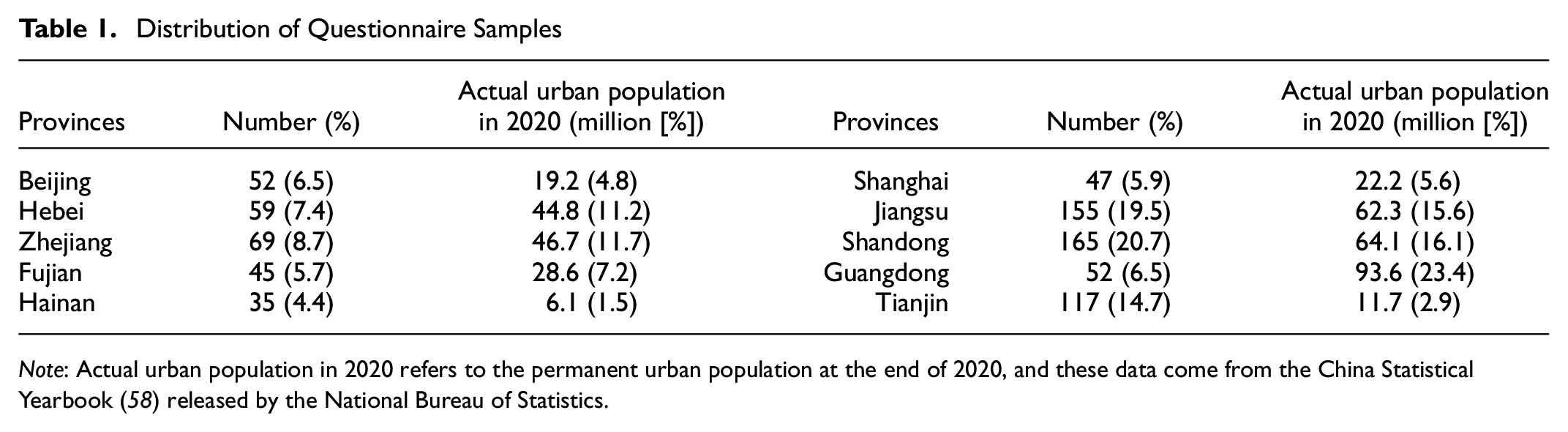
Note: Actual urban population in 2020 refers to the permanent urban population at the end of 2020, and these data come from the China Statistical Yearbook (58) released by the National Bureau of Statistics.
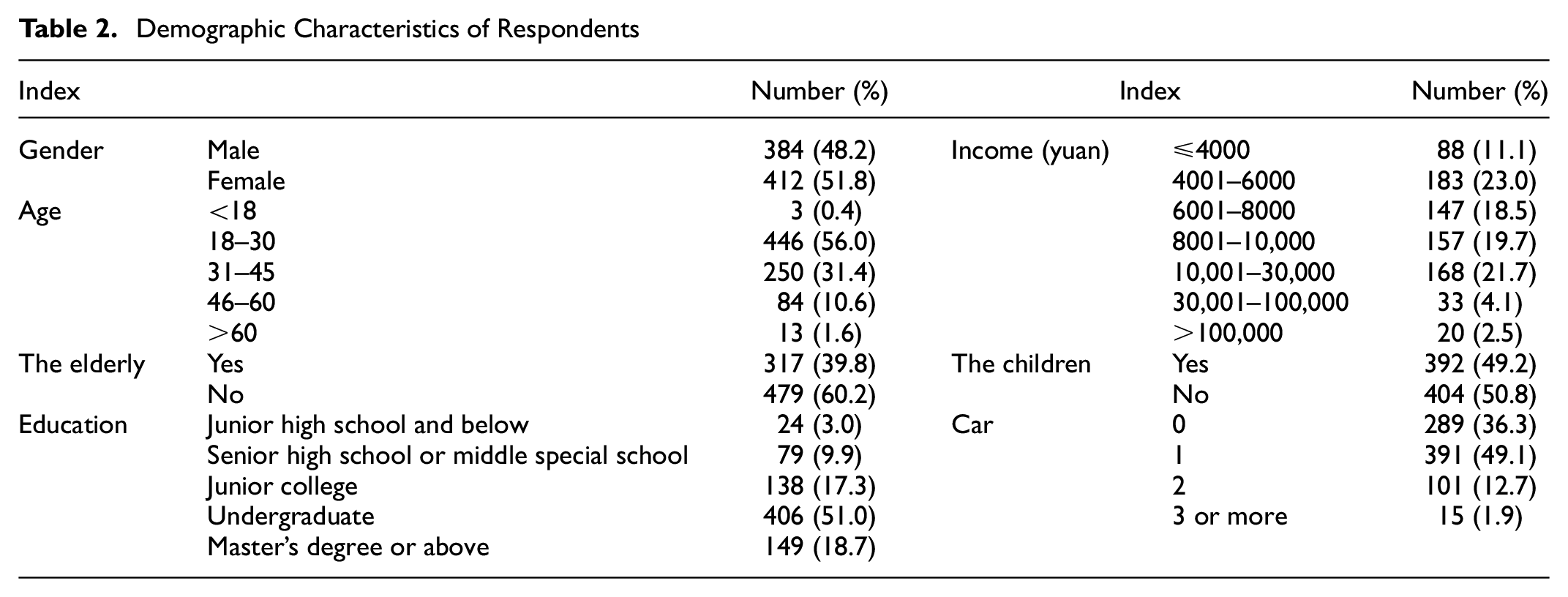
As shown in Table 2, the demographic characteristics of the questionnaire were distributed as follows: The gender ratio in the survey was basically equal, and income levels were evenly distributed. The respondents were mainly young and middle-aged with the degree of junior college, bachelor or above. This indicates that the respondents have a certain understanding of relevant green travel policies and the actual situation, and they have sufficient competence to complete the questionnaires. The basic conditions of dependents including the elderly and children ( 59 , 60 ), and vehicle ownership ( 61 ), are indeed important factors influencing the travel patterns of families. Therefore, we collected and measured these as important demographic variables.
Demographic Characteristics of Respondents
Research Methods
Structural equation modeling (SEM) combines the traditional statistical analysis techniques of factor analysis and linear regression analysis ( 62 ). SEM is widely used in the field of behavioral social sciences to identify, estimate, and verify causal models ( 63 ). The analysis steps of SEM consist of model setting, model fitting, model evaluation, and model modification. For example, with the help of SEM to collect and verify data, Jabeen et al. ( 64 ) explored the factors influencing consumers’ intention to utilize renewable power generation technologies. Analysis of Moment Structures (AMOS) is statistical software for dealing with structural equation models. It is commonly applied to modifying models, exploring model settings, and testing equations and indexes, as well as generating curved-growing, hybrid, and non-recursive models. AMOS provides Markov Chain Monte Carlo (MCMC) estimates that can be adjusted appropriately for small samples, which calculate both direct and indirect effects. Based on the above advantages and characteristics, AMOS version 24 was used to construct the model and conduct data analysis.
Results Analysis and Hypothesis Testing
Reliability and Validity Tests
Validity refers to the degree to which the questionnaire can accurately measure the things to be measured. The validity test in this article mainly considers construction validity, convergent validity, and discriminant validity. Construction validity is an important indicator of scale validity, which is used to reflect the confidence level of sample measurements representing the whole true score ( 51 ). In this paper, AMOS version 24 was used to measure the factor load and cross load to test the construction validity of the scale before SEM estimation. The results demonstrated that the factor load was larger than the cross load. As shown in Table 3, the standardized factor load of all constructs was greater than the recommended threshold of 0.5, which indicated that the scale used in this study has high construction validity.
Confirmatory Factor Analysis
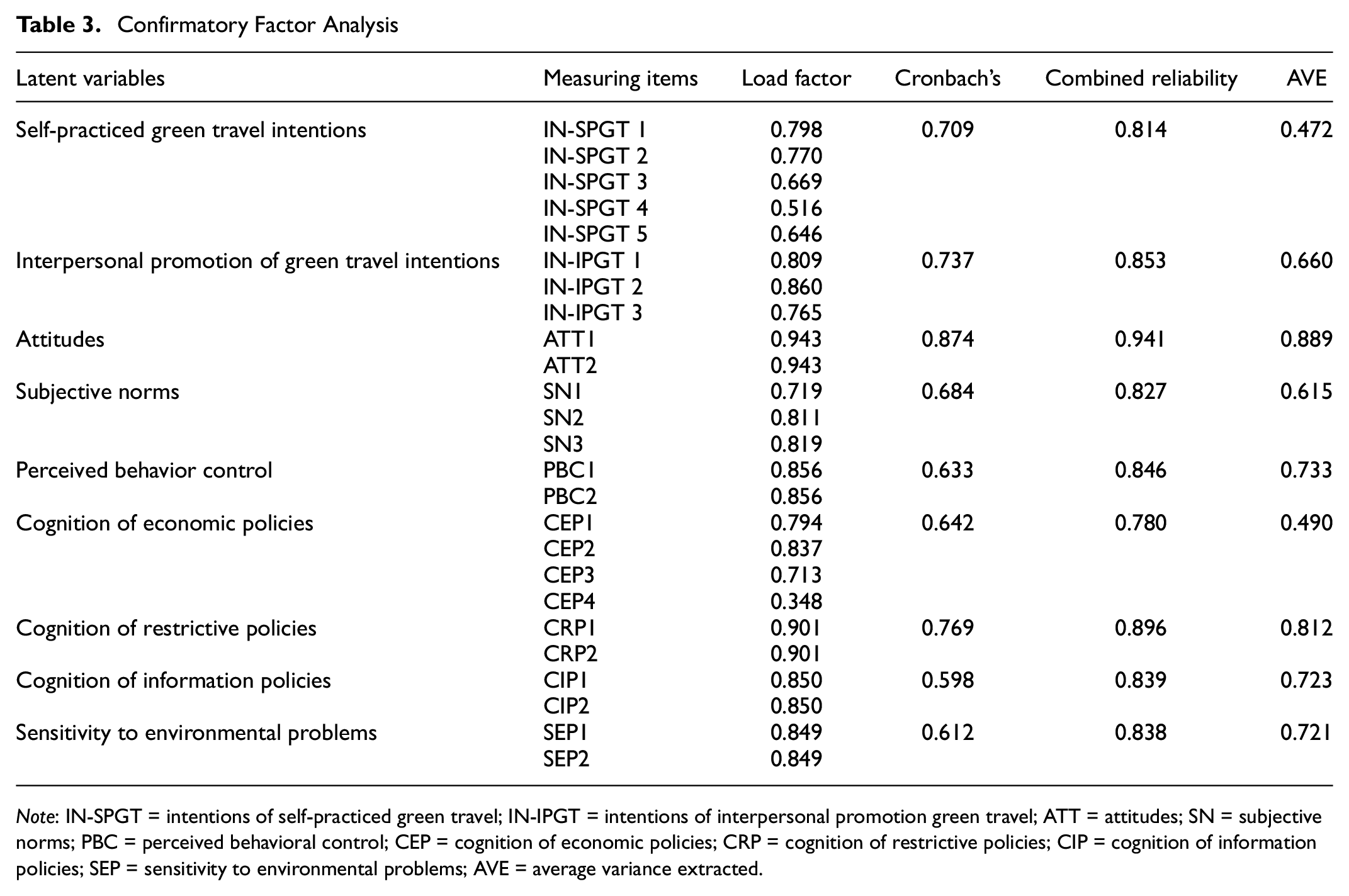
Note: IN-SPGT = intentions of self-practiced green travel; IN-IPGT = intentions of interpersonal promotion green travel; ATT = attitudes; SN = subjective norms; PBC = perceived behavioral control; CEP = cognition of economic policies; CRP = cognition of restrictive policies; CIP = cognition of information policies; SEP = sensitivity to environmental problems; AVE = average variance extracted.
Convergent validity is the similarity of measurement results when using different measurement items to determine the same variable. In other words, it is a measure of the consistency of multiple items on the same variable. In this paper, the factor load, combination reliability, and mean variance were used to measure the aggregation validity of scale items. As shown in Table 3, the load coefficients of all test items were between 0.516 and 0.943, and the results were all greater than 0.5, indicating that each potential variable corresponding to the subject had high representativeness. The measured value of the combined reliability was between 0.780 and 0.941, higher than the minimum threshold of 0.7. All the combined reliabilities were significant (p < 0.001). The extracted value of mean variance was greater than the base value of 0.500 ( 65 ), indicating that the convergent validity was relatively ideal and the questionnaire had a relatively robust convergent validity.
Discriminant validity refers to the degree of distinction between one variable and the others. High discriminant validity indicates that the correlation between question items of different variables is low. According to the Fornell–Larcker criterion, when the square root of the facet average variance extracted (AVE) is greater than the correlation coefficient of the facet with other facets, the discriminant validity is supported. As shown in Table 4, each dimension had good discriminant validity.
Discriminant Validity
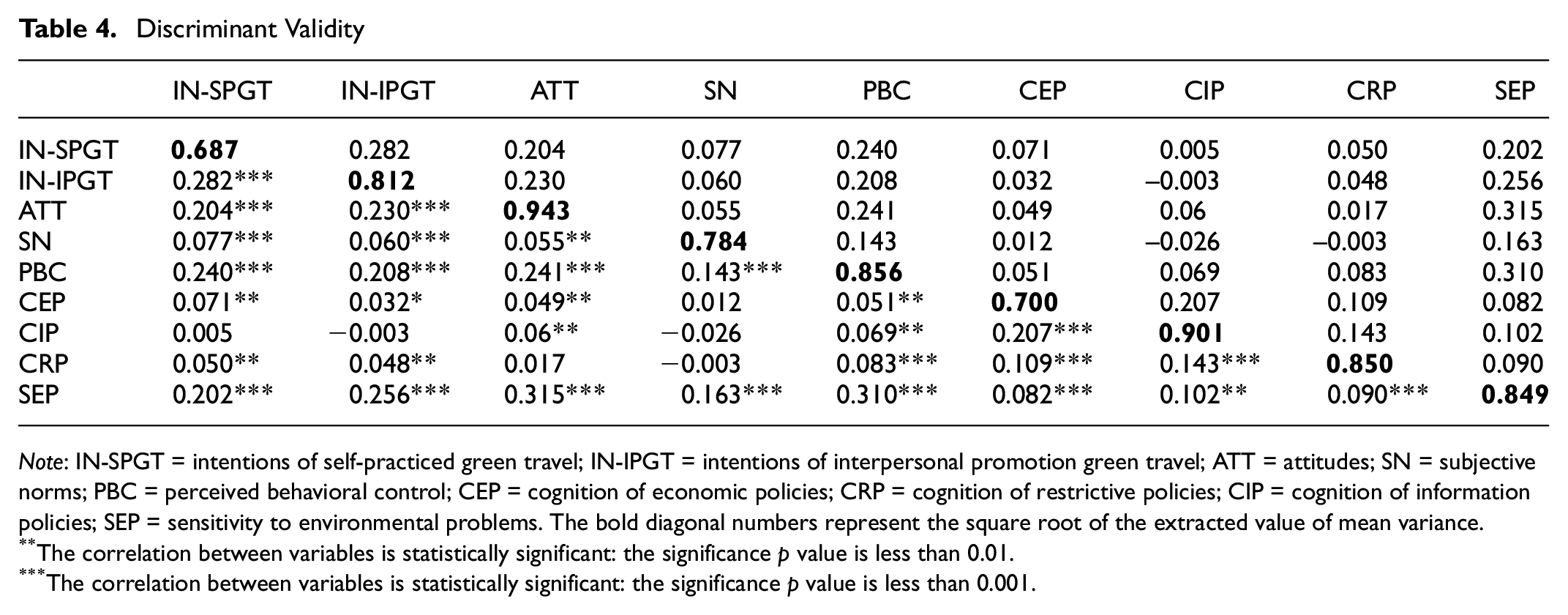
Note: IN-SPGT = intentions of self-practiced green travel; IN-IPGT = intentions of interpersonal promotion green travel; ATT = attitudes; SN = subjective norms; PBC = perceived behavioral control; CEP = cognition of economic policies; CRP = cognition of restrictive policies; CIP = cognition of information policies; SEP = sensitivity to environmental problems. The bold diagonal numbers represent the square root of the extracted value of mean variance. **The correlation between variables is statistically significant: the significance p value is less than 0.01.
The correlation between variables is statistically significant: the significance p value is less than 0.001.
The reliability test is applied to measure the reliability of the questionnaire, and check whether the results collected by questionnaires are consistent. We used the reliability test to analyze the validity of the scale, and to ensure that the measurement items of all variables were covered in the dimension to which they belonged and had high consistency. Cronbach’s coefficient and combined reliability are the detection methods adopted to calculate the reliability of the questionnaires. It can be seen from Table 3 that the Cronbach’s alpha coefficient values of all dimensions were greater than 0.6, with the combined reliability values were over 0.7, which indicated that the internal consistency of the questionnaire data is high, thus the questionnaires have a high degree of confidence. A normality test was carried out before the reliability and validity tests with the method of the skewness and kurtosis coefficient ( 66 ). The results show that the absolute value of the skewness and kurtosis coefficient of each index item is less than 2, that is, it meets the standard of normality test ( 67 ) and the scale data is approximately normally distributed.
Hypothesis Test
Before analyzing the questionnaire data, we first conducted a fitting test on the model, and made an adjustment with reference to the correction index in the AMOS output results. Since the value of
Fitting Index of the Structural Equation Model After Modification
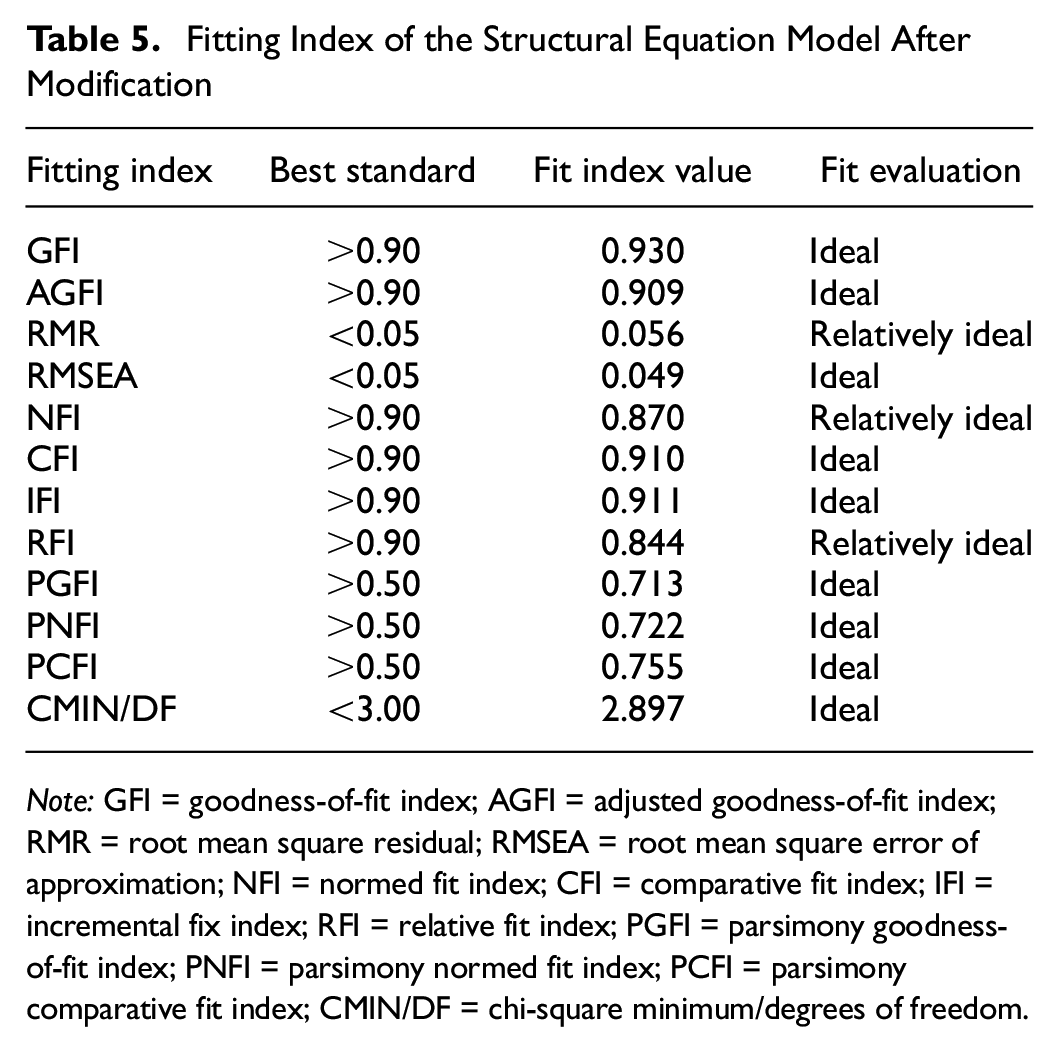
Note: GFI = goodness-of-fit index; AGFI = adjusted goodness-of-fit index; RMR = root mean square residual; RMSEA = root mean square error of approximation; NFI = normed fit index; CFI = comparative fit index; IFI = incremental fix index; RFI = relative fit index; PGFI = parsimony goodness-of-fit index; PNFI = parsimony normed fit index; PCFI = parsimony comparative fit index; CMIN/DF = chi-square minimum/degrees of freedom.
As shown in Table 6, H3, H4, H5, H6, and H9 passed the significance test, while H1, H2, H7, H8, and H10 failed. Part of the tests on the hypothesis H11 passed. According to the hypothesis test results of individual behavior research based on the TPB in recent years ( 4 , 15 ), we deleted the invalid paths and proposed some valid ones, such as putting forward the path from subject norms to attitude and the path from self-practiced green travel intentions to interpersonal promotion green travel intentions. The final model output results are shown in Figure 2. All paths of the final model were highly significant. In addition, the output results of the preliminary model and modified model are shown in Appendix Figures B1 and B2. It can be found that the revised model after adding paths makes the original significant path more significant; meanwhile, the final model after deleting the non-significant path remains or becomes more significant, but both have no fundamental impact on the initial model. In other words, the relationship between variables in the original theoretical model was not changed by deleting or adding paths.
The Process and Results of Hypothesis Testing
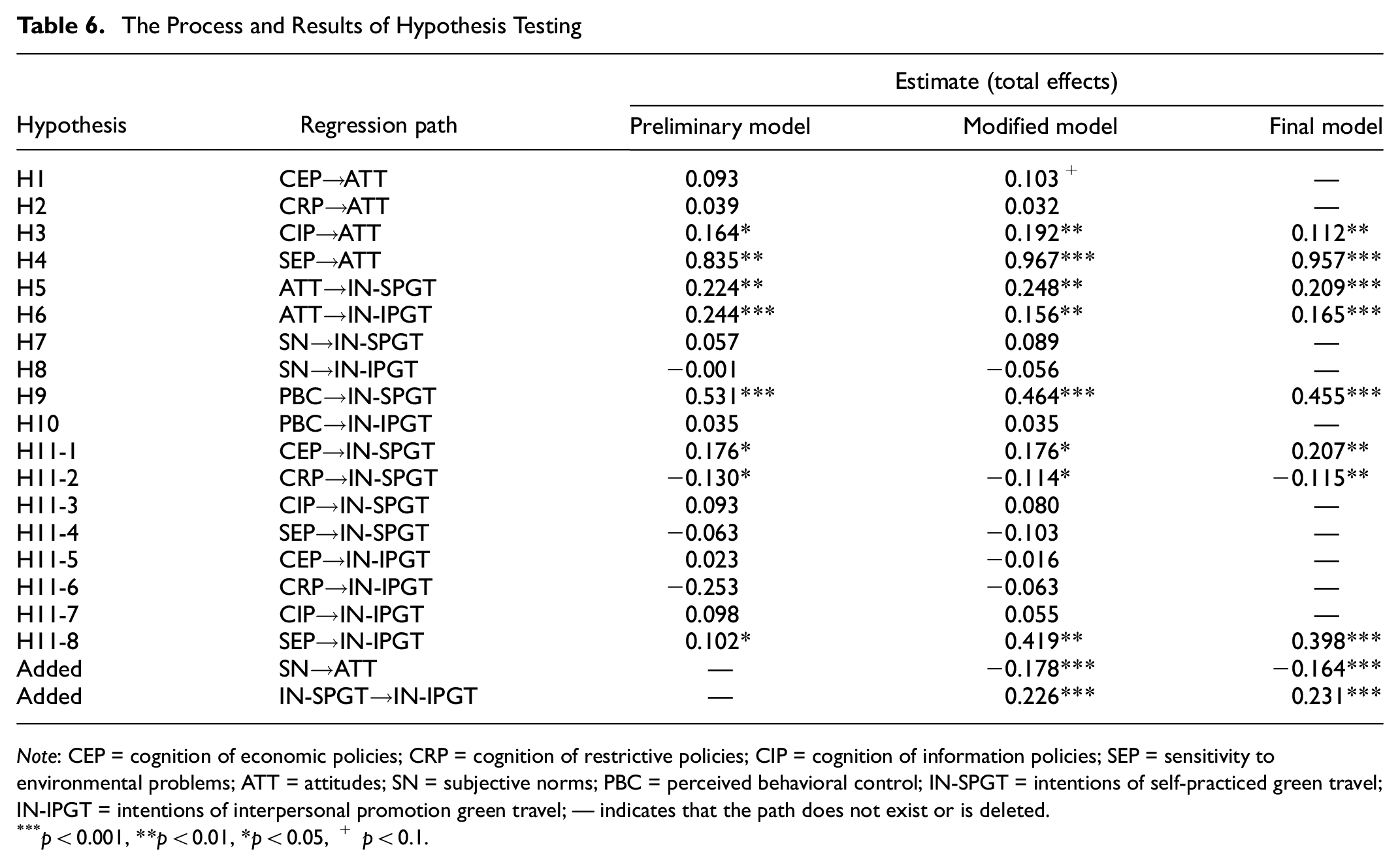
Note: CEP = cognition of economic policies; CRP = cognition of restrictive policies; CIP = cognition of information policies; SEP = sensitivity to environmental problems; ATT = attitudes; SN = subjective norms; PBC = perceived behavioral control; IN-SPGT = intentions of self-practiced green travel; IN-IPGT = intentions of interpersonal promotion green travel; — indicates that the path does not exist or is deleted.
p < 0.001, **p < 0.01, *p < 0.05, +p < 0.1.
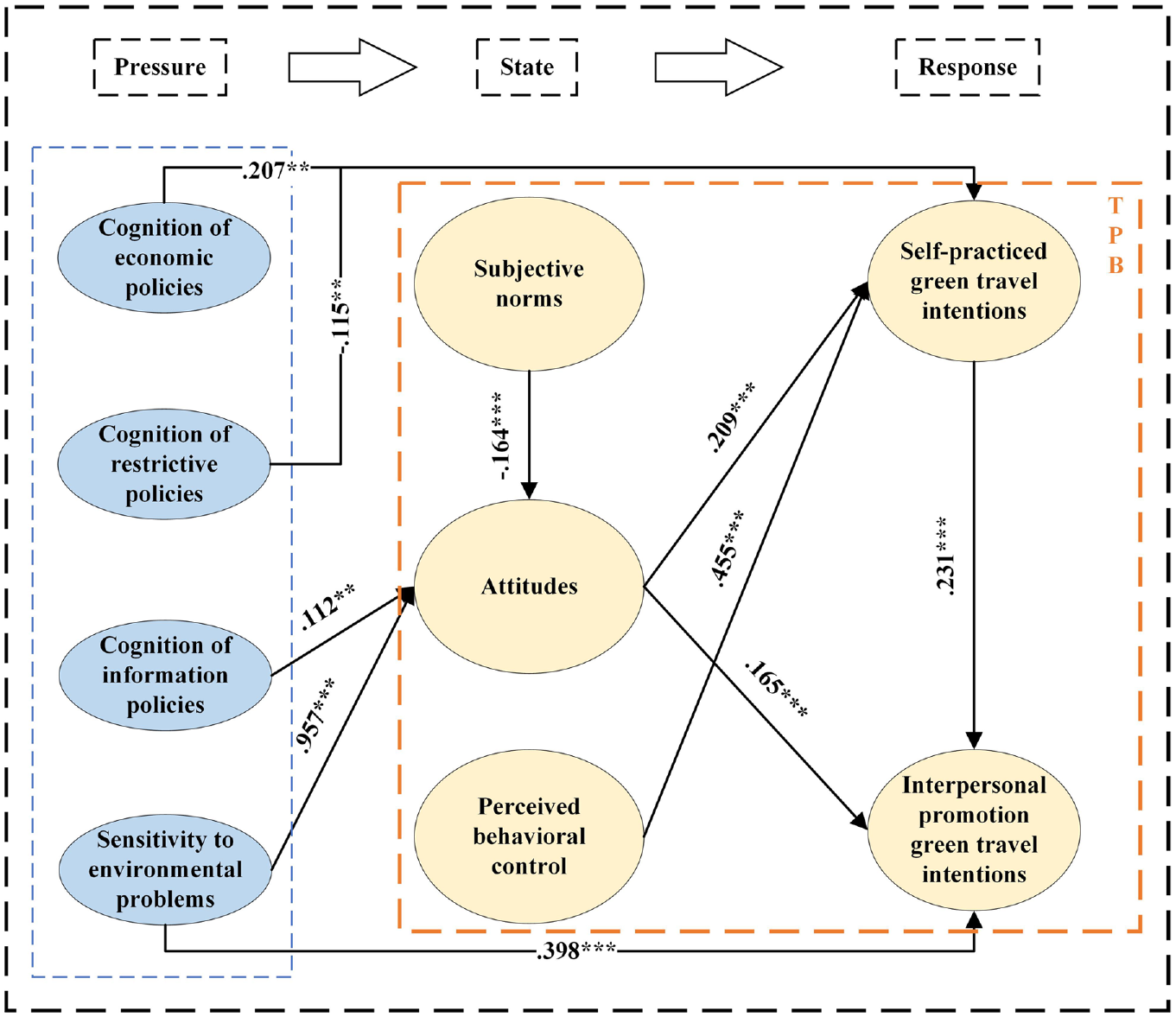
Final model after modification.
Results Analysis Based on the PSR-TPB
Analysis of the Results of “Pressure-state”
According to the path analysis above, in addition to restrictive policy cognition, economic policy cognition, information policy cognition, and sensitivity to environmental problems all have a direct influence on attitudes in the form of state factors. This is consistent with the conclusions of some researches ( 44 , 50 , 51 ). The reason why restrictive policies have no direct effect on attitudes (p > 0.1) may be that restrictive policies mainly impose mandatory requirements on residents’ behavior patterns, and their implementation results have no relations with residents’ attitudes. Obviously, compared with other policies, the current restrictive policies proposed by governments have little impact on the formation of residents’ attitudes toward environmental protection. However, some economic policies can do that, such as automobile consumption taxes, fuel taxes, energy-saving automobile subsidies, public transport subsidies, and so on. These policies have a high penetration rate and a great impact on transportation ( 70 ), but our results show that this effect was relatively weak. The reason may be that economic policies are similar to restrictive policies, and the short-term effects of policies are mainly reflected in the changes of behavior. Changes in attitudes only emerge under long-term and chronic effects. The direct effects of sensitivity to environmental problems on attitudes were the most obvious (final revision β = 0.957, p < 0.001), followed by the direct impact of information policy cognition on attitudes (final revision β = 0.112, p < 0.01). It is well understood that the awareness of environmental issues is the embodiment of entrenched environmentalist values and perceived responsibilities. The starting point of information policy is to improve the moral beliefs of residents with regard to the environment through various publicity activities and education. These in turn affect the environmental attitudes of residents ( 71 ). This is also in line with the three-stage process of attitude formation proposed by the psychologist Kelman ( 72 ). This theory put forward that the change of attitude is realized through the three stages of obedience, assimilation, and internalization. In addition, Tinc et al. ( 73 ) adopted Kelman’s processes of change to assess power take-off shielding attitudes and behaviors among farmers, and did confirm that the three change phases of farmers’ attitudes do exist.
Analysis of the Results of “State-response”
The “state-response” analysis is conducted on the traditional TPB. According to the path analysis above, only attitudes had a significant direct effect on the two response factors (self-practiced and interpersonal promotion of green travel intentions; final revision β = 0.209, β = 0.165, p < 0.001). This is consistent with the results of some existing researches ( 26 , 53 ). This is why the state factor in the pressure-state analysis above only analyzed attitudes. Unlike most existing research, we found that subjective norms have no significant impact on intentions (p > 0.1), but they could influence attitudes (the path coefficient of the influence of subjective norms on attitudes after final revision, β = −0.164, p < 0.001). This is also in line with some conclusions of individual behavior research based on the TPB in recent years ( 15 ). The possible reason may be that people are becoming more independent in the new generation of information technology. Consequently, the influence of subjective norms, such as group references to one’s behavior or intentions, has grown weaker. Perceived behavior control only had a significant effect on self-practiced green travel intentions (the final correction β = 0.455, p < 0.001). The direct effect may be that self-practiced green travel intention is targeted at the behavior to be performed, while the perceived behavioral control reflects the prediction and evaluation of implementation difficulty. The intention to promote green travel comes from a high sense of moral responsibility for the environment. This was also reflected in the results after the model was modified: self-practiced green travel intentions significantly promoted the occurrence of interpersonal promotion green travel intentions (β = 0.231, p < 0.001). This may have less to do with specific implementation-related issues, but more to do with ideology.
Analysis of the Results of “Pressure-state-response”
“Pressure-state-response” analysis refers to the whole model analysis, focusing on the mediating effect of attitudes as a state factor on the relationship between stress and response factors. The so-called mediating effect means that if the independent variable X exerts a certain influence on the dependent variable Y through a certain variable M, then M is called the mediating variable of X and Y, and M has a mediating effect on the relationship between X and Y ( 74 ). It should be noted that the bootstrap test method was used to analyze the mediating effect, because it provides a more accurate confidence interval estimation with higher statistical power compared with other methods, such as the product distribution method and Sobel test ( 75 ).
Through the above path analysis and further testing of intermediary effects (Table 7), we found that there is no intermediary effect between restrictive policy cognition and economic policy cognition with the two types of intentions. Instead, only self-practiced green travel intentions are influenced by policy cognition. On the other hand, attitudes have a main mediating effect between information policy cognition and the two types of intentions. That is, information policies work indirectly on intentions through attitudes. The reasons have been described above in the “pressure-state” analysis. In addition, attitudes have a main mediating effect between sensitivity to environmental problems and self-practiced green travel intentions, while they have a partially mediating effect between sensitivity to environmental problems and interpersonal promotion of green travel intentions. The reason for this may be that interpersonal promotion of green travel intentions involves a higher sense of moral responsibility than self-practiced green travel intentions ( 38 ). Interpersonal promotion of green travel intentions does not require external forces, such as policy pressures. It comes from stimulating residents and recognizing the meaning of the behavior itself. At the same time, we found that when the model was modified (by adding the path from self-practiced green travel intentions to interpersonal promotion of green travel intentions), the model fitting index and each path coefficient were significantly improved. In other words, the self-practiced green travel intentions can further promote the generation of the green travel intentions caused by interpersonal promotion. Indeed, the former is the basis and premise of the latter. This supports the above description to a certain extent.
Bootstrap Test of Mediation Effect (Unstandardized Coefficient)
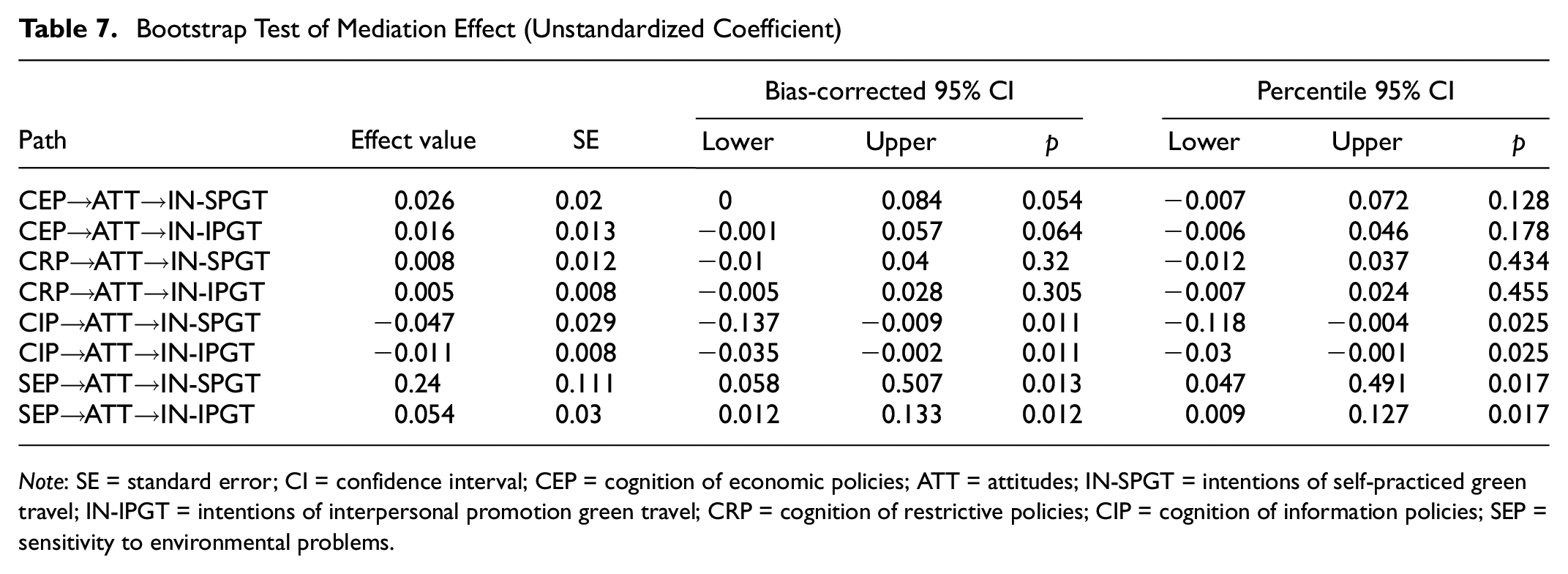
Note: SE = standard error; CI = confidence interval; CEP = cognition of economic policies; ATT = attitudes; IN-SPGT = intentions of self-practiced green travel; IN-IPGT = intentions of interpersonal promotion green travel; CRP = cognition of restrictive policies; CIP = cognition of information policies; SEP = sensitivity to environmental problems.
Conclusions and Recommendations
Based on the TPB, considering the possible antecedent factors of attitude and combining with the PSR model, a comprehensive PSR-TPB theoretical model of the green travel intentions of urban residents was constructed. We focused on the impact of the cognition of various policies and environmental problems by urban residents on their green travel intentions. The main conclusions are as follows. (1) The perception of information policy and environmental issues has a significant effect on attitudes, whereas restrictive and economic policies have no significant influence on attitudes. (2) Among the factors, only attitude has a significant influence on self-practiced and interpersonal promotion of green travel intentions. Subjective norms have no direct impact on intentions as a response factor, although they cloud influence attitudes. Furthermore, perceived behavior control directly affects self-practiced green travel intentions. (3) In addition to the cognition of restrictive policies and economic policies, the PSR model showed a formative effect on the green travel intentions of urban residents. That is, attitudes exist in the form of a partial or complete intermediary between the two relationship paths (information policy cognition → green travel intentions; sensitivity to environmental problems → green travel intentions).
Based on the above conclusions, we offer the following policy recommendations. (1) Firstly, it is advisable to moderately implement restrictive policies because such policies directly affect intentions and regulate behaviors. These measures are necessary in cases where environmental awareness and moral responsibility fail to reach the expected implementation results. However, since restrictive policies have a negative impact on intentions, their effect can be counterproductive when they are too intense or restrictive. Therefore, the relevant government departments should continue to promote restrictive policies appropriately in various regions, as a guarantee for other policies and to give full play to their role in promoting green mobility and the development of eco-friendly vehicles. (2) Secondly, it is suggested that governments further improve economic policies. Economic policies have a direct impact on intentions, yet little impact on attitudes. Therefore, the relevant government departments should continue to pay attention to economic policies, albeit in consideration of their long- and short-term effects by adopting multiple measures concurrently. In general, economic policy should be regarded as the driving force for developing an ecologically sustainable economy and society. (3) Thirdly, we advise increasing information policies to strengthen residents’ awareness of environmental problems. According to our results, information policy is the only factor that indirectly affects intentions through attitudes. The perceptions of environmental problems also have a significant impact on attitudes. They play a key role in guiding the formation of attitudes about environmental protection. Only by consolidating eco-friendly behavior can we truly achieve social sustainable development. Therefore, the relevant government departments should further increase the diversity of information policies, strengthen the implementation of these policies, expand the scope of the audience, and increase publicity frequency, while maintaining the durability of slogans and cultivating habitual ideologies.
There are some limitations to this research. Firstly, all of the variables in this study were based on self-reports of respondents, so the survey results may be affected by social expectation bias. Moreover, the established model only pertained to green travel intentions, without considering the process from intentions to actual behavior, which needs to be solved in future research. Finally, there were limitations to the sample based on the selected region. Although the sample size was relatively large, the regional distribution was uneven and the interviewee selection was not sufficiently random. Therefore, future research will focus on increasing the randomness of the sample selection by further expanding the sample distribution area.
Supplemental Material
sj-docx-1-trr-10.1177_03611981221110227 – Supplemental material for Influence of Internal and External Pressure Sensing on Green Travel Intention: Based on a Theoretical Model of the Theory of Planned Behavior and Pressure-state-response Model
Supplemental material, sj-docx-1-trr-10.1177_03611981221110227 for Influence of Internal and External Pressure Sensing on Green Travel Intention: Based on a Theoretical Model of the Theory of Planned Behavior and Pressure-state-response Model by Ranran Yang, Lanlan Li, Cuicui Wang, Chunxiao Yue and Jia Wei in Transportation Research Record
Footnotes
Author Contributions
The authors confirm contribution to the paper as follows: study conception and design: L. Li and R. Yang; data collection: C. Wang and C. Yue; analysis and interpretation of results: C. Yue; draft manuscript preparation: R. Yang, J. Wei, and C. Wang. All authors reviewed the results and approved the final version of the manuscript.
Declaration of Conflicting Interests
The authors declared no potential conflicts of interest with respect to the research, authorship, and/or publication of this article.
Funding
The authors disclosed receipt of the following financial support for the research, authorship, and/or publication of this article: This work was supported by the National Natural Science Foundation of China (grant numbers 71704045, 71804141, 72174052, 71502047) and the National Key R&D Program of China (2020YFC1909905).

Supplemental Material
Supplemental material for this article is available online.
References
Supplementary Material
Please find the following supplemental material available below.
For Open Access articles published under a Creative Commons License, all supplemental material carries the same license as the article it is associated with.
For non-Open Access articles published, all supplemental material carries a non-exclusive license, and permission requests for re-use of supplemental material or any part of supplemental material shall be sent directly to the copyright owner as specified in the copyright notice associated with the article.
