







Abstract
In the twentieth century, high-speed trains (HSTs) were added to the choice of transportation modes in Japan and Europe, and in the twenty-first century HST networks in developing countries have been advanced. It is planned to enhance these networks further in the future. Developing countries are characterized by income inequalities and, thus, it is important to find out who uses HSTs. If they are only viable in the wealthiest regions, then this mode of transportation will induce spatial inequity. If HST travel is too expensive, then HSTs will induce social inequity. Numerous studies have explored the relationship between HSTs and equity, but they have mostly covered economically developed countries, with only a few studies being carried out in economically developing countries apart from China. As such, the aim of this article is to fill the gap in the literature by analyzing the case of Turkey’s HSTs. The study presents a review of the literature pertaining to HSTs and the issue of equity, then uses Turkey’s socioeconomic development index to make comparisons of HST service accessibility according to different social groups, ages, and occupations. Ticket price and accessibility indicators are used to work out how HSTs can be a tool for reducing accessibility inequalities. The results indicate that HSTs do not necessarily reinforce the existing accessibility inequalities in Turkey, but can be a tool for improving equity in three ways: their ticket pricing policy; their considerable range, in that they serve numerous cities all over the country; and the way they are used in relation to different groups.
Rail travel was one of the main results of the Industrial Revolution in Europe. From the eighteenth to the middle of the twentieth century, trains carried goods and passengers at lower speeds; however, rail travel was changed forever when the first high-speed train (HST) was operated in Japan in 1964 at a speed of 210 km/h ( 1 ). HST, high-speed rail, high-speed line, and high-speed railway are various terms used to describe the concept. For the purposes of this article, the following definition of HST will be used as adopted in an EU report: “A high-speed train is a train which is capable of reaching speeds of over 200 km/h on upgraded conventional lines and of over 250 km/h on new lines designed specifically for high-speeds” ( 2 ).
According to the International Union of Railways, HSTs are about much more than speed: High-speed rail is not merely a technical subject; rather, it encompasses a complex reality involving various technical aspects such as infrastructure, rolling stock, energy and operations and cross-sectoral issues such as financial, commercial, socio-economic, managerial and training aspects. The high-speed rail system combines these various elements using highly sophisticated technology. (
3
).
As of 2022, 58,840 km of HST lines exist worldwide, and a further 19,711 km are under construction, with more than 54,000 km planned for completion by 2050 (Table 1) ( 4 ). In the twenty-first century, HST networks in developing and emerging countries have been advanced, and more are planned in the future. Lines are already in operation in China, Turkey, and Morocco, others are currently being built in Iran and India, and yet others are projected to be built in many other countries (e.g., Brazil, Malaysia, Egypt, Mexico). HSTs are being developed in very different socioeconomic contexts to those in developed countries. More than 41,000 km of HST lines are in operation in developing countries, amounting to nearly 70% of the global total. In addition, almost 16,000 km of HST lines are currently under construction in developing countries, which accounts for 84% of all lines being laid, and a further 35,500 km are planned for construction, amounting to 66% of all planned HST lines (Table 1 and Figure 1) ( 4 ). These lines will significantly improve the accessibility of the rail network in the cities where they operate, and will serve very different socioeconomic contexts characterized by significant inequalities.
Length of HST Lines in the World According to Region
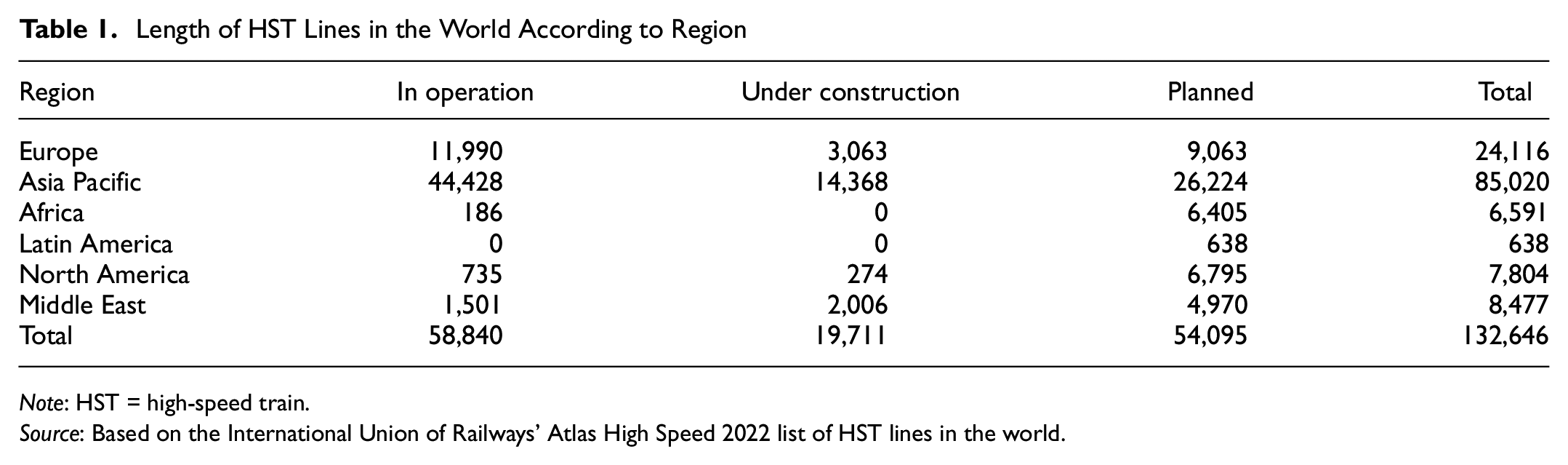
Note: HST = high-speed train.
Source: Based on the International Union of Railways’ Atlas High Speed 2022 list of HST lines in the world.
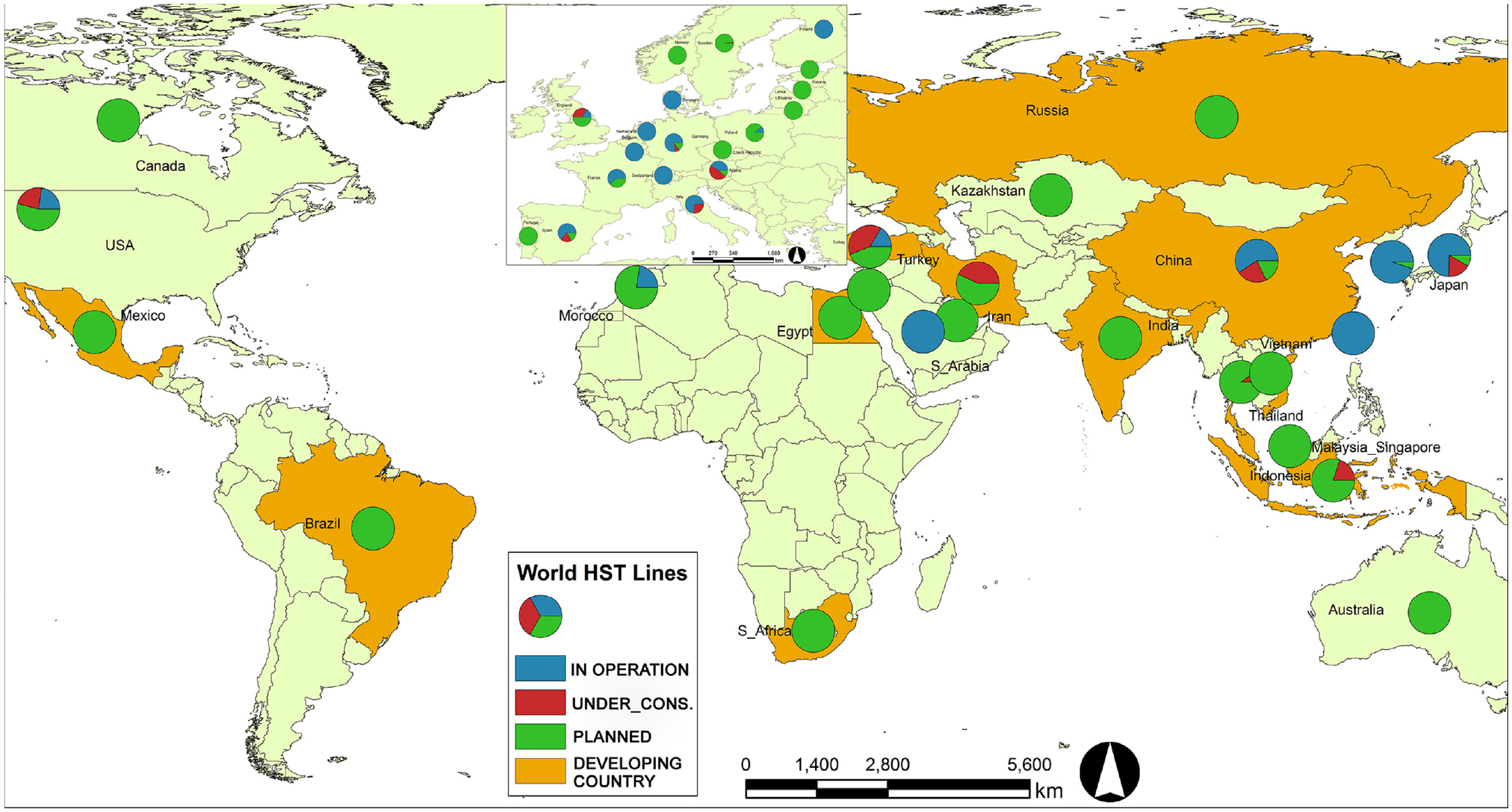
HST lines in the world by country.
In this article, developing countries are all those that are not considered to be developed according to the World Bank ( 5 ) classification. These can be emerging, lower-middle-income, or upper-middle-income countries.
Accessibility studies have diversified considerably since Hansen ( 6 ) first described an accessibility model. With urban planners strongly emphasizing increased accessibility for areas as an outcome of constructing transportation systems, the potential accessibility of an area will be greater than before. When a new HST line is constructed, those cities with stations on the line gain advantages with regard to accessibility. However, can the issue of the potential increase in accessibility and mobility be addressed in the same way for different countries? Because developing countries are typically low-income countries and lack supporting transportation infrastructure, it is necessary to understand for whom HSTs are being built and why. The aim of this article is to analyze the relationship between HSTs and social and spatial equity in the case of Turkey.
Equity and equality are terms that have stirred up much controversy in the literature, and their meanings change depending on the context in which they are used. Balancing the disparities that exist between regions is an oft-studied area, and there has been a particular focus on spatial equity, which refers to the balance of living standards that is achieved commensurate with people’s access to things such as social, commercial, and cultural services or labor facilities ( 7 ). The way in which public services are distributed plays a critical role in achieving spatial equity and delivering equal living standards to those with different levels of income. Increasing accessibility of services is one of the ways these standards can be achieved ( 8 ).
Equality is almost always used as an antonym to inequality. Spatial inequality is used mostly to refer to the economic, social, cultural, commercial, and physical inequalities that exist between regions, cities, or countries and can be differentiated from spatial equity in that the former is about physical status and productivity. If inequalities exist because of regional competitiveness and advantages, certain regions will benefit, and this may also benefit the national economy ( 9 ). Inequalities may emerge when successful economic policies and decisions are applied to only one region or city, whereas other regions or cities are left to suffer because of poor decision-making ( 10 ).
The concept of spatial equity/equality has mostly been studied with a focus on the distribution of functions and accessibility of urban facilities and services ( 7 ). As far as HSTs are concerned, the distribution of HST services is equitable only when all people, regardless of location or socioeconomic status, are able to enjoy equal ease of access to the service and it is universally convenient. By definition, HSTs cannot serve all cities, and the level of the service (frequency per hour, per day, and with respect to week or weekend hours) also varies between the cities that are served. Therefore, in this regard, HSTs can never be spatially equitable.
There is an additional form of inequity linked to cost. When travel costs are too high for those with a low level of income, HSTs become socially inequitable, meaning that social inequity is also linked to income inequalities. Conversely, if travel costs are subsidized by public policies, all people, particularly those on a low income, can use HSTs for regular trips and for different trip purposes, so making HSTs more equitable.
By analyzing the case of Turkey, the results of this study indicate that in this country, HSTs differ spatially and primarily serve the richest regions, thus first inducing social and spatial inequities between different territories. Second, however, the pricing policy and the considerable range of HSTs, in that they serve numerous cities all over the country, have made them a tool for improving equity in Turkey.
Following the general view of HST systems around the world, Section 2 will address how the literature has approached the issue of HSTs and their effects on social and spatial equity and inequality. Section 3 then presents the methodology. Section 4 analyses the issue of inequalities in Turkey at the macro-level in general using Turkey’s socioeconomic development index (SEGE), and then addresses the specific issue of HSTs in Turkey at the micro-level based on a survey of 1,153 HST passengers who use the Ankara–Konya HST line. Section 5 presents the discussion, and Section 6 offers some concluding remarks.
Social and Spatial Equity in Relation to HSTs
Measuring equity and equality can be difficult because of the many definitions of terms such as relative equity, horizontal equity, and vertical equity ( 11 ) in relation to income, social class, accessibility of services ( 12 ), mobility needs, and ability, as well as the various stakeholders and the numerous impacts on the sociospatial environment ( 13 ). As such, equity analyses depend on local concerns and priorities with respect to many non-uniform parameters that can change even in relation to a given country or region.
Economic Impacts
The economic impacts of HSTs are a common research field in the literature and are based on areas of economic activity. Ke et al. ( 14 ) studied the economic impacts of HSTs on cities located along HST lines and obtained some surprising findings. HST effects behave differently according to location, route, and region. They bring more economic improvements to industrialized cities by positively enhancing the service sector, attracting labor, and stimulating the development of infrastructure. Chen et al. ( 15 ) investigated the impact of HSTs on the economy and environment with a computable general equilibrium model, and determined them to have a positive economic impact through induced demand and output expansion in relation to cost reduction. Chen and Haynes ( 16 ) pointed out the change in housing values in cities located along HST lines and determined HSTs to have a significant impact on housing values in small and medium-sized cities. However, they have less of an impact on larger cities. According to Chen ( 17 ), HSTs have a significant impact on spatial–economic development by attracting business as well as by reducing regional inequality through increased accessibility. Fröidh ( 18 ) pointed out the impact of HSTs on the travel market and travel behavior. In this sense, HSTs significantly increased their market share from 6% to 30%. In addition, HSTs cause an adjustment in trip mode from motor vehicles to the railways. Gutiérrez’s ( 19 ) study stated that HSTs had different effects at the national, regional, and local levels in relation to accessibility, and that although they polarized regions at the national level, they also enhanced local accessibility. Rus and Inglada ( 20 ) examined a cost-benefit analysis with regard to several assumptions such as project life span, growth hypothesis, and time and accident values, and determined that an HST line should only be justified after an in-depth analysis.
Impact of Accessibility
Accessibility is one of the most-studied topics in the literature on HSTs. Azzouz and Jack’s ( 21 ) recent study explored the relationship between HSTs and social exclusion and provided some noteworthy results with regard to HST travel in China as a developing country. It was found that one of the most important factors for passengers was comfortable travel conditions. Other interesting result from their study concerned ticket price and accessibility of HST stations. Economic exclusion applied widely to different age and income groups. Thus, many passengers who do not use HSTs as a mode of transportation were found to have been excluded from HST systems because of ticket pricing or poor accessibility of HST stations. These groups mostly live in rural areas or peripheral zones. According to this study, those who have the lowest incomes, that is, retired people and the elderly, perceived the highest levels of economic exclusion. Brunello ( 22 ) explained how the polarizing effects of HSTs can be eliminated and that corridor effects will be reduced if HST lines are integrated with conventional lines. Yang et al. ( 23 ) described the effects of HSTs on spatial equity from the point of view of accessibility in relation to China’s transport systems and network. The study showed HSTs to have a significant impact on spatial equity by increasing accessibility, although they can also enhance inequality if cities are not integrated with the HST network. Shaw et al. ( 24 ) pointed out the effects of ticket pricing policies and noted the impact of timetable changes on HST frequency. The study clearly inferred these to be some of the key factors in reducing or increasing HST accessibility. It was also found that the corridor effect occurred along HST lines, increasing local accessibility and ensuring the trains could reach high speeds, but increasing the polarization between cities. Moreover, increased ticket prices also negatively affect accessibility for low-income passengers. Lopez et al. ( 25 ) examined a case in Spain in 2008 with regard to how HST systems increase disparities between regions. Their study involved the daily accessibility components passengers required. As mentioned in other studies in different countries, their study found the HST network enhanced regional disparities in that it resulted in corridors between the cities connected by the HST lines to increase local accessibility. According to Morichi and Shimizu ( 26 ), the HST networks in Japan increased regional attractiveness, reduced regional disparities, supported regional settlement, and encouraged industrial activity.
On the whole, these studies have concluded that HST systems increase economic growth and mobility, although they emphasize that accessibility affects most economic sectors, for example, tourism, industry, and finance, as well as land use. However, HST lines also have a corridor effect that polarizes regions. There are several ways of eliminating this effect, and the implication is that countries that integrate conventional lines with HST lines to increase connectivity and accessibility should follow a low-cost ticket pricing policy.
Social and Spatial Inequalities in Relation to HSTs
The issue of inequality associated with transport and mobility is nothing new, but up to now it has mainly been addressed from the point of view of daily urban mobility. Previous studies of this issue have concluded the “rising value of contemporary societies is at the same time a factor of reinforcement of social inequalities” ( 27 ) (See also Cass ( 28 ) for the case with regard to Great Britain).
The issue of inequality must also be analyzed in relation to long-distance mobility, particularly with regard to HSTs. Travel and transport infrastructure involving HSTs could indeed generate and reinforce social exclusion ( 28 ), which is defined in the literature as individuals’ inability to access those activities in which they need to participate ( 29 – 32 ). Ngoc and Nishiuchi’s ( 33 ) study determined that low-income groups may be vulnerable with regard to ticket price. Because of high prices, low-income passengers are unable to travel on HSTs, and this creates a barrier for those who want or need to travel long distances.
Improving the provision of transportation services by using a HST line can lead to inequality and may be spatially inequitable in the sense that not all people have equal access. First, HST networks do not serve all cities but instead general link the largest urban centers. However, when a HST line is integrated with a conventional network, more cities are served. Second, the level of service (i.e., frequency per hour and per day during the week or on weekends) between cities varies and correlates with the size of the urban areas in question. Campos and de Rus conducted detailed analyses in 2009 with regard to different types of networks. Many intermediate and small towns in France are served by TGV (the French HST), but on conventional rather than high-speed lines ( 34 ). For instance, in 2010, TGV ran 3.3 direct round trips per day to Paris from cities with 20,000 to 100,000 inhabitants and 10 per day for cities with more than 200,000 inhabitants ( 35 ).
Third, there is access inequality in relation to cost and differentiated incomes. In this regard, HST services are not always accessible to all income levels. This had long been the case in France ( 36 – 39 ), where more than 70% of all TGV (i.e., HST) trips were made by the five wealthiest deciles before discounted fares (e.g., Prem tickets, Ouigo trains) were introduced ( 40 ). For instance, a second-class ticket for a Paris–Marseille round trip in July 2017 cost up to €223, which was 13% of the median net per capita wage in 2016. In France, the Société Nationale des Chemins de fer Français estimated the number of users who would not have traveled at all without the Ouigo offer in 2013 to have been 25% of the total number of Ouigo users, indicating a possible economic exclusion if Ouigo had not existed ( 41 ). On the other hand, a public policy supporting low fares can allow people whose city is served by a HST to use it for different purposes; in numerous developed countries HSTs are seen to be used more for business travel than for visiting family and relatives or educational or health purposes. These last three reasons for travel seem to be more equitable than business travel because more people from different backgrounds can travel for these purposes. Moreover, as Cavallaro et al. ( 42 ) pointed out in their study on the spatial and social equity implications of HSTs in Northern Italy, the cost of traveling on well-organized HST networks directly affects the possibility they will be chosen as a mode of transportation. However, the study clarified the impact to be nonhomogeneous across all cities and to vary according to population, ticket price, and frequency of transportation modes.
Studies addressing social and spatial equity with regard to HSTs have mostly been carried out in developed countries ( 43 ). In the case of Spain, Monzon et al. ( 44 ) found extensions to the HST network in the peri-urban area led to an increase in spatial imbalances and contributed to a more polarized spatial development. According to their study, the basic goal of HST construction is in fact network efficiency, and HST lines that are implemented homogeneously across regions have a positive effect on spatial equity.
According to Dobruszkes et al. ( 45 ), HST passengers mainly come from certain groups, for example, those with a high level of income and/or education, males, or those who belong to higher-level social groups. With respect to social inequalities, HST services distribute inequity across countries according to income and education levels.
In the case of France, Bouf and Desmaris ( 46 ) found HST lines to be spatially unfair because of their inequitable promotion of growth, the unfairness of the pricing system (ticket prices per kilometer were disproportionate to the distance traveled) and, finally, a significant variation in ways of financing (number and profile of contributors) the line. As happened in France, HSTs are synonymous with the polarization effect, and this polarization is to the detriment of the regions not served.
In South Korea, Kim ( 10 ) stated: “Infrastructure investments that increase the mobility of goods, labor, and capital may have a significant impact on spatial inequality because of the self-forcing nature of increasing returns.” Kim and Sultana ( 47 ) found spatial equity to diminish after the HST network was extended between 2010 and 2011 in South Korea, with accessibility improvements being concentrated in the cities located along the first HST corridor closer to the capital. Similarly, their study showed how HSTs play an important role along the Gyeongbu HST corridor between Seoul and Daejeon, with the cities along that line benefiting from increased accessibility. In contrast, the cities in the northeastern and southwestern regions in particular were spatially disadvantaged because of their lack of a direct connection to the HST networks. In this regard, balancing the provision of a transportation service between cities is critical for any efforts to decrease spatial inequity.
In Italy, Pagliara et al. ( 48 ) found people to be highly sensitive to HST ticket costs, which have a strong impact on spatial equity. For customers without sufficient income or budget for purchasing HST tickets, the HST service does not reduce the spatial inequities based on income level or access to services. HSTs are also a turning point with regard to mobility and have affected Italy’s overall economy in the medium and long term. According to Cascetta et al.’s ( 49 ) study, HSTs improve and change the social and economic relationships in the cities they serve. On the other hand, their study found HSTs to have side effects according to whether cities are served by the HST line, with those cities that have a connection benefiting from positive effects in relation to accessibility, a reduction in travel time, and a considerable increase in GDP, whereas cities with no access to a HST line suffer from a smaller increase in GDP and lower accessibility. Moreover, the study by Cavallaro et al. ( 42 ) found that reducing inequities between regions is achievable by enhancing the connections between HST lines and other transportation modes and increasing the frequency of trains.
According to Albate and Fageda ( 50 ), HSTs have a negative impact on air transportation over certain distances, with HSTs being more competitive because of reduced travel times, comfort of travel, higher frequency of trains and, in particular, lower cost. Thus, HSTs make rail transportation more accessible to people because they offer cheaper ticket prices and shorter travel times.
According to Delaplace ( 43 ), HSTs could lead to greater inequalities with regard to access and use in developing countries compared with developed ones, because HSTs have different spatial, economic, and social uses. In the case of Morocco, Delaplace claimed that unequal accessibility between different Moroccan cities would increase more than in the past.
Shi and Zhou ( 51 ) found the investments made in HST lines in China as a developing economy had no significant effect on transport equity. The Chinese HST network serves the largest cities in the country. Yang et al. ( 23 ) found that HST networks in China promote agglomeration economies in the cities located along the main lines in specific regions when at the same time airline networks contribute to a more balanced urban development. Shi and Zhou ( 51 ) also noted that an HST network would widen the inequality gap between cities connected to it and those that are not; however, HSTs would also promote a more balanced spatial development on a national scale. According to Luo and Zhao’s ( 52 ) study, HSTs contribute to reducing spatial inequality with regard to accessibility of services in China, because although city centers benefit more from HST lines, more peripheral areas also make use of connections with HST stations. However, although HST links may have improved access to cities, ticket prices are unaffordable for a large percentage of the Chinese population in a country characterized by very high growth and income inequality ( 53 ). Some have argued that under these conditions, given the public spending on HSTs, taxpayers pay for the mobility of the rich ( 41 ). That being said, the price of a HST ticket is not always high in developing countries. For instance, Morocco’s cheapest Casablanca–Tangier ticket is 150 MAD, or in relation to purchasing power parity (PPP), approximately €45 for a journey of 350 km ( 43 ). In comparison, the price of a ticket from Paris to Nancy (an almost equal distance) is €89.
In summary, the current study feels social equity is better when low prices allow everybody to use a HST. This can be measured by three indicators: (a) the percentages of the different income brackets of the inhabitants of the total population who travel by HST compared with the whole population; (b) the percentages of the different professional occupations of the population who travel by HST compared with the whole population; and (c) reasons for traveling, which concern everybody, not just those who travel for business.
If people with a low income or low occupational status travel by HST, then this reveals better social equity across a country. Concerning spatial equity, building an HST line is intrinsically inequitable, but this study will consider spatial inequity to reduce when more cities are served and a higher percentage of the population can benefit from a HST network. This can be measured by the percentage of the population who live in the cities served. Last but not least, an increase in spatial equity can contribute to better economic and social equity when the cities served are in low-income regions. To summarize, two forms of inequality can be linked to HST:
Spatial inequalities based on infrastructure not being uniformly distributed in space and in relation to the differences between the territories served with regard to the service supplied; and
Economic and social inequalities, which are linked to pricing policies, trip purpose, and income levels.
The first one is a macro-level inequality, and the second is a micro-level inequality.
Methodology
One of the main components of travel costs for passengers is ticket cost. Moreover, ticket revenues are one of the largest income items for companies. As such, ticket prices are a key factor for both passengers and companies. This study will compare HST ticket prices in nine different countries on certain routes to show how subsidies affect the prices. PPP is used for converting local prices to US dollars for a true comparison. In addition, monthly minimum wages for different countries are analyzed to determine income level.
The study uses Turkey’s socioeconomic development index (Sosyo-Economik Gelişmişlik Endeksi [SEGE]), which includes all provinces in Turkey between 1969 and 2017, to analyze spatial and social inequalities in the country. SEGE covers 61 indicators in relation to demography, employment, education, health, entrepreneurship and competitiveness, economics, accessibility, and quality of life to evaluate spatial and social equity in Turkey. This study uses SEGE to address accessibility because of the relevance of the items included. Therefore, as stated in the literature, spatial exclusion is commonly related to different age and income groups because they lack access to various services. Thus, many passengers are unable to travel by HST because of the low accessibility of HST stations or the high cost of travel. These groups mostly live in rural areas or in the peripheral regions of cities. As such, the study analyzes spatial inequalities in relation to passengers according to their travel purposes (e.g., work, school, health, entertainment).
The building of transport infrastructure relies on SEGE with respect to spatial and social equalities and on PPP with regard to accessibility of services. Turkish authorities have identified certain provinces as growth centers to create a more balanced development throughout the country because of the imbalances identified from SEGE (Figures 2 and 3). Infrastructure investment in roads, railways, and especially HST lines and airports has been made in the last decades to connect the growth centers in Turkey. The relationship between development and investment in infrastructure is examined to clarify how this has helped increase mobility and enhance the connectedness between different regions.
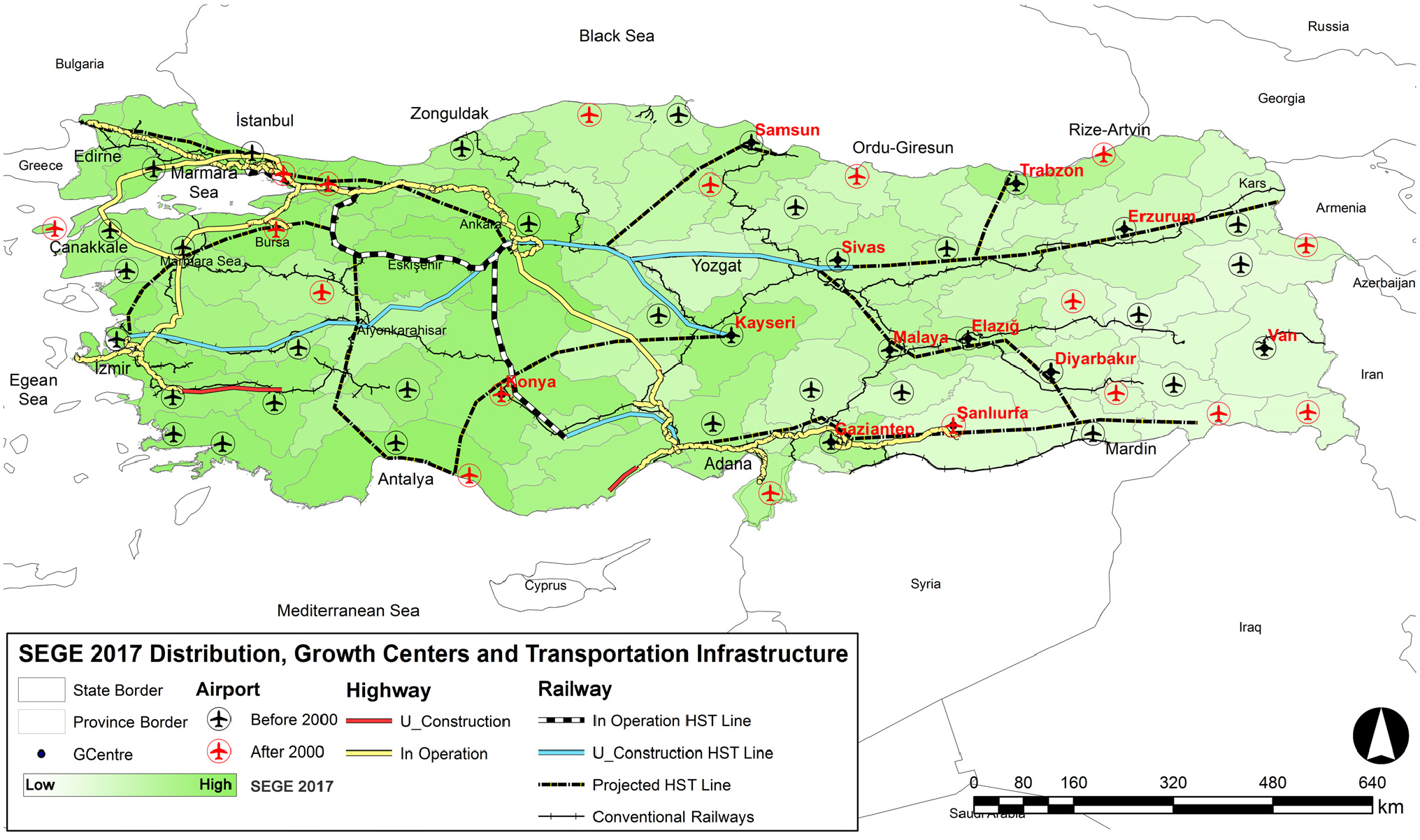
SEGE 2017 index, growth centers, and transportation infrastructure in Turkey 2000–2022.
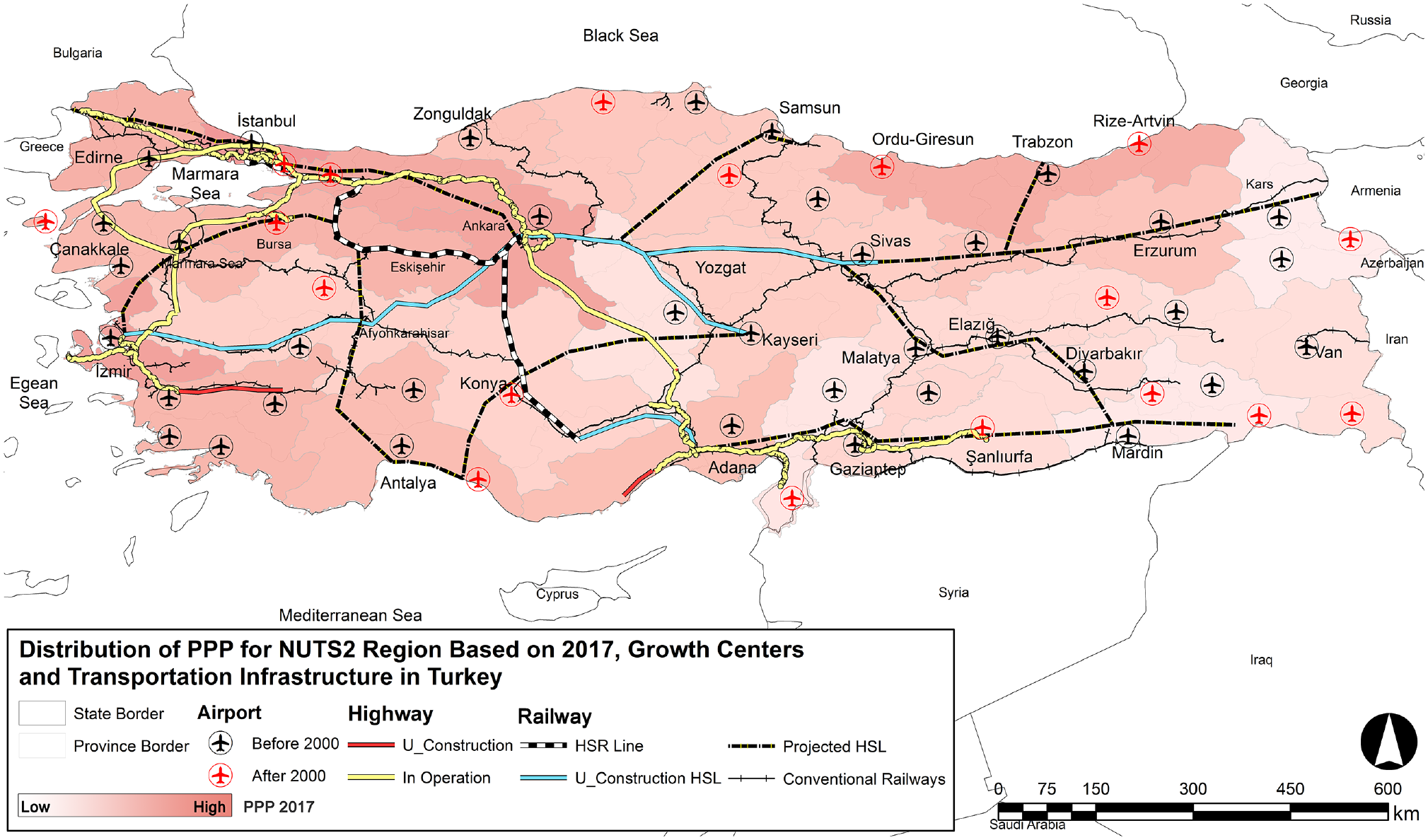
PPP distributions in 2017 and transportation infrastructure in Turkey.
The SEGE survey has been conducted several times (1969, 1972, 1980, 1985, 1991, 1996, 2003, 2011, and 2017) and is based on 61 different indicators under eight subheadings that analyze Turkey’s socioeconomic status ( 54 ) and prevailing inequalities. One subheading in SEGE is concerned with cities’ accessibility. There are six indicators under this subheading aimed at identifying the accessibility of cities by measuring the transportation and communication infrastructure. These six indicators are as follows: length of asphalt roads in a village; distance to the nearest airport from settlement areas; number of broadcasts per house for internet and mobile phone in the border of provinces; ratio of state highways to freight per km; and the ratio of the total length of railway line to a province’s area. The SEGE survey revealed Eastern and Southeastern Turkey to have the lowest accessibility values, one of the basic reasons for this being the lack of transportation services.
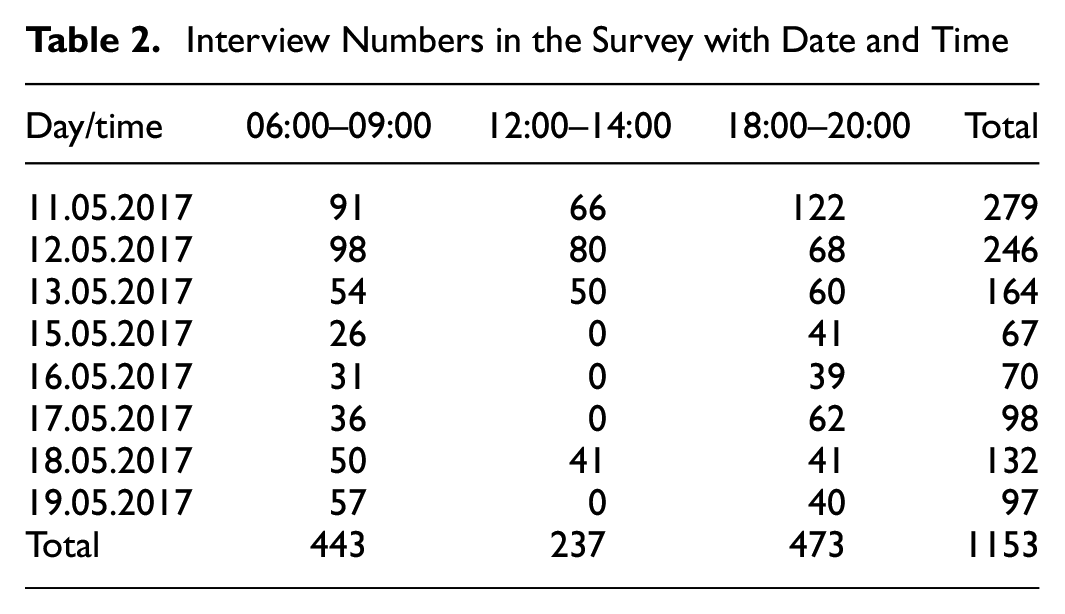
The study first analyzed pricing policy in relation to HST ticket affordability to identify equity and inequalities issues linked with HSTs. Second, the study conducted face-to-face surveys with 1,153 HST passengers on the Ankara–Konya HST line over eight days in May 2017, on both weekdays and over the weekend. People over 15 years of age were selected at random from among all HST passengers traveling on the days of the survey. Duplicate positions were eliminated, so each passenger joined the survey just once. The surveys were carried out on the trains while they were operational. Descriptive information for the case study is given in Tables 2 and 3.
Interview Numbers in the Survey with Date and Time
Statistical Information for the Survey
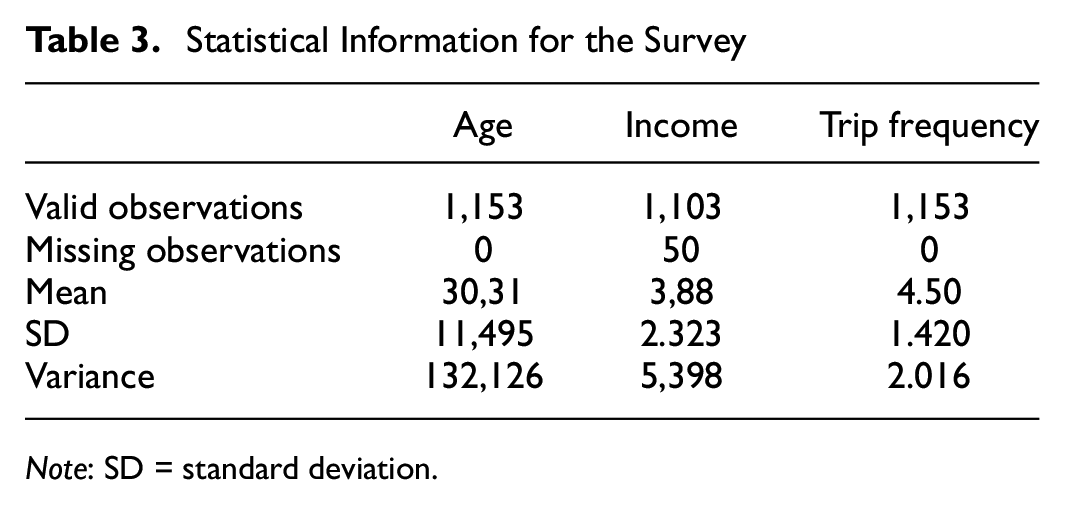
Note: SD = standard deviation.
The survey consists of 31 questions to extract the following information:
sociodemographic data (address, gender, age, occupation, income, property, car ownership, driver’s license);
trip purpose (family, work, entertainment, education, health, other);
transportation mode choice (public [bus, tram, dolmuş, taxi], private car [sharing, pool, park and ride], pedestrian, bicycle), and trip duration [in minutes]);
HST trip frequency (daily, weekly, monthly, once or twice a year) and trip data (alone, with friend[s], with family member[s]);
comparison of transportation modes (safety, ticket price, comfort, accessibility).
Utilizing a survey allowed the study to analyze the characteristics of Turkish HST passengers and then identify whether Turkish HSTs are used by all types of passengers.
Transportation Policies and Inequalities in Turkey as a Developing Country
After discussing the main characteristics of Turkey in relation to inequalities, in this section we highlight the transportation policies aimed at combating these inequalities, in particular by extending the HST network at the macro-level. We then present the study’s methodology, which allows us to address the issue of HST and social and spatial equity in Turkey at the micro-level.
The first HST line in a developing country was launched in China in 2003 to link Qinhuangdao and Shenyang and was 405 km long. Following the establishment of HSTs in China, HST travel came to Turkey in 2009 with a line 232 km long between Ankara and Eskişehir, and the network has since been expanded to Konya, Istanbul, and Karaman. By 2022, there were 1,052 km of HST lines in operation, with a further 1,596 km under construction and nearly 2,000 km planned for construction in the near future ( 4 ). Turkish authorities estimate that by the end of 2023, another 1,000 km linking the eastern and western parts of the country will have been completed. Moreover, 2023 is the centennial anniversary of the establishment of the Republic, by which time passengers will be able to travel from east to west using HSTs, a journey of 2,500 km, in accordance with Turkey’s Eleventh Development Plan ( 55 ).
According to the Turkish Statistical Institute (TurkStat) ( 56 ), the Turkish population diversified and increased by 14.7% between 2008 and 2018. Metropolitan areas such as Istanbul, Ankara, İzmir, Bursa, Konya, Antalya, and Adana contain much of Turkey’s population, with 33% of the total population living in these seven metropolitan areas. Because of the population increase, demand for education has also increased in Turkey over the last decade. Table 4 shows the change in population, student numbers, and tourists between 2008 and 2018 for Istanbul, Ankara, and Konya, which are all cities that have HST lines, as well as for Turkey overall. One of the main results of the increase in population, student numbers, and tourist arrivals is that there has been an increased demand for access to transportation services.
Population, Tourist, and Student Data for İstanbul, Ankara, Konya, and Turkey
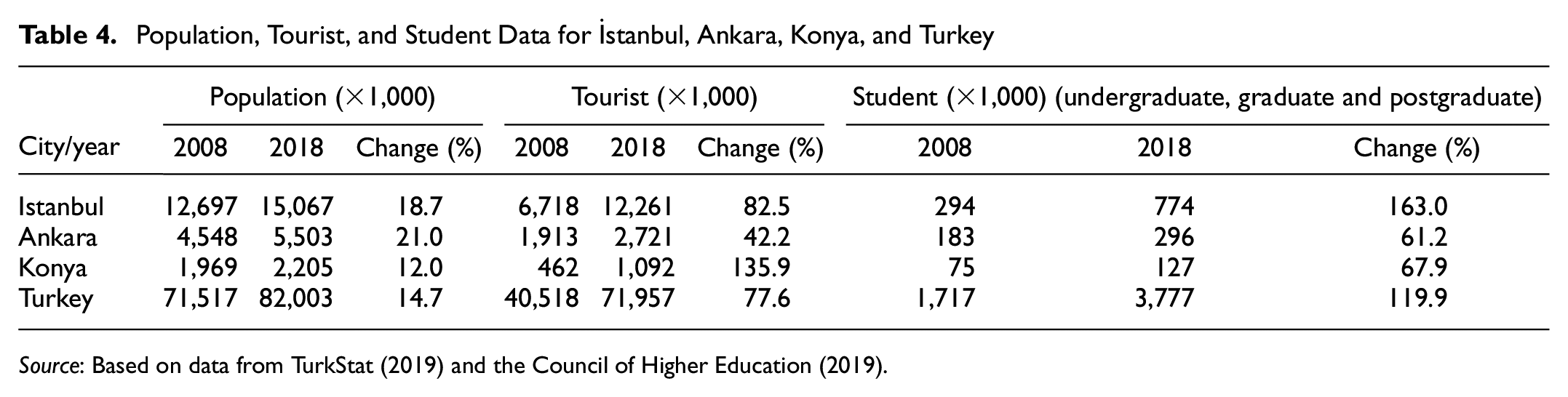
Source: Based on data from TurkStat (2019) and the Council of Higher Education (2019).
The tourism sector in many countries has one of the biggest demands for transportation for all modes. The Turkish tourism sector increased steadily between 2008 and 2018 for both internal travel and visitors from abroad. This sector also provides other services and investments. HSTs encourage the sector in the areas of the cities through which they pass. Konya is one city that benefits from the HST network, and has HST lines and stations downtown. As can be seen in Table 4, tourist arrivals increased by 135.9% between 2008 and 2018, which is one of the main consequences of the HSTs that started operating in 2009. Istanbul and Ankara have also benefited from the HST lines.
Inequalities in Turkey at the Macro-Level
According to TurkStat ( 56 ), Turkey’s total population was 84,680,273 in 2021 and has an annual growth rate of 1.27% ( 56 ). As in other countries, the COVID-19 pandemic has affected the economy, social and cultural activities, mobility, education, tourism, and health in Turkey. For instance, the Turkish economy shrank in 2020 ($717 million) compared with 2019 ($760 million) because of the pandemic, despite the increased export rates. Population growth also decreased from 1.39% in 2019 to 1.27% in 2021. The Gini coefficient measures economic inequality, and this also increased over the past eight years from 0.391 in 2014 to 0.41 in 2020 ( 56 ). Moreover, many tourist activities have shut down since June 2021, and many education facilities have moved online.
According to the SEGE survey, spatial inequality exists between Western and Eastern Turkey in relation to education, health, economic activity, services, and demographics. For instance, the Marmara region has the fastest economic growth, whereas the Eastern Anatolia region has the slowest ( 54 ). According to Peker’s ( 57 ) study, the economic growth difference between the TR10 region of Istanbul (the richest region) and the TRB2 region of Van, Muş, Bitlis, and Hakkari (the poorest region) is 23 units. This means the TRB2 region will take 23 years to reach the same economic level as TR10.
Many transportation infrastructure investments have been made in the past decade in less-developed regions compared with the previous decade (e.g., the Adana–Şanlıurfa and Ankara–Niğde highways and several airports). There are also some projects under construction, for example, the Ankara–Sivas HST line. These have increased the accessibility of transportation in Eastern and Southeastern Turkey (Figure 2).
Over the years, people have moved from Eastern and Southeastern Turkey to Western Turkey to find work and achieve a higher quality of life with regard to education, health, and safety. Currently, millions of people who still have relations in Eastern Turkey live in Istanbul, Ankara, İzmir, Adana, Antalya, and Muğla, and these people travel back to the cities they are from ( 58 ). Thus, people regularly travel from Western to Eastern Turkey for leisure time, holidays, special days, festivals, and celebrations as well as from Eastern to Western Turkey for reasons such as work, education, health, and safety.
All in all, there is a huge transport demand between these regions. However, regular travel by air can be expensive, and Eastern and Southeastern Turkey are characterized by their low income levels and low PPPs (Figure 3). In addition, transportation by car and bus takes too long and is not feasible for regular trips. So, alternatives are needed so that people can travel more effectively and easily.
Transportation Investment and Growth Centers in Turkey
An analysis of the last 20 years in Turkey reveals that most transportation infrastructure investments (e.g., airports, HST stations and lines, state roads, tunnel projects and highways) have increased accessibility in the east-to-west and north-to-south directions. Figure 3 shows the transportation infrastructure investments over the last 20 years that are either planned, under construction, or in operation, as well as PPP distributions.
Investment in transportation facilitates trips, increases accessibility, enhances safety, and reduces accident rates. Moreover, investment in transportation also improves local and national economies not only during the construction phase, but also with regard to increasing mobility and communication.
In the past, the founders of the Republic of Turkey constructed new railway lines to increase access to Ankara and to balance its position as a city against Istanbul’s central location in the country. As the capital of Turkey, Ankara is located in the heart of Anatolia, and the new railway lines constructed between 1925 and 1950 aimed to connect it to eastern and northern provinces of the country such as Zonguldak, Samsun, Erzurum, Malatya, Diyarbakır, Adana, and Gaziantep ( 59 ). However, after the 1950s, Turkish transport policy turned its attention to road transport and away from railway construction ( 60 ).
The first HST project in 2003was conceived with the same aim of increasing accessibility. Construction of the Ankara–Eskişehir line started in 2004 and was completed in 2009, entering into operation in March of that year. The HST reduced travel time between Ankara and Eskişehir from 2.5 h to 1 h 25 min, with an average speed of 250 km. The second stage of the HST project—construction of the Ankara–Konya HST line—began in 2006 and was completed in 2011, entering into service the same year. It reduced travel time over the 306-km route between Ankara and Konya from a bus trip of 3.5 h to a train trip of 1 h 15 min ( 61 ).
The HST line reaches Istanbul via the Pendik district, where it links up with the Marmaray line. It then continues on to Haydarpaşa, the line passing under the Bosphorus on its way. Halkalı is the last point on the European side of the city; however, in the near future, the line will reach Kapıkule’s border in Edirne, and then connect to the European HST networks in the following years. As in other countries, the HST lines in Turkey serve the largest cities, among these being Ankara, Istanbul, and Konya, three of the seven largest cities in the country. Other smaller cities served by the HST service are located along the Ankara–Istanbul line. Thus, the inequalities of access linked to the presence of the line resemble those in some developed countries.
The main purpose of the HST line from Ankara to Sivas in Eastern Turkey is to open up access to the Caucasus and the Caspian region through Tbilisi. An additional goal is to link Ankara and Kars by HST in 2023.
New HST stations have been earmarked for such intermediate Anatolian cities as Eskişehir, Sivas, Afyonkarahisar, Erzurum, Samsun, Diyarbakır, Adana, Kayseri, Antalya, and Mardin. These cities have been identified as growth centers by the Ministry of Development, and HST links are seen as a tool for achieving this projected growth. As shown in Figure 2, HST lines connect the intermediate cities in Eastern and Western Turkey to Ankara. According to TurkStat ( 56 ), the Turkish population exceeded 84.5 million in 2021. Currently, 33% of total population are able to travel by HST. However, by the end of all HST line projects, more than 76% of the total population will have access to the HST network (Table 5) ( 62 ).
Population, Length of HST Lines, and Ratio of Population Covered by HST Lines in Turkey
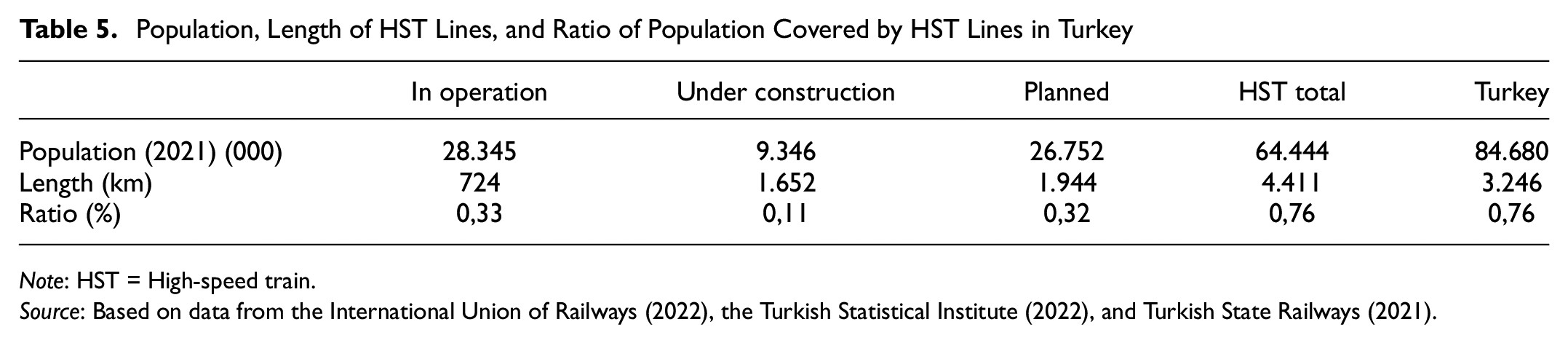
Note: HST = High-speed train.
Source: Based on data from the International Union of Railways (2022), the Turkish Statistical Institute (2022), and Turkish State Railways (2021).
After many years of internal migration in Turkey from the east, southeast, and northeast to metropolitan areas such as Istanbul, Ankara, and İzmir, this has now stopped. According to TurkStat data ( 56 ), in 2016, 2017, 2018, and 2019, Istanbul has experienced an emigration process similar to other cities in the Marmara region.
HSTs and Social and Spatial Equity in Turkey at the Micro-Level
In basic terms, social equity is linked to the level of access different groups have to services according to income level and occupation, with accessibility of transportation systems having a direct effect on the availability of these services. Access to the workplace, schools, hospitals, and other services is a key factor for urban vitality and quality of life. Many cities in Turkey are experiencing a decline in accessibility of services because of the rapid urbanization in recent decades that has affected provinces such as Istanbul, Ankara, and İzmir. Income level also affects accessibility of transportation services, and those in the low- and middle-income groups are affected the most.
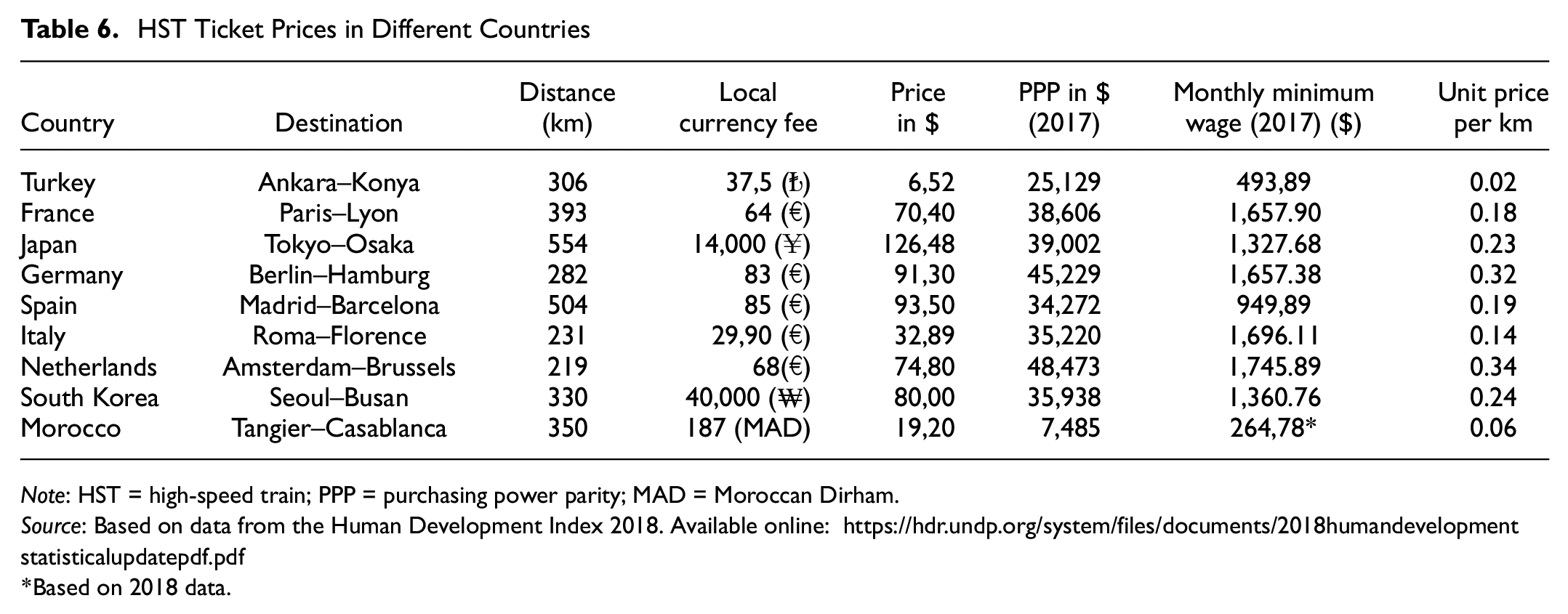
Nevertheless, even though Turkey’s PPP is half of that in developed countries, HST tickets are much cheaper than in other countries (Table 6). The central government subsidizes the railway to provide the population with affordable ticket prices. The subsidies consist of many infrastructural advantages such as energy costs, maintenance, and staff fees. Indeed, the largest portion of subsidies for HSTs is for energy and maintenance costs. According to the Turkish State Railways (TCDD) 2021 annual report, operating and maintenance costs account for nearly 52% of the total expenses, and total losses exceeded $250 million ( 63 ). This loss was subsidized by the government to maintain TCDD operations. The TCDD also built new HST lines to increase the total number of lines from Western to Eastern and from Northern to Southern Turkey.
HST Ticket Prices in Different Countries
Note: HST = high-speed train; PPP = purchasing power parity; MAD = Moroccan Dirham.
Source: Based on data from the Human Development Index 2018. Available online: https://hdr.undp.org/system/files/documents/2018humandevelopmentstatisticalupdatepdf.pdf
Based on 2018 data.
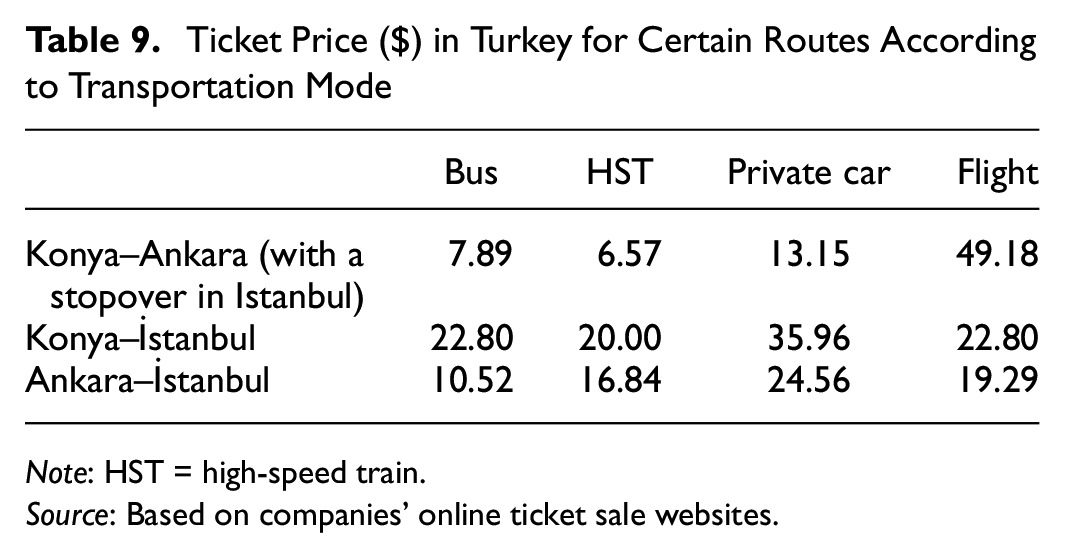
In developed countries such as Germany, France, and Japan, income purchasing power is lower, whereas in some developing countries it is higher, because life is cheaper in developing countries than in developed ones. This is only to be expected, because PPP is based on the “basket of goods” approach, one of the items in which is transportation costs. Although HSTs are known to be a very expensive way of traveling compared with road transport both in developed and developing countries, this is not the case in Turkey. Since the arrival of HSTs in Turkey in 2009, the government has subsidized railways, making HST tickets affordable for everyone despite the lower per-person GDP (Table 6). Indeed, the cost of a train ticket is similar to that of a bus ticket on the Ankara–Konya route, and only slightly more on the Ankara–Istanbul and Ankara–Eskişehir routes. The cost is even lower on the Eskişehir–Konya route ( 64 ).
Table 6 presents a comparison of HST ticket prices in different countries in US dollars. The ticket price is for an undiscounted adult ticket on a one-way route on December 2, 2019, the prices being obtained from company websites. If the ticket prices are high, HSTs are used more extensively by those with the highest socioprofessional income status who are the most mobile (e.g., senior managers, consultants, and directors) ( 65 ). HST services can be economically exclusive because of ticket prices, because HST tickets are often more expensive than conventional train tickets. Long-distance mobility (over 100 km) is correlated with a high level of income, and those with low income levels may then be excluded from being able to access HST services. However, the low ticket pricing policy has contributed considerably to changing travel behavior and transportation modes in Turkey.
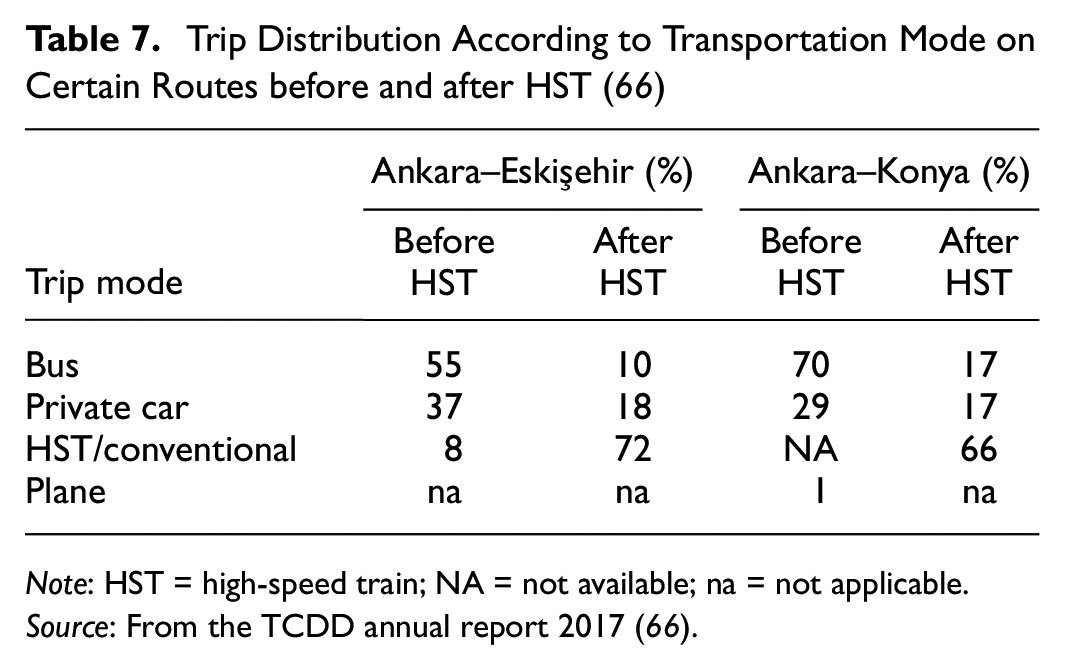
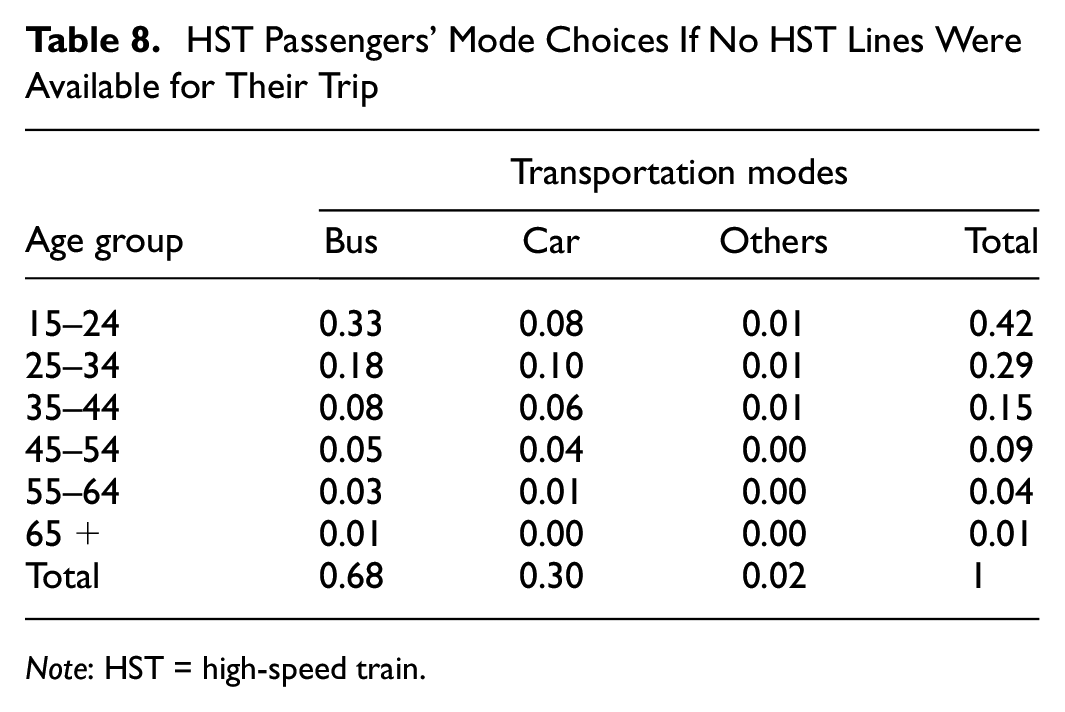
As can be seen from Table 7, the preferred mode of travel has totally changed and shifted toward HSTs, with road transportation in particular having lost passengers because of the transportation pricing policy. According to the survey carried out within the scope of this study, 92% of passengers opted for HSTs because of time savings and low ticket costs. On the other hand, if linked cities had no HST lines, 68% of the total passengers would travel by bus and 30% by car. The remaining 2% would travel by other transportation modes such as airplane or motorcycle (Table 8). HSTs facilitate day trips for passengers at distances between 300 km (Ankara–Konya) and 750 km (Konya–Istanbul).
Trip Distribution According to Transportation Mode on Certain Routes before and after HST ( 66 )
Note: HST = high-speed train; NA = not available; na = not applicable.
Source: From the TCDD annual report 2017 ( 66 ).
HST Passengers’ Mode Choices If No HST Lines Were Available for Their Trip
Note: HST = high-speed train.
Table 9 shows a comparison of different ticket prices for the various transportation modes for the different routes. Bus prices were calculated according to companies’ average price tariffs, assuming that a vehicle has an average fuel consumption of 7 cents per/km. Maintenance costs are also included in the price as 5% of total cost. Flight ticket fares for a stopover in Istanbul are calculated according to the average price tariffs announced by the companies. These may vary, depending on the travel period.
Ticket Price ($) in Turkey for Certain Routes According to Transportation Mode
Note: HST = high-speed train.
Source: Based on companies’ online ticket sale websites.
Figure 4 shows the total number of passengers (over 8 million travels per year) during the pre-pandemic period. The total population of Turkey exceeded 84 million by the end of 2021, with almost 24 million being under the age of 15. As time goes by, HST lines will be extended in Turkey. In the coming years, the amount of intercity travel will most likely increase depending on the new HST lines as well as the frequency of trips, which at the moment are very few compared with developed countries. In 2022, 28.3 million people in Turkey were served by HSTs. This means that 0.38 trips occurred per adult in the service area per year. This sort of calculation gives perspective to the role HSTs have as one of the main transportation modes in Turkey, and this has an important implication for equity.
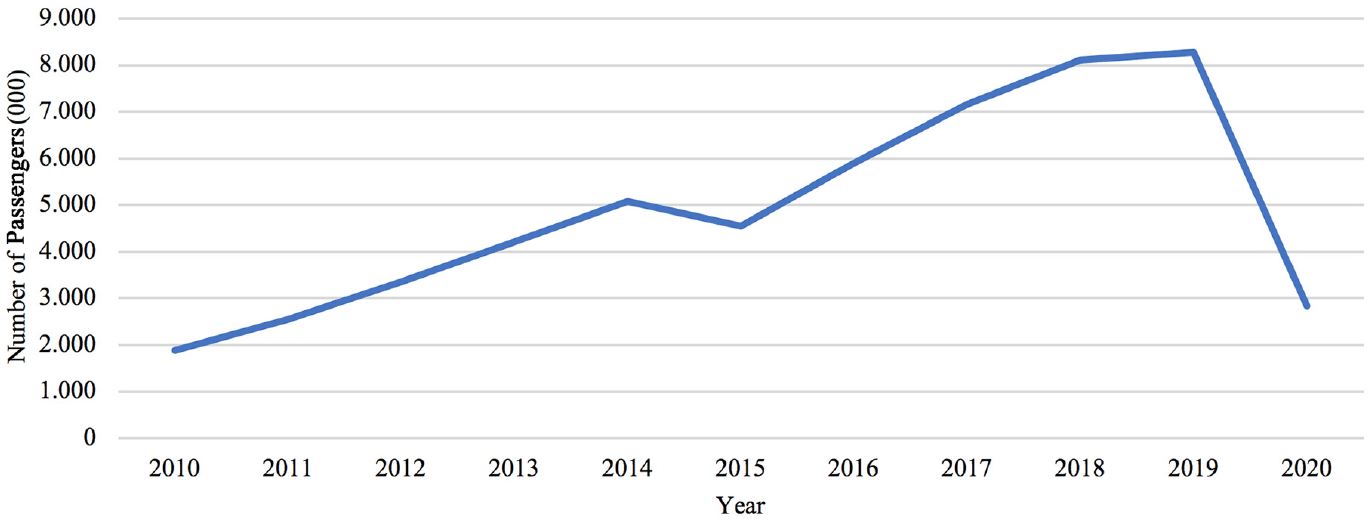
Number of passengers on HST lines in Turkey (thousands).
According to the current study, 57% of participants were male, with more than 70% being in the 15−34 age group. Figure 5 reports the results of the current study with respect to the Turkish population, and indicates that young people travel on HST trains more than any other age group; most are aged 20–24 and are students and young employees. When compared with developed countries ( 67 ), people who use HSTs in Turkey come from a broader range of age groups. The distribution of Turkish HST passengers also differs from developed countries according to occupation and income level.
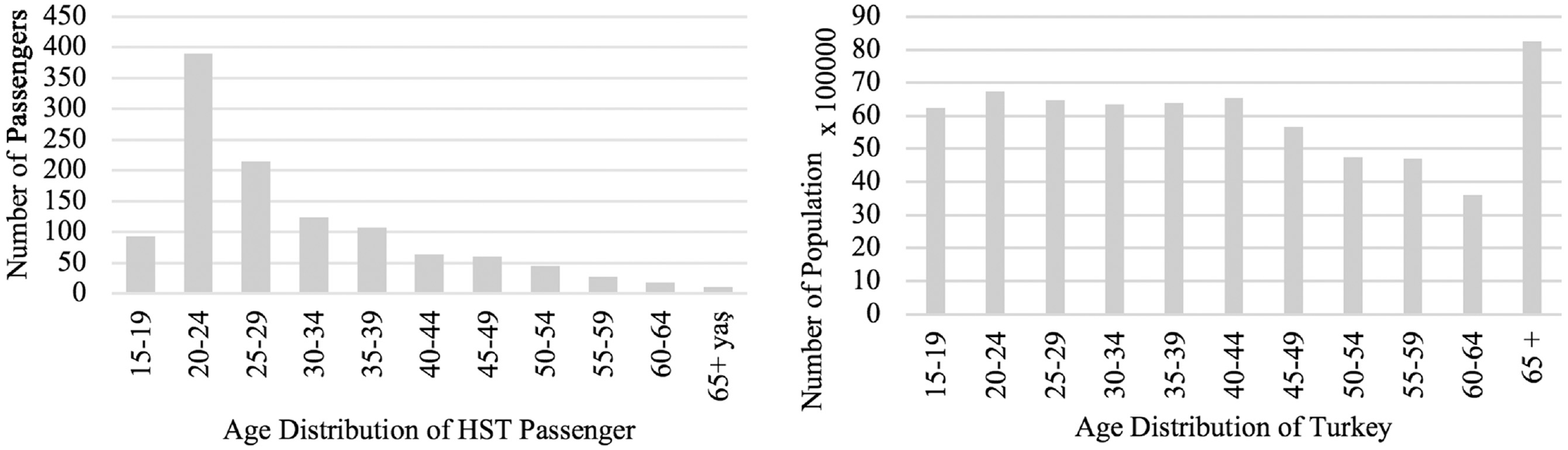
Age distribution of Turkish HST passengers and population of Turkey.
A literature review revealed HSTs are likely to reinforce current inequalities because they do not serve all areas in developing countries equally, which leads to economic exclusion and inequity with regard to access and use. However, the Turkish authorities have followed an approach in which HST travel is subsidized, making the system accessible to all income levels and occupations (Figure 6). As time has gone by, the number of passengers has increased remarkably (Figure 4). According to the survey, (see Figures 5 and 6), different age groups travel by HST regardless of income level, which is different to the situation in developed countries. The survey shows those with a monthly income under $175 are the most prolific users of HSTs, followed by those earning $650, which also differs from developed countries.
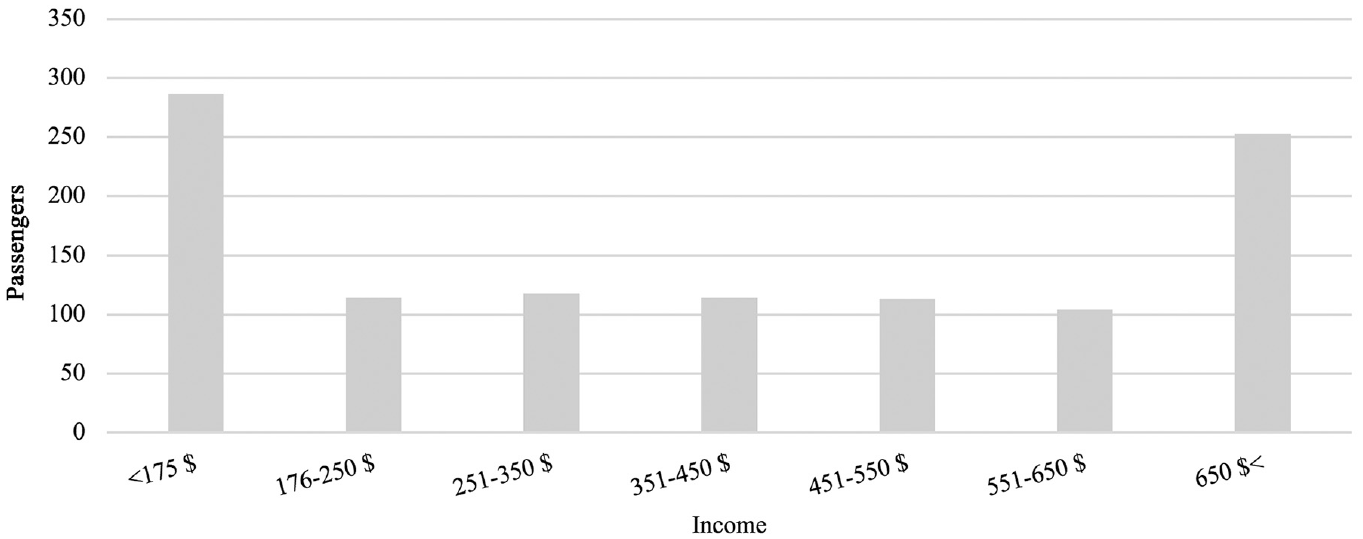
Income distribution (per month) of Turkish HST passengers according to the survey.
According to the survey results, those from the low-income group often travel by HST, which is different from the situation in developed countries ( 68 ). Furthermore, Table 10 shows nearly 50% of HST passengers have no higher education degree. Neither are they among the high-income group. HSTs can help these people travel for their different purposes, whereas in developed countries it is mostly highly educated and high-income passengers who travel by HST ( 45 ).
Income and Distribution of Number of Employed in Turkey and Ratio of HST Passengers According to Level of Education
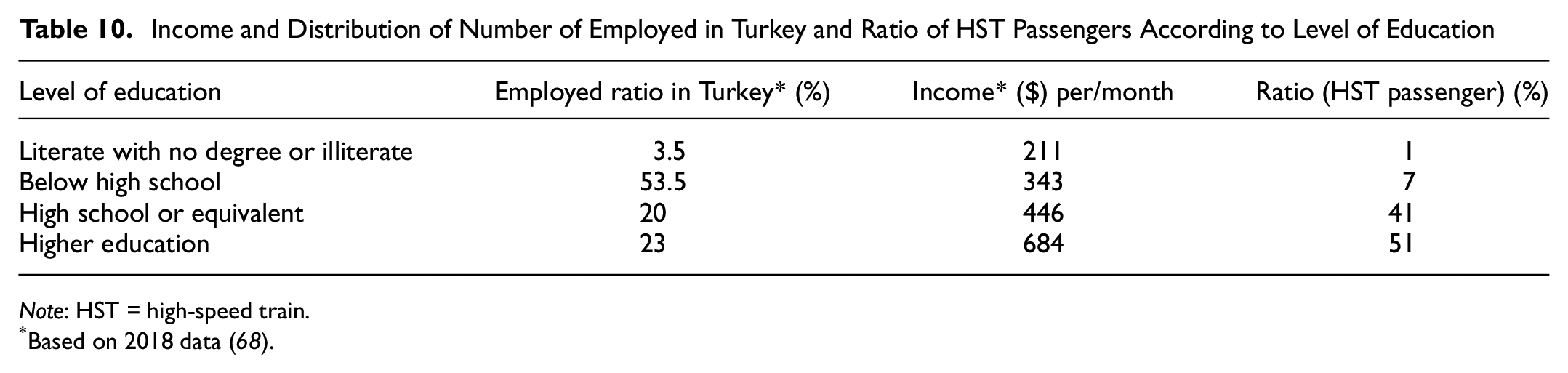
Note: HST = high-speed train.
Based on 2018 data ( 68 ).
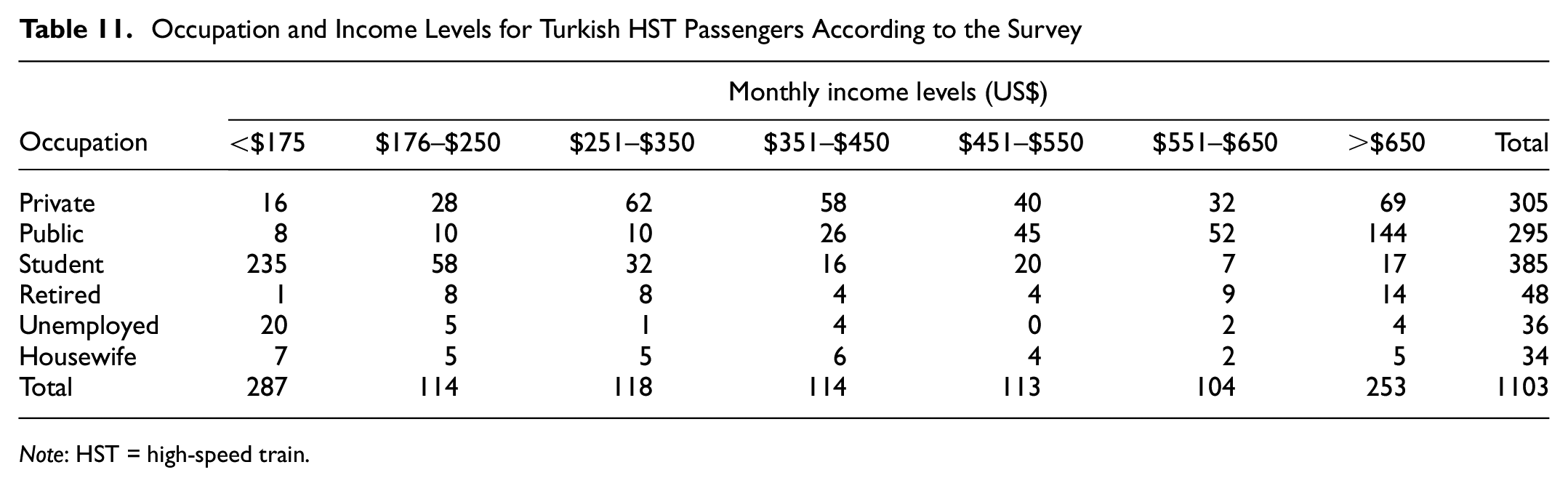
The survey group’s occupations vary, and the list includes students, housewives, and retired people (Table 11). In particular, students who live in Ankara and study in Konya (or vice versa) use HSTs on a weekly basis, and constitute the majority in this group because of the beneficial pricing policies. Another group is working-class young adults with no higher education degree. The TCDD offers monthly tickets for those who make multiple trips every week or month, providing flexibility to passengers and enhancing mobility. The survey results for passengers’ occupation and income levels raise fundamental questions: For whom should HST lines be built, and what is their main purpose? In developed countries, HSTs mostly serve those with a high level of income and education; however, the Turkish HST lines do not encourage this situation. Because of the subsidies, those with low income levels also travel by HST.
Occupation and Income Levels for Turkish HST Passengers According to the Survey
Note: HST = high-speed train.
Figure 7 presents the trip frequency for HST passengers. As explained above, 25% of passengers use HSTs weekly between Ankara and Konya because of the pricing policies. Trip purposes vary according to workplace/status. Mainly, students travel to university for their education, and employees who work for a ministry or other administrative office travel from Konya to Ankara (or vice versa) for their public duties.
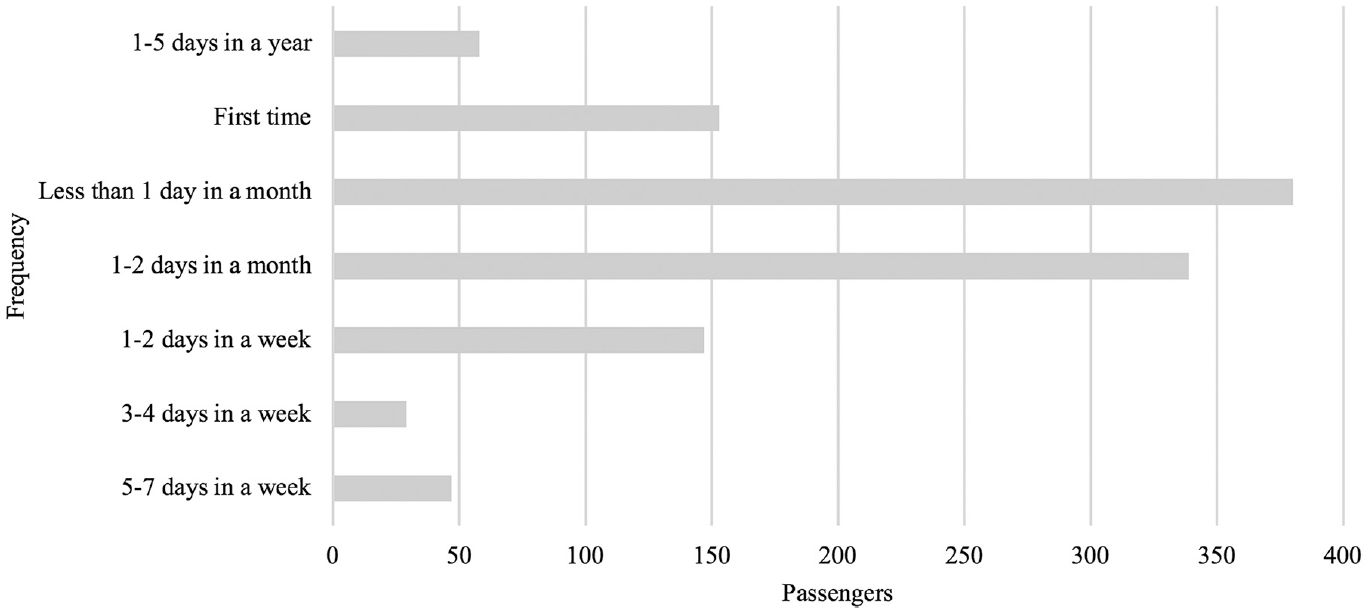
Trip frequency distribution of Turkish HST passengers according to the survey.
Young employees who are mostly single and work for a company or public authority have greater mobility because of their high level of business ability and low space requirements. As such, they may choose to live in Ankara and work in Konya (or vice versa). On the other hand, middle-aged citizens with families and greater space requirements may choose to live in Konya and work in Ankara. One of the main reasons for this is the cost of real estate. According to the survey, those who commute by HST between Konya and Ankara have certain home rental price requirements, and housing rental costs are cheaper in Konya compared with Ankara (Figure 8).
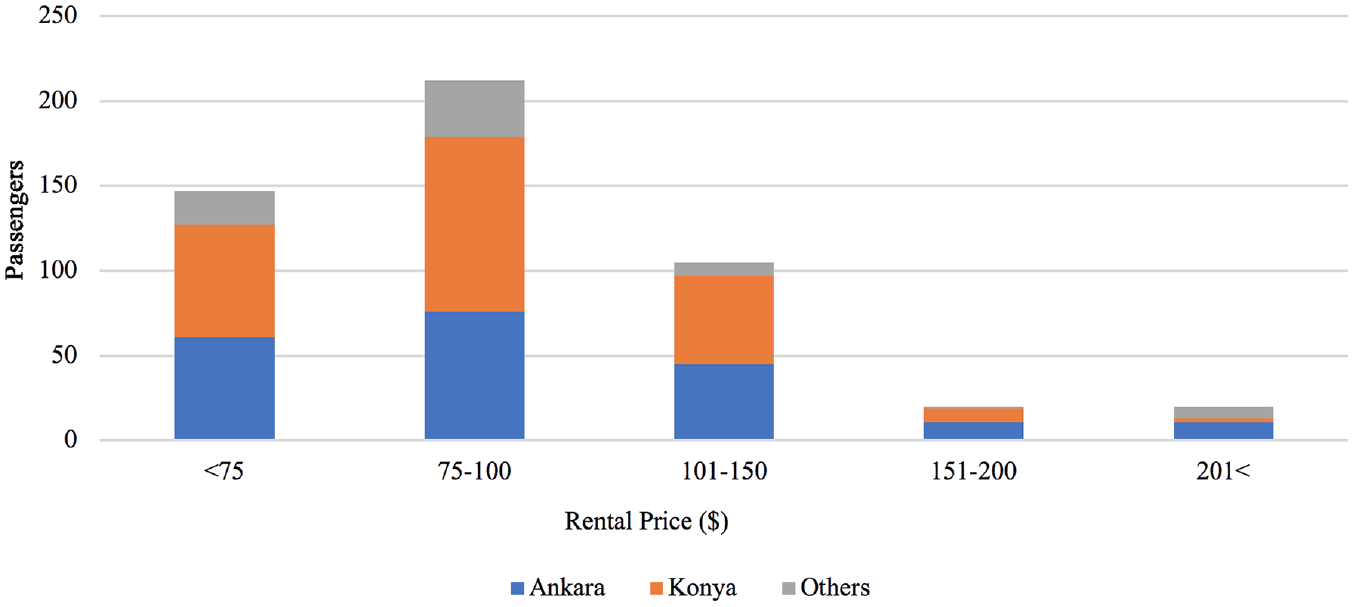
HST passengers’ cost of rental accommodation per month ($) according to the survey.
Moreover, HST travel not only allows passengers to travel from one place to another but also brings regions closer to each other. As understood from the survey results, half of the trips are taken for social activities such as shopping, visiting friends or relatives, or entertainment. Figure 9 clarifies passengers’ start and destination points.
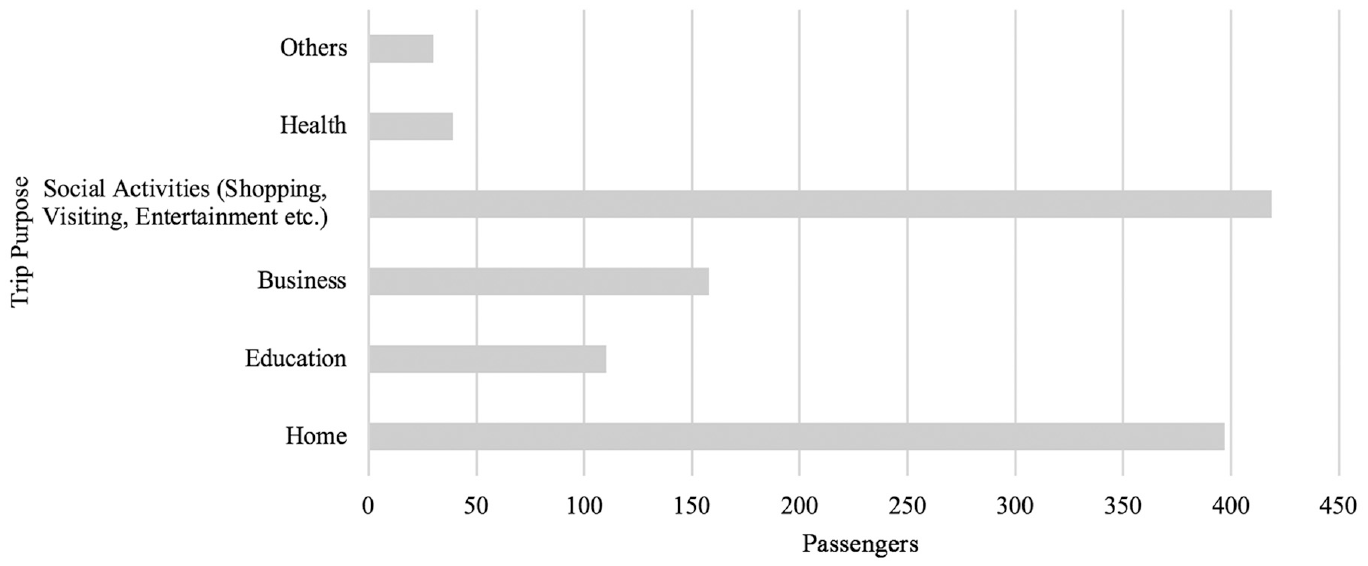
Trip purpose of Turkish HST passengers according to the survey.
As addressed in Section 2, most HST studies have stated that passengers mainly travel for work purposes in developed countries. Two of the most noteworthy results of this study concern trips for visiting relatives and taking part in social activities (Figure 9). Before the start of HST operations, trips between Ankara and Konya took 3.5 h by bus, whereas the HST takes 1 h 15 min. This means that passengers can visit relatives in Ankara or Konya in a single day. As such, HSTs have increased and diversified social activities differently in Turkey compared with developed countries. For instance, according to 2018 TurkStat data, Ankara offers more entertainment opportunities than Konya and, therefore, people travel from Konya to Ankara for activities such as the cinema, theater, fairs, and exhibitions. In contrast, Konya has more tourist and spiritual attractions, for example, the Mevlana Tomb, Seljuk monuments such as Alaaddin Hill, the Madrasa of Ince Minare and Karatay, the Selimiye Mosque, the Sille Old Settlement Space, and Çatalhöyük, and the tourist population in the city is increasing annually. One early study showed similar results with regard to the impact of tourism on the HST lines between Ankara and Konya ( 69 ). Furthermore, the student population is much larger in Ankara because of the ever-increasing university capacity ( 70 ). In general, this information is consistent with the survey results with respect to daily activities in Ankara and Konya.
Discussion
The main questions for HST lines and stations are as follows: How do the authorities determine which cities will have HST lines and stations? What effects will HSTs have with regard to social and spatial equity and equality? As has been shown in developed countries, HST links have a corridor effect on intermediate cities and small cities suffer as a result ( 47 ). However, is the effect in Turkey the same as in developed countries, or does the Turkish HST network have a positive effect on reducing spatial inequity? These are the basic questions this article has asked to bring the current discussion of inequalities in line with the economic crisis.
The study has some limitations with regard to spatial inequalities because of the complicated meaning of the term. As the study has determined, SEGE has revealed that Turkish spatial inequalities occur for many reasons: unbalanced population distribution (i.e., human capacity, employment); poor access to services (i.e., education, health); economic development; and the poor quality of life in Eastern Turkey. The study has attempted to analyze how accessibility indicators affect spatial inequalities based on SEGE parameters, but one of its limitations is the challenging meaning of the term spatial inequalities.
There are many reasons for spatial inequalities: the nature of a space; the socioeconomic culture; and human capacity. As such, it is not only vehicles like HSTs that are able to change a space in a short time and, as such, this becomes another limitation of the study. Long-term spatial inequalities also occur with respect to several social, economic, and political conditions, which involve many complex parameters for solving problems and reducing interregional inequalities, for example, increased access to public services and the provision of affordable transportation costs.
The quality of rail services in developing countries is generally poor or lacking in certain aspects and, thus, the inequality in accessibility between territories served by a HST and other lines becomes much more important. Moreover, income levels in developing countries are by definition lower and income inequalities higher compared with developed countries. Therefore, exclusion can become significant if ticket costs and income inequality are high. When considering social inequalities, the accessibility of transportation services is a key factor in reducing these inequalities. In addition, when considering inequalities in relation to income and education levels or social groups, many countries operating HST lines have HST passengers who belong to certain groups (e.g., those with a high level of income and education) ( 45 ). However, the case of Turkey indicates a subsidized cost pricing policy to be the prominent factor for making a HST service accessible to everyone. As this study has stated, affordable ticket costs reduce social exclusion by increasing service accessibility. However, subsidizing the system begs a fundamental question: Who will pay this cost? HST lines run along certain routes, and some cities are not on these routes, but all taxpayers pay the costs of the service. Thus, the question arises of whether it is spatially equitable for people who do not travel by HST to pay its taxes. More empirical evidence and data are needed before being able to claim whether HSTs are spatially equitable. All in all, more discussion about this issue will occur in the future as the HST lines are extended to developing countries. In addition, energy consumption and emission levels for various transportation modes are other issues that need to be taken into account. For instance, HSTs consume less energy and produce fewer gas emissions compared with road and air transportation ( 71 ). Thus, HSTs are more efficient, safer, and friendlier for nature and human existence. Subsidies could also be considered with regard to energy with the aim of reducing emissions. However, this study has not discussed energy consumption and emission levels, and this is another of its limitations.
Another aim of the study has been to bring to the fore the many different aspects of developed and developing countries with regard to improving transportation infrastructure. The economic inequality associated with HST access varies between developing and developed countries according to pricing policy and income inequality. As a rule of thumb, the greater the income inequality and the more selective the pricing policy, the greater the access inequality. Countries have to decide what to subsidize to help develop their economies and lift their people out of poverty. In addition, why should governments subsidize HSTs to a great extent? Basically, most developed countries built their transportation systems in the twentieth century, whereas developing countries are trying to construct more advanced infrastructures for better balanced development across their territories. As such, the main priorities for developing states during this process could vary considerably compared with developed countries. As has happened in the Turkish case, the construction of HST lines started in economically developed regions. However, the long-term transportation policy has aimed to connect the less-developed regions with these parts of the country. The aim of the projects is to increase access to services and, in turn, realize a more balanced development across the country overall.
Conclusion
This article has attempted to identify the characteristics of Turkey’s HST systems in relation to spatial and social equity, and it is the first time a study has focused on this area of inquiry. The study first addressed the link between HSTs and social and spatial equity through a general literature review of HST lines worldwide. It considers the initial construction of an HST line to cause spatial inequity, whereas network extensions reduce spatial inequity. Moreover, a low pricing policy is seen to increase social equity with regard to HST transportation and increase access to HST services in developing countries, which is not what happens in developed countries.
The study then went on to show how the socioeconomic contexts of developing countries such as Turkey can affect HST use through subsidies. With regard to this point, pricing policies are the key factor for spreading wealth around regions and facilitating access to transportation for the benefit of less-developed regions. Affordable transportation also results in a diversification of travel demands, thus improving intercity communications. Although considerable spatial and economic inequalities do exist with regard to the provision of services in Western and Eastern Turkey, the Ankara–Konya HST line reveals that access to different levels of services provided by both public and private authorities will decrease spatial inequalities when transportation services are accessible to people of all income levels. Thus, the case study has shown that with the arrival of HSTs, spatial inequality between different Turkish cities has decreased and accessibility of transportation has increased. The main factor behind this is TCDD’s pricing policies. In addition, other road transportation modes such as dolmuş (minibuses), which use distance-based pricing, and other larger buses support the HST system by funneling passengers to HST stations. The integration of different transportation modes, and inter-modality policies are highly important for the creation of a sustainable system, not only with regard to managing HST systems, but also for managing other modes of transportation. In addition, location choices for HST stations have also affected the integration of different modes of transportation.
Consequently, it is clearly apparent in Turkey as well as in other developing countries that HST projects will become one of the main transportation modes in the near future once they reach their full capacity and have been fully integrated with other modes of transportation. Integrating HSTs with other modes of transportation will enhance mobility and accessibility between cities, regions, and countries. The case of Turkey shows that HSTs can be considered a valid mode of transportation for developing countries, and also that they have enhanced both mobility and communication, increased social interactions and activities, and served as a tool for reducing interregional spatial and social inequalities. Moreover, HSTs have reduced travel times for certain distances because of their safe, comfortable rolling stock.
Future studies will require more data and evidence to make valid comparisons with HST policies in other developing countries in relation to ticket costs, route selection, accessibility, and spatial and social equities. In particular, aggregation and utilization of data will be important for making any meaningful comparisons.
Footnotes
Acknowledgements
We would like to thank Istanbul Technical University (ITU), Abdullah Gül University (AGU) and Lab’URBA for their support. We would also like to thank Associate Professor Mehmet Ali Yuzer (ITU) for his invaluable advice during the survey.
Author Contributions
The authors confirm contribution to the paper as follows:
Study conception and design: Ahmet Baş, Marie Delaplace
Data collection: Ahmet Baş
Analysis and interpretation of results: Ahmet Baş, Marie Delaplace
Draft manuscript preparation: Ahmet Baş, Marie Delaplace
All authors reviewed the results and approved the final version of the manuscript.
Declaration of Conflicting Interests
The author(s) declared no potential conflicts of interest with respect to the research, authorship, and/or publication of this article.
Funding
The author(s) disclosed receipt of the following financial support for the research, authorship, and/or publication of this article: This work was supported in part by Istanbul Technical University and Abdullah Gül University. In addition, Lab’URBA at Gustave Eiffel University provided the facilities required (i.e., office, computer, online access) for preparing this article.
