







Abstract
Bituminous pavement can become brittle and distressed over time as a result of the oxidation of bitumen associated with exposure to air, and multiple preservation methods could be implemented to prevent oxidation and prolong the lifespans of asphalt roads. Fog seal, a common preservation strategy, refers to applying a thin layer of emulsion on an existing surface to mitigate oxidation and moisture penetration. Over recent decades, some innovative sealants derived from biomass have drawn considerable attention given their economic benefits and eco-friendly properties, including a proprietary soybean-derived sealer that has been successfully applied in many states. While some studies have investigated its performance and concluded that it could effectively preserve asphalt roads and potentially prolong their lifespans, there has been little comprehensive life-cycle cost analysis (LCCA) based on field performance and actual construction cost which would support appropriate recommendations to local public agencies. To fill this gap, this study selected a low-volume asphalt pavement in Clinton County, Iowa, and during summer 2016 sprayed a proprietary bio-based fog sealant on it for five consecutive years of investigation, including an annual distress survey conducted on both untreated and bio-based fog sealant-treated sections for comparison purposes. Field assessment during this five-year period indicated that bio-based fog seal treatment could control crack growth of asphalt-surfaced roads. Bio-based fog sealant installation and road maintenance costs were combined and LCCA was employed, with results suggesting that, among the various options investigated in this study, applying three treatments at five-year intervasl during a service period was the most cost-effective.
Keywords
Preventive maintenance can be of great value in prolonging the service life and reducing life-cycle costs of roads. According to estimates in the Strategic Highway Research Program (SHRP) plan, preventive maintenance performed three or four times during an entire pavement life cycle can prolong its service life by 10 to 15 years and reduce maintenance costs by 45% to 50% ( 1 – 3 ). For example, the Michigan Department of Transportation (DOT) estimated that the cost of overhaul and reconstruction was 10 to 14 times that of preventive maintenance, and following the implementation of a preventive maintenance plan in Michigan in 1992, savings have exceeded $700 million. Selecting the optimal combination of pavement maintenance technologies with an optimized treatment schedule is critical to extending service life and saving life-cycle cost of pavements ( 4 , 5 ).
Commonly used worldwide preventive maintenance measures include fog seal, stone chip seal, ultra-thin cold mix seal (slurry seal, micro surface treatment, cape seal layer), thin and ultra-thin hot asphalt overlay (dense-graded mixture, open-graded friction course [OGFC] wearing layer, porous pavement, or stone-matrix asphalt [SMA], “NovaChip” ultra-thin adhesive wearing layer), joint sealing, and so forth. Different maintenance technologies can be used to repair pavement subjected to various types of damage and conditions to meet the requirements of prolonging pavement life ( 6 , 7 ).
Traditional Fog Seal Technology
So-called fog sealing refers to the technology of using an asphalt sprayer to directly spread emulsified asphalt on a road surface without covering the aggregate, a relatively typical use of diluted and slow-setting emulsified asphalt. Fog seal technology can always be used under pavement conditions that include sufficient strength and rigidity, satisfactory overall stability, and the existence of a flat clean surface ( 8 ).
While fog seal technology is cheap and efficient in protecting pavement performance and prolonging pavement life with relatively small friction-coefficient loss, this sealing technology should not be used for roadways with poor texture, large cracks, deep ruts, bumps, or other structural damage ( 9 , 10 ). The application of a fog seal layer on hot-mix asphalt (HMA) concrete can also cause a significant reduction in surface friction, suggesting that it should not be used for pavements with low friction coefficients ( 11 , 12 ). Application rate and emulsion type could have a significant impact on surface friction, and based on previous investigations ( 9 – 12 ), an increase in application rate could result in increased friction; sealer emulsions have typically exhibited a higher friction loss than rejuvenator emulsions and hybrid products.
Several studies have been conducted to investigate the effects of conventional and modified fog sealants on bitumen and asphalt concrete. Song et al. ( 13 ) assessed how fog seals influence the behavior of an OGFC through laboratory-based testing, and concluded that fog sealant could benefit OGFC pavement by decreasing permeability and abrasion loss. Prapaitrakul et al. ( 14 ) examined the impact of different fog sealants on the asphalt rheology of in situ binders using a t-test comparison and reported that coal tar-based sealant could significantly stiffen the binder. Im and Kim ( 15 ) evaluated the impact of curing behavior of polymer-modified emulsions (PMEs) on traffic opening time, with results indicating that PMEs required a shorter curing period than cationic quick-setting emulsions.
Field practice using fog seals can vary from state to state. For example, the Missouri DOT used an application rate of 0.20 gal/yd2 for fog seal, while the Iowa DOT sprayed fog sealant at the rate of 0.12 gal/yd2 ( 16 , 17 ), and other states, such as California, Texas, Washington, and Oregon, typically apply emulsion in the range of 0.10 to 0.18 gal/yd2 ( 18 – 20 ). While fog seals have successfully preserved thousands of miles of asphalt roads in the United States over the past few decades, applying such fossil-based emulsions could elevate health and safety concerns resulting from the use of toxic components and elevation of greenhouse gas emissions ( 21 – 23 ).
Fog Seal Using Bio-Based Materials
In recent years, bio-based products have attracted greater attention in transportation infrastructure applications given their relatively low cost and non-toxic, renewable, and other environmentally friendly characteristics ( 23 ). The soybean-based agricultural oil evaluated in this study is a commercialized rejuvenator agent successfully implemented in many states such as California, Kansas, Missouri, Nebraska, Ohio, Oregon, and others. It is a black oily sealant with a citrus smell at least 88% comprised of biological components, 40% of which are from soybean oil. It has been claimed that this oil, when used as a competitively priced sealing product, could reduce the need for traditional asphalt emulsion in pavement preservation by prolonging road lifespan ( 24 ), serving as a bio-based, non-toxic, and carbon-negative sustainable alternative. Unlike conventional petroleum-based asphalt sealers, it does not require a heating process or a long curing time, and it is also easy to spray and apply. Treated pavement can also be rapidly opened to traffic, typically after about 30 min. This bio-based fog sealant does have some limitations, however, such as an inability to repair alligator cracking.
Some efforts have been made to verify the performance of bio-fog sealant. Ghosh et al. ( 25 ) have reported that while bio-based agricultural oil could soften the control adhesive, it had no significant effect on bending creep and strength. Johnson ( 26 ) conducted laboratory and field tests to evaluate different fog sealants, including those from soybean-based oil, with test results indicating that nontraditional and bio-based fog sealants may temporarily reduce surface friction and road marking retroreflection. Von Quintus and Raghunathan ( 27 ) evaluated the four-year performance of three different asphalt penetrating sealers, including bio-based sealers, on four newly-rehabilitated highways in the state of Ohio. Their findings indicate that bio-based fog sealants could benefit pavement condition rating (PCR) values and service life if the evaluating procedures follow the recommendations in the long-term pavement performance program (LTPP) distress identification manual ( 28 ). Nahvi et al. ( 29 ) performed a stochastic cost analysis for a bio-based sealant and indicated that it could be cost-effective and possibly extend pavement service life by seven years. However, few studies have either initiated any long-term field assessment for bio-based fog sealants or comprehensively analyzed their life-cycle benefits.
Life-Cycle Cost Analysis
Life-cycle cost analysis (LCCA) is an economic analysis approach used in pavement engineering to evaluate overall economic efficiency among various construction, rehabilitation, and maintenance options ( 5 ). Several state highway agencies (SHAs) and local public agencies (LPAs) presently employ the LCCA technique to assess the economic feasibility of pavement design and maintenance practices. While the most commonly used indices in LCCA include internal rate of return (IRR), equivalent uniform annual cost (EUAC), benefit–cost ratio (B/C), and net present value (NPV), given the discount rate and analysis environment in the United States, NPV and EUAC are more commonly used here ( 30 ). NPV is the value of all future cash flows (positive and negative) over the entire life cycle of an investment discounted to the present. Li et al. ( 31 ) summarized the life-cycle cost of using recycled solid waste materials in highway pavement. Based on their findings, most studies have adopted NPV as the indicator in LCCA because it is straightforward and practicable. EUAC is defined as present and future costs for an equalized and annual cost using a selected discount rate, preferred for scenarios where the analysis period is unknown or unequal ( 30 , 31 ). From the LPA perspective, evaluating economic feasibility is vital for implementing new pavement preservation strategies such as the use of bio-based fog sealants. The EUAC method is appropriate for this case because, for comparison purposes, the life-cycle cost of each preservation strategy could be converted into an annual cost ( 27 , 29 ). Although some recent studies have evaluated the performance of different sealing agents ( 25 – 29 ), it is essential to use reliable field inputs to optimize the determination of pavement life-cycle costs.
To summarize, a study is needed to assess the field performance of the bio-based fog seal and implement a reliable LCCA to validate the economic feasibility.
Study Scope and Objectives
This study, part of the Iowa DOT-sponsored InTrans 16-595 and HR-3011 project ( 32 ), aims to evaluate long-term field performance and analyze the life-cycle cost benefits of using bio-based fog sealant derived from soybeans on low-volume Iowa asphalt pavements. A fog-sealing project performed on a local asphalt road was initiated in Clinton County in 2016, and over an interval of approximately five years (summer 2016 through summer 2021), a continuous distress survey was documented at the project site. Based on the summarized distress survey results and collected cost information, a comprehensive LCCA using the EUAC method for bio-based fog sealant was executed.
Experimental Approaches
Bio-Based Fog Sealant Installation at the Project Site
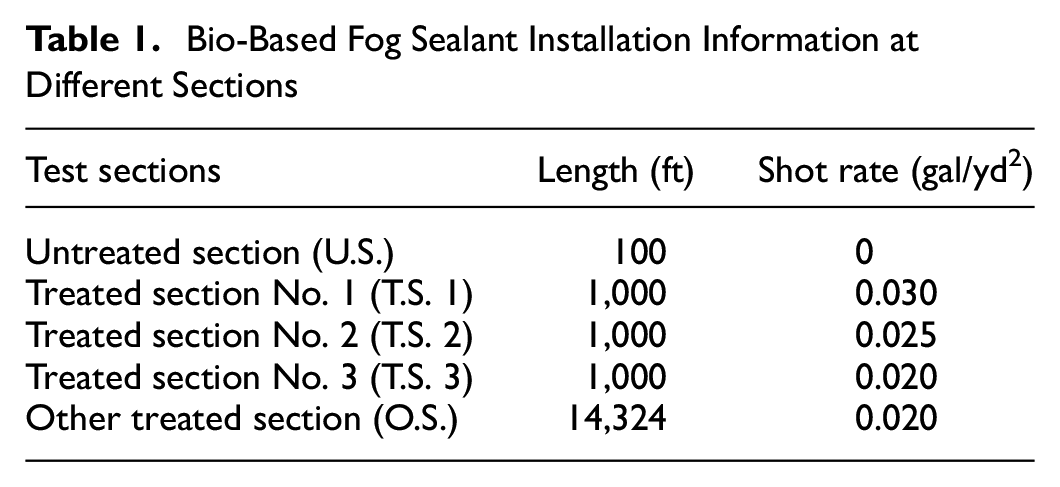
As illustrated in Figure 1, this study selected 3.3 mi of low-volume asphalt pavement on County Road E-63 northeast of Toronto in Clinton County, Iowa, as a pilot site for bio-based fog sealant treatment. This site was a two-lane pavement with less than 400 vehicles per day (vpd) road traffic, and each lane was 10-ft wide with a 3-ft gravel shoulder. The construction record of the existing surface layer indicates that this road was overlaid with a 3 in. HMA in 2011. The project site was divided into four soybean-based oil-treated sections and one untreated section (U.S.) to distinguish the effects of different spray rates on the road surface. Table 1 shows the length and shot rate for each section, the highest rate (T.S. 1) being 0.03 gal/yd2. The lowest rate of 0.02 gal/yd2 applied at Treated Section No. 3 (T.S. 3) and Other Treated Section (O.S.). was the optimum rate recommended by the manufacturer. Although all sections used the same pavement structures and mix design, the O.S. had the most existing cracks. In contrast, three treated sections (T.S. 1 to 3) and one untreated (U.S.) section only had two existing cracks before application.
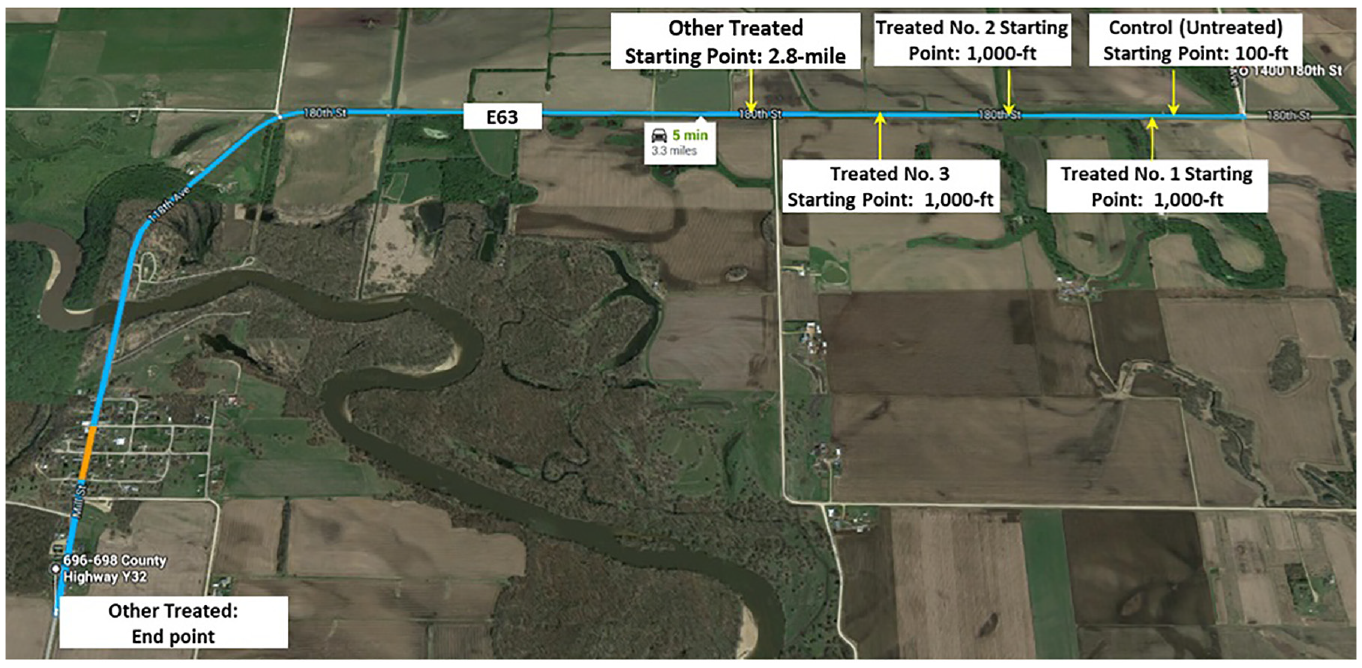
Locations of bio-fog seal test sections on E-63 near Toronto in Clinton County, Iowa.
Bio-Based Fog Sealant Installation Information at Different Sections
The application of fog seal on E-63 in Clinton County was initiated on June 29, 2016. As illustrated in Figure 2, a sprayer equipped with an oil tank was used to spray this bio-based fog sealant onto the road surface, with adjustable nozzles and a flexible spray gun in the spray truck capable of covering the entire lane during spraying. Compared with a traditional asphalt emulsion sprayer, the bio-based oil sprayer did not require a heating system, suggesting that using bio-based fog sealants could save energy and be environmentally friendly. Figure 2 also shows the appearance of treated and untreated road surfaces; the bio-sealant-treated area presented a darker surface on installation day and faded to the untreated surface color after a couple of days. Based on extensive experiences of application and field observation, once the bio-based fog seal application had been completed, most treated roads could be opened to traffic within 30 min, although for some roads with low surface friction, the opening time could be extended accordingly ( 32 ). In contrast, conventional fog sealants like asphalt emulsion typically require a couple of days for curing before reopening ( 33 ). The overall bio-based fog seal installation process is straightforward and quick. Such features could make bio-based fog sealants potentially cost-effective in prolonging lifespans of low-volume asphalt roads.
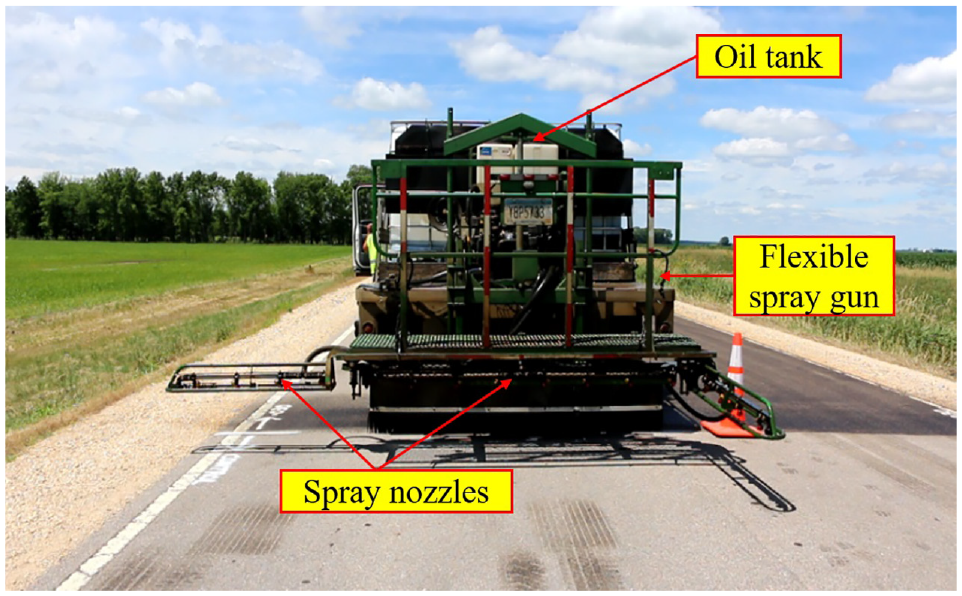
Field implementation of bio-based fog sealant at E-63 in Clinton County.
Distress Survey
Environmental and traffic loads can cause the pavement to deteriorate over time, and determination of distress conditions is a component of critical visual evidence for LPAs in determining pavement preservation strategies ( 34 ). A visual distress survey following the LTPP distress identification manual was undertaken annually up through the fifth year (2021 summer) to assess the performance of the project site ( 28 ). Figure 3 shows the distress survey template used to document tracking length, type, and sealing conditions for performance evaluation. The crack condition was converted into crack growth rate in estimating the service life of the project site.
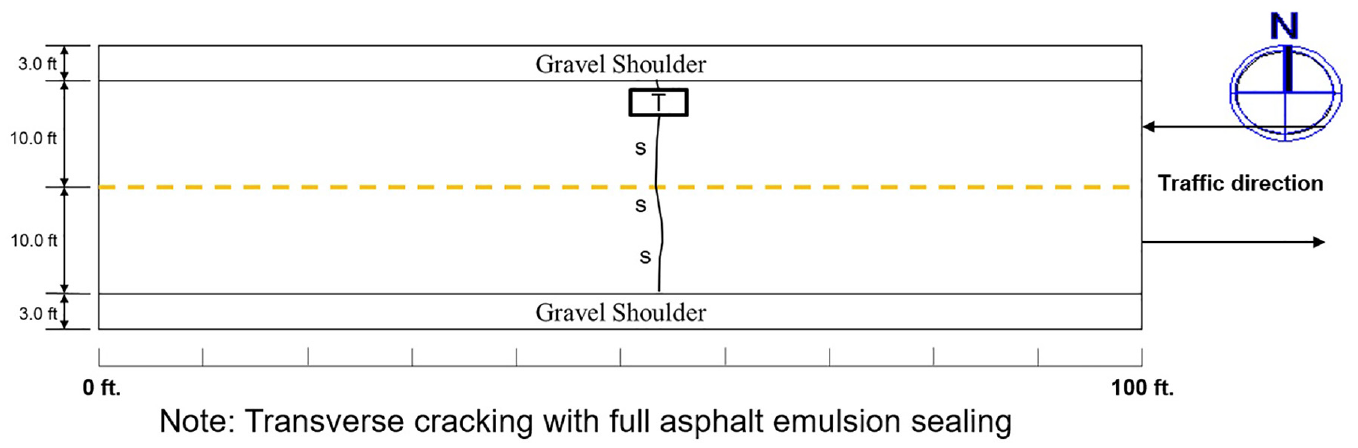
Distress survey example.
Life-Cycle Cost-Analysis Model
Engineering decision making in pavement preservation strategies considers both the effectiveness and financial viability of sealing agents, and as an economic analysis tool, a LCCA model can assess the cost of multiple alternatives and help identify the most cost-effective option ( 35 , 36 ). The NPV method is a typical and standardized LCCA method widely used in constructing transportation infrastructure; it uses the analysis period, cash inflows, and outflows as critical inputs to the calculation of current total values. Equation 1 can be used to calculate NPV.

where
F is the future value ($),
i is the discount rate (%), and
n is the analysis period (year).
While it is appropriate in a given case to have the same analysis period for all alternatives, there could be various analysis periods based on the characteristics of the NPV model, and in some cases this could possibly result in an unfair cost analysis if the NPV model was employed ( 36 ). The EUAC method can be appropriate for dealing with cases with varying analysis periods. Unlike the NPV model, the EUAC model will convert all cash flows to an annual cost, and an optimum economical alternative can be determined based on the lowest EUAC value. Equation 2 depicts the calculation of the annual cost.

where
P is the present value ($),
i is the discount rate (%), and
n is the analysis period (year).
Since this study considered different scenarios and cases with varying service periods for bio-based fog sealant-treated sections, the EUAC model was adopted for calculating the yearly cost of fog-sealing treatment using a bio-based product.
Field Distress Survey Results
No sealed cracks were observed during the first survey carried out before fog seal treatment during summer 2016. After treatment, five-year distress surveys up through summer 2021 were performed. The manual surveys focused on transverse cracks only because that was the primary distress type identified at the project site. As illustrated in Figure 4, a and b , transverse cracking was the typical cracking type observed at the entire project site, and some cracks had previously been sealed during routine maintenance implemented by LPAs in Clinton County. It is known that transverse cracking is a low-temperature-related distress that occurs as a result of asphalt shrinkage. Since the state of Iowa is located in the defined wet and freezing climate region, asphalt pavement generally experiences lengthy cold winters that generate numerous transverse cracks. The investigated asphalt road was also categorized as a low-volume road (vpd < 400), suggesting low-likelihood of load-related longitudinal cracking occurrences.
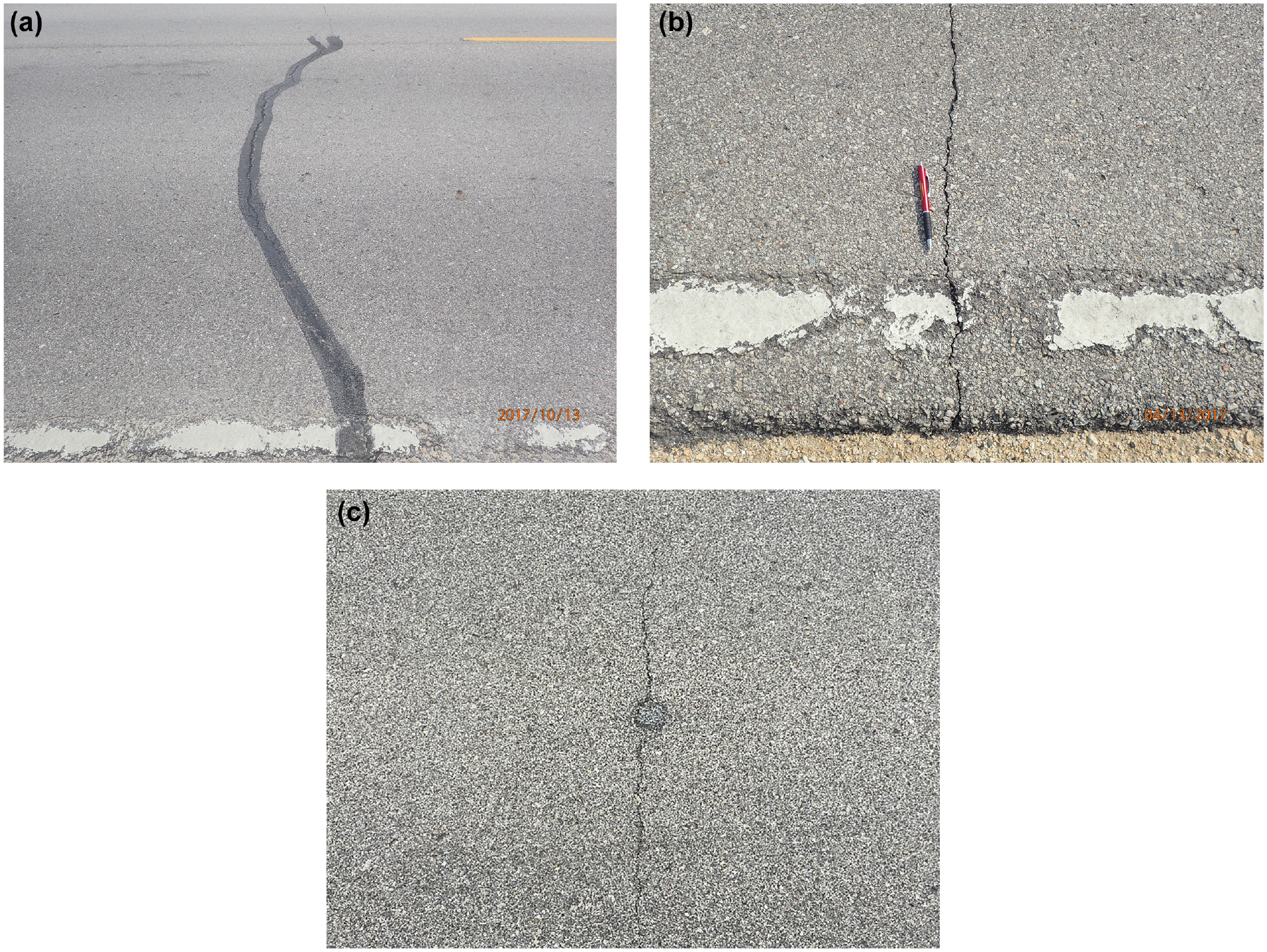
(a) Sealed crack; (b) unsealed crack; and (c) crack occurred at coring location.
At the project site, some cores were taken after bio-based fog sealing for additional lab analysis, causing several weak spots and associated transverse cracking over time on this asphalt pavement. Figure 4c illustrates cracking located at a coring spot. Since such cracking was a result of human activity, survey results were presented both with and without coring-related cracking. Table 2 contains cracking documentation at the investigated Clinton County site, revealing 102 new transverse-cracking occurrences identified five years after bio-based fog seal application. After normalizing to the same section length of 1,000 ft, while the U.S. should be the most distressed, the treated section with the highest application rate (T.S. 1) exhibited more newly formed transverse cracks than the other three treated sections (T.S. 2, T.S. 3, and O.S.), indicating that the highest rate was not the optimum rate for controlling cracking. It was noted that, during the period from the 2018 summer to the 2019 summer, the number of cracks suddenly increased at the project site, with the historic Clinton County cold temperature in January 2019 the likely primary reason ( 37 ). That the greatest crack increase that occurred in T.S. 1 during this period could be attributed to the low-temperature-induced bitumen hardening and reflection cracks of an underlying portland cement concrete (PCC) layer.
Distress Survey at the Project Site in Clinton County, IA
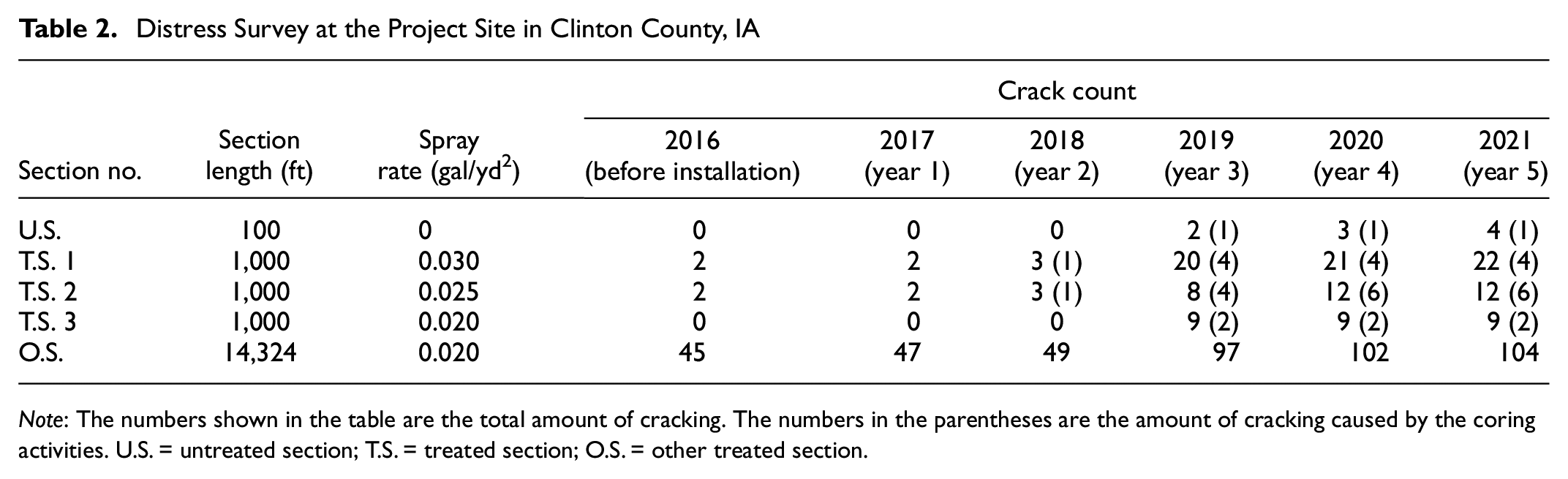
Note: The numbers shown in the table are the total amount of cracking. The numbers in the parentheses are the amount of cracking caused by the coring activities. U.S. = untreated section; T.S. = treated section; O.S. = other treated section.
As shown in Figure 5, the outcomes of the cracking surveys were normalized to total crack length per mile for comparison purposes, revealing that the U.S. experienced the most cracking while the sections treated at low or medium rates exhibited the lowest cracking five years after treatment. Although the distress survey performed in this study identified many existing cracks at the site before the application, their influence was excluded from the cost analysis with more focus given to the newly formed cracks that occurred after application (i.e., yearly crack growth rate). Figure 6 shows the yearly crack growth rate converted from the total crack length in each section, with existing cracks ignored. As seen in Figure 6, given the reversed oxidation process, all treated sections exhibited a lower crack growth rate than the untreated section. Based on previous studies by Ghosh et al. ( 25 ) and Johnson ( 26 ), bio-based preservation agents could help soften bitumen and reduce cracking. It was noted that application to the O.S. was at the same rate as for T.S. 3 (0.02 gal/yd2), resulting in a lower cracking condition. The underlying PCC conditions could be a reasonable cause of such differences because some transverse cracks can be formed from reflection cracks in the underlying layer, and they may play the same role in crack conditions of T.S. 1 and 2 because the increase in application rate should not lead to more cracks.
The findings of the distress survey indicate that bio-based treatment could control crack growth for at least five years, with the most effective spray rate being 0.02 gal/yd2.
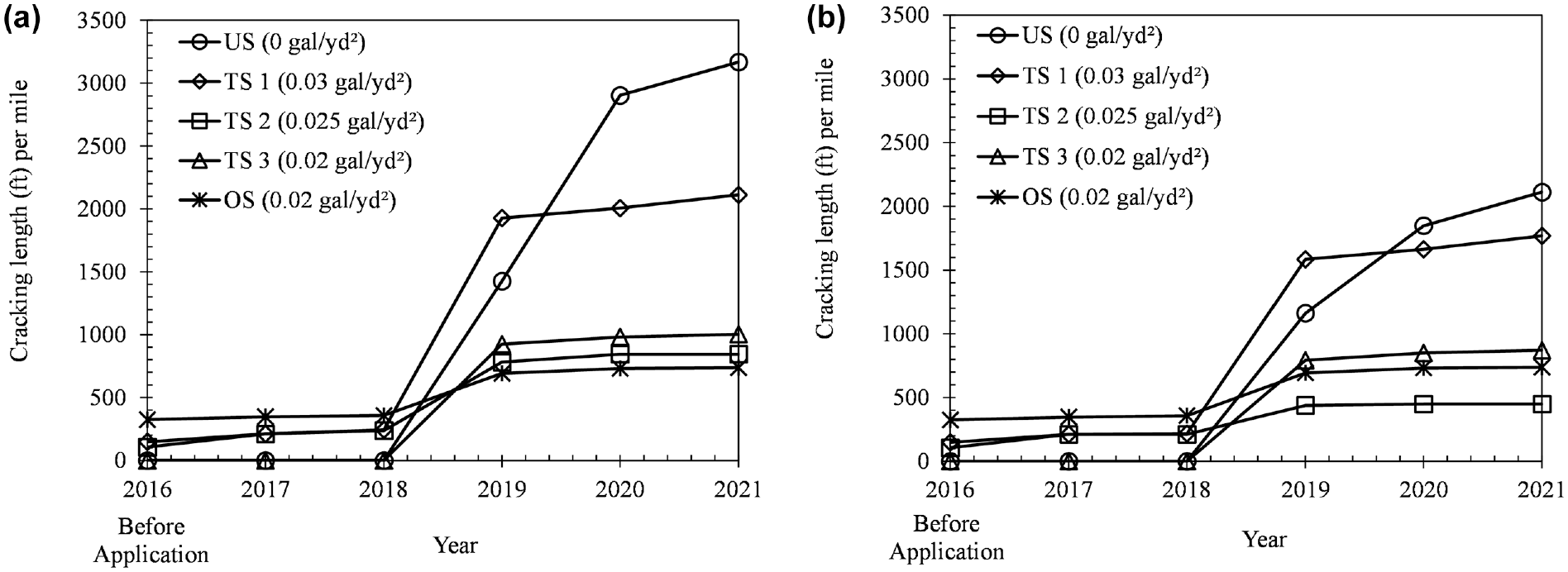
Normalized cracking length: (a) with coring-related cracking; and (b) without coring-related cracking at different testing sections.
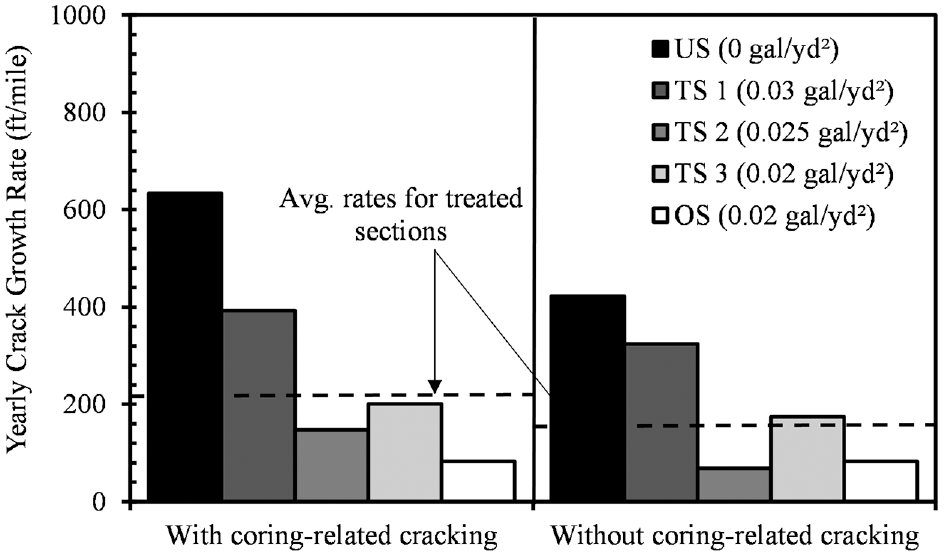
The yearly growth rate of cracking at different testing sections.
Results of Life-Cycle Cost Analysis
Scenarios and Cases in LCCA
The economic analytical tool adopted in this study was the EUAC model that normalizes equivalent investment options to a yearly cost, with crack condition for the different cases the crucial criterion for determining the analysis period (service life). Based on field observations, the coring activities generated some unexpected transverse cracking that could affect the yearly crack growth rate and lead to changes in road service life calculated by the EUAC model. The study also proposes reconstruction and rehabilitation as different possible alternatives at the end of service life. Reconstruction was defined as entirely removing the existing surface and base of an asphalt roadway and constructing a new pavement structure (6 in. asphalt surface and 6 in. aggregate base) with new materials, while rehabilitation, was assumed to be reclaiming the existing surface using cold-in-place recycling, a typical action in Clinton County, Iowa, after road service life. The following four scenarios for differentiating cracking conditions and end-of-life strategies were developed:
Scenario A adopts reconstruction at the end of service life and includes cracking caused by coring activities.
Scenario B considers rehabilitation instead of reconstructing a new surface and includes coring-related cracking.
Scenario C is also a reconstruction scenario but does not consider any cracking caused by coring activities.
Scenario D is a rehabilitation scenario also without including coring-related cracking.
Other vital considerations in this EUAC model include the effective period of bio-based treatment and the number of treatments. Bio-based fog seal could preserve the roadway and control the crack growth rate at a relatively low level during the effective period, as shown in Figure 6. The local environment, traffic conditions, and sealant spray rate could also affect the effective period that typically ranges between three and five years ( 24 ). While bio-based treatment could be re-applied several times to prolong service periods, this could consequently raise the total cost. In view of these factors, different cases varying in both effective periods (three to five years) and the number of treatments (one to five) could be considered. A three-year effective period represents the worst treatment case while a five-year effective period would be the best case. The EUAC model is sensitive to service life, and this study used a 20-year predicted lifespan of untreated asphalt roadways, with the extended period in each treatment case based on the yearly crack growth rate, effective period, and the number of treatments. The influence of crack conditions existing before the first application was eliminated in the LCCA. Once the bio-based fog sealant-treated section has reached the same total crack length as the U.S. after a 20-year service life, the period of the treated section will be determined as the extended service life.
Table 3 reflects details of the four scenarios and 28 cases developed in this study, including treatment type, effective period, number of treatments, service life, and end-of-life strategy. All cases with various inputs were analyzed to evaluate the cost-effectiveness of bio-based treatment during an entire asphalt-roadway life cycle. As can be seen in Table 3, in each scenario, the case of re-application with a five-year single treatment effective period and three treatment times was the most beneficial in prolonging pavement service life. Cases A-R-5, B-R-5, C-R-5, and D-R-5 having three treatment times were the best case for Scenarios A, B, C, and D, respectively.
Information for Different Scenarios and Cases
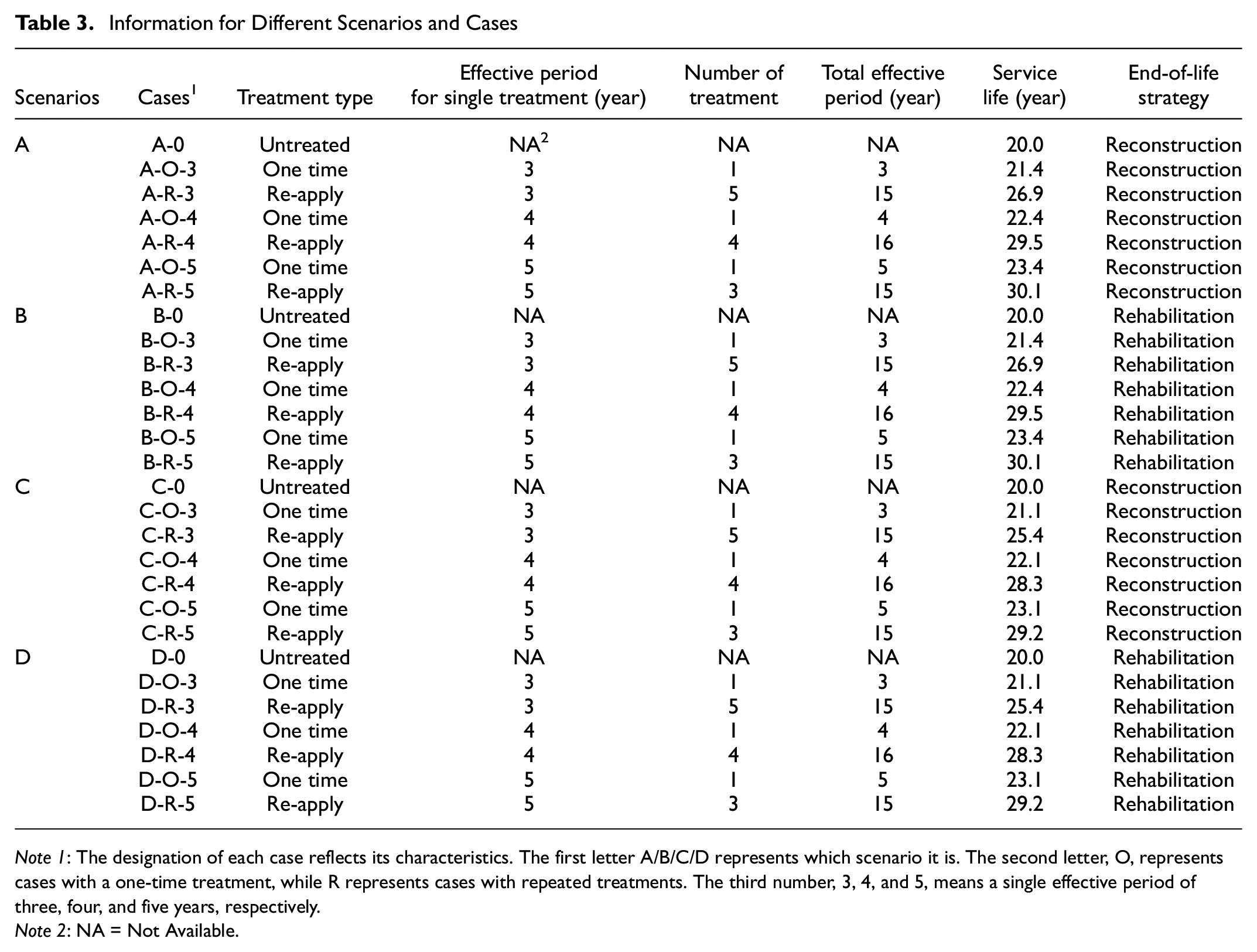
Note 1: The designation of each case reflects its characteristics. The first letter A/B/C/D represents which scenario it is. The second letter, O, represents cases with a one-time treatment, while R represents cases with repeated treatments. The third number, 3, 4, and 5, means a single effective period of three, four, and five years, respectively.
Note 2: NA = Not Available.
Cash-Flow Diagram
The cash-flow diagrams in Figure 7 reflect actual construction and treatment timelines. Figure 7a depicts Scenarios A and B that considered the impacts of coring-related cracks on the service life of the road, while Figure 7b presents the cash flow for Scenarios C and D that ignored coring-related cracks. The service lives shown in Figure 7, a and b , are different (red arrows), and detailed information is presented in Table 3. For example, the first treatment occurred during the fifth year because of existing surface construction in 2011, and the first fog seal application in 2016. The different treatment schedules and end-of-life strategies are also displayed in the diagrams. The EUAC analysis used three cash outflows, including the costs of bio-based fog sealant, cracking sealing, and end-of-life actions (e.g., reconstruction or rehabilitation).
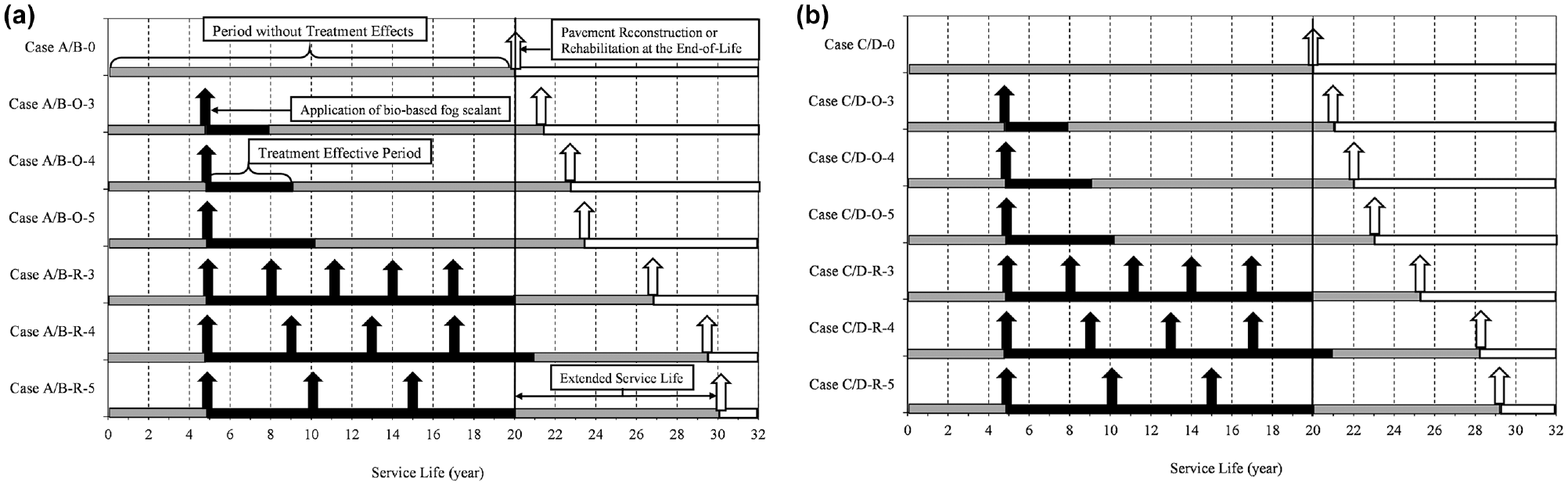
Cash flow cases for one-time and repeated treatments in: (a) Scenario A and B: and (b) Scenario C and D.
The price quote from the Clinton County engineer reflected a total cost of a bio-based fog seal of approximately $81,600, corresponding to an average unit cost of $2.12/yd2. The total installation cost was comprised of costs of mobilization, materials, labor, and equipment. An investigation by Johnson ( 26 ) also built a bio-based fog sealant-treated section in Minnesota and reported a unit cost of bio-based fog seal of $2.22/yd2, very near to the unit cost calculated in this study. In addition to the cost of bio-based fog seal, the Clinton County engineer also included typical expenses of crack sealing, reconstruction, and rehabilitation, assuming that cracks at the project site would require bitumen sealing each year after the fifth year until the service life had elapsed. The yearly crack sealing cost depended on the crack growth rate in each case. The unit cost of rehabilitation was estimated to be $25/yd2, while reconstruction was estimated to cost $40/yd2. The itemized cash outflows are presented in Table 4, and there were no identified cash inflows. A 5% discount rate (i) was used. Given these cash outflows, and with some considerations derived from reasonable assumptions and estimations, the results and conclusions could differ for different scenarios.
Cash Outflows in the Equivalent Uniform Annual Cost (EUAC) Model
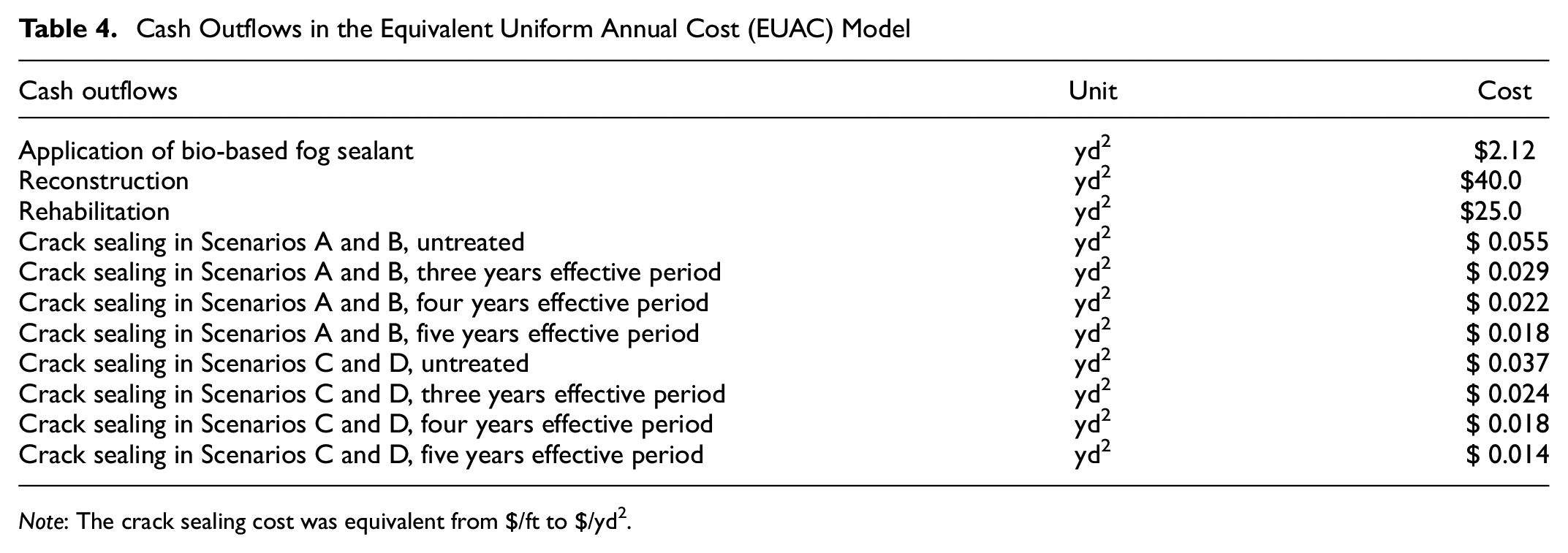
Note: The crack sealing cost was equivalent from $/ft to $/yd2.
EUAC Results and Discussion
Figure 8 illustrates the itemized EUAC for the 28 cases, revealing that re-application resulted in EUAC elevation for bio-based fog seal but lowered EUAC for reconstruction or rehabilitation. Table 5 depicts the total EUAC. Among all scenarios, the untreated cases did not always have higher EUACs than the treated cases, although Case A-0 presented the highest EUAC of $1.30. By comparison, the cases with repeated treatments were better than for untreated and one-time treated cases from the perspective of lowering EUAC, except for Cases B-R-3, C-R-3, and D-R-3. The most cost-effective case in each scenario was the one with three re-applications, each maintaining five years of effectiveness. The lowest EUAC of $ 0.70/yd2 was identified in Scenario D (Case D-R-5); it would rehabilitate the asphalt pavement after the most extended service life, approximately 30 years.
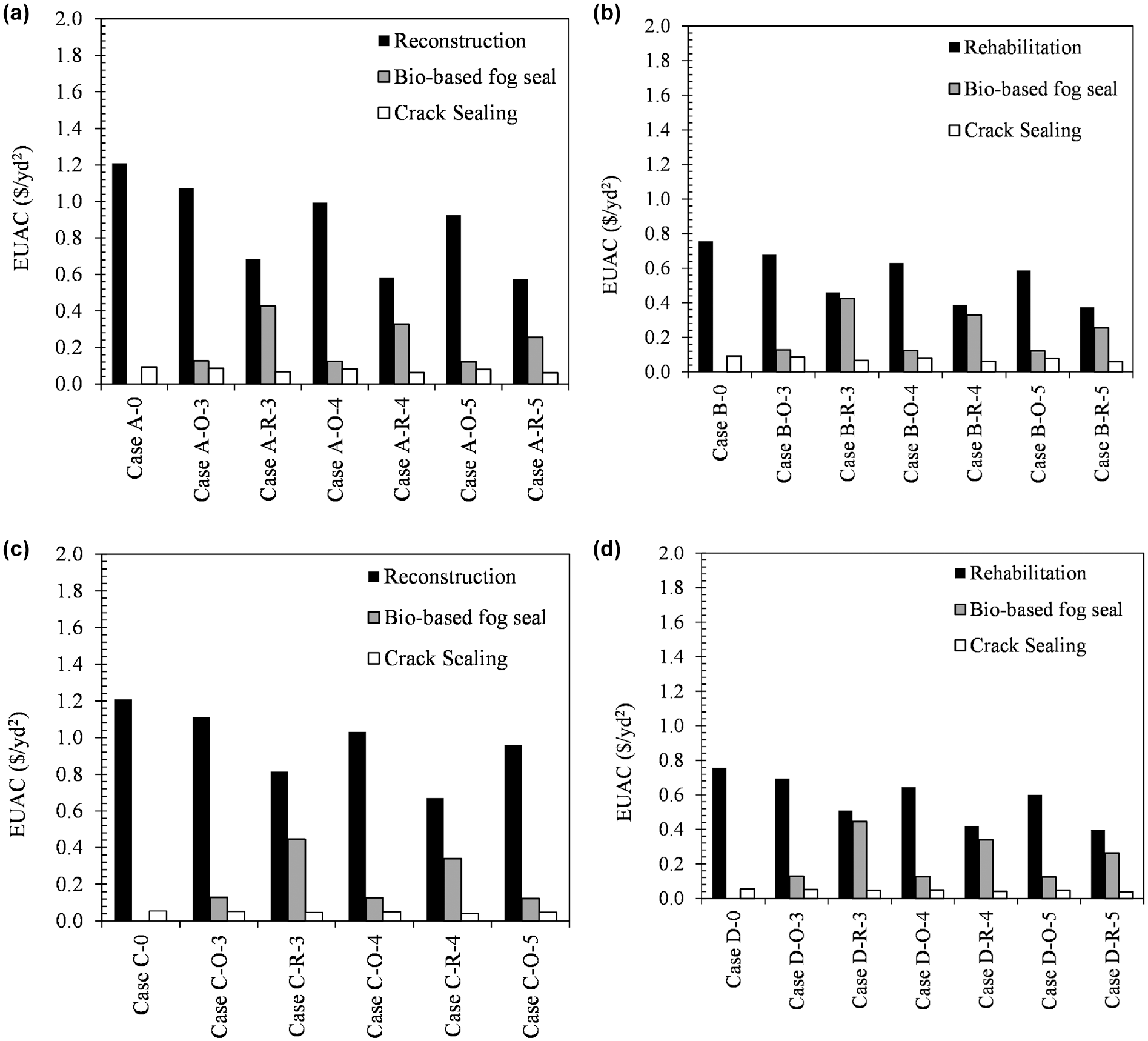
Equivalent uniform annual cost (EUAC) for different scenarios: (a) Scenario A; (b) Scenario B; (c) Scenario C; and (d) Scenario D.
Calculated Equivalent Uniform Annual Cost (EUAC) for Different Scenarios and Cases
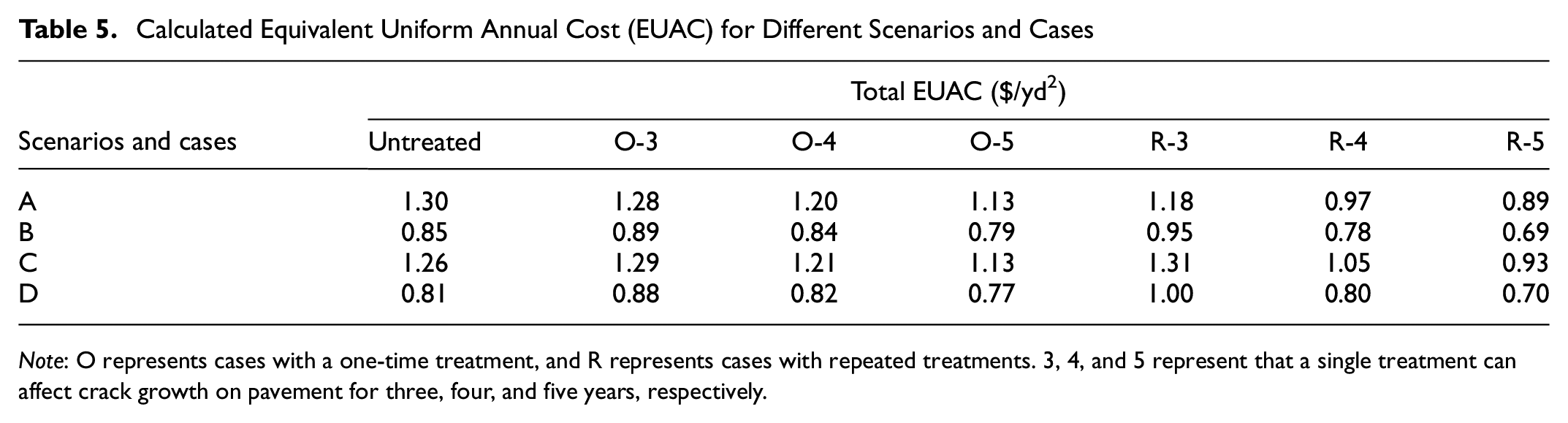
Note: O represents cases with a one-time treatment, and R represents cases with repeated treatments. 3, 4, and 5 represent that a single treatment can affect crack growth on pavement for three, four, and five years, respectively.
The findings in LCCA reveal that an appropriate bio-based fog seal could save up to 30% of annual cost compared with the do-nothing (untreated cases), and the original service life could be prolonged by up to 10 years.
Conclusions and Recommendations
While asphalt emulsion has been successfully used as a traditional fog sealant to preserve low-volume asphalt pavement for many years, it has non-negligible drawbacks, such as environmental contamination and carbon emissions, that propel the LPAs and pavement engineers toward seeking a more sustainable solution. In recent decades, several proprietary bio-based sealants have been developed for pavement preservation, and a soybean-derived product available in Iowa is one of them. While some studies indicate that the application of bio-based fog sealant could preserve asphalt road surfaces more cost effectively, this benefit has not previously been investigated through a real field application case.
This study selected a 3.3-mi low-volume asphalt pavement in Clinton County, Iowa, for application of soybean-based agricultural oil as fog sealant, and implemented five consecutive years of distress survey. The installation of bio-based fog seals and maintenance cost information were gathered from LPA and County engineers to perform a comprehensive LCCA, and the key findings and recommendations can be summarized as follows:
The five-year distress surveys indicate that bio-based fog seals could reduce the yearly crack growth rate, potentially extending the service life of asphalt roads.
The lowest application rate of 0.02 gal/yd2 is more cost-effective in controlling crack development than other spray rates assessed in this study.
The LCCA results show that bio-based fog seals could effectively reduce EUAC by up to 30%, except for cases involving only one treatment for which the effective period is only three years.
Based on both field observations and reasonable assumptions, using the appropriate treatment strategy can prolong the additional service life of roads by up to 10 years.
Among all scenarios, cases with three treatments with a total effective period of 15 years are the best practices associated with the lowest EUAC.
If the effective period of one treatment is only three years, one-time treatment won’t be cost-effective.
Based on the field distress survey and LCCA, a bio-based fog seal could be an effective alternative fog seal for low-volume asphalt road preservation.
Re-application with bio-based fog sealant every four or five years is recommended.
Applicable spray rates of bio-based fog sealant range from 0.02 to 0.03 gal/yd2.
A follow-up field investigation in another five years, including both one-time and re-application cases, is recommended to study the crack growth rate and verify the LCCA employed in this study.
To validate the LCCA employed in this study, investigating more asphalt roads with comparable untreated and bio-based fog sealant-treated sections is recommended.
Field investigations with lower rates, such as 0.01 and 0.15 gal/yd2, are recommended for future studies that could potentially exhibit better cost-effectiveness for bio-based fog sealants.
Footnotes
Acknowledgements
The authors gratefully acknowledge the Iowa DOT for the financial support of this study. The authors are also grateful to Roger Boulet (Iowa DOT), Chris Brakke (Iowa DOT), Khyle Clute (Iowa DOT), Kent Ellis (Iowa DOT), Vanessa Goetz (Iowa DOT), Kevin Jones (Iowa DOT), Todd Kinney (Clinton County), Mark McCulloh (Bargen, Inc.), Jason Omundson (Iowa DOT), Jeffrey Schmitt (Iowa DOT), Brian Moore (Iowa County Engineers Association Service Bureau [ICEASB]), Jim Schnoebelen (Iowa DOT), Doug Standerwick (Bargen, Inc.), Fred Thiede (Iowa DOT), Francis Todey (Iowa DOT), Danny Waid (ICEA Service Bureau), and Bob Younie (Iowa DOT) for providing their comments and assistance in this study. The authors would also like to express their sincere gratitude to including, but not to limit to, Bargen Inc. for their help in field site implementation, and other research team members from Iowa State’s Program for Sustainable Pavement Engineering and Research (PROSPER) at the Institute for Transportation for their assistance during the course of this project.
Author Contributions
The authors confirm the contribution to the paper as follows: study conception and design: H. Ceylan, S. Kim; data collection: B. Yang, Y. Zhang; analysis and interpretation of results: B. Yang, Y. Zhang; draft manuscript preparation: B. Yang, Y. Zhang, H. Ceylan, S. Kim. All authors reviewed the results and approved the final version of the manuscript.
Declaration of Conflicting Interests
The author(s) declared no potential conflicts of interest with respect to the research, authorship, and/or publication of this article.
Funding
The author(s) disclosed receipt of the following financial support for the research, authorship, and/or publication of this article: The study presented in this article was financially supported by the Iowa Department of Transportation under Project HR-3011.

Data Accessibility Statement
All data, models, or code that support the findings of this study are available from the corresponding author on reasonable request.
The findings and opinions in this study are solely those of the authors. Endorsements by the Iowa DOT are not implied and should not be assumed.