







Abstract
Polyurethane (PU) is a synthetic polymeric material with excellent mechanical properties and chemical designability. An in-depth understanding of the synergetic effect between polyurethane and asphalt binder is needed to produce durable PU-modified asphalt paving materials. This study focuses on the physicochemical changes, the states of in situ synthesized PU, and the modification effects of PU after PU prepolymers and chain extenders are added into asphalt binder. Investigation methods involve the Fourier transform infrared (FTIR) spectroscopy, partial Corbett separation, confocal fluorescence microscopy, particle size distribution test, rheological test, and theoretical calculation. It was found that the incorporation of PU has no obvious chemical influence on the asphalt binder and the main working principle of PU modification is its physical dispersion in asphalt binder. In situ synthesized PU is uniformly dispersed in asphalt binder and the size distribution of PU particles follows a log-normal distribution. As PU content exceeds 15%, the formed PU particles in asphalt binder are noticeably enlarged. Moreover, PU modification leads to significant improvements in asphalt binder properties, including high-temperature rutting resistance, elastic recovery, and deformation resistance. Rheological experiments and theoretical calculations under the framework of suspension rheology indicate that PU-modified asphalt binder can be reasonably modeled as a bimodal solid particle suspension, and the dynamic viscosity of PU-modified asphalt binder is predominantly determined by the dynamic viscosity of the maltenes and the volume fractions of PU and asphaltenes.
A variety of polymers are added to asphalt binder to improve its engineering properties. The commonly used polymeric modifiers include styrene-butadiene-styrene (SBS) block copolymer, styrene-butadiene rubber (SBR), ethyl vinyl acetate (EVA), and polyethylene (PE) ( 1 , 2 ). Recent years have witnessed an increasing interest in using polyurethane (PU) to modify asphalt binder ( 3 ). PU has some desirable engineering properties such as high mechanical strength, flexibility, and thermal stability. The methods of introducing PU into asphalt binder also provide unique advantages that are not available for conventional polymeric modifiers.
Conventional polymers are typically introduced into hot asphalt binder through physical blending. According to the well-known relationship between the viscosity of a fluid and added fine particles ( 4 ), the viscosity of the fluid will rise drastically with particulate content increase unless the particulate phase is subject to some physical change such as significant softening or melting. However, a large increase in viscosity poses a challenge in material production and construction. As a result, the content of added polymer is usually limited. For example, the polymer content in SBS-modified asphalt binder typically ranges from 3% to 5%. Even in the so-called highly modified asphalt binder, the SBS content is about 6% to 7% ( 5 , 6 ). To improve the workability of polymer-modified asphalt binder, a high temperature is required. This not only increases energy consumption and greenhouse gas (GHG) emissions but also causes polymer degradation. Unlike conventional polymers, PU is introduced into asphalt binder as a prepolymerization liquid. The polymerization reaction occurs in situ between PU prepolymer and chain extender in base asphalt binder ( 7 , 8 ). Consequently, the production temperature of asphalt mixtures can be significantly reduced because of the liquid nature of unreacted prepolymerization PU liquid. This paves the way for significantly increasing polymer content (e.g., >20%), saving energy, and reducing GHG emissions associated with asphalt mixture production.
PU contains repeated backbone carbamate groups (–NHCOO–) in its molecular structure through polymerization between di/polyisocyanates and diols or polyols, with the assistance of additives such as chain extenders, catalysts, crosslinking agents, and others ( 9 , 10 ). The typical synthetic route of PU is illustrated in Figure 1, where the typical components are listed, including 4,4 methylene diphenyl diisocyanates (MDI) as di/polyisocyanates, polypropylene glycol (PPG) as polyols, and methylene-bis-orthochloroaniline (MOCA) as chain extenders. First, prepolymers are produced through the reaction between isocyanates with polyols. The molar ratio between isocyanate groups in isocyanates and hydroxyl groups in polyols is greater than 1 to ensure that there are sufficient residual isocyanate groups to further react with the chain extenders. Second, the excessive isocyanate groups in the prepolymers react with active hydrogen in the chain extenders or crosslinkers, thus changing polymers from segmented linear structures to a crosslinked network. The intrinsic nature of polyols provides the flexibility of the entire system, whereas isocyanates and chain extenders contribute to its strength and stiffness ( 11 , 12 ).
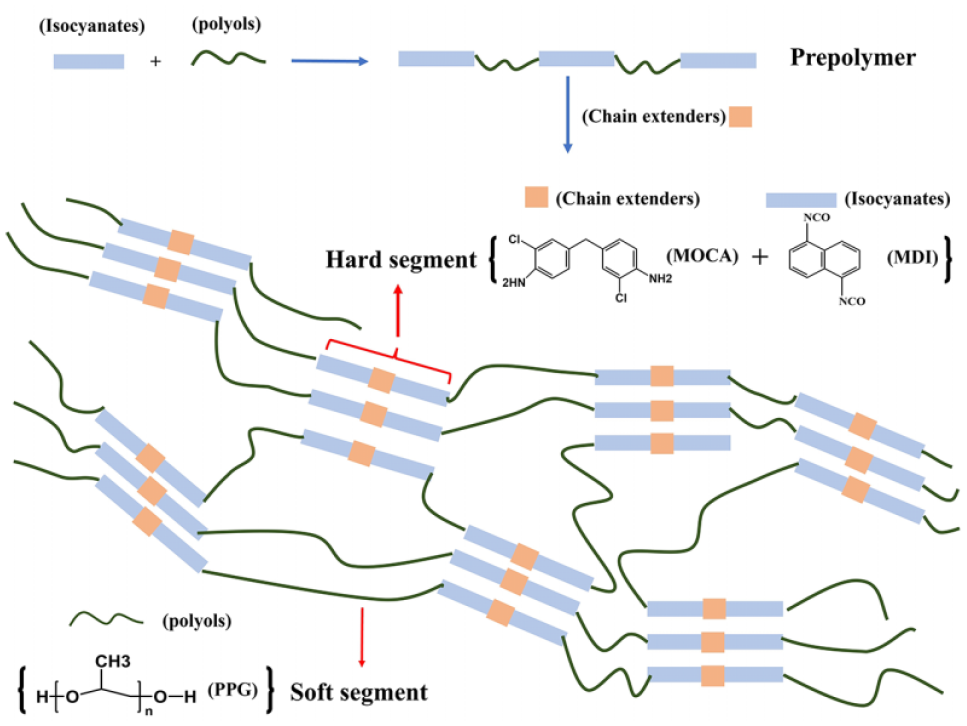
A typical molecular structure and synthetic route of polyurethanes.
Existing studies suggest that PU modification can effectively improve the performance grade, rutting resistance, and low-temperature behaviors of asphalt binders. For instance, Zhang et al. ( 7 ) found that PU-modified asphalt binders exhibit desirable storage stability and good high- and low-temperature properties, and increases in PU contents lead to better performance. Li et al. ( 13 ) demonstrated that PU-modified asphalt binders provide better adhesion to aggregates as compared with SBS-modified asphalt as a result of increased polar groups in the PU molecular structure. Xia et al. ( 14 ) showed property improvements of PU-modified asphalt binders similar to those reported in Zhang’s and Li’s studies and found that the optimal PU content is about 30% by weight of base binder. Good aging resistance is also reported for PU-modified asphalt binders. No matter whether they are subjected to short-term aging, long-term aging, or ultraviolet aging, the property degradations of PU-modified binders are always less than those of base binders ( 15 , 16 ).
However, apart from the phenomenological properties of PU-modified asphalt binders, there is a relative paucity of studies on the fundamental physicochemical changes of PU in asphalt binder and interactions between PU and binder. In particular, it remains unclear whether the ingredients of PU react with certain components of asphalt binder. The chemical composition of asphalt binder is often divided into four main fractions based on their polarity—saturates, aromatics, resins, and asphaltenes (SARA) ( 17 ). Asphalt binder is believed to be a colloidal system where asphaltenes are dispersed in the rest of the fractions collectively called maltenes ( 18 , 19 ). It is hypothesized that PU may react with asphaltenes in asphalt binder and form an integral network ( 20 , 21 ). If this is the case, PU-modified asphalt binders will essentially become a solid, which affects many fundamental properties. In addition, several types of polymers, such as SBS and EVA, will swell in asphalt binder after absorbing the aromatic compounds ( 22 , 23 ). It is unknown whether PU also behaves in the same way in asphalt binders, so as to affect the colloidal system. Understanding interactions between the chemical components of PU and base asphalt binder are critically important because this may affect the compatibility between PU and binder, material selection, and determination of the optimum PU content.
Motivated by the above questions, this study aimed to investigate (1) the physicochemical changes in asphalt binder after PU prepolymers and extenders are added, (2) the state of synthesized PU in asphalt binder, and (3) the effects of PU on modified asphalt binder. The physicochemical changes were investigated at the level of functional groups by using Fourier transform infrared spectroscopy (FTIR). However, FTIR alone may not be able to pinpoint the source of the generated reaction products. Therefore, fraction analysis was performed to evaluate relative changes in asphaltene and maltene contents in the asphalt binders. To evaluate the state of PU in asphalt binder, the size and morphology of the PU particles in asphalt binders were examined by using confocal fluorescence microscopy, and PU particles were also separated from the asphalt binders and analyzed for size distribution. The effects of PU contents on asphalt binder’s properties were evaluated from experimental tests and theoretical investigations under the framework of suspension rheology.
Materials and Methods
Materials
A 60/70 penetration grade (PG64-16) asphalt binder was selected as the base binder, this originating from the Middle East. A PU prepolymer synthesized with MDI and PPG was adopted. MOCA was used as a chain extender to form the crosslinked polyurethanes, imparting the polyurethanes with mechanical strength and thermal stability. The basic properties of base asphalt binder, PU prepolymer and MOCA are listed in Table 1.
Materials and Their Basic Properties
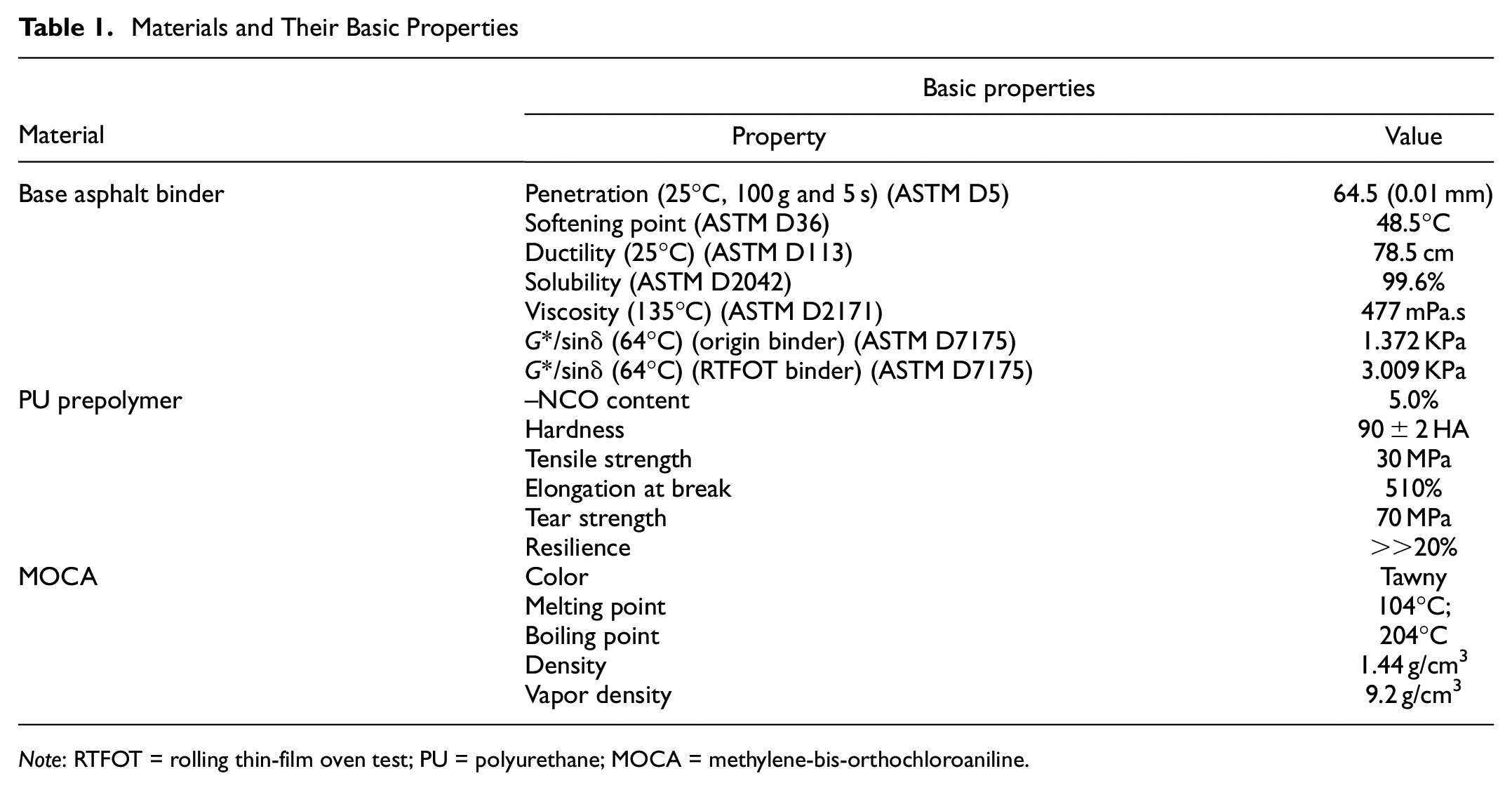
Note: RTFOT = rolling thin-film oven test; PU = polyurethane; MOCA = methylene-bis-orthochloroaniline.
Preparation of PU-Modified Asphalt Binders
The preparation process of PU-modified asphalt binders was briefed as follows. The base asphalt binder was heated at 130°C to reach a liquid state. Liquid MOCA was first blended with base asphalt binder at a speed of 1500 rotations per minute for 30 min. The amount of liquid MOCA was 10% by weight of the added PU prepolymer. Subsequently, the corresponding proportion of PU prepolymer was added to produce PU-modified asphalt binders with PU contents of 5%, 10%, 15%, 20%, 25%, and 30% by the weight of the base asphalt binder. The blending process continued at 1500 rotations per minute for 60 min at 100°C. Finally, the blended binders were stored in an oven at 120°C for 2 h to enable effective reaction.
Methods
The research methodology is summarized in the flowchart shown in Figure 2, which includes both sample preparation and experimental methods. The experimental methods are briefly introduced as follows.
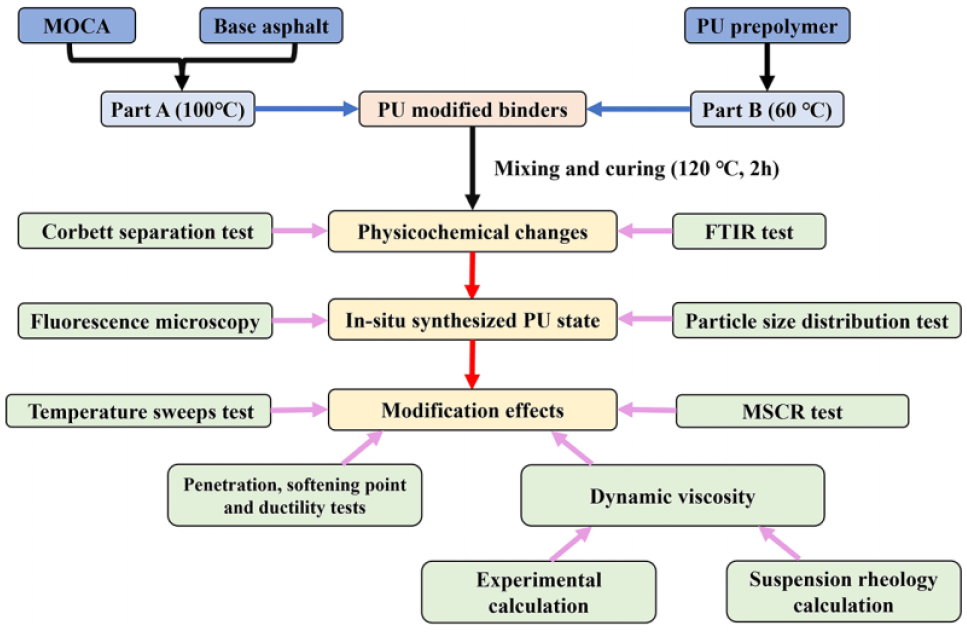
The flowchart of experiment design.
Characterization by FTIR
The chemical functional groups of base and PU-modified binders were characterized by FTIR using the attenuated total reflection (ATR) mode. The ATR mode provides the benefits of convenience in sample preparation and non-disturbance to the samples in their natural states. A few milligrams of asphalt binder samples were placed on the optic window and scanned from 4000 to 400 cm−1 with a resolution of 4 cm−1. A compression clamp was used to make good contact between binder samples and the crystal of FTIR. Each sample was scanned 24 times, and five replicates were tested to ensure repeatability. Baseline correction was performed to eliminate the experimental interferences on the acquired infrared (IR) spectrum.
Partial Corbett Fraction
Partial Corbett fraction was performed according to NB/SH/T0509-2010 ( 24 ). Asphalt binders were separated into maltenes, asphaltenes and PU polymers, and maltenes were not further separated. N-heptane was used to separate each specimen into soluble maltenes and an insoluble mixture of asphaltenes and PU polymers. Subsequently, the insoluble mixture of asphaltenes and PU polymer was flushed using methylene chloride as solvent and filtered to obtain the PU polymer. The filtered PU polymer was dried in a 110°C oven. The flushed solution was collected and evaporated to remove the solvent and obtain asphaltenes. Three replicates were used for testing for each PU-modified asphalt binder with different PU content. The content of asphaltenes and maltenes was normalized to 100% to compare the relative fractions of PU-modified asphalt binders and base binder.
Characterization by Fluorescence Microscopy
The compatibility of PU-modified asphalt binder was evaluated at room temperature by using a Leica TCS SP8 MP multiphoton/confocal microscope. The preparation of the samples was produced by the freeze-fracture method. The samples were first placed at −20°C for 4 h to ensure complete freezing. These samples were then crushed, and those with smooth crushed surfaces were selected for examination. All samples were observed using 488 nm laser diode and 63x oil objective.
Determination of Particle Size Distribution
Particle size distribution was determined using a particle size analyzer (Malvern Mastersizer 3000) by measuring the light intensity of a laser beam as it passed through the separated PU particles. Ethyl alcohol was chosen as the solution phase for the test, and ultrasound was turned on during the test to ensure that the PU particles were well dispersed. The test results were used to evaluate the particle size distributions including the median particle size (Dx(50)), the volume-weighted mean particle size (d4,3), the surface-weighted mean particle size (d3,2), and the detailed volume-weighted particle size distributions. The Dx(50) is the corresponding particle diameter when the cumulative particle percentage reaches 50%. d4,3 is the mean of a particle size distribution weighted by the volume. d3,2 is the diameter of a particle having the same volume/surface area ratio as the complete sample. The equations for d4,3and d3,2 are shown below, respectively ( 25 ).
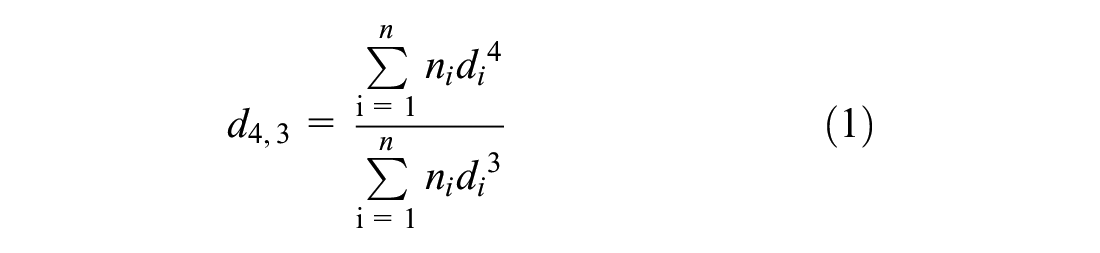
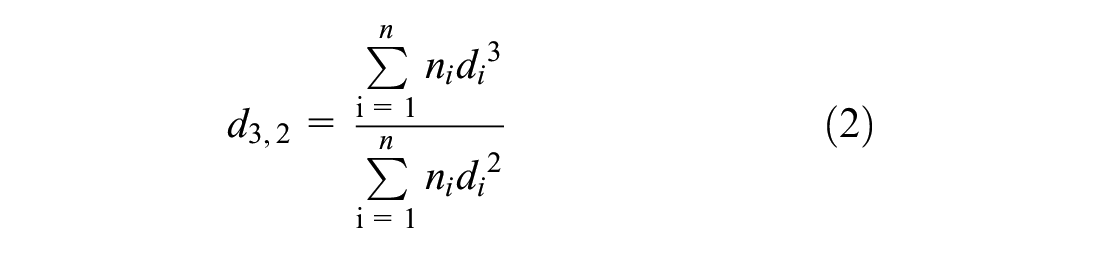
where ni is the number of the ith particle and di is the diameter of the ith particle in the particle size distribution.
Tests for Basic Engineering Properties
Three basic engineering properties of PU-modified asphalt binders were tested, including penetration at 25°C, softening point, and ductility at 5°C according to ASTM D5, ASTM D36, and ASTM D113, respectively. Three replicates were used for the penetration test and ductility test, and two replicates were used for the softening point test.
Tests for Rheological Properties
The rheological properties of the PU-modified asphalt binders were evaluated by using a dynamic shear rheometer (DSR) following ASTM D7175. The sample was made to be 25 mm in diameter and 1 mm in thickness. All samples were tested at least twice to ensure repeatability. A temperature sweep test was conducted between 58°C and 82°C, based on an interval of 6°C, frequency of 10 rad/s, and strain of 12%. The multiple stress creep recovery (MSCR) test (ASTM D7405) was performed at temperatures of 64°C and 76°C. Two stress levels of 0.1 kPa and 3.2 kPa were applied to the sample, with 10 loading cycles at each stress level. For each cycle, a haversine shear load of 1 s period was applied to the sample followed by a rest period of 9 s. The average percentage recovery R(τ) and the average non-recoverable creep compliance Jnr(τ) with respect to the stress levels at 0.1 kPa and 3.2 kPa were calculated accordingly.
Determination of the Ratios between the Volume Fractions of Asphaltenes and PU and Their Corresponding Maximum Packing Fractions
The volume fractions of asphaltenes and PU particles were calculated based on the following procedure. Asphaltenes are considered as colloidal particles influenced by Brownian motion and electrostatic forces. It is commonly believed that some resins attached to asphaltenes serve as a peptizing agent that prevents asphaltenes from agglomeration. The fractions of attached resins may also be considered as part of the particle volume fraction. One way to estimate the quantity of attached resins is to use the concept of interfacial layer thickness (k), as shown in Equation 3 ( 26 , 27 ).

where k is the thickness of the interfacial layer and b is a parameter governed by the diffusiveness of the interfacial boundary ( 26 , 27 ).
The correction coefficient of the particle volume fraction can be calculated from k and dc, as shown in Equation 4 ( 26 , 27 ).

where β is the correction coefficient of the particle volume fraction, which is the thickness ratio of the interfacial layer to average cluster radius; and dc is the average size of asphaltenes.
The total volume fraction of asphaltenes with attached resins can be calculated as follows ( 28 ):

where
The maximum packing fraction is introduced to consider the effects of asphaltenes on binder viscosity. The maximum packing fraction (

PU particles are micro-size particles, which are mainly influenced by the hydrodynamic interactions in suspensions. Meanwhile, particle size distribution is another important factor for consideration because it affects the maximum packing fraction (

The ratio of the volume fraction of PU particles and the

where
Because of the large difference in particle size, the effects of relative fractions of asphaltenes and PU particles against their respective maximum packing fractions can be considered independently. After eliminating the influence of particle size by introducing the maximum packing fraction, the total volume ratio can be calculated as shown in Equation 9.

where
Results and Discussion
Physicochemical Property Changes of PU-Modified Asphalt Binders
FTIR Analysis Results
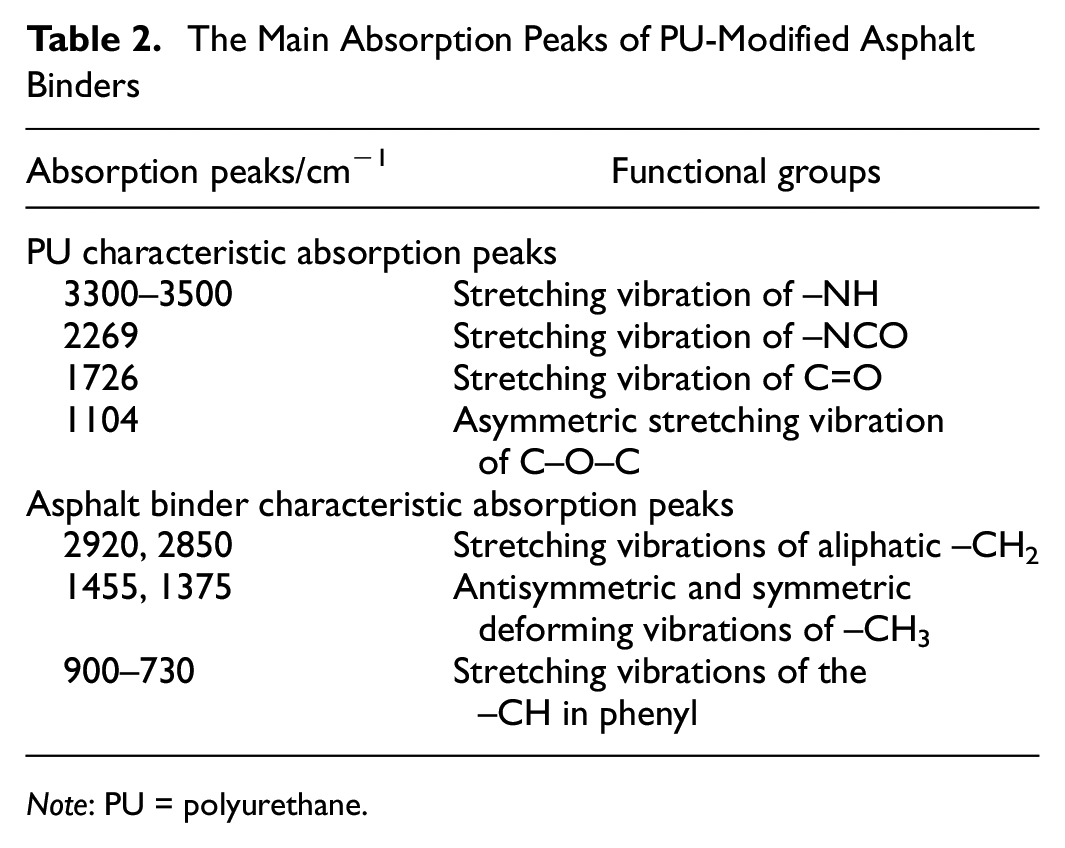
FTIR analysis was performed to determine the characteristic functional groups of the unmodified and PU-modified asphalt binders. Several characteristic peaks in the FTIR spectra of the unmodified and PU-modified asphalt binders are shown in Table 2 and Figure 3.
The Main Absorption Peaks of PU-Modified Asphalt Binders
Note: PU = polyurethane.
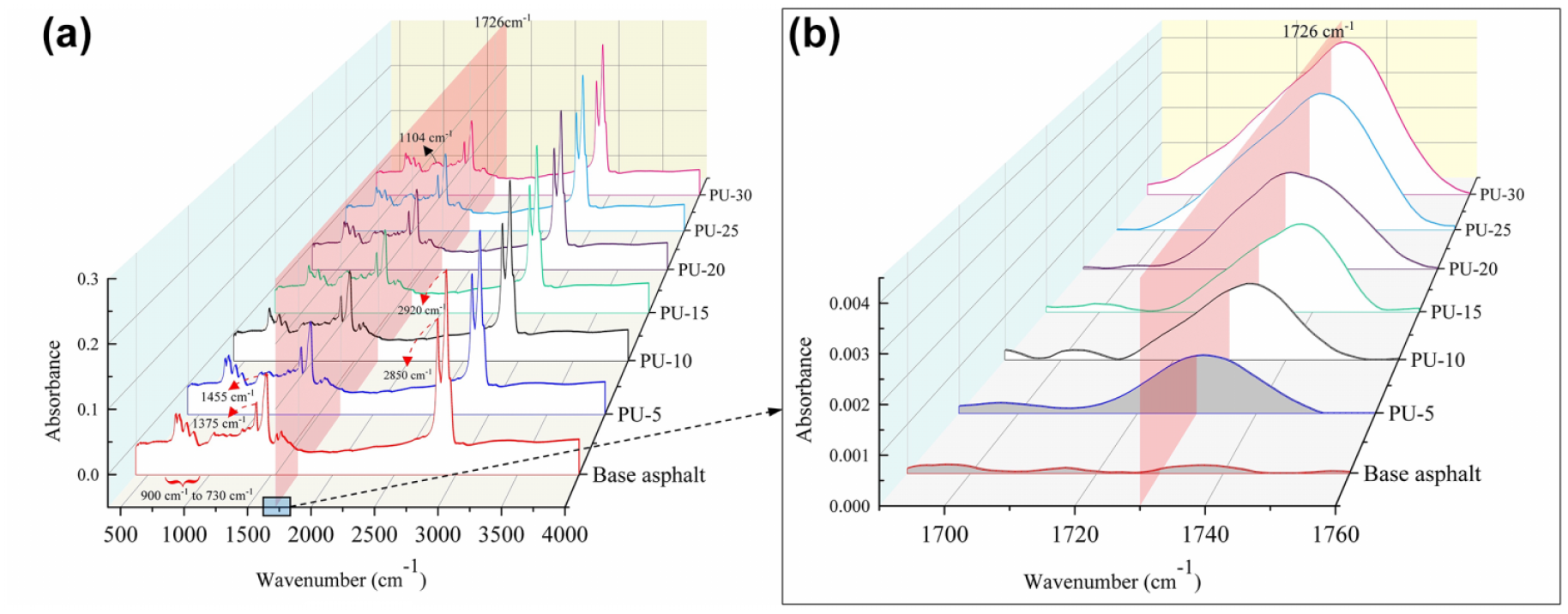
FTIR infrared spectra of base asphalt binder and PU-modified asphalt binders, showing (a) an overview of the spectra and (b) an enlarged view of the new peak in PU-modified binders at 1726 cm−1.
The peaks at 2920 cm−1 and 2850 cm−1 are attributed to the typical stretching vibrations of aliphatic –CH2 in asphalt binder, and the absorption peaks at 1455 cm−1 and 1375 cm−1 result from the antisymmetric and symmetric deforming vibrations of –CH3. In the fingerprint region from 400 cm−1 to 1350 cm−1, the peaks at 900 cm−1 to 730 cm−1 are caused by the stretching vibrations of –CH on the benzene ring ( 7 ).
The characteristic absorption peaks of MOCA are located at 3300 to 3500 cm−1, which come from the –NH stretching vibration. As for PU prepolymer, it is reported that the characteristic peak of the functional group –NCO is located at 2269 cm−1 ( 7 ).
As expected, a couple of new peaks are formed as a result of the modification of asphalt binders by PU. As shown in Figure 3a, one of the new peaks is located at 1726 cm−1 (corresponding to stretching vibration of C=O groups in urethane bonds), and another appears at 1104 cm−1 (the asymmetric stretching vibration of C–O). The intensity of each new peak increases evidently with increase in PU content in the binders. Taking the new absorption peak at 1726 cm−1 as an example, Figure 3b shows the enlarged FTIR spectrum near this peak with the increase of PU content. Moreover, a good linear relationship can be found between the absorption peak area of C=O and PU content, as depicted in Figure 4.
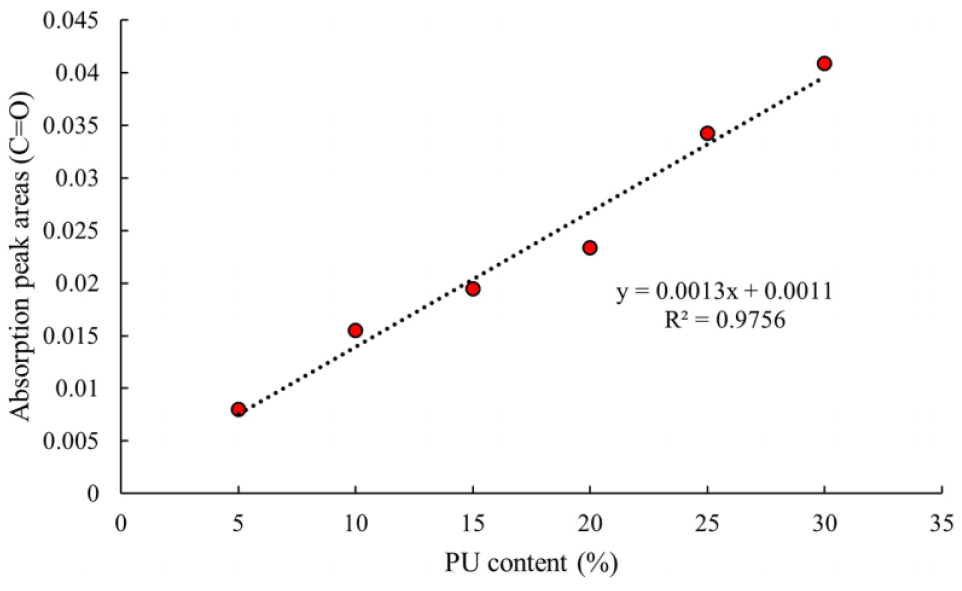
The relationship between absorption peak areas (C=O) and polyurethane (PU) content.
Meanwhile, the disappearance of the characteristic peak at 2269 cm−1 of PU prepolymer confirmed the complete consumption of PU prepolymer in Figure 3a. However, the origin of the consumption for the –NCO functional group cannot be distinguished. Possible chemical reactions are listed in Equations 10 to 12. The –NCO functional group in PU prepolymer can react with –OH in the asphalt binder. Meanwhile, the –NCO group can also potentially react with environmental H2O introduced to the reaction system when mixing the reagents. The –NCO group in the PU prepolymer is supposed to react preferably with the functional group in MOCA according to the reaction order; however, other reactions cannot be confirmed to occur during the binder sample preparation. Therefore, with the FTIR analysis, it is not possible to determine whether any side reactions occurred, and so the indeterminate reactions need further confirmation in this research.



R group, An abbreviation for any group in which a carbon or hydrogen atom is attached to the rest of the molecule.
Fraction Analysis Results
As discussed above, the source of the reaction in PU-modified binders cannot be accurately pinpointed because the active group (–NCO) in the prepolymer may react with either –OH group in asphaltenes or water ( 7 , 30 , 31 ). To determine the possible reactions, the chemical fractions of the unmodified and PU-modified asphalt binders were further analyzed by using partial Corbett fraction analysis. The fractions of asphaltenes and maltenes of PU-modified asphalt binders were compared with that of base asphalt binders, and the separated PU fraction was compared with the added PU content.
Changes in the fractions of asphaltenes, maltenes, and separated PU with varying PU content are shown in Figure 5. Note that the asphaltene and maltene contents were normalized to ensure that the PU-modified binders are comparable with the base binder. As shown in the figure, despite changes in PU content, the relative proportions of asphaltenes and maltenes are only subject to very small fluctuations. Therefore, PU prepolymer has significant chemical reactions with MOCA to generate PU in asphalt binders. By considering the results from both FTIR and fraction analysis, it appears that Equation 10 is the main reaction mechanism in the mixed reagents. Therefore, it can be inferred that physical dispersion of in situ synthesized PU by PU prepolymer and chain extender plays a primary role in the modification of PU-modified asphalt binders.
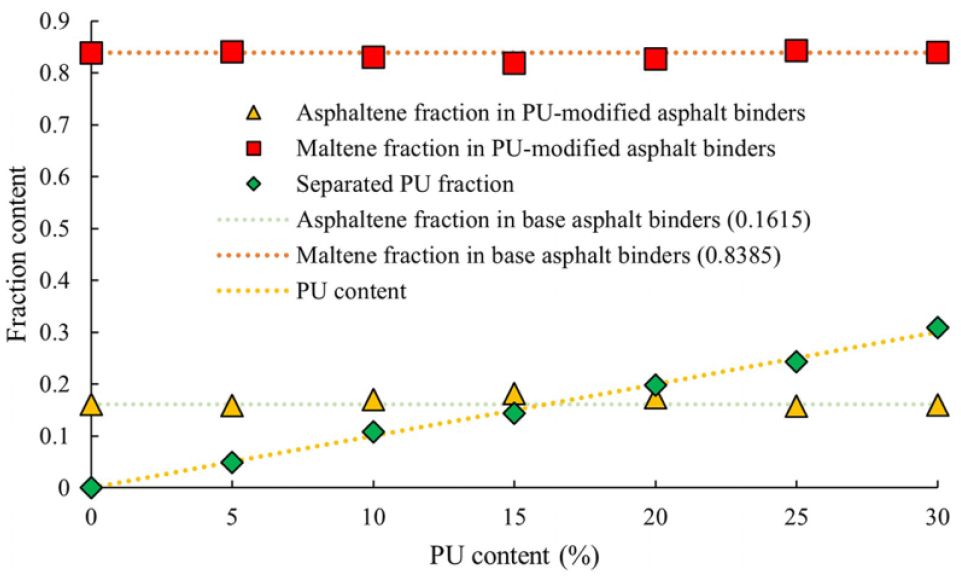
The fractions of base asphalt binder and PU-modified asphalt binders.
States of In Situ Synthesized PU in Asphalt Binders
Morphology of PU in Asphalt Binders
Good compatibility is critically important to ensure the workability and performance of modified asphalt binders. The morphologies of PU modifiers in asphalt binders of different PU content were examined by using fluorescence microscopy (Figure 6) because PU will fluoresce under fluorescence excitation. In the figure, the dark background corresponds to base asphalt binder, whereas the green particles correspond to PU modifiers. Apparently, PU is well dispersed as particles in the continuous asphalt binder phase. Homogeneous and uniform dispersion of the PU modifiers indicates good compatibility between the modifiers and asphalt binder.
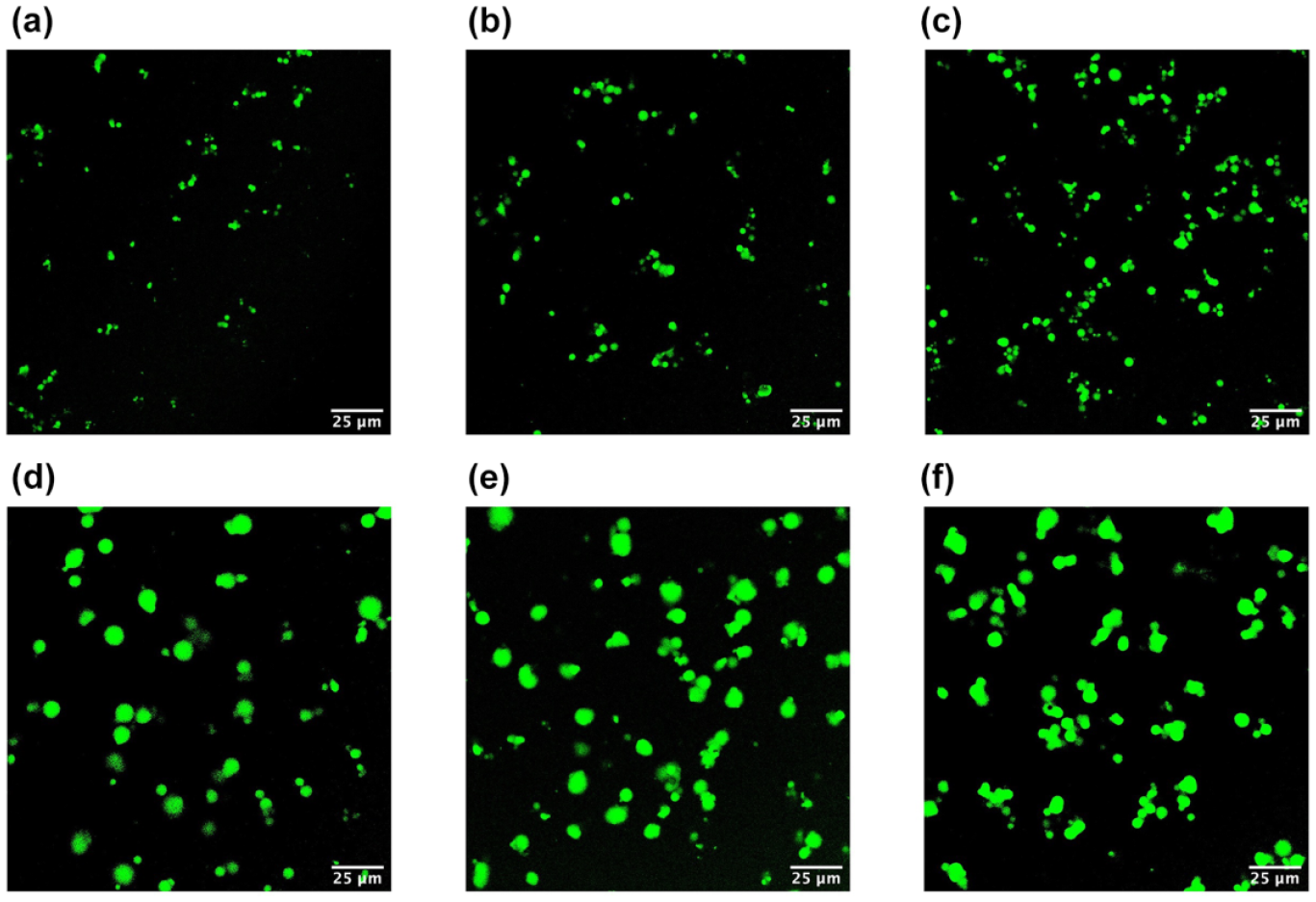
Fluorescence microscopy images of PU-modified asphalt binders at ratios of (a) 5%, (b), 10%, (c) 15%, (d) 20%, (e) 25%, and (f) 30% in relation to the base binder.
The PU particles in the figure were further analyzed to obtain particle size distribution curves, and the results are shown in Figure 7. The particle size follows an approximate normal distribution for all the PU-modified asphalt binders. However, the average particle size distribution curves may be divided into two groups. At a PU content from 5% to 15%, the average particle size ranges from 2 to 5
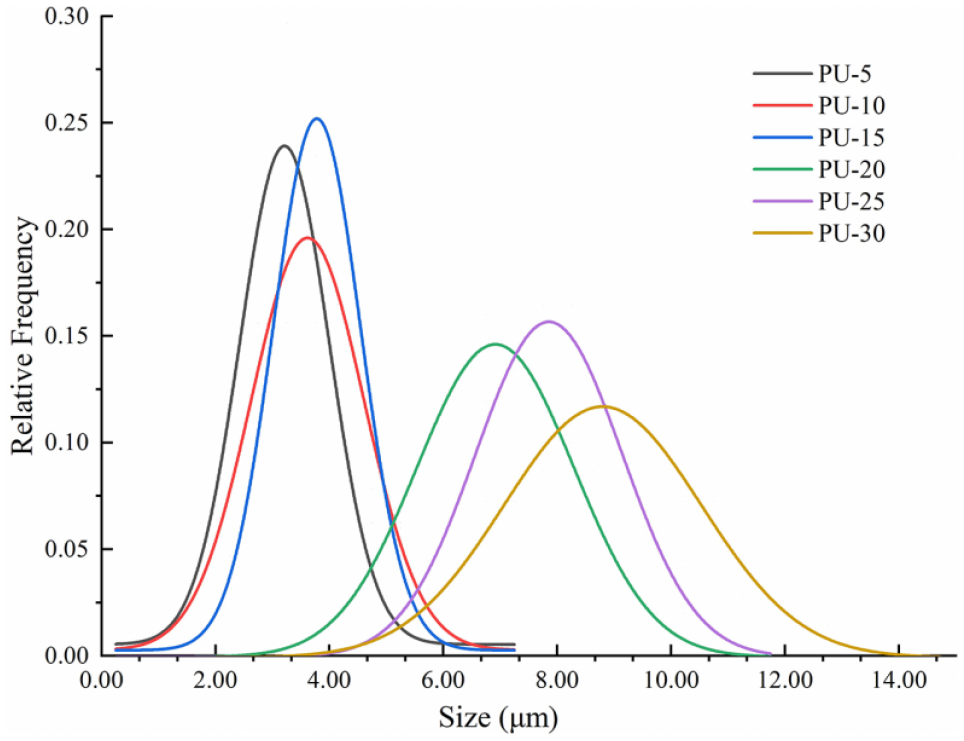
Particle size distribution of polyurethane (PU) particles in fluorescence microscopy images.
Particle Size Distribution (PSD) of Separated PU in Asphalt Binders
PU particles were separated from the binders, and a representative image is shown in Figure 8. The detailed particle size distributions of different binders are shown in Figure 9. Overall, all the separated PU particle sizes also follow approximate normal distributions. The sizes of the separated PU particles are larger than those dispersed ones observed under the fluorescence microscope. This is caused by the agglomeration of some individual particles when they are separated from the binder.
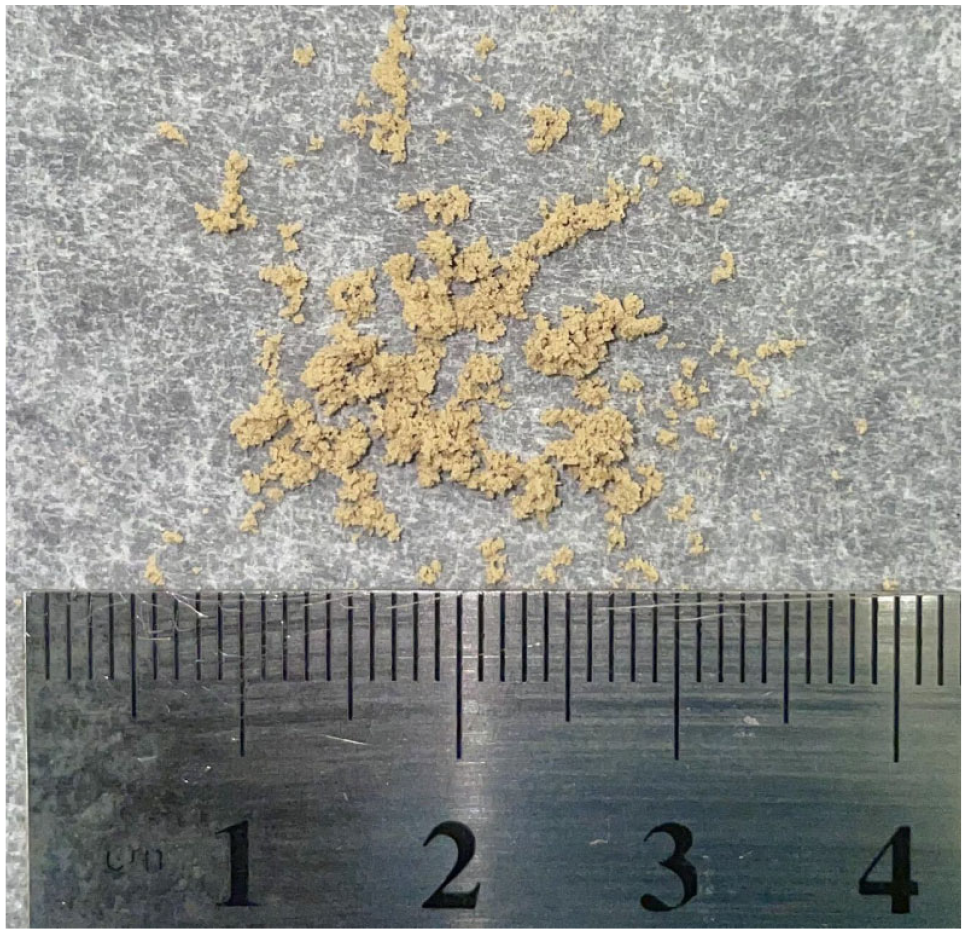
The separated polyurethane particles.
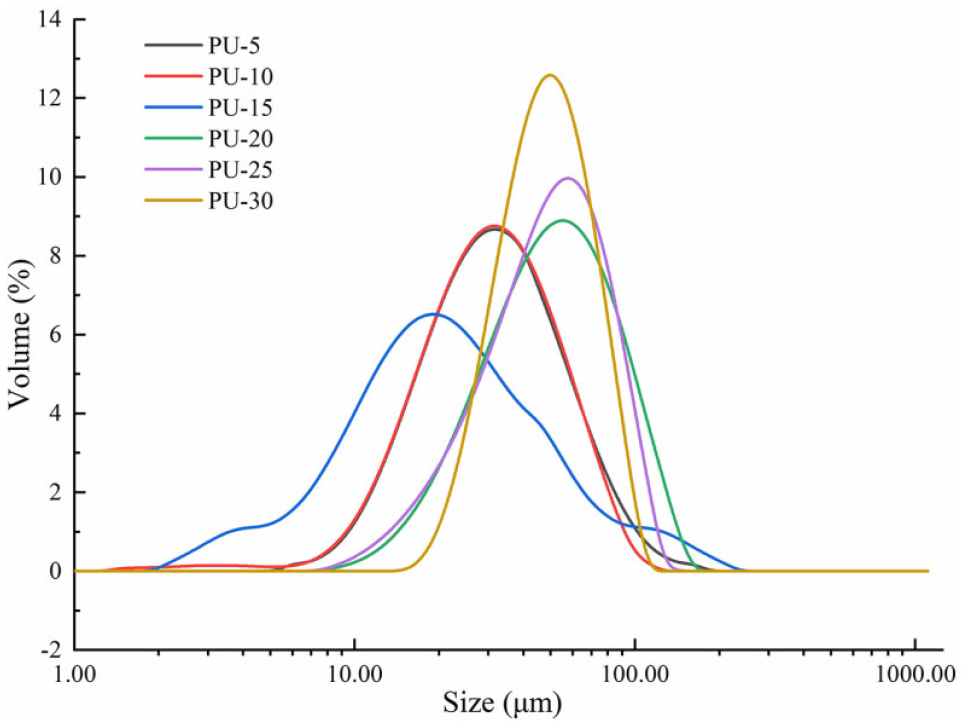
Particle size distributions of separated polyurethane (PU) particles from PU-modified asphalt binders.
Indices derived from the size analysis of separated particle are listed in Table 3, including volume-weighted mean particle size (d4,3), surface-weighted mean particle size (d3,2) and the median particle size (Dx(50)). Judging from d4,3 and Dx(50), the PU particle sizes increased significantly for PU contents over 15%. The results were consistent with those shown in the fluorescence microscopy images. Taking the volume-weighted mean particle size (d4,3) as an example, the separated PU particles are similar in d4,3 for PU-5, PU-10 and PU-15 (around 30
The Particle Size Distribution of Separated PU Particles
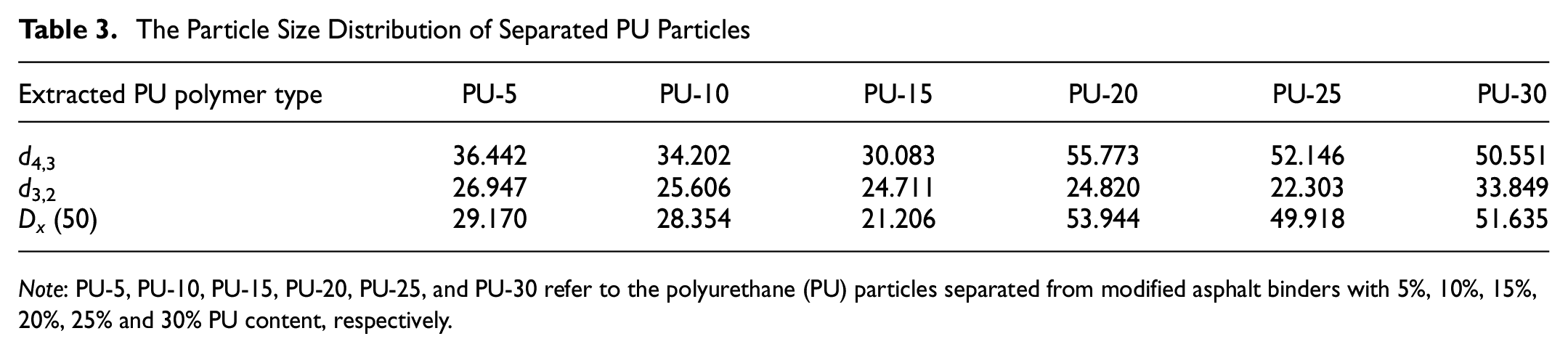
Note: PU-5, PU-10, PU-15, PU-20, PU-25, and PU-30 refer to the polyurethane (PU) particles separated from modified asphalt binders with 5%, 10%, 15%, 20%, 25% and 30% PU content, respectively.
The Effects of PU Modification on Selected Engineering Properties
Basic Engineering Properties of PU-Modified Asphalt Binders
Penetration, softening point, and ductility were tested and compared for the base asphalt binder and PU-modified asphalt binders. As shown in Figure 10, the penetration values of the PU-modified asphalt binders are significantly less than that of the base binder, and the penetration value drops with increase in PU content. The results suggest that the introduction of PU dramatically increases the stiffness and shear deformation resistance of the binders at the test temperature (25°C).
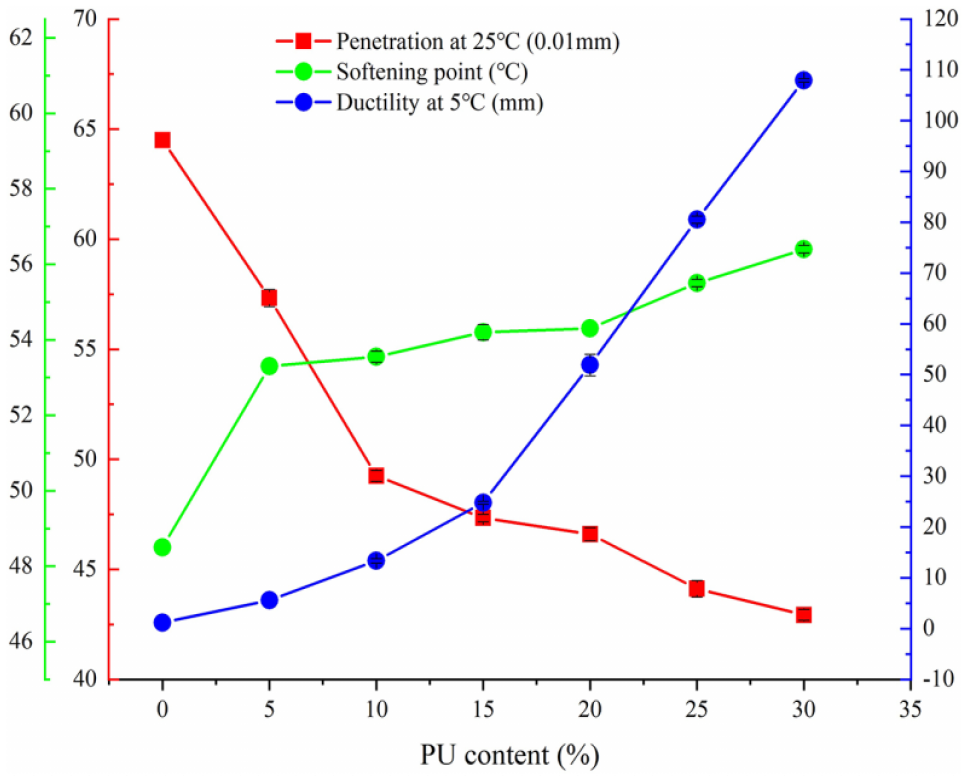
Basic engineering properties of base asphalt binder and PU-modified asphalt binders.
The softening point of an asphalt binder is related to its high-temperature stiffness. As compared with the base binder, PU-modified asphalt binders exhibit a much higher softening point (Figure 10), suggesting better deformation resistance at high temperature. The figure also indicates that the largest increase in softening point occurs when 5% of PU is added. After that, the softening point only increases slightly with PU content.
The ductility of asphalt binder is related to its fracture resistance at low and intermediate temperatures. As a base binder ages, its stiffness will increase and its ductility will decrease, making the binder more brittle and prone to fracture ( 32 , 33 ). However, Figure 10 reveals that increases in binder stiffness are accompanied by dramatic increases in binder ductility. This indicates that an increase in binder stiffness caused by adding more PU does not sacrifice its fracture resistance.
Temperature Sweep Test Results
The complex shear modulus (G*) and phase angle (
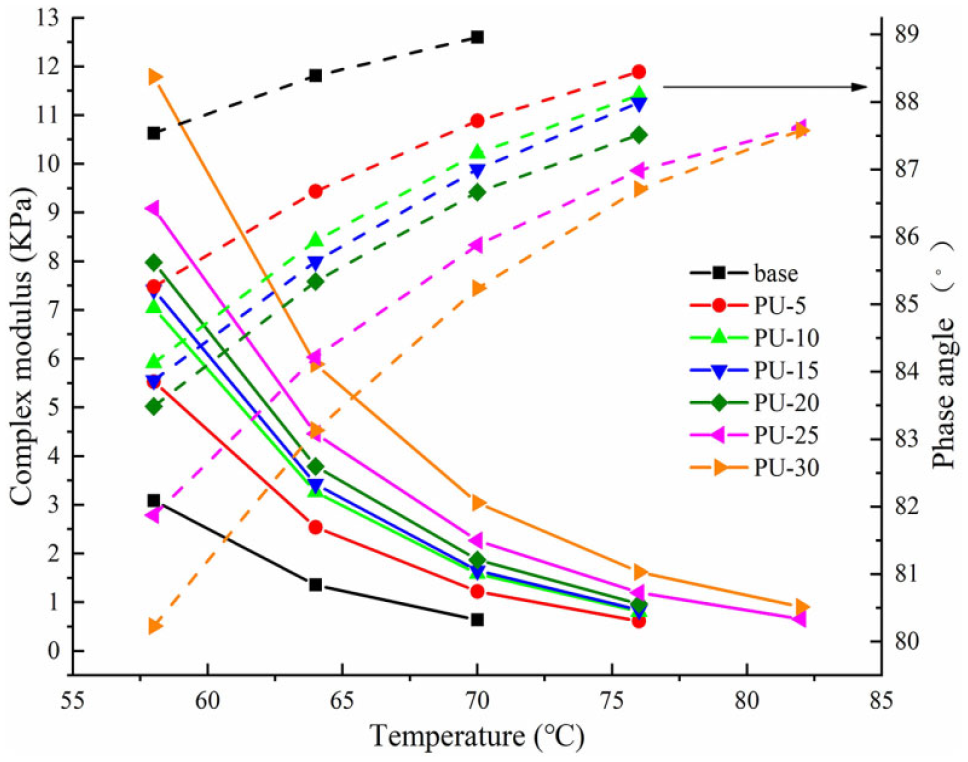
The complex modulus (G*) and phase angle (
In the Superpave specification®, G*/sin
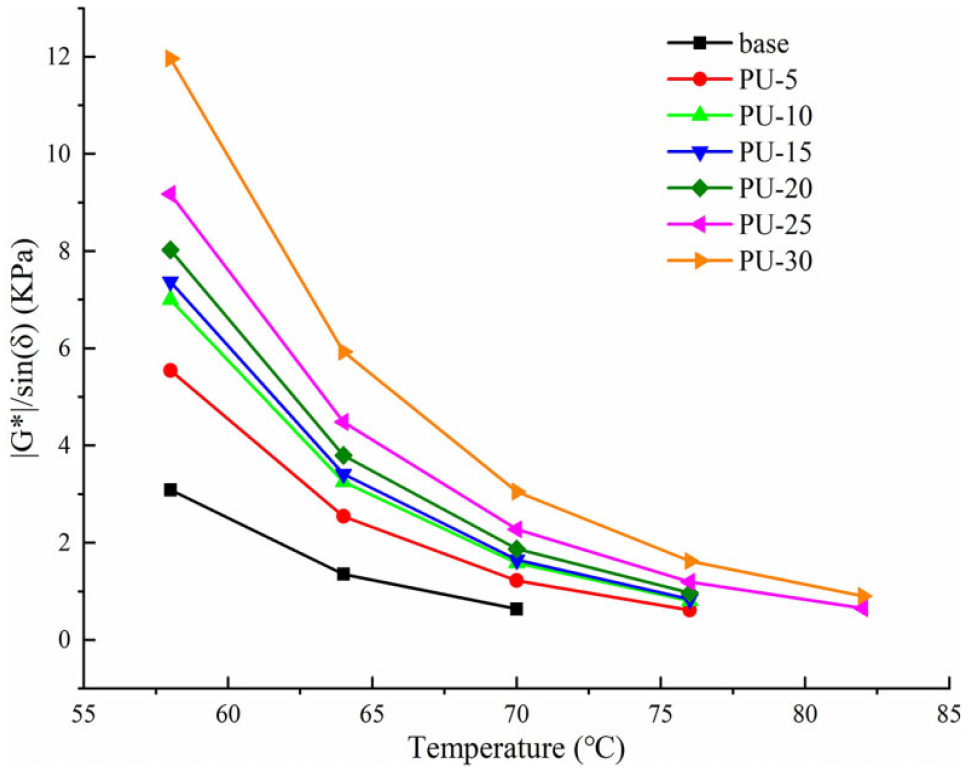
The rutting resistance factor of base asphalt binder and PU-modified asphalt binders.
Based on the G*/sinδ–temperature curves, the high-temperature performance grade can be determined as presented in Table 4.
High-Temperature Performance Grade of Asphalt Binders

Note: PU = polyurethane.
MSCR Test Analysis of PU-Modified Asphalt Binders
The MSCR test has become a popular approach to evaluating modified asphalt binders. In the MSCR test, percentage recovery (R) is an important parameter to evaluate the elastic properties of asphalt binders. A higher R indicates a better elastic property. The R values of the binders with different PU content at two temperatures are shown in Figure 13. As shown in the figure, the modified asphalt binders had greater R values than did the base asphalt binder, especially at the 0.1 kPa stress level. When the PU content ranges from 5% to 15%, the improvement in R is limited. By contrast, the R value shows obvious increases when the PU content exceeds 15%. The results suggest that the introduction of PU imparts to the asphalt binder higher elasticity to resist permanent deformation.
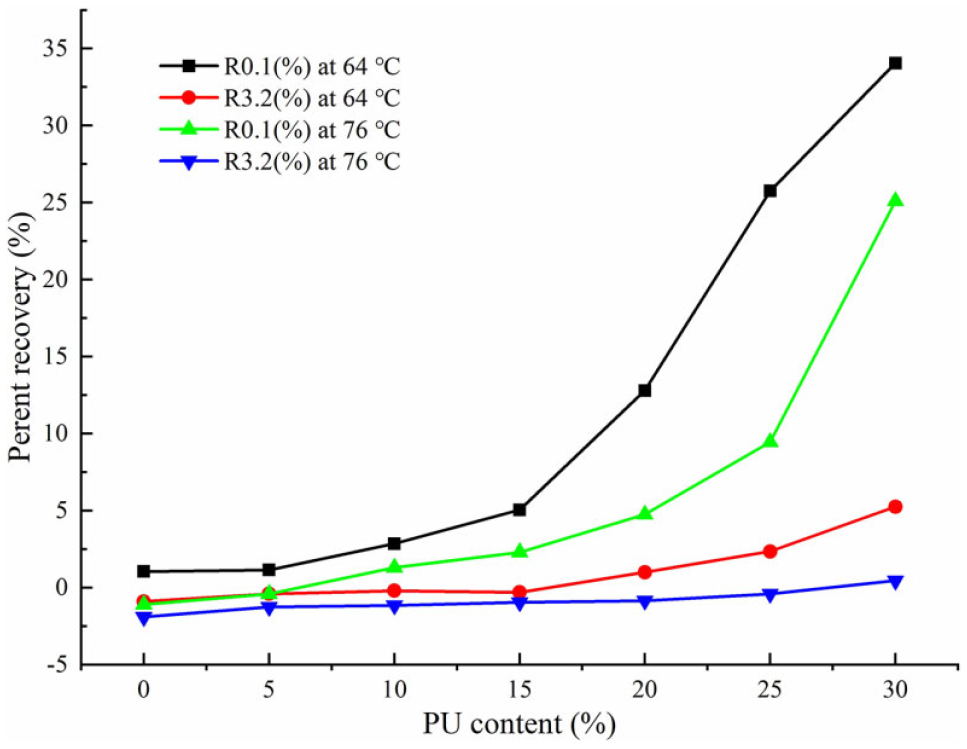
The percentage recovery of base asphalt binder and PU-modified asphalt binders.
Moreover, the sensitivity of R to PU content varies greatly with stress level. At 0.1 kPa, the R values grow nearly exponentially with PU content at the two temperature levels, and the increase in R with added PU becomes more dramatic after PU content exceeds 15%. At 3.2 kPa, however, the growth of the R value with PU content becomes less significant, especially at 76°C. This indicates that the recovery capacity of the PU-modified binder deteriorates at high stress levels.
The non-recovery creep compliance (Jnr) is used to evaluate the deformation resistance properties of asphalt binders and a lower Jnr implies less permanent deformation under repeated loading. It can be observed from Figure 14 that Jnr continuously decreases with the increase of PU content. As compared with the neat binder, 5% of PU already results in a significant drop in Jnr. After the initial drop, Jnr decreases in a nearly linear fashion as PU content increases. The remarkable reduction of Jnr with PU content signifies great improvement in the high-temperature deformation resistance of asphalt binders. These results are consistent with those from the high-temperature performance tests discussed above.
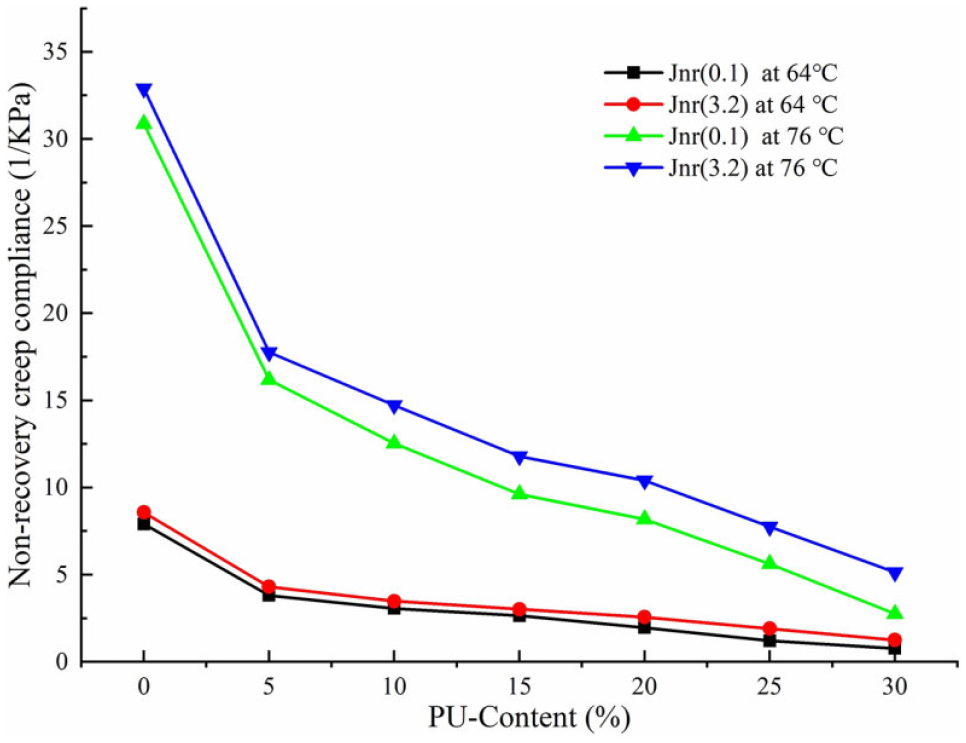
The non-recovery creep compliance of base asphalt binder and PU-modified asphalt binders.
In addition, it appears that Jnr is more sensitive to temperature than to stress level. This is different from the R values. For a binder of the same PU content, differences between the Jnr values are quite small at the same temperature level. However, as PU content further increases, gaps between the Jnr values tested at different temperature and stress level become narrowed. This indicates that PU can effectively reduce the Jnr values.
The Modification Effects of PU in the Theoretical Framework of Suspension Rheology
Asphalt binder can be treated as a colloidal suspension, where asphaltenes are dispersed in the oily medium of maltenes ( 18 ). With PU modifier being introduced into the asphalt binder, the suspension system becomes more complicated. According to observation under fluorescence microscopy, PU appears as particles in asphalt binders. The asphaltenes are also dispersed in base asphalt binders as particles as presented in Figure 15. However, the size of PU particles in asphalt binders is clearly larger than the size of asphaltene. Therefore, PU-modified asphalt binders may be treated as a bimodal solid particle suspension, where asphaltenes exist as colloidal particles (size in the range of nanometers) and PU particles exist as suspension particles (size in the range of micrometers) ( 34 ). The schematic diagram of the system is shown in Figure 16. It is reported that the rheology of bimodal solid particle suspensions is dependent on matrix rheology and the characteristics of suspension particles, including shape, volume fraction, size distribution, and others ( 35 ). Among the factors, matrix viscosity and particle volume fraction are two primary influencing factors which have decisive impacts on suspension rheology ( 36 ).
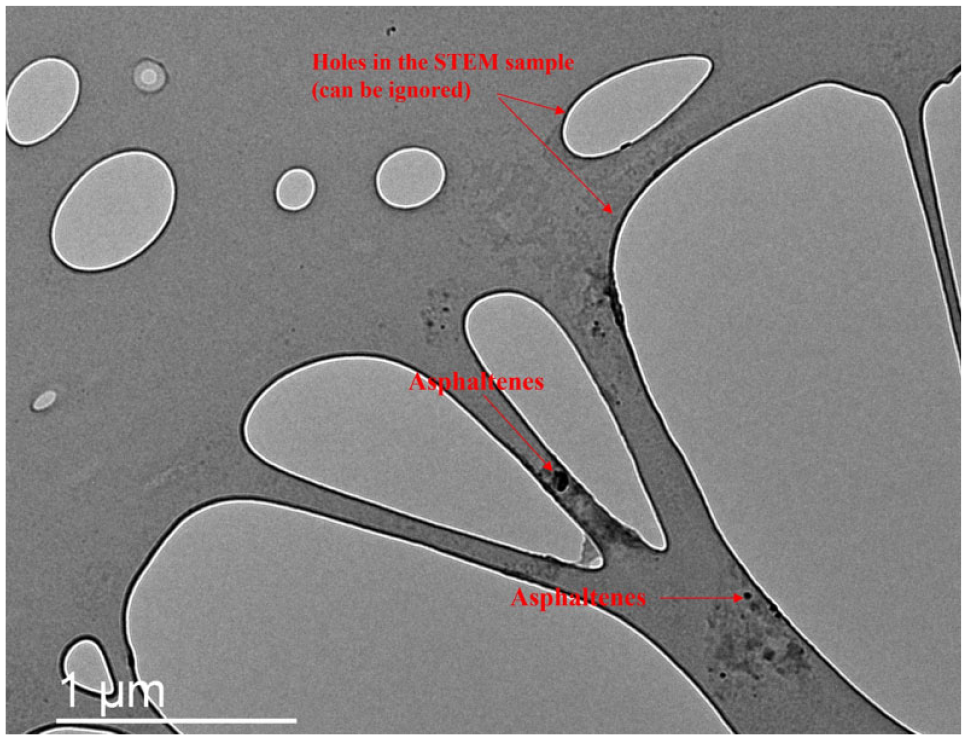
The microstructure of asphaltenes in base asphalt binders (image taken using a scanning transmission electron microscope [STEM]).
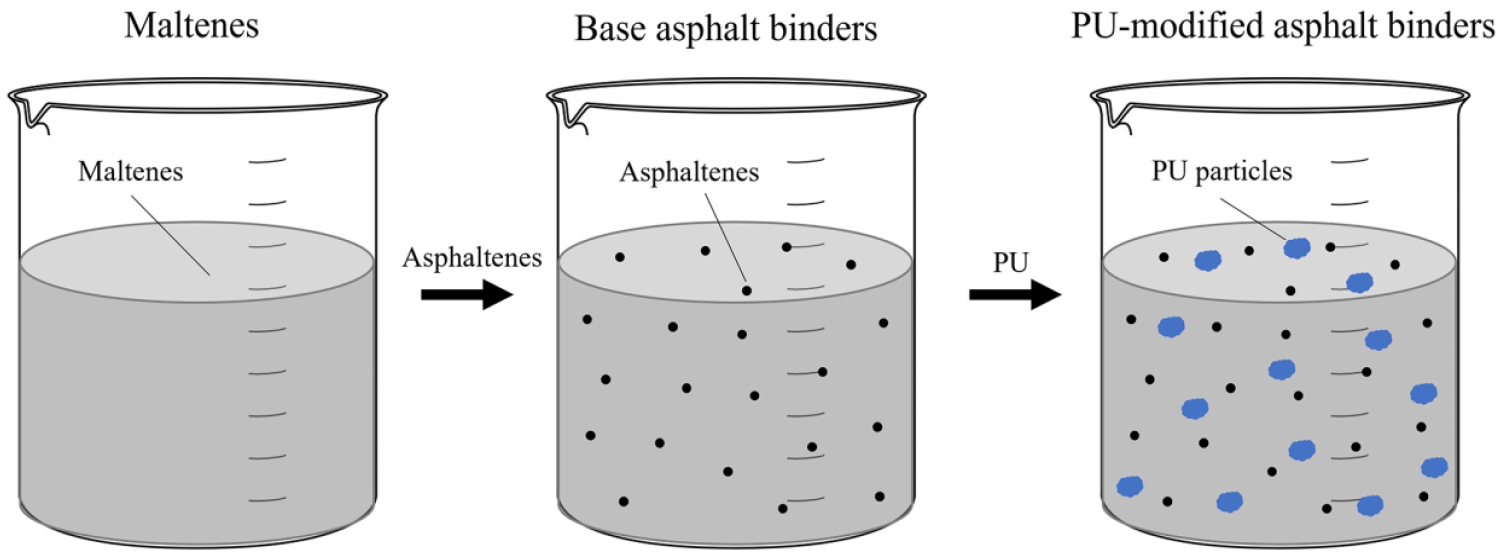
Suspension microstructure of maltenes, base asphalt binders, and PU-modified binders.
For PU-modified asphalt binders, maltene viscosity and the volume fractions of asphaltenes and PU particles are the main factors affecting the binder’s viscosity. To model the dynamic viscosity of PU-modified asphalt binders, the dynamic viscosities of maltenes and PU-modified asphalt binders are first determined by rheological tests (Equation 13). The relative viscosity


where
According to the suspension rheology calculation, the total volume ratio of PU and asphaltenes (
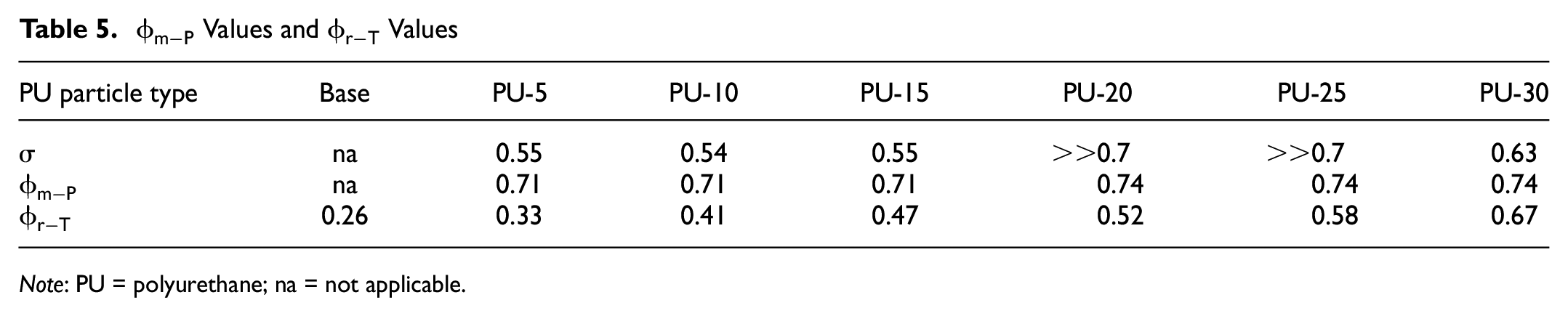
Note: PU = polyurethane; na = not applicable.
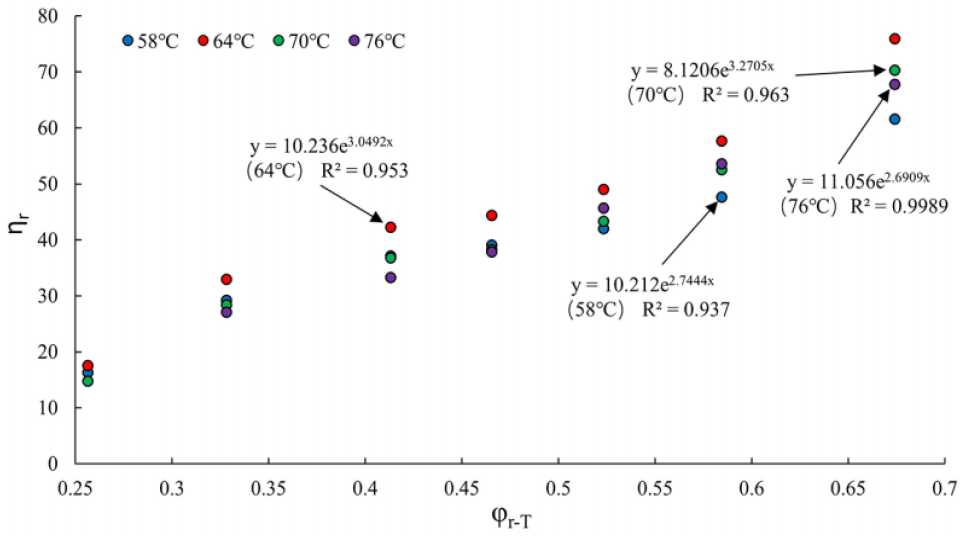
The relationships between the total volume fraction ratio and the relative viscosity at 58°C, 64°C, 70°C, and 76°C based on a share rate of 10 rad/s.
As shown in Figure 17, the total volume fraction ratio (
Summary and Conclusion
Polyurethane is a potential synthetic material to modify asphalt binders for improved properties. In this study, the physicochemical changes of asphalt binder after adding PU prepolymers and extenders, the states of formed PU particles in asphalt binders, and the modification effects of PU were investigated, and the properties of PU-modified binders were compared with base asphalt binders. The following major findings were made from the study:
The main working principle of PU modification appears to be its physical dispersion in asphalt binders, not chemical reactions between PU and the binder components. The –NCO group in the PU prepolymer mainly reacts with the –NH group in MOCA. This is confirmed by the fraction analysis of PU-modified asphalt binders.
PU polymer is uniformly dispersed in asphalt binders. As PU content exceeds 15%, the formed PU particles in asphalt binders are noticeably enlarged.
The particle size of separated PU particles generally follows a log-normal distribution, and the tendency of PU particle size changes with PU content is similar in fluorescence microscope images.
The penetration and softening point of base asphalt binder are improved by the introduction of the PU, without negatively affecting its ductility at 5°C. Moreover, higher PU contents in asphalt binders result in greater ductility values and its improvement presents an exponential increase.
Evidently, PU can increase the high-temperature rutting resistance properties of base asphalt binder by two to four times and the elastic recovery is improved from nearly 0% to above 30%. To be effective, 15% PU content or above is recommended to modify asphalt binders.
PU-modified asphalt binders form a bimodal solid particle suspension. The dynamic viscosity of PU-modified asphalt binders is predominantly determined by the volume fractions of asphaltenes and PU particles and the dynamic viscosity of maltenes.
Footnotes
Author Contributions
The authors confirm contribution to the paper as follows: study conception and design: Yuhong Wang, Ruiming Li; data collection: Ruiming Li, Xiaoxu Zhu; analysis and interpretation of results: Ruiming Li, Yuhong Wang; draft manuscript preparation: Ruiming Li, Yuhong Wang. All authors reviewed the results and approved the final version of the manuscript.
Declaration of Conflicting Interests
The author(s) declared no potential conflicts of interest with respect to the research, authorship, and/or publication of this article.
Funding
The author(s) disclosed receipt of the following financial support for the research, authorship, and/or publication of this article: This paper is based on the research projects (Project Nos. 15204819, 15213020) funded by the Research Grants Council of Hong Kong Special Administrative Region Government.

Data Accessibility Statement
Key research data is included in the paper. Additional data can be obtained by contacting the corresponding author.