







Abstract
Introducing airplanes powered by renewable energy, such as electricity or hydrogen, is seen as one of the options to contribute to achieving climate neutrality in aviation, especially for regional and short-haul applications. It also brings new possibilities to connect small regional airports and reduce access and egress times to/from airports. This research aimed to gain insights into the acceptance and factors that may affect passenger acceptance of hybrid-electric airplanes for short-haul regional applications. In working toward the aims, a questionnaire was designed and distributed online to active long-distance travelers in Germany. Two structural equation models were estimated to identify the influential factors and their impacts on attitudes and the intention to accept hybrid-electric airplanes. The results confirmed not only the relevance of service attributes, such as travel time, safety, comfort, and climate impact, but also the impacts of psychological and behavioral factors. Generally, safety and security had the highest impact on passenger acceptance. Stronger concerns about the safety and comfort of the new airplanes and of conventional airplanes flying today might reduce the intention to use the new airplanes, whereas stronger climate concerns and trust of new mobility technology might lead to stronger acceptance. Moreover, passengers’ previous experience taking similar types of conventional propeller-driven airplanes might affect their safety concerns about the new airplanes. Information about new aircraft technology and test flying experience may help to overcome psychological barriers.
Keywords
Reducing its climate impact is challenging for the entire air transport system. Globally, the air transport sector is committed to achieving net-zero carbon emissions by 2050 ( 1 ). Further, the European Green Deal has stipulated that the aviation sector must contribute to the goal to reduce 90% transport emissions by 2050 ( 2 ). Researchers in the aviation industry are therefore spearheading research to develop airplanes powered by renewable energy sources such as electricity and hydrogen. These technological innovations are enabling the development of aviation transport, from electrically powered, vertical takeoff and landing vehicles (eVTOL) with distributed propulsion for urban air mobility (UAM) to 19-seater (or more) airplanes for regional air transport. Small air transport vehicles like eVTOLs typically provide service for distances of less than 300 km and require new infrastructure, whereas regional air transport vehicles like 19-seater airplanes can carry more passengers, have operational ranges greater than 300 km, and can use existing airfields and airports ( 3 ). In this study, beyond the scope of UAM, we focused on airplanes providing short-haul regional air mobility services, which offer the possibility of “connect regions” by connecting small regional airports that are more densely distributed than airports with (scheduled) passenger services ( 4 , 5 ). This, in turn, would also substantially reduce the distance and time for airport access and egress compared with current conditions ( 5 ).
Other than companies designing and manufacturing the airplane, such as Eviation and Heart Aerospace ( 6 , 7 ), researchers have attempted to understand the potential market for and the capacity of electric or hybrid types of airplanes, focusing on travel time savings and emission reduction benefits, among other factors (4, 5, 8–10). On the premise of technological development, the successful introduction of electric- and hydrogen-powered aviation also depends on passengers’ acceptance of the technology and willingness to pay (WTP). Nevertheless, very little attention has been given to the public acceptance of these new types of airplanes. Only a handful of studies have analyzed air passengers’ intention to adopt ecofriendly electric airplanes ( 11 , 12 ).
This study focuses on 19-seater, propeller-driven hybrid-electric airplanes (HEAs) with conventional takeoff and landing features, which incorporate a fuel cell and battery. The project selected an HEA configuration that could achieve an operating range of up to 950 km ( 13 , 14 ). Furthermore, these aircraft can use existing airfields and airports and are expected to fill a place in the market that is currently taken by less environmentally friendly aircraft. To understand passenger acceptance and reveal the factors that may affect acceptance of such airplanes, a survey was designed and conducted. From this, statistical models, such as structural equation models, were estimated. This work contributes to the literature by expanding existing theoretical frameworks and validating them based on empirical data. Based on the modeling results, this paper discusses the practical implications of the models, providing room for several strategies and opportunities for stakeholders to influence passengers’ decisions.
The remainder of this paper is structured as follows: a literature review of the new airplanes that are enabled by new technologies is presented. This is followed by an account of the methodologies applied in the current study, including data collection and theoretical model development. The subsequent section describes the survey sample before exploring the descriptive and statistical results. The key findings are then interpreted, and practical implications are provided. The final section presents our conclusions and provides an outlook on further research.
Literature Review
Recently, an increasing amount of studies have focused on airplanes comprising new technologies, that is, eVTOLs and UAM. Market analyses and demand forecasts have been conducted in different regions with a focus on service within urban areas. ( 15 – 21 ). However, in relation to 19-seater regional HEAs specifically, most research has focused on technological development and aircraft design, and evaluating its potential demand has received much less attention. We found only a few studies focusing on evaluating the market potential and economic performance of these airplanes. Most recently, Justin and Mavris conducted a market study covering the entire United States on a county level ( 4 ). Using a four-step demand model and fleet optimization, the authors uncovered the demand for regional air mobility services that cannot be met by the current commuter operators who serve between 10 and 75 passengers per day. They concluded that electric- and hybrid-electric aircraft operators could profitably serve about half of the estimated demand. Spangenberg conducted an economic feasibility study for 19-passenger hybrid-electric commuter aircraft ( 10 ). The results show an estimated market demand of 5% and 15% for Europe and the United States, respectively, with a focus on business travelers. In a case study of Italy, Salucci et al. compared the travel times between 19-seater HEAs and ground-based transport modes and optimized the network to capture the highest travel demand. The results showed that up to 15,000 daily commuters could benefit from the point-to-point service ( 22 ). In addition, Grimme et al. compared travel times using regional HEAs and other transport modes (e.g., conventional air, rail, car) in Germany ( 5 ). The results indicated that travel time savings of regional HEAs could occur at distances up to 400 km, given the aircraft’s maximum mission distance of 200 km. Moreover, the highest travel time savings can be achieved for connections between major cities and between secondary metropolitan areas that are not well connected by rail or road (with a distance of 300 to 400 km between). A study by Schuh et al. concluded that with the assumption that the ticket price range is similar to that of a German first-class train ticket, HEAs could operate profitably with a profit margin above 10% ( 23 ).
To date, very few studies have been conducted on this new air mode to understand passenger acceptance. With regard to electric airplanes in general, Han et al. analyzed the responses of more than 300 U.S. airline passengers and found that adoption intention toward ecofriendly electric airplanes is likely to be affected by green image (consumer perceptions that a firm or product is committed to environmental protection), emotional attachment, environmental awareness, and moral/social norms (11). Han et al. pointed out that reducing customers’ perceived risk and increasing new product knowledge is critical to boosting trust and positive attitudes toward adopting electric airplanes ( 24 ). Han et al. also emphasized the gender and age difference in airline customers’ ecofriendly intention to adopt electric airplanes ( 25 ). Nevertheless, to the best of the authors’ knowledge, no studies to date have conducted a holistic analysis to understand passenger acceptance and reveal relevant factors that might affect passenger acceptance of 19-seater HEAs.
Summary of Factors Affecting Passenger Acceptance of New Transport Modes
To obtain an overview of the potential factors that might affect passenger acceptance of HEAs, we merged our own findings with the results of other systematic reviews ( 26 – 28 ) on passenger acceptance of conventional aviation, as well as in relation to new transport modes such as electric vehicles (EVs), autonomous vehicles (AVs), UAM/air taxis, and electric airplanes. We summarized the factors into five categories, including demographic factors, such as gender, age, education, employment, household income, household composition, and residential area (15, 21, 27–32); travel behavior factors, such as travel frequency, in-vehicle time, mode choice, trip purpose, typical travel time spent, and mobility impairments (15, 17, 27, 28, 31, 33); situational/technological factors, such as speed, cost, power generation/supply, emissions (production and operation), safety, comfort, noise, turbulence/bumpiness, energy consumption, operation range, infrastructure, schedule reliability, and multimodal connectivity (15, 21, 27–29, 31, 32, 34); attitudinal/psychological factors, such as personal innovativeness, environmental concern, perceived risks, social influence, trust, subjective norms (perceptions of others' behavior), moral norms, perceived usefulness, and perceived ease of use (15, 26–29, 31, 33, 35–37); and contextual factors, such as policy incentives, subsidies, and tax exemption ( 28 ). Two metareview papers ( 27 , 28 ) also concluded that the theory of planned behavior (TPB), the technology acceptance model (TAM), and the unified theory of acceptance and use of technology are the commonly applied theoretical models for studying the acceptance of AV and EV. Until now, only one study, by Al Haddad et al., has used the TAM framework to study UAM acceptance ( 31 ).
Methodology
As no data were available to analyze the acceptance of HEAs in Germany, we collected and analyzed primary survey data. Details of the survey instrument and methods applied to analyze the data are described in the following sections. Figure 1 presents the overall methodological framework.
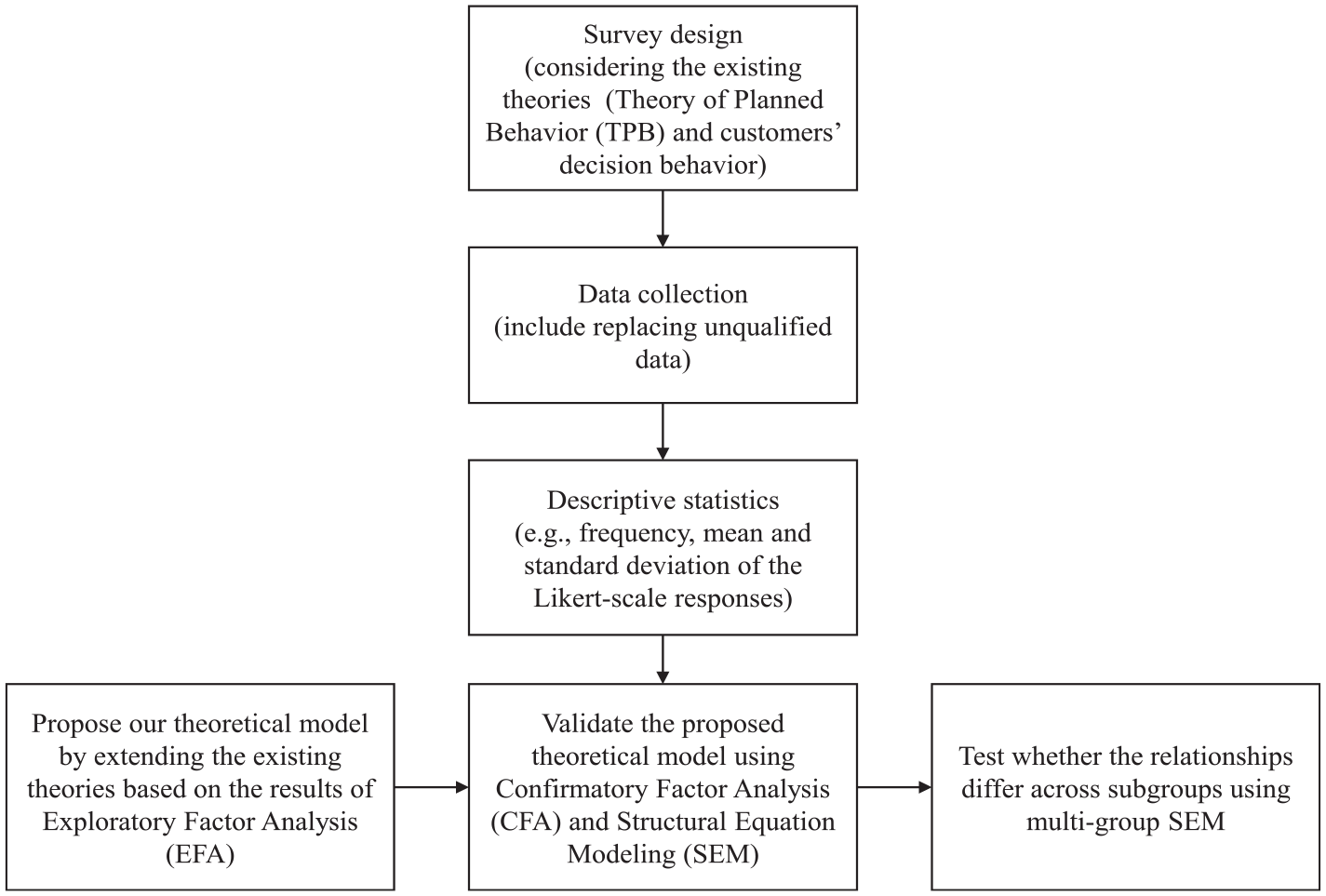
Methodological framework.
Data Collection
We designed and distributed an online questionnaire via a commercial digital survey panel. A copy of the questionnaire is available in Appendix F. From September to December 2021, we collected the data from a representative sample of 3,010 German residents who had traveled at least once on trips longer than 200 km within continental Europe in 2019, before the start of the COVID-19 pandemic. We decided to recruit panelists who were at least 18 years old for this study.
The survey was available in German and English. It was structured in five parts. The first part screened eligible participants by asking about their general travel frequency for trips above 200 km within Europe in 2019. We also included questions on gender, age, highest education level, household income, and residential area in this section to ensure that the participant quota corresponded to the population distribution. The second part elicited more details about the participants’ long-distance travel in 2019, such as travel frequency, transport mode, and trip purpose. Based on the selected trip purpose(s), we asked the respondents to rate the importance of 11 relevant mode choice factors (e.g., summarized by Cho [ 38 ] and Straubinger [ 39 ]), such as safety and security, travel time, and climate impact. In addition, focusing on previous air travel, questions were asked concerning flight frequency, purpose, attitudes toward flying on conventional airplanes (measured using a six-point Likert scale, from 1 “I strongly disagree” to 5 “I strongly agree”, as well as “I do not know”), and their experience and attitudes toward flying with conventional propeller-driven airplanes. In the third part, we introduced the general concept of HEAs. We provided a list of service attributes based on the those of conventional airplane services (such as flight time, ticket price, and comfort). The respondents were asked to indicate how important those attributes are for their travel needs according to their selected travel purpose(s). Next, we provided a detailed scenario of service features of a typical type of HEA. Based on this scenario, respondents were asked to indicate their agreement on a series of attitudinal statements (on the aforementioned Likert scale) concerning trust in HEA performance (e.g., I am concerned about the potential risks of taking an airplane powered by electric propulsion); their trust in airplanes’ environmental performance (e.g., I am concerned about the climate impact of power production, such as electricity and hydrogen); the social impact of such an adoption (e.g., Flying with hybrid-electric airplanes would improve the way others perceive me), willingness to allocate budget (e.g., It is acceptable for me to pay conventional flight ticket prices for hybrid-electric airplane flights), and intention to adopt the airplane (e.g., I would consider taking hybrid-electric airplanes if they were certified by the relevant authorities). According to the responses about adoption intention, we asked the respondents to indicate their perceived use cases (purposes) or their reasons for not considering using the service. The questions included in the fourth section were designed to measure attitudes toward using new mobility products (e.g., Among my friends and acquaintances, I am usually the first to use new mobility products), as well as attitudes and actions on climate change (e.g., about the introduction of CO2 tax; actions such as I have bought an electric car). Considering a potential social desirability bias sometimes found in studies investigating environmental attitudes ( 40 ), we used indirect questions. For example, instead of asking “What would you do …?” we asked “What do you think German citizens should do …?” when asking about attitudes on climate change. A complete list of the aforementioned survey items as well as their descriptive statistics can be found in Appendix C. The survey ended with questions capturing other demographic information, such as employment status, household composition, driver’s license, car availability, and postal code. All items reported were asked to relate to 2019. To control the quality of the responses, we included “trap” questions and varied the directionality of the statement questions to be both positively and negatively associated with a given construct.
Model Development
Based on the literature review results for potential factors affecting passenger acceptance of new transport modes, we focused on identifying the impacts of service attributes, attitudinal factors, and previous travel behavior. External factors, such as incentives and subsidies, were not considered at this introductory stage. Sociodemographic factors were set as control variables. To identify the most influential factors and how they might affect passenger acceptance, we developed conceptual frameworks that related to the project goal, identified relevant base theories, and conducted a preliminary exploratory analysis.
As our research project aimed to design a type of HEA that produced a smaller environmental footprint throughout its life cycle, we informed the respondents that the HEA was an environmentally friendly transport mode. Therefore, according to previous studies, we assumed that environmental attitudes/awareness would affect the decisions. Moreover, as safety and trust have been found to be the top factors influencing the acceptance and adoption of novel transport modes such as AVs and UAM, we assumed these aspects would also prove relevant to the acceptance of HEAs, a new air mode considering the new propulsion system.
To ensure our research was built on a solid theoretical background, we referred to the prevailing theories of TPB ( 41 ) and customer decision behavior ( 42 ) when designing the survey items and enhancing the conceptual framework. TPB has been utilized to discover consumers’ ecofriendly and green behaviors and how these behaviors can be affected by environmental concerns/awareness ( 43 ). Moreover, TPB allows analysis of how behavior intention might be affected by the grade of comfort and difficulty perceived by an individual concerning conducting a certain behavior (perceived behavioral control) ( 41 ). In this context, we specified these as an individual’s capability and willingness to allocate money and time budget to use HEAs. We further assumed that an individual’s acceptance of HEAs could also be affected by their social surroundings, such as families or friends. This aspect was adapted from the “social norms” element of TPB. Furthermore, because HEA is a new mobility product being introduced to the market, passengers might experience uncertainties as they are unfamiliar with the product, cannot foresee the consequences of their acceptance, or both. Literature defines this type of uncertainty as perceived risk (e.g., financial-, functional risk [44, 45]). Perceived risk is relevant to customer decision behavior ( 42 ). In our context, we focused on perceived physical and functional risks with regard to the safety and comfort of the new airplane. Unlike other new transport modes (e.g., EVs, AVs, and UAM), passengers would not control HEAs or fly on-demand, therefore, the TAM framework was not selected.
To confirm whether the aforementioned variables have a relationship with acceptance and explore whether these variables are affected by other exogenous variables included in the survey, we started with preliminary exploratory factor analysis (EFA) on half of the sample to group the relevant survey items to reveal underlying latent factors.
As a result, we proposed two conceptual models. The first model focused on exploring the impacts of the service attributes. Through EFA, we clustered service attributes into time, comfort, safety, climate impact, cost, and other attributes (e.g., multitasking possibility), according to their rated importance (from 1 “Least important” to 5 “Most important”). Similarly, we identified several factors to describe attitudes toward HEAs, such as concerns about safety, concerns about comfort, accepting the need to spend more time to use HEAs, and accepting having to pay conventional flight ticket prices to take HEAs. We intentionally split some of the attitudinal factors to form hypothetical relationships with the corresponding service attributes. In the next step, we attempted to understand how the perceived importance of certain service attributes might affect attitudes toward HEAs. Figure 2 shows the hypothetical relationships (H1 to H13) among different levels of endogenous and exogenous variables.
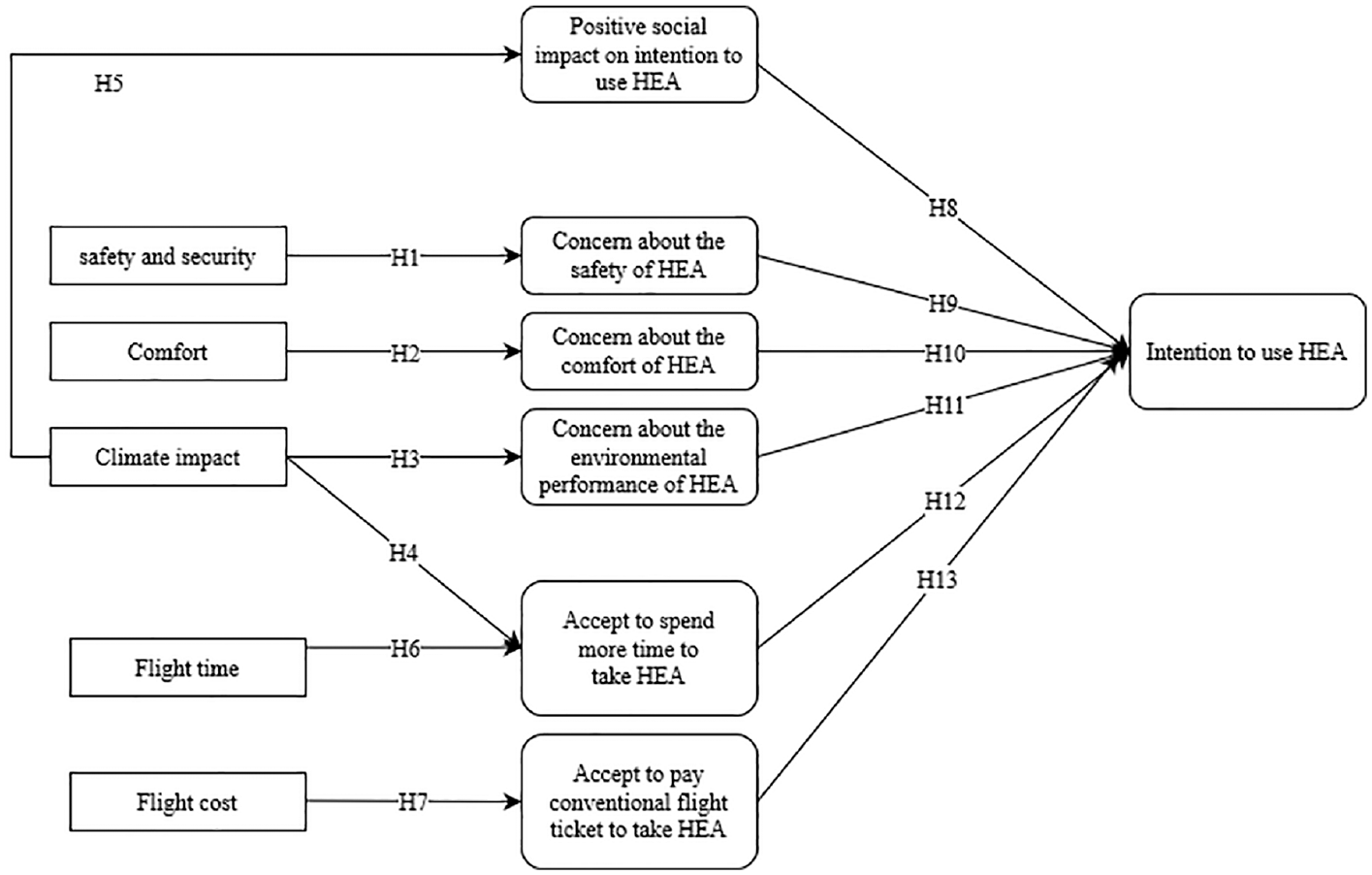
Theoretical framework of the service model.
The second model focused on the impacts of the attitudinal factors (as shown in Figure 3). Through EFA, we identified several factors to describe attitudes toward HEAs: positive social impact on intention to use HEAs; concerns about the safety, comfort, and environmental performance of HEAs; and willingness to allocate budget to use HEAs. In addition, other attitudinal factors, such as climate concerns (43), trust toward new mobility technology (46), and safety and comfort concerns about conventional airplanes, were included and extended the base model. H1 to H11 of Figure 3 present all the hypothetical relationships to be validated.
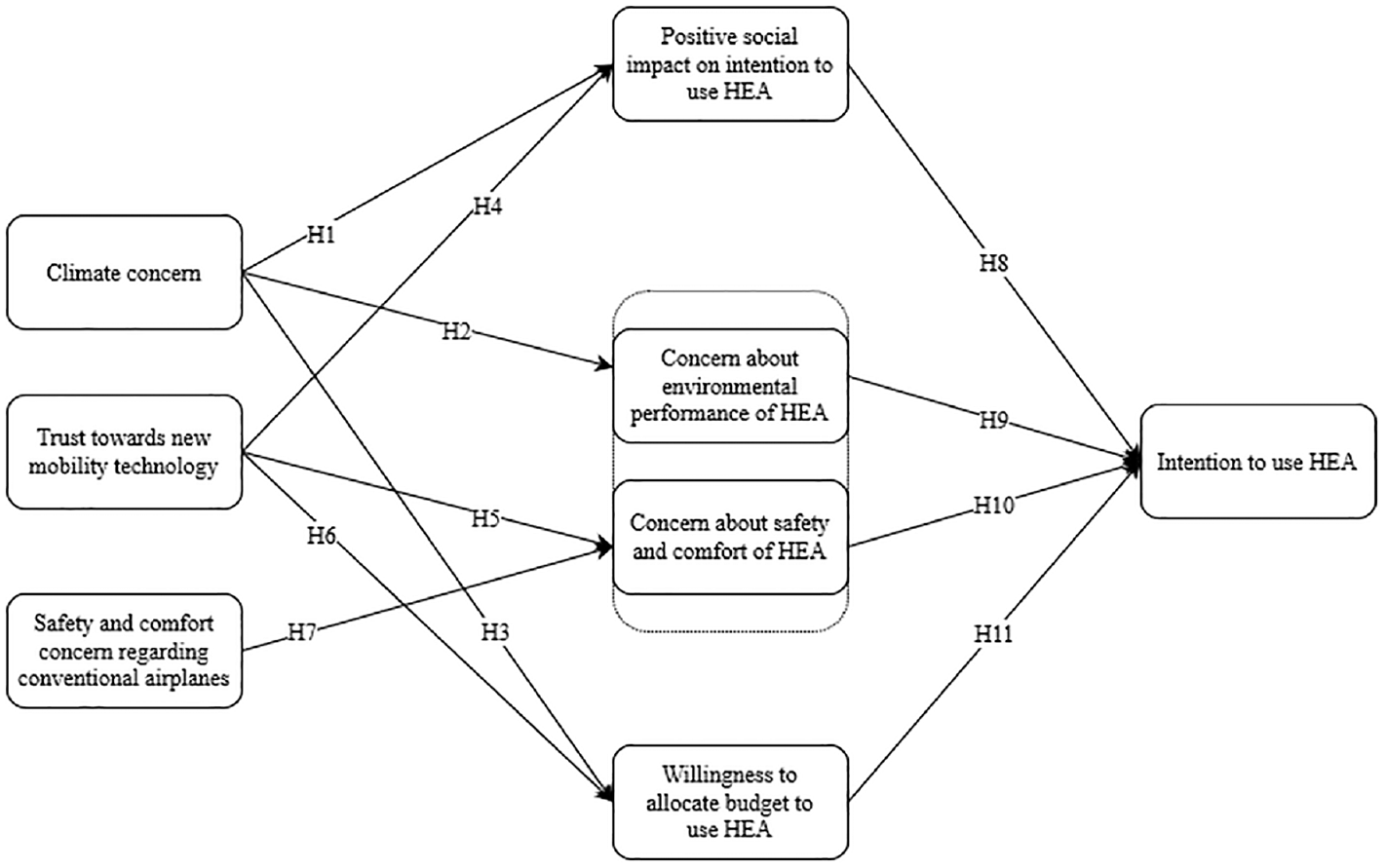
Theoretical framework of the attitude model.
Following EFA, as part of the structural equation modeling (SEM), we conducted a confirmatory factor analysis (CFA) on the other half of the sample to validate the EFA-informed a priori theory about factor structure and psychometric properties ( 47 ). Ultimately, a multigroup SEM was performed to examine whether the given measurement items were equivalent across population groups and whether the given relationships among the latent variables remained unchanged across different population groups ( 48 , 49 ).
The following equations illustrate the measurement and structural components of a SEM. Equations 1 and 2 are the measurement models related to the endogenous and exogenous variables, respectively. ( 50 ) The multigroup notation is included, according to the research undertaken by Gkartzonikas et al. ( 51 ).


where
y is
x is
Equation 3 is the structural model indicating the association between the latent exogenous and latent endogenous variables, as well as the relationship among the latent endogenous variables ( 50 , 51 ).

where
All the aforementioned models were estimated with R software, using the Lavaan package ( 52 ). All Likert-scale responses were treated as interval data, and a MLR (maximum likelihood with robust standard errors) estimator was applied.
Research Sample
The sample consisted of 3,010 individuals. In general, the sample is very well represented in relation to gender, age, educational level, household income, and region, as shown in Table 1. The gender and age distributions corresponded to the German census ( 53 ). Distributions of income and education were obtained according to information from the Federal Statistical Office database ( 54 ). To ensure a representative sample of urban, suburban, and rural areas, we sampled based on postal codes categorized according to area type, defined by the Federal Institute for Research on Building, Urban Affairs, and Spatial Development ( 55 ). The distributions of flying purpose and frequency were compared with Germany’s national household travel survey data ( 56 ) and Lufthansa statistics ( 57 ), respectively.
Sample Characteristics
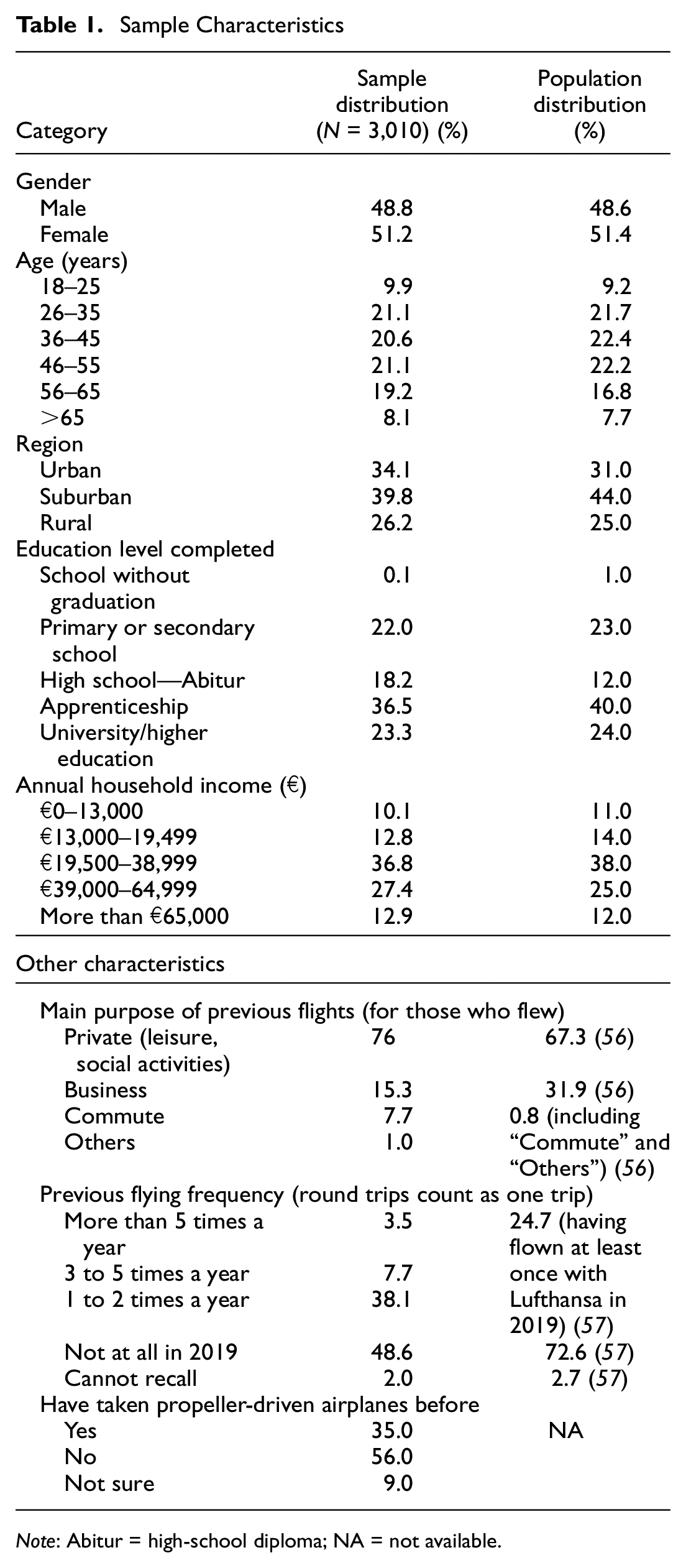
Note: Abitur = high-school diploma; NA = not available.
Results
This section first provides the descriptive statistics of the survey results. Then, to further understand the relationship between variables, we present the results indicated by estimating the statistical models.
Descriptive Statistics
Assuming the prerequisite that the HEAs are certified by the relevant authorities, the majority (74%) of respondents agreed that they would consider flying with HEAs. Among the respondents who would consider flying with HEAs, 64% envisioned using it mainly for private travel purposes, such as leisure and social activities. Among those who would not consider flying with HEAs, 36% (i.e., 9% of the entire sample) indicated safety concerns, followed by 18% (5% of the entire sample) indicating a lack of trust in the regulatory authorities. With regard to the main areas of concern, 42% of respondents agreed that they were concerned about the potential risks of electric propulsion, such as battery fires and dangers from high voltage. About one-third of the respondents further indicated that they were concerned about the negative climate impact of airplane manufacturing, the process of power production (such as electricity generation), and additional traffic traveling to/from airports.
Figure 4 shows the perceived importance of the service attributes for respondents’ travel needs when considering taking an HEA. In general, almost all the assumed aspects tended to be relevant to the respondents. The top 10 attributes included safety and security, cost, punctuality, luggage allowance, booking experience, time (onboard and preboard), climate impact, comfort, and intermodal integration. Safety and security were perceived as the most important, and almost equally important for both business and private travel purposes. Flight cost was perceived to be much more important for private than for business travelers, whereas time-related attributes such as punctuality, flight time, efficient procedures at the airport, and intermodal integration seemed to be more relevant to business travelers whose trips are usually more time-sensitive.
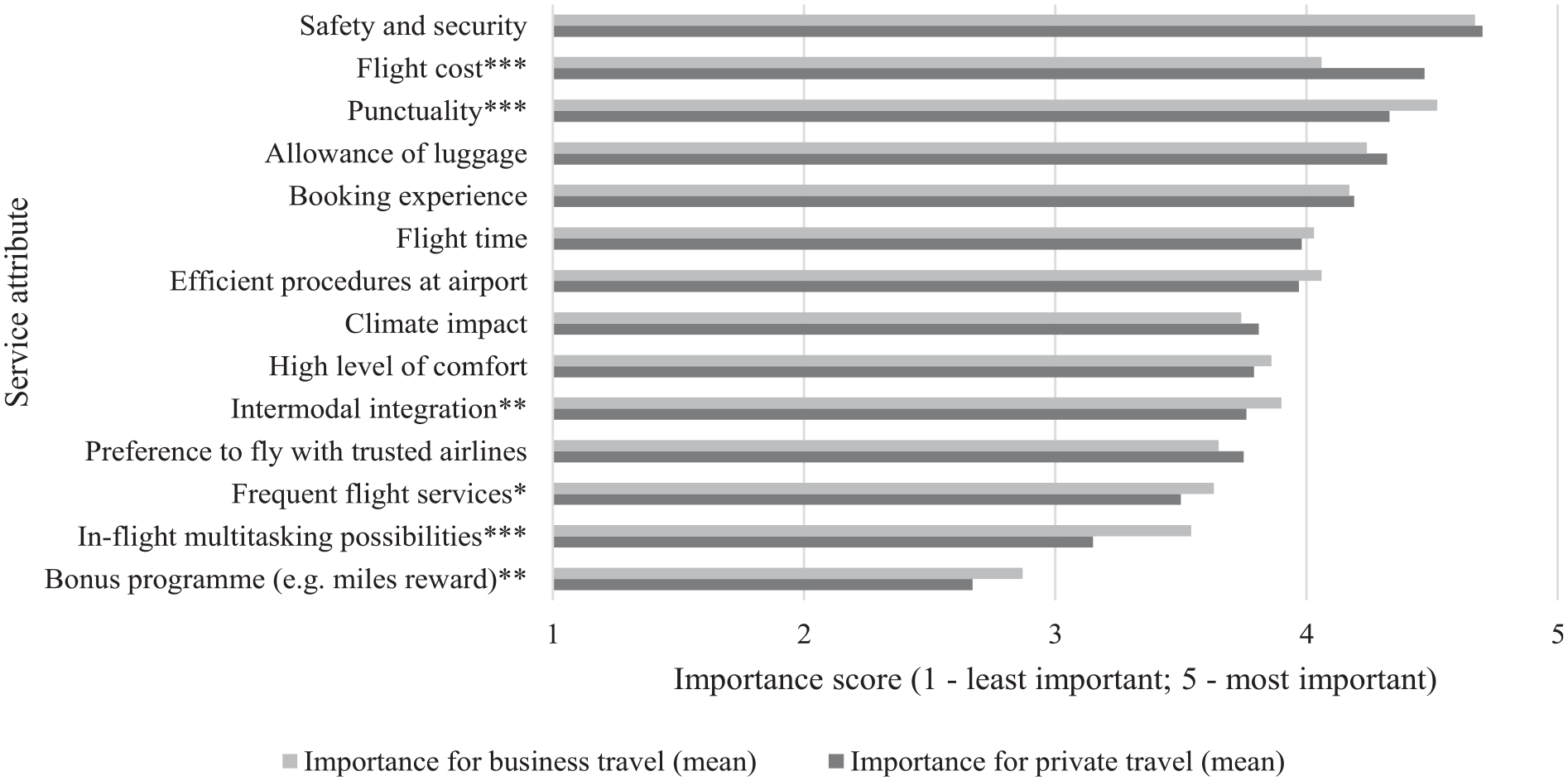
Summary of the importance of service attributes.
Model Estimation Results
Statistical methods were applied to analyze the potential impacts of various factors on attitudes toward and intention to use HEAs. We estimated two models based on the frameworks described in the section covering the methodology. We named the first model the “service model,” which implies that the perceived importance of certain service attributes might affect attitudes toward HEAs and, thus, acceptance intention. The second model, the “attitude model,” aimed to reveal the impacts of psychological factors such as attitudes and motivations.
CFA was initially conducted on the service model to validate the latent variables. Indicators such as Cronbach’s alpha, composite reliability (CR), and average variance extracted (AVE) were calculated to assess the reliability and validity of the measurement. Most of the Cronbach’s alphas were above 0.6, which is an acceptable value ( 58 ). The majority of the CR and AVE values were also above the acceptable thresholds of 0.6 ( 59 ) and 0.5 ( 60 ), respectively, and, the AVEs were always higher than the highest squared correlation between the measured factor and the other factors, with the exception of “importance of travel time”. Nevertheless, Fornell and Larcker suggested that when AVE is less than 0.5, but CR is higher than 0.6, the convergent validity of the construct is still adequate ( 59 ). In addition, EFA identified some factors, such as “importance of comfort” and “importance of safety and security” as single-item factors. However, the reliability of these factors could not be directly assessed. According to Petrescu, recent studies have proven that simple and concrete constructs can be successfully measured through one item ( 61 ). In fact, the single-item factor was successfully included in the structural equation model. The remaining items included in the CFA had factor loadings of at least 0.4 ( 62 ). Details of the reliability and validity testing of CFA for the service model can be found in Appendix A. The item details can be found in Appendix D.
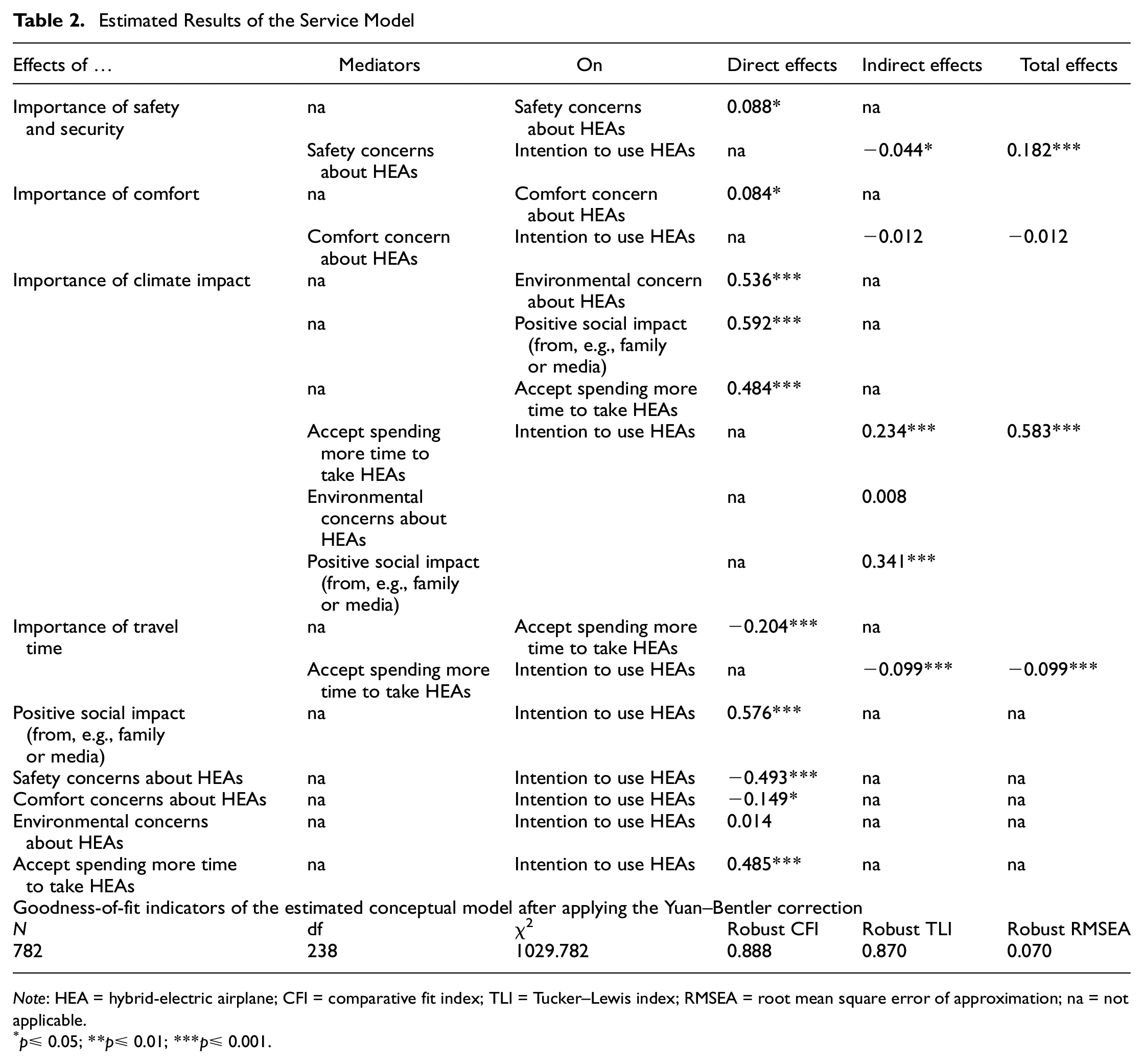
Following CFA, the structural model estimation was conducted based on the half-sample employed by CFA. The results are shown in Table 2. The measurement and structural models were estimated based on the responses other than “I do not know.” Moreover, the robust goodness-of-fit measures (comparative fit index [CFI] = 0.888, Tucker–Lewis index [TLI] = 0.870, root mean square error of approximation [RMSEA] = 0.070) indicated an acceptable fit ( 51 , 63 ).
Estimated Results of the Service Model
Note: HEA = hybrid-electric airplane; CFI = comparative fit index; TLI = Tucker–Lewis index; RMSEA = root mean square error of approximation; na = not applicable.
p≤ 0.05; **p≤ 0.01; ***p≤ 0.001.
The attitude model was estimated following a similar procedure. First, we started estimating measurement and structural models based on the sample without grouping. Furthermore, through exploratory analysis, we noted that the respondent’s previous experience with small propeller-driven airplanes might affect their attitudes toward HEAs. To include this binary variable (with/without previous experience) in the model, we divided the sample into two groups and implemented CFA and structural model estimation accordingly. The reliability of the measured latent variables was evaluated for the general sample (no grouping) and for the two subgroups. The Cronbach’s alpha and CR values for the general sample and two subgroups were acceptable ( 58 , 59 ). Most of the AVE values were also above the suggested threshold (i.e., 0.5) ( 60 ) and were greater than the highest squared correlation with the other factors, except for “willingness to allocate budget to use HEAs” for both the general sample and the two subgroups. Nevertheless, the convergent validity of the construct was still adequate. The remaining items included in the CFA had factor loadings of at least 0.4 ( 62 ). Details of the reliability and validity testing of CFA for the attitude model can be found in Appendix B. The item details can be found in Appendix E.
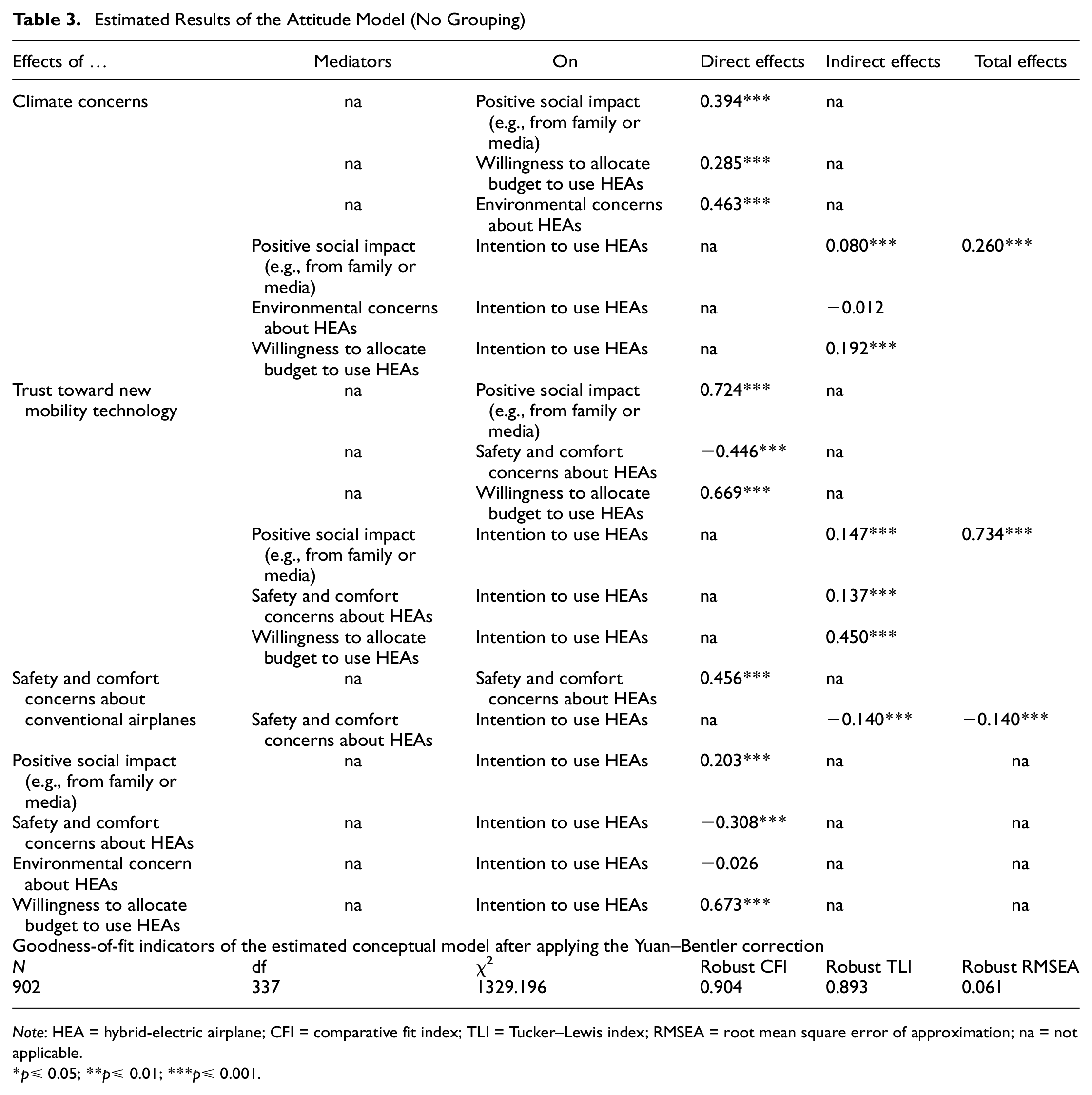
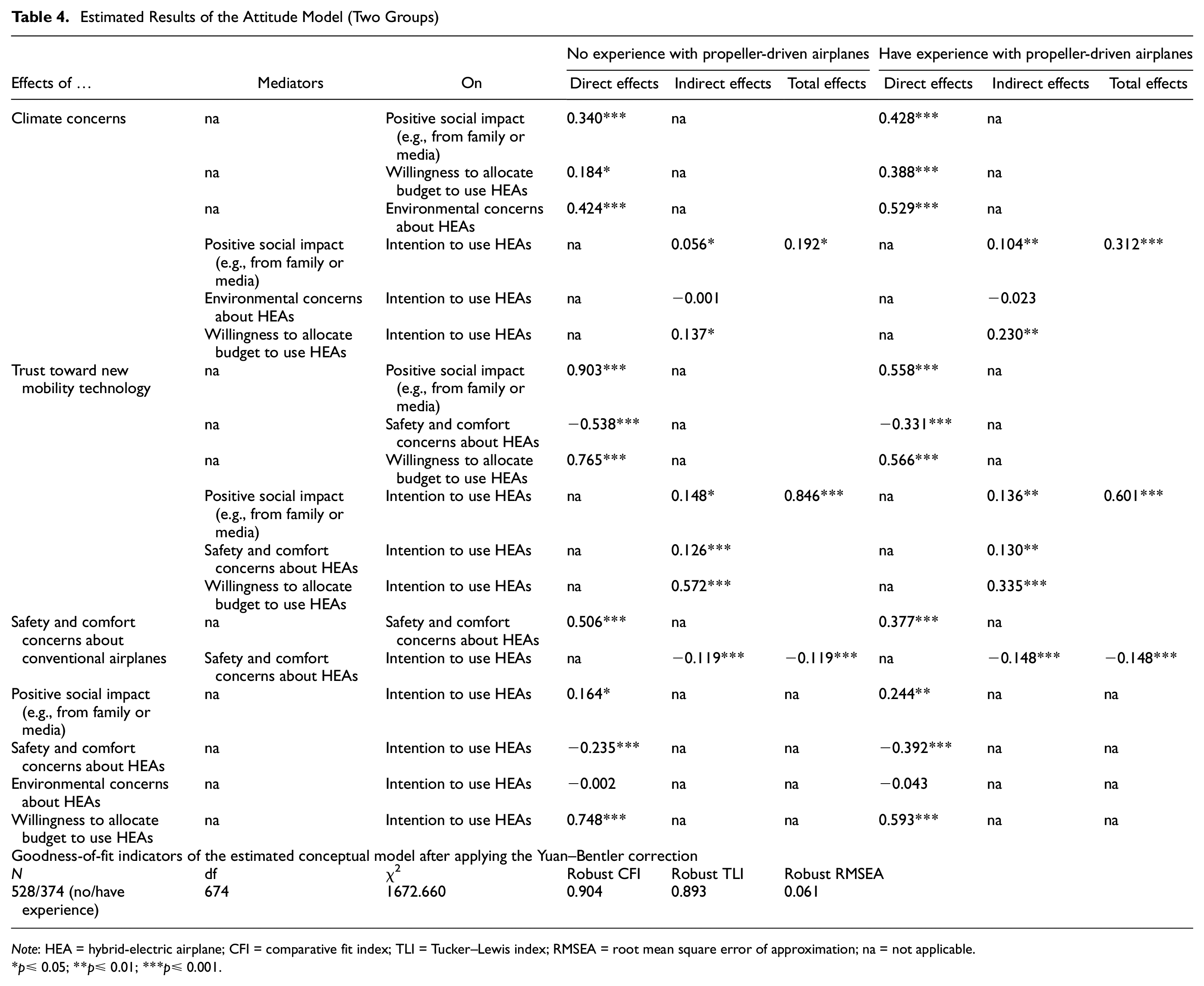
Similarly, when estimating both the measurement and structural models of the attitude model, responses containing “I do not know” were excluded. Tables 3 and 4 give the final SEM results for the attitude model based on the general sample without grouping and the two subgroups, respectively. The robust goodness-of-fit measures for both models (CFI = 0.904, TLI = 0.893, RMSEA = 0.061) indicated a good fit ( 51 , 63 ).
Estimated Results of the Attitude Model (No Grouping)
Note: HEA = hybrid-electric airplane; CFI = comparative fit index; TLI = Tucker–Lewis index; RMSEA = root mean square error of approximation; na = not applicable.
p≤ 0.05; **p≤ 0.01; ***p≤ 0.001.
Estimated Results of the Attitude Model (Two Groups)
Note: HEA = hybrid-electric airplane; CFI = comparative fit index; TLI = Tucker–Lewis index; RMSEA = root mean square error of approximation; na = not applicable.
p≤ 0.05; **p≤ 0.01; ***p≤ 0.001.
Discussion of the Main Findings
Based on the model estimation results, this section discusses the service attributes and attitudinal factors relevant to the attitudes toward and acceptance of HEAs. Recommendations are provided on how the acceptance of this new air mode could be increased.
Findings About the Service Attributes
In addition to the top service attributes captured directly through the importance rating, SEM further confirmed the significant indirect impacts of safety and security, time, climate impact, and comfort. According to Table 2, the more important the individuals perceived the safety, comfort, and climate impact of HEAs, the more they were concerned about these aspects of HEAs. Concerns about safety and comfort decreased the intention to use HEAs. Moreover, those sensitive to time might not be willing to invest the time needed to take a more environmentally friendly but slower transport mode. On the contrary, those who were more concerned about the climate impacts of HEAs would be more willing to invest the additional time needed to use HEAs. Those who pay more attention to the climate impacts of a transport mode might also be positively affected by their social surroundings, such as media, family, and friends, in the acceptance of HEAs. Such positive influences would also lead to a stronger intention to use HEAs. It is worth noting that travel cost was found to be an essential service attribute according to the importance ratings but was found to be insignificant in the SEM estimation results. This is possibly because the question set was “It would be acceptable to pay the conventional ticket price for using HEAs.” Most respondents agreed with this statement. Therefore, the impact of cost was found to be insignificant (i.e., H7 and H13 in the service model were rejected). In future studies, a question could be set to ask whether respondents would be willing to pay more (or less) than the conventional ticket price to use HEAs. Despite this, we still identified cost as a crucial factor, especially for private travel purpose, as seen in Figure 4.
Findings About the Attitudes
The SEM confirmed the significant indirect impacts of several psychological factors. As shown in Table 3, stronger climate concerns and trust toward new mobility technology led to a stronger acceptance intention. Such findings are consistent with the existing studies concerning other new transport modes like EVs and UAM ( 31 , 43 ). On the contrary, stronger concerns about the safety and comfort of airplanes flying today reduced the intention to use the new airplanes. Furthermore, subjective norm (i.e., social influence) concerns about the safety and comfort of HEAs, and willingness to allocate resources to use HEAs seemed to mediate between individuals’ attitudes (e.g., toward climate and new mobility technology) and acceptance intention. However, the mediating effect of environmental concerns about HEAs was found to be nonsignificant owing to the insignificant impact of environmental concerns about HEAs on acceptance intention (i.e., H9 in the attitude model was rejected). It fact, the hypotheses on the impact of environmental concerns about HEAs were rejected in both the service (H11 in Figure 2) and attitude models (H9 in Figure 3), which indicated that concerns about HEAs’ environmental performance in relation to, for example, energy consumption and the climate impact of power production did not have a direct impact on intention to use HEAs. This was consistent with the descriptive statistics (see Appendix C), showing that most of the respondents were less concerned about HEAs’ environmental performance. Nevertheless, we suggest a further investigation could be conducted using a different survey measurement to confirm this.
Finally, the multigroup SEM indicated that the associations between psychological factors and acceptance intention differed according respondents with and without previous experience of propeller-driven airplanes, which are somewhat similar to HEAs. According to Table 4, it seems that lacking trust in new mobility technology tended to have more substantial impacts on safety concerns about HEAs for respondents who had no experience of taking propeller-driven airplanes. This confirmed the intuitive expectation that prior experience could significantly affect individuals’ perceptions about a new transport mode and, thus, their acceptance intentions. In addition, it seems that the trust in new mobility technology of those without prior experience could be affected even more positively by their social surroundings (e.g., media or family). This indicated the importance of gaining information and knowledge about new mobility products.
Implications
The descriptive statistics and statistical analysis results indicated the high relevance of a few service attributes to HEA acceptance, such as safety and security, travel time, travel cost, and comfort. These factors have also been found to affect mode choice of conventional transport ( 39 ) and of passenger acceptance of new transport modes such as UAM ( 64 , 65 ). We further confirmed that different customer groups have diverse priorities concerning some service aspects. For example, considering the lower importance of flight cost but the higher importance of punctuality, business travelers could be early adopters during the market entry phase.
Safety and security seemed to have the highest impact on passenger acceptance of HEAs. This finding aligns with Maslow’s hierarchy of needs that motivate human behavior, which affirms that physiological and safety needs must be satisfied before higher-level needs ( 66 ). Other studies drew the consistent conclusion that safety concerns contributed most to the acceptance and adoption of new transport modes such as EVs ( 28 ), AVs ( 27 ), and UAMs ( 30 , 31 , 64 ). As even a low number of accidents can cause a deterioration in public perceptions, failure rates and reliability must be thoroughly understood. Aircraft manufacturers need sufficient tests and analyses to measure aircraft performance and build a safety record ( 65 ). Manufacturers and regulators at all levels should work together to provide transparent, complete, and reliable information about the safety and quality of the new aircraft to build trust in passengers.
The results indicated that prior experience with conventional aircraft relating to safety and comfort positively correlated with the intention to accept HEAs. According to our survey results, the majority (around 70%) of respondents were not concerned about the safety and comfort of conventional aviation. To at least maintain this group of passengers, the safety and comfort levels of HEAs must be equivalent to those of conventional aviation. However, the remaining passengers who are skeptical about conventional aviation are not likely be the early adopters of this new aircraft. Furthermore, considering the association revealed between passengers’ previous experience with propeller-driven aircraft and the acceptance intention of HEAs, providing direct or indirect test experience with actual HEAs or with a simulator in a laboratory could further increase acceptance. User testing also allows researchers to gather behavioral and physiological measures beyond subjective trust metrics ( 64 ).
Both models confirmed that respondents with stronger concerns about climate change tended to worry more about the potential climate impact of HEAs. However, interestingly, no direct association was found between respondents’ climate concerns and their intention to accept a lower-emission aircraft. This finding did not confirm previous findings about the direct link between passengers’ environmental attitudes or concerns and the adoption of UAM or electric airplanes ( 24 , 37 ). Different study areas and survey instruments might lead to different results. Nevertheless, our finding is consistent with the attitude–behavior gap of passengers addressed by the previous studies ( 67 – 69 ). This means that people do not always convert their environmental awareness and green behavior in daily life into their travel behavior. In this case, even for environmentally conscious people, the gap may hinder their acceptance of HEAs. To reduce the gap, studies have emphasized the need for education to change attitudes and policy implementation to directly influence behavior ( 69 , 70 ). Meanwhile, the role of information and communication cannot be ignored ( 71 ). It is also possible that the lack of detailed and appropriate format of information about ecological performance made it difficult to make informed decisions about acceptance. A possible solution could be to provide transparent information about the ecological impact of HEAs within the booking process, for example, via ecolabels, such as the one being developed by EASA for conventional aviation ( 30 ).
Conclusions
HEAs could improve regional mobility and contribute to the transition toward carbon neutrality if powered by renewable energy. Focusing on active long-distance travelers in Germany, this case study investigated the attitudes and acceptance intention toward 19-seater HEAs, identifying the relevant influential factors by analyzing original survey data.
Based on 3,010 responses collected via an online survey panel, we found generally positive attitudes toward HEAs and noted a major safety concern about electric propulsion. Two structural equation models confirmed not only the impacts of service attributes, such as travel time, safety, comfort, and climate impact, but also the relevance of climate concerns, trust toward new mobility technology, and previous flying experience. As we confirmed that the intention to use HEAs would decrease in the case of individuals with stronger concerns about the safety and comfort of HEAs, a safety and comfort level equivalent to that of conventional aviation has to be ensured. In addition, transparent and reliable safety records are required to build passenger trust. Ideally, a direct or indirect test flying experience may help mitigate the psychological barriers, especially for those lacking trust in new mobility technology. Furthermore, we found that respondents with stronger environmental awareness tend to be more concerned about the ecological performance of HEAs, but they do not necessarily have a stronger intention of acceptance. Decision makers should be aware of this attitude–behavior gap that might hinder HEA acceptance, and implement corresponding strategies to mitigate its impact.
We will now identify some limitations of this study and suggest future research directions. First, the study was carried out before the beginning of the Covid-19 pandemic, which caused a massive reduction in long-distance travel, particularly in air travel. The impact of the pandemic on decision making was not analyzed. Future studies could assess to what extent this and other such drastic events might influence acceptance of new transport modes. Because all the responses provided were based on the prepandemic situation, some bias might exist as a result of selective memory in relation to the travel that occurred two years earlier. Moreover, some of the answers might have been biased owing to a lack of knowledge and experience. Future studies could validate the results using the data collected after a simulator or virtual reality experiment or at a time when HEAs or similar air modes are available in the market. Here, researchers will have a chance to test and compare passengers’ behavioral and physiological changes before and after passengers gain additional information and experience. If future studies have the possibility to survey or interview passengers of existing regional commuter airplanes or helicopter services that can provide similar services, other frameworks, particularly innovation diffusion theory, could be used to track the process of accepting new technologies when participants can better assess the relative advantages, compatibility, observability, trialability, and complexity of using the new air mode ( 46 ). In addition, the respondents stated their acceptance of HEAs based on their most frequent travel purpose. We calculated the total number of trips per year based on the average trip frequency (e.g., we used 1.5 to represent a travel frequency of one to two times a year) for each trip purpose, and found that business travelers in our sample were underrepresented compared with the share of trips by purpose indicated in the German household travel survey 2017 ( 56 ).
In the next steps, we will be further investigating the preferences of different population groups by segmenting respondents, especially in relation to their demographic characteristics. Moreover, we plan to investigate further the WTP for flying with HEAs as a next step. A stated preference survey exploring passengers’ mode preferences, including HEAs, is ongoing. There we will find out at which levels of ticket price, speed, and emissions passengers would choose HEAs. Moreover, as we find out that the importance of flight cost differs across business and private travelers, we aim to achieve a sample representativeness of both user segments.
Despite the aforementioned limitations, this survey-based study has provided a comprehensive understanding of the acceptance of HEAs in Germany. The validated theoretical models have extended existing theoretical models, such as TPB. The statistical findings indicated the relevant factors that should be considered before introducing HEAs to the market, providing room for several strategies and opportunities for stakeholders to influence passengers to make decisions to accept new air modes such as HEAs. In essence, new air travel services will need to be environmentally friendly and exhibit high safety standards. More importantly, the safety and ecological performances are expected to be communicated transparently to gain trust among passengers. Furthermore, the methodological framework presented here could be adapted and expanded to research other geographies, technologies, and market segments, which would enrich the understanding of passenger acceptance of air transport modes enabled by new technologies.
Supplemental Material
sj-docx-1-trr-10.1177_03611981231186587 – Supplemental material for Analysis of a Survey to Identify Factors to Accept Electric Airplanes
Supplemental material, sj-docx-1-trr-10.1177_03611981231186587 for Analysis of a Survey to Identify Factors to Accept Electric Airplanes by Mengying Fu and Rolf Moeckel in Transportation Research Record
Footnotes
Acknowledgements
The authors are grateful for the comments of the anonymous reviewers.
Author Contributions
The authors confirm contribution to the paper as follows: study conception and design: M. Fu, R. Moeckel; data collection: M. Fu; analysis and interpretation of results: M. Fu, R. Moeckel; draft manuscript preparation: M. Fu, R. Moeckel. All authors reviewed the results and approved the final version of the manuscript.
Declaration of Conflicting Interests
The authors declared no potential conflicts of interest with respect to the research, authorship, and/or publication of this article.
Funding
The authors disclosed receipt of the following financial support for the research, authorship, and/or publication of this article: The research is part of the GNOSIS project funded by the German Federal Ministry for Economic Affairs and Climate Action (BMWK) under reference number 20E1916B.

Supplemental Material
Supplemental material for this article is available online.
References
Supplementary Material
Please find the following supplemental material available below.
For Open Access articles published under a Creative Commons License, all supplemental material carries the same license as the article it is associated with.
For non-Open Access articles published, all supplemental material carries a non-exclusive license, and permission requests for re-use of supplemental material or any part of supplemental material shall be sent directly to the copyright owner as specified in the copyright notice associated with the article.
