







Abstract
This paper presents the history and development of criteria for both the design response-spectrum method for ordinary, common bridges analyzed by the modal-superposition method, and the ground-motion time-history analysis method and inputs for designing major, important long-span bridges. This paper addresses various challenges encountered by the designers related to implementation of ground-motion design criteria.
The authors’ experience with bridges includes new design and retrofit projects in the United States, particularly those of the California Department of Transportation (Caltrans) but in less seismically active states in the eastern United States as well. They are also active in both actual projects and professional activities in the development of bridge design guidelines, including, for example, the Multidisciplinary Center for Earthquake Engineering Research (MCEER) projects for the AASHTO Specifications and Caltrans’ Bridge Design Guidelines, as well as Applied Technology Council (ATC) projects. This paper covers both criteria for design response spectra for ordinary or common bridges analyzed by the modal-superposition method, and ground-motion time-history inputs for designing major and important long-span bridges using time-history analyses. This paper addresses various challenges encountered by the designers related to implementation of ground-motion design criteria.
AASHTO’s and Caltrans’ current ground-motion design criteria start with developing an appropriate reference design response spectrum for a given soil–rock condition based on the appropriate attenuation relationship derived from strong-motion recordings. The design response spectrum may be established by means of a deterministic or probabilistic approach as described in the following sections. The resulting response spectrum is then used by the bridge engineer as part of a response-spectrum analysis (RSA), which considers the seismic displacement demand at the natural period of the structure. This is the method appropriate for ordinary, common bridges. The paper will then discuss varying considerations and approaches for long-span bridges.
Deterministic Seismic-Hazard Approach
Historically, Caltrans led seismic bridge design practice and adopted what is called a deterministic seismic-hazard design approach for developing the reference earthquake loading criteria. This method’s main appeal is its simplicity, especially for presenting the approach to nontechnical personnel including managers of governmental agencies as well as the general public.
A deterministic approach requires identification of fundamental geometric seismic sources (earthquake faults) that would affect a project site, including the maximum magnitude associated with the earthquake source and the distance between the source and the site (see item 1 in Figure 1]. Then, an attenuation relationship is used to quantify the amplitude of the design response spectrum at a given structural period (see item 3 in Figure 1). It is possible that different seismic sources control the spectral amplitude at different period ranges. For example, seismic sources with smaller magnitudes from closer distances could control the response spectrum at shorter period ranges, while seismic sources with larger magnitudes would control the response spectrum at longer period ranges. The deterministic approach is simpler in that the method does not require knowledge of the recurrence relationships (rate of activity) for seismic sources, so most geotechnical professionals can conduct the analyses. There is little debate about the calculation procedure associated with the deterministic approach.
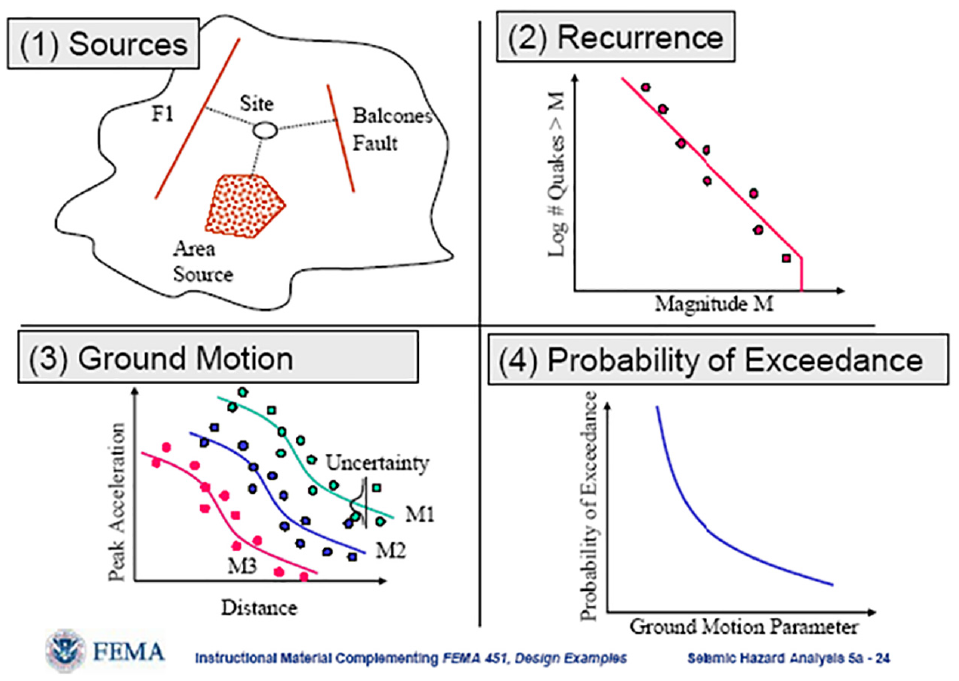
Steps in probabilistic seismic-hazard analysis. Note that only items (1) and (3) are involved in a deterministic seismic-hazard analysis.
Historically, Caltrans would use the median attenuation equation for developing the design response spectrum for ordinary or common bridges in what had been commonly called the maximum credible earthquake (MCE). The MCE approach, as documented by Mualchin and Jones ( 1 ), is well-known to practicing engineers active in seismic design of bridges in California. The authors believe that the wording “maximum” stems from the assumption that an entire fault length will rupture in a design event. However, this would automatically imply that the anticipated demand would have a 50% chance of exceeding the design level if indeed the entire fault length were to rupture. For major (long-span) bridges, the historical Caltrans practice would be to design for a response spectrum based on the mean-plus-one sigma (standard deviation) or statistically based on an 84th-percentile confidence level in the deterministic criteria.
As mentioned, Caltrans’ method has been called the MCE. That ordinary or common bridges are designed based on a median attenuation relationship has led to many criticisms, including that the design level is too low and that the name of MCE is misleading. Even to this day, many mistakenly believe that actual ground shaking will never exceed the MCE spectrum.
Probabilistic Seismic-Hazard Approach
The Caltrans Toll (long-span) Bridge Seismic Retrofit Program took place from the late 1990s to early 2000s in response to the recommendation for toll bridges outlined in the Continuing Challenge report ( 2 ). At that time the Toll Bridge Peer Review Panel introduced a probabilistic earthquake design approach to Caltrans.
Figure 1 illustrates a general procedure for the probabilistic approach which explicitly considers the recurrence relationship (item 2 in Figure 1) to account for seismic source activity, in addition to attenuation relationships which are developed from the statistical analyses of available strong-ground-motion data. From the authors’ experiences, a probabilistic hazard solution tends to be more robust. As an example, if seismologists decide to change the maximum earthquake magnitude assigned to a given fault, such as recently happened to the Hayward Fault in San Francisco East Bay, the design earthquake will change significantly for the deterministic approach, while a probabilistic approach recognizes that the larger magnitudes will be relatively rare and their implications for the probabilistic hazard solution will be relatively minor. Figure 2 presents a comparison between the probabilistic approach and the deterministic approach conducted for the Carquinez Strait Bridge retrofit project. Eventually, the Toll Bridge Peer Review Panel elected to adopt the largely deterministic approach (based on the 84th-percentile attenuation) for anchoring the design level for the Caltrans Toll Bridge Seismic Retrofit Program ( 3 ). The comparison indicates that the design ground shaking fits in between a 1,000 year and a 2,000 year return period of a probabilistic seismic-hazard design approach.
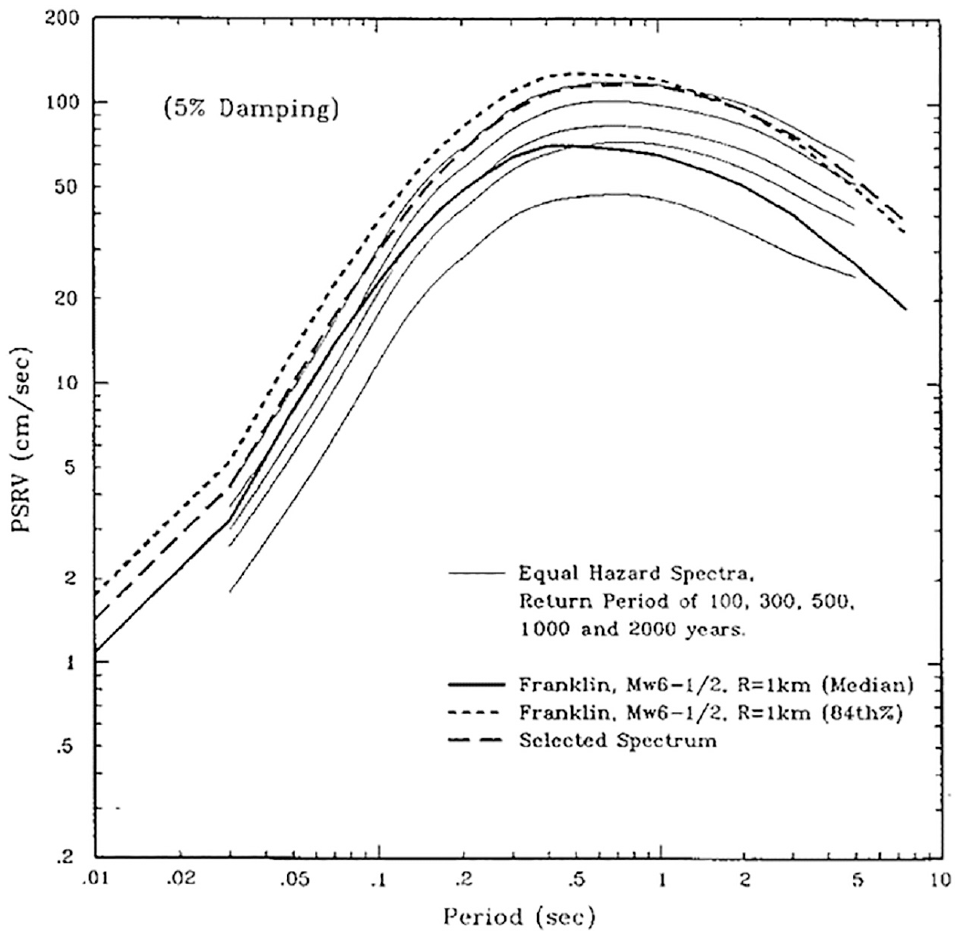
Comparison between probabilistic and deterministic rock target spectra from Geomatrix Geohazard Report ( 3 ) for Carquinez Strait Bridge.
Response-Spectrum Analysis
A response spectrum (depicting the seismic demand in relation to the acceleration or displacement demand) can be developed by a deterministic approach, or more commonly now with a probabilistic approach. It can be incorporated into the design by a variety of analysis approaches: an equivalent static analysis, equivalent dynamic analysis, and pushover analysis by the bridge engineer. However, the structural and geotechnical engineers must be cognizant of the limitations and intended use of the method, as illustrated with the following experience from the San Francisco–Oakland Bay Bridge (the Bay Bridge).
The east span of the Bay Bridge comprises four segments (from east to west): (1) the shorter-span Oakland Touchdown, (2) the long-span Skyway, (3) the steel self-anchored suspension (SAS) bridge, and (4) the Yerba Buena Island (YBI) transition structure. The SAS is a steel bridge while the other segments are reinforced concrete structures.
Soil conditions in relation to the bridge segments vary tremendously over the length of the East Span Bay Bridge as shown in Figure 3, consisting of soft bay mud of decreasing depth eastward from Oakland to the Skyway–SAS interface at E2 Pier. Soft bay mud remains the soil condition at SAS Pier E2. Soil condition at center tower, T1 at SAS consists of varying thickness of thinner bay mud overlying San Franciscan rock. Hard rock is exposed at the western limit of SAS at W2 Pier. The San Franciscan rock extends westward to the entire YBI transition structure.
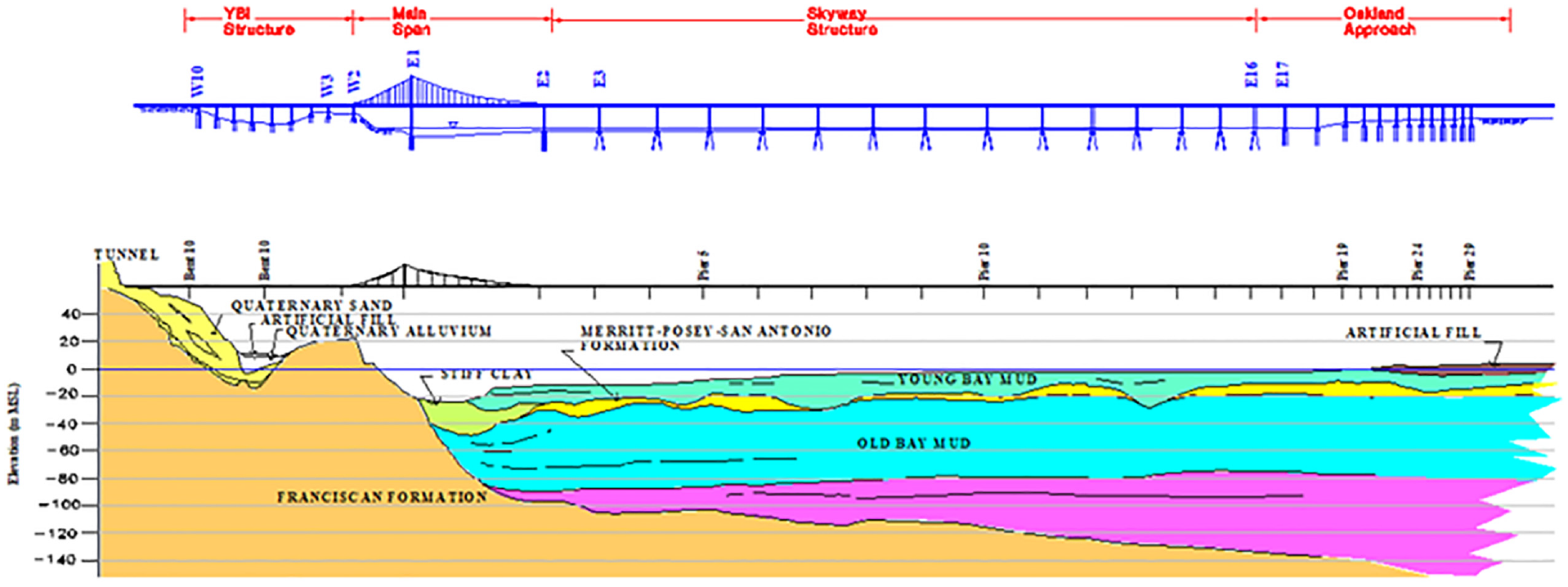
Summary of structural types and soil conditions of East Span Bay Bridge.
The drastically varying soil conditions imply different ground-motion characteristics and therefore different ways to implement ground-motion analysis methods for the project.
For all three segments, with the exception of the SAS, ground-motion criteria were generalized into appropriate design spectra (separate soft-bay-mud spectra for Oakland Touchdown and Skyway). A rock spectrum was prescribed for the YBI transition structure. Initial design for these three segments was conducted using the conventional response-spectrum and displacement pushover-analysis approach as usually preferred by designers. However, multiple support ground-motion time histories were also furnished for time-domain analyses for a final check for the entire bridge.
The RSA method has the advantage of establishing the seismic demand with relatively little analysis effort. The RSA method allows designers the ability to optimize the design and seismic details. Bridge engineers generally place higher importance on the seismic strategy, seismic performance achieved through design and detailing. Experienced structural designers commonly believe that sophistication in the analysis itself and the exactness of the ground-motion criteria (which will always be associated with a great degree of uncertainty) are not as important as implementing appropriate structural detailing to control the bridge to a ductile mode of behavior at overload as opposed to a sudden brittle collapse mode.
The soil conditions at each of the three bridge piers at SAS vary drastically, implying different response spectra at each pier. The SAS is supported by the main cable and suspenders, with dynamic characteristics very different from those of conventional bridges supported by columns and piers. In addition, an RSA solution does not provide adequate information for the design of the hinge pipe beam at the SAS–Skyway interface where drastically different dynamic-response characteristics are expected between the two structures. Therefore, the RSA method is not appropriate for the design of the SAS and the design was conducted by the time-history analysis method.
Caltrans’ Toll Bridge Experience
After the above geohazard studies conducted for the Caltrans toll bridge program concluded in 1993, the toll bridge structural retrofit contracts commenced in 1995. However, the seismologists in the geohazard study team informed Caltrans and the Peer Review Panel members that the results in their geohazard reports were already outdated as a result of a ground-motion phenomenon referred to as near-fault forward-rupturing directivity effects, as observed in several large earthquakes in California (e.g., the 1979 Imperial Valley earthquake and the 1992 Landers earthquake). Such ground-motion phenomena will introduce pulse-like long-period motions and imply a much higher level of demands for long-span toll bridges. At that time when the seismologists raised the topic of near-fault directivity effects, the subject was not well understood nor documented given that the benchmark near-fault directivity paper was not published until 1997 ( 4 ). Despite the need to delay the project schedule and the implication of a higher retrofit cost, Caltrans and the Peer Review Panel accommodated the seismologists to subjectively make increases to the spectral amplitude at longer periods (greater than 2 s) to project near-fault directivity effects. As the toll bridge design and analyses were to be conducted using a time-history approach ( 3 ), recorded motions with some of the most pronounced long-period pulses were selected as startup motions for developing the eventual spectrum-compatible rock motions for input to design analyses.
From the perspectives of Earth Mechanics, Inc. (EMI) and Caltrans, these debates and controversies had caused disruption to a fast-track project schedule. They also resulted in a significant delay to very large design teams assembled for the toll bridge retrofit contracts covering six long-span bridges:
(1) Benicia–Martinez,
(2) Carquinez Strait,
(3) Richmond–San Rafael,
(4) San Mateo–Hayward,
(5) Vincent Thomas, and
(6) San Diego–Coronado bridges.
The East Span Bay Bridge replacement project was also affected by the controversies. The issues and challenges of the toll bridge program are discussed by Caltrans Seismic Advisory Board ( 5 ).
The near-fault directivity ground-motion issue continued to be a controversial topic affecting the Caltrans toll bridge program for the next 20 years. The authors have been involved in all the abovementioned toll bridge projects, including the subsequent replacement of the East Span Bay Bridge design, and the Dumbarton and Antioch seismic retrofit contracts. EMI served as the lead geotechnical engineer for the East Span Bay Bridge contract and assumed the responsibility for reviewing the work conducted by the project seismologists. The project ground-motion criteria team (including the Seismic Peer Review Panel, and Caltrans and EMI personnel including seismologists, geologists, structural engineers, and geotechnical engineers from both Caltrans and EMI) continued to assist Caltrans to deal with the ground-motion subject matter and to resolve problems as necessary. The following discusses some of the issues and the decisions made which will be useful to readers.
Near-Fault Directivity Effect
The issue of near-fault directivity effects had originally surfaced much earlier when it was highlighted by the late Professor Bruce Bolt in 1991 and first introduced into Caltrans’ projects ( 3 ). This subject resurfaced again during design of the East Span Bay Bridge which started around 1997. By that time, the subject of near-fault directivity effects had been discussed in Somerville et al. ( 4 ), which proposed some statistics to provide a basis for conducting a more formal probabilistic seismic-hazard analysis and documented a methodology to modify existing conventional attenuation equations to account for such effects. A key figure, shown as Figure 4, illustrates the proposed method to amplify long-period motions by multiplication factors based on a dependent variable X cos(θ) defined for strike–slip faults that was used to quantify the degree of severeness of the near-fault directivity rupturing effect. At the initial assessment of the East Span Bay Bridge project, the probabilistic solution with near-fault effects projected an 80% increase in the spectral amplitude at a 3 s period over the reference spectrum which included an earlier vintage of the near-fault directivity effects introduced subjectively for retrofit analyses. Such a large increase obviously would imply a much higher construction cost for the project, which led to Caltrans requesting the governor to allocate a ground-motion contingency fund.
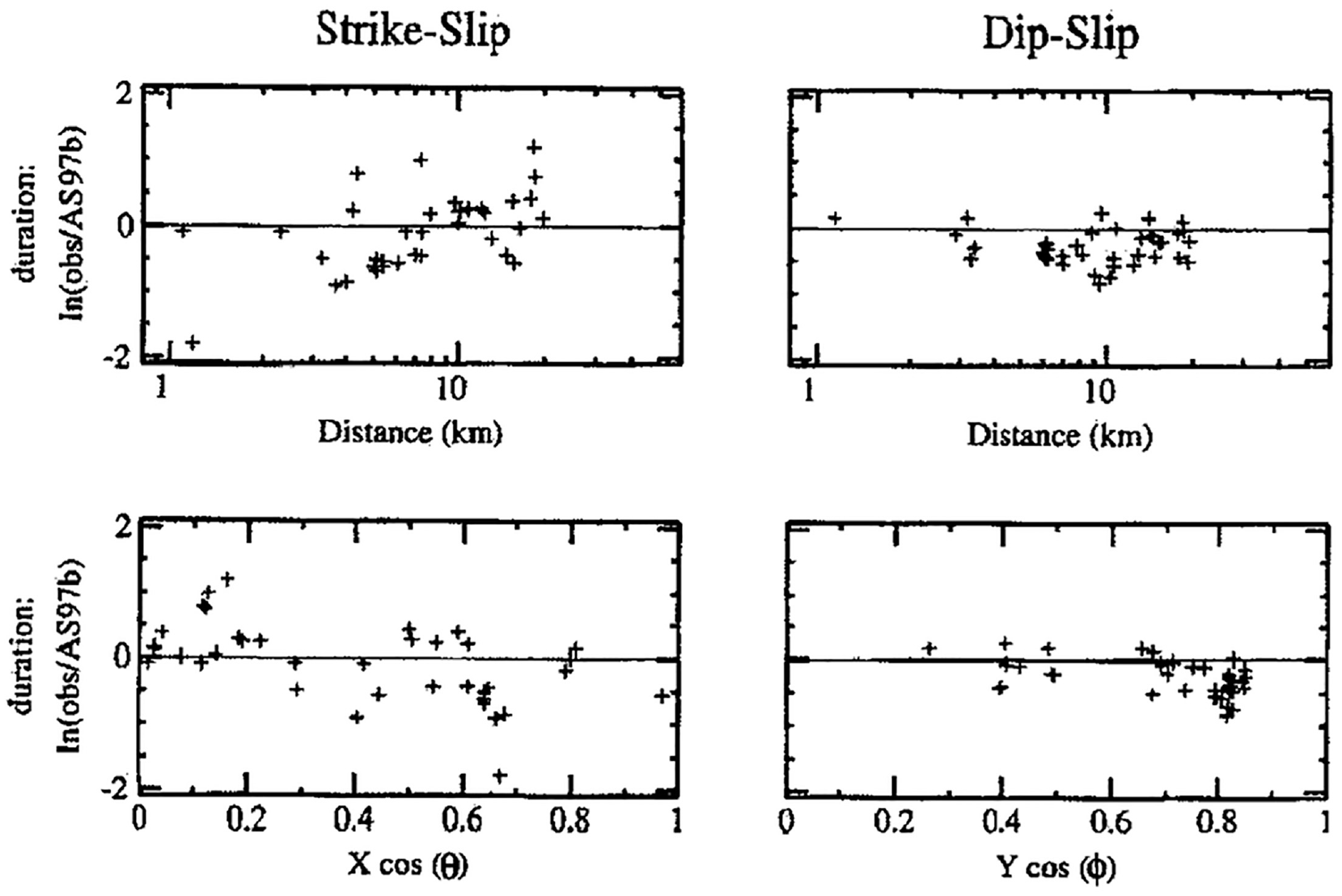
Observed versus predicted near-fault directivity strong-motion data ( 4 ).
From a review of Somerville et al. ( 4 ), the authors observed that the proposed ground-motion magnification factor shown in Figure 4 was supported by data points plotted to a limited value range of the directivity parameter [X cos(θ) value up to 0.8], but the proposed equation was extrapolated to a larger directivity parameter [X cos(θ) value up to 1] required for design interest. We pointed out to the seismologists and the Peer Review Panel that the extrapolation was obscured by the log–log plot and that the extrapolation to the range of design interest involved several fold factors above what is supported by data. Realization of this issue led to an intense effort including hiring three groups of seismologists to conduct fault-rupturing simulation analyses for a very long fault to answer the question of whether there are ground-motion “saturation effects” after the fault has ruptured to a certain length. Results from this exercise suggested that indeed ground-motion “saturation” would occur at a certain point and the findings led to introducing a cap to the Somerville equation as documented by Abrahamson and Silva ( 6 ). The fault-rupturing simulation study eventually resulted in an increase of about 30% in the spectral amplitude at a 3 s period as opposed to the 80% increase suggested in the initial probabilistic solution. The ground-motion design criteria adopted for the East Span Bay Bridge project were documented in the Fugro–EMI Ground Motion Report ( 7 ).
Since the work on the near-fault directivity effects furthered by the East Span Bay Bridge project ( 7 ), there has been a great deal of advancement in the subject matter, especially the Next Generation Attenuation (NGA–West) activities by the Pacific Earthquake Engineering Center (PEER). This major research included collecting an abundance of near-fault strong-motion records worldwide and developing ground-motion attenuation equations by using several groups of seismologists so that there would be independent review and checking among the several teams. The work has been documented by several PEER reports; for example, several researchers have advanced the near-fault directivity matter as documented by the PEER report ( 8 ) and the pulse-like motion effects on structures by others ( 9 ).
The East Span Bay Bridge design has continuously been closely scrutinized by many parties and challenged by political groups including the Legislation Administration Office of California (LAO) as late as 2013 before the opening of the East Span Bay Bridge. Therefore, EMI and Caltrans toll bridge program remained vigilant and repeated our Bay Bridge and other Bay Area toll bridge ground-motion hazard analyses using the NGA and source models available at the time ( 10 – 12 ). Our calibration and updated ground-motion analyses suggested that, for the most part, the original East Span Bay Bridge ground-motion criteria are conservative and there may be about a 10% to 15% reserve in the design criteria if the latest and greatest NGA equations are used for design analyses. This is comforting to the design team realizing that the seismology community will continue to propose changes in the future and there is some margin of reserve in the ground-motion criteria and therefore in the bridge design.
Deterministic versus Probabilistic
For every project during a 20 year period spanning 1990 to 2010, there were heated debates among the academic community over a deterministic versus a probabilistic design approach. Historically, in California, Caltrans had advocated the use of the deterministic approach for both their ordinary or common bridges (based on a median attenuation) and their other important long-span toll bridges (based on an 84th-percentile attenuation). This is consistent with other more critical facilities such as dams. However, after Peer Review introduced the probabilistic approach for comparison during retrofitting of the toll bridges, a formal Ground Motion Committee was set up (chaired by the late Professor Bolt and the late Professor Penzien) for recommending the seismic ground-motion criteria for the East Span Bay Bridge project, which resulted in formally adopting the probabilistic approach in California. The committee further recommended a 1,500 year return period for the Safety Evaluation Earthquake (SEE) for the East Span Bay Bridge. Since then, the probabilistic design approach has increasingly been favored as the methodology for developing ground-motion design criteria for bridges throughout the United States. The East Span Bay Bridge is locally considered the most important bridge in California; therefore the 1,500 year return period has the effect of setting the upper-bound ground-motion criterion for the SEE for bridges. Aside from the East Span Bay Bridge, a 1,000 year return period has often been chosen for other long-span bridges in California such as the Gerald Desmond Cable-Stayed Bridge at Port of Long Beach ( 13 ).
Outside California, the probabilistic approach has long been adopted for design, in part because active faults are often poorly mapped in many other states which present implementation problems for the deterministic approach. Major long-span bridges outside California often adopt a 2,500 year-return-period probabilistic spectrum for SEE. The rationale in adopting a higher-level 2,500 year-return-period hazard spectrum is that although earthquakes are rare in seismically inactive states, some seismologists have postulated that historical earthquakes (e.g., the 1811–1812 New Madrid earthquake and the 1886 Charleston earthquake) had shaking higher than the 1,000 year-return-period hazard spectrum. Another factor is that the cost involved in designing for a 2,500 year earthquake in the eastern United States is less prohibitive than in California.
Ordinary or common bridges outside California have traditionally been designed according to AASHTO specifications which have adopted the probabilistic approach for some time. In early years, only the 500 year-return hazard maps were available, as this was the default hazard level for design. Subsequently a National Center for Earthquake Engineering Research (NCEER)–MCEER project was initiated as long-term multiyear research with the intent to improve the AASHTO specifications. The MCEER seismology team at some points recommended a 2,500 year return period for the SEE for ordinary or common bridges nationally, but this was rejected by the AASHTO committee. With the consensus of bridge engineers from many states, the 1,000 year return period was eventually proposed and approved by AASHTO for ordinary or common bridges. The latest Caltrans Bridge Design Specifications have involved a probabilistic 1,000 year-return-period uniform hazard spectrum (UHS) but initially still retained some deterministic hazard-spectrum criteria to envelop results of both methods. In 2019, Caltrans abandoned all references to the deterministic criterion and fully adopted a 1,000 year-return-period probabilistic spectrum for designing ordinary or common bridges, unifying with the AASHTO approach for ordinary or common bridges.
From the designers’ perspective, many are indifferent to the ground-motion development approach or the philosophies behind the approaches. They are more interested in understanding and correctly applying the actual code requirement, so the resulting design is safe, responsible, and as efficient as possible in respect of the cost of constructing the bridge. The designers must trust that the accepted design level is well vetted and trust the academic communities to arrive at a consensus, so that the designers can move on with their work, especially for high-profile projects like East Span Bay Bridge. The designers would prefer not to deal with constant changes, especially when the design–construction phase has already commenced. Many major bridge projects take a long time to design and carry out. For example, the design and construction of the new East Span Bay Bridge occurred over 20 years, encountering several phases of changes in ground-motion criteria proposed by the seismologists. These proposed changes caused project delays and higher costs. As several of the postulated changes were proven immature, the authors’ opinion is that it seems to be a wiser approach to rely on proven technology for major projects.
From the authors’ experience, the probabilistic approach tends to be more stable and robust while a deterministic approach can change significantly (e.g., by changes in the definition of the seismic source, especially in the maximum earthquake magnitude). The probabilistic approach recognizes that large earthquakes are rare and infrequent events, which makes it attractive to many, especially project owners, as a method by which to reasonably quantify design risks. Governmental agencies often need to secure construction funds from somewhere in the financial world, such as Wall Street, and the interest rates of bonds for bridge construction are tied to the risk levels adopted in design. The UHS from the probabilistic analysis provides the basis for defining the risks that are frequently used by financial investors and their insurance companies.
Spectrum-Compatible versus Naturally Recorded Input Motions
Another topic that has been hotly debated within the academic community is whether design analyses should be conducted using spectrum-compatible or naturally recorded input motions. From our experience, opinion varies widely depending on the design communities (e.g., bridge versus building engineers, especially as the practice is dictated by the makeup of the Peer Review Committee). For highway bridges, the use of spectrum-compatible input motions has been widely accepted in all the projects in which we have participated. Detailed methodology for developing spectrum-compatible motions, including accounting for the directivity features of near-fault pulse-like motion effects have been presented by Lam and Law ( 14 ).
From experience, the use of spectrum-compatible motions improves the efficiency of the designers tremendously. It requires much fewer input motions for a stable demand solution. Also, the resulting motion has sufficient shaking throughout all periods for excitation of shorter periods (short column bents at approaches), medium periods (taller column bents), and long periods for complex mechanical components (such as cable vibrations for cable-supported bridges). Some academicians in building design have argued that actual earthquake ground motions are complicated and there are technical merits to using unmodified input motions to preserve the empirical nature of the earthquake record. However, to justify analyses using a manageable number of input motions, it will be necessary to scale an input motion by a scaling factor. It is common knowledge among seismologists that one will need to apply an identical scaling factor to all three orthogonal components of the input motion to preserve some subtle seismological features (e.g., principal shaking directions). The selection of this single scaling factor becomes a challenge. It will introduce difficulty to achieving a target shaking level in all three component motions to meet the project reference target spectrum criteria. Based on discussions with seismologists (e.g., Abrahamson) naturally recorded (non-spectrum-compatible) motions will involve at least three times the number of motions to achieve equivalent results of spectrum-compatible motions.
During seismic retrofitting of the six California toll bridges listed before, the California Seismic Advisory Seismic Peer Review Panel recommended that Caltrans conduct analyses using a minimum of three sets of spectrum-compatible motions and that they design for the envelope of the three sets of input motion demand. The East Span Bay Bridge lies in between two major fault systems: the San Andreas Fault to the west and the Hayward Fault to the east. Therefore, three sets of motions were developed for each of the two events. Figure 5 presents the six sets of the fault normal component displacement time histories generated for the project. As can be observed in the figure, the time histories are different between the San Andreas and the Hayward event and it is difficult to eliminate certain candidates for design. Eventually, the project team elected to design for all six component motions and to design for the envelope of the six sets of spectrum-compatible motions. If the design is to adopt the approach of naturally recorded motion, but have the same scaling factor applied to all three component motions, one would expect that it would be required to envelop the demand of a minimum of nine sets of input motions for seismic retrofitting of the six toll bridges, and may involve enveloping 18 sets of input motions for the East Span Bay Bridge project. Not only does this involve much more design and analysis effort, it may be overly conservative and result in a risk target very far from the intended target.
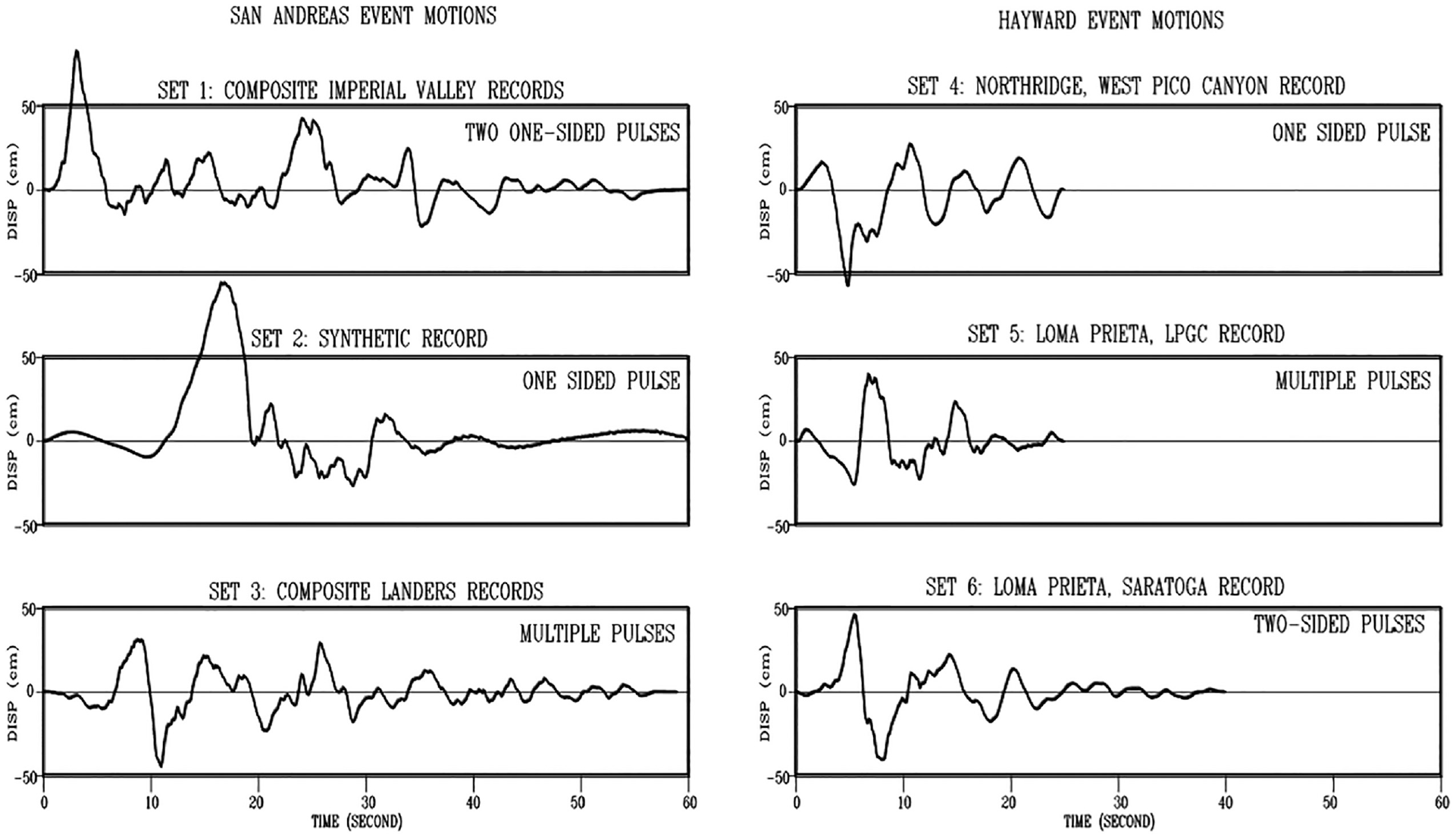
Fault normal displacement time-history record from the six sets of input motions from the East Span Bay Bridge project.
There is a problem in the conservative enveloping multiple-input-motion concept. Even if one elects to envelop many input motions, there is still a reasonable chance that an additional set of motions can exceed the established envelope. In other projects that we were involved in for designing port facilities, the project team elected to conduct analyses using a larger number of input motions; when the number of input motions is sufficiently large to generate statistically stable solutions, it can be justifiable to design for a demand using other methods than the enveloping approach (i.e., median or an 84th-percentile demand value). Such a statistically based approach will eventually lead to a stable demand criterion if a sufficiently large number of input motions be adopted for design analyses. It will require design analyses using at least seven sets of spectrum-compatible input motions, each reflecting a geologically independent event to justify a statistically based (non-enveloping) ground-motion approach. Analyses using spectrum-compatible motions tend to achieve the objective of a statistically stable and yet robust design with a smaller number of input motions.
Figure 6 presents time-history characteristics of a naturally recorded input motion before modification and Figure 7 presents the time-history characteristics of the same record after modification for spectrum compatibility. Figure 8 compares the response spectra for the two records before and after spectrum-compatible modifications. It is hard to distinguish the difference in the time-domain representation. The use of the spectrum-compatible time-history approach is a convenient way to guarantee that the input motion has provided a minimum but well-defined ground-shaking level for design and that the approach has improved efficiency for the necessary design analyses.
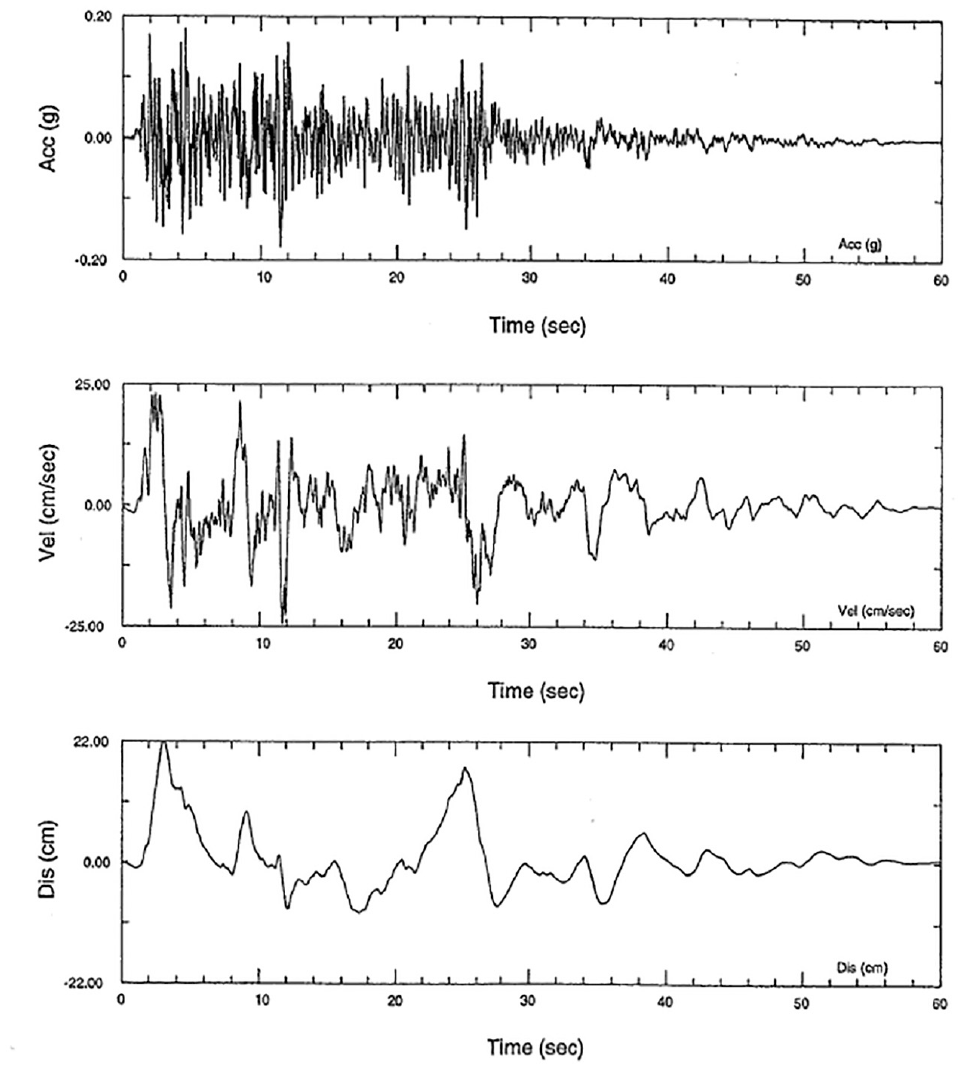
Initial time history for fault normal component of El Centro record from 1940 Imperial Valley earthquake.
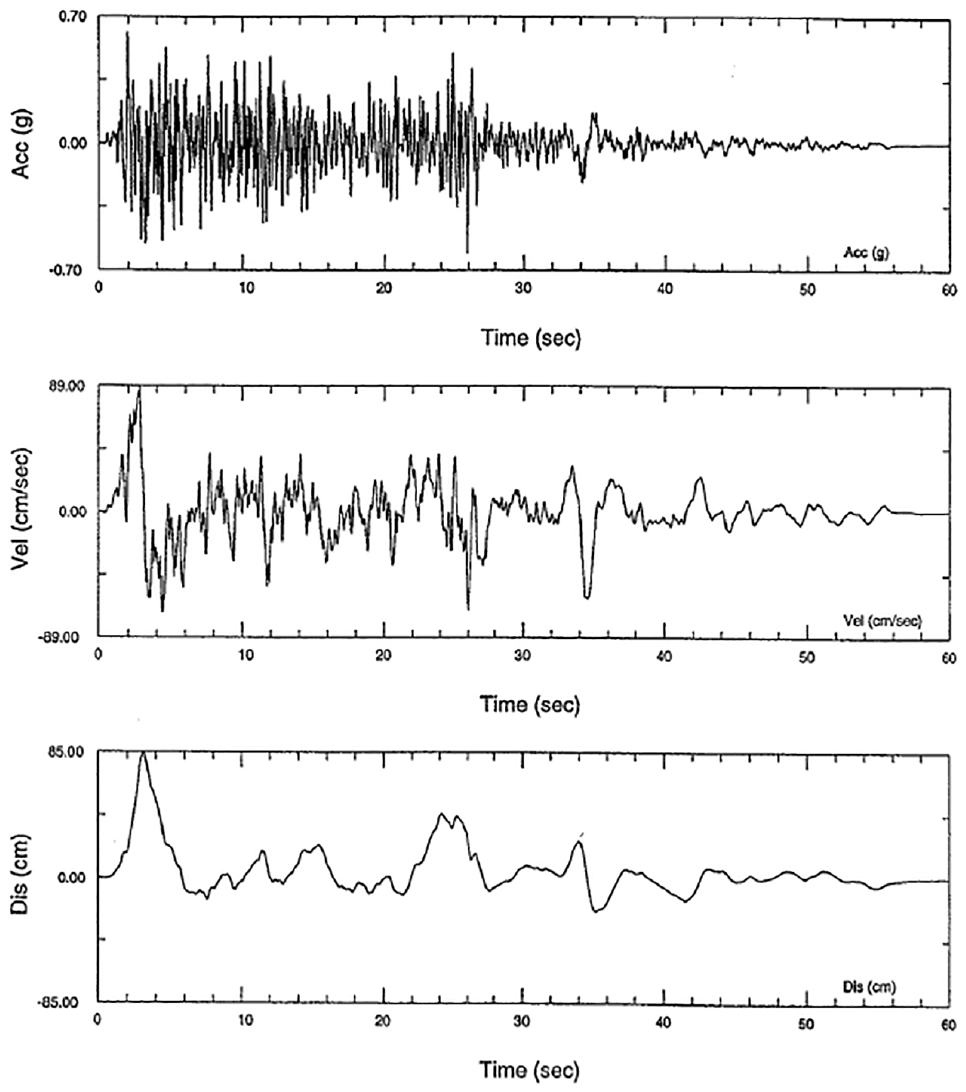
Modified motion after spectrum matching.
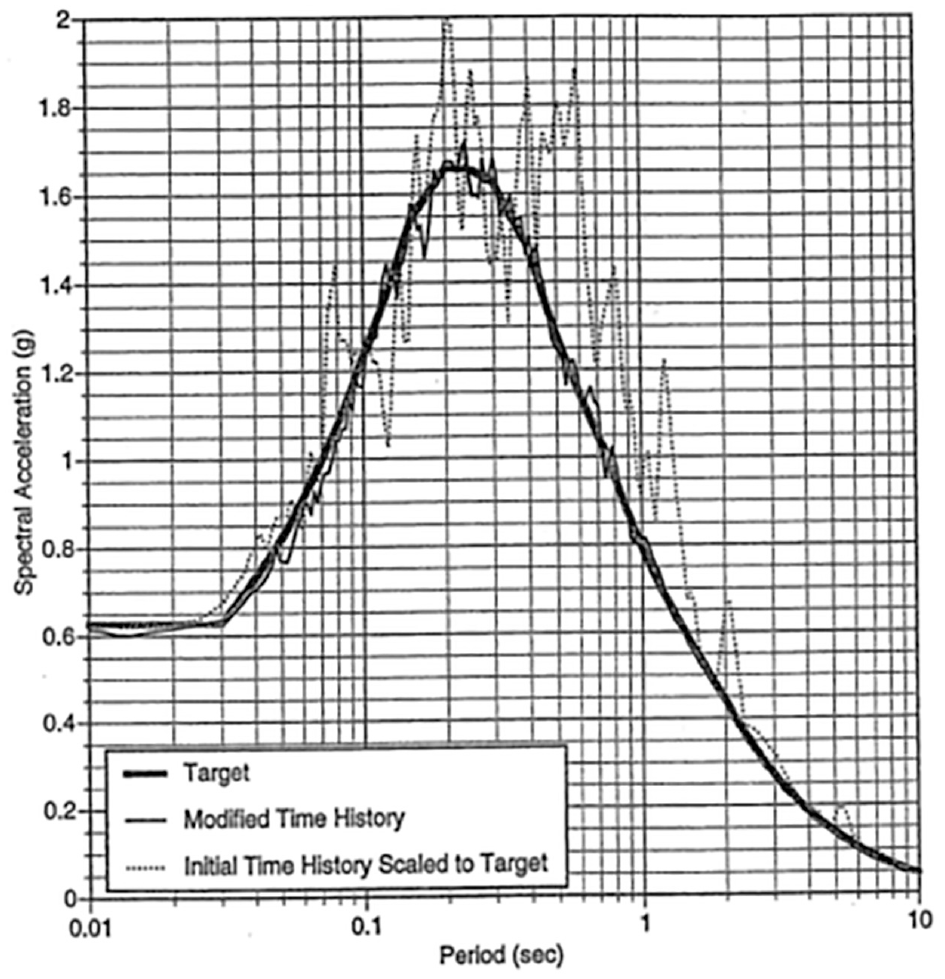
Comparison of 5% damped response spectra for the modified fault normal component and initial time history scaled to the target PGA.
Conditional Mean Spectra versus UHS-Based Time History
Design earthquake time histories for California toll bridges were spectrally matched to their target spectra and UHS which were often used as the target in recent bridge projects. There has been a proposal in the academic community to adopt conditional mean spectra (CMS). The UHS is inherently conservative in that it is computed for each spectral period independent of the ground motions at other spectral periods. Observations show a correlation between ground-motion amplitudes at multiple spectral periods ( 15 ). Given this observation, the selection and associated dynamic analyses using the CMS rather than the UHS can be a more realistic representation of the expected seismic energy, especially for sites in which the disaggregation results are bi- or even trimodal in their distribution, and the structural response is governed by a narrow range of vibration periods.
The use of CMS had been discussed within the Caltrans toll bridge program along with the Seismic Peer Review Panel. To properly consider the intent of CMS, it would be necessary to anchor the CMS to the UHS at the fundamental period of the structure. However, many long-span bridges are expected to have a broad range of structural periods as a result of different column heights giving rise to different vibration characteristics. Therefore, the use of the CMS spectra as a replacement for the UHS for a bridge structure is problematic since a typical long-span bridge structure does not have a narrow range of vibrational periods. Time histories need to be generated to fit multiple CMS curves that are anchored to UHS at several periods. It becomes impractical to implement CMS as many more seismic analyses are needed than when using the traditional UHS approach. Figure 9 shows an example of CMS curves that are anchored to UHS at PGA, 0.2, and 1.0 s. To adequately cover structural periods, it would be necessary to generate time histories that are spectrally matched to all CMS curves on the figure. To the authors’ knowledge, no Caltrans bridge project adopted the CMS curve to generate spectrum-compatible time histories. Other than CMS, “risk-targeted” ground motion is also rejected in the bridge design community. The authors feel that predefining risk coefficients applied in the “risk-targeted” ground motion is not appropriate for the development of seismic ground motion, as structural performance is usually defined by strain limits in a capacity side, rather than in a demand side.
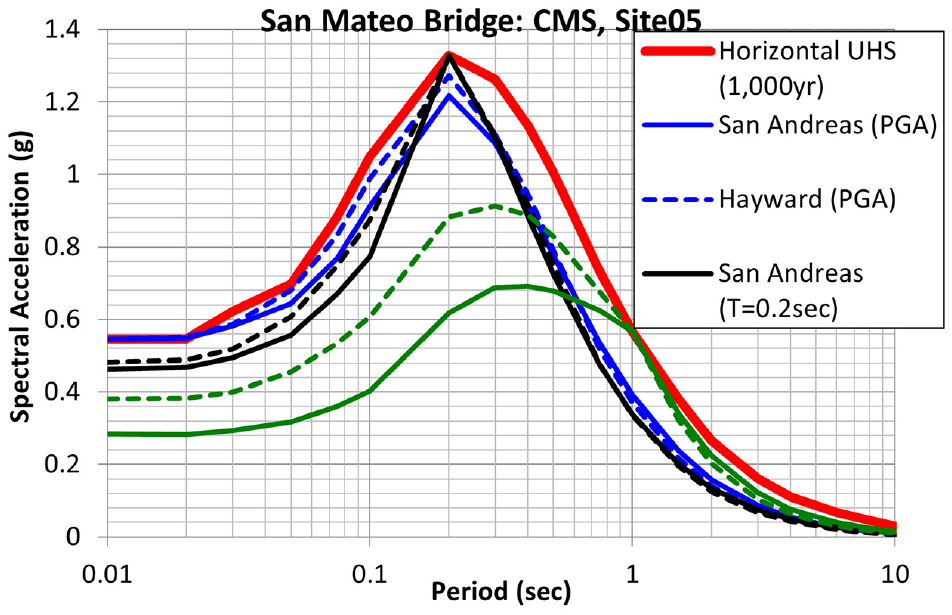
1,000 year UHS and CMS spectra for PGA, T = 0.2 and 1.0 s from the San Andreas and Hayward events.
Vertical-Motion Ground Motion
The topic of vertical input motion criteria also needs to be addressed. We will again use the East Span Bay Bridge experience to discuss the subject matter in the context of the time-history-analysis design approach and then comment on vertical-response-spectrum design issues for ordinary or common bridges.
Most of the long-span bridges are over water at soft-soil sites, and horizontal-motion site-response analyses based on vertically propagating shear-wave principles would be the state of practice for design. There has been a lot of debate whether it is appropriate to treat the vertical-component motion in the same way by conducting vertically propagating compressional-wave analyses to develop vertical input motion for design analyses. Experienced geotechnical engineers have known that vertical-site-response analyses invariably will yield very-high-amplitude vertical motions to a degree that cannot be supported by available strong-motion recordings. Other consultants who participated in Caltrans toll bridge retrofit contracts also recognized the problem in vertical-site-response analyses, but still proposed conducting vertical-motion site-response analyses. However, they elected to use a fictitious compressional-wave profile, without providing any rationale for their analyses. They proposed to use the same identical fictitiously generated soil-column properties for all vertical-site-response analyses.
The subject matter was discussed with the Peer Review Panel member I. M. Idriss in the course of the East Span Bay Bridge project. Idriss proposed to evaluate the problem by examining empirical strong-motion data, particularly using available downhole array data. He contacted geotechnical researchers around the world, many of them in Japan as researchers there have most of the downhole strong-motion array data. Our project team then made use of these downhole array data to conduct vertical soil-column wave-propagation and cross-correlation analyses to evaluate how vertical ground motions propagate from depth to ground surface. This enabled the team to identify the apparent wave speed for the propagation of the vertical motions from downhole arrays. Similar studies using downhole array data have been conducted for the horizontal component motion which provided credibility to the horizontal-site-response analysis procedure ( 16 ).
Our downhole-array vertical-motion study including the work from the University of California, San Diego ( 16 ), confirmed that vertical motions are complex and vertically propagating compressional-wave theory alone cannot account for observed vertical ground-motion recordings. This supports our belief that vertical-site-response analyses will introduce significant errors. In consultation with the Peer Review Panel, all our Caltrans projects used empirical vertical-motion recordings directly for design without conducting site-response analyses. However, outside California, some geotechnical engineers have continued to conduct vertical-site-response analyses with the blessings of their Peer Review Panel. We are aware of various modeling issues which make it difficult to capture vertical-motion response properly and exaggerate the vertical ground motions from site-response analyses. We believe that the damage effects from vertical motions are often exaggerated in view of the very short duration of the vertical-motion response.
For ordinary or common bridges, vertical-motion effects theoretically should be taken into account by modal-superposition analyses using a vertical response spectrum. However, to our knowledge, such practices have been rare because of the difficulty in capturing very-high-frequency modes in vertical response. The Caltrans Seismic Design Criteria (SDC) for ordinary or common bridges most often relies on presumptive methods, such as using a pseudostatic vertical-force coefficient to design for vertical shaking effects, except in unusual circumstances, such as when outrigger bents are encountered.
Longitudinal Response for Long Viaduct Structures
Another bridge design problem that we encountered in the course of our retrofit projects was the issue of longitudinal response of long viaducts. Demand analyses for ordinary or common bridges are conducted by the RSA method which inherently implies that the input motions along the full length of the bridge are identical and synchronous over the extended longitudinal span of the viaduct. In conjunction with the assumption of synchronized ground motions, a linear RSA does not consider geometric nonlinearity at expansion joints. Such analysis assumptions have led to large longitudinal-displacement results which have sometimes given rise to concerns among the designers about the stability of the viaduct (e.g., collapse from the p-delta effects). These concerns have resulted in costly proposals to strengthen the stiffness of some intermediate bents and/or the abutments. Professor Nigel Priestley, who served on the Peer Review Panel for several long viaduct structures, objected to the notion that long viaducts are inherently unstable and considered the large-longitudinal-displacement-response issue to be unrealistic because of exaggeration of the resonance response arising from the aforementioned overidealization in the input ground motion as well as linearized structural-modeling simplifications. He, along with other Peer Review Panel members, commented that most of the evidence of structural collapse in long viaduct structures (including the Cypress viaduct that collapsed in the 1989 Loma Prieta earthquake) relates to the stiffer transverse-bridge-response direction or other stiff, brittle structural components.
Long-Period Response Spectrum
The characterization of long periods in the response spectrum is an important issue for the design of long-span bridges or other long-period structures. Many old (non-digital-era) strong-motion records are unreliable at long periods (>2.5 s). Many geotechnical engineers do not pay adequate attention to the long-period range of the response spectrum since they are unfamiliar with displacement-based design approaches used in the structural-engineering community. They merely make use of the acceleration-response spectra which have at long period a very low acceleration value which tends to obscure the high displacement demands at long-period range.
The authors recommend always presenting the response spectra depicting both the acceleration and the displacement demands simultaneously (as shown in Figure 10) to structural designers. From our experience, the displacement spectra are more useful and meaningful to structural engineers than the acceleration spectra preferred by seismologists. Some geotechnical engineers are unaware of the issue of displacements at the long-period range potentially introducing problems for displacement-based structural design, because accelerations in this range are low. Both the structural and the geotechnical engineer must understand that spectral displacements are proportional to the acceleration value but also to the squares of the period, T. As in the example shown in Figure 11 from well-known site-factor charts adopted by most geotechnical analyses, the response spectrum is calculated and anchored at the 1 s period, and then acceleration values are extrapolated to longer periods based on the 1/T equation. Such an equation would imply ever-increasing displacement values at increasing periods, which contradicts available strong-motion recordings in which the displacement will level off and even decrease with period T at long periods. Such site-factor procedures can introduce problems for structural design for long-period structures, especially at high seismicity states.
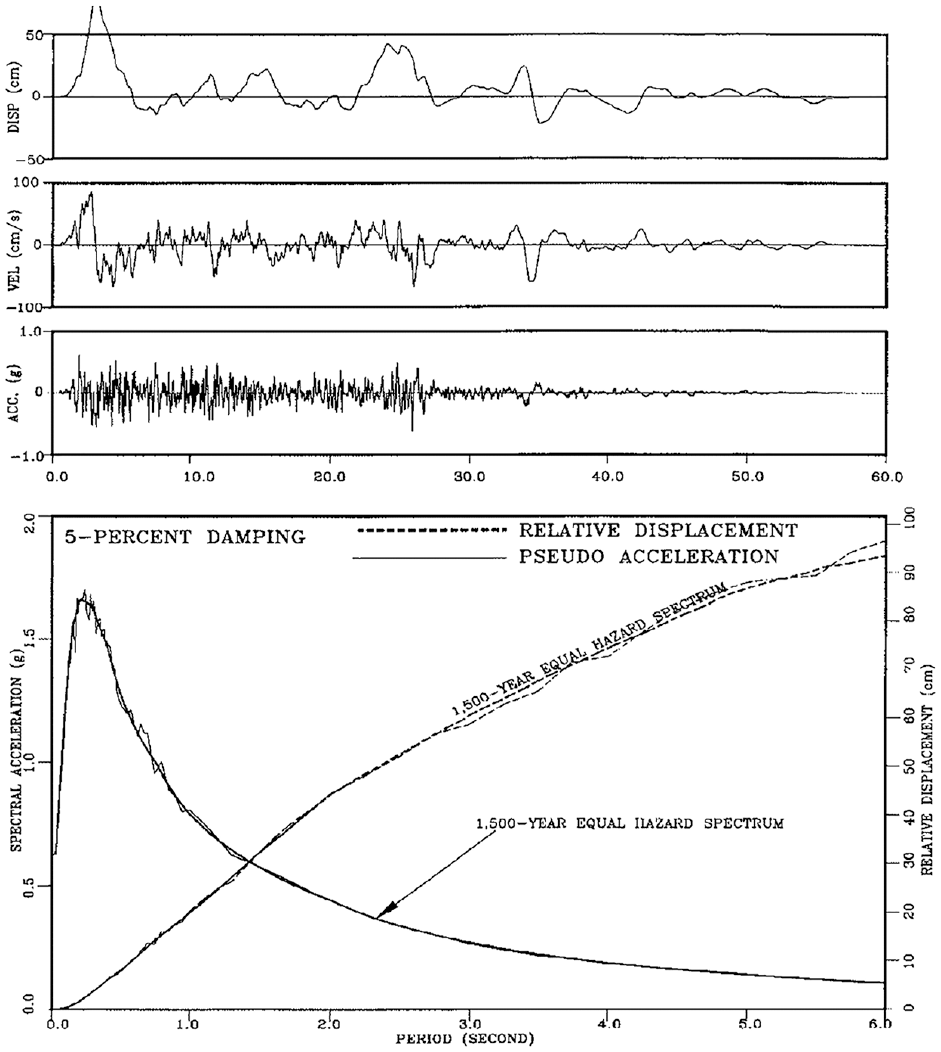
Set-1 fault normal component rock motion adopted for East Span Bay Bridge ( 7 ).
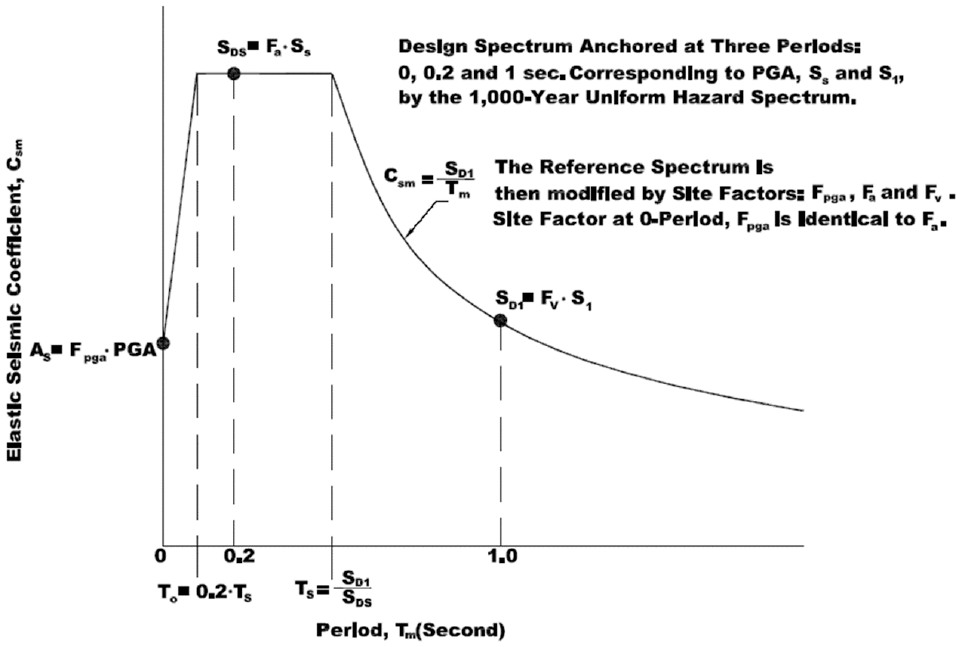
Site-factor procedures in AASHTO specifications. (Note that the acceleration spectrum is extrapolated for periods longer than 1 s using the 1/T equation which greatly exaggerates the implication of displacement demand at long periods.)
Conclusions
The subject of ground motion is a multidisciplinary topic which involves all the stakeholders in a design project, including: administrators and owners, who have to finance and administer the project; geoscientists (seismologists, geologists, and geotechnical engineers); and structural designers. It will take the collaboration and consensus building of the entire team to smoothly navigate the ground-motion design issue.
It will be necessary for each party to have an appreciation of issues faced by each of the disciplines to resolve the complex problem. Once a project has been initiated with a defined budget and schedule, continued debates over technical details can be counterproductive. From the authors’ experience, force feeding unproven ground-motion subject matter, or trying to conduct seismological research in a fast-paced design–construction project schedule can also be counterproductive, especially when some of the proposed changes are proven overblown, based on our East Span Bay Bridge experience. The Bay Bridge saw long-period motion at a 3 s period increasing by a postulated 80% from the 1995 vintage ground-motion criteria, then changed to the 30% increase adopted for the project; and eventually we found that it still had about a 15% overprediction if we used the latest and the best information as currently compiled by the NGA–West research.
There is probably unaccountable overconservatism laden into design practice. For example, enveloping the demand of six sets of motions with each of them matching a target 1,500 year-return-period risk level might imply that the structure has been designed to a return period longer than the assumed 1,500 year return period. In a nutshell, there are many layers of conservatism in a given major project that are difficult to quantify and likely render some of the debates among seismologists relatively minor.
Ultimately, the safety of structures might be more dependent on sound structural design strategies (e.g., designing the structure for toughness and ductile behavior to guard against collapse at overload). The implementation of proper structural detailing might be more important than the exactnes
Footnotes
Author Contributions
The authors confirm contribution to the paper as follows: study conception and design, and draft manuscript preparation: Ignatius (Po) Lam, Hubert Law, Brian Maroney. All authors reviewed the results and approved the final version of the manuscript.
Declaration of Conflicting Interests
The author(s) declared no potential conflicts of interest with respect to the research, authorship, and/or publication of this article.
Funding
The author(s) received no financial support for the research, authorship, and/or publication of this article.