







Abstract
Wax-based warm mix additives can decrease the viscosity and improve the workability of crumb rubber (CR)-modified asphalt, but the mechanism of influence on the aging performance of CR-modified asphalt is not clear. To investigate the thermal aging behavior and mechanism of wax-based warm mix CR-modified asphalt, polyethylene wax (PEW) and polyamide wax (PAW) were mixed to prepare warm mix CR-modified asphalt. The effect of thermal aging on the rheological and mechanical properties was characterized by a basic property test, frequency sweep test, and multiple stress creep recovery test. The chemical composition changes during aging were then analyzed by Fourier transform infrared spectroscopy and gel permeation chromatography. Finally, the phase morphology during thermal aging was observed by fluorescence microscopy. The results showed that compared with the degradation of CR, the oxidative aging of the asphalt binder played a dominant role in the process. Not only did PEW and PAW attach to the asphalt surface in the form of crystallization to prevent its reaction with oxygen but they also promoted the dissolution of CR, and released polymerization chains, thereby enhancing the antiaging properties of CR-modified asphalt. Furthermore, the antiaging of PAW/CR-modified asphalt was better than that of PEW/CR-modified asphalt, because the amide group of PAW reacted with CR-modified asphalt to form a polymer structure.
Four billion tires are discarded every year around the world, and these difficult-to-dispose-of waste tires have created serious environmental and safety problems ( 1 ). Studies have shown that grinding waste tires into crumb rubber (CR) to be used as a modifier can effectively improve the antirutting and anticracking performance of asphalt and prolong the service life of pavement, assuming rubberized asphalt mixtures are well engineered ( 2 ).Moreover, the incorporation of CR can reduce noise and vibration levels, which not only reduces noise pollution but also improves road safety ( 3 ). Therefore, pulverizing rubber tires and blending them into base asphalt binders at high temperature has become a research hotspot with regard to energy-saving and environmentally-friendly roads.
However, the addition of CR increases the viscosity of asphalt ( 4 ). Therefore, the production and compaction temperature of the asphalt mixture must be significantly increased to obtain the specified viscosity. Elevated mixing and compaction temperatures not only result in high energy consumption but also lead to increased production costs ( 5 ). More significantly, a high mixing temperature makes the asphalt binder easier to age and harden, which greatly shortens the service life of asphalt pavement ( 6 ). Compared with several asphalt modification additives, CR offers cost-efficiency, ease of production, and straightforward construction processes, making it highly promising for widespread applications ( 7 ). Therefore, improving its aging resistance is very important for the long-term use of CR-modified asphalt.
Researchers have developed several technologies, methods, and materials to solve the aging problem of CR-modified asphalt. Bao et al. explored the antiaging effect of graphene on CR-modified asphalt, revealing that graphene slowed down the increase in the phase angle of the CR-modified asphalt during the aging process, and also slowed the increase rate of the sulfoxide- and carbonyl index ( 8 ). It can therefore be concluded that graphene improves the aging resistance of CR-modified asphalt. Tur Rasool et al. considered that the use of both Styrene–butadiene–styrene (SBS) and CR not only enhanced high-temperature performance but also improved aging resistance ( 9 ). Pang et al. mixed layered double hydroxides (an anti-UV aging agent) into CR-modified asphalt to explore aging resistance ( 10 ). Adding layered double hydroxides was found to significantly improve the aging resistance of CR-modified asphalt. However, adding nanomaterials, SBS, and antiaging agents generated new problems: the continuous increase of the viscosity of CR-modified asphalt, which aggravated the poor workability of CR-modified asphalt.
Warm mix additives have the capacity to lower the viscosity of CR-modified asphalt, significantly broadening the applicability of waste CR ( 11 ). Warm mix asphalt technology mainly includes foam technology, chemical temperature mixing, zeolite technology, and wax-base warm mixes ( 12 ). Wax-based warm mix additives have been widely studied and used because of their low price and remarkable modification effect ( 13 ). Wax-based warm mix additives can substantially decrease the viscosity of asphalt binder at high temperatures, consequently lowering the production and compaction temperature required for asphalt mixtures ( 14 ). Several researchers have carried out a series of studies to characterize various aspects of the performance of warm mix CR-modified asphalt. Akisetty et al. studied the high-temperature performance of aspha-min and Sasobit warm mix CR-modified asphalt through the rotational viscometer and dynamic shear rheometer (DSR) ( 15 ). Warm mix additives can significantly change the viscosity characteristics and improve the antirutting performance of CR-modified asphalt. Kim et al. evaluated the effect of different contents of Fischer–Tropsch wax-based warm additives on the high-, medium-, and low-temperature performance of CR-modified asphalt ( 16 ). The results showed that the addition of wax additives not only reduced the viscosity of the CR-modified asphalt but also improved its rutting resistance. According to Rodríguez-Alloza’s research, warm mix additives can elevate the stiffness of CR-modified asphalt at low temperatures, which may increase its susceptibility to cracking ( 17 ). A study by Yu et al. indicated that warm mix additives have a less negative impact on the mechanical properties of CR-modified asphalt, and can save more energy in the production process ( 18 ).
According to literature, wax-based warm mix additives have a variety of improvement effects on CR-modified asphalt, including reducing its viscosity and improving high-temperature performance ( 19 ). However, few studies have investigated the effects of wax-based warm mix additives on the aging of CR-modified asphalt, nor specifically the influence of the type and amount of wax-based warm mix additive on the antiaging properties of CR-modified asphalt. Owing to the joint action of CR and warm mix additive, the thermal aging mechanisms of warm mix CR-modified asphalt may be complicated, therefore this investigation.
Research Objectives
The purpose of this study was to investigate the effects of different aging conditions on the rheological properties, chemical composition, and apparent morphology of CR-modified asphalt, and to analyze the aging mechanism of wax-based warm mix CR-modified asphalt. Polyethylene wax (PEW) and polyamide wax (PAW) were used as warm mix additives to prepare the CR-modified asphalt. The frequency scanning test and multiple stress creep recovery (MSCR) test were conducted to investigate the effect of thermal aging on the rheological properties of warm mix CR-modified asphalt. Fourier transform infrared spectroscopy (FTIR) and gel permeation chromatography (GPC) were applied to study the chemical composition of warm mix CR-modified asphalt during thermal aging, and fluorescence microscopy (FM) was conducted to investigate the changes in the micromorphology of warm mix CR-modified asphalt at different aging stages. The experimental process of this study is shown in Figure 1.
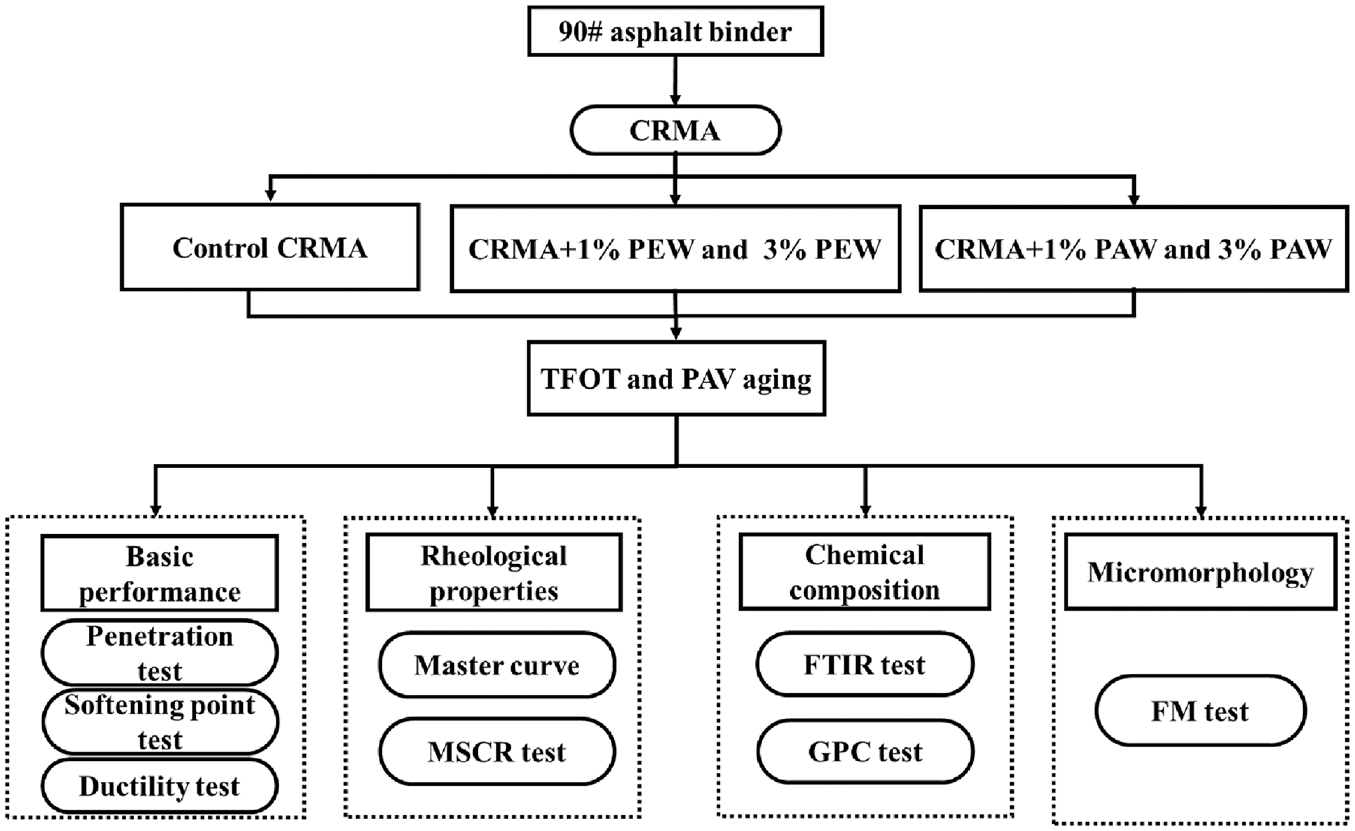
Flow chart of experimental design.
Materials and Experiment
Material Preparation and Aging Procedure
Asphalt Binder
Sinopec Shanghai provided the PEN70 asphalt that was selected as the base asphalt binder in the study. The penetration of base asphalt at 25°C is 66.8 (0.1 mm), the softening point is 50.5°C, and ductility at 15°C is greater than 100 cm.
Warm Mix Additives
Two commercial organic waxes, PEW and PAW, were used in this study (shown in Figure 2). PEW is a synthetic, high-density wax: chemical molecular formula (C2H4)n/x, molecular weight about 3,000 to 6,000, with a high degree of branching. It presents as a white powder and has a melting point of 130°C. PEW is an excellent lubricant and hardener with good thermal and chemical stability, and high dispersion as an additive.
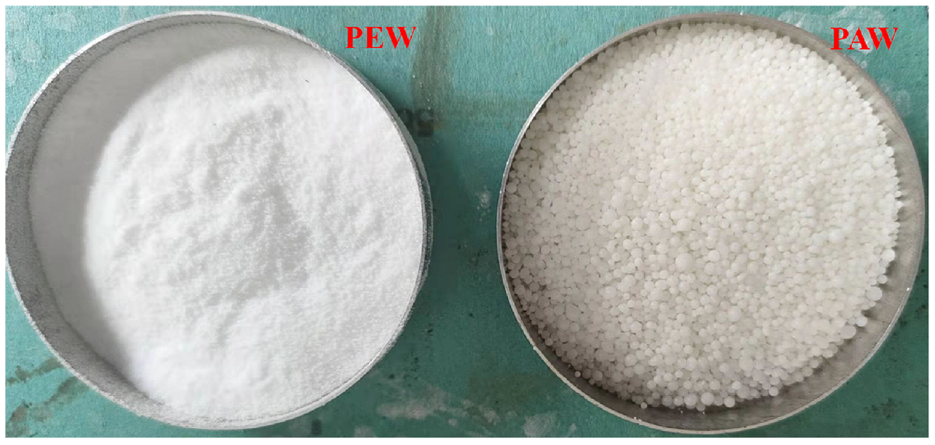
Warm mix additives.
The small, white particles of PAW have a melting point of 145°C. Its molecular weight is about 1,000. PAW is prepared by polymerization and dehydration of organic acids and amines. Because of the existence of nonpolar aliphatic hydrocarbons and polar amide functional groups, PAW renders it easy to form intermolecular hydrogen bonds at low temperature. Therefore, PAW is used in coatings to prevent precipitation.
Crumb Rubber
CR with a particle size of 40 mesh was selected as the additive, which was mechanically pulverized at room temperature. The CR was added to the asphalt binder in the form of additional additives. The content of CR was 20% of the mass of the base asphalt binder. In other words, the mass of CR accounted for 16.7% of the mass of the CR-modified asphalt. To reduce experimental errors, the same batch of CR was used for all experiments. The density of CR was 1.18
Preparation of Samples
To fully disperse the CR throughout the asphalt binder, the binder and CR were mixed in a high-speed shear procedure (3,000 rpm/min) at 180°C for 45 min. Then, PEW and PAW (1% and 3%, respectively) were added to the aforementioned mixture. Afterward, the blend was kept shearing at a constant temperature of 180°C and a constant stirring speed of 800 rpm/min for 1 h. The control CR-modified asphalt was first sheared for 40 min (3,000 rpm/min) at 180°C and then stirred for 1 h (800 rpm/min) at 180°C.
Aging Procedures
The short-term thermal aging of CR-modified asphalt, 1% PEW/CR-modified asphalt, 3% PEW/CR-modified asphalt, 1% PAW/CR-modified asphalt, and 3% PAW/CR-modified asphalt was simulated by the thin-film oven test. The test temperature of short-term aging was 163°C and the test time was 5 h. The long-term thermal aging process of the modified asphalt binder was simulated by the pressure aging vessel test. The test temperature for long-term aging was 100°C and the pressure was 2.1 MPa for 20 h.
Basic Property Test
The penetration (25°C), softening point, and ductility test (5°C) of unaged, short-term aged, and long-term aged warm mix CR-modified asphalt were carried out. To analyze the influence of thermal aging conditions on warm mix CR-modified asphalt more intuitively, the ratio of penetration (RP), softening point increment (SPI), and the ratio of ductility (RD) were calculated by Equations 1 to 3.



Rheological Property Test
Frequency Sweep Tests
To analyze the mechanical response of asphalt in a wider frequency and temperature range, it was necessary to transform the experimental results at different temperatures and frequencies into master curves at the same temperature and frequency with the help of the time–temperature equivalence principle ( 20 ). DSR was used to perform the frequency sweep tests on the asphalt samples at test temperatures of 15°C, 25°C, 35°C, 45°C, 55°C, 65°C, and 75°C. The range used for frequency scanning was from 0.1 to 30 Hz. The strain amplitude was selected as 1.5%, which is within the linear viscoelastic response range of asphalt binder. The complex modulus master curve of the asphalt was constructed by a sigmoidal model at the reference temperature of 45°C. The shift factor was automatically adjusted by the model to obtain the best fitting effect. The same shift factor as the complex modulus was adopted, and the phase angle master curve was obtained based on the double logistic model ( 21 , 22 ).
Multiple Stress Creep Recovery Test
The MSCR test was used to characterize the elastic recovery- and stress-dependent behavior of several different modified asphalts at 0.1 kPa and 3.2 kPa stress levels ( 23 ). Compared with the rutting factor index, the index obtained by MSCR can more accurately evaluate high-temperature rheological properties of asphalt binders ( 24 ). Five types of modified asphalt, which were unaged, short-term aged, and long-term aged, were tested respectively by DSR. According to AASHTO TP 70-1, the MSCR test was conducted for 30 cycles: 20 cycles were conducted at 0.1 kPa, and then 10 cycles were conducted at 3.2 kPa, with a 1-s load and 9-s recovery for each cycle ( 25 ). The relevant test indexes are Equations 4 and 5.


where
R = recovery rate, %;
Chemical Composition Test
Fourier Transform Infrared Spectroscopy
FTIR was used to analyze the chemical composition of five modified asphalts at different aging stages. Attenuated total reflection spectrum technology was used, and the original spectra were baseline-corrected according to the RILEM method and intercepted ( 26 ). The absorption peak area at 1,700 cm−1 represents the stretching vibration of the carbonyl group, and the absorption peak area at 1,030 cm−1 represents the stretching vibration of the sulfoxide group ( 27 ). The absorption peak area is used as the numerator; taking the sum of the peak areas of various functional groups as the denominator, the index of various characteristic peaks can be obtained, as shown in Equations 6 and 7.


where AR1030 and AR1700 represent the band area at 1,030 cm−1 and 1,700 cm−1, respectively; and ΣAR = AR700 + AR725 + AR743 + AR814 + AR864 + AR965 +AR1030 + AR1310 + AR1460 + AR1600 + AR1700.
To analyze the influence of thermal aging on warm mix CR-modified asphalt more clearly, the


Gel Permeation Chromatography Test
The Waters 1515 high-pressure liquid chromatography system was selected for the GPC test. The 2 g/L sample was injected into the chromatographic column, and the chromatographic column separated the sample according to the molecule weight of the sample. In previous studies, the retention time was divided into 13 regions on average ( 28 ). The large molecular size (LMS) occupied the first five regions, and Regions 6 to 9 were defined as the medium molecular size (MMS). Regions 10 to 13 were small molecular size (SMS) regions. The percentages of the three asphalt components were calculated by Equation 10.

where
Phase Morphology Test
The phase morphology of the modified asphalts under different aging processes was observed using the FM test. The distribution of CR and polymer in asphalt binder can be seen with a 10× eyepiece. To see the surface structure of asphalt clearly, the heated and flowing asphalt was poured into the softening point ring and allowed to flow naturally. The FM test was carried out at ambient temperature.
Results and Discussion
Basic Properties
Figure 3 shows the test results of penetration, softening point, and ductility of the asphalts at different aging stages. In Figure 3a it can be seen that the penetration of modified asphalt was reduced by adding PEW and PAW, which indicated that the two warm mix modifiers improved the hardness of the asphalt binder. When the content of PEW and PAW was 1%, penetration was 51.1 and 51.2 (0.1 mm), respectively. When the content of PEW and PAW was 3%, penetration decreased to 44.8 and 45.1 (0.1 mm), respectively. For the unaged asphalt, the hardness increased noticeably with the increase in the content of warm mix additives. It can be seen from Figure 3b that the softening point values of PAW/CR-modified asphalt and PEW/CR-modified asphalt were higher than CR-modified asphalt, indicating that PEW and PAW improved the thermal stability of CR-modified asphalt. In addition, the softening point of PAW/CR-modified asphalt was higher than that of PEW/CR-modified asphalt owing to the difference in wax-based warm mix agents. According to previous studies, wax-based warm mix additive dissolves in asphalt at high temperature and precipitates in a crystalline state at low temperature. Therefore, the hardness of the asphalt surface increased at low temperature. The crystalline structure attached to the surface of the modified asphalt not only increased the hardness of the asphalt binder, but also improved its thermal stability.
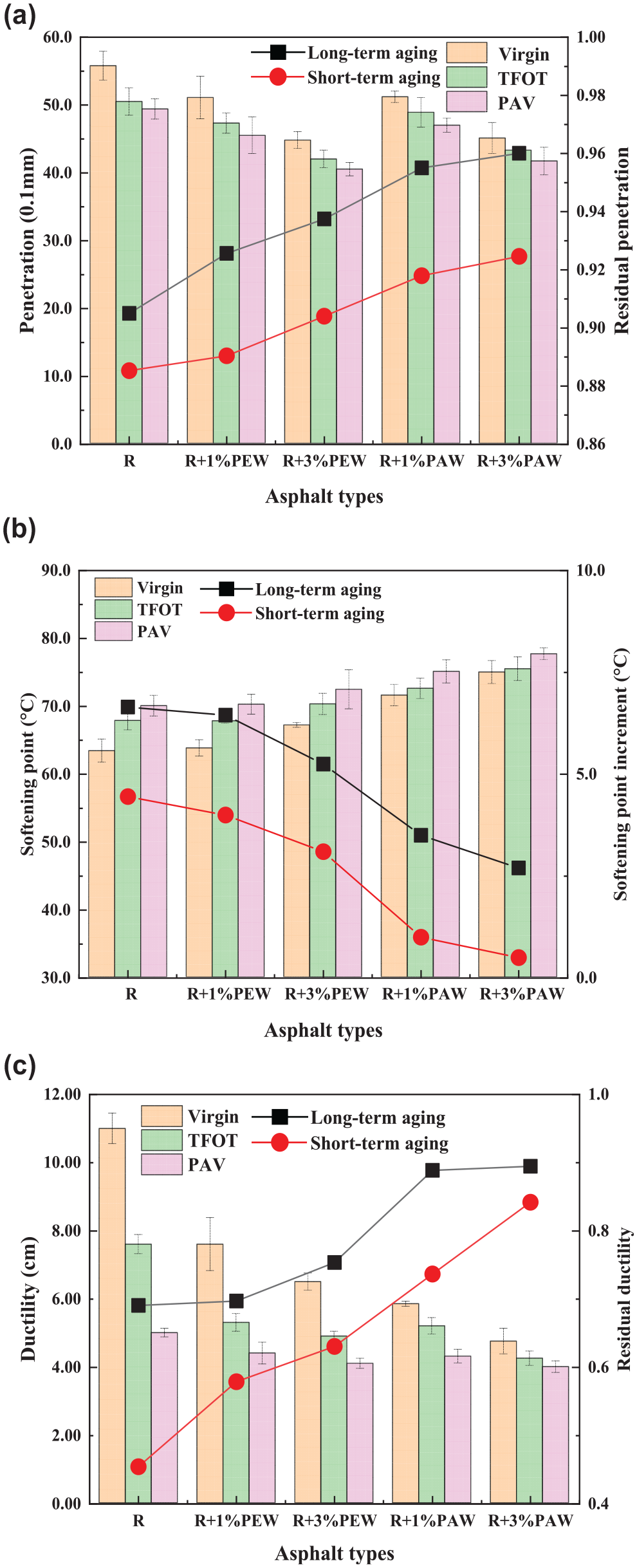
Basic property results of asphalts at different aging stages: (a) penetration, (b) softening point, and (c) ductility.
Comparing the RP values of the asphalts at different thermal aging stages, a consistent pattern emerged: R < R + 1%PEW < R +3%PEW < R + 1%PAW< R+3%PAW (where R refers to CR-modified asphalt, R+1%PEW represents 1% PEW/CR-modified asphalt, R+3%PEW refers to 3%PEW/CR-modified asphalt, R+1%PAW represents 1%PAW/CR-modified asphalt, and R+3%PAW refers to 3%PAW/CR-modified asphalt). The results showed that with the process of aging, the change in penetration of PAW/CR-modified asphalt was smallest, followed by PEW/CR-modified asphalt, and the change in penetration of CR-modified asphalt was largest. Moreover, CR-modified asphalt had the greatest aging sensitivity because its SPI value was the largest, followed by PEW/CR-modified asphalt, and the change in SPI of PAW/CR-modified asphalt with aging was smallest. This means that the addition of PEW and PAW reduced the oxidation of the asphalt, whether it was long-term or short-term aging, and the antiaging effect of PAW was superior.
Figure 3c shows the ductility results of the five types of modified asphalt during the thermal aging process. The addition of PEW and PAW was found to reduce the ductility of the asphalt, that is, PEW and PAW weakened the flexibility of the modified asphalt. The increase in PEW and PAW content reduced the ductility of the modified asphalt: this was verified in a previous study ( 29 ). This showed that PEW and PAW had an adverse effect on the low-temperature performance of modified asphalt. The increasing order of RD in short-term- and long-term aging was observed to be R < R+1%PEW < R+3%PEW < R+1%PAW < R+3%PAW, which indicated that the ductility of PAW/CR-modified asphalt was least affected by aging, followed by PEW/CR-modified asphalt, and the ductility of CR-modified asphalt decreased fastest with aging. In summary, both PAW/CR-modified asphalt and PEW/CR-modified asphalt improved the antiaging performance of asphalt, but the improvement effect of PAW/CR-modified asphalt was superior. Wax forms a gel in asphalt binder is well-known in this field, and the performance of gelled asphalt is generally unsatisfactory ( 30 ); it is therefore, worth eliminating or at least weakening the crystallized deterioration of asphalt from wax-based warm mix additives. However, this was not the focus of the current study, so we will conduct in-depth investigations into this aspect in future scientific research.
Rheological Properties
Frequency Sweep Test
Figure 4 illustrates the master curves of the five types of modified asphalt with different aging degrees. To more clearly compare the effects of PEW and PAW on modified asphalt, the complex modulus master curves of warm mix CR-modified asphalt were drawn, as shown in Figure 4a. The decreasing order of complex modulus was observed to be as follows: R+3%PAW > R+1%PAW > R+3%PEW > R+1%PEW > R. This means that the addition of PEW and PAW hardened the CR-modified asphalt, specifically, they improved its thermal stability. Moreover, the improvement effect of PAW on the thermal stability of CR-modified asphalt was greater than that of PEW. According to Figure 4, b to f, comparing the effects of different aging conditions on the master curve of complex modulus of modified asphalt, the complex modulus of the CR-modified asphalt was found to increase significantly after both short- and long-term aging. The complex modulus curve of aged PEW/CR-modified asphalt overlapped with that of unaged PEW/CR-modified asphalt at high frequency and low temperature, but the deviation was large at low frequency and high temperature. The complex modulus curve of PAW/CR-modified asphalt changed little in the whole frequency range after aging. Moreover, the higher the content of warm mix additives, the lower the sensitivity of the complex modulus of modified asphalt to temperature. The above results indicated that PEW and PAW enhanced the antiaging properties of CR-modified asphalt. The antiaging performance of PAW/CR-modified asphalt in the whole band was improved, and the antiaging performance of PEW/CR-modified asphalt in high-frequency and low-temperature regions significantly improved. It is worth noting that the complex modulus master curve of the modified asphalt before and after aging intersected at a point in the high-frequency region—this was also found in Hu et al.’s study ( 31 ).
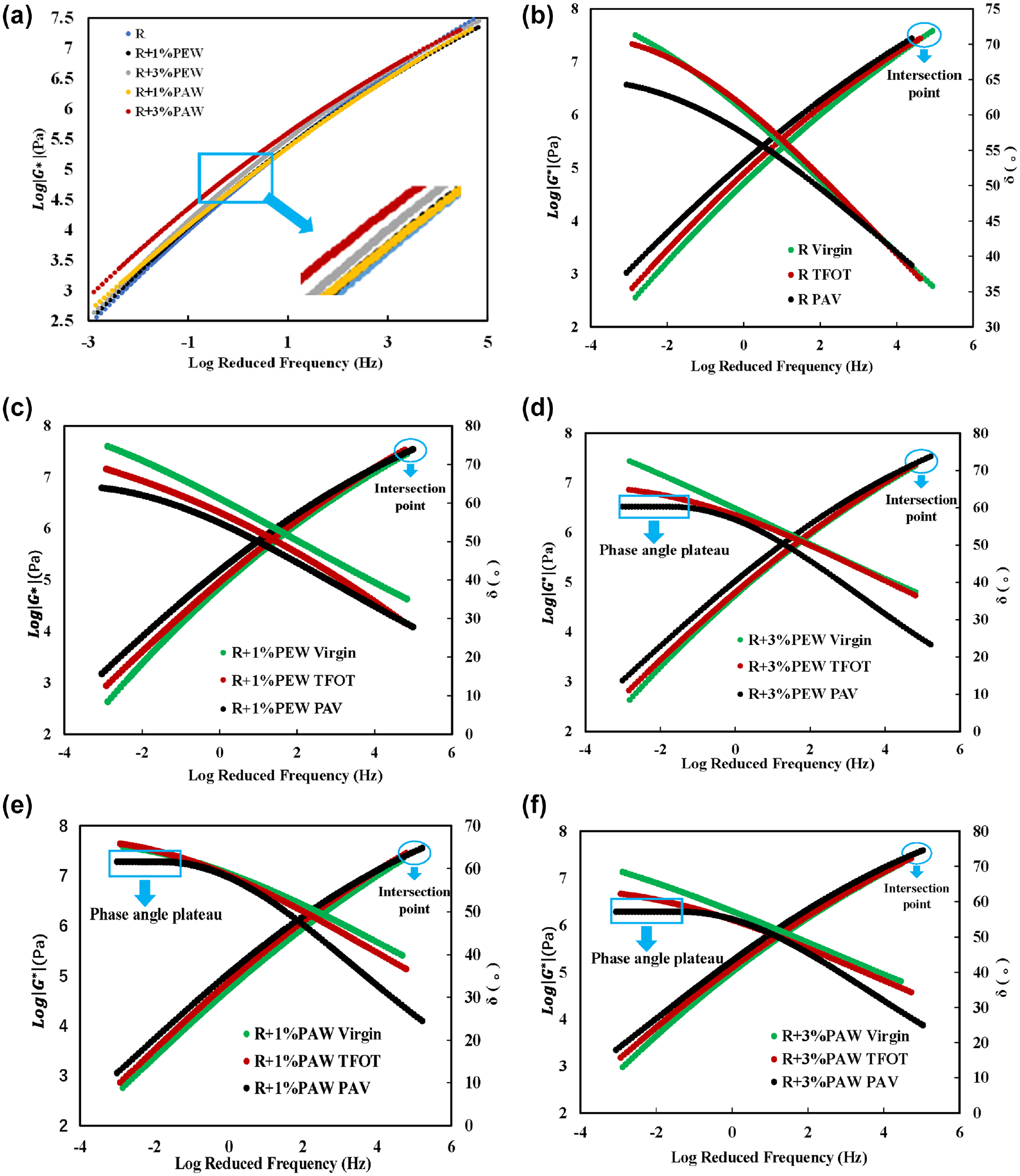
Master curves of asphalts at different aging stages: (a) unaged modified asphalt, (b) R, (c) R+1%PEW, (d) R+3%PEW, € R+1%PAW, and (f) R+3%PAW.
The variation in phase angle with frequency of wax-based warm mix CR-modified asphalt was analyzed. Firstly, with the process of thermal aging, the phase angle of modified asphalt gradually decreased, which again verified that aging led to the hardening of modified asphalt. It is worth noting that the master curve of the phase angle of warm mix CR-modified asphalt mixed with 3% PEW, 1% PAW, and 3% PEW had an obvious phase angle platform after long-term aging. A phase angle platform, also known as a rubbery plateau, is generated from the entanglement and cross-linking of polymer segments. Its appearance indicates that it is the polymer that dominates the rheological behavior of the asphalt binder ( 32 ). Therefore, it can be concluded that under the action of PEW or PAW, wax-based warm mix CR-modified asphalt will produce a polymer structure after long-term aging; and the CR in the modified asphalt will swell and decompose violently in the long-term aging stage under the action of wax-based warm mix additives. Ma et al. indicated that the decomposition of CR produces polymer chains ( 33 ). The appearance of a polymer structure leads to the emergence of a modified asphalt phase angle platform. Interestingly, generation of a polymer structure has a positive effect on the aging resistance of modified asphalt. Therefore, it can be concluded that modified asphalt could enhance antiaging properties through the polymer structure owing to the incorporation of PEW and PAW. It is worth noting that the platform region appeared when the content of PAW was 1%, which may have been caused by the presence of many highly active oxygen atoms; this will be investigated in future FTIR and FM test results.
MSCR Test Results
Under the stress of 0.1 kPa, the MSCR test results of modified asphalt have greater variability, and less obvious regularity ( 34 ). Therefore, this study analyzed the cumulative strain of modified asphalt with different aging degrees under a stress of 3.2 kPa at 70°C. The test results are shown in Figure 5. As aging progressed, there was a noticeable decrease in accumulated strain. This phenomenon primarily resulted from the aging and hardening of asphalt, a finding consistent with previous research ( 35 ). Figure 6 illustrates the values of percentage recovery and nonrecoverable creep compliance of different asphalts at 3.2 kPa. The results showed that the recovery of unaged PEW/CR-modified asphalt was similar to that of unaged CR-modified asphalt, and the recovery of unaged PAW/CR-modified asphalt was significantly higher than that of unaged CR-modified asphalt. This showed that PAW had a superior effect on the high-temperature performance of CR-modified asphalt.
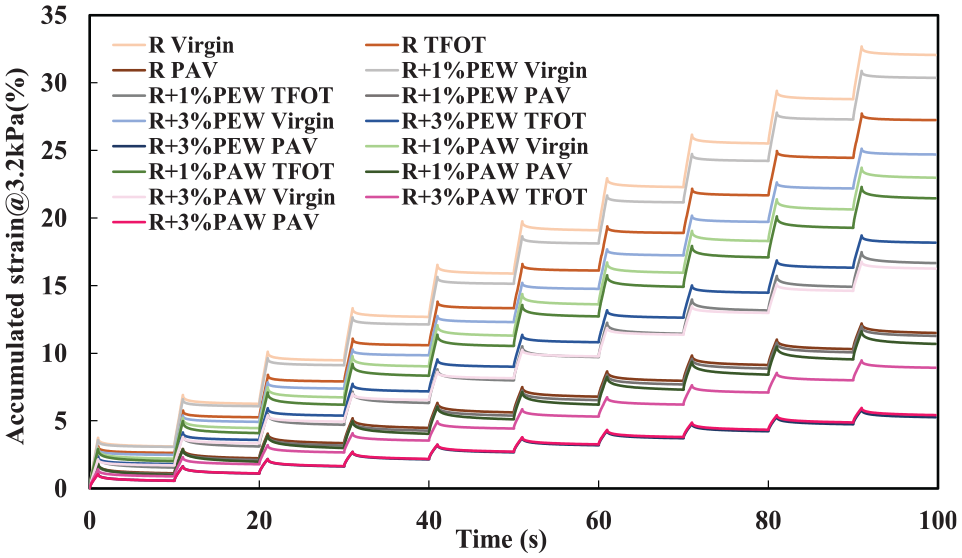
MSCR test results of accumulated strain at 3.2 kPa.
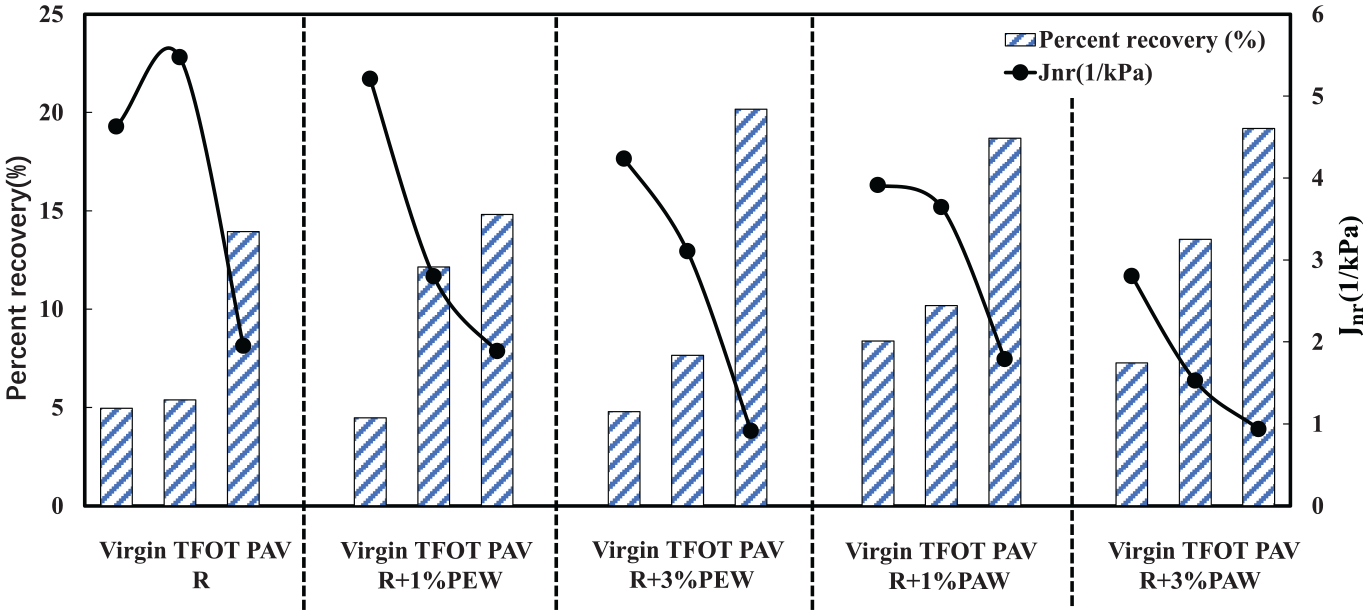
Percent recovery and nonrecoverable compliance.
It is known that the aging and hardening of asphalt binder leads to an increase in the elastic recovery obtained in the MSCR test ( 36 ), and that decomposition of CR will reduce elastic recovery. After short-term and long-term aging, the elastic recovery of modified asphalt increased significantly. This means that the oxidation effect of modified asphalt was greater than that of the decomposition of CR. The elastic recovery of PEW/CR-modified asphalt and PAW/CR-modified asphalt was higher than that of CR-modified asphalt. The was because the wax did not reach the melting point during the MSCR test, and there was still a large amount of crystallization on the asphalt surface, which led to a hardening of the asphalt and increased its elastic recovery. It is worth mentioning that the elastic recovery of PAW/CR-modified asphalt was greater than that of PEW/CR-modified asphalt. According to the following FTIR and GPC results, this may be caused by the reaction between the active group in PAW and CR-modified asphalt.
Compared with CR-modified asphalt, the nonrecoverable compliance Jnr of PEW/CR-modified asphalt and PAW/CR-modified asphalt was significantly reduced, indicating that PEW and PAW improved the deformation resistance and high-temperature stability of modified asphalt. With the process of thermal aging, the nonrecoverable compliance Jnr of CR-modified asphalt decreased most rapidly. The Jnr of PAW/CR-modified asphalt with 3% PAW content decreased the slowest after aging. This, again, was a strong indication that both PAW and PEW improved antiaging performance, and the improvement effect of PAW was greater.
Chemical Composition
FTIR Test Results
To clearly compare the effects of PEW and PAW on the aging of CR-modified asphalt, the FTIR of three modified asphalts (R, R+3%PEW, and R+3%PAW) were tested. The typical functional groups between 800 and 2,000 cm-1 were analyzed, and the results are shown in Figure 7a. In addition, the typical functional groups of PAW and PEW were tested, as shown in Figure 7b.
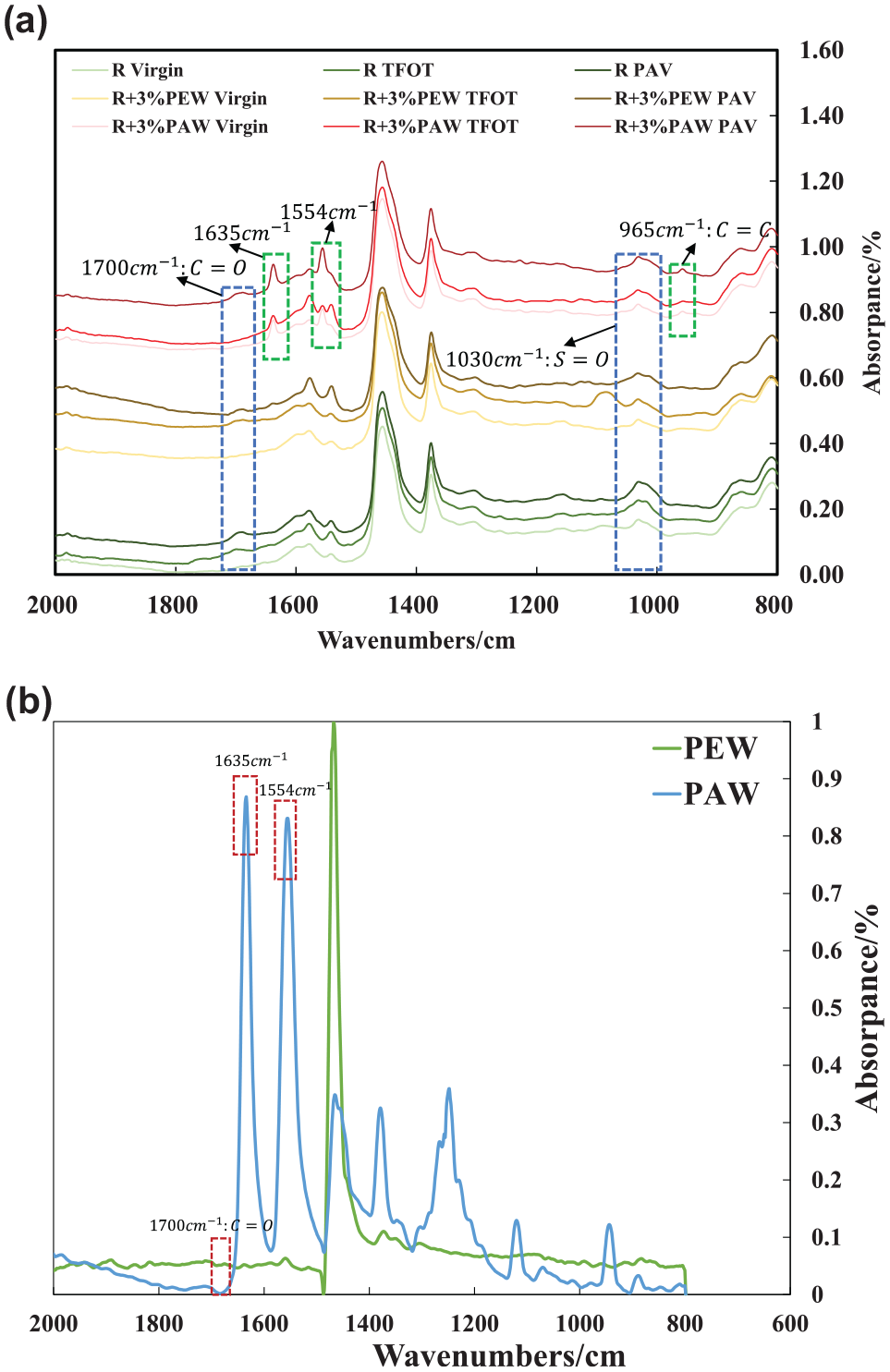
FTIR of the warm mix additives and modified asphalt binders with different aging degrees: (a) modified asphalt binder and (b) wax-based warm mix additives.
The warm mix CR-modified asphalt with PAW produced new absorption peaks at 1,554 cm−1 and 1,635 cm−1, which may have been the stretching vibration of C=C (1,600 cm−1) on the aromatic ring. Moreover, the warm mix CR-modified asphalt with PAW also generated a new absorption peak at 965 cm−1, which was the stretching vibration of C=C. PAW exhibited significant stretching vibration peaks at Wave Numbers 1,554 cm−1 and 1,635 cm−1, but there was no significant stretching vibration peak at 965 cm−1. From this it can be inferred that PAW reacted with the components in CR-modified asphalt, resulting in a small amount of polymer structure. The FTIR of PEW/CR-modified asphalt did not show a more significant new peak, indicating that PEW was only physically mixed with CR-modified asphalt and did not produce a chemical reaction.
There was no obvious stretching vibration at 1,700 cm−1 (carbonyl) for unaged CR-modified asphalt and wax-based warm mix CR-modified asphalt. After short-term and long-term aging, CR-modified asphalt and PEW/CR-modified asphalt had an obvious stretching vibration at 1,700 cm−1. PAW/CR-modified asphalt also had a stretching vibration at 1,700 cm−1 only after long-term aging. To quantitatively analyze the influence of different aging conditions on each modified asphalt, the calculation results of IC=O and IS=O, are shown in Figure 8. As aging increased, IC=O and IS=O gradually increased, which showed that the modified asphalts had experienced significant thermal oxidation and aging ( 37 ).
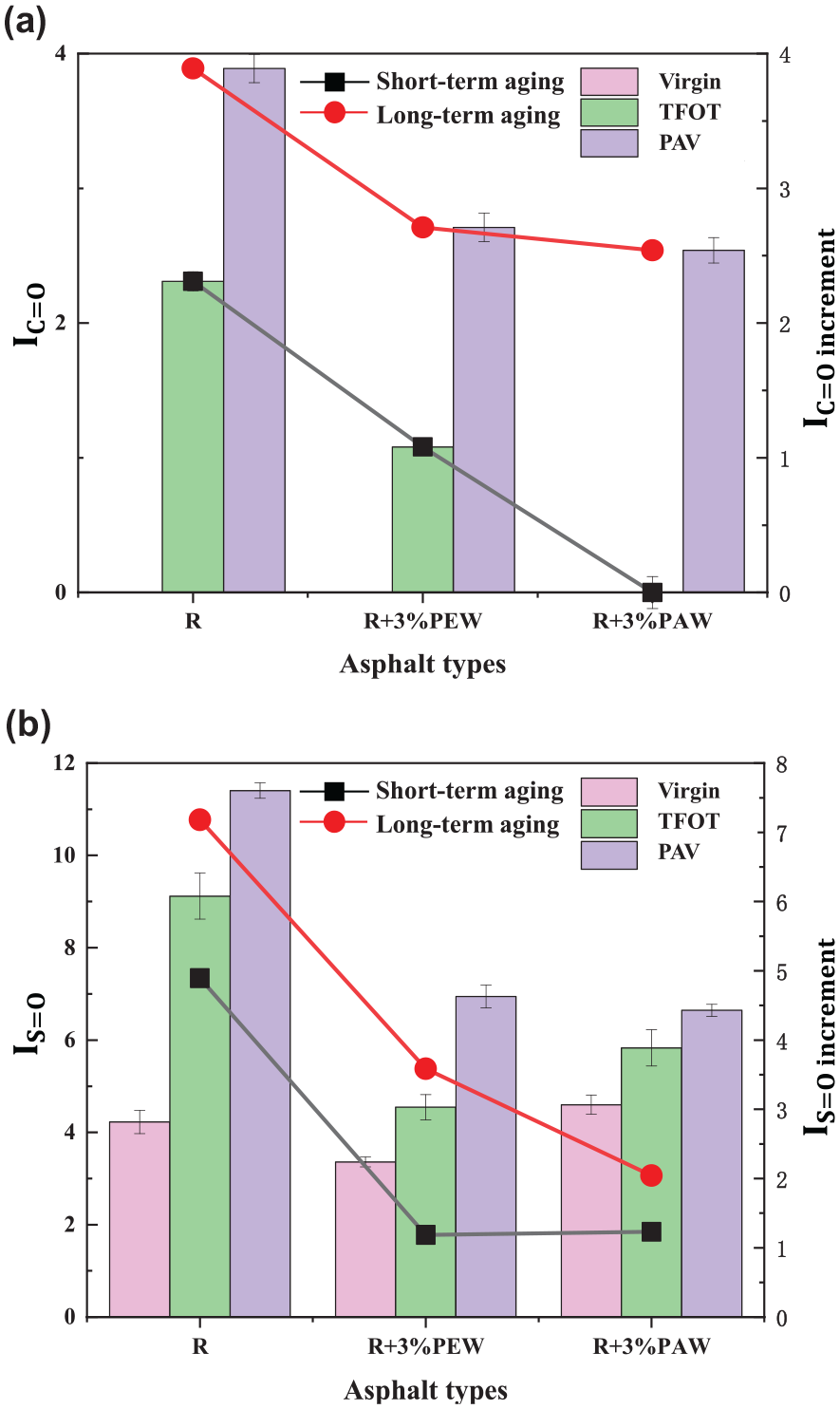
FTIR results of asphalts during thermal aging process: (a) IC=O results of asphalt and (b) IS=O results of asphalts.
CR-modified asphalt was more sensitive to short-term and long-term aging because the IC=O increment and the IS=O increment after aging were greatest. The IC=O increment and IS=O increment of PAW/CR-modified asphalt were smallest. Therefore, it can be concluded that PEW and PAW slowed down the aging of CR-modified asphalt and improved its antiaging properties. The antiaging property of PAW/CR-modified asphalt was better than that of PEW/CR-modified asphalt. Through the above analysis, it can be concluded that in addition to the crystalline structure slowing down the oxidative aging of asphalt binder, PAW reacted with the reactive functional groups of CR-modified asphalt to form a polymer structure, thus preventing oxidative aging of the asphalt. What is more, the greater the amount of warm mix additives, the slower the IC=O and IS=O increased with the aging of the warm mix CR-modified asphalt. Therefore, increasing the amount of warm mix additives improved the antiaging performance of CR-modified asphalt.
GPC Test Results
The GPC results of the three modified asphalts (R, R+3%PEW, and R+3%PAW) during the thermal aging process, are shown in Figure 9. Three peaks can be seen, from left to right, representing the large-, medium-, and small molecules of the modified asphalt. It can be seen that as aging progressed, the percentage of large molecules increased, whereas the percentage of small and medium molecules decreased. This was consistent with a previous study, that is, thermal oxidative aging leads to fewer small and medium molecules in asphalt and more macromolecules ( 38 ). Aging involves the conversion of aromatic and saturated components inside the asphalt to asphaltenes. At the same time, CR will also degrade and disperse to release polymer chains, both of which lead to an increase in the proportion of large molecules and a decrease in the proportion of small and medium molecules ( 39 ).
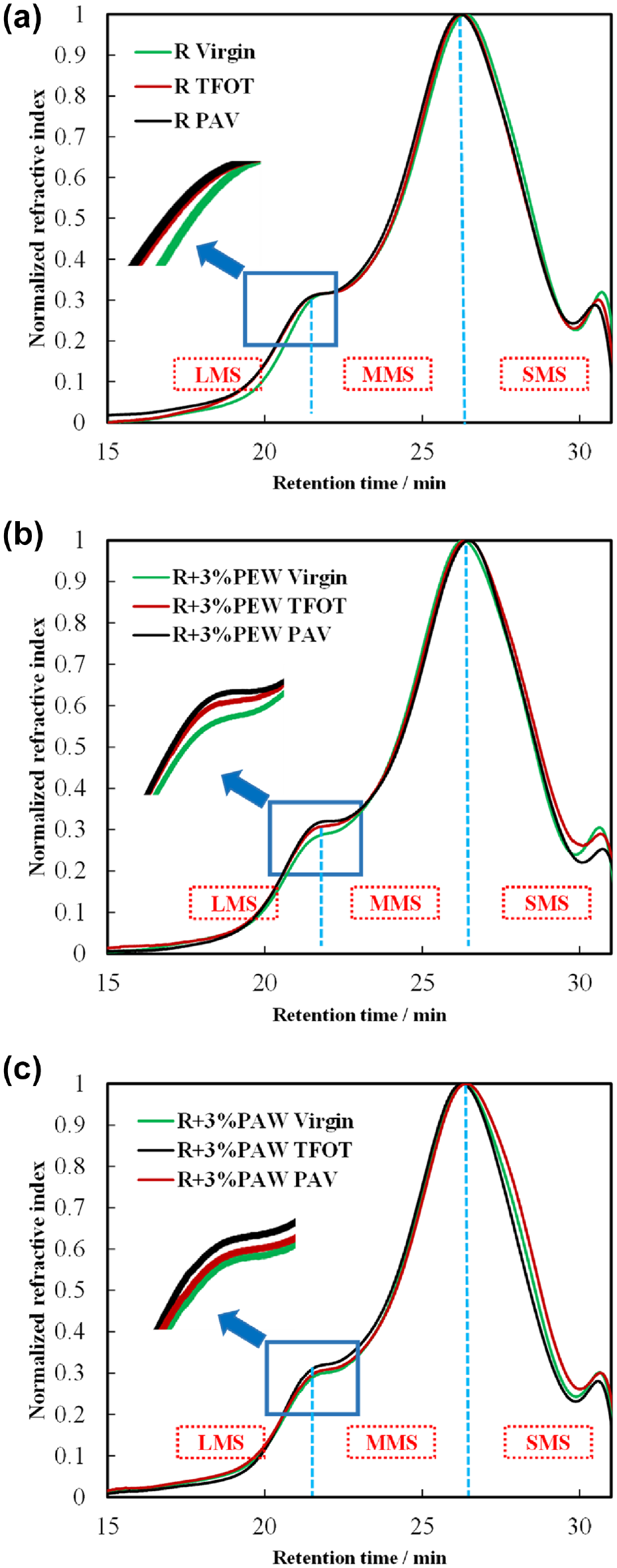
GPC results of asphalts during the thermal aging process: (a) R, (b) R+PEW, and (c) R+PEW.
To more accurately characterize the change in weight distribution of modified asphalt, the LMS%, MMS%, and SMS% of CR-modified asphalt, PEW/CR-modified asphalt (3% PEW content), and PAW/CR-modified asphalt (3% PAW content) were calculated, the results of which are shown in Figure 10. The proportions of macromolecules of unaged CR-modified asphalt, PEW/CR-modified asphalt, and PAW/CR-modified asphalt were 6.95%, 7.10%, and 7.83%, respectively. PEW and PAW promoted the decomposition of CR and released polymer chains, so there were more macromolecules of PEW/CR-modified asphalt and PAW/CR-modified asphalt. In addition, the FTIR test results indicated that PAW/CR-modified asphalt reacted with CR-modified asphalt to produce a small number of polymers. Comparing the effects of short- and long-term aging on the three asphalts, the macromolecular growth rates of the three modified asphalts were ranked from fast to slow: R > R+3%PEW > R+3%PAW. Therefore, it can be concluded that PAW/CR-modified asphalt had the slowest aging speed and CR-modified asphalt was the fastest. That means that both PEW and PAW improved the antiaging ability of CR-modified asphalt, and the antiaging performance of PAW/CR-modified asphalt was better than that of PEW/CR-modified asphalt. The MMS% of R+3% PAW after short-term aging was significantly higher than that of those without aging or after long-term aging. The authors inferred from this that PAW promoted the decomposition of CR during short-term aging and reacted with CR-modified asphalt to generate some polymers with LMS and some with MMS. Therefore, products with MMS promoted an increase in MMS% of R+3% PAW after short-term aging.
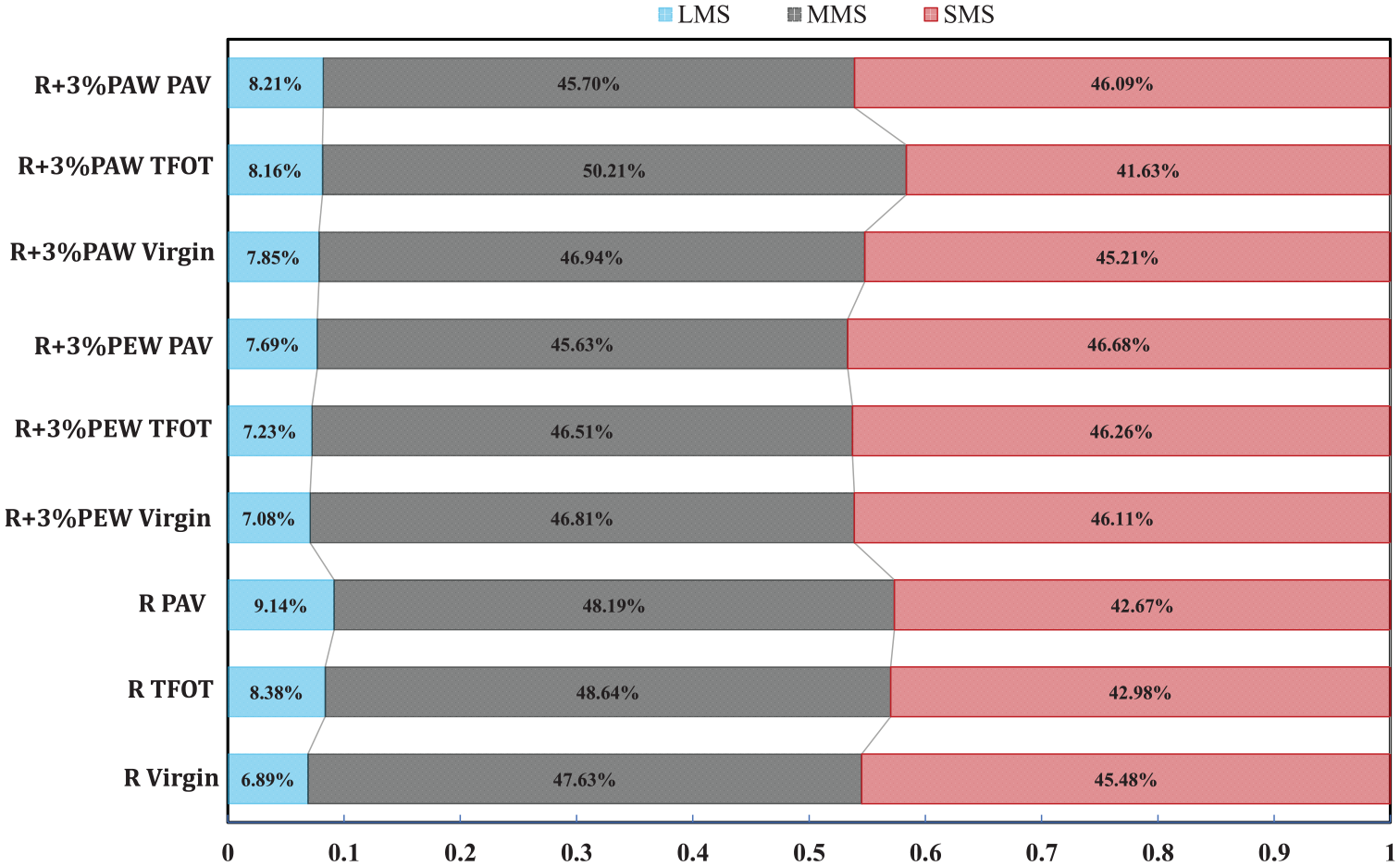
Molecular weight distribution results of asphalts during the thermal aging process.
Phase Morphology
The phase morphology of CR-modified asphalt and warm mix CR-modified asphalt at different aging degrees is shown in Figure 11. For the three unaged modified asphalts, CR-modified asphalt was found to contain many degraded rubber agglomerates. However, after adding PEW and PAW, the agglomerated rubber in the modified asphalt lessened, and the particle size was also significantly smaller. This indicated that PEW and PAW helped to degrade the rubber particles. Analyzing the molecular structure of PEW and PAW, both are macromolecular waxes composed of long carbon chains and have significant flexibility. Therefore, PAW and PEW are able to penetrate the cross-linked network inside rubber when it is mixed with CR-modified asphalt, resulting in a significant weakening of the interaction between the CR. The chemical bonds in the rubber particles become weaker, which ultimately results in the rubber being more easily decomposed ( 33 ).
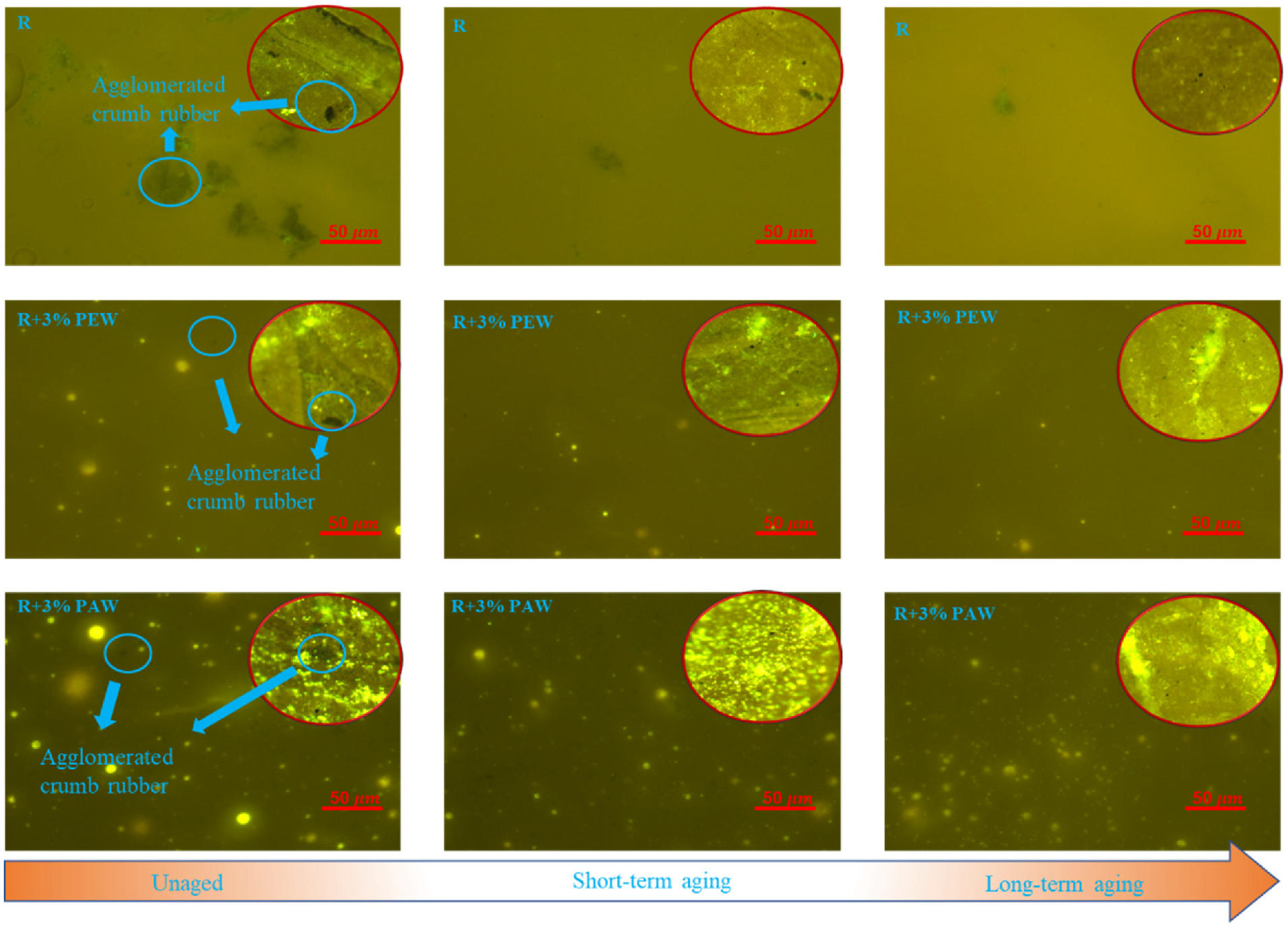
Fluorescence microscopic image of asphalts at different aging stages.
After short-term aging, the black clumped areas in the modified asphalts became smaller, which indicated that the CR had decomposed to a certain extent. PEW/CR-modified asphalt and PAW/CR-modified asphalt are difficult to detect agglomerated rubber particles after short-term aging. Furthermore, there were several fluorescent molecular groups in PEW/CR-modified asphalt and PAW/CR-modified asphalt. CR contains polymers, carbon black, and fillers. When a large amount of CR is decomposed, polymers will be produced, which has a fluorescent reaction ( 40 ). It is worth mentioning that because of the existence of active groups, PAW reacted with some components of the asphalt binder and produced more polymer structures. Therefore, more polymer structures were found in PAW/CR-modified asphalt.
After long-term aging, the outline of the agglomerated rubber particles became blurred, and the particle size of the rubber particles was further reduced, which means that the rubber was further degraded and its compatibility with asphalt enhanced. More polymer structures were found in PEW/CR-modified asphalt and PAW/CR-modified asphalt. As the rubber particles decomposed under the action of PEW and PAW, more polymer was released. The appearance of the polymer structure prevented the asphalt from reacting with oxygen and improved the antiaging performance of the modified asphalt. In addition, through the above analysis and previous studies, it is known that the wax-based warm mix agent is distributed on the surface of the modified asphalt, thereby preventing short- and long-term aging of the asphalt binder.
Conclusions
To explore the effects of PEW- and PAW warm mix additives on the aging of CR-modified asphalt and analyze aging mechanisms, a study of short- and long-term aging was conducted on CR-modified asphalt, PEW/CR-modified asphalt, and PAW/CR-modified asphalt. Tests of their basic- and rheological properties, chemical composition, and phase morphology were carried. By analyzing the experimental results, the following conclusions can be drawn:
The oxidative aging of the asphalt and the decomposition of CR will occur at the same time as the wax-based warm mix CR-modified asphalt ages. With the aging process, the softening point, modulus, and elastic recovery rate of wax-based warm mix CR-modified asphalt will continue to increase, indicating that whether it is short- or long-term aging, the oxidative aging of the wax-based warm mix agent plays a leading role.
Compared with CR-modified asphalt, the penetration, softening point, ductility, complex modulus, phase angle, irrecoverable creep compliance Jnr, IC=O increment and IS=O increment of PEW/CR-modified asphalt change less after aging, and the change in each index of PAW/CR-modified asphalt was the smallest. The above results have shown that PAW and PEW can improve the antiaging performance of CR-modified asphalt, and all the index results showed that the higher the content of PEW and PAW, the greater the antiaging effect of PEW/CR-modified asphalt and PAW/CR-modified asphalt.
The antiaging mechanism of wax-based warm mix additives is mainly comprised in the crystalized wax being evenly distributed across the asphalt surface to prevent the asphalt from reacting with oxygen. It is worth mentioning that through FTIR, GPC, and FM, long carbon chain wax can promote the decomposition of CR, release polymer chains and antioxidants, and improve antiaging performance. PAW/CR-modified asphalt had better antiaging properties than PEW/CR-modified asphalt. Using FTIR and FM it was found that PEW did not react with CR-modified asphalt. However, some active oxygen atoms in PAW did react with CR-modified asphalt to form new polymer structures, thereby further improving antiaging performance.
The study delved into the interaction mechanisms between PEW/PAW and CR-modified asphalt, focusing on the chemo-rheological and morphological evolution. We additionally substantiated the antiaging benefits of PEW and PAW in CR-modified asphalt. These findings hold significant promise for the practical utilization of PEW, PAW, and potentially of CR-modified asphalt in engineering applications. The research paves the way for future investigations aimed at assessing the performance of modified asphalt mixtures and evaluating the durability and antiaging characteristics of asphalt pavement—crucial steps in our forthcoming studies.
Footnotes
Author Contributions
The authors confirm contribution to the paper as follows: study conception and design: D. Sun, L. Xu; data collection: L. Xu, M. Hu; analysis and interpretation of results: L. Xu, H. Ni; draft manuscript preparation: Y. Tian, L. Xu, M. Hu. All authors reviewed the results and approved the final version of the manuscript.
Declaration of Conflicting Interests
The authors declared no potential conflicts of interest with respect to the research, authorship, and/or publication of this article.
Funding
The authors disclosed receipt of the following financial support for the research, authorship, and/or publication of this article: The work described in the paper is supported by the National Natural Science Foundation of China (grant nos. 52178434 and 51878500).

Data Accessibility Statement
All the relevant data have been included in the manuscript.