







Abstract
The use of recycling agents (RAs), along with recycled asphalt pavement (RAP) modifiers, has been increasing over recent years. However, the field performance of asphalt mixtures containing high-RAP materials modified with RAs has raised some concerns with the long-term performance of RAs. This study evaluated the laboratory and field performance of high-RAP mixtures with and without bio-oil RA. Five sets of plant-produced specimens were collected: 1) plant-produced laboratory-compacted; 2) field-compacted, cored after paving; 3) field-compacted, cored after one year; 4) field-compacted, cored after two years; and 5) field-compacted, cored after three years. The Hamburg wheel tracking test was used to evaluate the specimens’ resistance to rutting and moisture damage, while the semi-circular bending test was performed to examine the cracking resistance of specimens. The laboratory test results showed that using the bio-oil RA increased cracking resistance and decreased rutting and moisture damage resistance of the RAP-blended mixtures. However, after one and two years of exposure to environmental conditions and traffic loads, the specimens modified by RA showed better moisture damage and rutting resistance. The cracking resistance of laboratory and field-aged specimens, estimated by flexibility index, implied that the bio-oil RA used in this study could not provide long-term improvement for the RAP-blended mixtures. Field observations suggest that using bio-oil RA may have resulted in inferior pavement performance compared with the control section. However, drawing conclusions based on just two years of data might yield inconclusive results. Longer field performance monitoring is, therefore, warranted for a more comprehensive analysis.
Keywords
The use of reclaimed asphalt pavement (RAP) in asphalt mixtures has gained considerable attention in recent years as a result of its economic benefits and environmental advantages. The use of RAP in new asphalt pavement reduces the cost of materials and the impact associated with extraction, transportation, and processing of conventional asphalt materials. In the United States, there are different guidelines for the use of RAP in asphalt mixtures; the average content of RAP increased to over 21.9% in 2021 ( 1 ). The State of Nebraska allows the use of 40% to 55% of RAP in asphalt mixture production. Although there are benefits to a higher percentage of RAP in asphalt mixtures, there are some concerns about excessive use of RAP mainly associated with higher stiffness and brittleness, as well as partial coating of the aggregates with binders. This can result in poor workability, improper compaction of pavement layers, leading finally to premature failure of asphalt pavement ( 2 ).
To address this concern, chemical additives, so-called recycling agents (RAs), can be introduced to RAP-blended asphalt mixtures to improve their engineering properties by recovering the properties of the aged asphalt binder in RAP materials. The basic function of an RA is to restore the balance in the chemical composition of an aged binder that was altered during the service life of the pavement ( 3 , 4 ). A survey of the literature shows that in comparison to unmodified high-RAP mixtures, RAP-blended mixtures modified with RAs have an improved cracking resistance, as well as a higher rate of susceptibility to rutting damage ( 5 – 11 ). To be more specific, in many studies the addition of RAs resulted in a drop in the stiffness of asphalt mixtures, followed by an inferior rutting resistance (9, 12–15). However, some research findings have indicated negligible or positive effects of RAs on the rutting resistance of high-RAP asphalt mixtures ( 16 , 17 ). For cracking, there is general agreement on the positive effects of RAs on the performance of high-RAP asphalt mixtures ( 17 , 18 ). Some concerns are also reported about the capability of RAs to maintain the long-term cracking resistance of asphalt mixtures, particularly, at low temperatures ( 19 ). In the case of moisture damage resistance, some studies reported positive effects of RAs ( 20 ), while others indicated negative or insignificant effects of these modifiers on the moisture susceptibility of high-RAP asphalt mixtures ( 16 , 21 ).
There are many studies that have evaluated the performance of laboratory-produced asphalt mixtures containing RAP with and without RAs ( 22 , 23 ). However, the field performance of the mixtures was not examined in those studies. A few studies have compared and correlated the laboratory and field performance of RAP-blended mixtures with and without RAs ( 7 , 8 ). For instance, Tran et al. ( 17 ) used a tall-oil RA to enhance the performance of a 40%-RAP mixture to the level of the control mixture (with 30% RAP). Considering intermediate- and low-temperature cracking resistance, the results were statistically similar between the control mixture and the one treated with RA. However, a field survey of the test sections 10 months after construction showed reflective cracking on the surface of the pavement built with RAP-blended mixtures treated by the RA. In another study, Jahangiri et al. ( 24 ) focused on using RAP and recycled asphalt shingles (RAS) combined with a bio-oil RA. The significant finding from the study was the detection of brittle behavior of the asphalt mixture in most of the sections. Only six out of 18 pavement sections performed well in the disk-shaped compact tension test; the probable reasons were the selection of a softer binder grade and the use of low recycling content.
Although a few studies have attempted to fill the knowledge gap in understanding the field performance of asphalt mixtures containing a high percentage of RAP materials and RAs, more field and laboratory data are still needed; a better understanding of the complex behavior of these mixtures is important to the development of more effective recycling practices.
Objectives and Methodology
The primary goal of this research is to evaluate the recycling practice that has recently been implemented in Nebraska ( 25 ). This study has two specific objectives:
– To evaluate the mechanical performance of plant-produced mixtures containing high-RAP materials, both with and without RA, which are compacted in both the laboratory and the field.
– To compare the field performance characteristics of high-RAP asphalt mixtures with and without RA by monitoring their performance over time.
As the first step, two mixture types, a high-RAP mixture with and without RA, were studied for their performance in five different scenarios: 1) plant-produced laboratory-compacted samples; 2) field-compacted and cored right after construction; 3) field-compacted and cored one year after construction; 4) field-compacted and cored two years after construction; and 5) field-compacted and cored three years after construction. Considering a performance-based approach, these specimens were tested and analyzed for different types of distress, including fatigue cracking, permanent deformation (rutting), and moisture-induced damage. The semi-circular bending (SCB) and the Hamburg wheel tracking (HWT) were used as performance tests in this study. As the second step, field condition monitoring was conducted for both pavement sections made with these mixture types. The International Roughness Index (IRI), rut depth, fatigue cracking, and thermal cracking indexes were obtained from field condition monitoring data. Overall, these field data were used to investigate different distresses in high-RAP asphalt mixtures in the presence of RA. Figure 1 shows the laboratory experimental plan developed for this study.
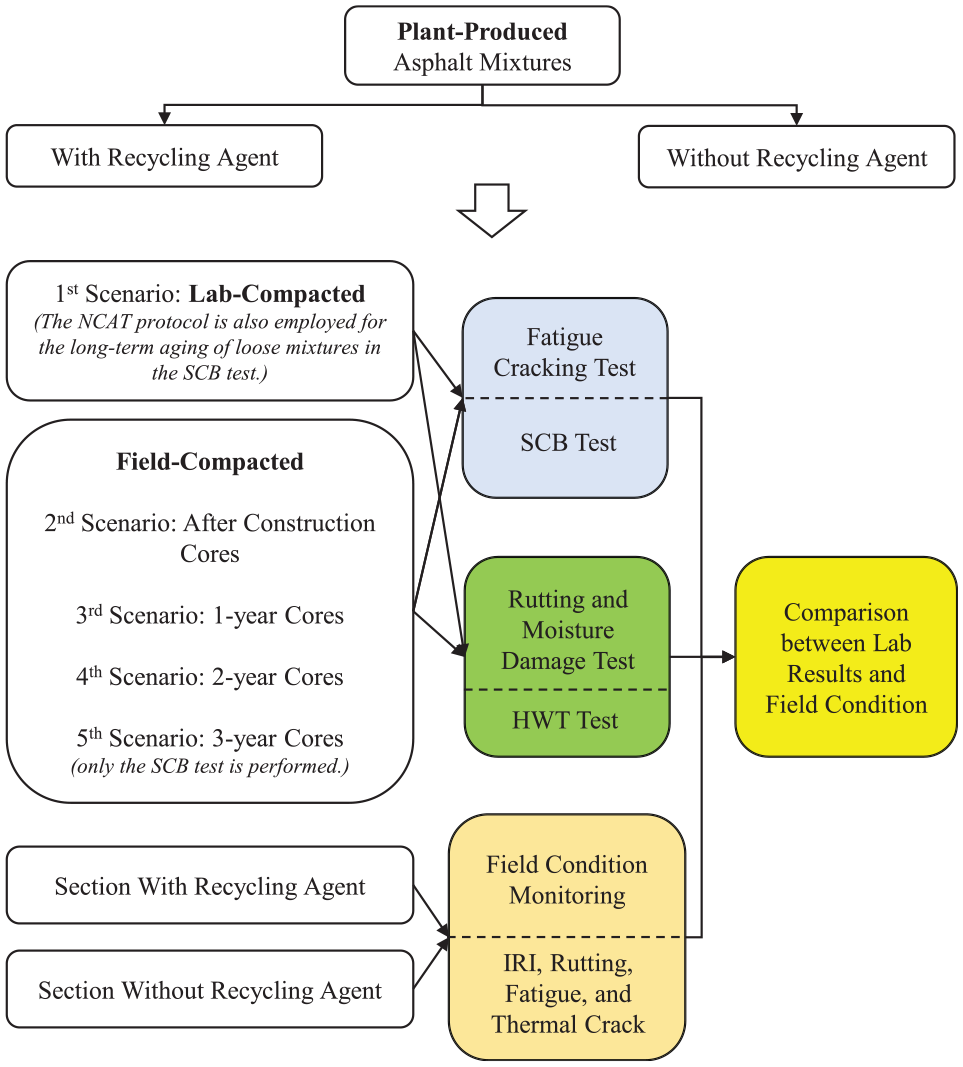
Experiment framework.
Site Location and Materials
Location of the Test Section
The control and test sections located at Highway NE-21 in Nebraska were built in September 2019 and have been monitored for a period of three years. Figure 2 illustrates the detail of the pavement structural layers of each section. The control and test sections were composed of a typical asphalt mixture top-lift layer, asphalt concrete (AC) base, subbase, and subgrade layer. The only difference between the control and test sections was incorporating an RA in the AC base layer. The concern related to the potential failure of the surface layer was the major reason for using the RA in the AC base layer.
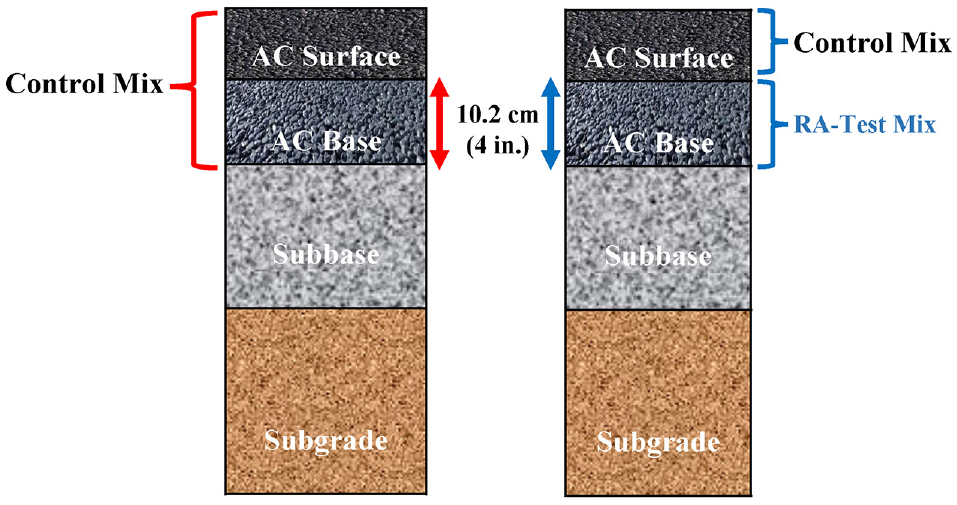
Pavement structural layers from the test sections.
Materials
Recycling Agent (RA) and Binder
A bio-oil RA was used in this study to investigate the influence of this chemical modifier on the laboratory and field performance of high-RAP asphalt mixtures. Table 1 summarizes the properties of the bio-oil RA used in this study. The Superpave performance grading (PG) approach was used to determine the optimum dosage range of RA. Figure 3 indicates the PG test results for different dosages of RA. It should be noted that PG 58V-34 was selected as a virgin binder in this study.
Properties of Bio-oil RA Used in this Study
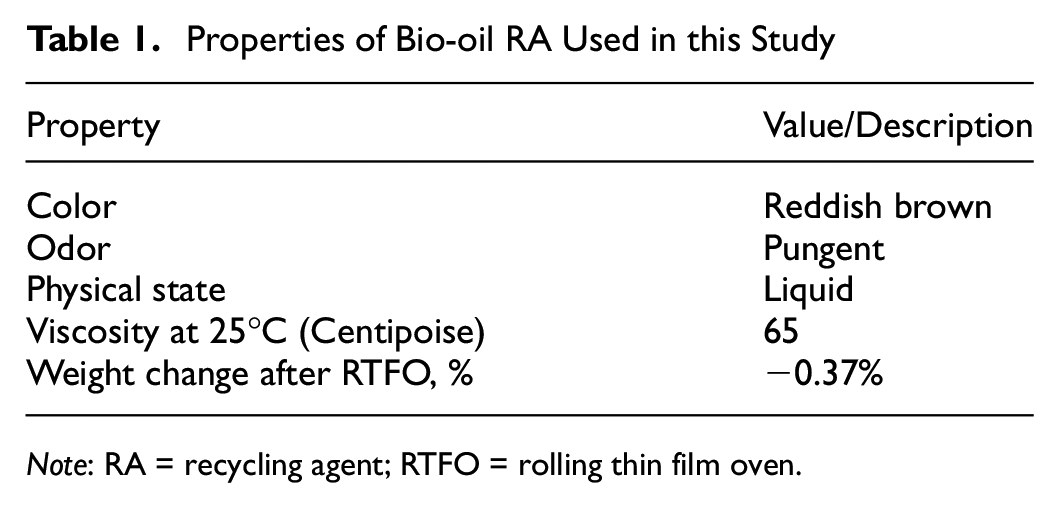
Note: RA = recycling agent; RTFO = rolling thin film oven.
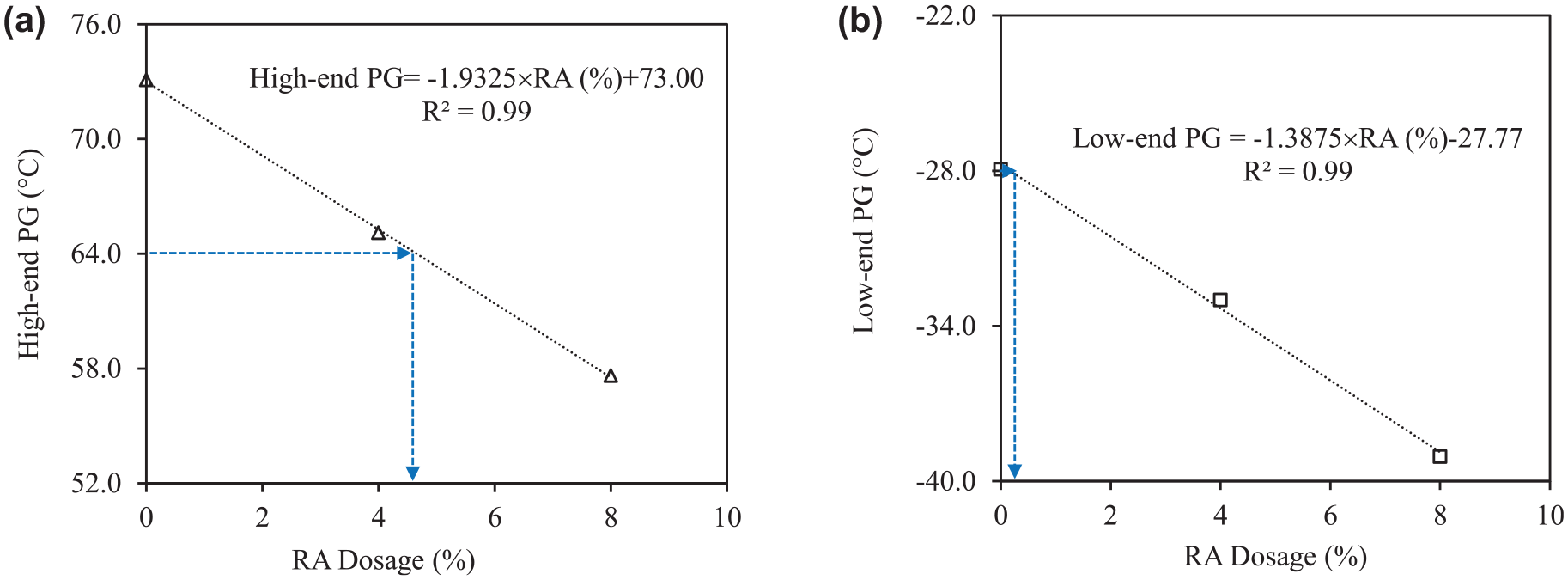
PG test results of asphalt binder blends: (a) high end, (b) low end.
From Figure 3a, it can be inferred that the high-temperature PG controls the maximum allowable dosage of RA, while the low-temperature PG limits its minimum required dosage (Figure 3b). Accordingly, the dosage range of RA was determined by recovering the PG of the control binder (50% virgin binder + 50% RAP binder) to the desired PG of 64-28. Figure 3 shows that the dosage range required to achieve PG 64-28 is between 0.2% and 4.7% based on the total weight of the binder, and 1.6% was selected to be added to the asphalt mixtures. It is important to highlight that the selection of 1.6% was made in collaboration with the Nebraska DOT and the contractor, taking into account various factors including but not limited to risk of failure and cost-effectiveness.
Asphalt Mixture
A traditional Nebraska dense-graded Superpave recycled (SPR) mixture with nominal maximum aggregate size (NMAS) of 12.5 mm, containing 52% RAP, was used in this study. The blend of virgin aggregates was composed of 38% limestone and 10% gravel. The optimum asphalt binder content was determined to be 5.2% based on the Superpave mix design approach ( 26 ). Figure 4 shows the gradation of the final aggregate blend (RAP with virgin aggregates), with the maximum and minimum limits for Nebraska.
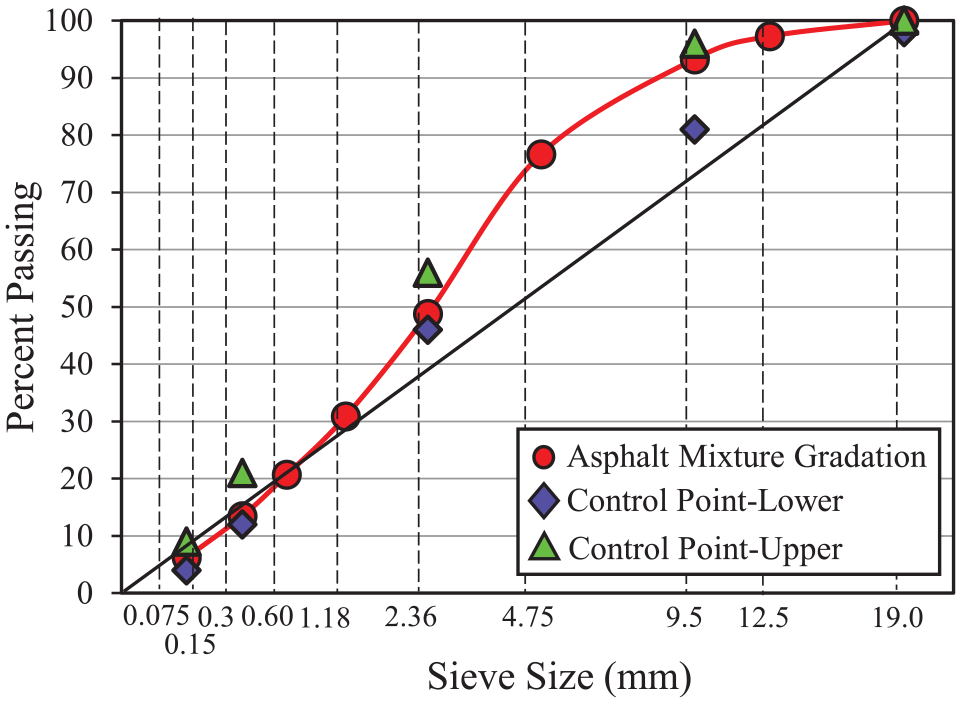
Gradation of aggregate blend.
Field-Cored and Laboratory-Compacted Asphalt Mixture Specimens
Two test sections were constructed using the Superpave recycled (SPR) mixtures with and without bio-oil RA. Several cored specimens were collected from the field (Figure 5a) at different time intervals, as was mentioned earlier. The core specimens had an initial diameter of 150 mm, further cut at the lift and bottom lines, as shown in Figure 5b. Overall, a total of 72 cores were taken from two sections over a period of three years.
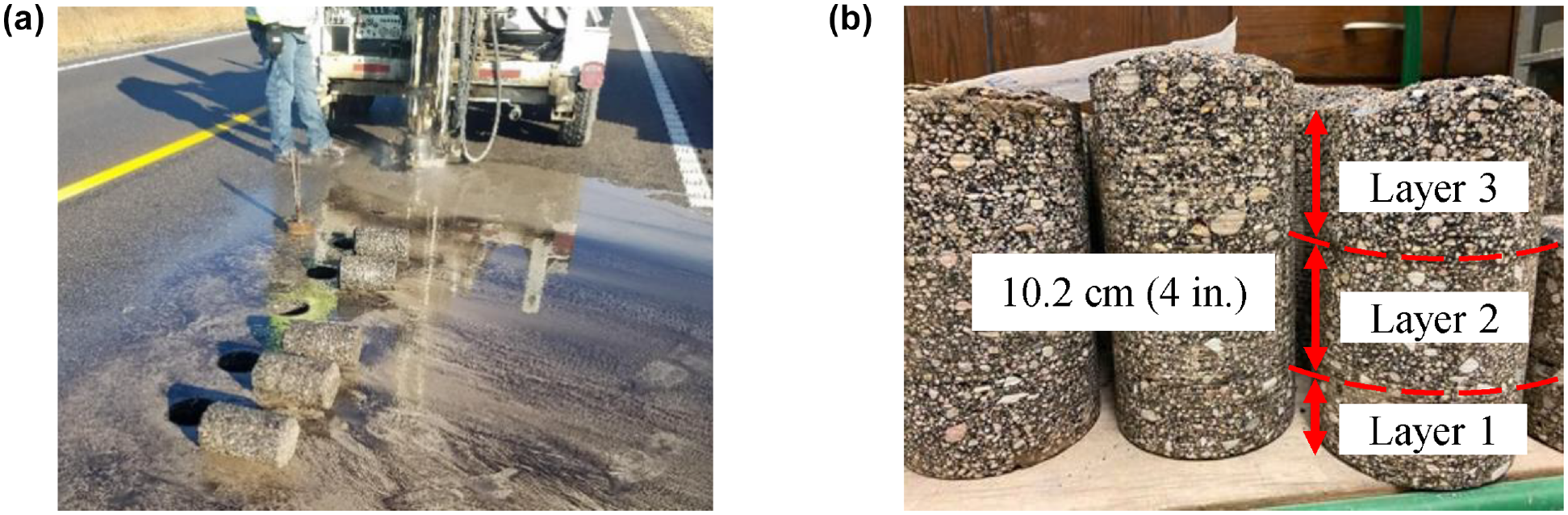
Field core specimens during: (a) coring process; and (b) trimming process.
The plant-produced SPR mixtures were used to prepare laboratory-compacted specimens. The loose mixtures were reheated in an oven for 2 h at 135°C and compacted using a Superpave gyratory compactor while the target air void was set at 7%. Also, the laboratory long-term aging following critical aging protocol (referred to as NCAT) was applied on the loose mixtures to simulate the field aging of about three to 10 years based on climatic conditions ( 27 ). According to this method, the loose mixtures collected from the asphalt plant were reheated and kept in an oven for 8 h at 135°C before compaction. Table 2 summarizes related information associated with each specimen type prepared and tested in this study.
Information Associated with Different Specimen Types
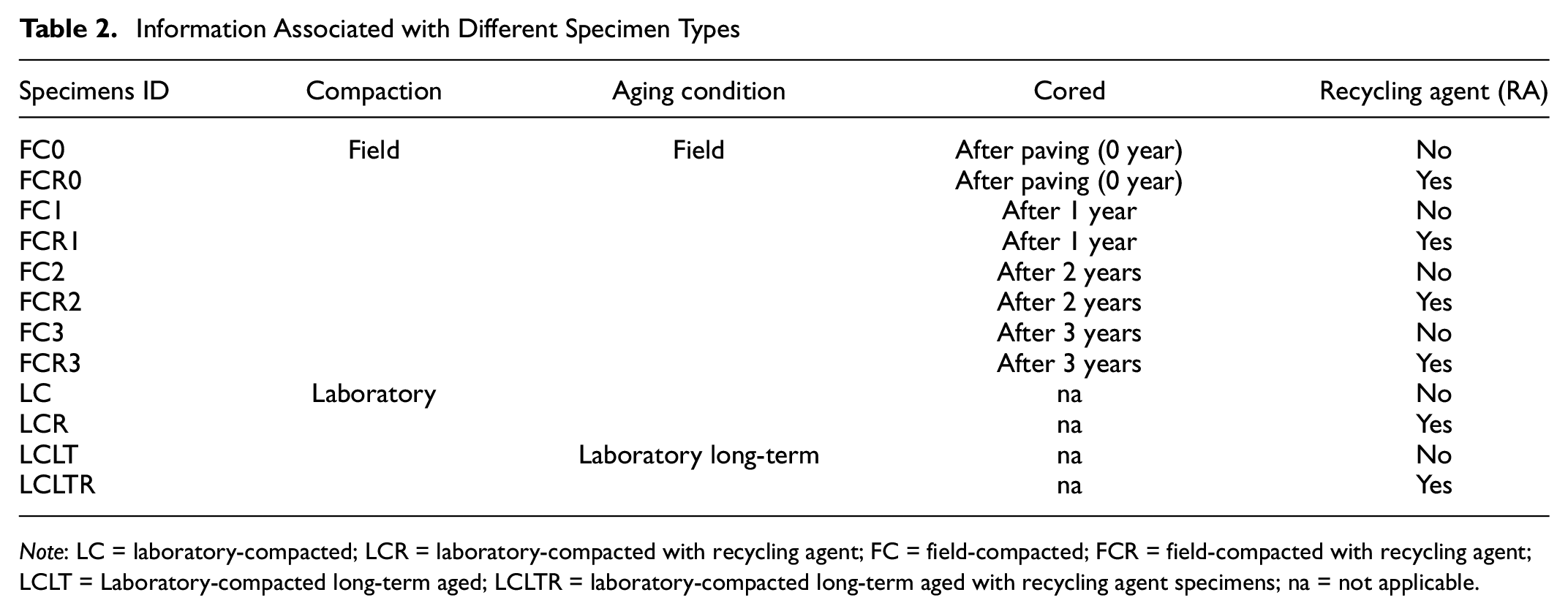
Note: LC = laboratory-compacted; LCR = laboratory-compacted with recycling agent; FC = field-compacted; FCR = field-compacted with recycling agent; LCLT = Laboratory-compacted long-term aged; LCLTR = laboratory-compacted long-term aged with recycling agent specimens; na = not applicable.
Laboratory Tests and Results
SCB Test
The SCB test based on the Illinois procedure was performed following the AASHTO T 393 ( 28 ). After conditioning for 2 h at 25°C, the test specimen was placed in the loading frame of a three-point bending configuration with a loading rate of 50 mm/min. The load-displacement diagram (LLD) was used to analyze the cracking performance of different specimens. Parameters such as stress intensity factor (K), fracture energy (Gf), fracture toughness (Kic), critical energy rate (Jc), J integral, flexibility index (FI), and cracking resistance index (CRI) can be measured from a typical SCB test result ( 29 , 30 ). In this study, the FI is used to evaluate the fracture behavior of the asphalt mixtures. The FI can be calculated using Equation 1 ( 31 ):

where
Gf, = the fracture energy (J/m2),
|m| = the absolute value of the post-peak slope, and
A = the unit conversion factor.
Figure 6 shows the FI values of different types of specimen in this study. As discussed earlier, the FI correlates well with the field performance and the cracking of an asphalt specimen ( 31 ). According to results presented in Figure 6, the laboratory-compacted specimens with RA (LCR) had a higher FI than that of without RA (LC), showing an active role of the bio-oil RA in the performance enhancement of the RAP-blended asphalt mixtures. Also, results show that the laboratory long-term aged specimens (LCLT and LCLTR) had lower FI values than LC and LCR, respectively, as expected. Furthermore, 67% and 80% drops were observed in the FI of LCLT and LCLTR with respect to LC and LCR specimens, respectively, which indicates that the mixtures with bio-oil were more susceptible to cracking distress.
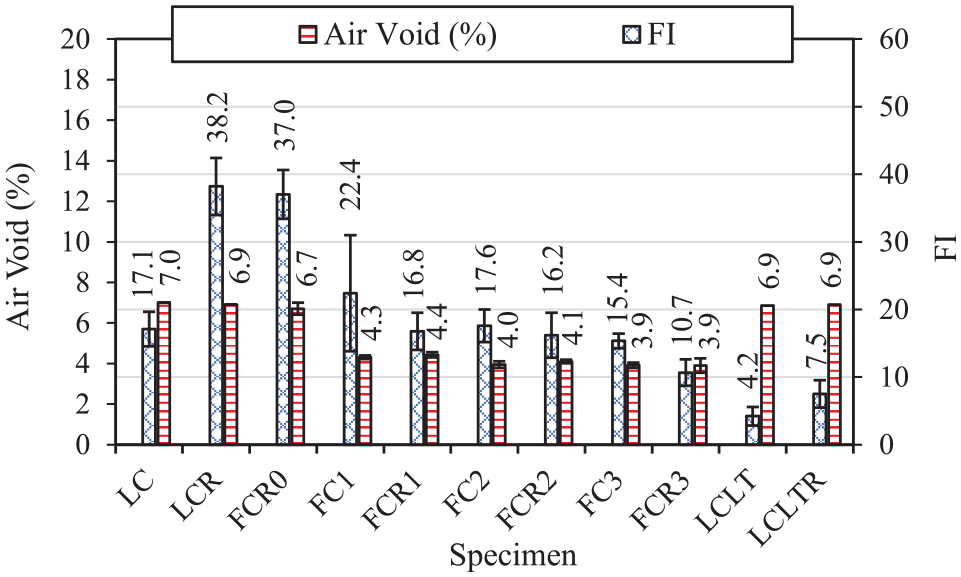
The FI values of different types of specimens.
As can be seen in Figure 6, the effect of the bio-oil RA in the softening of the RAP materials was noticeable in both field-compacted and lab-compacted specimens (FCR0 and LCR). Given concerns about the locations and labeling of FC0 cores, the results of FC0 specimens are not shown in Figure 6. However, based on the results comparison between LC and LCR, and LCR and FCR0, a cracking performance similar to LC can be assumed for FC0. Considering the error bars presented in Figure 6, the FI values of the field-compacted specimens without RA were similar to LC specimens even after the first, second, and third years of service life. This showed that having a higher amount of RAP materials reduced the rate of aging during the service life. In addition, this research study used cores from a second layer, which led to minimal aging impact. On the other side, the field-compacted mixtures with RA had the highest rate of loss of FI compared with those without RA after one year, which could be related to the bio-oil RA introduced to the mixtures. Haghshenas et al. reported that the use of bio-oil RAs might accelerate the aging process of asphalt binders and mixtures since these RAs contain high oxygen content and some chemical functional groups susceptible to aging and moisture ( 32 ). This finding was further confirmed by other researchers ( 33 – 35 ). The FI of both field-compacted mixtures slightly decreased in the second year as the aging rate slowed as aging progressed. In addition, core testing in the third year also revealed that the cracking performance of the section with bio-oil RA dropped more than that without RAs.
To investigate the sensitivity of FI, an analysis of variance (ANOVA) at a 95% confidence level and Tukey’s honestly significant difference (HSD) test was performed. The ANOVA table of FI from different mixtures is shown in Table 3. Since the p-value is less than the α-level (i.e., 0.05), the null hypothesis was rejected, meaning that there was at least one mixture significantly different from other mixtures for their FI values. As a result, Tukey’s HSD can be conducted. The Tukey’s HSD test has been used by many researchers to identify differences in asphalt mixture performance ( 36 – 39 ). In Tukey’s HSD, the mixtures that shared the same grouping letter, their average FIs were not statistically different. As can be seen in Table 4, the LC and LCR specimens were statistically different, while there was not a statically significant difference between LCR and FCR0 specimens. The FC1, FCR1, FC2, FCR2, FC3, and FCR3 had the same grouping letter (i.e., B), meaning that the FI of these specimens was not statistically different. In other words, RAP-blended mixtures without bio-oil RA, aged under field conditions, exhibited similar cracking performance to those of with RA after one and two years. However, after three years, it became apparent that cracking performance of RAP mixtures modified by RA was inferior to that of mixtures without RA. Nonetheless, a longer field performance monitoring can provide a better insight into the performance of these mixtures. Table 4 shows that the LCLTR and LCLT fell in the same grouping letter (i.e., D) for FI, while they were statistically different before aging occurred as LC and LCR had different grouping letters. The FI and Tukey’s HSD test results imply that the bio-oil RA used in this study could not provide long-term improvement for the RAP-blended mixtures in the laboratory and field aging conditions.
ANOVA Analysis: Single Factor for the FI Values

Note: ANOVA = analysis of variance; na = not applicable.
Summary of Tukey’s HSD Tests Results (α = 0.05) for FI Values
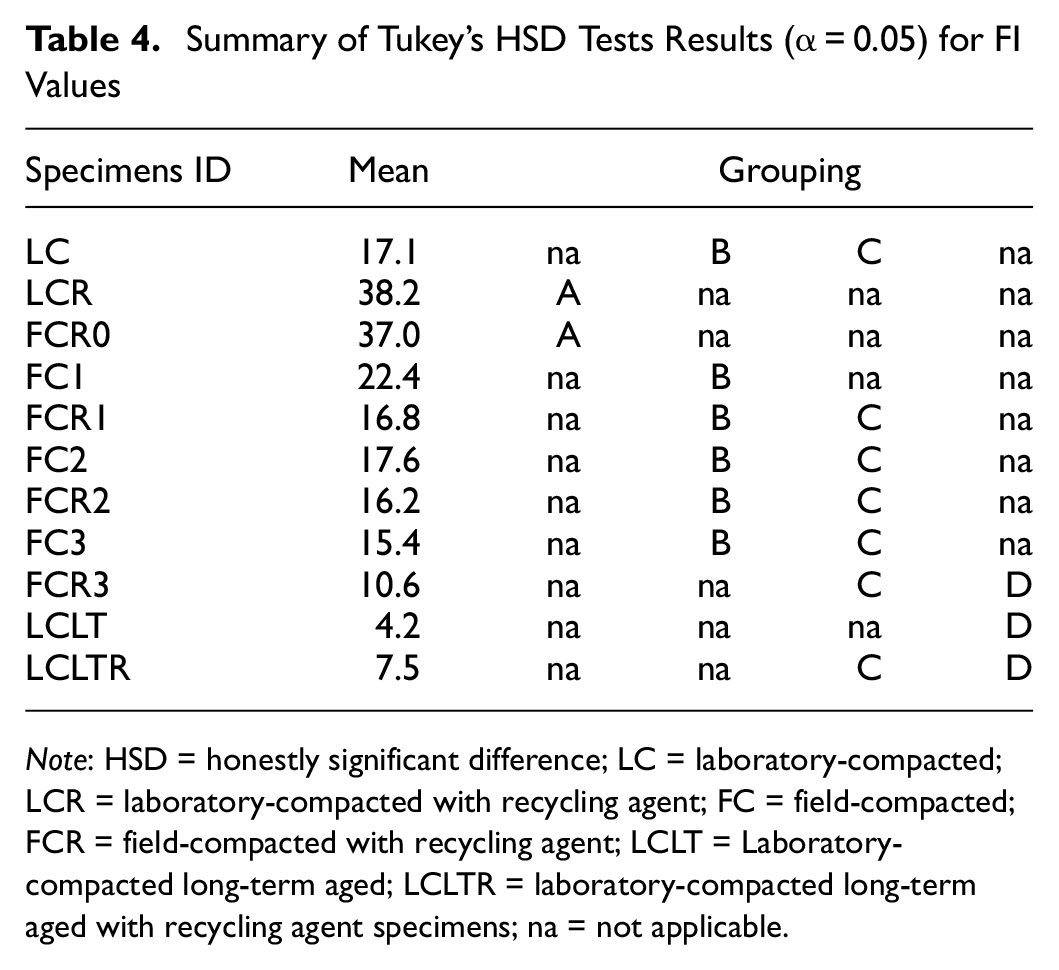
Note: HSD = honestly significant difference; LC = laboratory-compacted; LCR = laboratory-compacted with recycling agent; FC = field-compacted; FCR = field-compacted with recycling agent; LCLT = Laboratory-compacted long-term aged; LCLTR = laboratory-compacted long-term aged with recycling agent specimens; na = not applicable.
Barry ( 40 ) and Haslett’s ( 41 ) correlated air void content and cracking indices such as CRI, Gf, FI, and Pmax of high-RAP asphalt mixtures. They reported that the air void content was directly related to the cracking indices, a decrease in the air void content of specimens as a result of traffic loads leads to a decrease in cracking resistance of specimens. Accordingly, as can be seen in Figure 6, about 2.4% reduction in air void content between field-cored specimens after paving and after one year resulted in a decrease in FI of the mixtures.
HWT Test
The HWT test was used to characterize the rutting and moisture performances of the specimens according to AASHTO T 324 procedure at 50°C in a water bath ( 42 ). A wheel passed over the specimen’s surface at a rate of 52 passes/min, and the resulting deformation was recorded by the transducers attached to the machine. The testing device had the provision to stop at 12.5 mm of rutting or 20,000 passes of the wheel, whichever occurred first. However, in this study, 20,000 passes were selected as the stopping criteria to record the full depth rutting. Rutting is a direct measurement of the deformation depth over the surface of the specimen. The stripping inflection point (SIP) is defined as the number of wheel passes obtained at the intersection of the creep slope and the stripping slope and can be used as an indicator for estimating the moisture susceptibility of an asphalt mixture specimen. A higher SIP number indicates better moisture damage resistance. It should be noted that the ANOVA and Tukey’s HSD test was not performed on HWT test results because of the limited number of specimens tested for each mixture. Also, it is worth noting that the HWT test was not performed on the specimen after year 2 as permanent deformation is a concern at the initial stage of pavement life.
Figure 7 shows the rutting performance results of different specimens considering the 12.5-mm criterion as suggested by researchers ( 43 , 44 ). A higher number of passes to meet the 12.5-mm criterion indicates a better rut resistance of the specimen. Based on Figure 7, the addition of RA softened the LC specimen as the number of passes decreased from 15,200 to 12,000 for LCR, while this trend reversed for field-compacted samples cored after paving (FC0 and FCR0). This softer behavior of FC0 compared with FCR0 could be related to the field compaction practices and plant production variabilities. The field-compacted specimens cored after one year (FC1 and FCR1) and two years (FC2 and FCR2) showed notably less rutting compared with the specimens cored after paving (FC0 and FCR0), which may be a result of the aging that occurred in the field conditions. Moreover, one of the predominant factors which affect the rutting resistance of specimens is the air void content ( 45 ). Figure 7 shows a reduction of about 2.4% in the air void content of FC1 and FCR1 with respect to those after paving, while the air void content slightly changed in the second year. The reduction in the air void content resulted in an increase in the rutting resistance of the specimens, as can be seen in Figure 7. Other researchers have reported the same findings with regard to the effect of air void content on the rutting resistance of specimens ( 46 ).
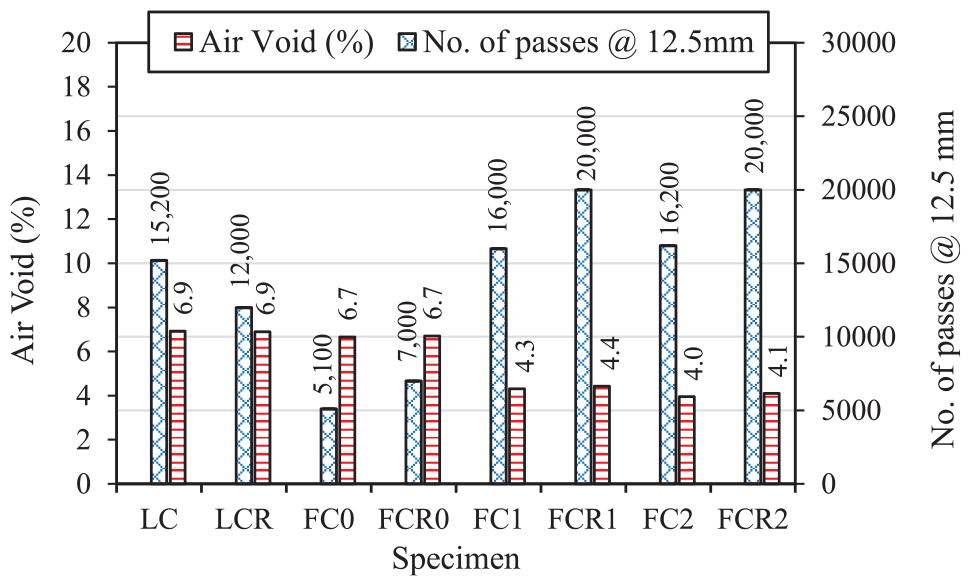
Summary of HWT test results of specimens.
The higher number of passes to 12.5 mm rut depth observed in the field-compacted specimens with RA (FCR1 and FCR2) compared with those without RA (FC1 and FC2) could be considered as the faster oxidation rate of high-RAP asphalt mixtures modified with bio-oil RA which resulted in stiffer specimens. It should be noted that other factors such as RA dosage, good RAP homogeneity, good distribution of RA and its diffusion into the RAP binder, and good blending of all the materials can also affect the overall performance of high-RAP asphalt mixtures treated with RA. As a result, to achieve a better insight into the rutting performance of these modified mixtures, all these factors need to be evaluated further ( 47 ). Figure 8 shows the SIP values derived from the HWT test to quantify the moisture susceptibility of specimens. It is observed from Figure 8 that the LCR had a lower SIP than the LC, which indicates that the specimens with bio-oil RA are more susceptible to moisture damage. A lower SIP is also attributed to FCR0 specimens than the FC0, although in this case, difference is minimum. These results indicate that RAP-blended mixtures modified with bio-oil RA are susceptible to moisture damage in the initial stage regardless of compaction practices, that is, laboratory and field. This agrees well with the results of studies conducted by Haghshenas et al. and Dong et al. in the binder and mixture levels, respectively ( 32 , 35 , 48 ). However, as aging progresses, the moisture damage resistance of RAP-blended mixtures with bio-oil RA improved; the SIP of FCR1 and FCR2 is higher than FCR0.
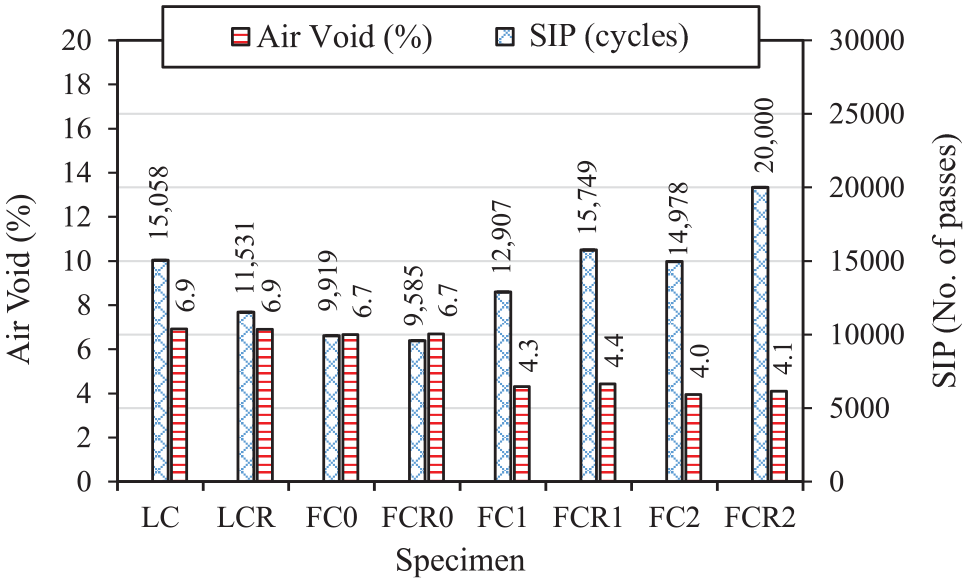
SIP of specimens.
Field Performance Data
The pavement sections were monitored for two years, and the necessary field performance data were collected for IRI, rutting depth, thermal crack, and fatigue crack quantities. These parameters were recorded during a period of service life including before paving (2019), one year after paving (2020), and two years after paving (2021). Although there were some correlations between the field performance and laboratory test results, it is worth noting that the high-RAP mixtures with and without RA were used in the second layer of each section, while the observed distresses were for the top-lift (surface) layer. Figure 9a shows the IRI observations for the pavement sections with and without RA. A higher IRI indicates more irregularities and roughness in the road surface. It is worth mentioning that a similar IRI was observed in both pavement sections before the reconstruction in 2019. Also, the IRI of both pavement sections, with and without RA, was the same after construction. With respect to the next two years of service life, although the IRI of the pavement section with RA is slightly higher than that of without RA, just how much of a role the RA plays in the IRI of the section needs further investigation.
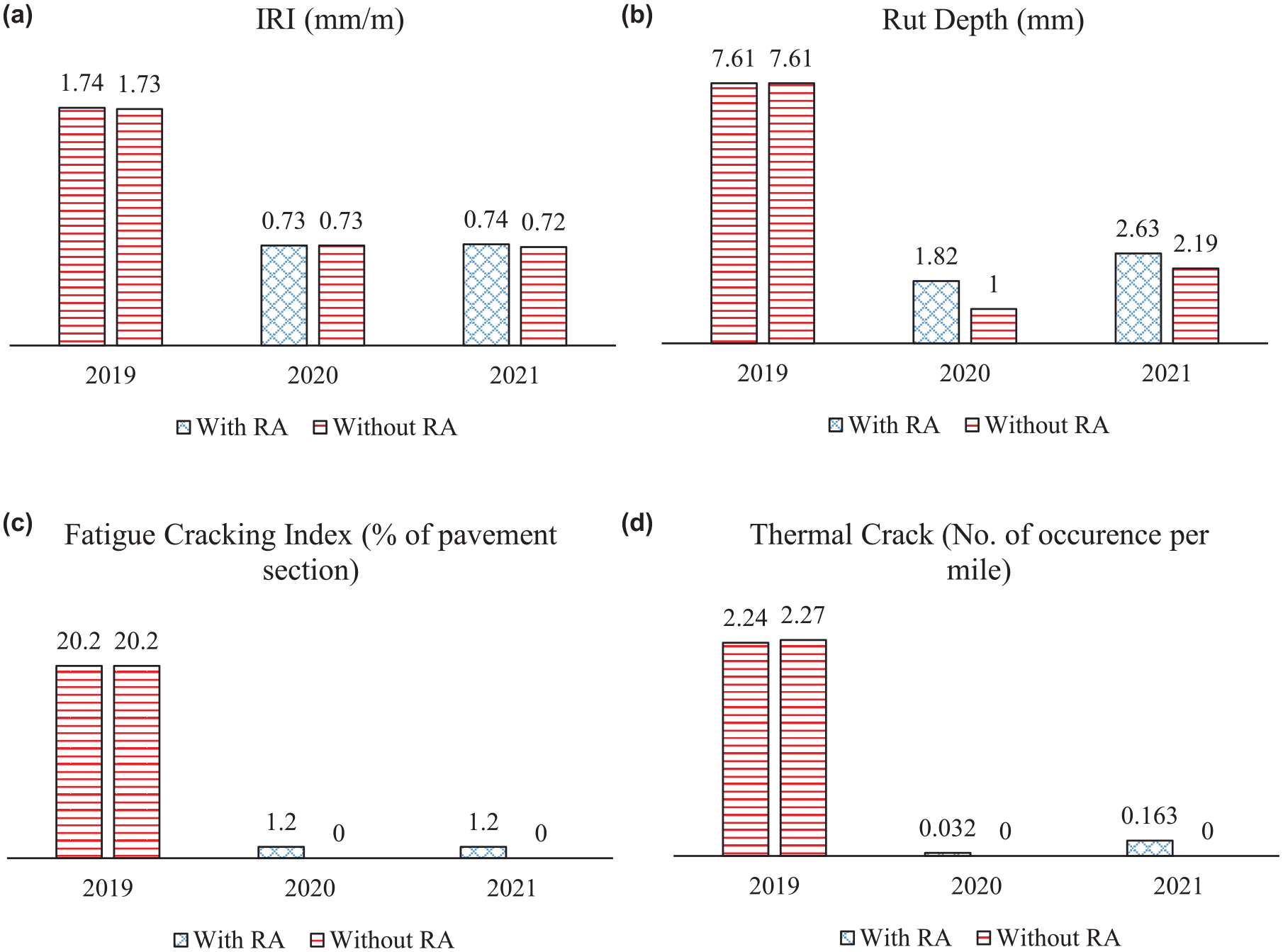
Field Performance Observations: (a) IRI, (b) Rut Depth, (c) Fatigue Cracking Index, and (d) Thermal Crack.
Furthermore, the rutting performance of the pavement sections with and without RA is shown in Figure 9b. Compared with the pavement section without RA, the section with RA had a higher rut depth after one year; the difference in rut depth was half as much after two years. The softening effect of RA could be considered a major cause of this difference. Figure 9, c and d , shows the fatigue and thermal cracks developed in the pavement sections one year and two years after reconstruction in 2019. As can be seen, compared with the pavement section without RA, the section with RA has higher fatigue cracking index and thermal crack occurrences; and in the case of thermal crack, the number even increased in the second year. However, there was no fatigue or thermal crack in the pavement section without RA for two years. This could be attributed to several factors, including but not limited to the quality of construction, variations in material properties and production processes in the asphalt plant, and even the inter-layer and RA effects on the performance of the surface layer and the overall pavement performance. Therefore, further forensic analysis through longer field performance monitoring might be necessary, as drawing conclusions based on only two years of field data could lead to inconclusive results.
Conclusions and Recommendations
This study evaluated the laboratory and field performance of high-RAP mixtures with and without bio-oil RA. The performance of mixtures was characterized for their susceptibility to the most important pavement distresses: cracking, rutting, and moisture-induced damage. The following conclusions can be drawn based on the results and findings:
The cracking resistance of RAP-blended specimens was improved by introducing bio-oil at the initial stage. However, RAP-blended mixtures with bio-oil RA, aged in the field conditions, statistically showed similar cracking performance to those without RA after one and two years. After three years, it was observed that the cracking performance of RAP mixtures modified by RA was inferior to that of mixtures without RA. This suggests that the bio-oil RA used in this study may not offer long-term improvements for the RAP-blended mixtures.
The specimens with bio-oil RA cored after construction exhibited less rutting than the specimens without RA which might be a result of field compaction practices and plant production variabilities. Also, the specimens with RA cored after one year and two years showed a higher number of passes to meet 12.5-mm rut depth (better rutting resistance). This may be linked to the aging susceptibility of bio-oil RA, leading to a stiffer mixture, and a reduction in the air void content.
With respect to moisture damage resistance, it was found that the laboratory and field-compacted specimens with the bio-oil RA were more susceptible to moisture damage, particularly at initial stages of service life. As aging progresses over time, the moisture susceptibility of RA mixtures improved gradually.
The field performance observations indicated that the use of bio-oil RA in the second layer might have led to increased rutting in the surface layer and slightly higher IRI compared with the section without RA. Additionally, the section with RA showed higher occurrences of fatigue and thermal cracks. The identified issues might stem from diverse factors, including construction quality, variations in material properties, discrepancies in the production process at the asphalt plant, and the impacts of inter-layer and RA on both the surface layer and overall pavement performance. To conduct a more thorough forensic analysis, an extended period of field performance monitoring could be necessary, especially concerning IRI and crack evaluation. Relying solely on two years of field data might lead to inconclusive findings, warranting a more comprehensive approach.
Recommended Further Studies
This study focused on the field and laboratory performance of asphalt mixtures containing a high percentage of RAP materials with and without bio-oil RA. Although different performance was observed from different mixtures, a limited number of field cores were taken from each section for three years, and the sections were monitored for two years. It is recommended that monitoring be continued on the sections for a longer period of time. In addition, only one type of RA was used in this study, and the use of different RAs may result in different performance observations. Furthermore, the effect of other additives such as antioxidants and anti-stripping agents on the performance of asphalt binders and mixtures modified by RAs needs to be evaluated in future research since these additives may address some concerns on durability and long-term performance of rejuvenated asphaltic materials. Also, setting guidelines to characterize the performance of an asphalt mixture based on rutting or cracking would be recommended to understand the field and laboratory performance of asphalt mixtures in different scenarios.
Footnotes
Acknowledgements
The authors wish to express their gratitude to Mr. Robert Rea for his valuable feedback and technical discussions throughout this study, as well as to the NDOT staff for their assistance with field coring and data collection.
Author Contributions
The authors confirm contribution to the paper as follows: study conception and design: Hamzeh F. Haghshenas; data collection: Nitish Bastola and Mahdieh Khedmati; analysis and interpretation of results: Nitish Bastola, Mahdieh Khedmati, Farzad Yazdipanah, and Hamzeh F. Haghshenas; draft manuscript preparation: Nitish Bastola and Farzad Yazdipanah. All authors reviewed the results and approved the final version of the manuscript.
Declaration of Conflicting Interests
The author(s) declared no potential conflicts of interest with respect to the research, authorship, and/or publication of this article.
Funding
The author(s) disclosed receipt of the following financial support for the research, authorship, and/or publication of this article: This research study was funded by the Nebraska Department of Transportation (NDOT) and conducted under award number SPR-P1(20) M115.
