







Abstract
One Call centers are part of a nationwide system in the U.S. that aims to reduce the probability of excavators causing damage to underground utilities during construction projects. Laws dictating which utility operators must participate in One Call systems differ across states. In some states, certain utility operators have membership exemptions in One Call systems. However, these exemptions have come under scrutiny as they limit grant opportunities available for One Call centers. State Departments of Transportation (DOTs) are one group of institutions frequently exempted from One Call requirements, though they operate underground utilities as part of their transportation networks. To discern the impacts of exemptions or required membership in state One Call systems, this study involves a comprehensive literature review on One Call legislation, a national survey of state DOT subject-matter experts, and 12 in-depth case studies with DOT personnel. These efforts show that a definitive solution is not apparent. When a state DOT evaluates its One Call operator membership, the DOT must carefully consider many variables and potentially complex interactions. Moreover, quantifying the costs and benefits of operator membership proves challenging, as they vary as a result of the diverse criteria. This study reveals that deciding on One Call memberships or exemptions at a national level is not judicious. In fact, the findings emphasize that the state DOT is the most suitable entity to determine whether the One Call operator membership is warranted. Thus, their voices should be decisive when deliberating over their One Call operator memberships.
The One Call system in the U.S. is critical in minimizing damage to underground utilities during construction projects. This system provides a communication conduit between excavators and utility operators, allowing them to notify utility operators about their planned activities to prevent potential dig-in strike events ( 1 ). Utility operators typically provide the location and boundaries of their facilities, along with a surrounding buffer zone. This information is inserted into a One Call geospatial database organized by location polygons. When an excavator notifies the One Call center about the location of their intended excavation, the system issues a ticket to all utility operators that own facilities within the polygons touching the dig location. Then, to protect their facilities from excavation damage, utilities can either mark the suspected location of their facilities on the ground (using in-house or contracted staff) or clear the ticket if they determine their facilities are not at risk ( 2 ). Utility operators are typically expected to respond within three business days or less of receiving the One Call ticket. These tickets are cleared once facilities have been marked or determined to be clear of excavation risks. One Call systems are funded through fees paid by utility operators, collected through ticket fees or annual dues, while it is free to excavators ( 3 ).
As reported by the Common Ground Alliance (CGA), millions of locate ticket requests are placed through the One Call system annually in the U.S., and this number is continuously increasing. In fact, according to the last Damage Information Reporting Tool (DIRT) report, by 2021, locate requests increased by 8% over the previous year ( 4 ). In addition to the ticket fees (generally modest, at $2 per ticket) and membership costs, there are expenses related to locating and marking facilities, which can be significant. State Departments of Transportation (DOTs) operate underground utilities as part of their transportation networks, such as traffic signal cables, roadway lighting, and drainage systems. One Call regulations vary among states, resulting in some DOTs being exempted from being operator members of their state One Call systems, allowing them to exclude their underground utility facilities from the One Call system ( 2 ). As a result, they do not pay fees for membership or facility locates. However, their permitting process will likely include location-related costs. Some state DOTs have voluntarily chosen to become operator members of their One Call systems, regardless of exemption status. Other DOTs justifiably believe they do not require the One Call membership because they believe their internal practices are enough to protect their facilities.
In regard to those exemptions, the requirements outlined in the Pipeline Safety, Regulatory Certainty, and Job Creation Act of 2011 (Public Law 112-90) carry substantial implications. This law required the Pipeline and Hazardous Materials Safety Administration (PHMSA) to conduct a study on the effects of excavation damage on pipeline safety ( 5 ). As part of this study, PHMSA analyzed each state’s exemptions to the One Call notification system requirements and compared these exemptions with the frequency and types of excavation damage incidents that occurred in each state. The findings revealed that, between 1993 and 2012, a total of 1,630 pipeline incidents were the product of third-party excavation damage. These incidents resulted in 141 deaths, 440 injuries, and nearly $370 million in property damages ( 6 ). These findings, coupled with the limitations on access to grant opportunities for state One Call systems because of exemptions, have raised concerns about these exemptions (as well as other One Call exemptions).
This increasing scrutiny surrounding those exemptions has prompted questions about whether exemptions are warranted for any institution or agency. Despite owning underground utilities as part of their transportation networks, state DOTs are one group of institutions that have frequently been granted exemptions (both as facility operators and excavators) from One Call requirements. To date, no analysis has been conducted on the costs, benefits, and risks associated with these exemptions. Additionally, there has been no assessment to determine the effectiveness of typical state DOT processes (e.g., encroachment permitting, design review of as-built or existing infrastructure) in capturing, mapping, and communicating the location of underground facilities to prevent dig-in events. In light of the concerns about One Call exceptions, this research focuses on the costs, benefits, and risks DOTs experience as a result of the exemptions or membership requirements they may have as facility operators.
Literature and Legislation Review
Literature review yielded limited information on the impacts and implications of state DOTs being exempted from One Call laws as utility facility operators. This review revealed that there are not many documents or quantitative data to support arguments either in favor of or against state DOTs’ exemptions from their utility operator membership in One Call systems. However, researchers discovered anecdotal evidence that advocates for both perspectives.
One Call Systems Overview
Before addressing One Call exemptions and membership, a general overview of how these systems operate and are funded is presented in this section. States are required by federal legislation to have damage prevention laws, including the operation of One Call systems. Although legislation is not the same for every state, legislative provisions usually specify response time, definitions of operators and activities, exemptions, marking standards, and penalties ( 7 ). Typically, the One Call process involves the following steps: 1) Excavators contact One Call centers to notify them about their excavation plans; 2) One Call centers issue a ticket to utility operators registered with the system which may have facilities within the excavation area; 3) Utilities have to review the notification to decide if they can clear the ticket or if they have to mark, or contract to have marked, the approximate location of their facilities; and 4) Excavators proceed with their digging plans by carefully respecting the marks ( 8 ). A single locating contractor often marks facilities for some or all utilities affected within that area. These marks are usually colored flags and/or paint on the ground according to the American Public Works Association standard requirements ( 7 , 9 ). Multiple sources fund One Call systems, including grants from PHMSA and fees paid by operator members collected through per-ticket fees or annual memberships (usually less than $500) ( 9 – 11 ). Ticket fees typically remain below $5 and entail discounts for increased ticket frequency and/or if the operator owns a significant amount of facilities. According to the review of multiple One Call system fee schedules and state legislation, some state damage prevention laws require excavators to deposit penalties and fines in funds that the One Call system can use ( 12 ). Most One Call operating standards and procedures are established legislatively.
Legislation Review
As mentioned earlier, the requirements of the Pipeline Safety, Regulatory Certainty, and Job Creation Act of 2011 have significant implications for this research, as it requires PHMSA to conduct a study on the impacts of excavation damage on pipeline safety ( 5 ). Apart from analyzing each state’s exemptions to the One Call notification system requirements and comparing these exemptions with the frequency and types of excavation damage incidents that occurred in each state, the PHMSA study investigated the potential benefits and adverse costs of eliminating all exemptions for mechanized excavation from state One Call notification systems ( 6 ). Similar to the literature review for this study, PHMSA found little quantitative documentation on the costs, benefits, and risks associated with state DOT exemptions but expressed concerns related to these exemptions.
Membership and Exemptions Review
Member and operator exemptions in each state are summarized in Table 1. This information was collected from the One Call Systems International website and resources, PHMSA’s Summary of Damage Prevention Laws, individual state legislation, and a survey on the topic conducted in 2014 ( 12 , 13 ). In that survey, Paul Scott, a Utility Liaison with Cardno, now T2 Utility Engineers, asked state DOTs if they were members of their state One Call system. Responses to this survey are presented in the fifth column of Table 1. Some states noted that they participate as members in their One Call systems regardless of their exceptions.
State Departments of Transportation (DOTs) One Call System Membership Summary
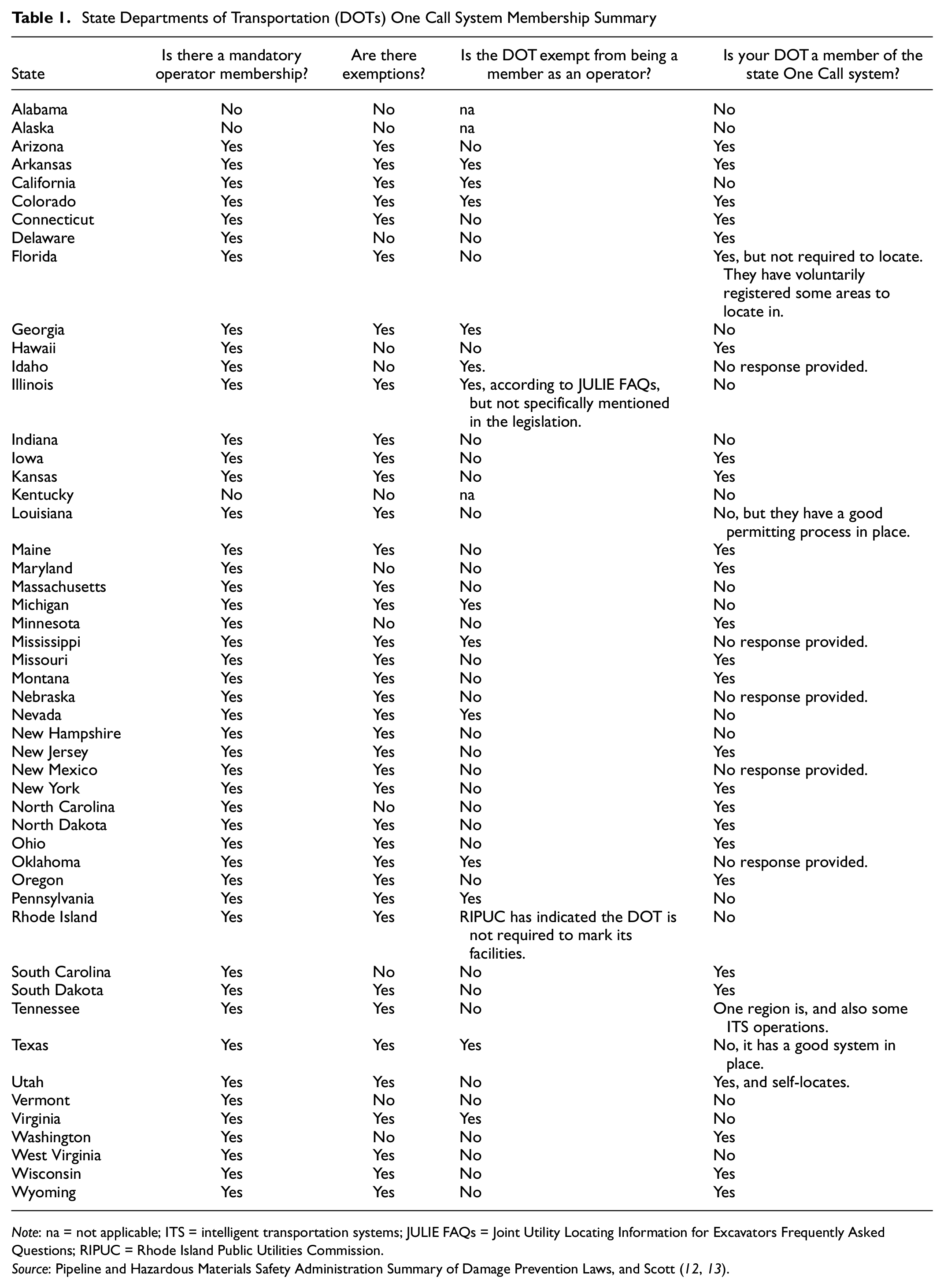
Note: na = not applicable; ITS = intelligent transportation systems; JULIE FAQs = Joint Utility Locating Information for Excavators Frequently Asked Questions; RIPUC = Rhode Island Public Utilities Commission.
Paul Scott’s article titled “DOTs and One Call,” published in the 2015 Excavation Safety Guide & Directory, highlighted that both the American Association of State Highway and Transportation Officials (AASHTO) and PHMSA were encouraging state DOTs to participate fully in One Call systems ( 14 ). In that article, Scott described the pros and cons of state DOTs being members of their One Call systems. According to him, the primary benefit is that excavators can make One Call near state DOTs’ right-of-way (ROW), which can help avoid accidental dig-in events caused by state DOTs permitting sections not having been notified of potential impacts. Potential drawbacks include duplicated DOTs and One Call efforts, the cost of participating in One Call, and the need for DOT permitting processes to continue regardless of One Call membership. While there are different perspectives, DOTs strongly support the One Call systems ( 14 ).
Departments of Transportation (DOTs) Processes and Potential Impacts
Scott’s survey also allowed information to be collected on DOTs’ processes to protect their facilities and potential impacts. It was noted that DOTs that are not operator members of their One Call systems often justify their non-participation by pointing out that their permitting processes and some other processes are enough to protect their facilities. Furthermore, state DOTs usually require a permittee to submit proposed work in public ROW, the scope of which is reviewed by DOT staff to identify any potential utility conflict before approving the permit. DOTs also noted that their One Call processes sometimes replicate their permitting procedures. Some other DOTs argued that, since their facilities are in the DOT-owned ROW, if an unpermitted dig-in event occurs, the violator is responsible for damages.
On the other side, many DOTs voluntarily participate in their One Call system with their fiber optic facilities, regardless of their operator membership exemption, as they are costly to repair. Some DOTs noted that, while One Call operator memberships have some advantages, participation costs are overwhelmingly high compared with the perceived benefits, and they only participate because the legislation mandates it. According to them, the most burdensome costs are the personnel expenses, either in-house or contracted, to locate and/or review the ticket notifications.
Incidents Review
The final area of investigation is incidents that have occurred on state DOT-controlled ROW, which include ROW of public streets, roads, highways, and interstates. The CGA hosts DIRT. This voluntary reporting tool provides annually published data that encompasses known and projected damage incidents to underground facilities. The DIRT Report for 2014 specifically reported, for the types of ROW, which incidents followed a One Call notification ( 15 ). According to that report, in 2014, there were 273,599 reported events for Canada and the U.S. Of these, location data specific to ROW type were collected for approximately 53,500 events (19.6%). From that total sample of 53,500 events, Table 2 summarizes the estimated number of incidents for each state DOT-controlled ROW type, as well as the percentage of the sample and the percentage of these events preceded by a One Call notification. Notably, when excluding city street incidents, it can be inferred that more than 92% of the dig-in incidents occurred outside the typical state DOT-controlled ROW. Further, not all these events would be a dig-in of a state DOT-owned buried facility. No data is available to determine which of those dig-in events involved state DOT-operated facilities, nor is there data to indicate the party responsible for those damages. Given the percentage of incidents on state DOT controlled ROW (7.7%), the amount preceded by a One Call notification (20% on average), and the relative amount of miles of ROW state DOTs manage, it is understandable why many DOTs believe they should not be required to participate in One Call systems.
State-Related Right-of-Way (ROW) and Damage Information Reporting Tool Reported Incidents
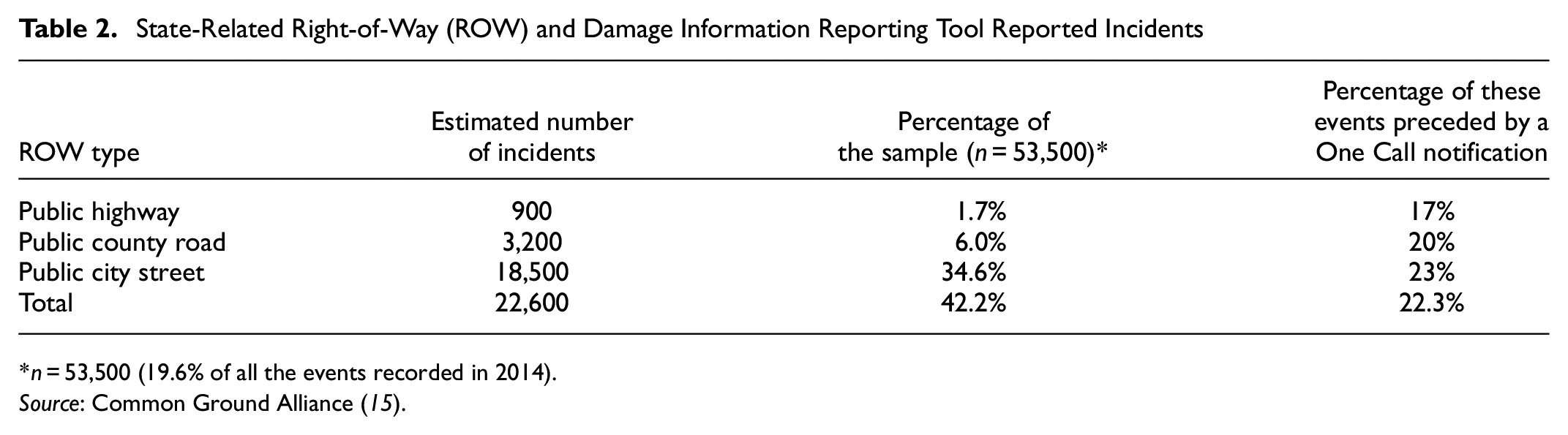
n = 53,500 (19.6% of all the events recorded in 2014).
Source: Common Ground Alliance ( 15 ).
Similarly, Figure 1 summarizes the last data available on the number of incidents occurring on state DOT-controlled ROW. This data covers the incidents taking place between 2007 and 2018 and was extracted from the detailed analysis of the DIRT 2018 report ( 16 ).
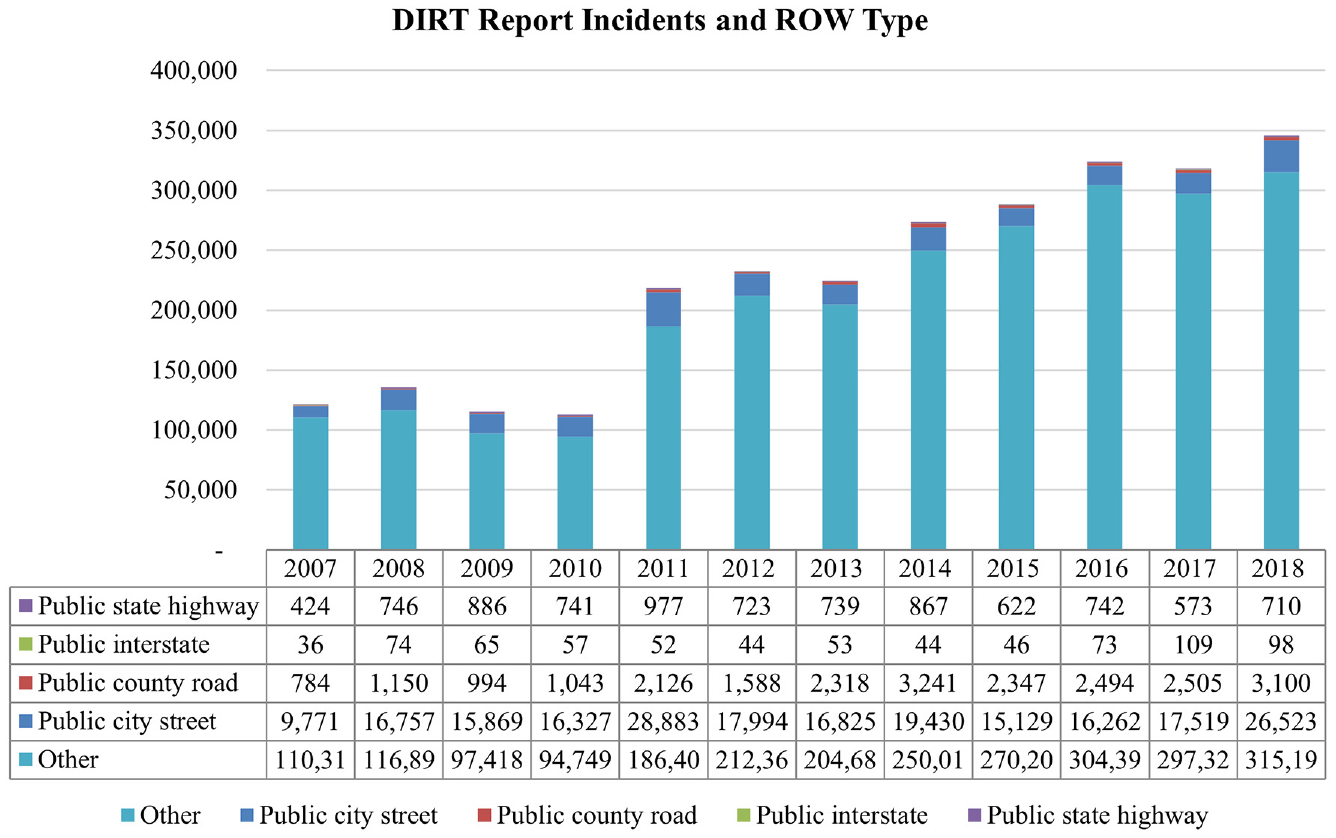
Damage Information Reporting Tool (DIRT) known incidents per year with state Department of Transportation controlled right-of-way (ROW) types.
It is also important to note that dig-in events entail varying costs related to damages and injuries. As Anspach suggests, safety costs associated with these incidents can be metaphorically compared with an iceberg ( 17 ). Even if One Call systems are used correctly, certain risks persist, including unknown utilities, One Call mismarks, or other errors. These risks, coupled with circumstances where more accurate utility location information is needed, have contributed to the development of Subsurface Utility Engineering (SUE). SUE is a standardized process defined by the American Society of Civil Engineers 38-22 “Standard Guideline for Investigating and Documenting Existing Utilities.” This standard has elevated utility investigations to a professional service by establishing an industry standard for achieving the necessary level of diligence to assess and effectively manage utility risks in projects ( 1 ). At the 2010 CGA Conference, Anspach reiterated these issues and highlighted potential gaps between One Call services versus the programmatic use of SUE, emphasizing that One Call is not an all-inclusive solution for preventing utility damage ( 18 ).
Methods
The methodology followed to achieve the objectives of this study involved a literature review, a survey of subject-matter experts, and one-on-one semi-structured interviews. First, to gather information on One Call laws and practices, the researchers reviewed literature and resources pertaining to One Call legislation, including federal and state regulations, PHMSA research, and the approaches used by state DOTs to protect and monitor their utility facilities. The research team also reviewed available data on state DOT membership in One Call systems, their exemptions, and any recorded dig-in incidents of DOT facilities. Categorizations were developed for the pertinent criteria of DOTs One Call requirements and exemptions, including DOT responsibilities, notification of excavation, location requirements, enforcement, and legal impacts. The primary sources utilized for this review and the overview of the findings are outlined in the preceding section, aiming to provide readers with a deeper comprehension of the context of this study.
Information from this review informed the development and finalization of the survey instrument that was distributed through email to DOT utility subject-matter experts in all 50 U.S. states. This national survey aimed to collect data about current practices, opinions, and approaches to One Call to develop a high-level understanding of the costs, benefits, and risks of One Call operator membership. The survey was initially distributed to the voting members of the AASHTO Committee on Right-of-Way, Utilities, and Outdoor Advertising Control (CRUO), allowing for forwarding to others. Because of the diverse organizational structures among DOTs, recipients of the survey included state utility, ROW, or permitting experts. However, the majority of survey respondents were state utility leads/engineers for the state DOTs. These individuals often serve as liaisons between state DOTs and state One Call organizations, thereby enhancing the credibility of the survey data collected.
Finally, the research team conducted 12 case studies through one-on-one interviews with state DOT officials. While the survey results identified potential DOTs for participation in the case studies, the final selection of states was made in consultation with the National Cooperative Highway Research Program (NCHRP) research advisory panel. The selection criteria included factors such as geography, participation in One Call as an operator, damage suffered from excavation, and perception of One Call participation as a benefit. Since interview participants were primarily identified through the survey responses, they mainly comprised state utility leads/engineers for the state DOTs. The research team, along with the NCHRP research panel, deemed their background and expertise relevant and adequate for providing meaningful insights for this research.
Interviews were conducted in a semi-structured manner to facilitate open dialogue and encourage participants to share insights on the costs and benefits associated with DOT membership in One Call as a facility operator and on the effectiveness of One Call systems and similar practices used by state DOTs. While six initial questions were prepared in collaboration with the research project panel to guide the interviews, further discussion was actively encouraged during the interview process. Interviewees were asked about: 1) DOT membership in their state’s One Call systems, 2) the perceived costs of membership or non-membership, 3) the perceived benefits of membership or non-membership, 4) whether their DOT has measured the costs and benefits of membership or non-membership, 5) the parties responsible for locating their facilities, and 6) whether they believed there was overlap between the One Call system and DOT permitting or any other internal process.
Results
State Departments of Transportation (DOTs) Survey Results
Researchers distributed an electronic survey questionnaire to all 50 state DOTs to identify those that possess quantitative data (e.g., reduced repair costs, reduction of damages, loss of service) to support their decision about membership or non-membership in their One Call systems. The research team would like to point out a disclaimer for this study. The survey questionnaire was sent to all 50 state DOTs regardless of their One Call membership, their desire to be One Call members, or the existence of a state permitting system. Furthermore, as the survey was distributed to the voting members of the AASHTO CRUO, with the option for it to be forwarded to whom they believed were suitable for providing accurate insights, it was assumed that the respondents to the survey were knowledgeable about their DOT’s existing systems and answered appropriately for their states. The survey questions were primarily crafted to collect information on the following topics:
- The types of facilities owned and operated by the DOT
- Whether the DOT marks its facilities during excavations conducted by internal, contracted, or external entities, and which facilities are marked
- Any instances where the DOT’s underground facilities have been damaged in the course of excavations
- The DOT’s membership status as a One Call operator, including its perceived impact (positive or negative) on the DOT and the availability of supporting data about costs, risks, and benefits
The research received responses from only 16 DOTs, which is somewhat low and atypical of the state utility engineer community. The authors are aware of numerous anecdotes about reasons which could have influenced the response rate; nonetheless, the responses to the survey provided valuable information to the study. As shown in Figure 2, results revealed that over 87% of respondents (14 DOTs) operated telecommunications; these would typically be fiber optic facilities. Less than 20% of respondents operated facilities considered flammable. This underscores the potential direct costs of facility damage resulting from strikes. Safety risks, although not thought to be high based on the low number of incidents reported by DOTs, are even more difficult to quantify.
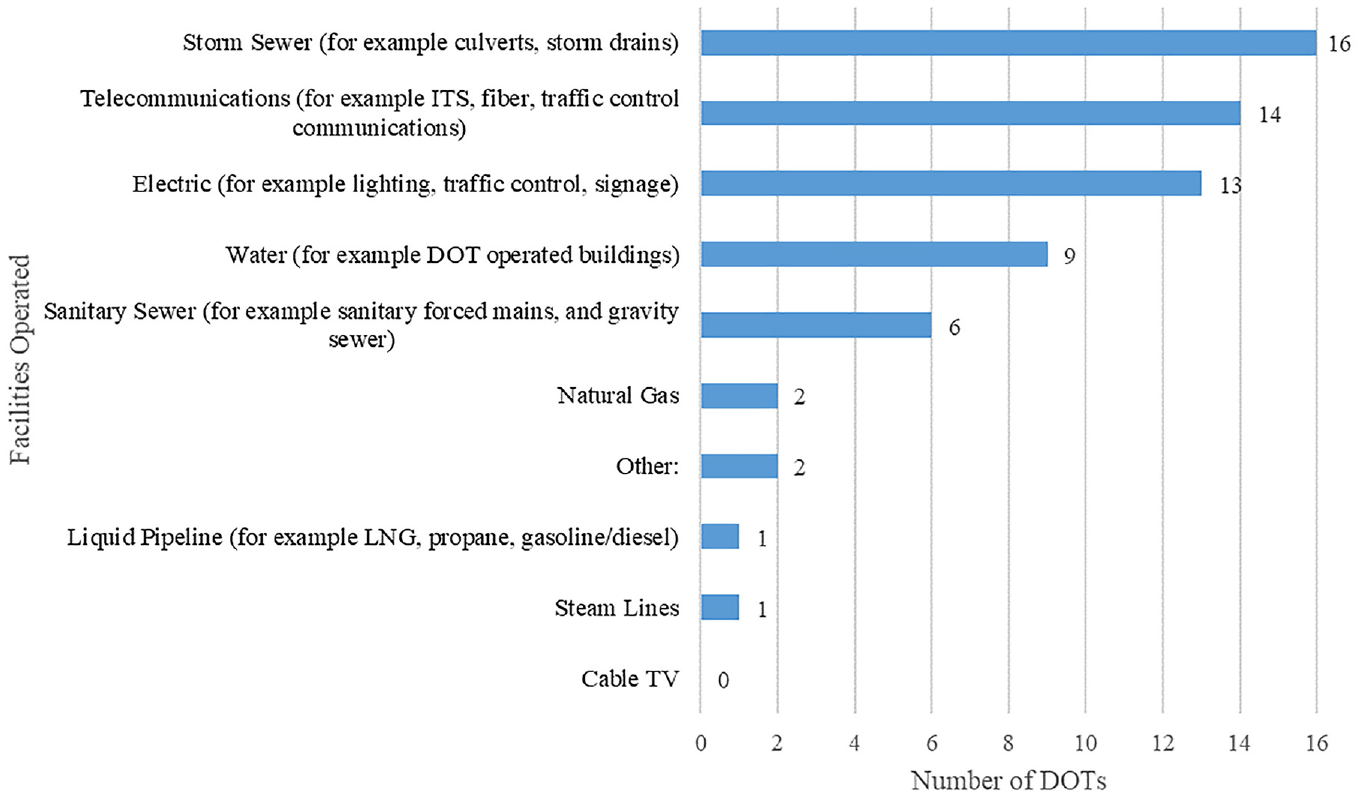
Facilities operated by Department of Transportation (DOT) survey respondents (16 responding DOTs).
Findings show that a significant majority of respondents (15 DOTs [88%]) engage in locating and marking their underground facilities when external parties conduct excavation work. Similarly, the majority of respondents (16 DOTs [94%]) undertake locating and marking procedures when internal or contracted entities are involved in excavation activities. Those DOTs that do not mark their facilities indicated that they provide information, often obtained from permits, about their underground facilities if requested.
Concerning the facilities that are located when excavation work is performed, as shown in Figure 3, responses indicate that 12 DOTs (75%) locate and mark mainly telecommunication (e.g., intelligent transportation systems [ITS], fiber, traffic control, and communications) and electric (e.g., lighting and traffic control) facilities. Water and storm sewer facilities are marked by four DOTs (25%), and only one DOT marks natural gas and sanitary sewer facilities. These findings are consistent with the predominance of telecommunication facilities among the facilities owned by DOTs and highlight their efforts to avoid potential incidents on their high-cost or high-risk facilities, such as critical sections of fiber optic cable for ITS. Respondents also mentioned that facility marking is primarily driven by state laws or local statutes, as well as internal policies and procedures.
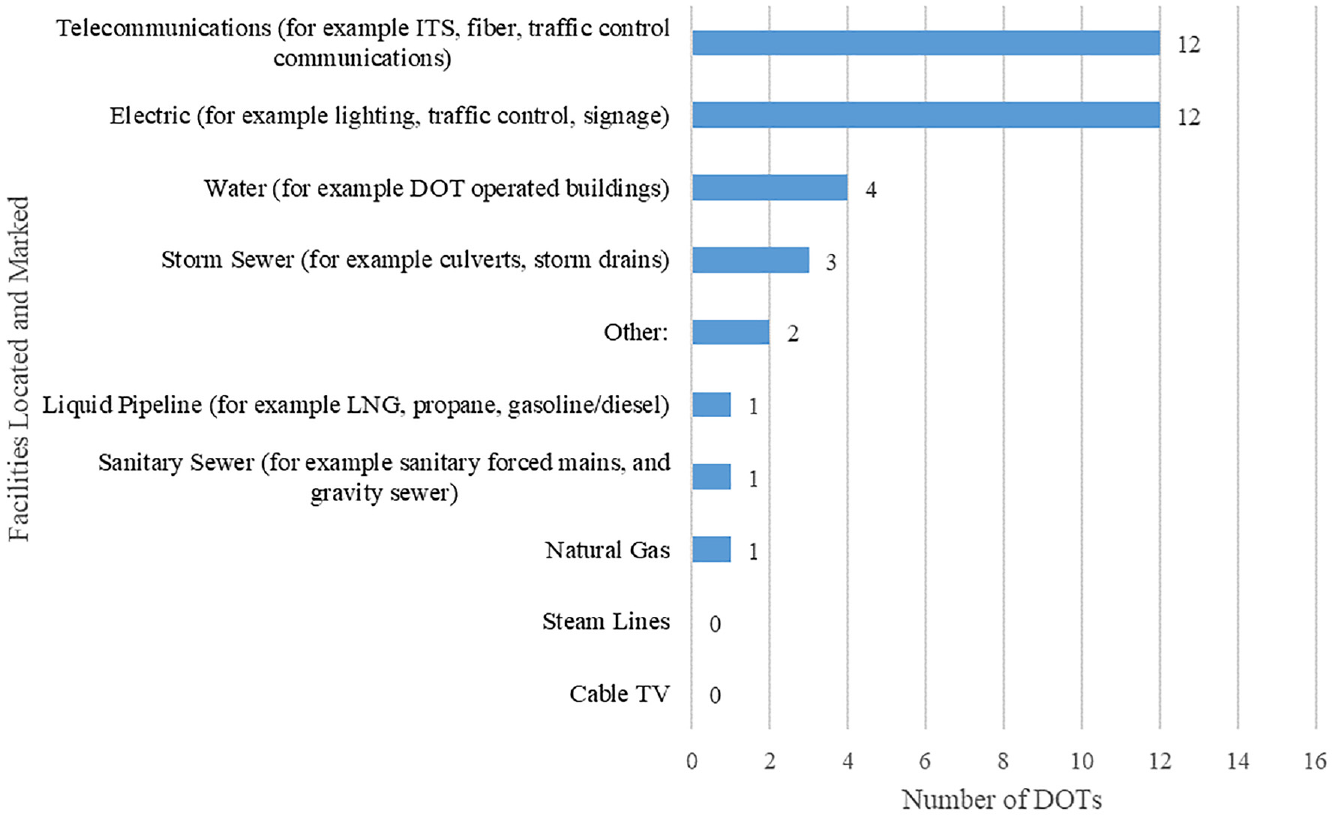
Facilities located and marked by Department of Transportation (DOT) survey respondents.
Survey respondents revealed that 12 of the participating DOTs (75%) reported experiencing damage to their underground facilities as a result of excavation work. They attributed some of these incidents to facilities not being included in the One Call system or to inaccurate records about their facilities.
Of the 16 state DOTs that responded to the survey, 11 DOTs (65%) are One Call operator members. Of these, nine (82%) of the 11 DOTs said their operator membership in One Call has proven beneficial in reducing facility damages. However, no DOTs had documentation or statistics that quantified those benefits. The remaining two DOTs (18%) indicated that their operator membership in One Call has had negative consequences for the DOT with regard to resource expenditures. However, they do not possess documentation or statistics to quantify these impacts. Participants indicated that the only information they have available about their participation in One Call as facility operators is the ticket counts (seven DOTs [43%]) and damage costs (two DOTs [12%])
Answers to open-ended survey questions suggested that the number of dig-in events that have damaged DOT facilities is relatively small; however, reparation costs for certain facilities, such as fiber optic lines, can be very expensive. Responses also pointed out safety concerns, which are the consequence of service outages. Many DOTs highlighted that the added cost of operator membership is primarily a workforce concern. Given that the estimated number of locate tickets DOTs handle ranges from several hundred to over 10,000, the cost of providing this service runs from $75,000 to $250,000 annually in ticket fees alone. Despite the significant financial commitment, the consensus was that One Call operator membership is beneficial as it reduces damages to DOT facilities. Many DOTs also noted that membership “just felt like the right thing to do.”
Gathering quantitative data that supports a DOT’s decision about membership or non-membership in their One Call systems posed a significant challenge. Nevertheless, useful information about current practices and the cost and benefits of One Call membership was obtained. Survey results analyzed along with the information presented in Table 1 also yielded a list of potential DOTs for the case studies.
Case Study Summaries
As previously mentioned, literature review, survey findings analyzed along with the information presented in Table 1, and consultation with the NCHRP research advisory panel guided the selection of participants and the development of case studies. Interviews were conducted with DOT representatives in Alabama, Delaware, Florida, Georgia, Idaho, Kansas, Kentucky, Maryland, Montana, Utah, Virginia, and Wyoming. Interviewees provided information about DOT membership in their state’s One Call systems, the perceived costs and benefits of membership or non-membership, whether their DOT has measured those costs and benefits, the parties responsible for locating their facilities, and whether they believed there was overlap between the One Call system and DOT permitting or any other internal process.
Alabama Department of Transportation
The Alabama Department of Transportation (ALDOT) has a hybrid approach to participating in the state One Call system. ALDOT does not fully participate in the system as a facility operator but uses One Call to designate other utilities within its highway projects. Additionally, high-cost or high-risk facilities, such as a critical section of fiber optic cable for ITS, are entered into the One Call system for added protection. Research efforts have been undertaken to develop an approach that would require utilities to provide surveyed locations when installing or relocating underground utilities on the DOT’s ROW. Similar to a method adopted in Utah, a utility repository would be built based on surveys, topographic surveys, and company records, which would also include ALDOT facilities. This repository would provide the DOT with an inventory of all utilities located within the DOT’s ROW. Additionally, ALDOT’s SUE program would help further improve the repository’s accuracy. ALDOT believes the repository approach is more important and would generate more accurate results than would be possible with One Call operator membership.
Delaware Department of Transportation
The Delaware Department of Transportation (DelDOT) has no One Call exemptions. DelDOT is an operator member of Miss Utility of Delmarva, which services Delaware, Maryland, and Washington, D.C. DelDOT has maintained this relationship for an extended period of time. DelDOT perceives that Miss Utility does an excellent job promoting damage prevention; therefore, they consider their membership beneficial. DelDOT seeks to protect its facilities not only from contractors who understand underground facilities but also from members of the public who may be installing a mailbox or fence or digging in its ROW for some reason. DelDOT believes that Miss Utility gives excavators who are unaware of the importance of the permitting process, as well as DelDOT, an opportunity to have DelDOT facilities identified and the chance to require permits when necessary.
DelDOT finds quantifying the benefits of missed facility strikes and close calls because of markings not possible. An average of 46,600 ticket requests are submitted yearly, totaling approximately $36,000. Moreover, location services are contracted for approximately $500,000 per year roughly. Although SUE and One Call services sometimes overlap and cause confusion when the designations do not align, DelDOT believes this is the best approach for locating facilities in its ROW, as the SUE program improves the facility location/marking accuracy. Nonetheless, these approaches are not infallible, as approximately three DelDOT facilities marked through these approaches are struck yearly.
Florida Department of Transportation
The Florida Department of Transportation (FDOT) is not a member of the state One Call system for its facilities within its ROW. Still, it acts as an operator for some facilities not located on the ROW. FDOT’s fiber optic and ITS lines are part of the One Call system to enhance their protection if excavators use One Call but do not follow the required permit process. FDOT believes it can locate its lines accurately with in-house staff and does not hire external consultants. For facilities located outside the public ROW, FDOT benefits from its operator membership in One Call as it gets notified of excavation operations. For facilities within its ROW, the FDOT permit process replicates the functions of the One Call system; state law shields the DOT from liability for any damage to facilities on its ROW. The permit process is not bound by the One Call 48 h notice rule, allowing more time for accurate facility location. Only 2% of utility strikes occur on the state ROW. Thus, FDOT believes full operator membership in One Call would be too expensive.
Georgia Department of Transportation
Although the Georgia Department of Transportation (GDOT) is not an operator member of the state’s One Call system, it collaborates with it, and its maintenance forces use the service for excavations deeper than 18 in. According to GDOT, the cost for its participation in the One Call system would be $4 to $5 million per year. Instead of participating, GDOT has worked to improve its permit provisions and process, allowing it to become more involved in and exercise more control over excavators on its ROW. Although there are facility strikes, mostly to ITS signal systems, GDOT believes that improving its permit process was more cost-effective than being an operator member of the One Call system. No hazardous or significant damage to the public has resulted from strikes to its facilities. These facilities’ locations are marked by in-house staff when determined necessary through permits.
Idaho Transportation Department
The Idaho Transportation Department (ITD) is not an operator member of either of Idaho’s two One Call systems. One reason for this was its permitting process. Each district office has an electrician who is familiar with the facilities in that district, and maintenance staff are also knowledgeable about facility locations. All ITD’s locates are done in-house and usually align with One Call locates, which justifies not being an operator member of One Call. Furthermore, ITD does not have the necessary facility locations data available in the format (digitally/electronically) needed for participation in the One Call service, such that it could be as effective as its permitting process. ITD has also considered building a utility repository. However, the number of issues with facilities being damaged by dig-in events is not enough to justify that level of effort. Indeed, ITD does not have significant issues with its utility facilities being damaged by excavators (with or without permits), probably because it is a predominantly rural state. However, ITD has joined one of the One Call systems as an associate member and pays a reduced fee for this membership.
Kansas Department of Transportation
There were two reasons why the Kansas Department of Transportation (KDOT) decided to become a One Call operator member. First, regardless of the small number of dig-in events KDOT had on its facilities over the last decade, the staff believed they had been fortunate, especially considering the increasing quantity of new fiber optic facilities being installed. Second, KDOT traditionally relied on its local electricians and technical staff to locate facilities. However, staff attrition is leading to a knowledge drain in KDOT. An additional concern was excavators that were not following KDOT’s permit process. KDOT was advised by CGA to join the One Call system and to begin loading its facility locations into the system. Becoming an operator member of the One Call system has been especially critical in urbanized areas, such as Wichita and Kansas City (where KDOT partners with the Missouri Department of Transportation on facilities). To address the challenges of staff attrition and the increasing number of underground facilities, KDOT entered into a third-party locating contract. Although KDOT has not yet assessed the cost of these third-party services, before the third-party agreement, it estimates the One Call ticket costs and in-house location (using electricians and technicians who were not solely locators) ranged between $100,000 and $150,000 per year. While KDOT has not yet accumulated enough experience with its One Call approach to determine how well it aligns with KDOT’s permitting process, it is noteworthy that permits require excavators to use One Call.
Kentucky Transportation Cabinet
The Kentucky Transportation Cabinet (KYTC) does not have an operator membership in the One Call system; however, it does participate in a non-voting role on the state’s One Call board. KYTC explored becoming a One Call operator in response to pending legislation, which ultimately failed to pass. At the time of the interview, KYTC did not intend to pursue operator membership. However, if that were the case, KYTC would need to establish an entirely new program to handle the anticipated high volume of ticket requests. Furthermore, there is no quantitative data on strikes that have significantly affected KYTC facilities, which could be used to support or argue against One Call membership. All construction work in KYTC ROW requires an encroachment permit, and this has largely reduced the risk to the facilities located within state ROW. The permit process in this state is largely decentralized, as district-level staff are responsible for reviewing permits and identifying potential conflicts with local KYTC facilities. The cost per ticket in Kentucky is $1.65, which is minimal compared with the personnel and resources expenses KYTC would have to review tickets and locate and mark facilities for those tickets, whether in-house using a contractor. KYTC is confident its permit process adequately safeguards its facilities and that they do not represent a significant safety hazard to excavators.
Maryland State Highway Administration
The One Call system in Maryland State Highway Administration (MSHA) operates through a contractual agreement between One Call Concepts, serving counties west of Chesapeake Bay, and Miss Utility, serving the remaining areas of Maryland, Delaware, and Washington, D.C. MSHA was inundated by One Call tickets until a legislative measure was introduced to regulate the limits of excavation and require permits or contract identification for work on MSHA’s ROW, which reduced tickets tenfold. MSHA has observed several benefits of its membership, including a notable reduction of damages to the traffic signal system from about $50,000 to about $20,000 annually. Although that translates to an estimated saving of $30,000, MSHA has to pay $2 million each year for being an operator member. Most of this funding is allocated to pay the costs for personnel and resources involved in conducting locates, while the fee per ticket is only $1.69. Locates are handled by either in-house personnel or contract labor, depending on the type of facility and its function. Despite occasional facility damage, MSHA facilities pose minimal threats to excavators, and there have been no reported injuries or fatalities resulting from MSHA facility strikes. Given the benefits it has received, MSHA does not believe its required operator membership is worth the costs.
Montana Department of Transportation
As per legislative requirements for utility owners, the Montana Department of Transportation (MDT) is an operator member of the state’s One Call program. One benefit MDT has perceived from its membership is that the system facilitates MDT’s management of its ROW and informs staff of who plans excavation on or near those limits. MDT often receives One Call tickets related to potential excavations that have not been permitted. MDT’s maintenance division is responsible for the location services and spends an estimated cost of $120,000 per year on personnel. The fee per ticket is $2.00. However, since Montana is mainly a rural state, the ticket volume is lower than many DOTs might incur.
Utah Department of Transportation
The Utah Department of Transportation (UDOT) actively participates as an operator in the state One Call system. UDOT believes its membership is a means to promote consistency in the process and achieve cost efficiencies by establishing a single statewide point of contact before excavators dig. UDOT staff have not encountered any conflicts arising with their permitting process resulting from its operator membership. The cost per ticket paid by UDOT is $1.13, which goes toward the One Call system and a third-party ticket management service that works to limit tickets that do not require locates. UDOT’s locating needs are fulfilled by in-house full-time utility locators (one locator in eastern Utah has roles within UDOT beyond the location of facilities). However, given that the annual volume of locate requests, around 80,000, is rising as a result of the state’s rapid growth and expanding highway system with a climbing number of underground utility facilities, UDOT is considering adopting a hybrid approach. Initially, UDOT considered using third-party location services but, as with many other DOTs, the approach is moving toward developing a 3D utility repository. The primary goal of this repository is to have a geographic information system that could assist in avoiding utility conflicts in highway design and providing new or relocating utilities with accurate data to prevent conflicts during their installations. UDOT aims to create this repository for all facilities on its ROW and some facilities off its ROW as well. UDOT believes that developing this repository will improve its confidence in data stored in the system beyond the current capability of One Call. More accurate data could reduce the number of necessary locations, and markings could be surveyed for improved accuracy when needed. However, this approach would require legislative alterations to be approved instead of using One Call.
Virginia Department of Transportation
The Virginia Department of Transportation (VDOT) has a unique approach to its membership of the state’s One Call system. VDOT is exempted by state statute from being an operator member in the system, although it sits on the Damage Prevention Advisory Committee. Regardless of that exemption, VDOT voluntarily coordinates with One Call and its own facility location service. After discovering that becoming a One Call operator member would cost millions of dollars per year, VDOT opted to invest in developing its own One Call system, which covers signals, fiber optic lines, and lighting, among other facilities. This VDOT-owned system has reduced the rate of damage to VDOT facilities to a rate of less than 1% per 1,000 locate requests. VDOT has a unique phone number, and the One Call system notifies VDOT, free of charge, by phone at one of its regional offices—which operate as VDOT’s call center—when it may want to locate facilities for an excavator. Typically, in-house staff field these calls and mark facility locations. Although VDOT personnel are not obligated to respond to locate requests within 48 h, as is the case for One Call members, they attempt to locate facilities within that window. VDOT leverages third-party location services and more formalized location approaches within its northern districts because the area is largely urbanized, trespass events are likely, and the potential for dig-in damage is considerable. All of its field appurtenances are marked with the VDOT phone number. Since this system has been integrated into the permit process, permitting and location work together seamlessly.
Wyoming Department of Transportation
As state statute prescribes, the Wyoming Department of Transportation (WyDOT) is an operator member of the state’s One Call system. To join the system, WyDOT had to retrospectively input as-built information of underground facilities, which dated to 1944. Within the past 15 years, WyDOT partially funded the merger of its east and south One Call centers into a single statewide center.
WyDOT owns various facilities, such as sanitary sewers, storm sewers, water, natural gas, power, and telecommunications, especially where utilities do not locate or manage supply lines to its facilities. A significant decrease of 75% in dig-in events supports WyDOT’s belief that One Call membership is beneficial. WyDOT attributes this success to One Call’s aggressive efforts to consistently prevent market damage. WyDOT participation in One Call has also helped it avoid design conflicts and supports its efforts to standardize its permitting process. WyDOT has begun requiring the GPS coordinates of utility facilities in its ROW, including z-coordinates for depths, with similar tolerances to that of One Call. Permittees are expected to provide as-built locations, and non-compliance may lead to liability for dig-in events or relocations. Contractors are also required to have not only a permit but also proof of requesting a One Call ticket. Each year, WyDOT pays around $15,000 in ticket fees and membership dues, but this amount does not account for the cost of locates. WyDOT’s in-house traffic and maintenance staff in the five state districts locate and mark its facilities. WyDOT is attempting to implement tracer wire for all new facilities.
Discussion
State DOTs greatly value the work of One Call centers. However, most DOTs believe their internal permitting processes overlap with the One Call system’s purpose and functions, as they still have to issue permits regardless of their membership. DOTs also expressed concerns about the cost of operator membership fees. Although these fees are not considered onerous, the cost of labor (in-house or contracted) required to review tickets and locate and mark utilities is significant. This concern is compounded by the vast amount of ROWs DOTs manage. DOTs believe that becoming a One Call operator member could result in a high volume of location tickets because of the large number of facilities they own in their networks. Furthermore, DOTs believe dig-in incidents at state DOT-operated facilities are infrequent and do not involve highly hazardous facility types.
Several DOTs also noted that the mandatory limited time granted by One Call to mark facilities can sometimes hinder the accuracy of location services. Therefore, some DOTs would rather invest in a SUE program or a utility repository to protect their facilities and enhance location accuracy. Nevertheless, many state DOTs are operator members in their One Call systems. In some cases, they are full members; in others, they have adopted a hybrid approach, only inventorying high-cost, high-risk facilities, such as fiber optic cables. The primary argument for their One Call operator membership is that excavating contractors want to make a single call when working in or near state DOT ROW. Moreover, membership could help ensure facilities’ locations are not missed when the permitting process has not been fully executed. The advantages of membership complement the evident benefits of enhancing the protection of DOT facilities, ensuring the security of the services they provide, and improving safety.
This study considered the legal implications and the operational and organizational costs and benefits for DOTs for being One Call operator members. While some costs and benefits can be precisely quantified, others cannot. One of those quantifiable costs is the expense DOTs faced for ticket fees. This cost can be estimated by calculating the total number of tickets issued per year and multiplying it by the fee paid per ticket. Contrarily, estimating the cost of marking facilities, whether performed by in-house or third-party personnel, is more challenging. Some estimates indicate that the cost of marking facilities is around 15 times what the DOT pays in ticket fees. As for the benefits of being a One Call operator member, these are more difficult to assess than costs. Benefits can only be estimated by comparing damage caused by underground facility strikes between those with membership and those without it. Regardless of the One Call membership status of utility owners, their facilities are still exposed to risks of dig-in events—from excavators that have not contacted the One Call system, improperly marked/unmarked facilities, or inaccurate utility records.
Conclusions
The research efforts concluded that a definitive solution to the issue of state DOTs exemptions of being One Call operator members is not apparent. Deciding on One Call memberships or exemptions at a national level is not judicious. In fact, there are cases where a single approach to One Call operator membership may not be optimal at the state level. State DOTs are responsible for both the traveling public’s safety and the use of taxpayer dollars. Therefore, their input when making that decision should be significantly considered.
Researchers believe that DOTs should have the same flexibility with regard to their One Call membership as they have, according to federal regulations, to manage their utility coordination processes according to the nuances of their delivery approach, individual needs, and local industries. DOT staff are best positioned to decide if being a One Call member would suit and benefit them. However, when making that decision, DOT personnel must consider several variables and potential complex interactions. There are several approaches DOTs can adopt to prevent damage to their facilities, including full or hybrid One Call system memberships, permitting processes, 3D utility repositories, and the creation of a state One Call center.
Through the course of this study, the research team found that quantifying all the costs and benefits of One Call operator membership is extremely difficult. Some benefits reported by DOTs, such as membership improving the design process, are tangible but challenging to extrapolate across longer time frames. It was also noted that the costs and benefits of being a One Call operator member vary for each DOT. However, benefits seem to outweigh costs in urbanized areas and locations where high-risk, costly facilities, such as fiber optic facilities, merit heightened protection. The results of this research effort are general in nature to ensure applicability across various DOTs. As few resources are available to assist in the cost-benefit analysis for DOT One Call membership, the research team expects this information to serve as a starting point for considering the costs and benefits of One Call membership and potential documentation along these variables. Additionally, researchers recommend that state DOTs begin to track dig-in events affecting their facilities more deliberately. This information would provide the data needed to better understand the impacts of state DOT facility damages and, therefore, gain a more conclusive outcome for this study.
Furthermore, the development of this study has uncovered potential avenues for further research. One unexplored cost related to dig-in events, not considered within the scope of this study, is the cost of injuries or deaths caused by these damages. The research team believes that delving into this matter could become especially important as state ROW becomes more congested because of society’s future technological demands. Moreover, another aspect related to the One Call systems and their location accuracy has not been addressed in the work here. Contractors often inflate their bids to account for the risk associated with utility delays and striking utilities that are improperly or inaccurately marked. There is still a question about the extent to which inaccuracies or mismarking of utility information contribute to the inflation of conventional construction expenses. Conducting an in-depth study focused on the importance of underground facility location would provide valuable insights to address these inquiries.
Footnotes
Acknowledgements
The authors wish to acknowledge the state DOTs that participated in this research and NCHRP and associated panel members for advising and funding this research effort as part of NCHRP 20-07 Task 389.
Author Contributions
The authors confirm contribution to the paper as follows: study conception and design: R. Sturgill, T. Taylor, G. Dadi; data collection: R. Sturgill, T. Taylor; analysis and interpretation of results: R. Sturgill, T. Taylor, G. Dadi, A. Al-Bayati; draft manuscript preparation: S. Montes, R. Sturgill. All authors reviewed the results and approved the final version of the manuscript.
Declaration of Conflicting Interests
The author(s) declared no potential conflicts of interest with respect to the research, authorship, and/or publication of this article.
Funding
The author(s) disclosed receipt of the following financial support for the research, authorship, and/or publication of this article: This research is part of the NCHRP project 20-07 Task 389, which is part of the NCHRP. NCHRP is administered by the Transportation Research Board and funded by participating member states of AASHTO. NCHRP also receives critical technical support from the Federal Highway Administration, United States Department of Transportation.
