







Abstract
This study aims to support the inclusive design of autonomous shared rides (ASR) by identifying gaps related to efficient trips and human-machine interaction, specifically for people with Parkinson’s disease (PwPD). In-person interviews were conducted with 20 PwPD, aimed to understand PwPD’s travel experiences, potential user barriers, and needs with regard to an ASR service. During the interview, participants watched short video clips describing five trip segments (proposed by a U.S. Department of Transportation report) of an ASR trip (scenario animations) and responded to questions about these scenarios. Both qualitative (opinions) and quantitative (ranking/rating) data were collected. Results of the Friedman test indicated significant differences in PwPD’s rankings of various travel barriers. Safety and lack of customer service were among the top concerns for PwPD. Qualitative analysis of the interview data further suggested that PwPDs were mainly concerned with the following aspects of ASR: safety (ASR reliability and operation), availability and quality of real-person online customer service and human assistance, user-friendly technology with clear instructions, and accessibility for PwPD with varying levels of mobility, the capability of ASR to deal with emergency situations, and the assistance provided for finding seats and using seat belts. Overall, most PwPD participants ranked safety concern, lack of travel support/customer service, and technology issues as the top three travel barriers for ASR. Among the five trip segments (booking, identification, onboarding, traveling, and exiting), booking was perceived as the most anxiety-provoking segment. These unique data and findings have identified user barriers and needs for ASR, which can guide the design and implementation of future technical solutions to address a broader range of use groups.
Keywords
Parkinson’s disease (PD) is the second most common neurodegenerative disease globally ( 1 ). In the U.S., nearly 1,000,000 people have been diagnosed with PD since 2023, and it is estimated to increase by 90,000 people annually (2–4). PD is a neurological disorder that usually starts with mobility degeneration, followed by a series of physical, flexibility, and cognitive impairments (5–7). PD impairment and symptoms can negatively affect people with PD (PwPD)’s daily activities, driving abilities, and travel independence (8, 9). Previous studies showed that 8%–12% of PwPD were not able to access needed health care services, mainly because of limited access to transportation (10, 11). Given their progressive impairments, PwPD are vulnerable road users. However, current alternative modes of transportation, such as public transportation and ride-sharing services, rarely provide convenient or sufficient assistance for meeting PwPD’s special needs so that they can travel independently ( 12 ). Thus, autonomous shared ride (ASR) services can be a potential substitute travel means for addressing PwPD’s reduced driving ability and improving their mobility. This study aims to identify the needs of PwPD when using an ASR service and barriers that may prevent them from using ASR to fulfill their travel needs.
PD Symptoms Affecting Driving
PwPD suffer from a series of symptoms over the course of PD, from gait/postural changes to loss of physical independence. The presence of bradykinesia (slowness of movement), tremors, and muscle rigidity often contribute to the need of PwPD to use wheelchairs or become bed-bound toward the later stages of PD (6, 13). Other PD symptoms may include hypomimia (“masked face”), hypophonia (weak, soft, and breathy vocal quality), reduced fine-motor skills (using pens, handcrafting, using buttons), micrographia (abnormally small handwriting), difficulty turning in bed, reduced ability for gait and balance-keeping, short steps, passively flexing and extending limbs, sleepiness, shoulder or back pain, and depression ( 14 ).
PD symptoms can gradually reduce PwPD’s ability to drive safely ( 9 ). A Swedish study reviewed car accidents that involved 199 drivers with PD and found that divided attention, slower reaction time, and slowed movement during driving were contributing factors to these car accidents. The author pointed out that the driving ability of PwPD was significantly impaired because of motor and cognitive disorders, and the severe- and fatal-injury rates were higher in drivers with PD compared with drivers without PD ( 15 ). In addition, a literature review found that 30% to 56% drivers with PD did not pass the on-road driving evaluation, as opposed to only 24% of drivers without PD ( 12 ).
Public Transportation as a Common Alternative to PwPD Driving
Limited access to public transportation services that can meet the unique needs of PwPD is one of the main barriers to their daily travel ( 11 ). Physical and technological problems have been found to hinder PwPD from traveling. To illustrate, a research study that examined four journeys of a person with PD traveling on public transport identified three key aspects that the participant needed assistance. They included holding the rollator (a mobility aid like a walker) while the participant was performing other activities such as paying for the travel, carrying the rollator to move through the narrow aisle in the vehicle, and looking for a clear and unobstructed spot to seat or fix the rollator. In addition, the participant in this study preferred to install and lock her rollator as a seat, which could, in turn, avoid the need to fold the rollator and climb up to an anchored seat in the vehicle, and the need to leave the anchored seat, grab the folded rollator, and unfold it before exiting the vehicle ( 16 ).
With both reduced driving performance and limited access to accessible public transportation, PwPD adopted coping strategies on their travels, including shortening their travel distance, reducing travel time, and adjusting the route of travel ( 17 ).
Autonomous Shared Ride (ASR) for Facilitating Mobility Independence of PwPD
With the rapid development of vehicle sensor technologies and advanced automation algorithms, autonomous vehicles (AVs) present a promising alternative mode of transportation for resolving travel issues faced by PwPD. Prior research indicates that up to one-third of PwPD report inadequate access to transportation and are less satisfied with available transportation options compared with individuals without disabilities ( 18 ). ASR offers great potential as a door-to-door, barrier-free transportation solution for people with visual, motor, cognitive, or mobility impairments.
A study investigating the attitudes of people with disabilities (not limited to PwPD) toward autonomous shared mobility services revealed several critical factors in ASR design ( 19 ). These factors included safety, ease of use, cost, availability, disability-specific needs, information requirements, accessibility, the availability of an operator (either remote or in-person), and prior experiences with AVs. Moreover, an onboard intercept survey of 1,861 public transit riders (including both those with and without disabilities) in Michigan, U.S., examined their perceptions of AVs ( 20 ). The findings indicated that the attitudes and needs of individuals with different disabilities varied significantly. Specifically, individuals with visual disabilities expressed enthusiasm for AVs, whereas those with mobility issues were generally less willing to ride in AVs compared with people without disabilities. Additionally, preferences for in-vehicle information systems also varied: those with visual impairments preferred auditory speaker systems, while individuals who are hard-of-hearing or have speech impairments favored textual information.
To ensure that these diverse user groups can benefit from ASR, it is crucial to identify and address their unique needs during the design phase of ASR transportation systems. Given that PwPD often face multiple impairments in mobility, vision, hearing, speech, and cognition, as well as general aging, our study aims to develop customized ASR designs to facilitate their mobility independence. To achieve this, our research investigates the following questions:
RQ1: What concerns do PwPD have about riding an ASR?
RQ2: What barriers might PwPD encounter when riding an ASR?
RQ3: How should these barriers be addressed to build seamless ASR services for PwPD?
Methods
This research aims to identify the needs and barriers for PwPD, who often experience motor and cognitive impairments, in using ASR. We conducted in-person structured interviews with 20 PwPD to gather insights and propose objective-driven technical solutions for designing ASR systems tailored to their requirements. This study received approval from the Institutional Review Board at the University of Michigan.
Participants
Twenty PwPD were recruited to participate in this study which took place from July, 2023, to July, 2024. The sample consisted of 12 males and 8 females, aged between 57 and 83 years, with an average age of 69.15 years. The time since their PD diagnosis ranged from 1 to 19 years, with an average of 5.5 years. Participants were recruited from PD support groups, exercise classes, and other PD-focused groups in mid-Michigan. All participants underwent a screening process to ensure they were free of other medical or musculoskeletal issues that could interfere with their ability to complete the interview tasks. Additionally, cognitive function was assessed using the Montreal Cognitive Assessment; individuals scoring below 26 were excluded from the study. Participants were compensated at a rate of $20 per hour for their involvement.
Data Collection
To explore the complexities associated with user needs and barriers in ASR design, the research team began with a thorough literature review from scientific databases to guide the development of a structured interview. An interview questionnaire was generated based on the main issues and travel needs raised by the literature review. Then, in-person interviews (with 20 PD participants) were conducted in a laboratory space at the University of Michigan, with at least two researchers present for each session. The interviews were video-recorded, with participants’ consent, and a transcript was automatically generated via Zoom following each interview.
Participants watched a series of short video clips, each under 1 min, illustrating one of five trip segments of an ASR journey: booking the ASR service, identifying the ASR vehicle, onboarding, traveling in the ASR, and exiting the ASR (Figure 1). Participants were asked to imagine themselves as the ASR passenger in the video clips and were questioned about their potential needs and concerns for ASR service features that could enhance their ride experience after each video clip. These simulated ASR video clips were created based on a hypothetical trip model proposed by the U.S. Department of Transportation (U.S. DOT), which consists of five segments ( 21 ). Next, participants were asked post-study questions about their overall concerns and suggestions for ASR design. Finally, they were provided with a list of eight travel barriers identified by a U.S. DOT user needs assessment report and were asked to rank the barriers in their impact on traveling independently in an ASR ( 21 ).
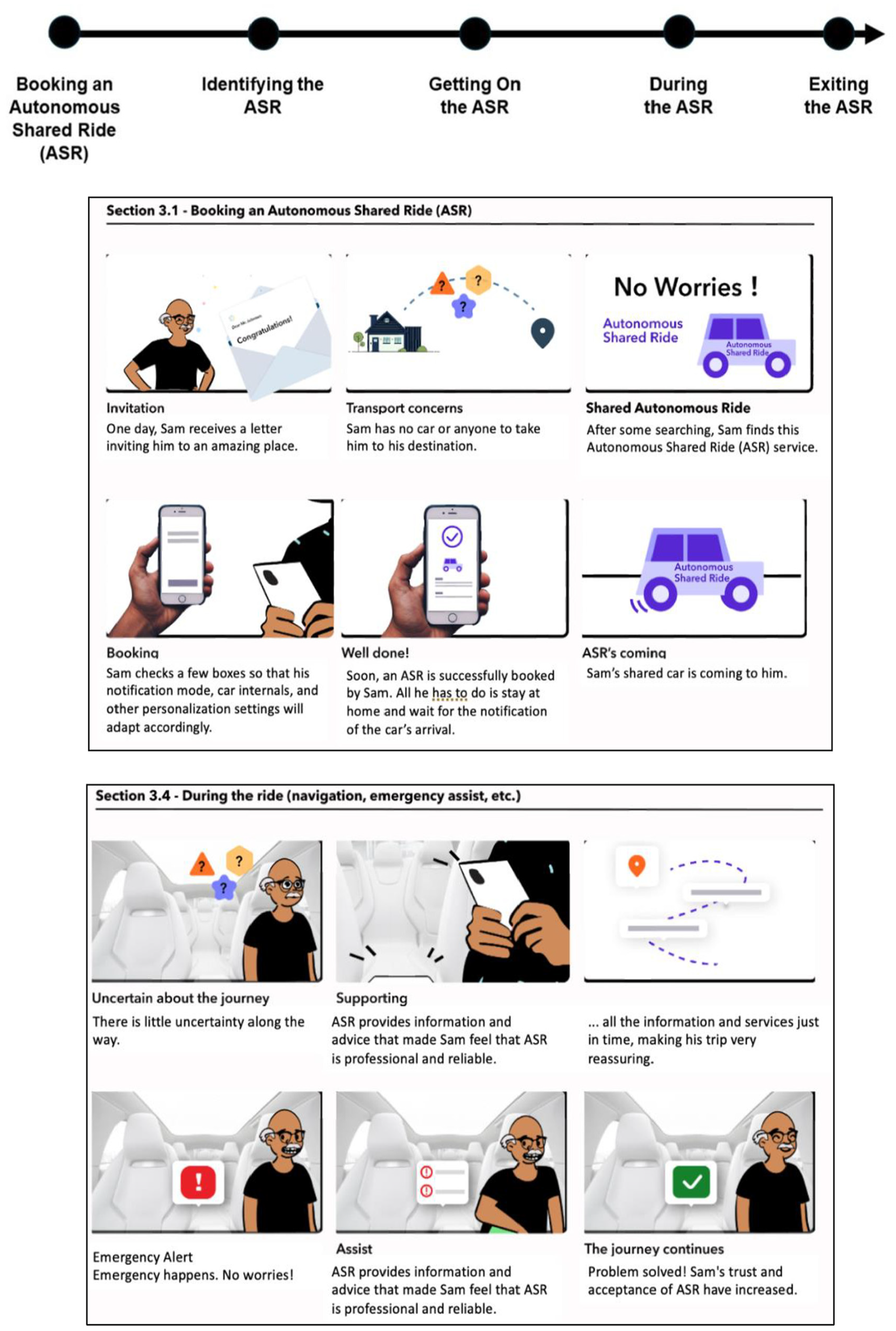
U.S. Department of Transportation five-segment trip model (top) and example storyboards for two of the trip segments (booking an autonomous shared ride [ASR] and riding in the ASR) (bottom).
Data Analysis
Data were analyzed both qualitatively and quantitatively. Qualitative data analysis took place concurrently with data collection. A member of the research team examined and verified the auto-generated transcripts for accuracy. These verified transcripts were then imported into the qualitative data analysis tool, Dedoose, for further analysis. Two researchers reviewed each verified transcript to familiarize themselves with the collected data. They performed open coding on two randomly selected transcripts, compared the assigned codes, and discussed any discrepancies to develop a comprehensive list of codes. This list was then used to code the remaining transcripts, which were divided between the two researchers. New codes were added when existing ones failed to capture newly emerged phenomena. The researchers collaboratively examined the codes and respective transcript excerpts to identify relationships and emergent themes. After coding all 20 interview transcripts, 92 key codes were created, covering main topics such as driving experience, shared ride experience, barriers and needs related to ASR trip scenarios, and post-scenario opinions. Both qualitative and quantitative data were carefully reviewed and analyzed, including participants’ self-reported opinions, ratings, and rankings on identified barriers or services.
To better understand the travel difficulties faced by PwPD, we performed statistical analyses on the quantitative rating data for various travel-related concerns. Given that the data were not normally distributed, we employed the Friedman test, along with a follow-up post-hoc test, to make pairwise comparisons between different concerns. The Friedman test is commonly used for a one-way analysis of variance on repeated measures of non-parametric data, such as Likert scales or rank sums, making it appropriate for our dataset ( 22 ). The findings are summarized in the following section.
Results
Based on participants’ overall ratings of travel barriers, we obtained a general understanding of the top concerns for PwPD. We identified key themes related to user barriers and specific needs by examining the relationships between all transcript excerpts.
Travel Practices of PwPD
All 20 of our participants were able to drive a motor vehicle, although two had stopped driving and two preferred being passengers with their spouses driving. With regard to travel frequency, 14 participants either drove or rode in a motor vehicle everyday or every other day, five traveled several times a day, and one traveled only when necessary (Figure 2a ). Figure 2b summarizes how PD symptoms affected the participants’ travel experiences: 12 reported no impact; three faced driving issues, two had difficulty sitting for long periods, one encountered accessibility barriers, and one experienced significant restriction because of physical and mental problems. Figure 2c indicates that most participants rarely or never used shared-ride services. PwPD primarily traveled to grocery stores, medical appointments, family events, restaurants, and workplaces.
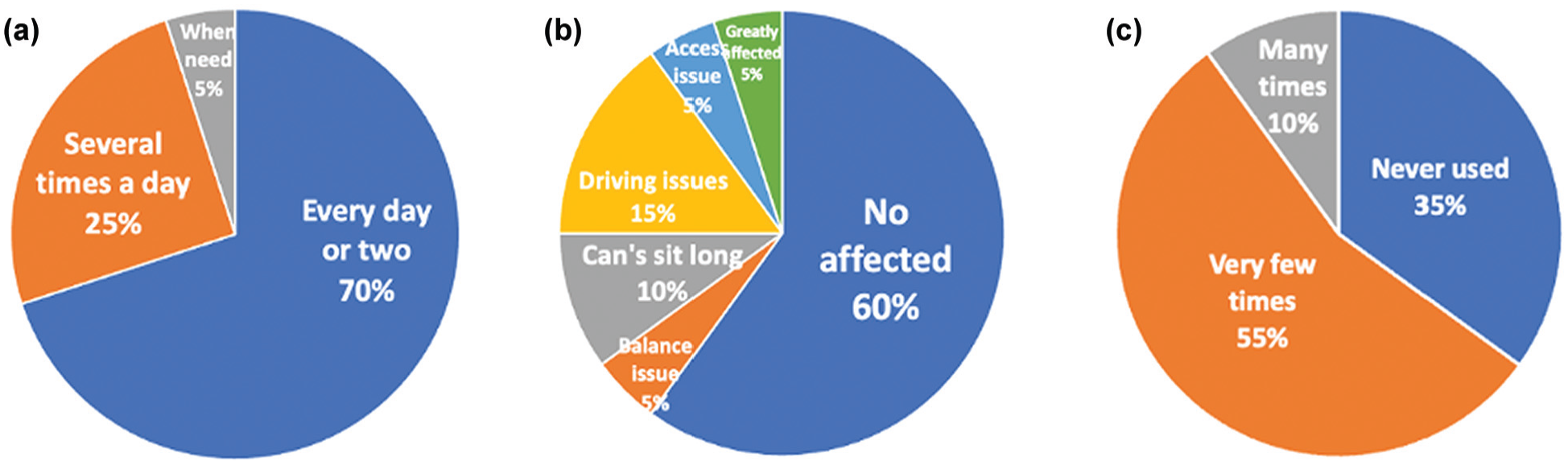
Summary of travel mode of people with Parkinson’s disease (PD) (n = 20): (a) travel frequency, (b) travel affected by PD, and (c) shared ride experience.
Travel Concerns of PwPD
Participants were asked to rank a list of transportation barriers that concerned them (Figure 3). These barriers were adapted from a U.S. DOT user needs assessment report ( 21 ). The dots in the figure represent individual participants’ rankings of the travel barriers, with “1” indicating the most concerning barrier and “9” indicating the least concerning barrier.
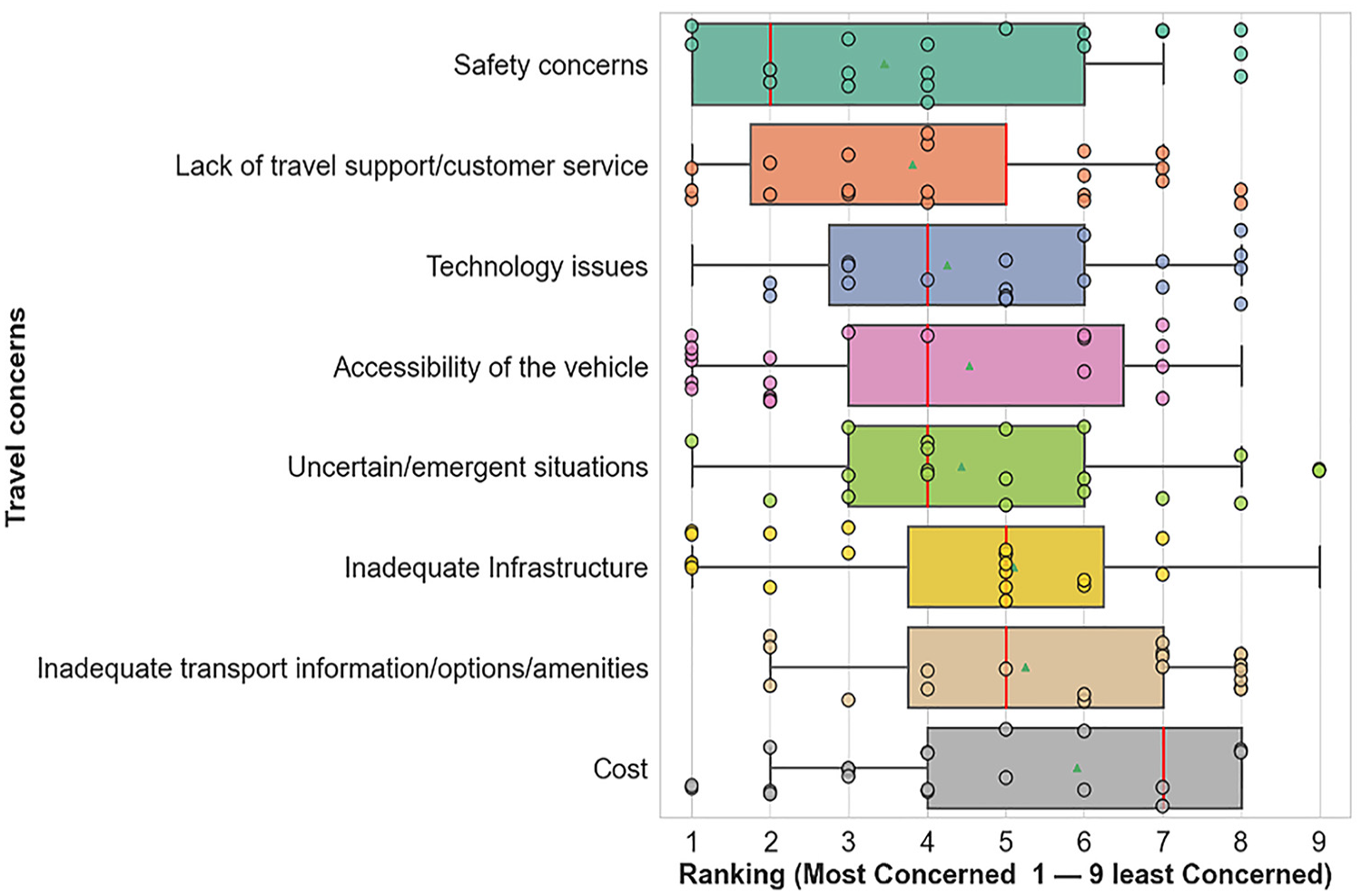
Ranking of travel barriers for people with Parkinson’s disease (n = 20).
As shown in Figure 3, safety concern was ranked higher than other barriers (mean = 3.45, median = 2), with six participants ranking it as the top concern and five ranking it as the second concern. Thus, most participants considered safety issues associated with an ASR as one of their major concerns. Similarly, lack of travel support/customer services (mean = 3.8, median = 5) was ranked as the top concern by six participants and the second concern by five participants, indicating being driverless or having limited human support during an ASR ride was a substantial concern. In addition, technology issues (mean = 4.25, median = 4), uncertain/emergent situations (mean = 4.43, median = 4), and accessibility of the vehicle (mean = 4.52, median = 4) were also ranked as the top barriers by two, three, and two participants, respectively. On the other hand, travel cost, inadequate infrastructure, and lack of transport information/options were not considered major barriers, given the rankings indicated by the participants.
Figure 3 also shows that the ranking data of safety concerns and lack of travel support/customer services do not follow a normal distribution. The test was conducted in Python (version 3.8.8), using the Pingouin package. The Friedman test results indicated that there were significant differences in PwPD’s ranking of the different travel barriers (x 2 = 14.63, p = 0.04). A follow-up post hoc test further confirmed a significant difference between safety and cost (see Table 1).
Post Hoc Test Results
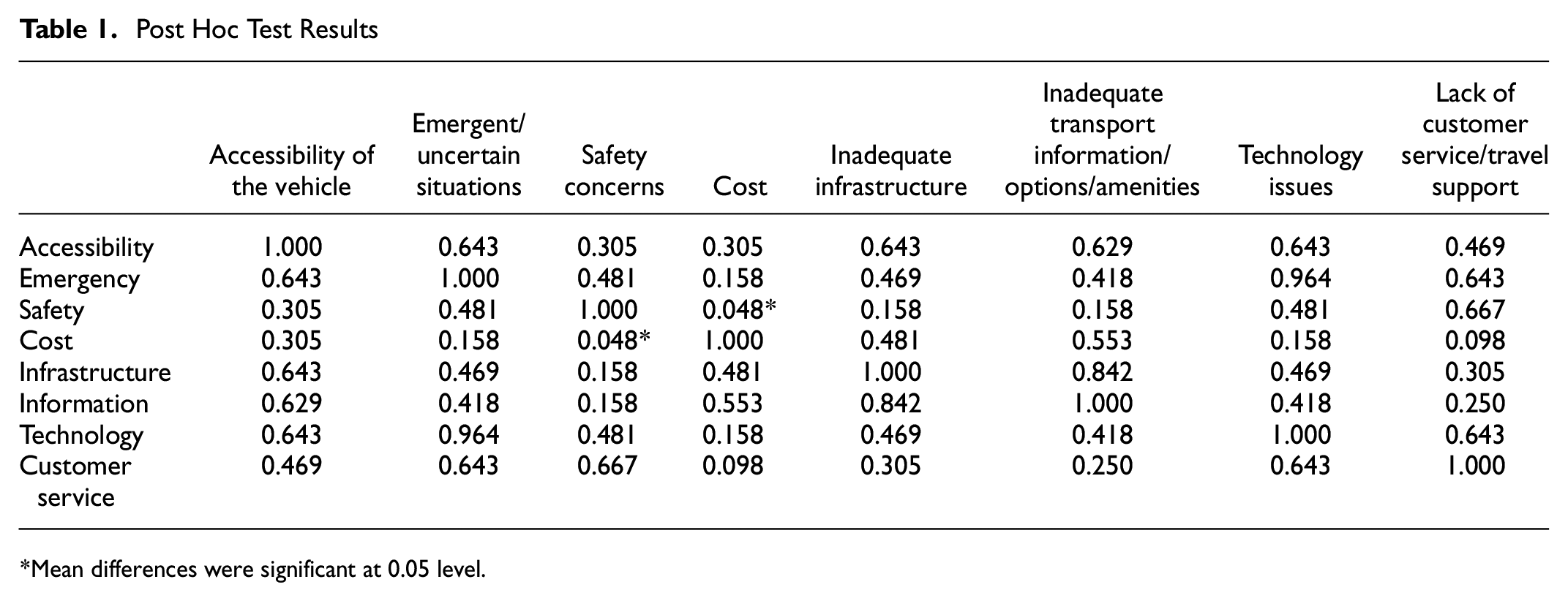
Mean differences were significant at 0.05 level.
Travel Pattern with Concerns
To better understand the relationship between travel patterns and travel concerns in PwPD, participants’ travel history data were collected. This included travel frequency, the extent to which PD affected their travel, and any previous shared rider experiences. Additionally, each participant ranked various transportation barriers based on their level of concern. These rankings were then visualized, with color coding used to differentiate between levels of concern, where “1” indicates the highest level of concern and “9” indicates the lowest. The combined data is summarized in Figure 4.
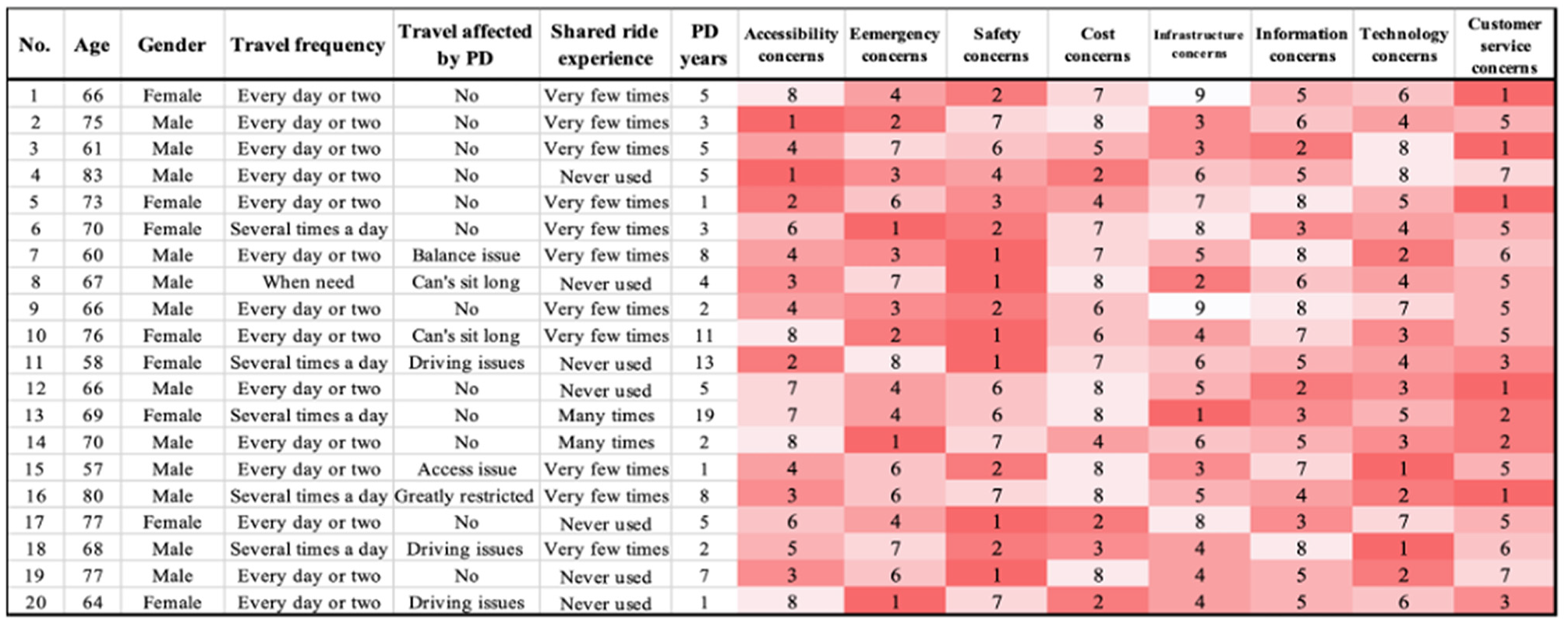
Travel history with ranking of travel barriers (n = 20).
As illustrated in Figure 4, similar travel concerns were observed across participants, regardless of their travel frequency. However, for those who had frequently used shared ride services (such as Uber, Lyft, etc.), the data indicated a higher likelihood of ranking emergencies, infrastructure, and lack of customer service as their top concerns.
Barriers for PwPD Using ASR
Our qualitative data analysis reveals a set of barriers our participants faced or expected in using ASR service. The barriers identified are summarized in Figure 5.
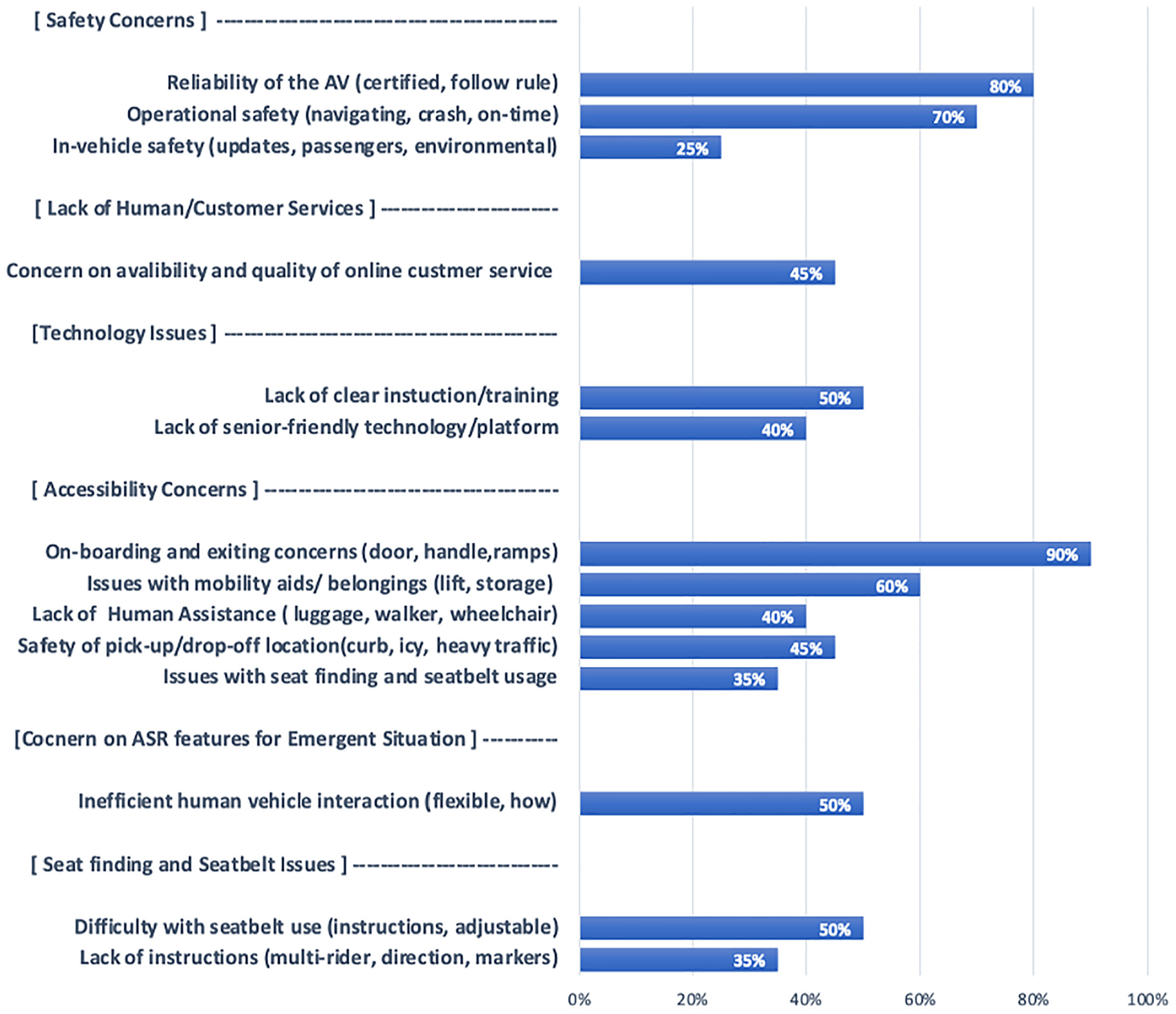
Key travel barriers identified by our participants (n = 20).
Safety Concerns
Our participants ranked safety concerns as the top travel barrier for ASR. In particular, 16 participants (80%) expressed concerns about the reliability of the AV technology that could affect the safety of their ASR travel. Many found it hard to trust a vehicle without a human driver and were curious about the extent of crash tests that were conducted, the ability of ASR to follow rules and regulations, and what emergency control options were available. Participants questioned whether the ASR “[has] done all their crash tests” and whether it could drive safely under all kinds of road and weather conditions. For example, participant 2 (P2) was worried about technological reliability, stating, “I worry about something going wrong, like technology-wise, with the car itself.” P10 mentioned that the “car could be hacked” because of “the glitches in technology.”
Operational safety concerns were expressed by 14 participants (70%). These concerns included risks of crashes and accidents, the integrity of the navigation system without getting lost, the likelihood of arriving on time, the likelihood of stopping at safe locations for boarding and exiting, mechanisms in place for controlling the vehicle during emergencies, and operating well in adverse weather and road conditions. Participants highlighted the need for vigilance, “I would probably be checking my phone to make sure it is going the right way” (P13). Also, P3 asked, “Does it wait till you get to the sidewalk before it drives off?” P6 worried about the vehicle misinterpreting passenger actions, stating, “How does the car know I’ve gotten out safely?”
Five participants (25%) raised in-vehicle safety concerns, such as the need for frequent updates on trip information, including real-time location or stops, to ensure the route was correct and the right passengers were in the vehicle. P2 was concerned about unauthorized travelers, “If somebody pulls a gun… that’s the only guy I’m worried about.” P10 highlighted potential risks such as theft or vandalism, especially those targeting vulnerable individuals. While P10 also suggested adopting fingerprints or facial recognition authentication, P15 was worried about ambushers or other passengers, stating, “Am I safe from outside? …from the people around me?”
Lack of Online Customer Service
Since physical and/or cognitive impairments are common in PwPD, especially in the later stages of the illness, they often have to travel with families or caregivers who can offer assistance. ASR could thus be a viable alternative so that PwPD may travel by themselves. However, our participants were worried that ASR might fall short in meeting their specific needs to provide an online customer service representative to answer their questions, make arrangements, and resolve issues related to their ASR service. PwPD were concerned about both the availability of the service and the quality of the service team.
Lack of real-person customer service was mentioned repeatedly by participants. Nine participants (45%) found it paramount to have a customer service team that could provide online and/or in-person help when needed; eight of them preferred a real-person customer service, analogous to an “on-star helpline,” instead of an automated system, to provide support for questions during booking, getting confirmation, or addressing urgent needs during the trip. As P5 stated, “knowing the ability to be able to talk to someone right away” would make them “feel less anxious.”
Participants also expected the customer service team to be knowledgeable and quickly responsive, especially for emergencies. P5 said, “In addition to the availability of a customer service team, the support person should be trained and knowledgeable.” She was also concerned that “somebody wouldn’t be knowledgeable enough, or that they would be impatient.”
Technology Issues (Lack of User-Centered Platform, Instructions, and Information)
Lack of senior-friendly technology/platform was a concern for eight participants (40%)—that the booking app might be confusing or too complex for senior people, especially when booking an ASR. Technology concerns include unfamiliarity with phone operation and communication issues or miscommunication over the phone or through technology use (P7, P11). Moreover, three participants were worried about limited computer access and an unstable internet connection, particularly when booking or waiting for the vehicle. Many PwPD mentioned that they would be nervous about using technologies because of their PD symptoms and their lack of knowledge about technology. Half of our participants expressed a strong need for clear instructions, training, or video demonstrations on using ASR service, particularly about getting in and out of an ASR, functions of the interface, seating arrangement, and buckling the seatbelts. P1 suggested that emergency-related functions should be “clearly marked in the vehicle” with easy-to-follow instructions. Five participants felt anxious about using ASR service for the first time, indicating the need for exposure (trial trips) or rider training which might increase users’ trust and use. P15 believed that “gerontology training” and “further training or understanding of autonomous vehicles” would be helpful. Video demonstrations, which can provide visual cues and an overview of an ASR trip, on the five segments of a trip and instructions for ASR functions were demanded by six participants.
Some PwPD found traveling independently challenging and would like to receive sufficient information to ensure that everything is set up correctly. When asked about desired information during ASR trips, the responses (Figure 6) provide insights for designing human-machine interface (HMI) and in-vehicle functions. Of the 20 participants, 17 (85%) wanted real-time location updates, “as they do in airplanes.” Two participants (10%) wanted external cameras to monitor surrounding conditions. Nine participants (45%) would like to have weather information during the trip, “maybe a screen” and “could tell you the temperature” (P15). Ten participants (50%) requested traffic condition updates, such as “traffic blocked or jammed up ahead” (P2), while seven (35%) wanted this information only if it affected their trip. Twelve participants (60%) desired destination information such as directions, building layout, entrances, elevators, and paths, before leaving the ASR, especially for unfamiliar places or airports. Three participants (15%) wanted temperature details including air conditioning status. Eight participants (40%) preferred vehicle information, such as speed and fuel/gas information. One participant (P3) emphasized the need for trip updates to be synchronized on the app for easy reference. Overall, in-vehicle technology and HMI design need to be simple and easy to use to accommodate cognitive and age-related challenges.
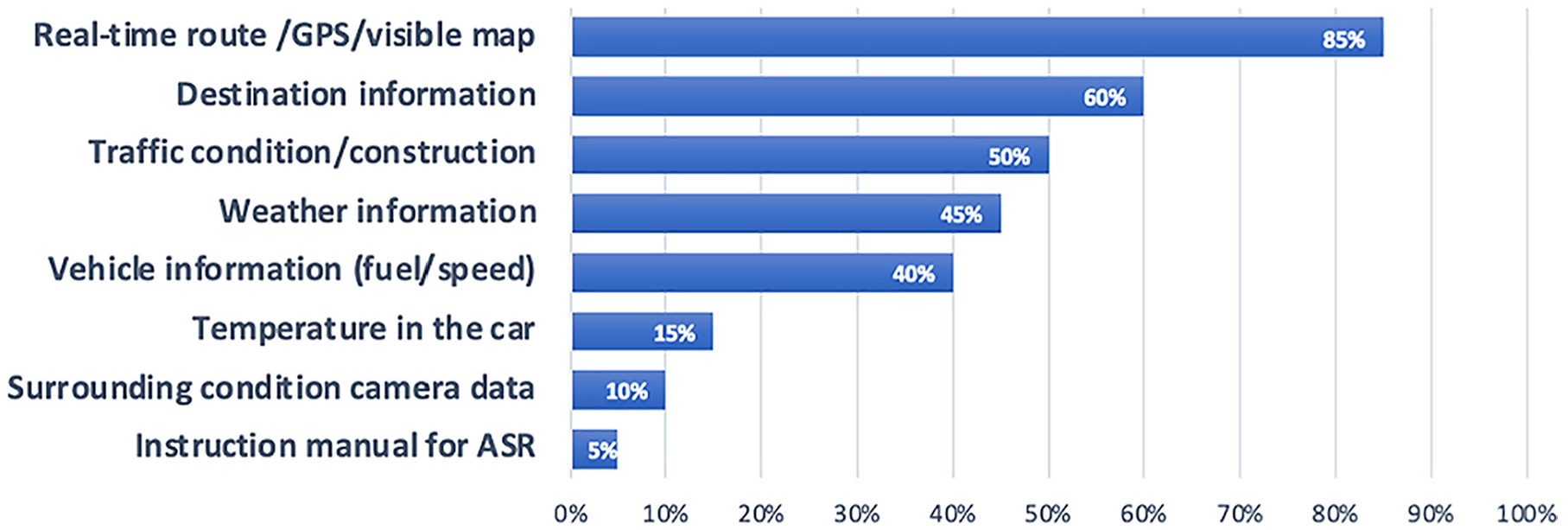
Information needed during the trip (with % mentioned by participants, n = 20).
Accessibility Concerns (Lack of Mechanism and Human Assistant)
Because of the mobility issues such as movement slowness, tremors, stiffness, pain, and loss of balance often encountered by PwPD, participants proposed several accessibility designs for ASR vehicles. Twelve participants (60%) deemed it important that ASR vehicles were designed to accommodate the storage and/or securing of mobility aids such as a wheelchair, or large personal items such as luggage. For example, P1 envisioned an ASR vehicle to be a larger van, and P3 suggested that PwPD should be asked about specific accommodations needed at booking, “Maybe it asks you a question like, do you have a walker, do you have a cane?” In spite of these accessibility design features, P7 still anticipated challenges in on-boarding with a walker, “I’d have to get it to open the trunk so I could put my walker in… which would be very difficult without help.” Despite the accessible technology, they emphasized the need of human assistance: “Ideally, they could have a crew waiting there to help you.”On-boarding and exiting concerns were emphasized by 18 participants (90%), including difficulties managing doors, ensuring a safe exit from the vehicle, and the need for additional support when entering or exiting the car. P7 mentioned, “I’ve had an experience of falling backward when I opened the door.” While P2 preferred a higher vehicle to support his boarding, P3 suggested handicapped bars and adjustable seats.
The accessibility of pick-up and drop-off locations was crucial to nine participants (45%), who were worried that they might not be able to reach the vehicle if it was parked too far away, or that it would drop them “in the dirt somewhere.” For example, P4 said, “If you have a curb or something, then that would be a concern.”
Echoing previous findings, our study also found that many participants raised issues with seat finding and seatbelt usage. Seven participants (35%) wondered where they should sit (front or back seat) if there were no driver, especially when they were riding with other passengers in the ASR (P3, P12). Half of our participants expressed concerns about seatbelt use. P14 expected oversized seat belt receivers and seat belt extenders to help with buckling. Because of hand tremors and muscle rigidity, PwPD may have difficulty grabbing buckles and twisting their bodies when trying to buckle their seatbelt. Five participants needed confirmation from the vehicle that they were ready and safe to go. As P10 said, “The car needs to be responsive to when I’m ready to go (buckled up)” and suggested a “start button.” Three participants expected ASR vehicles to be equipped with adjustable seats and handlebars. P16 mentioned, “[A] hand grip on the vertical piece in front of the door; it’s always handy. And some floor space between the back seat and the front seat that could get to feed in. And if there is going to be armrests that they, they can be raised or lowered.” In addition, two participants desired to receive confirmation that the seat belt has been buckled successfully before an ASR would start moving. P7 wanted to make sure that the car would only move once all the seatbelts were fastened to ensure passengers’ safety.
Concern on ASR Features for Emergent Situations
Unexpected and urgent situations were one of the key themes identified by participants’ discussion and ratings. During an ASR trip, PwPD would experience increased anxiety if any uncertain or unexpected situation happens, particularly since no human assistance would be available to help with their physical or mental impairments. Ten out of 20 participants (50%) underscored the necessity of ASR safety features for emergent situations, including in-car surveillance, automatic locking or unlocking of doors, safe exits, optional manual control of the vehicle, easy communication with first responders, and so forth.
When asked, “What assistance or resources would you like to have in an emergency,” 12 out of 20 participants (60%) expected an “SOS/panic button” to inform (contact vehicle company/police/ambulance), shut down the car, or open the door. P5 suggested that the button could be easily accessible to riders. P19 pointed out an “emergency eject button” would help riders get out of the vehicle immediately. Nine participants (45%) wanted to talk to a human, such as 911, vehicle company headquarters, police, or a medical department, if any emergency occurred. P13 also preferred video support, saying, “There’s an operator or a live person to contact and determine the next step.” Four participants (20%) hoped for the presence of an emergency medical services team. Two participants thought it “would probably be a good idea to have a camera that sees the inside” (P6) because “if one of the riders has a heart attack, and the vehicle’s not going to know” (P8). Two participants wanted a substitute vehicle. P19 also requested “a steering wheel and brake” to manually control the car in an emergency. With regard to the preferred display method of assistance, 11 out of 20 participants (55%) thought that auditory notifications or a speaker system would be helpful. Five participants (25%) preferred visual information, while eight participants (40%) liked both auditory and visual information together, suggesting they could include flashing lights (P15). Eight participants had hearing issues and may find it difficult to hear audio cues. P10 emphasized the importance of a “backup method.” P13 thought that, since most people are visual learners, visual cues should be straightforward and easy to attract people’s attention. Two participants (P8, P11) preferred information shown on an “in-vehicle screen” around the passengers.
User Perceptions Toward Trip Segments
When asked “Which trip segment would you find most challenging?” 15 out of 20 participants chose booking (75%), three chose “exiting the vehicles,” and two answered “in-vehicle traveling to their destination.” Participants also rated their attitude toward anxiety, confidence, and eagerness about each trip segment. The average rating shown in Figure 7 consistently confirmed booking as the trip segment causing the most anxiety and least confidence.
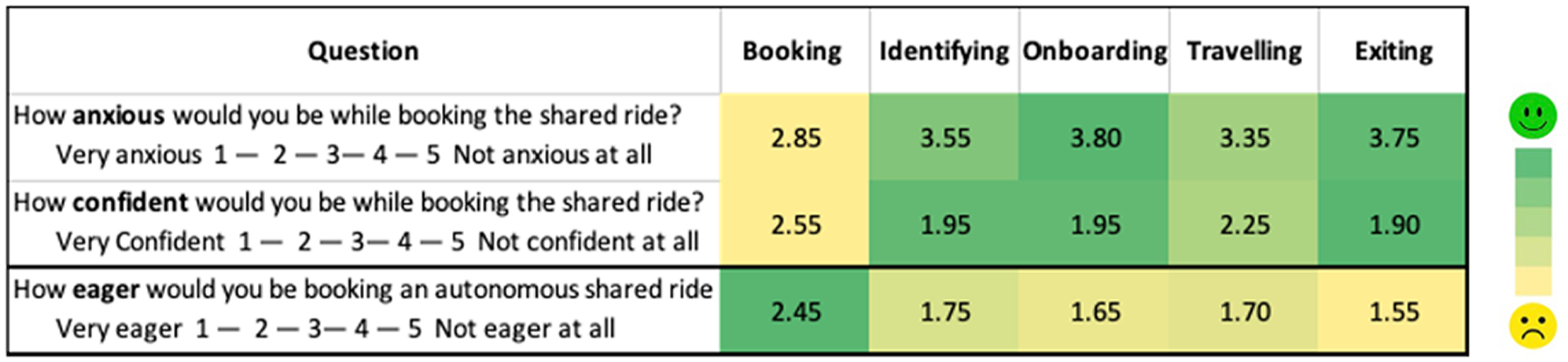
Participants’ ranking on each trip segment.
Common issues with booking included anxiety about using technology, inefficient customer service, payment method safety concerns, and cost. Four participants (20%) were nervous about using the app, fearing confusion and errors because of unfamiliarity; they also worried about ASR failing to locate them, particularly if they lived in senior apartments with complex addresses (P1, P6, P9, P11). Three participants (15%) were concerned about the lack of live customer service for booking issues or confirmation. Two participants (10%) were concerned about payment methods, including issues about potential fraud, concerns about opening a card without frequent use, and preferring not to use credit cards for infrequent ASR use (P1, P11). Two participants worried about the cost, questioning whether ASR services would be as affordable as traditional taxi and share ride services.
Discussion
All but one of our 20 participants had PD-induced motor or mobility impairments that affected their travel plans to varying degrees. For example, they might need extra time to plan and prepare for their travel, have difficulty sitting for an extended period, or require human assistance to move around. This finding is consistent with previous research that found that over 50% of PwPD had motor symptoms that make walking and moving challenging ( 23 ). Our participants were particularly concerned about getting in and out of a vehicle, especially a driverless ASR, where human assistance would be unavailable. Our study also highlighted the potential hurdle of booking an ASR. Based on the insights gained from our study, we discuss several design implications concerning an online booking application and the design of ASRs, focusing on their physical characteristics and technological functions tailored to meet the specific needs of PwPD.
Designing the Booking Application
Prior research found that most PwPD are older adults who experience varying levels of motor and cognitive impairments, as well as other age-related health issues. Consequently, it is unsurprising that PwPDs prefer simple and easy applications rather than navigating complex, time-consuming technologies ( 24 ). Since booking an ASR is the first step in the travel process, and our participants identified it as the primary barrier for ASR travel, we offer recommendations for designing a booking application tailored to PwPD. For some individuals with disabilities and older adults, booking by phone and speaking directly with a real person would be a more straightforward and user-friendly option.
Clear and Well-Structured Queries for Booking Information
The booking application should be senior-friendly and easy to use. Using large fonts and interface widgets like buttons is fundamental for easy interaction. The queries for personal information such as name, phone number, pick-up time and address, destination, number and size of carry-on items, types of assistance required, and so forth, should be straightforward with easy options through dropdown lists to minimize the need for manual typing. Data inputs by voice should also be an option to allow PwPD, whose tremor affects fine motor movements, to be able to book an ASR. On completion of booking, the descriptions of the reserved ASR, such as the make, model, color, and license plate, should be clearly displayed along with a photo of the vehicle showing unique markers or labels, such as a logo, or flashing or colored light, for easy identification, which our participants deemed very important as they were afraid of getting into a wrong vehicle.
Real-Time Interactive Updates of ASR Booking
PwPD’s slow movements and other symptoms often require more time for trip preparation. Therefore, real-time updates of the approaching ASR and the arrival time would provide PwPD with a better awareness of the ASR. In return, the person’s exact location with the booking application should be conveyed to the ASR for picking up the passenger in that precise location. PwPD would require advance notification for ample time to prepare. ASR should arrive on time and close to the pick-up location since PwPD might find it hard to sit/stand for a long time and walk a long distance. In addition, the pick-up location should be clear without curb/dirt and easily accessible for wheelchair/walker users. To address these concerns, the ASR must be easily identifiable and distinguishable from other vehicles while on a street/parking lot, which avoids extra efforts for PwPD with mobility issues to walk around and find it.
Physical Design of ASR
To ensure that PwPD can access the ASR, several assistive devices and mechanisms should be implemented. For example, a handle or grab bar on the door would help PwPD enter and exit the vehicle independently. Additionally, steps or a running board would benefit PwPD who use walking devices or wheelchairs, as it would minimize the need to climb into the vehicle or lift items. Armrests on the seat would assist PwPD in sitting down, standing up, or moving through the aisle. However, opinions about vehicle height varied among our participants. Some participants using wheelchairs preferred a higher vehicle, such as a van, to ensure sufficient storage space for their devices and luggage. Others, however, thought that getting into and out of a higher vehicle might increase the risk of falling. Previous studies have also found that some wheelchair and rollator users prefer vehicles with a ramp, which allows them to move into the vehicle while seated in their wheelchairs. This setup eliminates the need to fold devices, carry them into the vehicle, or move to another seat, which can be particularly challenging for PwPD with weak muscles or strength issues (14, 16). On the other hand, participants with minimal or no mobility issues preferred a lower vehicle to avoid the need to climb into it or onto the seat.
To enhance accessibility for PwPD with varying mobility levels, the ASR service could collect information during the booking process, asking about passengers’ level of mobility and the devices they use (e.g., none, walker, wheelchair). This information would enable the service to provide suitable vehicle options or assign different vehicles equipped to meet specific needs.
Design Implication for ASR Human-Machine Interface (HMI)
Participants shared many ideas about what information they would like to receive during the ASR trip. Real-time location, destination, and traffic information are important to them, as they want to be sure the trip is on the correct route and will arrive on time. Despite mobility issues, many PwPD need to travel for medical appointments, so tracking their trip to ensure punctuality is crucial. Additionally, participants prefer receiving vehicle data such as speed, fuel status, and camera/sensor information to ensure the safety of the trip.
With regard to HMI design, multiple channels, including visual (screen/display text) and auditory (speaker system) resources, would be helpful. PwPD may experience vision impairments, hearing difficulties, speech issues (weak voice), and typing/touch input problems caused by tremors (9, 24, 25). Bigger fonts and color-coded text would assist those with visual impairments ( 24 ). Large-sized icons would address tremor-related typing issues ( 3 ). Commands or requests could be made via button presses or voice activation ( 26 ). Also, there should be an option to speak directly with a real person via phone, especially for emergencies.
As discussed in a previous study, PD is a chronic illness with both mental and motor symptoms, so special health condition monitoring or interventions would be beneficial, particularly when PwPD travel independently. If a rider suddenly experiences a health incident, such as having a heart attack or stroke, it is risky if they cannot call customer service immediately. Therefore, self-tracking applications could be integrated into the ASR, or data from other self-tracking applications could be synchronized during the trip. In case of a health emergency, ASR company staff could be notified immediately.
Design Implication for Special ASR Features for PwPD
To ensure comfortable and safe travel, accommodating and flexible in-vehicle technology should be adopted as part of an inclusive technology design. In addition to multiple communication methods such as buttons, voice communication, and visual/HMI displays, specialized door management systems and seating assistance are necessary for PwPD.
Many participants expressed concerns about door management because of experiences with falling while opening car doors because of PD symptoms. Features such as lighter doors, sliding doors, self-closing doors, and unlocking through phone or facial identification via a camera would be beneficial.
Some PwPD may experience muscle stiffness or weakness, making it difficult to move or turn their bodies. To address this, car seats with leather or slippery vinyl surfaces would be easier to slide into (27). Additionally, oversized seat belt receivers or extenders, adjustable seats, and armrests could enhance comfort for PwPD.
PwPD and individuals with other disabilities might encounter various inconveniences or potential emergencies while traveling independently. Participants frequently mentioned the need for real-human assistance, as they expect someone to be available to provide immediate help if needed. While a certified driver might not be required for ASR services, having a human assistant option could greatly improve the travel experience. This assistant could help with accessing the vehicle at pickup and drop-off locations, or stay in the car to monitor the trip and provide assistance as needed, such as dealing with emergencies, sudden illnesses, restroom breaks, interacting with HMIs, and handling luggage.
Summary of PwPD Travel Barriers and Needs, and Potential ASR Solutions
To build seamless shared autonomous ride services for PwPD, Table 2 summarizes the key barriers, needs, and potential solutions for each segment of the trip, based on interview data and a literature review. Following the timeline of a typical ASR journey, the barriers and needs are listed from the most frequently mentioned to the least frequently mentioned, along with the percentage of participants who discussed these issues.
An Insights Framework to Design Autonomous Vehicle Solutions for People with Parkinson’s Disease
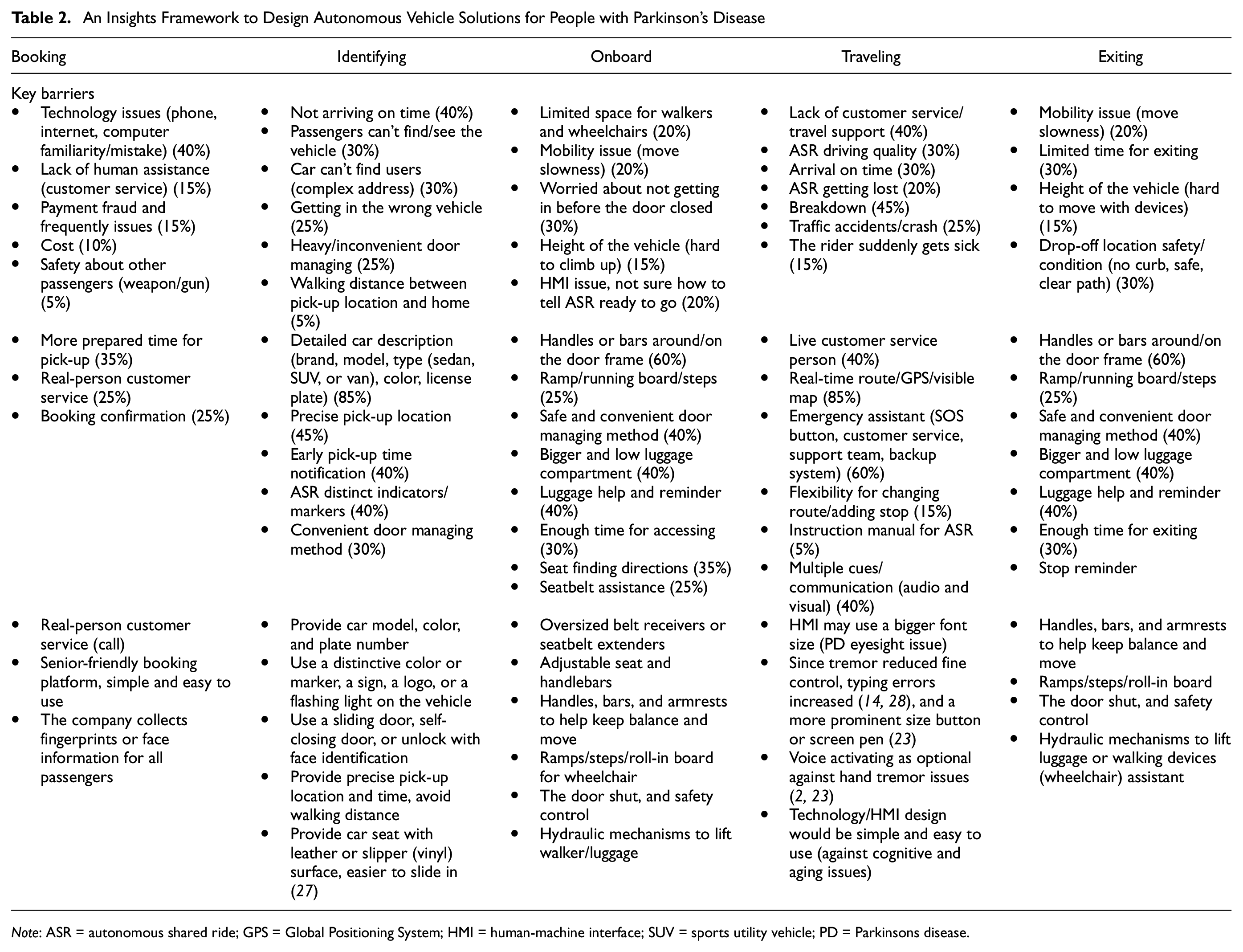
Note: ASR = autonomous shared ride; GPS = Global Positioning System; HMI = human-machine interface; SUV = sports utility vehicle; PD = Parkinsons disease.
Conclusions
This study aims to understand the needs of PwPD to support the inclusive design of ASRs. Twenty PwPD were recruited for structured in-person interviews in mid-Michigan, U.S. Both qualitative (opinions) and quantitative (ranking/rating) data were collected and analyzed. According to the ranking of eight ASR concerns, safety and lack of customer services were among the top concerns for PwPD. Qualitative data analysis identified a set of barriers faced by PwPD when using an ASR, which were grouped into six main themes.
Safety concerns included the reliability of the ASR (80%), operational safety (70%), and in-vehicle safety (25%). With regard to customer service, 45% of participants desired real-person support to address issues faced during the trip and assistance with handling mobility aids and luggage. Many PwPD expressed anxiety about technology, emphasizing the need for clear instructions, training, and a senior-friendly ASR interface and app design. Accessibility issues included the need for assistance with boarding and exiting the vehicle (90%), such as safe door management systems, handles, and ramps; lift mechanisms and larger cabin spaces (60%); and obstacle-free pick-up/drop-off locations (45%).
Additionally, 50% of PwPD were concerned about the ASR’s capability to handle emergency situations. Seat finding and seatbelt issues were also frequently mentioned, particularly difficulties with seatbelt buckling because of PD symptoms. Booking was considered the most challenging trip segment by 75% of participants.
The results provide valuable insights into the needs and preferences of PwPD, offering guidance for designing more inclusive and user-friendly ASR services. Table 2 summarizes the important barriers and needs following the trip timeline, including potential ASR solutions for each trip segment based on interview data and a literature review.
However, this study is limited by its small sample size and reliance solely on interview data. In the next phase, the research team will focus on collecting experimental and user feedback from on-road tests to provide a more immersive and realistic experience. We anticipate this work will serve as a first step toward better understanding the broader obstacles to autonomous taxi use by individuals with disabilities. Future studies should expand to include other vulnerable traveler groups, such as the elderly and those with cognitive impairments. By understanding the unique challenges faced by these populations, we can further refine ASR services to be more inclusive and supportive. Additionally, examining the intersection of various disabilities and age-related issues will help create transportation solutions that not only meet users’ immediate needs but also enhance their overall travel experience. This research will contribute to developing more comprehensive design guidelines that ensure autonomous transportation is accessible and beneficial to all users. By addressing these areas, we hope to contribute to the future design of ASR systems that enhance user satisfaction and better support the mobility and independence of PwPD and the broader population of individuals with disabilities.
Footnotes
Author Contributions
The authors confirm contribution to the paper as follows: study conception and design: S. Bao, C. Tang, N. Miller; data collection: N. Miller; analysis and interpretation of results: C. Zhang, I. Shuva, H. Guo, N. Miller; draft manuscript preparation: C. Zhang, I. Shuva, H. Guo, Z. Wang, C. Tang, N. Miller, S. Bao. All authors reviewed the results and approved the final version of the manuscript.
Declaration of Conflicting Interests
The author(s) declared no potential conflicts of interest with respect to the research, authorship, and/or publication of this article.
Funding
The author(s) disclosed receipt of the following financial support for the research, authorship, and/or publication of this article: The authors would like to acknowledge UM-Dearborn–UM-Flint Collaborative Research Grants for supporting this project, and the funding ID is U077791.
