







Abstract
The Virginia Department of Transportation (VDOT) has implemented the Balanced Mix Design (BMD) concept for its dense-graded surface mixtures to improve the durability and service life of asphalt pavements. The VDOT’s BMD framework specifies the use of the indirect tensile cracking test to assess the cracking susceptibility of asphalt mixtures, requiring a minimum cracking tolerance (CT) index of 70 after short-term oven aging for 4 h at compaction temperature (Tcomp). However, the current framework does not account for oxidative aging over the service life of asphalt mixtures, which is becoming increasingly relevant with the use of additives and recycled materials. This study aims to develop a practical laboratory long-term aging protocol to be used in the VDOT’s BMD framework, while balancing the need for an effective differentiation of asphalt mixtures’ performance and ensuring a practical implementation in routine laboratory settings. This study includes 10 asphalt mixtures with varying reclaimed asphalt pavement contents and asphalt binder performance grades. The asphalt mixtures underwent laboratory oven aging at 95°C and 135°C or higher (i.e., Tcomp) to determine appropriate aging durations. The CT index of the asphalt mixtures was measured alongside the rheological and chemical properties of the virgin and recovered asphalt binders. This study identified a reduced aging duration at 95°C and established an equivalent accelerated aging duration at Tcomp. Preliminary criteria for the CT index were also developed based on the observed relationship between the CT index of the asphalt mixtures at different aging conditions and their corresponding Glover–Rowe parameter of recovered asphalt binders.
Introduction
Asphalt mixtures are essential for infrastructure and offer cost-effective and durable surfaces for a wide range of transportation applications, such as highways and airfields. Despite their advantages, asphalt mixtures face challenges related to the aging experienced by the asphalt binder throughout their production and service life. Aging is mainly driven by temperature and oxygen exposure, leading to increased stiffness and reduced flexibility, raising concerns about the longevity of asphalt mixtures.
The Balanced Mix Design (BMD) ( 1 ) concept is being implemented by several State Departments of Transportation (DOTs) to enhance asphalt mixtures’ performance. Unlike traditional mix design methods that primarily focus on achieving specific volumetric properties, the BMD incorporates mechanical tests to evaluate the mixture’s resistance to critical distresses, such as rutting, cracking, and moisture damage. The evaluation of asphalt mixtures’ resistance to aging plays a critical role in the BMD framework, because mitigating its effects on asphalt mixtures is key to ensuring long-term performance.
The Virginia Department of Transportation (VDOT) implemented the BMD concept to improve durability and service life of its dense-graded surface mixtures (SMs), with 9.5 mm and 12.5 mm nominal maximum aggregate sizes (NMAS) and incorporating unmodified binders. The VDOT’s BMD performance tests and associated criteria are summarized in Table 1 ( 2 ). The framework also includes a moisture damage test, conducted according to the American Association of State Highway and Transportation Officials (AASHTO) T 283, and performed during the initial production phase ( 3 ). The VDOT requires the use of the Indirect Tensile Cracking Test (IDT-CT) (also known as IDEAL-CT as specified in the Virginia Test Method (VTM) 143 ( 4 ), which generally follows ASTM D8225 ( 5 ) with additional requirements specific to Virginia mixtures. These include detailed specifications for specimen and test conditions, such as air void content, test temperature, number of replicates, compacted specimen conditioning, and tolerances on the specified loading rate. In addition, the VTM 143 provides precision estimates of the test method specific to Virginia’s mixtures.
Virginia Department of Transportation Balanced Mix Design Performance Tests Criteria
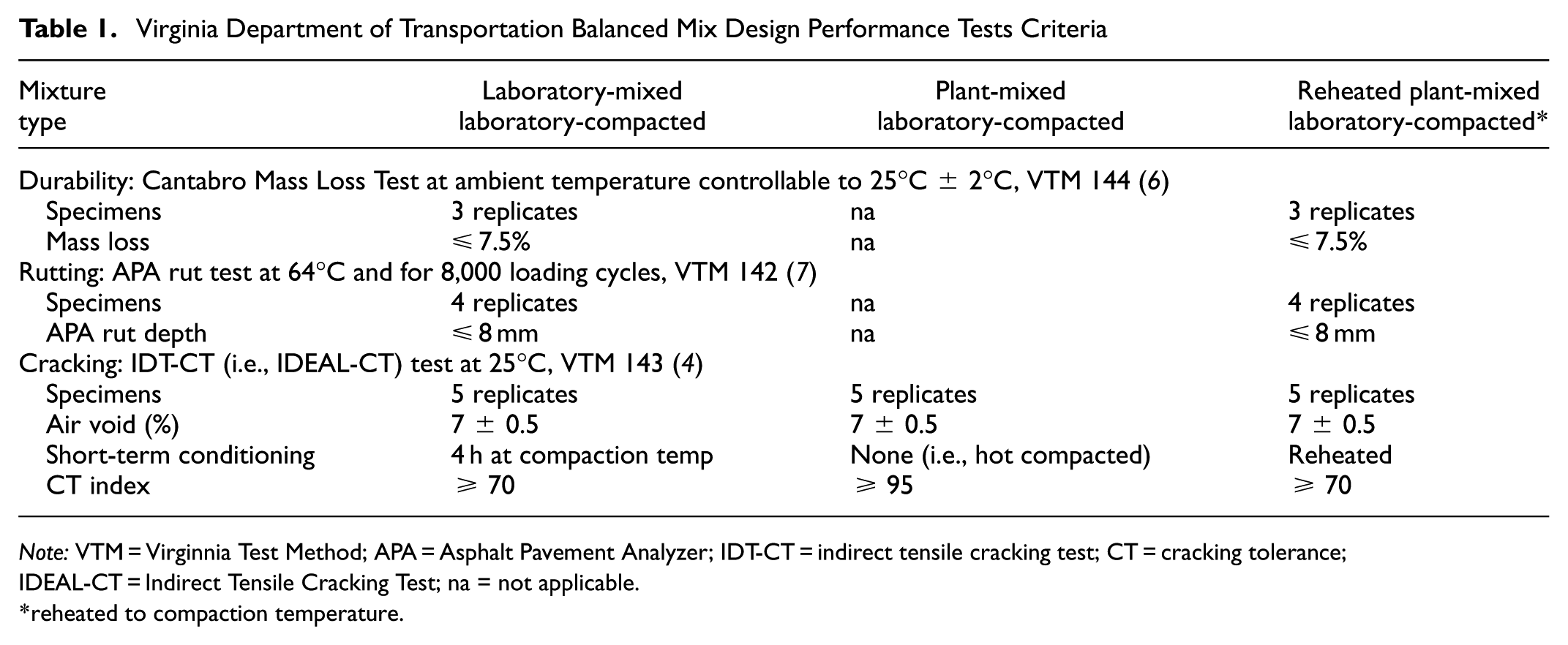
Note: VTM = Virginnia Test Method; APA = Asphalt Pavement Analyzer; IDT-CT = indirect tensile cracking test; CT = cracking tolerance; IDEAL-CT = Indirect Tensile Cracking Test; na = not applicable.
reheated to compaction temperature.
In the VDOT’s BMD framework, the IDT-CT test is used to assess the cracking susceptibility of dense-graded asphalt SMs with A and D designations (i.e., 0–3 million equivalent single axle load [ESAL] range for A mixtures and 3–10 million ESAL range for D mixtures). A performance criterion of a minimum cracking tolerance (CT) index of 70 after short-term oven aging (STOA) of 4 h at compaction temperature (Tcomp) is specified to alleviate the cracking susceptibility of asphalt mixtures ( 8 – 10 ). This CT index was determined based on extensive testing of compacted specimens from reheated plant-produced asphalt mixtures. In addition, a CT index of 95 is specified for asphalt mixtures tested during production without reheating (i.e., hot compacted).
Although the current cracking testing protocol and its threshold values in the VDOT’s BMD specification are indicative of the cracking performance of asphalt mixtures, it does not account for how the performance of asphalt mixtures throughout the service life is affected by oxidative aging (i.e., as it experiences long-term aging). Therefore, the laboratory evaluation of the long-term oxidative aging characteristics of asphalt mixtures is needed to ensure that the asphalt mixtures within pavement structures continue to perform adequately throughout their service life. This evaluation becomes even more critical as it will allow capturing and/or quantifying the effects of recycled materials, binder type and quality, additives, and their interactions along with aggregate characteristics on the long-term cracking performance of the asphalt mixtures produced in Virginia.
Review of Long-Term Aging Protocols
Several approaches exist to simulate long-term oxidative aging of asphalt mixtures in the laboratory. Some approaches utilize conditioning of compacted asphalt specimens, and others require conditioning of loose (uncompacted) asphalt mixtures. The aging temperature and duration at which asphalt mixtures are conditioned are different for each approach. The following section describes commonly used approaches for laboratory conditioning of asphalt mixtures for long-term performance evaluation.
The standardized oxidative aging procedures for asphalt mixtures are specified in the AASHTO R 121-24 ( 11 ). This recent standard practice involves subjecting compacted or loose asphalt mixture samples to oven aging following short-term loose mixture conditioning. Five different long-term aging procedures are included and are summarized in Table 2. Method A—conditioning of compacted mixture specimens at 85°C for 120 h. Method B—conditioning of the uncompacted loose mixture at 85°C for 120 h. Method C—conditioning of an uncompacted loose mixture at 95°C for a determined duration that reflects the desired field aging for pavement age, climate, and depth. Method D—conditioning of uncompacted loose mixture at 100°C–125°C for 20 h. Method E—conditioning of an uncompacted loose mixture at 135°C for 6 or 8 h.
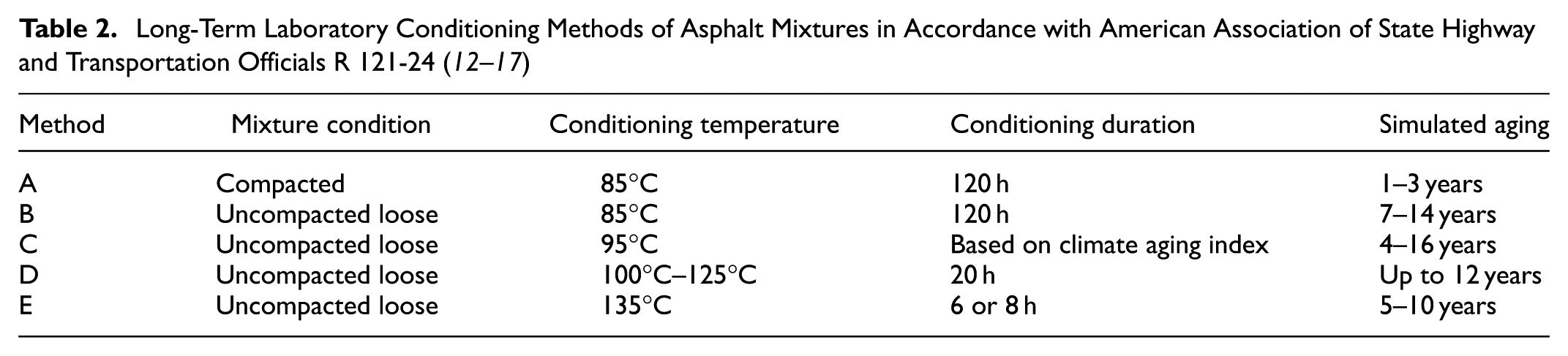
These different long-term aging procedures aim to simulate certain levels of field aging of an asphalt pavement during its in-service life. As an example, Table 3 summarizes the current long-term oven aging (LTOA) protocols for laboratory asphalt mixtures adopted by select State DOTs.
Example of State Practices for Short and Long-Term Conditioning of Asphalt Mixtures
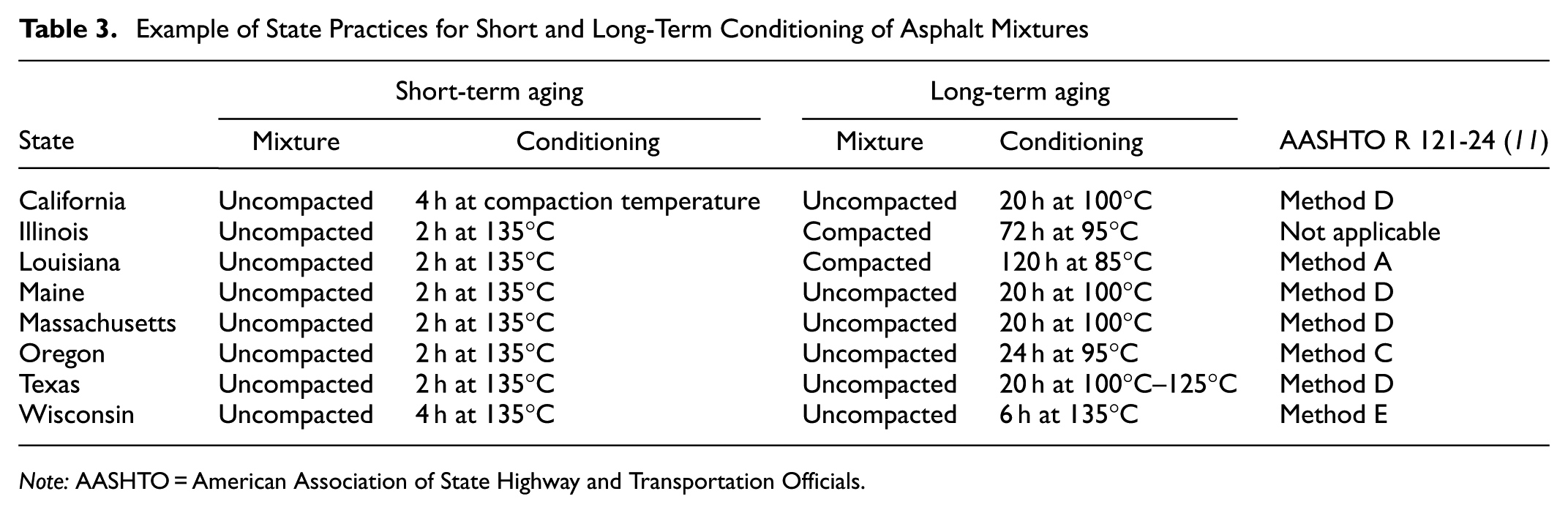
Note: AASHTO = American Association of State Highway and Transportation Officials.
The National Cooperative Highway Research Program (NCHRP) Project 09-52 ( 18 ) found that Method A simulates about 1 or 2 years of field aging in warmer and colder climates, respectively. However, it has limitations related to the use of a single aging procedure regardless of climate or mixture type, and the presence of an aging gradient in compacted specimens, which can increase variability in test results ( 19 ). Previous studies also showed variations in the asphalt binder oxidation measurements as a function of the air void level of compacted mixtures aged in the oven ( 20 ). For instance, a decrease in oxidation rate is observed for asphalt binders aged in compacted asphalt mixtures at lower air void levels. Moreover, specimens may experience integrity problems under this procedure (e.g., change in air void content and geometry because of the specimen softening and slumping under self-weight). To address some of these concerns, Method B was introduced for aging loose asphalt mixtures instead of compacted specimens. However, both methods still involve lengthy aging durations, making them impractical, especially for production testing.
Method C is based on NCHRP Project 09-54 ( 19 ) and involves oven aging loose asphalt mixtures at 95°C for durations that simulate 4, 8, and 16 years of field aging at varying depths (6, 20, and 50 mm) below the pavement surface. After LTOA, the mixture is allowed to cool to room temperature and reheated to Tcomp before compaction. This long-term aging process follows a short-term conditioning phase of typically 4 h at 135°C. The loose mixture approach was chosen to ensure a uniform aging gradient, and the temperature was increased from 85°C to 95°C to reduce conditioning time. However, despite these improvements, some conditions still require lengthy and impractical aging durations, limiting the method’s practicality for mix design verification and production.
Another LTOA method involves conditioning loose asphalt mixtures at 135°C for a set duration (Method E). This higher temperature is favored because it significantly shortens the aging process. For instance, an 8-h loose mixture aging procedure at 135°C (following STOA) was developed by the National Center for Asphalt Technology (NCAT) to assess top-down cracking potential in asphalt mixtures ( 21 ). This method is based on the cumulative degree-days (CDD) concept, which is calculated based on the sum of daily high temperatures above freezing over a mixture’s service life. According to the study, top-down cracking typically initiates after reaching approximately 70,000 CDD, which is equivalent to about 5.1 years of field aging in Virginia.
Conditioning asphalt mixtures at elevated temperatures (over 100°C) has raised some concerns among researchers. Long-term aging at high temperatures, particularly for binders with high sulfur content, can lead to fundamental changes in the chemical composition of asphalt binders, differing from field-aged binders, and negatively affecting mixture performance ( 22 ). No significant differences were found in the rheological properties of asphalt binders aged at 95°C and 135°C; chemical differences were observed in some of the asphalt binders that affected the high-strain performance test results ( 22 ). Several studies also reported unexpected shifts in performance test outcomes after prolonged aging durations (over 10 h) at 135°C, with variations depending on the type of performance test used ( 22 – 25 ). Of note, among the methods outlined in AASHTO R 121-24 (11), only Methods A, C, and E have been reasonably correlated to field aging.
Objective and Scope
During mix design, it is important to test asphalt mixtures under aging levels that best simulate the critical conditions for the relevant distresses. However, without careful consideration, there is a risk of adopting overly lengthy aging procedures, which hinder the practicality of using LTOA in routine laboratory settings. Therefore, optimizing the aging protocol is essential by creating conditions that are stringent enough to properly differentiate among asphalt mixtures’ performance but quick and efficient enough to remain practical for implementation in mix design, verification, and acceptance. This balance ensures that the aging protocol is meaningful by ensuring mixtures prone to early cracking failure are identified and feasible within typical timelines and resources (e.g., staffing, equipment).
The overall objective of this study was to establish practical long-term aging protocol(s) and associated threshold(s) for dense-graded SMs with A and D designations in Virginia that can be implemented in mix design, verification, and acceptance processes. Therefore, this study focused on investigating the long-term aging of loose asphalt mixtures because of the limitations of aging compacted specimens. A total of 10 asphalt SMs were included in this study, composed of various combinations of reclaimed asphalt pavement (RAP) contents and asphalt binder performance grades (PGs) ( 26 ). The asphalt mixtures were subjected to laboratory oven aging at two different temperatures to establish respective aging durations for each temperature conditioning protocol. This study examined the changes in mixture performance properties and assessed the changes in the corresponding asphalt binder rheological and chemical properties for the various aging durations.
Materials and Mix Design Verification
In total, 10 dense-graded SMs were identified and selected from BMD and conventional Superpave mix design projects in Virginia. Table 4 summarizes the asphalt mixtures collected and evaluated as part of this study ( 26 ). All asphalt mixtures had the typical PG 64S-22 binder in Virginia (S denotes standard traffic), except two, where a PG 58-28 binder was used. The asphalt mixtures included aggregates, binders, additives, and RAP, representative of materials typically used in the commonwealth. The BMD mixtures were designed in accordance with VDOT’s Special Provision for Balanced Mix Design (BMD) Surface Mixtures Designed Using Performance Criteria ( 2 ).
Summary of Selected Surface Asphalt Mixtures
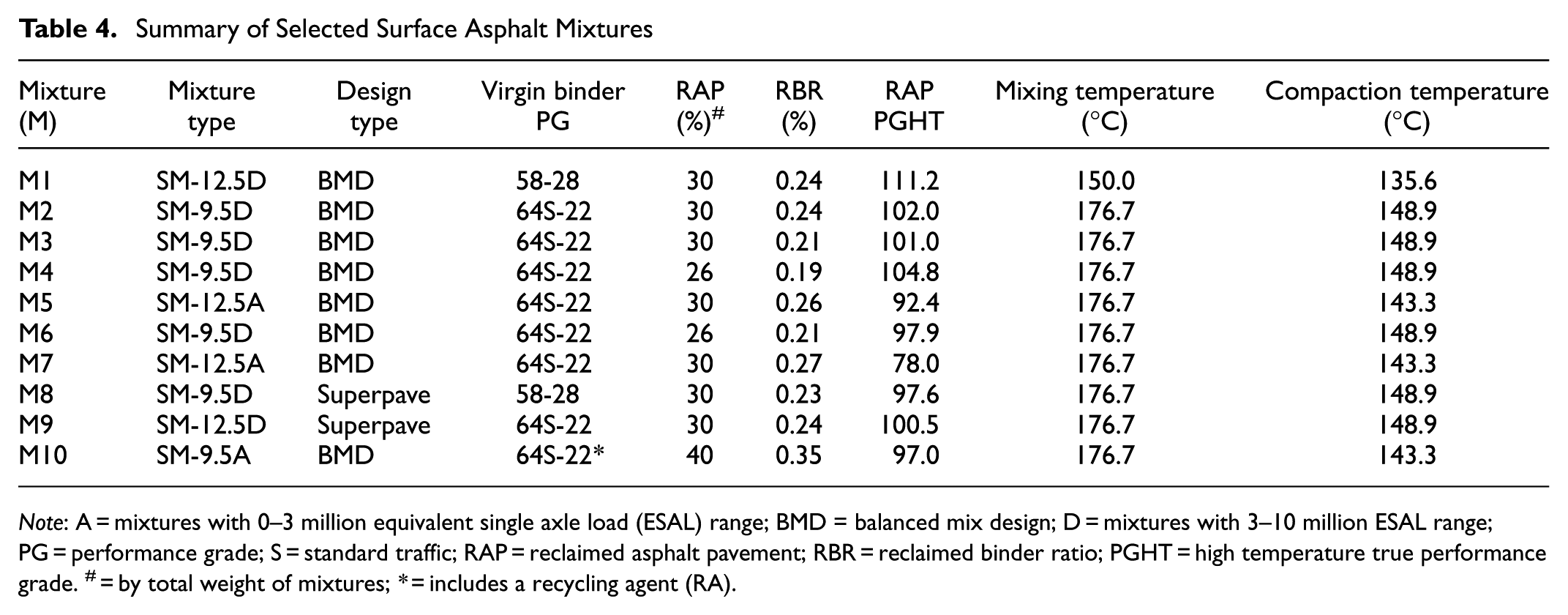
Note: A = mixtures with 0–3 million equivalent single axle load (ESAL) range; BMD = balanced mix design; D = mixtures with 3–10 million ESAL range; PG = performance grade; S = standard traffic; RAP = reclaimed asphalt pavement; RBR = reclaimed binder ratio; PGHT = high temperature true performance grade. # = by total weight of mixtures; * = includes a recycling agent (RA).
Raw components and plant-produced asphalt mixtures were sampled during production. Laboratory-Mixed Laboratory-Compacted (LMLC) samples were prepared in the laboratory for performance testing and evaluation following their respective job mix formulas (JMFs). The plant-produced asphalt mixtures were verified against the JMF to ensure that future field performance data is relevant and directly comparable with the laboratory-prepared asphalt mixtures. The extraction of asphalt binders was conducted in accordance with AASHTO T 164-22 (Method A) using n-propyl bromide ( 27 ), followed by recovery using a rotary evaporator (ASTM D5404 [ 28 ]). The gradation of the extracted aggregates was determined in accordance with AASHTO T 30 ( 29 ). All evaluated asphalt mixtures successfully met the JMF (i.e., test values fell within the specified JMF limits). Figure 1 shows the recovered asphalt binder contents with their respective tolerance limits from the JMF. Table 5 summarizes the extracted aggregate gradations for all evaluated asphalt mixtures.
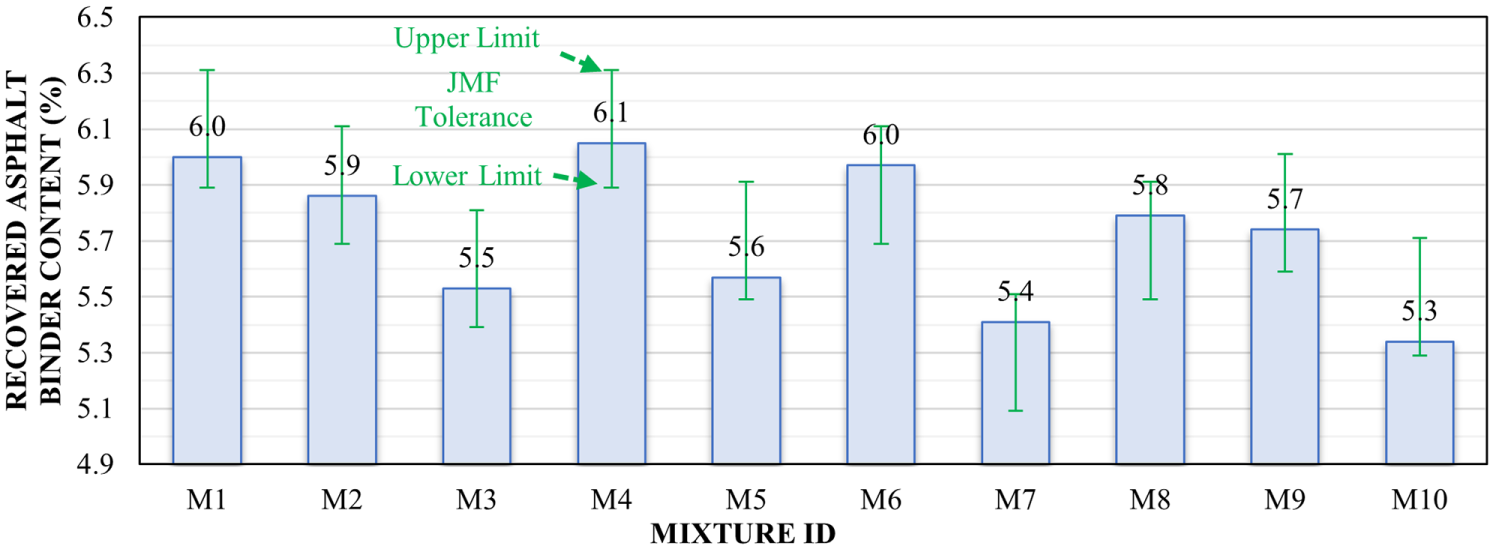
Recovered asphalt binder contents from plant-produced asphalt mixtures.
Extracted Aggregate Gradation from Plant-Produced Asphalt Mixtures
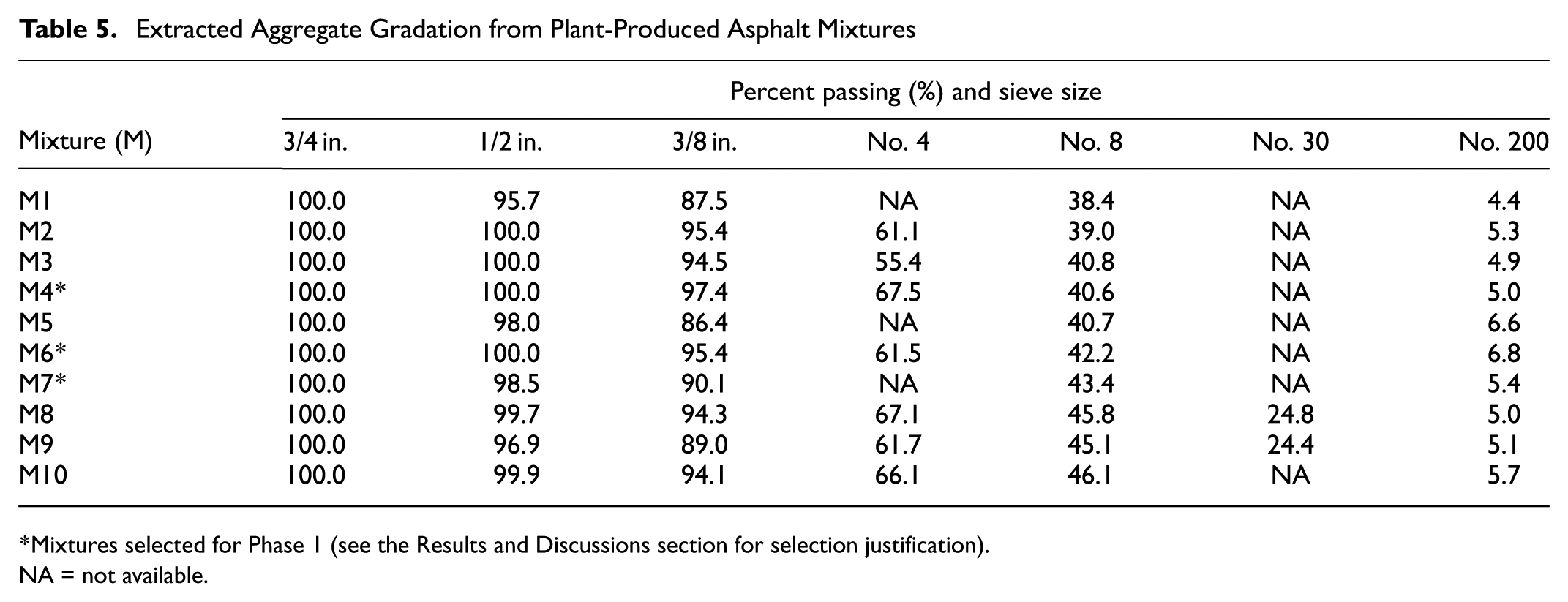
Mixtures selected for Phase 1 (see the Results and Discussions section for selection justification).NA = not available.
Experimental Plan
This study focused on the LTOA of loose asphalt mixtures at two temperatures (95°C and 135°C or higher) to establish appropriate aging durations. The rationale for evaluating two temperatures is to determine whether accelerated aging at 135°C (or higher) adversely affects the chemical properties of asphalt binders typically used in Virginia, which could result in mixtures that are not representative of field-aged conditions. If both aging conditions yield similar CT index results, the accelerated LTOA procedure could be used to reduce testing duration and increase turnaround time. However, if LTOA at elevated temperatures causes negative effects after a certain duration, a critical aging duration will be explored and identified to estimate long-term cracking potential. The laboratory experimental program consisted of three phases, as described in the following section, and shown in Figure 2. To ensure consistency and repeatability in the overall process, conditioning and reheating protocols were established and implemented for the asphalt mixtures as part of this study. The established protocols outlined key steps, including sample handling, pan size, loose mixture thickness, stirring procedure, and time and temperature monitoring, to ensure precise and repeatable sample preparation.
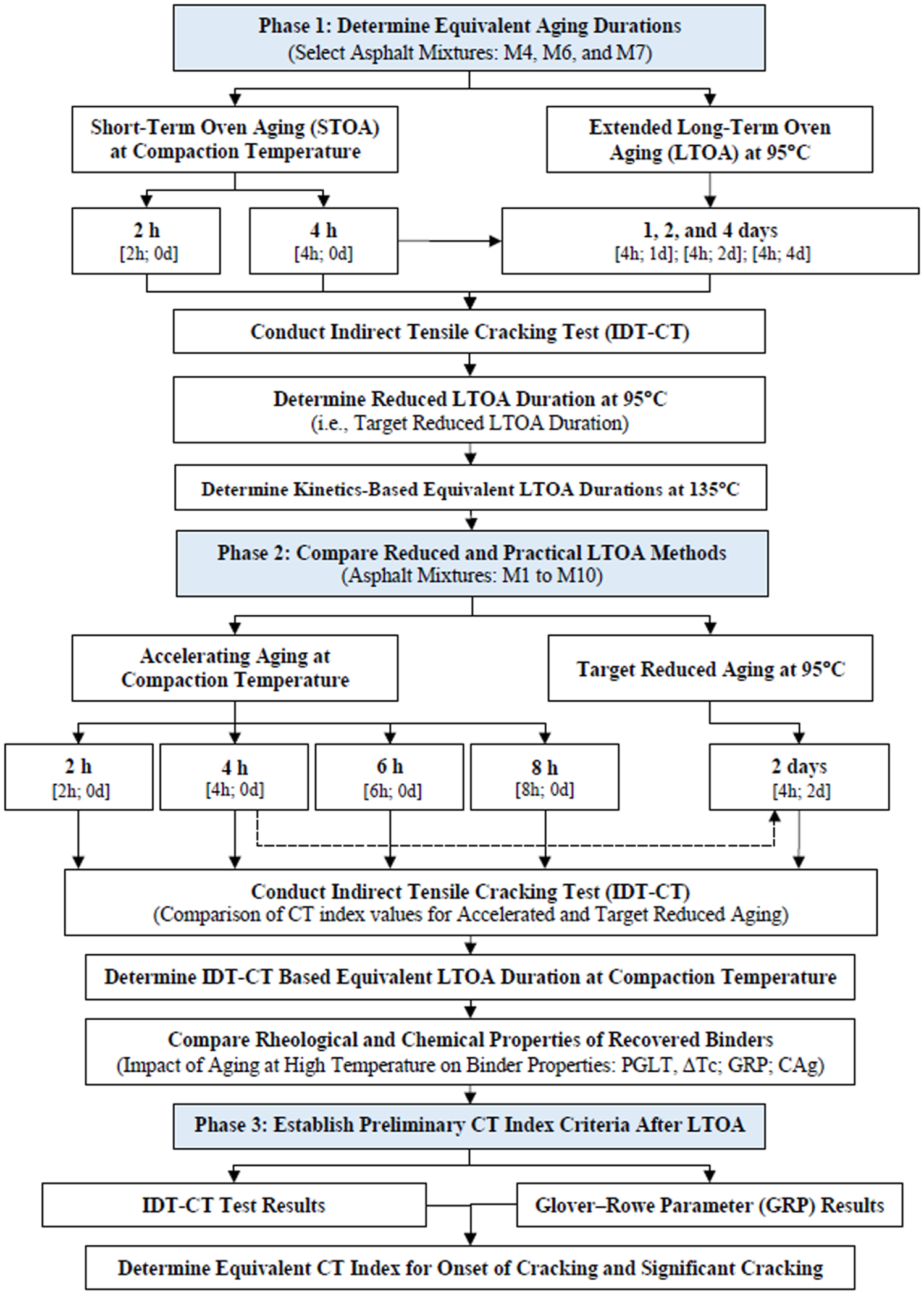
Flowchart of experimental plan.
In the first phase, a mini experiment was carried out by evaluating three representative asphalt mixtures: M4, M6, and M7. The LMLC specimens were subjected to extended LTOA at 95°C following the STOA of 4 h at Tcomp in accordance with the VDOT BMD specifications. The extended LTOA durations at 95°C were determined in accordance with AASHTO R 121-24 (Method C) to simulate 8 years of field aging at a 20 mm depth from the surface. The simulated field aging duration was selected to match the typical 8–10 years mill and overlay cycle for asphalt pavements in Virginia ( 30 ). The analysis determined that the extended aging duration at 95°C for the asphalt mixtures was between 2 and 4 days for Virginia’s climatic conditions.
Therefore, the CT index values of the three LMLC mixtures (M4, M6, and M7) were determined under several aging conditions. These included 2 and 4 h short-term loose mix aging at the Tcomp that are referred to as (2 h; 0 days) and (4 h; 0 days); as well as 4 h of loose mix STOA at Tcomp followed by 1, 2, and 4 days of aging at 95°C that are referred to as (4 h; 1 day), (4 h; 2 days), and (4 h; 4 days). The test results were used to examine the change in mixtures’ resistance to cracking as a function of extended aging and the potential to identify a reduced aging duration at 95°C. Therefore, this first phase mini experiment aimed to explore whether a shorter duration at 95°C, as an alternative to the 4 days of aging, is feasible and sufficient to capture the asphalt mixtures’ susceptibility to cracking. Once a reduced aging duration at 95°C was determined, the three asphalt mixtures were then subjected to accelerated LTOA at elevated temperature (135°C or higher) to find equivalent aging durations that yielded similar IDT-CT results.
During the second phase of the study, and based on the results from the Phase 1 experiment, the IDT-CT was conducted for all asphalt mixtures at the accelerated LTOA at elevated temperature, and the identified reduced aging duration at 95°C. Asphalt binders were also recovered from the aged LMLC mixtures to assess whether aging at a higher temperature had any adverse effects on their rheological and chemical properties. The following properties were measured for the virgin and recovered asphalt binders.
Intermediate temperature characteristics. The shear modulus (G*) and phase angle (δ) master curve for each of the asphalt binders was developed using frequency sweep (FS) data measured in the dynamic shear rheometer under multiple frequencies and temperatures. The master curves were used to calculate the Glover–Rowe parameter (GRP) at 15°C and 0.005 rad/s, as expressed in Equation 1, for different aging levels ( 33 ).

During the third phase of this study, the relationship between the CT index values and the corresponding GRP of the recovered asphalt binders was analyzed to identify the critical CT index values associated with the specific cracking thresholds previously established for the GRP. These thresholds were defined as a GRP of 180 kPa for the onset of cracking and a GRP of 600 kPa for significant cracking ( 35 , 36 ). The associated critical CT index values were then compared with the current performance criterion, which specifies a minimum CT index of 70 after an STOA of 4 h at Tcomp. This comparison provided insight into establishing an appropriate threshold for the LTOA.
Results and Discussions
Determination of Equivalent Aging Durations (Phase 1)
Reduced LTOA Duration at 95°C
The M4, M6, and M7 mixtures were specifically selected because they offer a variety of binder and RAP sources and gradations, as they were produced in different regions of the state by different suppliers. Table 4 and 5 summarize the characteristics of these mixtures, highlighting key differences. The M4 and M6 have an NMAS of 9.5 mm, and the M7 has an NMAS of 12.5 mm. In addition, the RAP high temperature true performance grade and reclaimed binder ratio
(RBR) vary among the mixtures, further distinguishing their properties. Agency production STOA CT index data were available for the evaluated mixtures in this study, and M4, M6, and M7 were selected because they captured the range of CT index magnitudes observed among all the mixtures tested. A total of 25 samples (five replicates per aging level) were prepared for each of the three selected LMLC mixtures at an air void level of 7% ± 0.5%. The average CT index test results are shown in Figure 3. Of note, the VDOT requires five replicates to be tested with a coefficient of variation (COV) of no more than 18.3% ( 37 – 39 ). This limit serves as a condition to determine whether to trim the CT index data or to keep considering the five tested replicates. If trimmed (i.e., by excluding the highest and lowest CT index values), the three remaining replicates must have a COV equal to or less than 11.2%. If neither of the two conditions is met, a new set of five replicates is prepared and tested ( 37 – 39 ).
The IDT-CT results are shown in Figure 4 using an interaction diagram ( 40 , 41 ) by plotting the average failure energy (Gf) versus the ratio of displacement to the slope at 75% post-peak load (l75/m75). A series of contour curves corresponding to CT index values between 15 and 195 is included. The CT index data for M4, M6, and M7 were checked for normality using the Shapiro–Wilk test ( 42 ), and all data sets met the assumption of normality. A paired t-test analysis at a 95% CI level (i.e., significance level of 0.05) was conducted. Based on the test results, the following observations can be made.
M6 exhibited a significantly higher CT index value after 2 h of STOA at Tcomp (refer to Table 4 for specific temperatures), and M4 and M7 displayed statistically similar CT index values. However, after 4 h of STOA, only M6 and M7 met the minimum CT index value of 70. However, the CT index values of all three mixtures were found to be statistically similar. Therefore, a mix designer should generally aim for a CT index value higher than the minimum criterion, as a specification is typically based on the average value.
Although M4 and M6 demonstrated different behaviors after STOA, they exhibited statistically similar CT index values after 1, 2, and 4 days of LTOA at 135°C. Of note, the interaction diagram revealed a clustering of test results for M4 and M6 after LTOA, suggesting that both mixtures approached an ultimate minimum CT index value.
All three evaluated mixtures experienced a significant drop in CT index values early in the aging process, followed by a steady state trend as aging continued. The ranking of the mixtures shifted initially, and it stabilized once the steady state (i.e., constant rate) was reached. However, the data indicate that the LTOA duration could be shortened, as long as the constant rate condition is captured, without compromising the ability to distinguish performance differences among the asphalt mixtures. Therefore, the potential to target a reduced LTOA at 95°C as an alternative to the extended aging at the same temperature. This necessitates a proper identification of the constant rate region, including its starting duration.
Therefore, the change in CT index value as a function of aging duration was modeled using Equation 2. This equation was developed in this study to describe the change in CT index with aging.

where
M = scaling factor that determines the maximum potential change in the CT index because of aging,
kf = fast-rate aging parameter, which controls the initial rapid reduction in the CT index,
kc = constant rate aging parameter, which describes the long-term, gradual decrease in the CT index,
Age = aging duration in days and is greater than or equal to 0.08, and
ln(CT0) = natural logarithm of the initial CT index value at 0.08 days.
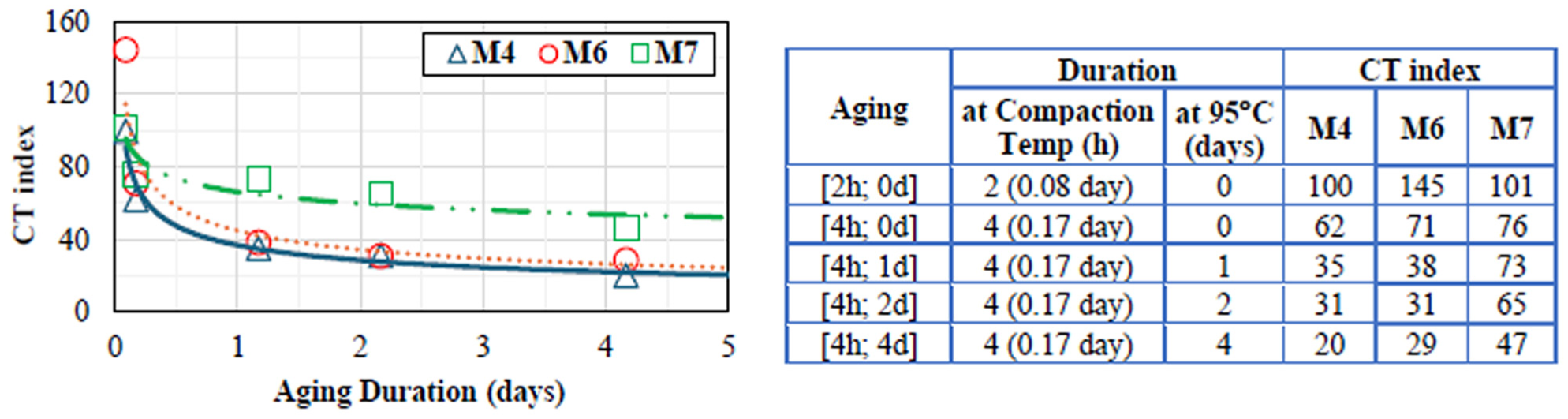
IDT-CT results of LMLC mixtures (M4, M6, and M7) as a function of aging.
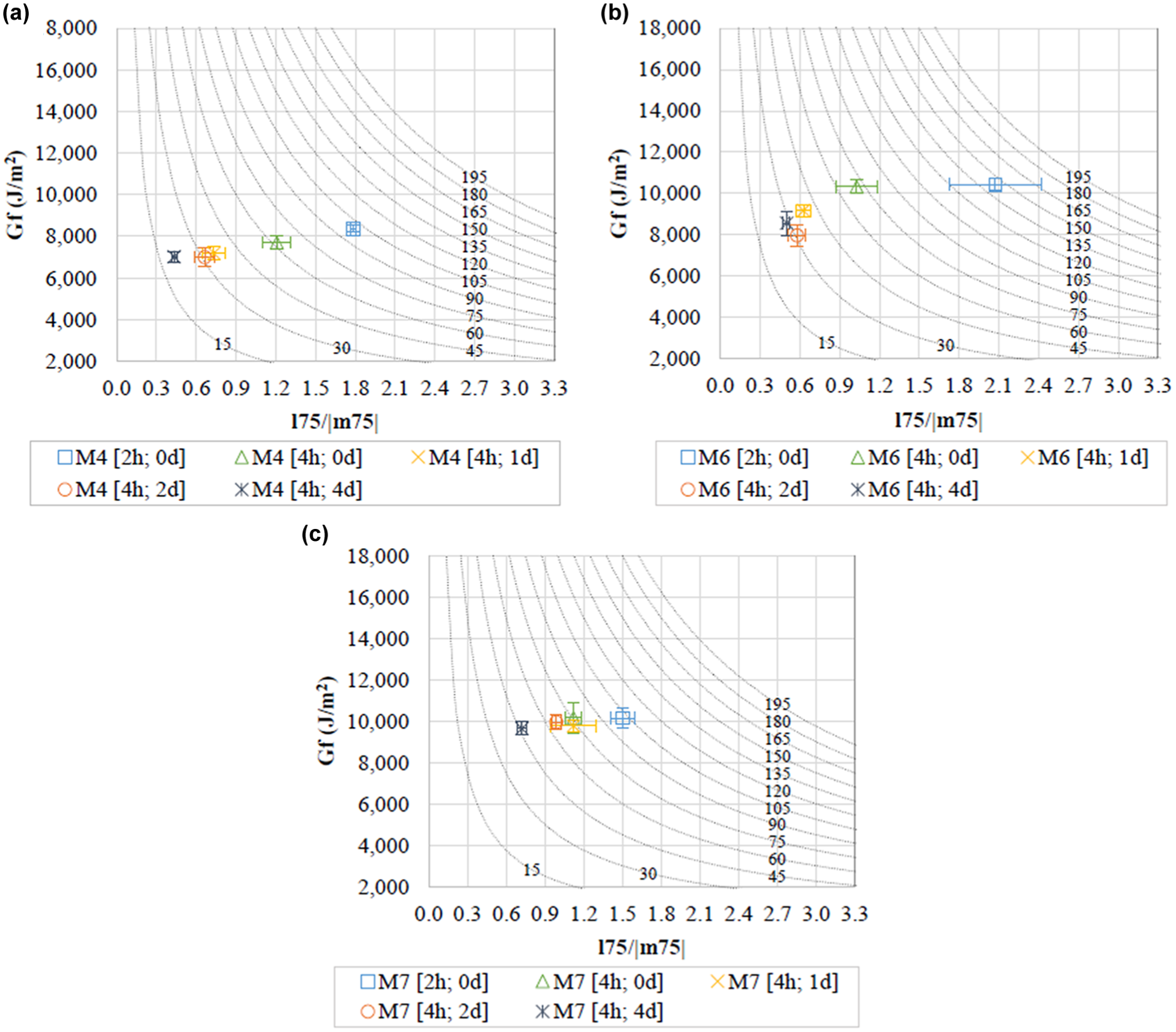
IDT-CT results of LMLC mixtures on interaction plots: (a) M4; (b) M6; and (c) M7. l75=displacement at 75 % the peak load after the peak (mm); |m75| = absolute value of the post-peak slope m75 (N/m)
Figure 5 shows that the model properly predicts the measured CT index values as a function of aging. In addition, it shows that the constant rate region for M7 began after 4 h of STOA, whereas for M4 and M6, it did not begin until after 1 day of LTOA at 95°C. This highlights that although 4 days of LTOA more closely represent field aging for mixtures in Virginia, such an extended duration is not required. Reduced aging periods between 1 and 2 days at 95°C are sufficient to differentiate the cracking performance of the asphalt mixtures. The next step is to determine and evaluate the equivalent aging durations at higher temperatures using the kinetics modeling developed by Elwardany et al. ( 43 , 44 ).
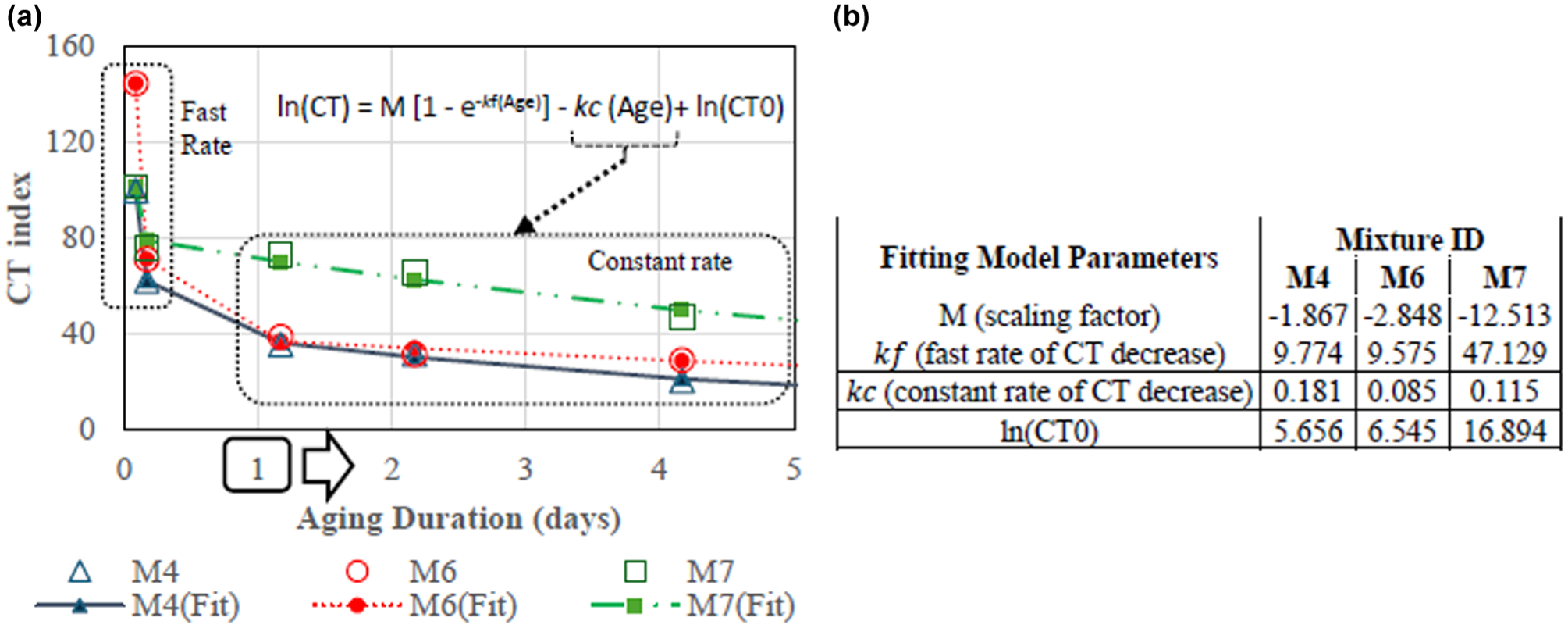
Measured and predicted IDT-CT results of LMLC mixtures (M4, M6, and M7): (a) CT index as a function of aging duration and (b) fitting model parameters values.
Kinetics-Based Equivalent LTOA Duration at 135°C
The focus of this study is to establish a practical long-term aging protocol for evaluating the cracking resistance of asphalt mixtures in Virginia. Therefore, it became critical to convert the extended aging at 95°C to a higher temperature. This adjustment aimed to reduce the aging duration while considering working hours and making the process more efficient and feasible for implementation. First, 135°C was proposed. However, considering that Tcomp for all mixtures is relatively close to 135°C, the actual Tcomp for each asphalt mixture was used. This approach ensured consistency between the STOA and LTOA processes, while eliminating the need for multiple ovens. Using the kinetics model developed by Elwardany et al. ( 43 ), equivalent long-term aging periods at Tcomp were derived (Table 6).
Estimated Equivalent Aging Durations between 95°C and 135°C using Kinetics Model
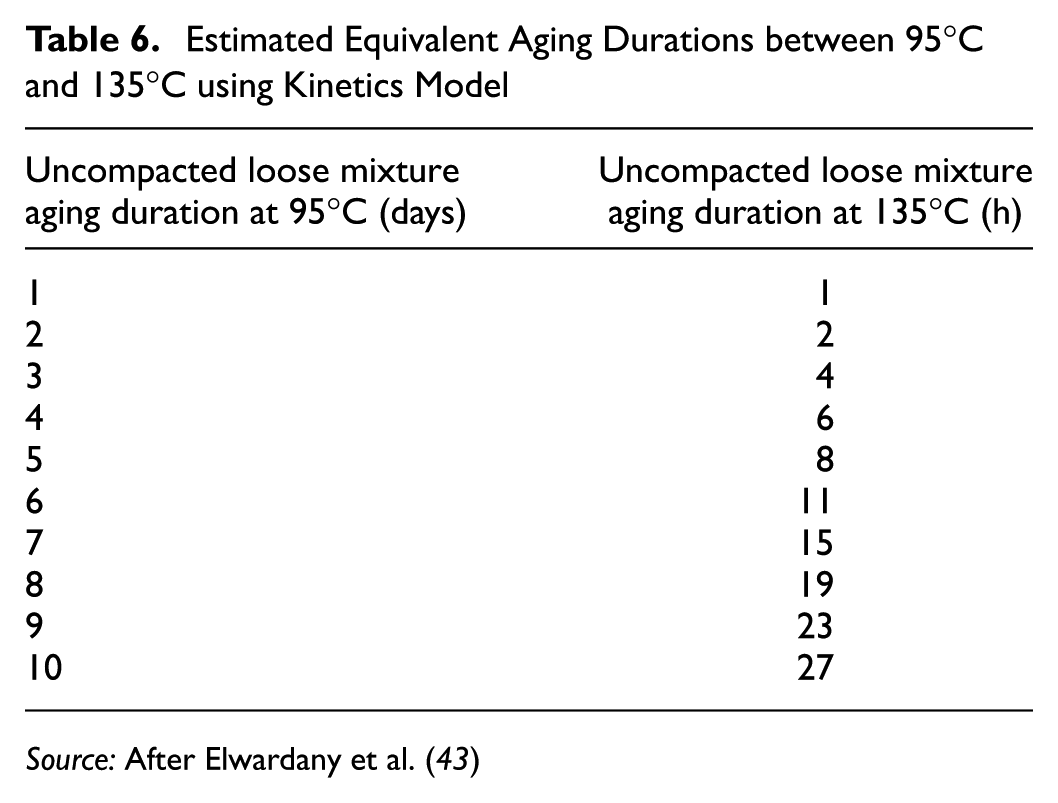
Source: After Elwardany et al. ( 43 )
To establish an equivalent aging duration at Tcomp that replicates the effects of the targeted 4 h at Tcomp plus 1 or 2 days at 95°C, a three-step process was employed to account for the initial fast aging rate. As part of this process, it is important to acknowledge the following considerations for the binder kinetic model used ( 43 ): (1) the model is based on aging at 135°C, which may differ from the Tcomp used in this study; and (2) it is based on virgin asphalt binder and does not account for the presence of RAP binder, which is a key component of the mixtures in this study.
Instead, the kinetic model was used as a starting point for estimating equivalent aging durations. From these estimates, a range of durations was selected to bracket the equivalent aging durations at 135°C. The true equivalency at Tcomp was then established based on the mixture’s performance with aging for the CT index values.
It is important to remember that the main objective of this study was to develop a mixture aging method that would allow for the differentiation of mixtures based on their performance characteristics, rather than strictly correlating the results to a specific number of years in the field.
In the first step of the process, the STOA aging periods measured in hours at 135°C were converted into their equivalent aging periods in days at 95°C. Then, the cumulative equivalent aging durations in days at 95°C for (4 h; 1 day) and (4 h; 2 days) were calculated. Finally, these total aging periods in days at 95°C were converted back into hours at 135°C. The three sequential steps implemented in this effort are summarized as follows:
Step 1. Convert the STOA period from hours at 135°C into days at 95°C. Using Table 6, 4 h at 135°C is equivalent to 3 days at 95°C.
Step 2. Calculate the cumulative aging duration in days at 95°C. For the identified reduced aging durations of (4 h; 1 day) and (4 h; 2 days), the cumulative aging duration at 95°C was 4 days (i.e., 3 days + 1 day) and 5 days (i.e., 3 days + 2 days), respectively.
Step 3. Convert back the total days at 95°C into hours at 135°C. Using Table 6, the 4 and 5 days at 95°C are equivalent to 6 and 8 h at 135°C, respectively.
Based on the presented conversions, two accelerated LTOA durations at Tcomp were adopted;
Total of 6 h of STOA and LTOA at Tcomp (i.e., 4 h of STOA plus 2 h of LTOA).
Total of 8 h of STOA and LTOA at Tcomp (i.e., 4 h of STOA plus 4 h of LTOA).
All mixtures (M1–M10) were then mixed, compacted, and aged in the laboratory under these conditions, and subsequently tested for their CT index. The results were compared with the values at the targeted reduced aging of (4 h; 2 days). Asphalt binders were recovered from all aged asphalt mixtures and tested using the FS test and the FTIR test to evaluate their rheological and chemical properties as a function of aging, respectively.
Comparison between Accelerated and Reduced Aging Durations (Phase 2)
IDT-CT Test Results
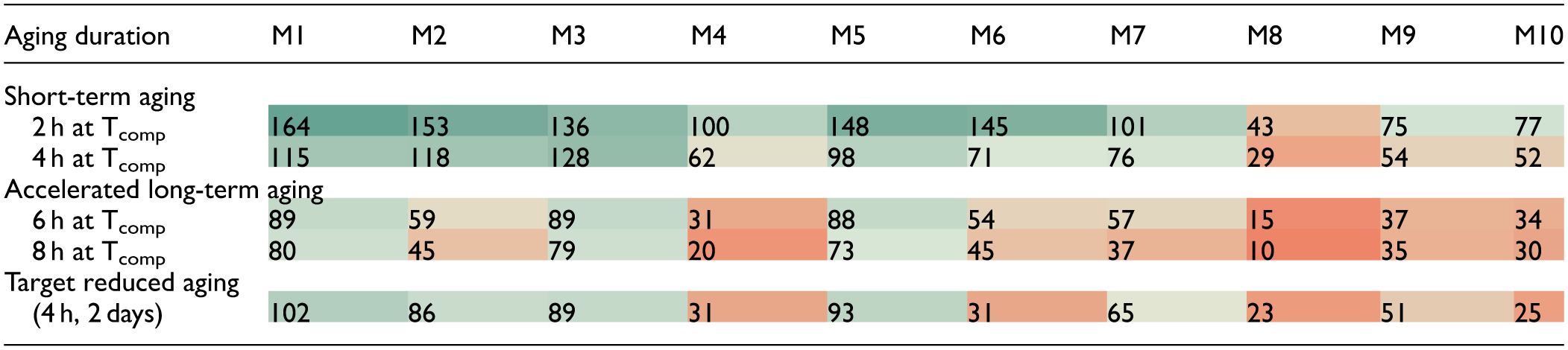
Figure 6 and Table 7 show the CT index values for all ten asphalt mixtures (M1–M10) measured after 2, 4, 6 and 8 h of aging at Tcomp. Based on the data presented, the following key observations can be made.
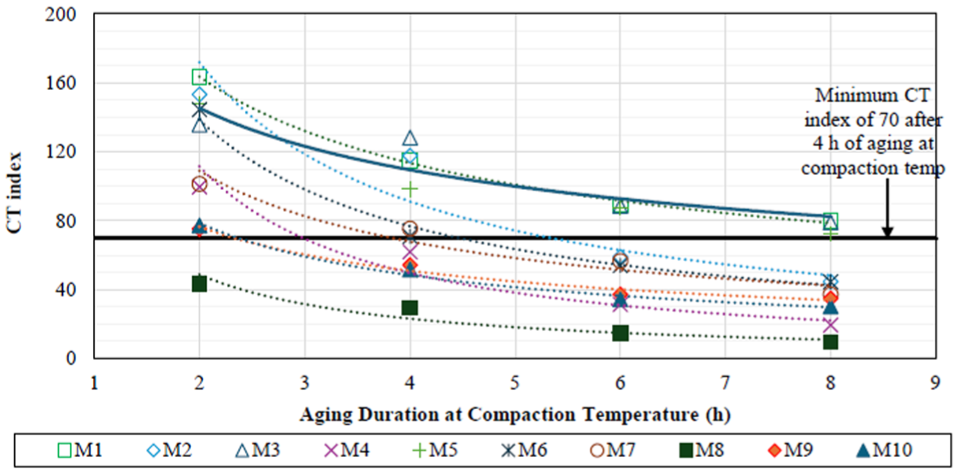
Measured IDT-CT results of LMLC mixtures as a function of aging at compaction temperature.
Measured IDT-CT Results of LMLC Mixtures (M)
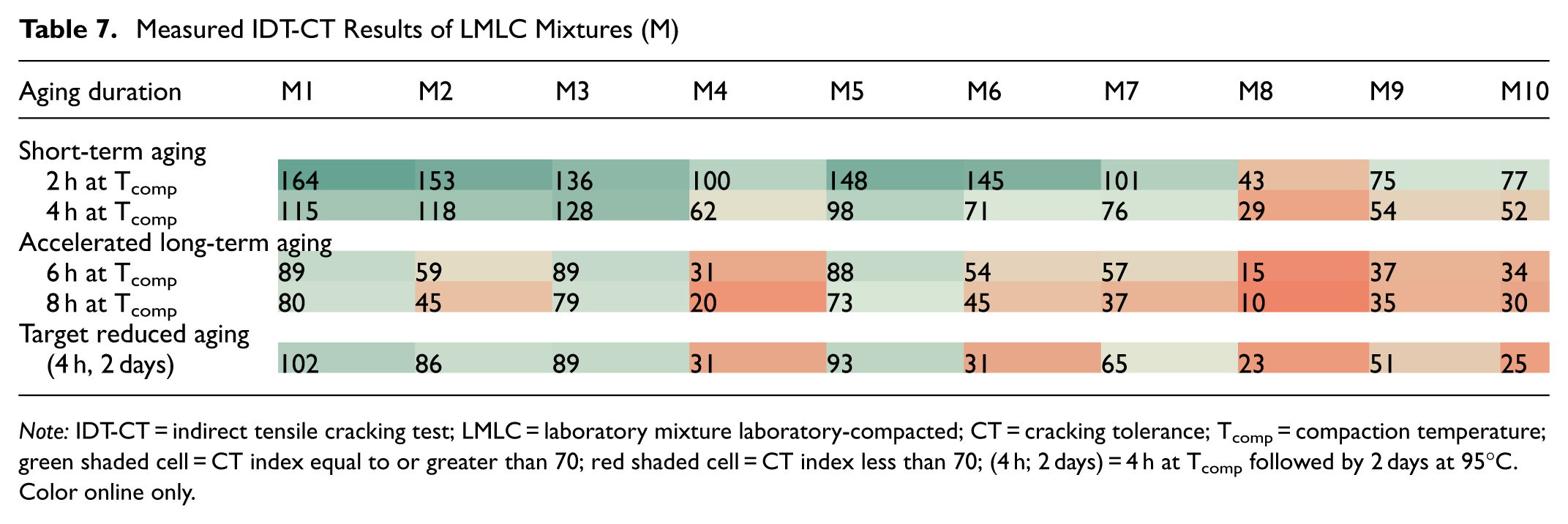
Note: IDT-CT = indirect tensile cracking test; LMLC = laboratory mixture laboratory-compacted; CT = cracking tolerance; Tcomp = compaction temperature; green shaded cell = CT index equal to or greater than 70; red shaded cell = CT index less than 70; (4 h; 2 days) = 4 h at Tcomp followed by 2 days at 95°C. Color online only.
All mixtures exhibited a decrease in CT index with the increase in aging duration. Mixtures M1, M3, and M5 generally showed the highest CT index values, and M8 consistently exhibited the lowest values among the evaluated mixtures.
Six out of the 10 mixtures met the minimum CT index criterion of 70 after 4 h of aging at Tcomp (i.e., STOA) as established by the VDOT. Among the mixtures that did not meet this criterion were M4 and M10 BMD mixtures, and M8 and M9 Superpave mix designs.
The relative ranking of the mixtures varies with aging duration, which indicates different susceptibility to aging. Of note, three mixtures maintained a CT index value above 70 even after 8 h of aging, demonstrating superior long-term cracking resistance compared with the other evaluated mixtures.
The CT index values were also measured for all 10 mixtures at the targeted reduced aging of (4 h; 2 days), consisting of 4 h at Tcomp followed by an additional 2 days at 95°C. The results were compared with the CT index values measured under accelerated aging at Tcomp. A CT-based equivalent aging duration at compaction temperature was determined. Therefore, the CT index for the (4 h; 2 days) aging condition was used to determine the accelerated aging at Tcomp that would result in a similar CT index value. Figure 7 shows a box plot for the determined CT-based equivalent aging durations at Tcomp. The aging durations ranged between 4.6 and 8.3 h with an average of 5.9 h and a median of 5.4 h at compaction temperatures. In summary, the CT-based and kinetics-based equivalent aging durations resulted in similar results.
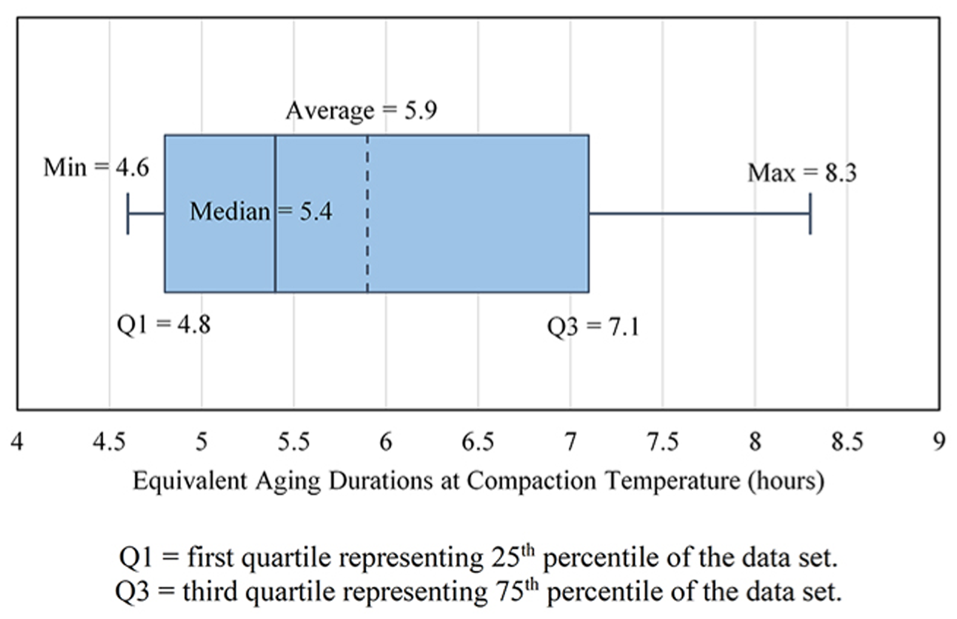
Box plot for equivalent aging duration at compaction temperature for (4 h; 2 days) aging condition based on IDT-CT results of LMLC mixtures.
A statistical comparison was conducted between the IDT-CT results for each asphalt mixture aged at the target reduced aging condition of (4 h; 2 days) and the various accelerated aging conditions at Tcomp: (2 h; 0 days), (4 h; 0 days), (6 h; 0 days), and (8 h; 0 days). Two separate paired t-test analyses at a 95% confidence level (i.e., significance level of 0.05) were conducted to evaluate the differences between these aging conditions.
The first analysis focused on the measured test variability among the replicates of CT index values for each aging condition. This approach allowed for a direct comparison between the differences in CT index values while accounting for the test variability within the data.
The second analysis used the established COV threshold of 18.3% for the mean CT index values. By applying this COV, the analysis aimed to evaluate the differences in CT index values between the aging conditions under a controlled level of acceptable variability, ensuring that deviations within the CT index values remained within VDOT-accepted limits.
These two analyses provided a comprehensive comparison between the CT index values for the reduced aging condition and the accelerated aging conditions by accounting for the actual variability observed in the data and an accepted standard for variability. The findings from the statistical analyses are summarized in Table 8. The CT index data for the mixtures across the various evaluated aging conditions satisfied the normality assumption based on the Shapiro–Wilk test ( 42 ). The paired comparisons were classified as follows.:
Statistical Comparison of IDT-CT Results between Accelerated and Reduced Aging
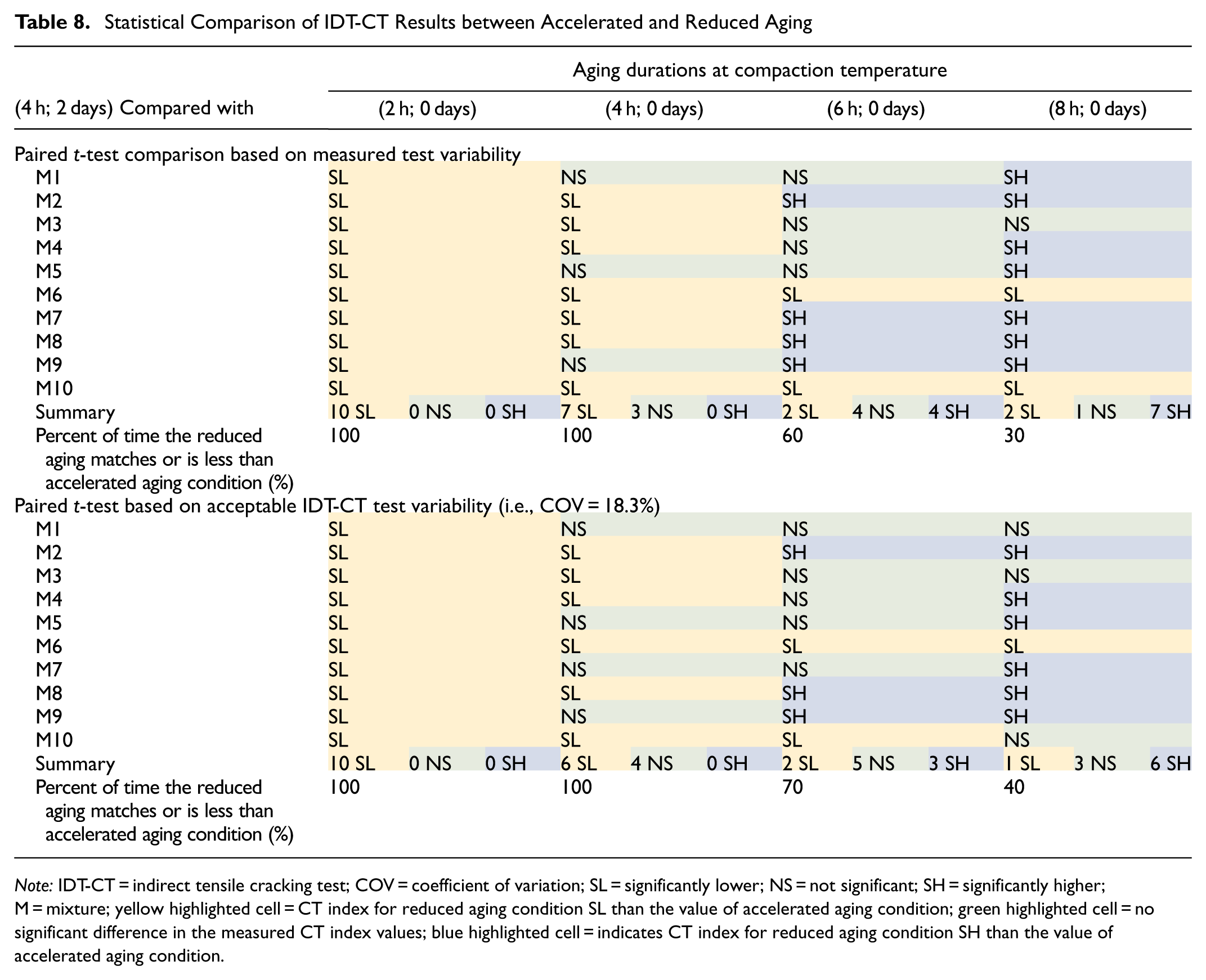
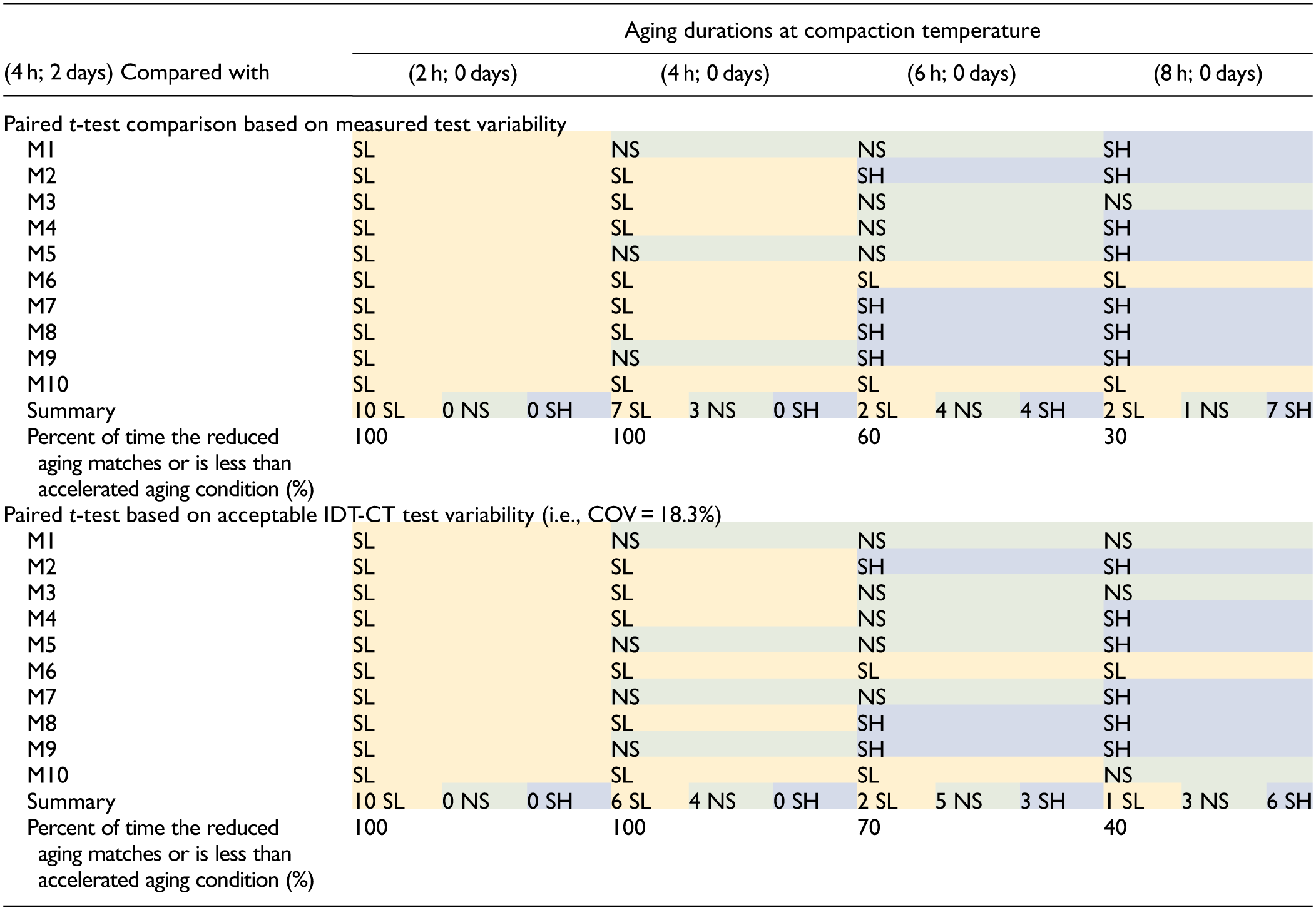
Note: IDT-CT = indirect tensile cracking test; COV = coefficient of variation; SL = significantly lower; NS = not significant; SH = significantly higher; M = mixture; yellow highlighted cell = CT index for reduced aging condition SL than the value of accelerated aging condition; green highlighted cell = no significant difference in the measured CT index values; blue highlighted cell = indicates CT index for reduced aging condition SH than the value of accelerated aging condition.
Significantly lower (SL), indicating that the mean CT index for the reduced aging condition is significantly lower than the value of the accelerated aging condition at the 95% confidence level.
Not significant (NS), indicating no significant difference in the measured CT index values between the reduced and accelerated aging conditions at the 95% confidence level.
Significantly higher (SH), indicating that the mean CT index for the reduced aging condition is significantly higher than the value of the accelerated aging condition at the 95% confidence level.
If the (4 h; 0 days) condition was SL compared with the accelerated aging CT index values, it indicates that the accelerated aging is resulting in less aged asphalt mixtures. In contrast, if the (4 h; 0 days) condition was SH, it suggests that the accelerated aging is excessively aging the asphalt mixtures, making it no longer representative of the target reduced aging condition. For an accelerated aging condition to be considered equivalent to the target reduced aging condition, it should ideally have the highest number of NS comparisons.
The goal is to identify the accelerated condition where the CT index data shift from SL to NS, and eventually to SH. This represents the level where the accelerated aging condition most likely reflects the target reduced aging condition and will be selected as the equivalent accelerated aging duration if no adverse effects are induced on the asphalt binder rheological and chemical properties. Based on the data given in Table 8, the following observations can be made.
(2 h; 0 days) versus (4 h; 2 days): The CT index of the reduced aging condition (4 h; 2 days) was consistently lower than the (2 h; 0 days) accelerated condition for all 10 asphalt mixtures, with 100% of the comparisons showing a significantly lower difference in both analyses.
(4 h; 0 days) versus (4 h; 2 days): The comparison showed no significant difference in CT index values for 3 out of 10 mixtures in the first analysis, and for 4 out of 10 mixtures in the second analysis. In both analyses, the (4 h; 0 days) aging condition matched or was lower than the (4 h; 2 days) aging condition 100% of the time.
(6 h; 0 days) versus (4 h; 2 days): This condition showed variability, with four mixtures having no significant difference, two being significantly lower, and four being significantly higher than the CT index of the reduced aging condition in the first analysis. In the second analysis, five mixtures showed no significant difference, two were significantly lower, and three were significantly higher. The target reduced aging condition matched or was lower than the accelerated aging condition 60%–70% of the time.
(8 h; 0 days) versus (4 h; 2 days): This condition showed the greatest difference, with a significant number of comparisons (7 out of 10) indicating that the accelerated aging was significantly higher than the reduced aging condition. Only 30%–40% of the comparisons showed no significant difference or a lower CT index value for the reduced aging condition.
Therefore, the (6 h; 0 days) accelerated aging condition was selected as equivalent to (4 h; 2 days) aging because of its balanced results across the evaluated asphalt mixtures. In both statistical analyses, a substantial portion of the comparisons (60%–70%) indicated that the (6 h; 0 days) aging condition either matched or resulted in lower CT index values compared with (4 h; 2 days). This suggests that aging for 6 h at Tcomp can effectively replicate the effects of the (4 h; 2 days) aging condition, proving a practical balance between testing efficiency and achieving comparable aging effects. However, this equivalence is considered acceptable only if the asphalt binder’s rheological and chemical properties are not adversely affected by the accelerated aging process.
Therefore, based on the observed CT index data, the evaluated asphalt mixtures were categorized into four performance groups for further asphalt binder evaluation. Group A includes the highest-performing mixtures, and Group D comprises the lowest-performing ones. The grouping was determined by the relative similarity of the CT index values across the different aging durations.
Group A: This group includes mixtures M1, M3, and M5. These mixtures consistently showed the highest CT index values, indicating superior resistance to cracking even after prolonged aging. These mixtures exhibited minimal degradation over time and maintained values well above the minimum STOA threshold of 70 even after 8 h of aging.
Group B: This group is composed of mixtures M2, M6, and M7. Mixtures in this group performed similarly to or slightly below those in Group A up to 4 h of aging but exhibited a more pronounced reduction in CT index values with longer aging durations. Despite the reduction, all mixtures in this group met the minimum STOA threshold of 70 after 4 h of aging at Tcomp.
Group C: This group consists of mixtures M4, M9, and M10. These mixtures failed to meet the minimum STOA threshold of 70 after 4 h of aging at Tcomp, showing a more rapid reduction in CT index values with aging. However, all mixtures in this group exhibited a CT index value greater than 70 after 2 h of aging at Tcomp.
Group D: This group includes mixture M8, which exhibited the poorest performance among all mixtures. The mixture’s CT index values were consistently lower than those of the other groups. M8 failed to meet the minimum threshold of 70, even at the early aging stage of 2 h at Tcomp.
This grouping helped identify asphalt mixtures with different levels of cracking and aging susceptibility and highlights the differences among the evaluated mixtures. Then, after completing the IDT-CT testing, asphalt binders were recovered from a representative aged mixture from each group, which are: M1 from Group A, M2 from Group B, M10 from Group C, and M8 from Group D. These recovered binders were then analyzed to evaluate the rheological and chemical changes induced by the aging process.
Rheological and Chemical Properties
The comparison between recovered asphalt binders from mixtures (i.e., M1, M2, M10, and M8) aged at 95°C and at Tcomp was conducted to assess whether the higher aging temperature had a significant effect on the binder’s rheological and chemical properties. By examining the differences in binder properties, this study aimed to determine whether the accelerated aging of mixtures at Tcomp could produce comparable asphalt binder characteristics to the targeted reduced aging at 95°C, or if the higher temperature resulted in altered material properties that could affect long-term pavement performance.
The virgin and recovered asphalt binders were evaluated for a range of frequencies and temperatures to develop G* and δ master curves, for temperatures between 4°C and 46°C (with 6°C increments). An 8-mm parallel plate geometry was used with 0.1% strain and a frequency range of 0.1–100 rad/s (data collected at 10 points per decade). For temperatures between 60°C and 70°C (with 4°C increments), a 25-mm parallel plate geometry was employed with 1% strain and a frequency range of 0.01–100 rad/s (data collected at 10 points per decade).
Rheology analysis software (RHEAv2, version 2.3.11) was used to construct the asphalt binder master curves using the free-shifting method in RHEA to fit the measured FS data into a smooth curve ( 45 ).
The FTIR was used to assess the chemical composition of the virgin and recovered asphalt binders ( 34 , 46 ). The FTIR spectrum was used to determine the CA, which is used as an indicator of oxygen absorption by the asphalt binder. The CA is calculated as the area, in arbitrary units, between the absorption spectrum and the magnitude of the absorption at 1,870 cm−1 as the baseline and between the wavelengths of 1,650.768 and 1,870.473 cm−1. By using the CA as a measure of the asphalt binder oxidation and the CT index to assess the changes in the mixture’s resistance to cracking, the effects of accelerated aging at elevated temperature on binder oxidation were compared to those of reduced aging at 95°C (4 h; 2 days).
Table 9 summarizes the rheological (i.e., PGLT, ΔTc, and GRP) and chemical (i.e., CA) properties of virgin and recovered asphalt binders under various aging conditions, illustrating how these properties evolve with aging time and temperature. In addition, an equivalent aging duration was determined by identifying the aging duration at Tcomp that yields the same binder properties as the target reduced aging condition of (4 h; 2 days). This comparison helps when establishing a consistent basis for evaluating the effects of different aging protocols on asphalt binder performance.
Rheological and Chemical Properties of Virgin and Recovered Asphalt Binders along with IDT-CT Results
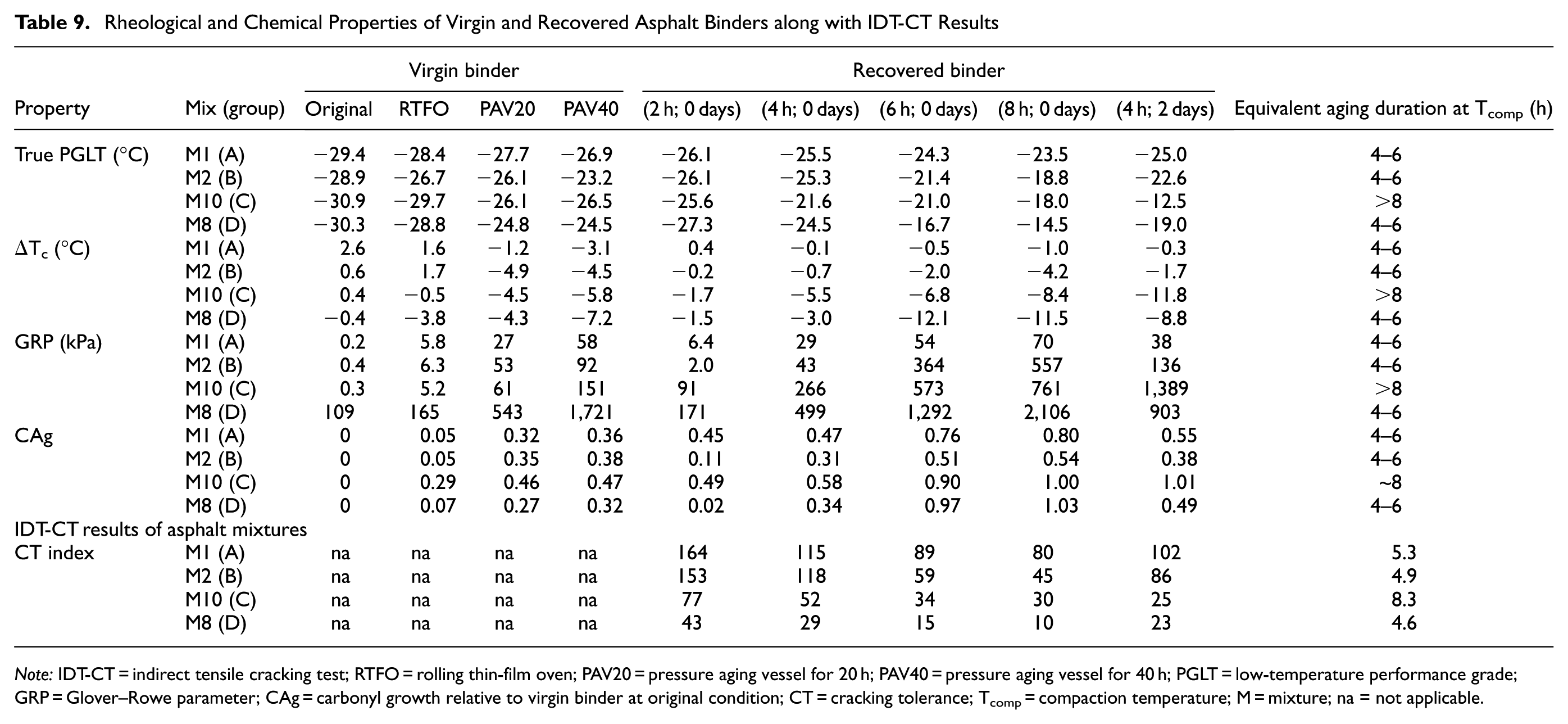
Note: IDT-CT = indirect tensile cracking test; RTFO = rolling thin-film oven; PAV20 = pressure aging vessel for 20 h; PAV40 = pressure aging vessel for 40 h; PGLT = low-temperature performance grade; GRP = Glover–Rowe parameter; CAg = carbonyl growth relative to virgin binder at original condition; CT = cracking tolerance; Tcomp = compaction temperature; M = mixture; na = not applicable.
As aging progresses, the asphalt binders generally exhibited an increase in low-temperature performance grade (PGLT [less negative]), GRP values, and CAg, indicating a reduction in performance, particularly under LTOA scenarios, such as pressure aging vessel for 40 h (PAV40), (6 h; 0 days), and (8 h; 0 days). This is especially evident in asphalt mixtures, such as M10 and M8, which showed more significant progression, suggesting that these asphalt binders are more susceptible to performance degradation because of aging.
Virgin asphalt binders from M1, M2, M10, and M8 exhibited a decrease in PGLT by one grade (from PG-28 to PG-22) when comparing the original and PAV40 virgin binder data. However, the recovered asphalt binders from all four mixtures exhibited a PG-22 grade after 2 h of aging at Tcomp. In general, the M1 asphalt binder showed a reduced sensitivity to aging compared with the other binders. All recovered asphalt binders except for M1 exhibited a grade drop (from PG-22 to PG-16) with extended aging durations of 6 h at Tcomp. The recovered asphalt binder from M8 exhibited an additional grade drop (from PG-16 to PG-10) after 8 h of aging at Tcomp, and M1 remained at PG-22.
The (2 h; 0 days) PGLT data were within 1°C of PAV40 for M1 and M10, similar to the pressure aging vessel for 20 h (PAV20) for M2, and fell between the rolling thin-film oven (RTFO) and PAV20 for M8. The target reduced aging of (4 h; 2 days) resulted in PGLT values that were comparable to those between (4 h; 0 days) and (6 h; 0 days) for M1, M2, and M8, but much lower than the (8 h; 0 days) data for M10.
A similar trend was observed for ΔTc, where an overall decrease (i.e., becoming more negative) occurred with increased aging. In the (4 h; 2 days) target aging scenario, ΔTc values for M1, M2, and M8 fell between those observed for (4 h; 0 days) and (6 h; 0 days). However, for M10, the ΔTc values for the (4 h; 2 days) aging scenario were significantly worse than those for the (8 h; 0 days).
NCHRP Project 09-60 investigated how changes in asphalt binder formulation and manufacturing affect pavement performance, leading to recommended updates in binder specifications ( 46 ). As part of this project, three ΔTc categories were established.
For M1 and M2 binders, the ΔTc values did fall below −6°C regardless of aging conditions. Only M10 exhibited a ΔTc lower than −6°C for the virgin binder after PAV40 aging. For the recovered asphalt binders, M10 and M8 exhibited ΔTc values lower than −6°C under the aging conditions of (6 h; 0 days), (8 h; 0 days), and (4 h; 2 days). The aging conditions corresponding to the cutoff for the passing category (i.e., ΔTc of −2°C) were as follows:
M1: PAV40 for the virgin binder.
M2: PAV20 for the virgin binder and (8 h; 0 days) for the recovered binder.
M10: PAV20 for the virgin binder and (4 h; 0 days) for the recovered binder.
M8: RTFO for the virgin binder and (4 h; 0 dayd) for the recovered binder.
Figures 8–11 show the black space diagrams for the GRP (Table 8) for all evaluated virgin and recovered binders across the aging conditions. The green dashed-dotted and dashed double-dotted lines represent the current PG boundaries for G* and δ for the RTFO (for virgin binders) and as-recovered binders for PAV20 aging conditions. A damage zone is defined by a GRP from 180 kPa (indicating the onset of cracking) to 600 kPa (indicating significant cracking). This range corresponds to ductility values of 5 cm and 3 cm, respectively, reflecting increased brittleness. The black dashed and solid lines mark the GRP thresholds of 180 kPa and 600 kPa, respectively.
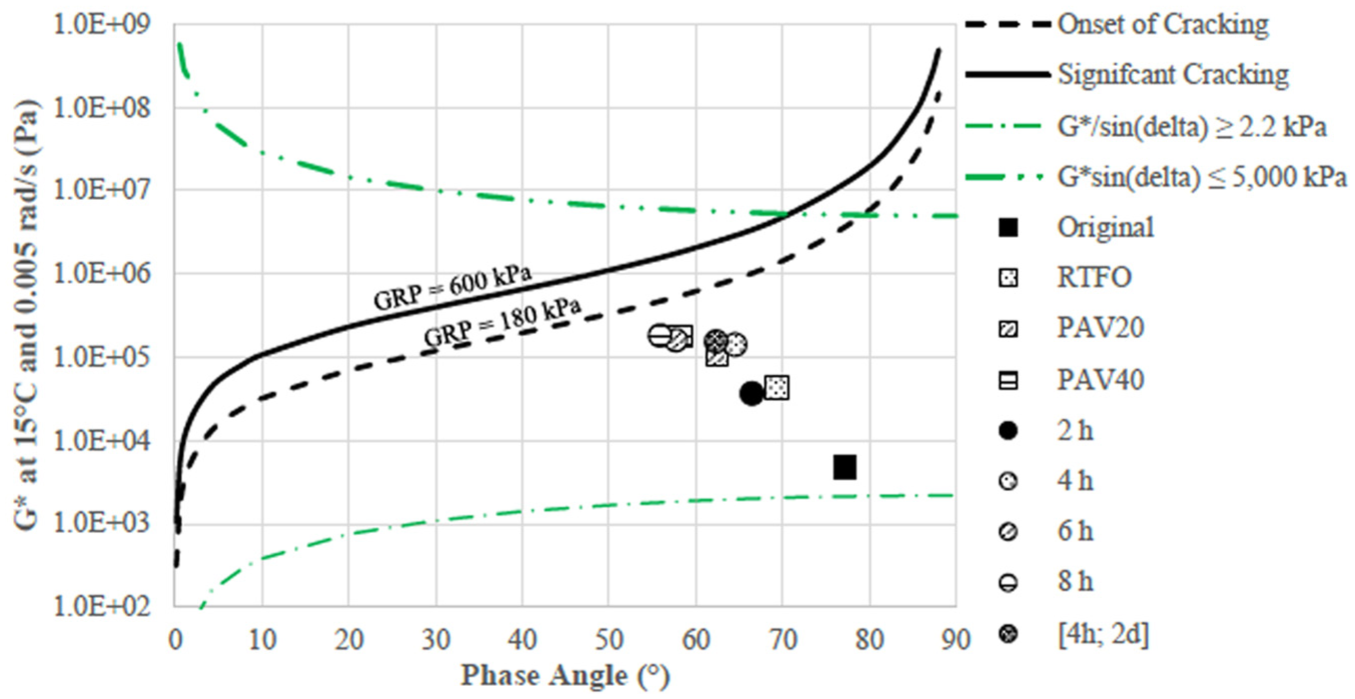
Black space analysis of Glover–Rowe parameter (GRP) measured at 15°C and 0.005 rad/s for M1 virgin and recovered asphalt binders (Group A).
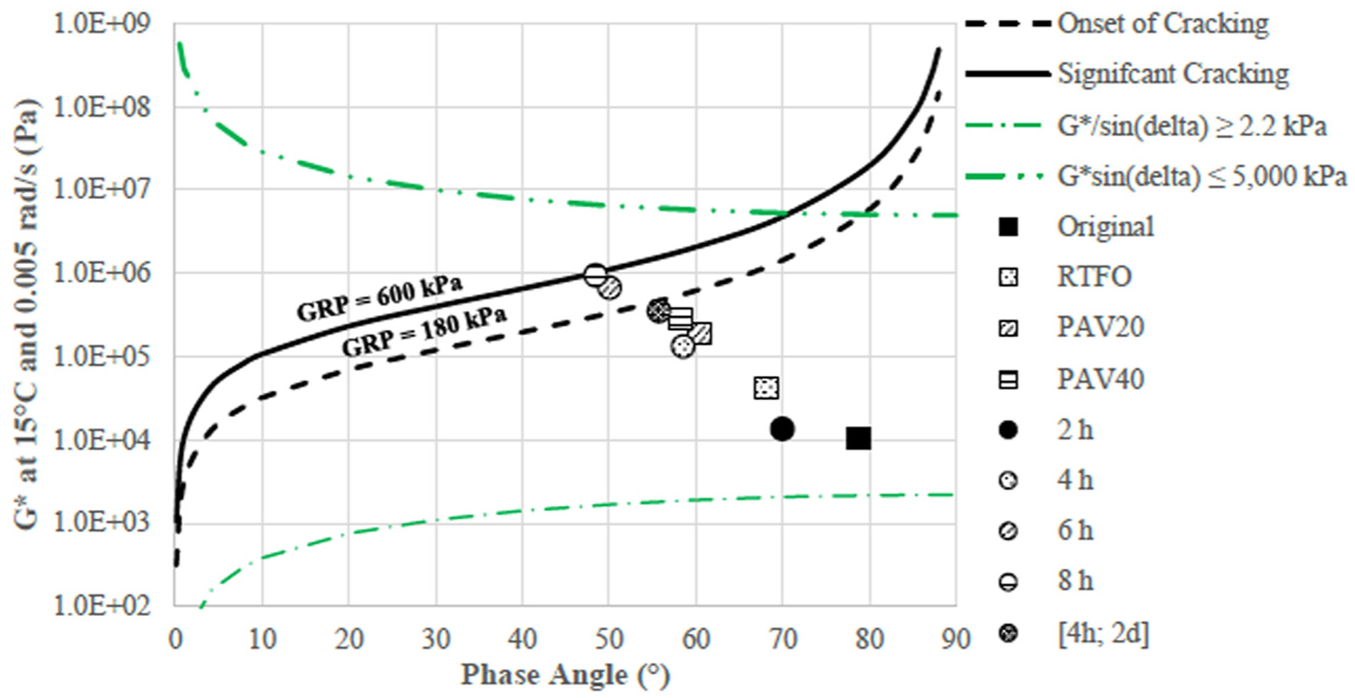
Black space analysis of Glover–Rowe parameter (GRP) measured at 15°C and 0.005 rad/s for M2 virgin and recovered asphalt binders (Group B).
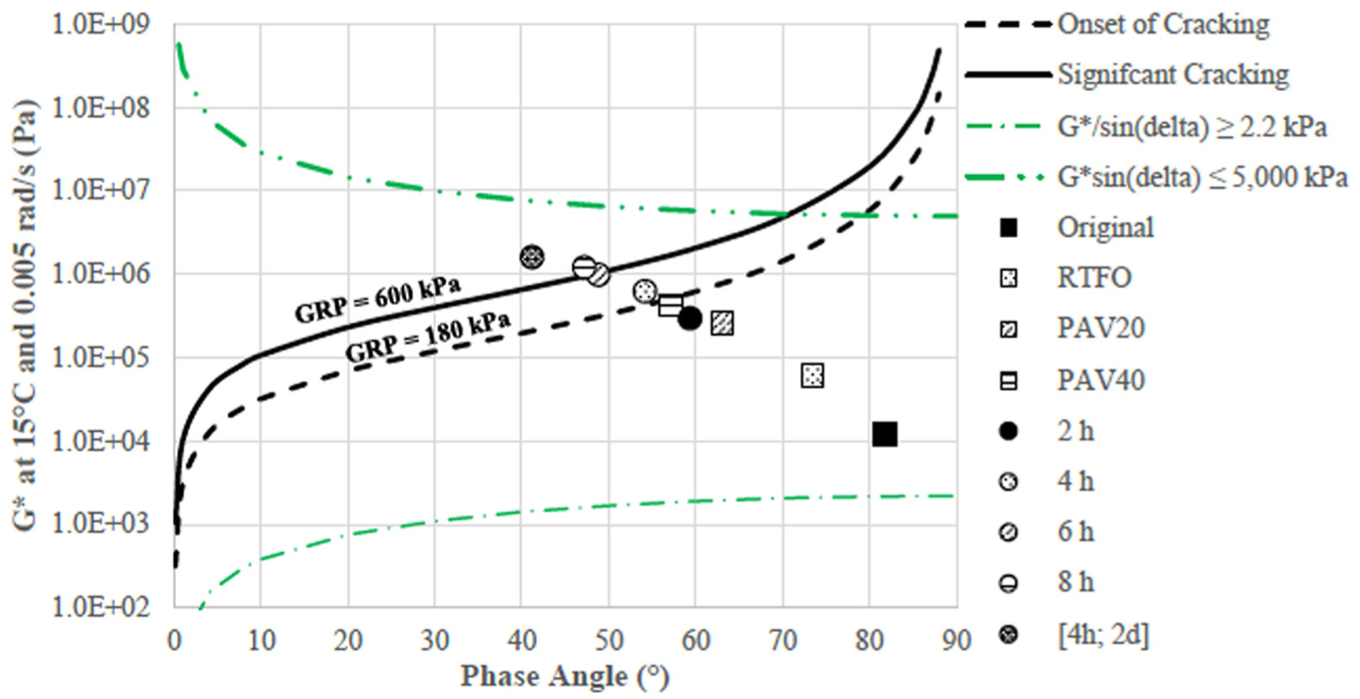
Black space analysis of Glover–Rowe parameter (GRP) measured at 15°C and 0.005 rad/s for M10 virgin and recovered asphalt binders (Group C).
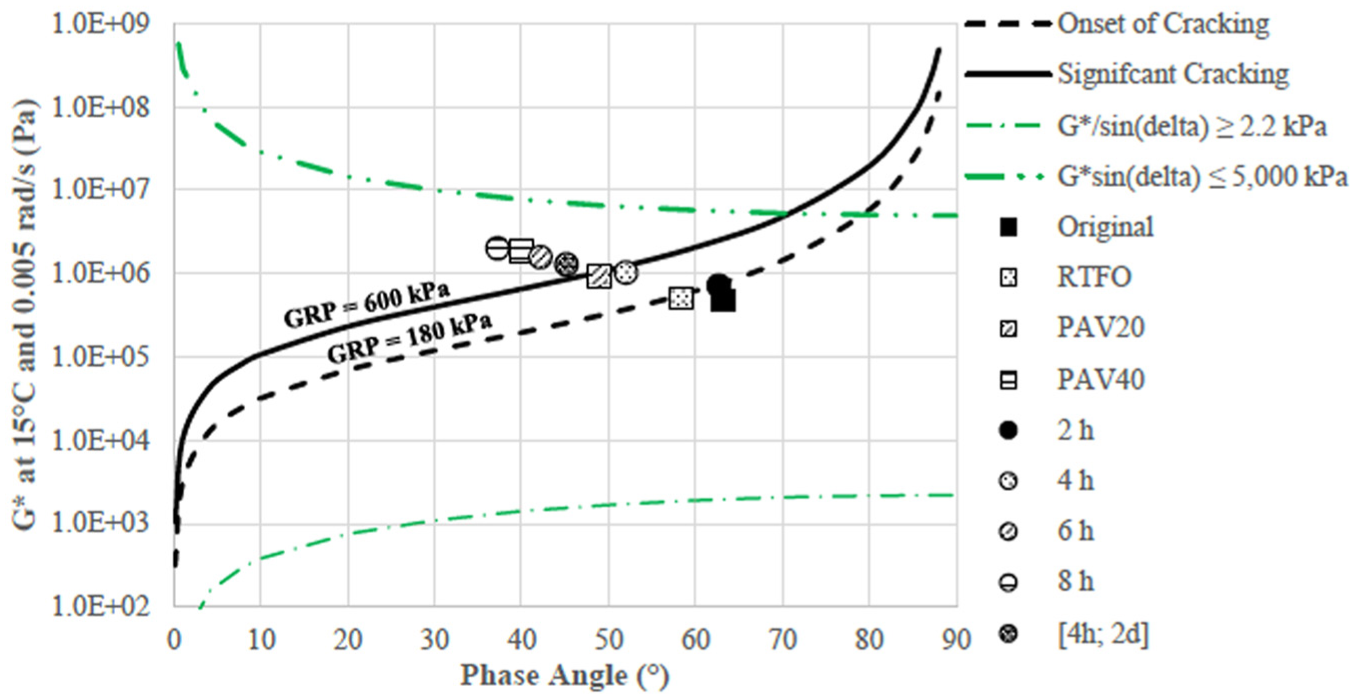
Black space analysis of Glover–Rowe parameter (GRP) measured at 15°C and 0.005 rad/s for M8 virgin and recovered asphalt binders (Group D).
Overall, aging led to an increase in G* and a decrease in δ, suggesting that a lower G* and higher δ are associated with reduced cracking susceptibility. In addition, a steeper slope between G* and δ implies lower susceptibility to long-term aging and enhanced resistance to flexibility loss. This highlights the rheological changes associated with aging and their influence on the cracking potential of asphalt binders.
Table 9 summarizes the IDT-CT results for the asphalt mixtures evaluated under various aging conditions. This data was compared with the GRP values and aging trends. Based on the observed data, the following observations can be made.
All M1 binders (virgin and recovered) exhibited the GRP values below the onset cracking limit of 180 kPa, indicating a high resistance to cracking. This aligns with the IDT-CT results, where the CT index remained at 80 (above the STOA specification of 70) after 8 h of aging at Tcomp.
For M2, all virgin binders had GRP values below 180 kPa, even after PAV40 aging. However, the recovered M2 binder showed GRP values exceeding 180 kPa but remaining below 600 kPa under the aging conditions (6 h; 0 days) and (8 h; 0 days). In these cases, the CT index dropped below the pre-established STOA threshold of 70, indicating a reduction in cracking resistance.
All M10 virgin binders exhibited GRP values below 180 kPa. However, for recovered asphalt binders, the GRP values exceeded 180 and 600 kPa after 4 and 8 h of aging at Tcomp, respectively. The corresponding CT index values were significantly lower, with 52 for (4 h; 0 days) and 34 for (6 h; 0 days), indicating increased susceptibility to cracking.
For M8, the virgin binder exhibited GRP values exceeding 180 kPa at PAV20 and surpassing 600 kPa at PAV40. In addition, after 4 and 6 h of aging at Tcomp, the GRP values exceeded 180 and 600 kPa, respectively, suggesting an increased risk of cracking. The CT index values for M8 were consistently below 70 across all aging conditions, indicating reduced cracking resistance after aging.
Table 9 provides the CA growth relative to the CAg for all virgin and recovered asphalt binders. The CAg increased with aging. Notably higher CAg values were observed for M10 and M8, which is consistent with the trends observed for PGLT, ΔTc, and GRP. In addition, the CAg values for the target reduced aging condition of (4 h; 2 days) were all within the measured values for recovered asphalt binders under accelerated aging conditions at Tcomp, further supporting the equivalence between the two aging protocols.
Of note, the equivalent aging duration determined based on CAg for the (4 h; 2 days) aging condition was consistent with those determined based on PGLT, ΔTc, and GRP. The data suggest that the binder experiences similar levels of aging between the accelerated aging durations and the target reduced aging condition. This indicates that the accelerated aging process does not significantly alter the asphalt binder’s chemical properties, addressing concerns about potential negative effects from accelerated aging at higher temperatures.
In conclusion, the rheological and chemical properties of the virgin and recovered asphalt binders were consistent with the IDT-CT results for the asphalt mixtures under the corresponding aging conditions. This reinforces the correlation between aging, cracking susceptibility, and binder performance and supports the accelerated aging selection of 6 h of aging at Tcomp.
Preliminary Criteria for CT Index (Phase 3)
The relationship between the IDT-CT test results and GRP of the recovered asphalt binders was examined to establish the critical CT index values that correspond to two cracking thresholds of interest. The thresholds were previously identified as 180 kPa for the onset of cracking and 600 kPa for significant cracking. These GRP thresholds were selected based on their relevance to predicting binder embrittlement and eventual cracking behavior under field conditions.
Figure 12 shows the relationship between the CT index and the GRP measured at 15°C and 0.005 rad/sec for various asphalt mixtures, including M1 from Group A; M2, M6, and M7 from Group B; M4 and M10 from Group C; and M8 from Group D. In general, the results show a nonlinear relationship, where an increase in GRP (which indicates increased binder brittleness) corresponds to a decrease in the CT index values. Therefore, a logarithmic relationship was established between the CT index and the natural logarithm of GRP (Equation 3). The CT index decreases rapidly at lower GRP values, followed by a more gradual decrease as GRP increases. The 95% confidence interval (CI) for the CT index is also shown, reflecting the variability in the data at each GRP level. Of note, all data points were considered in this analysis.

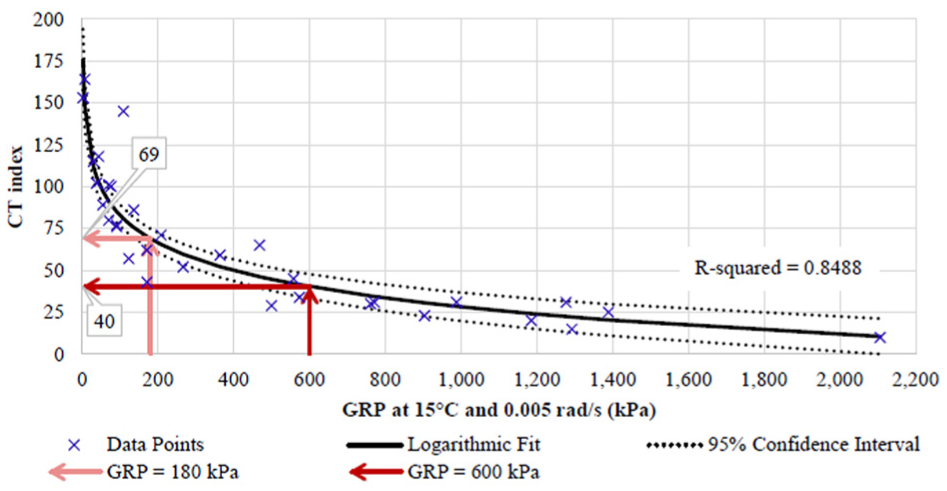
Relationship between cracking tolerance (CT) index and Glover–Rowe parameter (GRP) measured at 15°C and 0.005 rad/sec for evaluated asphalt mixtures.
Table 10 summarizes the mean CT index values along with the 95% CI values. Based on the data, the following observations can be made.
CT index Criterion for LMLC Asphalt Mixtures at Onset and Significant Cracking
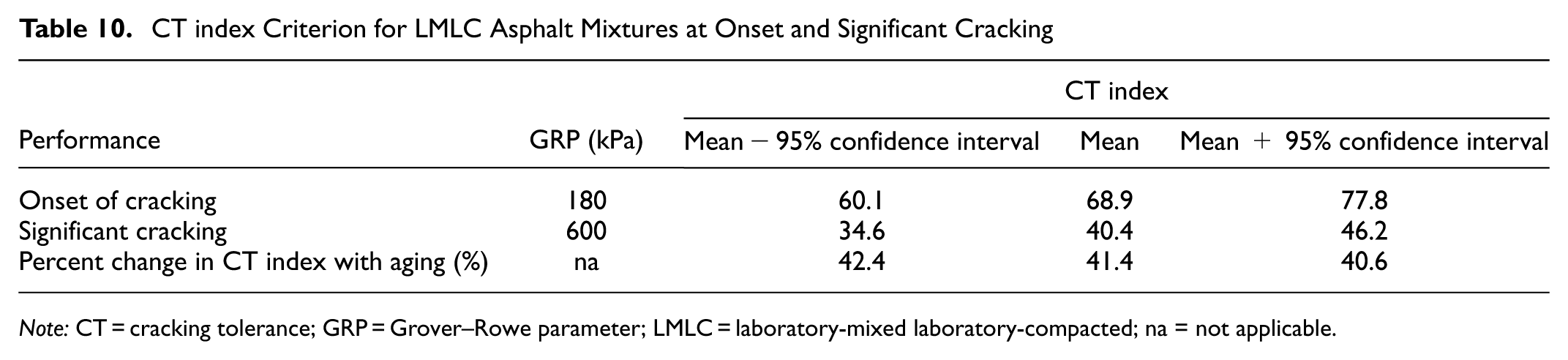
Note: CT = cracking tolerance; GRP = Grover–Rowe parameter; LMLC = laboratory-mixed laboratory-compacted; na = not applicable.
Onset of cracking (GRP = 180 kPa): ○ The CT index mean value at the onset of cracking is 68.9, with a 95% CI from 60.1 to 77.8. ○ This indicates that, under aging conditions leading to the initial formation of cracks, the asphalt mixtures exhibited CT index values similar to the VDOT criterion of 70 after 4 h of STOA at Tcomp. This result further supports the validity of the current CT index test criterion for the STOA condition using a completely independent data set.
Significant cracking (GRP = 600 kPa): ○ At this critical threshold, the mean CT index drops to 40.4, with a 95% CI of 34.6–46.2. ○ This significant reduction in the CT index signifies the reduced resistance to cracking, underscoring the need to subject LMLC asphalt mixtures to conditions leading to significant cracking.
Percent change in CT index with aging: ○ The age reduction in the CT index reflects a decrease of approximately 42.4% from the onset of cracking to significant cracking. ○ The values of the mean and CIs show consistent reductions in the CT index values. ○ This percentage decrease highlights the impact of aging on the performance of asphalt mixtures and its effect on the CT index.
Therefore, the following criteria for the IDT-CT test are recommended for short-term and long-term aging conditions:
A minimum CT index of 70 after 4 h of oven aging at Tcomp, with no individual replicate value falling below 60.
A minimum CT index of 40 after 6 h of oven aging at Tcomp, with no individual replicate value falling below 34.
Conclusions and Recommendations
This study aimed to establish a long-term aging protocol for asphalt mixtures in Virginia that balances meaningful performance differentiation and practical implementation. This involves optimizing the aging protocol to identify asphalt mixtures prone to early cracking without making the process overly lengthy for routine laboratory use. In total, 10 dense-graded surface mixtures with varying RAP contents and PG binders were sampled alongside their corresponding raw aggregate and asphalt binders.
The experimental plan was composed of three phases, with Phase 1 consisting of a mini experiment on three LMLC mixtures to determine an effective reduced aging duration at 95°C, which then became the target aging duration. Phase 2 of this study consisted of conducting the IDT-CT testing on all asphalt mixtures under accelerated aging at Tcomp and reduced aging at 95°C. In Phase 3, a preliminary criterion for the CT index after LTOA based on the GRP thresholds was established. The following summarizes the overall findings from this study.
Phase 1: Determination of equivalent aging durations. ○ The reduced aging durations between 1 and 2 days at 95°C were sufficient to differentiate the cracking performance of asphalt mixtures. ○ Equivalent aging durations at Tcomp were determined using a kinetics model, resulting in 2 and 4 h of aging on top of the 4 h of STOA.
Phase 2: Comparison between accelerated and reduced aging durations. ○ All asphalt mixtures showed a decrease in CT index with increased aging duration. Six out of 10 mixtures met the minimum CT index criterion of 70 after 4 h of STOA at Tcomp. ○ Based on the CT index values, the (6 h; 0 days) accelerated aging condition at compaction temperature was selected and was equivalent to the reduced aging condition of (4 h; 2 days). The (6 h; 0 days) is referred to as the critical aging condition, which entails 4 h of STOA followed by an additional 2 h at Tcomp. ○ The equivalent accelerated aging duration for the (4 h; 2 days) condition matched the durations determined by PGLT, ΔTc, and GRP, indicating that the binder experiences similar levels of aging in both scenarios. ○ The accelerated aging process did not alter the asphalt binder’s chemical properties, alleviating concerns about negative effects from the use of higher temperature aging.
Phase 3: Preliminary criteria for the CT index. ○ A good relationship was observed and established between the CT index of the asphalt mixtures and their respective GRP of the recovered asphalt binders. The relationship is described by a logarithmic fit with a coefficient of determination (R-squared) of 0.8488. ○ The data showed that a GRP value of 180 kPa, linked to the onset of cracking, corresponds to a CT index near the threshold performance criterion of 70 (according to the current specifications for STOA after 4 h at Tcomp). However, once the GRP reaches 600 kPa, indicative of significant cracking, the CT index drops to 40.
In summary, based on the findings from this study, the following recommendations are made for LMLC surface mixtures in Virginia.
Short-term aging protocol: continue to specify the minimum CT index of 70 after 4 h of oven aging at Tcomp. However, it is recommended that no individual replicate value for the CT index falls below 60.
Long-term aging protocol: It is recommended to use a minimum CT index of 40 after 6 h of oven aging at Tcomp, with no individual replicate value falling below 34.
Further validation is necessary to confirm the proposed protocols and associated CT index criteria across various material sources. The research team is currently conducting additional studies and analyses to enhance confidence and experience with the developed protocols. Therefore, plant-produced asphalt mixtures are being evaluated while considering the effects of reheating on their properties. The collected asphalt mixtures are being evaluated under the accelerated critical aging condition and the target reduced aging condition. The test results from the reheated plant-mixed laboratory-compacted (RPMLC) samples are compared with those from the LMLC samples to verify and validate the applicability of the developed criteria for the CT index. In addition, monitoring the field performance of the asphalt mixtures and comparing them with the LMLC and RPMLC CT index test results will be beneficial to further validate and refine the test criteria as needed. Finally, it is important to integrate the developed aging protocols into mix design, verification, and acceptance processes to ensure the performance of asphalt mixtures meets the expected field performance.
Footnotes
Acknowledgements
The authors are grateful to the individuals who currently serve on the technical review panel for this study. The contributions of the staff of participating asphalt contractors in Virginia are deeply appreciated. The authors thank Troy Deeds, Derek Lister, Jacob Oliver, and Jennifer Samuels of VTRC, and Danny Martinez, formerly of VTRC, for their outstanding efforts in sample collection and testing. Appreciation is also extended to UNR students and staff.
Author Contributions
The authors confirm contribution to the paper as follows: study conception and design: I. Boz, J. Habbouche, S.D. Diefenderfer, and E.Y. Hajj; data collection: E.Y. Hajj, I. Alam, H. El Hajj, and I. Boz.; analysis and interpretation of results: E.Y. Hajj, I. Alam, H. El Hajj, I. Boz., J. Habbouche, and S.D. Diefenderfer; draft manuscript preparation: E.Y. Hajj, I. Alam, H. El Hajj, I. Boz., J. Habbouche, and S.D. Diefenderfer. All authors reviewed the results and approved the final version of the manuscript.
Declaration of Conflicting Interests
The authors declared the following potential conflicts of interest with respect to the research, authorship, and/or publication of this article: Jhony Habbouche is a member of Transportation Research Record’s Editorial Board. All other authors declared no potential conflicts of interest with respect to the research, authorship, and/or publication of this article.
Funding
The authors disclosed receipt of the following financial support for the research, authorship, and/or publication of this article: This study was supported by the VDOT under Project UPC 122013 titled “Developing Long-term Aging Protocols for Cracking Performance Evaluation of Asphalt Mixtures in Virginia.”

Data Accessibility Statement
The contents of this paper reflect the views of the authors, who are responsible for the facts and the accuracy of the data presented. The contents of this paper do not necessarily reflect the official views or policies of the VDOT, the Commonwealth Transportation Board, or the Federal Highway Administration at the time of publication. The authors believe the information in this paper to be true and accurate, but any recommendations, presentations, statements, or suggestions that may be made are without any warranty or guarantee whatsoever and shall establish no legal duty on the part of the authors and/or their respective employers. Nothing set forth shall be construed as a recommendation to use any product of the authors’ employers in any specific application or in conflict with any existing intellectual property rights. The authors and their respective employers expressly disclaim any and all liability for any damages or injuries arising out of any activities relating to the use of any information set forth in this paper or the use of any of the products.