







Abstract
Per- and polyfluoroalkyl substances (PFAS) are persistent contaminants that pose risks to human health and the environment. PFASs can spread far from their sources, which include, but are not limited to, fire training areas, manufacturing sites, and landfills. PFAS regulation includes recently adopted federal mandates and a patchwork of state-level measures. This study analyzes state department of transportation (DOT) practices for identifying and mitigating PFAS contamination in highway construction and maintenance. We captured the state of the practice through a practitioner survey and case interviews. While 39% of responding states have formal or informal PFAS-related policies within state agencies, only 23% have such measures within their DOTs. In addition, 27% of responding states have PFAS action plans, but fewer than half of those were developed with DOT involvement. Most interviewees articulated concern about the cost of disposing PFAS-contaminated soil in landfills. Landfill restrictions would add transportation and disposal costs to many projects with unclear benefits for the environment. This study highlights the need for comprehensive guidance to aid DOTs in developing policies for PFAS impact mitigation. It identified states that have already adopted standard practices that could serve as models for such guidance. The results also highlight the need for interagency collaboration to address challenges in identifying and mitigating PFAS contamination. With recent (April 2024) designation of PFASs as hazardous substances, this paper uses state of the practice data and findings to inform concerns with respect to the potential impacts of this designation to DOT construction and maintenance operations.
Keywords
Per- and polyfluoroalkyl substances (PFASs) are a large class of contaminants of emerging concern characterized by the presence of carbon–fluorine bonds ( 1 ). A wide array of consumer products and industrial processes have used PFASs for over 80 years because of their hydrophobic, lipophobic, surfactant, and heat-resistant properties ( 2 – 5 ). However, the properties that make PFASs useful also contribute to their chemical hazard. The stability of PFASs in the environment has led them to be dubbed “forever chemicals” ( 6 ). Furthermore, PFASs can bioaccumulate through ingestion, inhalation, and dermal contact ( 7 ), and partition onto proteins ( 8 , 9 ). Even at low levels of exposure, PFASs are associated with health impacts including cancers, thyroid disease, increased cholesterol levels, lowered immune response, reproductive harm, and developmental delays ( 10 , 11 ). PFASs migrate through the environment via surface water, groundwater plumes, atmospheric deposition and precipitation, and human transport of PFAS-laden materials ( 12 , 13 ). Because departments of transportation (DOTs) are often one of the largest property owners in each state, PFAS contamination on some DOT rights of way is likely. For example, PFASs may move onto rights of way from fire training areas at military installations and airports, fields with applied wastewater biosolids, manufacturing sites, metal plating operations, landfills, or pulp and paper mills ( 14 – 16 ). This mobility, combined with their widespread use and persistence, makes PFASs common in soils, even far from obvious sources ( 12 , 17 ). However, such background PFAS concentrations are commonly much lower than at sites near PFAS sources ( 18 , 19 ).
Despite longstanding evidence of PFAS toxicity, regulation of these compounds only began recently. In 2006, eight major PFAS producers voluntarily committed to a U.S. Environmental Protection Agency (EPA) stewardship program phasing out certain legacy PFASs by 2015 ( 20 ). In April 2024, the U.S. EPA proposed enforceable maximum contaminant levels (MCLs) under the Safe Drinking Water Act for perfluorooctanoic acid (PFOA), perfluorooctane sulfonic acid (PFOS), perfluorononanoic acid (PFNA), hexafluoropropylene oxide dimer acid (HFPO-DA), perfluorohexane sulfonic acid (PFHxS), and perfluorobutane sulfonic acid (PFBS) at parts per trillion levels in drinking water ( 21 ). The same month, the EPA designated PFOS and PFOA as hazardous substances under the Comprehensive Environmental Response, Compensation, and Liability Act (CERCLA; also known as the Superfund Act) ( 22 ). The hazardous substance designation restricts the sale or transfer of contaminated land, requires reporting of large releases of PFOA and PFOS, and requires the U.S. DOT to list and regulate these substances as hazardous materials ( 23 ). It also gives the EPA authority to direct and apportion liability for cleanup under the “polluter pays” principle ( 23 ). Crucially, the EPA specified that, under its enforcement discretion, it “does not intend to pursue entities where equitable factors do not support seeking response actions or costs under CERCLA, including farmers, municipal landfills, water utilities, municipal airports, and local fire departments” ( 24 ). Despite this policy of enforcement discretion, private entities (e.g., landfills) may individually evaluate the risk and potential liability of relocating PFAS-affected soil.
The designation of PFOS and PFOA as hazardous substances could substantially affect DOT projects should even low PFAS concentrations be detected within project locations. Removing soil from a project site entails varying costs of excavation, hauling, and backfill, if needed, with a substantial portion of this cost being landfill fees. Fees for the landfilling of hazardous soil can be nine to ten times the fees for non-hazardous soil ( 25 , 26 ). While some DOTs have already been removing PFAS-contaminated soils from construction and maintenance sites, the recent regulatory changes and the responses by private industry may substantially increase project costs and create delays associated with testing and mitigation measures.
Several states regulate PFASs at low concentrations, but existing regulations vary according to the environmental matrix (e.g., drinking water, land-applied biosolids, soil) and jurisdiction ( 27 – 29 ). Several states have developed action plans and interagency groups to mitigate harm from PFASs ( 30 – 37 ); however, these action plans may not sufficiently address the impact of PFAS contamination on DOT construction and maintenance projects. In the absence of guidance, ambiguous and complex situations may arise for DOTs, such as the management of legacy sites with PFAS contamination; construction and maintenance through soil contaminated with PFASs from aerial deposition, stormwater runoff, or groundwater migration; increased assessment and analytical testing costs of soils; storage and disposal of spoils from areas with PFAS contamination; PFASs in dewatered construction groundwater and the requisite treatment for such discharge; and restrictions leading to increased transportation and disposal costs. Other potential sources of PFASs for DOTs include fixed firefighting systems (FFFSs) in tunnels with possible PFAS contamination from containers of aqueous film forming foam (AFFF) concentrates ( 38 ), or asphalt and concrete pavement near airfields and paved firefighting areas ( 39 ). Nonetheless, the impact of PFAS is poorly cataloged among the literature relating to DOTs ( 39 , 40 ).
This paper combines more recent knowledge and concerns following the designation of PFASs as hazardous substances with a data-gathering effort to document current DOT practices for identifying and mitigating PFAS contamination impacts on highway construction and maintenance projects. The data collected in a 2024 National Cooperative Highway Research Program Synthesis study found that state DOT management practices for PFAS contamination vary widely depending on regulations, internal policies, the extent of contamination within the state, and the experience in dealing with contamination within the agency ( 41 ). However, this Synthesis was conducted before the release of binding federal regulations for PFASs and, by rule, was restricted to a predetermined scope without the opportunity for critical analysis or expanded analysis based on data collected ( 41 ). In anticipation of greater concern about PFASs within DOTs, this paper seeks to identify potential best practices for addressing PFAS contamination in the highway planning, design, right of way, construction, and maintenance stages of projects. The departure from the Synthesis study serves to identify common concerns, obstacles, and potential drivers for best practices with respect to the identification and mitigation of PFASs in DOT rights of way given the new landscape and context of these hazardous substances.
Methods
To understand the state of the practice in DOTs identifying and mitigating PFAS contamination, data collection included a mixed-method approach, combining qualitative and quantitative methods ( 41 ). This approach included a review of the literature, state DOT policies, procedures, and guidance; a state of the practice survey of state DOTs; and interviews with environmental professionals from eight representative DOTs. The approach allowed for aligning findings through a triangulation of the research methods detailed in the following subsections ( 41 ).
Literature Review
The literature review provided a comprehensive background and overview of current practices and research related to identifying and mitigating PFAS contamination. The literature review focused on resources from the Transportation Research Board’s Transport Research International Documentation (TRID) database, which is considered a comprehensive source of research on transportation topics. The TRID database was queried for the keyword “PFAS,” which yielded less than two dozen applicable entries. Even fewer resources were available in the context of policy in dealing with PFASs. The TRID search was supplemented with a review of academic literature to establish a baseline understanding of PFASs and with documentation of relevant PFAS rules and regulations. We conducted a Google search for the terms “PFAS Action Plan + [State Name]” for all 50 states and the District of Columbia to find any state action plans. We queried the Google Scholar database with combinations of keywords to capture relevant literature and laws related to PFASs in in highway construction and maintenance projects. These keywords included “PFAS,”“regulation,”“highway,”“construction,”“maintenance,”“soil,” and “contamination.”
Survey
The literature review was used to develop a survey questionnaire on PFAS-related practices and identify potential DOTs to interview. The survey was based on the review of publicly available DOT guidance ( 33 ), state PFAS action plans ( 30 – 37 ), testing protocols ( 42 – 44 ), and feedback from a panel of eight public and private transportation engineering professionals. It began with a description of scope and purpose, navigation and response guidance, and definitions ( 41 ). It contained 42 possible questions with skip logic to focus inquiry only on current practices within DOTs. Survey questions belonged to one of six categories:
demographics;
PFAS-related policies and procedures;
construction and maintenance site sampling;
sample evaluation;
PFAS-containing materials at the DOT;
availability for follow-up.
The survey on PFAS-related practices was developed within a web-based platform for e-mail distribution to DOT staff from each state DOT and the District of Columbia with backgrounds in environmental policies and processes. Recipients were identified from the voting membership of the American Association of State Highway and Transportation Officials (AASHTO) Committee on Environment and Sustainability (CES). Where necessary, this list was supplemented with members of the CES Hazmat Working Group and appropriate DOT staff found on DOT environmental division web pages. While initial recipients on the distribution list were encouraged to forward the survey to colleagues within their DOT with the most relevant expertise, only one response per state was allowed. The survey was launched on January 24, 2023. Responses were gathered up to April 11, 2023. Completed surveys were aggregated and data were organized and visualized using maps and charts to identify major patterns.
Case Interviews
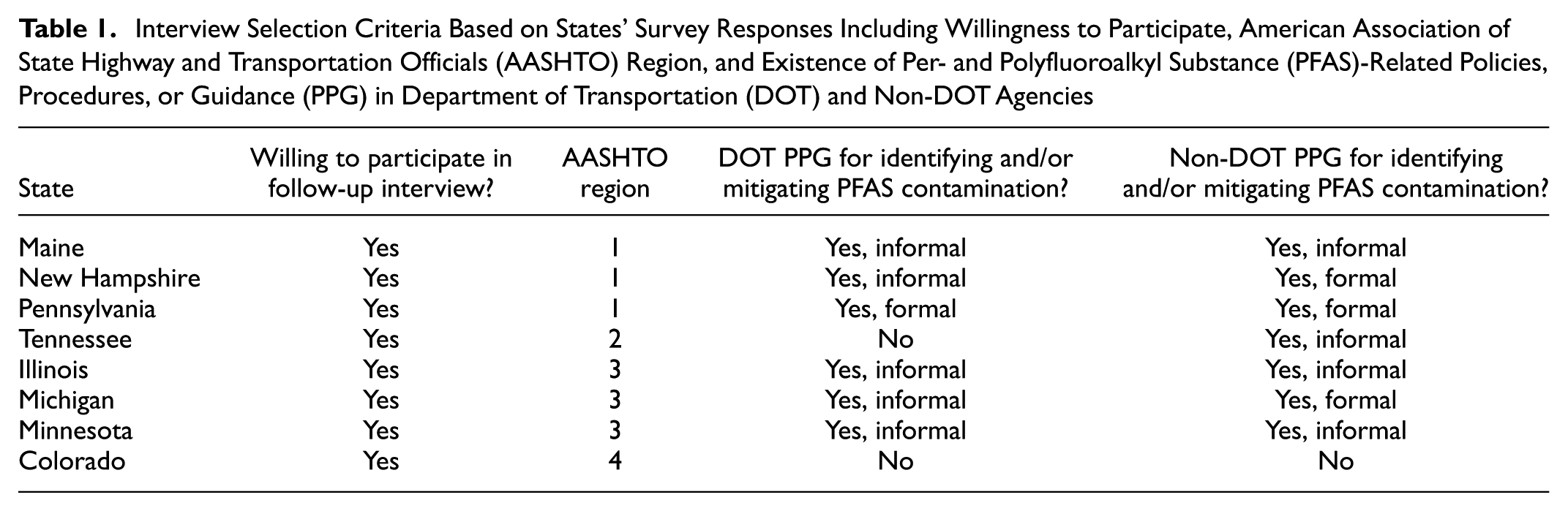
Based on the literature review and survey results, DOTs were systematically selected for follow-up case interviews to gather further details on PFAS-related procedures, policies, and guidance. Only states that indicated availability for follow-up in the initial survey were considered for interviews. We selected states for interviews such that (a) all four AASHTO regions were represented and (b) at least one agency interviewed had either implemented formal, informal, or no procedures, policies, or guidance related to PFAS contamination (Table 1). Interviews were conducted with state environmental professionals (i.e., hazardous material experts and/or [hydro]geologists) from the DOTs of Colorado, Illinois, Maine, Michigan, Minnesota, New Hampshire, Pennsylvania, and Tennessee. The interviews concluded by the end of April 2023. The initial interview questions sought greater clarity on the findings of the survey. Discretionary follow-up questions gained details on the rationale, effects, and prospects for PFAS-related policies within the state DOT.
Interview Selection Criteria Based on States’ Survey Responses Including Willingness to Participate, American Association of State Highway and Transportation Officials (AASHTO) Region, and Existence of Per- and Polyfluoroalkyl Substance (PFAS)-Related Policies, Procedures, or Guidance (PPG) in Department of Transportation (DOT) and Non-DOT Agencies
Results
Literature Review
The review of literature, policies, regulations, and guidance indicated that PFAS contamination is widespread yet sporadic, having numerous sources affecting various environmental media and posing significant risks to human health and ecosystems. While some state DOTs are actively engaged in identifying and mitigating PFAS impacts through targeted policies and innovative remediation techniques, there is no standardized federal regulation to ensure consistent and effective management of PFAS contamination on DOT projects across states. These findings were corroborated by the survey responses.
Some states have their own regulations and guidelines to manage PFAS contamination. These regulations may include establishing MCLs for drinking water and soil, setting remediation targets, and requiring regular monitoring and reporting of PFAS levels. Only a small number of these regulations involved input from their state DOTs. However, the literature review also highlighted that at least some states had developed and implemented action plans to address PFAS contamination with DOT involvement. These plans commonly involved discussions of site assessments to identify potential PFAS sources and affected areas, required sampling and analysis of soil, water, and other materials, guidance for the development of remediation strategies and technologies to mitigate PFAS impacts, and plans for monitoring to ensure the effectiveness of mitigation efforts.
Survey Responses
The 44 survey responses constituted an 86% response rate; Kentucky, North Dakota, New Jersey, Vermont, Massachusetts, Hawaii, and the District of Columbia did not respond to the survey. All responding DOTs (Figure 1) answered the question, “Does your DOT currently have formal or informal procedures, policies, or guidance for identifying and/or mitigating locations of potential PFAS contamination?” Only three DOTs (7%) indicated that their agency currently has formal written procedures, policies, or guidance on the topic of PFAS contamination. Another seven DOTs (16%) indicated that their agency has informal procedures, policies, or guidance on PFAS contamination. However, the majority of respondents (34 DOTs; 77%) indicated that their DOT has no procedures, policies, or guidance related to PFASs.
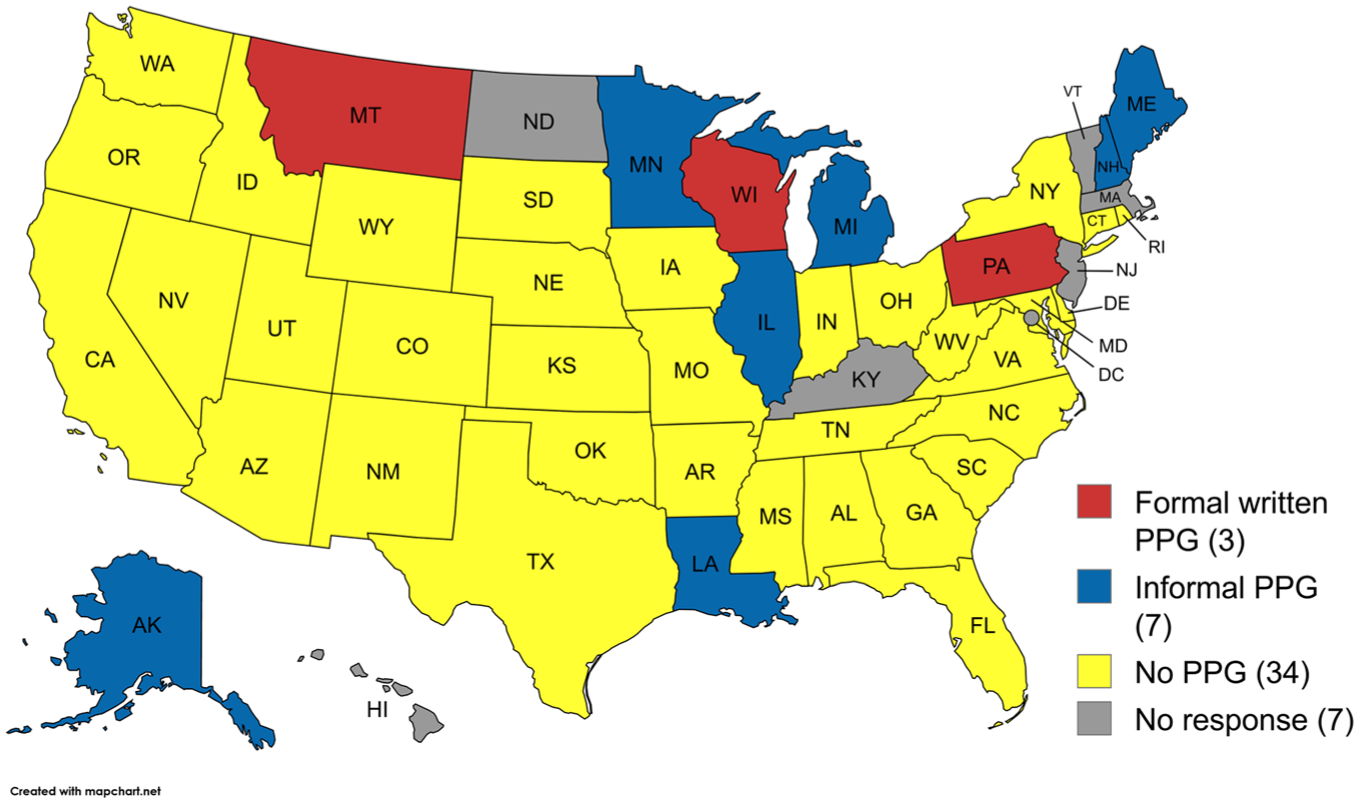
Responses from 44 state departments of transportation as to whether they had procedures, policies, or guidance (PPG) related to per- and polyfluoroalkyl substance contamination. All survey respondents answered this question.
All respondents answered the question, “Does your state (within an agency other than the DOT) have formal or informal procedures, policies, or guidance for identifying and or mitigating locations of potential PFAS contamination?” Nine respondents (21%) had some formal written procedures, policies, or guidance related to PFASs within their state (Figure 2), eight (18%) had informal procedures, policies, or guidance, and 22 (50%) had no procedures, policies, or guidance. Five respondents (11%) were unsure.
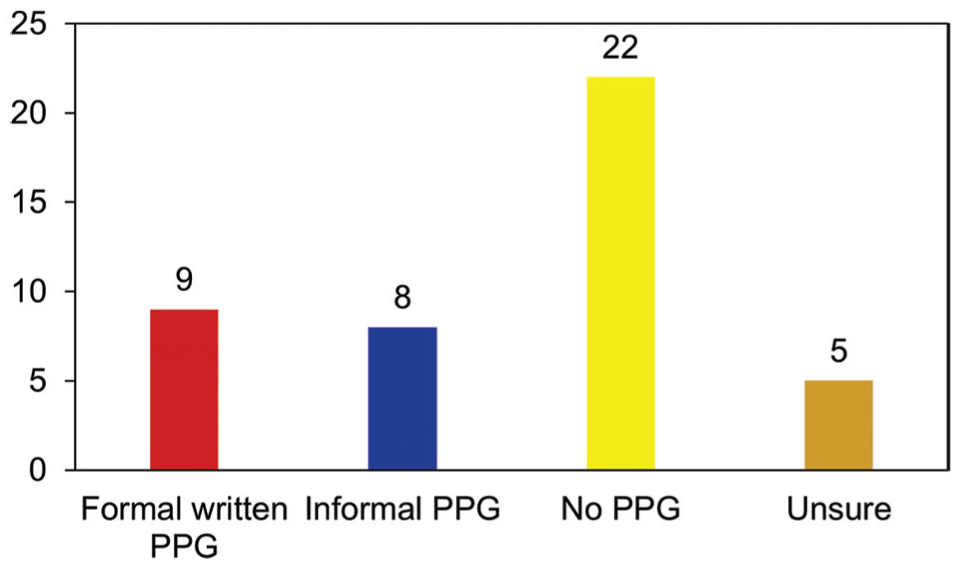
The existence of procedures, policies, or guidance (PPG) related to PFAS contamination in state agencies other than the department of transportation. All survey respondents answered this question.
The survey did not force respondents to answer each question. Therefore, some questions received a lower response rate. Eleven of 41 respondents answered the question, “Does your state have an action plan in place with respect to PFAS contamination?” affirmatively (Figure 3). Those 11 respondents were asked the follow-up question, “Is/was your DOT involved in the development of that action plan?” and five answered affirmatively.
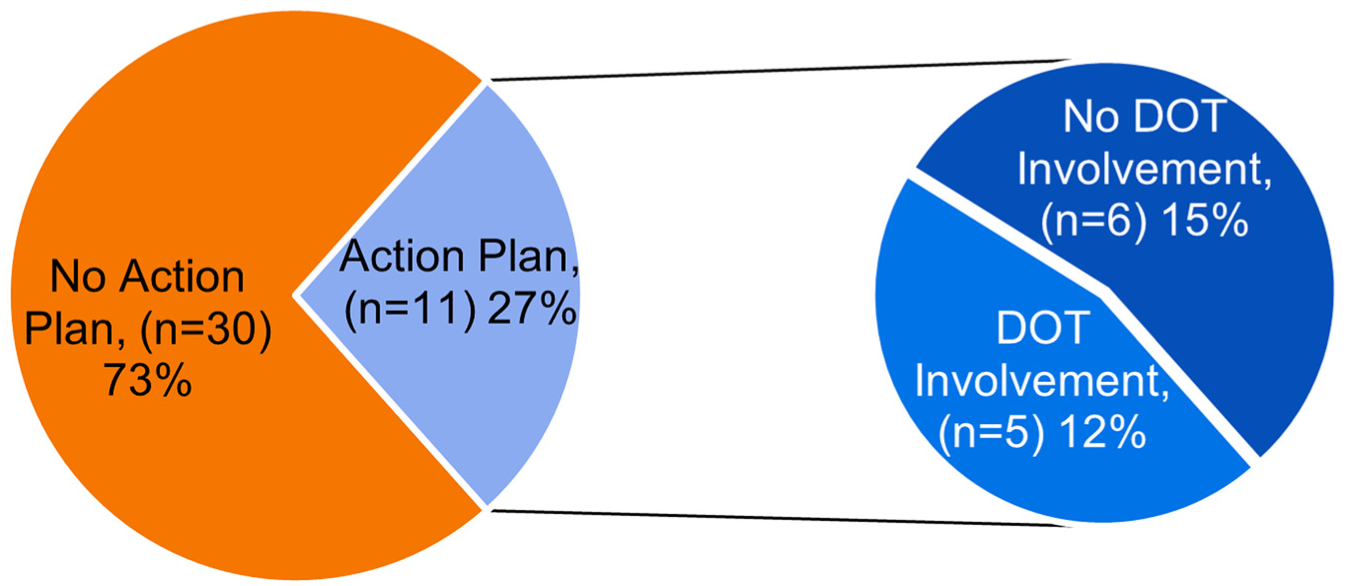
States responding that they have an action plan in place with respect to per- and polyfluoroalkyl substance contamination and (breakout) responding states with an action plan in place for which the department of transportation (DOT) was involved in action plan development.
Similarly, 20 of 40 respondents answered the question, “Does your state have an interagency group to address minimizing human exposure to PFAS?” affirmatively (Figure 4). Those 20 respondents were asked the follow-up question, “Is/was your DOT involved in that group?” and eight answered affirmatively.
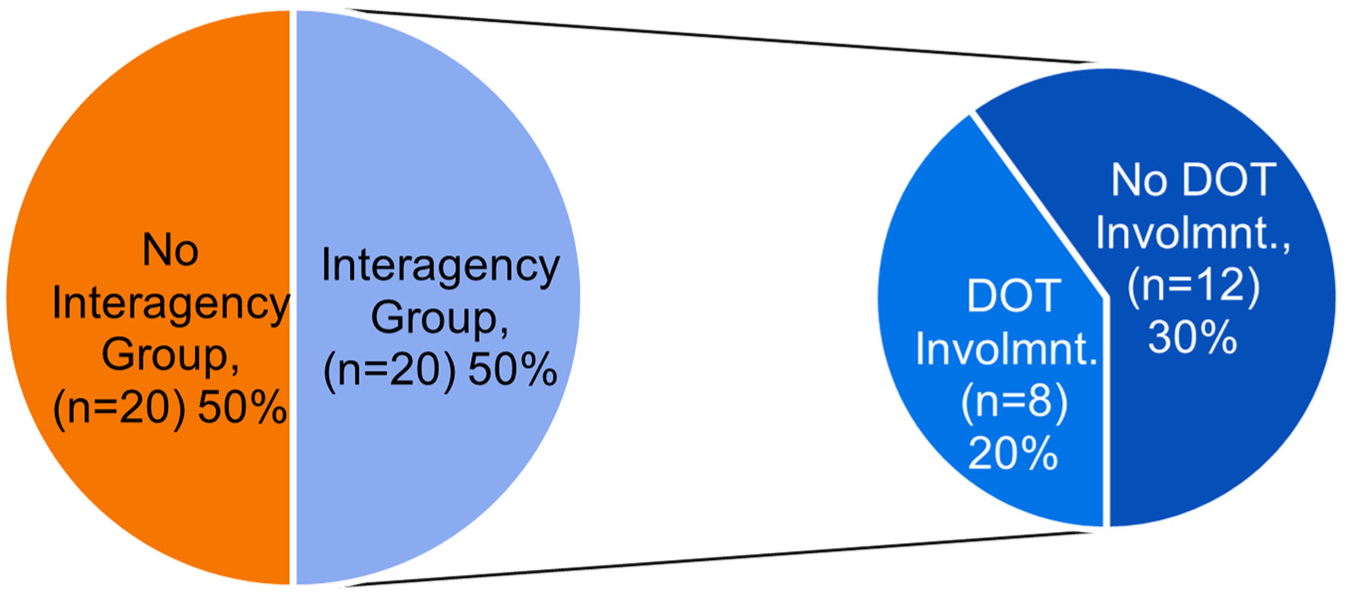
Responding states with an interagency group to address per- and polyfluoroalkyl substance contamination and (breakout) responding states with an interagency group in which the department of transportation (DOT) is involved.
The survey also inquired about DOT approaches to identifying and mitigating PFAS contamination. In response to the question, “Has your agency ever knowingly encountered PFAS contamination on any project or existing right of way?” nine of 42 respondents (Figure 5) indicated that they had.
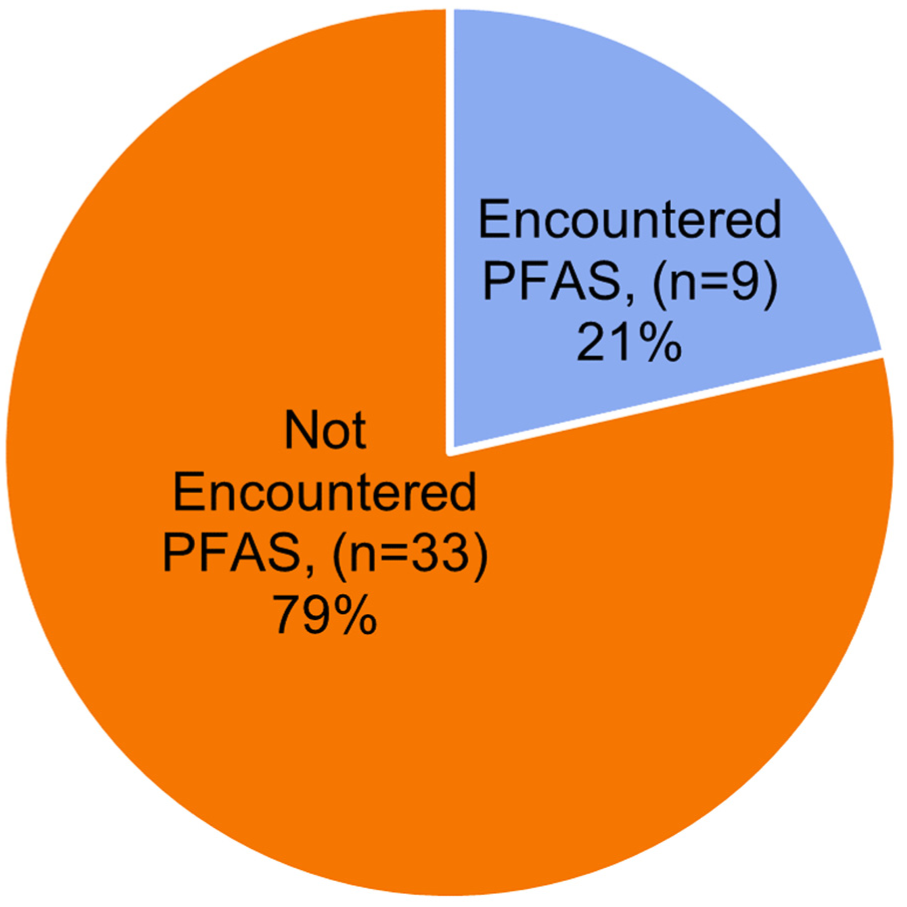
Responding states previously encountering per- and polyfluoroalkyl substance (PFAS) contamination.
Among survey respondents, 26% of the survey respondents use or store AFFFs as part of FFFSs in tunnels. Yet, only 11% of respondents had a procedure for identifying PFAS-containing materials, while 5% had a procedure for identifying containers that may have previously held PFAS-containing materials (Figure 6).
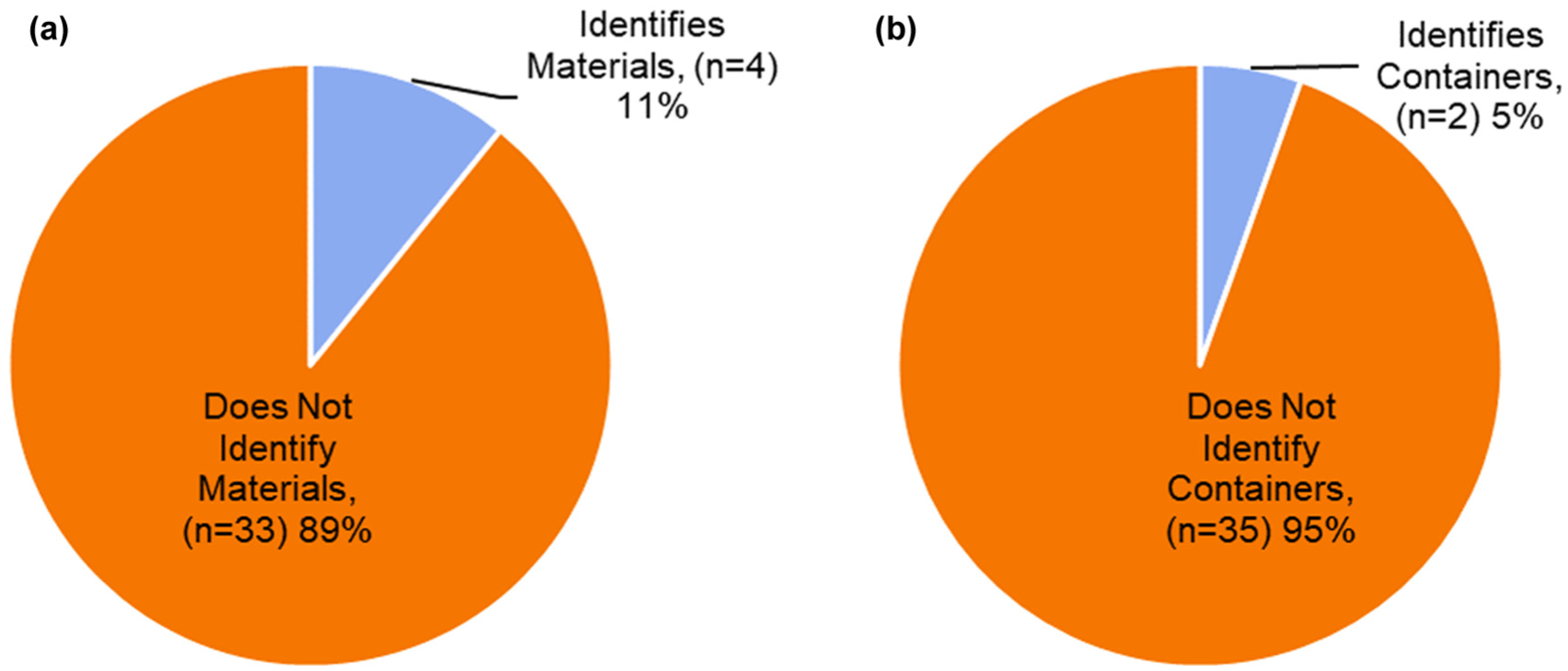
Responding states with procedures to identify (a) materials and (b) containers that may contain per- and polyfluoroalkyl substances.
The survey asked, “Does your DOT consider active remediation or removal of PFAS-containing materials or media at DOT construction, maintenance, or storage sites?” to which 11 of 37 respondents (Figure 7) responded in the affirmative. However, there was a steep drop in affirmative responses when DOTs were asked if they tested construction and maintenance sites for PFAS contamination. Only four DOTs out of 37 respondents indicated that testing for PFAS contamination was conducted on construction and maintenance sites. The four DOTs who test for PFAS contamination were asked which media they screened during construction and maintenance (Figure 8). Native and wasted soils and dewatered groundwater were the most commonly screened media among the four respondents.
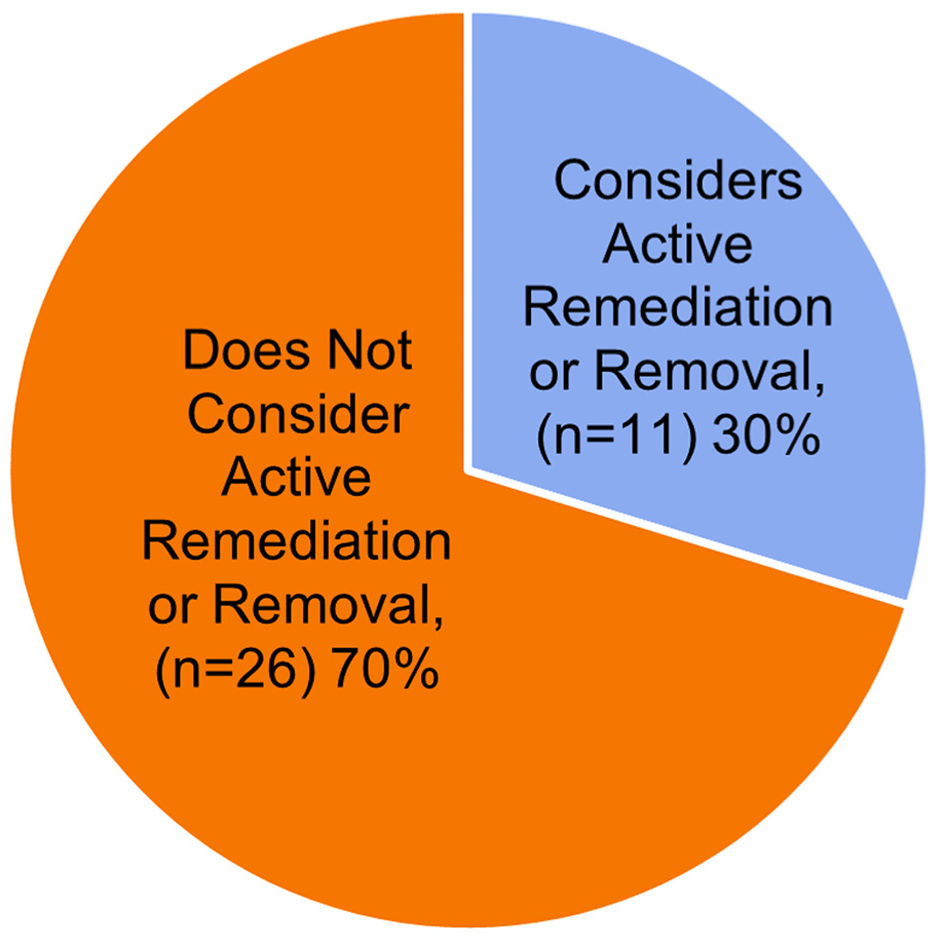
Responding states engaging in active remediation or removal of per- and polyfluoroalkyl substance-containing media.
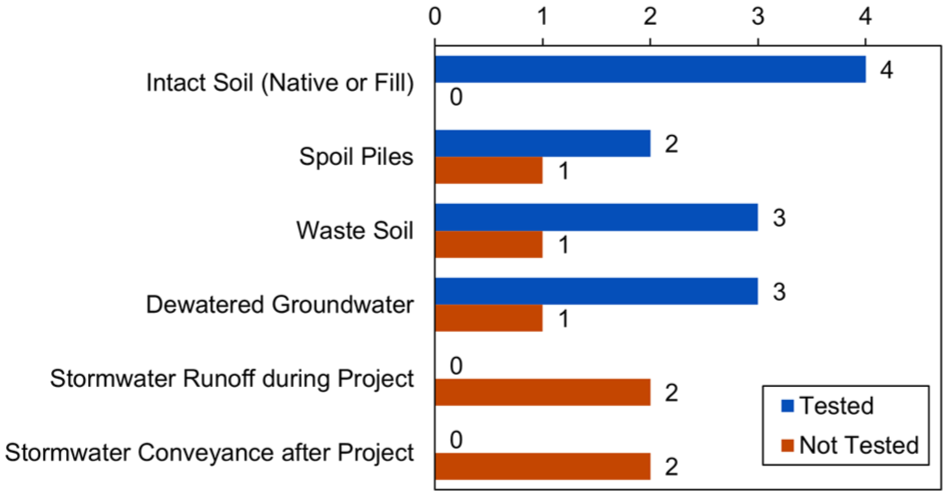
Number of responding states testing media during department of transportation construction and maintenance projects.
The survey also contained questions with respect to testing costs and speed, the types of PFASs that were screened for, and other testing-related questions. However, the small number of respondents (i.e., four DOTs) to these questions limits the support of conclusions on these topics. Nonetheless, those results aided in the selection of state DOTs for case interviews.
Case Interviews
Eight state DOTs representing a range of geographic locations, policy maturity levels, and operational contexts were selected for case interviews. These DOTs were Colorado Department of Transportation (CDOT), Illinois Department of Transportation (IDOT), Maine Department of Transportation (MaineDOT), Michigan Department of Transportation (MDOT), Minnesota Department of Transportation (MnDOT), New Hampshire Department of Transportation (NHDOT), Pennsylvania Department of Transportation (PennDOT), and Tennessee Department of Transportation (TDOT). Brief summaries of these interviews are provided below in alphabetical order.
CDOT does not currently have formal or informal PFAS policies but recognizes the need to develop them. Notably, their efforts have included an inventory of PFAS-containing materials and the removal of PFAS-affected firefighting equipment from service. In a proactive stance, CDOT is prepared to test for PFASs on project sites if contamination is suspected despite the absence of state requirements to do so.
IDOT has informal procedures for PFAS management and has participated in interagency groups addressing PFAS exposure. The agency focuses on identifying PFAS sources and mitigating contamination through coordinated efforts with state environmental agencies. This approach underscores the importance of interagency collaboration in managing PFAS risks.
MaineDOT has implemented informal procedures to manage PFAS contamination and collaborates closely with state environmental agencies. Their focus has been on identifying PFAS sources where contamination is expected. If found, MaineDOT is mitigating impacts through targeted onsite interventions. MaineDOT’s experience illustrates the benefits of proactive identification and mitigation strategies.
MDOT has informal policies, while other Michigan agencies having formal policies for managing PFAS contamination. MDOT has conducted extensive testing of construction sites. Their approach includes detailed screening methodologies and the development of remediation plans. MDOT is part of the Michigan PFAS Action Response Team (MPART), a multi-agency team providing regulatory direction under the Michigan Department of Environment, Great Lakes, and Energy (EGLE). MDOT’s comprehensive strategies provide valuable models for effective PFAS management.
MnDOT has established informal policies and engages in regular PFAS testing and monitoring. They have faced challenges related to the costs of regulatory compliance and disposal, but continue to refine their strategies to address these issues. MnDOT’s efforts demonstrate the ongoing evolution of PFAS management practices.
New Hampshire has both formal state-level guidance and procedures related to PFASs and informal guidance and procedures within NHDOT, including collaboration with state agencies to address PFAS contamination. NHDOT focuses their testing and remediation efforts on legacy sites that they own. Any contamination at these sites requires monitoring and the contracting of consultants to ensure compliance with the New Hampshire Department of Environmental Services (NHDES) rules. NHDOT values tools such as a PFAS GIS mapper, but noted that additional site investigations beyond such tools are often necessary. NHDOT nuanced strategy highlights the need to approach PFAS contamination on a case-by-case basis.
PennDOT works closely with Pennsylvania’s Department of Environmental Protection (DEP) to address concerns about PFASs. PennDOT has formal guidance with respect to PFASs, both within the agency and through legislation administered by DEP. PennDOT has not encountered any sites with PFAS contamination. However, PennDOT mentioned that PFAS expertise is not common within their DOT; they employ consultants and rely on their relationships with DEP staff to support their response to issues around PFASs.
TDOT indicated that they follow informal guidance provided at the state level, but that they do not have DOT-specific guidance, formal or informal. TDOT is concerned about potential PFAS contamination and any upcoming regulations. Therefore, TDOT has been communicating with the Tennessee Department of Environment Conservation (TDEC) in preparation for any regulations they will need to comply with. While they are working with their other state agencies, TDOT also expressed the need for any regulation to also provide clear guidance for compliance.
The case interviews reveal common themes, including the anticipation of new regulations (see the Discussion section below). The interviews also noted the importance of interagency collaboration, the emerging challenges associated with PFAS disposal (e.g., landfills rejecting materials), and a belief that many states may be unprepared for requirements to address PFAS contamination. They also underscored the need for comprehensive guidance documents to consolidate knowledge and assist DOTs in developing effective policies.
Discussion
The potential impact of PFASs on DOT construction and maintenance operations varies widely according to project and policy factors. Notably, 39% of responding states have formal or informal procedures for identifying and mitigating PFAS contamination. Among these, less than one quarter have specific procedures or policies to address PFASs, with most of those having only informal guidance. Only three DOTs (i.e., Montana, Pennsylvania, and Wisconsin) reported having formal PFAS-related procedures. Most states lack formal PFAS-related guidance, even with many states indicating that they had been affected by PFAS contamination. This finding pointed to a need for policy and guidance development for DOTs to manage PFAS identification and mitigation. In particular, the persistence and mobility of PFASs suggest the need for comprehensive planning for testing and monitoring strategies. In the data gathered before the April 2024 designation of some PFASs as hazardous substances, conversations with state DOTs highlighted significant concerns if the designation were to happen. The interviews indicated that many DOTs adopted a “wait and see” approach before developing policy and guidance. The general belief was that regulations were imminent (a viewpoint justified the following year). Rather than developing policy that may need amending in a short timeframe, DOTs were waiting to develop policy and guidance that would address regulations once issued. Some discussion within the interviews indicated more proactive approaches had benefits, but also potential drawbacks if substantial rework was necessary.
Notably, PFASs in soils and natural media from rights of way received greater attention from DOTs than did construction and maintenance materials. However, 26% of the survey respondents noted that they use or store AFFFs as part of FFFSs in tunnels. These products are known to contain PFASs, and thereby can potentially contaminate pavements around FFFSs, airfields, and firefighting areas. These systems represent major potential PFAS contamination sources controlled by DOTs.
Discussions with state DOTs with respect to PFASs involved varying tones and understanding of potential impacts. States that had previous experience with the significant impacts of Superfund sites seemingly had a more thorough understanding and deeper concern with respect to what impacts could arise if PFASs were designated as hazardous material. Most DOTs having encountered PFASs noted concerns surrounding the management of contaminated soil or water. Some DOTs reported only testing for PFASs when their presence is likely, informed by past activities and nearby land use records. Only a small number of DOTs regularly tested for PFASs, but these DOTs indicated that testing costs were substantial, with all respondents reporting a minimum testing cost of U.S.$200 per sample. Additional concerns with respect to testing included the small number of laboratories conducting testing for PFAS contamination and the slow timeframe (i.e., commonly 6 weeks) for receiving results. Interviewees expressed apprehension that new regulations could increase testing demand and exacerbate these concerns, but also believed that costs would likely stabilize over time.
Interviews and survey results also highlighted evolving considerations with respect to PFAS management strategies. Few DOTs identify PFAS-containing materials, and mitigation often involves soil disposal or onsite storage. Regulations for moving contaminated soils vary, with some DOTs not legally required to remediate PFASs unless the DOT itself caused the contamination (e.g., the DOT may be designated an “affected party,” not a “responsible party”).
If the disposal of PFAS-containing soils were restricted, DOTs could encounter extreme cost increases for material disposal. State DOTs noted past cases of landfills rejecting PFAS-containing materials, including soil with even background levels of contamination. If compelled to landfill rather than disposing of material on a project site, we estimate that DOTs could face hauling material to landfills and incurring tipping fees on the order of U.S.$50–150 per ton; the removal of material to hazardous waste landfills at costs up to nine times that amount. Notably, MaineDOT presented more proactive approaches in working with their state environmental agency to navigate onsite mitigation. Some landfills may seek to restrict PFAS receiving to limit already elevated PFAS concentrations in leachate ( 45 , 46 ), thereby facilitating leachate discharge to wastewater treatment plants or avoiding regulatory scrutiny. Nonetheless, there is little evidence that PFAS-containing soil would increase PFAS concentrations in leachate more than other waste types ( 47 ). Indeed, some soil compositions could serve as a sink for the PFASs in landfill leachate derived from consumer and industrial products ( 48 – 50 ). Without rigorous studies providing evidence for the benefit of restricting all PFAS-containing soil from conventional landfilling, such onerous restrictions likely do not justify their cost. The cost of landfilling restrictions for DOTs and the extent to which restrictions would affect PFAS concentrations in landfill leachate are major knowledge gaps.
With the designation of PFASs as hazardous substances there are a range of concerns and impacts for state DOTs to consider as interpreted from discussions during this study (Table 2).
Summary of Concerns and Impacts for State Departments of Transportation (DOTs) to Consider Given the Designation of Per- and Polyfluoroalkyl Substances (PFASs) as Hazardous Substances
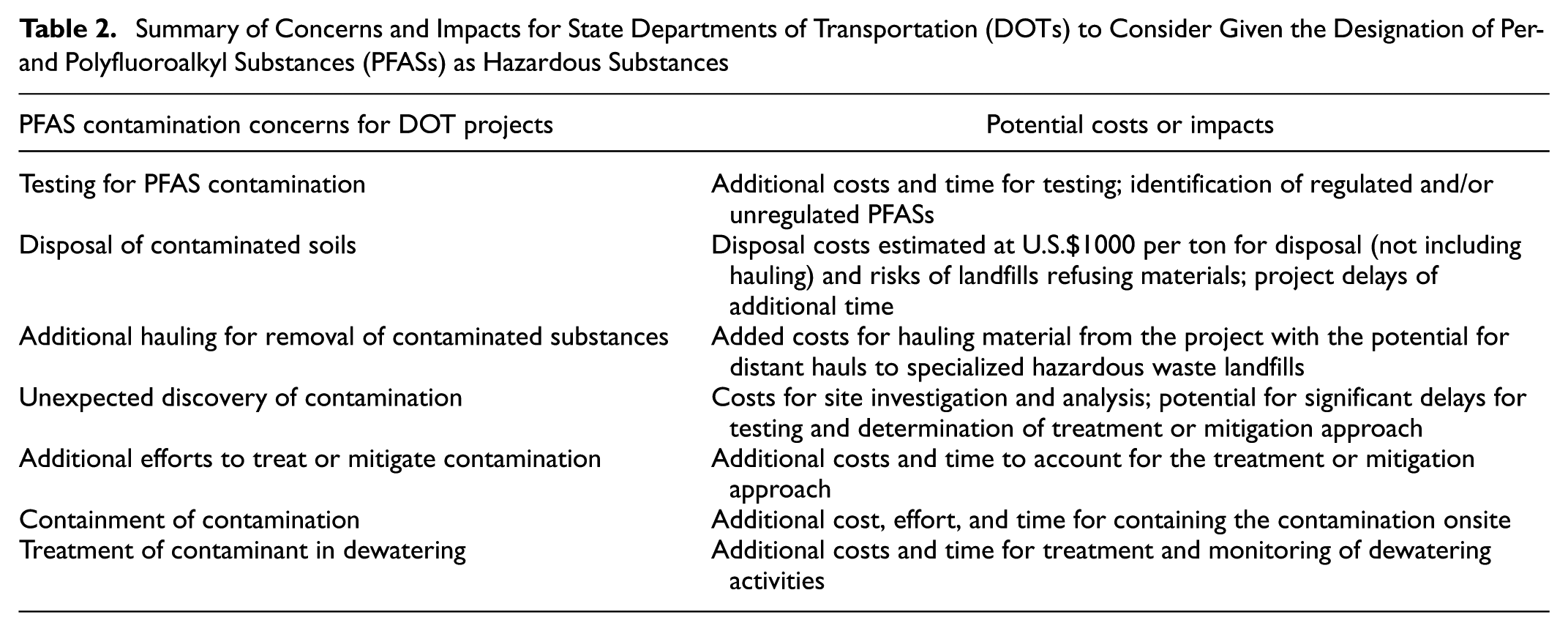
State DOTs will need to consider the costs and time impacts of their selected strategy in response to the contamination. Table 2 is not an exhaustive list of concerns or impacts. However, state DOTs often have a variety of responses or practices to address contamination; the selection of these approaches largely depends on when the contamination is identified. With PFASs now considered hazardous substances, testing early in project development would allow for the widest consideration of approaches. In response to the presence of PFASs, state DOTs may seek to avoid the contaminated soils, minimize disturbance to the contaminated area, remove and haul the contaminated material, contain the contamination on site, or other strategies. States may also carefully evaluate if testing for PFASs is merited. This decision-making processes requires additional research that may not be limited to state DOTs, but could also include municipalities, transit authorities, or others.
The lack of guidance for DOTs in managing PFAS identification and mitigation represents another knowledge gap. The case interviews highlighted several state DOTs that have already developed or begun to develop such guidance. These DOTs pointed out that state-level policy and guidance for DOTs was likely an interagency collaborative effort. These results suggest that communication with state environmental agencies is crucial for understanding PFAS regulations and developing a comprehensive guidance to addressing them. For example, IDOT mentioned that the experience of multiple employees previously working for the Illinois EPA improved their sensitivity and context around environmental contamination. Conversely, MnDOT indicated that their policy development was delayed when experts at the Minnesota Pollution Control Agency were largely occupied by a major legal settlement with a large PFAS manufacturer.
A key theme of this research was that while state DOTs viewed PFAS-related regulations as imminent, most were waiting for these regulations to be issued before taking steps with policy or guidance. This study highlights the state DOTs who have been proactive in these efforts, allowing those DOTs now ready to develop policy and guidance to build on their efforts. DOTs also face challenges with PFAS sampling and testing, which is costly and requires specialized training. Most DOTs use commercial labs for PFAS analysis, and these labs face increased demand because of new regulations across multiple sectors. As the PFAS landscape continues to change, the challenges and needs of DOTs will also evolve.
To address these challenges, we recommend that a national organization develop a comprehensive guidance document for DOTs, drawing from successful state-level guidance, to explain regulations and outline best practices for screening, identifying, and mitigating PFAS contamination on DOT construction and maintenance projects. This guidance could be used to coordinate DOT efforts with state and national regulatory agencies by highlighting standard and streamlined practices for managing DOT issues related to PFASs. Based on the results of this study, we further conclude that DOTs with established communication channels to state environmental agencies tend to be better prepared to establish or execute policies related to PFAS. Therefore, it may be in the best interests of the DOTs—and their subgroups including hazardous materials and stormwater teams—to participate in the development and operation of state action plans and interagency groups related to PFASs. Future studies should provide technical guidance, catalog common PFAS sources and means of identifying them, and offer specific protocols for addressing PFAS impacts on DOTs. Such efforts would include approaches for identifying and offering mitigation strategies for internal PFAS sources (e.g., contaminated media), internal products (e.g., containers and materials containing PFASs), and external PFAS sources (e.g., contaminated right of way acquired). In addition, studies should investigate PFAS contamination levels geographically and by state to highlight regions needing to take greater strides in mitigation. The outcomes of such studies should be openly accessible to build the body of knowledge within DOTs.
Conclusions
The identification and mitigation of PFAS contamination is understudied and under-documented as it relates to DOT construction and maintenance projects. Even though the impacts of PFASs on human and ecosystem health have been a concern for decades, the rapidly evolving legislative and regulatory landscape presents significant challenges for DOTs. DOTs expressed concerns about potential costs and delays to projects associated with PFASs. These challenges and concerns are likely to persist in the absence of guidance and policy to address common issues. Notably, the January 24–April 11, 2023, survey period was before recent regulatory developments from the EPA with respect to MCLs and the classification of some PFASs as hazardous substances.
Some affiliated industries and sectors, such as landfills, are evolving in anticipation of legislation, leading to further challenges. Disposal of PFAS-affected soil is a principal concern because of potential added costs from tipping fees and transportation to hazardous waste landfills. Six of eight DOTs interviewed mentioned the cost and logistical challenges of disposing of PFAS-contaminated waste. Five interviewees had already experienced challenges because of PFAS restrictions from landfills. Additional landfill restrictions could result in many millions of dollars in additional project expenses.
Footnotes
Acknowledgements
The authors thank the state DOT employees who participated in the survey and interviews and the Synthesis panel members and TRB staff who provided feedback that strengthened this study.
Author Contributions
The authors confirm contribution to the paper as follows: study conception and design: J.A. Charbonnet, R.E. Sturgill; data collection: J.A. Charbonnet, R.E. Sturgill; analysis and interpretation of results: J.A. Charbonnet, R.E. Sturgill; draft manuscript preparation: J.A. Charbonnet, R.E. Sturgill. All authors reviewed the results and approved the final version of the manuscript.
Declaration of Conflicting Interests
The authors declared the following potential conflicts of interest with respect to the research, authorship, and/or publication of this article: Dr. Roy Sturgill is a member of Transportation Research Record’s editorial board. The authors declared no other potential conflicts of interest with respect to the research, authorship, and/or publication of this article.
Funding
The authors disclosed receipt of the following financial support for the research, authorship, and/or publication of this article: This research was supported in part by the Iowa State University Faculty Startup Fund to JAC. This research is part of the NCHRP project 20-05 Synthesis Topic 54-01, which is part of the National Cooperative Highway Research Program (NCHRP). NCHRP is administered by the Transportation Research Board (TRB) and funded by participating member states of the American Association of State Highway and Transportation Officials (AASHTO). NCHRP also receives critical technical support from the Federal Highway Administration (FHWA), U.S. Department of Transportation.

Data Availability Statement
The data that support the findings of this study are available from the corresponding author on request.