







Abstract
Leachates from unlined titanium gypsum (TG) dumps can pose significant environmental pollution risks to surrounding soils and groundwater. Reusing open-dumped TG as construction material is effective in alleviating the risks. This study presents a systematic evaluation of the geotechnical properties and leachability of novel binder-stabilized TG used as a roadway subgrade material. The binder consisted of reactive magnesia (MgO), ground granulated blast furnace slag (GGBS), fly ash (FA), and rice husk ash (RHA). Macroscopic and microscopic tests, including unconfined compression, one-dimensional swell, batch-type leaching, X-ray diffraction, thermogravimetric analysis, and scanning electron microscopy with energy-dispersive X-ray analysis, were conducted to evaluate the strength, swelling behavior, leachability, mineralogy, and microstructure of stabilized TG. Based on the consideration of strength and leached concentrations of chloride (Cl−) and sulfate ions (SO42−), in TG stabilized with 10% binder (by dry weight), the reactive MgO:GGBS:FA mass ratios in the binder were optimized as 1.3:5.2:3.5. The stabilized TG cured for 7 days under standard conditions possessed an unconfined compressive strength of 3.72 MPa and zero swell strain, whereas TG had an unconfined compressive strength of 0.73 MPa and a swell strain of 7.6%. Compared with TG, the concentrations of Cl− and SO42− leached from stabilized TG cured for 28 days decreased by 54% and 61%, respectively. Microscopic test results revealed that the formation of calcium-(ferrite)-silicate-hydrate and layered double hydroxides in stabilized TG was the primary mechanism for the immobilization of Cl− and SO42−. The results are useful for facilitating safe utilization of TG in roadway construction.
Introduction
Titanium gypsum (TG) is the main by-product of the titanium dioxide (TiO2) manufacturing process. It is produced by neutralizing acidic wastewater with additional materials, including limestone powder and calcium carbide residues, during TiO2 production ( 1 ). TG is a multicomponent crystalline material with a pH of 6–9. It consists of 40%–60wt% gypsum (CaSO4·2H2O), iron (Fe) impurities (mainly Fe(III) hydroxides), calcite (CaCO3), and soluble impurities ( 2 – 4 ). Approximately 75.5 million tons of TG are generated annually worldwide by the TiO2 industry ( 5 ). However, only 10% of TG is utilized in the construction, chemical, and agricultural industries ( 6 ). The long-term storage of TG can lead to the accumulation of Fe, manganese (Mn), sulfur (S), and potentially toxic elements in soils ( 7 , 8 ). The amount of TG production and its environmental effect have prompted the development of innovative technical solutions to improve TG utilization.
TG has been extensively utilized in road construction as a binder or as the primary subgrade material ( 9 ). Lin et al. ( 10 ) reported the advantages of using a TG–cement–lime binder to improve the strength properties of silt. Zha et al. ( 11 ) showed that expansive soil stabilized with 25% TG (calcined at 115°C for 2.5 h) and cured for 7 days exhibited a unconfined compressive strength (UCS) of 0.8 kPa. Exchangeable sodium (Na+) and potassium (K+) ions in the expansive soil were replaced by calcium ions (Ca2+) released from TG, which reduced the thickness of the diffuse double layer of the clay particles, decreasing the swelling potential of the expansive soil. Zhao and Shi ( 12 ) and Sun et al. ( 13 ) demonstrated that a TG-based subgrade material (i.e., a mixture of TG and fly ash [FA]) was stabilized with an alkaline activator to produce an alternative roadway subgrade with acceptable strength and water stability. Abundant Ca2+ derived from TG serves as a calcium (Ca) source for the formation of cementitious phases, including calcium silicate hydrate (C-S-H) and calcium aluminate hydrate (C-A-H) ( 3 , 14 ). Meanwhile, the presence of sulfates and Fe(III) hydroxides in TG contributes to the formation of ettringite (AFt), improving the early-age strength of a TG-based matrix ( 4 , 15 ). When the pH value of a cementitious system exceeds pH 8, the dissolved tetrahydroxidoferrate(III) ion ([Fe(OH)4]−) gradually becomes the predominant aqueous Fe(III) species as pH increases ( 16 ). [Fe(OH)4]− has chemical properties similar to those of the tetrahydroxidoaluminate ion ([Al(OH)4]−) and can participate in pozzolanic reactions in lime-treated systems, generating cementitious phases, such as calcium ferrite hydrate (C-F-H), Fe-phase AFt (Fe-AFt), and aluminoferrite monosubstituent (AFm) ( 17 ). These results suggest that TG exhibits cementitious properties because of its high contents of gypsum and Fe(III) hydroxides. Therefore, it is promising to utilize TG as a roadway subgrade material.
Despite the demonstrated environmental, economic, and technical suitability of TG for use as a subgrade material, its sole application in road construction is limited by its soluble salts (mainly sulfates and chlorides) and mineral composition. Excessive salinity in the roadway subgrade can precipitate out or dissolve into the pore solution as temperature and humidity change, and then lead to detrimental effects on the mechanical and physical properties of the road infrastructure ( 18 , 19 ). A potential hazard is that soluble sulfates and Fe(III) hydroxides in TG may promote the formation of expansive AFt ( 4 ). A large amount of AFt hydration and crystal growth in subgrade materials may result in heaving and damage to roadway structures ( 20 – 22 ). In addition, TG typically contains approximately 2%–7wt% soluble chlorides, which may cause chloride-induced corrosion of reinforced concrete structures when used as the primary subgrade material ( 23 ). Therefore, its mechanical properties, swelling potential, and the migration of soluble salts need to be assessed before its application in roadway subgrades ( 22 , 24 – 26 ).
Stabilization is an economical and technically feasible method for improving the properties of industrial by-products, and makes them suitable for use as roadway construction materials. Traditional Ca-based binders (lime and Portland cement [PC]) are prone to exhibiting limited stabilization efficacy in treating sulfate-bearing soils with soluble sulfate concentrations above 7,000 parts per million (ppm) ( 27 ). The reaction of Ca supplied by lime or PC, aluminum/Fe, and sulfate in the presence of water can promote the formation of expansive AFt ( 28 , 29 ). Given this situation, the target TG is unsuitable for stabilization using lime or PC alone. In addition, compared with the energy consumption for the production of PC (~5,000 MJ/ton) and lime (~3,200 MJ/ton), reactive magnesia (MgO) requires relatively less production energy consumption of approximately 2,400 MJ/ton ( 30 , 31 ). This lower environmental burden has facilitated the extensive application of reactive MgO as an activator in laboratory experiments on soil stabilization ( 32 ). Reactive MgO reacts with water to provide magnesium ions (Mg2+) and hydroxide ions (OH−) (equilibrium approximately pH 10.5) to facilitate cation exchange with clay particles and promote pozzolanic reactions, where precipitation of C-S-H and magnesium-based layered double hydroxides (LDHs) is effective in reducing the leached concentrations of soluble sulfates and chlorides ( 33 – 36 ). Seco et al. ( 37 ) and Adeleke et al. ( 38 ) demonstrated that the beneficial effect of MgO-based stabilization was a decrease in the soil’s swell strain after prolonged exposure to moisture. Currently, several experimental studies suggest a 10% MgO-based binder dosage for sulfate-bearing soils, with a reactive MgO dosage of 10%–20% of the total binder content ( 38 – 41 ).
Researchers are continually striving to identify novel materials, including industrial by-products, that could be used as effective road construction additives. Ground granulated blast furnace slag (GGBS) and FA, common industrial by-products in China, have been extensively used in sulfate-bearing and chloride-bearing soil stabilization ( 42 – 45 ). These materials provide a source of reactive silica (SiO2) and alumina (Al2O3), which react with portlandite (Ca(OH)2) to form hydration products, including C-S-H and C-A-H ( 46 – 49 ). Meanwhile, these additives react with chloride ions (Cl−) and sulfate ions (SO42−), promoting the precipitation of sulfate-intercalated AFm and chloride-intercalated AFm (Friedel’s salt (Ca2(Al, Fe)(OH)6(Cl, OH)·2H2O)), respectively, reducing chloride- and sulfate-induced corrosion ( 50 – 54 ). Ren et al. ( 55 ) and Gopalakrishnan and Chinnaraju ( 56 ) demonstrated that alkaline-activated concrete with a GGBS:FA (Class F Grade) mass ratio of 60%:40% exhibited better durability against external sulfate attack compared with that with 100% GGBS because it reduced the formation of expansive sulfate products and improved microstructural compactness. Al-Dakheeli et al. ( 57 ) showed that for sulfate-bearing soils treated with 3%–7% GGBS, the free swell of the stabilized soil first increased and then decreased; when stabilized with 5% GGBS, the soil exhibited a lower long-term free swell strain compared with the soil stabilized with 7% GGBS. Similar results for the treatment of sulfate-bearing soils with MgO–GGBS binder were reported by Adeleke et al. ( 38 ). Recently, research on using rice husk ash (RHA) as a pozzolanic substitute in soil improvement has garnered significant attention from scientists. RHA is a residue produced by the controlled combustion of rice husks at temperatures typically from 600°C to 800°C, and contains 85%–92% amorphous silica along with a high surface area ( 58 , 59 ). Over 40 million tons of RHA are generated annually and need to be utilized in China ( 60 , 61 ). Alhassan and Alhaji ( 62 ) demonstrated the potential of using 4%–6% RHA admixed with a lower cement content for laterite soil stabilization. Li et al. ( 63 ) observed that the mechanical properties of the lime soil stabilized with a lime–RHA binder first increased and then decreased with the incorporation of RHA (0%–5%). The reactive silica in the RHA reacts with portlandite to improve soil mechanical properties by generating C-S-H gel ( 64 – 66 ). C-S-H is the major cementitious product responsible for binding particles and improving strength in soil stabilization. Chakraborty et al. ( 67 ) demonstrated that the addition of crystalline silica into lime-treated sulfate-rich soils can form C-S-H and suppress AFt formation. However, few studies have investigated the feasibility of using RHA to stabilize chloride- and sulfate-bearing materials for roadway subgrades.
This study aims to assess the feasibility of using stabilized TG as a roadway subgrade material. A novel binder composed of reactive MgO, GGBS, FA, and RHA was developed to stabilize TG. Orthogonal experiments were conducted to investigate the effects of the binder components on the strength properties and leachability of stabilized TG and to optimize the mass ratios of the binder components. In addition, the effect of the RHA content on the properties of stabilized TG was investigated. One-dimensional (1D) swell tests and unconfined compression tests (UCTs) were carried out to evaluate the volume change and UCS of stabilized TG. Batch-type leaching tests were conducted to assess the concentrations of Cl− and SO42− leached from stabilized TG. pH tests were conducted to evaluate the alkalinity of stabilized TG. A set of microscopic tests was conducted to investigate the mineralogy and microstructure of stabilized TG via X-ray diffraction (XRD), thermogravimetric analysis (TGA), and scanning electron microscopy with energy-dispersive X-ray spectroscopy (SEM-EDS). The microscopic test results were used to interpret why stabilized TG possessed acceptable volume change, strength, and leached concentrations. To the best of the authors’ knowledge, this is the first study to assess the geotechnical properties and leachability of stabilized TG for use as a roadway subgrade material. The results are useful for facilitating the safe utilization of TG in roadway construction.
Materials and Methodology
Materials
TG was collected from a TiO2 production plant in Nanjing, China, with an initial water content of 66%. The particle size distribution curve of TG was determined using a laser particle size analyzer (Mastersizer 2000, Malvern Panalytical), as recommended by Arriaga et al. ( 68 ). The clay-sized (< 0.002 mm) and silt-sized (0.002–0.075 mm) fractions were 37.4% and 62.6%, respectively, as shown in Figure 1. The characteristics of the TG are presented in Table 1. Based on the American Association of State Highway and Transportation Officials (AASHTO) soil classification system (AASHTO M145) ( 69 ), TG was classified as A-7-5 (clayey soil). Based on the Unified Soil Classification System (ASTM D2487), TG was classified as high plasticity silt (MH) ( 70 ). Figure 2 shows the compaction curve of TG, which was obtained from the modified Proctor compaction test (ASTM D1557) ( 71 ). Of note, the modified Proctor compaction test is equivalent to the ?-1 heavy compaction test (T 0131) specified in the Chinese Standards (JTG 3430) ( 72 ) and is widely used in highway subgrade engineering practice in China. TG specimens were prepared at a maximum unit weight γd max of 13.70 kN/m3 and an optimum water content wopt of 29.0%. TG possessed an average UCS value of 0.73 MPa and lost 100% of its strength after water-soaking. The soluble sulfate content was determined to be 12,000 ppm, following the standard method of HJ 635 ( 73 ), with the detailed test procedure shown in Appendix A. The pH of TG was 9.26 using a pH meter (FiveEasy FE28, Mettler Toledo) in accordance with American Society for Testing and Materials (ASTM) D4972 ( 74 ). The concentrations of Cl− and SO42− leached from TG were 1,193 ± 43 mg/L and 1,140 ± 57 mg/L, respectively, according to HJ/T 557 ( 75 ), both of which exceeded the threshold value of 350 mg/L for Class IV groundwater quality ( 76 ). Of note, the concentrations of heavy metals, including manganese (Mn), vanadium (V), and chromium (Cr), leached from all the orthogonal experiment samples met the requirements of Class IV groundwater quality in the Chinese Standard for Groundwater Quality (GB/T 14848) ( 76 ). Therefore, the leached concentrations of heavy metals were not considered in this study.
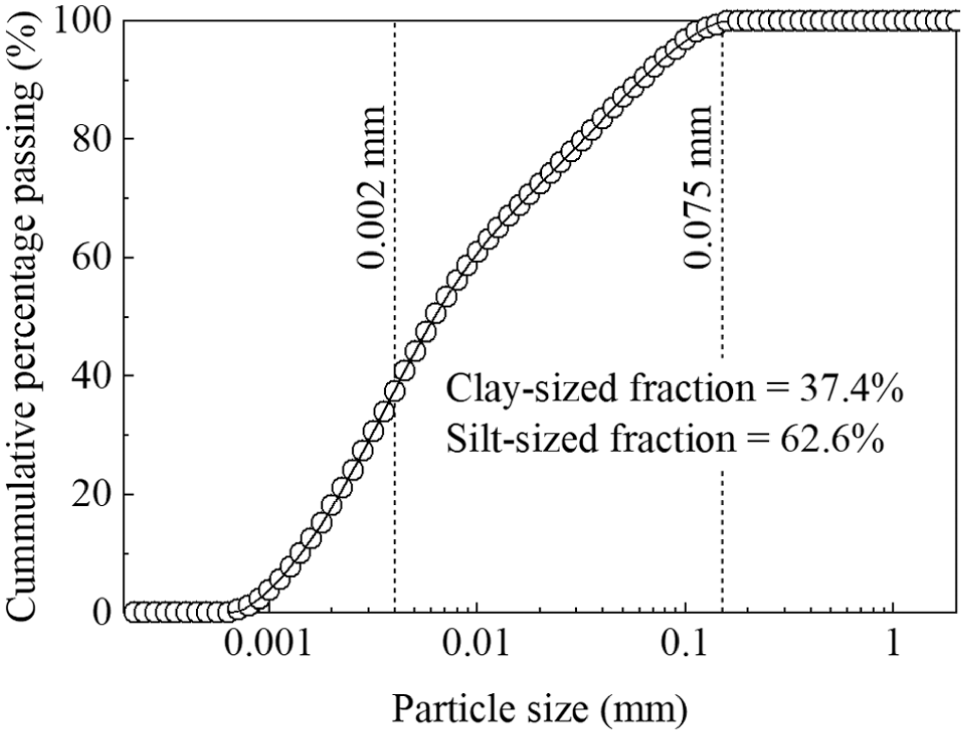
Particle size distribution of titanium gypsum (TG).
Properties of Titanium Gypsum Used in This Study
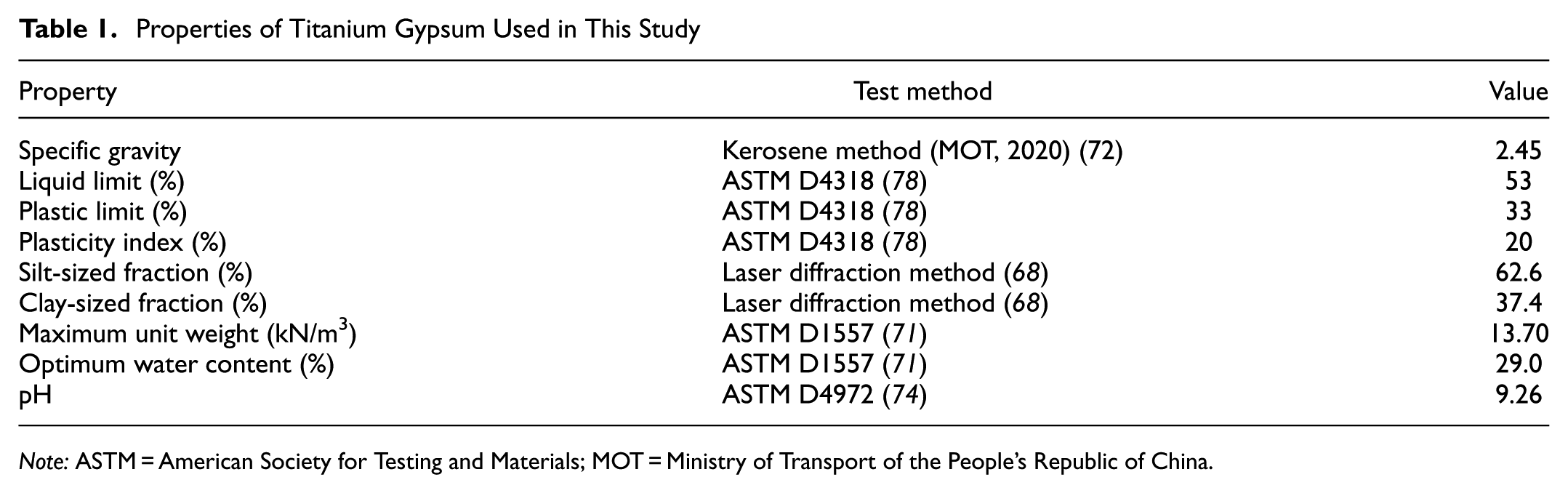
Note: ASTM = American Society for Testing and Materials; MOT = Ministry of Transport of the People's Republic of China.
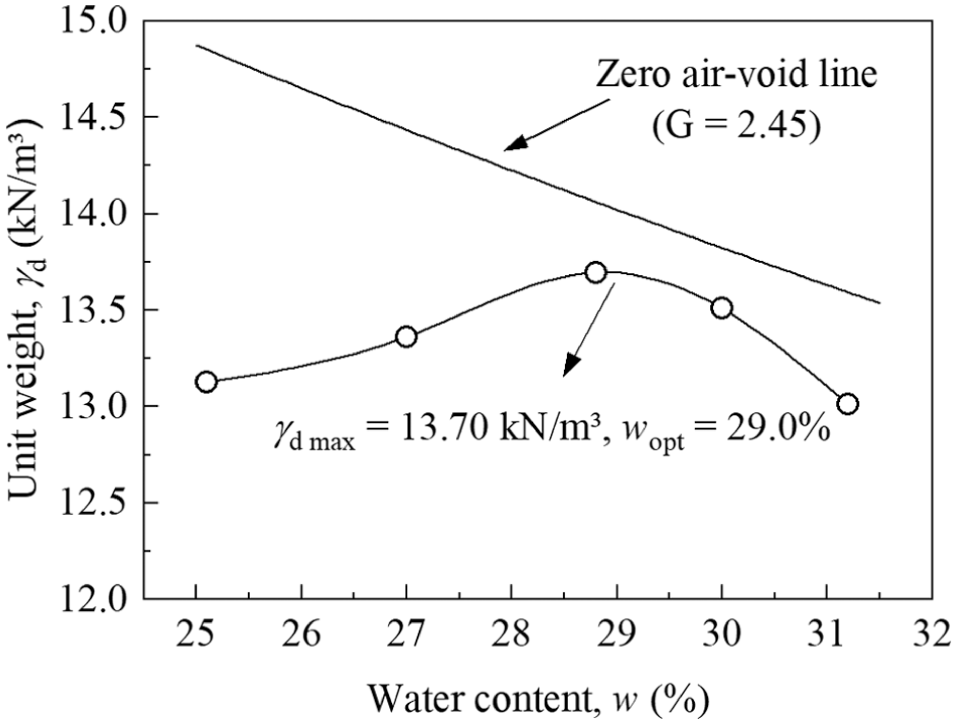
Compaction curve of titanium gypsum (TG) obtained from modified Proctor compaction test.
The FA provided by Nanjing Thermal Power Plant was classified as Class F (ASTM C618) ( 77 ). The GGBS provided by Nanjing Steel Plant was classified as S95. The RHA was provided by Dezhou Senkang Biotechnology Co., Ltd. In this industry, RHA is obtained by burning rice husks in boilers between 600°C and 800°C. RHA was manually ground in a grinding jar for 5 min, and the material was then sieved through an ASTM No. 200 sieve with an opening size of 75 μm. Reactive MgO, with an iodine value of 180 mg I2/g MgO, was provided by Rhawn Chemicals Co., Ltd. Table 2 lists the chemical compositions of the raw materials evaluated by X-ray Fluorescence (XRF; ARL PERFORM’X 4200, Thermo Fisher Scientific).
Chemical compositions of the tested raw materials
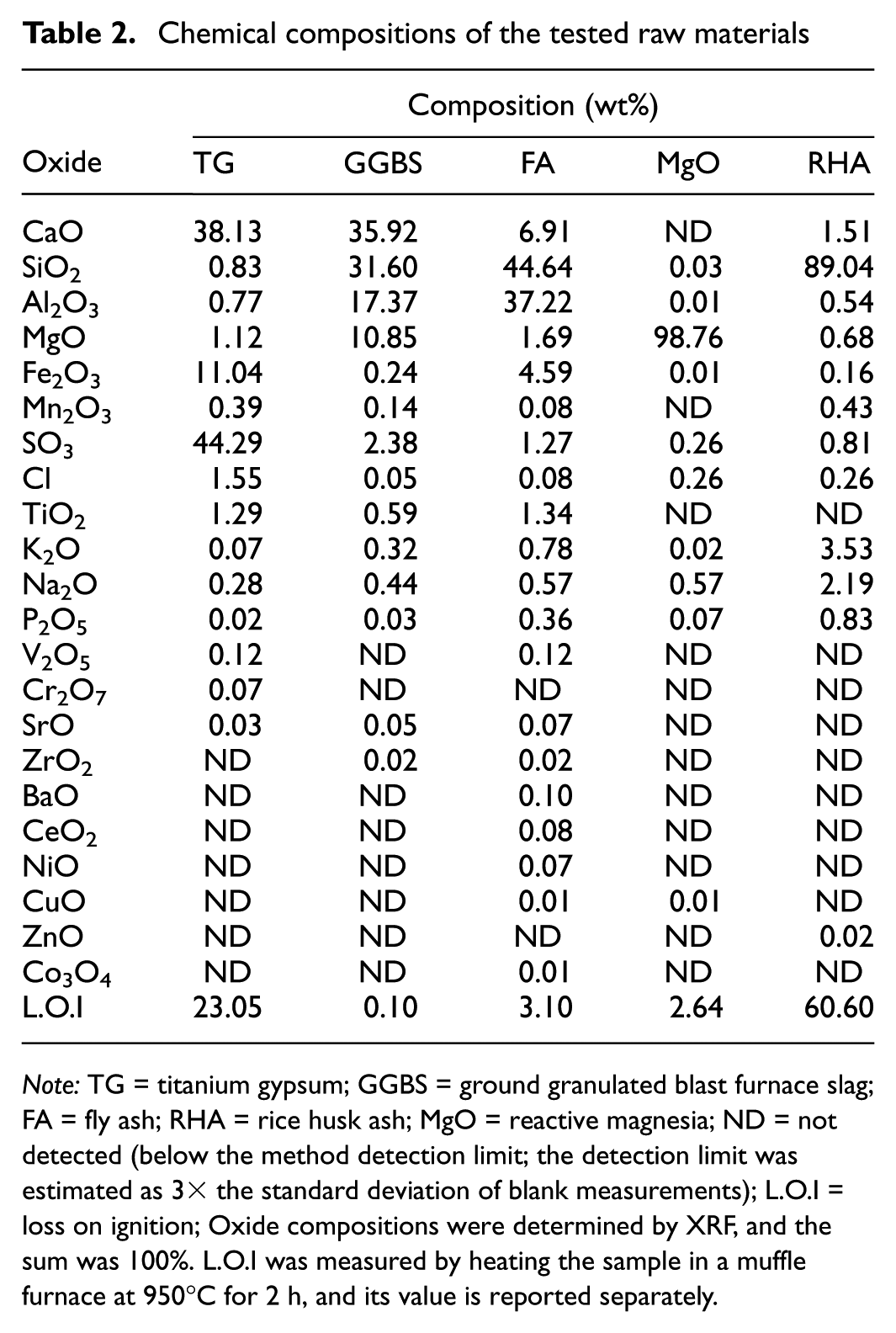
Note: TG = titanium gypsum; GGBS = ground granulated blast furnace slag; FA = fly ash; RHA = rice husk ash; MgO = reactive magnesia; ND = not detected (below the method detection limit; the detection limit was estimated as 3× the standard deviation of blank measurements); L.O.I = loss on ignition; Oxide compositions were determined by XRF, and the sum was 100%. L.O.I was measured by heating the sample in a muffle furnace at 950°C for 2 h, and its value is reported separately.
Designs of Experiments
Orthogonal Experiment Design
An orthogonal experiment is an effective statistical method widely used in multi-factor experiments to investigate the influence of several factors and determine the optimal level based on the test results. In this study, orthogonal experiments were conducted to investigate the effects of binder components on the properties of stabilized TG as subgrade materials and to optimize the mass ratios of binder components (reactive MgO, GGBS, FA, and RHA).
The orthogonal experiment design used the L9 (34) orthogonal table and considered four factors: (1) Factor A represents the GGBS:FA mass ratio; (2) Factor B represents the reactive MgO:(GGBS + FA) mass ratio; (3) Factor C represents the RHA:TG mass ratio; and (4) Factor D is the error term, which accounts for potential unknown influences (including differences in equipment operation). Four factors, each with three levels (i.e., 1, 2, and 3), are given in Table 3. The sum of the weight of GGBS, FA, and reactive MgO was fixed at 10% of the combined weight of TG and RHA for each specimen in the orthogonal experiment, consistent with the previous studies on sulfate-bearing soils with physical–chemical characteristics similar to those of TG ( 38 – 41 ). Based on the preliminary experimental results, the UCS of the stabilized TG specimens under this binder dosage met the criterion mentioned in the literature for a minimum strength increase of 0.35 MPa in stabilized subgrade compared with the corresponding untreated subgrade ( 79 , 80 ). The mass ratios of reactive MgO:(GGBS + FA) were set to 5:100, 10:100, and 15:100 separately to induce the hydrolysis of pozzolans (mainly silicate and aluminate in GGBS and FA), based on the research conducted by Adeleke et al. ( 38 ) and Yi et al. ( 39 ). Preliminary experimental results indicated that the maximum value of the reactive MgO:(GGBS + FA) mass ratio was set to be 15:100, ensuring the pore water pH of stabilized TG after 1 h of curing around pH 10.5, which is the threshold for the MgO activation system. The pH tests were conducted according to the Eades and Grim method (ASTM D6276) ( 81 ). The results are shown in Appendix B. pH 10.5 in the activation solution complies with the minimum pH required to solubilize pozzolans that participate in pozzolanic reactions ( 80 ). The GGBS:FA mass ratios were set at 1.5:1, 1:1, and 0.5:1 to evaluate the effects of GGBS and FA on the strength properties and leachability of stabilized TG. The preliminary experimental results indicated that when TG was treated with an 8%–10% (GGBS + FA) mixture, the specimens with a GGBS:FA mass ratio of 1.5:1 exhibited lower free swell strain compared with those with a higher GGBS:FA mass ratio at the same dosage, as recommended by Ren et al. ( 55 ) and Gopalakrishnan and Chinnaraju ( 56 ). In particular, the RHA:TG mass ratio was set as an independent factor to explore the influence of RHA addition on the properties of stabilized TG, considering that RHA possesses physical porous adsorption characteristics ( 82 ), which differ from those of GGBS and FA. In accordance with the results of Alhaji et al. ( 83 ), RHA:TG mass ratios were set at 1:99, 2:98, and 3:97. The levels of Factor D were denoted as 1*, 2*, and 3*, representing influences that were not considered in orthogonal experiments.
Four Factors With Three Levels Used in Orthogonal Experiments for Evaluating Optimal Mass Ratios of Binder Components
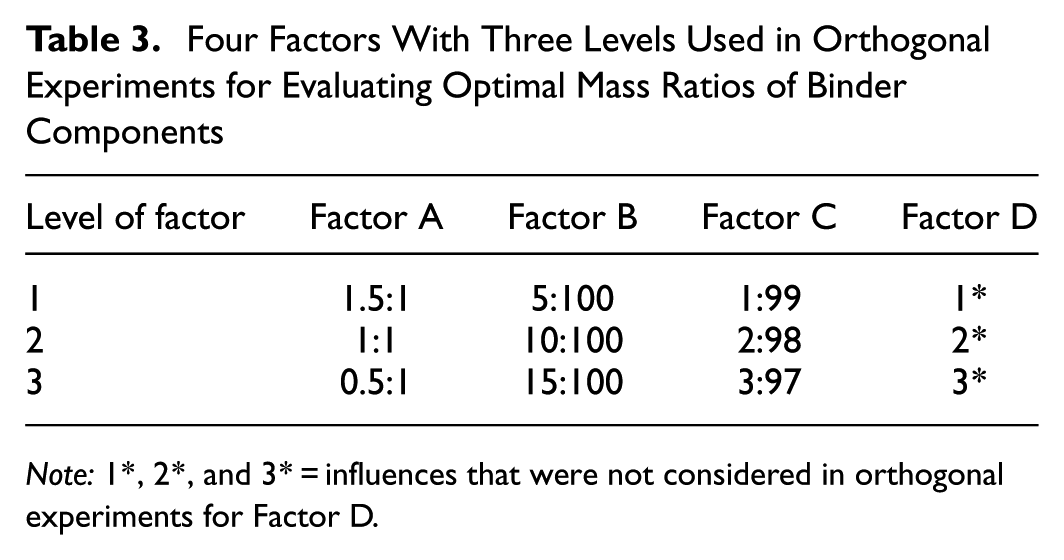
Note: 1*, 2*, and 3* = influences that were not considered in orthogonal experiments for Factor D.
Yoon and Saeki ( 84 ) reported that the adsorption of the C-S-H phase in the cement hydrates reached equilibrium on the fifth day, while that of the AFm phase was clearly established over the 20-day test period. Therefore, the 7-day UCS, 28-day Cl− leached concentration reduction, and 28-day SO42− leached concentration reduction of the stabilized TG specimens are indicators to evaluate the effect of each binder component on the strength properties and leachability of stabilized TG as subgrade materials. In the orthogonal experiments, a single specimen was prepared for each formulation. Specimens with a diameter of 50 mm and a height of 100 mm were prepared to replicate a maximum dry unit weight similar to that obtained from the modified Proctor compaction test for UCTs and batch-type leaching tests. After curing for 7 days under standard conditions (room temperature of 20°C ± 2°C and relative humidity of 95%), the specimens were subjected to UCTs, following test method T0805 in JTG 3441 ( 85 ). Specimens cured for 28 days under standard conditions were crushed, and the crushed portions were subjected to batch-type leaching tests, according to HJ/T 557 ( 75 ).
Range Analysis
The effects of the reactive MgO:(GGBS + FA) mass ratio, GGBS:FA mass ratio, and RHA:TG mass ratio on the properties of stabilized TG were analyzed using range analysis. Based on the range analysis of UCTs and batch-type leaching test results from orthogonal experiments, the levels of four factors (i.e., A, B, C, and D) were optimized, and the detailed calculation process followed the method in Ross ( 86 ). From the range analysis of the orthogonal experimental results, the dominant factors influencing the 7-day UCS, 28-day Cl− leached concentration reduction, and 28-day SO42− leached concentration reduction of the stabilized TG were identified, providing a scientific foundation for optimizing the binder components. Of note, this orthogonal experiment focused on the main effects of different factors and did not consider interaction effects.
Verification Experiment
The mass ratios of binder components in verification test (VT) specimens were optimized based on the range analysis results from the orthogonal experiments, considering UCS, Cl− leached concentration reduction, and SO42− leached concentration reduction in stabilized TG over the target curing periods. In the verification experiments, specimen size, curing conditions, and experimental methods were the same as in the orthogonal experiments. Triplicate VT specimens were used for UCTs and batch-type leaching tests.
Geotechnical Properties and Leachability Evaluation
To investigate the effect of RHA content on stabilized TG and further evaluate its geotechnical properties and leachability, specimens were designed into three groups (BT1, BT2, and BT3), as listed in Table 4. Specimens cured for 7 days under standard conditions were subjected to 1D swell tests. Specimens cured for 7, 14, and 28 days under conditions with and without soaking were subjected to UCTs following test method T0805 in JTG 3441 ( 85 ). After the UCTs, the specimens cured under standard conditions were crushed, and the crushed portions were subjected to batch-type leaching tests (HJ/T 557 [75]) and pH tests (ASTM 4912 [74]). In addition, microscopic tests, including XRD, TGA, and SEM-EDS, were performed on the TG and stabilized TG samples to reveal the mechanisms affecting geotechnical properties and leachability. The procedures for all tests involved in this study are shown in Figure 3.
Design of Stabilized Titanium Gypsum (TG) Specimens
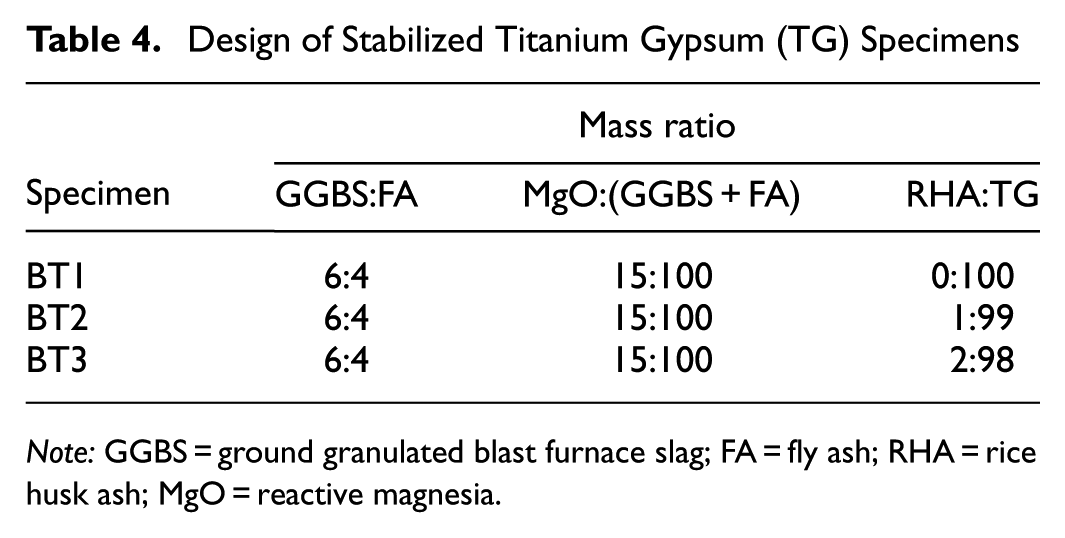
Note: GGBS = ground granulated blast furnace slag; FA = fly ash; RHA = rice husk ash; MgO = reactive magnesia.
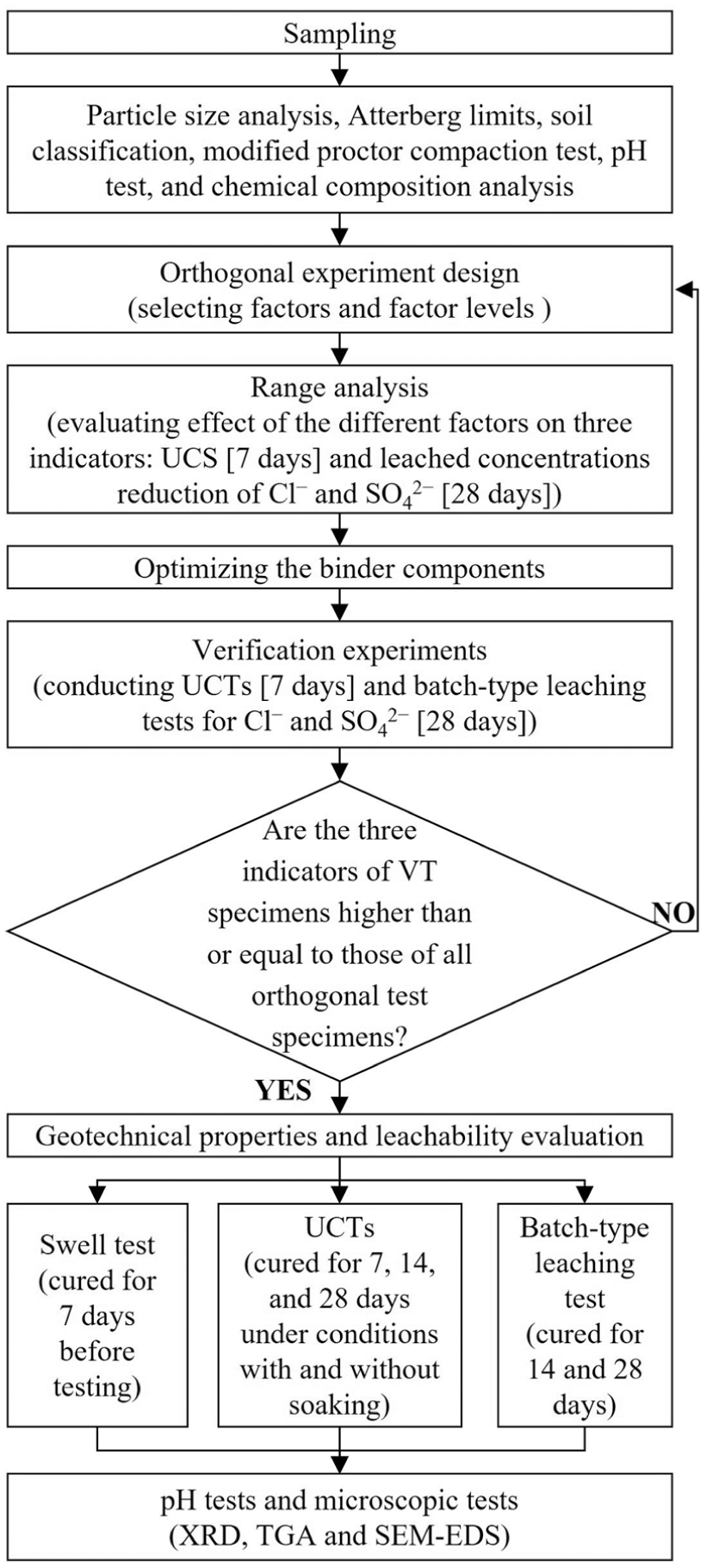
Procedures for tests involved in this study.
Methodology
Specimen Preparation
TG was dried at 40°C and then crushed by a soil minder to obtain a fine powder. Then, the predetermined volumes of binders and deionized water were added to TG, and the mixture was thoroughly stirred using an electric mixer for 5 min. All the test specimens were statically compacted manually using a hydraulic jack with a maximum load of 5 tons into molds in three layers of controlled weight and thickness. The specimens were prepared to attain a water content of 29.0% and a dry unit weight of 13.70 kN/m3. These values are similar to γd max and wopt obtained from the modified Proctor compaction test results for TG. Specimen compaction was completed within 30 min after mixing to minimize interactions caused by binder hardening. After compaction, the specimens were carefully extracted from molds and cured in hermetically sealed plastic bags under standard conditions (95% relative humidity at a temperature of 20°C ± 2°C). Specimens with a 50 mm diameter and a 100 mm height were subjected to UCTs. After the UCTs, a portion (approximately 550 g) of the unsoaked specimens that had been cured under standard conditions was crushed and sieved. The sieved portion was immediately subjected to batch-type leaching tests and pH tests. Specimens with a 61.8 mm diameter and 20.0 mm height were subjected to 1D swell tests. At the target curing periods, the remaining portions of the specimens after the UCTs were freeze-dried at −80°C for 24 h, followed by a set of microscopic tests including XRD, TGA, and SEM-EDS. A portion of the remaining specimens was ground using a mortar grinder and passed through an ASTM No. 200 sieve for XRD and TGA analysis. The interiors of freeze-dried powdered TG samples and stabilized TG specimens with fresh cross-sections and a volume of approximately 3 cm3 were carefully sampled and subjected to SEM-EDS tests.
1D Swell Test
1D swell tests were conducted on TG, BT1, BT2, and BT3 specimens after curing for 7 days under standard conditions. Duplicate tests were conducted under a vertical surcharge stress of 1 kPa, following the standard method of ASTM D4546 ( 87 ). The specimens were submerged in deionized water, and then dial gauge readings were recorded until the swell readings showed no change for three consecutive days. Of note, when the displacement was below the dial gauge resolution of 0.01 mm, the dial gauge reading was recorded as 0.
Unconfined Compression Test
UCTs were conducted on specimens at a strain rate of 1 mm/min, following JTG 3441 ( 85 ). After curing for 7 and 28 days under standard conditions, a single specimen was subjected to UCTs in orthogonal experiments, and VT specimens in triplicate were also subjected to UCTs. Six identical specimens were tested for each of TG, BT1, BT2, and BT3. Three specimens were first cured for designed periods (i.e., 6, 13, or 27 days) under standard conditions and then immersed in deionized water for 24 h before the target curing periods (i.e., 7, 14, or 28 days). The soaked specimens were then subjected to UCTs. Another three specimens were cured under standard conditions with the target curing periods (i.e., without soaking) and tested for comparison purposes.
Batch-Type Leaching Test
Batch-type leaching tests were conducted using deionized water as the extraction liquid according to the standard method in HJ/T 557 ( 75 ). A single sample cured for 28 days for orthogonal experiments, and three triplicates cured for 14 and 28 days were tested for the VT, TG, BT1, BT2, and BT3 samples. In brief, a 100 g sample of the crushed material (by dry weight), passed through a 3-mm soil sieve, was mixed with 1,000 mL of deionized water at a solid-to-liquid ratio of 1:10 (g/mL) in a 2,000 mL polyethylene bottle and shaken at 110 revolutions per minute for 8 h in a horizontal vibration apparatus. The mixture was then allowed to settle for 16 h, and the liquid phase was filtered through 0.45 μm nylon membranes. The filtered liquid samples were collected, and three replicates were analyzed according to GB 11896 ( 88 ) and GB 11899 ( 89 ) to measure the concentrations of leached Cl− and SO42−, respectively. The effectiveness of Cl− and SO42− immobilization was evaluated by the reduction in the concentrations of Cl− and SO42− in the leachate from stabilized TG samples relative to TG. The concentrations of heavy metals in the leachate were measured using an inductively coupled plasma-mass spectrometry (ICP-MS; Agilent Technologies, Agilent 7900).
pH Test
The pH tests were conducted to assess the alkalinity of the TG, BT1, BT2, and BT samples in accordance with ASTM D4972 ( 74 ). Samples in triplicate, cured for 7, 14, and 28 days, were subjected to pH tests. Briefly, 10 g of samples (by dry weight), sieved through a 2-mm soil sieve, were stirred with 20 mL of deionized water at a solid-to-liquid ratio of 1:2 (g/mL) to form a slurry. The slurry was thoroughly stirred and allowed to stand at room temperature (25°C) for 1 h, after which the pH value of the slurry was determined using a pH meter (Mettler Toledo, FiveEasy FE28).
Microscopic Test
XRD was performed using Cu-Kα radiation with a wavelength of 0.154 nm, at a scanning step of 0.02° per step, within a 2θ range from 5° to 60°. Phases were identified by comparing XRD results with the International Center for Diffraction Data Powder Diffraction File (PDF). To analyze the thermal stability and composition of TG and stabilized TG samples, TGA was performed using a Hitachi STA200 simultaneous thermal analyzer (Hitachi High-Tech Corp.) under a nitrogen atmosphere. The samples were heated from 30°C to 1,000°C at a heating rate of 10°C/min. SEM was conducted to examine the microstructure of the TG sample and stabilized TG specimens using an MIRA3 TESCAN SEM. EDS measurements provided detailed elemental compositions, identifying and quantifying key elements in the specimens.
Experiment Results
Orthogonal Experiment Results and Analyses
Orthogonal experiments were conducted to investigate the effects of the GGBS:FA mass ratio, reactive MgO:(GGBS + FA) mass ratio, RHA:TG mass ratio, and the error term on the 7-day UCS, 28-day Cl− leached concentration reduction, and 28-day SO42− leached concentration reduction of the stabilized TG specimens. A test scheme was implemented for each factor, and the results are listed in Table 5. The range analysis results of the four factors on the three indicators are presented in Table 6. A larger range R value for a factor indicates that changes in the levels of the factor lead to significant variations in the indicators, suggesting that the factor has a more pronounced effect on them. Based on the range analysis results (R values of the four factors), the influence order of the four factors on 7-day UCS is as follows: Factor B (reactive MgO:[GGBS + FA] mass ratio) > Factor C (RHA:TG mass ratio) > Factor D (Error term) > Factor A (GGBS:FA mass ratio). The effect order and optimal levels of the reactive MgO:(GGBS + FA) mass ratio, RHA:TG mass ratio, and reactive MgO:(GGBS + FA) mass ratio for 28-day UCS are consistent with those for 7-day UCS. 28-day UCS and the range analysis results of the effect of four factors on 28-day UCS are listed in Tables C1 and C2 in Appendix C, respectively. The UCT results of the orthogonal experiments indicated that the reactive MgO:(GGBS + FA) mass ratio was the dominant factor in improving the UCS of stabilized TG specimens. The influence order of four factors on 28-day Cl− leached concentration reduction is as follows: Factor C (RHA:TG mass ratio) > Factor B (reactive MgO:[GGBS + FA] mass ratio) > Factor D (Error term) > Factor A (GGBS:FA mass ratio). These results suggest that the RHA:TG mass ratio was the most significant factor affecting Cl− immobilization. The range analysis results of the effect of four factors on 28-day SO42− leached concentration reduction show the influence order of the four factors as follows: Factor A (GGBS:FA mass ratio) > Factor D (Error term) > Factor B (reactive MgO:[GGBS + FA] mass ratio) = Factor C (RHA:TG mass ratio). These results reveal that the GGBS:FA mass ratio was the dominant factor affecting SO42− immobilization.
Results of the Orthogonal experiments
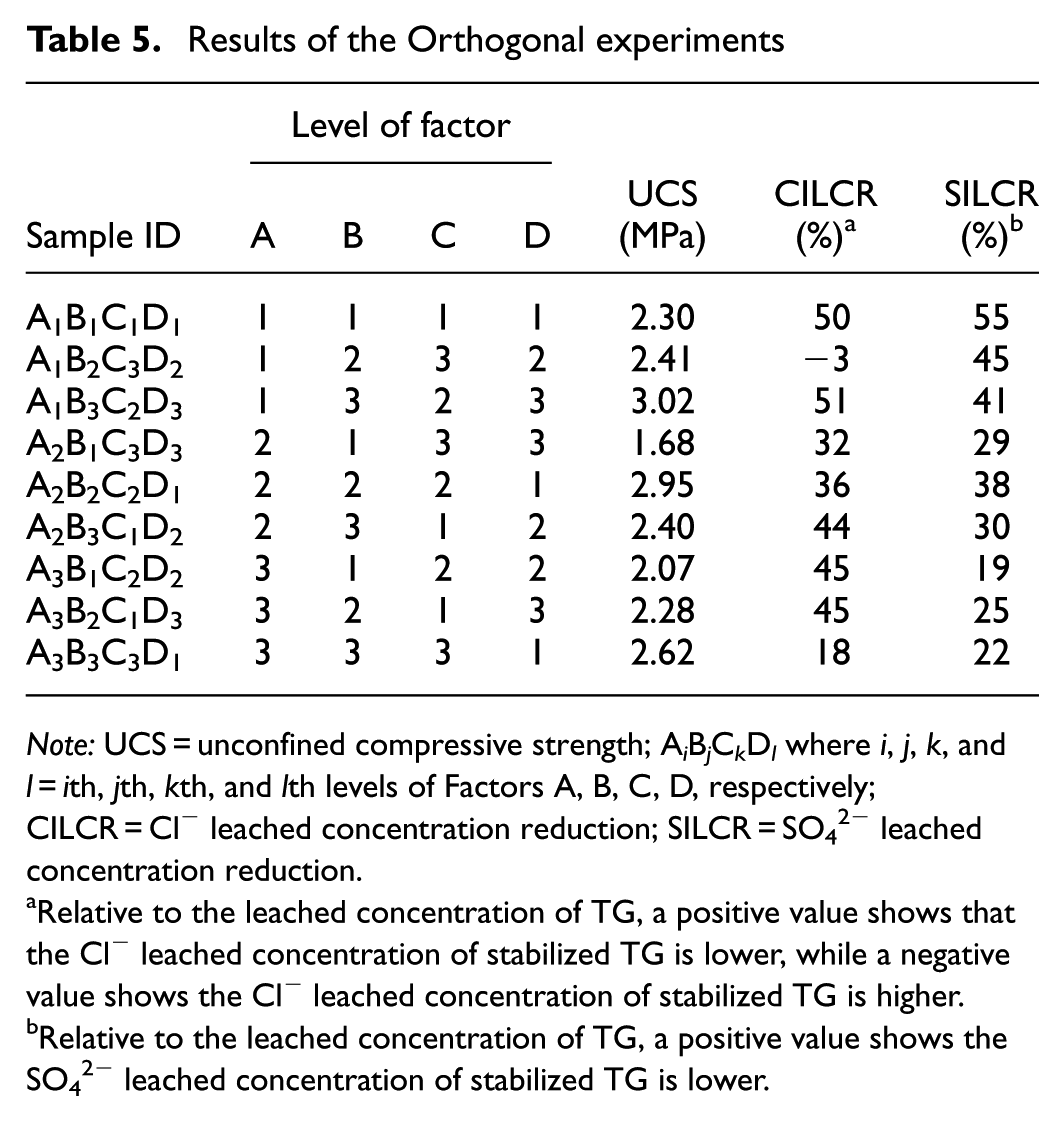
Note: UCS = unconfined compressive strength; A i B j C k D l where i, j, k, and l = ith, jth, kth, and lth levels of Factors A, B, C, D, respectively; CILCR = Cl− leached concentration reduction; SILCR = SO42− leached concentration reduction.
Relative to the leached concentration of TG, a positive value shows that the Cl− leached concentration of stabilized TG is lower, while a negative value shows the Cl− leached concentration of stabilized TG is higher.
Relative to the leached concentration of TG, a positive value shows the SO42− leached concentration of stabilized TG is lower.
Range Analysis Results of the Effects of Four Factors on Three Indicators
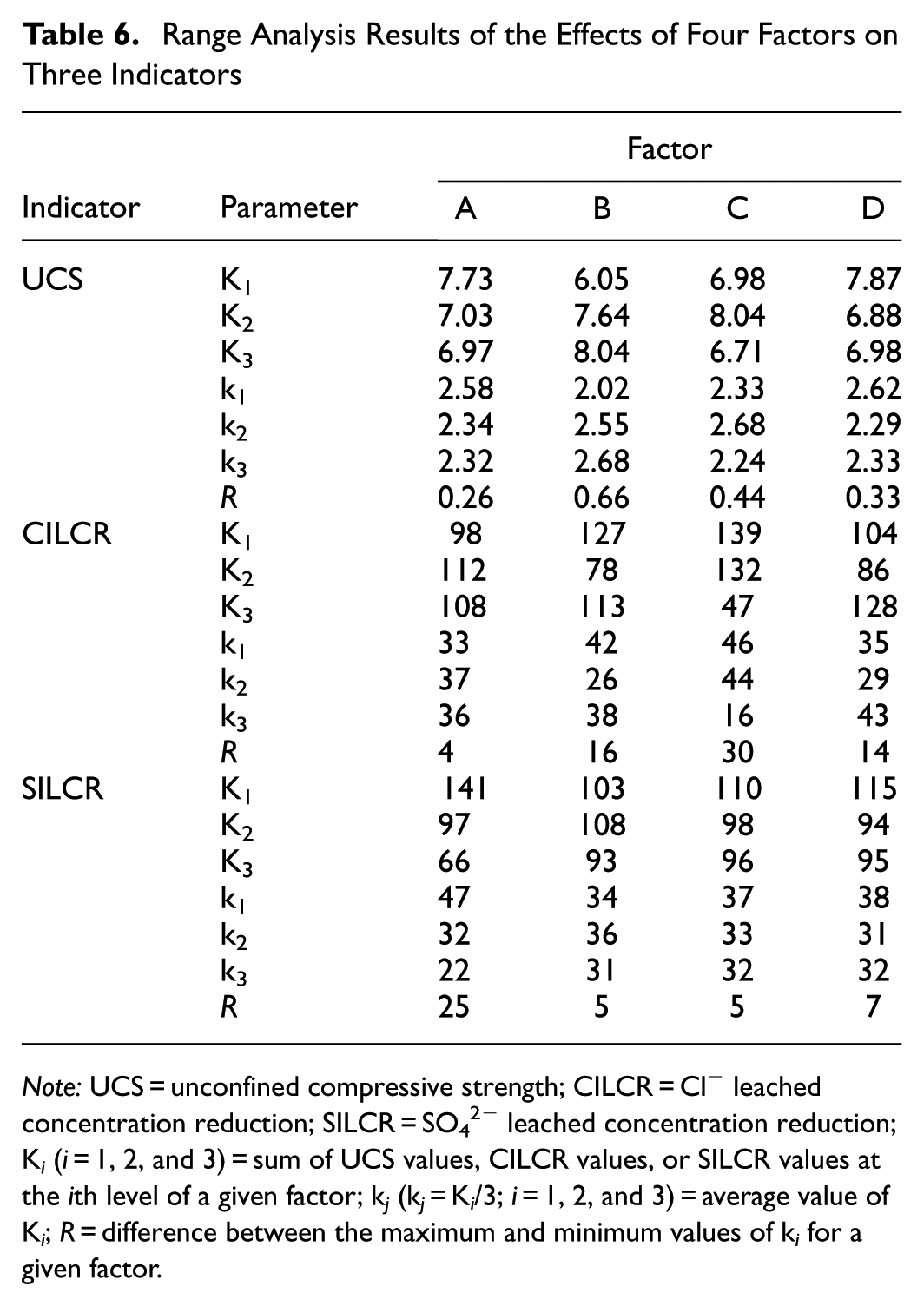
Note: UCS = unconfined compressive strength; CILCR = Cl− leached concentration reduction; SILCR = SO42− leached concentration reduction; K i (i = 1, 2, and 3) = sum of UCS values, CILCR values, or SILCR values at the ith level of a given factor; k j (k j = K i /3; i = 1, 2, and 3) = average value of K i ; R = difference between the maximum and minimum values of k i for a given factor.
Figure 4 shows the UCS, Cl− leached concentration reduction, and SO42− leached concentration reduction of the stabilized TG with changes in each factor level and is a visual reference for selecting optimal factor levels. Figure 4a shows the relationship between changes in each factor level and the UCS of the stabilized TG: as the level of the most significant factor for UCS (reactive MgO:[GGBS + FA] mass ratio) increased from 5:100 to 15:100, the UCS of the stabilized TG showed an increasing trend. Figure 4b shows the effect of changes in each factor level on the Cl− stabilization efficiency of the stabilized TG: as the most significant factor for Cl− leached concentration reduction (RHA:TG mass ratio) increased from 1:99 to 3:97, the Cl− stabilization efficiency of the stabilized TG decreased. Figure 4c shows the effect of changes in each factor level on the SO42− stabilization efficiency of the stabilized TG: as the dominant factor for SO42− leached concentration reduction (GGBS:FA mass ratio) increased from 0.5:1 to 1.5:1, the effectiveness of SO42− stabilization increased. GGBS can react with sulfates to form AFt and sulfate-intercalated AFm, effectively immobilizing SO42− ( 90 ). Therefore, considering the optimal levels of the dominant factors for the three indicators, (i.e., B3 for UCS, C1 for Cl− leached concentration reduction, and A1 for SO42− leached concentration reduction, as listed in Table 7), the optimal mass ratios of the binder components in the verification experiments were determined as follows: a GGBS:FA mass ratio of 6:4, a reactive MgO:(GGBS + FA) mass ratio of 15:100, and an RHA:TG mass ratio of 1:99. Therefore, the mass ratios for reactive MgO, GGBS, FA, and RHA in the VT specimens were optimized to 1.3:5.2:3.5:1.
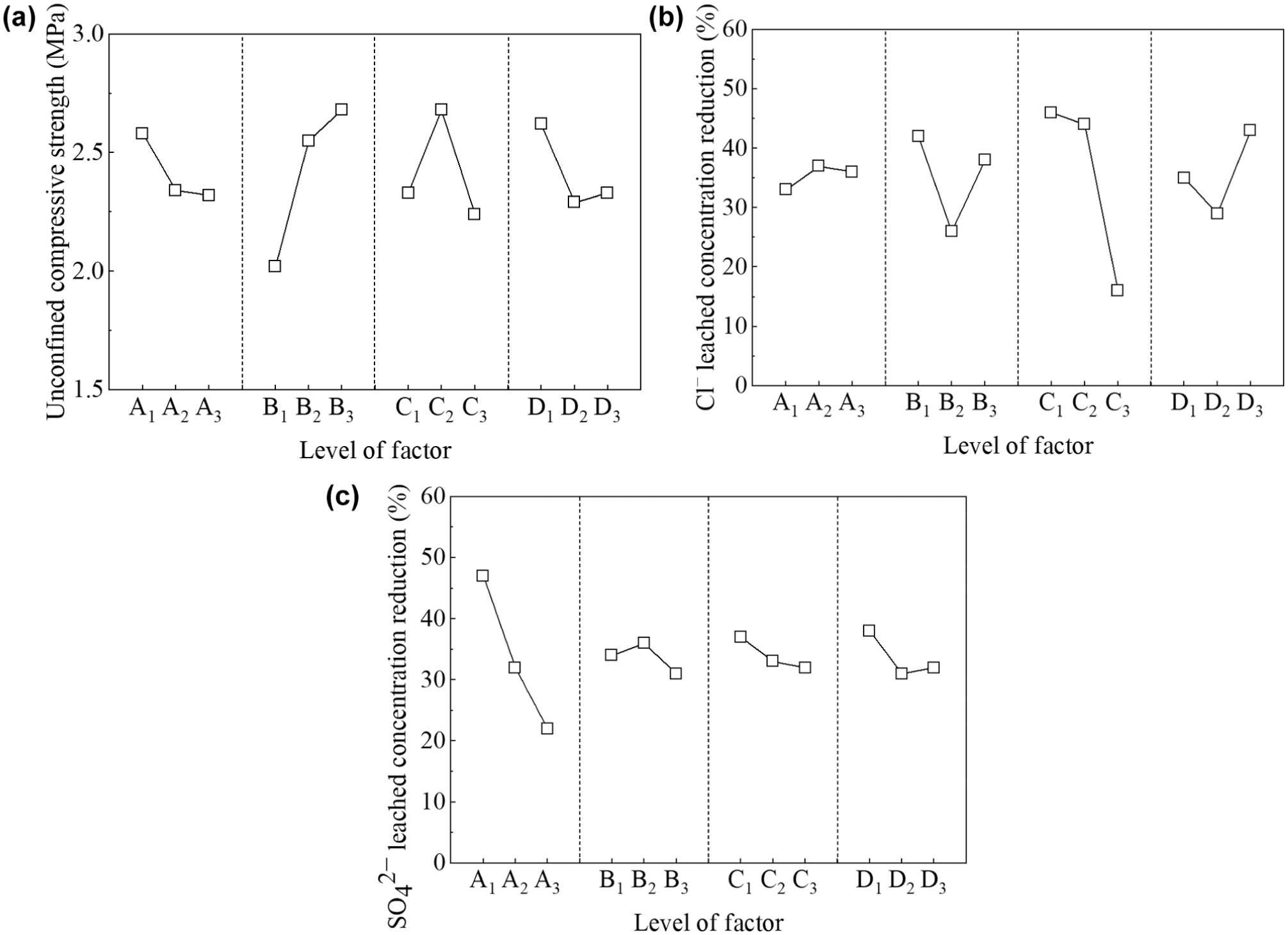
Effects of factor level changes on: (a) 7-day UCS; (b) 28-day Cl− leached concentration reduction; (c) 28-day SO42− leached concentration reduction of the stabilized TG (A i , B i , C i , and D i ).
Optimal Levels of Four Factors Based on Results of Range Analysis
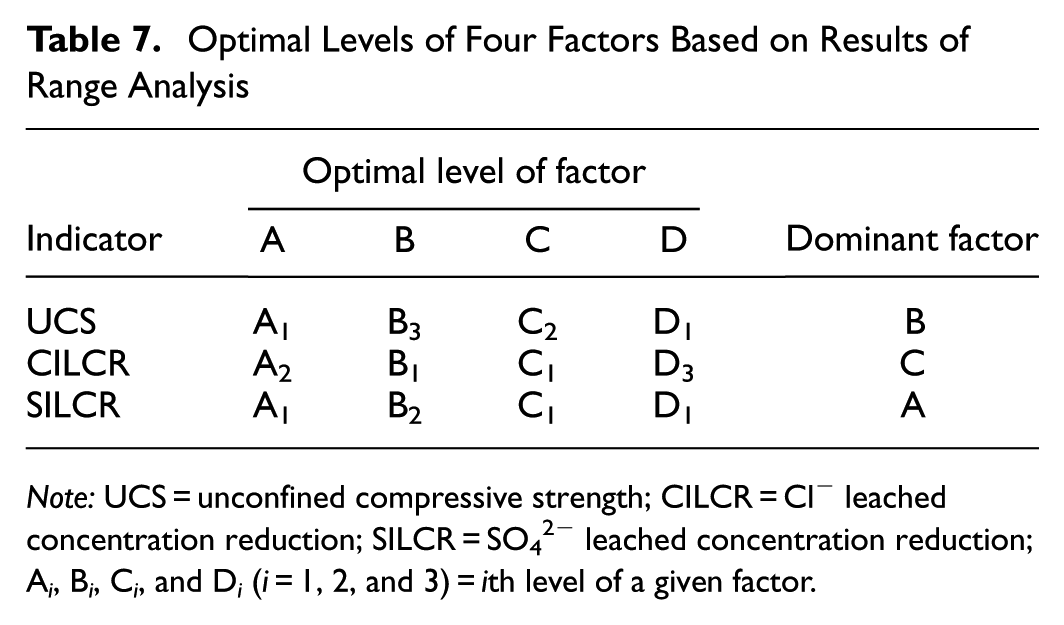
Note: UCS = unconfined compressive strength; CILCR = Cl− leached concentration reduction; SILCR = SO42− leached concentration reduction; A i , B i , C i , and D i (i = 1, 2, and 3) = ith level of a given factor.
The 7-day UCS value of the VT specimens was 3.40 MPa, which was higher than the maximum UCS value (3.02 MPa) tested obtained in the orthogonal experiment. In addition, the ion concentrations leached from VT samples cured for 28 days were reduced by 56% for Cl− and 55% for SO42−, both of which were higher than or equal to the maximum reductions of 51% for Cl− and 55% for SO42− observed in the orthogonal experiment samples. The verification experiment results confirmed the validity of the orthogonal experiment outcomes.
Volume Change and Strength Properties
Figure 5 shows 1D swell strains of TG and BT1, BT2, and BT3 specimens after curing for 7 days under standard conditions. The TG specimen exhibited significant swelling potential, with a 1D swell strain of 7.6%. In contrast, the 1D swell strains of BT1, BT2, and BT3 specimens decreased to 0%, 0%, and 0.1%, respectively. This reduction is attributed to the formation of calcium-(ferrite)-silicate hydrate (C-(F)-S-H) in the stabilized TG specimens, which eliminated swelling induced by the TG water uptake and by AFt formation ( 22 ).
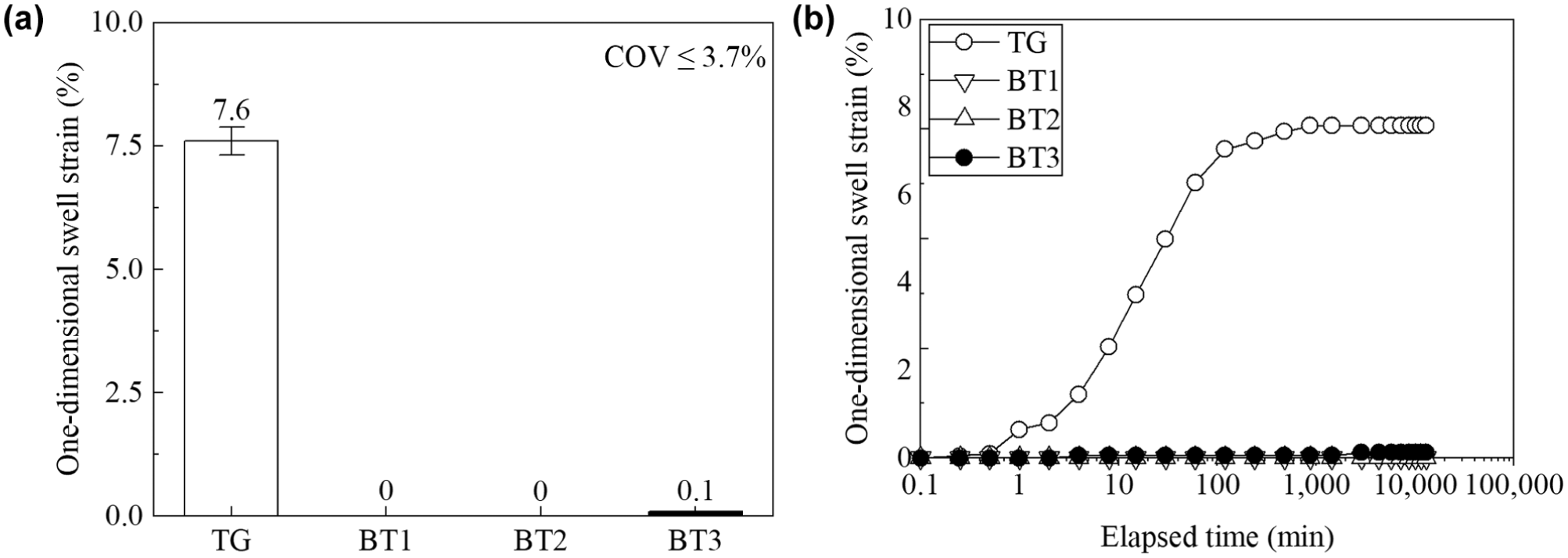
(a) Average one-dimensional swell test results and (b) time-dependent one-dimensional swell strain curves of TG, BT1, BT2, and BT3 specimens (number of replicates = 2).
Figure 6 shows the UCS values of the BT1, BT2, and BT3 specimens at the target curing periods under the conditions with and without 24-h soaking. The TG specimen possessed an average UCS value of 0.73 MPa and lost 100% of its strength after soaking. As the curing periods increased, the UCS values of the BT1, BT2, and BT3 specimens exhibited a steady increase in strength because of the continued pozzolanic reactions between TG and binders. The UCS values of the BT1, BT2, and BT3 specimens increased by approximately 3.98, 3.25, and 3.08 MPa after curing for 28 days. The UCS values of the BT1, BT2, and BT3 specimens decreased as the mass ratio of RHA:TG increased during each curing period. After curing for 7 days under standard conditions, the BT1, BT2, and BT3 specimens had UCS values of 3.72, 3.40, and 3.01 MPa, respectively. Compared with TG, this increase in strength is attributed to the formation of C-(F)-S-H, which bonds the gypsum particles, forms the denser microstructure, and consequently improves strength ( 91 ). The AFt crystals’ growth and hydration also filled the intercrystalline spaces and pore voids at the early stage, enhancing the strength of stabilized TG specimens. However, after 24-h soaking, the UCS values of the BT1, BT2, and BT3 specimens cured for 6 days decreased by 18%, 19%, and 22%, respectively; those cured for 13 days decreased by 29%, 28%, and 30%, respectively. Even after curing for 27 days, the BT1, BT2, and BT3 specimens, followed by water-soaking for 24 h, showed a strength loss of nearly 20%. This reduction is attributed to a decrease in the suction and to the expansion of AFt in stabilized TG specimens during the 24-h soaking period.
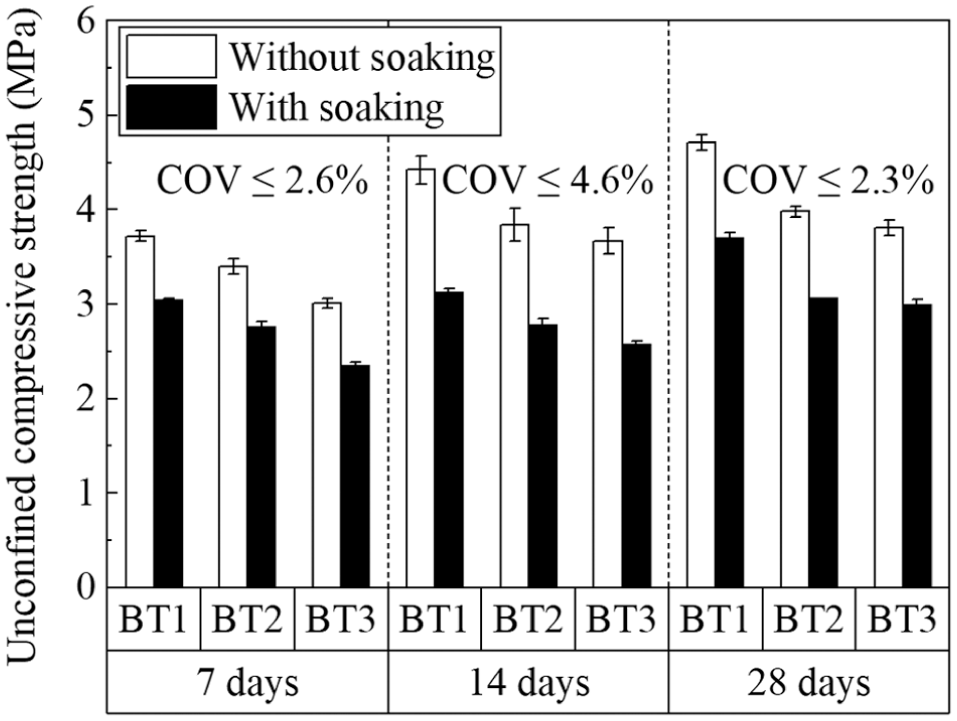
Unconfined compressive strength (UCS) values of BT1, BT2, and BT3 specimens tested under conditions with and without soaking (number of replicates = 3).
Chloride and Sulfate Ion Leached Concentrations
Figure 7 shows the reduction in Cl− and SO42− concentrations leached from the BT1, BT2, and BT3 samples cured for 14 and 28 days under standard conditions. The immobilization of Cl− and SO42− improved as the curing time increased from 14 to 28 days. At both curing periods (14 and 28 days), as the RHA:TG mass ratio increased from 0:100 (BT1) to 2:98 (BT3), Cl− immobilization initially increased but then decreased, while SO42− immobilization decreased at both curing periods. This is attributed to the additional RHA, which provides reactive silica that consumes Ca2+ and OH−, reducing the precipitation of AFm and AFt ( 67 , 92 ). The BT1, BT2, and BT3 samples cured for 14 days exhibited reductions in leached concentrations of Cl− by 45%, 52%, and 47%, and in SO42− by 30%, 23%, and 15%, respectively, compared with TG. After curing for 28 days, the BT1, BT2, and BT3 samples showed reductions in leached concentrations of Cl− of 54%, 56%, and 53%, respectively, and reductions in SO42− concentrations of 61%, 55%, and 42%, respectively.
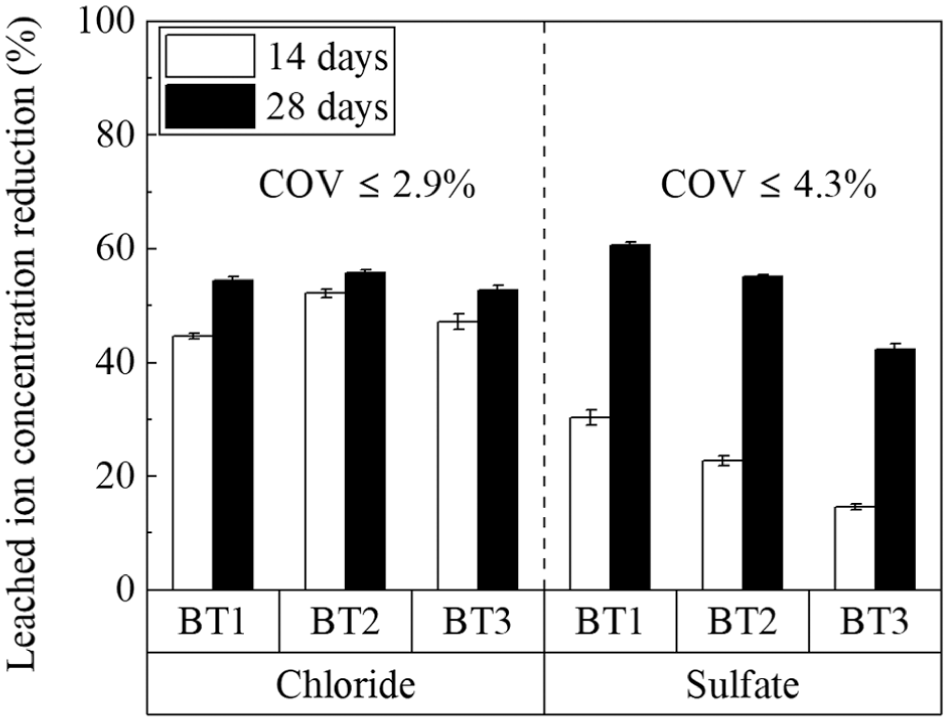
Reduction in ion concentrations leached from BT1, BT2, and BT3 samples cured for 14 and 28 days under standard conditions (number of replicates = 3).
pH of TG and Stabilized TG Samples
Figure 8 shows the variation in pH values of the TG, BT1, BT2, and BT3 samples cured for 7, 14, and 28 days under standard conditions. The pH of TG samples averaged pH 9.26. After curing for 7 days, the pH values of the BT1, BT2, and BT3 samples remained around pH 10.37. As the pozzolanic reaction continued, the pH values of the stabilized TG samples cured for 28 days decreased to a range of pH 9.79–10.04.
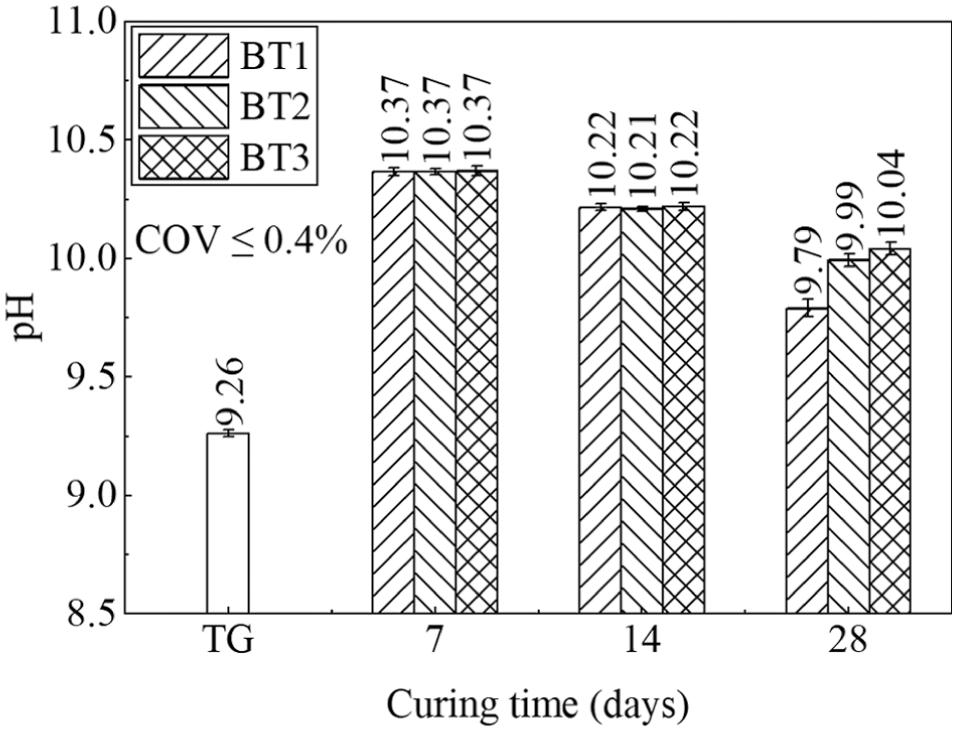
pH performance of TG and stabilized TG (number of replicates = 3).
Mineral Compositions and Microstructural Properties
The minerals of the TG sample and the BT2 samples under conditions with and without soaking at different curing periods are shown in Figure 9. The X-ray diffractogram for TG shows the presence of gypsum (CaSO4·2H2O) (PDF#04-008), Fe-AFt (Ca6[Fe(OH)6]2(SO4)3·26H2O) (PDF#97-025), Fe(III) hydroxide (Fe(OH)3) (PDF#00-046), and calcite (CaCO3) (PDF#97-042). According to the elemental composition of TG, the peak near 2θ of 9.20° (Figure 9a) indicated the presence of Fe-AFt. The formation of Fe-AFt is attributed to the reaction between Fe(III) sulfate (Fe2(SO4)3) and portlandite (Ca(OH)2) during the TiO2 production process ( 4 , 93 ). A new peak close to 2θ of 9.09° is observed in the BT2 samples cured for 7 days under conditions with and without soaking, as shown in Figure 9b. It indicated that aluminum-phase AFt (Al-AFt, Ca6[Al(OH)6]2(SO4)3·26H2O) (PDF#97-002) was generated in the BT2 specimen. The reduction in the strongest ( 100 ) peak of the Fe-AFt and Al-AFt (AFt group) (Figure 9b) and calcite in the BT2 samples cured under standard conditions for 14 and 28 days is attributed to the transformation of AFt and the formation of new phases with low crystallinity, polytypism, and variations, including sulfate-intercalated AFm, carbonate-intercalated AFm, and Friedel’s salt ( 94 – 97 ). This is consistent with the reduction in Cl− and SO42− concentrations leached from stabilized TG samples (Figure 7). Figure 9b shows that the strongest ( 100 ) peak of the AFt group was enhanced in the BT2 samples cured for 6 and 13 days, followed by water-soaking for 24 h.
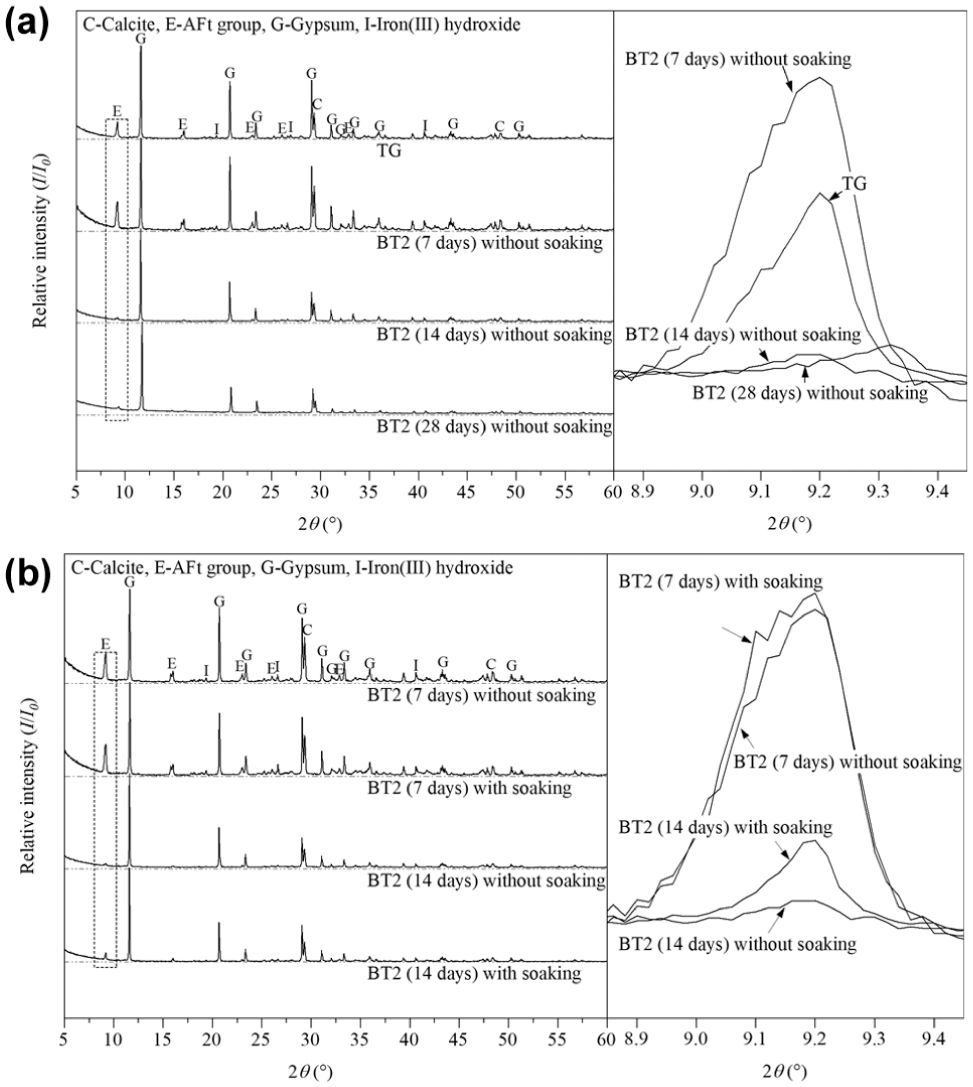
X-ray diffractograms for: (a) TG and BT2 samples cured for 7, 14, and 28 days under standard conditions; and (b) BT2 samples cured for 7 and 14 days under standard conditions, and BT2 samples cured for 6 and 13 days followed by water-soaking for 24 h.
The TGA curve of the cement pastes is an indicator of hydration development, while variations in the number and shape of the peaks of the derivative thermogravimetric analysis (DTG) curve reflect changes in the stoichiometry of the hydrated products. Figure 10 shows the TGA and DTG curves for the degradation products of TG and BT2 samples cured for 7, 14, and 28 days under standard conditions. The first stage of the primary mass loss was dehydration, which occurred between room temperature (30°C) and approximately 200°C. Two peaks are observed in the DTG curves of the TG sample (Figure 10a), while three peaks are observed in the DTG curves of the BT2 sample in Figure 10, b–d, during dehydration. The double peaks (2 and 3) in the temperature range of 100°C–200°C are attributed to the dehydration of the C-(F)-S-H, AFt group, and gypsum, while the minor Peak 1 shown in Figure 10, b–d, is attributed to the interlayer water of C-(F)-S-H, AFm, and magnesium–aluminum LDHs (Mg-Al LDHs) around 96°C, consistent with previous studies ( 4 , 97 – 101 ). As curing age increased, an increase in the interlayer water content of the BT2 samples from 3.1% to 4.1% indicated the formation of cementitious phases, including C-(F)-S-H, AFm, and Mg-Al LDHs. The next temperature interval, from 200°C to 600°C, involved dihydroxylation and showed a smaller mass loss compared with dehydration. The final mass loss near 700°C, shown in Peak 4, is attributed to carbon dioxide (CO2) release and confirms the presence of calcite.
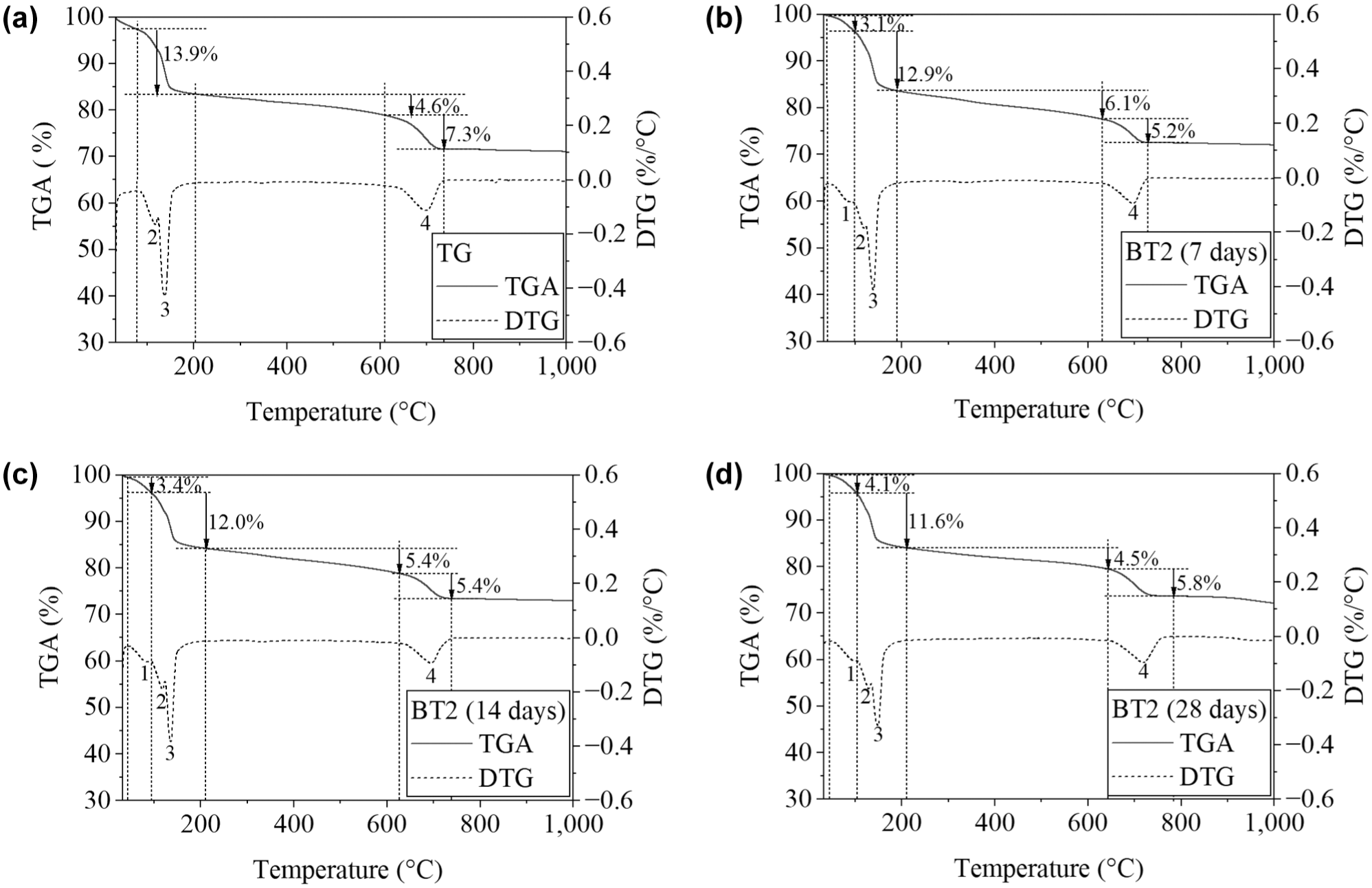
TGA and DTG curves of (a) TG sample and (b)–(d) BT2 samples cured for 7, 14, and 28 days under standard conditions.
Figure 11a shows a typical SEM image of the TG sample, showing the major minerals: plate-like gypsum and needle-like Fe-AFt, as confirmed by the XRD results (Figure 9a). Yi et al. ( 102 ) and Zhang et al. ( 103 ) reported that reactive MgO effectively activated pozzolanic hydration, leading to the formation of additional hydration products, including C-S-H and Mg-Al LDHs. C-S-H has a multilayer structure with a large surface area and adsorbs many kinds of anions both physically and chemically, including SO42−, carbonate ions (CO32−) and Cl− during the early hydration period ( 84 , 104 , 105 ). In an Fe(III)-rich cement system, C-(F)-S-H phases exhibit higher adsorption capacity and smaller particle sizes than those of traditional C-S-H phases ( 106 , 107 ). The round amorphous globules and net-like structures (Figure 11b) bonded gypsum particles together. Figure 12 shows the EDS analysis of Spot 1 and Spot 2 (Figure 11b). The spectra showed high fractions of Ca (26.80%), Si (11.15%), and Fe (5.91%) in Spot 1 (Ca/Si = 2.33), and high fractions of Ca (15.49%), Si (5.32%), and Fe (5.28%) in Spot 2 (Ca/Si = 2.91). As Han et al. ( 108 ) reported, the Ca/Si ratio determined via SEM-EDX was higher than the actual Ca/Si ratio of the C-S-H gel, because of the wide detection range and interference from unhydrated cement grains. Mancini et al. ( 17 ) found that C-S-H adsorbed [Fe(OH)4]− to form net-like C-(F)-S-H at higher Ca/Si ratios (Ca/Si = 1.2 and 1.5), and round amorphous globules at a lower ratio (Ca/Si = 0.8). Therefore, the EDS results shown in Figure 12 indicated that C-(F)-S-H was the main product generated in stabilized TG specimens during the early hydration period, consistent with the previous studies ( 106 , 107 , 109 ). These hydration products enhanced the strength of stabilized TG specimens and immobilized Cl− and SO42−. The high fractions of Cl (10.88%) and S (4.92%) in Spot 1, and Cl (4.67%) and S (5.17%) in Spot 2, confirmed that Cl− and SO42− were adsorbed onto C-(F)-S-H microstructures, consistent with Csizmadia et al. ( 110 ). LDHs are secondary reaction products in alkali-activated cementitious systems, with a unique layered nanostructure, and exhibit excellent ion adsorption and exchange capacities ( 111 – 114 ). LDHs have a variety of chemical compositions, including Mg-Al LDHs and AFm. SEM images (Figure 11, b and c) show numerous flocculent and brucite-like structures attached to gypsum particles. To further clarify these structures and identify the adsorption behavior of anions, EDS mappings of Spot 3 and Spot 4 from the SEM image of the BT2 specimen (Figure 11c) are shown in Figure 13. Figure 13a shows flocculent and brucite-like particles stacked together on the surface of gypsum particles in Spot 3. The element mapping analysis of Mg, Al, Ca, Fe, and Si in Spot 3 reveals the presence of C-(F)-S-H, Mg-Al LDHs, and AFm in Zone 1, with enrichment of chlorine (Cl) and C, confirming that Cl− and CO32− were adsorbed to that zone. Based on the element mapping analysis of Ca, Fe, Si, C, S, and Cl in Spot 3, Zone 2 shows the presence of C-(F)-S-H and AFm, confirming that SO42− and Cl− were immobilized. Figure 13b shows the EDS mapping result of Spot 4, which illustrates that AFm exhibited brucite-like structures in Zone 3 and was attached to the surface of gypsum particles, including Friedel’s salt (enriched in Ca, Fe, and Cl) and carbonate-intercalated AFm (enriched in Ca, Fe, and C) with sharp edges, consistent with previous studies ( 109 , 115 ). The EDS mapping results of Spot 3 and Spot 4 demonstrate that AFm had a remarkable ability to adsorb SO42− and Cl− in stabilized TG. Figure 12, e and f, shows needle-like and rod-shaped structures observed when stabilized TG specimens were soaked for 24 h. The observation is attributed to the hydration of AFt in stabilized TG specimens, consistent with the strength loss (Figure 6) and the XRD results (Figure 9).
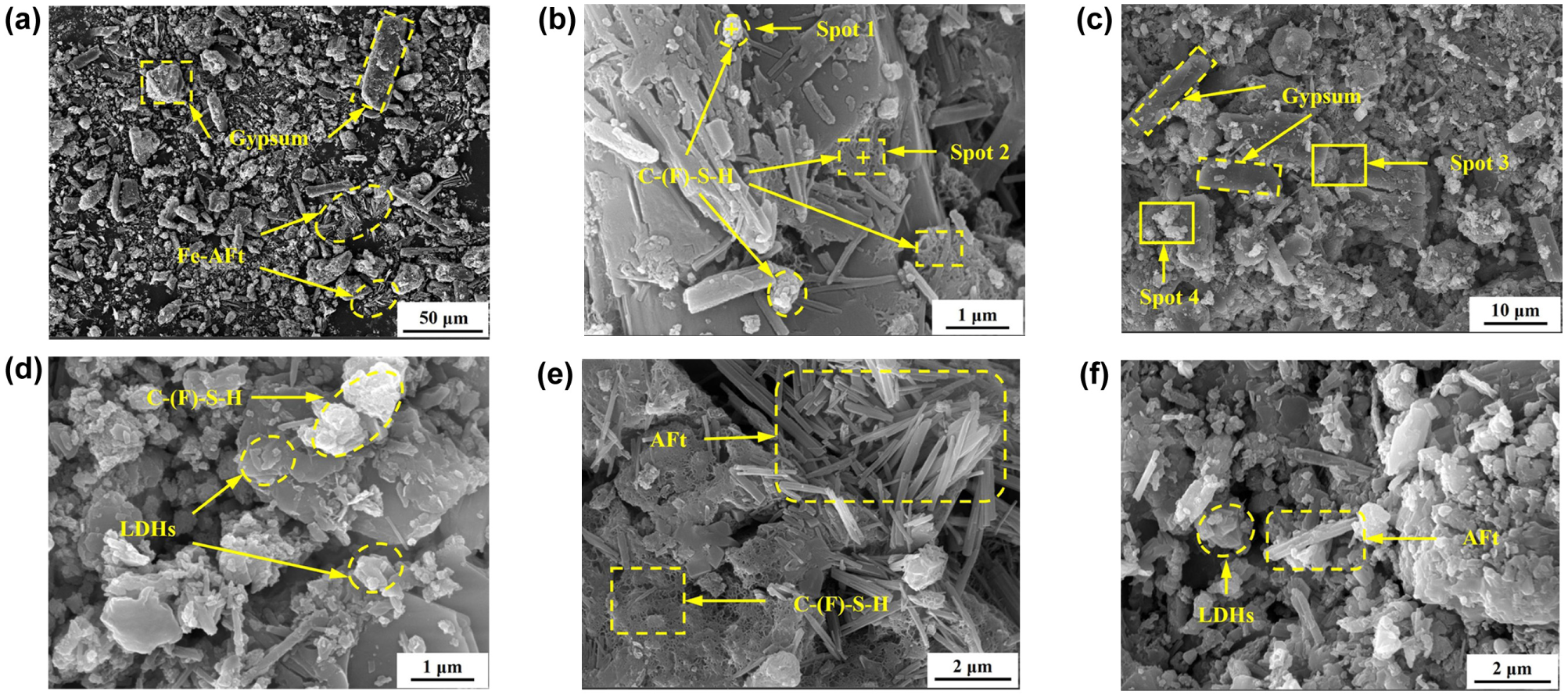
SEM images of: (a) TG; (b)–(d) stabilized TG specimens cured for 7, 14, and 28 days under standard conditions (Spots 1 and 2 were analyzed for elemental composition using EDS, and Spots 3 and 4 were analyzed for elemental distribution using EDS mapping); and (e)–(f) stabilized TG specimens cured for 6 and 13 days and followed by water-soaking for 24 h.
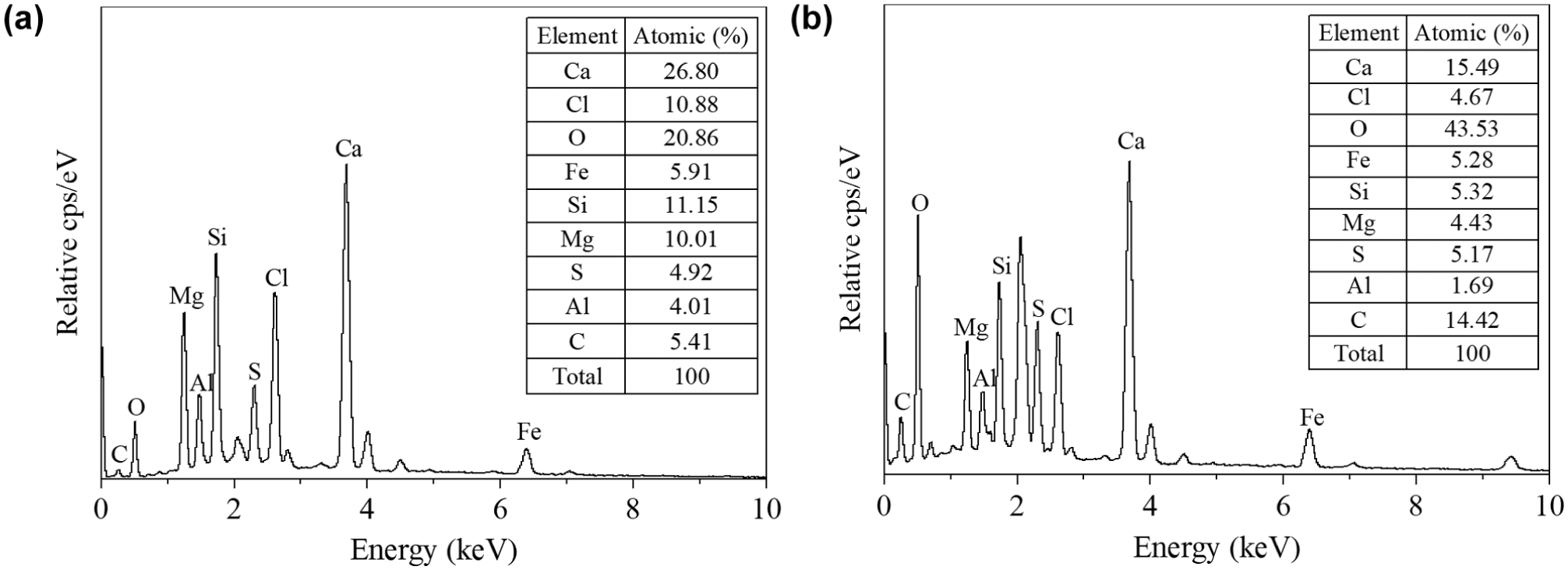
EDS analysis of two C-(F)-S-H structures: (a) round amorphous globules (Spot 1) and (b) net-like structures (Spot 2) in stabilized TG specimen cured for 7 days under standard conditions.
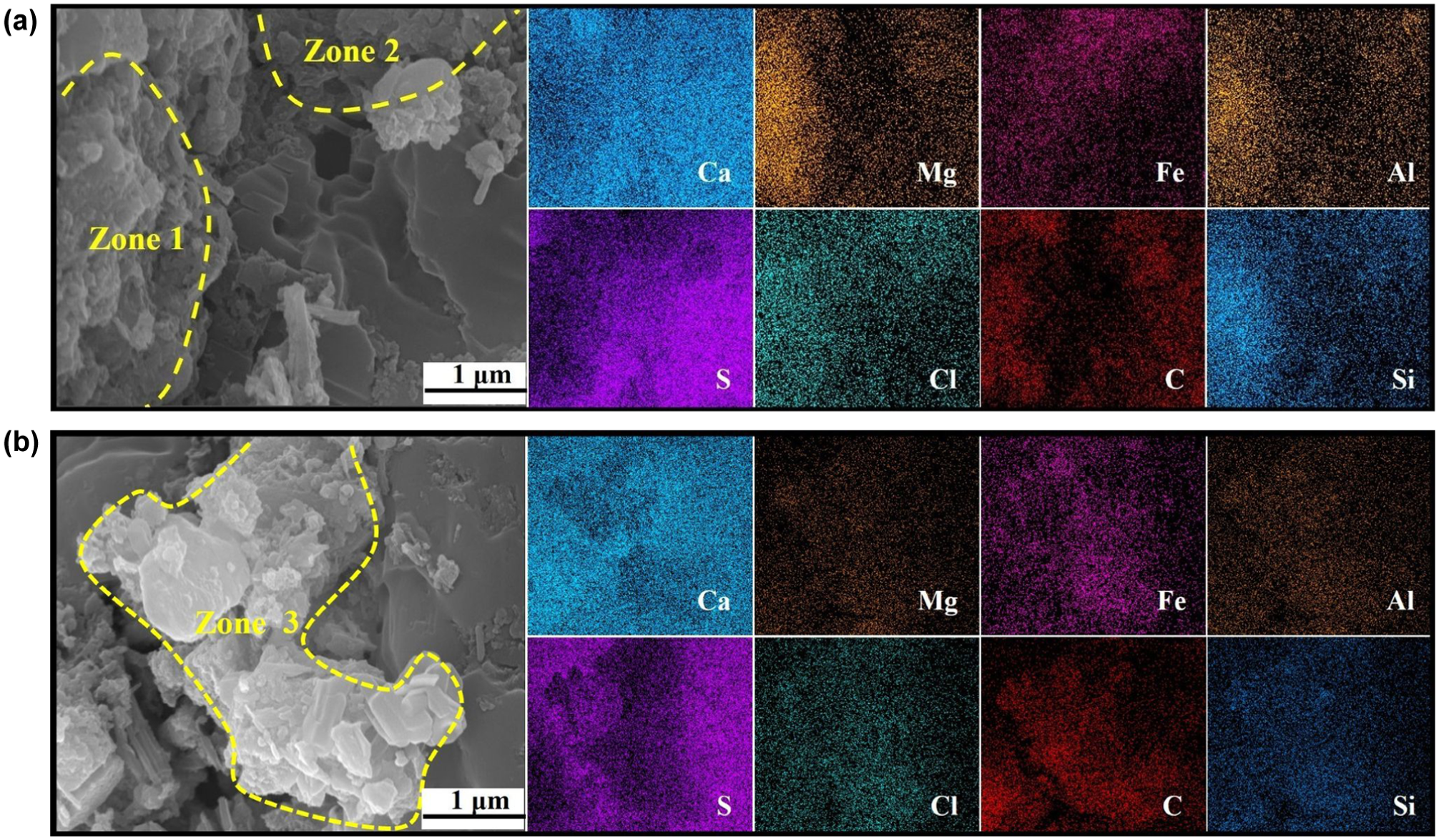
EDS mappings of: (a) Spot 3; and (b) Spot 4 in BT2 specimen cured for 14 days under standard conditions, showing the distribution of elements (Ca, Mg, Fe, Al, S, Cl, C, and Si).
Discussion
Effect of Immobilization on Volume Change and Strength Properties
The stabilized TG specimens exhibited lower one-dimensional swell strains and higher UCS values compared with the TG specimens, as shown in Figures 5 and 6. These improvements are attributed to the following mechanisms: (1) the formation of C-(F)-S-H ( 102 ), substantiated by the SEM-EDS analyses (Figures 11 and 12). These products bonded gypsum particles, filled pores, and improved the strength of stabilized TG specimens; and (2) the transformation of AFt and the formation of new products, including sulfate-intercalated AFm, carbonate AFm, and Friedel’s salts ( 103 , 116 , 117 ), as validated by the XRD results (Figure 9), SEM images (Figure 11), and EDS mapping results (Figure 12). However, water-soaking led to a reduction in the strength of stabilized TG specimens (Figure 6). The strength loss was associated with the crystal growth and hydration of AFt, leading to swelling pressure that damaged the bond between hydration products and gypsum particles ( 118 , 119 ). The formation of carbonate-intercalated AFm may have been suppressed by calcite in the TG, which may have suppressed the transformation of sulfate-intercalated AFm into AFt ( 96 ). The formation of a few AFt is substantiated by XRD analysis results (Figure 9b) and SEM images (Figure 11, e and f). In addition, a decrease in the suction of the soaked stabilized TG was responsible for the strength loss of the specimens ( 67 , 120 ).
Effect of Immobilization on Leached Ion Concentrations
The formation of C-(F)-S-H and LDHs, as shown in Figures 11 –13, is the primary mechanism for immobilizing Cl− and SO42− in stabilized TG. The ion adsorption behavior during hydration is a time-dependent process ( 84 ). During the early stages of hydration, C-(F)-S-H adsorbed Cl− and SO42−, as evidenced by the SEM images (Figure 11) and the EDS results (Figure 12). LDHs, which were secondary hydration products in stabilized TG, efficiently immobilize Cl− and SO42− because of their ion adsorption and exchange characteristics ( 121 ). In stabilized TG, the presence of Mg2+, Ca2+, and reactive Fe(III) hydroxide and alumina contributed to the formation of Mg-Al LDHs and AFm. Previous studies indicated that under highly alkaline, Fe-rich, and calcite-rich conditions, Fe-AFt is more easily transformed into AFm ( 109 , 122 , 123 ). As the curing time increased from 7 to 28 days, the disappearance of the AFt group and the calcite peak shown in Figure 9 provided evidence for the transformation of AFt. Meanwhile, SEM images (Figure 11, c and d) and EDS mapping results (Figure 13) show the generation of more brucite-like structures, which further support the formation of Mg-Al LDHs and AFm.
Conclusions
This study presented an investigation into using stabilized TG as a roadway subgrade material. The binder formulation was optimized through orthogonal experiments, and the effectiveness of the binders on the geotechnical properties and leachability of TG was evaluated. The hydration characteristics of the stabilized TG were analyzed using XRD, TGA, and SEM-EDS. Based on the experimental results, the main conclusions are as follows.
The mass ratios of reactive MgO, GGBS, FA, RHA, and TG in the proposed TG-based subgrade material were optimized as 1.3:5.2:3.5:1:99 based on the range analysis results of the orthogonal experiments. After curing for 7 days, the TG specimen stabilized with the component-optimized binder possessed a UCS of 3.40 MPa. After curing for 28 days, the concentrations of Cl− and SO42− leached from the stabilized TG sample were reduced by 56% and 55%, respectively, compared with those leached from TG.
For the TG stabilized with a binder with a fixed content of reactive MgO:GGBS:FA = 1.3:5.2:3.5, the addition of RHA (RHA:TG = 1:99 and 2:98) decreased the strength and sulfate ion stabilization instead of increasing them. After curing for 7 days, the TG specimen stabilized with a 10% component-optimized binder (reactive MgO:GGBS:FA = 1.3:5.2:3.5) exhibited a UCS of 3.72 and 3.04 MPa under conditions with and without soaking, respectively. The specimen exhibited a 1D swell strain close to 0%, while the TG specimen displaced a 7.6% swell strain. After curing for 28 days, the concentrations of Cl− and SO42− leached from the stabilized TG sample were reduced by 54% and 61%, respectively, compared with those leached from TG.
XRD results revealed that the major phases in TG (pH = 9.26) included gypsum, Fe-AFt, calcite, and Fe(III) hydroxide. In stabilized TG, Fe-rich C-(F)-S-H gel hydration products were generated, which primarily contributed to strength increase and to the adsorption of chloride and sulfate ions during the early hydration period. As hydration progressed, LDHs formed and adsorbed the anions.
The results presented in this study demonstrate that the proposed binder is promising for stabilizing TG to improve mechanical properties and environmental safety.
Overall, this study provides a promising method for utilizing TG as road subgrade material in the investigated case. Through the orthogonal experiments and further evaluations, the binder components were optimized and analyzed. Although this study provides promising results, there are some limitations. First, this investigation was limited to a specific TG sample. The results generated from this study should be further validated with a wider range of TG samples. Second, the binder components and evaluation indicators for TG stabilization explored in this study were relatively limited. Therefore, future studies should investigate a broader range of binder components and examine additional indicators to provide a more thorough assessment of stabilized TG. Third, because of the high gypsum content in the TG, low-permeability materials should be used to encapsulate the TG and then prevent potential leaching risks. Future research might explore the durability of the stabilized TG roadway subgrade under extreme conditions, such as resistance to wetting–drying and freeze–thaw cycles.
Supplemental Material
sj-docx-1-trr-10.1177_03611981261443277 – Supplemental material for Feasibility of Stabilized Titanium Gypsum as Roadway Subgrade Material: Evaluation of Geotechnical Properties and Leachability
Supplemental material, sj-docx-1-trr-10.1177_03611981261443277 for Feasibility of Stabilized Titanium Gypsum as Roadway Subgrade Material: Evaluation of Geotechnical Properties and Leachability by Shimin Zeng, Sike Wang, Dexing Liu, Heng Zhuang, Jinkun Huang, Guohui Zhao and Yanjun Du in Transportation Research Record
Footnotes
Acknowledgements
The authors gratefully acknowledge the financial support provided by the National Natural Science Foundation of China, the Jiangsu Key Research and Development Program, and China MCC17 Group Co., Ltd. We thank Qi Li and Chaofeng Wu (China Power Engineering Consulting Group Co., Ltd.) for assistance with early-stage material procurement. Appreciation is also extended to Feng Wang (China Power Engineering Consulting Group Co., Ltd.) and the anonymous reviewers for their constructive comments.
Author Contributions
The authors confirm contribution to the paper as follows: study conception and design: Shimin Zeng, Yanjun Du; data collection: Shimin Zeng, Sike Wang, Dexing Liu; analysis and interpretation of results: Shimin Zeng, Sike Wang, Jinkun Huang, Guohui Zhao; draft manuscript preparation: Shimin Zeng, Sike Wang, Heng Zhuang, Yanjun Du. All authors reviewed the results and approved the final version of the manuscript.
Declaration of Conflicting Interests
The authors declared no potential conflicts of interest with respect to the research, authorship, and/or publication of this article.
Funding
The authors disclosed receipt of the following financial support for the research, authorship, and/or publication of this article: This study is sponsored by the projects funded by the National Natural Science Foundation of China (Grant No. 42477178), the Jiangsu Key Research and Development Program (Grant No. BE2022830), and the Key Research and Development Program of China MCC17 Group Co., Ltd. (Grant No. SQY2024CXY05), for which the authors are very grateful.

Data Accessibility Statement
The data that support the findings of this study are available from the corresponding author on reasonable request.
Supplemental Material
Supplemental material for this article is available online.
References
Supplementary Material
Please find the following supplemental material available below.
For Open Access articles published under a Creative Commons License, all supplemental material carries the same license as the article it is associated with.
For non-Open Access articles published, all supplemental material carries a non-exclusive license, and permission requests for re-use of supplemental material or any part of supplemental material shall be sent directly to the copyright owner as specified in the copyright notice associated with the article.
