







Abstract
Pavement performance prediction is essential for developing durable asphalt mixtures that meet long-term service requirements. With growing interest among transportation agencies in maximizing the use of recycled asphalt materials (RAM) to promote sustainability and cost-effectiveness, challenges persist in ensuring adequate durability of high-RAM mixtures. This study, conducted as part of the NCHRP Project 09-65, aimed to enhance RAM utilization while maintaining performance standards related to cracking resistance and durability. Six robust asphalt mixtures—representative of two distinct climatic zones and designed using various high-RAM mitigation strategies—were selected based on their performance in laboratory assessments. These mixtures were evaluated using two mechanistic pavement modeling approaches: a fracture mechanics-based cohesive zone model and a continuum damage mechanics-based FlexPAVE™. A representative pavement structure of the Federal Highway Administration’s Pavement Testing Facility and laboratory test results of mixtures formed the inputs for the models. Results from both modeling approaches confirmed that RAM mitigation strategies such as the use of recycling agents, polymer-modified asphalt, and reduced RAM binder availability can significantly affect early- and long-term resistance to cracking. Although performance prediction and rankings differed slightly between the two pavement modeling methods, the combined approach offers a mechanistically grounded framework for evaluating and optimizing high-RAM asphalt mixtures for durable pavement structure.
Keywords
Introduction
The incorporation of recycled asphalt materials (RAM), including reclaimed asphalt pavement (RAP) and reclaimed asphalt shingles, has gained prominence over the past two decades because of its economic, environmental, and sustainability advantages, such as conserving virgin resources, reducing energy consumption, and lowering emissions ( 1 ). Enhanced understanding of the interactions between aged, reclaimed asphalt binder and virgin binders and the use of additives has improved the feasibility of high-RAM mixtures meeting performance expectations ( 2 , 3 ). The emergence of balanced mix design approaches, which prioritize performance testing over traditional volumetric criteria, further supports RAM usage, with over thirty state highway agencies actively adopting or drafting balanced mixed design specifications ( 4 , 5 ). These strategies require rigorous evaluation tools to assess how binder grade, recycled binder ratio (RBR), and additives influence long-term pavement performance, particularly concerning cracking and rutting. To mitigate cracking in high-RAM mixtures, several strategies have been implemented, including the use of polymer-modified asphalt (PMA) as a substitute for virgin binder, incorporation of recycling agents (RA) or warm-mix additives, reduction of RBR or total RAM content, and increasing effective binder content (Pbe) through gradation adjustments or alternative mix design practices (e.g., reduced RAM binder availability, RBA) ( 6 ).
Despite these advancements, high-RAM mixtures remain vulnerable to durability-related distresses (such as fatigue and thermal cracking, aging, and moisture damage) largely because of stiff aged binders. Although laboratory-scale experiments offer valuable material-level insights at the component level, linking these to field performance remains challenging, driving the need for robust mechanistic modeling frameworks that bridge mixture-scale behavior and pavement-level outcomes.
To address the limitations of traditional empirical methods, researchers have increasingly adopted mechanistic–empirical and finite element (FE)-based modeling frameworks that integrate laboratory-derived material properties. A widely used tool, AASHTOWare Pavement ME Design ( 7 ), extends the 1993 AASHTO Guide by incorporating mechanistic concepts but still relies heavily on empirical calibration, which limits its effectiveness for modern mixtures. More advanced methods based on continuum damage mechanics (CDM) and fracture mechanics (FM) offer direct simulation of damage mechanisms in asphalt materials. CDM approaches, such as the simplified viscoelastic continuum damage (S-VECD) model (8–10), treat asphalt mixtures as homogenized media and quantify damage through reductions in stiffness or energy dissipation, with tools like FlexMAT™ and FlexPAVE™ ( 11 ) translating cyclic fatigue and dynamic modulus test data into pavement-level performance predictions. Another CDM-based model, PANDA (12–15), incorporates nonlinear viscoelastic and viscoplastic formulations to simulate fatigue and permanent deformation but may lack precision in capturing localized cracking. In contrast, FM-based models like the cohesive zone model (CZM) offer explicit simulation of crack initiation and propagation using traction–separation relationships ( 16 ). CZM has been successfully adapted for asphalt mixtures (17–19), incorporating nonlinear viscoelasticity and damage evolution under realistic traffic and environmental conditions (20–24). Recent developments in nonlinear viscoelastic CZMs (NVCZMs) enable detailed modeling of rate-dependent fracture and intrinsic damage, validated through laboratory tests such as the indirect tensile asphalt cracking test (IDEAL-CT) ( 24 ). Whereas CDM frameworks are advantageous for computational efficiency, CZMs excel in capturing localized failure and crack growth. Both approaches require rigorous calibration and validation—particularly under scenarios involving aging, moisture, and complex loading—highlighting an ongoing need for refined modeling strategies and performance-based design tools.
Despite these advancements, quantifying the combined effects of moisture damage, aging, and high RAP content remains a critical research need. Most existing models rely on simplified representations or assume linear viscoelasticity and homogeneous material behavior. There remains a significant gap in integrating these environmental degradation factors into predictive frameworks with sufficient fidelity and computational efficiency.
The present study, conducted under NCHRP Project 09-65 ( 25 ), seeks to address this gap by evaluating the cracking performance of high-RBR asphalt mixtures subjected to controlled aging and moisture conditioning, with and without RAM mitigation strategies. By employing both the CZM and CDM-based FE modeling, the study aims to establish a more reliable link between mixture-scale laboratory data and pavement-scale cracking performance. This dual-modeling approach also facilitates a comparative analysis of different methodologies under consistent traffic and climatic scenarios, further contributing to the body of knowledge needed for improving the performance-based specification frameworks.
Materials and Mixtures
In this study, six asphalt concrete mixtures were fabricated from contractor mix designs representing two distinct climatic regions—North/Freeze and South/No Freeze zones—to capture the effects of aging and moisture under varying environmental conditions. Although no plant-produced mixtures were tested in this experiment, the materials used to produce the plant mixtures were supplied by the contractors, allowing for a realistic evaluation of high-RAM mitigation strategies implemented considering regional conditions. These mixtures were evaluated in the laboratory using location-specific conditioning protocols (including aging and moisture conditioning) as part of the NCHRP 09-65 project ( 25 ). They were considered durable and capable of withstanding both traffic and environmental-induced stresses in respect of performance.
The high-RAM cracking mitigation strategies in this study include using a substitute virgin binder that includes PMA, incorporating a RA or Warm Mix Additive (WMA) additive, reducing the RBR or RAM content, and increasing Pbe by decreasing RBA. The material combinations are shown in Table 1 and the aggregate gradation for the five different RBR mixtures is depicted in Figure 1.
Robust Performance Mixtures Selected Based on Different RAM Strategies from the NCHRP 09-65 Project ( 25 )
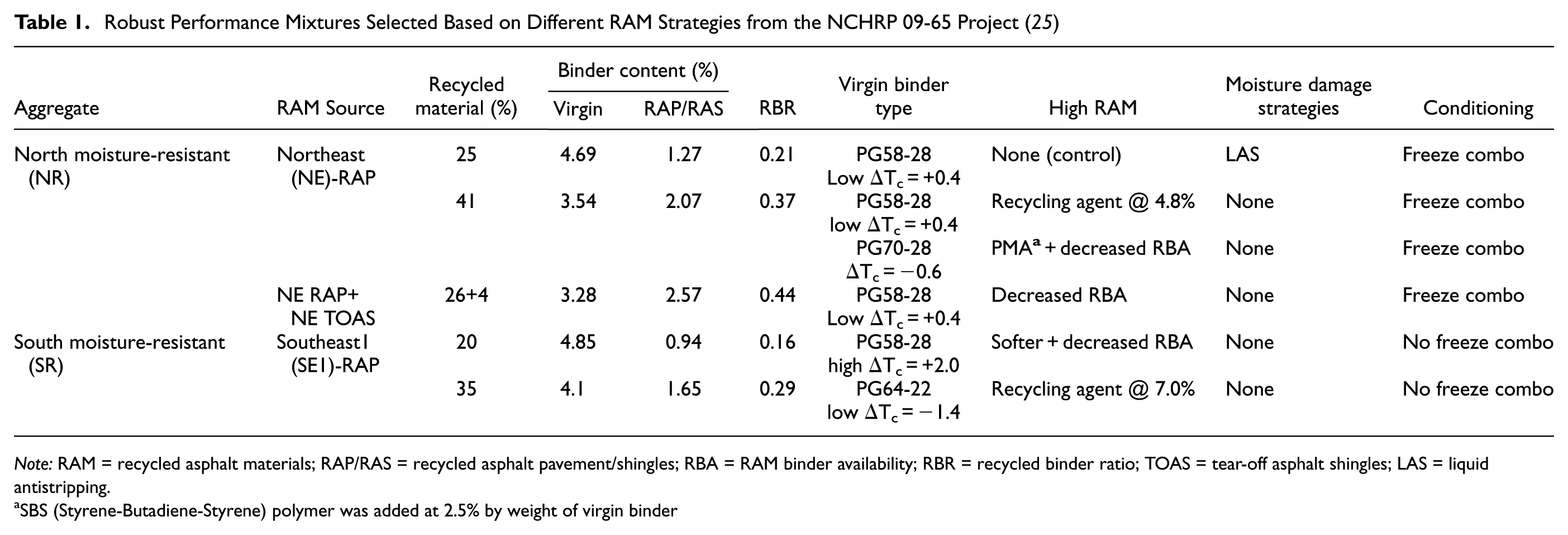
Note: RAM = recycled asphalt materials; RAP/RAS = recycled asphalt pavement/shingles; RBA = RAM binder availability; RBR = recycled binder ratio; TOAS = tear-off asphalt shingles; LAS = liquid antistripping.
SBS (Styrene-Butadiene-Styrene) polymer was added at 2.5% by weight of virgin binder
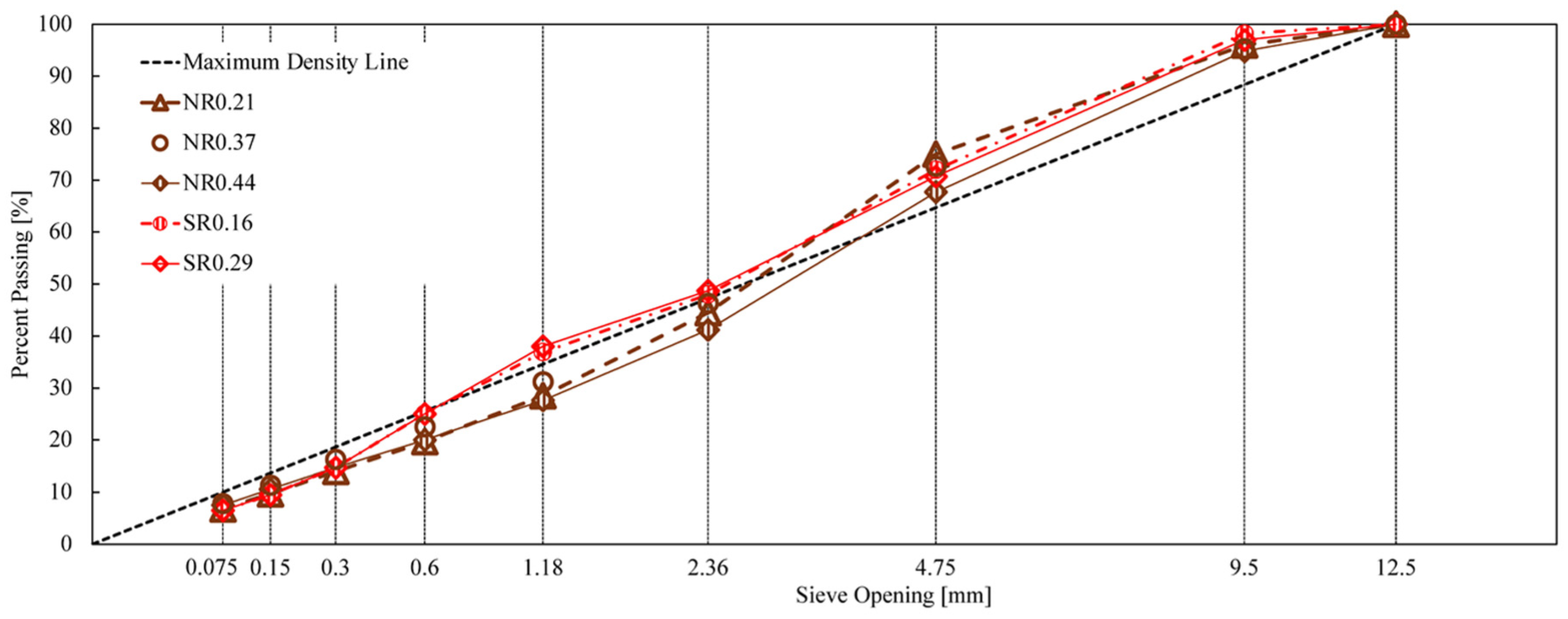
Aggregate gradation for the five different recycled binder ratios comprising the North moisture-resistant (NR) and South moisture-resistant (SR) mixtures.
As such the mixture design incorporated multiple factors and levels: Aggregate Type (North moisture-resistant and South moisture-resistant [NR and SR]), RAM Type and Source (North East-RAP, North East-tear-off asphalt shingles [TOAS], South East1-RAP), Virgin Binder Type (PG58-28 Low ΔTc, PG70-28, PG64-22 Low ΔTc, PG58-28 High ΔTc ), RBR level (Typical versus High >0.30), High-RAM Strategies (None/Control, RA, decreased RBA, and combinations with softer binder or PMA), Moisture Damage Strategies (None versus using a Liquid Antistripping [LAS]), and Conditioning Protocol (Freeze Combination versus No Freeze Combination). It has to be noted that the material combinations depicted in Table 1 were designed to reflect regional practices and were used for both cracking experiments and performance modeling. Binder and RAM selections were aligned with those typically used within each climatic zone, and the conditioning protocols were tailored accordingly. The North/Freeze mixtures were conditioned using the freeze combination (FC) protocol, consisting of 6 h aging at 135°C (with PMA mixtures aged for 3 days at 95°C) followed by freeze–thaw moisture conditioning. The South/No-Freeze mixtures underwent the No-Freeze Combination (No-FC) protocol, which involved extended aging for 8 h at 135°C and moisture exposure without freeze–thaw cycles ( 25 ).
Mixture and Pavement Performance Modeling Using CZM and CDM
This study employed two distinct and widely adopted mechanistic approaches to simulate damage progression in pavements and assess the cracking performance of six robust, durable asphalt mixtures (Table 1). The first approach adopts a FM-based framework using the CZM, whereas the second approach utilizes the CDM framework through the S-VECD model. Each modeling approach enables a purely mechanistic evaluation of pavement performance by capturing the evolution of damage in surface mixtures subjected to repeated traffic loading. These methods provide critical insight into the influence of mixture properties as well as loading and climatic factors on long-term cracking behavior, particularly in mixtures with high RBR.
CZM-Based Approach
The CZM applies FM to simulate crack initiation and propagation in asphalt mixtures and pavements, effectively capturing discrete damage phenomena. It accommodates various failure modes (brittle and ductile), environmental effects (e.g., aging, moisture), and the viscoelastic and nonlinear behavior of asphalt mixtures. This enables accurate, mechanistic prediction of damage-related deformations. As such, CZM-based pavement modeling directly links mixture properties to pavement performance, addressing issues such as fatigue, top-down, reflective, thermal cracking, and rutting (20–24). Therefore, the approach can directly account for the effect of mixture properties on overall pavement performance.
Researchers have proposed several CZMs targeting the cracking behavior of different types of materials. Among these, this study utilized the NVCZM proposed by Yoon and Allen ( 26 ). Researchers have shown that this model is quite robust and effective in capturing the nonlinear response of asphalt mixture cracking and can also capture the mode- and rate-dependency. The constitutive behavior of the CZM is governed by the traction–separation relationship, which is shown in Equations 1 to 3.



where
In CZM, it is commonly assumed that the linear viscoelastic (LVE) behavior of the cohesive zone matches that of the surrounding bulk material, simplifying its integration into FE models while preserving time-dependent response. The traction across the cohesive interface depends on time and loading history, governed by an internal damage parameter α(t). This damage parameter, α(t), governs the progression of damage within the material. As this parameter evolves over time, it influences the traction–separation response of the cohesive interface. When α(t) reaches a value of 1, it indicates complete failure of the interface, signifying the formation of a fully developed crack. This study uses a power-law damage evolution model as depicted in Equations 4 and 5, with material-specific constants A and m to define how damage accumulates and to characterize fracture resistance.


The CZM employed in this study is defined by the traction–separation law and the damage evolution criterion, as presented in Equations 1 to 3 and Equations 4 and 5, respectively. The primary CZM parameters that control crack initiation and propagation include the critical stress state (
CDM-Based Approach
The other mechanistic approach for assessing the structural performance of mixtures selected for the current study is based on the CDM approach. Specifically, the S-VECD model is utilized for investigating the performance of the mixtures. The S-VECD model is a consequence of research and development by several researchers over the last two decades ( 27 ). The S-VECD model is a material model that describes changes in the constitutive relationship as fatigue damage grows, and characterizes the fundamental material properties that are independent of temperature, mode of loading (i.e., control strain, control stress, and monotonic loading), and loading amplitude. The underlying assumption within the S-VECD is that damage associated with overall degradation in strength and stiffness within mixtures is primarily caused by growth in intensity of micro-cracking and coalescence into macro-cracks during monotonic or cyclic load applications. As such, the S-VECD model is a material-specific model that treats a mixture as homogeneous and can capture the overall evolution of the mixture behavior as fatigue damage progresses. Specifically, it characterizes the damage within the mixture as an intrinsic material property that is independent of temperature and mode of loading. The governing equations that describe the S-VECD model are presented in Equations 6 to 10.





where S is the internal state variable representing damage; t is time; W R = pseudo-strain energy density function; ε R = pseudo-strain; α = damage growth rate; C is the normalized pseudo stiffness; ε = actual strain; E R = reference modulus τ = history variable; E(t) = relaxation modulus. C 11 and C 12 are the fitting parameters for the relation between the normalized pseudo stiffness (C) and internal damage variable (S).
The S-VECD model needs a failure criterion to characterize failure within the mixture. For this purpose, Sabouri and Kim ( 28 ) developed the so-called G R failure criterion as described in Equation 10, which is based on pseudo energy and is independent of temperature, mode of loading, and loading amplitude. The S-VECD model described in Equations 6 to 9, along with the G R failure criterion, is incorporated into the FlexPAVE™, which is a Fourier-transform-based 3D-FE (finite element) tool with the capability of accounting for moving loads and site-specific climatic conditions when modeling the pavement performance for fatigue-associated damage within the asphalt layer.
Laboratory Testing and Results
In this study, both the CZM and CDM approaches were employed to evaluate the cracking performance of high-RAM durable asphalt mixtures. To support these mechanistic modeling efforts, three laboratory-scale experiments were conducted to obtain the necessary material parameters for pavement performance simulations. These included: (i) the dynamic modulus (|E*|) test to characterize the LVE behavior of the mixtures, (ii) the IDEAL-CT test to evaluate fracture resistance characteristics, and (iii) the cyclic fatigue test to characterize the fatigue damage evolution for the mixtures. The CZM-incorporated performance modeling of the pavement requires two key inputs for modeling the behavior of the mixture, which are the LVE properties and the inelastic nonlinear fracture properties. Therefore, dynamic modulus experiments were performed first to obtain the |E*| to measure mixture stiffness, and then IDEAL-CT experiments were conducted to characterize mixture fracture properties. These two properties were then used as inputs for the pavement-level model simulation to predict damage and the evolution of cracking performance under traffic loading conditions. The CDM-based pavement performance modeling primarily requires the characterization of the S-VECD model, whose parameters can be obtained directly through the cyclic fatigue experiments, which can later be used within the FlexPAVE™ program to predict pavement performance. The following sections present the experimental results obtained from each of the three experiments, which serve as the foundation for the model calibrations and subsequent performance predictions of the selected robust mixtures.
Dynamic Modulus Experiments
The dynamic modulus (|E*|) experiments were conducted in accordance with AASHTO T342, and the resulting data were utilized to develop master curves at a reference temperature of 20°C. Figure 2a presents the |E*| master curves for the four NR mixtures subjected to FC conditioning, which accounts for the effects of both aging and moisture. Similarly, Figure 2b displays the |E*| master curves for the two SR mixtures evaluated under No-FC conditioning, isolating the effects of aging and moisture without freeze exposure. All |E*| master curves were constructed using a generalized Maxwell model fitted through a Prony series representation.
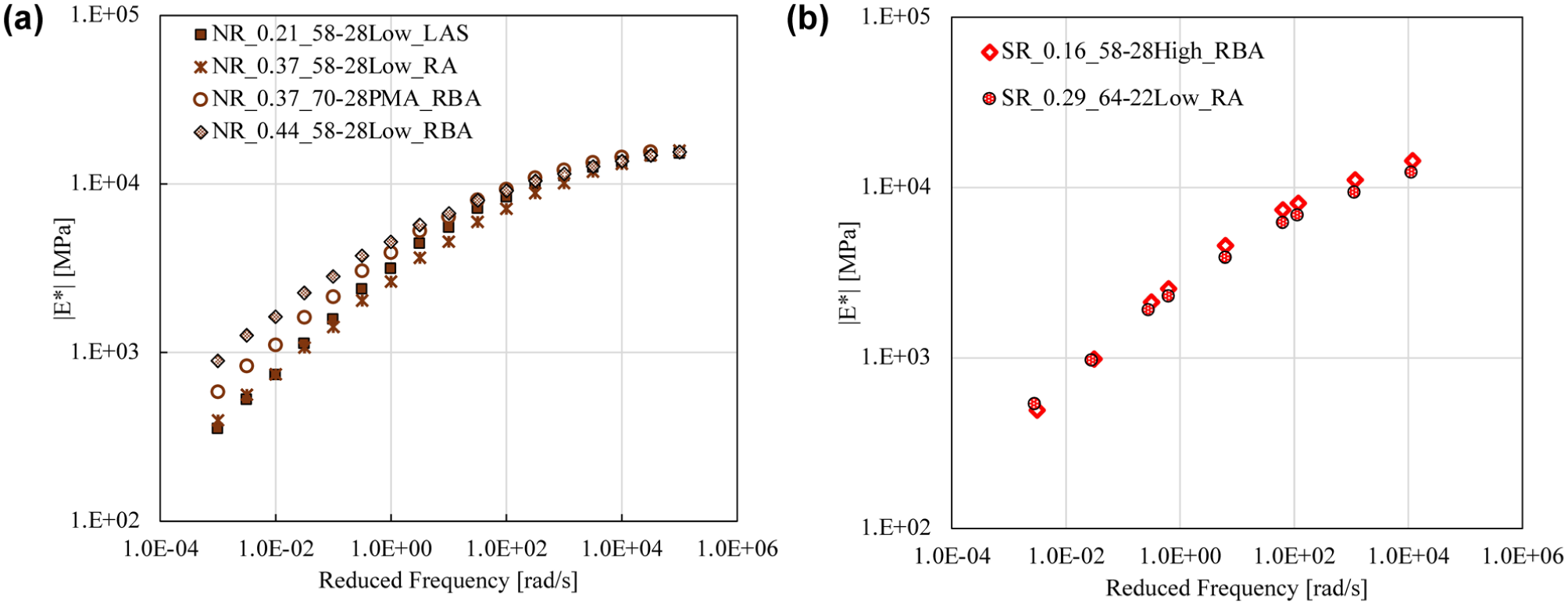
|E*| master curve results at a reference temperature of 20°C for: (a) NR and (b) SR mixtures.
IDEAL-CT Test Results
The IDEAL-CT test is considered an effective and practical method for assessing the fracture resistance of asphalt mixtures, particularly within the framework of balanced mixture design. It can capture both energy absorption and post-peak damage behavior, providing a practical evaluation of cracking potential, and is advantaged by its simplicity (requiring no notching or gluing), making it suitable for routine laboratory applications. However, it has limitations in accurately differentiating fracture-only-related material behavior as its energy dissipation process likely includes combined effects from cracking and deformation. We adopted the IDEAL-CT testing in this study because of the practical simplicity by accepting the fundamental limitation. The IDEAL-CT test was conducted for each mixture listed in Table 1 in accordance with ASTM D8225. The tests were conducted at 25°C at the loading rate of 50 mm/min and at least four replicate results were obtained for each mixture tested. To evaluate the influence of environmental conditions on mixture performance, all asphalt mixtures were conditioned before testing. The conditioning protocols were designed to capture the effects of aging and moisture exposure representative of the two climatic zones. This approach allowed for a systematic investigation of various factors and their respective levels (Table 1), ensuring that the observed cracking behavior reflected realistic field conditions.
The IDEAL-CT experimental results with regard to load-versus-time plots are depicted in Figure 3, a and b , for the NR and SR mixtures, respectively. Figure 4 provides the corresponding IDEAL-CT test results, where Figure 4a depicts the fracture energy and the post peak slope and Figure 4b depicts the corresponding CTIndex values from the IDEAL-CT load-displacement curves. The IDEAL-CT load-displacement curves were also used to calibrate mixture-specific fracture parameters of the CZM method as detailed in the later section: Crack Modeling of Mixtures and Pavements Using CZM Approach.
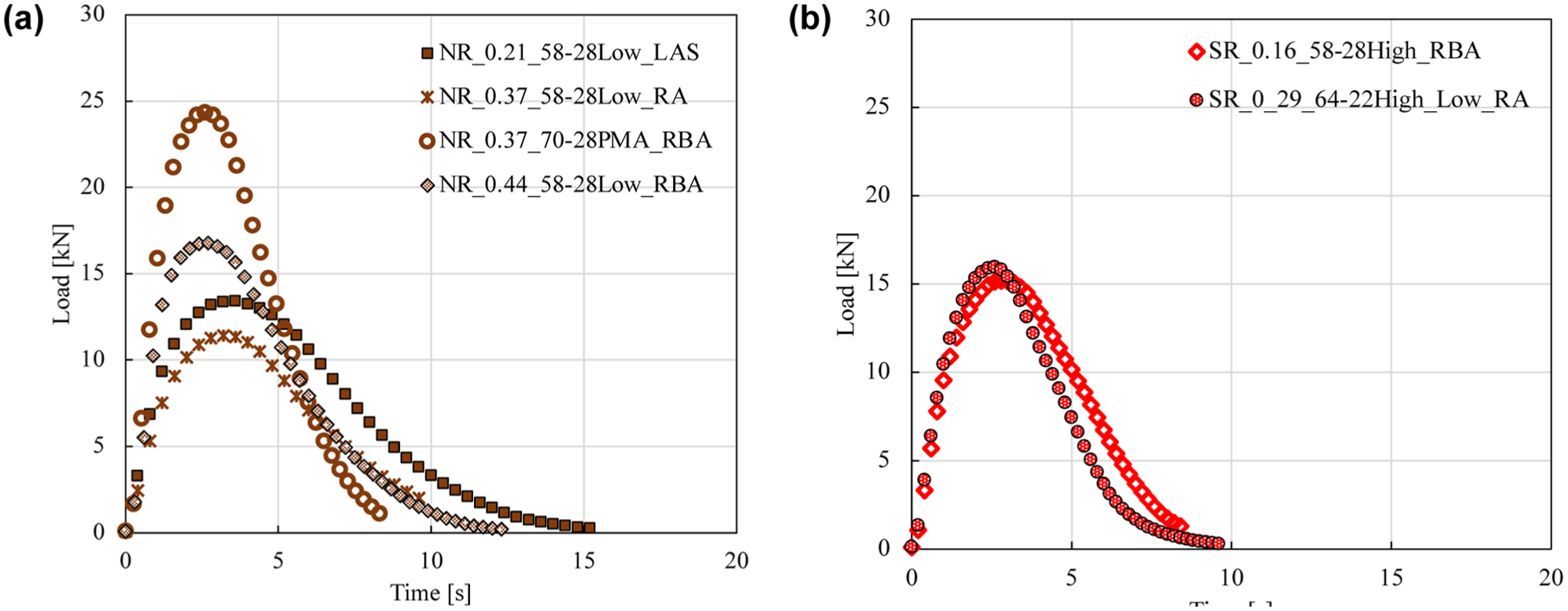
IDEAL-CT test results for: (a) NR and (b) SR mixtures.
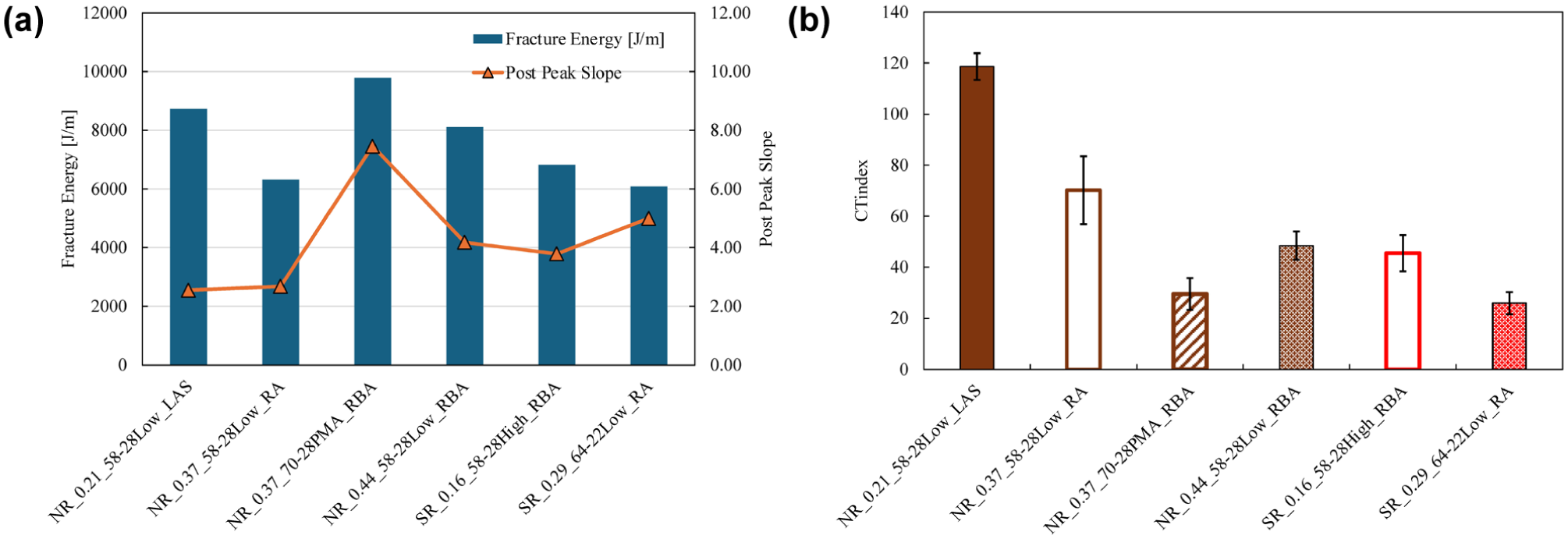
(a) Fracture energy and the post peak slope from the IDEAL-CT tests, and (b) CTIndex results for NR and SR Mixtures.
Figure 4 illustrates the detrimental effect of high RBR on CTIndex following FC conditioning, even when high-RAM mitigation strategies were employed. For the high RBR (0.37) NR mixture, which experienced both aging and moisture effects, the use of a RA proved to be more effective than the hybrid (PMA + RBA) strategy. For the high RBR (0.44) NR mixture, reducing the RBA also improved performance after FC conditioning. Differences among NR mixtures were evident in the |E*| master curves shown in Figure 2a. The curves for the control NR mixture (0.21 RBR) and the high-RBR (0.37) NR mixture with RA were similar, whereas both the high RBR (0.44) NR mixture and the PMA-treated mixture (NR_0.37_70-28PMA_RBA) exhibited stiffening at lower frequencies, even with additional binder from the decreased RBA strategy. For SR mixtures, Figure 4 shows that high RBR also negatively affected CTIndex after No-FC conditioning, despite using the high-RAM mitigation strategy. Nonetheless, when accounting for aging and moisture, the selected mitigation strategies appeared effective. The |E*| master curves in Figure 2b for the robust SR mixtures were similar.
Cyclic Fatigue Testing and Results
Cyclic fatigue testing was conducted on each of the six asphalt mixtures selected for this study, following the standard AASHTO TP 107. The results from the cyclic fatigue and dynamic modulus (|E*|) tests were used to develop the damage characteristic curves and determine key cracking parameters. Figure 5, a and b , presents the damage characteristic curves for the four NR mixtures and the two SR mixtures, respectively. These curves describe the relationship between material integrity (C) and damage (S) within the asphalt mixtures. It can be observed that all high-RAM NR mitigation strategies likely improve the performance compared with the control case (i.e., NR_0.21_58-28Low_LAS) based on the observation that all C-S curves are above the control mixture’s C-S curve. The parameters required to characterize fatigue behavior and predict damage progression and failure using the S-VECD model were obtained through FlexMAT™.
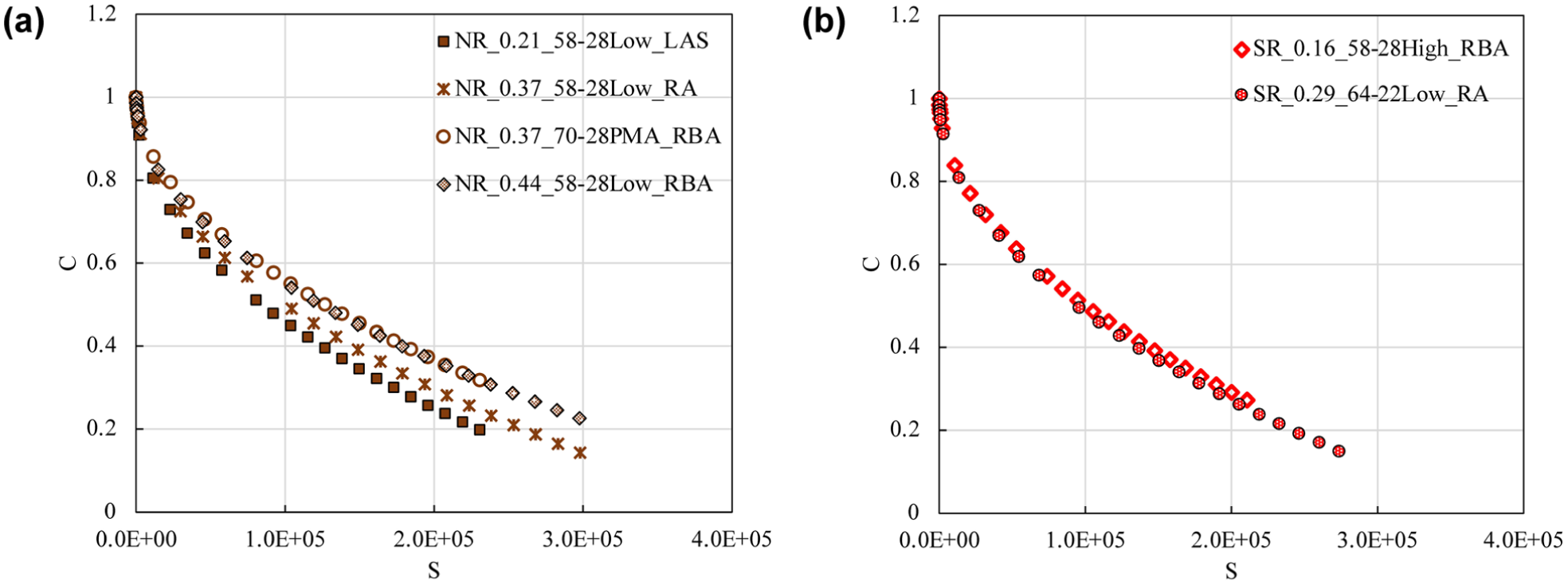
Damage characteristic curve (C-S curve) obtained using the cyclic fatigue test for: (a) NR and (b) SR mixtures.
Crack Modeling of Mixtures and Pavements using the CZM Approach
Figure 6 illustrates the overall methodology adopted in this study to model cracking and assess the performance of asphalt mixtures and pavement structures. As depicted, two key laboratory tests (i.e., |E*| and IDEAL-CT) were used to characterize the fundamental mechanical and fracture properties of the mixtures. These properties were subsequently integrated into a pavement model to simulate and predict the long-term cracking performance. The pavement model adopted for this study is based on a typical test section from the Federal Highway Administration’s Pavement Testing Facility (FHWA-PTF), which has been used in prior studies for validating mechanistic pavement responses under controlled traffic loading conditions ( 23 ). The pavement structure modeled consisted of a three-layer system: a surface bituminous layer (L1 = 100 mm), which was modeled as a viscoelastic material (E(t) and ν = 0.35); underlying elastic base layer (L2 = 600 mm, Ebase = 345 MPa, νbase = 0.35) and subgrade layer (L3 = 800 mm, Esubgrade = 55 MPa, νsubgrade = 0.4). Traffic loading with a single tire was simulated using a haversine pressure pulse (amplitude = 690 kPa) to replicate the transient nature of a vehicle’s tire contact. The duration of the pulse (timepulse = 0.12662 s) was adjusted to reflect a realistic vehicle speed (4.9 m/s) used at the test site of the FHWA-PTF. The area directly beneath the wheel path was identified as the critical region (Figure 6) because of the expected high stress concentrations during tire loading; as such, the critical region was monitored to assess damage accumulation and crack progression over time.
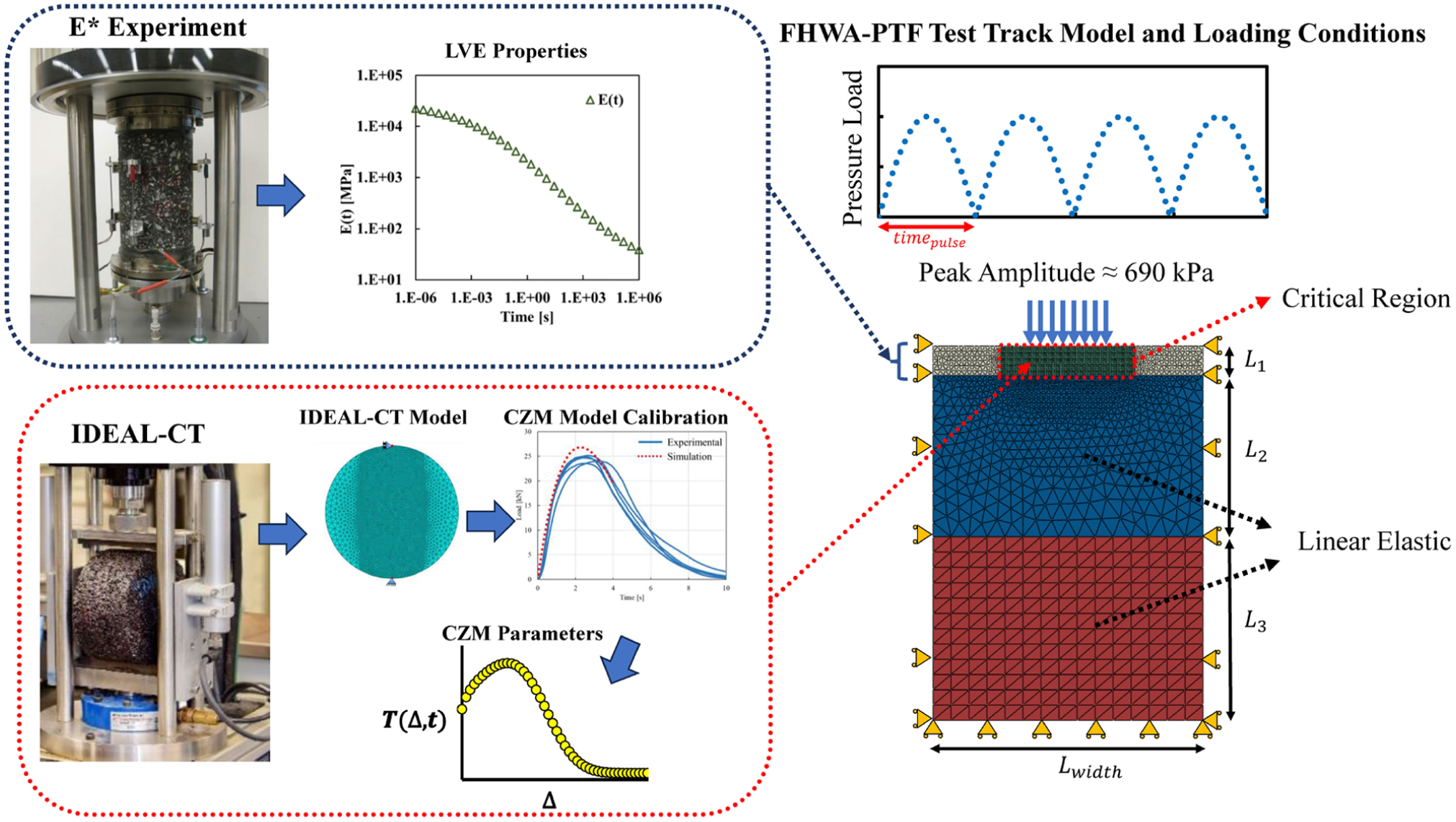
Schematic of the methodology adopted for the CZM-incorporated performance modeling of pavement.
The fracture-related CZM parameters defined in Equations 3 to 7 were determined through a FE model calibration process using IDEAL-CT experimental data. An example of the calibration is shown in Figure 7 for a representative mixture: the 0.21 RBR NR control mixture (NR_0.21_58-28Low_LAS). In this calibration procedure, the IDEAL-CT FE model is configured with boundary conditions identical to those applied in the experiment. The simulation output, particularly the load–time response, was compared directly with the experimental results. The CZM parameters were systematically adjusted according to the calibration methodology proposed by Rodriguez et al. ( 19 ), iteratively refining the input values until an agreement between the simulated and measured load–time curves was achieved. Figure 7 presents the outcome of this calibration process, illustrating the horizontal stress contour plots and highlighting the progressive insertion of cohesive zones at different stages of the simulation. It can be observed that the number of cohesive zones increases with the accumulation of horizontal tensile stresses, particularly along the centerline of the cylindrical specimen, indicating the initiation and propagation of damage. Figure 7 also compares the final calibrated simulation results and the experimental load–time response, demonstrating close agreement. The calibrated CZM parameters for all the mixtures are summarized in Table 2. These fracture properties were incorporated into the pavement model (Figure 6) to evaluate the cracking performance of the mixtures under realistic traffic loading conditions.
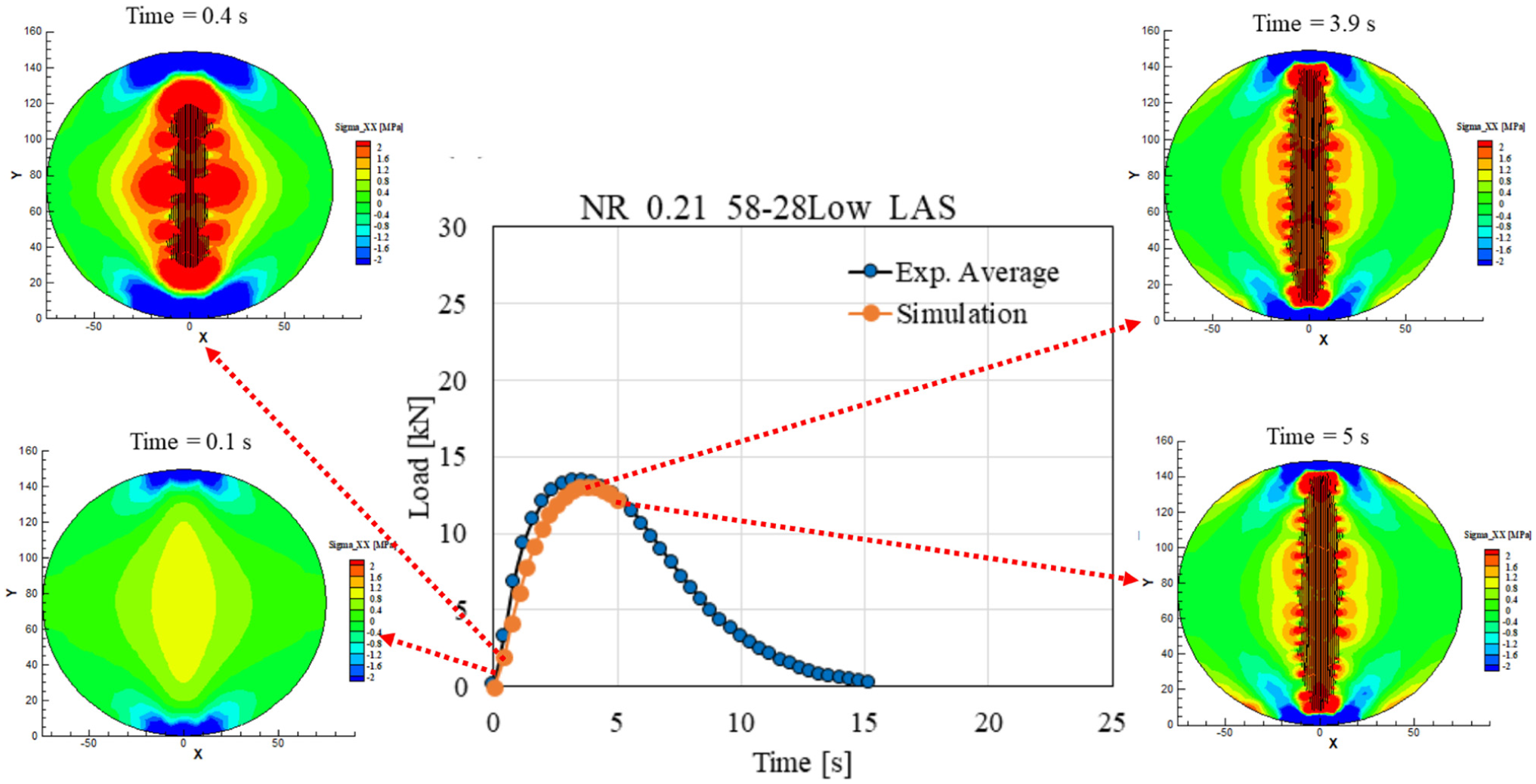
IDEAL-CT model calibration for the mixture NR_0.21_58-28Low_LAS depicting comparison of experimental and simulation results.
Fracture Properties of the NR and SR Mixtures from the CZM Calibration
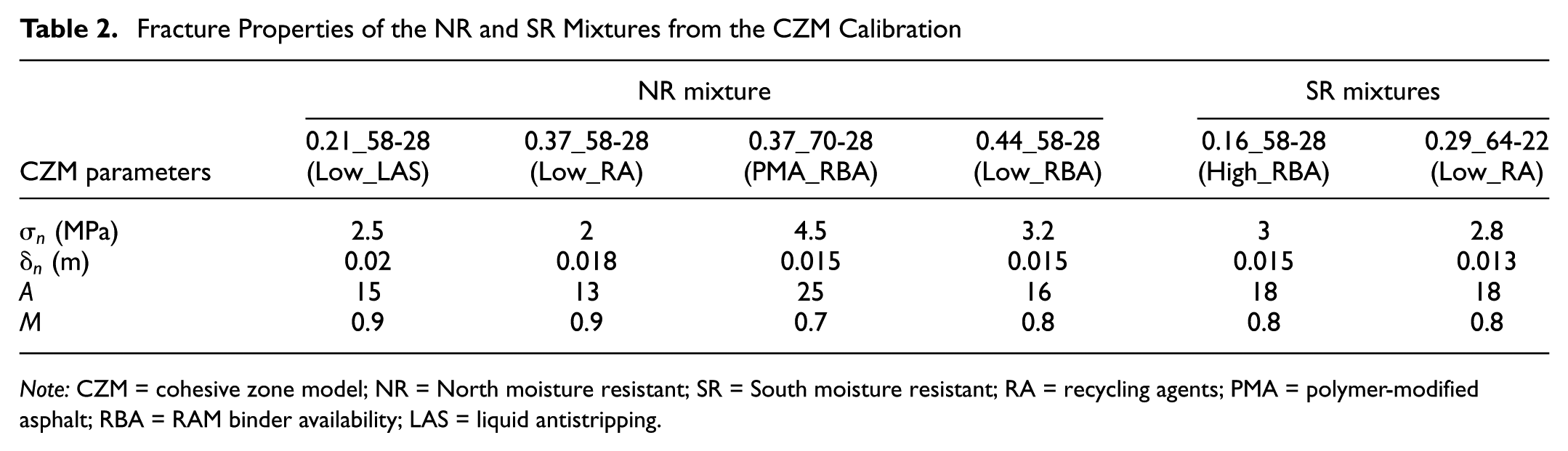
Note: CZM = cohesive zone model; NR = North moisture resistant; SR = South moisture resistant; RA = recycling agents; PMA = polymer-modified asphalt; RBA = RAM binder availability; LAS = liquid antistripping.
The pavement model simulation for the control mixture (NR_0.21_58-28Low_LAS) was conducted up to 50,000 loading cycles without any rest period, and the resulting damage accumulation within the critical region is presented in Figure 8. Figure 8b depicts the overall damage accumulation within the critical region of the asphalt layer as a function of loading cycles. It also highlights the deformation in the top layer caused by damage, along with the progression of cohesive zones (CZs) inserted at different stages of the loading process. The damage within the critical region is expressed as %cracks, which is obtained by summing the number of CZ elements that completely failed at each loading cycle. It is divided by the total number of CZs possible within the critical region and expressed as %cracks. The analysis reveals distinct phases of fatigue damage evolution, marked by varying crack growth rates across the simulation timeline. Both bottom-up and top-down fatigue cracking mechanisms were observed in the early stages (Stage I and Stage II). By the end of these initial stages, the cumulative cracked area within the critical region reached approximately 10%. As loading progressed into Stage III, damage accumulation accelerated through the coalescence of microcracks, particularly near the bottom of the asphalt layer. This phase also exhibited early signs of rutting, as evident in the displacement contour plots in Figure 8b. By the end of Stage III, the damage level approached 40%. In the final phase (Stage IV), crack propagation continued at a slower rate, with the total cracked area reaching 50%–60% at approximately 50,000 loading cycles. Although further analysis is required to draw definitive conclusions, the overall damage evolution follows an S-shaped curve, consistent with the expected fatigue damage behavior of asphalt pavements. Based on this observation, 50,000 cycles were considered reasonable load repetition, inducing fatigue failure in the control case under the conditions applied.
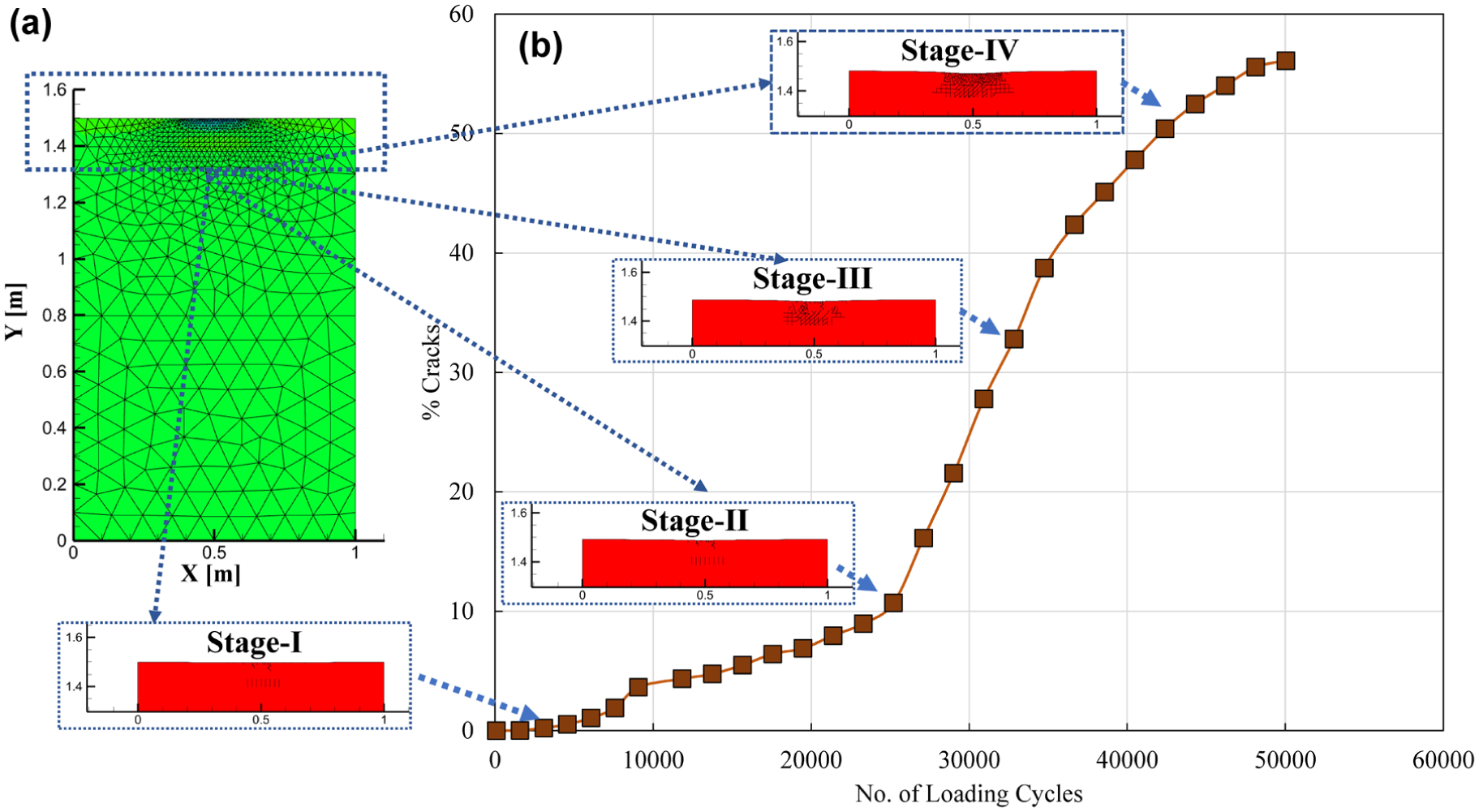
Pavement modeling results of NR_0.21_58-28Low_LAS: (a) FHWA-PTF pavement model, and (b) % cracking as a function of loading cycles along with deformation plots with cohesive zones inserted and evolved during different stages of damage.
Fracture properties for all six mixtures (four NR and two SR mixtures) were determined using their respective IDEAL-CT test data and model simulations. The calibration was conducted following the procedure previously described for the control mixture (NR_0.21_58-28Low_LAS). The calibrated fracture properties derived from this process are summarized in Table 2.
The fracture properties calibrated from the IDEAL-CT simulations were subsequently incorporated into a representative pavement model based on the FHWA-PTF’s pavement, as illustrated in Figure 6. This model was used to predict the fatigue cracking performance of each of the evaluated NR and SR mixtures. To ensure a consistent basis for comparison, the pavement structure and loading conditions were kept identical across all simulations. This uniformity allows the observed differences in predicted pavement performance, specifically fatigue cracking, to be attributed solely to the material properties of each mixture under specified conditions. Because of the significant computational cost associated with extended simulation durations (50,000 cycles), these simulations were limited to 10,000 loading cycles. Although this period is shorter than the full fatigue life simulated for the control mixture, it is sufficient to capture important cracking behavior. It provides a meaningful basis for comparing the relative pavement performance amongst the mixtures. The resulting pavement performance predictions in the context of % cracks as a function of loading cycles are presented in Figure 9, a and b , for the NR and SR mixtures, respectively.
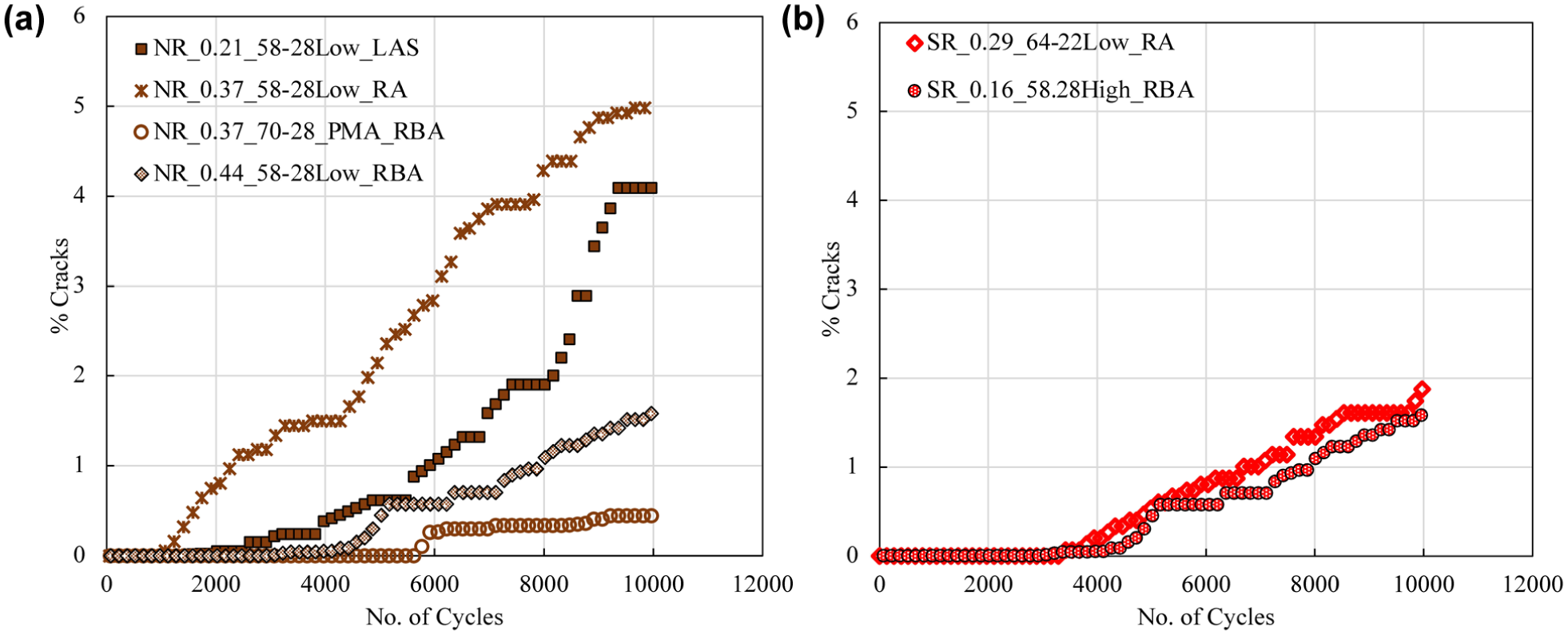
Comparison of cracking distress evolution for robust (a) NR and (b) SR mixtures using the cohesive zone model approach.
Figure 9a shows that among the NR mixtures, the high 0.37 RBR NR PMA mixture with decreased RBA exhibited the most favorable performance, showing the lowest cumulative cracking damage and delayed crack initiation. In contrast, the 0.37 RBR NR mixture with RA demonstrated the earliest crack initiation. The control 0.21 RBR NR mixture presented a higher rate of damage progression, which may experience more fatigue cracking from a longer model simulation. Despite these differences, all NR mixtures maintained cumulative cracking levels below 5% within the first 10,000 cycles, indicating acceptable early-stage fatigue performance. Figure 9b presents the predicted cracking performance for the two SR mixtures. Both mixtures demonstrated similar performance, with less than 2% cracking observed within the critical region up to 10,000 loading cycles. This result aligns with the cracking performance of the 0.44 RBR NR mixture and further reinforces the durability of these SR mixtures under early-stage traffic loading.
In summary, the simulation results suggest that all evaluated NR and SR mixtures exhibit satisfactory performance within the early stages of fatigue life, as measured by limited crack development up to 10,000 cycles. This level of damage corresponds to approximately one-tenth of the expected fatigue damage at failure, or around 20% of the total fatigue life based on the longer simulation (50,000 cycles) of the control case. Nevertheless, additional long-term simulation and field validation studies are warranted to fully characterize the fatigue life and performance trends of these mixtures.
Damage Modeling of Pavements using the CDM Approach
A structural pavement analysis was conducted using FlexPAVE™ version 1.1 for the four NR and the two SR mixtures to simulate the long-term fatigue performance based on the S-VECD model. The analysis was conducted using the same FHWA-PTF test track pavement configuration shown in Figure 6, with the only geometric modification considering a semi-infinite subgrade. Each simulation used a constant structure and traffic scenario, with the only variable being the surface asphalt mixture type. The analysis was carried out over a 10-year design life with a traffic level of 835 Equivalent Single Axle Loads per day. Traffic loading was modeled as a single axle with a single tire applying a load of 64.4 kN, a tire pressure of 690 kPa, and a vehicle speed of 4.9 m/s, matching the input parameters used in the CZM-based modeling.
Material property inputs for FlexPAVE™ were derived from the |E*| and cyclic fatigue test results. These were first processed using FlexMAT™, which transformed laboratory test data into the corresponding S-VECD damage characteristic functions required for the simulation. The calibrated inputs were then used within FlexPAVE™ to predict the cracking performance of the four NR and two SR mixtures up to the full design life. As an example, the typical FlexPAVE™ results for the control mixture (NR_0.21_58-28_Low_LAS) are depicted in Figure 10. Figure 10a shows the damage factor spatial distribution contour plot at the end of the design life, and Figure 10b shows the cumulative damage evolution within the asphalt layer. Similar simulations were carried out for each of the NR and SR mixtures. From the simulations, it was observed that, among the NR mixtures, the typical control mixture (NR_0.21_58-28_Low_LAS) exhibited notable surface cracking, whereas the other robust NR mixtures, especially those employing PMA and high-RAM mitigation strategies, showed significantly improved performance compared with the control mixture. For the SR mixtures, the mixture with lower RBR (SR_0.16_58-28High_RBA) showed surface cracking at the end of the design life, whereas the high-RAP mixture (SR_0.29_64-22Low_RA) incorporating a RA exhibited better resistance to cracking.
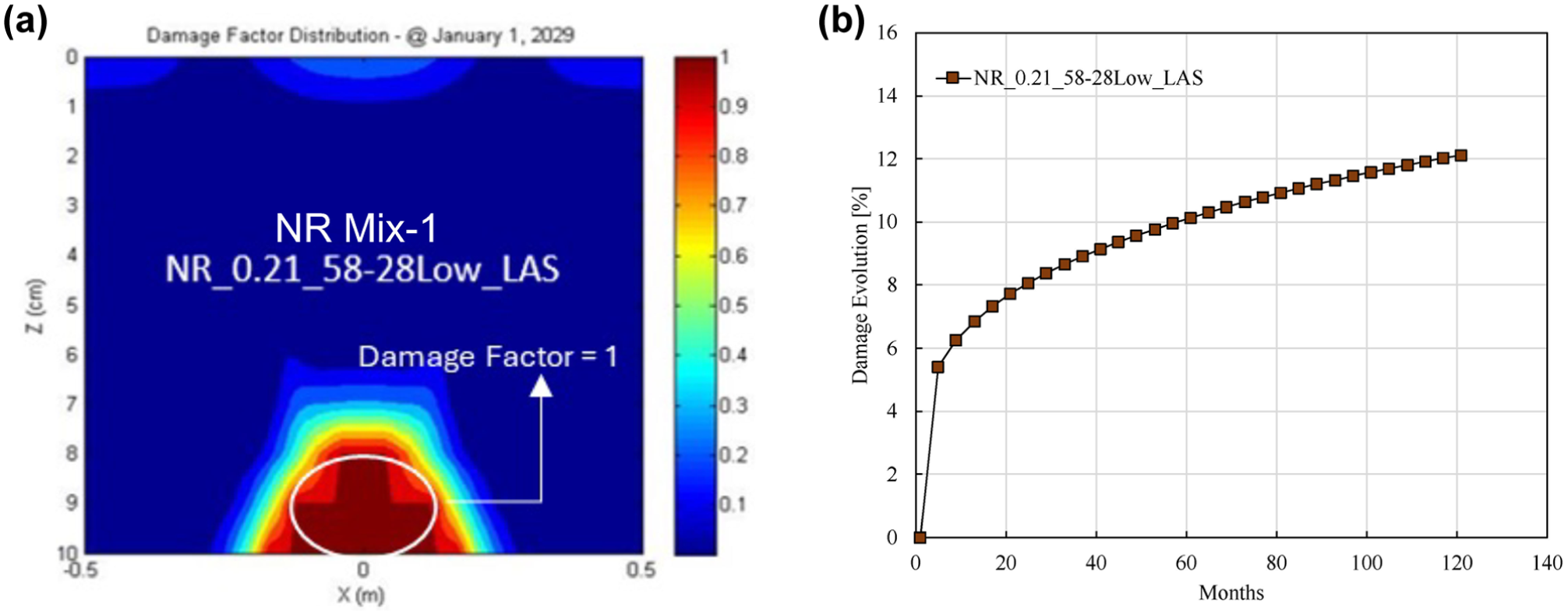
An example of the CDM simulations results for mixture NR_021_58-28_Low_LAS (Control Mixture) depicting (a) damage factor distribution contours at the end of design life, and (b) cracking distress evolution.
Cumulative damage evolution within the asphalt layer is plotted in Figure 11, a and b , for the NR and SR mixtures, respectively. Unlike the CZM modeling approach, the CDM shows that the NR control mixture has the highest damage accumulation at the end of the simulation period. In contrast, the high RBR (0.37) NR mixture, which incorporated a RA for enhanced binder rejuvenation, displayed the lowest damage levels, confirming the benefit of high-RAM strategies in extending pavement life. A similar analysis on the SR mixtures shows that, despite the use of a softer virgin binder and higher RBA content, the SR_0.16_58-28High_RBA mixture showed greater damage evolution over time than the SR_0.29_64-22Low_RA mixture. This result highlights the importance of RA strategies in improving the long-term durability of SR mixtures.
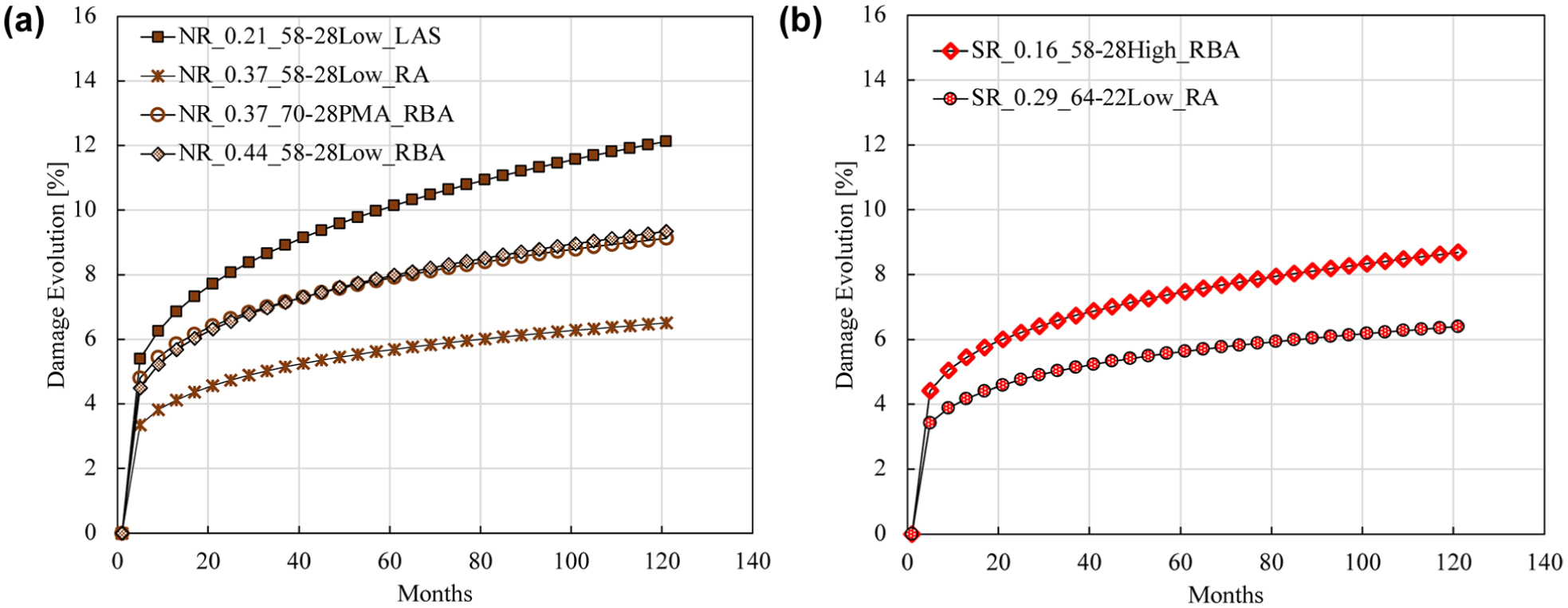
Comparison of cracking distress evolution for robust (a) NR and (b) SR mixtures using the CDM approach.
Summary and Conclusions
This study, conducted as part of the NCHRP Project 09-65, aimed to enhance RAM utilization while maintaining performance standards related to cracking resistance and environmental durability. Six robust asphalt mixtures—representative of two distinct climatic zones (northern freeze and southern no-freeze) and designed using various high-RAM mitigation strategies—were selected based on their performance in laboratory-scale durability assessments. Durability was assessed through a suite of laboratory tests and conditioning protocols tailored to regional aging and moisture exposure. Mechanistic pavement performance evaluations were conducted for each of the mixtures to demonstrate the effectiveness of the adopted high-RAM mitigation strategies. Two mechanistic modeling approaches were used with consistent pavement geometry and loading conditions applied to the FHWA-PTF test section. The CZM approach incorporated fracture properties identified from IDEAL-CT testing to model crack initiation and propagation within the asphalt layer. The CDM approach used cyclic fatigue test data to establish S-VECD model parameters and predict fatigue damage using the FlexPAVE™ software.
Model simulation results from both approaches confirmed that high-RBR mixtures incorporating PMA, RA, or decreased RBA demonstrated improved cracking resistance compared with the control mixture. These strategies effectively mitigated the detrimental effects typically associated with high RBRs. The CDM approach captured long-term fatigue performance, and the CZM framework provided physical crack initiation and propagation mechanisms. Although performance prediction and rankings differed slightly between the two pavement modeling methods, the mechanistic approaches offer an effective framework for understanding, assessing, and engineering high-RAM asphalt mixtures for durable pavement design.
Footnotes
Authors’ Note
ChatGPT-5 and was used solely to improve grammar and language of the article.
Author Contributions
The authors confirm contribution to the paper as follows: study conception and design: Y.R Kim, A. Epps-Martin, N. Tran; data collection: J. Montañez, M. Verma; analysis and interpretation of results: S.R Kommidi, Y.R Kim, A. Epps-Martin, J. Montañez, N. Tran, M. Verma; draft manuscript preparation: S.R Kommidi, Y.R Kim. All authors reviewed the results and approved the final version of the manuscript.
Declaration of Conflicting Interests
The authors declared the following potential conflicts of interest with respect to the research, authorship, and/or publication of this article: Amy Epps Martin is a member of Transportation Research Record’s Editorial Board. All other authors declared no potential conflicts of interest with respect to the research, authorship, and/or publication of this article.
Funding
The authors disclosed receipt of the following financial support for the research, authorship, and/or publication of this article: This research is part of the NCHRP project 09-65. NCHRP is administered by the Transportation Research Board (TRB) and funded by participating member states of AASHTO. NCHRP also receives critical technical support from the Federal Highway Administration (FHWA), U.S. Department of Transportation.
