






Abstract
Florida’s Road Ranger program plays a critical role in incident management but lacks a standardized vehicle design, resulting in inconsistent visibility and public recognition. This study presents a stakeholder-informed, data-driven approach to developing consistent design principles for safety service-patrol (SSP) vehicles in Florida. The methodology included a nationwide survey of 44 agencies, a review of national and international practices, and a series of stakeholder workshops. Based on these inputs, three key design principles were established: enhancing safety, improving recognition, and strengthening branding. Three vehicle-design prototypes were created and evaluated through post-design surveys of district program managers. The preferred design featured a fluorescent yellow-green base with blue accenting and received broad support for its visibility and clarity. This methodological framework and study findings offer actionable guidance for agencies seeking to implement cohesive SSP vehicle designs that improve responder safety and reduce motorist perceptual ambiguity.
Introduction
On New Year’s Day 2025, a Florida Road Ranger was assisting the Florida Highway Patrol (FHP) with an early morning crash on Interstate 95 near Hollywood, Florida. Despite the presence of multiple response vehicles with emergency lights flashing, an impaired driver collided with the service-patrol truck and police cruiser, fatally striking the Road Ranger. He became the first responder struck-by death of the new year ( 1 ).
Recognizing the dangers faced by responders working near active traffic, all 50 U.S. states, along with the District of Columbia and Puerto Rico, have enacted “Move-Over” laws requiring drivers to reduce speed or change lanes when approaching emergency vehicles. However, compliance remains a challenge. According to the Emergency Responder Safety Institute, 297 emergency responders were killed in struck-by incidents between 2019 and 2024, including 46 fatalities occurring in 2024 alone ( 2 ). In Florida, law enforcement issued 16,959 citations for Move-Over violations in 2024, an increase of 20% from the previous year, with the highest number issued to drivers aged 20–29 ( 3 ). These statistics could potentially indicate the driver’s inability to quickly detect, recognize, and interpret the presence of an emergency or service vehicle within the traffic environment, as a violation means there was certainty that a driver failed to move over ( 4 ). Consistency of vehicle color schemes, marking, and branding across locations may increase visibility and conspicuity at an incident scene ( 5 ). This could aid in reducing perception and reaction time, serving as a behavioral cue that reduces driver uncertainty, which could lead to timely lane changes or speed adjustments.
In the context of Florida, the Florida Department of Transportation (Florida DOT, or FDOT) Road Ranger program is a critical component of its Traffic Incident Management (TIM) strategy and functions similarly to safety service-patrol (SSP) programs in over 40 other states. Figure 1 presents a typical FDOT Road Ranger vehicle.
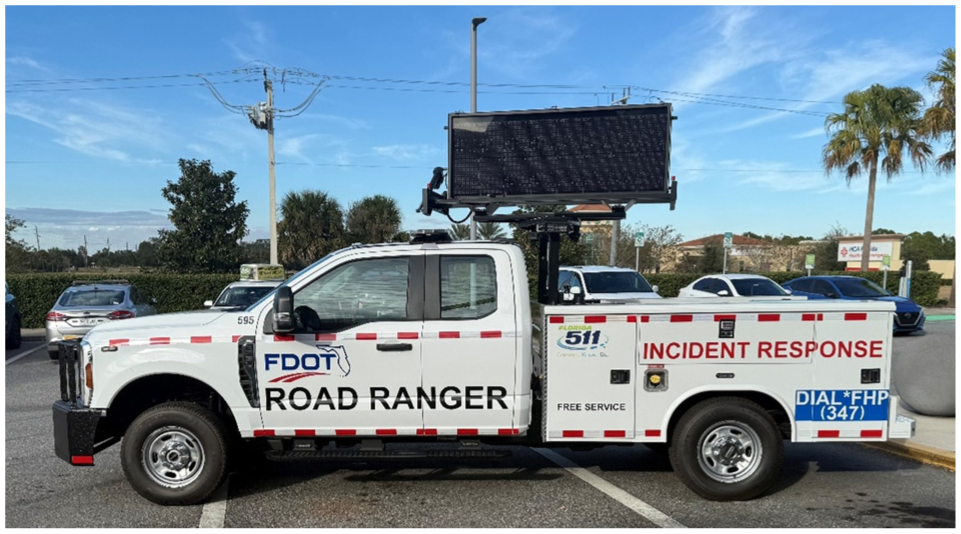
Road Ranger service-patrol vehicle.
Despite the legal protections afforded by Move-Over laws, Florida remains among the deadliest states for roadside crashes ( 6 ). Between 2014 and 2022, FDOT reported that 247 Road Ranger service-patrol (RRSP) vehicles were struck, resulting in 47 injuries ( 7 ). A 2018 FDOT-funded study ( 8 ) analyzed police traffic-crash reports and surveyed RRSP operators, highlighting high-risk situations, particularly struck-by incidents faced by responders. A subsequent FDOT review of vehicle safety treatments identified opportunities to improve markings and vehicle design. However, current vehicle specifications are rooted in FDOT’s maintenance-fleet standards, leading to inconsistencies because of the program’s decentralized, contract-based model. Each of FDOT’s eight districts independently contracts RRSP services across more than 100 patrolling beats, further complicating design uniformity.
A recent NCHRP report ( 9 ) acknowledges the lack of standardized design guidance for SSP vehicles and notes that improved vehicle design could enhance visibility and detection. While some generalized recommendations exist for emergency vehicles, such as those outlined by Hsiao et al. ( 5 ), SSP-specific design guidelines remain absent. For Florida, RRSP vehicle requirements currently cover truck type and size, onboard equipment, radio communications, unique markings, and automated vehicle location. Standard lighting configuration includes roof-mounted light bars, bumper and utility box lights, and arrow boards or changeable message signs (CMS).
This paper presents an effort to develop a consistent, data-driven, and stakeholder-informed vehicle-design framework for Florida’s RRSP fleet. The absence of a unified design philosophy has resulted in operational variations that may compromise safety and recognition. By establishing structured design principles based on survey results and stakeholder engagement, the study reported in this paper seeks to address these inconsistencies and guide future SSP vehicle-design efforts statewide.
Literature Review
To develop a comprehensive and consistent design framework for SSPs, it is essential to examine existing national and international standards, practices, and design guidelines. This section summarizes the most relevant literature and highlights the research gap that this study aims to address.
National Standard
Emergency-vehicle design in the United States typically integrates vehicle color schemes, retroreflective markings, and emergency lighting to maximize visibility and reduce response time ( 5 ). Hsiao et al. ( 5 ) offer science-based recommendations emphasizing that yellow-green and orange hues provide superior daylight visibility. Their study also supports the use of logos or emblems placed on retroreflective backgrounds to improve vehicle conspicuity.
Further design guidance is provided by the National Fire Protection Association (NFPA). The NFPA 1901 Standard for Automotive Fire Apparatus recommends reflective striping on all four sides of a vehicle, with alternating red and either yellow, fluorescent yellow, or fluorescent yellow-green for maximum contrast. More recently, NFPA 1900 has consolidated several standards, continuing this emphasis on high-visibility vehicle markings.
The Federal Emergency Management Agency (FEMA) also outlines color and marking strategies for fire, police, and emergency medical service (EMS) vehicles ( 10 ), aligning with visibility principles from the NFPA. Similarly, the latest NCHRP report ( 7 ) expands these recommendations to a wider range of emergency-response vehicles. However, no national standard exists specifically for SSP vehicles. As a result, most states have developed their own SSP vehicle-design practices, leading to significant variability. Figure 2 illustrates examples of SSP vehicles from several states.
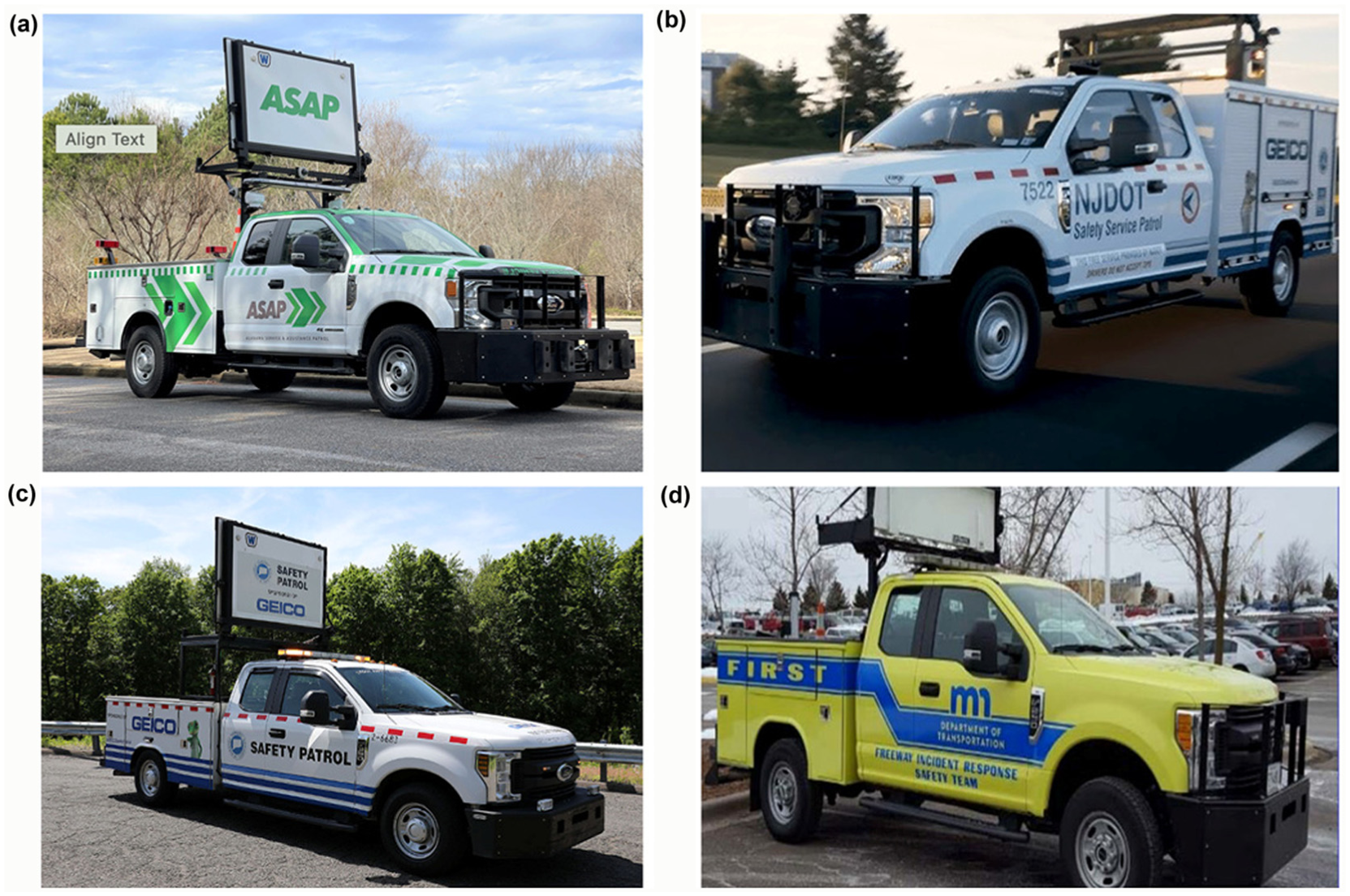
State service-patrol vehicle practices across the U.S.: (a) Alabama; (b) New Jersey; (c) Connecticut; (d) Minnesota.
In addition to color and pattern guidance, all retroreflective materials used must comply with the ASTM D4956 standard, which outlines performance requirements for visibility and durability ( 11 ).
International Standards
Globally, no single set of standards governs the design of SSP or service-patrol vehicles. However, comprehensive guidelines do exist for emergency-vehicle markings in many countries. The United Kingdom has developed one of the most widely referenced systems, with vehicle designs required to be acceptable to at least 75% of staff. UK guidelines emphasize the use of high-visibility Battenburg or harlequin patterns, which are proven effective in both daytime and nighttime conditions ( 12 ).
For high-speed road environments, the UK’s Specification for the Livery of Police Patrol Cars ( 11 ) specifies that vehicle visibility should extend to a minimum of 500 m, even in adverse weather. Other nations, including Belgium, Japan, Australia, South Africa, Sweden, and New Zealand, have also implemented advanced vehicle-marking strategies designed to improve visibility and enhance driver recognition. Figure 3 displays examples of international emergency-vehicle designs, showcasing Battenburg patterns on the sides and chevron striping on the rear.
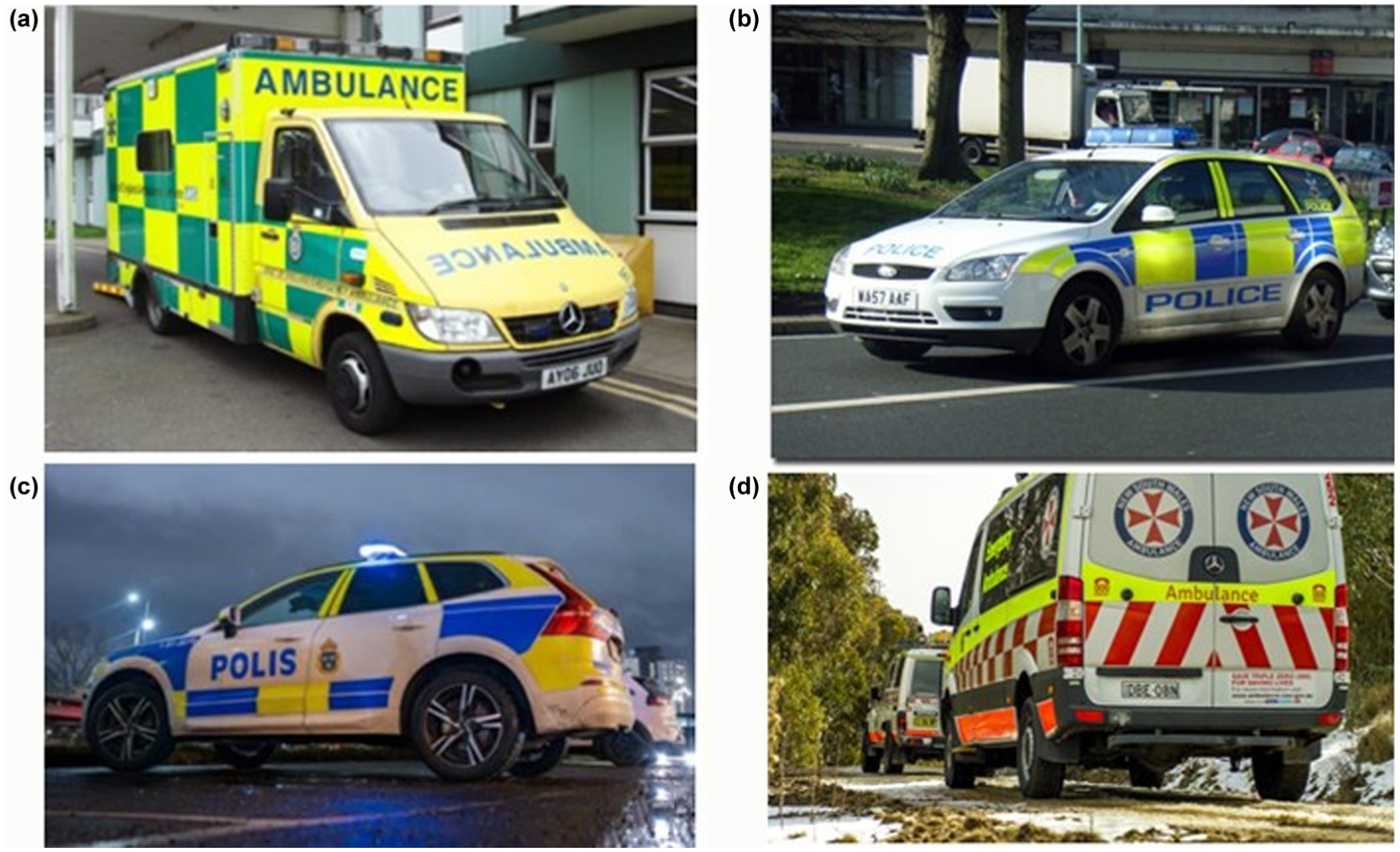
Existing domestic standards such as NFPA 1900 and 1901 and FEMA provide design recommendations for emergency responders such as fire, police, and EMS. These responders are defined by high-speed dispatch, temporary scene presence, and established brand recognition. However, for SSP vehicles there is a difference in the operation scenario and public assistance as they operate in decentralized contracting structures with inconsistent color schemes and branding across districts. Furthermore, international practices such as Battenburg markings focus on emergency-response vehicles with clear statutory authority.
This presents a significant gap in literature specific to SSP vehicle design. Both in the U.S. and abroad, service-patrol programs often operate without dedicated, research-backed design specifications. The resulting inconsistency presents a need for a structured, data-driven framework tailored to SSP operations, a need this paper aims to address.
Methodology
The research followed a structured methodology as observed in Figure 4. It started with a systematic literature review and a nationwide SSP agency survey (44 agencies across 30 states) ( 15 – 17 ). This was followed by an internal as well as a stakeholder meeting and a program-manager survey to identify objectives and establish design principles and priority factors. The insights from the meeting and the survey were then used to identify attributes such as base color, marking design elements, color schemes, and so on. These steps are further explained in the following subsections of the paper.
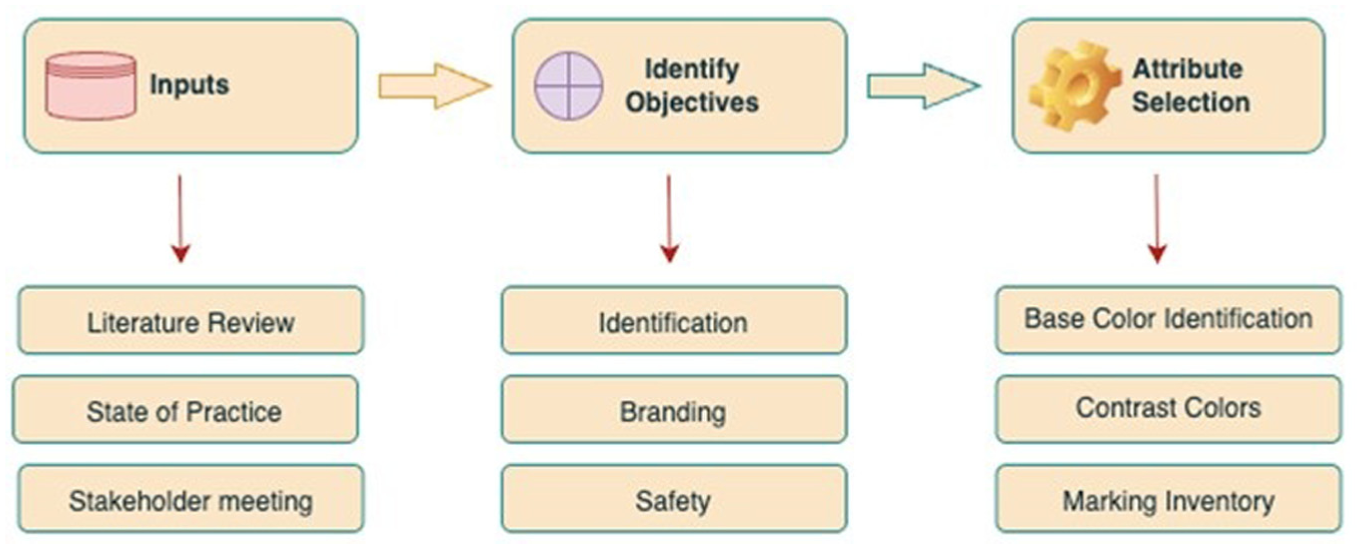
Methodological framework.
Literature Review and Nationwide SSP Survey
Drawing on insights from a systematic literature review and internal discussions, the nationwide SSP survey ( 15 ) asked TIM contacts across all 50 states, the District of Columbia, and Puerto Rico 24 multiple-choice questions covering various components, including lighting, arrow boards, vehicle markings, and other safety measures, to understand SSP practices across the United States. Overall, responses were obtained from 44 agencies across 30 states, and these responses were subsequently analyzed.
From the perspective of vehicle design, we found that most agencies have adopted white as the base vehicle color. Similarly, most agencies indicated that their vehicles are equipped with retroreflective rear-facing conspicuity markings, with some agencies commenting that they are in the process of installing them. Various color combinations for these markings are being used, with red, blue, green, and yellow being the most common colors. White is also used but only in combination with blue and not in isolation. Furthermore, the study established the need to develop consistent design standards and a comprehensive design philosophy for SSP vehicles in Florida. This formed the basis for our methodological framework.
Based on these insights from literature review and SSP agency survey, the research team developed a preliminary set of design principles and priority factors to guide the evaluation and enhancement of FDOT’s RRSP vehicle markings.
Preliminary Design Principles and Priority Factors
As mentioned in the earlier sections, the key contribution of this paper is to establish a consistent design philosophy and a data-driven design approach for SSP vehicles in Florida. To satisfy this objective, three design principles—enhancing safety, improving motorist recognition, and strengthening branding—were established as the fundamental basis of the design. This was later refined using various rounds of research-team and stakeholder meetings which are explained in the following subsections of the paper.
Enhancing Safety
The safety of Road Rangers and motorists was determined to be of the highest priority, which aligns with the “Target Zero” initiative ( 18 ) of FDOT. To enhance safety by improving vehicle visibility and reducing collision risks, the following priority factors were introduced:
Improving Motorist Recognition
FDOT houses a range of emergency vehicles (RRSP, fire, towing, law-enforcement, highway-patrol, ambulance) in their inventory ( 19 ). Ensuring RRSP vehicles are easily identifiable as an official FDOT service vehicle was determined to be fundamental, which introduced the following priority factors:
Strengthening Branding
The 2019 Florida TIM strategic plan ( 20 ) established a requirement to focus on RRSP branding as Incident Response and TIM. Therefore, the research team determined that a strong, consistent brand identity could help in reinforcing the objectives as well as the credibility of the Road Ranger program, which introduced the following priority factors:
Stakeholder Meeting
To refine the preliminary design principles and priority factors, and establish design constraints, as well as to make sure they aligned with operational needs and FDOT best practices, a stakeholder meeting was organized on November 22, 2024, via Zoom. It was attended by the stakeholders from all the FDOT districts, the Turnpike, and the Central Office representing both the program managers and the consultant support. Participants attending the meeting were provided with preparatory documentation beforehand. The documentation contained preliminary design principles and priority factors, and the participants were asked to provide feedback on them through a live stakeholder poll. Three questions were designed in regard to three preliminary design principles to facilitate a qualitative discussion.
Qualitative Feedback Analysis and Integration
The stakeholder feedback from this meeting was documented through recorded notes and structured survey responses. Open-ended comments were reviewed and categorized into thematic groups aligned with the three design principles and priority factors. Recurrent themes such as preferences for high-visibility colors, retroreflective enhancements, and clearer differentiation from maintenance fleets were identified through iterative review by the research team. In case of differing viewpoints, such as base color preferences or messaging placement, suggestions were evaluated with safety considerations taking precedence over branding or aesthetic preferences. Based on recurring themes, patterns, and perspectives, the insights were grouped into the following three groups:
Safety Considerations
The safety considerations involved the following factors for discussion:
Motorist Recognition
Following points were discussed under motorist recognition:
Branding and Public Recognition
The following branding and public recognition related sub-topics were discussed:
Based on this qualitative stakeholder discussion, the research team proceeded with developing the final set of design principles and attribute selection by refining the preliminary design principles and priority factors. This process is discussed in the subsequent section of the paper.
Final Design Principles and Attribute Selection
After the stakeholder meeting and several rounds of internal research discussions, the research team revised the preliminary design principles and priority factors to reflect the feedback received and to develop the final design principles that would guide the attribute selection of the SSP vehicle. To support this process, a vehicle-level schematic was prepared, dividing the vehicle into various zones, and specific vehicle attributes were selected for each zone.
Figure 5 presents the schematic that divides the vehicle into three zones: the Identity Zone (focused on branding), the Information Zone, and the Safety Zone. The division was based on a synthesis of literature findings (mentioned in the Literature Review section), national SSP survey results, and internal as well as stakeholder discussions. Existing literature focuses on vehicle conspicuity, retroreflective materials, and high-contrast color schemes as fundamental for responder safety. Furthermore, the existing literature and the national SSP survey both showed significant variability in vehicle markings across states, highlighting the lack of a consistent recognition framework. In the meeting the stakeholders further highlighted visibility, differentiation from maintenance fleets, and brand consistency as crucial factors. This collectively informed the principles of safety, recognition, and branding for RRSP vehicle design.
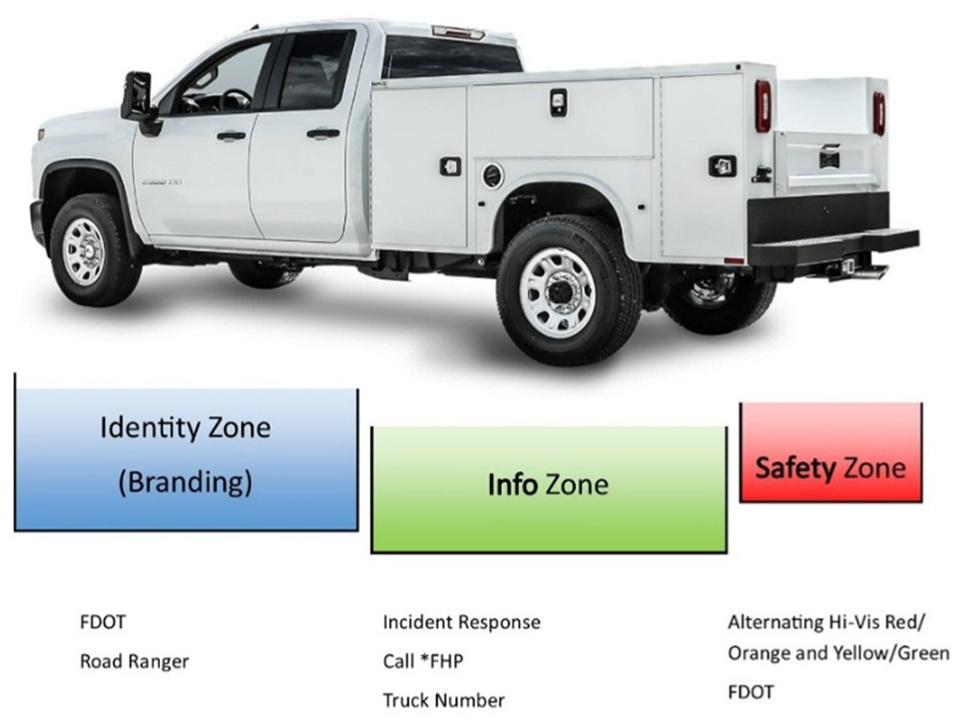
Design concept schematic of the vehicle.
This warranted the creation of an organized layout that could potentially ensure that essential information is communicated effectively while promoting a consistent and professional appearance across the fleet. In general, this design philosophy also accounts for two scenarios: (1) when the vehicle is stationary and assisting drivers; and (2) when it is in motion within the traffic stream. This could potentially ensure that visibility, messaging, and safety features remain functional and effective in both conditions. The zones are further explained in the following subsections of the paper.
Identity Zone
The Identity Zone is designed to establish the affiliation of the vehicle with FDOT and the Road Ranger program. This area displays key branding elements, such as FDOT and Road Ranger logos. The purpose of this zone is to allow motorists and emergency responders to quickly identify the vehicle as an official service unit. Furthermore, another objective of this zone is to enhance public recognition and differentiate the RRSP vehicle from other FDOT maintenance or private contractor vehicles.
Information Zone
The main objective of the Information Zone is to convey operational details to both motorists and responders. It includes elements such as the “Incident Response” designation, the *FHP contact number, and the truck’s unique identification number. These features aim to ensure that critical information is easily accessible, particularly in situations where assistance is required. In addition, the inclusion of a “Free Service” message aims to clearly communicate that support is provided at no cost to assisted drivers.
Furthermore, the team also considered how the messaging should be adapted based on the operational state of the vehicle (stationary or in motion). We also discussed removing the “Move Over, Slow Down—It’s the Law” bumper message during active response, as its small size may limit effectiveness and potentially confuse motorists. Instead, such messaging may be better suited as a bumper sticker, where its advocacy role is clear and unambiguous. Furthermore, additional discussions focused on optimizing the tailgate layout and adjusting signage placement to enhance visibility and ensure compliance with the FDOT safety guidelines.
Safety Zone
The idea behind the Safety Zone was to incorporate high-visibility features to maximize vehicle conspicuity, particularly in low-light or high-traffic conditions. The rear of the RRSP vehicle is both the most visible and the most vulnerable to oncoming traffic. This area includes alternating red or orange and yellow or green reflective markings, which aims to enhance visibility and alert approaching motorists. To ensure these safety elements remain effective whether the vehicle is stationary or in motion, special attention is given to the placement of markings and messages, especially when the tailgate is raised or lowered. This applies to both pickup and utility-bed vehicle configurations. The inclusion of the words “Road Ranger” is a key component of rear markings and aims to provide immediate identification for fellow responders.
Possible Conflicts and Hierarchy of Importance
Although these final design principles—enhancing safety, improving recognition, and strengthening branding—can theoretically introduce trade-offs, the likelihood of a major conflict is minimal in this context. Design elements such as color palettes, chevron configurations, and placement of logos were developed after extensive discussion with FDOT district program managers and stakeholders, ensuring their alignment with existing organizational practices and branding expectations. However, discussions during the stakeholder meeting consistently emphasized that safety should guide design-related decisions, aligning with the broader goals of the FDOT Target Zero initiative. This allows flexibility in future design-related updates and real-world implementation decisions.
Results
Vehicle Design and Evaluation
Based on the final design principles of safety, recognition, and branding, the research team created three different designs (Figure 6).
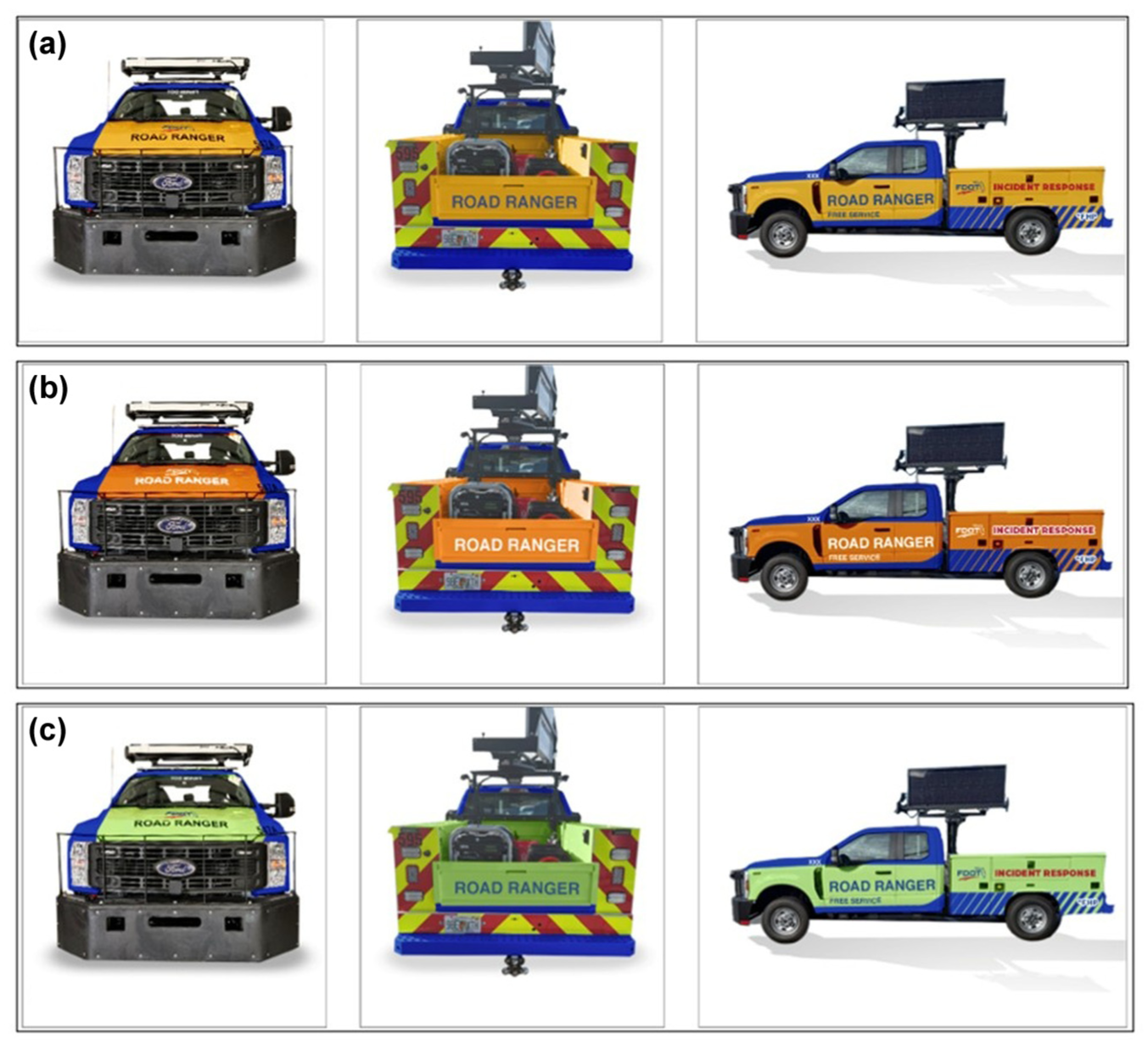
The three final vehicle-design options: (a) Option A; (b) Option B; (c) Option C.
The design options for the vehicle include the following features:
All three designs include bold, high-contrast, and retroreflective lettering to improve visibility:
The words “ROAD RANGER” appear in bold blue letters on the sides and rear of the vehicle, along with “FREE SERVICE” to show the assistance is at no cost.
Each vehicle has a unique ID number on the front fender.
“INCIDENT RESPONSE” is written in red retroreflective letters on the side of the vehicle bed.
The FDOT logo and *FHP emergency number are shown on the side.
To improve visibility and support the Move-Over law, the back of the vehicle includes:
Fluorescent red and yellow-green chevron stripes, which are also retroreflective;
“ROAD RANGER,” clearly centered on a solid yellow-green background at the rear;
A large message or arrow board mounted on the roof to give real-time directions to drivers;
When the message board is in the “up” position, “FDOT” in a bold, non-retroreflective material on the back (non-electronic side).
To obtain feedback on the design, the research team conducted a survey which involved 18 program managers across all the FDOT districts and Turnpike. After several rounds of internal discussions, the research team designed a total of 16 questions that focused on safety, recognition, branding, and design evaluation. Reponses were received from all of the participants.
Figure 7 presents the results of the survey. The results are discussed in the following subsections:
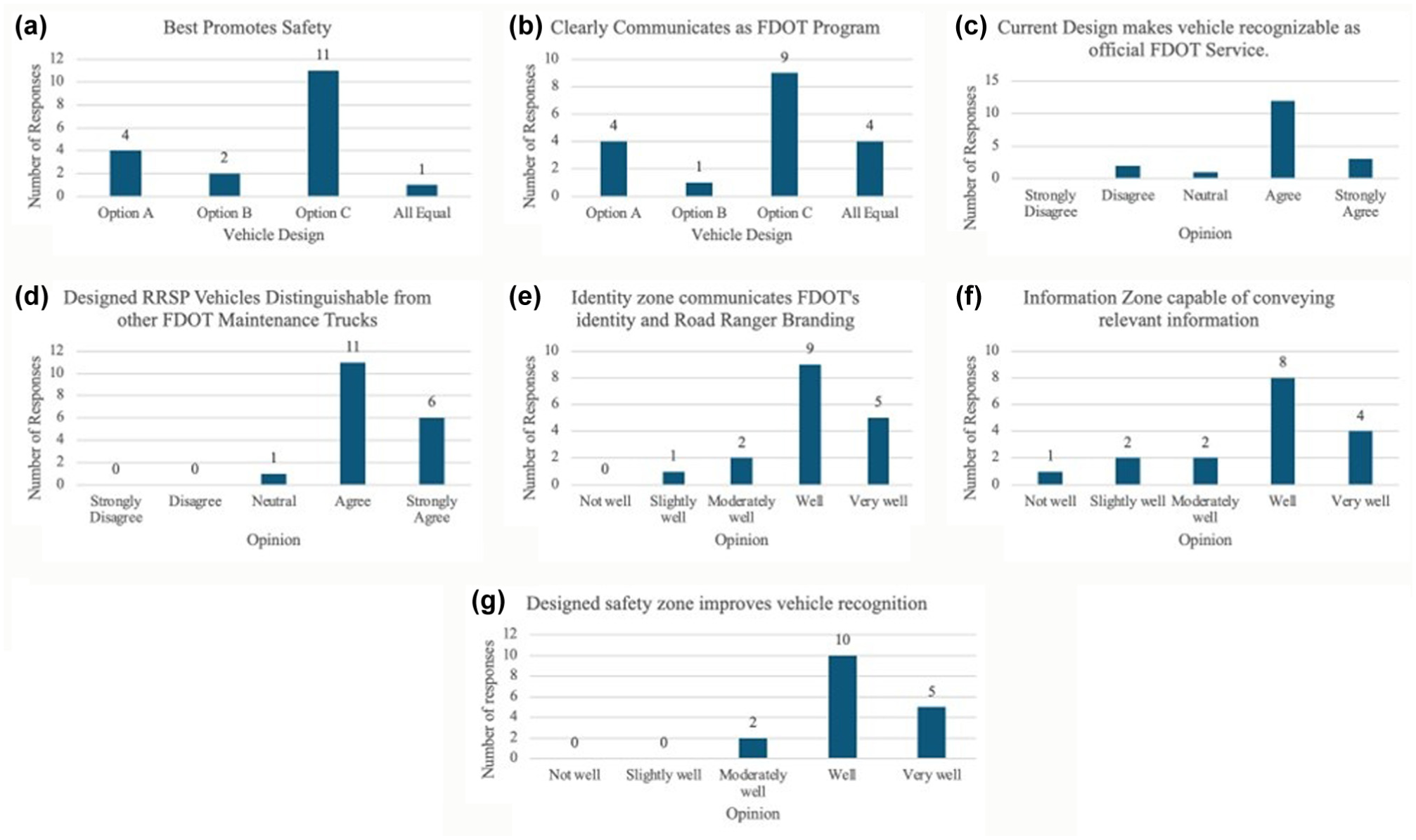
Vehicle-design evaluation survey results: (a) safety; (b) recognizability; (c) FDOT branding; (d) Road Ranger branding; (e) Identity Zone; (f) Information Zone; (g) Safety Zone.
Safety
Figure 7a visualizes the results for safety. Most program managers thought Option C (Figure 6c) best promoted safety, especially for different color and lighting conditions. Other suggestions from the program managers were grouped into three main areas:
Enhancing Visibility
The following insights were obtained on the theme of enhancing the visibility of the vehicle:
Bright colors like lime green, yellow-green, or high-visibility yellow were preferred.
Some suggested painting the whole vehicle yellow or lime green to make it stand out more.
A few managers liked the idea of using a white vehicle with bold, contrasting graphics.
Reflectivity Improvements
In addition to base color preferences, participants highlighted the need to strengthen retroreflective treatments to improve vehicle visibility from multiple approach angles, especially during low-light conditions. More insights included:
Adding reflective materials to the sides of the vehicle to improve side visibility;
Many supporting keeping the red and white “DOT” reflective stripe along the fenders and sides.
Lighting Enhancements
The following recommendations were suggested:
Strobe lights on the signboard pillars to improve how easily the vehicle is seen;
Some wanting LED lights on the rear bumper that turn on when the vehicle stops, similar to transit vehicles;
Flashing lights under the vehicle, recommended to help with visibility during nighttime conditions.
Recognition
Most program managers thought that Option C was best at identifying the vehicle as part of the FDOT RRSP program, as shown in Figure 7b. Other recommendations can be grouped as follows:
Color Differentiation
Yellow-green or FDOT yellow was suggested to enhance vehicle visibility.
Text and Labeling Adjustments
The following recommendations were provided:
Changing “Road Ranger” to “Incident Response” on the back tailgate to highlight the vehicle’s role;
Adding “FDOT” or “Incident Response” above “Road Ranger” for better identification;
Including district names (like “FDOT D7”) for more clarity.
Reflectivity Enhancements
Some recommended the use of high-visibility 3M reflective tape on all sides of the vehicle for better visibility.
Bilingual Messaging
A few suggested adding Spanish translations such as Servicio gratuito to better communicate with Spanish-speaking drivers.
Branding
Most program managers approved the placement of FDOT and Road Ranger logos, stating that they effectively differentiate between maintenance trucks. Figure 7, c and d , presents the visualization of these results. Other recommendations can be grouped as follows:
Enhancing the Visibility of the Vehicle
The following recommendations were made to enhance the visibility of the vehicle:
Some recommended making the FDOT logo bigger, especially on the rear and back of arrow board.
Some suggested adding the FDOT logo on the door so it is easy to see from the side.
Wording and Text Placement
The participants suggested the following changes to the wording and text placement:
Replacing “Incident Response” with “Emergency Response” to make the role clearer;
Showing “Road Ranger” on the push bumper and in mirrored letters on the front.
Protecting the Road Ranger Brand
Some recommended not allowing other non-RRSP vehicles to use similar colors or markings so Road Rangers stay unique and easy to identify.
Design Principle Evaluation
As visualized in Figure 7, e to g , most program managers agreed:
The Identity Zone effectively communicates the brand identity of FDOT and Road Rangers.
The Information Zone effectively communicates the relevant information.
The Safety Zone (high-visibility markings and chevrons) improves emergency-vehicle recognition.
Other recommendations are as follows:
Identity Zone
The following recommendations were provided:
Participants recommended making the FDOT logo bigger and placing it above the “ROAD RANGER” text.
They suggested moving the “FREE SERVICE” to the Information Zone to make it clearer.
Information Zone
The following insights were obtained about the Information Zone:
Participants suggested using “*347” instead of “*FHP” to make it easier to dial.
They advised using “Dial *FHP” instead of just listing the number.
They recommended adding the “FREE SERVICE” message to remind drivers of the free assistance service.
Safety Zone
The following Safety Zone changes were recommended:
Program managers recommended using blue and yellow chevrons to create more contrast.
They advised adding reflective tape on the sides of the vehicle to help it stand out at night.
Adding more LED lights to enhance nighttime visibility was suggested.
Discussion
The existing literature ( 5 , 9 , 11 , 21 ) presents a plethora of design guidelines for a range of emergency vehicles but specific guidelines for SSPs are limited. The objective of this paper was to come up with a design framework for an SSP vehicle and present the implementation for the case of Florida’s RRSP. Based on insights from the literature review (domestic and international practices), a nationwide agency survey, and an RRSP program-manager survey (pre-design and post-design evaluation), the paper tried to achieve this objective. Three qualitative data-driven principles of safety, recognition, and branding were used to design a vehicle-level design framework around Safety, Identity, and Information zones, to provide a systematic method for organizing visual cues rather than treating them as isolated design elements. The study aligned vehicle-conspicuity features with high-risk rear-exposure areas while reserving side surfaces for identification and branding.
Based on this philosophy we developed three design options for Florida’s RRSP. Similarly, based on a design-evaluation survey, Option C (fluorescent yellow-green base with blue accents in the same areas along the rocker and upper belt line) was considered appropriate. The post-design-evaluation survey also presented an agreement for the functionality of the Safety, Identity, and Information zones which indicates that the zoning framework was intuitively understood by and operationally acceptable to the program managers involved.
This suggests that designing vehicle markings using this approach rather than purely based on aesthetic considerations may improve applicability and statewide consistency. From a TIM perspective, standardizing these visual cues across districts may promote clearer public recognition and reduce classification ambiguity when motorists encounter RRSP vehicles in dynamic traffic conditions. While the study does not quantify behavioral outcomes, the convergence of stakeholder preference toward high-contrast color schemes and enhanced reflectivity aligns with established human-factor research on conspicuity and signal detection. These findings also support the feasibility of adopting a structured, safety-prioritized design framework for SSP fleets.
Limitations and Future Work
Despite adopting a comprehensive, data-driven, and logically robust methodological framework resulting in a meaningful product, the study has some limitations.
First, we conducted a survey of about 18 program managers for the whole process. This included the program managers from all the FDOT districts (1–7), the Turnpike, and the Central Office. Because participation in the surveys was voluntary, the findings may be subject to self-selection bias, as respondents with stronger views on vehicle design may have been more likely to participate in the discussion.
Similarly, although inclusive, the findings may not fully capture the range of perspectives across all stakeholders involved in the RRSP operations. Other stakeholders such as police officers, SSP drivers, and road users may contribute to the design from their operational experience. However, the primary objective of this paper was to document agency-level design practices and design criteria, particularly in a context where internal guideline variability and uncertainty exist across jurisdictions; inclusion of other perspectives could potentially be a future research direction.
Furthermore, it is fundamental to acknowledge that the study does not include an observational design evaluation in different settings (daytime and nighttime) which may result in variation of suitability of the designed options. Likewise, a detailed cost estimation of the options was also not carried out. Implementation costs associated with repainting, retroreflective materials, lighting upgrades, and contractor transition may influence real-world adoption decisions.
Additionally, it is important to note that the present study does not quantitatively measure behavioral uncertainty as measured by Yan et al. ( 22 ) in their simulation study. However, it establishes a structured framework that may support future empirical evaluations of driver detection, response behavior, and compliance under real-world conditions. It is also crucial to note that the design recommendation was developed in the context of Florida’s specific roadway environment and operational and regulatory conditions, so adoption in other states must be practiced with caution.
Building on the findings of this study and to address these limitations, future efforts should focus on the real-world implementation and behavioral validation of these designs in active RRSP operations within Florida. However, such an effort would involve pilot deployments in selected FDOT districts, followed by empirical evaluation using measures such as detection distance, driver yielding behavior, Move-Over compliance, near-miss incidents, and struck-by incidents. Collaboration with contractors and state agencies will be required for this purpose to incorporate these color schemes and marking designs. Even after full deployment, the vehicles should be monitored to continuously evaluate their visibility, effectiveness in alerting motorists, and impact on roadside safety.
Additionally, as already mentioned, other states may consider adapting the design framework to their specific needs. However, before broad adoption, it is recommended that similar stakeholder-engagement processes and pilot evaluations be conducted to account for regional differences. These efforts will help determine whether the design principles outlined in this study can be successfully scaled and standardized nationwide.
Conclusion
This study addressed a critical but underexplored gap in SSP vehicle design by developing a structured, data-driven framework based on safety, recognition, and branding principles. The proposed framework has demonstrated how existing standards, and stakeholder priorities can be integrated into a consistent vehicle-level design philosophy. By promoting consistent high-visibility color schemes, retroreflective treatments, and clear identification zones, standardized SSP designs may enhance visibility, reduce perceptual ambiguity for motorists, and support more consistent recognition across districts. In high-speed roadside environments, even small improvements in rapid detection and classification can be operationally meaningful.
Beyond aesthetic consistency, statewide standardization may strengthen public trust in official incident-response services and facilitate contractor implementation across districts. Aligning SSP vehicle design with principles of conspicuity and recognition could potentially support broader TIM objectives and could complement FDOT’s Target Zero initiative by addressing systemic visibility challenges rather than isolated design elements.
Moreover, existing literature ( 19 ) highlights that crashes often stem from perceptual ambiguity and delayed recognition in various road environments. By promoting consistent and highly conspicuous vehicle designs, this initiative seeks to reduce perceptual ambiguity in the identification of SSP vehicles and improve recognition consistency across FDOT districts.
Footnotes
Acknowledgements
The authors acknowledge the financial support given by the Florida Department of Transportation for this project.
Author Contributions
The authors confirm contribution to the paper as follows: study conception and design: Aashish, Srinivasan, Agarwal, Sagar; data collection: Aashish, Sagar, Brown, Carrick; analysis and interpretation of results: Aashish, Srinivasan, Agarwal, Sagar, Carrick; draft manuscript preparation: Aashish, Carrick, Brown. All authors reviewed the results and approved the final version of the manuscript.
Declaration of Conflicting Interests
The authors declared no potential conflicts of interest with respect to the research, authorship, and/or publication of this article.
Funding
The authors disclosed receipt of the following financial support for the research, authorship, and/or publication of this article: The authors acknowledge financial support from the Florida Department of Transportation for this research (Project BED31-977-24).
ORCID iDs

The opinions, findings, and conclusions expressed are those of the authors and do not necessarily reflect the views of the Florida Department of Transportation or the U.S. Department of Transportation.