






Abstract
Safety work, known as the invisible burden, is the work women undertake in public spaces, including on public transport, to ensure their personal safety. The present study examines safety work from an intergenerational perspective and the influence of parental advice on young women’s perceptions of risk and safety. It places special emphasis on knowledge transfer from mothers to daughters. Twenty-nine young women, mostly university students and regular public transport users, were interviewed in Auckland, New Zealand. The findings revealed that safety work is not only a behavioral adaptation but also an emotional and relational practice embedded within the mother–daughter relationship. Acts of care, such as travel check-ins, avoidance strategies, and self-monitoring, reflected intergenerational patterns of protection that simultaneously preserved gendered inequity. Although mothers’ advice gave daughters a sense of preparedness, it also reinforced a culture in which women carry the primary responsibility for their own safety. Participants described the mental and emotional burden of being constantly alert, as well as feeling frustrated at the normalization of fear as a condition of mobility. For some, safety work has become reflexive and accepted, whereas for others it provokes resistance and a desire for autonomy. These tensions illustrate how safety work functions as both a coping mechanism and a symptom of systemic gendered inequity. This study is a call for action. For change to occur, transport professionals need to recognize the intergenerational dimension of this invisible burden, which is predominantly emotional and physical.
Introduction
As young girls mature into adulthood, they begin developing and refining behavioral strategies to protect themselves in public spaces. This is the invisible work women perform, shaped by their perceived understanding of violence against women. In public transport journeys, fear of harassment often dictates how women carry themselves, influencing their mobility choices and sense of freedom ( 1 ). Vera-Gray and Kelly conceptualize these behavioral strategies as safety work, referring to the conscious and subconscious strategies women use to navigate spaces where the potential for harassment or violence is anticipated ( 2 ). Safety work encompasses a range of practices, including avoidance behaviors, self-protective actions, and decisions made to remove oneself from perceived danger.
Personal safety has long been recognized as a critical determinant of women’s travel behavior and public transport ridership ( 3 ). Women experience disproportionately higher rates of harassment on public transport, particularly sexual harassment ( 1 , 4 ). Such incidents range from nonconfrontational acts such as staring, leering, or verbal abuse to more invasive and confrontational forms including groping and sexual assault. One of the most restrictive forms of safety work for women is being constantly “on guard” ( 5 ). Women riding public transport exercise hypervigilance by continuously surveying their surroundings and the behavior of others. Women discuss safety work as habitual, automated, and reflexive in their environment; in other words, this invisible burden has become their way of moving through public spaces ( 6 ).
The present study pulls women’s well-being into focus by investigating the natural knowledge transfer between mothers and daughters on safety work. The mother–daughter relationship is complex and known as the “first dyadic relationship” a woman experiences ( 7 ). As daughters reach adolescence and adulthood, they continue to rely on their mothers for guidance, support, and companionship. A mother has a strong influence on their daughter’s perception of the world, particularly from the “stranger-danger” warning received in childhood ( 8 ). Evidence shows that children internalize their parents' risk teachings and perceive risks similarly to their parents ( 9 ). Parental concern is seen to have a stronger influence on young girls’ independent mobility ( 10 ). This concept is applied to the safety work undertaken by young women for the present study.
In the context of women’s safety work in public spaces and transport, maternal teachings influenced by the stranger-danger paradigm may shape daughters’ early understandings of threat, caution, and mobility constraints. When mothers share routines, warnings, and behaviors aimed at avoiding “dangerous strangers,” daughters internalize not only the tactics (looking, staying alert, walking with others) but also the embodied mindset of vigilance. Yet, the limitations of the stranger-danger framing (such as focusing only on unfamiliar people, overlooking subtle forms of harassment, or reinforcing fear rather than agency) mean that this maternal influence also carries emotional burdens: living with a constant expectation of caution, reduced spontaneity, and a diminished sense of freedom ( 6 ).
The present study contributes to this topic by examining the parent–daughter knowledge transfer of safety work, with a special focus on knowledge transfer from older women in the family to younger women (i.e., mother–daughter relationships). A semistructured interview was conducted with 29 young women, mostly university students and regular public transport users in Auckland, New Zealand. The findings show not only the behavioral outcomes but also the emotional and relational dimensions across generations. The interviews revealed the extent of the “invisible burden” women have carried through generations and a woman’s agency to claim independence.
Gendered Mobility
Access to public spaces is a fundamental right of democratic societies. In public transport environments, people are placed in intimate and confined settings for extended periods ( 11 ). Social and political norms shape interactions at stations and inside vehicles, manifesting as both inclusion and exclusion. Vera-Gray and Kelly discussed that women do not occupy public spaces on equal terms with men ( 2 ). Women of all ages experience fear of sexual violence, which constrains their participation and mobility in society. Sexual harassment acts as a persistent reminder of the potential for sexual assault and can significantly limit women’s freedom and sense of agency ( 1 ). Harassment can take several forms, including verbal acts such as catcalls or seemingly innocuous compliments; nonverbal behaviors such as staring, whistling, or flashing; technological forms such as upskirting, cyberstalking, or the unsolicited sharing of sexual images; and physical acts such as unwanted touching ( 12 ). These experiences are deeply intrusive, shaping how women regulate their behavior and navigate public spaces, leaving lasting psychological and emotional impacts.
It is widely evident that women experience harassment at a greater rate than men in the public transport environment ( 13 , 14 ). Women often encounter harassment—a mixture of confrontational (physical and verbal) and nonconfrontational (nonverbal, technology)—when riding public transport ( 15 ). The fear of harassment and victimization can constrain how a woman travels and be the key decision-making factor in every aspect of their travel decisions ( 16 , 17 ). Most women are afraid of traveling alone and at night, thereby limiting their access to public transport services ( 18 , 19 ). Evidence indicates that fear of harassment decreases access to public spaces ( 20 ). Any experience of harassment or assault can increase levels of fear and create a cycle of insecurity among women ( 13 , 21 ). Kash outlines how women who have been assaulted experience heightened situational awareness as well as being in a state of hypervigilance ( 22 ). Victims often report trauma-related emotional symptoms such as anxiety, fearfulness, depression, and withdrawal well after events ( 1 , 23 ). Some evidence suggests that experiences during adolescence may be particularly consequential, affecting perceived safety ( 4 ).
The influence of warnings from family and friends, as well as exposure to media narratives that often sensationalize incidents of violence or harassment in public spaces, is another dimension in women’s fear of harassment ( 15 ). These repeated messages can cultivate a heightened sense of vulnerability, particularly among women and girls. Wesely and Gaarder discussed that perceptions of safety are not formed in isolation but are deeply embedded within broader cultural norms and social values that dictate what is considered safe or appropriate behavior for women in public ( 24 ). A study by Chowdhury et al., conducted in New Zealand, examined the factors contributing to the fear of harassment among young ethnic minority women who regularly use public transport ( 5 ). Participants discussed that either encountering or hearing stories of ethnic-racial discrimination heightened their need to be vigilant. Loukaitou-Sideris further highlights that parents, media accounts, and police advisories play a central role in shaping public perceptions of safety by consistently reinforcing the idea that public spaces are potential sites of crime and harassment ( 25 ). Consequently, young girls are often discouraged or even prohibited from using public spaces alone because of fears of sexual harassment. These protective attitudes become internalized, shaping women’s mobility choices and risk perceptions well into adulthood.
Safety work is defined as the avoidance and precautionary measures women take to protect themselves ( 2 ). Women are constantly “on guard” both consciously and subconsciously. Avoidance behavior includes not traveling after a specific time at night, getting off at an earlier stop, and not traveling to unfamiliar places; whereas types of precautionary measures commonly used are standing and sitting with other women, creating personal space by using handbags, maintaining a low profile through the journey, and vigilantly surveying their surroundings ( 26 ). The effort and time spent on safety work place an invisible burden and responsibility on women to keep themselves safe. A study by King et al. in Australia found that this safety burden has five dimensions: cognitive, temporal, emotional, financial, and social ( 6 ). Cognitive burdens were found to be most prominent, with women “computing” the perceived risks of taking different routes and consciously making decisions to keep safe.
A major challenge for authorities is the significant underreporting of harassment incidents on public transport. Despite the high prevalence of such experiences, very few cases are formally recorded. Ding et al. found that only around 4% of incidents are reported by victims and 9% by witnesses, revealing a considerable gap between actual experiences and reported data ( 27 ). Underreporting often occurs because victims perceive institutional responses as ineffective, fear disbelief or retaliation, or accept harassment as an unfortunate but routine part of travel. Many women see reporting as burdensome or unlikely to result in meaningful action, particularly when incidents are dismissed as “minor.” This underreporting means that although transport agencies and policy makers may acknowledge harassment as a problem, they are likely to underestimate its extent and impact ( 28 ). Consequently, the lack of reliable data constrains the development of targeted interventions and reinforces the invisible burden on women for personal safety in public spaces.
Research Approach
Background
Data collection took place in Auckland, New Zealand. Auckland, known as “the City of Sails,” has a population of over 1.6 million and is the most metropolitan and ethnically diverse city in the country ( 29 ). The median age of residents of Auckland is 35 years. The city is served predominantly by train services and local bus services. The North Shore connects to the city center by the only bus rapid transit service in the country, the Northern Busway. Figure 1 shows the major train lines and the busway. The fare system is operated by the smart-ticketing system HOP, maintained by Auckland Transport, the government agency overseeing public transport services in Auckland ( 30 ).
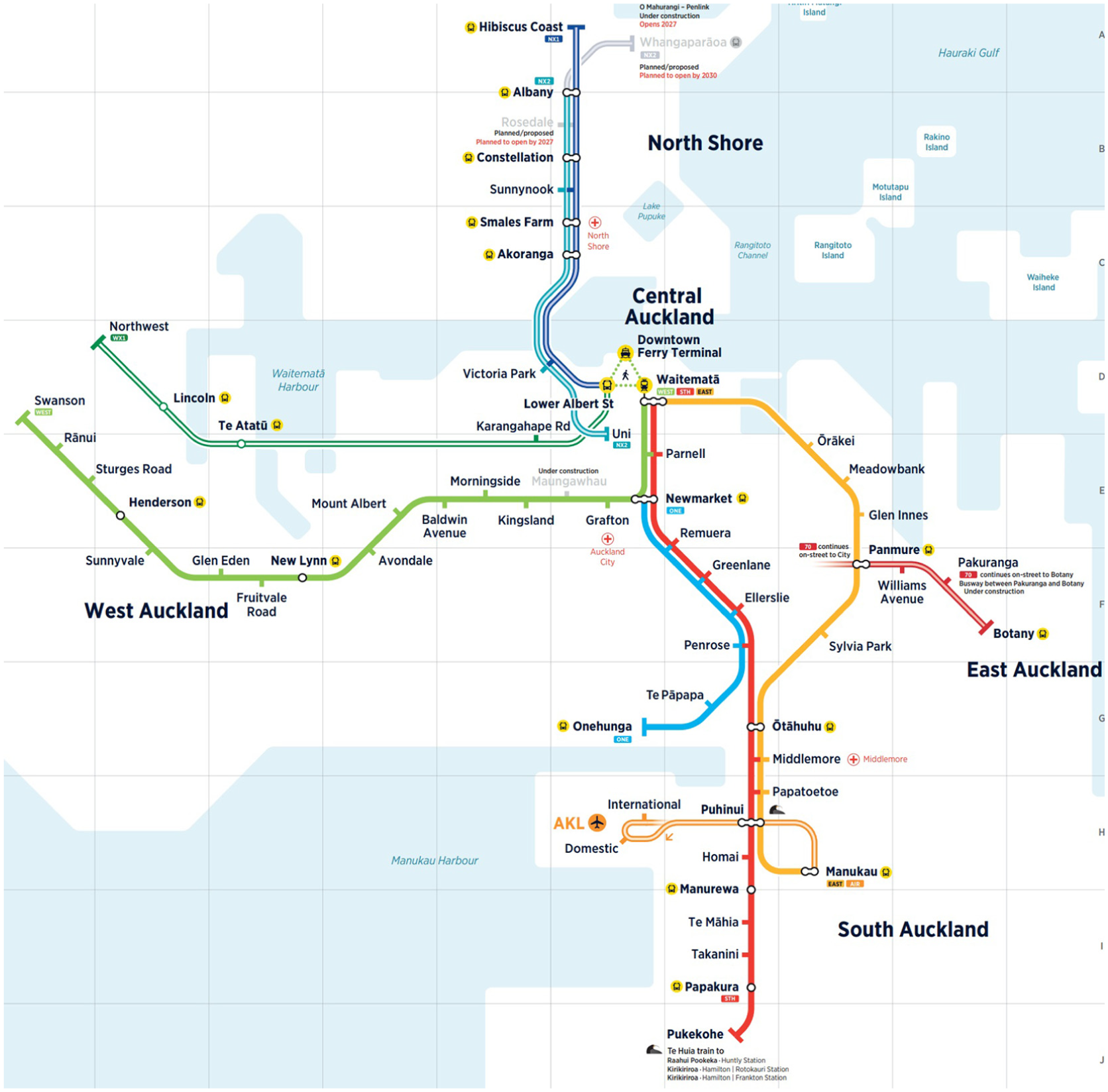
Train lines and major stations in Auckland, adopted from (Auckland Transport 2012).
Underreporting is a significant factor in New Zealand. Statistics from 2025 indicate that about 39% of victims reported an incident to the police; however, most victims do not report as they do not believe that police action will be effective ( 31 ). This issue is not unique to New Zealand. An Australian study showed a lack of leadership and the need for an overarching strategy for women’s safety ( 28 ).
The target sample size for the current study was 25 to 30 participants. Sim et al. suggest that thematic saturation, by which themes emerge across several smaller themes, can generally be achieved within 20 to 40 interviews ( 32 ). They also note that sample size requirements depend on the degree of heterogeneity within the study population. With a specific target group, saturation can sometimes be reached in as few as 12 interviews. Malterud et al. use the concept of “information power” to determine adequate sample size with respect to a research aim, the heterogeneity of the target population, and quality of dialogue ( 33 ). They emphasize that strong, clear communication between the researcher and participants with similar characteristics can provide sufficient information to warrant a smaller sample size. In contrast, Braun and Clarke argue that saturation cannot be predetermined and can only be established during data analysis, when no new information emerges during coding ( 34 ).
The target sample also included young women who regularly use public transport. The present study builds on findings from a previous work in which it was found that young women are more anxious owing to a higher likelihood of experiencing harassment, and are also more reliant on public transport for education, work, and social purposes ( 5 ). This made university students an ideal recruitment population.
The present study interviewed 29 young women who regularly used public transport to attend university. These young women also used public transport for part-time employment and social trips. Given the similarity among the participants—women from the same age group who regularly commute to university using public transport—a small sample size was deemed sufficient. In addition, following Braun and Clarke’s argument for determining saturation through data analysis, theoretical saturation was reached after 23 interviews, at which point no additional themes were identified. To ensure code saturation, six additional interviews were conducted. Of the 29 participants, only two were recent university graduates, and their main purpose for using public transport was work.
Ethics approval was attained from the university’s Human Ethics Committee (UAHPEC29002) in February 2025. Recruitment of potential participants was undertaken through social media posters, alumni outreach, and word of mouth. Google Forms was used to screen individuals who expressed interest in the survey. The screening questions included gender, age, and frequency of public transport use. Target participants were women aged 18 to 35 who used public transport at least once a week. The potential participants were then invited via email, and interviews were scheduled. Most of the participants were university students, enrolled on either an undergraduate or postgraduate degree course.
Questionnaire and Thematic Reflective Analysis
The questionnaire was comprised of two sections. Part A included sociodemographic questions on gender identity, age group, place of birth, ethnicity, and travel characteristics such as ridership frequency, walking time for the first-mile trip, and travel purpose. Part B of the questionnaire comprised short subsections to elicit information on the different aspects of safety work carried out during public transport use. These questions prompted discussions on preparing, appearance strategies, communication with friends/family, places, routes, and times of day they avoid, and the emotional consequences of carrying out safety work. The questions specific to parental influence on participants’ safety work were as follows:
Can you share any strategies your parents taught you to keep yourself safe?
Can you recall any specific advice given by the women in your family as to how to act in public spaces?
Interviews took place between April and July 2025. The average interview duration was 45 min, and the majority were conducted in person. Written consent was obtained from the participants before each interview. The questionnaire was adhered to; however, if participants delved into their experiences while answering a question, they were asked to elaborate. Participants were given 2 weeks to respond with any changes to the transcriptions before they were used for analysis.
The final transcripts were cleaned to remove pauses in preparation for reflexive thematic analysis (TA). Braun and Clarke’s reflexive TA was adopted for data analysis, and an inductive coding process—suitable for exploring participants’ experiences and perspectives—revealed the latent themes of safety work ( 35 ). There are four different ways to approach reflexive TA. As the study aimed to investigate women’s safety work and the impact of familial relationships on this, the themes needed to be derived from a realist, constructionist perspective, to capture women’s lived experiences during public transport journeys. The participants' responses were interrogated and unpacked to determine their association with the derived themes ( 36 ).
The present study extended a previous study that examined in detail the latent themes of safety work. The focus of this study was to investigate the words of caution given by parents, in particular mothers, to their daughters and their influence on young women’s safety work, providing an intergenerational perspective on the invisible burden carried by women.
Participant Description
All 29 participants identified as women, most of whom were university students: 25 undergraduate and two postgraduate students (P7 and P8). Two women (P2 and P23) were recent graduates and are working full-time. One participant wore religious attire (hijab). The majority were born in New Zealand. One participant (P15) was an exchange student from China spending a year in New Zealand, and three participants (P7, P8, P9) had lived in New Zealand for less than 10 years. Table 1 provides information on each participant.
Description of Participants (N = 29)
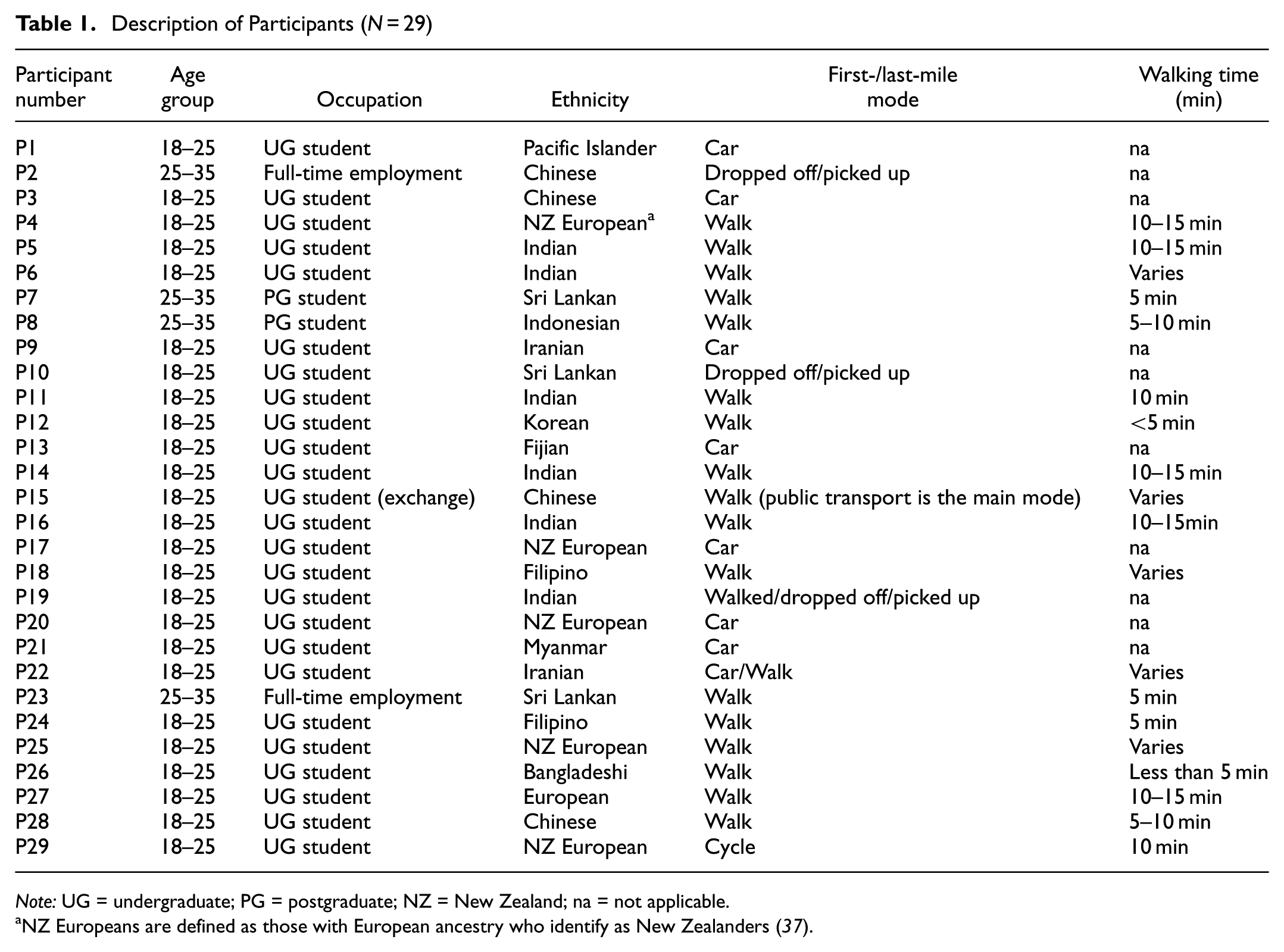
Note: UG = undergraduate; PG = postgraduate; NZ = New Zealand; na = not applicable.
NZ Europeans are defined as those with European ancestry who identify as New Zealanders ( 37 ).
A common journey for most participants was coming to the city campus, which is situated in Auckland’s city center. Several of the participants relied on public transport for part-time employment and recreational trips, particularly late-night trips after a night out. Only eight participants had access to a car and used it for the first- and last-mile trips of their university commutes via public transport, owing to high parking costs in the city center.
Results
Safety Work on a Typical Journey
Young women carry out safety work before, during, and after a public transport journey. Figure 2 summarizes the different safety measures women undertake during their public transport journeys, as discussed in the interviews. The figure illustrates the three main parts of a journey: the first-mile trip, including waiting at the station, inside the vehicle, and the last-mile trip. Throughout their journeys, the young women remained hypervigilant, continuously surveying their surroundings, the built environment, and the people within it.
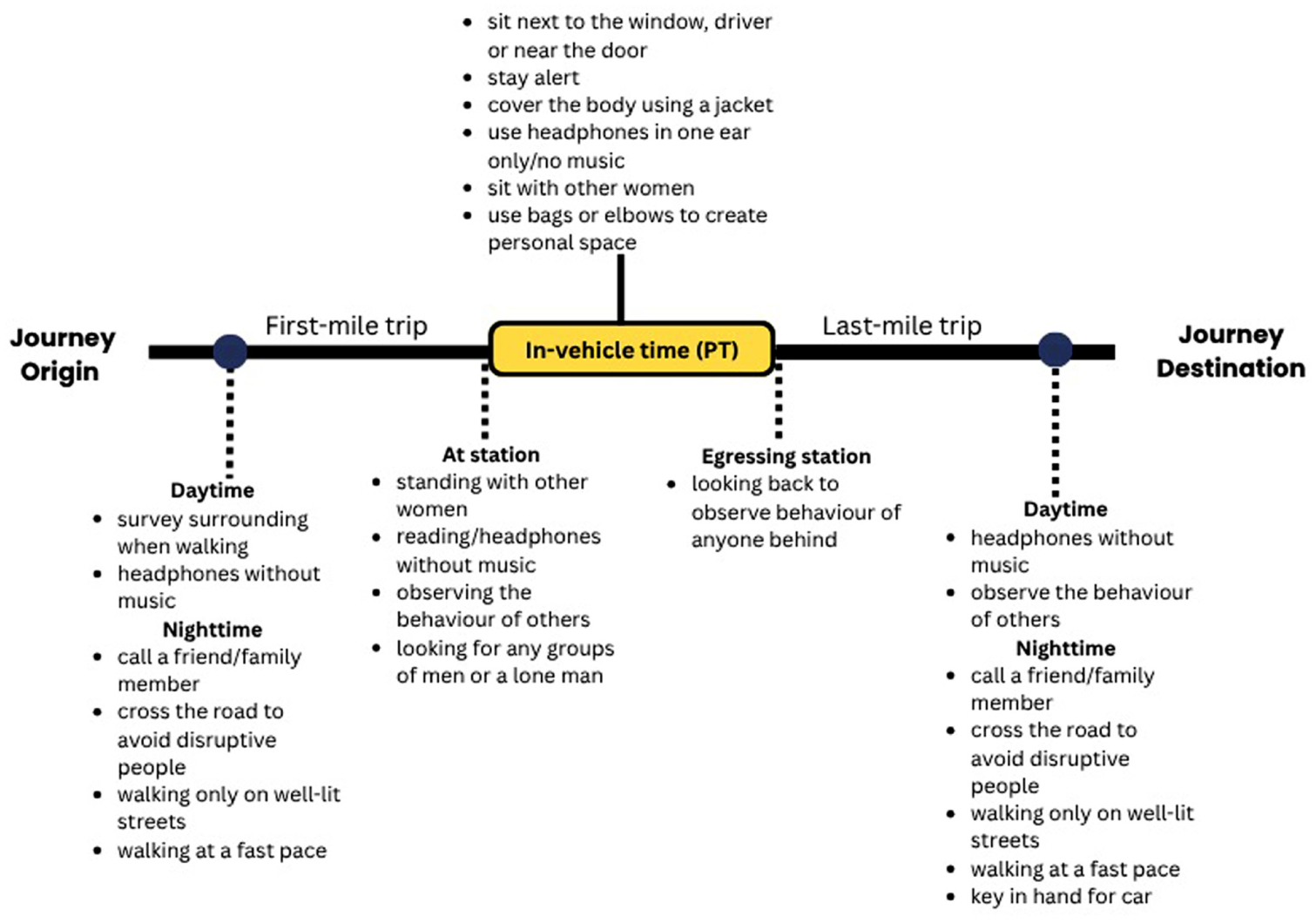
Safety work at different stages of a journey using public transport.
Maintaining a low public profile was a key strategy used by the young women. This included a range of tactics, such as communicating only through text messages inside the vehicle to remain silent, sitting next to the window/near the driver/near the exit, avoiding eye contact, and wearing headphones without music or, if playing music, covering only one ear. In other words, women employed any tactics available to them to become invisible to others. In addition to these direct tactics, women avoided aspects directly associated with “femininity.” This included wearing a jacket to cover their bodies, and not wearing makeup/jewelry, “revealing” clothing, or heels (i.e., wearing comfortable shoes to run in). This act of self-erasure was the most common safety measure among all 29 women interviewed.
Participants (P2, P3, P13, and P26) discussed aspects of their appearance that set them apart from their European-descent counterparts. The discussions had an underlying theme of “othering.” Participants from ethnic-minority backgrounds mentioned being aware of ethnic-racial discrimination and harassment. However, these participants did not perceive their ethnic-racial background as a strong influential factor in their safety work, because they lived in an ethnically diverse city. P13 stated she felt safe “not being the only woman of colour in the bus.” Similarly, P3 stated “There are a lot of women of colour in the bus, so I don’t feel like a minority.” This highlights the safety-in-numbers strategy that criminology theorists discuss in relation to perceived safety. Only one participant (P26) was a woman of colour who wore the religious attire for Muslim women (hijab). P26 mentioned that she used public transport only for her university commutes, which were direct. The participant discussed that being a woman of color did not make her feel more vulnerable; however, wearing a hijab did make her more visible in a crowd, introducing an additional layer of vulnerability. One of her safety work strategies was to minimize waiting time at the station. She discussed feeling anxious when a service was canceled or delayed, which increased her waiting time. P26 discussed feeling safer inside the vehicle. Finding another friend to travel with on her way home at night was another common safety strategy. This discussion aligned with earlier work ( 38 , 39 ), in which riders with visible religious attire can become targets of discrimination and, as a result, feel more anxious during their journeys.
Participants (P7, P8, and P9) who had lived in New Zealand for less than 10 years carried out similar safety work as to those who were born or had lived in New Zealand from a very young age. When discussing their safety strategies, they often reported feeling safer in New Zealand than in their country of origin. P9 shared “I’ve never turned down a job because I had to take public transport. I compare New Zealand to Iran, where it is more dangerous.”
Fear of others was a prominent theme in the young women’s adoption of specific tactics, such as being on guard, hypervigilance, continuous surveillance, and standing with other women. All participants discussed being aware of a group of men or a lone man. During first- and last-mile trips, if participants saw a group of men or a lone man, they would either cross the road or walk at a fast pace to reduce the risk of interaction. This fear could be firmly rooted in the stranger-danger warning many parents, especially mothers, impart to their children. The influence of mothers’ cautionary messaging to their daughters is discussed in the next section.
Intergenerational Relationship of Safety Work
To explore intergenerational knowledge transfer, participants were asked about their parents’ influence on their safety work. A common theme that emerged was the influence mothers in particular have on their daughters’ safety beliefs and subsequent actions: first, this was in the form of advice (indirect support) that was often adopted and modified by the young women. Second, family support (direct support) was a central component of young women’s safety work. Figure 3 shows the interplay between mothers’ influence and their daughters’ safety work.
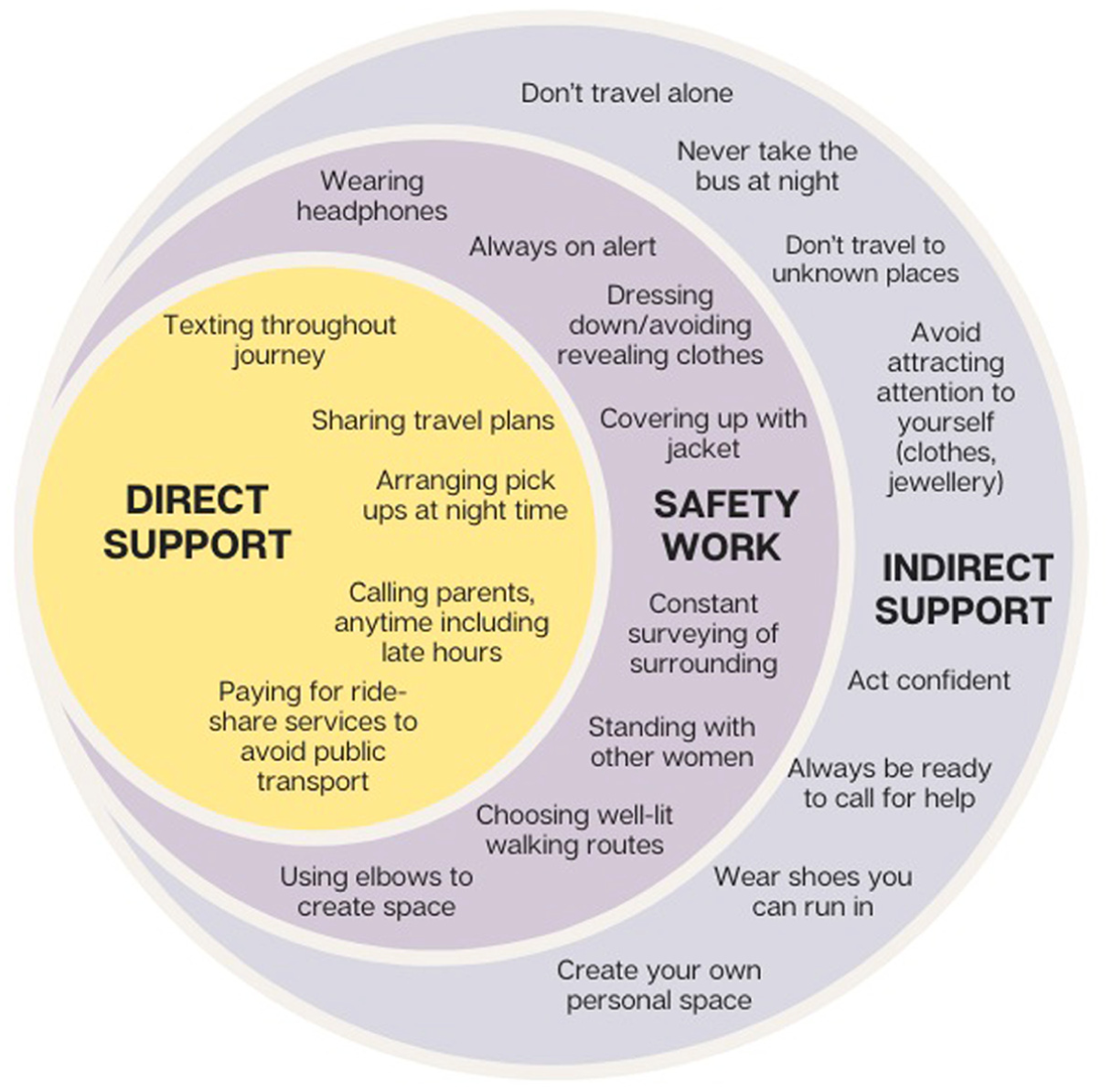
Intergenerational dimension of young women’s safety work.
Indirect Support
Indirect support came in the form of advice mothers give their daughters. Parents, particularly mothers, caution them about traveling after dark, to the extent that P4’s and P28’s mothers discouraged public transport use at night. When nighttime travel is unavoidable, several safety work themes emerged: not traveling alone, constant surveillance of the surroundings and people, staying alert, becoming invisible/avoiding attracting attention, providing updates on travel plans, and creating personal space. P2 stated, “Growing up, my mom always told me not to get distracted—don’t walk around looking at your phone. Always be on alert. Dress in a way not to draw attention to yourself.” P17 received advice from her mother to always appear confident and to stay hypervigilant at all times when traveling alone. P22 discussed how she learned from her mother to use her elbows to create personal space while inside vehicles. Whereas P19’s mother taught her to always stand with people who appear decent, P20’s mother told her to be prepared to speak up and draw attention to herself in any unsafe incident. This cautionary wording shaped most of the young women’s safety work. P28 stated, “I’ll make sure to go home earlier. If it is late, I will ask one of my flatmates to pick me up, or we will go back together if they are on campus.” Safety work, such as buddying up with someone or arranging a pickup for late-night travel, was a common strategy used by most participants.
It’s all inbuilt. If you feel unsafe, just call someone. Talk to them and update them of your location. This is definitely what my parents taught me. (P5) At this point, it has become a routine. I was taught from a really young age by my mom on how to act and look after myself in public. (P22) [I]f I am in an uncomfortable situation, my parents told me to sit closer to the driver. (P6)
Some participants discussed exercising their own agency and not adhering to the cautionary messaging of their parents. P11 discussed how her parents’ (Indian origin) concerns about her traveling alone were a source of disagreement. She perceives New Zealand to be a safe country: When I was living with my parents, I wouldn’t go past 8 p.m. to return home. But since I moved out, I go anytime. I still remain cautious of time and avoid it if I can … That is why I feel really empowered when I walk at night, knowing I’m taking the precautions to protect myself.
She communicates with her parents during her trips and mentioned that her mother offers to pick her up. P27 shared, “My mom always told me not to walk with headphones on, but I still do. Mom always says to call her when something doesn’t feel right.” This finding suggests that not all safety beliefs imparted by parents are readily accepted by the young women: they appeared to reflect on their environment, adopting only the safety beliefs they felt were beneficial. P16 stated, “A good skill to develop for yourself is to distinguish how to read your surroundings.”
Direct Family Support
A central component of the young women’s safety work was direct communication with their parents. Twenty-two of the 29 participants relied on direct support from their parents as part of their safety work. P18 stated that she will contact her mother, even in the early morning hours. This showed a strong, consistent dependence on their parents, particularly their mothers, for protection. The majority of the participants lived at home (19 out of 29). Participants who did not live with their parents contacted their flatmates more frequently. For example, P4, who resided at the university’s student accommodation, explained, “My mom always makes me share my ride-share service location with her. She was the one who taught me to never take the bus at night.”
Direct family support included providing location updates while en route, calling if they feel unsafe, providing information on travel whereabouts and expected arrival time at home, and arranging a pickup at night. P4’s mother offers to send her a ride-share service if she needs one at any time of the day. By accepting direct family support, the participants support their parents’, particularly their mothers’, well-being.
[M]y mom is more concerned than I am. She picks me up after 8 a.m. from the bus stop. (P29) I always text when I arrive, when I’m about to leave and what time I’ll be at home. So that they know where I am. (P16) Occasionally my mom picks me up when it coincides with her trip. Usually I just update my parents when I’m on my trip so they know exactly where I am. (P4) I update my parents about my trip every time. I usually text message my parents so they know where I am in my journey. (P6)
One of the participants (a recent graduate, working full-time) discussed how she provides support to her younger sister. P23 arranges to meet with her younger sister to travel home together. This emphasized the familial burden of safety work carried out by women.
Emotional Burden of Safety Work
Participants mentioned that the interviews had allowed them to reflect on their safety work, for the first time for some of them. Several expressed frustration at having to do the work and resented the effort required in always being on their guard, making calculated decisions during what should be a straightforward public transport journey. The vulnerability of being a woman carrying out safety work was a central theme in the discussion of emotional well-being. P15 stated, “you are going into a public space that is meant for the public, to be used by everyone equally and safely. But you are actually extremely unsafe. You have to be on guard, that kind of feeling.” Along the same vein, P16 stated that it makes her feel self-aware, “it is not a good feeling, you feel very uneasy … you have to be cautious about how you’re getting there, instead of enjoying yourself.” P16 discussed her nighttime journeys and feeling terrified traveling in a vehicle with only a few passengers, especially if the other passengers were men. She described the situation as being “like a tiger in a cage.”
A recurring theme in discussions of emotional well-being was the vulnerability women face in public spaces. Participants spoke of the tension between the ideal of public transport as a shared, equitable system and the lived reality of feeling unsafe within it. They discussed feelings of gender inequity in a system that is designed in such a way that it compels them to carry out safety work. P22 stated, “it’s always frustrating how it’s traditionally been a woman’s job to take care of herself. I always have to perform for other people,” whereas P2 shared, “it’s annoying, honestly. I just want to wear what I feel like without thinking about whether I’ll be harassed or stared at.” Some participants discussed their acceptance of the inequity. They discussed how the work has become reflexive and automated: “I just accepted it. Sadly, it’s necessary, but I’ve come to terms with it. I don’t dwell on it, I just try to stay safe” (P27). This acceptance, although pragmatic, illustrated how deeply these gendered behaviors are internalized. The routinization of safety work blurs the boundary between voluntary self-protection and social conditioning, showing how inequality becomes normalized through habitual travel.
Participants shared their reflections on the emotional burden their parents, especially their mothers, carry. Participants who were daughters of migrant parents discussed how their parents’ experiences, especially their mothers’, strongly influenced the constant worry they have for them. Migrant parents from countries with higher crime rates than New Zealand often imposed stricter safety strategies owing to their experiences in their home country. For example, P11 stated, “my parents were both born in India … they don’t want me to travel at night at all, even by car.” Similarly, P27’s mother was from South Africa and expressed similar concerns about her safety. Her mother asked P27 to communicate with her often while riding public transport, such as texting to notify her when she gets off the vehicle. P10 explained that she is always picked up by her parents at the station when returning home at night, as her home is located at the end of a long, poorly lit alley. These dynamics highlighted how safety work is not performed in isolation but is collectively reinforced through familial relationships. The ongoing cycle of worry, communication, and protection between mothers and daughters underscored how safety work transcends the individual level to become an inherited, gendered responsibility.
Discussion and Conclusion
The present study has provided evidence that safety work operates as a generational inheritance of gendered inequity in public spaces, becoming particularly pronounced during public transport journeys. The emotional and behavioral patterns identified in this study highlighted both the resilience and the constraints of women’s mobility in public transport systems.
The themes discussed in this study were derived from a realist, constructionist perspective. During the interviews, the young women often moved from topic to topic without prompts from the interviewer. Their recounting and reflections on their experiences, particularly regarding familial relationships, were emotional and direct. Daughters performed safety work not only to protect themselves but also to reassure their mothers. This shared vigilance showed that the burden of safety extends beyond the individual woman and is sustained within family relationships across time. The participants described feeling mentally and emotionally frustrated from the constant alertness required to stay safe. This sense of unfairness and fatigue was strongest among those who recognized that their behaviors were learned rather than chosen. Those who had lived in New Zealand for less than 10 years had a more positive outlook. They compared New Zealand to their home country and found it relatively safer.
Young women are taught safety work long before they encounter direct experiences of harassment. Parents, especially mothers, drawing from their own fears and lived experiences, pass on rules of conduct such as when to travel, how to dress, and whom to avoid, which shape young women’s safety work. Mothers’ advice serves two purposes: it offers care but also reinforces social control. The advice and warnings mothers share become a form of inherited knowledge that informs how daughters perceive risk and respond in unsafe situations. This process is driven by care, yet it reproduces a deeper gender inequity. The repetition of maternal caution normalizes the belief that vigilance and self-surveillance are necessary aspects of being a woman in public. As Vera-Gray and Kelly argue, safety work provides women with a sense of control, but it simultaneously upholds the structural conditions that make such vigilance necessary ( 2 ).
Young women from migrant families, particularly those from a higher crime rate country, carry an additional emotional burden shaped by their families’ histories and perform stricter safety strategies, such as altogether avoiding travel at night or arranging dropoffs and pickups for the first- and last-mile trips. The mothers’ sense of caution is informed by experiences of risk in their countries of origin and carried into how they guide their daughters, even within comparatively safer environments. However, some participants expressed disagreement with their mothers’ concerns, as they feel safe living in New Zealand with its low crime rate. This is a natural progression, as young women develop their own safety work by adopting and modifying parental safety strategies through reflections of their own experiences.
These findings support Collie’s observation that parental warnings about “stranger danger” can persist across life stages, shaping how women perceive threat and vulnerability in adulthood ( 8 ). The acts of texting, calling, or arranging pickups are not only practical tools of protection but also emotional exchanges that sustain bonds and alleviate parental worry. This shared vigilance shows that the burden of safety extends beyond the individual woman and is sustained within family relationships across time.
The present study contributes to transport and gender research by expanding the understanding of safety work beyond individual experience. Previous research has primarily focused on the physical design of transit environments ( 3 , 40 ). Although such interventions are essential, they often overlook the social processes that teach women to self-protect. What appears to be individual precaution is, in reality, the outcome of structural neglect that compels women to self-regulate in public spaces, including on public transport journeys. The intergenerational patterns of maternal caution and familial compliance illustrate how social systems shift the responsibility for safety from institutions to the women themselves, reinforcing emotional labor as a condition of everyday mobility.
A key limitation of this work is the sample, which consists mostly of university students. The sample did not include young women with different travel patterns: the majority of participants mostly commuted from home to the university campus. Building on the findings of this study, future work could include women with different trip purposes, thereby diversifying geographical locations for the origin–destination pairs. This study also explored one side of the story: young women’s adoption of parental advice (indirect support) and their parents’ involvement in their own safety work (direct support). Future research could further explore this relationship to provide a holistic representation of the invisible burden mothers carry. The cost of this invisible burden carried by women themselves and in caring for others provides compelling evidence for a systematic shift toward gender-responsive transport decisions.
The findings of this study advocate reframing women’s safety not as individual work but as a public and political concern that requires institutional accountability. For decision-makers, this means moving the focus beyond infrastructure fixes and surveillance-based interventions to transport policies that embed gender-sensitive mobility needs into planning and design. Recognizing and redistributing this invisible labor is essential if equity in public transport is to move from discourse to reality.
Footnotes
Acknowledgements
I would like to thank the 29 young women who took the time to discuss their safety work and research students, Azana Bhatia and Angel Bernard, for assisting with data collection. Your openness and keen interest in engaging have made this work informative for transport professionals.
Author’s Note
Grammarly was used to assist with writing the manuscript.
Author Contributions
The author confirms sole responsibility for the following: study conception and design, data collection, analysis and interpretation of results, and manuscript preparation.
Declaration of Conflicting Interests
The author declared no potential conflicts of interest with respect to the research, authorship, and/or publication of this article.
Funding
The author received no financial support for the research, authorship, and/or publication of this article.

Data Accessibility Statement
The transcripts of the participants analyzed in the current study are not publicly available for confidentiality reasons, but a summary can be requested from the author.