






Abstract
Soil stabilization using chemical additives is a proven technique for enhancing the strength and performance of weak subgrade soils. Electric arc furnace (EAF) slag has shown significant potential to improve the geotechnical and mechanical properties of soils because of its unique chemical and physical characteristics. However, the heterogeneous nature of EAF slag makes it challenging to determine whether a specific source is suitable for stabilization purposes. This study aimed to identify key EAF micro- and mesoscale properties that contribute to the development of effective soil stabilization mechanisms. To achieve this, a comprehensive characterization program was established to evaluate the slag’s chemical, physical, mechanical, morphological, and mineralogical characteristics. Fully graded EAF samples and slag fines were considered for soil stabilization. A silty clay soil considered poor for pavement applications according to the AASHTO classification system was stabilized with different additives (fly ash, cement, and EAF) to assess the effectiveness of the steel coproduct as a stabilizing agent. Chemical analyses confirmed the presence of key oxides (CaO, SiO2, and Al2O3) in the EAF samples, although limited reactivity was observed because of dominant crystalline phases. In the soil mixtures, the swelling potential was reduced from 0.92% to 0.29%, and strength significantly improved with slag fines, indicating pozzolanic activity. When combined with 2.5% cement, EAF slag produced synergistic effects, outperforming cement alone with an increase of 17% for 7 days of curing. The findings highlight the importance of slag composition and confirm its viability as a sustainable, performance-enhancing alternative for soil stabilization.
Introduction
Certain types of soils present significant geotechnical challenges because of their low compressive strength, large deformability, and poor engineering characteristics such as high fine-particle content, elevated liquid limits, high plasticity, substantial volume variation, and low bearing capacity ( 1 , 2 ). These characteristics make such soils unsuitable for high-volume highway construction, especially for structural base and subbase pavement layers. As a result, stabilization techniques are often employed, with chemical stabilization being a popular choice that utilizes binding materials such as hydrated lime and Portland cement ( 3 ). Stabilization techniques offer several engineering benefits, including increased shear and compressive strength of soils, reduced volumetric instability, plasticity index, permeability, and compressibility ( 4 ). However, the use of commercial binders for soil stabilization raises concerns about their high cost and the emission of polluting gases, particularly carbon dioxide (CO2), during their production contributes to environmental degradation ( 5 ).
The incorporation of industrial coproducts into pavement construction has emerged as a promising strategy to improve resource efficiency and reduce environmental burdens. For instance, fly ash, a coproduct of coal-fired power plants, has been widely used for soil stabilization. However, there is a shortage of this material in the U.S. ( 6 , 7 ). Alternatively, steel slags—coproducts generated during the steelmaking process—have shown great potential for soil stabilization. In 2023 alone, more than 1 billion tons of steel slags was produced worldwide ( 8 ). Among different steelmaking processes, the electric arc furnace (EAF) has gained prominence over the past decade, including in the U.S. ( 8 ). In this process, a portion of the oxidized iron and impurities are eliminated through reactions with added fluxing agents, such as lime and dolomite. The resulting material is a calcium- and iron-rich material hereafter called EAF slag ( 9 ). In 2022, approximately 59 million tons of steel was produced in the U.S. using the EAF process, accounting for about 72% of the nation’s total steel output. Considering that 10%–15% of steel production results in slag, this corresponds to approximately 6–9 million tons of EAF slag generated annually ( 10 ). EAF slag has shown potential for use in road construction as aggregate for asphalt concrete or granular base because of its favorable chemical and physical characteristics ( 11 – 15 ). Moreover, its high calcium oxide (CaO) content contributes to its effectiveness as a soil stabilizer ( 16 – 19 ).
However, despite its potential to be used as a paving material, EAF slag exhibits significant variability in its properties, which can limit its practical application. This variability is mainly attributed to the variety of scrap materials used and the differences in processing methods across regions and steelmaking facilities. As a result, predicting the behavior of the material without prior testing is challenging, and performance outcomes can vary widely among studies. For instance, some studies have reported issues such as excessive swelling in slag-stabilized soils ( 20 , 21 ), whereas others have found that slag-stabilized mixtures met the required standard limits ( 22 – 24 ).
Some studies have investigated the performance of EAF slag as a soil stabilizer. Lopes et al. ( 17 , 18 ) evaluated two tropical soils stabilized with locally sourced slags and demonstrated that soil type significantly influences mechanical performance. A separate study examined the durability of slag-stabilized soils under freeze–thaw cycles and reported that the combined use of EAF slag and nanosilica effectively reduced strength degradation caused by environmental exposure ( 25 ). In addition, a research study showed that EAF slag can contribute to the immobilization of heavy metals because the interaction with natural soils reduces pH and lowers trace metal concentrations in leachate ( 26 ).
Although these studies provide valuable insights into the engineering and environmental performance of slag-stabilized soils, limited research has focused on establishing direct relationships between specific EAF slag characteristics and the underlying stabilization mechanisms. There remains a lack of systematic evaluations linking chemical, mineralogical, and microstructural properties to mechanical and volumetric behavior.
Despite the variability in EAF slag samples, some key characterization tests can be used to determine the feasibility and safety of slag application in infrastructure. To contribute to this topic, this study investigates the properties of locally sourced EAF slag to assess its potential for use in pavement applications. This slag was blended with a locally available low-strength soil to evaluate its performance as a stabilizing agent. Comparisons were made with other commonly used soil stabilizers in the region, such as fly ash and cement, to determine the relative effectiveness of the slag mixtures.
Objectives and Scope
The objectives of this study were to verify the potential of EAF slag for use as a soil stabilizer and to identify key EAF properties that contribute to soil stabilization mechanisms. To achieve this, a comprehensive characterization plan was developed to evaluate whether stabilization occurs through cation exchange, particle restructuring, pozzolanic reactions, or physical effects. Additionally, soil–slag mixtures were produced and subjected to mechanical and swelling tests. Results from soil–slag mixtures were then compared with untreated soil samples (S), and two other soil mixtures were stabilized with commonly used stabilizers (i.e., fly ash and Portland cement). Figure 1 summarizes the tests conducted to achieve the study objectives.
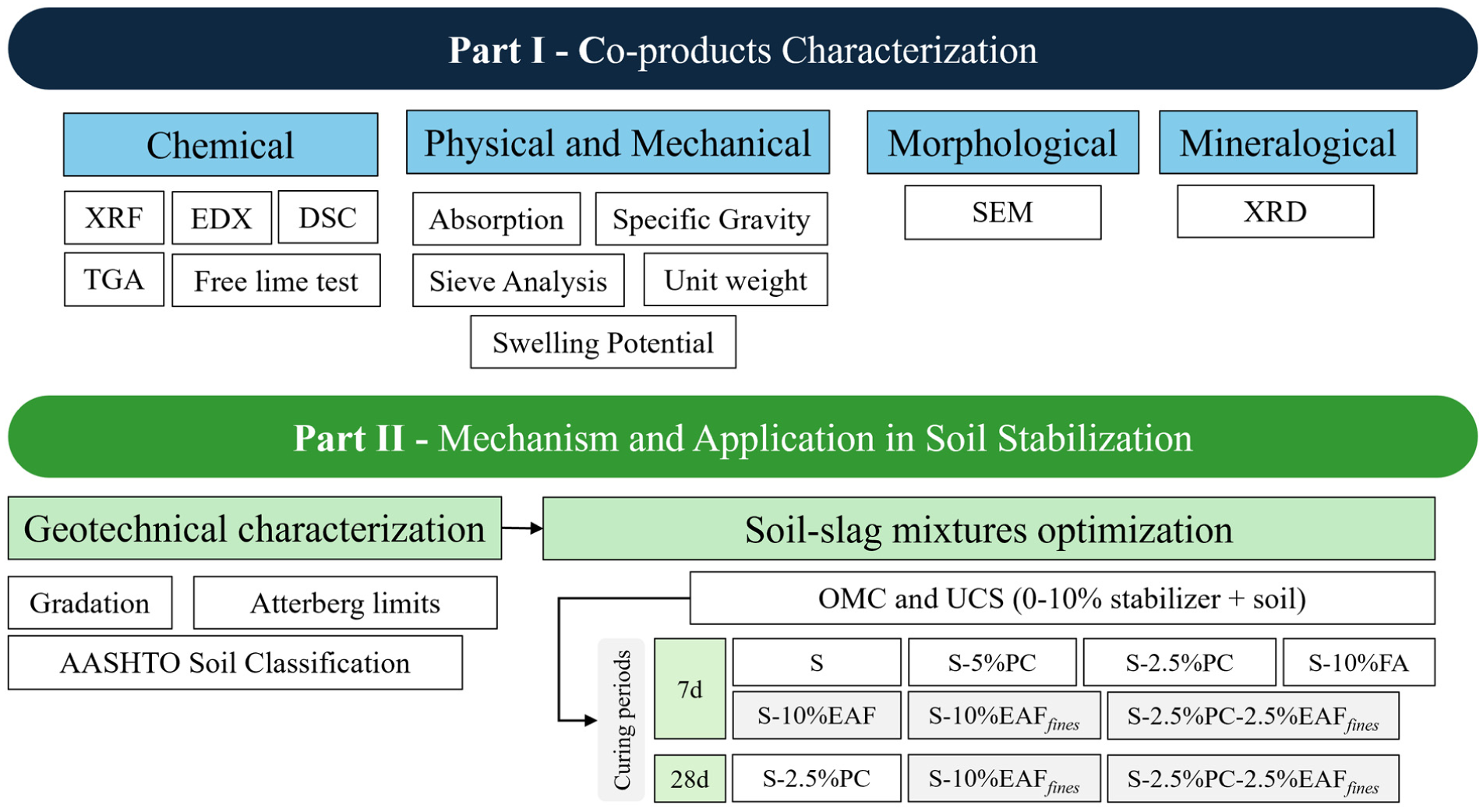
Diagram with experimental tests conducted.
Materials and Methods
Materials
Slag Sample
The EAF slag sample was obtained from a steel manufacturing plant in Nebraska. The raw slag samples are discharged on-site, air-cooled, and subjected to the removal of metallic fragments. The remaining slag materials are then ground and stockpiled. Two different gradations of the slag were considered: the original gradation, as collected from the plant (EAF), and a finer fraction obtained by sieving the material through a #100 sieve (EAFfines). Figure 2 shows the two EAF slag samples. The objective was to investigate how particle size influences the stabilization process, as finer particles are expected to increase the surface area and promote greater reactivity with the soil. All slag samples were collected from stockpiles that were approximately 3–4 days old.
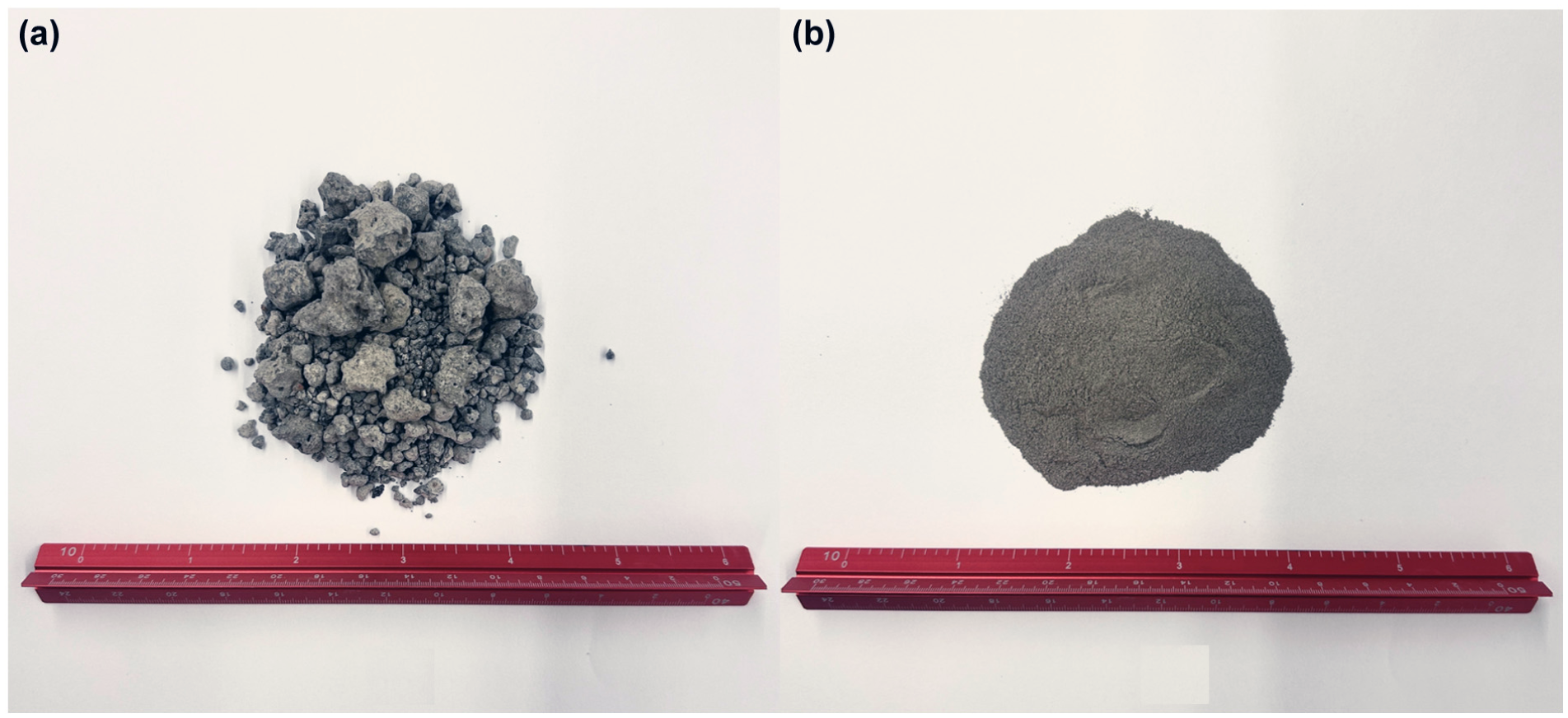
(a) EAF (original). (b) EAFfines.
Untreated Soil
To verify the effects of EAF slag on soil stabilization, soil–slag mixtures were developed. For this purpose, a Brule soil type, commonly available in some parts of Nebraska, was collected. The soil presented a liquid limit (LL) of 36.17 and a plasticity index (PI) of 11.24. Based on the AASHTO classification system, the soil was classified as A-6, considered poor for pavement subgrade because of its clayey composition and its susceptibility to moisture changes. According to the Unified Soil Classification System (USCS) following ASTM D2487, the soil was classified between silt (ML) and lean clay (CL).
Portland Cement and Fly Ash
In addition to the EAF slag, two conventional soil stabilizers—fly ash and Portland cement—were selected for comparison. These additives are recommended by the Nebraska Department of Roads for stabilizing soils with a PI lower than 20. The fly ash used was Class F, whereas the cement was a Type IL Portland-limestone cement.
Methods—Part I: Slag Characterization
Considering that soil stabilization mechanisms can be physical, chemical, and/or mechanical, it is important to identify the characteristics of key materials and infer potential interactions among soil particles and stabilizers. Therefore, a comprehensive experimental approach was adopted in this study, as shown in Figure 1. Physical, chemical, morphological, mineralogical, and microstructural characterization of the EAF slag sample was performed using a wide range of techniques.
Physical and Mechanical Characterization
Physical characterization included sieve analysis (ASTM C136), specific gravity (ASTM C127), absorption (ASTM D854), and unit weight (ASTM C29). Dimensional stability (or swelling potential) was also evaluated following ASTM D4792. This accelerated test is recommended because it promotes faster reactions of free lime and free magnesium oxides, which may otherwise take a long time to develop under standard testing conditions ( 20 , 22 , 27 , 28 ).
Chemical Characterization
First, the elemental composition of the slag was identified. For this purpose, an energy-dispersive X-ray fluorescence (XRF) test was performed using a tube voltage of 5–50 kV and tube current of 1–1,000 μA and under vacuum conditions with a Bruker S8 Tiger instrument. Slag particles smaller than 0.075 mm were used in this test.
Additionally, the amount of free lime (CaO) was determined to investigate the slag sample’s reactivity and cation exchange potential—important characteristics that contribute to the chemical stabilization of clay soils with calcium-rich additives. The presence of calcium and magnesium cations is particularly significant in clay-rich soils, as these cations can alter the soil’s texture and structure through cation exchange ( 17 ). When dissolved in pore water, they reduce the thickness of the diffuse double layer surrounding the clay particles, promoting flocculation and improved engineering behavior. Therefore, the free lime content of the slag is an important parameter to be considered. In this study, the free lime content was determined in accordance with ASTM C114 using the EAFfines sample.
Moreover, thermogravimetric analysis (TGA) and differential scanning calorimetry (DSC) were used to detect mass loss associated with thermal decomposition reactions of important compounds, such as portlandite (Ca(OH)2). When portlandite decomposes, it releases water, and this mass loss can be used to estimate the amount of reactive CaO present in the slag. These tests were conducted using a Netzsch TGA 209 F1 Libra and DSC 204 F1 Phoenix, respectively. The tests were performed at a heating rate of 5 K/min from ambient temperature up to 600°C. The TGA analysis can only be carried out on particles passing a #4 sieve. Since this study evaluated the EAF stabilization potential in its original gradation and only the fines (passing #100 material), the analyses were carried out considering two slag sample size ranges. The first TGA sample consisted of materials passing through a #4 sieve and retained in a #100 sieve, named EAF for simplicity. The second size consisted of finer particles passing through a #100 sieve, named EAFfines, as previously mentioned. These two particle size ranges were tested to assess whether reducing the particle size affects the material’s reactivity and the thermal decomposition behavior of the slag.
Mineralogical Characterization
The mineralogical composition of the slag was identified using X-ray diffraction (XRD), which is essential for determining the crystalline phases (minerals) present in the slag and their potential contribution to soil stabilization. The presence of reactive mineral phases such as portlandite (Ca(OH)2), larnite (Ca2SiO4), or mayenite (Ca12Al14O33) can indicate the potential for pozzolanic activity or chemical interaction with soil particles. The analysis was conducted using a PANalytical Empyrean diffractometer operating with CuKα radiation at 45 kV and 40 mA. Scanning parameters included a step size of 0.02°, a dwell time of 20 s per step, and a 2θ range of 5°–80°. Before testing, samples were oven-dried at 110°C for 24 h. Phase quantification was performed using the open-source Profex software.
Microstructural Characterization
Finally, the microstructure of the EAF slag sample was assessed through surface morphology analysis using scanning electron microscopy (SEM) with a Nova NanoSEM 450 microscope. The microscope was equipped with energy-dispersive X-ray spectroscopy (EDS) detector, which was used for in situ elemental composition analysis. This technique provides insights into particle shape, texture, and surface porosity—factors that influence particle interlocking, packing behavior, and the potential for physical stabilization. Additionally, EDS allows the identification of key elements distributed on the particle surfaces, supporting the interpretation of chemical reactivity and mineral-phase associations.
Methods—Part II: Geotechnical Characterization of Studied Soils
Studied Soil Mixtures
To evaluate the effects of EAF slag on soil behavior, seven different soil mixtures were studied: four control samples (without EAF slag) and three samples produced with the addition of the EAF slag.
The control samples were as follows: untreated soil (S), soil modified with 10% fly ash (S-10%FA), soil modified with 5% Portland cement (S-5%PC), and soil modified with 2.5% Portland cement (S-2.5%PC). The cement (5%) and fly ash (10%) contents were initially selected based on values suggested by the Nebraska Department of Roads and the soil plasticity index, to achieve a minimum unconfined compressive strength (UCS) of 100 pounds per square inch (psi), which is the typical threshold for subbase applications in pavement construction. Reduced contents of Portland cement were also evaluated to assess the simultaneous effect of Portland cement and EAF slag.
Three soil–slag mixtures were investigated. The first two mixes were prepared by replacing 10% of the soil with EAF slag using two different gradations: the slag as received and the slag fraction passing the #100 sieve. These mixtures were designated S-10%EAF and S-10%EAFfines, respectively. The third mixture, labeled S-2.5%PC-2.5%EAFfines, was formulated by replacing 5% of the soil with a 1:1 blend (by weight) of Portland cement and EAF slag passing the #100 sieve. This combination was intended to assess: (i) the potential for pozzolanic reactions between the cement and the slag, and (ii) whether slag enhances the formation of cementitious phases when used with a conventional binder.
Geotechnical Characterization and Compaction Curves
To assess potential changes in soil plasticity because of slag incorporation, Atterberg limits were determined for a mixture of natural soil with 10% EAFfines. Tests were performed in accordance with ASTM D4318. For the PL, three specimens were tested, whereas four moisture content points were used for determining the LL. The PI was then calculated as the difference between the LL and PL.
In addition, compaction tests were conducted to evaluate the influence of the additives on the compaction behavior of the soil mixtures. Standard Proctor compaction (ASTM D698) was used to determine the maximum dry density (MDD) and optimum moisture content (OMC) for each mixture. Each specimen was compacted in three layers, with 25 blows per layer, using standard compaction energy. A minimum of four moisture-density points was obtained for each curve to ensure reliable results. The OMC values obtained from these curves were used to prepare samples for UCS testing and for compacting specimens for swelling potential evaluations.
UCS and Swelling Potential
To evaluate the mechanical performance of the mixtures and untreated soil samples, UCS tests were conducted in accordance with ASTM D5102. All specimens were prepared at their respective OMC values. After blending, the mixtures were allowed to rest for 24 h before compaction. In general, specimens were manually compacted into molds with dimensions of 33 mm in diameter and 70 mm in height, with three specimens produced for each batch. However, because of the coarser particle size of EAF slag in the S-10%EAF mixture, the UCS specimens for this mixture were prepared using standard Proctor molds instead. Following compaction, the samples were wrapped in plastic film and placed in sealed containers for curing under controlled moisture conditions. UCS tests were performed at 7 and 28 days of curing to assess short- and medium-term strength development.
The swelling potential of the samples was also evaluated to assess whether the presence of soil mitigates the swelling potential associated with slag incorporation. The specimens were compacted using standard Proctor energy, then submerged for 7 days in a water bath at 70°C in accordance with ASTM D4792, and linear expansion readings were taken.
Results and Discussion
Slag Characterization
Physical and Mechanical Characterization
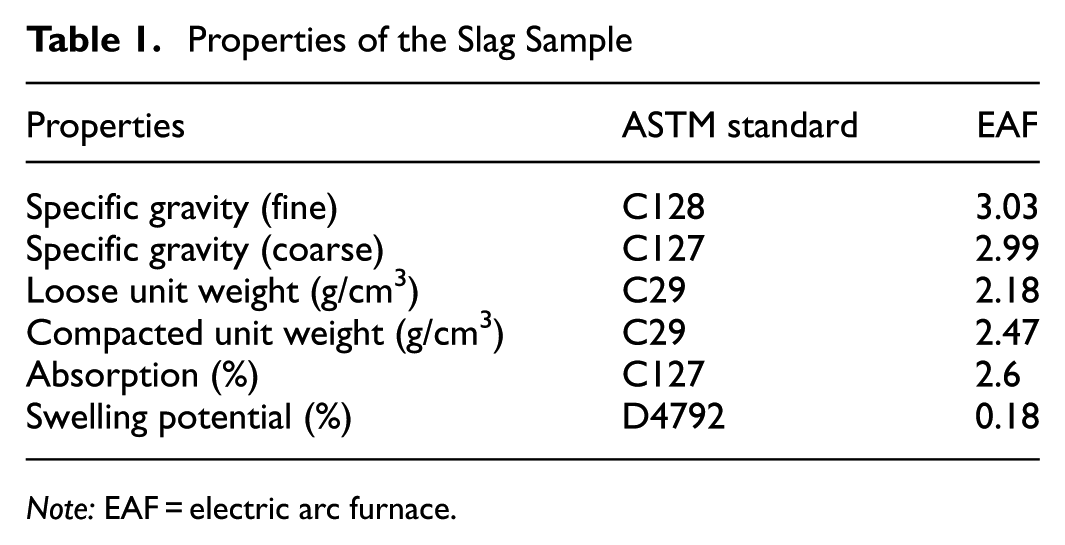
The physical properties of the EAF slag are summarized in Table 1. The absorption value was relatively low, which is lower than the typical 6%–7% reported for recycled aggregates. The specific gravity and unit weight values are within the expected range, consistent with findings of previous studies ( 17 , 29 ). With regard to the swelling potential, the EAF slag showed swelling values below 0.5%, which meets the recommended threshold specified in several DOT specifications that allow the use of slag as paving material. The results of the sieve analysis for the EAF sample are shown in Figure 3. The gradation indicates that the material collected from the slag plant includes a wide range of particle sizes, from coarse to fine aggregates.
Properties of the Slag Sample
Note: EAF = electric arc furnace.
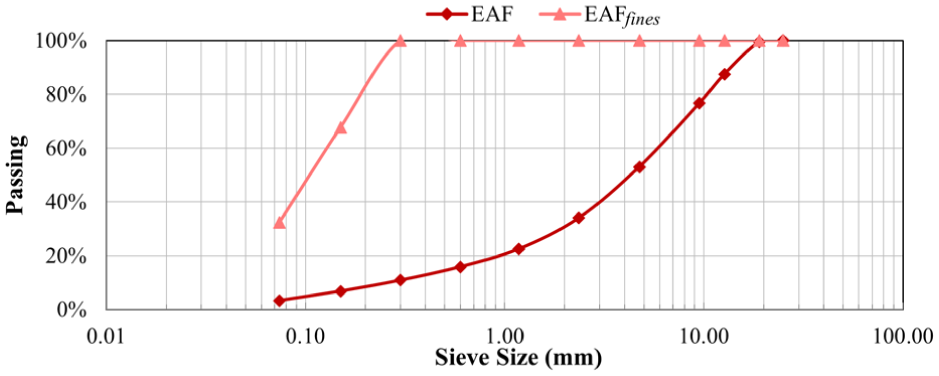
Sieve analysis for the two gradations of EAF.
Chemical Composition
Table 2 presents the oxide compositions of the EAF slag. As expected, the coproduct exhibited high contents of calcium oxide (CaO), consistent with findings reported by other researchers ( 18 , 24 , 30 ). Other predominant oxides identified in the sample included silicon dioxide (SiO2), iron oxide (Fe2O3), and magnesium oxide (MgO). CaO, SiO2, and Al2O3 are particularly important, as these oxides can react with soil to improve its geotechnical properties through cation exchange or cementitious reactions.
Chemical Composition of EAF (wt%)
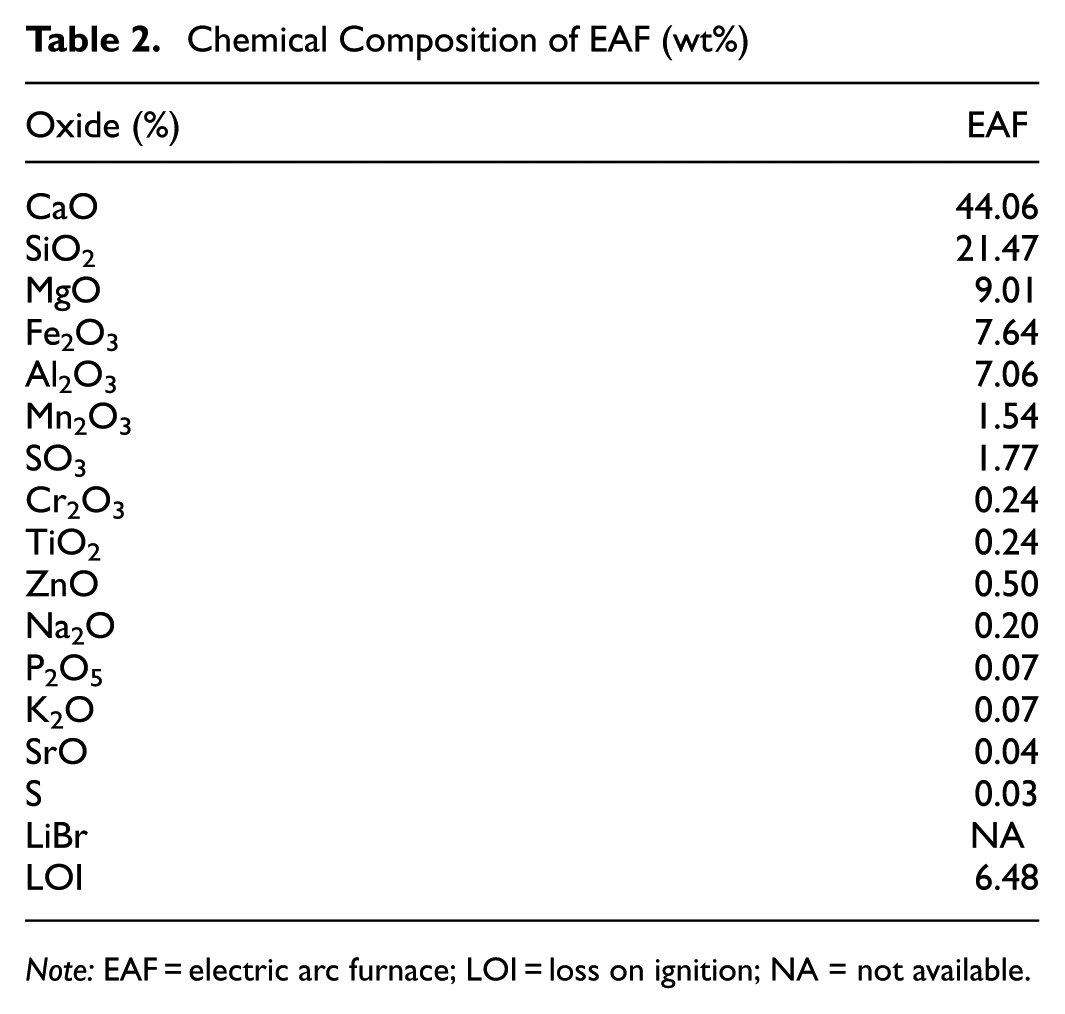
Note: EAF = electric arc furnace; LOI = loss on ignition; NA = not available.
Additionally, XRF analysis revealed small quantities of chromium (Cr) in the slag, which highlights the importance of assessing environmental risk. Although total Cr content does not directly indicate leaching potential, its presence warrants further testing, as the metal may be immobilized within stable mineral phases. However, it is important to note that chromium behavior is strongly influenced by pH and redox conditions. Under highly alkaline environments, certain chromium species may exhibit increased solubility ( 31 ). Therefore, although stabilization is generally expected to improve immobilization, specific environmental conditions may affect long-term leaching behavior.
In addition to environmental considerations, the alkaline character of EAF slag plays a fundamental role in its stabilization potential. Espinosa et al. ( 32 ) suggested the use of a basicity index based on the ratio (CaO + MgO)/(SiO2 + Al2O3) to verify the alkaline character of slag materials. Taylor ( 33 ) suggested that slags with a basicity index greater than 1.8 may be considered suitable for cementitious applications. According to the results, the EAF slag presented a basicity index of 1.86, suggesting a promising potential for pozzolanic activity.
Free lime plays a crucial role in stabilization mechanisms, including cation exchange and particle restructuring, especially when applied to clay-rich or expansive soils ( 34 ). Calcium ions (Ca2+) released from free lime can replace monovalent cations (e.g., Na+, K+) on clay particle surfaces, reducing the thickness of the diffuse double layer. This leads to a reduction in soil plasticity, an increase in shear strength, and improved overall soil texture ( 35 ). Only a fraction of the total CaO identified by XRF may be available (as free CaO) to react with SiO2 and contribute to pozzolanic reactions, one of the main chemical mechanisms that enhances soil strength in the chemical stabilization process. Therefore, additional tests, such as free lime content and thermal analysis, are necessary to assess the actual availability of these oxides. The free lime content result based on ASTM C114 was 0.4%. Therefore, although the total CaO content of the EAF slag was not high, the slag may still develop pozzolanic reactions and contribute to cation exchange.
The TGA and DSC results are presented in Figure 4, a and b , respectively. In the TGA curves, both samples exhibited mass loss as temperature increased, indicating the presence of thermally unstable phases such as bound water, hydroxides, and carbonates. The finer fraction (EAFfines) showed higher mass losses (7%), whereas the coarser fraction (EAF) presented lower mass loss (3%). Since the TGA results should not depend on particle size, the lower mass loss observed in the coarser fraction is more likely attributed to a grain size effect (e.g., reduced surface area exposure and slower volatilization) rather than an actual difference in material composition. Nonetheless, both samples presented relatively low overall mass losses, suggesting that the slag primarily consisted of stable crystalline oxides, such as SiO2, Fe2O3, and Al2O3, which do not decompose within the tested temperature range. Notable mass loss was observed near 230°C, typically associated with the decomposition of chemically bound water. Complementary DSC analysis revealed endothermic activity for both fractions, which exhibited increased activity beginning around 400°C. These peaks are associated with the decomposition of calcium hydroxide (Ca(OH)2) and calcium carbonate (CaCO3) ( 36 ). The higher intensity of mass loss and thermal activity in the finer fraction indicates greater potential for reactivity, likely because of increased surface area and the presence of more reactive phases compared with the coarser material.
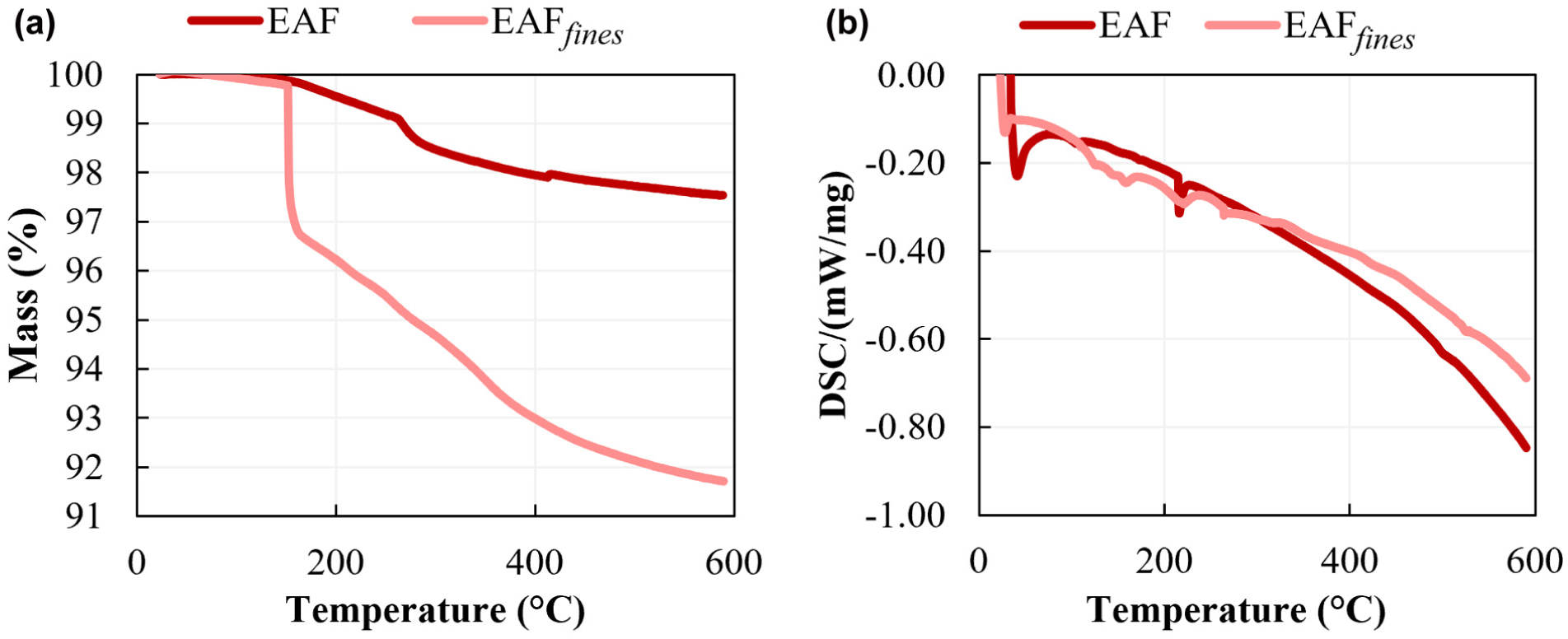
EAF sample at two different particle size ranges. (a) TGA results. (b) DSC results.
The EAF slag, regardless of particle size, exhibited lower thermal reactivity behavior compared with values reported in previous studies, with a reduced presence of phases such as Ca(OH)2 and Mg(OH)2 ( 20 , 36 ). This confirms the influence of compositional differences between slag producers. These findings confirms that both particle size and slag origin significantly influence the thermal behavior, phase composition, and overall reactivity of EAF slag, factors that directly affect performance in soil stabilization and cementitious applications.
Mineralogical Characterization
The diffraction profile for the EAF slag is presented in Figure 5. The sample showed well-defined peaks, typical of crystalline structures. The main crystalline phases identified were calcio-olivine (γ-Ca2SiO4), merwinite (Ca3Mg(SiO4)2), and β-C2S (Ca2SiO4). Minor phases detected included calcite (CaCO3), periclase (MgO), gehlenite (Ca2Al2SiO7), and magnetite (Fe3O4). The dominance of silicate and aluminate phases is expected, as calcium, silicon, magnesium, iron, and aluminum oxides collectively account for more than 90% of the total calcined mass of the slag. In addition to the crystalline peaks, the diffractogram also shows an amorphous halo, which may contribute to its reactivity.
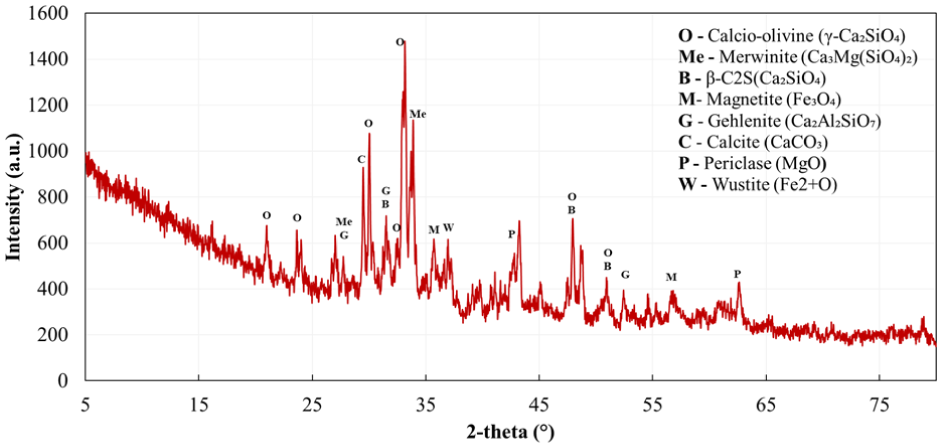
XRD pattern of EAF slag.
The main component of the slag, calcio-olivine, is a non-hydraulic phase that does not readily undergo hydration. However, it can undergo slow reactions under CO2 exposure or in alkaline environments, which may contribute to strength gain over longer curing periods. The presence of β-C2S, a phase commonly found in cement, is an important indication that the slag may exhibit pozzolanic behavior. Although β-C2S hydrates much more slowly than tricalcium silicate (C3S), its hydration produces calcium silicate hydrate (C–S–H), a key phase responsible for strength development ( 37 ). Because of its slow hydration rate, β-C2S contributes primarily to long-term strength gain. Other components, such as CaCO3, are more stable and inert. However, their presence can help maintain the alkalinity of the matrix, promoting the reactivity of other phases ( 38 ). The presence of gehlenite also suggests effective immobilization capabilities for heavy metals, reducing leaching risks during geotechnical application ( 39 ).
Compared with other studies of EAF slag and ladle slag, the relative abundance of these phases and the presence of more inert or non-hydraulic minerals suggest a balanced mix of reactive and stable phases, which correlates with the moderate mechanical performance observed in the UCS and swelling tests.
Although some identified mineral phases offer favorable characteristics for chemical stabilization, EAF slag exhibited a largely crystalline structure, with a significant portion of its constituents present in stabilize crystalline forms. This crystallinity may limit the availability of reactive phases, thereby affecting overall pozzolanic activity and stabilization performance of the material.
The aging time of EAF slag plays a critical role in controlling its mineralogical evolution and, consequently, its geotechnical and environmental performance. In this study, EAF slag was stockpiled for approximately 3–4 days before testing, which represents an early-stage aging condition with limited hydration and carbonation. Under such short aging periods, reactive phases such as free lime and periclase are still partially present, which may contribute to short-term reactivity and stabilization effects but also increase the risk of volumetric instability. With prolonged exposure to atmospheric conditions, these active components gradually undergo hydration and carbonation, leading to the formation of more stable phases such as calcium carbonate and hydrated silicate phases ( 40 ).
Aging also affects the leaching behavior of EAF slag. Suer et al. ( 41 ) reported that weathered slag samples exhibited reduced leaching of several elements, including Cr, Ca, Fe, Mn, Pb, and Ba, compared with freshly produced EAF slag, primarily because of mineralogical transformations and surface passivation. However, increases in the leaching of elements such as V, Si, and Al were also observed, highlighting the complex chemical evolution that occurs during weathering. These changes are governed by progressive hydration, carbonation, and phase rearrangement processes, which may be reflected in XRD by a reduction in amorphous phases and in TGA by lower mass losses associated with hydroxide decomposition.
From a mechanical perspective, extended aging may present a dual effect. Although weathering improves volumetric stability, it may also reduce the availability of highly reactive calcium-bearing phases, potentially limiting the short-term stabilization performance of EAF slag. As reactive compounds are progressively converted into more stable mineral forms, the capacity for cation exchange and pozzolanic reactions may decrease. Consequently, excessive aging may reduce early strength development. Future studies should investigate different aging periods to evaluate the performance of EAF slag under varying aging durations.
Microstructural Characterization
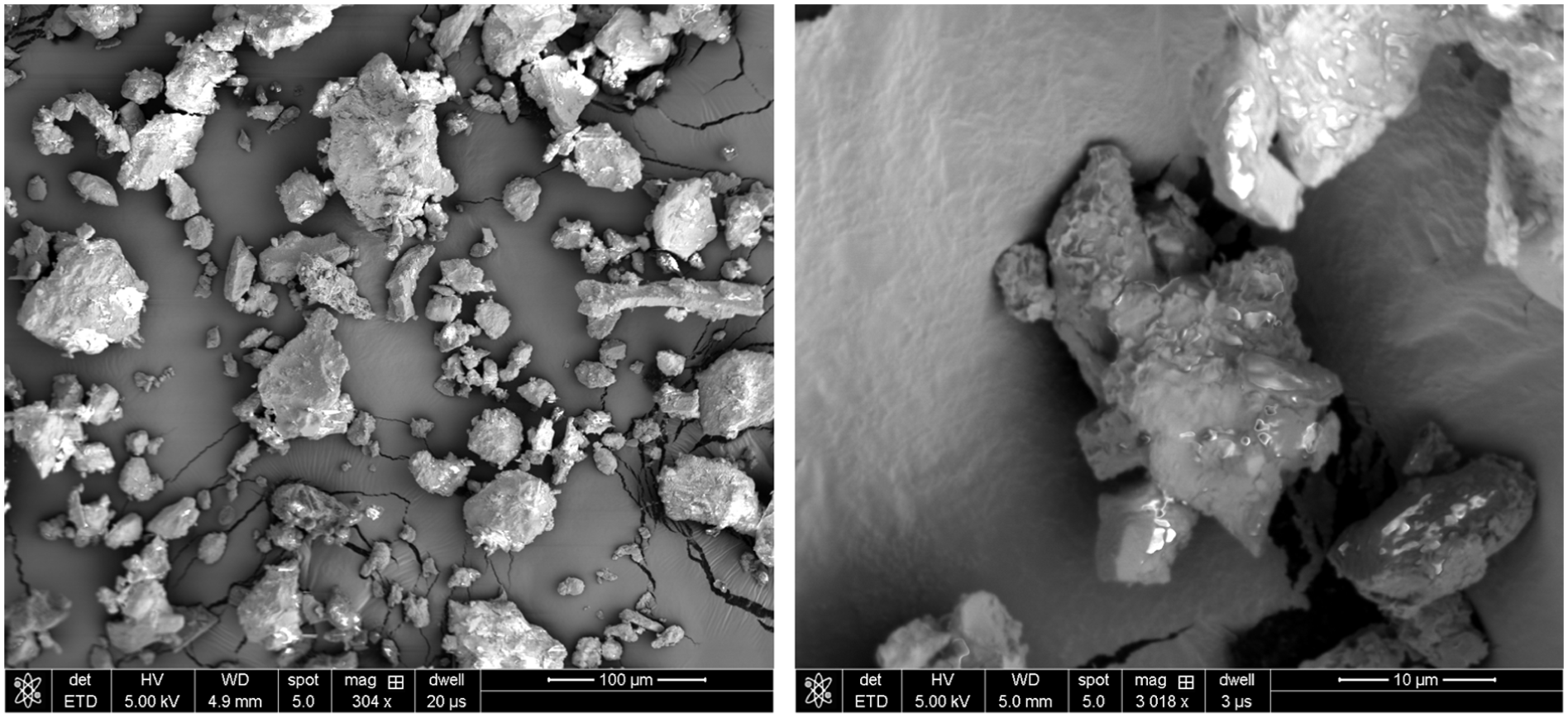
SEM analysis was conducted to observe the microscale morphology of EAF slag particles. The particles exhibit predominantly angular shapes, typical of industrial by-products produced via air-cooling processes ( 42 ). This angularity enhances interparticle interlocking, which can improve mechanical interlock and load distribution when used as aggregates in pavement layers. Moreover, when mixed with soil, the sharp edges and irregular shapes of the EAF slag particles can physically restrict soil particle movement, contributing to improved shear strength and stiffness through physical stabilization ( 9 , 43 ). In addition, a heterogeneous and porous surface texture was observed in some particles, indicating variability in cooling and crystallization conditions. Figure 6 presents SEM micrographs illustrating the shape and surface features of EAF slag.
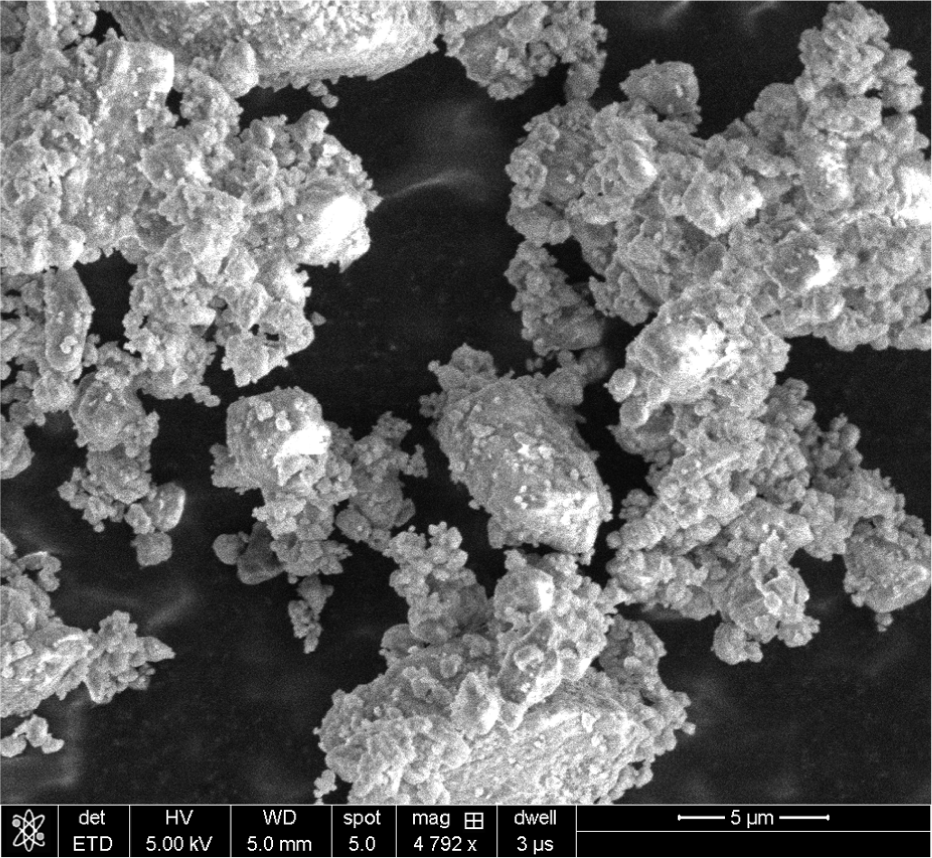
SEM micrographs of EAF sample.
Geotechnical Characterization of Studied Soil Mixtures
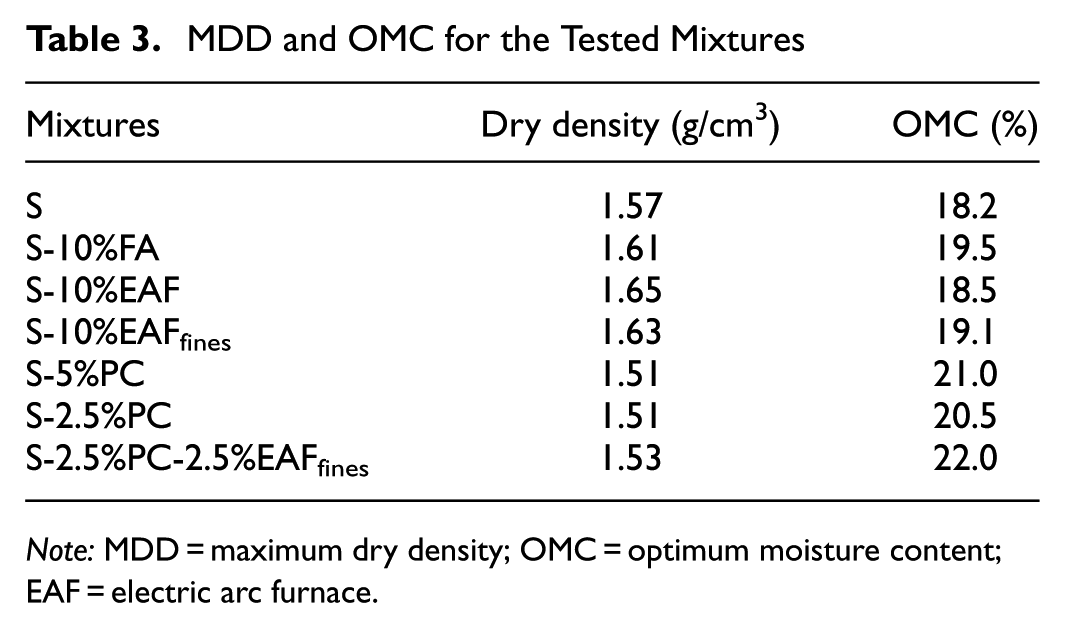
Table 3 shows the MDD and OMC results for the soil–stabilizer mixtures. All mixtures exhibited higher dry density than the pure soil, with the exception of those containing cement. Additionally, mixtures containing EAF slag exhibited the highest increase in MDD. The increase in unit weight is likely associated with the partial substitution of soil by materials with high specific gravity. Furthermore, the higher dry density obtained with EAF slag can be linked to its XRD-derived mineralogical composition, which indicated the presence of reactive and dense crystalline phases. These mineralogical characteristics may contribute to better particle packing and early reaction with soil particles, supporting both physical and chemical stabilization mechanisms. The EAF slag likely stabilized the clay fraction of the soil through interactions with these calcium-rich compounds, contributing to improved compaction behavior. Therefore, the MDD and OMC results help corroborate the differences in reactivity between the stabilizers, reinforcing the relevance of slag characterization to predict improvements in geotechnical performance.
MDD and OMC for the Tested Mixtures
Note: MDD = maximum dry density; OMC = optimum moisture content; EAF = electric arc furnace.
Atterberg limits were also determined for the S-10%EAFfines mixture to evaluate changes in plasticity resulting from the addition of EAF slag. The results showed a decrease in the LL from 36.17 to 33.92 and a slight increase in the PL from 24.93 to 26.97. As a result, the PI was reduced from 11.24 to 6.95, a 38.16% reduction. This shift changed the soil classification from medium to low plasticity when mixed with EAF slag.
This behavior suggests that EAF slag contributed to the stabilization of the clay fraction of the soil. As shown in the slag’s chemical and mineralogical characterization, EAF slag contains some free lime content, which is likely responsible for these effects. These calcium compounds can promote cation exchange and particle restructuring by interacting with clay minerals, reducing the thickness of the diffuse double layer and thus decreasing plasticity ( 35 ). Moreover, the relatively lower free lime content in EAF slag still provided sufficient CaO to trigger these stabilization mechanisms. Therefore, the reduction in PI is consistent with the chemical composition of EAF and supports the interpretation that mineralogical properties of the slag directly influence improvements in soil behavior.
UCS
Figure 7 presents the UCS results after 7 and 28 days of curing for the S, S-10%FA, S-10%EAF, and S-10%EAF fines mixtures. Fly ash was expected to improve strength, as it is commonly recommended for soils with a plasticity index lower than 20. However, the results showed that UCS increased by only 34.5% relative to the untreated soil. For the slag-stabilized mixtures, no strength gain was observed for S-10%EAF after 7 days, suggesting that minimal or no chemical reactions occurred within this curing period. In contrast, the mixture containing EAFfines showed a 63.7% increase in UCS at 7 days, demonstrating greater stabilization performance, consistent with the higher thermal reactivity and mineralogical characteristics observed in the slag characterization results. This improvement in strength may result from initial chemical reactions or physical mechanisms, such as particle packing and matrix densification.
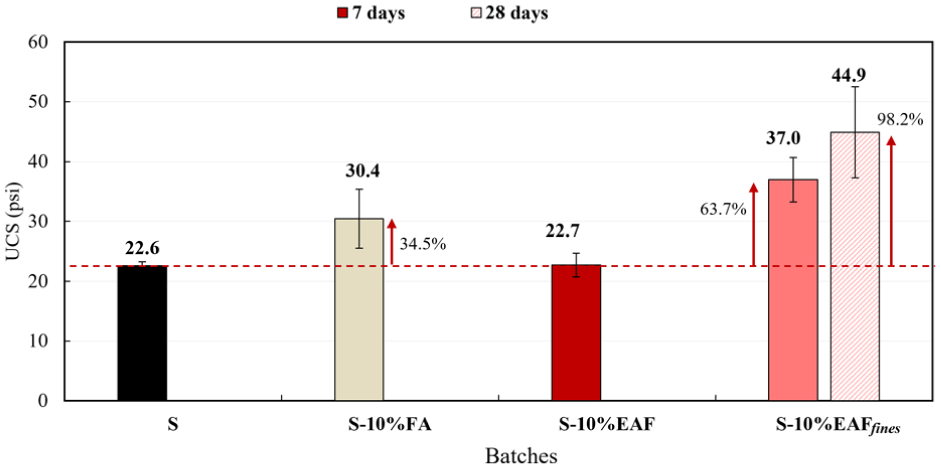
UCS of the untreated soil and soil–stabilizer mixtures with fly ash, EAF1, and EAF2.
To further investigate mechanical strength development and the dominant stabilization mechanism (chemical versus physical), UCS tests were extended to 28 days for the S-10%EAFfines mixture. The strength gain observed at 7 days for this mixture may be associated mainly with physical stabilization mechanisms, such as particle rearrangement and improved packing resulting from partial replacement of soil with EAF slag. Therefore, a longer curing period was evaluated to verify whether additional strength development could occur because of chemical reactions. The results showed an additional 21.3% increase in UCS relative to the 7-day value, indicating continued strength development over time. This suggests progressive chemical reactions, likely associated with the hydration of calcium- and aluminum-bearing phases identified by XRD analysis.
Despite these improvements, none of the mixtures with fly ash or EAF slag alone reached the 100 psi minimum UCS threshold required by some state DOTs for subbase or subgrade applications. The effectiveness of a stabilizer is highly dependent on the properties of the soil to which it is applied. In this study, the tested soil was silt-rich and characterized by low plasticity, which limits its responsiveness to calcium-rich oxides, such as fly ash or slag stabilization. These materials generally enhance geotechnical and mechanical properties of soils with higher clay content, where sufficient aluminosilicate and moisture are available to promote cation exchange and pozzolanic reactions ( 32 , 44 , 45 ). Since fly ash did not meet the target, the soil was further tested with Portland cement, a commonly used stabilizer for soils with medium plasticity. According to Nebraska Department of Roads guidelines, 5%–7% cement by weight is typically recommended. The initial test with 5% cement (S-5%PC) yielded a UCS of 166 psi after 7 days, 66% above the required target. Based on this result, and in pursuit of a more economical solution, the cement content was reduced to 2.5%, resulting in a UCS of 123 psi after 7 days.
To evaluate potential pozzolanic reactions, 2.5% of slag passing a #100 sieve was added to the 2.5% cement mixtures, resulting in S-2.5%PC-2.5%EAFfines. The results are shown in Figure 8. The mixture containing EAF slag achieved a UCS of 144.2 psi, representing a 17.24% increase compared with the sample stabilized with 2.5% cement (123 psi). This suggests that EAF slag contributed positively to strength development, likely through chemical interactions with the cement, such as pozzolanic reactions or improved particle rearrangement.
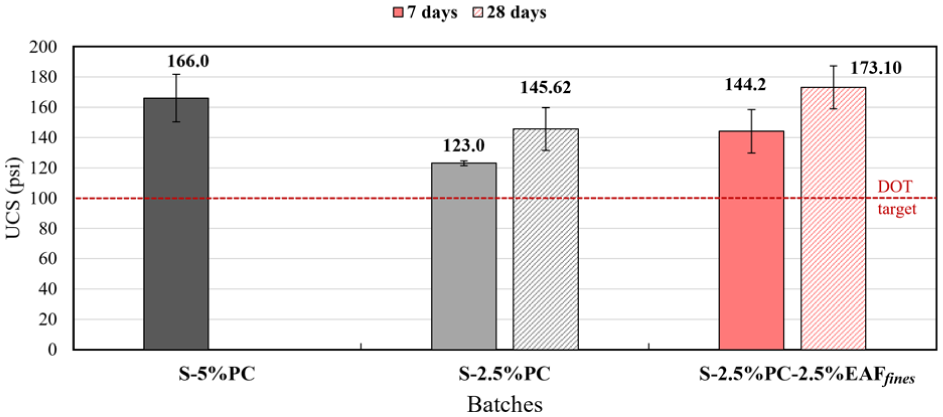
UCS of the soil–cement and soil–cement–EAF slag mixtures.
At 28 days, both mixtures showed continued strength gain. The sample containing only 2.5% cement increased by 18.39%, whereas the cement–EAF slag blend improved by 20.04%. The strength increase in the cement–EAF slag mixture is attributed to the long-term cementitious reactions occurring in both materials. Although the EAF slag exhibited a relatively low proportion of reactive compounds and crystalline phases, as shown in the TGA and XRD results, the addition of just 2.5% cement was sufficient to enhance long-term strength. This suggests that even limited hydraulic activity can contribute meaningfully to the stabilization process.
In addition, the early-age performance of the slag can be interpreted from its mineralogical composition. The XRD results indicated that EAF slag is predominantly composed of crystalline calcium silicate phases, with relatively low Al2O3 content. Unlike other highly reactive slags, these phases exhibit slower hydration kinetics, limiting the formation of early C–S–H products. However, when blended with cement, the rapid hydration of cement provides an alkaline environment and nucleation sites that can activate silicate phases in the EAF slag. This synergistic interaction explains the enhanced long-term strength observed in the cement–EAF slag mixture and supports the strategy of partial cement replacement to balance early strength development with sustainability objectives. Future research should explore higher slag contents to assess the potential for surpassing the strength achieved with 5% cement alone.
A similar finding was reported by Parsaei et al. ( 24 ), who evaluated the stabilization of highly expansive clay soils (A-7-5) using a combination of 5% cement and 15% EAF slag. Their results showed that the cement–EAF slag mixture outperformed cement-only stabilization. These findings reinforce the hypothesis that both cation exchange and pozzolanic reactions can occur when EAF slag is used, and different stabilization mechanisms may dominate depending on soil type. However, these results highlight that the effectiveness of such combinations depends strongly on slag properties and compatibility with the soil and cement.
To further investigate microstructural modifications associated with slag addition and support the mechanical findings, initial SEM analyses were also conducted on the untreated soil and stabilized mixtures after 7 days of curing. The SEM images of the untreated soil (Figure 9) and the S-10%EAFfines, S-2.5%PC, S-2.5%PC-2.5%EAFfines, and S-10%FA mixtures (Figure 10) show the materials at different magnifications. The S-10%EAFfines sample exhibited some honeycomb-like features, which may correspond to partially formed gel-like networks or interconnected voids. No clear C–S–H formation was observed in any of the mixtures, as commonly reported in studies with longer curing periods ( 18 , 46 ). This suggests that early strength gain observed in the UCS tests is primarily associated with physical stabilization mechanisms, such as particle rearrangement, improved packing, and possible cation exchange between calcium ions from the EAF slag and clay minerals. This may be attributed to the relatively short curing period considered in the initial analysis. Because cementitious reactions are time-dependent, additional hydration and pozzolanic products are expected to develop at later ages and would likely become more evident in future microstructure evaluations. Even at an early age, however, the mixtures containing both cement and EAF slag exhibited a denser and more compact microstructure compared with the untreated soil and the fly ash–treated mixture, consistent with the strength gain observed in the UCS tests.
SEM images for the untreated soil.
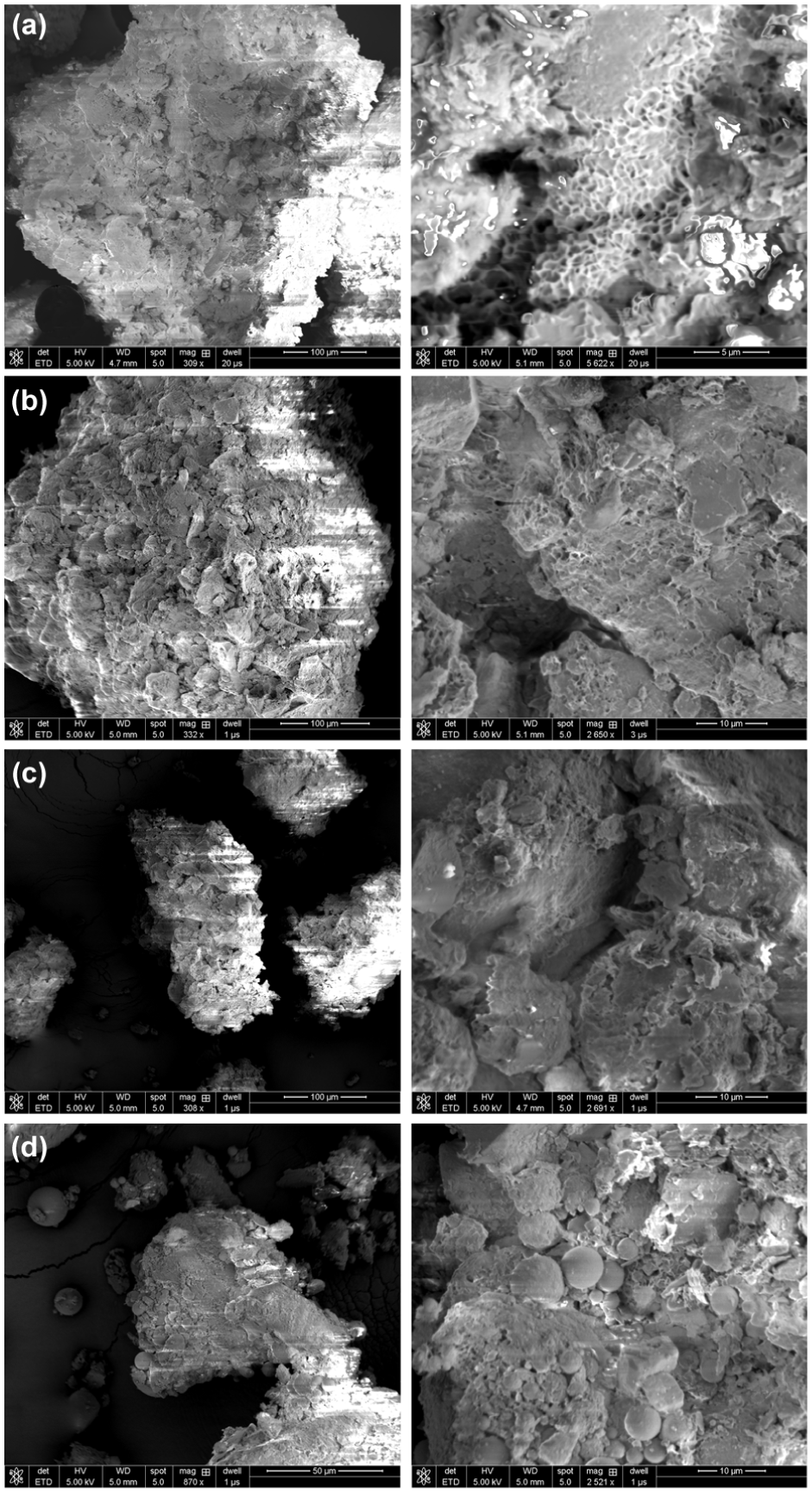
SEM images for the mixtures. (a) S-10%EAFfines. (b) S-2.5%PC. (c) S-2.5%PC2.5%EAFfines. (d) S-10%FA for 7 days of curing.
Swelling Potential of the Studied Soil Mixtures
The results of the swelling potential tests are presented in Figure 11. The untreated soil exhibited a swelling potential of 0.68% after 7 days, which considerably higher than that of EAF slag. EAF slag was tested in its original gradation, and the measured swelling was 0.17%. This limited expansion is consistent with the low free lime content identified during material characterization, suggesting that, although the EAF slag contains free lime capable of inducing some expansion, its overall volumetric stability remains within acceptable limits for geotechnical applications.
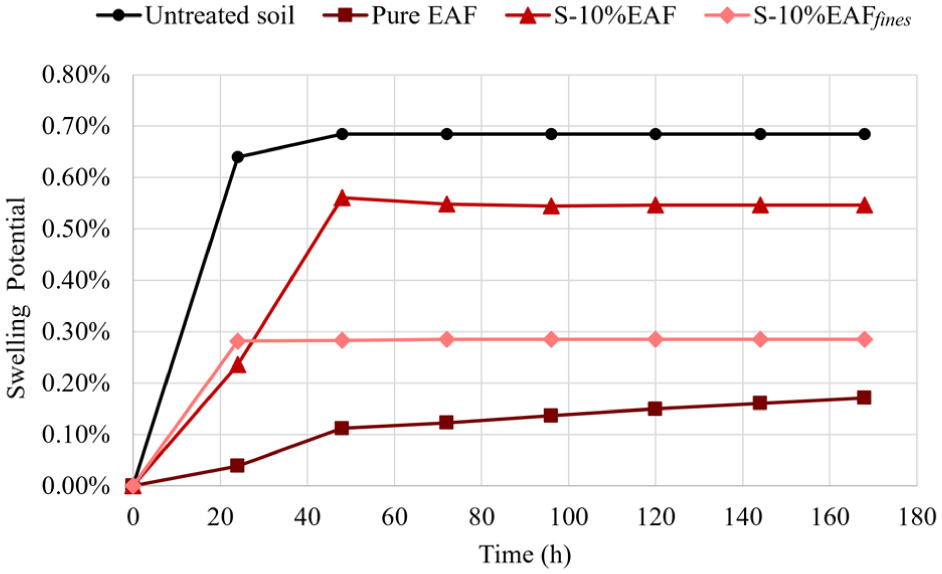
Swelling potential results for the untreated soil, pure EAF slag, and soil–slag mixtures.
Blending EAF slag with soil led to a notable reduction in swelling potential. The soil–EAF slag mixture exhibited a swelling potential of 0.55%, whereas substituting 10% of soil with finer EAF slag (S-10%EAFfines) further decreased swelling to just 0.29%. This reduction is not only a result of partial soil replacement but also reflects chemical interactions between EAF slag and soil components. The improved performance of the S-10%EAFfines mixture can be attributed to both physical and chemical stabilization mechanisms.
From a chemical perspective, the presence of divalent cations such as calcium and magnesium promotes cation exchange with clay minerals, reducing the thickness of the diffuse double layer. This process promotes flocculation and reduces water adsorption, thereby reducing swelling. Additionally, reactive compounds can initiate pozzolanic reactions with the soil’s silica and alumina, forming cementitious products that bind particles and increase stiffness. From a physical perspective, the angular shape and high specific gravity of EAF slag improve packing density and particle interlock, providing mechanical resistance to expansion. Altogether, these combined effects make EAF slag an effective additive for controlling soil swelling.
Table 4 summarizes the suggested relationships between key slag properties and the measured effects on soil behavior, providing a clearer link between the characterization results and the observed geotechnical performance.
Correlation between Slag Characteristics and Soil Performance Indicators
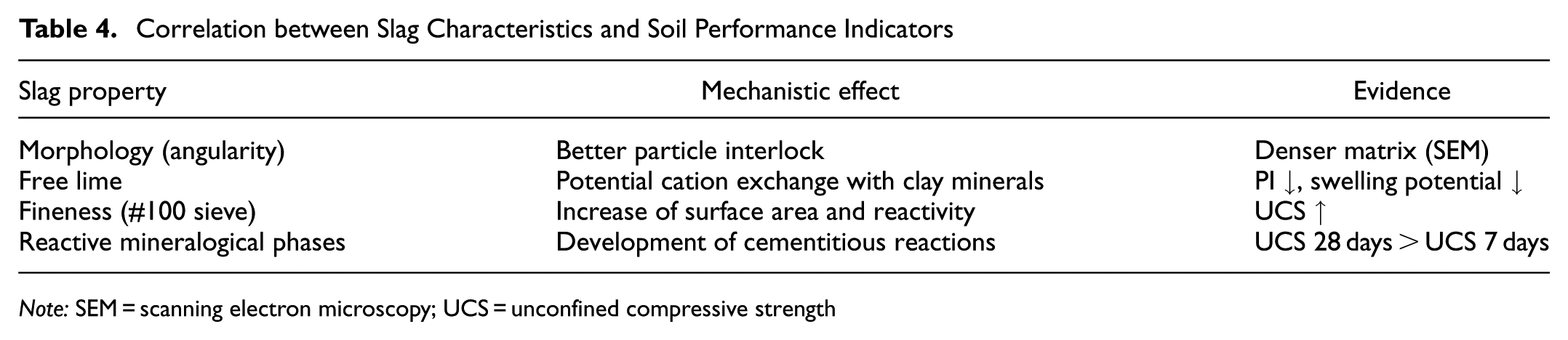
Note: SEM = scanning electron microscopy; UCS = unconfined compressive strength
Conclusions
The findings from Parts I and II of this study highlight the promising potential of EAF slag for soil stabilization and are summarized as follows:
EAF slag exhibited high specific gravity and favorable physical properties, contributing to increased dry unit weight and improved mechanical performance when used as a soil stabilizer.
XRF analysis confirmed the presence of CaO, SiO2, and Al2O3, which are important oxides for cation exchange and pozzolanic reactions with soil, while trace amounts of potentially hazardous elements such as chromium were detected but remained within levels that require further verification through leaching tests.
TGA, DSC, and XRD results showed limited reactivity, indicating a predominance of less reactive crystalline phases such as calcio-olivine, merwinite, and gehlenite.
Compaction curves showed that adding EAF slag increased the MDD and slightly reduced the OMC compared with the untreated soil.
The incorporation of EAF slag improved both strength and swelling behavior. Although the S-10%EAF mixture showed no strength gain, the S-10%EAFfines mixture exhibited a 63.7% increase in UCS after 7 days of curing and a 98.2% increase after 28 days. The 21.3% strength gain between 7 and 28 days suggests the occurrence of cementitious reactions.
Combining EAF slag with cement produced synergistic effects, achieving higher UCS values than the mixture containing 2.5% cement, thereby underscoring the potential of EAF slag as a partial cement replacement.
The results indicate that the origin and composition of EAF slag strongly influence stabilization performance, with reactive calcium and silicate phases playing a key role in strength development and volume stability.
Overall, EAF slag exhibited a greater strength gain between 7 and 28 days, suggesting a stronger contribution from chemical reactions. Moreover, the combination of cement and EAF slag demonstrated synergistic effects, supporting its potential use as a supplementary stabilizing material. EAF slag contributed to improved geotechnical performance, reinforcing its viability as a sustainable supplement to traditional soil stabilizers.
Although this study provided a comprehensive evaluation of the chemical, physical, mineralogical, morphological, and mechanical behavior of EAF slag, it is recognized that only UCS and swelling characteristics were investigated. These parameters are essential for assessing the stabilization potential and volumetric stability of soil–slag mixtures. However, pavement design also requires the evaluation of additional properties, such as dynamic and durability-related tests, to better predict field performance. Future research should incorporate resilient modulus and freeze–thaw testing under varying environmental conditions, as well as investigate the performance of EAF slag in different soil types to capture other stabilization mechanisms. Environmental performance should also be evaluated using leaching protocols representative of pavement subgrade conditions, such as column tests, and the influence of soil type on leaching behavior. In addition, further investigations, including slags from different plants, production batches, and aging conditions, are recommended to verify the transferability of the identified relationships between slag properties and stabilization performance. Expanding the dataset would also enable the development of predictive correlations using multivariate regression or machine learning approaches, integrating key parameters, such as soil type, to better predict the stabilization performance and mechanical behavior of soil–slag mixtures. Nevertheless, the results presented here establish a strong foundation for understanding the stabilization mechanisms and confirm the potential of EAF slag as a sustainable alternative or supplementary material for pavement applications.
Footnotes
Author Contributions
The authors confirm contribution to the paper as follows: study conception and design: Jamilla L. Teixeira, Taisa Medina; data collection: Taisa Medina; analysis and interpretation of results: Jamilla L. Teixeira, Taisa Medina, Jongwan Eun; draft manuscript preparation: Jamilla L. Teixeira, Taisa Medina, Jongwan Eun. All authors reviewed the results and approved the final version of the manuscript.
Declaration of Conflicting Interests
The authors declared no potential conflicts of interest with respect to the research, authorship, and/or publication of this article.
Funding
The authors disclosed receipt of the following financial support for the research, authorship, and/or publication of this article: This research was supported by Nebraska Department of Roads (grant no. 01071A SPR-FY25(038)). This research was performed in part at the Nebraska Nanoscale Facility, part of the National Nanotechnology Coordinated Infrastructure, and the Nebraska Center for Materials and Nanoscience, supported by the National Science Foundation under Award ECC 2025298 and by the Nebraska Research Initiative.
