






Abstract
This study investigates the behavioral intention and actual use of ride-hailing services among Generation Z (Gen Z) in Slovakia and the Czech Republic, applying the Unified Theory of Acceptance and Use of Technology (UTAUT), updated to its 2022 version. Data were collected from Slovak and Czech respondents between May and September 2024 and analyzed using PLS-SEM. The findings reveal notable cross-country similarities and differences. Behavioral intention was significantly influenced by performance expectancy, habit, and social influence in both countries. Effort expectancy was significant only in the Czech sample, while compatibility and personal innovativeness influenced behavioral intention only in Slovakia. Price value, hedonic motivation, and facilitating conditions showed no significant effects. Actual use was driven by behavioral intention in the Czech sample and by habit in both countries. This research fills a critical gap in understanding ride-hailing adoption within Gen Z in Central Europe, a demographic previously underexplored in the UTAUT context. The results provide actionable insights for service providers aiming to better align their offerings with the expectations and behaviors of young users. By addressing regional nuances, this study contributes to the global discourse on technology adoption and transport economics, offering a significant foundation for future research in this field.
Keywords
Introduction
In the last decade ride-hailing apps have gained huge popularity. Since then, the global ride-hailing market has become an integrated ecosystem with many players from all over the country and regions.
In particular, the number of ride-hailing apps incorporating traditional taxi-booking options has been increasing, blurring the distinction between conventional taxi services and modern ride-hailing platforms and enabling taxi drivers to operate through these platforms.
The integration makes it easier for passengers to book rides and traditional taxis using the same app, thereby widening user choice and convenience.
The aim of this study is to explore the key factors influencing Gen Z’s adoption and use of ride-hailing services in Central Europe, addressing a significant research gap where regional studies applying the latest version of the Unified Theory of Acceptance and Use of Technology UTAUT ( 1 ) remain absent. Using PLS-SEM, the research analyzes data from Slovak and Czech respondents collected between May and September 2024. By examining behavioral drivers and comparing cross-country differences, this study provides novel insights into ride-hailing adoption among young users, offering practical implications for service providers in the region.
Generation Z (Gen Z), typically defined as individuals born between the late 1990s and early 2010s, represents a dominant user group for digital services, particularly Mobility-as-a-Service (MaaS) and ride-hailing platforms—because of their early and frequent adoption of mobile technologies and strong preference for flexible, on-demand solutions ( 2 ). Unlike previous generations, Gen Z is more likely to delay car ownership and instead rely on shared transportation models that align with their values of convenience, connectivity, and sustainability ( 3 ). As their purchasing power increases and their influence on peer behaviors strengthens through social media and digital communication, understanding their technology adoption patterns is essential for forecasting the evolution of ride-hailing markets ( 4 ).
The adoption of ride-hailing services has been extensively researched in recent years, with various factors influencing its uptake. Studies have explored the influence of socio-demographic and locational characteristics, as well as the availability of intermediate public transport modes, on ride-hailing adoption ( 5 ). Loa et al. (2021) were interested in the influence of land use and transit network attributes on Gen Z and the relationship between that and the demand for public transit and ride-hailing services, providing a comprehensive understanding of their interplay ( 6 ). Moreover, Wang et al. have indicated in their research that ride-hailing can serve as a viable alternative to driving. Participants who used more ride-hailing tended to drive less, and longitudinally, an increase in ride-hailing usage was associated with fewer driving trips ( 7 ). Gomez et al. (2021) stated that young, well-educated and wealthy people who are familiar with new technologies will be more likely to use ride sharing services. Their research, conducted in Madrid, suggested that environmental consciousness plays an important role in the frequency of use of ride-hailing services ( 8 ).
Adoption and frequency of use of ride-hailing services have also been linked to socio-demographic and land use factors by Sikder (2019). These services are more likely to be adopted and used by people who work full time but on flexible schedules than by other workers. Individuals in households with insufficient vehicles, that is households with more workers than vehicles, are more likely to adopt and use these services than other individuals ( 9 ). Ling et al. (2023) examined key factors more from the personal point of view. Study showed that the most important factors in determining how much passengers use ride-hailing services is trust and loyalty. However, the frequency of use of ride-hailing was not significantly influenced by passengers’ perception of the Covid-19 pandemic ( 4 ).
A spirit of innovation has characterized the ride-hailing business. The promise of future improvements in services and sustainability is based on continued technological progress, for example AI driven routing and the adoption of electric cars ( 10 ). The model of ride-hailing has been successfully adapted by local and regional players to suit the diverse needs and regulatory environments in individual markets ( 9 ).
Not surprisingly, previous research has been mostly devoted to highly populated urban areas where the best known ride hailing companies are most represented. Higher density regions are also likely to have higher usage of ride-hailing within trip chains ( 11 ). The following overview summarizes selected studies dedicated to ride-hailing adoption in the last five years (2019–2024). Researchers examined determinates of acceptance in the following highly populated cities/regions across the world:
Chennai city, India, 4.6 million ( 5 ),
Toronto, Canada, 2.93 million ( 6 ),
Seattle metropolitan area, USA, 3.6 million ( 7 ),
Madrid, Spain, 3.2 million ( 8 ),
Chinese cities ( 4 ),
Indonesia ( 12 ).
Given their high adoption of digital technologies and app-based services, Generation Z is likely to represent an important segment of users of these platforms. This generation plays a crucial role in the success of ride-hailing services given their unique characteristics and influence as digital natives. This cohort, born between the late 1990s and early 2010s, is highly tech-savvy, comfortable with mobile applications, and values convenience and speed in their daily lives ( 2 ). They are also early adopters of new technologies and often set trends that influence other demographics ( 13 ). Their reliance on shared and on-demand services aligns with the core value propositions of ride-hailing platforms, such as cost-effectiveness and environmental sustainability ( 14 ). Moreover, as they engage heavily on social media, their opinions and experiences can significantly shape public perceptions and drive adoption rates among peers and other generations, making them a critical demographic for ride-hailing companies to target and understand ( 15 ).
While previous studies have successfully explored ride-hailing adoption in various metropolitan areas across North America, Asia, and Western Europe ( 16 – 19 ), they often suffer from three major limitations. First, most are geographically concentrated in high-density, well-connected urban environments, making their findings less transferable to the Central European context, where mobility infrastructure and public transport integration differ significantly ( 20 ). Second, these studies primarily focus on the general adult population, with limited segmentation by age cohorts such as Generation Z, despite this group’s growing influence on mobility trends ( 21 ).
Third, although UTAUT and its extensions have been widely applied, few studies incorporate the most recent meta-UTAUT framework, which allows for a richer understanding of adoption behavior by integrating constructs like compatibility, personal innovativeness, and user education. By leveraging its constructs, the research captures the nuances of technological adoption among this demographic, highlighting both the opportunities and challenges for ride-hailing services aiming to cater to their preferences. The subsequent sections build on this foundation, detailing the methodological steps taken to ensure rigor and reliability while aligning with the unique characteristics and behaviors of this pivotal generational cohort. This approach bridges the theoretical background and the practical implications of the findings, setting the stage for meaningful insights and actionable recommendations.
Methodology
The research was conducted in five steps.
Step I: Definition of Research Method
The UTAUT is one of the most widely used theories in technology adoption research because of its comprehensive framework and adaptability across various contexts. It has been cited extensively in academic literature, with the original paper ( 22 ) accumulating over 36,000 citations on Google Scholar and the UTAUT 2 paper ( 23 ) surpassing 9,000 citations. Its popularity stems from its ability to integrate key constructs from multiple earlier models into a unified theory that explains user intentions and behaviors effectively.
Furthermore, the authors have continually updated the theory to keep it relevant, introducing UTAUT 2 in 2012 for consumer contexts and encouraging its application in emerging areas such as cultural studies and new technology types ( 23 ). This ongoing refinement ensures that the UTAUT remains a robust and evolving tool for understanding technology adoption in both academic and practical settings. Building on this foundation, the meta-UTAUT, published in 2022, incorporates additional predictors and moderating mechanisms drawn from a broad meta-analysis of technology adoption studies, making it a more comprehensive and flexible framework.
A revised meta-UTAUT framework extends the original theory by incorporating new endogenous mechanisms, such as technology compatibility, user education, personal innovativeness, and technology costs ( 1 ). The evolution of UTAUT theory is shown in Figure 1.
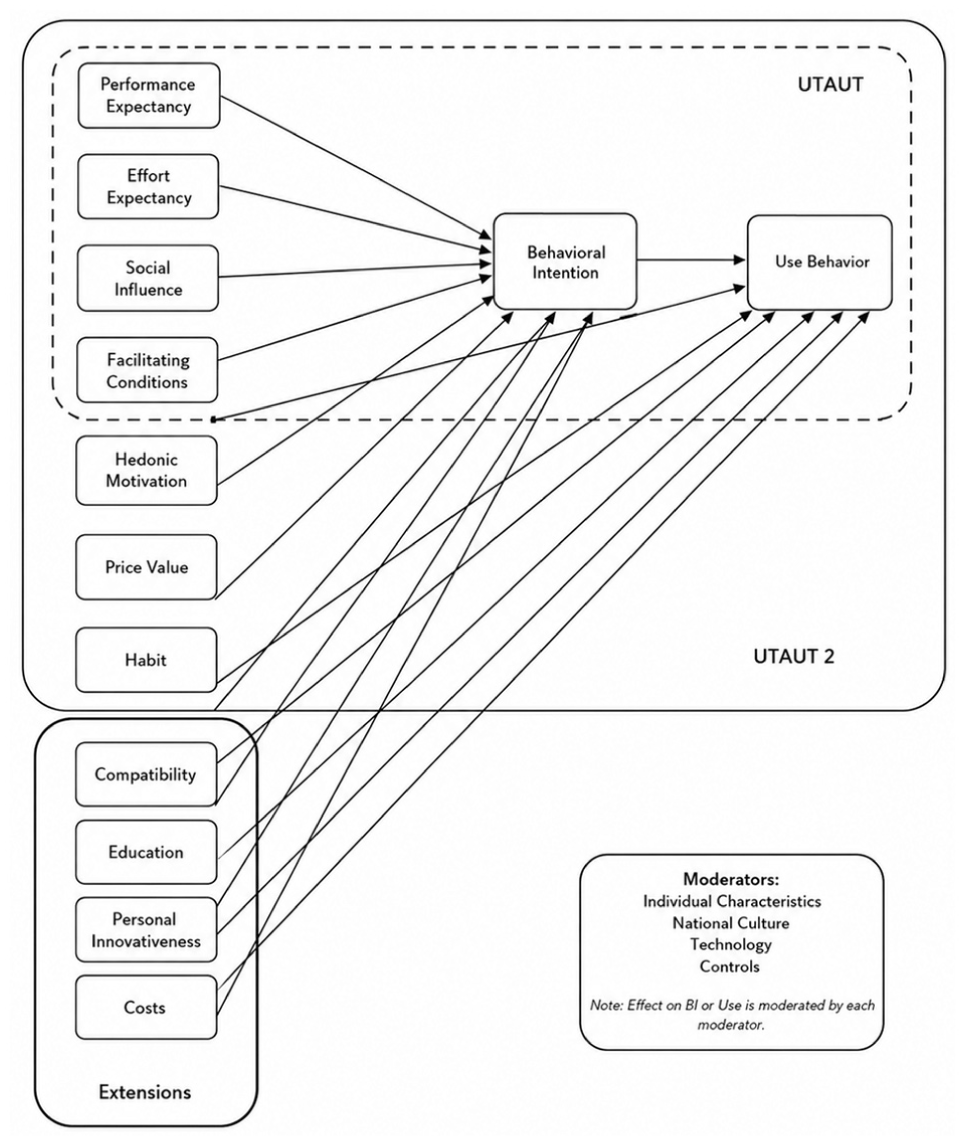
UTAUT development.
The UTAUT framework is highly applicable for examining the adoption of services like Uber or Bolt among Gen Z because of its ability to integrate various theoretical perspectives and adapt to diverse technological contexts. Its robust structure enables a nuanced analysis of the generational characteristics and external factors influencing the acceptance of innovative digital platforms.
While the original version of UTAUT has been applied to study ride-hailing services ( 16 , 24 , 25 ), the extended meta-UTAUT framework has not yet been utilized in this context, highlighting a significant research gap that offers opportunities for further exploration.
Step II: Definition of Research Model and Hypothesis Development
The development of a research model, rooted in the meta-UTAUT framework, provides the comprehensive theoretical underpinning, incorporating its core constructs to capture the multidimensional factors influencing user behavior and technology acceptance. However, given the context of ride-hailing applications, which are typically offered free of direct technological costs to users, the construct of technological costs was excluded. This adjustment ensures that the model remains contextually relevant while maintaining theoretical rigor, offering a tailored approach to understanding user adoption in this specific domain. The following is an overview of main factors with a brief explanation in the ride-hailing context:
The perceived ease of use of ride-hailing applications is captured in
The enjoyment or satisfaction users derive from using ride-hailing apps is reflected in
In the context of ride-hailing,
Unlike compatibility, which reflects how well a specific service fits into users’ existing digital routines and technological environment,
User
Finally,
Complete research model showing all constructs and the number of measurement indicators assigned to each construct is shown in Figure 2.
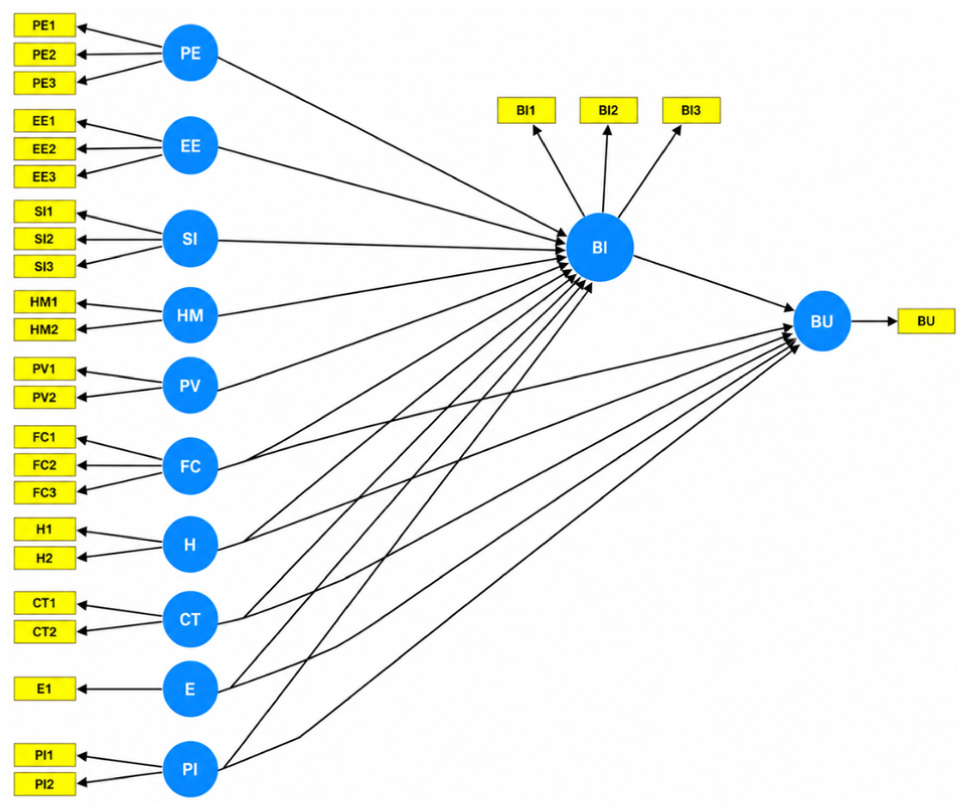
Research model with indicators (yellow).
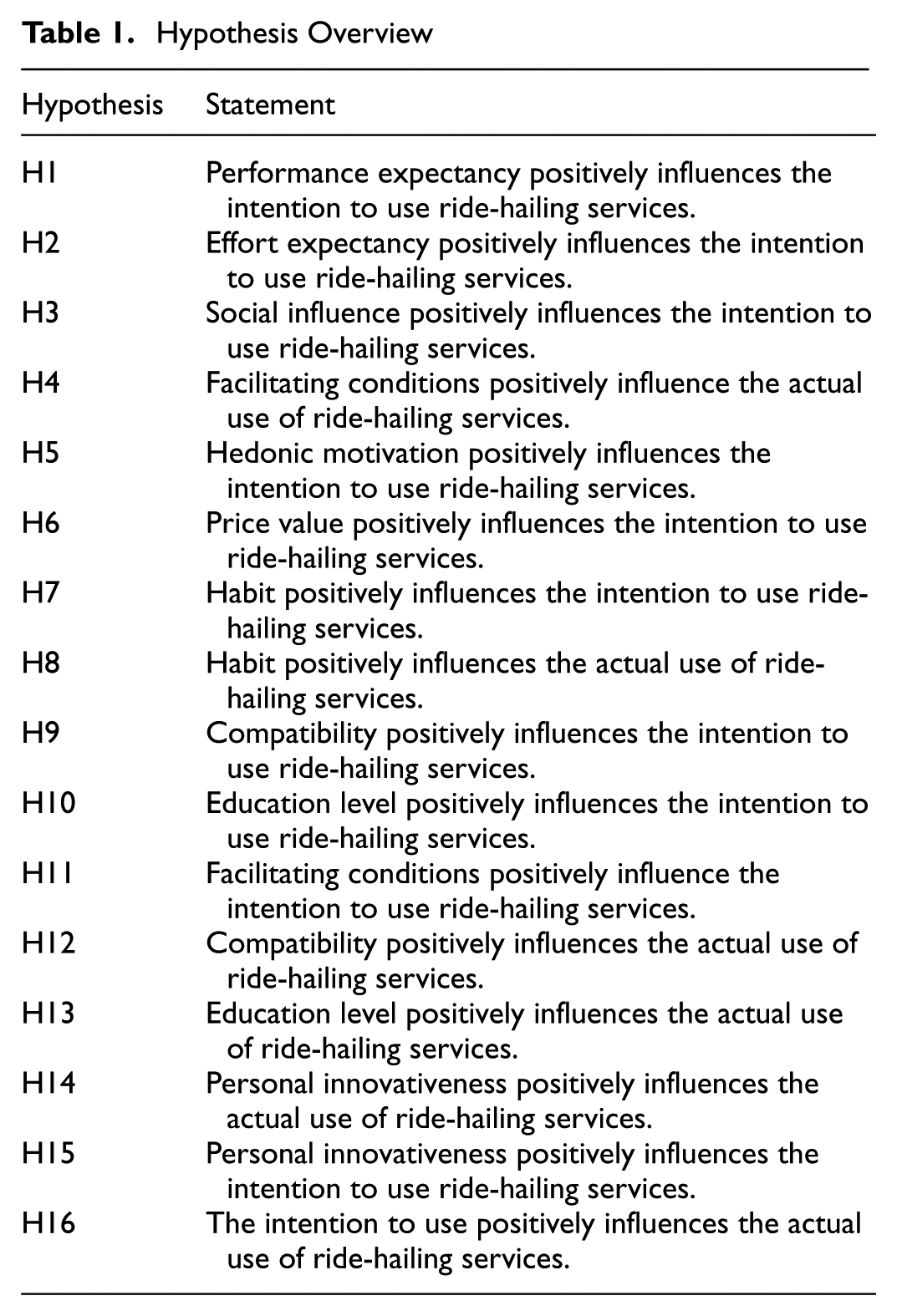
Table 1 provides an overview of hypotheses derived from the model based on the constructs provided:
Hypothesis Overview
Step III: Data Collection and Sample Profile
The data collection process was conducted at the Technical University of Liberec and through partner institutions in the Czech Republic and Slovakia, with a deliberate focus on selecting members of Gen Z. This targeted approach ensured that the study captured insights from individuals born between 1997 and 2012, aligning with the research objectives to explore demographic and social characteristics within this generational cohort, specifically in relation to ride-hailing services.
Informed consent was obtained from all participants before their participation in the study. Participants were fully informed about the purpose of the research, the voluntary nature of their involvement, and their right to withdraw at any time without consequence. The full text of the consent reads as follows: I have read and understood the information provided about this study. I am aware of the voluntary nature of my participation and my right to withdraw at any time without penalty. I understand that my responses will remain anonymous, and no personally identifiable information will be collected. I agree to participate in this study and provide my consent to the use of my responses for research purposes.
The minimum sample size was determined using the 10X rule, which requires at least ten observations per indicator or path in the model. In our case, with 16 paths in the model, this threshold was exceeded, demonstrating the ambitious nature of the study while ensuring robust data for analysis. Specifically, the sample sizes of 231 in the Czech Republic and 249 in Slovakia surpass the minimum requirement, significantly enhancing the reliability and validity of the study’s findings.
The 10X rule is often recommended for determining the optimal sample size in studies involving similar models, particularly to ensure valid interpretation of data. While this is a rule of thumb based on experience rather than precise measurement, it remains a topic of discussion among researchers.
Despite its limitations—such as not accounting for effect size, reliability, or the number of indicators (38)—it is still recommended by Hair et al. (2011) as a rough estimate for minimum sample size (39). Peng and Lai (2012) further emphasize its use only under conditions of significant effect strength and high reliability in measured items (40).
To support the appropriate calculation of sample size, an a priori power analysis was subsequently conducted assuming a medium effect size (f2 = 0.15), α = 0.05, power = 0.80, and 11 predictors, indicating that approximately 123 respondents would be sufficient. Both national samples exceeded this threshold, suggesting that the study was appropriately planned.
A post-hoc power analysis was also performed based on the actual model complexity and observed effect sizes. The high number of predictors and the relatively small effect sizes resulted in statistical power below 0.40 in both samples. This result is not uncommon in exploratory studies and reflects the practical limitations of real-world data. Table 2 presents demographics for both research samples.
Demographics
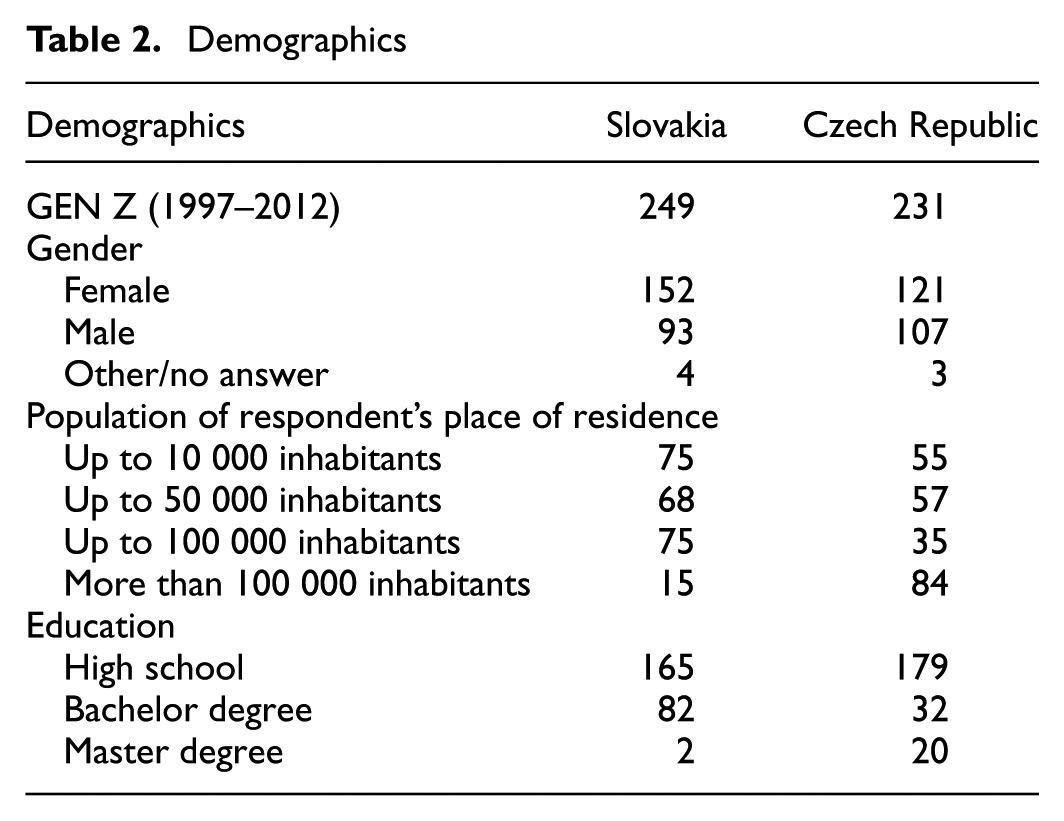
The final sample included 480 Gen Z respondents—249 from Slovakia and 231 from the Czech Republic. Gender distribution was balanced across both countries. In relation to the population of respondent's place of residence, Slovak participants were evenly spread across smaller towns, while Czech respondents were concentrated in cities over 100,000 inhabitants, suggesting a stronger urban orientation. Educational levels showed a similar structure in both samples, with high school students and graduates forming the largest group. While the Czech sample contained a higher proportion of respondents with a master's degree, the Slovak sample included a larger share of respondents with university education overall.
These demographic differences are relevant for interpreting behavioral intentions, particularly in relation to access to urban mobility services and digital readiness, which are often shaped by educational background and place of residence.
Step IV: Application of PLS-SEM
In the main part of the questionnaire, respondents evaluated 27 statements (see Appendix B) based on the UTAUT framework ( 1 ). It was focused on their perceptions and attitudes toward ride-hailing services. Responses were measured on a seven-point Likert scale, where seven stars represented strong agreement, and one star indicated strong disagreement. A total of 480 respondents participated in this section, including 249 from Slovakia and 231 from the Czech Republic. The analysis was conducted using responses from Gen Z participants familiar with ride-hailing services, applying the PLS-SEM method via SmartPLS 4.
PLS-SEM has gained significant popularity for analyzing complex models with numerous variables and structural paths ( 2 , 35 , 41 , 42 ). Unlike traditional parametric methods, it does not require the data to follow a normal distribution, classifying it as a non-parametric statistical approach. Its predictive capabilities are particularly valued by managers, as they offer practical, causal explanations for observed phenomena ( 39 ). Beyond its statistical advantages, PLS-SEM was also selected to maintain consistency within a broader research programme examining innovation adoption across digital services. Using a unified analytical framework across multiple studies supports comparability and strengthens longitudinal insight.
Model verification, including the evaluation of defined factors and relationships, was performed using bootstrapping. This non-parametric method involves creating thousands of random subsamples, typically around 10,000, by repeatedly resampling the original dataset. These subsamples allow for robust estimation of standard errors, confidence intervals, and statistical significance for parameters such as path coefficients, Cronbach’s alpha, and discriminant validity measures like the heterotrait-monotrait ratio of correlations (HTMT) ( 43 , 44 ). Significance is assessed through 95% confidence intervals, where estimates are considered significant if the original results lie outside these intervals.
Reliability and validity were carefully evaluated. Internal consistency reliability was measured using composite reliability (CR) and Cronbach’s alpha, with recommended thresholds exceeding 0.7 ( 45 ). Convergent validity was established by ensuring standardized loadings were greater than 0.7 and average variance extracted (AVE) values exceeded 0.5 for all constructs ( 46 ). These rigorous assessments ensured the robustness and accuracy of the model.
Step V: Discussion of Results and Presentation of Recommendations for Managers
The study concludes with a discussion of the results, highlighting their relevance to ride-hailing services. Focused on Gen Z in Slovakia and the Czech Republic, the results emphasize how demographic and social characteristics can guide strategies to enhance user engagement. Additionally, the discussion addresses both theoretical and practical implications, offering insights into the broader understanding of technology adoption behaviors and providing actionable recommendations for managers of ride-hailing platforms.
The study acknowledges limitations in its conclusions, such as the reliance on self-reported data and potential regional constraints, providing transparency in interpreting the findings. Finally, future research directions are proposed, including cross-cultural comparisons, broader sample diversity, and longitudinal studies to track evolving user behavior, aiming to expand the understanding of Gen Z’s interaction with ride-hailing services.
Results
The structural model, applied in both countries, was evaluated after confirming that the design measures were both reliable and valid (see Appendix A). Key aspects of the model, including path coefficients, their statistical significance, and relevance, were analyzed in detail. Figure 3 presents the standardized path coefficients (β) on the arrows and the R2 values inside the constructs, valid for the Czech sample. This provides a clear visualization of the model’s explanatory power and the strength and direction of relationships.
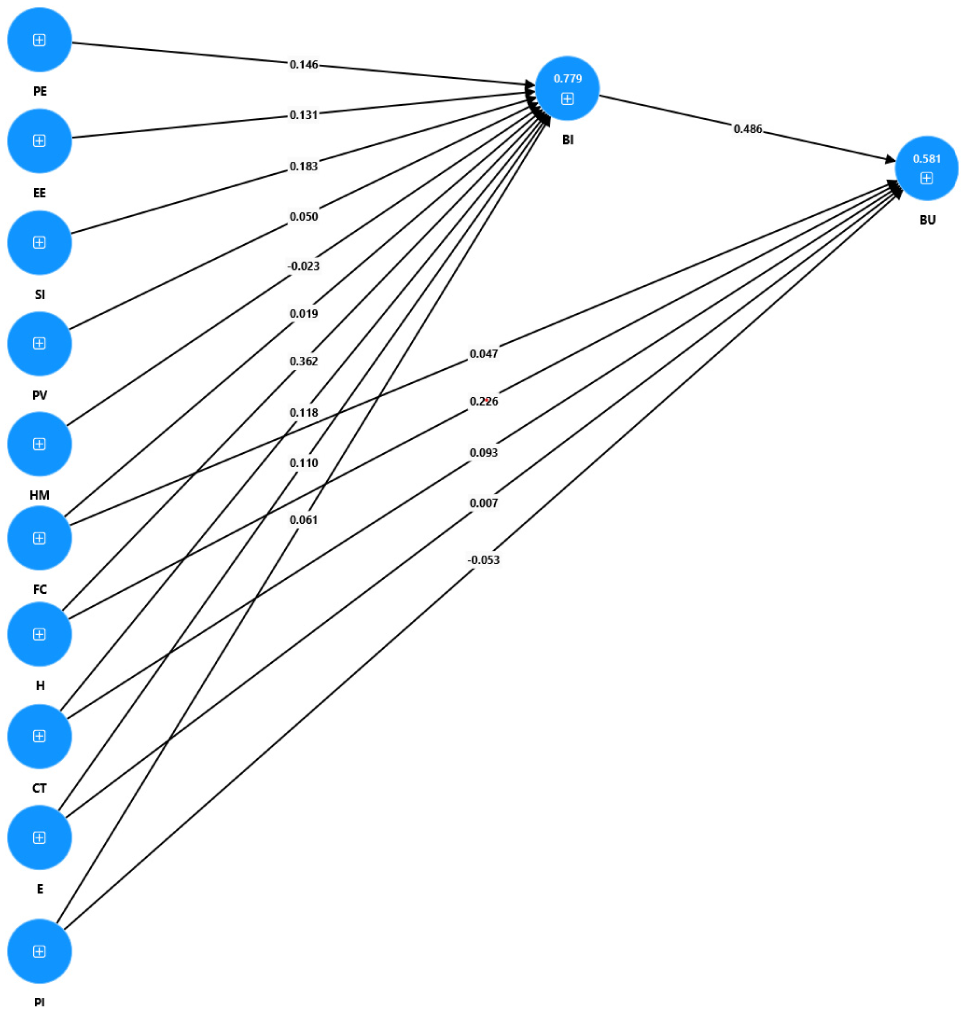
Assessed structural mode (Czech Republic).
The R2 values indicate the model’s strong explanatory power. Behavioral intention has an R2 of 0.779, meaning 77.9% of its variance is explained by the predictors, highlighting their significant influence on the intention to use ride-hailing services. Behavioral use has an R2 of 0.581, indicating that 58.1% of its variance is explained by behavioral intention and other factors, showing a moderate to high ability to predict actual usage behavior. These results confirm the model’s effectiveness in capturing key determinants of ride-hailing service adoption.
Table 3 summarizes the t-statistics and p-values for all hypothesized relationships, reflecting their significance levels for the Czech sample. Performance expectancy (t = 2.359, p < 0.05), effort expectancy (t = 2.187, p < 0.05), social influence (t = 4.205, p < 0.05), habit (t = 5.703, p < 0.05), and education (t = 3.151, p < 0.05) demonstrated significant positive effects on behavioral intention, supporting these hypotheses. Similarly, behavioral intention (t = 6.150, p < 0.05) and habit (t = 2.445, p < 0.05) significantly influenced behavioral use, supporting these relationships.
Hypothesis testing (Czech Republic)
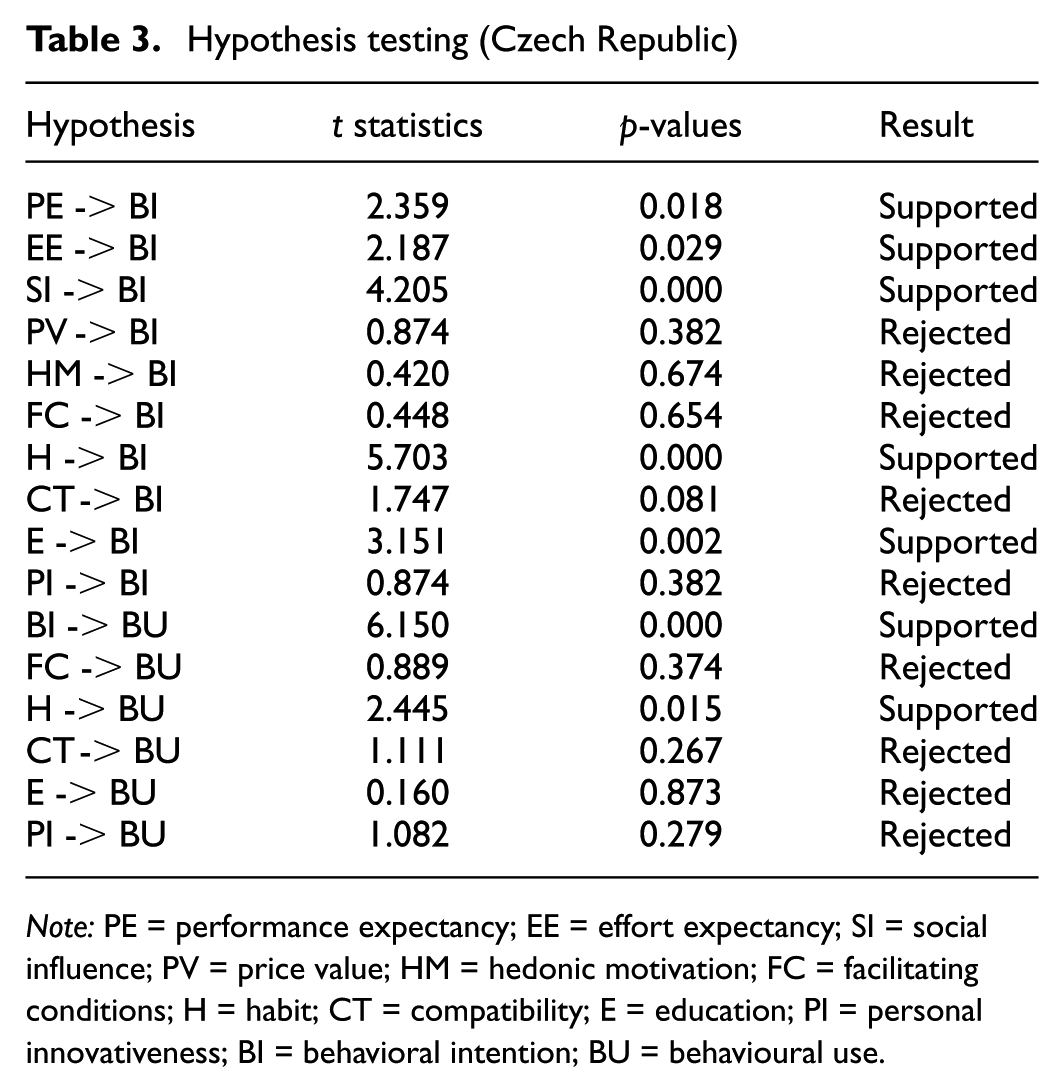
Note: PE = performance expectancy; EE = effort expectancy; SI = social influence; PV = price value; HM = hedonic motivation; FC = facilitating conditions; H = habit; CT = compatibility; E = education; PI = personal innovativeness; BI = behavioral intention; BU = behavioural use.
Conversely, price value, hedonic motivation, facilitating conditions and compatibility did not show statistically significant effects on behavioral intention or behavioral use, as their p-values exceeded 0.05. These results highlight that only select factors play a significant role in shaping behavioral intention and actual use in the context of ride-hailing services.
Figure 4 presents the standardized path coefficients (β) and R2 values for the Slovak sample, shown using the same visual format.
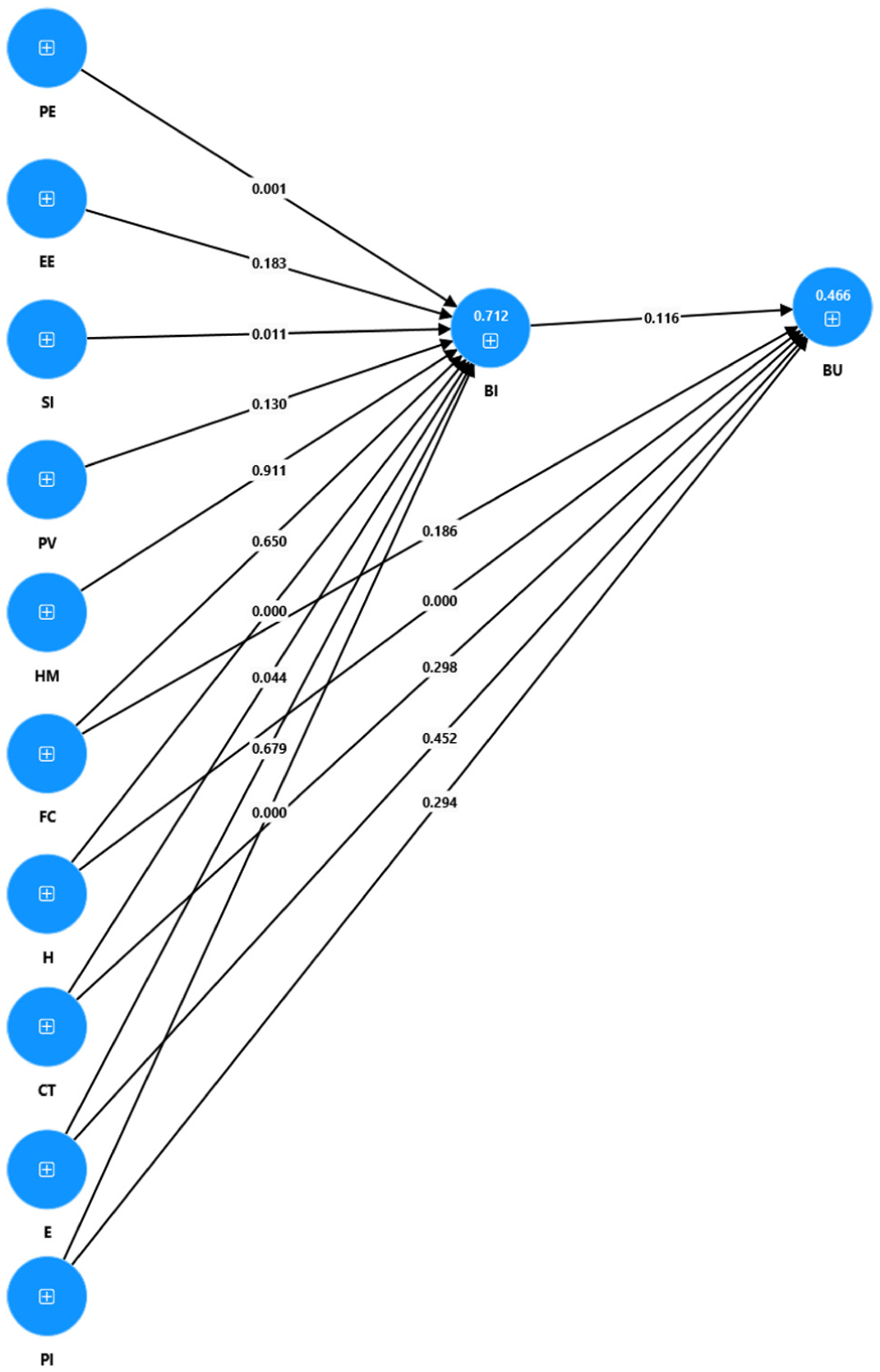
Assessed structural mode (Slovakia).
The R2 values in the Slovak sample reveal notable insights into the model’s explanatory strength. An R2 value of 0.712 for behavioral intention indicates a high explanatory power, suggesting that 71.2% of the variance in behavioral intention is accounted for by the independent variables in the model. This signifies that the model is effective in identifying key predictors of behavioral intention within the Slovak context. The R2 value for behavioral use, at 0.466, shows moderate explanatory power, with 46.6% of the variance explained. While lower than behavioral intention, it still reflects a satisfactory level of prediction for actual usage behaviors.
The outcomes for the Slovak sample (see Table 4) indicate that performance expectancy (t = 3.409, p = 0.001), social influence (t = 2.554, p = 0.011), habit (t = 3.829, p = 0.000), compatibility (t = 2.014, p = 0.044), and personal innovativeness (t = 4.884, p = 0.000) positively influenced behavioral intention. For behavioral use, habit (t = 5.304, p = 0.000) was identified as the only significant factor. The results emphasize that in the Slovak context, behavioral intention and actual use are primarily shaped by habitual usage patterns and selected motivational and social factors.
Hypothesis testing (Slovakia)
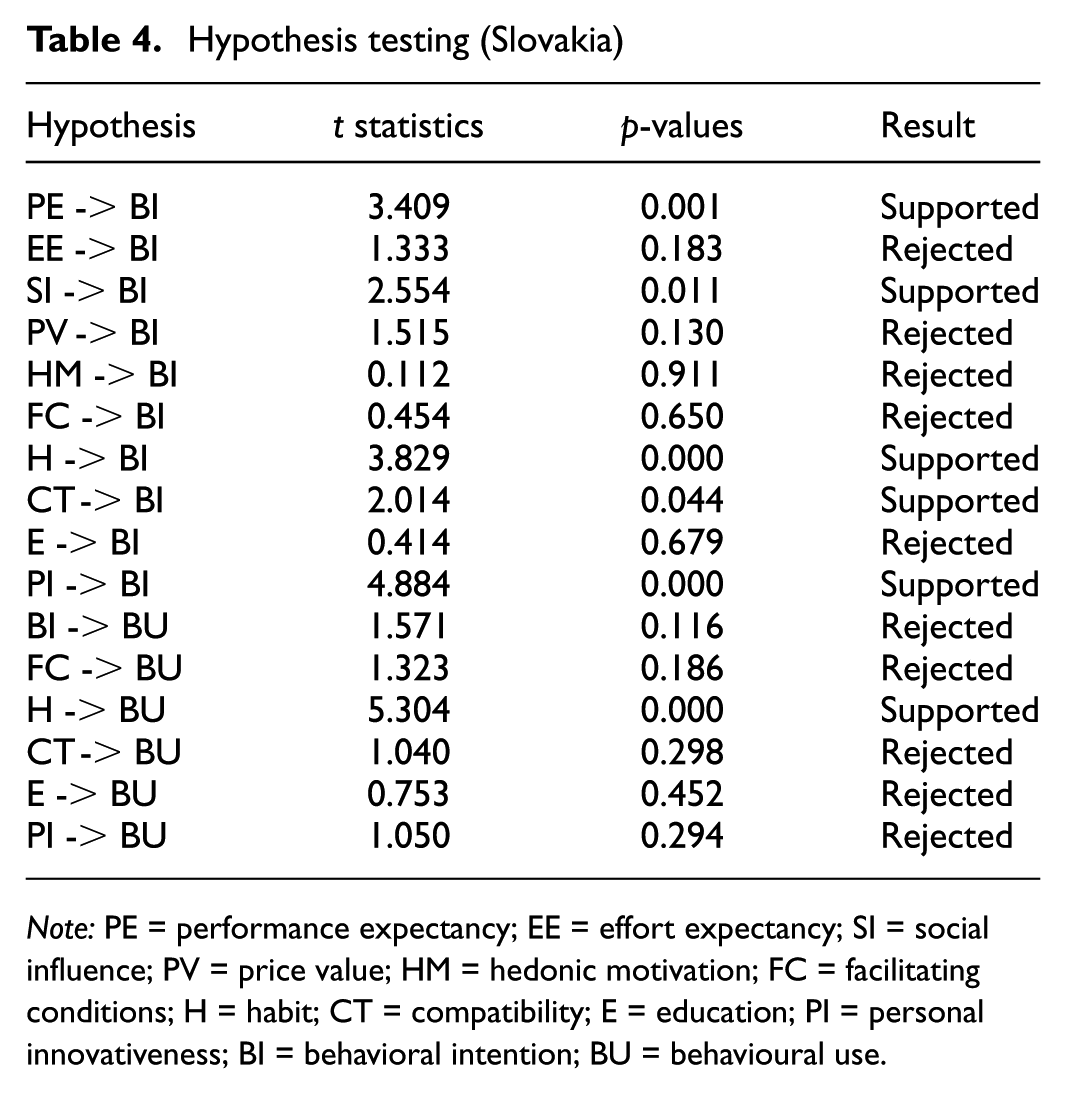
Note: PE = performance expectancy; EE = effort expectancy; SI = social influence; PV = price value; HM = hedonic motivation; FC = facilitating conditions; H = habit; CT = compatibility; E = education; PI = personal innovativeness; BI = behavioral intention; BU = behavioural use.
Discussion
The findings of this study cannot be directly compared with research specifically conducted in the Czech Republic and Slovakia, as no such studies currently exist. This absence highlights a significant research gap within the regional context. Thus, the results will be evaluated in relation to existing international studies.
The comparison of the Slovak and Czech samples reveals both commonalities and differences in the adoption of ride-hailing services among Gen Z, based on the hypothesized constructs. Across both countries,
Recommendations from peers and established habitual behavior are also important factors influencing the adoption of ride-hailing services. Similarly, Idug et al. explored how social identity factors, such as ethnicity, can affect user satisfaction and trust in ride-hailing services, suggesting that social dynamics are integral to user experiences and perceptions ( 48 ).
In our study, social influence showed a moderate effect overall, but it was slightly stronger in the Czech sample. This may indicate that Czech Gen Z users are more responsive to peer approval or social norms in the context of mobility adoption, where Slovak users rely more on individual preferences or practical considerations.
Habit showed significant influence in both countries, indicating that repeated use and routine integration of ride-hailing apps play a central role in shaping behavioral intention. As users become more familiar with ride-hailing platforms, their likelihood of continued use increases, reinforcing habitual engagement. Studies have shown that as users become more familiar with ride-hailing platforms, their likelihood of continued use increases ( 49 , 50 ).
Beyond habit, individual-level traits also played a role—particularly in Slovakia, where
In contrast, in the Czech sample, education significantly influenced behavioral intention but not actual behavior. One possible interpretation is that while higher education may increase awareness and openness toward new mobility options, it does not necessarily translate into habitual use—potentially because of competing preferences, infrastructure constraints, or cost considerations. In Slovakia, compatibility and personal innovativeness showed strong influence on behavioral intention, but only limited impact on actual use. This discrepancy could indicate that while users perceive ride-hailing services as suitable and interesting, external factors such as availability, service coverage, or financial constraints may hinder regular usage.
The observed differences could be attributed to several factors, including the maturity and availability of ride-hailing services in each country, economic conditions, and cultural attitudes toward convenience and technology adoption ( 26 ). For instance, Slovakia’s smaller urban centers and different transportation infrastructure might account for the heightened importance of compatibility and education ( 52 ).
In contrast, the relationship between
Conversely, factors such as
Gen Z users, often early adopters of digital platforms, tend to consider smartphone-based services like ride-hailing or other e-services as intuitive and low-effort by default. As a result, traditional barriers related to ease of use or enabling infrastructure become less relevant. Toyama et al. found similar patterns in studies on Mobility-as-a-Service adoption, where younger users expected seamless integration without the need for external facilitation ( 55 ).
Likewise, factors such as price value or hedonic motivation may hold reduced importance because of shifting consumer priorities among younger users. Djafarova and Bowes observed that Gen Z tends to favor services that align with their identity, values, and daily routines—such as sustainability, convenience, or personalization—over those that simply offer lower cost or entertainment value ( 56 ). This aligns with the results of this study, which indicate that for this cohort, habitual use, functional value, and ecosystem compatibility may be stronger predictors of behavior than traditional utilitarian or emotional drivers.
Overall, the comparison highlights that while Gen Z in both Slovakia and the Czech Republic values functionality, habit, and social influence in ride-hailing adoption, regional differences—such as infrastructure, education, and cultural attitudes—shape how these factors translate into behavior. Slovak users respond more to compatibility and personal innovativeness, while Czech users are more influenced by social norms but less consistent in actual use. These findings highlight the importance of country-specific strategies, reflecting differences in behavioral drivers between the Slovak and Czech samples.
Theoretical Implications
This study enriches the existing literature on technology acceptance by demonstrating the applicability of the UTAUT framework in the context of Gen Z’s adoption of ride-hailing services. By focusing on this digital-native demographic, the research sheds light on the unique behavioral patterns driving the acceptance of shared mobility solutions. Unlike traditional technology acceptance studies, which often emphasize workplace or educational technologies, this research broadens the framework’s application to consumer-driven innovations in transportation, highlighting the versatility of UTAUT in addressing contemporary technological trends.
Research outputs highlight the role of individual-level differences in shaping the adoption of technology. While personal innovativeness did not emerge as a significant factor in behavioral use, its potential to influence early adoption behaviors warrants further exploration. This insight suggests that existing theoretical models may benefit from integrating additional constructs that capture individual proclivities toward experimentation and technology usage, particularly in contexts where innovation adoption is heavily consumer-driven.
The observed regional differences between Slovakia and the Czech Republic underscore the importance of considering cultural and contextual factors when applying global technology acceptance frameworks. The variation in the significance of factors such as effort expectancy and compatibility suggests that the UTAUT model should be adapted to reflect local market conditions and user expectations. This finding opens new avenues for research into how sociocultural and economic contexts influence the adoption of technological innovations, supporting the need for a more nuanced application of established theoretical models.
Practical Implications
The findings of this study offer valuable insights for managers of ride-hailing companies such as Uber and Bolt, particularly in tailoring strategies to Gen Z, a key demographic for these services. Understanding that habit, social influence, and compatibility are significant drivers of behavioral intention provides a clear directive to focus on customer retention and social validation strategies. For example, loyalty programs, gamified features that reward frequent usage, and initiatives that encourage users to share their experiences on social media can help reinforce habitual use while leveraging the social influence of this tech-savvy cohort. This is especially relevant given that habit and social influence showed strong effects in both countries, while compatibility was particularly important in the Slovak model, highlighting the value of aligning services with local infrastructure and routines.
Additionally, the regional differences observed between Slovakia and the Czech Republic highlight the importance of localized marketing and operational strategies. Managers should consider tailoring their campaigns to align with cultural and economic factors specific to each market. For example, emphasizing compatibility by integrating ride-hailing services with existing public transport options or offering targeted promotions that resonate with local values can enhance the appeal and adoption of services. It is also important to consider the distribution of respondents by place of residence. The Czech sample included a higher proportion of respondents from large cities, whereas the Slovak sample was more evenly distributed across smaller towns and settlements. This pattern broadly reflects the different urban structures of the two countries and may partially influence ride-hailing usage patterns, as service availability and mobility options tend to vary across settlement sizes. At the same time, this distribution remains broadly consistent with the demographic and settlement characteristics of both countries, allowing for a meaningful comparison between the two samples.
The lack of significance for factors such as price value and facilitating conditions suggests that Gen Z users already view ride-hailing as accessible and reasonably priced. Managers can leverage this insight by focusing on differentiators like sustainability, safety features, and premium offerings rather than competing purely on cost. Furthermore, partnerships with environmentally focused organizations or initiatives promoting electric and hybrid vehicles could align with Gen Z’s growing emphasis on sustainability, enhancing brand loyalty and market positioning. This aligns with broader generational trends and supports strategic positioning beyond functional benefits, especially when price is no longer a key decision factor.
Conclusion
This study sheds light on the behavioral factors influencing Gen Z’s adoption and use of ride-hailing services in Central Europe, utilizing the latest version of UTAUT framework and PLS-SEM methodology. Key findings reveal that performance expectancy, habit and social influence are significant predictors of behavioral intention across both samples. Conversely, factors such as hedonic motivation, price value, and facilitating conditions were not found to significantly affect behavior. The comparison between Slovak and Czech respondents highlighted similarities in behavioral patterns while also emphasizing regional differences in specific factor significance, providing valuable insights for tailoring strategies to local markets.
Gen Z is characterized by its digital fluency and reliance on peer networks, prioritizing services that seamlessly integrate into their routines and align with their social environments. Interestingly, the lack of influence from effort expectancy and price value suggests that these users consider ride-hailing services intuitive and fairly priced, minimizing the importance of ease of use and cost as decision-making factors. These insights highlight the importance of tailoring ride-hailing services to resonate with Gen Z’s expectations of convenience, connectivity, and lifestyle alignment. Attained outputs can assist ride-hailing providers, city planners, and mobility policymakers in aligning services with Gen Z’s behavioral drivers by focusing on routine-based use, digital integration, and peer influence. Recognizing cross-country differences further enables these stakeholders to adapt strategies to specific urban contexts and user expectations.
Despite its contributions, this study has several limitations. The exclusive focus on Gen Z, while offering a focused generational perspective, limits the generalizability of findings to other demographic groups. While the behavioral intention (BI) model shows relatively high explanatory power, as indicated by the R2 values, post-hoc statistical power may still vary across individual path relationships depending on the assumed effect size. Consequently, some non-significant effects should be interpreted with caution, as future studies with larger samples could provide additional evidence about these relationships. The regional scope, restricted to Slovakia and the Czech Republic, may not fully capture broader Central European trends. Additionally, although the sample size exceeds the minimum required for PLS-SEM analysis, a larger and more diverse sample could further strengthen the reliability of the results.
The model was based solely on the UTAUT framework, and other potentially relevant constructs drawn from alternative theories—such as trust, privacy concerns, or perceived risk—were not included. These could be considered in future research to capture a more complete picture of ride-hailing behavior.
Future research should expand the demographic scope to include other cohorts, enabling a comparative analysis of behavioral patterns across age groups. Broader geographical coverage could also reveal cross-regional differences and provide a more comprehensive understanding of ride-hailing adoption across Central Europe or other regions. Finally, incorporating longitudinal data could help examine how these behavioral factors evolve over time, especially as ride-hailing services and user expectations continue to develop. By addressing these limitations, future studies can deepen our understanding of the dynamics shaping ride-hailing behavior in diverse contexts. Despite these limitations, the study provides novel comparative evidence on how core behavioral constructs function within Gen Z across two neighboring Central European countries—an area that has remained underexplored in existing literature.
Supplemental Material
sj-docx-1-trr-10.1177_03611981261457113 – Supplemental material for Central Europe: Application of the Unified Theory of Acceptance and Use of Technology Framework
Supplemental material, sj-docx-1-trr-10.1177_03611981261457113 for Central Europe: Application of the Unified Theory of Acceptance and Use of Technology Framework by Petra Kasparova in Transportation Research Record
Footnotes
Author’s Note
In this study, ChatGPT (version 5.2) was used responsibly and exclusively for idea development, language enhancement and literature classification. Its application adhered to ethical guidelines, maintaining high standards of data security, confidentiality, and copyright protection. Generative AI was not involved in the creation of original content or analysis but served as a tool for refining and supporting research processes.
Author Contributions
The author confirms sole responsibility for the following: study conception and design, data collection, analysis and interpretation of results, and manuscript preparation.
Declaration of Conflicting Interests
The author declared no potential conflicts of interest with respect to the research, authorship, and/or publication of this article.
Funding
The author disclosed receipt of the following financial support for the research, authorship, and/or publication of this article: This work was supported by the Technical University of Liberec under Grant IGS-PK-59.
Ethical Statement
This study involved a questionnaire survey, which was conducted with anonymous participants who voluntarily provided responses. The research did not involve sensitive topics or vulnerable populations, and no personally identifiable information was collected. As such, the study was deemed to be exempt from the requirement for formal ethical review. According to the institutional guidelines, research of this nature, involving minimal risk and anonymity, does not require prior approval from an ethics review board.

Supplemental Material
Supplemental material for this article is available online.
References
Supplementary Material
Please find the following supplemental material available below.
For Open Access articles published under a Creative Commons License, all supplemental material carries the same license as the article it is associated with.
For non-Open Access articles published, all supplemental material carries a non-exclusive license, and permission requests for re-use of supplemental material or any part of supplemental material shall be sent directly to the copyright owner as specified in the copyright notice associated with the article.
