






Abstract
The heavy metal (HM) content and limited disposal options of municipal solid waste incineration fly ash (MSWIFA) pose significant environmental challenges. However, fly ash offers potential as a sustainable modifier in asphalt pavements. However, moisture susceptibility and long-term leaching necessitate a comprehensive evaluation of the material before its use. This research assessed the moisture-induced sensitivity and long-term leaching behavior of MSWIFA-modified asphalt mixtures, focusing on their practicality in moisture-laden environments. Dense-graded (DG) and gap-graded (GG) asphalt mixtures were prepared using conventional and MSWIFA-modified asphalt binders. The MSWIFA modification significantly enhanced moisture resistance in both aggregate gradations. The DG mixture with modified bitumen (DG-MB) achieved the highest tensile strength ratio (TSR) of 86%. The GG mixture with modified bitumen (GG-MB) did not meet the 80% TSR threshold, but outperformed the conventional GG, highlighting the role of MSWIFA in improving binder stiffness and asphalt–aggregate bonding. Dynamic modulus |E*| test results showed reduced stiffness loss and a higher |E*| stiffness ratio (ESR) in the MSWIFA-modified asphalt mixtures with DG-MB exhibiting 18% to 21% stiffness loss and ESRs up to 84%. The wheel tracking test for high-temperature performance revealed reduced rut depths in MSWIFA-modified asphalt mixtures. The overall leaching remained well below the regulatory limits for MSWIFA-modified asphalt mixtures, demonstrating effective immobilization by the asphalt binder conglomerate. Specifically, DG-MB mixtures achieved better immobilization of HM leaching compared with GG-MB. Overall, incorporating MSWIFA into asphalt mixtures was found to be a viable strategy for safely managing HM leaching and substantially reducing the environmental risk.
Keywords
Introduction
Asphalt pavements are designed for a finite service life with predictable performance deterioration. However, accuracy in the design of pavement systems is seldom achievable in real-world scenarios because of the inherent complexity of the material types and properties, variability in traffic loading, and environmental conditions. Of these, moisture is one of the critical environmental factors significantly influencing pavement performance. It can lead to stripping, characterized by high internal pore pressures and accelerated damage accumulation at the aggregate–asphalt binder interface under varying loading conditions. Technically, moisture-induced damage in asphalt mixtures is primarily governed by two mechanisms ( 1 – 4 ): (i) loss of adhesion, where water infiltrates the asphalt binder–aggregate interface; and (ii) loss of cohesion, where the internal strength of the asphalt binder is compromised in the presence of water. Often, these effects are exacerbated by elevated pore pressures generated under repeated vehicular loading or by freeze–thaw action ( 5 , 6 ).
Since the early 1900s, there has been extensive research into the failure mechanisms responsible for moisture-related distress in asphalt materials, including loss of adhesion at the interface of asphalt binder and aggregate, displacement of asphalt binder, pore pressure build-up, asphalt binder film rupture, and hydraulic scouring ( 7 , 8 ). Researchers have demonstrated that the addition of lime to hot-mix asphalt (HMA) can significantly enhance its resistance to stripping ( 9 , 10 ). Moreover, the incorporation of liquid antistripping agents has augmented the long-term cracking resistance of asphalt mixtures by mitigating the rate of oxidation-induced binder aging ( 11 ). Although chemical additives have helped in improving the mechanical properties and moisture resistance of HMA mixtures, their large-scale implementation appears unviable, especially considering the exorbitant cost of the new materials used to modify certain characteristics, which can result in the overall pavement system cost being 1.7 to 2 times higher than that of conventional pavements ( 12 , 13 ). It is, therefore, important to develop alternative materials to serve as additives, particularly using industrial wastes or byproducts that are generated in large quantities as well as being environmentally friendly—after necessary treatment or encapsulation—as this would divert such waste away from landfill and toward more beneficial uses in pavement infrastructure ( 14 , 15 ). However, depending on the type and nature of the industrial material, the modification process can sometimes present concomitant challenges such as phase separation in modified asphalt binders, reduction in low-temperature performance, high costs at the pre-processing stage, and leaching of toxic substances if the material is hazardous.
One such waste material produced in exceptionally large volumes—while also displaying no surcease in its generation—is municipal solid waste (MSW). Given the vast quantities in which it is produced, its disposal is a major challenge owing to the inadequacy of current waste management practices. Global statistics show that the current MSW generation is around 2.2 billion tons a year and is projected to reach a staggering 3.2 billion tons annually by 2050 ( 16 ). To counter this massive generation of MSW, incineration has emerged as a quick solution. It has reduced the volume of the waste by 70% to 80% and provided energy recovery through the generation of electricity. Although the process of incineration has been widely adopted, it in turn produces significant residues which are difficult to dispose of. One such residue is municipal solid waste incineration fly ash (MSWIFA) which in its raw form typically contains many toxic compounds and is generally classified as hazardous waste. The generation of MSWIFA is rapidly increasing and is anticipated to reach 1.3 × 10⁷ tons globally, leading to massive stockpiles that are either sent to landfill or left exposed, both of which would pose significant environmental risks which need to be addressed urgently ( 17 , 18 ).
Several studies have reported that the incorporation of fly ash significantly enhanced the moisture resistance of asphalt mixtures, primarily as a result of its chemical reactivity and the filler–asphalt interactions, which contribute to increased stiffness and improved resistance to moisture damage ( 19 – 21 ). Furthermore, researchers have claimed that the addition of fly ash has enhanced the stripping resistance of asphalt mixtures and significantly improved their resistance to moisture-induced damage ( 22 , 23 ). Another study ( 24 ) stated that the presence of calcium oxide in various types of fly ash can contribute to enhanced bonding between the asphalt binder and aggregates, thereby improving both the moisture resistance and rutting performance of asphalt mixtures. Additionally, the literature identified MSWIFA as a potential substitution for fillers in the asphalt binder for wet process and mixtures during the dry process ( 25 , 26 ). In a study involving the incorporation of MSWIFA into the asphalt binder, notable improvements were observed in softening point, complex shear modulus, rutting factor, and viscosity, indicating an enhancement in the high-temperature performance characteristics of the modified asphalt binder ( 25 ). Likewise, researchers have used MSWIFA in the asphalt mixture through replacement of fillers commonly referred to as the dry process, thus providing an opportunity for resourceful use of industrial waste in the roadway infrastructure sector ( 25 , 27 ). However, the investigations ( 28 , 29 ) pertinent to MSWIFA have focused primarily on the rheological and mechanical properties of the asphalt binder and mixtures along with understanding of the short-term leaching potential of these materials while overlooking moisture-induced damage and long-term environmental risks posed by the toxic nature of MSWIFA, particularly the prolonged leaching of heavy metals (HM). It is, therefore, crucial to fully understand the moisture susceptibility and long-term leaching behavior of modified asphalt mixtures that may be affected by the presence of HM owing to MSWIFA inclusion. This makes it necessary to analyze the leaching potential of HM from the MSWIFA particles before its application in the field. To address the issue of HM leaching from toxic waste materials, several studies have examined leaching behavior. For instance, Xue et al. ( 30 ) investigated the use of asphalt binder for encapsulating and immobilizing HM in MSWIFA within stone mastic asphalt in which the asphalt binder outperformed cement in effectively immobilizing HM.
Notwithstanding the several advantages that MSWIFA offers in augmenting the rheological and mechanical properties of asphalt binders and mixtures, research into moisture-induced damage associated with its use in asphalt mixtures, particularly through the wet process, remains limited to the best knowledge of the authors. Furthermore, most laboratory-based moisture sensitivity tests employ neutral water conditioning, which does not accurately simulate the mildly acidic nature of natural rainwater (typically around pH = 5.5). With the growing reliance on fossil fuel-based energy sources and increased vehicular emissions, the frequency of the acid rain characterized by even lower pH levels typically ranging from 4.0 to 4.5 has also risen. Such acidic environments may pose a serious threat to the integrity of asphalt mixtures, as the adhesive bond between the asphalt binder and aggregates is strongly influenced by the pH of contacting water ( 31 ). Additionally, the long-term leaching of HM from MSWIFA-modified asphalt mixtures represents an area that is yet to be thoroughly investigated.
Thus, the major objective of this study was to comprehensively evaluate the moisture sensitivity and long-term leaching behavior of MSWIFA-modified asphalt mixtures prepared using the wet process, that is, blending of MSWIFA with the virgin asphalt binder and followed by the natural aggregates to create MSWIFA-modified asphalt mixture. The scope of the effort included (Figure 1): (i) characterization of raw materials, including the toxicity characteristic leaching procedure (TCLP) (32) for raw MSWIFA to evaluate potential environmental risks; (ii) preparation of conventional and modified asphalt mixtures with both dense- and gap-graded aggregate gradations using conventional and MSWIFA-modified asphalt binders; (iii) performance evaluation of the modified asphalt mixtures in both neutral (pH = 7) as well as acidic (pH = 4) conditions to replicate the real-world scenario of varying environmental conditions on the functional performance of the dense- and gap-graded asphalt mixtures using advanced moisture susceptibility tests, which chiefly included the indirect tensile strength (ITS) test to determine the tensile strength ratio (TSR), the dynamic modulus (|E*|) test to compute the |E*| stiffness ratio (ESR), and the modified boiling water (or asphalt stripping) test along with the Hamburg wheel tracking rut-depth test, which was conducted to understand the rutting performance in extreme conditions on conventional and modified asphalt mixtures; and (iv) evaluation of environmental sustainability through cumulative long-term leaching of HM from different asphalt mixtures using a modified tank leaching test. It is envisioned that the study will contribute significantly to the practical implementation of MSWIFA-modified asphalt mixtures by providing a comprehensive evaluation of their durability under realistic and adverse environmental conditions.
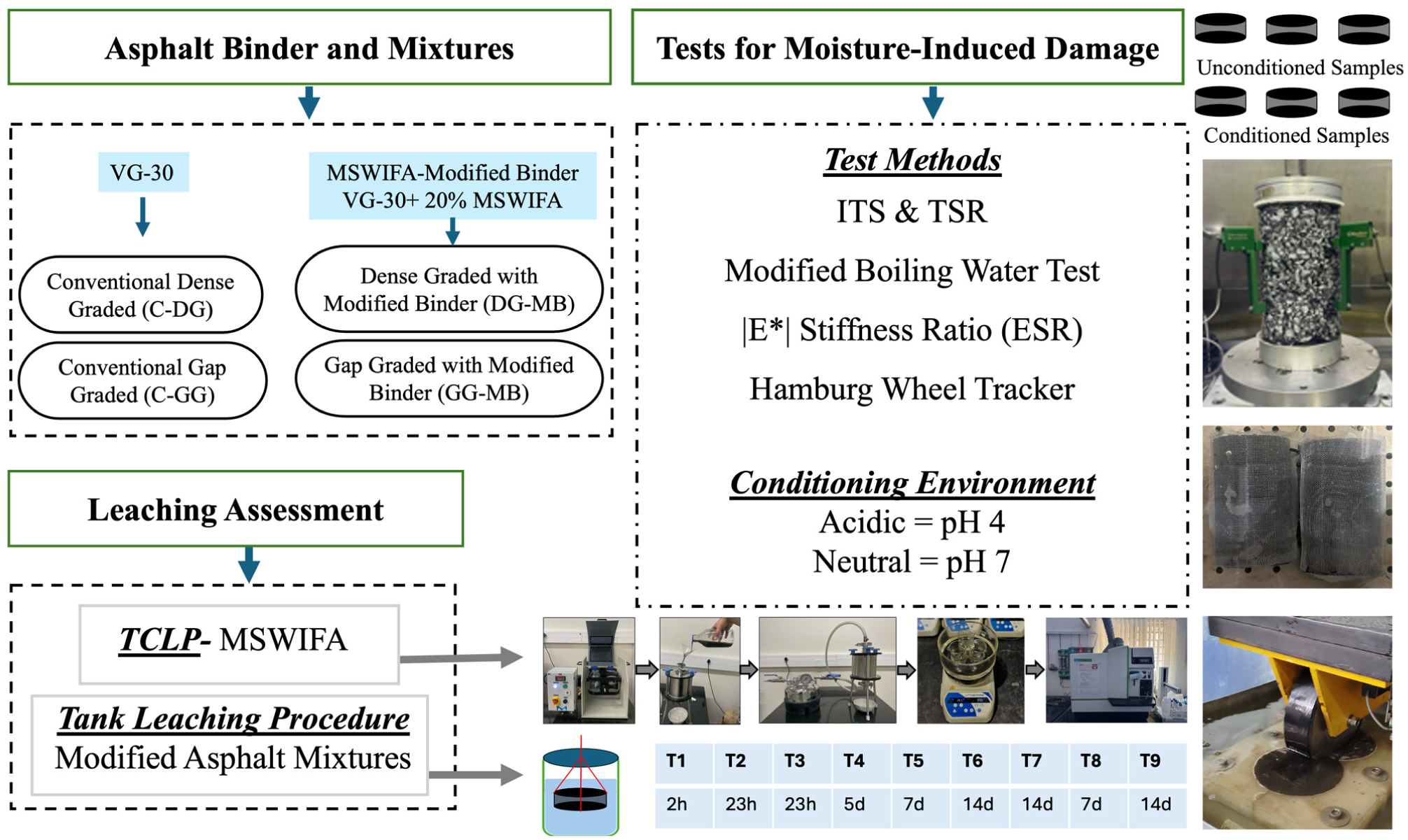
Research outline.
Materials and Characterization
The asphalt binder used in this study was viscosity-graded VG-30 (globally AC-30), with a specific gravity of 1.010, which is commonly used in road construction across India. Aggregates of various sizes were obtained from a single stockpile at a local quarry. The physical appearance and particle size distribution of MSWIFA are shown in Figure 2. The density of the material was 0.793 g/cm3 with a moisture content of 0.29%. The coefficients of uniformity (Cu) and curvature (Cc) for the MSWIFA samples were 2.15 and 0.28, respectively. Based on the Unified Soil Classification System (USCS), and in accordance with the American Society for Testing and Materials (ASTM) D2487-06 ( 33 ), the MSWIFA was classified as poorly graded sand sized (SP). Table 1 presents the properties of the virgin and 20% MSWIFA-modified asphalt binders, as well as the characteristics of the aggregates used in the mixtures. The virgin asphalt binder (VG-30) was modified by incorporating 20% MSWIFA by weight of the asphalt binder, resulting in an MSWIFA-modified asphalt binder that was subsequently used for the preparation of modified asphalt mixtures. Preliminary investigations were conducted using a series of MSWIFA dosages: 2.5%, 5%, 7.5%, 10%, 20%, and 25% by weight of the asphalt binder. Based on parameters such as the Superpave rutting factor, resistance to permanent deformation and fatigue cracking, and aging indices; 20% MSWIFA dosage provided an optimal balance between the binder modification and workability, while concurrently maximizing waste usage or promoting circular economy, as summarized in Table 2. Although the 20% MSWIFA dosage was not superior in every single parameter, it consistently surpassed the virgin asphalt binder across all temperature–frequency combinations, leading to its selection as the optimal dosage. The blending was carried out at a constant speed of 1,200 revolutions per minute for 90 min to ensure uniform dispersion of the modifier. The modified asphalt binder was blended at 168°C, which was determined as the mixing temperature based on the ASTM International viscosity–temperature (Ai-VTSi) relationships using the fundamental asphalt binder properties ( 34 ).
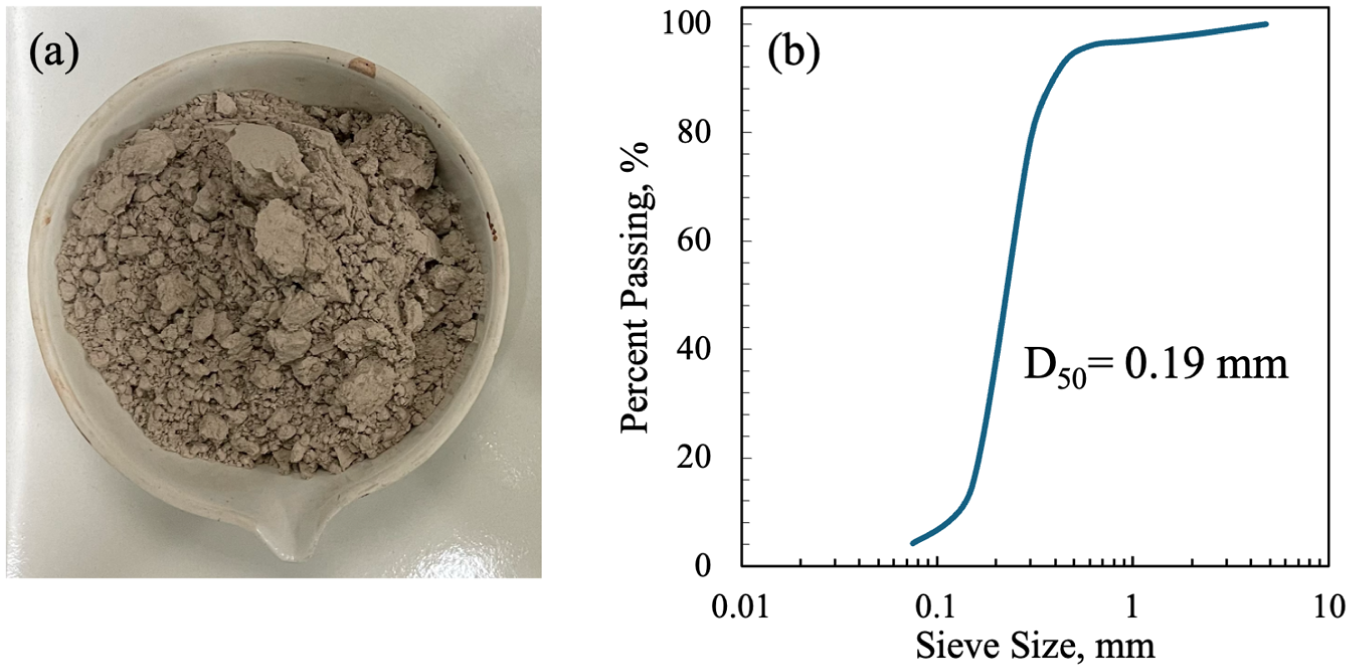
Municipal solid waste incineration fly ash (MSWIFA): (a) physical appearance; and (b) particle size distribution.
Fundamental Tests on Asphalt Binder and Aggregates
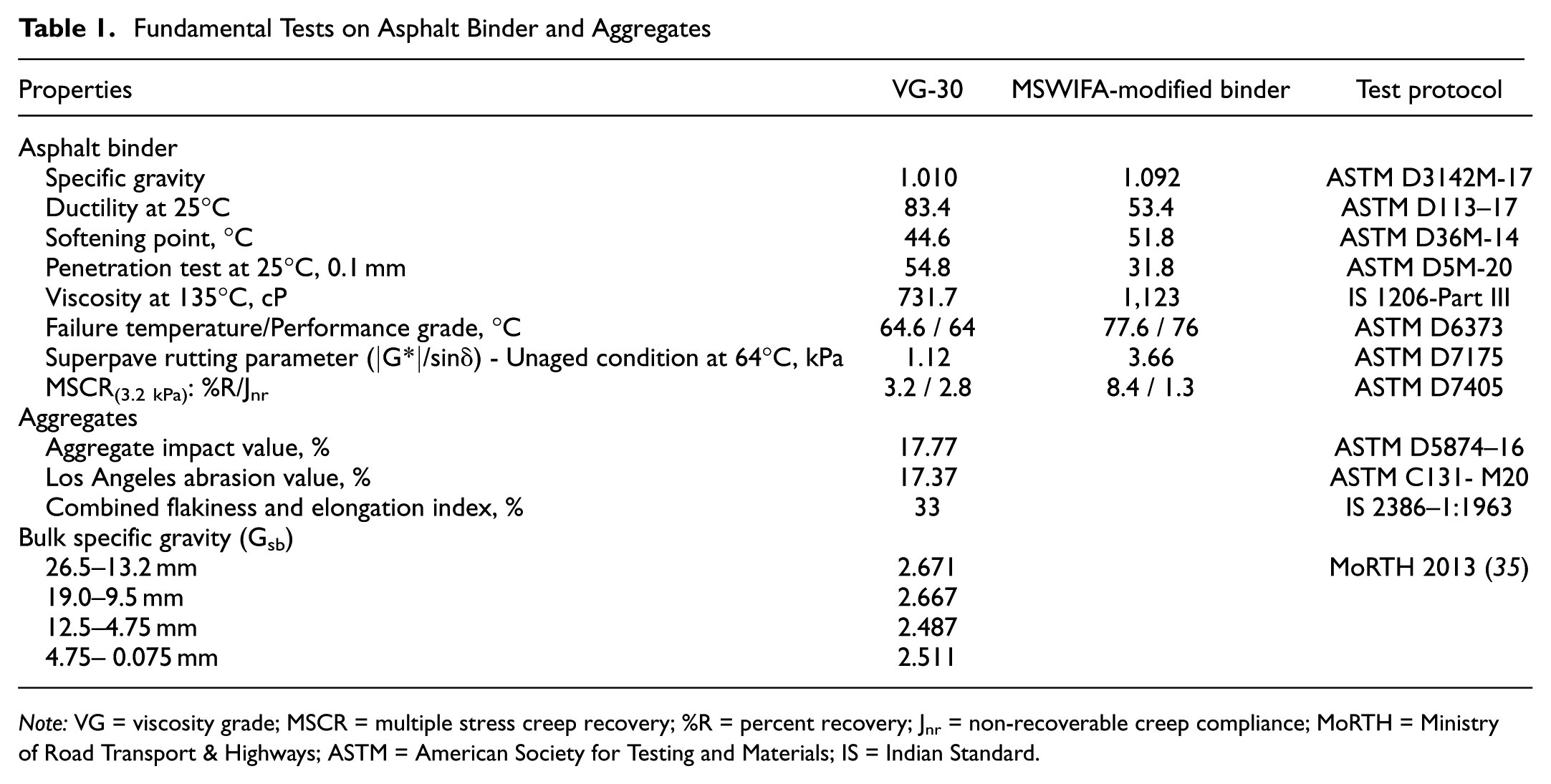
Note: VG = viscosity grade; MSCR = multiple stress creep recovery; %R = percent recovery; Jnr = non-recoverable creep compliance; MoRTH = Ministry of Road Transport & Highways; ASTM = American Society for Testing and Materials; IS = Indian Standard.
Parameters Used for Optimization of MSWIFA Dosage in the Asphalt Binder
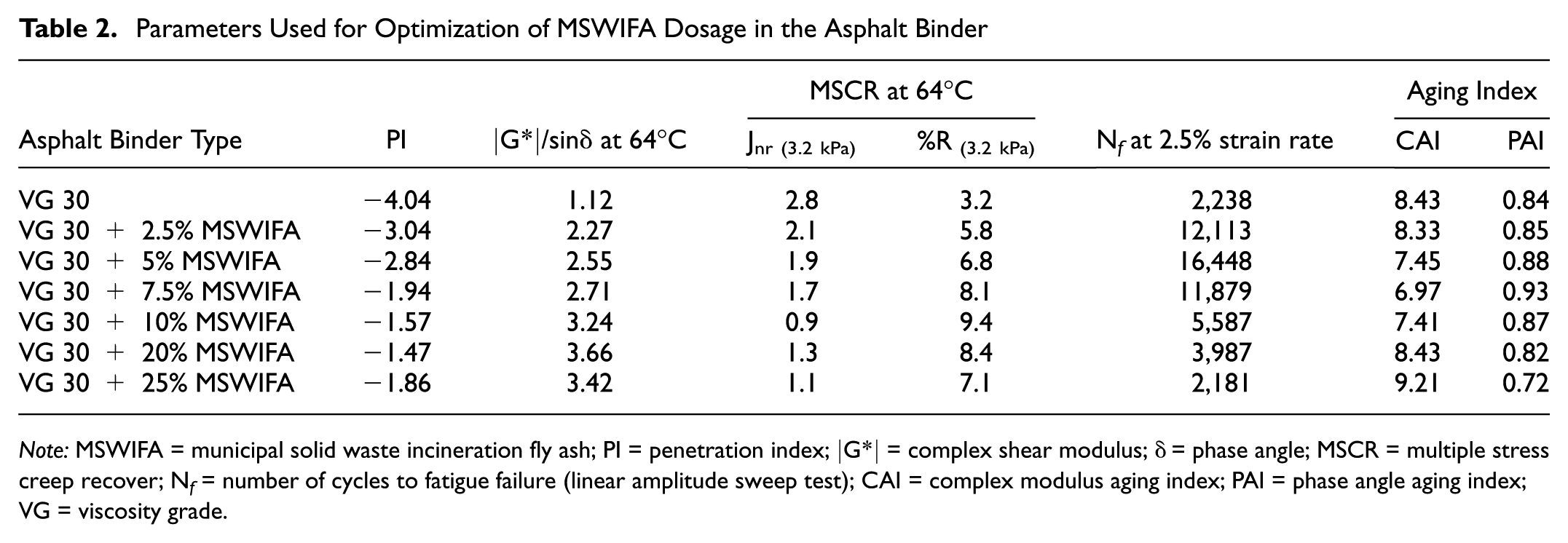
Note: MSWIFA = municipal solid waste incineration fly ash; PI = penetration index; |G*| = complex shear modulus; δ = phase angle; MSCR = multiple stress creep recover; N f = number of cycles to fatigue failure (linear amplitude sweep test); CAI = complex modulus aging index; PAI = phase angle aging index; VG = viscosity grade.
Toxicity Characteristics Leaching Procedure (TCLP)
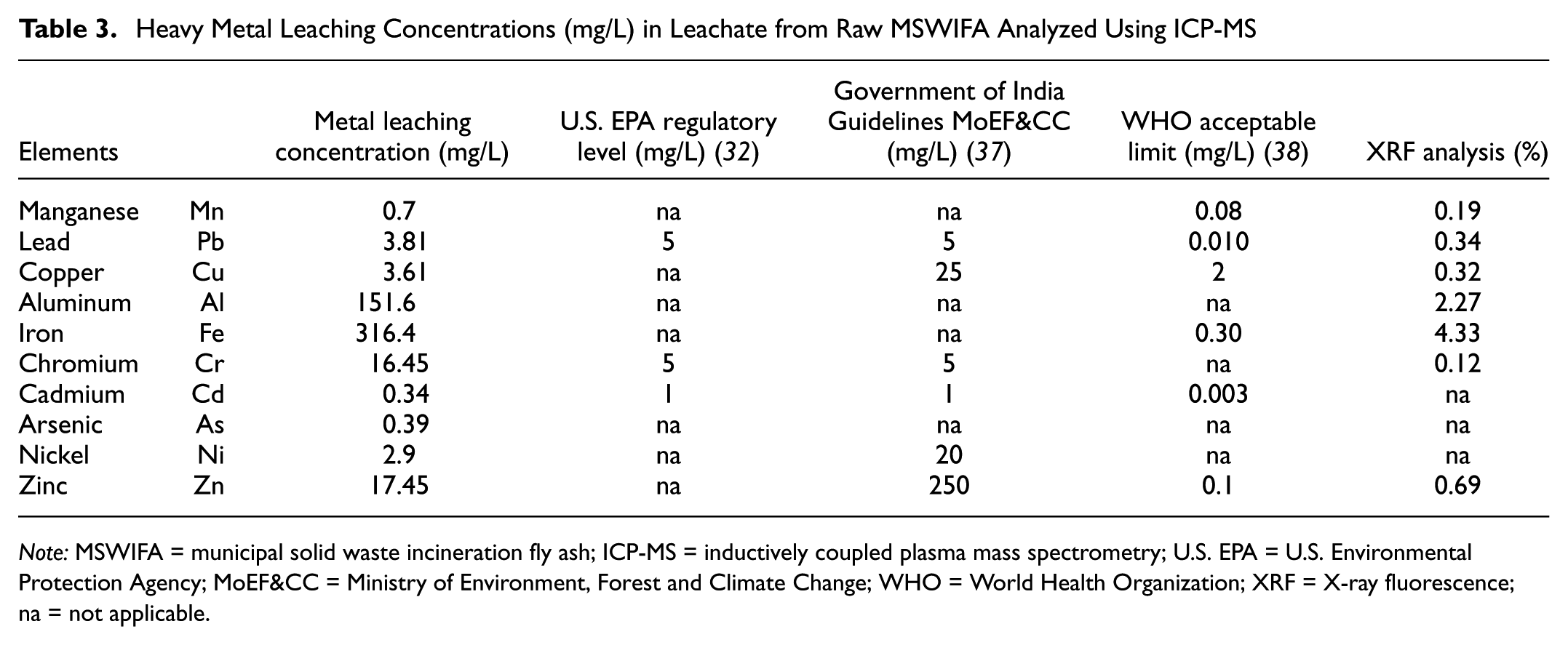
There is a predisposition for the pavement, constructed or modified using hazardous materials, to leach HM into the groundwater ( 36 ). To assess the potential leaching of HM, the TCLP recommended by the United States Environmental Protection Agency (U.S. EPA) was adopted following the protocol specified in Method 1311 ( 32 ). The extraction fluid was prepared using 2.85 mL acetic acid, 1.286 g NaOH, and 497.15 mL water (total 500 mL, pH 4.9 ± 0.05). The solution was mixed with 25 g of MSWIFA, maintaining a sample-to-extraction fluid ratio of 1:20, with three samples tested and their averages reported. The 1:20 solid-to-liquid ratio in TCLP simulated extreme leaching under mildly acidic conditions (pH 4.9 ± 0.05), providing 10 to 100 times greater liquid exposure than natural field infiltration from annual rainfall (10 to 50 cm/year in monsoon regions). The conservative approach ensured a stringent safety margin, confirming the long-term environmental stability of MSWIFA-modified pavements against groundwater contamination. Samples were agitated in a rotary blender at 30 revolutions per minute for 18 h at room temperature. The leachate was filtered using 0.45-μm filter paper and stored at 4°C for inductively coupled plasma mass spectrometry (ICP-MS) analysis. Table 3 presents the concentrations of HM in raw MSWIFA as determined through ICP-MS analysis. Among the analyzed elements, iron exhibited the highest concentration. Notably, chromium (Cr) levels exceeded the regulatory threshold of 5 mg/L resulting in the classification of MSWIFA as hazardous material according to the standards. Since Cr concentration limits in accordance with U.S. EPA standards are for total chromium content and not for any specific form such as hexavalent chromium Cr (VI), which is carcinogenic, further analysis is required to quantify the specific form of Cr present in MSWIFA in future investigations. Although specific regulatory limits for copper, zinc, and nickel are not explicitly defined, the concentrations of all other analyzed metals remained well below the permissible limits outlined by regulatory bodies, including the EPA and the Government of India Ministry of Environment, Forest and Climate Change (MoEF&CC) ( 32 , 37 ). According to the EPA guidelines, the maximum allowable concentrations for lead, cadmium, and chromium are 5, 1, and 5 mg/L, respectively. Furthermore, the TCLP thresholds of raw MSWIFA were also compared with the World Health Organization (WHO) guidelines ( 38 ) to better understand the potential severity of MSWIFA and the environmental implications of its unscientific disposal thereof. Additionally, the TCLP results served as the baseline for comparing the HM leaching concentrations from raw MSWIFA and MSWIFA-modified asphalt mixtures, which will be discussed in detail in subsequent sections.
Heavy Metal Leaching Concentrations (mg/L) in Leachate from Raw MSWIFA Analyzed Using ICP-MS
Note: MSWIFA = municipal solid waste incineration fly ash; ICP-MS = inductively coupled plasma mass spectrometry; U.S. EPA = U.S. Environmental Protection Agency; MoEF&CC = Ministry of Environment, Forest and Climate Change; WHO = World Health Organization; XRF = X-ray fluorescence; na = not applicable.
The X-ray fluorescence (XRF) of raw MSWIFA showed the total elemental content of metals in percentage terms present in the MSWIFA, as shown in Table 3. The total content represented the bulk concentration of each metal in the material regardless of its chemical form or mobility. In contrast, the TCLP leaching test measured the concentration of metals that are soluble under simulated environmental leaching conditions. For example, Cr showed a low total concentration as determined by XRF, but the leaching thereof exceeded the regulatory limits, thereby highlighting its potential environmental concern. Specifically, Cr comprised 0.12% of the sample, of which 80% leached into the solution, whereas other metals exhibited leaching in the range of 25% to 40% of their respective total concentrations in MSWIFA. The distinction was critical for risk assessment, as low total metal content does not necessarily entail low environmental mobility or toxicity. In a nutshell, merely a fraction of the total metal content quantified by XRF was mobilized into the leachate; however, Cr exhibited an alarming release rate of 80%, underscoring significant environmental hazards associated with the direct disposal of untreated MSWIFA.
Experimentation Methodology and Testing Program
In this study, asphalt mixtures were prepared using bituminous concrete Grade 1 (BC-1) and an Arizona gap gradation, in accordance with Government of India Ministry of Road Transport and Highways (MoRTH) ( 35 ) and Arizona Department of Transportation specifications ( 39 ). The typical gradation plots (raised to 0.45 power chart) for dense-graded (DG) and gap-graded (GG) asphalt mixtures are shown in Figure 3. DG and GG asphalt mixtures were designed using the Superpave method as recommended in the Asphalt Institute’s MS-2 guidelines ( 40 ), to determine optimum asphalt content (OAC). For DG mixtures, the OAC was 5.23% for conventional (C-DG) and 5.41% for MSWIFA-modified binders (DG-MB). For GG mixtures, the OAC for C-GG and GG-MB was 5.82% and 6.12%, respectively. Samples were compacted using a Superpave gyratory compactor with 125 gyrations to achieve the target air voids (4% for DG; 7% for GG), evaluated for volumetric properties, and conditioned at two pH levels to assess moisture susceptibility. Three replicate samples for each asphalt mixture were prepared and tested to strengthen the validity of comparisons, totaling 96 specimens across all the mixture types.
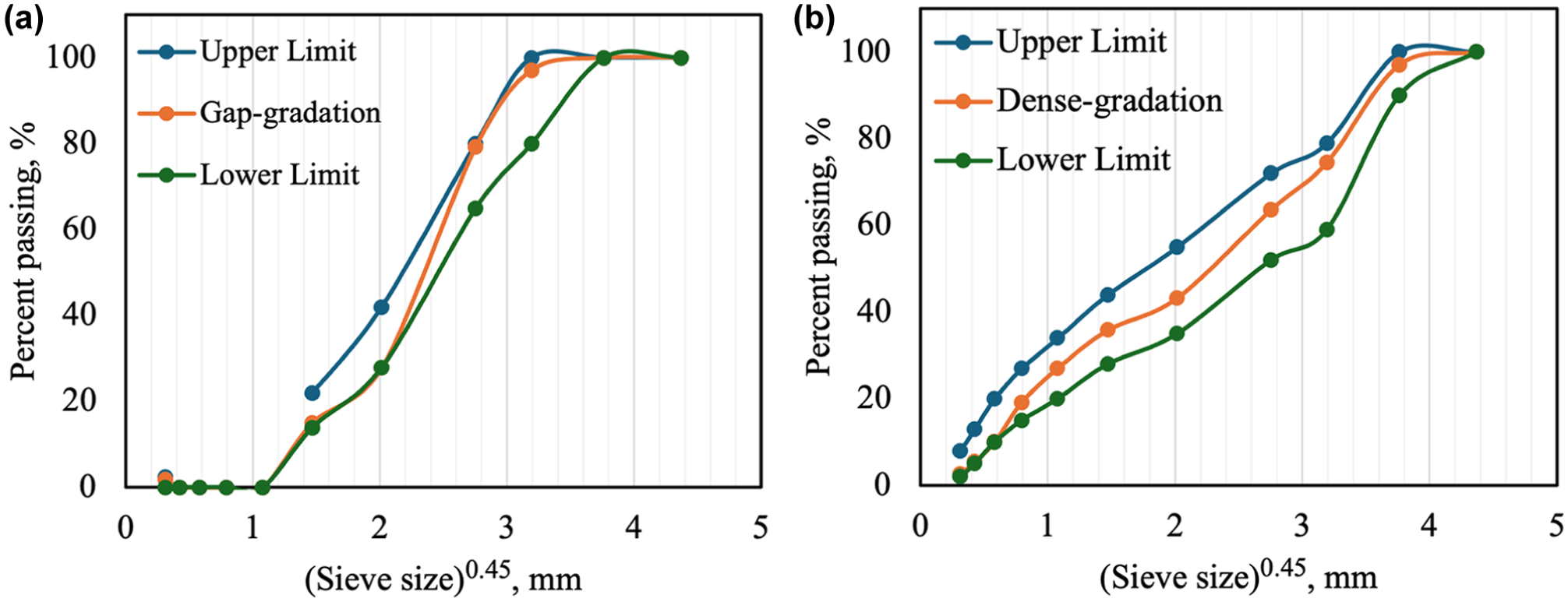
Aggregate gradations used in the study: (a) gap-graded; and (b) dense-graded.
Test Methods for Moisture Susceptibility of MSWIFA-modified Asphalt Mixtures
The control and MSWIFA-modified asphalt mixtures were tested for moisture-induced damage using standard methods (ITS for TSR, modified boiling water test, dynamic modulus stiffness ratio, and Hamburg Wheel Tracker Test [HWTT]). To simulate real-world environmental exposure, asphalt mixtures were conditioned at neutral (pH 7) and acidic (pH 4) levels representing rainwater and acid rain. The following sections describe the testing procedures.
Indirect Tensile Strength Test
The ITS test was conducted in accordance with the AASHTO T 283-14 procedure ( 41 ) to evaluate the moisture-induced damage resistance of asphalt mixtures. In this test, cylindrical samples were subjected to diametral compressive loading at a constant deformation rate of 50 mm/min until failure occurred, inducing a tensile stress along the vertical diametral plane. A total of nine specimens were prepared for each mixture type to ensure the statistical robustness of the TSR results presented in the subsequent section. For each asphalt mixture, three specimens were prepared for the unconditioned case, three for the neutral conditioned case, and three for the acidic conditioned case. The same procedure was followed for all the four asphalt mixture types. Specimens were compacted using a Superpave gyratory compactor and subsequently conditioned in two distinct pH environments to simulate neutral and acidic moisture exposure. Before testing, both conditioned and unconditioned specimens were equilibrated at 25°C for 2 h. The ITSs of both sample sets were determined, and the TSR was calculated to assess the retained strength of conditioned specimens relative to unconditioned ones. A higher TSR indicates better resistance to moisture-induced damage. Equation 1 was used to compute ITS ( 41 ):

where
P max is the maximum applied load (N),
D is the specimen diameter (mm), and
t is the specimen thickness (mm).
Modified Boiling Water Test
The boiling water test, as outlined in ASTM D3625 ( 42 ), is a qualitative method to assess moisture-induced adhesive failure between asphalt binder and aggregates. In this study, 250 g of preheated aggregates were mixed with asphalt binder at the respective OAC, cooled to 80°C to 100 °C, and immersed in boiling acidic and neutral solutions for 30 min. After cooling and drying, stripping was assessed by calculating the stripping index using Equation 2 ( 43 , 44 ). The test was conducted under two pH conditions, offering insights into how pH influences binder–aggregate adhesion and mixture durability.

where
Wa represents the weight of dry aggregates,
W cab is the weight of binder-coated aggregates before the test,
W caa denotes the weight of binder-coated aggregates after the test, and
W fp refers to the dry weight of aggregate particles that disintegrated as a result of the boiling process.
|E*| Stiffness Ratio (ESR)
|E*| testing for unconditioned specimens was conducted at 21.1°C across six loading frequencies (25, 10, 5, 1, 0.5, and 0.1 Hz). Conditioning followed AASHTO T283: samples were vacuum saturated (8–15 min), sealed, and subjected to a freeze cycle at −18 ± 3°C for at least 16 h, followed by a 24 ± 1 h thaw cycle in a 60 ± 1°C water bath. GG mixtures were wrapped in thin steel mesh to prevent disintegration during high-temperature conditioning. After freeze–thaw, specimens were stabilized in 25 ± 0.5°C water for 2 h before measuring |E*| at 21.1°C. The stiffness ratio between conditioned (acidic and neutral) and unconditioned specimens was then calculated as the ratio of the |E*| of conditioned (neutral and acidic) specimen to the unconditioned specimen.
Hamburg Wheel Tracker Test (HWTT)
The HWTT, performed in accordance with AASHTO T 324 ( 45 ) is widely used to assess rutting resistance and moisture susceptibility of asphalt mixtures. In this study, a modified HWTT set-up with a rubber wheel, which applied a constant vertical force of 705 N ± 22 N onto the asphalt mixture specimen was employed at 50°C under three conditions: dry, neutral (pH 7), and acidic (pH 4) to examine the effect of pH on moisture damage. Two replicate specimens were tested under a loaded rubber wheel at ∼52 ± 2 passes/min, either until 20,000 cycles or a rut depth of 12.5 mm was reached. Rubber wheels were used in the modified HWTT because they simulated the contact and deformation characteristics of actual tires of a truck on an asphalt pavement layer, thus providing a more realistic assessment of rutting and moisture susceptibility. Unlike rigid steel wheels, rubber wheels replicated stress distribution and energy dissipation patterns similar to the field conditions, thereby enhancing the relevance of the laboratory results, especially for moisture and pH-related studies.
Long-Term Leaching: Modified Tank Leaching Test
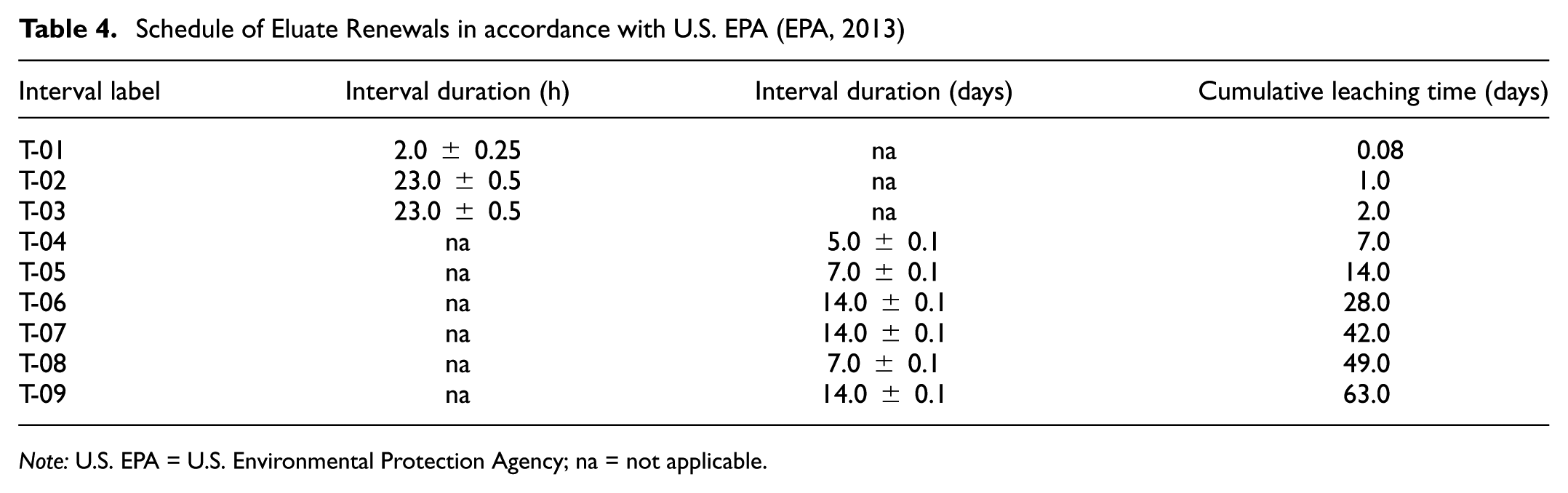
To replicate real-world environmental exposure, a semi-dynamic modified tank leaching test was conducted following EPA Method 1315 standard ( 46 ), illustrated in Figure 4. Both unmodified and MSWIFA-modified asphalt mixtures were submerged in a solution similar to that used in the TCLP, as discussed earlier, at a liquid-to-surface-area (L/A) ratio of 9 ± 1 mL/cm2 to simulate prolonged flooding scenarios. While tank leaching according to the EPA Method 1315 conventionally employs deionized (DI) water as the default leaching solution, an extraction fluid similar to that of the TCLP test in the modified tank leaching test was intended to obtain a consistent basis for comparison. Cylindrical specimens (100-mm diameter and 45-mm height) were tested over cumulative exposure intervals of up to 63 days to confirm a substantive long duration for assessing cumulative leaching behavior while concurrently maintaining practicality in the laboratory. The specimens were maintained at ambient laboratory conditions for predetermined cumulative durations of 0.08, 1, 2, 7, 14, 28, 16, 42, 49, and 63 days as shown in the Table 4. After each exposure period, the entire eluent was replaced with a fresh solution, and this procedure was repeated nine times over the course of the test. At the end of each exposure period, an aliquot of the leachate was extracted, passed through a 0.45-µm pore-size membrane filter, and collected in 10-mL sample vials. These filtered solutions were preserved for subsequent analysis using the ICP-MS technique to determine the concentrations of HM. In this study, particular attention was given to lead (Pb), chromium (Cr), nickel (Ni), zinc (Zn), copper (Cu), and iron (Fe), as these elements are known to have detrimental effects on the environment based on their higher ecological risks. Furthermore, considering the long-term environmental exposure of pavements, the leachate concentrations were also interpreted with reference to the EPA water quality criteria for the protection of aquatic life ( 47 ), particularly the criterion continuous concentration (CCC). Essentially, CCC represents the highest 4-day (96 h) average pollutant concentration that aquatic organisms can tolerate indefinitely with acceptable chronic effects on growth, reproduction, or survival. The comparison provided an additional environmental perspective for evaluating the potential ecological risks associated with HM leaching from MSWIFA-modified pavement materials under prolonged exposure conditions.
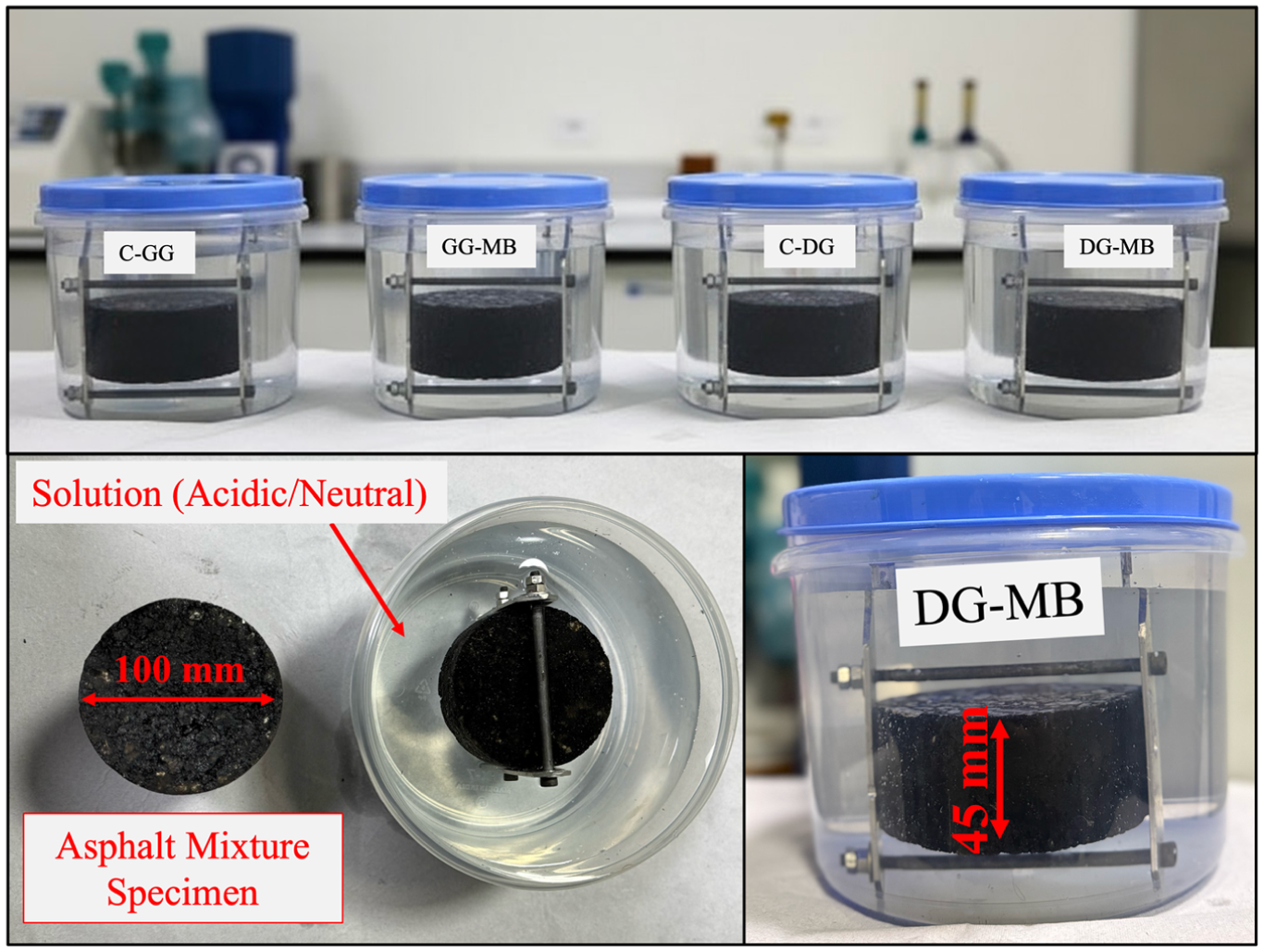
Modified tank leaching procedure for accessing long-term HM leaching from asphalt mixtures.
Schedule of Eluate Renewals in accordance with U.S. EPA (EPA, 2013)
Note: U.S. EPA = U.S. Environmental Protection Agency; na = not applicable.
Results and Discussion
Tests for Moisture Susceptibility
ITS and TSR
The moisture susceptibility of unmodified and MSWIFA-modified mixtures was evaluated at 25°C using the ITS test. The test was conducted under three distinct conditioning states: unconditioned (dry), neutral (pH 7), and acidic (pH 4) to determine the TSR as a key indicator of moisture damage. Figure 5 presents the ITS results for both DG and GG asphalt mixtures across different conditioning environments. Under neutral conditions, shown in Figure 5a, unconditioned GG mixtures demonstrated higher ITS compared with their conditioned counterparts. Specifically, the C-GG mixture exhibited a 33% reduction in ITS, whereas the GG-MB mixture showed a slightly lower reduction of 29%. The marginal improvement in moisture resistance for the GG-MB was attributed to the increased binder stiffness and improved binder–aggregate interaction, likely resulting from the MSWIFA inclusions. Correspondingly, TSR were 75% and 77% for the C-GG and GG-MB mixtures, respectively. Although both values fell below the generally accepted threshold of 80%, GG-MB demonstrated enhanced resistance to moisture-induced stripping relative to the C-GG mixture. For the DG mixtures, a similar trend was observed. The unconditioned samples consistently showed higher tensile strength compared with their conditioned counterparts. The ITS of the C-DG mixture decreased by 11% under neutral conditioning, while the DG-MB mixture exhibited a 14% reduction. Despite a slightly higher drop in strength for the DG-MB mixture, its TSR improved to 87%, compared with 85% for the C-DG mixture. Notably, both mixtures surpassed the 80% TSR benchmark, with the MSWIFA-modified mixture demonstrating superior resilience to moisture intrusion. The enhanced performance was attributed to the improved mechanical integrity of the MSWIFA-modified mixture, which likely mitigated the adverse effects of water infiltration and reduced the degree of binder stripping from aggregate surfaces.
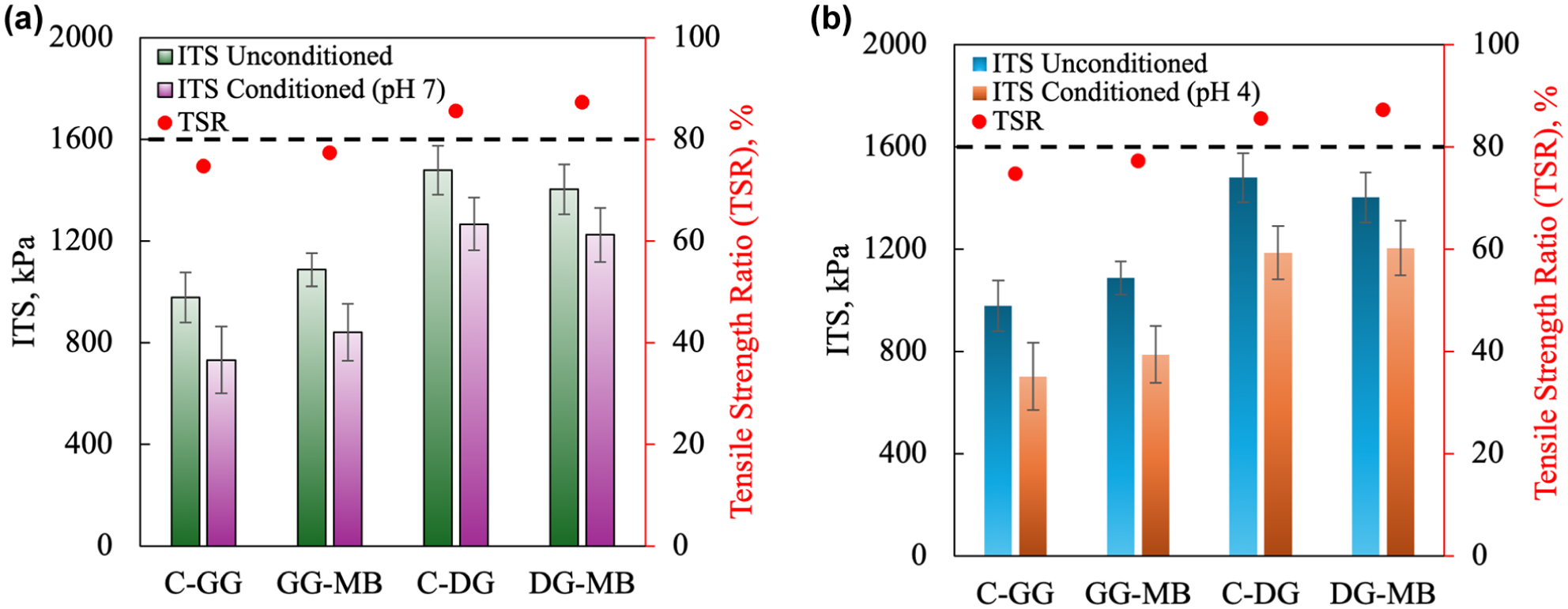
ITS and TSR results for GG and DG asphalt mixtures: (a) neutral (pH 7) conditioning; and (b) acidic (pH 4) conditioning.
On the other hand, under acidic conditioning (pH 4), shown in Figure 5b, a consistent trend was observed where the unconditioned specimens exhibited higher ITS than their conditioned counterparts. GG asphalt mixtures subjected to acidic conditioning demonstrated a 35% to 40% reduction in ITS compared with their unconditioned state, a decline more pronounced than under neutral conditions. The reduction was attributed to the acidic environment and the relatively higher air void content of GG asphalt mixtures, which likely facilitated greater ingress of the acidic solution into the asphalt matrix, thereby weakening the asphalt–aggregate interactions. Notably, the reduction in ITS was slightly lower for GG-MB (37%) compared with C-GG (40%). The improved resistance was a result of the enhanced stiffness and superior asphalt–aggregate interaction imparted by the MSWIFA-modified asphalt binder. The TSR for the C-GG and GG-MB mixtures were 72% and 73%, respectively. Although neither mixture met the minimum TSR threshold typically recommended for moisture resistance, GG-MB demonstrated marginally better performance, indicating reduced susceptibility to moisture-induced damage. Further, DG asphalt mixtures exhibited a 16% to 24% reduction in ITS when transitioning from dry to wet (acidic) conditions, when it was notably higher than that observed under neutral conditioning, highlighting the adverse effect of acidic environments on asphalt performance. Among the mixtures, C-DG showed a greater decline in ITS compared with DG-MB, attributed to the enhanced stiffness and superior asphalt–aggregate interaction provided by the MSWIFA-modified binder, which helped mitigate moisture-induced weakening. Furthermore, the TSRs for C-DG and DG-MB were 80% and 86%, respectively. These results suggested that although both asphalt mixtures maintained reasonable resistance to moisture damage, the MSWIFA-modified mixture exhibited superior durability and resistance to acidic moisture intrusion, reaffirming its potential for enhancing long-term pavement performance under aggressive environmental conditions.
In summary, the findings from the ITS and TSR evaluations under both neutral and acidic conditions demonstrated the influence of binder modification and mixture gradation on the moisture susceptibility of asphalt mixtures. While all asphalt mixtures experienced reductions in tensile strength under conditioned states, MSWIFA-modified binders consistently outperformed the unmodified, particularly in more aggressive (acidic) environments. Although GG asphalt mixtures did not meet the standard TSR threshold of 80, the GG-MB exhibited greater resilience and reduced sensitivity to moisture-induced damage than the conventional. In particular, the DG-MB asphalt mixtures achieved the highest TSR, indicating their potential to perform better as a moisture-resistant layer in pavement systems in regions prone to heavy rainfall, acid deposition, or other severe environmental conditions. It is noteworthy that the increase in the TSR of MSWIFA-modified mixtures for both the gradations was ascribed to the increase in the ITS of the unconditioned samples. Although the conditioned samples also showed an increase, the overall rise in TSR was mainly a result of the enhanced strength of the unconditioned specimens.
To statistically evaluate the significance of differences in TSR among the asphalt mixtures, a single-factor analysis of variance (ANOVA) test was performed at a significance level of α = 0.05. The ANOVA results are presented in Table 5. For DG asphalt mixtures, the statistical analysis revealed that the differences in mean TSR between the mixtures were statistically significant, as evidenced by F > Fcrit and P-value < 0.05, which indicated that the moisture conditioning substantially affected the mechanical performance of DG asphalt mixtures, with variations in TSR depicted because of the differences in mixture composition rather than random experimental error. Conversely, for GG asphalt mixtures, the ANOVA results demonstrated that the differences in mean TSR were not statistically significant, that is, F < Fcrit and P-value > 0.05, suggesting that the moisture susceptibility response of GG asphalt mixtures remained relatively uniform across the tested formulations. In general, the relatively uniform moisture susceptibility exhibited by GG asphalt mixtures across different formulations was attributed to their discontinuous gradation and additional space or air voids, which established a consistent aggregate skeleton structure that remained largely unaffected by binder modifications. Furthermore, the absence of intermediate aggregate sizes resulted in predictable void networks and stone-on-stone contact that dominated mixture behavior. Unlike DG asphalt mixtures, where filler content and mastic properties significantly influenced performance, GG mixtures had reduced dependency on these variables.
Single-Factor ANOVA Test on TSR Results of DG and GG Asphalt Mixtures
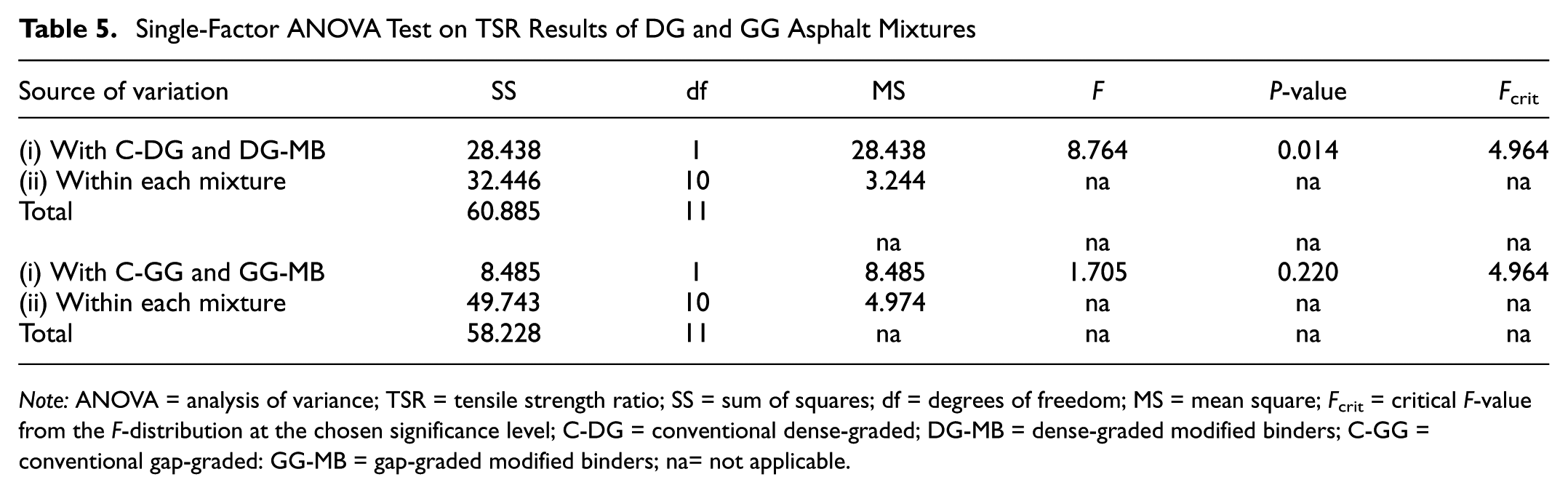
Note: ANOVA = analysis of variance; TSR = tensile strength ratio; SS = sum of squares; df = degrees of freedom; MS = mean square; Fcrit = critical F-value from the F-distribution at the chosen significance level; C-DG = conventional dense-graded; DG-MB = dense-graded modified binders; C-GG = conventional gap-graded: GG-MB = gap-graded modified binders; na= not applicable.
Modified Boiling Water Test
Table 6 summarizes the average stripping indices computed from three replicates for the different asphalt mixture gradations used in this study. It is important to note that the degree of ionization of water increases with temperature, which leads to a higher concentration of hydrogen ions (H+). Consequently, the actual pH of the boiling solution is likely lower than the nominal value, thereby intensifying the acidic environment and exacerbating the potential impact on binder–aggregate adhesion ( 44 ). The results clearly demonstrated that whatever the aggregate gradation, the stripping index was consistently lower for MSWIFA-modified asphalt mixtures. Specifically, conventional asphalt mixtures experienced a greater extent of asphalt binder loss from the aggregate surface, affirming their comparatively weaker resistance to moisture-induced damage than modified ones. Furthermore, exposure to the acidic solution, which replicates a more chemically aggressive environment resulted in greater moisture damage than the neutral condition, across both aggregate gradations. Notably, MSWIFA-modified mixtures exhibited higher resistance to stripping than conventional in both acidic and neutral environments. The improvement was primarily attributed to the inclusion of MSWIFA, which not only enhanced the binder–aggregate interaction but also imparted greater durability as a result of its intrinsic chemical and physical characteristics. The rough and porous morphology of MSWIFA particles promoted better mechanical interlocking and improved binder adhesion, thereby contributing significantly to the observed resistance against stripping. Between the two aggregate gradations, the GG mixtures showed higher stripping indices compared with the DG mixtures, plausibly because of higher air voids content (average = 6.8%) and special aggregate gradation structure in GG mixtures, which facilitated more water ingress and increased susceptibility to moisture damage. Overall, the findings underscored the potential of MSWIFA as a viable and sustainable additive for enhancing the moisture resistance of asphalt mixtures. Additionally, comprehensive investigations such as lifecycle analysis are necessary to further corroborate the claim, as there is very limited literature that discusses the associated environmental benefits of MSWIFA. Despite the relatively lower reduction in the stripping index, the consistent performance improvement across both acidic and neutral environments affirmed the practical applicability of MSWIFA-modified mixtures.
Modified Boiling Water Test Results for GG and DG Asphalt Mixtures
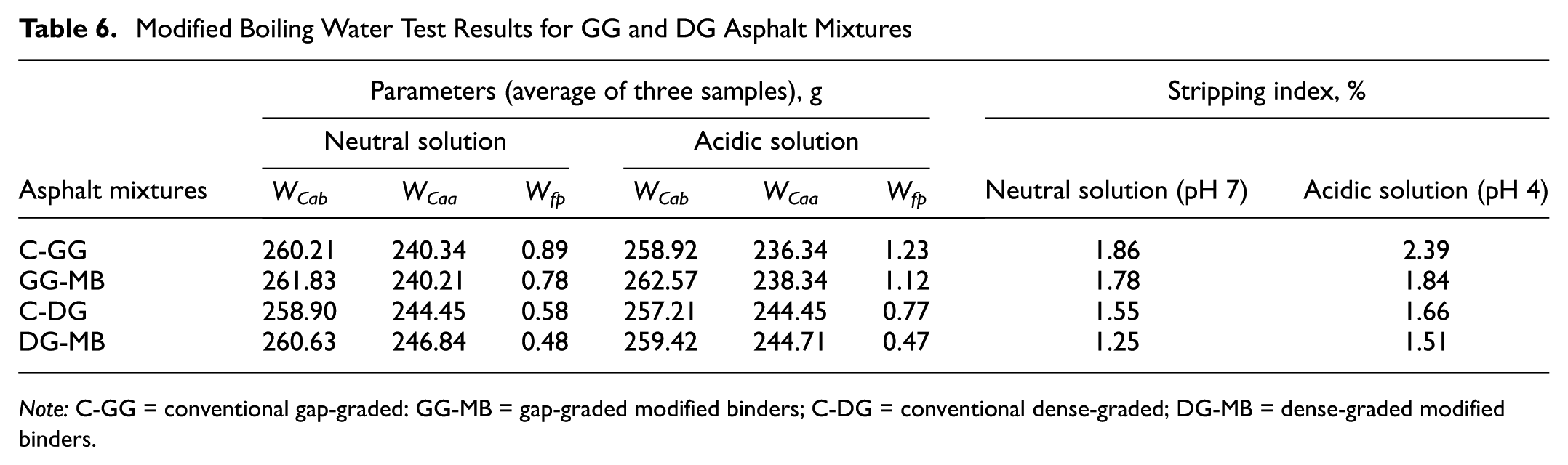
Note: C-GG = conventional gap-graded: GG-MB = gap-graded modified binders; C-DG = conventional dense-graded; DG-MB = dense-graded modified binders.
Moisture Susceptibility through ESR
Figure 6 presents the |E*| and corresponding ESRs for asphalt mixtures subjected to unconditioned and two conditioned environments (neutral and acidic) to evaluate moisture susceptibility and durability performance. A consistent reduction in |E*| was observed across all asphalt mixtures following conditioning through freeze–thaw cycles, highlighting the adverse effects of moisture-induced degradation. Figure 6, a and b , illustrates the results for the DG asphalt mixtures, where DG-MB exhibited consistently higher |E*| across various temperature-frequency combinations compared with C-DG. For C-DG, |E*| decreased by approximately 19% under neutral conditions (pH 7) and by 26% under acidic conditions (pH 4) in comparison with the unconditioned, indicating a more pronounced stiffness loss in aggressive environments. The corresponding ESRs for C-DG were 84% and 80% under neutral and acidic conditioning, respectively, demonstrating the sensitivity of the unmodified binder to pH-induced degradation. In contrast, the DG-MB mixtures exhibited comparatively lower reductions in |E*|, with values of 18% under neutral and 21% under acidic conditioning. The comparatively lower reduction in |E*| in DG-MB demonstrated higher structural integrity and improved resistance to environmental stressors possessed by modified asphalt mixtures. The ESRs for DG-MB were recorded as 86% and 83% under neutral and acidic conditions, respectively, reflecting the enhanced resilience provided by the MSWIFA-modified asphalt binder.
Figure 6, c and d , presents the |E*| and ESR results for the GG asphalt mixtures under unconditioned, neutral, and acidic environments, where the modified mixture consistently exhibited higher |E*| compared with the conventional. For the C-GG asphalt mixture, the |E*| was observed to decline by approximately 32% under neutral conditioning and by 40% under acidic conditioning, indicating a more severe loss in stiffness in acidic environments, a characteristic also exhibited by DG asphalt mixtures. The average ESRs for C-GG were 75% and 72% for neutral and acidic conditioning, respectively, aligning with the trend observed in C-DG mixtures. In contrast, the GG-MB asphalt mixtures showed a comparatively lower reduction in |E*|, with a decrease of 30% under neutral conditions and 38% under acidic conditions. The lower stiffness loss suggested enhanced durability of the GG-MB mixtures when subjected to aggressive environmental conditions. Correspondingly, the average ESRs for GG-MB mixtures were 77% and 73% under neutral and acidic conditioning, respectively, which was slightly higher than C-GG.
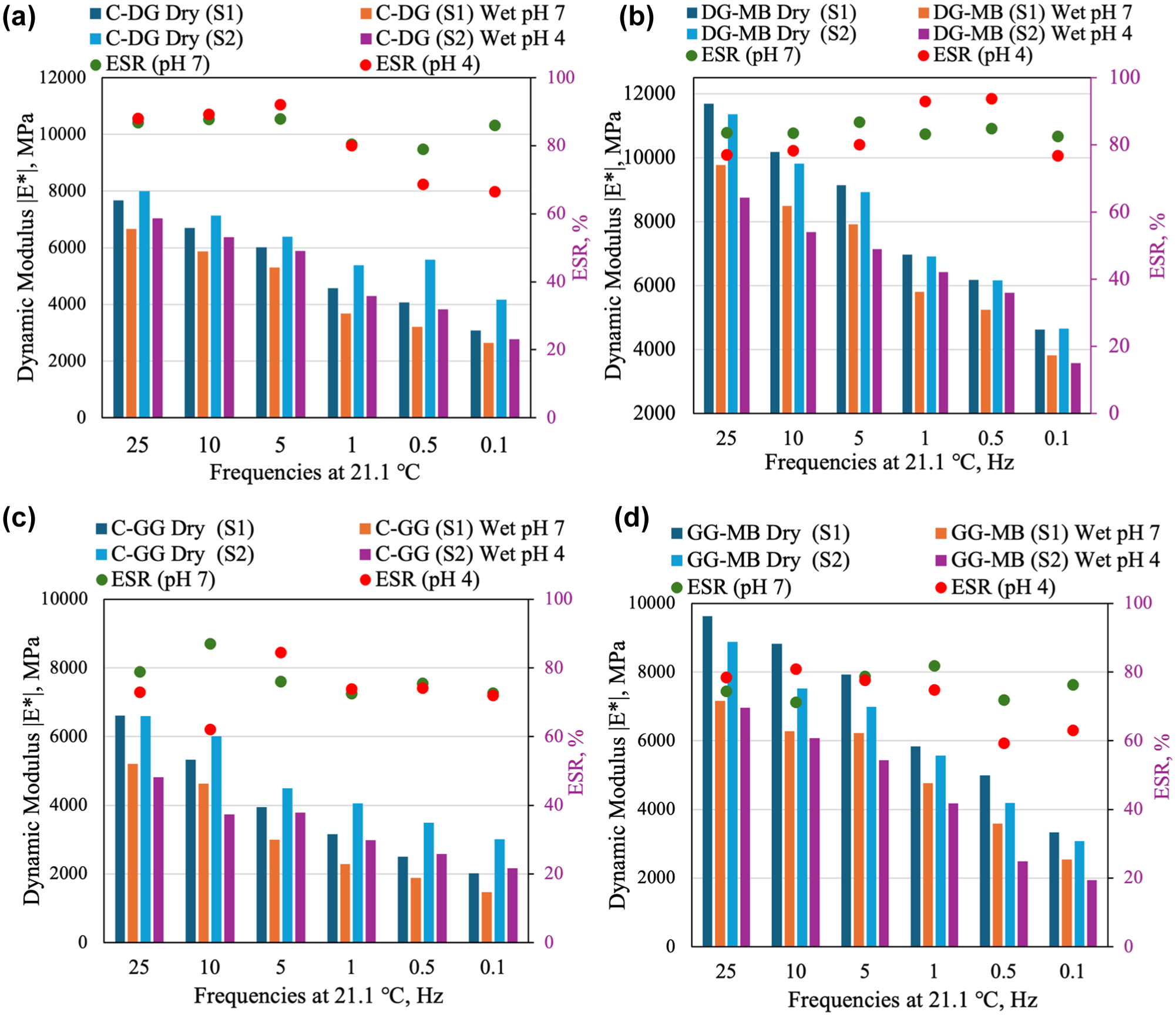
ESR results for various asphalt mixtures with different pH environments: (a) C-DG mixture; (b) DG-MB; (c) C-GG; and (d) GG-MB.
Furthermore, to evaluate the statistical significance of differences in ESR among the asphalt mixtures, a single-factor ANOVA test was conducted, and the results are shown in Table 7. As observed, a statistically significant difference was present between C-DG and DG-MB asphalt mixtures, thereby confirming that the modification approach employed in these mixtures produced measurably distinct resistance to moisture-induced damage. In contrast, the ANOVA results for C-GG versus GG-MB asphalt mixtures indicated no statistically significant difference (F = 1.40, p = 0.264, α = 0.05), as the calculated F-value (1.40) was considerably lower than the critical F-value (4.96) and the P-value (0.264), suggesting that both asphalt mixtures exhibited comparable moisture susceptibility characteristics, attributed to the uniqueness of the GG mixtures’ characteristics, as discussed earlier.
Single-Factor ANOVA Test for ESR
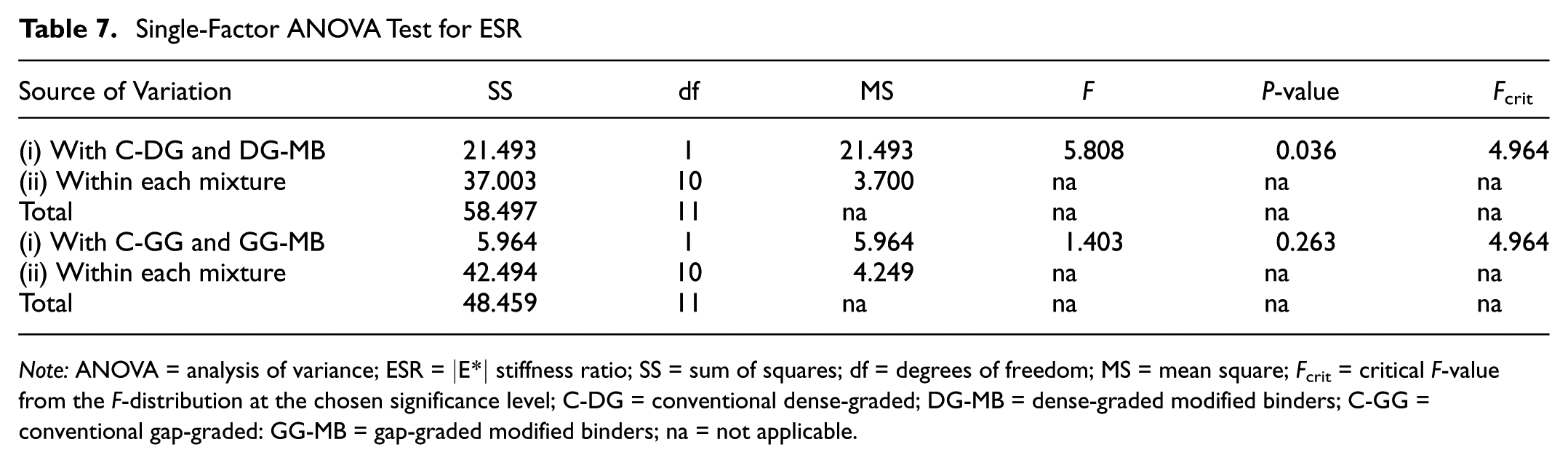
Note: ANOVA = analysis of variance; ESR = |E*| stiffness ratio; SS = sum of squares; df = degrees of freedom; MS = mean square; Fcrit = critical F-value from the F-distribution at the chosen significance level; C-DG = conventional dense-graded; DG-MB = dense-graded modified binders; C-GG = conventional gap-graded: GG-MB = gap-graded modified binders; na = not applicable.
Overall, the results demonstrated that regardless of the aggregate gradation, MSWIFA-modified asphalt mixtures exhibited superior resistance to moisture-induced damage when compared with the conventional asphalt mixtures. The enhancement in moisture resistance was primarily attributed to the incorporation of MSWIFA, which likely promoted improved binder–aggregate adhesion and strengthened interfacial bonding. It is important to note that the DG asphalt mixtures exhibited superior ESRs compared with the GG mixtures, a distinction primarily attributed to the higher air void content, unique aggregate skeleton, and elevated OAC in GG mixtures, which collectively facilitated higher water ingress, resulting in greater stiffness loss, thereby reducing the overall ESR and increasing susceptibility to moisture-induced damage. Nonetheless, the ESR findings underscored the practical viability of incorporating MSWIFA as a performance-enhancing additive in asphalt pavements, particularly in regions susceptible to heavy rainfall or significant water infiltration. Furthermore, the statistical findings provided critical insight for mixture design optimization, demonstrating that the significant difference observed in DG asphalt mixtures was credited to the material composition and modifier, which indeed influenced the moisture susceptibility performance. The ANOVA results confirmed that the variation between C-DG and DG-MB mixtures exceeded within-group variability, indicating performance differentiation rather than experimental uncertainty. However, the results from GG asphalt mixtures revealed that the improvements in GG-MB mixture were not statistically significant, albeit achieving performance on a par with the conventional C-GG mixture for moisture resistance. The findings validated the viability of incorporating MSWIFA as sustainable modifiers without compromising moisture damage resistance, thereby supporting circular economy strategies in performance-based pavement design.
Hamburg Wheel Tracker Test (HWTT)
Figure 7 illustrates the rut depth at 20,000 cycles for dry and wet conditions for both DG and GG asphalt mixtures. The DG-MB and GG-MB mixtures demonstrated enhanced rutting resistance compared with C-DG and C-GG, as evidenced by reduced rut depths in all the three phases of the testing (dry, neutral, and acidic). The improvement in performance was primarily a result of the increased viscosity, which led to an elevation in the complex shear modulus alongside improved elastic properties of the MSWIFA-modified asphalt binder (Tables 1 and 2). The enhancement imparted greater stiffness and resistance to permanent deformation at elevated temperatures, a key factor in mitigating rutting distress. Additionally, the incorporation of MSWIFA-modified asphalt binder in both gradations (DG and GG) facilitated improved binder–filler interaction, thereby enhancing the structural integrity and load-bearing capacity of the modified asphalt mixtures.
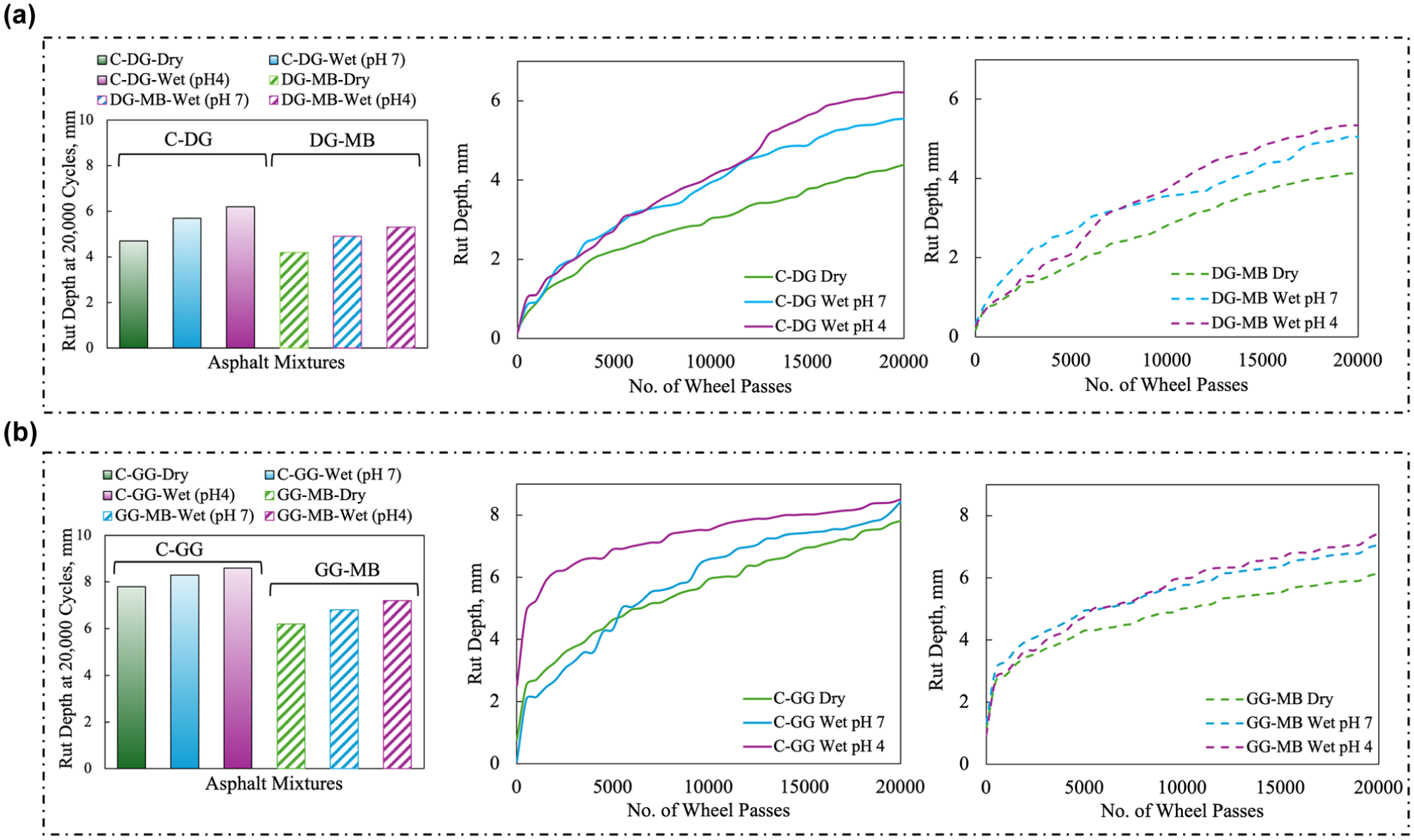
Hamburg wheel tracker results: (a) DG asphalt mixtures; and (b) GG asphalt mixtures.
In general, all the specimens subjected to wet conditions (neutral and acidic) exhibited greater rutting depths compared with the dry condition, attributed to accelerated creep accumulation under moisture-laden environments, where water infiltration facilitates the weakening of the asphalt matrix and interfacial bond strength. The increased rut depth observed under acidic conditioning was attributed to accelerated damage accumulation, primarily driven by adhesive failure mechanisms within the asphalt mixtures, a finding consistent with observations reported elsewhere ( 48 , 49 ). The rut depth of the C-DG under moisture-induced conditions was approximately 1.3 to 1.5 times higher than the conventional dry sample (C-DG-Dry), indicating a notable sensitivity to moisture damage. In contrast, the DG-MB mixture exhibited a relatively smaller increase in rut depth (1.1 to 1.2 times), suggesting improved resistance to moisture-induced degradation caused by modification. A similar trend was observed for the GG, where the modified variant (GG-MB) exhibited enhanced resistance to moisture-induced damage compared with C-GG. In summary, the incorporation of MSWIFA-modified asphalt binder enhanced the rutting resistance of the asphalt mixtures, whatever the aggregate gradation type. Furthermore, it is noteworthy that the reduction in rut depth from the conventional compared with the modified mixture was more pronounced in GG asphalt mixtures than DG, indicating a greater modification effectiveness within the GG aggregate gradation. In addition, the DG asphalt mixtures exhibited lower rut depths compared with the GG mixtures, ascribed to their more compacted aggregate structure and lower air voids content, which collectively contributed to improved resistance against permanent deformation.
Long-Term Leaching: Modified Tank Leaching Test
Figure 8 illustrates the cumulative concentration of six HMs leached at the end of day 63 for the different asphalt mixtures. The cumulative concentration of HM was higher in the case of MSWIFA-modified asphalt mixtures compared with the conventional owing to MSWIFA inclusions that possessed higher leaching of the selected HM, specifically, Cu, Zn, Pb, and Cr, which were abundant in their native state, as discussed in the TCLP section. Further, among the modified asphalt mixtures, the concentration of the HM was higher in the case of GG-MB compared with DG-MB, which can be ascribed directly to the characteristics of aggregate gradation, as discussed earlier, which facilitated more surface area for the leaching fluid to encounter the surface, thus increasing the HM leaching potential. The relatively higher concentration of siliceous components in the DG aggregate structure based on the higher aggregate proportion was an important contributing factor to the reduced HM leaching observed in DG-MB asphalt mixtures compared with GG-MB. Higher silica and alumina promoted stronger chemical interactions ( 50 , 51 ) and improved physical encapsulation, thereby enhancing the overall HM immobilization. Additionally, the cumulative leaching concentrations measured at the end of the 63-day period remained within the permissible limits established by the EPA. Given the high solubility under mildly acidic conditions, Fe showed similar leaching trends in both unmodified and MSWIFA-modified asphalt binders. Although the EPA and MoEF&CC do not specify a regulatory limit for Fe, the concentrations were compared with the Indian drinking water standards prescribed by the Bureau of Indian Standards (IS) 10500 ( 52 ), which recommend a permissible limit of 1.0 mg/L. Also, Figure 8 presents a comparative analysis of the CCC thresholds alongside the cumulative long-term HM leaching concentrations derived from both unmodified and MSWIFA-modified asphalt mixtures under the prescribed leaching protocol. A critical observation from the analysis was that the cumulative leaching concentrations of certain HM, specifically Fe and Zn, either exceeded or approached the established CCC regulatory limits for both the mixtures. The exceedance was primarily attributable to the acidic nature of the testing solution employed during the leaching experiment, which was deliberately formulated to simulate an extreme or worst-case leaching scenario, characterized by conditions of minimum pH and maximum solubilization potential. Such aggressive acidic conditions promoted the dissolution of metal oxides and hydroxides, thereby facilitating the release of Fe and Zn into the leachate at elevated concentrations. However, it is imperative to contextualize the findings within a broader environmental framework, as such worst-case acidic conditions are seldom, if ever, replicated in the real-world field applications, where the ambient pH of percolating water and surrounding soil matrices is typically near-neutral to mildly acidic, significantly attenuating HM mobility and bioavailability. In contrast, for all the remaining HM evaluated in the study, including Pb, Cu, Cr, and Ni, the cumulative leaching concentrations remained below the prescribed CCC thresholds across all test conditions. In fact, the results indicated that under realistic environmental exposure scenarios, the potential for ecotoxicological risk or aquatic ecosystem contamination from HM leaching originating from MSWIFA-modified asphalt pavements were well within permissible and environmentally acceptable bounds. To conclude, the encapsulation of MSWIFA within the asphalt binder during the production of asphalt mixtures was found to be highly effective in immobilizing HM leaching, reducing it by between 30% and 60% across various HM compared with that of raw MSWIFA. The approach significantly reduced the HM leaching potential, as evidenced by a substantial decrease in HM concentrations compared with those observed in the TCLP of the raw MSWIFA.
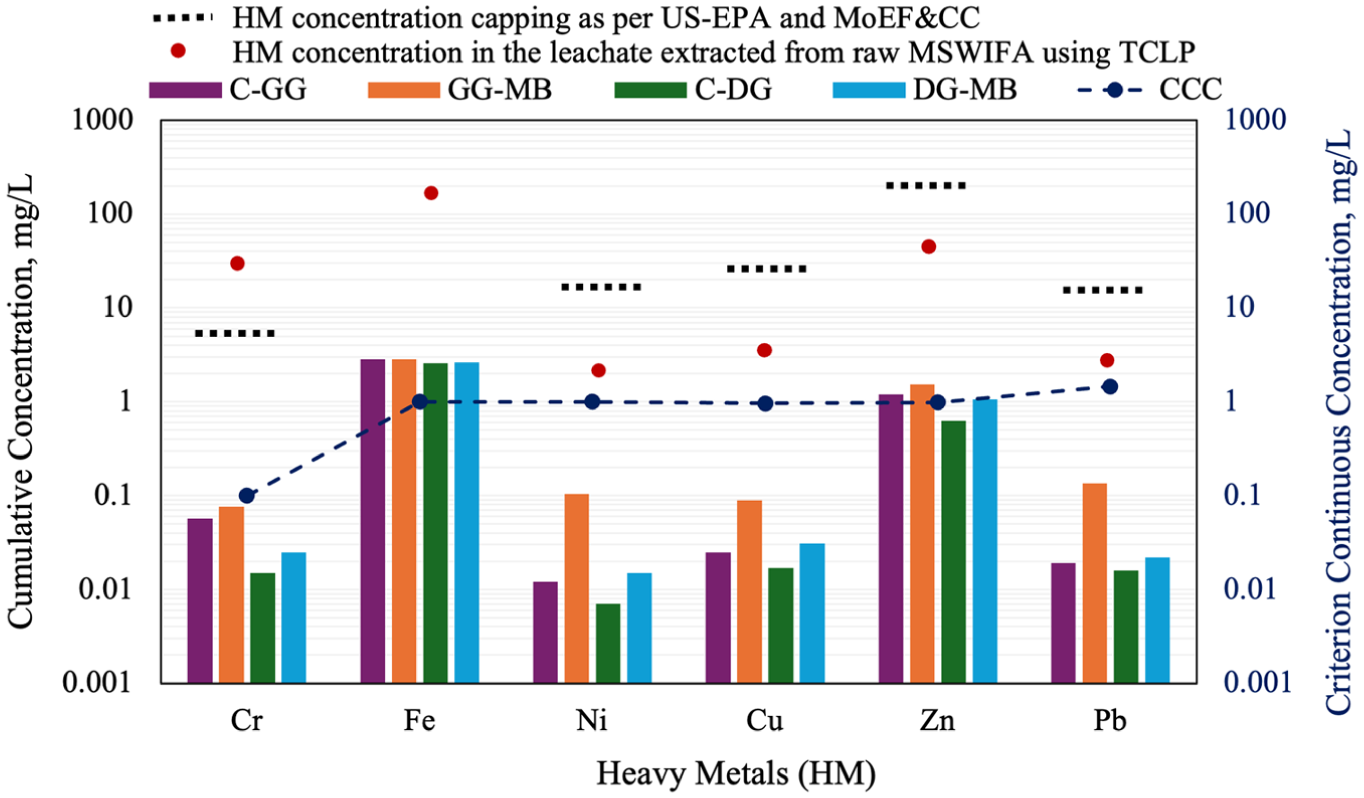
Cumulative reading of HM leaching from asphalt mixtures at the end of day 63.
To further interpret the leaching behavior, the cumulative release of HM over 63 days was plotted against the square root of time to examine the governing leaching mechanism, as shown in Figure 9. Linear relationships observed in these plots suggested that the leaching process was primarily diffusion-controlled, indicating that the migration of HM from conventional and modified asphalt mixtures occurred mainly through diffusion rather than dissolution or surface wash-off. The high coefficient of determination (R2) ranging from 0.78 to 0.97 across all samples confirmed the strong relation and diffusion-dominated mechanism for all the asphalt mixtures. Both the MSWIFA-modified asphalt mixtures demonstrated relatively higher R2 for most HM, particularly Fe with R2 = 0.95 in GG and R2 = 0.91 in DG, suggesting more predictable and stable leaching kinetics compared with the conventional asphalt mixtures. DG asphalt mixtures generally displayed lower initial leaching concentrations than GG asphalt mixtures, plausibly a result of reduced air voids content and enhanced encapsulation of HM within the denser asphalt matrix. DG asphalt mixtures feature a continuous, well-packed aggregate gradation with intermediate sizes filling the voids between coarse aggregates, yielding lower air void contents (typically 3% to 6% in DG versus 8% to 12% in GG). The denser matrix minimized interconnected pore networks, slowing down the HM diffusion from MSWIFA particles during early leaching stages (first 7 to 28 days). Further, enhanced mastic thickness around the aggregates encapsulated HM-modified MSWIFA, thereby reducing the surface exposure to leachants. In GG asphalt mixtures, selective omission of mid-sized aggregates created larger, open voids that served as preferential diffusional pathways, and accelerating the initial HM release via advection-diffusion. The finding provided valuable insight into the long-term leaching kinetics and helped in assessing the environmental stability of the MSWIFA-incorporated asphalt mixtures across the two aggregate gradations. Overall, the results demonstrated that MSWIFA can be safely implemented in asphalt pavements, effectively immobilizing HM while contributing to resource recovery and circular economy principles in pavement engineering.
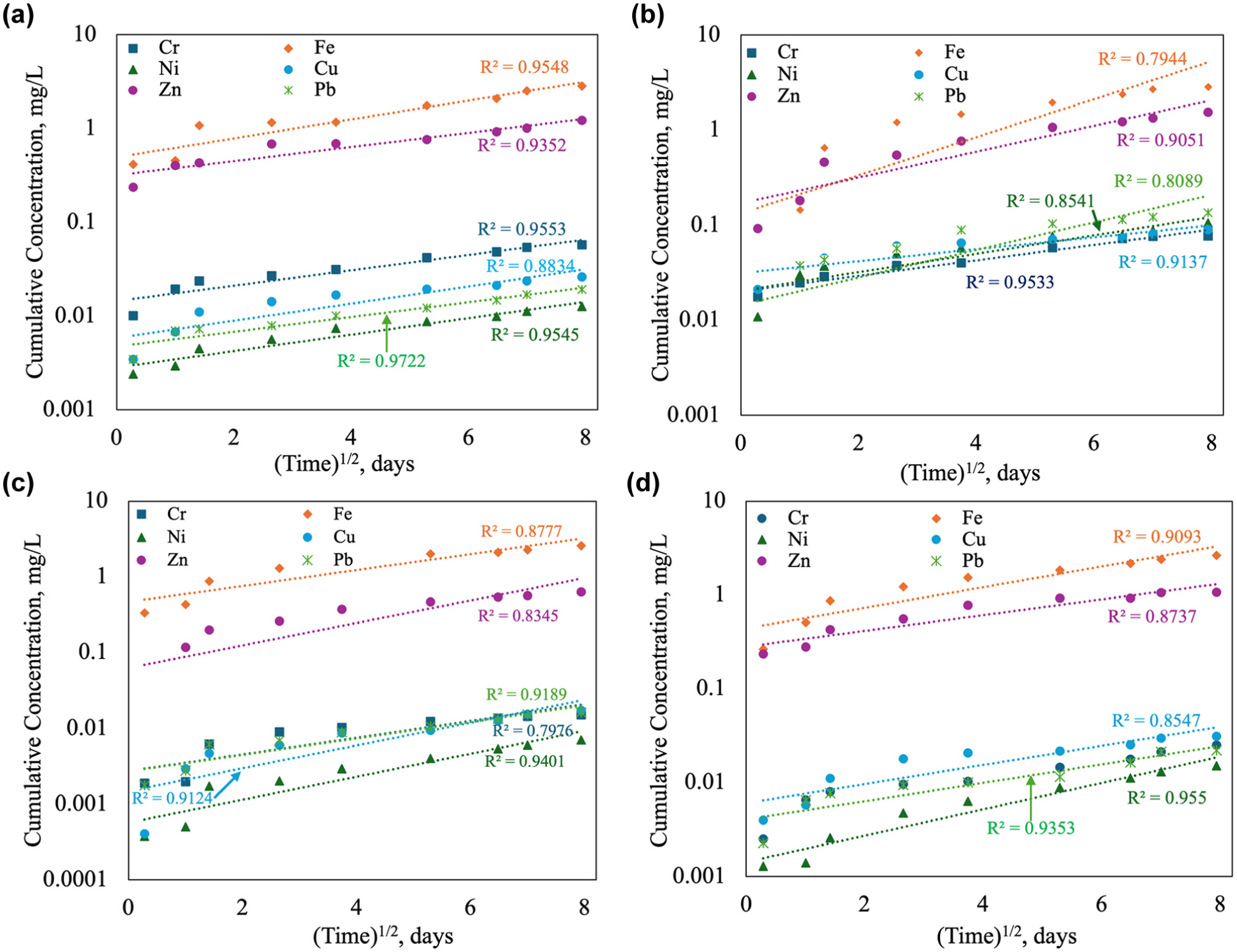
Cumulative release of HM versus the square root of time for entire leaching duration: (a) C-GG; (b) GG-MB; (c) C-DG; and (d) DG-MB.
Conclusions and Recommendations
The major objective of this study was to comprehensively evaluate the moisture sensitivity and long-term leaching behavior of MSWIFA-modified asphalt mixtures prepared using the wet process. Based on the various laboratory-based investigations, the conclusions and recommendations include the following:
Moisture Sensitivity Analyses: In general, MSWIFA-modified asphalt binder consistently outperformed unmodified, particularly in acidic environments. Although GG asphalt mixtures did not meet the TSR threshold of 80%, GG-MB exhibited greater resilience and reduced sensitivity to moisture-induced damage than the conventional. The DG-MB asphalt mixtures achieved the highest TSR, indicating potential for better performance as a moisture-resistant layer. Furthermore, MSWIFA-modified mixtures had lower stripping indices and better moisture resistance than conventional mixtures across both aggregate gradations and environmental conditions. The modified mixtures showed higher ESRs, particularly in acidic environments, attributed to MSWIFA inclusions, which likely promoted improved binder–aggregate adhesion and strengthened interfacial bonding. Notably, DG asphalt mixtures exhibited higher ESRs compared with GG, as the higher air voids content, unique aggregate skeleton, and elevated OAC in GG mixtures collectively facilitated increased water ingress, resulting in greater stiffness loss and, consequently, lower ESRs and increased susceptibility to moisture-induced damage. Finally, wheel tracker results revealed that the MSWIFA-modified asphalt binder enhanced the rutting resistance of asphalt mixtures, regardless of the aggregate gradation. The reduction in rut depth from conventional to modified mixtures was more pronounced in DG than in GG, indicating greater modification effectiveness within the DG type.
Long-Term Leaching Analyses: Although MSWIFA-modified asphalt mixtures exhibited higher leaching of certain HM than conventional mixtures, the overall leaching remained well below regulatory limits, demonstrating effective immobilization by the asphalt binder conglomerate. The cumulative leaching trends plotted against the square root of time showed strong relationships with high R2, indicating that HM release from both conventional and MSWIFA-modified mixtures was predominantly diffusion-controlled and governed by stable leaching kinetics. Notably, the inclusion of MSWIFA particles in the asphalt binder contributed to reduced HM leaching, attributed to enhanced particle dispersion and improved binder interaction, which collectively facilitated the effective immobilization of HM. For comparison, DG-MB asphalt mixtures achieved better immobilization of HM leaching compared with GG-MB mixtures as a result of aggregate gradation. Although Fe and Zn approached or exceeded the CCC thresholds which can be attributed to the aggressive acidic testing conditions simulating the worst-case scenarios rarely encountered in the real-field applications. For all the remaining HM, including Pb, Cu, Cr, and Ni, concentrations stayed well below the regulatory limits, confirming minimal ecotoxicological risk under realistic exposure conditions. The findings confirmed that incorporating MSWIFA into asphalt mixtures is a viable strategy for safely managing HM leaching and substantially reducing the environmental risk compared with the leaching potential of raw MSWIFA.
Recommendations: The innovative approach of sustainably repurposing MSWIFA showcased significant promise in resisting moisture-induced damage in both dense- and gap-graded pavement systems, as well as in reducing the environmental burdens associated with HM leaching direct from landfill. However, the study was limited to specific aggregate gradations and laboratory-only evaluation, which may not fully replicate the complex stress states, traffic loading frequencies, and environmental variabilities encountered in actual pavement structures. Thus, future work must focus on low-temperature performance using standardized protocols for modified asphalt binders as well as stiffness and fracture-fatigue performance tests at lower temperatures for MSWIFA-modified asphalt mixtures, along with the field implementation under diverse climatic conditions to thoroughly assess their real-world performance. Furthermore, it is important to analyze the specific chemical form of chromium, which may be carcinogenic, to understand its leaching behavior. Additionally, life-cycle assessment and life-cycle cost analysis must be undertaken in future to fully understand the benefits of MSWIFA from environmental sustainability and circular economy perspectives, thus promoting their use in creating green pavement materials and systems.
Footnotes
Acknowledgements
The authors gratefully acknowledge M/s Jindal Urban Waste Management (Guntur) Ltd., Guntur, Andhra Pradesh, India for supplying the MSWIFA samples from their waste-to-energy incineration plant. Special thanks to SRM University, Andhra Pradesh, India for providing access to the Hamburg Wheel Tracker facility.
Author Contributions
The authors confirm contribution to the paper as follows: study conception and design: Sheikh Hazim, Krishna Prapoorna Biligiri, B. Janaki Ramaiah; data collection: Sheikh Hazim; analysis and interpretation of results: Sheikh Hazim, Krishna Prapoorna Biligiri; draft manuscript preparation: Sheikh Hazim, Krishna Prapoorna Biligiri, B. Janaki Ramaiah. All authors reviewed the results and approved the final version of the manuscript.
Declaration of Conflicting Interests
The authors declared the following potential conflicts of interest with respect to the research, authorship, and/or publication of this article: Krishna Prapoorna Biligiri is a member of the Transportation Research Record’s Editorial Board.
Funding
The authors received no financial support for the research, authorship, and/or publication of this article.
