






Abstract
This study investigates the heterogeneity in crash severity outcomes for three high-risk driving behaviors—speeding, drowsy driving, and inattentive driving—on South Korean expressways, using 17,876 crash records collected between 2019 and 2024. Leveraging the random threshold random parameter ordered probit model within a Bayesian estimation framework, the analysis accounts for both observed and unobserved heterogeneity by incorporating random parameters and flexible threshold structures. The dataset integrates structured crash data with unstructured narrative text from police reports, analyzed using natural language processing techniques such as term frequency-inverse document frequency and latent Dirichlet allocation to identify behavioral factors contributing to crash severity. Results indicate that drowsy-driving crashes were particularly associated with severe outcomes, especially when occurring on mainline expressway segments and when the offending driver was operating a truck. Inattentive-driving crashes were associated with greater severity outcomes when involving mixed vehicle types and when occurring on mainline facilities, whereas younger and female drivers tended to be linked with lower severity. Within the subset of speeding crashes, injury severity tended to be higher when the offending vehicle was a heavy vehicle such as a truck, whereas rainy conditions were associated with somewhat lower injury severity. These findings underscore the importance of behavior-specific modeling in safety analysis and demonstrate the utility of integrating behavioral text-mining approaches with heterogeneity modeling to improve interpretability and policy relevance.
Introduction
Traffic crashes on expressways often result in severe outcomes, especially when high-risk driving behaviors such as speeding, drowsy driving, and driver inattention are involved. These behavioral factors are among the most critical contributors to injury severity and remain persistent challenges for traffic safety management. Among them, speeding is particularly well known for increasing crash likelihood and intensifying crash impact because of reduced reaction time and increased kinetic force. In this study, speeding, drowsy driving, and inattentive driving are considered key behavioral risk factors, as these behaviors have consistently been associated with elevated crash risk and more severe injury outcomes in previous research ( 1 – 3 ).
However, drowsy driving and inattentive driving, although less often examined together, exhibit distinctive patterns that warrant deeper investigation. National expressway crash records in South Korea reveal distinctive characteristics associated with these high-risk behaviors ( 4 ). According to national highway crash statistics in South Korea, three major behavioral driving factors, namely speeding, drowsy driving, and driver inattention, collectively accounted for over 82% of all fatalities (817 out of 992 deaths) between 2020 and 2024. In particular, driver inattention alone was responsible for nearly half of all crash-related deaths (48.5%), followed by drowsy driving (23.4%) and speeding (10.5%).
These crash statistics highlight a high proportion of severe outcomes associated with driver-related behavioral failures and underscore the urgent need for behavior-specific safety interventions on expressways. These observations underscore the need for a differentiated approach to understand how various behavioral crash types influence injury severity. This study conducts a comparative analysis of these three distinct crash types on expressways, namely speeding, drowsy driving, and driver inattention. Unlike prior studies that primarily rely on structured variables, we incorporated textual data from narrative crash descriptions to extract behavioral context. Using natural language processing (NLP) techniques, specifically term frequency-inverse document frequency (TF-IDF) and latent Dirichlet allocation (LDA), we identified latent situational factors and characteristic keywords for each crash type. These extracted features were then used to inform and enrich a set of explanatory variables in crash severity modeling. Another key component of this analysis involves addressing unobserved heterogeneity, which refers to variation in crash outcomes that cannot be explained by observed variables alone. Ignoring such heterogeneity can result in biased or misleading model estimates.
To address unobserved heterogeneity in driver behavior and environmental response, we applied the random threshold random parameter ordered probit (RTRPOP) model. This model not only allows explanatory variables to vary randomly across observations, but also permits the thresholds between severity levels to differ across individuals. By doing so, the model accounts for variability in both behavioral responses and latent injury risk perception, thereby improving model robustness and interpretability. Through this integrated framework, which combines behavioral text mining with advanced heterogeneity modeling, this study aims to offer a more comprehensive understanding of injury severity determinants on expressways. The findings have practical implications for behavior-specific crash prevention policies and targeted safety interventions in high-risk freeway environments.
The remainder of this paper is organized as follows. The Methods section describes the crash dataset, behavioral crash classification, narrative text processing, and RTRPOP modeling framework. The Results and Discussion section then presents the behavior-specific severity modeling results for drowsy driving, inattentive driving, and speeding crashes. Finally, the Conclusion summarizes the main findings and discusses their implications for expressway traffic safety management.
Literature Review
Behavioral Factors in Crash Severity
Zhipeng et al. applied a correlated random parameter ordered probit (OP) model with heterogeneity in means to analyze speeding-related crash severity on rural and urban roads, using 3 years of crash data ( 5 ). The study revealed that different factors influenced injury severity across road types. Heavy trucks and weekend crashes were significant on rural roads, while young drivers, nighttime lighting, and rear-end crashes were critical on urban roads. Abegaz et al. used a random parameters generalized OP model to examine crash severity involving speed limit violations ( 6 ). The study incorporated unobserved heterogeneity and relaxed the parallel lines assumption, revealing that nighttime driving, curved roads, and younger drivers significantly increased injury severity. Their findings highlight the heterogeneous nature of speeding-related crashes and the importance of accounting for contextual risk factors. Se et al. conducted a comparative analysis of driver injury severity between speeding and non-speeding crashes using U.S. crash data from 2015 to 2018 ( 7 ). The study found that speeding crashes were more likely to result in severe injuries and key risk factors including nighttime driving, younger drivers, and speeding significantly contributed to injury severity. Notably, the effect of these factors varied across speeding and non-speeding crashes, highlighting the necessity of disaggregated modeling frameworks. Mahmoud et al. investigated the safety impacts of adopting context-sensitive target speed on pedestrian, bicycle, and speeding-related crash frequencies ( 8 ). Using probe-vehicle data and roadway attributes from over 2,400 segments in Florida, Poisson-lognormal models were developed. The analysis shows that replacing the 85th percentile operating speed with target speed significantly reduced crash occurrences, especially in suburban and urban areas. The findings support target speed as an effective strategy for enhancing multimodal traffic safety. Rahman et al. analyzed 12,512 police-reported drowsy-driving crashes in Louisiana (2015–2019) using correspondence regression analysis to identify patterns associated with crash severity ( 9 ). The study revealed distinct clusters, such as afternoon fatigue crashes by middle-aged female drivers, young driver crashes on low-speed urban roads at night, and severe truck crashes in rural curved areas. Findings suggest the need to broaden prevention efforts beyond young drivers, especially in rural and industrial contexts. Kashani et al. investigated key factors influencing driver injury severity in fatigue- and drowsiness-related crashes using a data mining framework ( 10 ). Utilizing 11,392 crash records from three provinces in Iran (2011–2018), the study applied two-step clustering, oversampling, Classification and Regression Tree (CART), and boosting methods. Results showed that factors such as time of day, vehicle and crash type, and restraint use significantly affected injury severity. Urban crashes were influenced by helmet and seatbelt use, while rural crashes were shaped by road type and vehicle defects. Sundfør et al. analyzed the role of driver inattention in fatal road crashes in Norway using in-depth crash investigation data from 2011 to 2015 ( 11 ). The study found that inattention contributed to approximately 29% of fatal crashes, with a significant share involving pedestrian victims. Key types of inattention included failure to look, insufficient attention, and “looked but failed to see,” often caused by blind spots and sight obstructions. Distractions such as mobile phone use and in-vehicle activities accounted for up to 10% of fatal crashes. Overall, the reviewed studies consistently demonstrated that behavioral factors such as speeding, inattention, distraction, and fatigue significantly influenced crash severity across various road environments and driver populations. Notably, these behavioral risks are shaped by complex interactions with driver demographics, temporal conditions, and roadway characteristics.
Crash Severity and Random Parameter Models
Understanding the factors that influence traffic crash injury severity has long been a central focus in road safety research. Numerous studies have highlighted that crash outcomes are not solely determined by the occurrence of a crash but are significantly shaped by the complex interplay of driver characteristics, roadway and environmental conditions, and vehicle attributes. Azimi et al. conducted a random parameter OP analysis using 10 years of crash data to identify heterogeneity in freight vehicle rollover crashes ( 12 ). Interaction effects with random variables were also incorporated to examine potential sources of heterogeneity. The analysis showed that the effects of lighting conditions and driving speed varied substantially among the observations. Zamani et al. applied a random parameter logit analysis of pedestrian injuries using 6 years of crash data ( 13 ). The results showed that variables such as human factors and road factors were randomly distributed. Fountas et al. examined the severity of injuries in crashes occurring during school commutes, and analyzed the safety of school transportation routes ( 14 ). Utilizing 9 years of crash data from the STATS19 public database, the study employed a random parameter binomial logit model to identify factors influencing injury severity in urban and rural areas. The findings indicated that road type, lighting conditions, vehicle type, and the age of the driver or victim are significant determinants of injury severity. Fu et al. analyzed Florida, U.S., crash data using random parameter logistic regression models to explore gender disparities in injury severity following the mandatory use of female crash-test dummies ( 15 ). Their findings revealed that, although newer vehicles improved safety for both genders, significant injury severity differences between male and female drivers persisted. Wang et al. estimated crash severity and vehicle damage using a correlated mixed logit model that accounts for temporal instability with average heterogeneity ( 16 ). For this purpose, two years of intersection crash data were utilized, and factors contributing to crash outcomes were explored using driver characteristics, environmental variables, and vehicle and crash types as independent variables. According to the model results, the means of some random parameters varied among crashes, and considering their correlations led to more accurate estimates of crash severity. In a related crash severity analysis, Cho et al. compared ordered and mixed ordered response models for truck-related crashes in school zones and reported that mixed-effects specifications improved explanatory performance by accounting for heterogeneity across crash observations ( 17 ). A comprehensive review of existing literature shows that numerous factors affect the severity of traffic crashes. We also found that random parameter models have been frequently used to account for heterogeneity in the data.
The aim of this study is not merely to identify factors influencing crash injury severity, but to compare severity outcomes for three distinct behavioral crash types on South Korean expressways, namely speeding, drowsy driving, and inattentive driving. To this end, we develop behavior-specific RTRPOP models that allow for unobserved heterogeneity and integrate text-derived features from narrative police reports using TF-IDF and LDA to capture behavioral and situational context that is not available in structured crash fields. Numerous variables, including detailed information on vehicle characteristics, road conditions, weather, and driver attributes, were analyzed to understand their impacts on crash severity. Furthermore, to account for unobserved heterogeneity and to better capture the underlying mechanisms of crash severity, the RTRPOP model was employed. In the subsequent sections of this study, the Methods section presents a detailed description of the dataset, including its characteristics, descriptive statistics, and relevant preprocessing procedures, followed by an explanation of the analytical methodology employed. Thereafter, the results for the three crash types, namely speeding, drowsy driving, and inattentive driving, are presented in sequence. Each set of results is then discussed and synthesized into corresponding conclusions, providing a structured narrative that links the empirical findings to their broader implications for traffic safety.
Methods
Data Collection and Preparation
This study utilized nationwide expressway crash data provided by the South Korea Expressway Corporation, covering the 6 year period from 2019 to 2024. The dataset includes detailed information on traffic crashes occurring across the South Korean expressway network, and was used to support a comprehensive injury severity analysis targeting behavioral risk factors. Figure 1 illustrates the overall workflow of the present study.
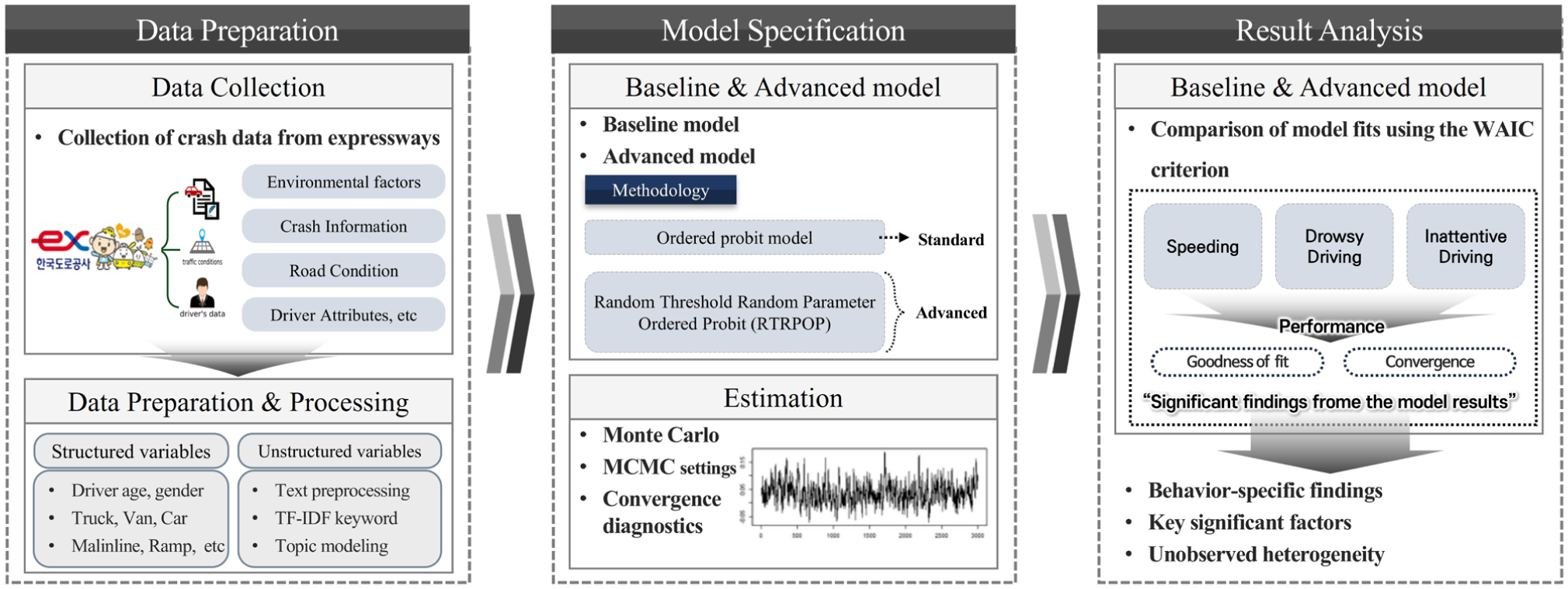
Overview of the study.
In the South Korea Expressway Corporation crash database, each crash record includes a police-coded “primary crash cause” that identifies the main human factor contributing to the event. For this study, we constructed three mutually exclusive behavioral subsets based on this field. Crashes whose primary cause was coded as speeding, drowsy driving, or inattentive driving were assigned to the corresponding behavior-specific group, while crashes with any other primary cause codes were excluded from the analysis. Because the database structure allows only one primary cause code per crash, no crash is simultaneously classified into more than one of the three behavioral categories. These primary-cause codes are assigned by investigating officers according to a standardized national protocol and have been widely used in previous South Korean expressway safety studies. A total of 17,876 expressway crashes were analyzed, specifically focusing on three high-risk crash types: speeding-related crashes (6,316 cases), inattentive-driving crashes (7,573 cases), and drowsy-driving crashes (3,987 cases). These three categories were identified based on behavioral annotations recorded in the crash reports and were chosen because of their distinct characteristics and potential impact on crash severity. The dependent variable in this study is the injury severity level with three ordered categories: fatal, severe, and minor injuries.
To explain variations in severity, a comprehensive set of independent variables was selected, including driver-related, vehicle-related, road-related, temporal, and environmental factors. Specifically, variables such as driver age, vehicle type, time of day, road geometry, weather condition, and type of crash were included in the analysis. In addition to the behavioral categories, we also retained detailed crash-type codes that capture typical expressway crash scenarios (e.g., sudden braking, sudden acceleration) as explanatory variables in the models. To ensure the statistical reliability of the model estimation, multicollinearity among the independent variables was assessed using the variance inflation factor (VIF). All selected variables exhibited VIF values within acceptable thresholds, indicating that the model was not compromised by redundant predictors. Table 1 presents the descriptive statistics of the dependent variable (crash injury severity) and explanatory variables including contributing crash factors, temporal and environmental conditions, crash location, road surface condition, and driver characteristics. As summarized in Table 1, severe and fatal crashes represent a relatively small share of the sample compared with minor-injury crashes. In this study, we retain the original three-level ordinal severity scale and interpret the models as characterizing injury severity conditional on the occurrence of a crash.
Descriptive Statistics for Explanatory Variables
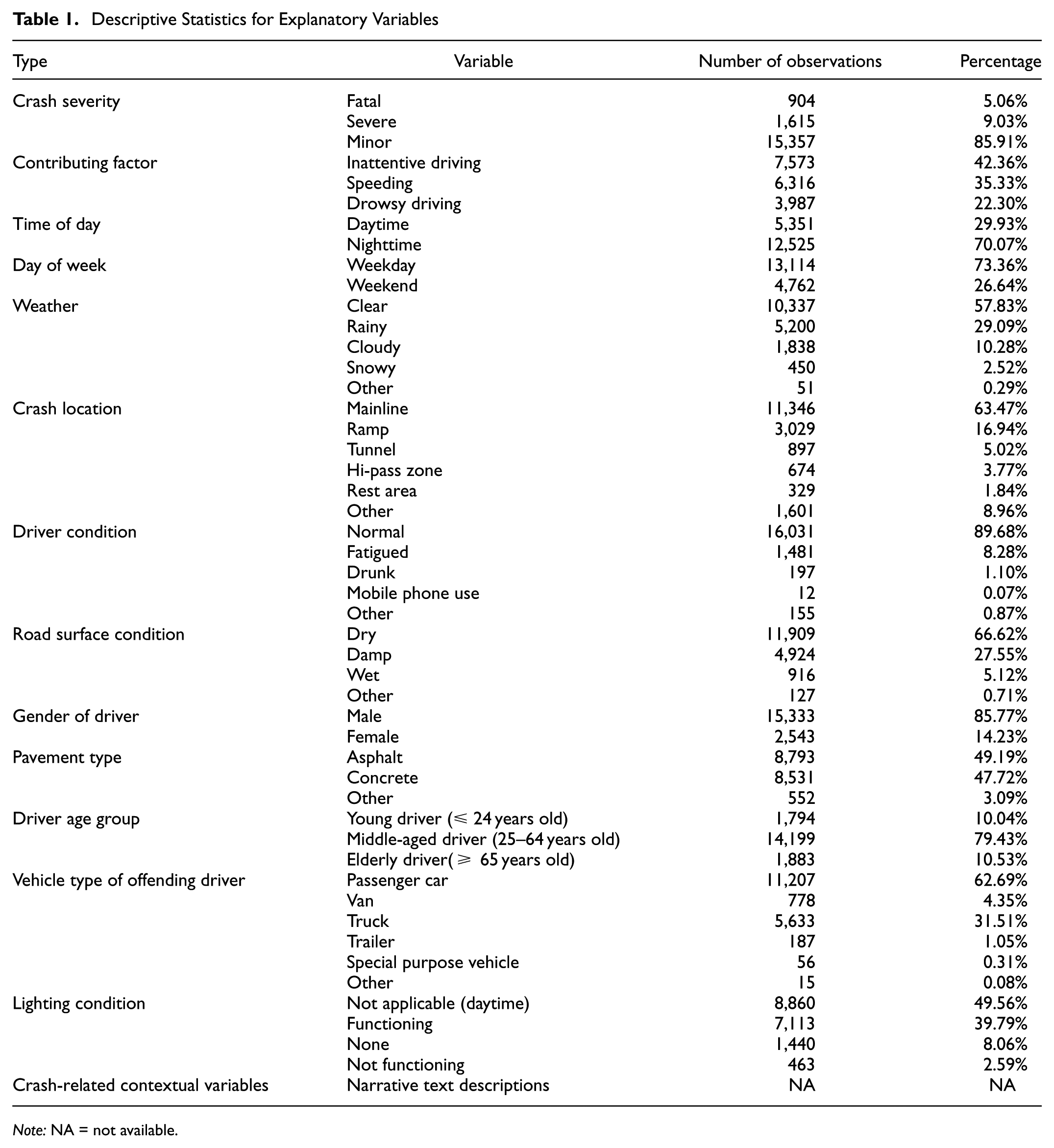
Note: NA = not available.
Random Threshold Random Parameter Ordered Probit (RTRPOP) Model
In this study, injury severity was classified into three ordered levels. Rather than modeling each severity level separately, we adopt an ordered-response framework in which each crash is assumed to have an underlying continuous “risk” of injury and the observed category is determined by whether this risk crosses certain thresholds. The RTRPOP model builds on this idea by allowing both the effects of key explanatory variables and the locations of these thresholds to vary across crashes, thereby capturing unobserved heterogeneity in driver behavior and crash circumstances.
The RTRPOP model captures unobserved heterogeneity across individual observations by incorporating a randomly distributed term into the estimated coefficients of the explanatory variables. This modeling framework has been extensively applied in prior research to investigate factors influencing traffic injury severity (18–21). In the present study, we applied this approach to explore the key variables that significantly affect the severity of crashes. Formally, the standard OP model can be represented as Equation 1:

where
The estimated value
However, as mentioned in previous studies, the estimated outcome from the standard OP model may be biased because of neglecting the heterogeneity in individual observations (
22
,
23
). To obtain the unobserved heterogeneity of each independent variable, a randomly distributed term

where
Based on the latent variable


where
This formulation, as expressed in Equation 4, allows the cut-points between severity categories to flexibly shift across individuals, reflecting heterogeneity in both observable traits and latent perceptions of crash severity ( 24 , 25 ).
All models were estimated within a Bayesian framework using the Hamiltonian Monte Carlo algorithm. Four independent Markov Chain Monte Carlo (MCMC) chains were run for each model, with 4,000 iterations per chain, including a 2,000-iteration warm-up phase. The adapt_delta parameter was set to 0.99 and the maximum tree depth (max_treedepth) to 15, to improve convergence stability and avoid divergent transitions. Convergence was assessed using the potential scale reduction factor (
Topic Modeling for Behavioral Context Analysis
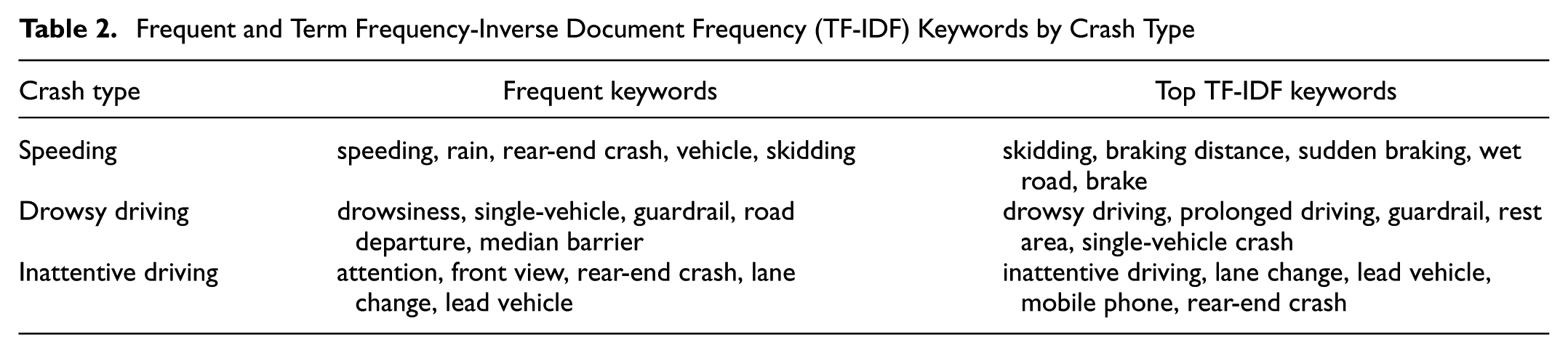
To enrich the explanatory power of our crash severity analysis, we applied NLP techniques to extract behavioral contexts from narrative crash reports. Two complementary methods were used, namely TF-IDF and LDA. TF-IDF identified keywords that were most distinctive for each crash type. Meanwhile, LDA enabled the extraction of latent semantic themes by clustering co-occurring terms into interpretable topics. This dual approach highlights both the most frequent and the most contextually meaningful keywords ( 28 – 31 ). The results from both methods support the identification of behavior-specific narrative contexts relevant to the RTRPOP modeling framework. Table 2 summarizes the representative keywords, and Table 3 presents three topics extracted for each crash type. To support the crash severity analysis, the key behavioral keywords and crash-specific contextual patterns were extracted from the narrative descriptions of each observation and incorporated as explanatory features. Furthermore, these text-derived features were incorporated into the severity modeling framework to reflect the behavioral contexts of drivers captured in narrative data, thereby facilitating their effective use in crash severity analysis.
Frequent and Term Frequency-Inverse Document Frequency (TF-IDF) Keywords by Crash Type
Top 3 Topics per Crash Type (Latent Dirichlet Allocation Topic Modeling Results)
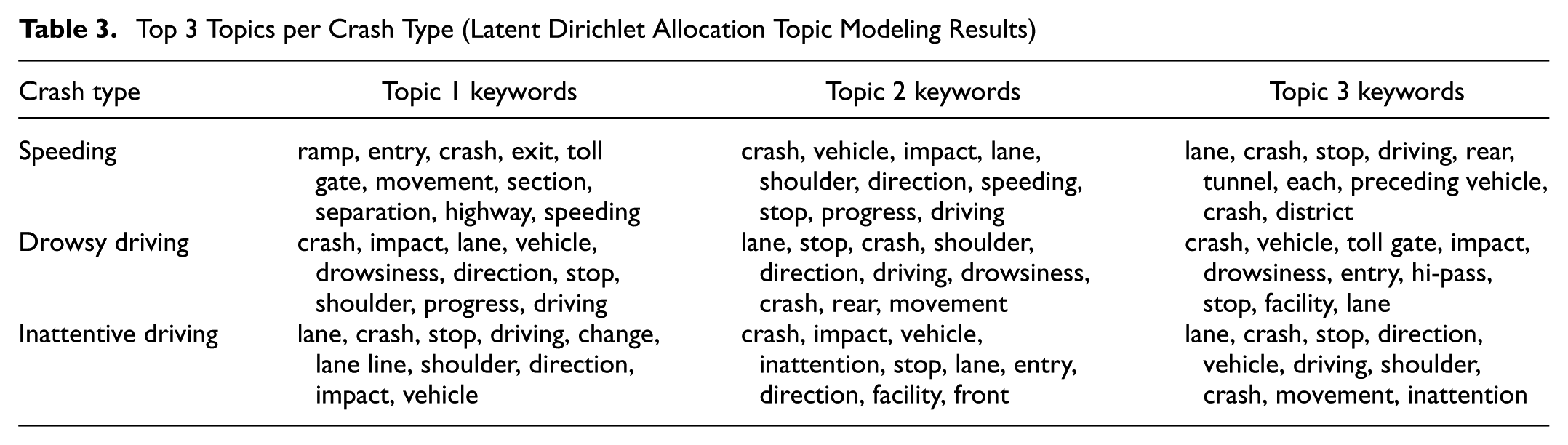
Narrative fields from police crash reports were preprocessed by converting all text to lower case, removing punctuation, tokenizing into unigrams, and eliminating standard English stop-words. A TF-IDF weighting scheme was then applied to obtain document-level term weights. For each behavioral crash type, the top-ranked TF-IDF terms were manually reviewed and grouped into semantically coherent keyword sets. In parallel, we estimated LDA models for each behavioral subset and selected the number of topics based on coherence measures and interpretability. In this study, the TF-IDF and LDA analyses were used to identify recurring behavioral and situational patterns in the narrative crash reports for each crash type. These text-based insights helped highlight the contexts that appeared frequently in speeding, drowsy driving, and inattentive-driving crashes, and were used to support the interpretation and review of structured variables in the behavior-specific modeling framework. In particular, the recurring keywords and thematic patterns were used to improve the relevance of variable selection and preparation, and to facilitate the interpretation of behavior-specific model results in light of the narrative contexts observed in the crash reports.
Results and Discussion
Modeling Results by Driving Behavior
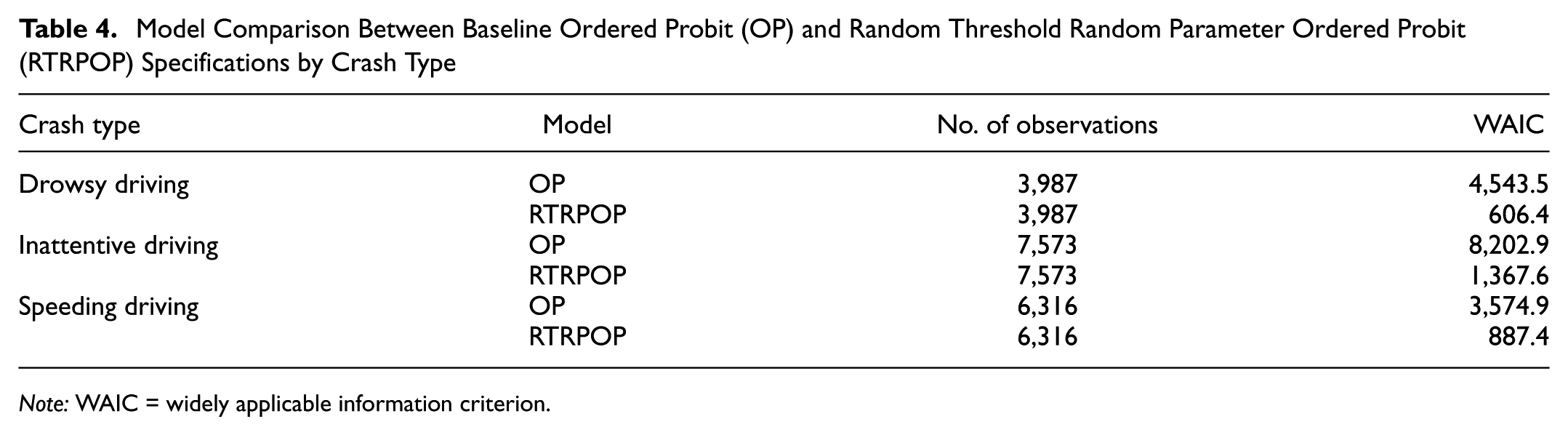
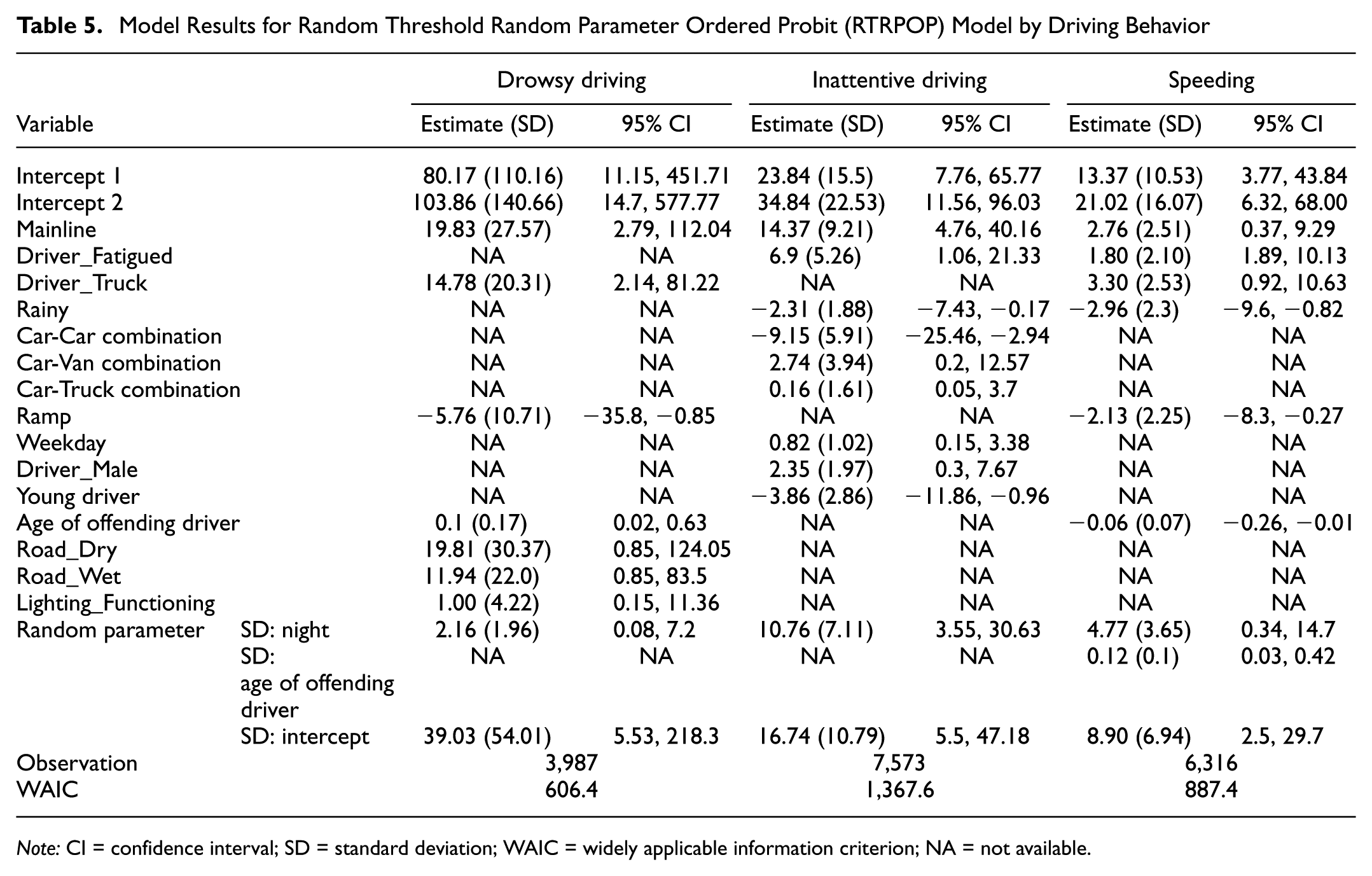
Table 4 reports the WAIC values for the baseline OP models and the behavior-specific RTRPOP models. Across all three crash types, the RTRPOP specification substantially outperforms the simpler OP model in WAIC. The results based on different driving behaviors are summarized in Table 5. Detailed descriptions are provided below for drowsy driving, inattentive driving, and speeding-related crashes. Before interpreting the behavior-specific model results, it is important to note that the OP coefficients operate on a latent injury severity propensity scale. Accordingly, the estimated coefficients should be interpreted as shifts in the unobserved propensity toward more or less severe injury outcomes rather than as direct changes in the observed probability of a specific severity category. A positive coefficient indicates an upward shift in latent injury severity propensity and, therefore, a tendency toward more severe outcomes, whereas a negative coefficient indicates a downward shift and a tendency toward less severe outcomes, holding other factors constant. On this basis, the coefficients reported in Table 5 are interpreted in terms of their direction and relative magnitude on the latent severity scale. In selecting variables for the analysis, particular attention was given to narrative-based contextual information derived from the dataset. Specifically, key terms identified through TF-IDF analysis and thematic structures obtained from LDA topic modeling were considered. These insights guided the prioritization of variables such as ramp segments, truck involvement, and specific vehicle combinations in the subsequent modeling process.
Model Comparison Between Baseline Ordered Probit (OP) and Random Threshold Random Parameter Ordered Probit (RTRPOP) Specifications by Crash Type
Note: WAIC = widely applicable information criterion.
Model Results for Random Threshold Random Parameter Ordered Probit (RTRPOP) Model by Driving Behavior
Note: CI = confidence interval; SD = standard deviation; WAIC = widely applicable information criterion; NA = not available.
To illustrate the convergence diagnostics and posterior estimation quality of the Bayesian models applied in this study, Figure 2 presents an example of posterior density plots and MCMC trace plots for the selected key variables from the drowsy-driving crash model. Rather than presenting all convergence diagnostics for each crash type (i.e., speeding, drowsy driving, and inattentive driving), this figure serves as a representative example demonstrating that the models achieve stable posterior estimates with satisfactory chain mixing. The left column of Figure 2 shows the posterior distributions for each selected parameter, indicating the most probable values and associated uncertainty, while the right column displays the trace plots for the four MCMC chains used in estimation. The chains exhibit good mixing without discernible trends, suggesting adequate convergence. The selected variables (Young driver, Driver fatigued, Mainline, and Car-Car crash) represent diverse types of effects within the model. Their posterior distributions and trace plots confirm stable parameter estimation and provide insight into the direction and magnitude of their influence on crash severity.
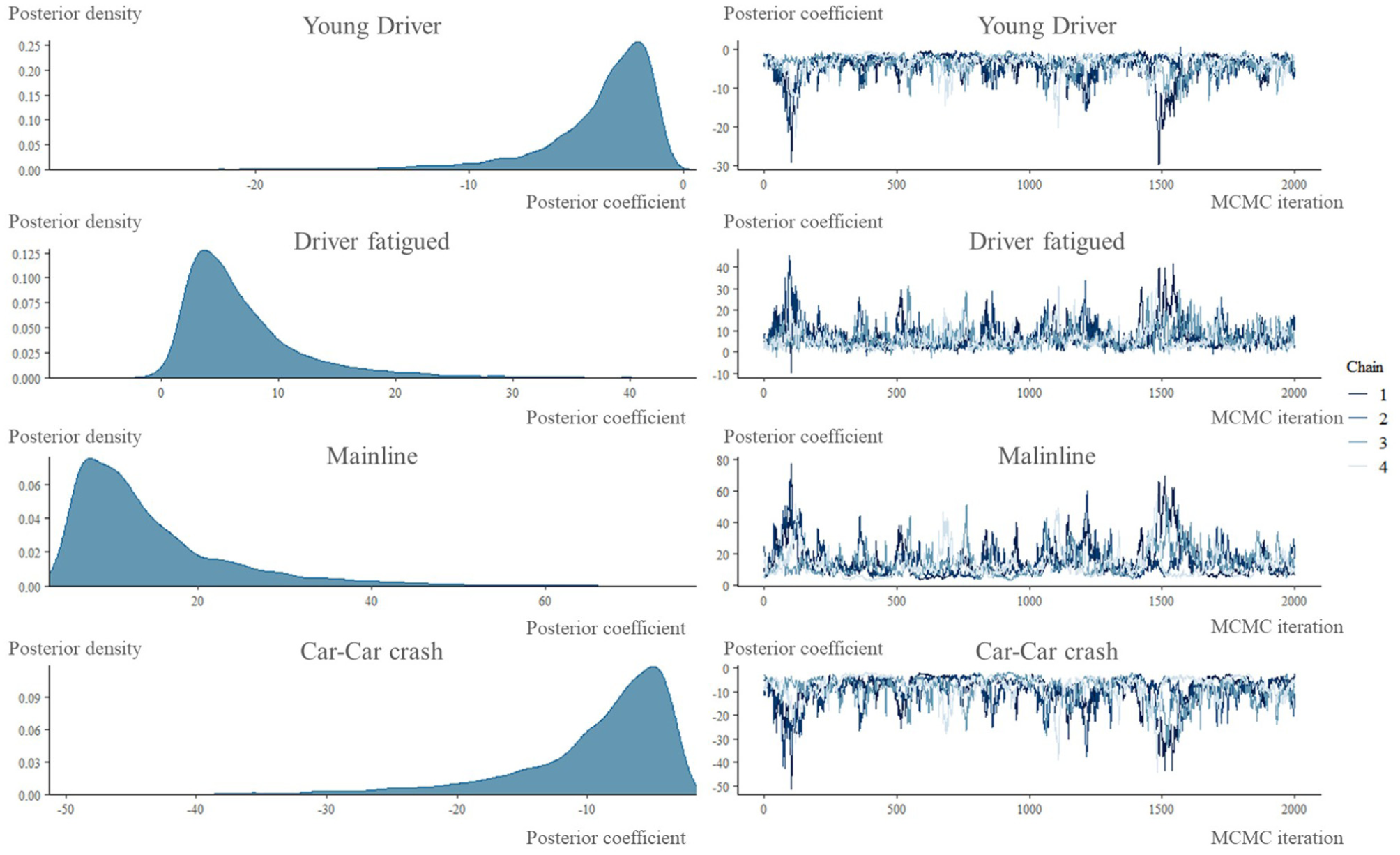
Example of posterior distributions (left column) and trace plots (right column).
Drowsy-Driving-Related Crashes
Table 5 presents the estimation results from the RTRPOP model applied to crashes involving drowsy driving. RTRPOP model results for drowsy-driving crashes reveal significant unobserved heterogeneity in both the explanatory variable coefficients and the threshold cut-points determining severity levels. The estimated standard deviation of the nighttime effect was statistically significant, indicating that the influence of nighttime conditions on crash severity varies considerably among drivers and circumstances. This variability may be influenced by differences in prior nighttime driving experience, professional driving status, or the geometric and operational characteristics of the roadway segments traveled, such as illumination coverage or alignment complexity. For some drivers, nighttime conditions may greatly increase severity because of reduced visibility, slower hazard perception, and fatigue accumulation, whereas for others, particularly those accustomed to night driving, the impact may be minimal. The model also incorporated random thresholds, allowing the cut-points between severity categories to vary across individuals. This implies that, for some drivers or crash scenarios, the transition from minor to severe injury occurs at a relatively low latent severity level, while for others it occurs at a much higher level. Such variability likely reflects differences in crash tolerance stemming from vehicle type, safety equipment use, driver physical condition, or roadway geometry.
Several fixed effects showed significant associations with injury severity. Dry pavement was associated with higher severity, likely because drivers operate at higher speeds under favorable surface conditions. According to Kassu and Anderson, the severity of crashes tends to increase under dry pavement conditions ( 32 ). Their analysis showed that both severe and non-severe crash rates were generally higher on dry surfaces than wet surfaces. This finding is consistent with the present study, which also observed a higher crash severity on dry pavement than on wet pavement. Mainline sections were more severe than ramp locations, reflecting higher travel speeds and fewer speed-moderating geometric features. Crashes where a freight vehicle was the at-fault vehicle resulted in significantly greater injury severity, consistent with the greater kinetic energy and mass disparity in such crashes. This is also potentially because truck drivers are more likely to be fatigued at nighttime because of long-distance driving and involved in severe drowsy-driving crashes. The functioning lighting condition category was associated with an increase in crash severity, although the effect was relatively weak. This finding should be interpreted in the context that functioning roadway lighting is primarily observed during nighttime conditions. In other words, crashes occurring under illuminated conditions are still inherently nighttime crashes, where reduced ambient visibility, narrower visual fields, and driver fatigue effects remain prevalent, potentially outweighing the visibility benefits provided by lighting. Ramp crashes were associated with lower severity, which may be attributed to lower operating speeds and tighter horizontal alignment than mainline sections. According to Haule et al., crash severity at ramp areas decreases when ramp metering is implemented ( 33 ). Finally, driver age had a significant positive effect, indicating that older at-fault drivers are more likely to be involved in severe or fatal crashes, consistent with age-related declines in reaction time and injury tolerance. Previous studies have consistently reported that crash severity increases with driver age ( 34 , 35 ). Older drivers are more likely to be involved in severe crashes than younger drivers, which aligns with the findings of the present study. Overall, the results indicate that the severity of drowsy-driving crashes is strongly influenced by both roadway and driver characteristics, with substantial inter-individual variability captured through the random parameter for nighttime driving and the random threshold structure. The results highlight the need for targeted countermeasures, such as fatigue management programs for professional drivers, enhanced nighttime enforcement, and roadway design strategies that account for behavioral differences in nighttime crash risk.
Inattentive-Driving-Related Crashes
The RTRPOP model results for inattentive-driving-related crashes are summarized in Table 5. The fixed-effects estimates reveal several driver- and crash-related factors that significantly influence the injury severity of inattentive-driving crashes. Younger drivers were associated with a lower probability of sustaining severe outcomes. This pattern may reflect their generally greater physical resilience and faster hazard response times, which can help them avoid or mitigate severe injury outcomes. Weekday crashes were modestly more severe, potentially because of higher traffic densities and more complex driving environments during commuting periods. Similar to the present study, previous research also found that crash severity is higher on weekdays than weekends ( 36 ). The presence of driver fatigue in inattentive-driving events markedly elevated severity risk, underscoring the compounding safety impact when reduced attentional capacity coincides with diminished physical alertness. Environmental conditions also shaped severity outcomes. Rain was associated with lower estimated crash severity in the inattentive-driving model, conditional on a crash occurring. One possible explanation is that inattentive drivers involved in crashes under rain may, on average, have already reduced speed or increased headway compared with those crashing on dry pavement. This pattern is consistent with Usman et al., who reported decreases in crash severity during rainy or snow-covered road conditions and linked this to speed reductions and more cautious driving behavior ( 37 ). Nevertheless, this finding in our data should be interpreted as a context-specific feature of the severity distribution among inattentive-driving crashes, rather than as evidence that rainy conditions generally reduce overall crash risk. Male drivers exhibited a higher likelihood of severe crashes, a finding consistent with prior evidence linking male drivers to more aggressive or higher-speed driving patterns. Previous research has shown that male drivers are more likely than female drivers to engage in risky driving behaviors, leading to higher crash severity ( 38 ). Roadway and vehicle-type factors also played a critical role. Crashes on mainline sections were substantially more severe than crashes on ramps, likely reflecting higher travel speeds, fewer speed-moderating geometric features, and increased exposure to high-speed conflicts. Crashes between two passenger cars were significantly less severe, whereas crashes involving passenger car–van or passenger car–freight vehicle combinations tended to result in higher severity levels, consistent with the larger mass and kinetic energy disparities in these pairings. Previous research found that crashes involving a passenger car and a van or light truck result in greater crash severity than crashes between two passenger cars ( 39 ). Notably, the significance of vehicle combination effects in the model is consistent with narrative-based keyword extraction results, where terms related to vehicle type mismatches frequently appeared in inattentive-driving crash descriptions. Collectively, these results highlight that the severity of inattentive-driving crashes is strongly influenced by a combination of driver demographics, roadway type, environmental conditions, and vehicle mass differences. The observed variation in the random nighttime effect suggests considerable diversity in how drivers respond to reduced visibility conditions, while the random threshold specification captures the heterogeneity in injury transitions across crash scenarios. This variability may stem from differences in drivers’ familiarity with nighttime driving, individual visual adaptation to low-light conditions, and compensatory behaviors such as increased vigilance or reduced speed.
Speeding-Related Crashes
Table 5 shows that the estimated standard deviation for the nighttime effect was statistically significant, indicating that the influence of nighttime driving conditions on the severity of speeding-related crashes varies considerably among drivers and contexts. The inclusion of random thresholds further indicated that the transition from minor to severe injury differs across individual crashes. Several fixed effects were found to significantly influence crash severity. The “male driver” indicator was statistically significant only in the inattentive-driving model. Although this variable was also tested in the speeding and drowsy-driving models, its posterior effect was not credibly different from zero in those specifications and it was, therefore, excluded from the final models. Mainline crashes were more severe than those occurring on ramps, consistent with higher operating speeds, straighter alignments, and the absence of geometric speed-moderating features on mainline sections. Crashes involving a freight vehicle were also significantly more severe, likely because of the greater kinetic energy transfer from mass disparity and the greater momentum of heavy trucks than passenger cars, particularly at higher speed. Rainy conditions were, likewise, associated with reduced estimated injury severity, conditional on a speeding-related crash. This may reflect behavioral adaptation under adverse weather, such as partial speed reductions or longer headways, which could lower impact conditions even among crashes coded as speeding. As with inattentive-driving crashes, we interpret this as a context-specific pattern in the severity distribution of speeding crashes, rather than as a general conclusion about the overall safety effects of rain. In speeding-related crashes, the age of the offending driver showed a small, but statistically significant, negative effect, indicating that, as the driver’s age decreases, crash severity tends to increase. This suggests that younger offending drivers may be more prone to sustaining severe outcomes in speeding crashes, as they are more likely to engage in aggressive driving. Previous literature has shown that younger drivers engaging in speeding are more likely to be involved in crashes with higher severity. This heightened risk is attributed to their greater propensity for traffic violations, susceptibility to peer influence, and limited driving experience ( 40 , 41 ). In addition, the random parameter specification for the age of the offending driver was statistically significant, indicating substantial variability across individual crashes in how driver age influences severity. This suggests that while, on average, younger drivers tend to experience higher severity in speeding-related crashes, the magnitude of this effect is not uniform. For some drivers or crash contexts, a reduction in driver age may greatly amplify severity risk because of aggressive maneuvering, limited hazard perception, or reduced crash-avoidance capability, whereas for others the relationship is less pronounced. Such heterogeneity underscores the importance of accounting for both fixed and random effects when assessing the role of driver age in speeding crash outcomes. Overall, these findings highlight that speeding-related crash severity is shaped not only by roadway and vehicle type factors, but also by situational adaptations to environmental conditions and inter-individual differences.
Overall, the behavior-specific patterns identified in this study are broadly consistent with international evidence on fatigue-, distraction-, and speed-related crashes, particularly in terms of the elevated severity associated with drowsy driving on high-speed facilities and in crashes involving heavy vehicles or mismatched vehicle masses. At the same time, the joint modeling of speeding, drowsy, and inattentive crashes within a unified RTRPOP framework, combined with text-derived features from police narratives, allows us to uncover more nuanced, context-specific patterns in the South Korean expressway environment. These results suggest that, while the underlying mechanisms are similar to those documented in prior international work, their expression in terms of observed severity distributions can vary across institutional and roadway contexts.
Conclusions and Recommendations
This study examined crash severity outcomes for three high-risk driving behaviors on South Korean expressways, namely speeding, drowsy driving, and inattentive driving, by applying an RTRPOP model within a Bayesian estimation framework. The model incorporated both random parameters and random thresholds, enabling the capture of unobserved heterogeneity in driver responses, roadway environments, and injury severity transition points. This approach allowed for a more realistic representation of the variability inherent in behavioral crash contexts. Additionally, the analysis integrated structured crash data with unstructured narrative information using NLP techniques, including TF-IDF and LDA topic modeling, to extract behavioral and situational keywords for inclusion as explanatory variables. In this analysis, variables such as ramp location, truck involvement, and specific vehicle combinations, which were closely related to frequently observed narrative contexts across the three behavioral categories, were prioritized for inclusion as explanatory factors in each behavioral-specific model. The modeling results revealed that each behavioral crash type exhibits distinct mechanisms influencing injury severity. Drowsy-driving crashes were strongly associated with high-severity outcomes, especially on mainline sections and in crashes involving freight vehicles, reflecting the combined effects of high operating speeds, mass disparities, and driver fatigue. Inattentive-driving crashes showed that younger drivers, rainy conditions, and passenger car–passenger car crashes were associated with lower severity, whereas fatigue co-occurrence, mainline locations, and mismatched vehicle types increased severity risk. For speeding-related crashes, severity was significantly higher on mainline sections and in crashes involving freight vehicles, reflecting the combined effects of higher operating speeds, mass disparity, and greater kinetic energy transfer at impact. Younger offending drivers were associated with increased crash severity, suggesting a heightened vulnerability linked to aggressive driving tendencies and risk-taking behavior.
Across all crash types, mainline sections consistently posed a higher severity risk than ramps, underscoring the influence of geometric design and operating speed environment. Rainy conditions tended to reduce severity for inattentive and speeding crashes, likely because of behavioral adaptation in the form of reduced speed or increased headway. These findings reinforce the importance of considering contextual factors when evaluating the severity implications of high-risk behaviors.
From a policy and safety management perspective, the results indicate that a one-size-fits-all countermeasure strategy is unlikely to be effective. Instead, targeted interventions should be developed to reduce crash severity for each behavioral context based on the findings in this study. For drowsy driving, emphasis should be placed on fatigue detection systems, improved rest area accessibility, and targeted measures for truck drivers who are more likely to experience fatigue during nighttime operations. For inattentive driving, education and enforcement targeting cognitive distractions, along with advanced driver-assistance systems for more strict crash warning in high-risk conditions (e.g., passenger car drivers driving close to larger and heavier vehicles), may be most effective. For speeding, targeted driver education for younger drivers, heavy vehicle speed management, and real-time variable speed limits on mainline sections could help mitigate severity outcomes. Methodologically, this study demonstrates that combining an RTRPOP framework with TF-IDF and LDA-based predictors provides a flexible way to incorporate behavioral context from narrative crash reports into injury severity modeling. The text-derived variables revealed additional behavior-specific patterns, such as fatigue-related topics in drowsy-driving crashes and lane-change-related topics in inattentive-driving crashes, which would be difficult to detect using structured data alone. These findings underscore the potential of NLP-enhanced severity models to support more targeted enforcement and behavioral safety countermeasures on high-speed facilities.
Two caveats should be kept in mind when interpreting these results. Our models include the main roadway, environmental, and vehicle factors available in the crash database, but they do not explicitly control for very fine-grained time-of-day or segment-level effects, so some remaining space–time patterns may not be fully captured. In addition, the modeling strategy was deliberately oriented toward explaining behavior-specific severity mechanisms rather than optimizing predictive performance. Future work can build on this framework by incorporating richer temporal and spatial exposure measures, developing prediction-focused extensions that explicitly address the rarity of severe outcomes, and evaluating these extended models using out-of-sample validation.
Finally, the integration of behavioral text mining with heterogeneity modeling in this study provides a useful approach for traffic safety research. Combining structured and unstructured crash data can improve understanding of severity mechanisms and support the development of behavior-specific safety strategies on high-speed roads.
Footnotes
Author Contributions
The authors confirm contribution to the paper as follows: study conception and design: J. Park, C. Lee, N. Park; data collection: S. Lee, N. Park; analysis and interpretation of results: S. Lee, C. Lee, J. Park; draft manuscript preparation: S. Lee. All authors reviewed the results and approved the final version of the manuscript.
Declaration of Conflicting Interests
The authors declared the following potential conflicts of interest with respect to the research, authorship, and/or publication of this article: Chris Lee is a member of Transportation Research Record’s Editorial Board. All other authors declared no potential conflicts of interest with respect to the research, authorship, and/or publication of this article.
Funding
The authors disclosed receipt of the following financial support for the research, authorship, and/or publication of this article: This work was supported by the National Research Foundation of Korea (NRF) grant funded by the Korea government (MSIT) (Grant No. RS-2026-25494446).

Data Accessibility Statement
The data used in this study are not publicly available because access is restricted by the data provider. The crash data were obtained from the Korea Expressway Corporation and may be made available on reasonable request and with permission from the Korea Expressway Corporation. The authors confirm that they did not have any special access privileges to these data.