







Abstract
In this study, we aimed to develop and validate the Identity Shifting for Black Women Scale (ISBWS), which assesses the process of altering one’s speech, perceptions, behaviors, and appearance to navigate experiences of discrimination and to enhance intraracial relationships. In Study 1, data from 356 Black women in the United States were used for exploratory factor analysis. Exploratory factor analysis results supported a 15-item, two-factor solution that captured the following domains: (a) Navigating Gendered Racial Oppressive Contexts and (b) Enhancing Intraracial Relationships. In Study 2, confirmatory factor analyses were performed with data from 289 United States Black women. Confirmatory factor analyses tested a unidimensional correlated traits model, a two-factor correlated traits model, and a bifactor model. The bifactor model provided optimal fit, and internal consistency estimates for scores on the ISBWS subscales were good. The ISBWS’ construct validity was supported given its association with related measures of shifting and gendered racial microaggressions. The ISBWS also accounted for additional variance in Black women’s anxiety symptoms over and above an existing shifting measure. Our findings support the added value of the ISBWS in understanding Black women’s multifaceted experiences and can be used to inform interventions aimed to maximize the benefits and reduce the costs of shifting among Black women.
Black women, or women of African descent, in the United States (U.S.) experience marginalization at the intersection of racism and sexism (gendered racism; Essed, 1991). They often find themselves in settings in which their attitudes, beliefs, and behaviors are devalued relative to Eurocentric standards (Jones & Shorter-Gooden, 2004). Thus, many Black women adapt to this by altering their self-presentation across professional and interpersonal contexts – a process known as identity shifting (Dickens & Chavez, 2018; Jones & Shorter-Gooden, 2004). Identity shifting has been studied extensively to understand the process by which different groups downplay their cultural distinctiveness to challenge stereotypes and navigate White supremacy culture (Dickens et al., 2018; Jones & Shorter-Gooden, 2004).
For Black women, identity shifting appears to be an important aspect of their gendered racial identity development, and it is often used to avoid conflict or discrimination (Williams & Lewis, 2021). Unfortunately, identity shifting has contributed to deleterious consequences for Black women, such as stress, depression, and anxiety symptoms (Gamst et al., 2020; Jones et al., 2021). Because identity shifting may entail embodying strategies that are inconsistent with or impede authentic self-expression, Black women may experience psychological discomfort and anxiety when engaging in identity shifting (Dickens & Chavez, 2018; Swann et al., 2009). Identity shifting can also prompt the “frozen effect” - cognitively “checking out” from situations by becoming silent to avoid confrontation (Dickens & Chavez, 2018). Thus, shifting experiences could exacerbate Black women’s reports of mental health symptoms.
Despite rich qualitative research on shifting, scholars’ ability to quantitatively assess how identity shifting might predict Black women’s life outcomes has been thwarted by the lack of psychometrically sound measures that capture this construct. Johnson et al. (2016) initially responded to this limitation by developing the groundbreaking African American Women’s Shifting Scale (AAWSS). Johnson et al. (2016) used the Multicultural Assessment-Intervention Process (MAIP) model to develop items that captured Black women’s daily shifting strategies. We extend this work by developing an identity shifting scale that explicitly incorporates an intersectionality framework – a framework that interrogates how Black women’s intersecting identities and oppressions influence identity shifting processes (Crenshaw, 1989). Whereas Johnson et al.’s (2016) scale reflected Black women’s daily shifting behaviors, our scale aims to measure the extent to which Black women modify their speech, perceptions, behavior, and appearance across professional and social contexts to navigate oppression or enhance within-group relationships. To demonstrate the full merit of this investigation, we first review the literature on Black women’s identity shifting. We then discuss the advantages of using an intersectionality framework to highlight how Black women’s gendered racial identity development and experiences with gendered racism precipitate the use of identity shifting. Third, we outline the main goals and hypotheses for the current study.
The History of Identity Shifting Scholarship
The current work on identity shifting among U.S. Black women is situated within the identity negotiation and identity interference scholarship. Ting-Toomey (1986), a communication studies scholar, has been credited as one of the first to associate identity with negotiation; she conceptualized identity negotiation as the choices one makes in cultural interactions to secure their self-image (Ting-Toomey, 1986, 1999). Thus, people may decide to show or hide aspects of themselves to seek validation and protect themselves from discrimination. Others argue that identity negotiation was coined by social psychologist William Swann (1987) who argued that identity negotiation was the agreement of roles between people in a given social interaction. According to Swann (1987), these interactions are based on competing processes of behavioral confirmation (i.e., when a person pressures another person to behave in ways that confirm expectations of the perceiver) and self-verification (i.e., the process of people developing expectations that are in alignment with self-views of the target person). To date, researchers have explored identity negotiation across cultural groups and life domains, such as work and family roles (Demers, 2013; Read & Bartkowski, 2000; Swann et al., 2009).
With specific attention on Black women, Settles (2004, 2006) expanded the identity negotiation scholarship to explore identity interference, or how Black women negotiated conflict between their race and gender identities. Settles (2004) argued that stereotypes about Blackness could conflict with stereotypes about womanhood causing Black women to feel as if performing one identity (e.g., one’s race) interfered with another (e.g., one’s gender). In the current study, we conceptualize identity shifting as a type of identity negotiation that captures the conscious and unconscious processes of shifting one’s speech, perceptions, behavior, and appearance across contexts based on feelings of exclusion, awareness of marginalization, and the expectations of others (Dickens et al., 2018; Jackson, 2002; Ting-Toomey, 1999).
We also posit that identity shifting is multifaceted. Because language is deeply intertwined with identity, code-switching is one dimension of identity shifting. Code-switching entails alternating between two or more dialects or languages, changing the volume and tone of one’s voice, or experimenting with how words are annunciated (Auer, 2013). In the U.S. context, code-switching has commonly been studied among Black people as a performative expression that includes the use of both Black English, “Euro-American speech with an Afro-American meaning, nuance, tone, and gesture” (Smitherman, 1977, p. 32), and Standard English to navigate White environments (Koch et al., 2001; Morton, 2014; Ogbu, 2004). Although some argue that code-switching perpetuates anti-Blackness racism (Baker-Bell, 2020), many Black Americans perceive code-switching as a necessary strategy to advance in professional spaces (McCluney et al., 2021). Therefore, it is not surprising that Black women discussed going back and forth between Black and White vernaculars to preserve professional networks with coworkers (Boulton, 2016; Dickens & Chavez, 2018; McDowell & Carter-Francique, 2017).
The second dimension of identity shifting entails concealing one’s identity by altering perceptions, appearances, and behaviors. This concealment can include avoiding discussions about one’s social identities or clearing one’s space of pictures and symbols representing one’s “Blackness” and womanhood (Clair et al., 2005; Madera et al., 2012). For Black women, changing their appearance could include straightening their hair or forgoing natural hairstyles (e.g., braids) in order to “blend in” and conform to Eurocentric values of professionalism (Johnson et al., 2017). Therefore, identity shifting is a multidimensional process that helps Black women navigate different cultural contexts for different purposes.
Using an Intersectionality Approach to Contextualize Black Women’s Identity Shifting
Settles’ (2004) work on Black women and identity interference highlighted the importance of situating Black women’s identity processes within their distinct cultural experiences. Toward this end, we utilize intersectionality as the main theoretical framework to contextualize the oppressive realities that facilitate identity shifting for Black women. Intersectionality originated with Black feminist scholars who voiced their unique experiences at the intersection of racism and sexism (Crenshaw, 1989; Hancock, 2016; May, 2015). Intersectionality also provides a more holistic understanding of human phenomena that is not reflected when single identity dimensions (e.g., race) are considered alone. Though race scholars, like Du Bois (1903), have highlighted how Black Americans experience a double consciousness that fuels strategies like identity shifting to retain their Black identity while living in a White society, an intersectionality framework brings Black women’s intersectional experiences to the center. An intersectional approach allows scholars to interrogate how Black women engage in identity shifting to navigate interlocking systems of racism, sexism, and misogyny, as well as to describe how intersectional experiences, like gendered racial identity development and gendered racism, give way to Black women’s identity shifting processes.
Black Women’s Gendered Racial Identity Development
According to Black feminist theorists, Black women’s shared experiences with racism and sexism give way to a “collective standpoint” regarding what it means to be a Black woman (Collins, 1996, p. 9). Williams and Lewis (2021) uncovered elements of this collective standpoint by investigating the developmental process by which Black women make meaning of their gendered racial identity. They found that Black women’s gendered racial identity development included four phases, one of which was navigation, or the need to traverse social contexts by shifting their Black woman identity (Williams & Lewis, 2021). Relatedly, previous research by Jones et al. (2021) showed that identity shifting strategies were associated with higher levels of gendered racial identity centrality (importance of one’s race and gender to their overall sense of self). That is, Black women were more likely to engage in identity shifting when they viewed their intersected race and gender identity as central to their overall sense of self.
Black Women’s Experiences of Gendered Racism, Stereotyping, and Gendered Racial Microaggressions
Williams and Lewis (2021) also found that 53% of the participants discussed shifting aspects of their Black woman identity to mitigate experiences of gendered racism and to survive oppressive environments. This finding is consistent with previous research that illustrated that women reported higher levels of identity shifting when they reported higher levels of gendered racism (Jones et al., 2021). One way gendered racism may manifest is through stereotyping. Since American enslavement, three prevalent stereotypes have caricaturized Black womanhood: Mammy, Jezebel, and Sapphire (Thomas et al., 2004; West, 2008). The Mammy stereotype describes a motherly Black woman servant who is strong, nurturing, self-sacrificing, and content in her caregiving roles. The Jezebel stereotype perpetuates beliefs that Black women are sexually promiscuous and sexually seducing, whereas the Sapphire stereotype typecasts Black women as aggressive, dominating, and angry (Reynolds-Dobbs et al., 2008; West, 2008). In recent years, the Superwoman/Strong Black woman stereotype has emerged (Thomas et al., 2004), and it perpetuates beliefs that Black women should shoulder insurmountable stress, be independent while caring for others, and suppress their emotions (Nelson et al., 2016; Watson & Hunter, 2016; Woods-Giscombé, 2010). Because of these stereotypes, Black women often feel pressure to behave in less stereotyped ways, and thus engage in identity shifting. Qualitative findings from McDowell and Carter-Francique (2017) illuminated how Black women engaged in identity shifting to resolve identity conflicts and challenge stereotypical expectations. Similarly, Mowatt et al. (2013) found that Black women often self-silenced to circumvent being labeled an “angry Black woman.” Therefore, it is evident that experiences and awareness of oppressive gendered racial stereotypes can influence Black women’s identity shifting.
Gendered racism can also manifest as gendered racial microaggressions -- subtle and everyday verbal, behavioral, and environmental experiences of oppression based on the intersection of one’s race and gender (Lewis et al., 2013). Gendered racial microaggressions are rooted in stereotypes of Black women as domineering, sexually promiscuous, and strong. These microaggressions can take the form of objectifying women’s bodies, silencing them in the workplace, and making assumptions about their communication styles, physical appearance, and body type (Lewis et al., 2016). Based on related research (Jones et al., 2021), it could be that Black women who experience gendered racial microaggressions attempt to reduce future microaggressions by engaging in more shifting behaviors. For instance, receiving comments about the size of their butt, hips, or other body parts could lead Black women to alter their dress style, whereas attempts to touch their hair could cause Black women to avoid natural hairstyles. These experiences of microaggressions support qualitative findings that revealed that Black women used identity shifting to confront body image concerns with skin tone, hair texture, and body size (Jones & Shorter-Gooden, 2004). Thus, experiences with gendered racial microaggressions likely inform Black women’s identity shifting strategies.
Black Women’s Identity Shifting in the Black Community
For many Black women, identity shifting is par for the course in predominantly White contexts. However, more recent work suggested that identity shifting can also occur within one’s cultural group (Njoku & Patton, 2017). Although Black women may find a sense of belonging and connectedness in predominantly Black communities (Thelamour et al., 2019), some Black women may feel as if they must also shift in these communities to adjust to cultural norms or “home codes” - rules of conduct based on race, gender, class, and other identities due to oppressive views against one’s group (Jones & Shorter-Gooden, 2004). In interviews with Black women, Jones and Shorter-Gooden (2004) found that Black women felt pressure to act “bougie” or talk more “proper” when around “upper class” Black people. Respectability politics, rules by which marginalized groups police their own member’s behaviors to align with dominant values (Harris, 2014), may also be a factor in these interactions. Traditionally, respectability politics in the Black community served to combat the racial prejudice and discrimination experienced by focusing on success and achievement. These rules often included altering speech and behaviors to combat racist imagery and ideology (Obasogie & Newman, 2016). Due to gendered racialized stereotypes of Black women, such as being promiscuous, those who deviate from respectability norms are portrayed as delaying racial progress (Collins, 2000; Njoku & Patton, 2017).
Jones and Shorter-Gooden (2004) also found that, in other segments of Black communities, people expect Black women to be “down to earth” and to prove they had not sold out. One of the most delicate balancing acts of navigating Black communities has been maneuvering between success and ensuring that one stays grounded to remain “part of the community.” Although this balance may look different across age groups, educational levels, socioeconomic statuses, and geographical locations, the belief about how Black women should carry themselves and present themselves to the world is deeply rooted in the Black community (Hall-Byers et al., 2020). In addition, due to gendered racism, some Black women may engage in identity shifting to facilitate romantic relationships, such as being submissive to their Black male partner (Jones & Shorter-Gooden, 2004). Johnson et al. (2016) noted that some Black women felt the need to shift as a way to not exacerbate the various negative messages and experiences that a discriminatory society subjects to some Black men. For example, Black women may feel the need to downplay their success or suppress their perspective and experiences to avoid discord in their relationships.
Further, given that Black women are often situated in professional spaces where they are the “only” ones (Dickens et al., 2019), identity shifting to engage with other Black people may be a means to amplify social capital and networks built on expectations, trustworthiness, and shared information and resources (Coleman, 1988; Farmer-Hinton, 2008). There is sufficient documentation in the literature that these networks create counterspaces for Black women, such as Sister Circles (Neal-Barnett et al., 2011), which are specific settings that support positive psychological and emotional well-being, and help with coping (Case & Hunter, 2012). Therefore, identity shifting in Black contexts may create career or social opportunities or build community in ways that might not otherwise be possible.
Identity Shifting and the African American Women’s Shifting Scale
Currently, identity shifting is quantitatively measured via the African American Women’s Shifting Scale (AAWSS; Johnson et al., 2016). The AAWSS assesses the extent to which Black women alter various parts of themselves (e.g., speech, displays of emotion) during daily activities (Johnson et al., 2016). To develop this scale, Johnson et al. (2016) used the MAIP model, which captures constructs that impact mental health treatment outcomes. This model, along with factor analytic data, led to the development of three AAWSS subscales: Strong Black Woman (i.e., pressure to manage challenges, demonstrate strength, and avoid vulnerability), Awareness of Shifting Behavior (i.e., need to alter one’s self-image across contexts), and Sensitivity to the Perceptions of Blacks (i.e., shifting around African Americans to prove one’s own African American identity). This scale’s factor structure has been validated in geographically diverse samples of Black women, and its subscale internal consistencies ranged from .73 to .78 in the original psychometric evaluation.
Although the AAWSS has moved the identity shifting literature forward, our new scale aims to address the AAWSS’s limitations in several ways. First, the AAWSS includes only one question about changes in tone, and there are no questions about altering one’s physical appearance. Our scale aims to capture the full range of identity shifting strategies, such as attempts to alter one’s speech, perceptions, behavior, and appearance. Second, the AAWSS examined awareness of identity shifting (“There is a way to act at home and a different way when I am away from home”). Yet, the item content does not capture the intersectional realities that contextualize Black women’s identity shifting experiences across contexts. Third, despite the AAWSS’s inclusion of the Strong Black Woman schema subscale, questions from this subscale reflect women’s expectations to be strong (e.g., “I cannot show weakness to my family”) rather than the use of identity shifting to circumvent a range of gendered racial stereotypes. Fourth, the AAWSS’s Sensitivity to the Perceptions of Blacks subscale captures if Black women feel pressure to prove their Black identity in Black spaces. Yet, our scale assesses how shifting may be utilized to navigate Black spaces to foster belonging and enhance social and professional relationships. Therefore, our scale aims to capture the complexity of identity shifting for Black women across both White and Black environments. Considering these goals, a quantitative measurement that measures identity shifting from an intersectional lens and that identifies additional shifting dimensions relevant to Black women’s distinct experiences is still needed.
The Present Study
Black women from different age groups, socioeconomic statuses, and educational backgrounds report attempting to attenuate the negative consequences of interlocking oppressions by engaging in identity shifting (Dickens & Chavez, 2018; Jones & Shorter-Gooden, 2004). Although the AAWSS has been used to quantitatively examine shifting, our ability to assess and interrogate the gains (e.g., career advancement) and costs (e.g., increased anxiety, inauthenticity) associated with identity shifting for Black women has been stymied by the lack of a quantitative measurement that captures the complexity of identity shifting among this population. Thus, this study employed an intersectionality framework to construct and validate a scale that assessed Black women’s identity shifting, which we define as the unconscious or conscious process of altering how one talks, perceives, appears, and behaves either to assimilate and counter discriminatory experiences in White environments or to enhance intraracial social and professional relationships in Black environments. Given this, we followed best practices for scale development research and employed the following steps: (a) item development, (b) item revision, (c) exploratory factor analysis (EFA), (d) confirmatory factor analysis (CFA), and (e) reliability and validity testing (Worthington & Whittaker, 2006).
Scale Construction: Item Generation of the Identity Shifting for Black Women Scale
The item development process started with generating an operational definition for Black women’s identity shifting: the process of altering one’s language (e.g., code-switching), appearance, behavior, perceptions, and feelings to assimilate into White contexts, counteract stereotypes, and enhance intraracial social and professional relationships in Black contexts. We then performed semi-structured interviews with early career Black women to explore their experiences and perceptions of identity shifting (Dickens & Chavez, 2018). We also reviewed qualitative literature on Black women’s engagement in identity shifting. Quotes from the semi-structured interviews and quantitative and qualitative studies were transformed into 34 survey items, which focus groups and content experts reviewed.
Item Revision
Community Focus Group
An initial set of 34-items were piloted with a focus group of nine women recruited from the university (n = 7) and local community (n = 2). Recruitment methods included circulating campus flyers via community email listservs and student organizations. Participants were Black women, ages 19 to 32, who were mostly working- or middle-class. At the beginning of the focus group, participants received a brief overview of the focus group’s purpose, after which they provided informed consent. They were provided with the operational definition of Black women’s identity shifting and then asked to rate how well each item reflected identity shifting, from 1 (inadequate) to 5 (excellent). Some of the initial items include “I change my language in predominantly Black environments because I do not want to appear ‘bougie’ or that I am better than others,” and “I change my behaviors when in predominantly White environments to not appear aggressive or as an angry Black woman.” Women were also invited to suggest item revisions or new items. Based on focus group feedback, items were reworded. At the end of the focus group, women received $10 compensation and were provided food.
Expert Panel Review
We also presented the initial 34 items to two content experts to provide feedback about item quality, face validity, and content. Experts were Black women who either had research or clinical expertise relevant to Black women’s identity shifting experiences. One expert had a doctoral degree and faculty appointment in social psychology. The other expert had a doctoral degree and faculty appointment in clinical psychology. Expert panelists rated each item on a scale from 1 (inadequate) to 5 (excellent) on the degree to which it reflected identity shifting. Expert panelists suggested 10 additional items to reflect identity shifting in Black and White environments, such as “I change my physical appearance such as my attire when in predominantly White environments because people make negative assumptions about me based on my attire.” Items were also added to reflect Black women’s shifting experiences relative to Black men, White women, and White men, such as “I downplay my achievements when interacting with Black men,” “I downplay my achievements when interacting with White men,” and “I downplay my achievements when interacting with White women.”
Study 1: Initial Validation of the ISBWS
After incorporating feedback from the community focus group and expert panelists, we began our validation of the 44-item scale. For study 1, we conducted an EFA with this measure to assess the underlying factor structure of the Identity Shifting in Black Women Scale (ISBWS). Based on previous research that explored how code-switching differs from changing behaviors across various contexts (Jones & Shorter-Gooden, 2004), we hypothesized that the scale would have four factors reflecting: (a) altering speech (code-switching) in primarily White social and professional environments, (b) altering speech (code-switching) in primarily Black social and professional environments, (c) altering perceptions, behaviors, and appearance in primarily White social and professional environments, and (d) altering perceptions, behaviors, and appearance in primarily Black social and professional environments.
Method
Participants
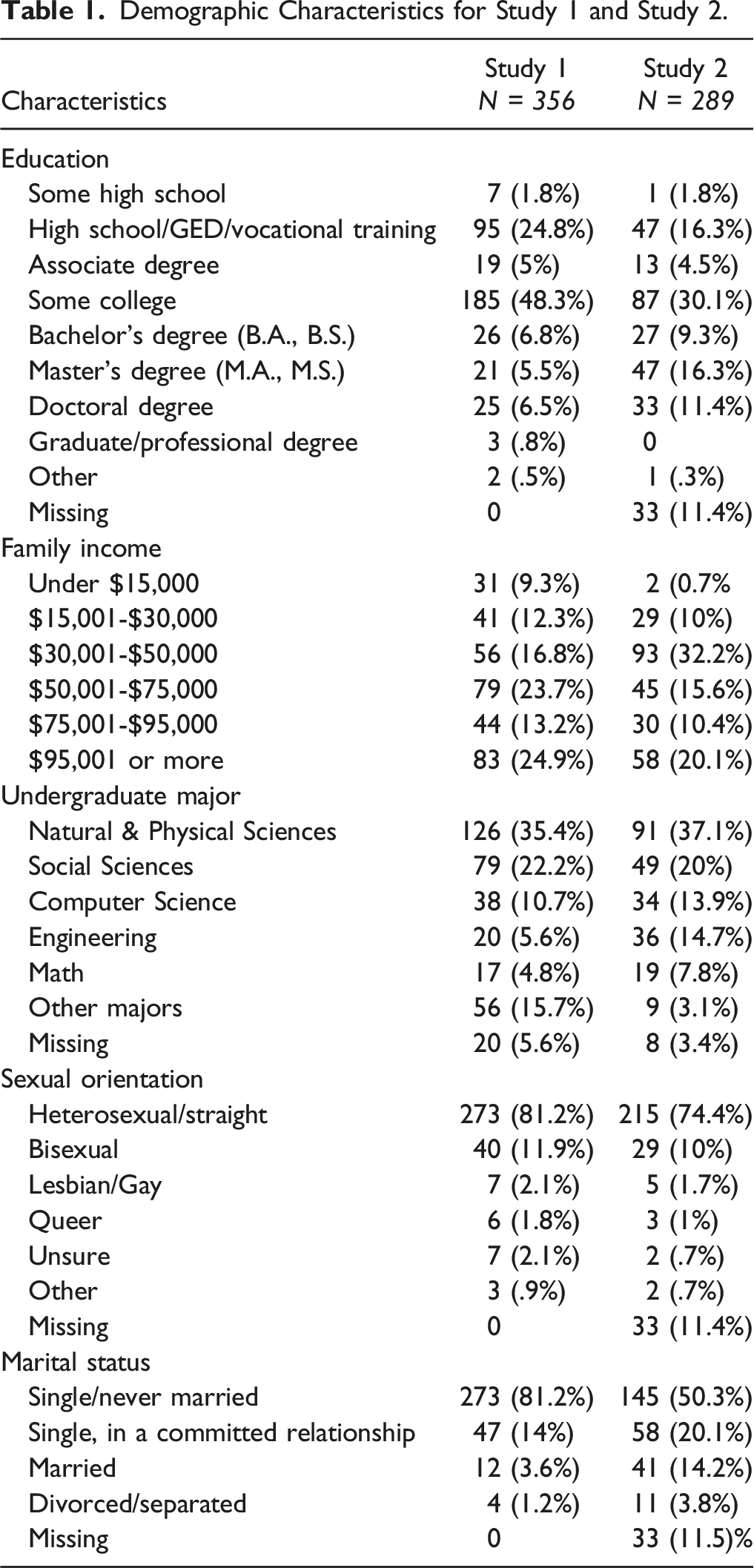
Demographic Characteristics for Study 1 and Study 2.
Procedure
This study was approved by Spelman College’s Institutional Review Board (IRB). Upon approval, Black women undergraduate and graduate students were conveniently sampled and recruited via flyers, emails, text messages, and social media accounts at two historically Black colleges/universities (HBCUs) and two predominantly White institutions (PWIs) in the U.S. southeastern region. Non-student participants were recruited from Internet sites (i.e., Facebook), personal networks, and alumna campus events. All participants affirmed their consent and then completed the survey via Qualtrics. Compensation was initially $5 for all participants, but we increased non-student compensation to $20 to boost the participation of those who were not students at the surveyed universities. The survey took 15–20 minutes to complete.
Measures
Because additional measures can contaminate participants’ responses on new scale items during the EFA process (Worthington & Whittaker, 2006), participants were asked to complete only a demographic questionnaire and the ISBWS.
Identity Shifting for Black Women Scale (ISBWS). Black women completed the 44-item ISBWS to assess altering one’s speech, perception, behaviors, and appearance to navigate experiences of discrimination and to enhance intraracial relationships. Participants were instructed to think about their experiences as a Black woman and to indicate the extent to which they agreed with the items. Women’s responses were rated on a 5-point Likert scale ranging from 1 (strongly disagree) to 5 (strongly agree). Factor 1 was altering speech (code-switching) in primarily White social and professional environments (6 items, “I change the way I speak to not sound ‘Black’ to adjust to norms in predominantly White environments”). Factor 2 was altering speech (code-switching) in primarily Black social and professional environments (6 items, “I change the way I speak in predominantly Black environments because I do not want to appear ‘bougie’ (that I am better than others).” Factor 3 was altering perceptions, behaviors, and appearance in primarily White social and professional environments (20 items, “I change my behaviors when in predominantly White environments to not appear aggressive or as an ‘angry Black woman’“). Factor 4 was altering perceptions, behaviors, and appearance in primarily Black social and professional environments (12 items, “I adapt the way I behave to enhance my social relationships in predominantly Black environments).” Higher scores demonstrated greater engagement in identity shifting strategies.
Results
Exploratory Factor Analysis
Before EFAs were performed, Bartlett’s test of sphericity was used to determine factorability of the correlation matrix. It was statistically significant (p < .01), supporting the data’s factorability. We then examined the Kaiser-Meyer-Olkin (KMO), which measured sampling adequacy, and a value of .89 was determined (i.e., values of .60 and higher are desired; Tabachnick & Fidell, 2001). EFAs were then conducted using principal axis factoring. Because the underlying factors were correlated, we used an oblique (promax) rotation. We first conducted a principal components parallel analysis, which determined the appropriate number of factors by comparing the scree of factors of observed data to a random data matrix (O’Conner, 2000). Findings suggested a two-factor solution. Further, the EFA scree plot suggested either two or three factors based on how the curve leveled off. Thus, we conducted EFAs to examine one-, two-, and three-factor solutions. The two-factor solution yielded factors with higher factor loadings and fewer cross loadings, and demonstrated greater interpretability.
Exploratory Factor Analysis Factor Loadings for the ISBWS Two-Factor Model.
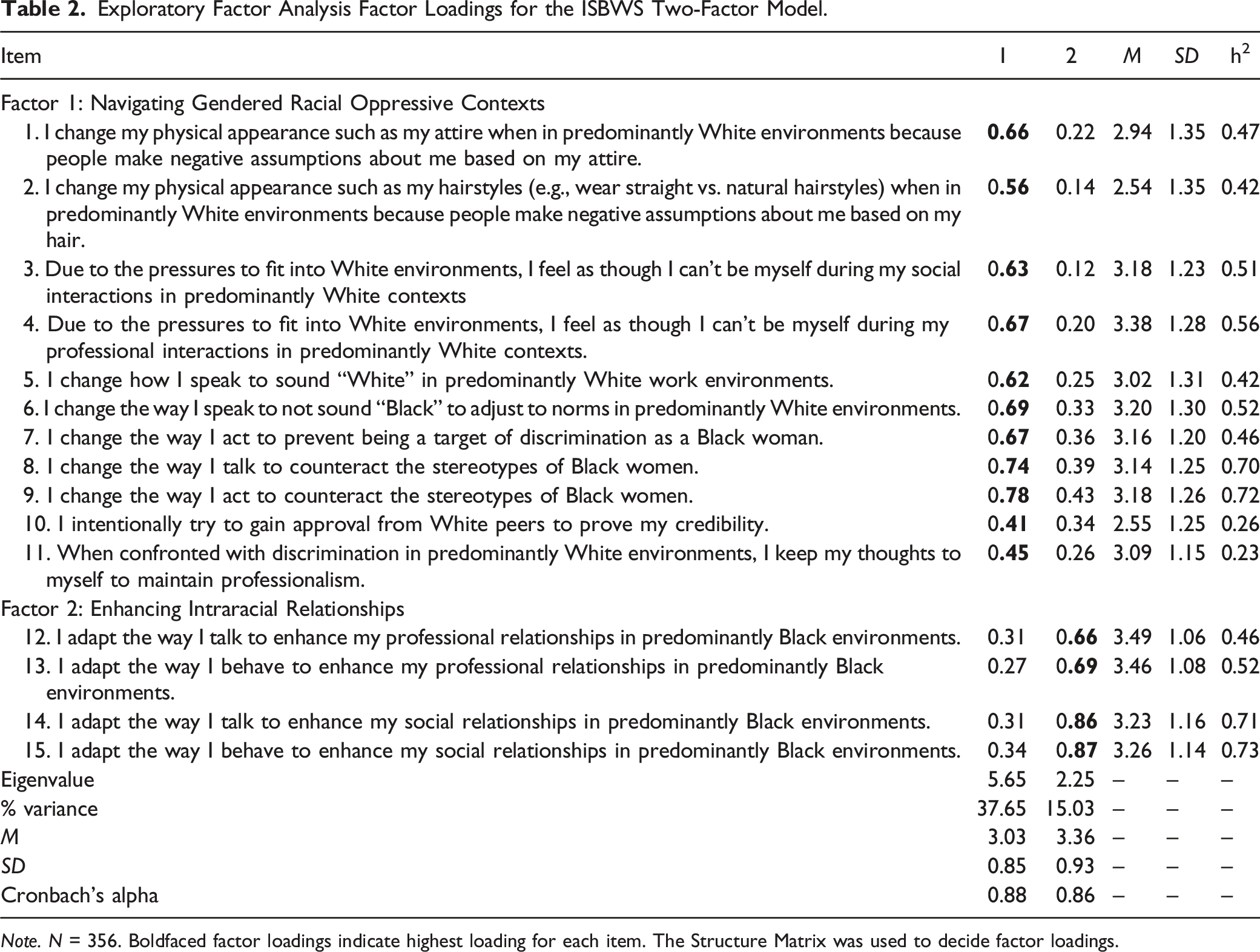
Note. N = 356. Boldfaced factor loadings indicate highest loading for each item. The Structure Matrix was used to decide factor loadings.
Naming the Factors
Factor 1, Navigating Gendered Racial Oppressive Contexts, consisted of 11 items and accounted for 37.65% of the variance. This factor reflected women’s beliefs that they had to change their speech, perceptions, appearance, and behavior to assimilate in predominantly White environments. A sample item was “I change my physical appearance such as my hairstyles (e.g., wear straight vs. natural hairstyles) when in predominantly White environments because people make negative assumptions about me based on my hair.” Higher scores indicated greater engagement in shifting based on this factor. Factor 1 demonstrated good internal consistency (α = .88). Factor 2, Enhancing Intraracial Relationships, contained four items and accounted for 15.03% of the variance. A sample item was “I adapt the way I talk to enhance my social relationships in predominantly Black environments.” Factor items captured beliefs that changing one’s speech and behavior in Black contexts could enhance personal and professional relationships with Black peers. Higher scores represented greater engagement in shifting based on this factor. The internal consistency for Factor 2 was good (α = .86). Factors 1 and 2 were positively correlated (r = .37, p < .01).
Study 2: Construct Validity of the ISBWS
The purpose of Study 2 was to further validate the ISBWS. To this end, we performed CFAs, examined the internal consistency estimates for each factor, and assessed convergent and incremental validity. Although we anticipated that CFA results would support the two-factor solution from the EFA over a unidimensional correlated traits model, the utilization of a bifactor model was a novel aspect of this study. Also, we were unaware of a bifactor model being used in other validation studies with identity shifting measures; thus, we did not have a specific a priori hypothesis about how the bifactor model would perform relative to other models. We hypothesized that the subscale scores for each factor would exhibit good to excellent internal consistency (α ≥ .80). Concerning convergent validity, we hypothesized that the ISBWS scale scores would be significantly and positively related to three theoretically similar scales: (a) the African American Women Shifting Scale (AAWSS; Johnson et al., 2016), (b) the Gendered Racial Microaggressions Scale (GRMS; Lewis & Neville, 2015), and (c) the Stereotypical Roles for Black Women Scale (SRBWS; Thomas et al., 2004). We expected ISBWS scale scores to account for unique variance in Black women’s anxiety symptoms (as measured by the Beck, Epstein, Brown, & Steer, 1988) over and above the AAWSS, supporting the ISBWS’ incremental validity.
Method
Participants
The Study 2 sample included 289 Black/African American participants, ranging from 18 to 72 (M = 29.46, SD = 10.74) years of age. Participants were primarily women (99.6%), one identifying as non-binary (0.4%). Most participants identified as heterosexual (74.4%), single (70.4%), and Christian (51.2%). Similar to Study 1, most participants had experienced higher education, with 30.1% reporting some college and 37% had at least a bachelor’s degree or higher. Almost half of the participants (47.8%) reported family incomes between $30,0001 and $75,000 per year (see Table 1).
Procedure
Like Study 1, participants were conveniently sampled and recruited via emails and text messages to personal and professional networks, student organizations, and social media postings (e.g., Facebook). All participants affirmed their consent and then completed the survey via Qualtrics. Students were compensated $15, and non-students received $20 for participating in the study. Non-students were given an additional $5 to enhance the recruitment of this sample. The survey took 30–40 minutes to complete.
Measures
Identity Shifting for Black Women Scale (ISBWS).
The revised 15-item ISBWS from the EFA was administered to measure Black women’s identity shifting. Participants were asked to think about their experiences as a Black woman and women rated their experiences using a 5-point scale ranging from 1 (strongly disagree) to 5 (strongly agree). The total score for all items was calculated, and the mean of the items for each subscale was computed. Higher scores demonstrated higher engagement in identity shifting. Additional information regarding this scale’s factor structure, reliability, and validity is reported in the Results and in Table 2.
African American Women Shifting Scale (AAWSS).
We administered the original 13-item shifting scale created by Johnson et al. (2016) to assess women’s shifting experiences. AAWSS items were rated using a 4-point Likert scale ranging from 1 (strongly disagree) to 4 (strongly agree), with higher scores representing greater engagement in shifting. The total score for all items was calculated, and the mean of the items for each subscale was computed. The original study found support for the construct validity of three distinct factors of the AAWSS: (a) Awareness of Shifting, the need to alter one’s self-image across contexts (5 items; “I have a different self at school (or work) than at home”); (b) Strong Black Woman, the pressure to manage all challenges and to demonstrate strength (5 items; “I cannot show weakness to my family”); and (c) Sensitivity to the Perception of Blacks, shifting in the Black to prove one’s “Blackness” (3 items; “I feel pressure to prove to Black friends and family that I have not sold out”). Johnson et al. (2016) found evidence for AAWSS’s internal consistency for the total score and subscales and construct validity in a sample of African American women. In the current study, we used all subscales and the total score in our analyses. We obtained lower internal consistency estimates than in the original study: Awareness of Shifting (α =.68 vs. .80), Strong Black Woman (α =.64 vs. .74), and Sensitivity to the Perception of Blacks (α =.50 vs. .56). We calculated a total score for the AAWSS scale (α =.72); however, this was not reported in the original scale development article.
Gendered Racial Microaggressions Scale (GRMS).
We used the 26-item GRMS to measure the frequency of Black women’s microaggressive experiences (Lewis & Neville, 2015). Participants used a 6-point Likert scale, ranging from 0 (never) to 6 (once a week or more), to indicate how frequently they experienced gendered racial microaggressions, with higher scores denoting greater frequency. The GRMS includes four subscales: (a) Assumptions of Beauty and Sexual Objectification, or women’s experiences being reduced to stereotypes about their physical appearance (e.g., hairstyles, facial features; 10 items, e.g., “Assumed I was sexually promiscuous”); (b) Silenced and Marginalized, or women’s experiences being silenced across professional settings (7 items, e.g., “Someone has tried to ‘put me in my place’“); (c) Strong Black Woman, defined as expectations to be strong, independent, and assertive (3 items, e.g., “I have been told that I am too independent”); and (d) Angry Black Woman, or experiences with being accused of fulfilling the angry Black woman stereotype (3 items, e.g., “Someone accused me of being angry when speaking calm”). In the original study, Lewis and Neville (2015) found evidence of convergent validity as GRMS was significantly and positively related to psychological distress. We used the GRMS frequency total score (mean of the value of all items in the scale), and its internal consistency estimate was excellent (α =. 92), which is similar to the original study (α = .92; Lewis & Neville, 2015).
Stereotypical Roles for Black Women Scale (SRBWS)
The 34-item SRBWS (Thomas et al., 2004) was used to assess Black women’s awareness of the following gendered racial stereotypes: Sapphire, or the stereotype that Black women emasculate Black men (10 items, e.g., “If given a chance, Black women will put down Black men”); Jezebel, or the stereotype that Black women are hypersexual (8 items, e.g., “People treat me as if I am a sex object”); Mammy, or the belief that Black women are selfless nurturers who prioritize the needs of others over their own (5 items, e.g., “I often put aside my own needs to help others”); and the Superwoman, or the stereotype that Black women should be strong, self-reliant, and suppress their emotions (11 items, e.g., “Black women have to be strong to survive”). Participants used a 5-point Likert scale ranging from 1 (strongly disagree) to 5 (strongly agree), and the total score was the calculated mean of all items in the scale. Higher scores indicated greater agreement with these stereotypes. The internal consistencies reported in the original article were moderate for the subscales: Sapphire (α = .70), Jezebel (α = .72), Mammy (α = .52), and Superwoman (α = .67). We were able to establish stronger internal consistency estimates for the three subscales with our sample: Sapphire (α = .78), Jezebel (α =.72), and Strong Black Woman (α =.82). The Mammy and Superwoman subscales were combined to create the Strong Black Woman subscale, as suggested in the original article (Thomas et al., 2004). Only the SRBWS total score was used in analyses (α =.85).
Beck Anxiety Inventory
The 21-item Beck Anxiety Inventory (Beck, Epstein, Brown, & Steer, 1988) was used as a self-report measure of anxiety symptoms (e.g., “Nervousness”). Participants used a 4-point Likert scale ranging from 0 (not at all) to 3 (severely - it bothered me a lot). Higher scores indicate higher levels of anxiety symptoms. The original study (Beck et al., 1988) provided evidence of convergent validity as the Anxiety Inventory was positively related to other anxiety measurements, depression, and hopelessness. The values for each item are summed, yielding an overall or total score for all 21 symptoms that can range between 0 and 63 points. A total score of 0–7 is interpreted as a minimal level of anxiety; 8–15 as mild; 16–25 as moderate; and 26 and above as severe. Our analyses included a total score, which evidenced good internal consistency (α = .89) and is similar to the original study (α = .92; Beck et al., 1988).
Results
Confirmatory Factor Analysis
We conducted CFAs using structural equation modeling (SEM) in Mplus Version 8 (Muthen & Muthen, 1998-2017). To test alternative models of the ISBWS’s underlying structure, we examined a unidimensional correlated traits model (i.e., all scale items load onto one factor), a two-factor correlated traits model (i.e., two latent factors that emerged in Study 1’s EFA), and a bifactor model (i.e., scale items load onto subscales and onto a general factor that accounts for shared variance). Our decision to test a bifactor model was informed by the notion that bifactor models are better able to disentangle dimensionality within a measure given that they allow researchers to simultaneously explore a latent common trait and additional subtraits (Reise et al., 2010).
Confirmatory Factor Analysis (N = 289).
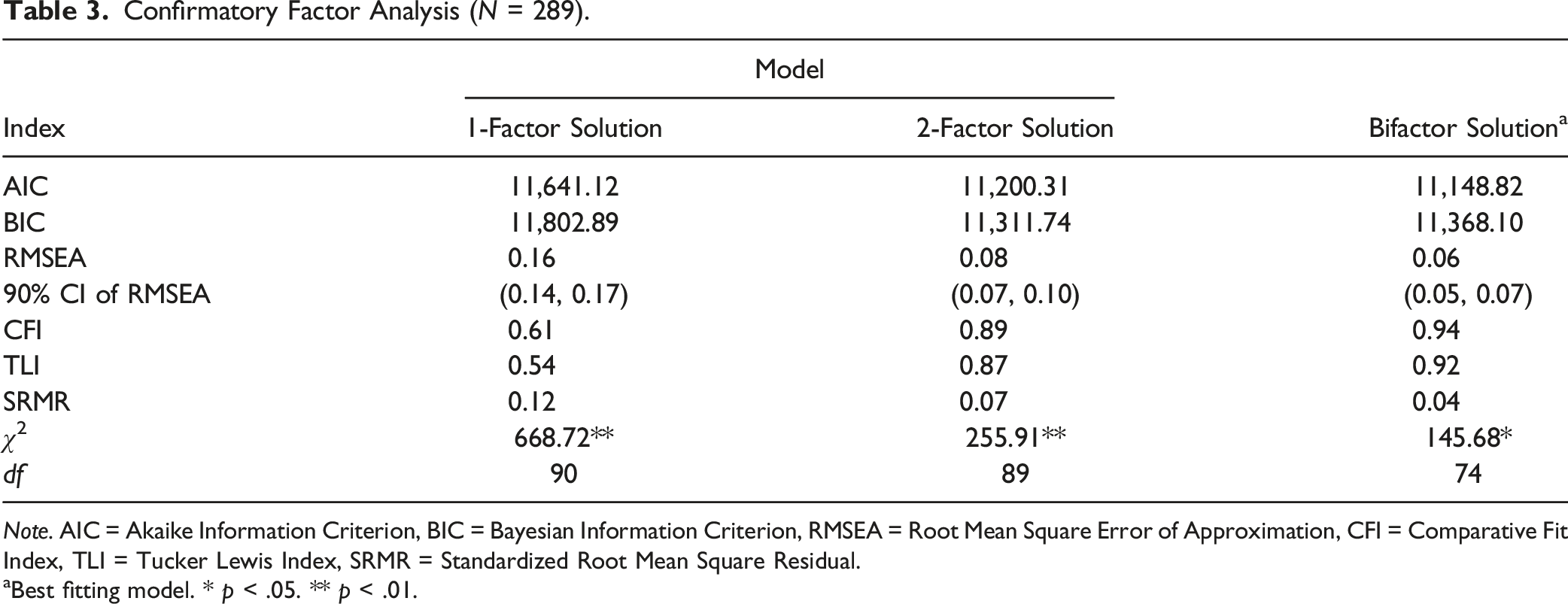
Note. AIC = Akaike Information Criterion, BIC = Bayesian Information Criterion, RMSEA = Root Mean Square Error of Approximation, CFI = Comparative Fit Index, TLI = Tucker Lewis Index, SRMR = Standardized Root Mean Square Residual.
aBest fitting model. * p < .05. ** p < .01.
Factor Coefficients of the ISBWS Bifactor Model (N = 289).
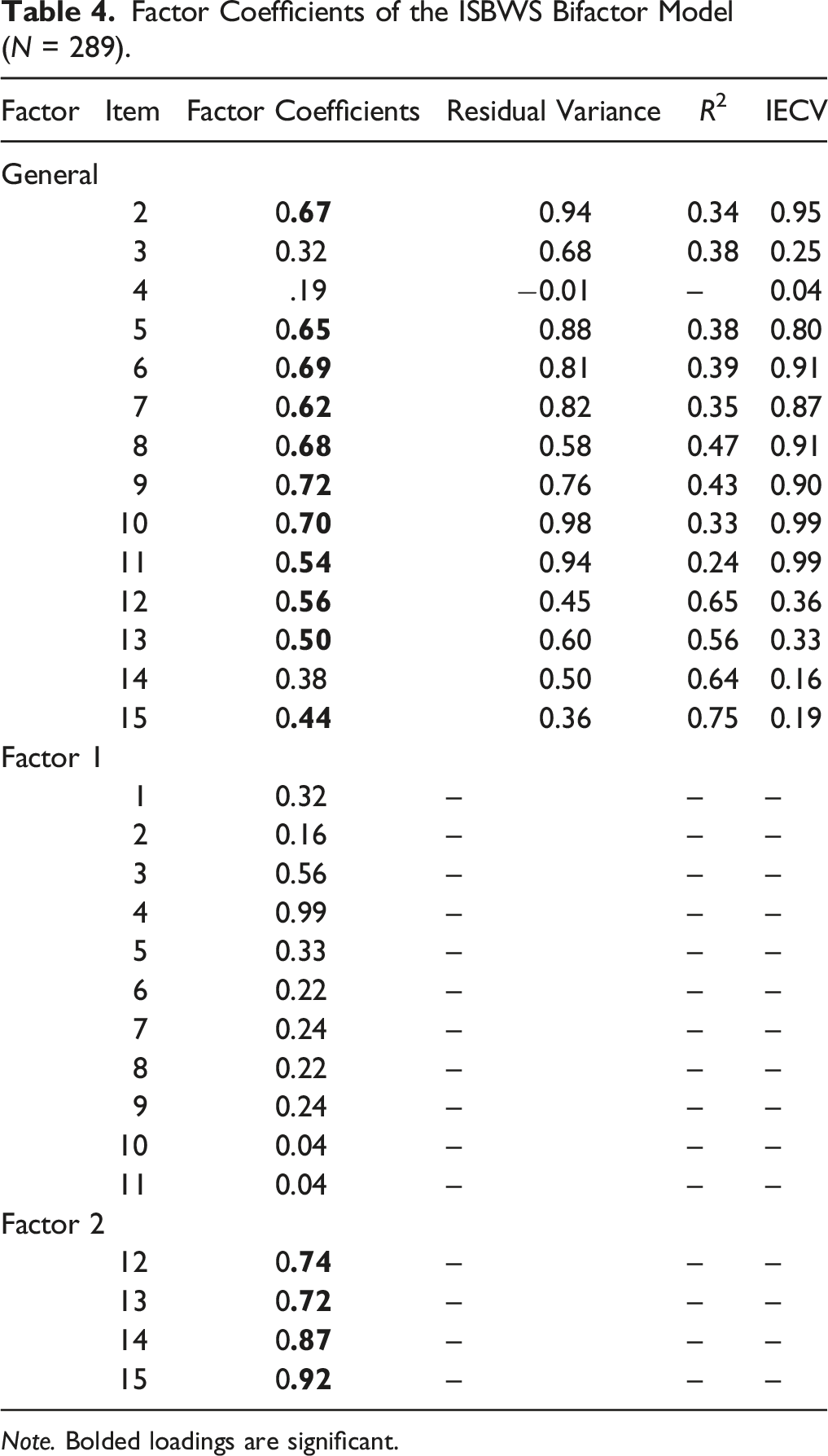
Note. Bolded loadings are significant.
Reliability
Means, Standard Deviations, and Internal Consistency Estimates for Study 2 Subscales.
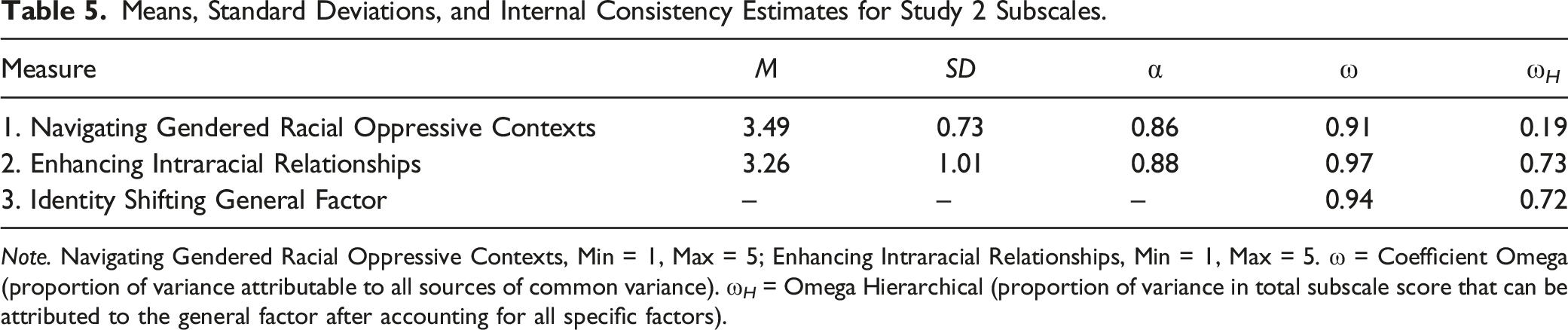
Note. Navigating Gendered Racial Oppressive Contexts, Min = 1, Max = 5; Enhancing Intraracial Relationships, Min = 1, Max = 5. ω = Coefficient Omega (proportion of variance attributable to all sources of common variance). ω H = Omega Hierarchical (proportion of variance in total subscale score that can be attributed to the general factor after accounting for all specific factors).
Validity
Convergent Validity
Summary of Associations Between the ISBWS and Validation Measures.
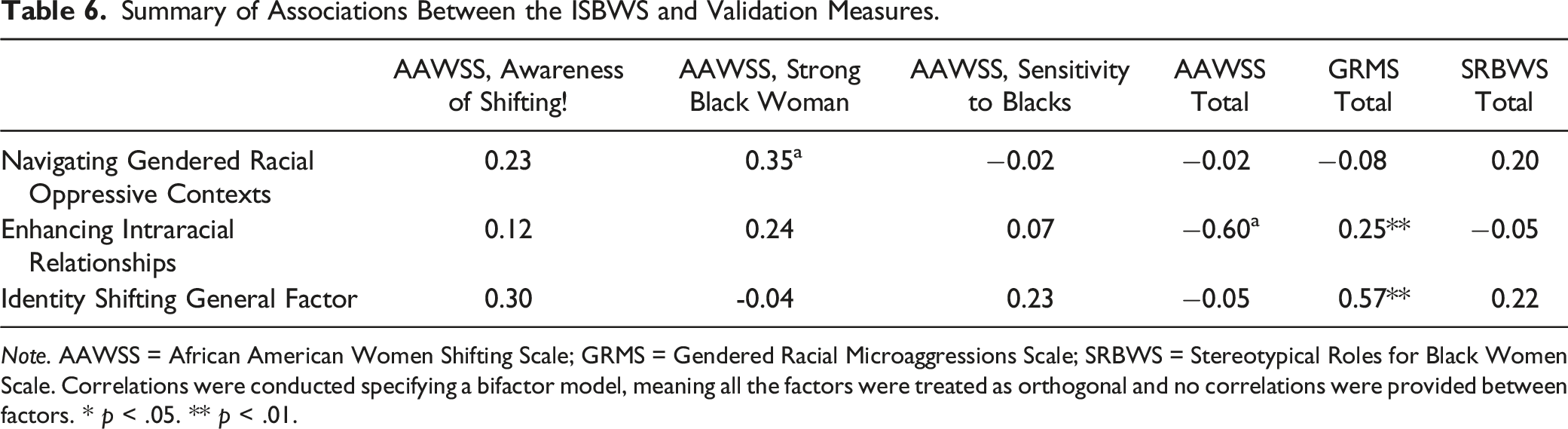
Note. AAWSS = African American Women Shifting Scale; GRMS = Gendered Racial Microaggressions Scale; SRBWS = Stereotypical Roles for Black Women Scale. Correlations were conducted specifying a bifactor model, meaning all the factors were treated as orthogonal and no correlations were provided between factors. * p < .05. ** p < .01.
Further, given that research suggests that Black women engage in identity shifting to circumvent the consequences of gendered racism (Jones et al., 2021), we expected our scale to positively relate to gendered racial microaggressions. This hypothesis was partially supported. The specific factor, Navigating Gendered Racial Oppressive Contexts, was not related to gendered racial microaggression frequency (β = −.08, p = .80), suggesting that this distinct aspect of identity shifting was not related to reports of gendered racial microaggressions. However, the specific factor, Enhancing Intraracial Relationships (β = .25, p < .01), and general factor (β = .57, p < .01) were related to the frequency of gendered racial microaggressions, indicating that higher levels of identity shifting to enhance intraracial relationships as well as general identity shifting were related to higher rates of gendered racial microaggressions.
In terms of the SRBWS, because the literature purports that Black women may use identity shifting to counter negative stereotypes, we assumed that the ISBWS would significantly relate to the total SRBWS. However, none of the ISBWS factors exhibited significant relations with the SRBWS total score, and thus, this hypothesis was not supported.
Incremental Validity
Summary of Hierarchical Multiple Regression Predicting Anxiety.
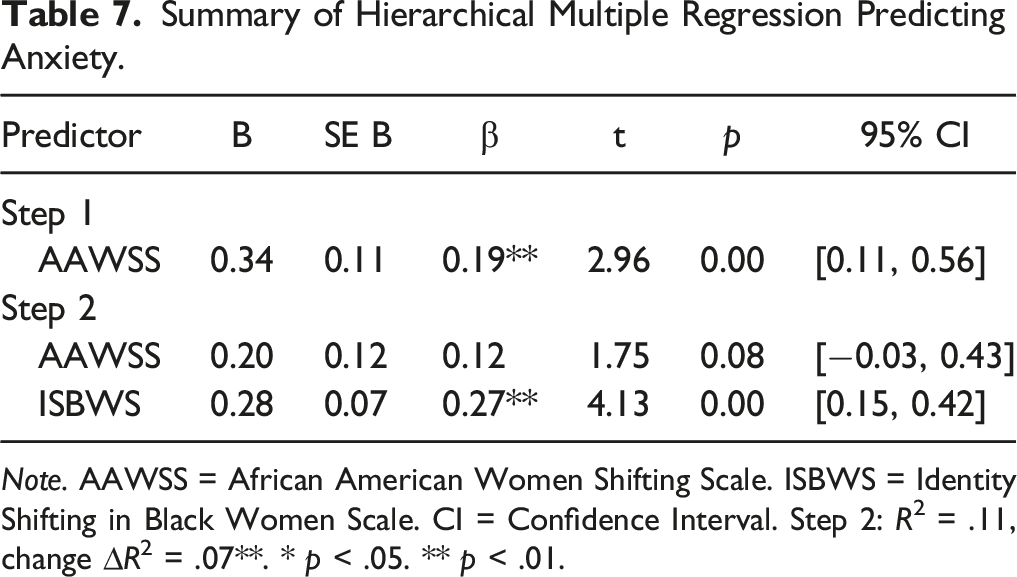
Note. AAWSS = African American Women Shifting Scale. ISBWS = Identity Shifting in Black Women Scale. CI = Confidence Interval. Step 2: R2 = .11, change ∆R2 = .07**. * p < .05. ** p < .01.
Discussion
Whether it is changing their speech, appearance, or behavior, U.S. Black women’s identity shifting is often twofold: effectively navigating oppressive contexts and fostering relationships with Black peers. This study extended the research on identity shifting by using an intersectionality framework to better understand the management of Black women’s intersectional identities to guide the development and validation procedures for a new measure, the Identity Shifting for Black Women Scale (ISBWS). This novel instrument is among the first to adopt an intersectional lens to capture the extent to which Black women modify their speech, perceptions, behaviors, and appearance across professional and social contexts to navigate oppression or enhance within-group relationships.
In terms of the ISBWS’s factor structure, findings from Study 1 revealed two factors: Navigating Gendered Racial Oppressive Contexts and Enhancing Intraracial Relationships. In Study 2, a bifactor model exhibited optimal fit and fit the data better than the other models. Also, the bifactor model suggested the presence of a general identity shifting factor along with a well-defined specific factor for Enhancing Intraracial Relationships, which accounted for unique variance alongside the shared variance accounted for by the general factor. In contrast, most of the items from Factor 1, Navigating Gendered Racial Oppressive Contexts, loaded onto the general factor and did not contribute uniquely to the conceptualization of identity shifting. Because previous psychometric evaluations of identity shifting measures have not used bifactor approaches, our use of this approach enhances our theory-building regarding identity shifting as a multidimensional construct.
In addition to the ISBWS’s factor structure, the second psychometric property we evaluated was internal consistency. We expected subscale scores to exhibit good internal consistency (α ≥ .80), and this hypothesis was supported. In the current investigation, alpha coefficients ranged from .86 to .88 - higher estimates than what was obtained in the original AAWSS evaluation. Further, the omega and omega hierarchical coefficients indicated that variance was explained by both the general and specific factors. Even though the exact variance attributed to either the general or specific factors cannot be fully disentangled (Watkins, 2017), omega coefficients obtained in this study support the complexity of this measure, which aligns with our conceptualization of identity shifting as a multifaceted construct. Moreover, future studies must investigate other reliability metrics, such as test-retest reliability, in order to shed light on whether identity shifting remains stable over time or whether it fluctuates based on changing environmental cues. Examining its test-retest reliability could be theoretically and empirically advantageous when evaluating how (in)consistent use of identity shifting influences Black women’s health and life outcomes.
We then focused on a third aspect of the ISBWS’s psychometric properties: its convergent and incremental validity. Regarding convergent validity, we expected significant positive relations between the ISBWS’s general and specific factors and the AAWSS’s three factors and total score; however, only some factors were interrelated. The ISBWS’s Factor 1, Navigating Gendered Racial Oppressive Contexts, showed a significant positive correlation with the AAWSS’s Strong Black Woman subscale, suggesting that shifting to navigate oppressive contexts increased as pressures to adhere to the Strong Black Woman (SBW) schema increased. SBW schema has been used by Black women to combat oppressive school and work contexts (Davis & Jones, 2021), and our findings support that identity shifting relates to women’s endorsement of this schema. However, our Factor 1 subscale was not related to the AAWSS’s Awareness of Shifting subscale, although the correlation coefficient was positive. This finding was inconsistent with our hypothesis, but it could be due to differences in the language between the AAWSS and our scale. For instance, the AAWSS focuses on awareness of the need to shift at school, work, and home around non-Black people, but it does not explicitly reference race and/or gender. Alternatively, ISBWS’s Factor 1 focuses on shifting appearance, speech, perspectives, and behaviors specifically in predominantly White professional and social spaces due to the awareness of marginalization. Factor 1 is consistent with identity negotiation literature suggesting that one’s cultural identity is negotiated when a person decides to accept or reject one’s worldviews in an intercultural interaction (Jackson, 2002). Moreover, ISBWS’s Factor 1 was not related to the AAWSS’s Sensitivity to Blacks subscale. Although both subscales reflect identity shifting, perhaps this non-significant finding illustrates that shifting to combat oppressive White spaces is different than shifting to avoid being perceived as a “sell out” in Black communities (Johnson et al., 2016).
In terms of the ISBWS’s Factor 2, Enhancing Intraracial Relationships was only significantly related to the AAWSS total score. We were most surprised that our Factor 2 was not related to the AAWSS’s Sensitivity to Blacks subscale given the theoretical similarity between these subscales. One explanation for the non-significant correlation between these subscales is that while they both touch on shifting in predominantly Black environments, the AAWSS’s Sensitivity to the Perceptions of Blacks subscale captures how Black women mainly shift in Black environments to prove one’s Blackness (Johnson et al., 2016), whereas our Factor 2 captures how Black women shift in Black environments to enrich relationships with other Black people. Although the presence of some non-significant findings could signify the conceptual distinctiveness between our scale and the AAWSS, additional examination of the construct validity of our scale is warranted.
Convergent validity was also assessed via associations between the ISBWS’s general and specific factors and the GRMS total score. Both the ISBWS general factor and Factor 2 were associated with more experiences of gendered racial microaggressions, suggesting that women engaged in more general shifting and shifting in Black spaces as they experienced more frequent microaggressions. Although we cannot infer causation, these findings support existing research that demonstrates that strategies, like forming friendships and support groups with Black peers, are ways for Black women to combat the deleterious effects of gendered racial microaggressions in interracial environments (Collins, 2000; Hall et al., 2012; Mattis, 2002). However, there was not a significant association between GRMS and ISBWS’s Factor 1 Navigating Gendered Racial Oppressive Contexts, which contradicted our hypothesis. Given that the GRMS was related to the general factor and well-defined Factor 2, perhaps this non-significant finding is the result of measurement issues with Factor 1 and the fact that its items do not account for unique variance beyond general identity shifting. Moreover, although previous research has demonstrated a positive link between experiences of gendered racism and shifting (Jones et al., 2021), perhaps there are differences regarding if and how women shift is based on if they experience more blatant forms of discrimination (e.g., gendered racism) versus more subtle forms of discrimination (e.g., gendered racial microaggressions). Nevertheless, these findings highlight the need for more research on the relations between gendered racial microaggressions and shifting among Black women.
Lastly, we expected convergent validity to be evidenced by significant positive relations between the ISBWS and the Stereotypic Roles for Black Women Scale (SRBWS), given that Black women may shift to counter negative stereotypes. However, neither of the two specific or general factors exhibited a significant association with the SRBWS. These non-significant findings may be due to the fact that the SRBWS reflects Black women’s awareness of stereotypes (e.g., “Black women are often loud and obnoxious”) rather than their experiences of being stereotyped (e.g., Jerald et al., 2017). Thus, it is possible that only knowing about these stereotypes is insufficient to prompt identity shifting strategies. A second reason is that our sample was fairly young, well-educated, and may have been socialized to be secure in their self-concept as Black women despite being constantly bombarded with stereotypical and harmful images (Coleman et al., 2020). As a result, many women in our sample may not internalize these stereotypes or view these stereotypes as unfavorable.
Finally, to investigate incremental validity, we examined whether ISBWS’s general and specific factors improved our ability to predict Black women’s mental health symptoms relative to the AAWSS. We found that the ISBWS accounted for variance over and above the AAWSS in explaining Black women’s levels of anxiety symptoms. This could be due to the fact that the ISBWS explores additional aspects of shifting, such as altering speech, perceptions, appearance, and behaviors. Our finding also supports existing research on the link between identity shifting and anxiety in Black women (Jones & Shorter-Gooden, 2004; Jones et al., 2021). Though some studies have found that there are benefits to engaging in shifting (Dickens & Chavez, 2018; Johnson et al., 2016), some Black women may feel pressured to shift as a type of anticipatory coping strategy or to minimize adverse outcomes associated with discrimination (Hill & Hoggard, 2018), which could consequently lead to higher levels of anxiety.
Limitations and Future Directions
Despite the current study’s important focus on applying intersectionality to the development of a new measure of identity shifting, some limitations of this effort deserve attention. First, the ISBWS aimed to capture Black women’s intersecting race and gender experiences; yet not all questions asked about their gendered racial experiences specifically. Although we asked participants to think about their experiences as a Black woman and to endorse items accordingly, it is possible that questions like, “I change how I speak to ‘sound White’ in predominantly White work environments” center women’s racialized experiences more than their gendered racial experiences. This in turn raises questions about whether women’s reports of identity shifting were influenced by the salience of their race or gender rather than their intersectional identity. Additionally, this raises questions about the extent to which our items reflected Black women’s unique identity shifting experiences. Although there may be common shifting experiences among Black women and men, it is important to continue to develop measures that reflect Black women’s unique identity shifting experiences. As an example, Jones and Shorter-Gooden (2004) argue that because Black women are seen as incompetent and less feminine, they suffer uniquely with being labeled as a criminal, though criminality is often labeled for Black men (Jones & Shorter-Gooden, 2004). Thus, Black women may alter how they speak to not appear angry to dispel this myth of being a criminal. Although Black men may engage in similar (or different) shifting behaviors, we do not have comparable data or empirical work to draw additional conclusions. Despite the fact that all items in the ISBWS were informed by Black women’s experience, additional testing is needed to see if these shifting strategies are exclusive to Black women or relevant to other Black people, and future identity shifting studies that include Black men are needed.
Second, we did not explicitly measure women’s gendered racial identity. Jones and Day (2018) found that Black women in the U.S. fell into four main gender-racial identity profiles: (a) intersectional engaged (similar importance on race and gender), (b) race progressive (identification as Black first and women second), (c) intersectional aware (awareness of double jeopardy of gendered racial identity), and (d) gender expressive (no association with Blackness, but solely identified as women; Jones & Day, 2018). It could be that women’s reports of identity shifting are shaped by their profile status. Therefore, future research should examine how Black women in different racial and gender identity profiles engage in identity shifting strategies.
Third, Black women hold other social identities that could influence their shifting processes; however, the ISBWS did not explicitly capture these identities. For example, our study captured family income, and the samples were skewed toward the higher end of the family income scale. Upon further investigation, it was determined that younger participants most likely answered the question based on the income of their parents or caretakers as 69% of the higher income participants were between the ages of 18–21. Future studies should provide more precise directions for reporting income to explore social class. Additionally, our study only included Black women living in the U.S. Therefore, it is unclear if our measure would adequately reflect identity shifting across other Eurocentric nations where cultural norms differ, but where gendered racism may also be pervasive. Overall, additional studies are needed to examine how various demographics, like socioeconomic status and nation of origin, shape the nuances of identity shifting for Black women (Clair et al., 2005; Dickens & Chavez, 2018).
Fourth, Studies 1 and 2 mainly included young Black women (Mage = 25.92) in college or employed in predominantly White fields of study. This limited sociodemographic diversity may have played a role in how our participants reported identity shifting. Moreover, it hinders our ability to generalize our findings to Black women who are older or who have had varying educational and employment opportunities. While the focus of this study was not to examine age differences in identity shifting, previous research conducted by the authors (Hall-Byers et al., in press) showed that Black women (aged 18–42 years) who reported experiencing more gendered racial microaggressions, and were older, engaged in less identity shifting. As generations change, so does the belief about what is considered to be a damaging portrayal of oneself. Thus, some Black women may not feel the need to engage in identity shifting and alter the way they talk, dress, or behave when presented with specific stereotypic imagery. Given the significance of intersectional identities, future research should investigate the relevance of age and endorsement of stereotypes on engaging in identity shifting and exploring the various types of coping strategies utilized specifically among Black women in both interracial and intraracial environments.
Fifth, the AAWSS evidenced low reliability estimates in our sample. This could have impacted the convergent and incremental validity analyses in our study. To remedy this, future validation studies are needed with psychometrically sound validity measures.
Practice Implications
The practical implications of this study have great promise for future research on identity shifting among Black women in educational, social, healthcare, and workplace settings. Researchers, administrators, and leaders need a more robust understanding of how Black women shift to help them manage racialized gendered experiences, beliefs, attitudes, and actions from others in their environments. For instance, Black women are underrepresented as faculty and in leadership positions within academia (U.S. Department of Education, 2020). Specifically, this disparity is illuminated in STEM (science, technology, engineering, and mathematics), which is traditionally White and male dominated (Dickens et al., 2020). Scholars can therefore use this scale to evaluate if and how identity shifting contributes to the presence and/or absence of Black women across academic disciplines. Also, the ISBWS can be a useful tool in behavioral health settings. Clinicians can use the ISBWS to help clients identify stressful shifting experiences. For instance, a Black woman who rates “When confronted with discrimination in predominantly White environments, I keep my thoughts to myself to maintain professionalism” as “strongly agree/agree” can be asked to discuss how her shifting experiences influence her life choices and experiences. Also, clinicians can use findings from this scale to develop culturally-responsive interventions to support Black women’s authentic self-expression (Dickens & Womack, 2020). Moreover, findings from the ISBWS can help to support institutions (e.g., corporate, educational, health, and STEM settings) with necessary feedback about how they can create more inclusive spaces for Black women to facilitate the need for less engagement in identity shifting.
Conclusion
Although identity shifting can be an adaptive strategy in the short term, its long-term consequences can be detrimental to one’s self-concept and psychological well-being (Dickens & Chavez, 2018). Given this, scholars must continue to study Black women’s decisions to shift and the multifaceted consequences of identity shifting across contexts and settings over time. We believe that our new quantitative measure is a foundational step to catalyze continued research to improve the lives of Black women in educational, social, healthcare, and workplace settings.
Footnotes
Declaration of Conflicting Interests
The author(s) declared no potential conflicts of interest with respect to the research, authorship, and/or publication of this article.
Funding
The author(s) disclosed receipt of the following financial support for the research, authorship, and/or publication of this article: This work was supported by the National Science Foundation grant #1832141 which facilitated the completion of the work described in this manuscript.
