






Abstract
Background:
Many long-term studies have looked at outcomes after anterior cruciate ligament reconstruction (ACLR), but none have correlated long-term outcomes with postoperative laxity greater than 5 mm. It has been stated previously that more than 5 mm of postoperative graft laxity constituted a procedural failure.
Purpose:
To directly compare tight grafts (<3 mm) and loose grafts (>5 mm) to determine the effect of graft laxity, as measured by KT-1000 arthrometer, after ACLR on long-term clinical outcomes.
Study Design:
Cohort study; Level of evidence, 2.
Methods:
The study included 171 consecutive patients who had undergone transtibial bone–patellar tendon–bone ACLR between 1992 and 1998. At 6, 12, and 24 months postoperatively (the immediate postoperative period), patients were evaluated. Group A included patients with a maximal side-to-side (STS) difference in the immediate postoperative period of less than 3 mm (tight grafts), and group B included patients with a maximal STS difference of greater than 5 mm (loose grafts). Any patient with a history of ipsilateral or contralateral ACLR or ACL injury, meniscectomy, or cartilage restoration was excluded. Patients were prospectively followed to long-term follow-up, when a telephone interview was conducted regarding knee function and to document Lysholm, Tegner, Knee injury and Osteoarthritis Outcome Score (KOOS), and International Knee Documentation Committee (IKDC) subjective outcome scores.
Results:
Eighty-seven patients met inclusion criteria: 66 tight grafts (group A) and 21 loose grafts (group B). The mean ± SD time to follow-up was 16.3 ± 1.5 years in group A (n = 46) and 16.8 ± 1.3 years in group B (n = 15). Tegner (P = .77), Lysholm (P = .85), KOOS (P = .96), and IKDC (P = .42) were found to have no statistically significant difference between groups at long-term follow-up. Both Tegner and Lysholm scores significantly improved in tight and loose grafts in the immediate postoperative period as well as at long-term follow-up compared with preoperatively. There were 2 ACL revisions in group A and none in group B. Eleven of 46 patients (24%) in group A required subsequent procedures versus 1 of 15 patients (6.7%) in group B (P = .146).
Conclusion:
Postoperative laxity of greater than 5 mm STS difference as measured by KT-1000 arthrometer does not appear to place patients at a worse clinical outcome at long-term follow-up, nor does it lead to significantly more subsequent procedures. In addition, transtibial ACLR can provide excellent clinical results at long-term follow-up.
Anterior cruciate ligament reconstruction (ACLR) has evolved over time, and open reconstruction techniques have been replaced by all-arthroscopic reconstruction. Historically, transtibial femoral tunnel drilling was used to reduce operative time and surgical morbidity compared with open 2-incision techniques. 2 Multiple studies have shown good clinical outcomes with transtibial drilling2,24,39; however, it has recently been hypothesized that single-bundle transtibial ACLR may place the graft in a nonanatomic femoral position, thereby not providing adequate rotational stability to the knee.5,10,17,18,21,29,32 This has caused a recent trend toward more anatomic reconstruction techniques that use either an accessory anterior medial portal or outside-in drilling to emphasize femoral placement within the anatomic femoral ACL footprint. This allows for improved rotational stability without the increased complexity associated with a double-bundle reconstruction.5,8,9,14,19,29,32,33
Even with potential limitations in rotational stability, transtibial ACLRs restore anterior-posterior (AP) knee stability after ACL injury. The KT-1000 arthrometer (MEDmetric) quantifies the degree of AP tibial-femoral displacement. While clinical tests are easier to perform (Lachman test, drawer tests), the KT-100 arthrometer is purported to be more precise in evaluating AP laxity.11,38 At a pull of 89 N, a difference of 3 mm or more between anterior displacement of the involved knee and anterior tibial displacement in the uninvolved knee has been shown to be representative of an ACL disruption.3,11,16,25 Although historically the KT-1000 arthrometer has been used to diagnose ACL disruptions, it has also been used to judge the degree of passive restraint provided by ACLR. 11 A side-to-side (STS) difference of 3 mm is thought to represent nonimpaired anterior tibial translation. 11 Apart from normative and pathologic values, an acceptable ACLR STS difference has yet to be established, although many authors have used an STS difference of greater than 5 mm to represent surgical failure.1,6,36 Bach et al 6 showed excellent patient satisfaction with reliable stability and excellent motion in their 2-year follow-up, retrospective review of transtibial bone–patellar tendon–bone (BTB) autograft ACLR. Aglietti et al 1 showed good return to activity in sports (54%) with a low complication rate in their 5-year follow-up, retrospective review of hamstring graft ACLR. Both studies used greater than 5 mm STS difference as the criterion for failure by arthrometric evaluation. A specific deficiency in the literature is the lack of knowledge regarding whether patients with “loose” knees as measured by KT-1000 arthrometer after ACLR actually have worse long-term outcomes; such knowledge is needed to validate referring to greater than 5 mm as a “failure.”
The purpose of this study was to determine the correlation between postoperative graft laxity as measured by KT-1000 arthrometer by directly comparing STS differences of less than 3 mm and greater than 5 mm. Another purpose was to determine long-term clinical knee scores and subsequent risk of additional knee surgery after transtibial ACLR.
Methods
Between 1992 and 1998, 171 consecutive patients underwent standard transtibial BTB ACLR by a single surgeon. Each patient who met inclusion criteria underwent a preoperative evaluation including clinical examination, KT-1000 arthrometer measurement, and administration of subjective and objective scoring systems (Lysholm and Tegner questionnaires). At 6, 12, and 24 months postoperatively (immediate postoperative period), patients were again evaluated by clinical examination, KT-1000 arthrometer, and subjective and objective scoring systems. The shorter term results for part of the cohort have been previously published. 36 Each patient was assessed for study eligibility. Exclusion criteria comprised prior ipsilateral or contralateral ACLR or ACL injury (including but not limited to multiligamentous reconstruction or injury, meniscus surgery, cartilage restoration procedure, or concurrent injury) at the time of index surgery.
KT-1000 arthrometer testing was performed by 1 of 2 experienced testers with greater than 5 years of clinical experience using the instrument. The amount of tibial displacement was measured with an anterior tibial translational force of 89 N. The distal portion of the bolster used to flex the knee was aligned just proximal to the superior border of the patella. This created a knee flexion angle of between 20° and 25°. Based on repeated KT-1000 arthrometer measurements on the noninvolved knee for 146 patients at 6 months and 1 year after surgery, the standard error of the measurement for these examiners was 1.2 mm for maximum manual displacement, indicating good measurement reliability. The difference between the affected and nonaffected extremity was then documented. The highest difference measured by KT-1000 arthrometer at any time during the immediate postoperative period up to 24 months after surgery was used to determine the cohort groups.
The 2 cohort groups for our institutional review board–approved study were defined as follows: Group A consisted of patients with a maximal STS difference in the immediate postoperative period of less than 3 mm as measured by KT-1000 arthrometer (tight grafts), and group B consisted of patients with a maximal STS difference of greater than 5 mm (loose grafts). Of note, all patients had a firm endpoint on Lachman examination during the immediate postoperative period, meaning that none of the patients constituted a procedural failure based on Lachman examination. By study design, our aim was to directly compare tight grafts and loose grafts to determine the effect of graft laxity on clinical outcomes.
Patients were prospectively followed to long-term follow-up, when a telephone interview was conducted with each subject to administer a standardized questionnaire regarding knee function and to document Lysholm, Tegner, Knee injury and Osteoarthritis Outcome Score (KOOS), and International Knee Documentation Committee (IKDC) subjective outcome scores.
Independent-sample t tests were used to compare outcome scores between groups differentiated by knee laxity. Chi-square analyses were used to compare the number of additional surgical procedures between groups. Mean and standard deviation are reported for descriptive data.
We estimated that 80% of the patients meeting the eligibility criteria would be successfully contacted, that 75% of these would have less than 3 mm STS difference (cohort A), and that 25% would have greater than 5 mm STS difference (cohort B). Considering the intersubject variability in Lysholm scores after ACL reconstruction, we estimated that with a sample of 53 in cohort A (80% of 66 who met eligibility criteria) and 17 in cohort B (80% of 21 who met eligibility criteria), there would be 80% power to detect a 7.5-point difference in Lysholm scores between groups at an alpha level of .05. It transpired that only 46 patients in cohort A and 15 in cohort B were reached at follow-up, and thus an 8.0-point between-group difference in Lysholm scores could be detected at an alpha level of .05 with 80% power.
Results
Sixty-six individuals had a maximal STS difference of less than 3 mm as measured by KT-1000 arthrometer in the immediate postoperative period and were followed prospectively to long-term follow-up (group A). There was 1 unrelated death and 19 individuals were lost to follow-up, leaving 46 patients who met inclusion criteria and were available for long-term follow-up (70% follow-up). Twenty-one individuals were found to have a maximal STS difference of greater than 5 mm as measured by KT-1000 arthrometer in the immediate postoperative period and were followed prospectively to long-term follow-up (group B). There was 1 unrelated death, and 5 individuals were lost to follow-up, leaving 15 patients who met inclusion criteria and were available for long-term follow-up (71% follow-up) (Figure 1).
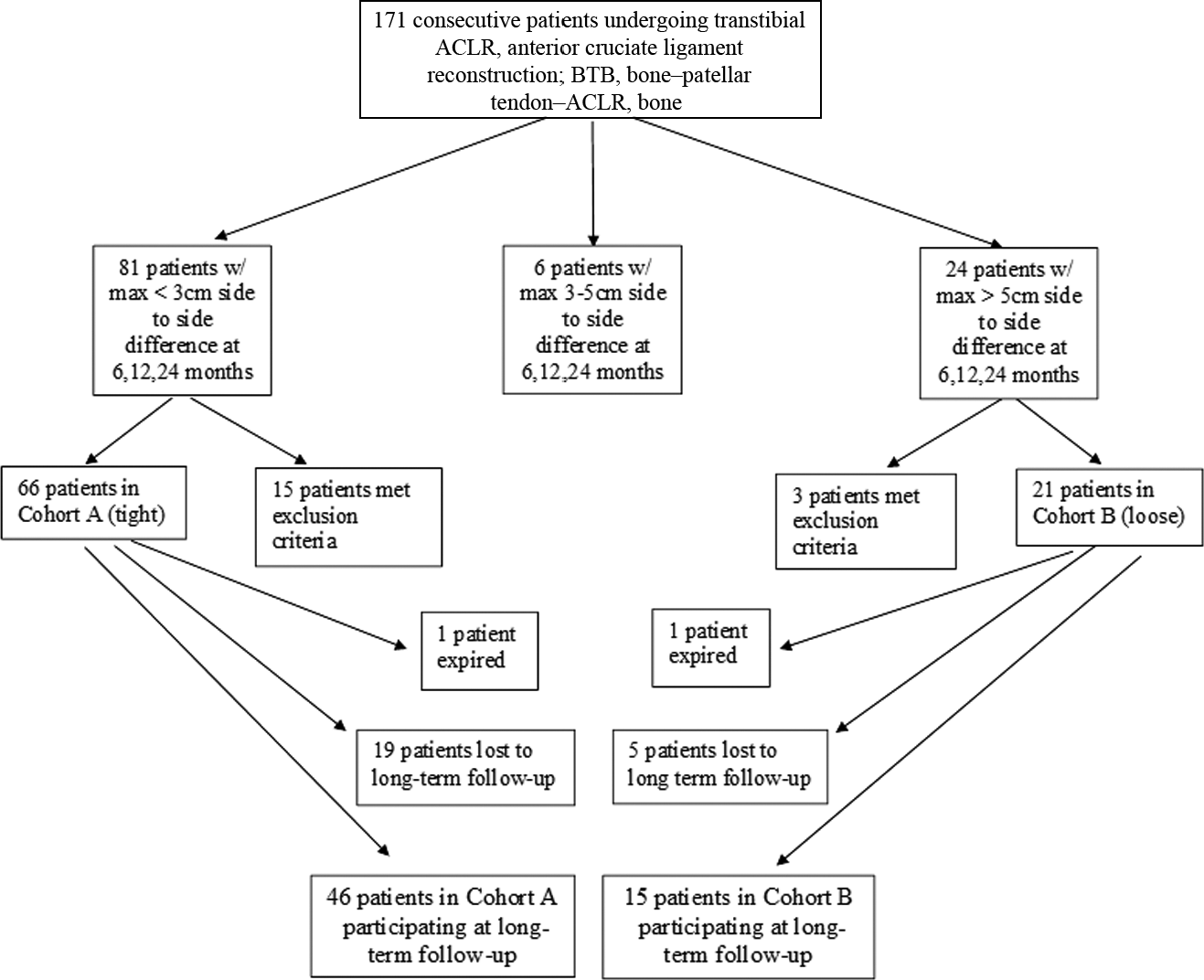
Flowchart delineating cohort grouping for long-term follow-up. ACLR, anterior cruciate ligament reconstruction; BTB, bone–patellar tendon–bone.
The mean ± SD time to follow-up was 16.3 ± 1.5 years in group A and 16.8 ± 1.3 years in group B (P = .17). No statistical difference was found with respect to age at surgery (P = .09), age at follow-up (P = .14), time from injury to surgery (P = .84), body mass index (P = .78), family history of ACL injury (P = .63), and preinjury activity score between groups (P = .31) (Table 1).
Patient Demographics for Group A (Tight Grafts) and Group B (Loose Grafts) a
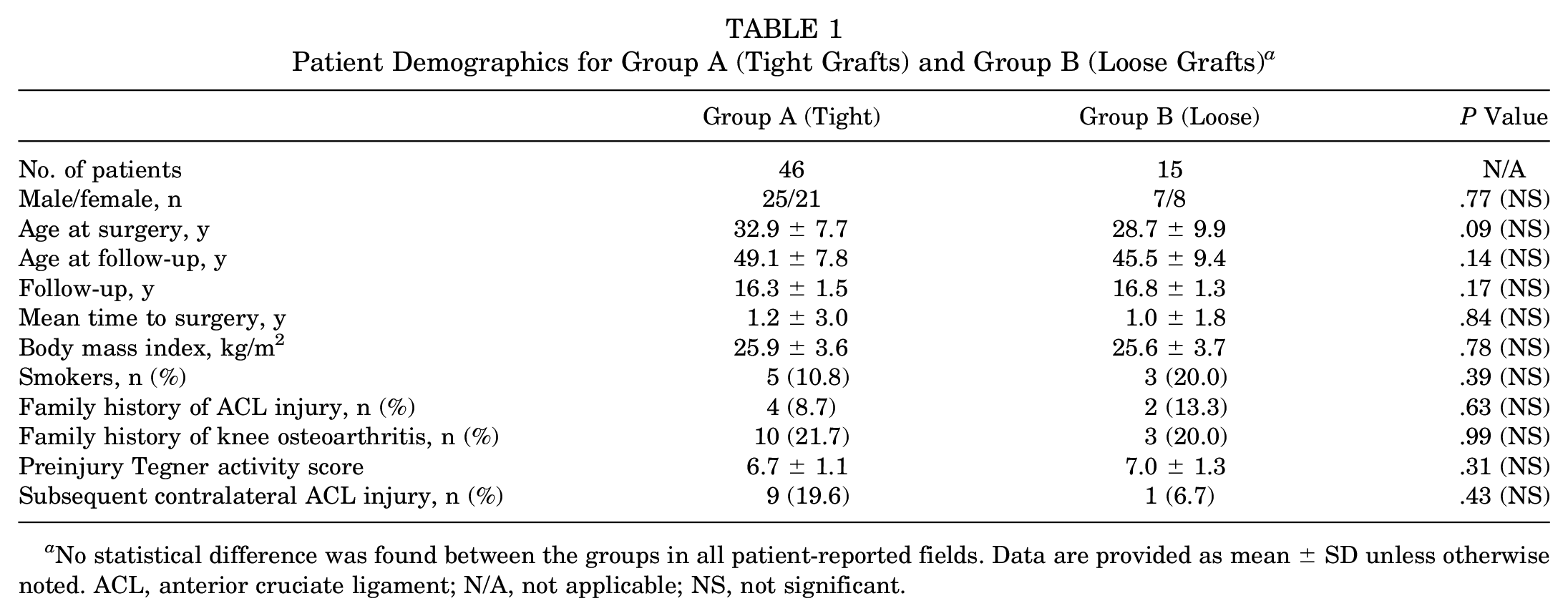
No statistical difference was found between the groups in all patient-reported fields. Data are provided as mean ± SD unless otherwise noted. ACL, anterior cruciate ligament; N/A, not applicable; NS, not significant.
No statistically significant differences in Tegner (P = .77), Lysholm (P = .85), KOOS (P = .96), and IKDC (P = .42) results were found between groups at long-term follow-up (Figure 2). Both Tegner and Lysholm scores significantly improved in tight and loose grafts in the immediate postoperative period as well as at long-term follow-up compared with preoperatively (Figure 3). Tegner activity scores were expectantly lower at long-term follow-up regardless of ACL injury, given the patients’ age at the time of follow-up compared with immediate postoperative activity levels, but remained significantly higher than postinjury levels (Figure 4).
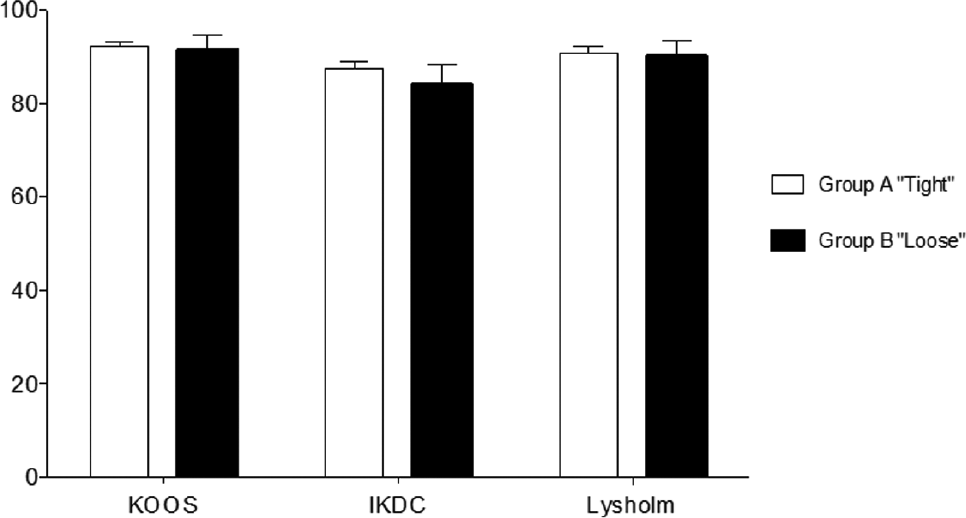
Long-term follow-up subjective knee outcome scores. No statistical differences were found in Knee injury and Osteoarthritis Outcome Score (KOOS) (P = .96), International Knee Documentation Committee (IKDC) score (P = .42), and Lysholm score (P = .85) between group A (tight grafts) and group B (loose grafts) at long-term follow-up.
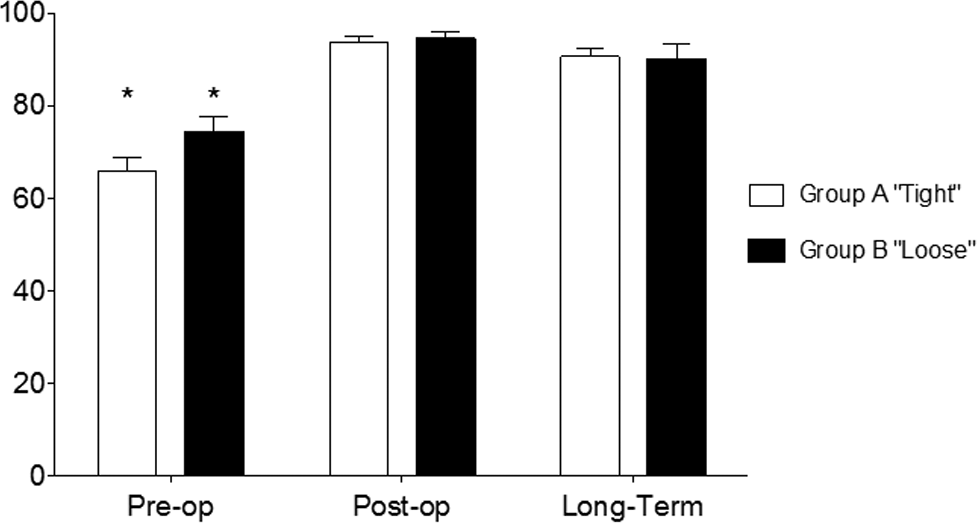
Lysholm scores at preoperative (pre-op) visit, immediate postoperative (post-op) period (mean for 6, 12, and 24 months), and long-term follow-up for group A (tight grafts) and group B (loose grafts). Lysholm scores significantly improved in tight and loose grafts in the immediate postoperative period as well as at long-term follow-up. *Significantly lower than postoperative period and long-term values (P < .001).
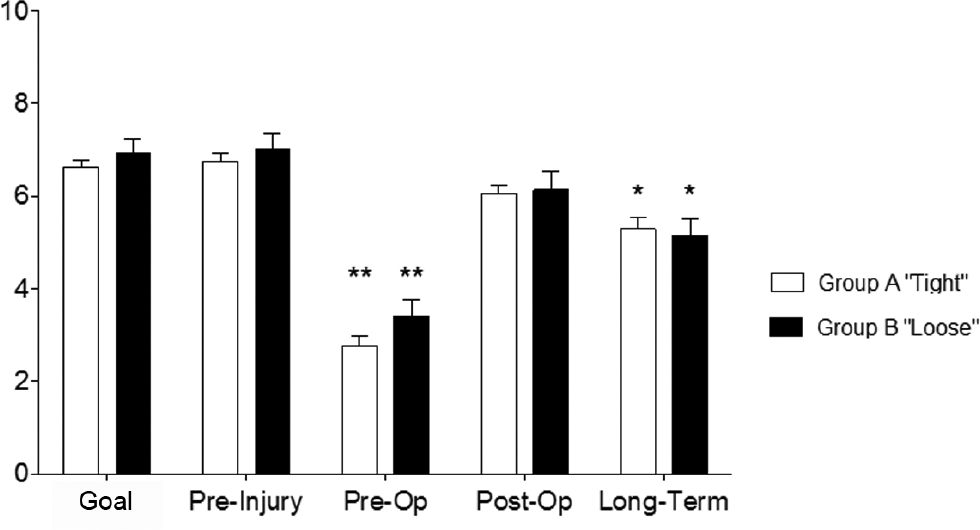
Patients’ goal Tegner activity score, scores from preoperative visit, the immediate postoperative period (6, 12, and 24 months), and long-term follow-up for group A (tight grafts) and group B (loose grafts). Scores significantly improved in tight and loose grafts in the immediate postoperative period as well as at long-term follow-up. Tegner activity scores were expectantly lower at long-term follow-up regardless of anterior cruciate ligament injury, given the patients’ age at the time of follow-up, compared with immediate postoperative activity levels but remained significantly higher than postinjury levels. *Significantly lower than postoperative period (P < .001). **Significantly lower than postoperative period and long-term values (P < .001).
Two ACL revisions were performed in group A and none in group B. Eleven of the 46 patients in group A had additional procedures (24%), whereas a single patient in group B required a subsequent procedure (6.7%). This is illustrated in a Kaplan-Meier survival curve (Figure 5). In group A, 6 patients underwent a partial meniscectomy, 1 patient underwent removal of hardware, 1 patient underwent a chondroplasty, and 1 patient underwent removal of loose body. In group B, the single patient underwent 2 partial meniscectomy procedures at 14- and 17-year follow-up. No statistical difference was noted between groups with regard to number of additional procedures performed subsequent to ACLR (P = .146). However, a trend was noted whereby loose grafts necessitated fewer additional procedures (Table 2). In addition, no difference was found in subsequent contralateral ACL injury (P = .43) between the tight and loose grafts at long-term follow-up (Table 1).
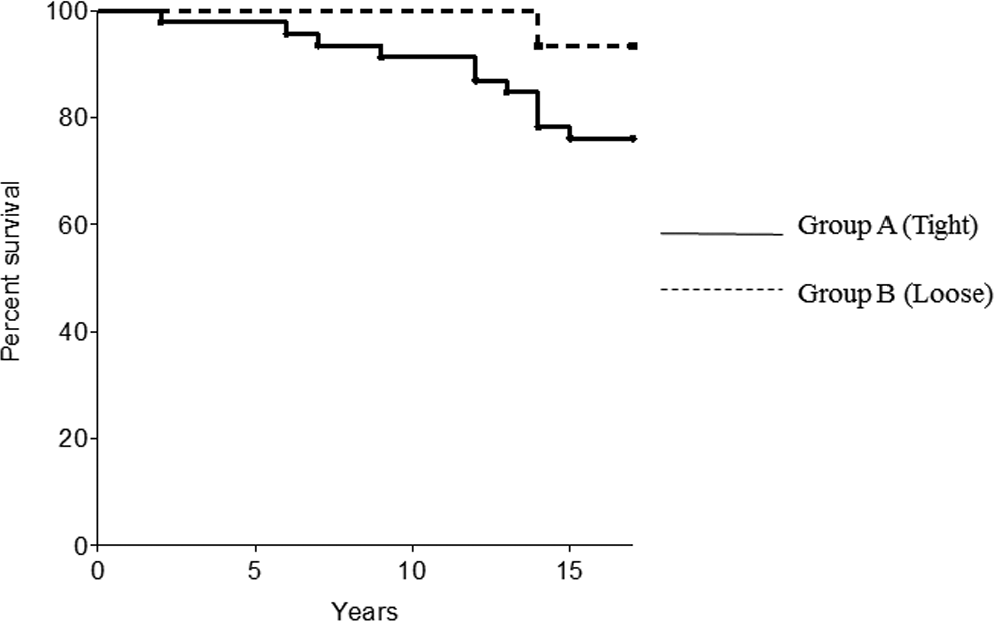
Kaplan-Meier survival curve at long-term follow-up for group A (tight grafts) and group B (loose grafts). Solid and dashed lines represent groups A and B, respectively. Eleven of the 46 patients in group A had additional procedures (24%), whereas a single patient in group B required a subsequent procedure (6.7%). No statistical difference was found between groups with regard to number of additional procedures performed subsequent to ACLR (P = .146).
Self-Reported Subjective Scoring a
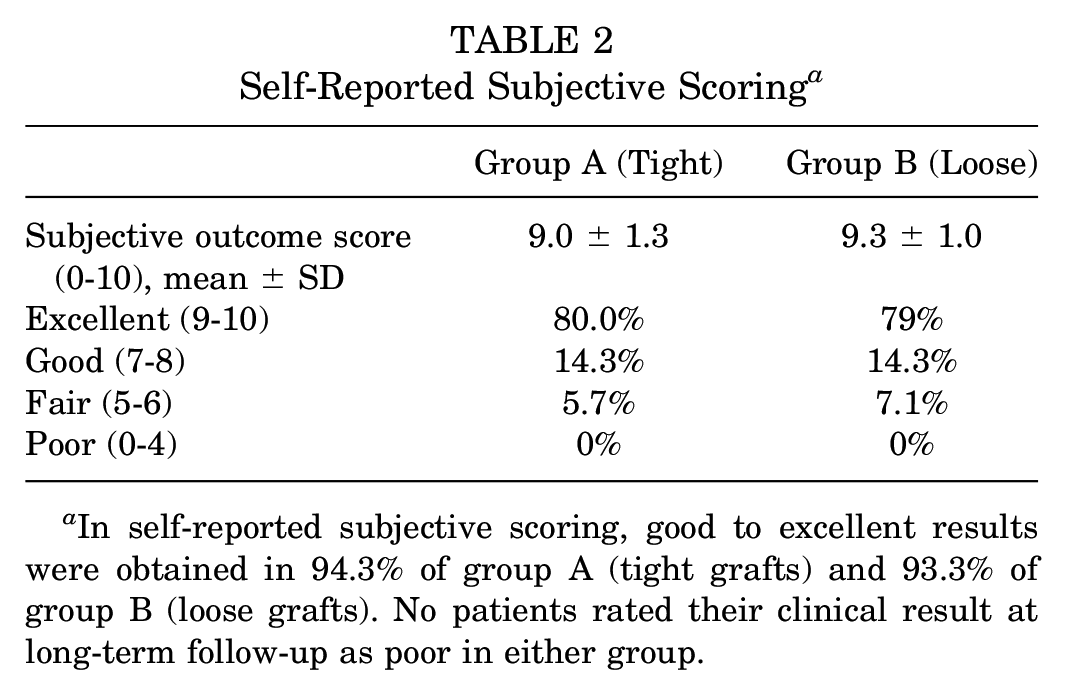
In self-reported subjective scoring, good to excellent results were obtained in 94.3% of group A (tight grafts) and 93.3% of group B (loose grafts). No patients rated their clinical result at long-term follow-up as poor in either group.
In self-reported subjective scoring (0-10 scale), good (score 7-8) to excellent (score 9-10) results were obtained in 94.3% of group A and 94.2% of group B. No patients rated their clinical result at long-term follow-up as poor in either group. Patients rated their outcome a mean 9.0 ± 1.3 and 9.3 ± 1.0 in groups A and B, respectively (Table 2).
Discussion
The KT-1000 arthrometer can provide objective evidence of ACL injury but also can be used as an objective measure of clinical AP laxity after ACLR. 23 Through the use of KT-1000 arthrometer measurements, we have been able to document graft laxity in our transtibial ACLRs performed between 1992 and 1998 and to follow clinical outcomes to long-term follow-up of mean 16.3 and 16.8 years in group A and B, respectively. By study design we directly compared tight grafts (<3 mm STS difference) and loose grafts (>5 mm STS difference) to determine the effect of graft laxity on clinical outcomes. This was taken from previous work which suggested that 3 mm or less of tibial translation represented a nonimpaired STS difference11,30 and that an STS difference of greater than 5 mm represented a procedural failure.1,6,7
Our study demonstrates no statistical difference in clinical outcome scores (Tegner, Lysholm, KOOS, and IKDC) as well as no statistical difference in additional procedures between tight and loose grafts at long-term follow-up. Similarly, in a cohort study at 1-year follow-up, Tyler et al 36 showed that Lysholm scores and Tegner activity levels were not associated with KT-1000 arthrometer measurements. This was an early study suggesting that a KT-1000 arthrometer measurement of greater than 5 mm STS difference should not be used solely to classify an ACLR as a failure. Moreover, our study, to our knowledge, is the first to investigate postoperative graft laxity of over 5 mm with long-term clinical outcomes.
In a similar study, Hyder et al 23 found no difference in Cincinnati or Tegner scores after ACLR in patients with STS differences of 1 to 2 mm, 2 to 3 mm, or greater than 3 mm as measured with KT-1000 arthrometer. In addition, an athlete’s subjective measure of knee stability or “giving out” after ACLR has been shown to not be associated with KT-1000 arthrometer measurements. 20 Our study identifies no correlation between subjective patient outcome scores and AP knee instability in ACLR knees. Thus, it is our determination that an STS difference of greater than 5 mm of instability will lead to clinical outcomes similar to an STS difference of less than 3 mm of instability, and 5 mm of STS difference as measured by KT-1000 arthrometer should not constitute a clinical failure.
Our high subjective clinical outcome scores and satisfaction rates at long-term follow-up are similar to other outcome studies of BTB reconstruction using transtibial techniques. In a systematic review, Lewis et al 28 showed approximately 94% satisfaction levels, with 14% of patients having a KT-1000 arthrometer measurement of greater than 5 mm of STS difference. Our study similarly found more than 94% of patients reporting good to excellent outcomes, with 14% of patients (24/171) having a KT-1000 arthrometer measurement of greater than 5 mm of STS difference. Gerhard et al, 15 in a cohort study at 16-year follow-up, showed Lysholm and KOOS scores of 95 ± 12 and 84 ± 19, respectively, again similar to our results (Figure 2). In addition, Gerhard et al reported a single rerupture and 33% rate of additional procedures. We found 2 revisions and an overall 24% rate of additional surgical procedures in the tight group and a single additional procedure in the loose group (6.7%). While not statistically significant, a trend was noted for higher rates of subsequent surgery in the knees with tighter reconstructions.
Another point of clinical significance for determination of graft laxity is the potential link of residual graft instability with the development of osteoarthritis (OA) after ACLR. 27 A higher degree of OA has been found to be significantly correlated with increased anterior laxity as measured by KT-1000 arthrometer. 35 The theory is that an undertensioned graft after ACL surgery can lead to an excessively lax knee and a nonfunctional graft, whereas overtensioning a graft can potentially have a detrimental effect on biomechanical properties of an ACL graft and lead to overconstraint, tissue failure, failure of fixation, and restriction in motion. 31 Many risk factors have been described for the development of OA and poor outcome after ACL surgery at long-term follow-up, including concurrent meniscectomy, 15 degree of meniscectomy, 12 chondral damage, 26 and body mass index. 40 Without radiographic follow-up of our cohort, we are unable to comment on the potential correlation with laxity and radiographic evidence of OA; however, our study shows no correlation between postoperative KT-1000 arthrometer measurements and subjective patient outcome scores or activity levels after ACLR.
Limitations of our study include the inability to provide an objective clinical and radiographic examination of each patient at final follow-up. This is an inherent difficulty with outcome studies of this magnitude, as there are limitations to having patients return for clinical evaluation 16 years or more after index surgery. Another limitation is the inability to provide information regarding rotational stability, which has been associated with outcomes. Unfortunately, our field lacks proven instrumented clinical measures of rotational stability that have the sensitivity of an arthrometric measure of AP displacement. In addition, KT-1000 arthrometer measurements at long-term follow-up may not correlate with measurements obtained during the immediate postoperative period. Furthermore, the population studied was primarily adults; different functional outcomes, particularly in the short-term, could occur in adolescents.
ACLR is intended to improve clinical function and patient satisfaction. Our conclusion is consistent with prior reports which suggest that postoperative KT-1000 arthrometer measurements may not be appropriate or meaningful. 23 Literature has suggested that the reliability of KT-1000 arthrometer measurements is inadequate. 38 KT-1000 arthrometer measurements have been shown to have poor reproducibility and large intra- and interobserver error.13,22,34,37 In addition, one review suggested that the KT-1000 arthrometer is inappropriate as an outcome tool and recommended that it be used as a diagnostic tool only. 4 In our practice, KT-1000 arthrometer measurements have fallen out of favor and have been replaced by a clinical objective measurement such as the pivot-shift test. This may be a better outcome measure after ACLR, as a 2+ result on the pivot-shift test has been shown to correlate with significantly worse Lysholm and IKDC scores compared with a normal result on the pivot-shift test. 24
Conclusion
Postoperative laxity of greater than 5 mm STS difference as measured by KT-1000 arthrometer does not appear to result in worse clinical outcome scores at long-term follow-up, nor does it lead to significantly more additional surgical procedures. In addition, our study suggests that classic transtibial ACLR provides excellent clinical results with a very low rate of revision ACLR at long-term follow-up. Lysholm, KOOS, and IKDC scores remain high at greater than 16 years after surgery, and Tegner activity scores remain significantly higher than postinjury levels after ACLR.
Footnotes
Presented at the 39th annual meeting of the AOSSM, Chicago, Illinois, July 2013.
One or more of the authors has declared the following potential conflict of interest or source of funding: S.J.N. receives intellectual property royalties and is a paid consultant for Arthrex Inc.