







Abstract
Background:
The cause of subsequent surgery after anterior cruciate ligament (ACL) reconstruction varies, but if risk factors for specific subsequent surgical procedures can be identified, we can better understand which patients are at greatest risk.
Purpose:
To report the incidence and types of subsequent surgery that occurred in a cohort of patients 6 years after their index ACL reconstruction and to identify which variables were associated with the incidence of patients undergoing subsequent surgery after their index ACL reconstruction.
Study Design:
Cohort study; Level of evidence, 2.
Methods:
Patients completed a questionnaire before their index ACL surgery and were followed up at 2 and 6 years. Patients were contacted to determine whether any underwent additional surgery since baseline. Operative reports were obtained, and all surgical procedures were categorized and recorded. Logistic regression models were constructed to predict which patient demographic and surgical variables were associated with the incidence of undergoing subsequent surgery after their index ACL reconstruction.
Results:
The cohort consisted of 3276 patients (56.3% male) with a median age of 23 years. A 6-year follow-up was obtained on 91.5% (2999/3276) with regard to information on the incidence and frequency of subsequent surgery. Overall, 20.4% (612/2999) of the cohort was documented to have undergone at least 1 subsequent surgery on the ipsilateral knee 6 years after their index ACL reconstruction. The most common subsequent surgical procedures were related to the meniscus (11.9%), revision ACL reconstruction (7.5%), loss of motion (7.8%), and articular cartilage (6.7%). Significant risk factors for incurring subsequent meniscus-related surgery were having a medial meniscal repair at the time of index surgery, reconstruction with a hamstring autograft or allograft, higher baseline Marx activity level, younger age, and cessation of smoking. Significant predictors of undergoing subsequent surgery involving articular cartilage were higher body mass index, higher Marx activity level, reconstruction with a hamstring autograft or allograft, meniscal repair at the time of index surgery, or a grade 3/4 articular cartilage abnormality classified at the time of index ACL reconstruction. Risk factors for incurring subsequent surgery for loss of motion were younger age, female sex, low baseline Knee injury and Osteoarthritis Outcome Score symptom subscore, and reconstruction with a soft tissue allograft.
Conclusion:
These findings can be used to identify patients who are at the greatest risk of incurring subsequent surgery after ACL reconstruction.
Keywords
Anterior cruciate ligament (ACL) tears commonly have associated injuries such as meniscal tears, 6 cartilage injuries, 5 and additional ligament sprains. 11 Patients with an ACL tear and concomitant medial meniscal and chondral injuries have poorer functional outcome scores, decreased activity levels, and lower return-to-sports rates compared with isolated ACL tears.18,21 Associated injuries such as meniscal tears and cartilage damage contribute to posttraumatic arthritis years later, but in the short term, they can lead to subsequent surgery when the abnormalities fail to heal or respond to treatment. Subsequent surgery after ACL reconstruction decreases patient outcome scores and satisfaction. 19 The reason for subsequent surgery varies widely, and if we can identify modifiable risk factors for specific subsequent surgical procedures, we can better understand which patients are at greatest risk. Previous studies have identified risk factors for subsequent surgery after ACL reconstruction,1,2,4,7-10,12,16,17,19 but to our knowledge, only a few studies have been conducted to evaluate which factors increase the risk for specific procedures related to the meniscus, articular cartilage, or loss of motion.1,2,8
Csintalan et al 2 identified multiple risk factors for subsequent surgery after ACL reconstruction. Meniscal repair at the time of initial ACL reconstruction was a risk factor for undergoing subsequent meniscal surgery. Older age and undergoing ACL reconstruction by a sports medicine fellowship–trained surgeon were associated with subsequent cartilage surgery. Allografts and female sex were associated with subsequent hardware removal. Debridement for arthrofibrosis was more likely in female patients and those with previous surgery. Some of these risk factors are predictable, such as meniscal repair increasing the likelihood of subsequent meniscal surgery. Other associations are less obvious.
The purpose of this study was 2-fold: (1) to report the incidence and types of subsequent surgery that occurred in patients within 6 years after their index ACL reconstruction and (2) to identify and assess which variables (ie, patient demographic and surgical) were associated with the incidence of patients undergoing subsequent surgery (other than revision ACL reconstruction) after their index ACL reconstruction.
Methods
Study Design and Population
This was a multicenter, longitudinal prospective cohort study design, consisting of 7 consortium sites (Vanderbilt University Medical Center [coordinating center], Cleveland Clinic, Hospital for Special Surgery, The Ohio State University, University of Colorado, University of Iowa, and Washington University in St Louis) and 17 surgeons. After approval was obtained from each site’s respective institutional review board, all patients who underwent unilateral primary or revision ACL reconstruction were eligible for enrollment from 2002 to 2008. Multiligamentous injuries were included. Simultaneous bilateral ACL reconstruction procedures were excluded from this study.
Data Sources and Management
After informed consent was obtained, each participant completed a questionnaire that included baseline demographics, injury descriptors, sports participation level, comorbidities, knee surgical history, and validated patient-reported outcome scores (International Knee Documentation Committee [IKDC], Knee injury and Osteoarthritis Outcome Score [KOOS] 5 subscales [Symptoms, Pain, Activities of Daily Living, Sports and Recreation, knee-related Quality of Life], and Marx Activity Rating Scale).
After surgery, each surgeon completed a questionnaire that documented the results of the examination under anesthesia, surgical technique, and arthroscopic findings and treatment of any concomitant meniscal and cartilage injuries. Surgeon documentation of any articular cartilage abnormality was recorded based on the modified Outerbridge classification.3,15 Meniscal lesions were classified by location, size, and partial versus complete tears, while treatment was recorded as not treated, repair, extent of resection, or other (transplant, etc). After surgery, the patients were given a uniform set of standardized evidence-based rehabilitation guidelines.
Completed data forms were mailed from each participating site to the data coordinating center and scanned into a master database using TeleForm software (OpenText). A series of logical error and quality control checks were performed as part of our regular data maintenance. Cases that failed these checks were tagged and verified against the source documents to resolve before analysis.
Follow-up
Overall, 2- and 6-year follow-up was completed by mail with readministration of the same questionnaire that the patients completed at baseline (defined as the time of index ACL reconstruction). In addition, patients were also contacted to determine whether any underwent additional surgery since baseline (eg, revision ACL reconstruction on the ipsilateral knee, primary ACL reconstruction on the contralateral knee, and/or any arthroscopic surgery to either knee). Every effort was made to obtain the operative note on these additional surgical procedures. If an operative report could not be obtained but the patient reported ACL reconstruction, surgery for infections, or total knee arthroplasty, these were recorded as such. If the patient reported any other type of surgery, patient accuracy was assumed to be unreliable, and the surgical procedure was recorded as “no operative report/unknown.” These “unknowns” were included in counts as subsequent surgery but excluded from categorical analyses. Operative reports were obtained and independently read by 2 orthopaedic surgeons (J.P.S., K.P.S.), and all procedures performed during subsequent surgery were categorized and recorded along with the surgical date. If multiple procedures were performed during surgery, all were recorded. If the 2 surgeons disagreed on how to categorize any procedure, a third blinded orthopaedic surgeon was asked to read the operative report, and the majority ruled. A diagram depicting the categories and subcategories of defined subsequent surgical procedures is shown in Figure 1.
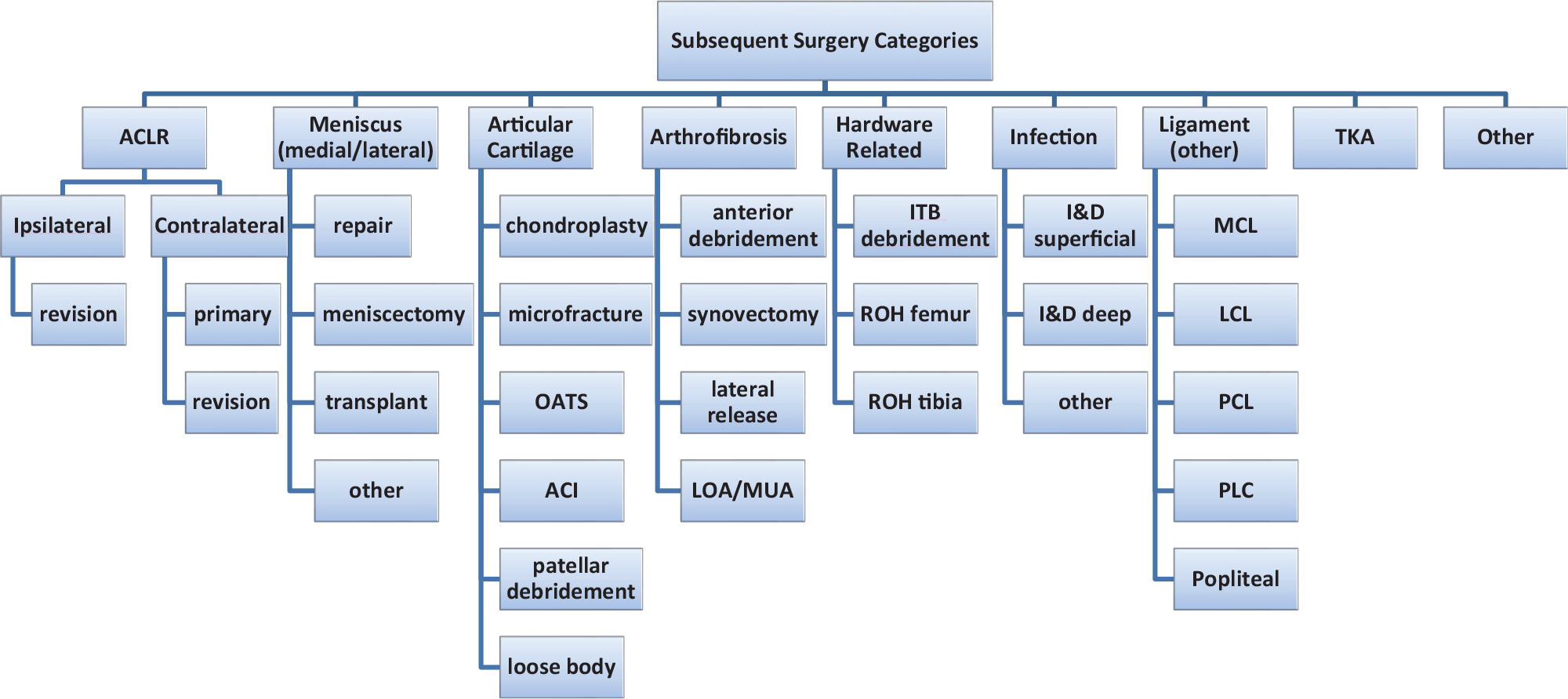
List of categories and subcategories used for classifying subsequent surgical procedures. ACI, autologous chondrocyte implantation; ACLR, anterior cruciate ligament reconstruction; I&D, irrigation and debridement; ITB, iliotibial band; LCL, lateral collateral ligament; LOA/MUA, lysis of adhesions/manipulation under anesthesia; MCL, medial collateral ligament; OATS, osteochondral autograft transfer system; PCL, posterior cruciate ligament; PLC, posterolateral corner; ROH, removal of hardware; TKA, total knee arthroplasty.
Quantitative Variables and Statistical Analysis
There were 3 separate logistic regression models constructed to predict which variables (ie, patient demographic and surgical) were associated with the incidence of patients undergoing subsequent surgery after their index ACL reconstruction: 1 model examined subsequent meniscus-related surgery on the ipsilateral knee, 1 model examined subsequent articular cartilage–related surgery on the ipsilateral knee, and 1 model examined subsequent surgery related to loss of motion on the ipsilateral knee. Of note, no models were constructed to examine subsequent ACL reconstruction on either the ipsilateral or contralateral knee because these have previously been reported.9,10
Risk Factor Variables Included for Each Model
The associated baseline variables were considered for each of the following outcomes (Table 1, Models 1-3) on the ipsilateral knee within 6 years of index ACL reconstruction (Table 1).
Risk Factor Variables Included for Each Model a
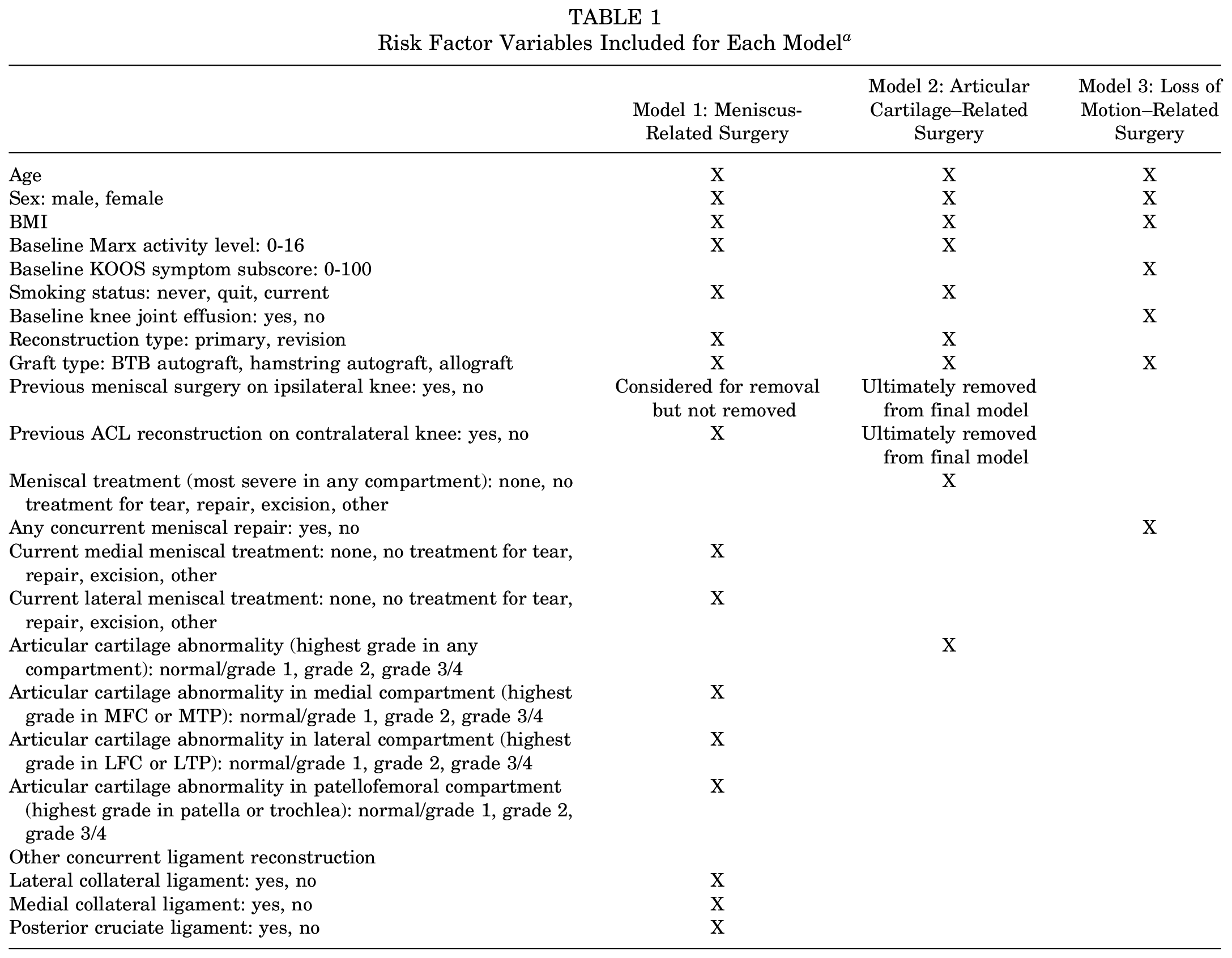
ACL, anterior cruciate ligament; BMI, body mass index; BTB, bone–patellar tendon–bone; KOOS, Knee injury and Osteoarthritis Outcome Score; LFC, lateral femoral condyle; LTP, lateral tibial plateau; MFC, medial femoral condyle; MTP, medial tibial plateau.
Full Models
All continuous variables (age, body mass index [BMI], and Marx activity level) were tested for nonlinear relationships. All full models were run for each outcome. Nonsignificant (P ≥ .05) nonlinear variables were tested collectively with a likelihood ratio test. The discrimination ability and overfitting metrics were computed.
Reducing Overfit Models
Likelihood ratios, Akaike information criterion (AIC) values, and shrinkage estimates were obtained to test the full and reduced models to determine the optimal models.
Variable Importance
To assess the relative importance of the variables contained in each model, the AIC was used, which quantifies the trade-off between how well the model fits the data and how complex the model is (ie, how many degrees of freedom are used). The difference in the AIC was computed between the full model and after removing each variable from the full model. A variable causing the largest increase in the AIC was deemed most important, whereas a decrease in the AIC upon removal actually meant that the model was better without the variable (statistically).
Missing Data
Missing data were imputed using multiple imputation by chained equations via the R package mice (R Project for Statistical Computing). The final models for each outcome were run on the unimputed data as a sensitivity analysis to check for any drastic changes in model coefficients or other metrics. Statistical analysis was performed with free open-source R statistical software (www.r-project.org).
Results
Study Population
Table 2 provides a univariate summary of the cohort, displaying medians with interquartile ranges for continuous variables and frequencies with percentages for categorical variables.
Baseline Characteristics and 6-Year Outcomes a
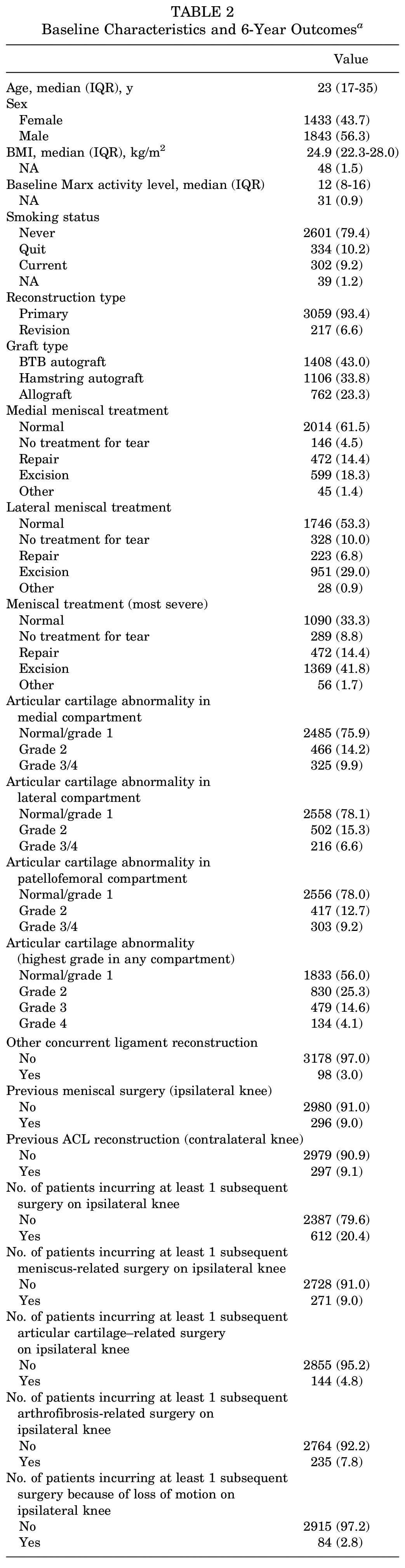
Data are shown as n (%) unless otherwise indicated. ACL, anterior cruciate ligament; BMI, body mass index; BTB, bone–patellar tendon–bone; IQR, interquartile range; NA, not available.
The cohort consisted of 3276 patients (56.3% male) with a median age of 23 years at the time of enrollment. Primary ACL reconstruction was performed in 93.4%, and most patients underwent reconstruction with a bone–patellar tendon–bone (BTB) autograft (43.0%), while 33.8% underwent reconstruction with a hamstring autograft, and 23.3% underwent reconstruction with an allograft.
Follow-up
We were able to obtain 91.5% (2999/3276) follow-up with regard to information on the incidence and frequency of subsequent surgery in the cohort. At 6 years, 8.5% (277/3276) were lost to follow-up.
Incidence of Subsequent Surgery
Overall, 20.4% (612/2999) of the cohort was documented to have undergone at least 1 subsequent surgery on the ipsilateral knee 6 years after their index ACL reconstruction (Table 2). These 612 patients underwent 1272 categorical procedures (Table 3).
Subsequent Procedures at 2- and 6-Year Follow-up a
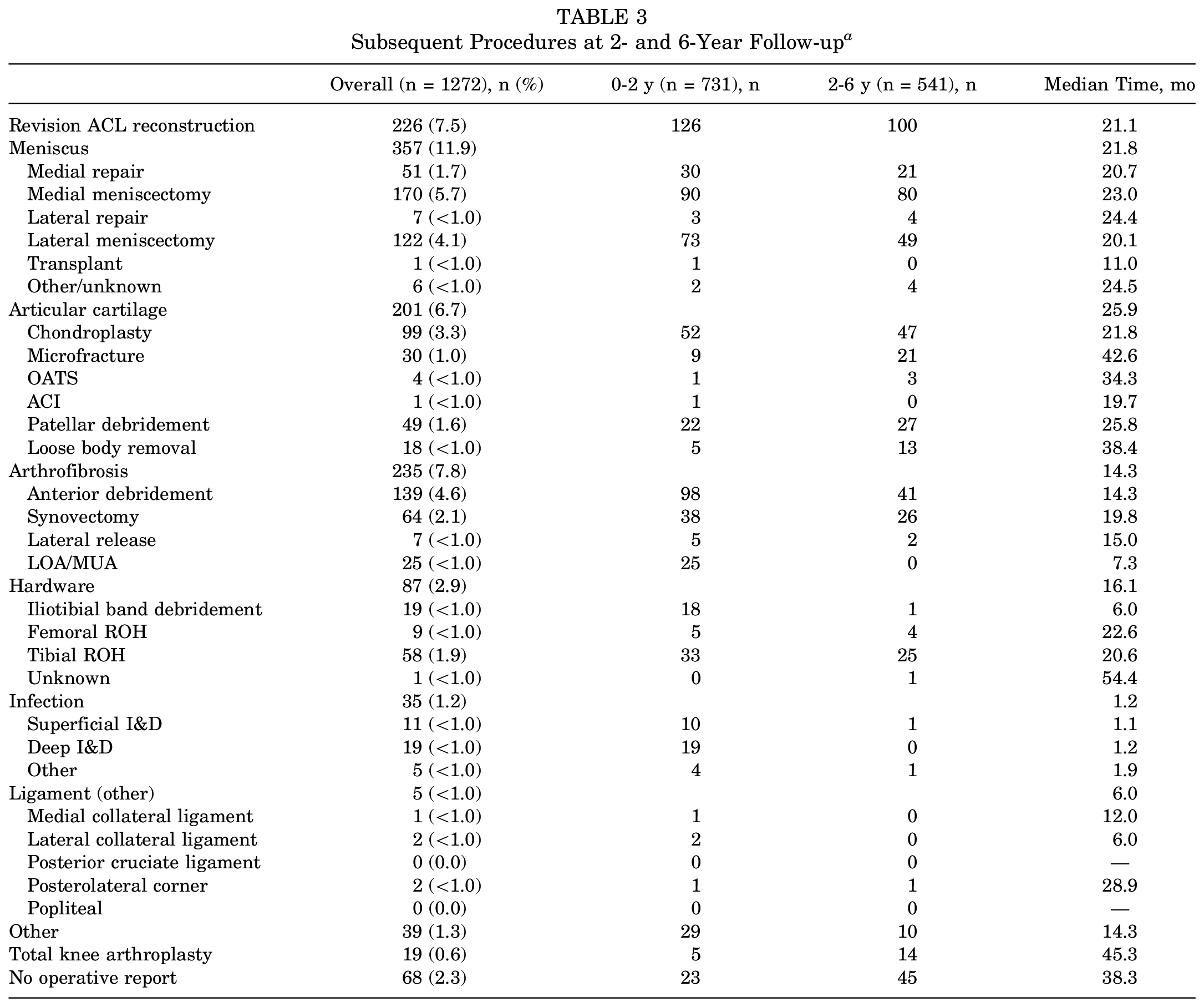
Dashes indicate no value. ACI, autologous chondrocyte implantation; ACL, anterior cruciate ligament; I&D, irrigation and debridement; LOA/MUA, lysis of adhesions/manipulation under anesthesia; OATS, osteochondral autograft transfer system; ROH, removal of hardware.
The majority of subsequent surgical procedures involved the meniscus (n = 357; 11.9%), with medial meniscal repair and/or meniscectomy occurring almost twice as frequently as lateral meniscal repair and/or meniscectomy (7.4% vs 4.3%, respectively). The most common subsequent surgical procedure that occurred was revision ACL reconstruction of the index knee, which occurred in 7.5% of the cohort (Table 2).
Predictors of Subsequent Meniscal Surgery
The variables that were found to be significant predictors of undergoing subsequent meniscal surgery on the ipsilateral knee were lower age, higher baseline Marx activity level, patients who had quit smoking (compared with nonsmokers), a hamstring autograft or allograft (compared with a BTB autograft), and medial meniscal repair or a medial meniscal tear that was not treated at the time of index surgery (Table 4).
ORs and Associated P Values for Variables in Subsequent Meniscal and Articular Cartilage Surgery Models a
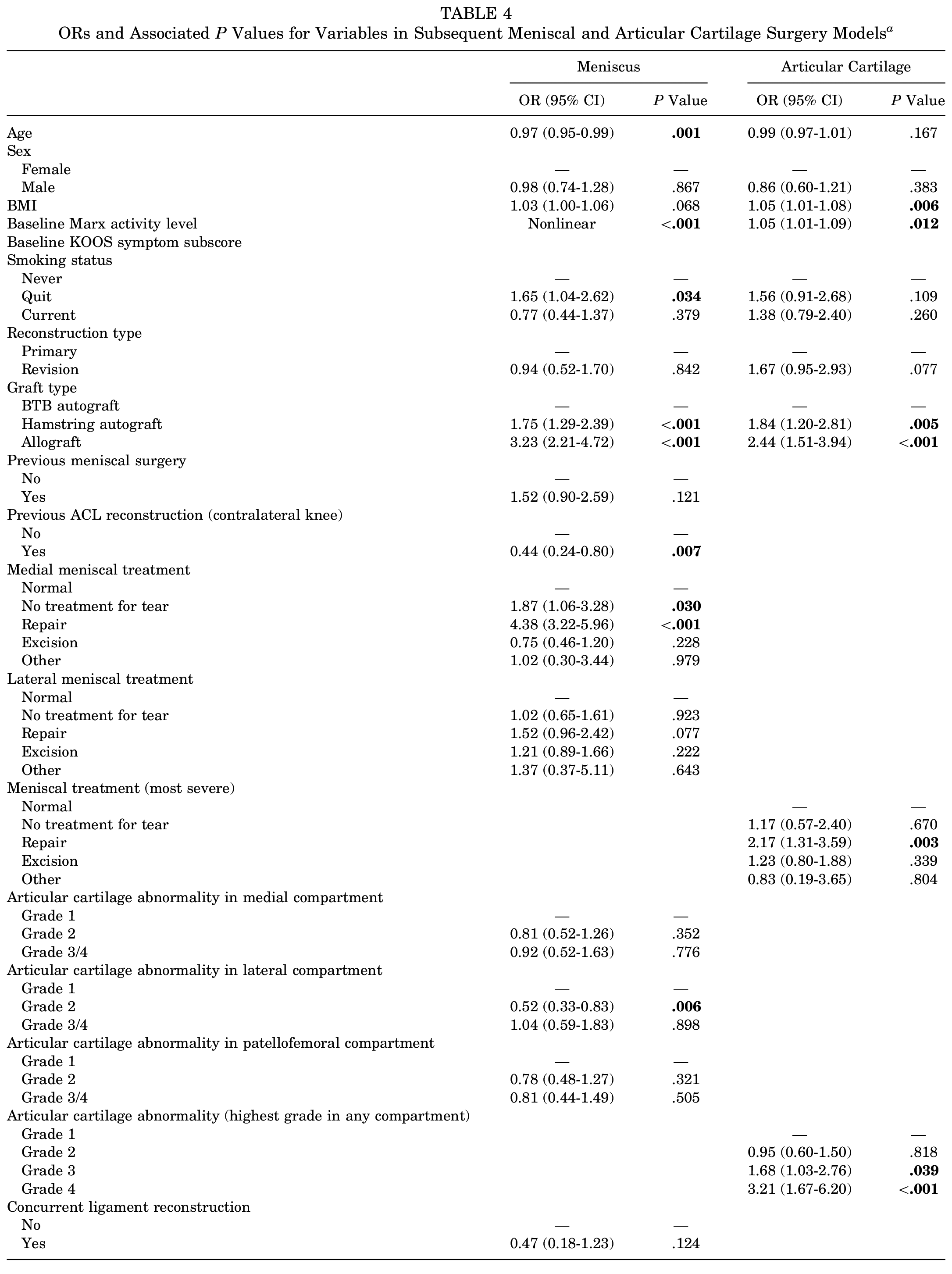
Because nonlinear variables do not have a single OR, those were omitted from the table, although P values from a likelihood ratio test were included to display significance. Dashes indicate reference value variable. Bolded P values are statistically significant (P < .05). ACL, anterior cruciate ligament; BMI, body mass index; BTB, bone–patellar tendon–bone; KOOS, Knee injury and Osteoarthritis Outcome Score; OR, odds ratio.
Conversely, previous ACL reconstruction on the contralateral knee before index surgery or a grade 2 articular cartilage abnormality in the lateral compartment at the time of index surgery were significant predictors of not undergoing any subsequent surgery related to the meniscus 6 years after ACL reconstruction (Table 4).
Figure 2 shows the relative comparison of significance between the variables. Variables with the largest increase in the AIC were deemed the most significant. Our statistical model found that after adjusting for all other covariates, medial meniscal treatment and graft type were the 2 most significant variables that contributed to the likelihood of undergoing subsequent meniscus-related surgery by 6 years. Specifically, patients who underwent initial medial meniscal repair were 4.4 times more likely to undergo subsequent meniscus-related surgery compared with patients with no initial meniscal abnormality (P < .001) (Table 4), and medial meniscal tears that were left untreated were 1.9 times more likely to incur subsequent surgery (P = .030) (Table 4). Similarly, patients who underwent initial reconstruction with an allograft were 3.2 times more likely to incur subsequent meniscus-related surgery by 6 years, and patients who underwent initial reconstruction with a hamstring autograft were 1.8 times more likely to incur subsequent meniscus-related surgery (P < .001) (Table 4).
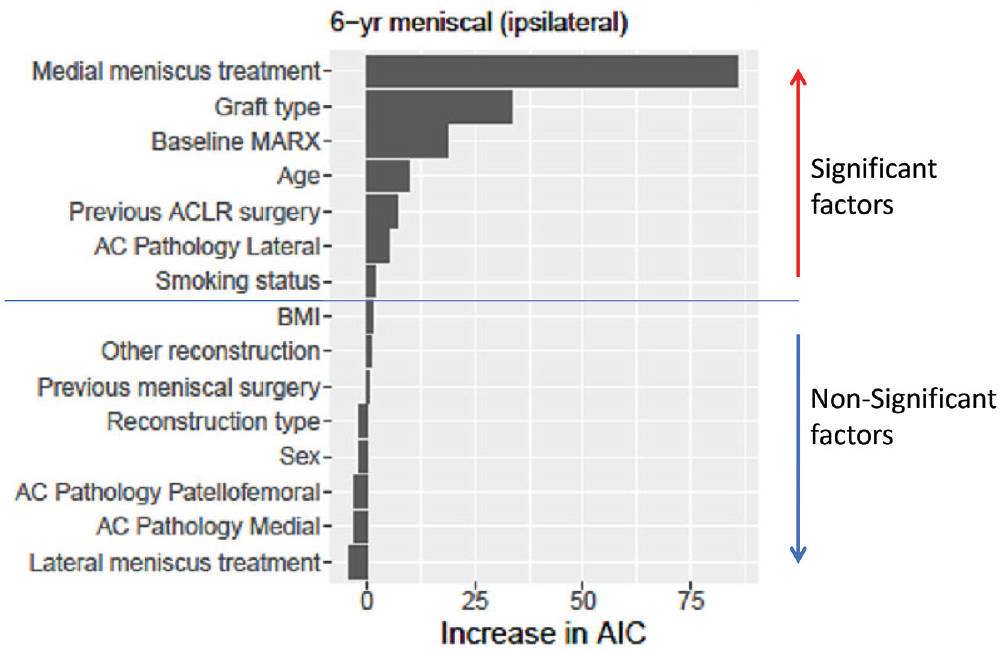
Relative variable importance by an increase in the Akaike information criterion (AIC) in the subsequent meniscal surgery model. AC, articular cartilage; ACLR, anterior cruciate ligament reconstruction; BMI, body mass index; MARX, Marx Activity Rating Scale.
Predictors of Subsequent Articular Cartilage Surgery
The variables that were found to be significant predictors of undergoing subsequent surgery involving articular cartilage on the ipsilateral knee were higher BMI, higher baseline Marx activity level, a hamstring autograft or allograft (compared with a BTB autograft), meniscal repair at the time of index surgery, or a grade 3 or 4 articular cartilage abnormality in any compartment (Table 4). Specifically, if a patient had grade 4 changes in any compartment at the time of his or her index reconstruction, that patient was 3.2 times more likely to undergo subsequent articular cartilage–related surgery by 6 years after controlling for all covariates (P < .001) (Table 4). If a patient underwent initial reconstruction with an allograft, he or she was 2.4 times more likely to undergo subsequent articular cartilage–related surgery by 6 years (P < .001) (Table 4).
Figure 3 shows the relative comparison of significance between the variables and demonstrates that graft type and articular cartilage abnormality were the top 2 positive predictors. Age was not a significant predictor of undergoing subsequent articular cartilage surgery in this cohort.
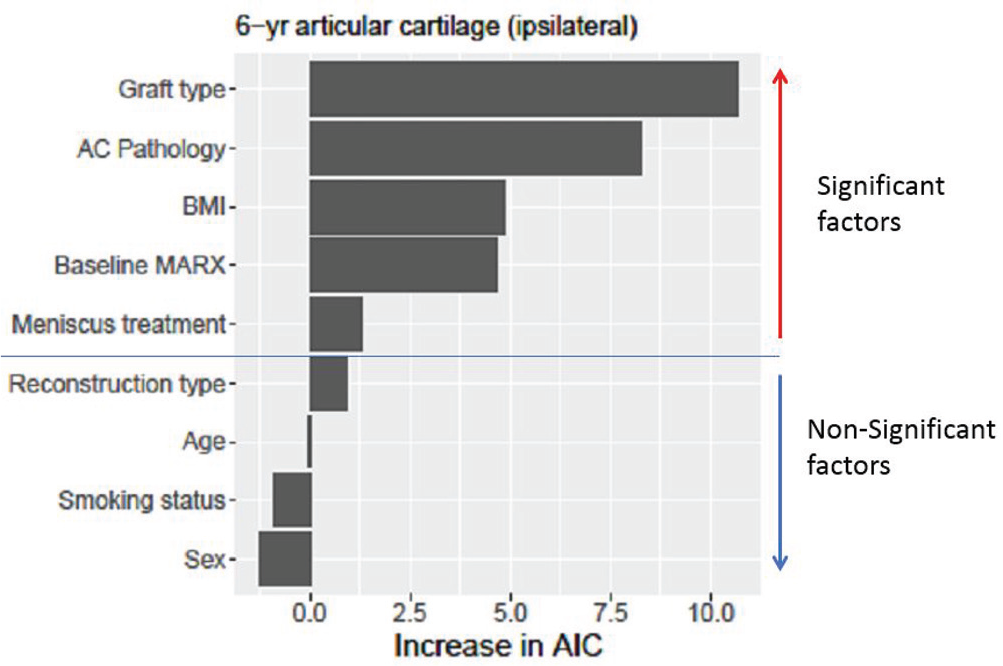
Relative variable importance by an increase in the Akaike information criterion (AIC) in the subsequent articular cartilage–related surgery model. AC, articular cartilage; ACLR, anterior cruciate ligament reconstruction; BMI, body mass index; MARX, Marx Activity Rating Scale.
Predictors of Subsequent Surgery for Loss of Motion
Although there were 235 cases for subsequent arthrofibrosis-related surgery, we were interested in which cases were driven by a loss of motion. The operative reports that mentioned a preoperative symptom of the patient having a loss of motion were tagged. A total of 84 cases involved patients who required surgery for loss of motion. The variables that were found to be significant predictors of undergoing subsequent surgery related to loss of motion were female sex, younger age, lower baseline KOOS Symptoms subscores, or a soft tissue allograft (compared with a BTB autograft) (Table 5). For example, female patients were 2.5 times more likely to undergo subsequent surgery involving loss of motion compared with their male counterparts (P < .001).
ORs and Associated P Values for Variables in Subsequent Loss of Motion–Related Surgery Model a
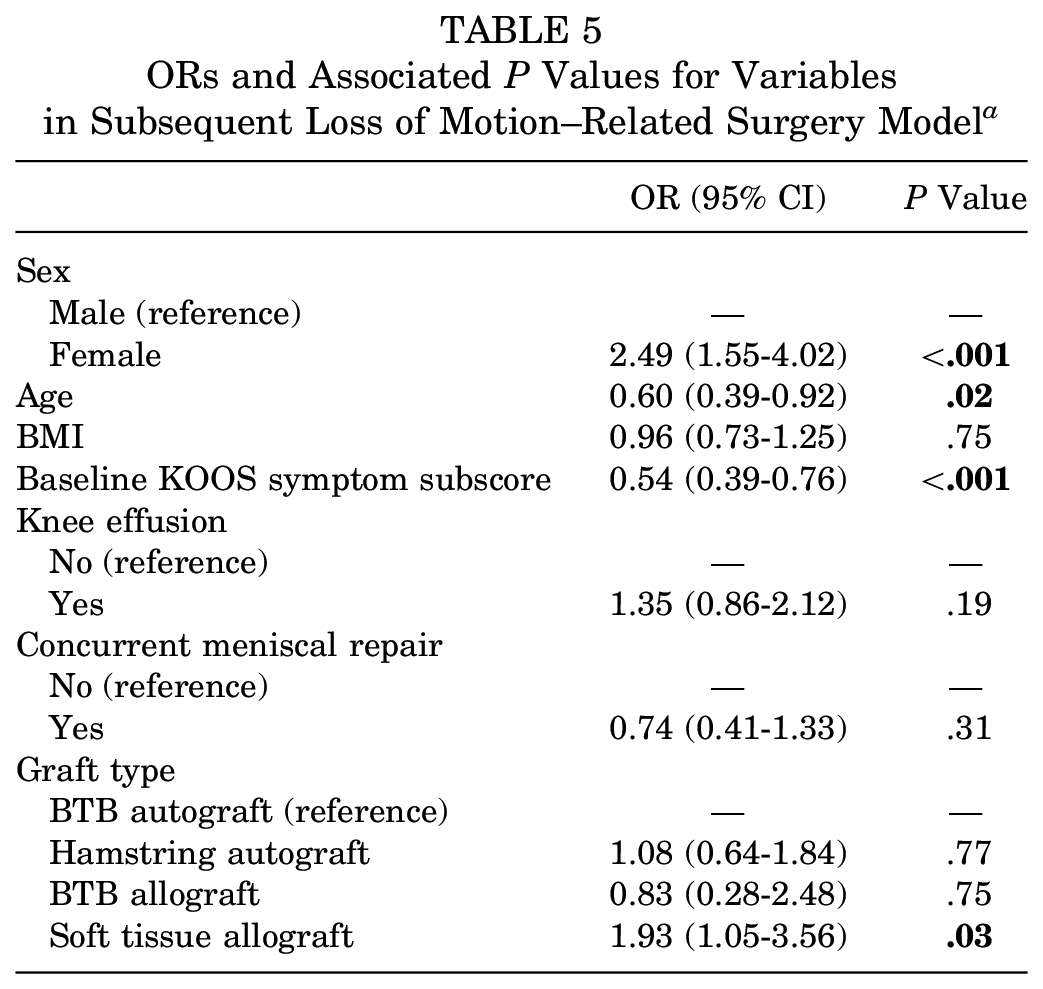
Dashes indicate reference value variable. Bolded P values are statistically significant (P < .05). BMI, body mass index; BTB, bone–patellar tendon–bone; KOOS, Knee injury and Osteoarthritis Outcome Score; OR, odds ratio.
Figure 4 shows the relative comparison of significance between the variables and demonstrates that sex and baseline KOOS Symptoms subscore were the top 2 predictors, whereas BMI and concurrent meniscal repair were the least important. Knee effusion at the time of surgery was not a significant predictor of undergoing subsequent surgery related to loss of motion in this cohort.
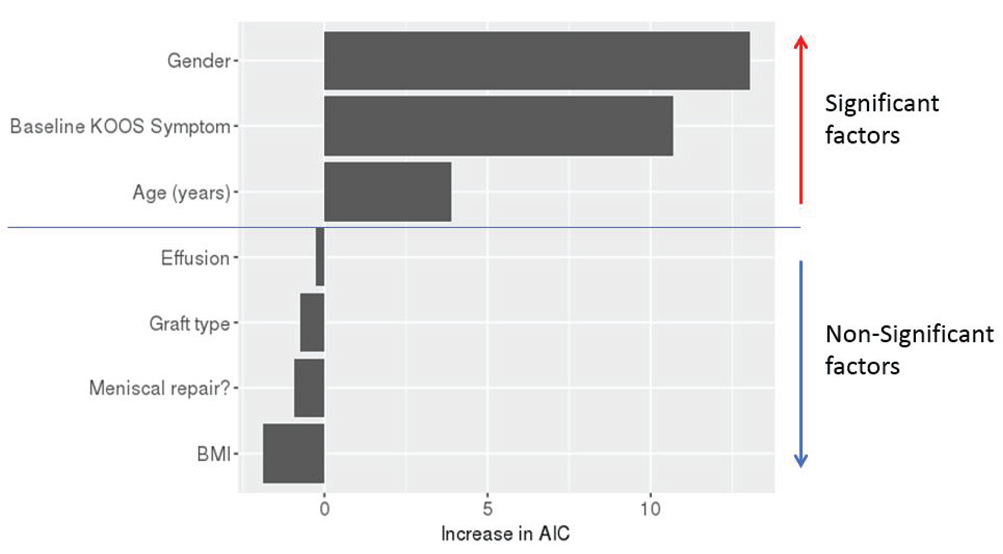
Relative variable importance by an increase in the Akaike information criterion (AIC) in the subsequent surgery model related to loss of motion. AC, articular cartilage; ACLR, anterior cruciate ligament reconstruction; BMI, body mass index; KOOS, Knee injury and Osteoarthritis Outcome Score; MARX, Marx Activity Rating Scale.
Discussion
There are limited data available about subsequent surgery (non–revision ACL reconstruction) after ACL reconstruction and the risk factors for subsequent surgery. This was a multicenter, longitudinal prospective cohort study that evaluated 3276 patients undergoing ACL reconstruction for concomitant injuries and subsequent surgery at 2- and 6-year follow-up. This study identified the incidence and risk factors associated with subsequent surgery related to the meniscus, articular cartilage, and loss of motion over a 6-year follow-up period. There was a 20.4% incidence of subsequent surgery on the ipsilateral knee 6 years after a patient’s index ACL reconstruction. The results of this study fit within the range of subsequent surgery rates after ACL reconstruction reported for midterm to long-term outcomes (4%-28%).2,4,7,8,12,16,19
Our study includes data from 980 patients reported by Hettrich et al 7 in 2013 and expanded on it to evaluate correlations between abnormalities resulting from index surgery and subsequent surgery. Expanding the data had no effect on the overall subsequent surgery rates, but it allowed us to run predictive models on the most common subsequent surgical procedures. Our models corroborated their findings that younger age and allografts were predictive of any subsequent surgery. No additional risk factors were identified in that study, whereas the current study identified risk factors for specific subsequent surgical procedures related to the meniscus, articular cartilage, and loss of motion.
There is significant interest in understanding the factors associated with subsequent surgery after ACL reconstruction to try to better identify who is at risk. Predictors of subsequent meniscal surgery in our cohort included lower age, higher baseline Marx activity level, patients who had quit smoking (compared with nonsmokers), reconstruction with a hamstring autograft or allograft (compared with a BTB autograft), or medial meniscal repair or an untreated medial meniscal tear at the time of index surgery. In particular, medial meniscal treatment was a strong predictor of future subsequent surgery in our cohort. At the time of index surgery, 14.4% of the cohort underwent concomitant medial meniscal repair, and 4.5% had a medial meniscal tear that was left untreated (see Table 2). By 6 years, 7.4% of the cohort required subsequent medial meniscal repair or meniscectomy (see Table 3). Patients who underwent initial medial meniscal repair were 4.4 times more likely to undergo subsequent meniscus-related surgery compared with patients with no initial meniscal abnormality (P < .001) (Table 4). Similarly, medial meniscal tears that were left untreated were 1.9 times more likely to incur subsequent surgery (P = .030) (Table 4). Although this 7.4% subsequent surgery rate is consistent with other literature, 4 we believe that this is an area that can be improved on. Conversely, lateral meniscal treatment at the time of index ACL reconstruction was relatively insignificant in predicting subsequent meniscus-related surgery (Table 4 and Figure 2). At the time of index surgery, 6.8% of the cohort underwent concomitant lateral meniscal repair, and 10.0% had a lateral meniscal tear that was left untreated (see Table 2). By 6 years, 4.3% (129/2999) of the cohort required subsequent lateral meniscal repair or meniscectomy (see Table 3). Patients who underwent lateral meniscal repair or had a lateral menical tear left untreated were no more likely to undergo subsequent meniscus-related surgery at 6 years compared with patients with no lateral meniscal abnormality (Table 4).
Medial meniscal treatment was a strong predictor of subsequent surgery, whereas lateral meniscal treatment was not. This may be caused by more stress to the medial meniscus because of less mobility than the lateral meniscus. Repairing smaller tears may decrease subsequent surgery rates. Less traumatizing methods of repair to the meniscal structure in larger tears may also decrease subsequent surgery rates. Multiple inside-out sutures are significantly less traumatic to meniscal tissue than a smaller number of all-inside sutures that have a much larger diameter needle that punctures through the meniscus. Studies evaluating the subsequent surgery rates of all-inside versus inside-out repair on the medial meniscus would help clarify which type of repair decreases subsequent surgery rates. Strategies to preserve the meniscus will decrease articular cartilage degeneration at longer term.
The variables that were found to be significant predictors of undergoing subsequent surgery involving articular cartilage on the ipsilateral knee were higher BMI, higher baseline Marx activity level, reconstruction with a hamstring autograft or allograft (compared with a BTB autograft), medial meniscal repair at the time of index surgery, or a grade 3 or 4 articular cartilage abnormality in any compartment. Grade 3 and 4 articular cartilage damage can cause additional surgery because of pain, recurrent effusion, or mechanical symptoms that can all result in worse function. There are likely additional stresses on the meniscus from increased friction due to articular cartilage damage. The management of articular cartilage abnormalities could potentially decrease subsequent surgery rates. Although this was identified as a risk factor for subsequent surgery, we do not know how the management of these defects affects subsequent surgery rates. Future studies looking at the management of concomitant cartilage defects at the time of ACL reconstruction comparing techniques such as chondroplasty, microfracture, osteochondral autograft transfer system, or osteochondral allograft transfer could help identify how to decrease this risk.
Loss of motion was another predictor of subsequent surgery after ACL reconstruction. Variables that were predictive of subsequent surgery were female sex, younger age, lower baseline KOOS Symptoms subscores, and reconstruction with a soft tissue allograft. Patients who undergo subsequent surgery for loss of motion have been shown to return to sports at similar times as case-matched controls but have displayed poorer single-leg hop test results and self-reported function. 22 Based on our data, avoiding reconstruction with an allograft could decrease the incidence of subsequent surgery related to loss of motion. In a study of adolescent patients who had undergone ACL reconstruction, Nwachukwu et al 14 reported that female sex, age (ie, older adolescents), concurrent meniscal repair, and reconstruction with a patellar tendon autograft were risk factors for arthrofibrosis. Additional studies to evaluate the risk factors and causes for loss of motion would help guide future preventive treatment and improve outcomes.
Risk factors associated with subsequent surgery identified in previous studies include younger age at the time of index surgery,4,7,10,12,13,16,20 female sex,2,12,16 higher BMI, 17 allografts,2,4,7,10,16 concomitant medial meniscal repair, 2 surgeon factors,2,12 and older patient age specifically for subsequent cartilage surgery. 2 Our results are consistent with findings with regard to age, sex, allografts, and medial meniscal repair. Because all surgeons in the current study were fellowship trained in sports medicine, the level of specialized training as an associated variable was not examined.
Limitations of this study include patients lost to follow-up (8.5%) and the inability to obtain operative notes for all subsequent surgical procedures in a minority of patients (2.3% of surgical procedures reported by patients). The rates and types of subsequent surgery also underestimate the rates of reinjuries because some patients may elect to treat additional injuries nonoperatively. Surgical techniques and skill levels change over the course of the study, which also can affect the subsequent surgery rates. While this study identified risk factors that predict subsequent surgery for ipsilateral meniscal tears, articular cartilage, and loss of motion, there were other procedures that we were unable to statistically analyze because of their relative rarity. Future studies could help evaluate risk factors for other specific surgical procedures such as hardware removal or total knee arthroplasty. These findings can be used to educate physicians and patients about risk factors for subsequent surgery after ACL reconstruction. Additional research that focuses on techniques that reduce subsequent surgery related to meniscal repair, articular cartilage management, and reducing loss of motion could improve clinical outcomes.
Conclusion
Subsequent surgery on the ipsilateral knee occurred in 20.4% of this cohort 6 years after their index ACL reconstruction. The most common subsequent surgical procedures on the ipsilateral knee were related to the meniscus (11.9%), revision ACL reconstruction (7.5%), loss of motion (7.8%), and articular cartilage (6.7%). Risk factors for incurring subsequent meniscus-related surgery on the ipsilateral knee were having a medial meniscal repair at the time of index surgery, reconstruction with a hamstring autograft or allograft (compared with a BTB autograft), higher baseline Marx activity level, younger age, and cessation of smoking. The variables that were found to be significant predictors of undergoing subsequent surgery involving articular cartilage were higher BMI, higher baseline Marx activity level, reconstruction with a hamstring autograft or allograft (compared with a BTB autograft), meniscal repair at the time of index surgery, or a grade 3 or 4 articular cartilage abnormality in any compartment. Risk factors for incurring subsequent surgery for loss of motion were young age, female sex, low baseline KOOS symptom subscore, and reconstruction with a soft tissue allograft. Modifiable risk factors should be changed to improve clinical outcomes. Nonmodifiable risk factors can be used to counsel patients regarding the risks for subsequent surgery.
Footnotes
Acknowledgements
The authors thank the research coordinators, analysts, and support staff from the Multicenter Orthopaedic Outcomes Network (MOON) sites, whose efforts related to regulatory requirements, data collection, participant follow-up, data quality control, analyses, and article preparation have made this consortium successful. The authors also thank all the participants who generously enrolled and participated in this study.
Submitted December 2, 2019; accepted April 27, 2020.
One or more of the authors has declared the following potential conflict of interest or source of funding: Institutional funding was received from the National Institutes of Health/National Institute of Arthritis and Musculoskeletal and Skin Diseases (grant No. R01 AR053684 to K.P.S. [principal investigator]). J.P.S. has received education payments from Arthrex and Smith & Nephew. R.H.B. has received compensation for services other than consulting from Arthrex and Smith & Nephew; consulting fees from Sanofi-Aventis and Isto Technologies; hospitality payments from Elite Orthopaedics, Arthrex, Sanofi-Aventis, and Smith & Nephew; and a grant from Zimmer Biomet. W.R.D. has received consulting fees, compensation for services other than consulting, and hospitality payments from Linvatec and hospitality payments from Wright Medical. D.C.F. has received research funding from Aesculap Biologics, Smith & Nephew, and Zimmer Biomet; consulting fees from Linvatec, Smith & Nephew, DePuy Synthes, Ceterix Orthopaedics, Medical Device Business Services, and Zimmer Biomet; honoraria from Vericel; and education payments from CDC Medical. C.C.K. has received research funding from DJO and Zimmer Biomet, consulting fees from Zimmer Biomet, education payments from CDC Medical, and compensation for services other than consulting from Arthrex. R.G.M. has received education payments from Arthrex. M.J.M. has received compensation for services other than consulting and education and hospitality payments from Arthrex, consulting fees from Heron Therapeutics and Pacira Pharmaceuticals, and education and hospitality payments from Elite Orthopaedics and Apollo Surgical Group. E.C.M. has received consulting fees from Zimmer Biomet, Biomet Orthopedics, and DePuy Orthopaedics and royalties from Biomet Orthopedics and Biomet Sports Medicine. R.D.P. has received royalties from Zimmer Biomet and hospitality payments from Zimmer Biomet, Smith & Nephew, and the Musculoskeletal Transplant Foundation. A.F.V. has received consulting fees from Stryker, research funding from Aesculap Biologics, compensation for services other than consulting from Arthrex and Smith & Nephew, and hospitality payments from Steris. B.R.W. has received consulting fees and compensation for serving as faculty or as a speaker from Linvatec and education payments from Wardlow Enterprises. R.W.W. holds stock in Responsive Arthroscopy. K.P.S. has received consulting fees from the National Football League, Cytori Therapeutics, Mitek, and Flexion Therapeutics; research funding from Smith & Nephew Endoscopy and DonJoy Orthopedics; royalties from nPhase; and hospitality payments from DePuy and Biosense Webster. AOSSM checks author disclosures against the Open Payments Database (OPD). AOSSM has not conducted an independent investigation on the OPD and disclaims any liability or responsibility relating thereto.