







Abstract
Background:
Understanding the relationship between the temporal phases of the baseball pitch and subsequent joint loading may improve our understanding of optimal pitching mechanics and contribute to injury prevention in baseball pitchers.
Purpose:
To investigate the temporal phases of the pitching motion and their associations with ball velocity and throwing arm kinetics in high school (HS) and professional (PRO) baseball pitchers.
Study Design:
Descriptive laboratory study.
Methods:
PRO (n = 317) and HS (n = 54) baseball pitchers were evaluated throwing 8 to 12 fastball pitches using 3-dimensional motion capture (480 Hz). Four distinct phases of the pitching motion were evaluated based on timing of angular velocities: (1) Foot-Pelvis, (2) Pelvis-Torso, (3) Torso-Elbow, and (4) Elbow-Ball. Peak elbow varus torque, shoulder internal rotation torque, and shoulder distraction force were also calculated and compared between playing levels using 2-sample t tests. Linear mixed-effect models with compound symmetry covariance structures were used to correlate pitch velocity and throwing arm kinetics with the distinct temporal phases of the pitching motion.
Results:
PRO pitchers had greater weight and height, and faster ball velocities than HS pitchers (P < .001). There was no difference in total pitch time between groups (P = .670). PRO pitchers spent less time in the Foot-Pelvis (P = .010) and more time in the Pelvis-Torso (P < .001) phase comparatively. Shorter time spent in the earlier phases of the pitching motion was significantly associated with greater ball velocity for both PRO and HS pitchers (Foot-Pelvis: B = −6.4 and B = −11.06, respectively; Pelvis-Torso: B = −6.4 and B = −11.4, respectively), while also associated with increased shoulder proximal force (Pelvis-Torso: B = −76.4 and B = −77.5, respectively). Decreased time in the Elbow-Ball phase correlated with greater shoulder proximal force for both cohorts (B = −1150 and B = −645, respectively) with no significant correlation found for ball velocity.
Conclusion:
Significant differences in temporal phases exist between PRO and HS pitchers. For all pitchers, increased time spent in the final phase of the pitching motion has the potential to decrease shoulder distraction force with no significant loss in ball velocity.
Clinical Relevance:
Identifying risk factors for increased shoulder and elbow kinetics, acting as a surrogate for loading at the respective joints, has potential implications in injury prevention.
Maximizing pitch velocity without increasing risk for injury is the goal for every baseball pitcher. Increased ball velocity, horizontal release location variability, and pitch velocity variation have all been identified as significant predictors of pitching success in Major League Baseball. 36 Increasing velocity has performance benefits, but it has also been associated with increased risk of injury. Several studies have reported significant associations between maximum ball velocity and elbow injury in youth and professional (PRO) baseball pitchers.5,10,21 Although performance optimization remains an essential aspect of competition, it is imperative that efforts be made to maintain a balance between enhancing performance metrics and minimizing injury risk.
One area of continued investigation in understanding the relationship between performance and injury prevention is the assessment of both kinematics and kinetics of pitching biomechanics. In particular, timing of maximum angular velocities within the pitching motion have previously shown implications in both ligamentous load-bearing and performance-based outcomes. Urbin et al 33 evaluated a cohort of collegiate and PRO pitchers and demonstrated that the amount of time spent in each phase of the pitching motion was associated with changes in ball speed as well as throwing arm kinetics at the shoulder and elbow. In a mixed cohort of players ranging from high school (HS) to PRO, those who followed a proximal-to-distal sequence of segmental velocities demonstrated decreased elbow varus torque and shoulder internal rotation torque.30,31
Additional studies have validated the importance of the temporal phases of the pitching motion. In collegiate and PRO pitchers, those who initiated trunk rotation before lead foot contact had significantly higher elbow varus torque compared with those who rotated after foot contact. 3 Stodden et al 32 reported that increased time to maximum shoulder horizontal adduction and decreased time to maximum shoulder internal rotation were significantly related with increased ball velocity in a mixed cohort of pitchers ranging from HS to PRO.
However, these studies were limited by small sample sizes as well as mixed cohorts, seldom differentiating between levels of play. Furthermore, there remains a paucity of literature analyzing this relationship in HS pitchers and comparing them with higher levels of play.1,2 Therefore, the purpose of this study was to investigate the association between the temporal phases of the pitching motion with ball velocity and kinetic measures of the shoulder and elbow in HS and PRO baseball pitchers. The authors hypothesized the following: (1) PRO pitchers would have decreased time between all phases of the pitching motion as well as higher ball velocity compared with HS pitchers; (2) decreased time spent in each phase would be correlated with increased ball velocity; and (3) elbow varus torque and shoulder distractive force would be inversely related with increasing time spent in early portions of the pitching motion.
Methods
A retrospective review of deidentified data from 371 pitchers (HS, n = 54; PRO, n = 317) was performed. Data were obtained from a database of players who were previously tested and evaluated. 20 This study was approved by the institutional review board at the Hospital for Special Surgery (New York, NY, USA). Inclusion criteria for the PRO pitchers were as follows: at the time of testing, pitchers were actively on a Major League or Minor League (Low A, High A, AA, or AAA team) roster and had no record of severe injury (requiring >2 weeks of rest or rehabilitation) within the past 6 months. Inclusion criteria for the HS pitchers were as follows: at the time of testing, pitchers were actively on a HS or club baseball team; pitchers had no record of severe injury (requiring >2 weeks of rest or rehabilitation) within the past 6 months; and pitchers had been cleared to participate in baseball activities by their primary care provider. Before participation, pitchers were administered a privacy waiver and they provided written informed consent. For underage pitchers, the parent/guardian signed the waiver and pitchers gave assent.
Equipment Calibration and Setup
A total of 46 reflective markers were attached to specific landmarks on each pitcher.12,20 Position coordinate data of the reflective markers were collected with an 8-camera Raptor-E motion analysis system (Motion Analysis Corp) at 480 Hz. A single static calibration was collected before the pitching trials with the pitcher standing still in the capture volume, feet hip-width apart, shoulders abducted 90°, and elbows flexed 90°. The static trial was conducted to align the pitcher with the laboratory coordinate system as well as to define local coordinate systems. The global coordinate system was established based on International Society of Biomechanics standards: Y was vertically upward; X was perpendicular to Y (positive toward the home plate); and Z was the cross product of X and Y. A radar gun positioned behind the pitcher (Stalker Sports Radar) was used to collect ball velocity.
Pitching Assessment
The pitcher was given unlimited time to warm up with his preferred routine to pitch at maximal effort (eg, arm bands, stretching, plyometric care, long toss). Once the pitcher indicated he was ready, he was instructed to pitch 8 to 12 fastballs with gamelike effort to a catcher behind the home plate at regulation distance (18.4 m). Pitchers were allowed to pitch at their own set pace and given the option to pitch from either the stretch or windup, and were asked to aim down the middle of the strike zone.
Data Processing
All data processing to build full-body kinematics and throwing arm kinetics was performed in MATLAB scripts (The Mathworks) as previously described by Luera et al. 20 Data from the markers were low-pass filtered (fourth order, zero-lag Butterworth filter, cutoff frequency of 13.4 Hz).12,20 Peak segment and joint angular velocities and the time at which they occurred were calculated for the pelvis, trunk, and elbow. Maximum shoulder internal rotation torque, elbow varus torque, and shoulder distraction force were calculated as normalized values. 22 Pitch time began at foot contact and ended at ball release (Figure 1). Foot contact was defined as the first frame when the lead toe or heel reached the minimum in the Y axis. Ball release was determined as the instant 0.01 seconds after the wrist passed the elbow in the forward direction. The pitching motion was further subdivided into 4 phases: (1) time from foot contact to peak pelvis angular velocity (Foot-Pelvis); (2) time from peak pelvis angular velocity to peak torso angular velocity (Pelvis-Torso); (3) time from peak torso angular velocity to peak elbow extension angular velocity (Torso-Elbow); and (4) time from peak elbow extension angular velocity to ball release (Elbow-Ball). Although the timing of peak shoulder internal rotation velocity has been demonstrated to be an important consideration during the pitch, it was not included in our analysis given that the timing of this peak typically coincides with ball release.1,12
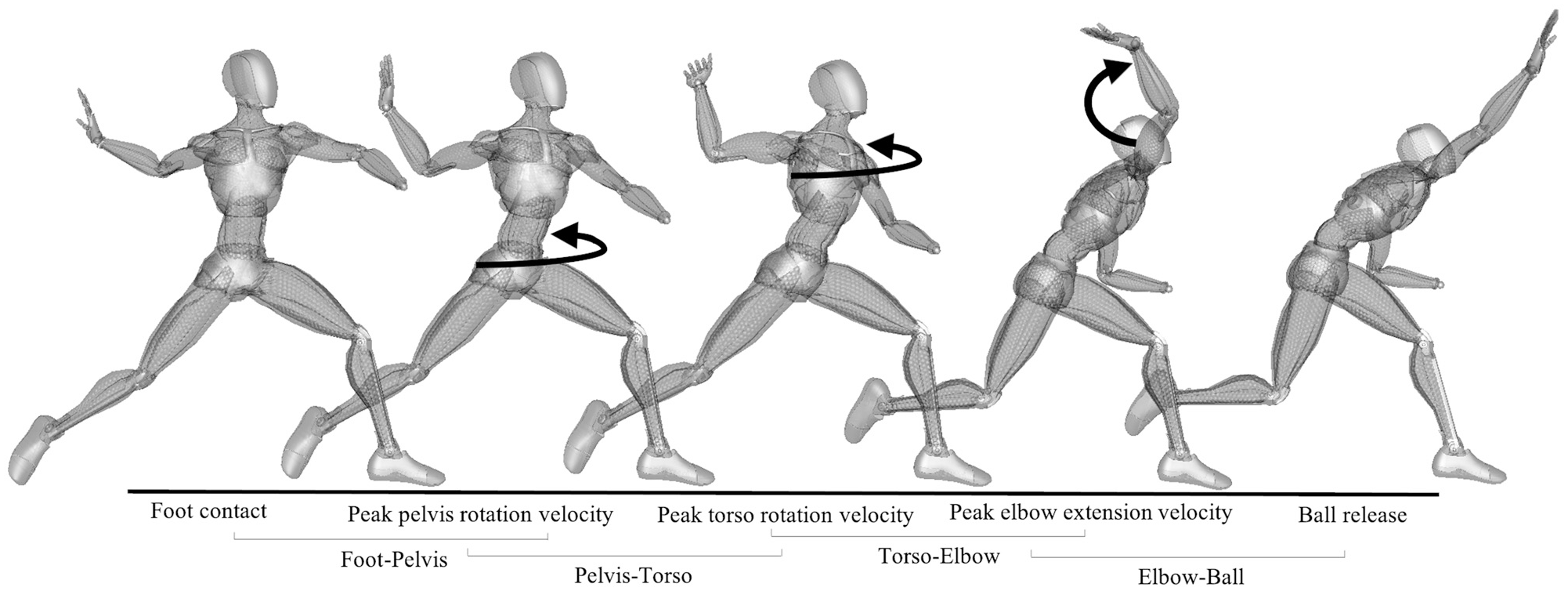
The pitch was divided into 5 key time points (foot contact, peak pelvis angular velocity, peak torso angular velocity, peak elbow extension velocity, and ball release) and 4 phases (Foot-Pelvis, Pelvis-Torso, Torso-Elbow, Elbow-Ball).
Statistical Analysis
Two-sample t tests were used to compare continuous variables including specific demographics, ball velocity, shoulder and elbow kinetics, and time spent within each pitching motion phase between HS and PRO pitchers. Linear mixed-effect models with compound symmetry covariance structures were used to examine the effect each interval had on the dependent variables of interest (ball velocity, shoulder distraction force, shoulder internal rotation torque, and elbow varus torque). One mixed model was constructed for 1 dependent variable for each data set. Trials with abnormal sequences, defined as having any negative time intervals, were excluded from the analysis as it has been shown that out-of-sequence throws have different kinematic and kinetic outcomes compared with those within sequence.27,30 Out of sequence was defined as any pitch with 1 or more of the following characteristics:
(1) Maximum pelvis angular velocity occurring before foot contact
(2) Maximum trunk rotation angular velocity occurring before maximum pelvis velocity
(3) Maximum elbow extension velocity occurring before maximum trunk rotation velocity
(4) Ball release occurring before maximum elbow extension velocity
Trials that contained outliers, defined as >3 SD away from the mean, of the dependent variables were also removed from the analysis. Regression coefficients were extracted from the models. MATLAB was used in all statistical analyses. The alpha level was set to P < .05.
Results
A total of 3522 pitches from 317 PRO pitchers were collected. A total of 261 of these pitches were removed (outliers only, n = 107; out-of-sequence segmental velocities only, n = 115; both, n = 39). This left 3261 pitches for analysis, averaging approximately 10.3 pitches per pitcher. For HS pitchers, a total of 549 pitches were collected from 54 pitchers. A total of 119 pitches were removed (outliers only, n = 8; out-of-sequence segmental velocities only, n = 110; both, n = 1). This left 430 pitches left for analysis, averaging 7.9 pitches per HS pitcher.
PRO pitchers had significantly greater mass and height, and were older than the HS group (all P < .001) (Table 1). PRO pitchers also had faster ball velocity, and greater shoulder distraction force, shoulder internal rotation torque, and elbow varus torque (all P < .001) (Table 2). Although the total pitch time between the 2 cohorts was not significantly different (P = .670), the HS pitchers spent 8.9 milliseconds longer in Foot-Pelvis (P < .001) and 6.4 milliseconds longer in Torso-Elbow (P = .013) phases. PRO pitchers spent 11.7 milliseconds longer in Pelvis-Torso (P < .001) and 2.2 milliseconds more time in Elbow-Ball (P < .001) phases.
Demographic Data of the PRO and HS Pitchers a
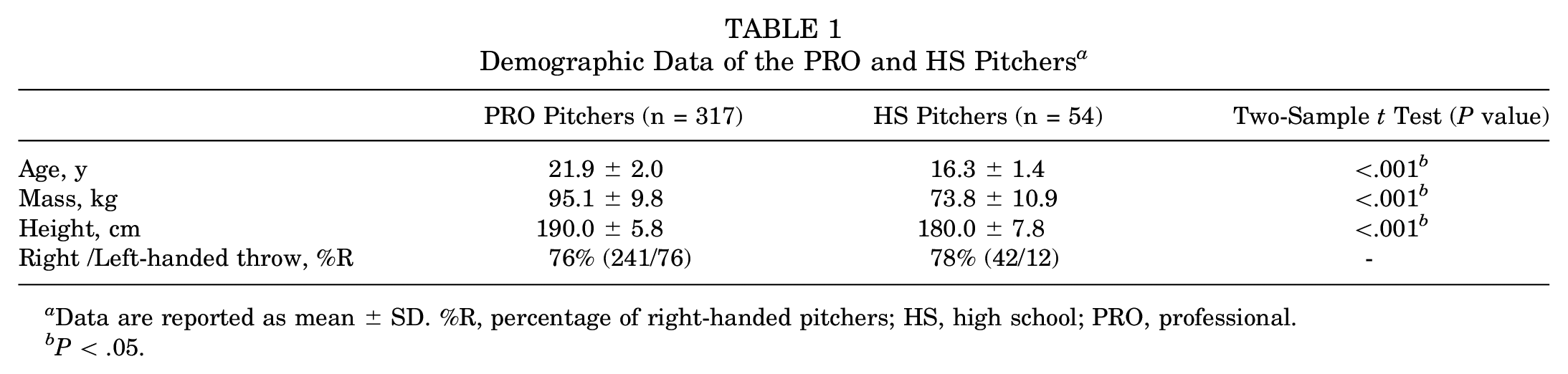
Data are reported as mean ± SD. %R, percentage of right-handed pitchers; HS, high school; PRO, professional.
P < .05.
Average Values of Outcomes of Interest and Time Spent Within Each Phase of the Pitching Motion Between PRO and HS Participants a
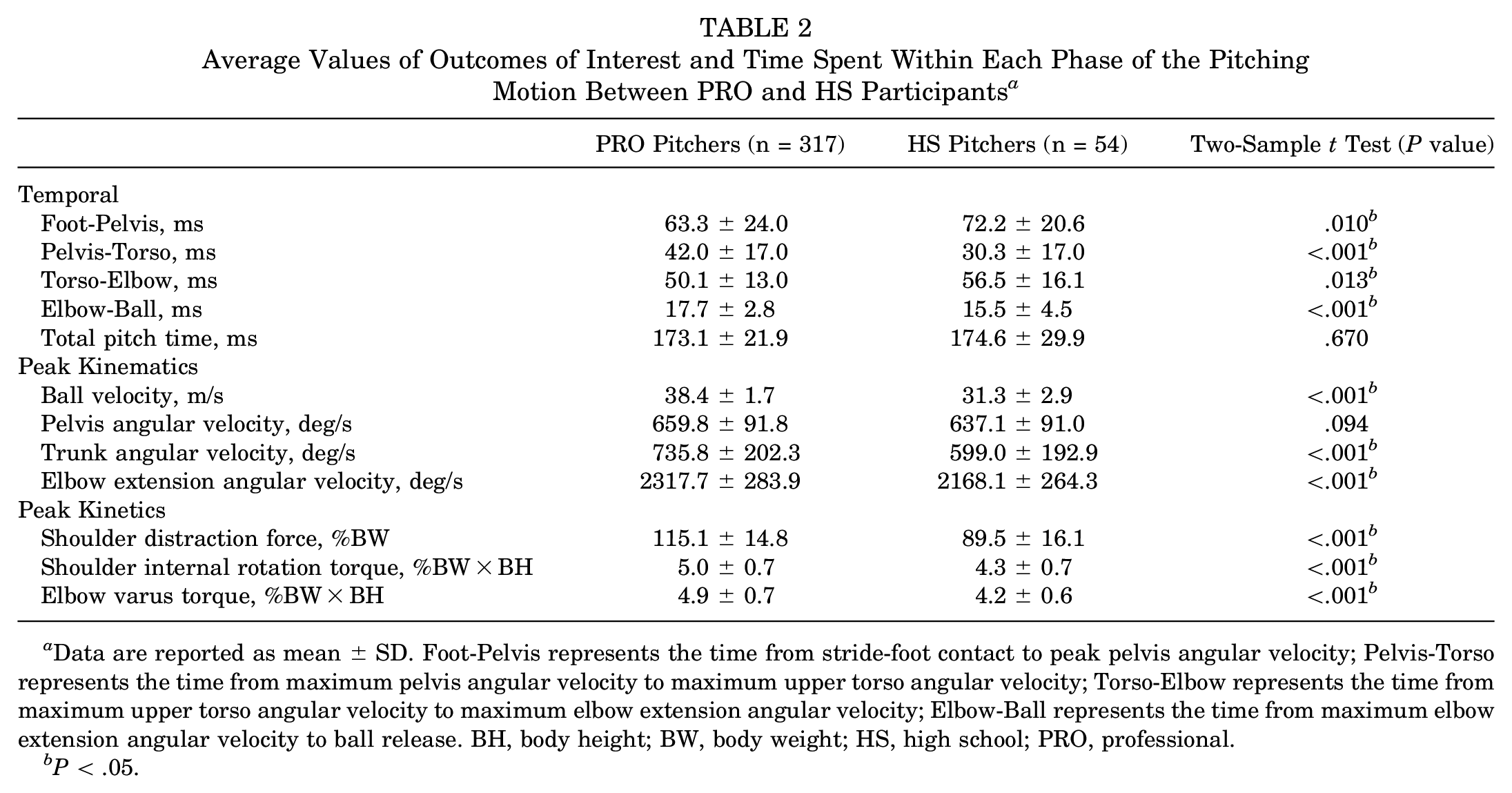
Data are reported as mean ± SD. Foot-Pelvis represents the time from stride-foot contact to peak pelvis angular velocity; Pelvis-Torso represents the time from maximum pelvis angular velocity to maximum upper torso angular velocity; Torso-Elbow represents the time from maximum upper torso angular velocity to maximum elbow extension angular velocity; Elbow-Ball represents the time from maximum elbow extension angular velocity to ball release. BH, body height; BW, body weight; HS, high school; PRO, professional.
P < .05.
PRO Pitcher Analysis
Results from the regression correlation analysis are displayed for PRO pitchers (Table 3). PRO pitchers demonstrated a significant inverse relationship between ball velocity and time spent in the first 3 phases. Decreased shoulder distraction force and shoulder internal rotation torque were significantly correlated with increased time in all 4 phases. For every 30-millisecond increase in the Pelvis-Torso phase, there was a 0.192 m/s (0.43 mph) decrease in ball velocity and a concomitant decrease in shoulder distraction force by 2.29% body weight (BW). For every additional 5 milliseconds spent in the Elbow-Ball phase, there was a decrease in shoulder distraction force by 5.8%BW with no significant change in ball velocity. Decreased time in all phases, except for Torso-Elbow, were correlated with increased elbow varus torque.
Regression Correlation Coefficients (B) of Upper Extremity Kinetic Variables and Ball Velocity Correlated With the Amount of Time Spent in Each Interval of the Pitching Motion for Professional Pitchers a
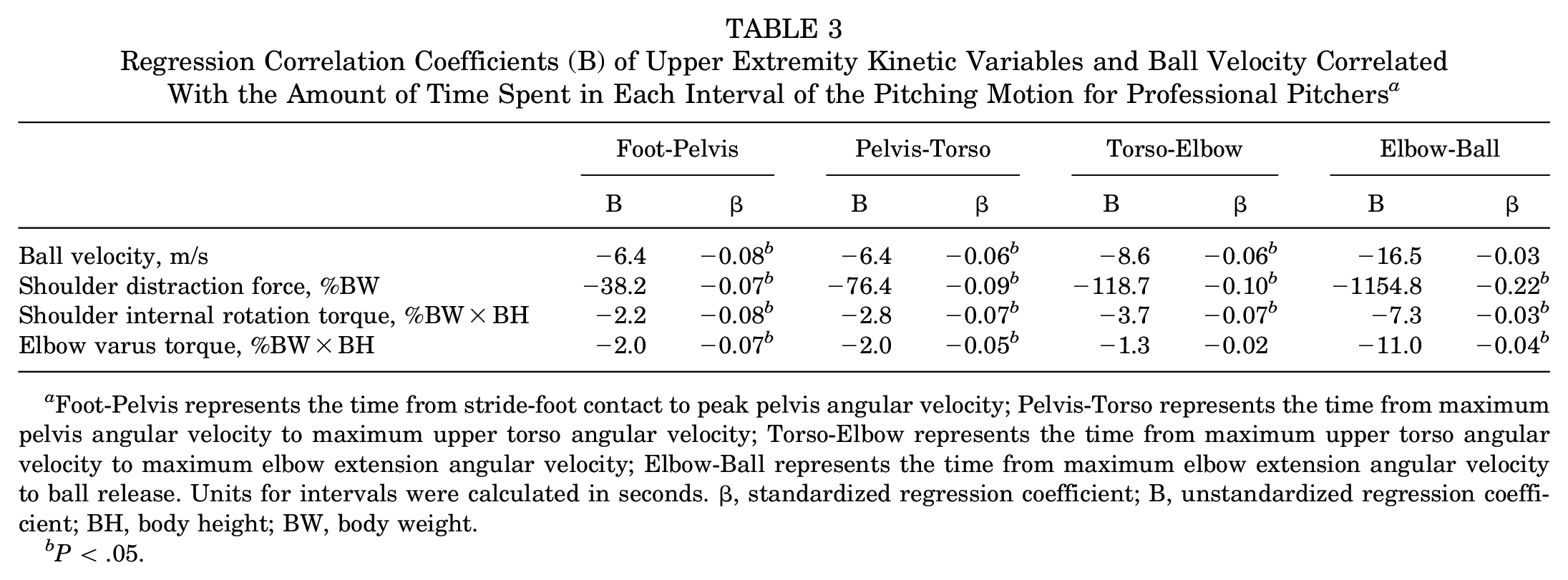
Foot-Pelvis represents the time from stride-foot contact to peak pelvis angular velocity; Pelvis-Torso represents the time from maximum pelvis angular velocity to maximum upper torso angular velocity; Torso-Elbow represents the time from maximum upper torso angular velocity to maximum elbow extension angular velocity; Elbow-Ball represents the time from maximum elbow extension angular velocity to ball release. Units for intervals were calculated in seconds. β, standardized regression coefficient; B, unstandardized regression coefficient; BH, body height; BW, body weight.
P < .05.
HS Pitcher Analysis
In the HS cohort, decreased ball velocity significantly correlated with increased Foot-Pelvis, Pelvis-Torso, and Torso-Elbow phases. Decreased shoulder distraction force was significantly correlated with increased Pelvis-Torso and Elbow-Ball phases. Decreased shoulder internal rotation torque was significantly correlated with increased Foot-Pelvis, Pelvis-Torso, and decreased Elbow-Ball phases. Increased elbow varus torque was significantly correlated with increased Elbow-Ball phase (Table 4). For every 30-millisecond increase in the Pelvis-Torso phase, there was a 0.342 m/s (0.77 mph) decrease in ball velocity and a decrease in shoulder distraction force by 2.33%BW. For every 30-millisecond increase in the Torso-Elbow phase, there was a 0.48 m/s (1.1 mph) decrease in ball velocity with no significant change in kinetic values. For every 5-millisecond increase in the Elbow-Ball phase, there was a decrease in shoulder distraction force by 3.23%BW and an increase in elbow varus torque by 0.08% BW × body height, with no significant change in ball velocity.
Regression Correlation Coefficients (B) of Upper Extremity Kinetic Variables and Ball Velocity Correlated With the Amount of Time Spent in Each Interval of the Pitching Motion for High School Pitchers a
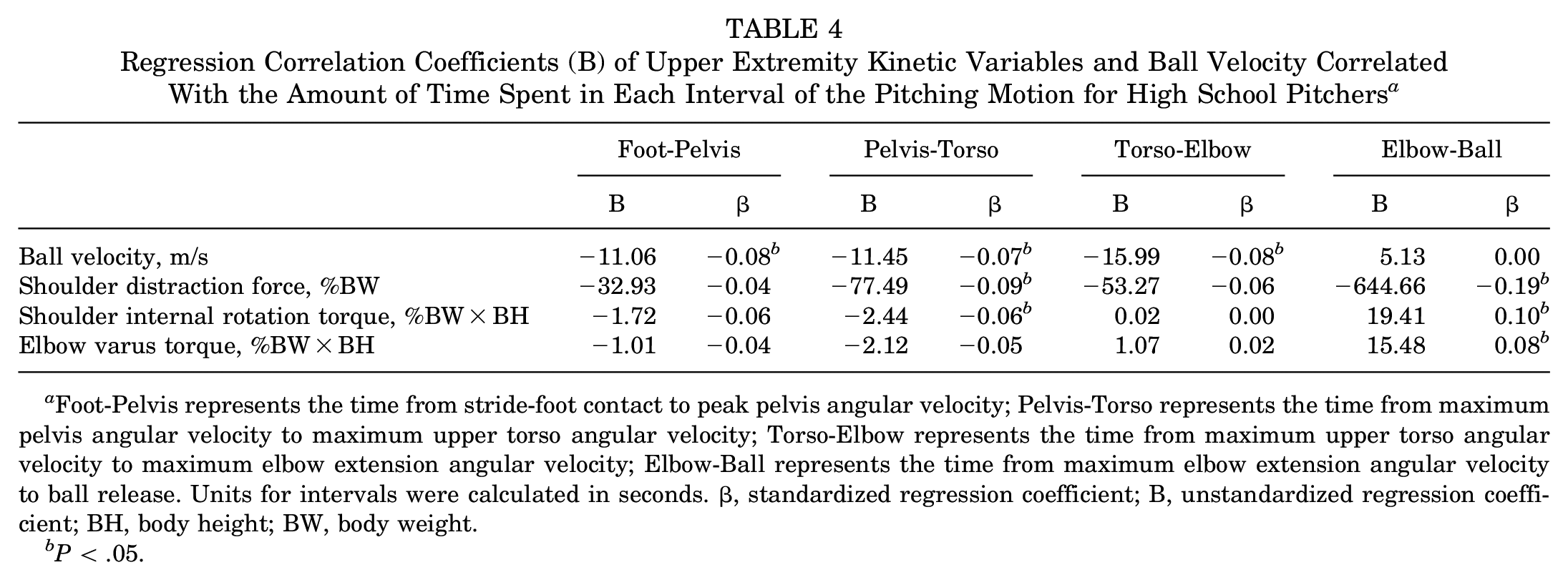
Foot-Pelvis represents the time from stride-foot contact to peak pelvis angular velocity; Pelvis-Torso represents the time from maximum pelvis angular velocity to maximum upper torso angular velocity; Torso-Elbow represents the time from maximum upper torso angular velocity to maximum elbow extension angular velocity; Elbow-Ball represents the time from maximum elbow extension angular velocity to ball release. Units for intervals were calculated in seconds. β, standardized regression coefficient; B, unstandardized regression coefficient; BH, body height; BW, body weight.
P < .05.
HS and PRO Comparisons
Models for ball velocity (PRO, R2 = 0.75; HS, R2 = 0.94), shoulder distractive force (PRO, R2 = 0.92; HS, R2 = 0.96), shoulder internal rotation torque (PRO, R2 = 0.96; HS, R2 = 0.972), and elbow varus torque (PRO, R2 = 0.96; HS, R2 = 0.97) all showed good fitness for both cohorts. Comparisons between HS and PRO mixed-effect models are shown in Figure 2. HS pitchers had close to double the unstandardized regression coefficients for ball velocity (B = −11.4; 95% CI −20.1 to −2.8) with decreased time in the Pelvis-Torso phase compared with PRO pitchers (B = −6.4; 95% CI −10.5 to −2.3). Additionally, for the majority of PRO pitchers, more time was spent in the Elbow-Ball phase, while also nearly doubling the normalized shoulder distraction force regression coefficient (B = −1154.8; 95% CI −1323.1 to −986.5), compared with HS pitchers (B = −644.7; 95% CI −1000.9 to −288.5).
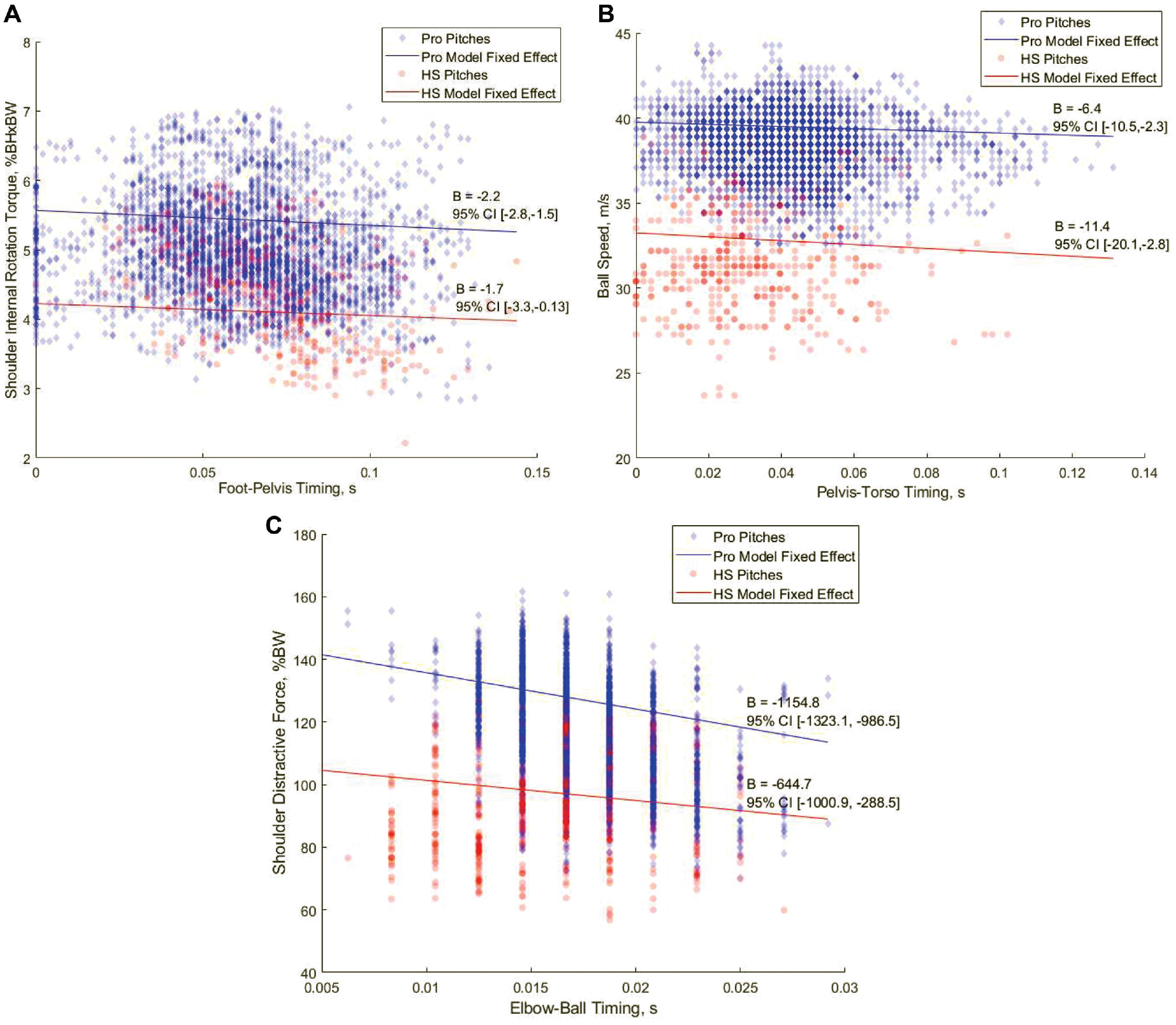
Select comparisons of kinetic and phase timing fixed-effect models for HS and PRO pitchers: (A) Foot-Pelvis with shoulder internal rotation torque; (B) Pelvis-Trunk with ball velocity; and (C) Elbow-Ball with shoulder distractive force. Foot-Pelvis represents the time from stride-foot contact to peak pelvis angular velocity; Pelvis-Torso represents the time from maximum pelvis angular velocity to maximum upper torso angular velocity; Elbow-Ball represents the time from maximum elbow extension angular velocity to ball release. Units for time intervals were calculated in seconds. BH, body height; BW, body weight; HS, high school; PRO, professional.
Discussion
This study’s temporal phase results are concerning as it pertains to injury risk, given upper extremity kinetic values have often been used as surrogate measurements for joint compartment loading.28,29,34 In agreement with our hypothesis, in both PRO and HS pitchers, decreased time spent in the earlier phases of the pitching motion was associated with increased ball velocity, shoulder distraction force, and shoulder internal rotation torque, which may have clinical implications for risk of shoulder injury. Decreased time spent in the later phases of the pitching motion was associated with increased shoulder distraction force with no major gains in ball velocity, suggesting adjustment to this later portion of the pitching motion may play a role in injury prevention without sacrifice of performance metrics. Contrary to what was expected, the results of this study also indicate that the total pitch time is comparable between the PRO and HS groups, although the 2 groups spent different lengths of time within each phase. This may, in turn, imply a difference in the temporal mechanics of these distinct populations.
The association between the temporal phases of the pitching motion and ball velocity was substantiated in this report and is in agreement with previous literature. 33 Decreased time in the first 3 phases of the pitching motion was significantly correlated with increased ball velocity, with HS pitchers having almost 2 times greater an association compared with PRO pitchers for the Pelvis-Torso period. Similar results of timing effects on ball speed were demonstrated by Urbin et al, 33 who offered a physiological explanation. When tissues are lengthened before contraction, they shorten more rapidly and efficiently. The type Ib muscle fiber, also known as the Golgi tendon organ, is responsible for reacting to muscle tension changes.19,24 With greater momentum transfer, the Golgi tendon contracts the muscles faster, creating a more efficient transfer of energy. 33 Therefore, it seems reasonable to presume that shorter times within the pitching phases correlated with higher ball speed, generated as an outcome of the stronger combined segmental forces activating the Golgi tendon and subsequent muscular contraction. It should be noted, however, that nonmuscular torques have also been considered as a contributor to velocity generation. 17 For example, Hirashima et al 17 found significant contributions of the joint torque and velocity-dependent torque to each joint angular acceleration simultaneously during a baseball pitch, using an induced acceleration analysis to account for the complexities of a multijoint system.
As PRO pitchers landed, they were quicker than HS pitchers to engage and begin rotating their pelvis toward the home plate, while resisting upper torso rotation for a longer amount of time. As such, HS pitchers have less time between peak upper torso and pelvis angular velocities. PRO pitchers may simply be better at creating trunk-pelvis separation, which could be a result of physical maturation or self-taught skill refinement. Alternatively, trunk-pelvis separation generation may be an attribute of skilled pitchers that is ultimately inherent at higher levels of play. This can be substantiated by Aguinaldo et al, 2 who noted the timing of PRO pitchers’ trunk rotation was optimized to allow the throwing shoulder to move with decreased joint loading by conserving the momentum generated by the trunk.
An alternative explanation as to why PRO pitchers had longer Pelvis-Torso time could be attributed to the fact that they were older, more skeletally developed, carried more mass, and likely had wider hip widths, although not directly measured in this study. These differences may contribute to increased time to reach maximum angular velocity, a theory suggested by Dowling and Fleisig 6 when observing faster pelvis angular velocity when comparing youth with PRO hitters. Interestingly, we noted no difference in maximum pelvis velocity between the 2 groups in this study. Angular velocity, which does not consider the mass of the pitcher, has been proposed as a nonideal means for comparison between pitchers of different morphology and skeletal development.7,20 Instead, a more useful measure to compare pitchers of various height and weight may be angular kinetic energy, which takes into account the angular velocity as well as inertia of the segment.6,7
Other kinetic analyses have provided support to the role of the trunk and pelvis in achieving mechanical efficiency and segmental velocity generation.1,18,25 Naito et al 25 observed that the kinetic energy of the throwing hand and ball at ball release were primarily produced by the trunk flexion/extension and counterclockwise/clockwise rotation. Others have demonstrated the importance of trunk power in predicting variance of ball velocity and elbow varus torque. 1 Ultimately, more research is needed to fully understand the contribution of pelvis and torso kinetic energy to pitching performance and injury risk.
For both the PRO and the HS cohorts, pitching phases at all time points (excluding the Torso-Elbow phase for the HS cohort) correlated with upper extremity kinetics, most frequently shoulder internal rotation torque. Interestingly, more variables derived significance for the PRO cohort than for the HS cohort. This can be attributed to the vastly greater number of pitches analyzed for PRO pitchers compared with HS pitchers, which could, in effect, amplify even the slightest change in kinetic outcomes. When looking at kinetic correlations for PRO pitchers in the Pelvis-Torso phase, for example, the regression correlation for elbow varus torque was rather small, in which a 20-millisecond increase would decrease elbow varus torque by 0.04% and decrease shoulder distraction force by 1.55%. Although significance was derived, only a select few temporal phases of the pitching phase likely contribute in a clinically meaningful way to upper extremity kinetic loads and, plausibly, upper extremity joint strain.
The most prominent kinetic result was observed for shoulder distraction force, which was found to increase most significantly as less time was spent in the later phases of the pitching motion. Specifically, for every 5 milliseconds decrease in the Elbow-Ball phase for PRO pitchers, there was a 5.75% increase in shoulder distraction force. Previous studies have demonstrated that average peak shoulder distraction force in PRO pitchers range from 80% to 105% BW.9,11,34 This finding has undesirable clinical consequences for both the rotator cuff and the glenoid labrum.4,13,37 It is suggested that the glenohumeral joint incurs large distraction and shear forces as the humeral head moves posteriorly during follow-through of the pitching motion. If the labrum gets trapped between the humeral head and the glenoid rim, tears are created, which then contribute to posterior labral pathology.4,13,23,34
Our temporal results are therefore concerning as they pertain to shoulder injury risk. This is further supported by Oyama et al, 27 who established HS pitchers with improper trunk rotation sequences demonstrated greater maximal shoulder external rotation and greater shoulder distraction force compared with those with proper trunk rotation sequences. These findings support the value in creating training protocols that promote correct sequencing of maximum joint and segment angular velocities as well as the amount of time spent in each of these phases.
Decreased time spent in the early phases of the pitch was associated with increased ball velocity with an accompanied increase in shoulder internal rotation torque, shoulder distraction force, and elbow varus torque in PRO pitchers. Additionally, decreased time spent in the final phase of the pitch correlated with increased shoulder distraction forces without added ball velocity. These results suggest a potential tradeoff in the early phases of the pitching sequence: decreased latency increases ball velocity, but also theoretically increases joint loading, potentially putting pitchers at greater injury risk, a relationship both hypothesized and observed in previous literature.5,26,35 It is possible that an optimal balance can be achieved by increasing time in the Pelvis-Torso phase and decreasing time in other phases. Some models have attempted to find this delicate balance with optimized delays in phase time that improve the shoulder and elbow torque endured, while also achieving high ball velocities.16,33 Although it may be beneficial to increase time in the final phase of the pitching motion with no notable loss in ball velocity, how to effectively implement this through training is unclear.
There were some notable similarities and differences in our findings relative to previous studies. When comparing PRO pitchers with the adult cohort studied by Urbin et al, 33 the velocity benefit of Foot-Pelvis and Torso-Elbow timings were similar. Urbin et al noted similar magnitudes of elbow varus torque, shoulder distractive force, and shoulder internal rotation torque in the Foot-Pelvis phase, and our study found additional correlations throughout all phases, most prominently in the Elbow-Ball phase. These differences may be attributed to differences in the characteristics and competition levels of study and the potential limitation of insufficient statistical power to detect associations for Pelvis-Torso speed or Elbow-Ball kinetics given their smaller sample size.
This study has some limitations. This study occurred at a single point of evaluation without longitudinal follow-up of pitchers to determine if the timing of phases is an inherent or learned trait. Additionally, only fastball pitches were analyzed, and the outcomes investigated may vary with other pitch types.8,14,15,22 Understanding what magnitude of change in shoulder distraction force has clinically significant implications in terms of injury risk is unclear. Last, although we analyzed 2 unique subpopulations of HS and PRO pitchers, collegiate and youth pitchers were not observed and therefore our results cannot be extrapolated to these populations. Future studies should be directed at analyzing these additional, distinctive cohorts. Assessing how timing within pitch phases may change because of fatigue as well as potentially correlating with injury databases are interesting future directions to explore.
Conclusion
These results demonstrate significant differences in length of time within each phase between PRO and HS pitchers, with no significant difference in total pitch time, suggesting a difference in the temporal mechanics of PRO and HS pitchers. For all pitchers, less time spent in the early phases of the pitching motion correlated with increased ball velocity at the cost of increased shoulder distraction force, while increased time in the final portion of the pitching motion did not have any ball speed detriment. Creating training protocols that emphasize increasing time spent in the final phase of the pitching motion has the potential to decrease shoulder distraction force with no significant loss in ball velocity.
Footnotes
Submitted November 23, 2020; accepted April 21, 2021.
One or more of the authors has declared the following potential conflict of interest or source of funding: B.D. is a previous paid employee of Motus Global. M.C.F. has received grants from Acumed and Arthrex; hospitality payments from Encore Medical and Stryker; and speaking fees from DJ Orthopedics. J.S.D. has received consulting fees from Arthrex, Linvatec, Merrick Sharp & Dohme, Trice Medical, and Wright Medical; royalties from Linvatec and Zimmer Biomet; and research support from Arthrex; and has been a nonpaid consultant for Motus Global. AOSSM checks author disclosures against the Open Payments Database (OPD). AOSSM has not conducted an independent investigation on the OPD and disclaims any liability or responsibility relating thereto.
