







Abstract
Background:
The prevalence of wrist pain among gymnasts ranges from 46% to 79%. To alleviate wrist pain, gymnasts wear wrist guards/supports (WG/S).
Purpose:
To investigate the effect of WG/S on the wrist joint through joint moment, angles, total joint range of motion (ROM) arc, and ground-reaction force (GRF).
Study Design:
Controlled laboratory study.
Methods:
A cross-sectional study design was used to investigate 23 female gymnasts (mean ± SD: age, 12.3 ± 1.5 years; height, 143.4 ± 7.6 cm; mass, 37.7 ± 6.6 kg; body mass index, 18.6 ± 2.9) who performed back handsprings (analyzed by first half [phase 1] and second half [phase 2]) with the following 3 conditions: no WG/S, Skids/Ultimate Wrist Supports (S/UWS), and Tiger Paws (TP). Wrist joint moments, angles, total ROM arc, and GRF were examined by the 3 conditions using analysis of variance with Bonferroni correction and effect size (Cohen d).
Results:
For mean wrist flexion moment, both S/UWS and TP showed significantly higher values than the no-WG/S condition in landing phase 1 (S/UWS: P = .001, d = 1.30; TP: P = .019, d = 0.87). In angle comparisons in landing phase 1, no WG/S showed greater mean wrist extension angles compared with S/UWS (P = .046; d = 0.80), but no significant differences with TP (P = .096; d = 0.65). Also, in landing phase 1, total ROM arc of the right wrist was greater in the no-WG/S condition compared with S/UWS (P = .018; d = 0.88), but there were no differences with TP (P = .400; d = 0.52).
Conclusion:
These data show an increased wrist flexion moment using S/UWS and TP compared with the no-WG/S condition in landing phase 1 of back handsprings. Also, increased wrist extension angles and total arc ROM of the right wrist were found in the no-WG/S condition compared with S/UWS, but not with TP in landing phase 1. S/UWS may be helpful to reduce wrist joint angles, specifically wrist extension in landing phase 1, but both S/UWS and TP caused higher wrist flexion joint moment in landing phase 1. There were no differences found in GFG among the three variables.
Clinical Relevance:
In the first half of the back handspring, wrist guards can limit wrist extension joint angles and total arc ROM; however, an increased wrist flexion moment was found when wrist guards were worn, which may potentially lead to an increased risk of injury. Injury history, especially overuse signs/symptoms, and previous surgery on the wrist joint need to be well considered before the application or use of wrist guards. Also, the amount of time/exposure wearing wrist guards should be carefully controlled in young female gymnasts.
Keywords
The wrist is one of the most commonly injured body parts in the sport of gymnastics. 4 According to Keller, 7 the prevalence of wrist pain ranges from 46% to 79% in gymnasts. 1 Additionally, Webb and Rettig 18 found that the prevalence of wrist pain among gymnasts could be as high as 70% to 88%. During gymnastics practices and competitions, the wrist is often used to attenuate forces, which can be as high as 16 times the body weight of the gymnast. 1
Wrist injuries typically occur from repetitive skills such as a back handspring (Figure 1). Keller 7 found that 42% of all injuries in gymnastics occur while the athlete is performing back/forward handsprings and flips/saltos. This is important because back/forward handsprings are one of the fundamental skill sets learned in gymnastics, and a back handspring requires a gymnast to generate substantial angular velocity, momentum, and kinetic energy, which may be associated with a high susceptibility of wrist injuries. 4 Wrist injuries can be acute (eg, scaphoid fracture, triangular fibrocartilage complex tear, and fractures related to grip lock) or overuse (eg, gymnast’s wrist [distal radial physeal injury, ulnar impaction syndrome, and acquired Madelung deformity], premature closure of the ulnar aspect of the distal radial growth plate, dorsal impingement syndrome/wrist capsulitis, and ganglion cysts) in nature. 4
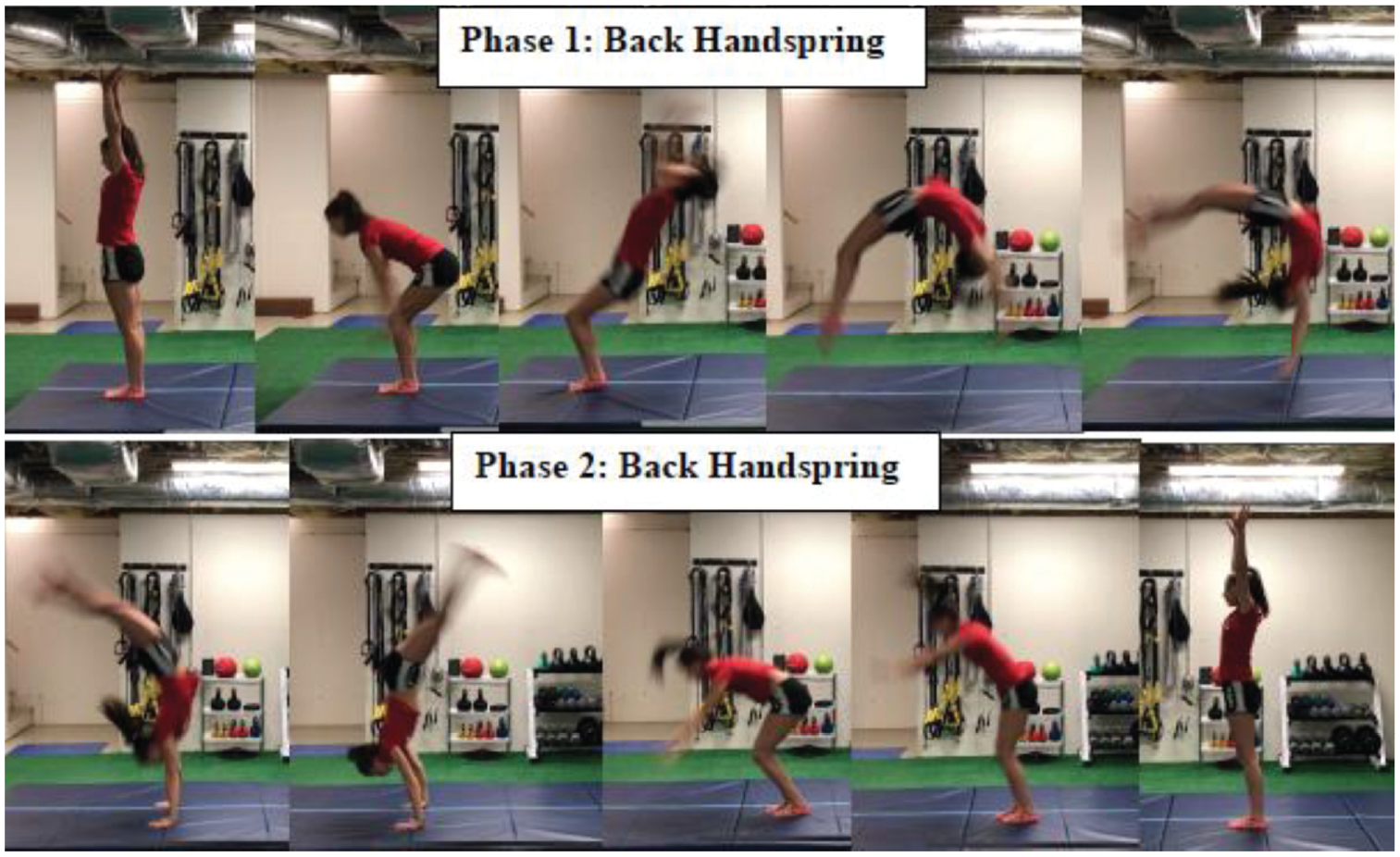
Back handspring. Phases 1 and 2 of a gymnast performing a back handspring. Phase 1 is the first part of the back handspring and includes the gymnast standing upright with her arms by her ears, bending her knees and lowering her arms by her sides, jumping both up and backward while bringing her arms to her ears, while simultaneously extending/arching in her spine; it ends when the gymnast’s contact is roughly 0% to 49% with her hands on the force plate. Phase 2 starts when the gymnast’s contact is 50% to 100% on the force plate, and as the gymnast contracts her abdominal muscles and hip flexors, causing her body to flex at the hips, while simultaneously lifting up her chest as her feet strike the ground, and finishing by standing upright again with her arms by her ears.
Many gymnasts, coaches, and medical providers have recommended prophylactic devices such as wrist guards/supports (WG/S) to help decrease overuse wrist injuries; however, no studies have shown the efficacy of WG/S. In addition, some coaches and medical providers suggest the use of WG/S when gymnasts return after injuries or to prevent wrist hyperextension and overuse injuries. There are several types of WG/S, and they are typically worn during floor exercise, vault, and pommel horse. The WG/S manufacturers describe the products as being made to prevent wrist injuries and decrease wrist extension, as well as to stabilize and support the wrist. 16 The WG/S are commonly worn by gymnasts and theoretically prevent wrist injuries; however, no studies have examined how WG/S play a role from kinetic and kinematic standpoints during weightbearing/loading phases of gymnastics activities. It is unknown whether wearing WG/S changes the axial loading at the wrist during gymnastics or while performing skills such as a back handspring.
The purpose of this study was to determine the effect of WG/S on the wrist joint through joint moment, angles, total joint range of motion (ROM) arc, and ground-reaction force (GRF) during a back handspring. It was hypothesized that WG/S decrease wrist joint moment, joint angles, total joint ROM arc, and GRF in back handsprings.
Methods
Study Design
This study used a cross-sectional design. The setting was a training center and research laboratory affiliated with a sports medicine clinic of a tertiary-level pediatric medical center. Institutional review board approval was obtained before commencement of this study.
Participants
This study recruited young, active gymnasts belonging to local gymnastics clubs located in Waltham, Massachusetts. Inclusion criteria were being (1) female, (2) <18 years of age, and (3) able to perform a back handspring wearing WG/S. Exclusion criteria were being (1) male, (2) ≥18 years of age, and (3) unable to perform a back handspring wearing WG/S. All participants were <18 years; thus, parental consent was obtained from parent(s) or legal guardian(s), and participants signed an institutional review board–approved form before the start of testing.
Study Materials
Two types of WG/S were tested in this study: Skids/Ultimate Wrist Support (S/UWS) (Figure 2) and Tiger Paws (TP) (Figure 3). S/UWS are made of a Cordura nylon outer shell with a neoprene lining inside with interchangeable foam inserts, with 2 Velcro straps for tightening or loosening the brace around the wrist. The manufacturer claims that S/UWS provide support for the wrist and decrease shock to the wrist.12,14 TP are made of leather and have foam and plastic inserts, with 3 Velcro straps to tighten or loosen the brace around the wrist/hand. 17
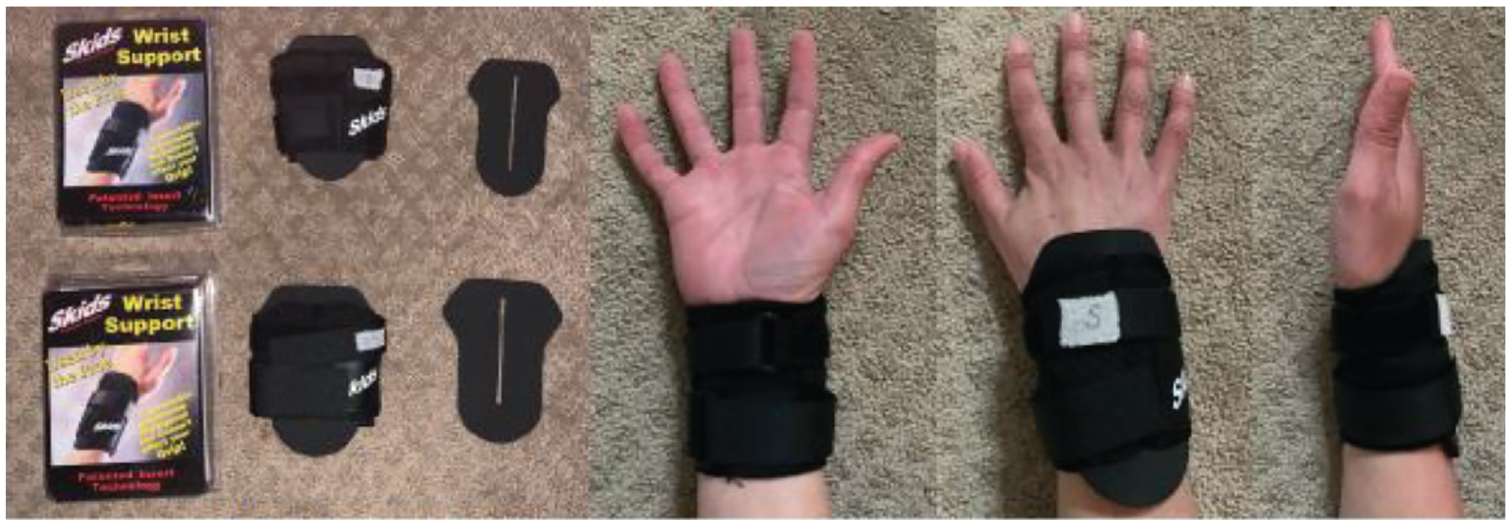
Skid Ultimate Wrist Support. The sizes are small (5- to 6.5-inch circumference) and medium (6.5- to 8-inch circumference).
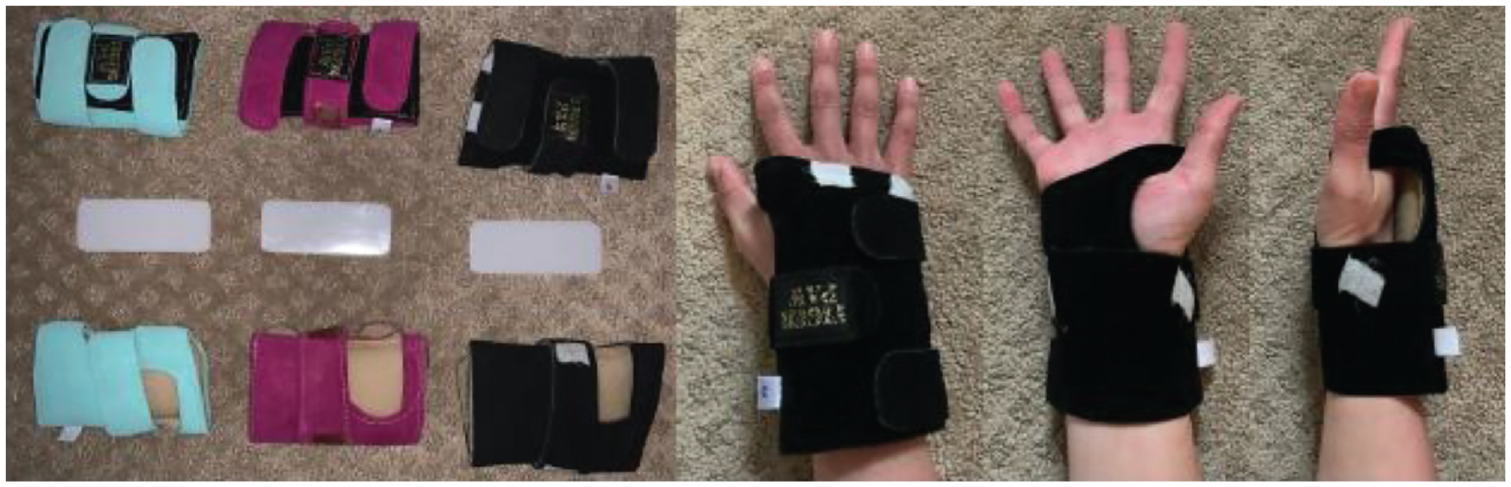
Tiger Paws wrist guards. Sizes are extra-small (up to 69 lb; teal), small (69-115 lb; fuchsia), and medium (115-150 lb; black).
Participants were also asked to complete a 15-question survey. Questions included information on gymnastics level, hours of training, number of competitions in 1 year, wrist pain or previous wrist injury, previous or current wearing of wrist guards, and menstrual cycle. For the latter, the question asked was, “Have you had your first menstrual cycle/periods?” The response section was binary (“yes” or “no”).
Data Collection
Protocol
Anthropometric data (including age, height, weight, and circumference of wrist) were measured before the data collection. Height and weight were measured by a research coordinator, and after the circumference of wrist data were taken by the principal investigator (E.H.), participants were fit with the appropriately sized S/UWS and TP according to the manufacturer’s or supplier’s recommendations (Figures 2 and 3). Participants were instructed to wear tight-fitting clothing or a gymnastics leotard. Retroreflective markers were attached to the upper extremity, trunk, and lower extremity in a modified Helen Hayes marker set. 3 Gymnasts were then asked to stretch for 2 to 5 minutes in preparation for performing back handsprings. Once they had stretched, gymnasts were allowed 2 to 5 trials/warm-ups of back handsprings before testing. A tape line was placed on the starting mat to mark the starting spot.
The participants performed 1 static calibration trial and 2 back handspring trials for each condition (no WG/S = control; brace 1 = S/UWS; brace 2 = TP) while 3-dimensional (3D) kinematics and kinetics were recorded through a 3D motion analysis. The static calibration trials were captured to anatomically define each body segment and determine neutral alignment for each participant and condition. Back handspring trials were deemed successful if the gymnasts’ hands landed on separate force platforms (Figure 4). The sequence of bracing conditions (no WG/S, S/UWS, and TP) was randomized using commercial software (Microsoft Excel). The randomization was performed by a study coordinator who was not involved in data collection.
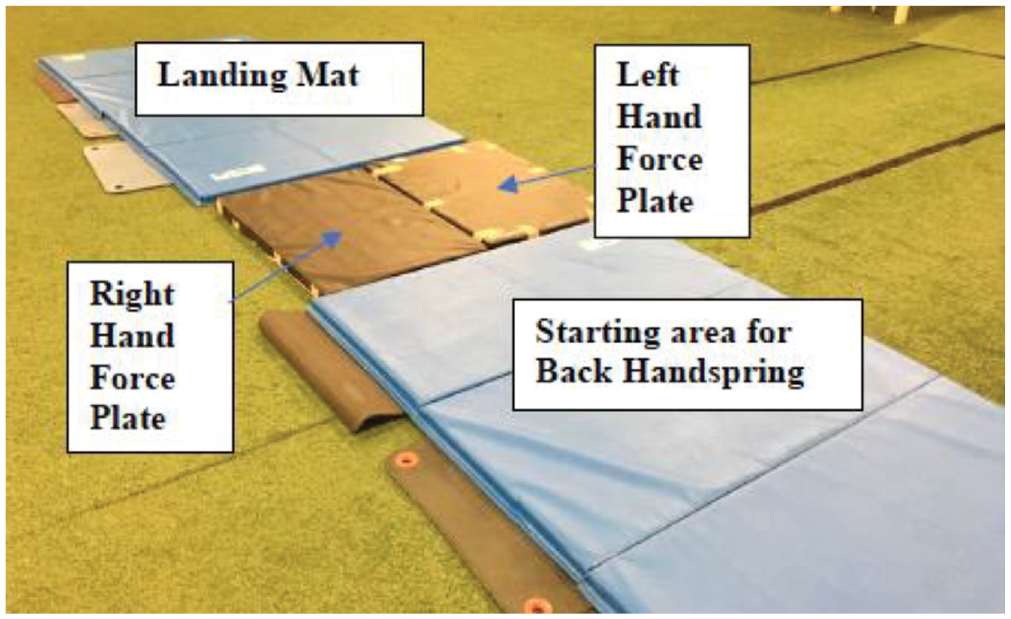
Wrist guard study experimental setup/mat placement. Two blue panel mats are set up at the start and landing areas, which have yoga mats underneath them to decrease the chance of the mats moving/slipping. The 2 black central mats, similar to floor exercise consistency, are for the landing of each hand.
Two embedded multiaxis force platforms (BP600900; AMTI) were used to determine GRF data at a sampling rate of 1200 Hz. A thin gymnastics floor mat (60 × 90 × 5.72 cm) was trimmed to the exact dimensions of each force plate. 3 The bottom of each mat was fit with a magnetic backing to be affixed to each force platform to replicate the feel of a typical gymnastics floor (Figure 4). Landing mats were used to provide safety for the gymnasts during takeoff and landing (Figure 4). The force platforms were synchronized with a 10-camera 3D motion analysis system (Raptor Digital RealTime Cameras; Motion Analysis Corp) that was used to collect the kinematic data at a sampling rate of 240 Hz. A right-handed global coordinate system was defined as follows: z-axis = vertical; y-axis = anteroposterior; and x-axis = mediolateral.
Data Analysis
Three-dimensional biomechanical motion data were processed through commercial software (Cortex Version 7.2.6.1828, Motion Analysis Corp; and MATLAB Version R2013b, The MathWorks). The local coordinate systems were defined using the condition-specific static calibration trial according to Tocci et al.13,15 Sagittal plane (− = flexion; + = extension) wrist joint angles were calculated using an xyz (mediolateral-anteroposterior-longitudinal) order of rotation. In addition, internal net joint moments for the wrist in the sagittal plane were quantified using the Newton-Euler inverse dynamics technique. 11 Net wrist moments were expressed in the local coordinate system of the forearm. The coordinate data were low-pass filtered using a fourth-order Butterworth filter with a 12-Hz cutoff frequency, while force plate data were low-pass filtered using a fourth-order Butterworth filter with a 50-Hz cutoff frequency. The GRF and moment data were normalized to body mass (newtons per kilogram and newton-meters per kilogram, respectively) to allow comparison between participants. All analyses focused on contact phase 1 and contact phase 2 of each hand during the back handspring (Figure 1). The data were time-normalized to 101 points, which represents an interval from 0% to 100% from initial contact to handoff. Initial contact was defined as the moment where the vertical (v)GRF first exceeded 10 N, and handoff was defined as the moment where the vGRF first went below 10 N. Contact phases 1 and 2 were defined as 0% to 49% and 50% to 100%, respectively. Kinematic variables included peak sagittal plane wrist joint angles and total ROM arc for contact phases 1 and 2. Kinetic variables included peak sagittal plane wrist joint moments and peak vGRF for contact phases 1 and 2. Each participant was represented by the mean of all trials per condition.
Statistical Analysis
Primary outcome variables were wrist joint moment, wrist joint angles, and wrist joint total ROM arc. A secondary outcome variable was GRF. The independent variables were the 3 wrist supports: no WG/S (control), S/UWS, and TP. One-way analysis of variance (ANOVA) was performed in the right wrist, left wrist, and mean values of each outcome variable by landing phases 1 and 2 separately. Statistical significance was set at P < .05. When statistical significance was detected in 1-way ANOVA, 3 pairwise comparisons—no WG/S versus S/UWS, SUWS versus TP, and TP versus no WG/S—were performed to avoid type 1 error. In the pairwise comparisons, when homogeneity of variance was not violated, the Bonferroni correction test was used. Conversely, when homogeneity of variance was found, the Tamhane T2 test was used. The homogeneity of variance was tested by the Levene test with P < .05. In addition to the P value, the following effect size measures (Cohen d) were used: <0.2, small effect; 0.21 to 0.50, small to medium effect; 0.51 to 0.80, medium to large effect; and ≥0.81, large effect. 15 Commercial statistical software (SPSS Version 21; IBM Corp) was used for all analyses.
Results
Patient Characteristics
A total of 23 adolescent female gymnasts (mean ± SD: age, 12.3 ± 1.5 years; height, 143.4 ± 7.6 cm; mass, 37.7 ± 6.6 kg; body mass index, 18.6 ± 2.9) participated in this study. This group of gymnasts represented beginner (levels Xcel and level 6 and below) to advanced (levels 7-10) levels. Hours of practice ranged from 9 to 22 hours per week. The number of competitions per year varied from 6 to 11. Thirteen gymnasts (56.5%) had a history of wrist injuries or pain but were currently competing/participating at full gymnastics levels. Also, 12 gymnasts (52.2%) were currently using TP, and among them, 75.0% (9/12) of the gymnasts who regularly wore TP stated that the TP decreased their wrist pain.
Joint Moment
Table 1 shows comparisons of wrist flexion and extension joint moment by the 3 conditions (no WG/S, S/UWS, and TP) based on 2 back handspring movement phases (landing phase 1 and landing phase 2). In landing phase 1, the right and mean wrist flexion moments of S/UWS were greater than the no-WG/S and TP conditions. The left wrist flexion moment of S/UWS was significantly higher compared with no WG/S, but not with TP. In landing phase 2, the mean wrist flexion moment of S/UWS was significantly greater compared with no WG/S, but not with TP.
Comparisons of Wrist Joint Moment (N·m/kg) by Brace Types: Landing Phases 1 and 2 a
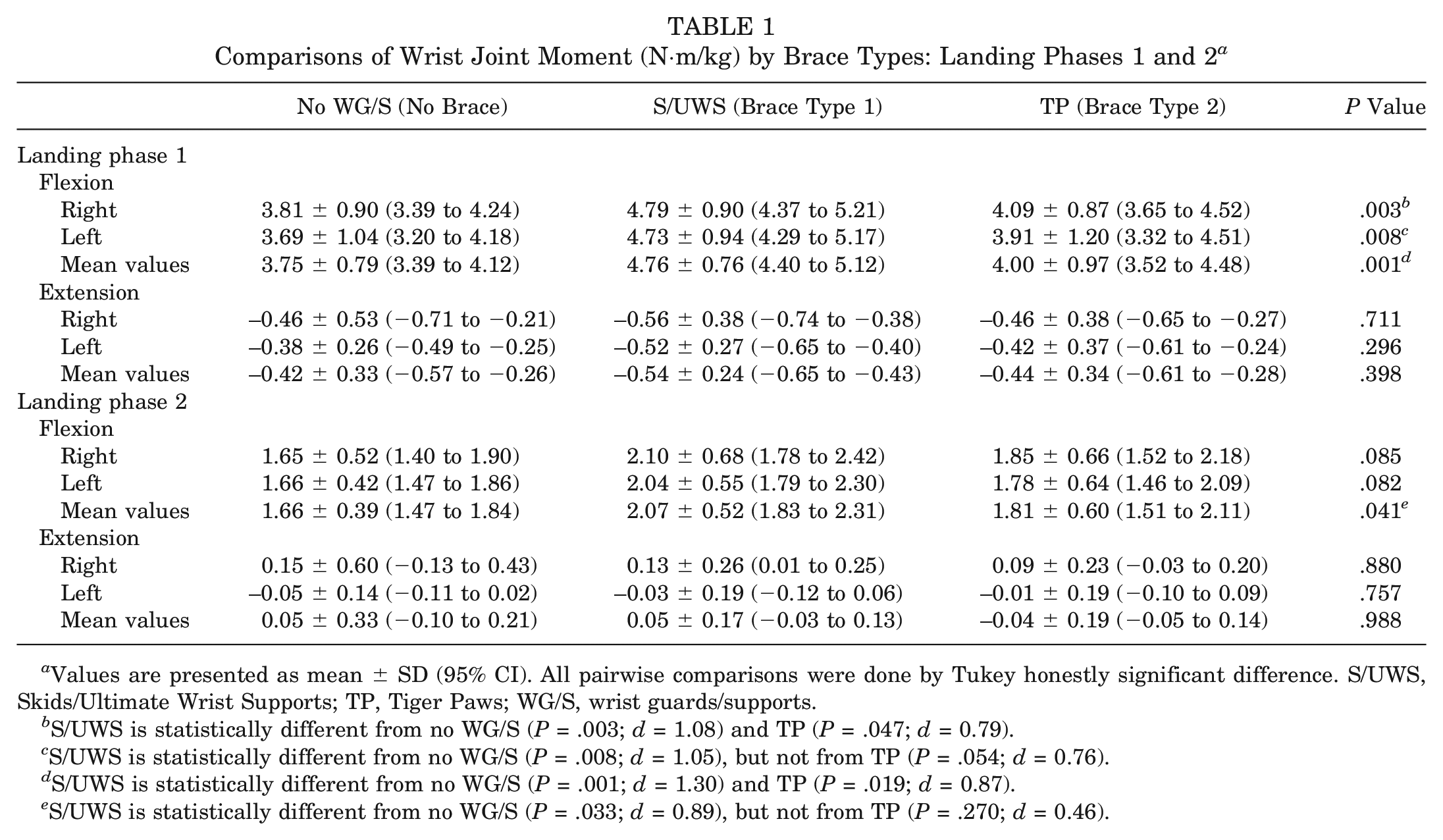
Values are presented as mean ± SD (95% CI). All pairwise comparisons were done by Tukey honestly significant difference. S/UWS, Skids/Ultimate Wrist Supports; TP, Tiger Paws; WG/S, wrist guards/supports.
S/UWS is statistically different from no WG/S (P = .003; d = 1.08) and TP (P = .047; d = 0.79).
S/UWS is statistically different from no WG/S (P = .008; d = 1.05), but not from TP (P = .054; d = 0.76).
S/UWS is statistically different from no WG/S (P = .001; d = 1.30) and TP (P = .019; d = 0.87).
S/UWS is statistically different from no WG/S (P = .033; d = 0.89), but not from TP (P = .270; d = 0.46).
Joint Angles
Table 2 presents comparisons of wrist flexion and extension joint angles by the 3 conditions (no WG/S, S/UWS, and TP) based on 2 back handspring movement phases (landing phase 1 and landing phase 2). In landing phase 1, the right and mean extension angles of no WG/S were significantly greater compared with S/UWS, but not with TP. In landing phase 2, a significant difference was detected in right extension angles by ANOVA, but there were no differences in pairwise comparisons of the 3 conditions.
Comparisons of Wrist Joint Angles (Degrees) by Brace Types: Landing Phases 1 and 2 a
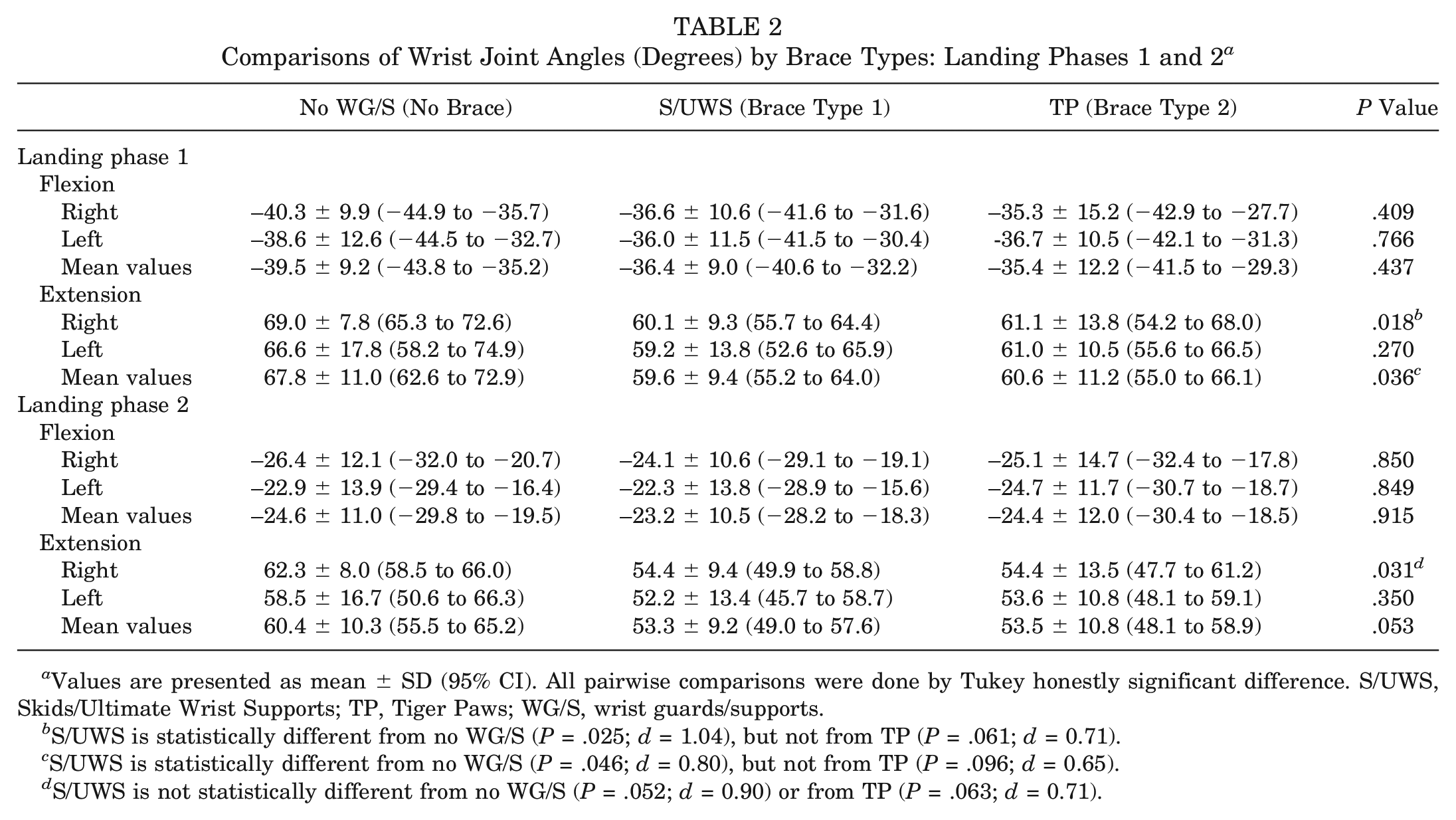
Values are presented as mean ± SD (95% CI). All pairwise comparisons were done by Tukey honestly significant difference. S/UWS, Skids/Ultimate Wrist Supports; TP, Tiger Paws; WG/S, wrist guards/supports.
S/UWS is statistically different from no WG/S (P = .025; d = 1.04), but not from TP (P = .061; d = 0.71).
S/UWS is statistically different from no WG/S (P = .046; d = 0.80), but not from TP (P = .096; d = 0.65).
S/UWS is not statistically different from no WG/S (P = .052; d = 0.90) or from TP (P = .063; d = 0.71).
Total Joint ROM Arc
Table 3 demonstrates comparisons of total ROM arc by the 3 conditions (no WG/S, S/UWS, and TP) based on 2 back handspring movement phases (landing phase 1 and landing phase 2). In landing phase 1, the right total ROM arc of no WG/S was significantly greater compared with S/UWS, but not with TP.
Comparisons of Wrist Joint Total ROM Arc (Degrees) by Brace Types: Landing Phases 1 and 2 a
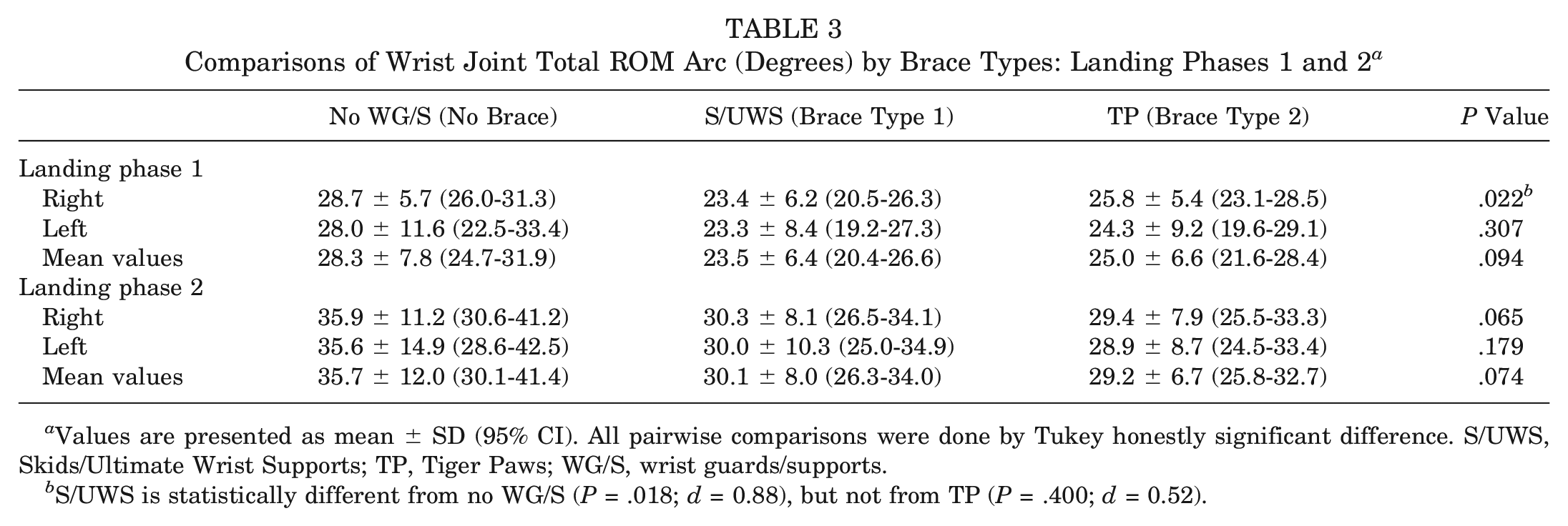
Values are presented as mean ± SD (95% CI). All pairwise comparisons were done by Tukey honestly significant difference. S/UWS, Skids/Ultimate Wrist Supports; TP, Tiger Paws; WG/S, wrist guards/supports.
S/UWS is statistically different from no WG/S (P = .018; d = 0.88), but not from TP (P = .400; d = 0.52).
Ground-Reaction Force
Table 4 presents comparisons of GRF by the 3 conditions (no WG/S, S/UWS, and TP) based on 2 back handspring movement phases (landing phase 1 and landing phase 2). ANOVA did not indicate any difference among the 3 conditions.
Comparisons of Ground-Reaction Force (N/kg) by Brace Types: Landing Phases 1 and 2 a
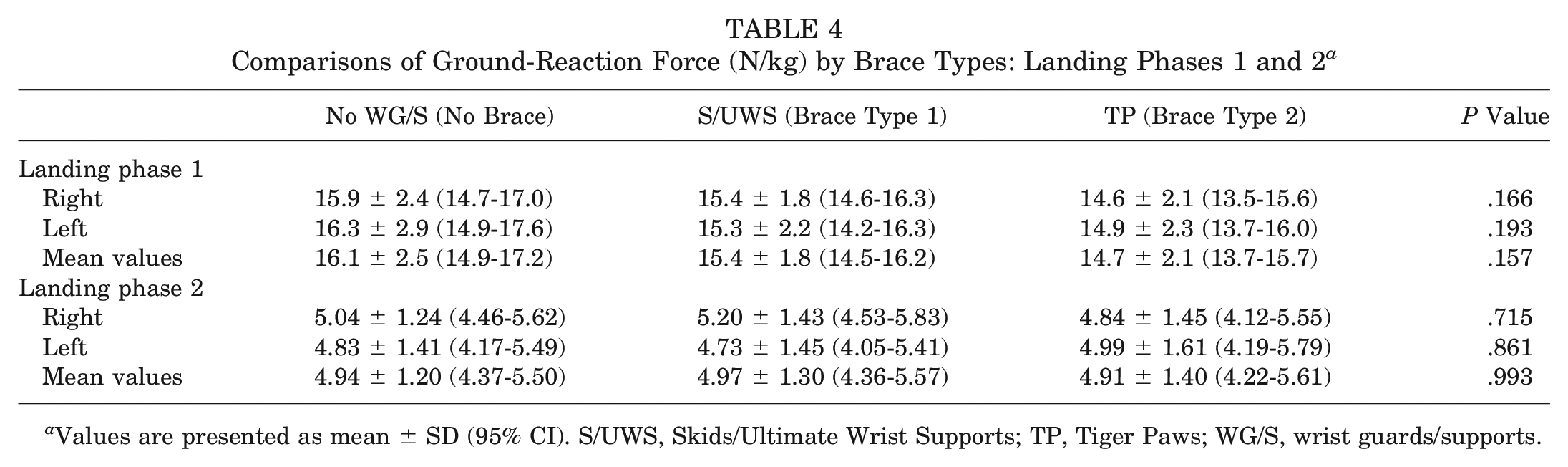
Values are presented as mean ± SD (95% CI). S/UWS, Skids/Ultimate Wrist Supports; TP, Tiger Paws; WG/S, wrist guards/supports.
Discussion
In this study of 23 female gymnasts, we found that WG/S do decrease wrist joint angles and total joint ROM arc compared with not wearing WG/S, and the wrist joint flexion moment of S/UWS was greater than that of the no-WG/S condition in both landing phases 1 and 2 of a back handspring. Therefore, our hypothesis was partially supported: WG/S did decrease wrist joint angles and total joint ROM arc. However, our finding of increased wrist joint flexion moment while wearing the S/UWS wrist guard is concerning, because past studies have identified increased joint moments as a risk factor for injury.5,6,9,11 A prospective study performed by Hewett et al 5 found that young female athletes (soccer, basketball, and volleyball athletes) who demonstrated a higher knee joint moment in jump-landing maneuvers had a higher likelihood of sustaining a major traumatic knee ligamentous injury. Another study by Hurd et al 6 found that high school–aged baseball pitchers who had an increased adductor moment while pitching were found to have ulnar collateral ligament thickening, potentially indicating ulnar collateral ligament tissue damage and degeneration. Because of this finding (increased moments lead to increased risk of injury), we recommend that WG/S should be cautiously worn, as they may lead to increased torque/moment at the wrist in a back handspring, which potentially could lead to increased injury risk over time.
We found 2 studies that showed that braces decrease the moment, and from this decreased moment, beneficial results were found.2,10 Rodriguez-Merchan and De La Corte-Rodriguez 10 performed a search of the Cochrane Library and PubMed (MEDLINE) databases related to the role of orthoses in knee osteoarthritis and found that unloader braces at the knee decreased the adduction moment at the knee and were clinically beneficial to the patient. Earl et al 2 performed a study using a protonic brace to determine if altered quadriceps muscle activity or knee mechanics changed in healthy participants (both with and without the brace). They found that when participants wore the brace and resistance was increased, the knee-extension moment decreased during the stance phase of stair descent, which was found to be beneficial. Unfortunately, our study found that wrist guards increase the moment, and we surmise that this is actually detrimental and not beneficial to the patient/athlete. In short, because of this finding of increased moment while wearing WG/S, WG/S should be used carefully, especially when used long term by young gymnasts, and long-term studies should be performed to determine what risk this may cause the athlete.
Traditionally, some coaches have gymnasts wear WG/S even if there is no injury or pain; however, the findings of this study—increased wrist flexion moment in both landing phases—questions if gymnasts should be wearing WG/S without a reason to decrease wrist extension. It should be noted that the current investigation did not examine injury rates based on status of WG/S. Therefore, no formal recommendation can be made at this point.
It is interesting that wrist guard use led to a decrease in wrist extension angles and total ROM arc on the right wrist but not the left. This could be because of a dominant arm/hand, which may over time receives more force and thus may have more motion to begin with; thus, placing a restrictive device shows a greater decrease in motion.
Our finding of decreased ROM for wrist extension is clinically beneficial. When medical providers want to limit wrist ROM, WG/S, especially S/UWS, are useful. This could be particularly important after injuries or surgeries of the wrist joint and when providers may want to limit wrist extension. However, this study did not investigate the long-term use of WG/S, and therefore we cannot comment on how long wrist guards should be worn. We would encourage providers to use WG/S when a limitation of wrist extension is warranted, but to be cautious on the duration of WG/S use because of the increased moment that was found in this study.
There are 2 previous investigations related to the current study: McLaren et al 8 and Trevithick et al. 16 Using 50 adolescent gymnasts, McLaren et al investigated maximal wrist extension angles of a back handspring, and the data were captured by a Casio Ex-ZR200 camera (2-dimensional video recording). They reported a mean maximal wrist extension angle of 95° with a range of 77° to 119°. 8 The 95° mean wrist extension is important to note, especially for medical providers who treat gymnasts with wrist injuries and are looking for an optimal wrist angle in terms of return to gymnastics. Our study did not directly measure maximal wrist extension of a back handspring as a whole; this is one of our future study agendas, especially in conjunction with clearance for full return to gymnastics. Additionally, Trevithick et al used a volar gel pad wrist brace (different from S/UWS and TP) for 48 male gymnasts with wrist pain to investigate whether or not the wrist brace decreased wrist pain. After 3 weeks of the intervention, it was found that there was statistical significance in decreasing wrist pain (modified visual analog scale, 0-10 ratings); however, no formal biomechanical measurements were obtained in that study. 16 Thus, it is difficult to understand what types of mechanical alteration led to the reduction of pain. In the current study, a questionnaire/intake form was provided, which indicated that 13 gymnasts had a history of wrist pain or injury, 12 had worn wrist guards before (and all 12 wore TP), and 9 gymnasts responded that wrist guards gave them a sense of pain reduction (answering “yes” or “no” question on the intake sheet). In short, it could also be surmised that the majority of gymnasts (9/12; 75%) who wear WG/S do feel a decrease in pain. Future studies are warranted to determine the underlying mechanism of pain reduction along with biomechanical analyses based on the status of WG/S.
Limitations
There are several limitations with this study. First, the sample size was relatively small (23 participants). Because there were no data we could reference, we performed a pilot test before conducting the current study. According to the power analysis based on the pilot test data, a sample of 24 to 30 participants would provide sufficient power to determine a statistical significance of 1 normalized wrist flexion moment difference among the 3 conditions, and we had 23 participants. This study was 1 participant shy of reaching the minimal number of participants that was calculated a priori. Also, this study consisted of only female gymnasts, so we cannot generalize these results to male gymnasts, who may have different joint kinematics. Third, there were some participants who had both previously worn WG/S and had prior wrist injuries, which might have affected the results. Fourth, as previously mentioned, we did not ask hand dominance, which potentially could have explained nonequivalent findings between right and left wrists, although a back handspring is a symmetrical movement in the sagittal plane. Fifth, although we attempted to re-create a normal gymnastics floor, we conducted the study in a laboratory, which is different from a regular gymnastics facility, which could have potentially influenced the results. Sixth, one rationale that could explain the increased moment with WG/S could be related to the fact that WG/S increased joint stability from the change to kinetics and kinematics; however, there are no other studies that show and can help explain this potential phenomenon, so we would not change our recommendations based on this. More research should be performed. Last, in this study we did not include elbow or shoulder joint angle and moment analysis, which could also affect the results.
Conclusion
This study showed that WG/S decrease wrist extension angles and total joint ROM arc; however, WG/S were found to increase the wrist flexion moment. It was also found that there was no change in GRF with any of the 3 conditions. Future studies are necessary to examine whether the increased moment is associated with injury and performance parameters.
Footnotes
Acknowledgements
The authors thank Matthew Rauseo for his expertise and knowledge in biomechanics and assistance with questions on this topic.
Submitted April 27, 2022; accepted July 24, 2023.
The authors declared that they have no conflicts of interest in the authorship and publication of this contribution. AOSSM checks author disclosures against the Open Payments Database (OPD). AOSSM has not conducted an independent investigation on the OPD and disclaims any liability or responsibility relating thereto.