






Abstract
Background:
Return to sport (RTS) is a common goal after anterior cruciate ligament (ACL) reconstruction (ACLR) but carries a relatively high risk of reinjury with up to 20% to 25% of athletes experiencing graft rupture or contralateral ACL tear. While there is increased emphasis on establishing safe RTS criteria for athletes to return to previous activity levels, studies show that even healthy individuals have difficulty passing RTS testing.
Purpose:
To synthesize data concerning whether healthy individuals can pass ACLR RTS rehabilitation tests.
Study Design:
Systematic review; Level of evidence, 4.
Methods:
Following the established PRISMA (Preferred Reporting Items for Systematic Reviews and Meta-Analyses) guidelines, the authors conducted a systematic literature search in May 2023. Three databases were used in the search (PubMed, EMBASE, and SPORTDiscus) to retrieve all studies that conducted ACLR RTS rehabilitation tests on healthy individuals. Tests included were isometric strength, isokinetic strength, hop, and balance tests. The search was performed in duplicate, and a quality assessment of all studies was included.
Results:
A total of 1724 studies were retrieved, of which 32 were included, involving 1552 controls with no history of ACL injury. From the studies analyzed, 5.3% to 42.2% of healthy participants failed 6 different hop tests, 15.2% failed the Star Excursion Balance Test, 37% failed the isometric knee flexion test, 50% failed the isometric knee extension test, and 23.7% to 28.9% failed the drop vertical jump test. An asymmetry index ≥10% was found in 6 of the 18 isokinetic tests and 2 of the 14 isometric tests. Hop testing was the most common test in the included studies (56.3%), followed by balance testing (31.3%), isometric strength testing (31.3%), isokinetic strength testing (25%), and drop vertical jump (6.3%).
Conclusion:
Many healthy individuals fail ACLR RTS tests, with some having an inherent variation from side to side that is >10%. The passing threshold for RTS testing should be a value that is practical yet helps reduce reinjury rates.
Anterior cruciate ligament (ACL) rupture is a common knee injury among athletes that carries significant consequences including instability and inability to return to athletic activities. 3 ACL reconstruction (ACLR) remains one of the most common orthopaedic surgical procedures, with nearly 350,000 performed annually in the United States alone. 7 Return to sport (RTS) is a common goal after ACLR but carries a relatively high risk of reinjury, with up to 20% to 25% of athletes experiencing graft rupture or contralateral tear.51,55
In attempts to reduce reinjury rates, RTS programs entail a comprehensive evaluation of functional performance using a testing battery. Common tests include limb-to-limb strength, stability, balance, postural control, technique with sport-specific tasks, and patient-reported outcomes.13,40,46 However, there is a lack of consensus on the specific RTS testing protocol because of minimal evidence supporting the injury-predicting capacity of functional testing.1,50,47,53
Most commonly, the limb symmetry index (LSI) has been used as a measure to assess patients at various stages in postoperative rehabilitation because of its practical clinical utility.20,46 Traditionally, it has been widely accepted that an LSI cutoff of 90% is a satisfactory result on strength and hop tests.8,19,21 However, its use within testing batteries remains largely variable. Despite the goal of formalizing return-to-play testing, there remains little consensus. 13 While some test batteries incorporate as many as 15 to 20 tests, higher numbers of tests and criteria lead to significantly lower pass rates.17,22,34,36,53 While this shows that ACLR RTS testing is difficult to pass overall, there is a deficiency in the literature as to the number of noninjured individuals exhibiting symmetrical performances across the RTS battery.
This systematic review aimed to synthesize data on RTS testing for healthy individuals and to answer the question: Is there a high rate of healthy participants who fail ACLR RTS testing? The authors hypothesized that there would be a high rate of failure among healthy participants for tests routinely used in ACLR RTS protocols.
Methods
Following the established PRISMA (Preferred Reporting Items for Systematic Reviews and Meta-Analyses) guidelines, we conducted a systematic literature search in May 2023. The search was performed in 3 databases: PubMed, EMBASE, and SPORTDiscus. A unique search strategy was designed for each database. The results from each database were combined, and duplicates were removed. Two independent reviewers (A.W. and E.M.B.) then screened the results in 3 stages. The first stage screened for exclusion via abstract alone. The second stage screened the full text for exclusion. The third stage identified the ACL testing mechanisms for inclusion eligibility (Figure 1). Any disagreement was resolved by consensus or discussion with the primary investigator (A.M.M.).
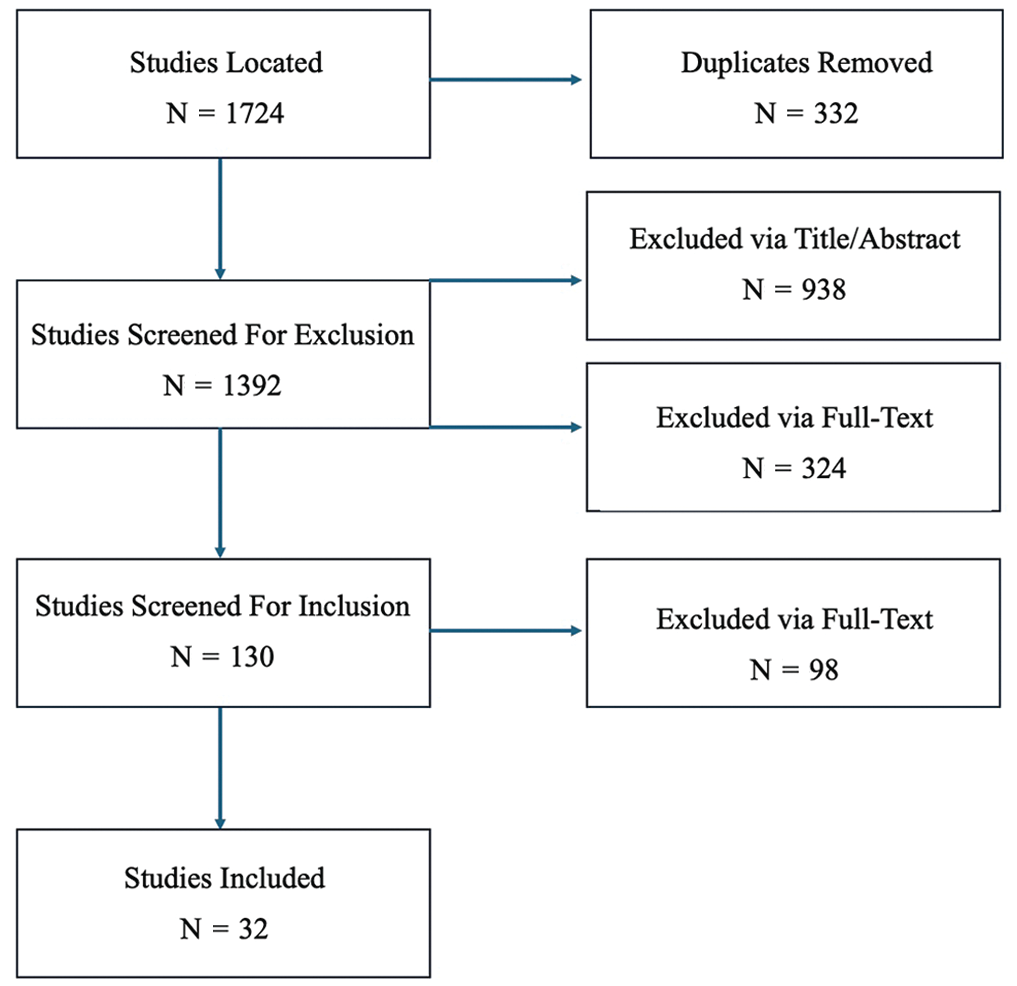
Summary of the selection process.
Inclusion criteria required studies with a prospective cohort of healthy, never-injured volunteers performing baseline or nonexperimental hop, movement function, strength, or balance testing. All included studies were required to have explicit statements of injury status and no previous lower extremity injury history in either extremity. The following physical tests were included in the final selection process for analysis: isometric strength tests, isokinetic strength tests, hop tests, and balance tests. Studies were excluded if (1) any of the volunteers fell outside the age limits of 16 to 45 years, (2) result values were not identified within the text, (3) the study only analyzed a test that was not utilized in another included paper, (4) the study was published >10 years ago, (5) and an English translation was unable to be obtained. Systematic reviews and meta-analyses were excluded from the study and utilized to identify additional papers meeting inclusion criteria.
An asymmetry index (AI) was calculated from all studies that reported AI or reported enough data to make the calculation. AI is calculated as the percentage difference between each limb for any given test. Failure criteria for all the tests, except the drop vertical jump, are defined as an AI >10%. There are 3 different failure definitions for the drop vertical jump: >6.5 cm of valgus in any knee, >4.1-cm side difference, and probability of high knee abduction >91%. The proportion of participants who failed each test was recorded directly from the text if the rate of failure was explicitly reported, or it was calculated using the aforementioned AI cutoff and definitions of failure for the drop vertical jump test.
Results
Literature Search
The search resulted in 32 studies meeting the inclusion and exclusion criteria. These studies included 1603 healthy controls with no history of lower extremity injury. Each study included at least one of the following RTS testing protocols: isometric strength, isokinetic strength, hop, and balance testing. Study characteristics are shown in Table 1.
Study Characteristics a

DVJ, drop vertical jump; MRHD, medial rotational hop for distance; MSLTHD, medial single-leg triple hop for distance; SD, standard deviation; SEBT, Star Excursion Balance Test; SLHD, single-leg hop for distance; SLTCHD, single-leg triple crossover hop for distance; SLTHD, single-leg triple hop for distance.
RTS Protocols
Table 2 shows the proportion of studies that evaluated individual test batteries. When looking at individual tests, hop testing was the most prevalent as 15 of the 32 studies (46.9%) included some form of hop testing. Hop tests include the following: single-leg hop for distance, single-leg triple hop for distance, single-leg triple crossover hop for distance, timed 6-m hop, side hop, single-leg squat jump, medial single-leg triple hop for distance, medial rotation hop for distance, medial hop, lateral hop, and figure-of-8 hop. The individual breakdown of studies can be found in Table 2, but the most frequently included hop tests were single-leg hop for distance (40.6%), single-leg triple hop for distance (25%), and single-leg triple crossover hop for distance (21.9%). Balance testing (Star Excursion Balance Test) was the second most common (31.3%), followed by isokinetic strength testing (25%), isometric strength testing (31.3%), and drop vertical jump (6.3%).
Distribution of ACLR RTS Rehabilitation Tests a

ACLR, anterior cruciate ligament reconstruction; ER, external rotation; IR, internal rotation; MRHD, medial rotational hop for distance; MSLTHD, medial single-leg triple hop for distance; RTS, return to sport; SEBT, Star Excursion Balance Test; SLHD, single-leg hop for distance; SLTCHD, single-leg triple crossover hop for distance; SLTHD, single-leg triple hop for distance.
AI Results
For hop testing, weighted means for the included studies revealed that all mean AI values were within the recommended AI guidelines for passing at <10% (Appendix Table A1, available in the online version of this article). The timed 6-m hop had the greatest mean AI (6.4%) across the 5 studies evaluating this metric.
For balance testing, all weighted mean AI values for anterior, posteromedial, posterolateral, and composite reach were <10% (Appendix Table A1, available online).
Isokinetic strength testing revealed similar results for several included metrics as found in Appendix Table A1 (available online). Notably, both studies evaluating knee flexion power at 90 deg/s and 180 deg/s reported AI >10%. In addition, all mean AI values for isokinetic hip extension were >10%. However, these specific tests were only evaluated in 1 study for hip extension angular velocity strength.
Most isometric strength testing mean AI values were <10%. However, a mean AI value >10% was found in maximal voluntary isometric contraction for knee flexion at 90° and was equal to 10% in maximum voluntary isometric contraction for knee extension at 65° (Appendix Table A1, available online).
Proportions of Individuals Failing to Meet Guidelines
Studies that explicitly stated failure rates or provided enough data to calculate the failure rate using the aforementioned AI cutoff were included to produce the results found in Table 3. Single-leg hop for distance had the greatest number of studies (n = 6) reporting a weighted mean failure rate of 11.9%. Of the functional hop testing, the side hop test had the highest failure rate of the included metrics at 42.2%. Overall, 15.2% of individuals failed the Star Excursion Balance Test, using the definitions of failure found in Table 4. Isometric testing included 1 study and found that 37% and 50% of individuals failed knee flexion and extension, respectively. There were no reported failure rates for isokinetic testing.
Proportion of Healthy Participants Who Fail ACLR RTS Testing a

ACLR, anterior cruciate ligament reconstruction; MRHD, medial rotational hop for distance; MSLTHD, medial single-leg triple hop for distance; RTS, return to sport; SEBT, Star Excursion Balance Test; SLHD, single-leg hop for distance; SLTHD, single-leg triple hop for distance.
Percentage of Healthy Participants Who Fail the Drop Vertical Jump According to 3 Different Criteria

Discussion
The most important finding of this study is that a substantial proportion of healthy individuals fail several tests routinely used in testing batteries for RTS after ACLR.
There is a lack of evidence in the literature to validate the passing values for ACLR RTS testing. A recent systematic review and meta-analysis found that only 23% of patients pass RTS testing batteries after ACLR. 53 Our study found that many healthy individuals do not pass RTS tests even though the mean AI across all studies was within 10% for most of the tests. This indicates that while the mean AI across the population may be within a passing range, there is still a large number of individuals who have an inherent asymmetry >10%.
The high proportion of healthy individuals who fail ACLR RTS testing indicates that the passing threshold may be impractical. Given that healthy individuals have a hard time passing ACLR RTS tests, clinicians should be cautious when requiring their patients who underwent ACLR to pass such tests before they return to play. Although lowering the passing threshold may be met with caution, there is a lack of consensus on the ability of ACLR RTS tests to prevent reinjury in the first place.1,50,47,53 One may argue, however, that it is of greater importance for a patient who underwent ACLR to pass the test with symmetry as he or she is at increased risk for an ACL graft tear compared with the healthy, uninjured patient.
Hop testing was the most prevalent test used in our review. The rate of healthy individuals failing different hop tests ranged from 5.3% for the SLTHD to 42.2% for the side hop test. This high degree of variability shows that hop tests are far from equal in their ability to assess asymmetries, even among healthy participants. We were unable to perform comparative statistics between hop tests given the heterogeneity of studies and small sample sizes.
Limb dominance has been proposed to influence limb symmetry when performing ACLR RTS testing. Zumstein et al 57 observed this effect when evaluating asymmetries for quadriceps strength testing; however, there was no significant effect of limb dominance on hop testing, drop jump testing, or knee flexor strength. Furthermore, Morishige et al 37 found that leg dominance influences knee valgus and internal rotation during the landing phase of the drop vertical jump test, suggesting an increased risk of ACL injury in participants’ nondominant leg.
The ability of ACL RTS testing to predict injury is debatable. While we found the rates of healthy participant failure to be low in some forms of hop testing, there is conflicting evidence concerning its ability to predict injury.6,52,57 The drop vertical jump test assesses knee valgus and internal rotation during the landing phase, and increases in these measures are associated with an increased risk of ACL injury.9,14,23 However, failure rates among healthy participants range from 23.7% to 28.9% for the drop vertical jump test. With a failure rate of around 1 in 4 among healthy participants, this is a difficult test to rely on the readiness of patients who underwent ACLR to RTS as it would cause many participants to have delayed RTS.
Test batteries for determining RTS present an additional challenge for athletes attempting to return to previous activity levels. Studies have shown that the proportion of individuals passing an RTS test battery decreases with the addition of each test.17,22,36 We found that 42.2% of healthy patients fail the side hop test. Therefore, if the side hop test were included in an ACLR RTS battery, up to 42.2% of participants who had no ACL injury would fail based on this test alone. With failure rates this high, additional testing could severely hamper participants who might otherwise be able to RTS safely.
This study is not without limitations. The largest limitation of this review is the heterogeneity of included studies and the small sample sizes of healthy people performing functional tests. This resulted in an inability to account for confounding variables. We were unable to perform comparative statistics or provide significant values for healthy participants’ ability to pass ACLR RTS testing. Furthermore, there continues to be a lack of evidence for which RTS testing accurately predicts future ACL injury.
While our study shows that there are many individuals with >10% side-to-side difference for various RTS tests, it is difficult to make any recommendations on a new passing threshold for ACLR RTS tests from this systematic review. Future investigations should aim to elucidate the injury-predicting capacity of functional tests used in ACLR RTS criteria and identify more reliable cutoff values in different populations and contexts. This will contribute to the continued efforts to produce individualized, patient-centered prevention and rehabilitation as the field continues investigating strategies to reduce ACL injury burden.27,48
Conclusion
Many healthy individuals fail ACLR RTS tests, with some having an inherent variation from side to side that is >10%. The passing threshold for RTS testing should be a value that is practical yet helps reduce reinjury rates.
Supplemental Material
sj-pdf-1-ajs-10.1177_03635465241313194 – Supplemental material for Anterior Cruciate Ligament Reconstruction Return to Sport Testing Passing Rates for Healthy People: A Systematic Review
Supplemental material, sj-pdf-1-ajs-10.1177_03635465241313194 for Anterior Cruciate Ligament Reconstruction Return to Sport Testing Passing Rates for Healthy People: A Systematic Review by Audria Wood, Mathew Hargreaves, John N. Manfredi, Maxwell Harrell, Elizabeth Marks Benson, Clay Rahaman, Dev Dayal, Eugene W. Brabston, Thomas Evely, Aaron Casp and Amit M. Momaya in The American Journal of Sports Medicine
Footnotes
Submitted August 29, 2024; accepted November 14, 2024.
One or more of the authors has declared the following potential conflict of interest or source of funding: E.B. has received hospitality payments from Smith & Nephew, Prime Surgical, Stryker Corporation, Arthrex, LinkBio Corp, Zimmer Biomet Holdings, IlluminOss Medical Inc, Next Science, and Orthofix; and consulting fees from LinkBio Corp. T.E. has received support for education from Smith & Nephew, Arthrex, and Gentleman Orthopedic Solutions; and hospitality payments from Exatech Inc, Pacira Pharmaceuticals Inc, IlliminOss Medical Inc, Stryker Corp, Prime Surgical, Next Science, Zimmer Biomet Holdings, Encore Medical, LinkBio Corp, Linvatec Corporation, and Ossio Inc. A.C. has received support for education from Supreme Orthopedic Systems, Arthrex, and Prime Surgical; consulting fees, grants, and speaking fees from Arthrex; and hospitality payments from Vericel Corporation, Stryker Corporation, IlliminOss Medical Inc, Prime Surgical, Exactech Inc, DePuy Synthes Sales Inc, Zimmer Biomet Holdings, Linvatec Corporation, and Orthofix Medical Inc. A.M.M. has received support for education from Prime Surgical; honoraria from Fidia Pharma USA; consulting fees from Miach Orthopaedics Inc and Stryker Corp; and hospitality payments from Smith & Nephew, Ethicon, Arthrex, Flexion Therapeutics, Pacira Therapeutics Inc, Innovation Technologies Inc, IlliminOss Medical, Bioventus, Exatech Inc, DePuy Synthes Sales Inc, Zimmer Biomet Holdings, Next Science, Linvatec Corporation, and Orthofix. AOSSM checks author disclosures against the Open Payments Database (OPD). AOSSM has not conducted an independent investigation on the OPD and disclaims any liability or responsibility relating thereto.

An online CME course associated with this article is available for 1 AMA PRA Category 1 Credit™ at https://education.sportsmed.org/Public/Catalog/Home.aspx?CourseSearch=1&Criteria=9&Option=25. In accordance with the standards of the Accreditation Council for Continuing Medical Education (ACCME), it is the policy of The American Orthopaedic Society for Sports Medicine that authors, editors, and planners disclose to the learners all financial relationships during the past 12 months with any commercial interest (A ‘commercial interest’ is any entity producing, marketing, re-selling, or distributing health care goods or services consumed by, or used on, patients). Any and all disclosures are provided in the online journal CME area which is provided to all participants before they actually take the CME activity. In accordance with AOSSM policy, authors, editors, and planners’ participation in this educational activity will be predicated upon timely submission and review of AOSSM disclosure. Noncompliance will result in an author/editor or planner to be stricken from participating in this CME activity.
References
Supplementary Material
Please find the following supplemental material available below.
For Open Access articles published under a Creative Commons License, all supplemental material carries the same license as the article it is associated with.
For non-Open Access articles published, all supplemental material carries a non-exclusive license, and permission requests for re-use of supplemental material or any part of supplemental material shall be sent directly to the copyright owner as specified in the copyright notice associated with the article.
