







Abstract
Netaji’s Secret Service ‘Indian National Army’ essentially revolutionary organisation. It is well known the leftist played a crucial role in Subhas Bose getting elected as the President of the Tripuri Congress. In 1939 found the Left Consolidation Committee (LCC), but the tenuous coalition of the leftists in the Committee soon broke but CPI remained with Bose.
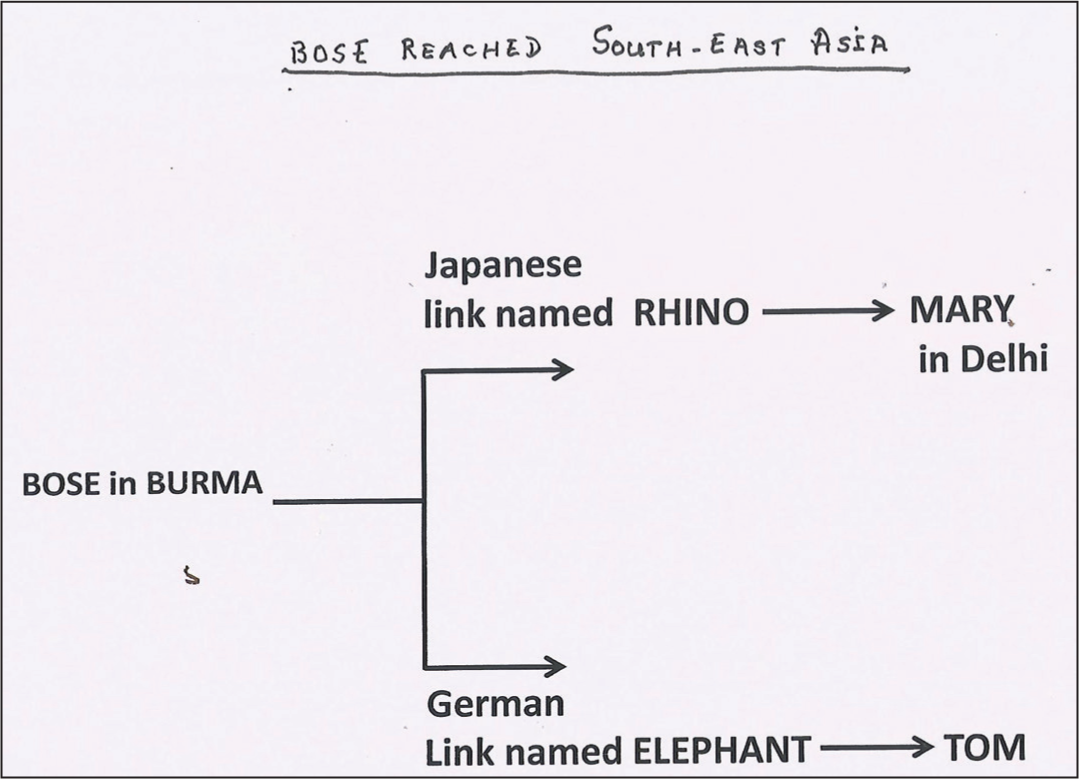
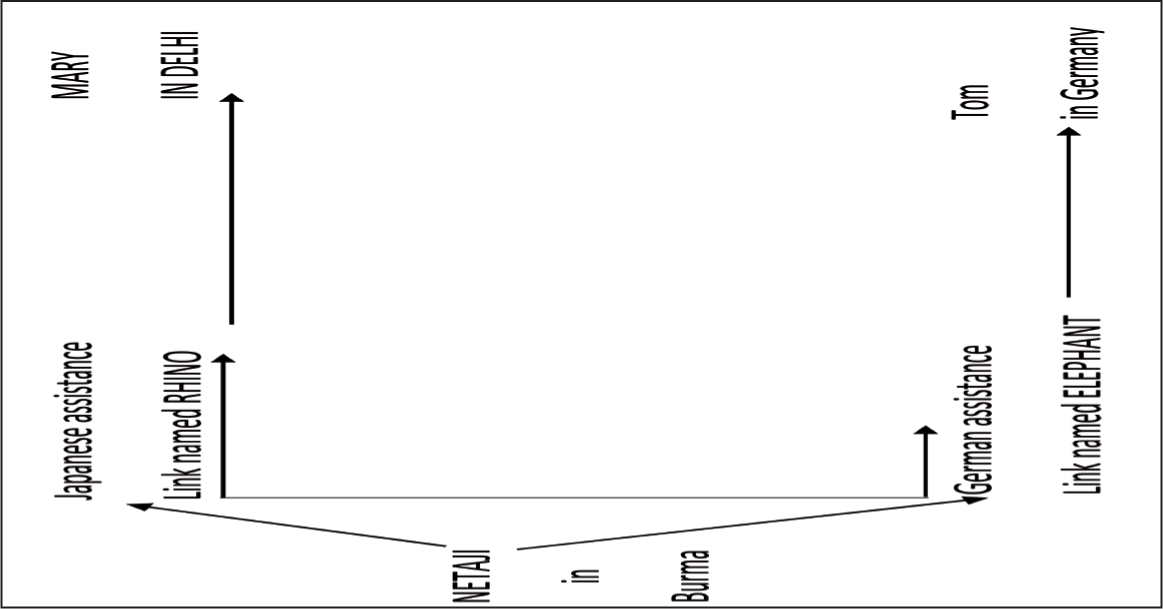
However, after the Second World War broke out, Bose decided to leave India. The Communists helped Subhas in his escape; the main operator was Achhar Singh Chhina, who was best known by the Soviets as Larkin, Akbar Mia of Forward Bloc and Ajoy Ghosh of CPI. Bose’s after the escape to contact the Soviet leaders for enlisting them as India’s ally, was also helped by the communists. In the War theatre, Subhas Bose Was in favour of Link. Before his departure, All India Revolutionary Committee code-named ‘MARY’ in Delhi communicated with Kabul link station codenamed ‘OlIVER’ and with German link codenamed ‘TOM’. T. Holt Writes ‘channel “SILVER” was one of the great deception double agent channels of the war, real name Bhagat Ram Talwar’. 1 ‘SILVER’ the game Master, one of the closest person of Bose, was a communist, a Master of disguise, Knowledgeable about the various revolutionaries Movements in India. Silver kept the soviet posted on his work as the Link between the Axis legation in Kabul and Bose sympathisers in India. Silver’s intelligence system as a high-grade source. But Silver remained a Communist first and foremost, and whenever he entered Afghanistan, practical control passed to the Soviets. Eventually Bose could make his way to Rangoon where a new arrangement was made by the Axis. Subhas codenamed ‘RHINO’ sponsored by the Japanese and codename ‘ELEPHANT’ sponsored by the Germans to remain in touch with ‘MARY’ in Delhi. Netaji set up a pro-Axis Provisional Government of Free India in Andaman and Nicobar Islands. PG operated successfully military deception plans with military intelligent tactics. Netaji began to broadcast anti-British Propaganda as the Voice of Azad Hind. He made it clear that neither his armed forces nor his Azad Hind Radio Service could be used for anti-Soviet purposes. Unfortunately, the strategic deception role of Netaji remained secret for decades.
Indian National Army (INA) is not a forgotten chapter, it is the obliterated pages of history which remained untouched for the last 75 years. After independence, our court historians remained silent about what happened to our INA after the Second World War. Today, after so many years, it is a great revelation that we are looking for new interpretation, which can help shed light on the untold events of the past.
If we consider it a legitimate way to write history, studies based largely on official documents preserved in various archives of the world need to be addressed with much discretion. Archives are the storekeeper of records. With the help of those records, in most cases, the researcher can establish the revised truth, and that is the task of the revisionists to unearth and establish the new interpretation which would able to reveal the mysteries of the past.
In recent years, there was a great demand for declassification of records and files on Subhas Chandra Bose. This became possible after the implementation of the Right to Information Act. Even then, a great many facts are yet to be unravelled as many original records, especially of the Provisional Government of Free India (Arzi Hukumat-e-Azad-Hind) and the INA (Azad Hind-Fauj) are fragmentary because of the fact that either they are obscured and missing or destroyed. Hence, without the original records, the evaluation of any subject remains partial.
Japan’s victory over Russia in the 1904–1905, Russian-Japanese war, was the first harbinger of Asian resurgence. A new era started and brought about Anglo-Japanese friendship. Indian people have looked upon the awakening in Japan with admiration. Japan’s victory strongly influenced the Freedom Movement of India, which got a new impetus, therefore.
During this period in India, the revolutionary activities were gradually spreading in different directions. It is evident that the movement was divided into many smaller groups with varying degrees of independence from each other. An interesting development which preceded the outburst of militant nationalist activities in Bengal was the establishment of a new type of society (samiti) or associations where activities were partly secret, for example, Anushilan Samiti, Jugantar Group and Atmonnati Samiti. Besides, several events in this period provided the necessary emotional stir. One side is the pan-Asian pride generated by the victory of the small Asian Japanese over the large European-Russian war. On the other side, in Bengal, the first partition of the province in 1905 greatly stimulated revolutionary activities in this province, and from Bengal, the agitation spread to other parts of India. This militant nationalist movement constitutes an important phase in the history of the growth of the political consciousness along with a great impetus for the Indian national awakening. The militant nationalists such as Jatin Mukherjee (BaghaJatin), Rash Behari Bose and Narendranath Bhattacharya (M. N. Roy) tried to achieve liberation from British rule with the help of money, arms and ammunition received secretly from foreign powers inimical to the British.
At this time, the Indian revolutionaries in India and as well as from abroad set their eyes on Japan, a nation in the Far East that had secured victory and was expanding its military power for the reconstruction of Asia. Japan welcomed the willing revolutionaries gave shelter and extended her support to their activities.
In 1915, Rash Behari Bose escaped to Japan and established contact with the Black Dragon Society of Mitsuru Toyama. With his help, Rash Behari could come in contact with the important Indian revolutionaries like Bhagwan Singh of the Ghadar Party living in Japan.
Bhagwan Singh became close associate of Rash Behari and both of them also became close to another Indian revolutionary Abani Mukherjee who happened to be in Japan and later became one of the eminent figures of Third International. A. H. Mohammad Barkatullah was a Muslim independence activist from India working as a teacher of Urdu at the Tokyo University of foreign studies in 1909. Besides Bhagwan Singh had regular contact with a young Indian revolutionary Sabharwal. In 1915, Herambalal Gupta was sent to Japan by the Berlin Committee of Indians in Germany. Anand Mohan Sahay reached Japan in 1923 and met Rash Behari in 1925. For 25 years, Rash Behari was in exile in Japan when the question of India’s independence always ignited his deep patriotism, which did not wane the least. He visited all the South East-Asian countries and convinced the Indians living there that freedom could be obtained only if those living overseas could organise, train and arm themselves and fight for independence. On the other side, British Indian Army personnel captured by the Japanese were released and recruited to join the movement.
Finally, the Indian Independence League (IIL) was established in Kuala Lumpur known as the Bharat Youth Training Centre. Later, it was named ‘Officers’ Training school in Singapore.
A preliminary conference of Indians was held in Singapore on the 9th and 10th March 1942 where the proposal of holding a conference in Tokyo was received from Rash Behari Bose. Accordingly, a small group of representatives of Indians from East and South East-Asia, both from the Indian prisoners of war (POW) as well as from the civilians from Malaya, Hong Kong and Java went to Tokyo in March 1942, where the Indians living in Japan joined them and held a conference at which Japanese authorities were also represented to decide the Indian Freedom Movement. The conference in Tokyo lasted from 28th 30th March 1942.
Towards the middle of June 1942, representatives of Indian POW together with the representatives of the civilians who were elected by the Indians in the different parts of the East and the South-East Asia met at a conference in Bangkok under the presidency of R. B. Bose. The conference adopted some resolutions. One of the major resolutions was to divide the whole of the East and The South East Asia into zones and territories.
The Bangkok conference of IIL in June 1942 gave shape to the league and laid down the principles of its actions and the limits of its connection with the Japanese government.
While Japan’s victory over the British Indian territory in South East Asia, Japanese intelligence came in touch with Pritam Singh, an ex-soldier of the Indian Army. Through him, the Japanese wanted to make a dent in the Indian Army stationed in Asia and win them over.
During the Malaya Campaign in February 1942, Captain Mohan Singh of the Indian Army surrendered to the Japanese army and gave the idea of forming units out of the Indian POW to fight the Britishers. Needless to say, Japan readily agreed to his proposal. Thus, on the military side, Pritam Singh and Mohan Singh laid the foundation of the INA on the political side Rash Behari Bose through the IIL tied together all Indians with the political motivation of liberating India with the Japanese help.
The IIL adopted resolution requesting Subhas Chandra Bose to come to the East-Asia and transmitted the same to Germany through the help of Japan. This will be a ‘New Voice of Asia’.
In India with the beginning of the Second World War, political crisis arose because of making her a belligerent. The Congress ministries withdrew in the provinces where provincial autonomy had been functioning under the Government of India Act 1935; governor’s rule commenced. The Indian demand was for a National Government, whereas the British government was not prepared to introduce any major change in the system of government in India during the pendency of the war.
This conflict between the people and the foreign government was not conducive to the fullest utilisation of the India’s resources to fight the war. The Axis powers naturally sought to exploit the Indian political situation and forged the instruments of propaganda, sabotage and legions of the Indians abroad for their purpose. In this, they were assisted by some patriotic Indians or old revolutionaries who considered the time opportune for driving out the foreign rulers with the assistance of the Axis powers. The motive force was provided by the easy victories of Germany and Japan in the early stages of war, and the manpower was available from among the civilians in the Axis-occupied countries of the Indian POW, whose patriotic sentiments and sense of frustration was worked up to rouse their enthusiasm to the pitch of fighting for the independence of their country.
In a study of the world situation, it appeared to Bose that the best way to work for India’s liberation was to escape India and organise an armed attack from outside with the help of the Powers, which were at the war with Britain and her allies. Bose decided, therefore, to proceed to Russia or Germany.
Subhas Chandra Bose was working on similar lines in Europe, particularly in Germany. He was responsible for the raising of the INA in Europe. Accordingly, to Major General A. C. Chatterjee about this Army-detailed information is still lacking.
It was in this background that the free Indian Legion (Germany) and Centro Militare India (Italy) were established in Europe.
The oath that was taken by the members of the Azad Hind Fauj in Europe was worked as follows:
In the name of God I take this holy oath that to liberate India and the thirty-eight crores of my countrymen I will be absolutely be faithful to our leader, Subhas Chandra Bose, and shall always be prepared to sacrifice my life and all I have for the cause.
2
Rash Behari Bose’s special interest in press and propaganda considered the necessity of wider and more accurate dissemination of news among the Indian population. Sivaram who was the spokesman of IIL was put in direct charge of editing the papers in Singapore. The following papers were presented and issued from Singapore under the auspicious of IIL: Voice of India (in English), Awaz and Azad Hind (in Hindi) and Voice of Swatantra Bharat (in Tamil).
Military affairs of colonial rule were disgraceful, disrespectful and full of disappointments up to the First World War the Indians were not allowed to man medium and heavy machineguns or field artillery. Intelligent Indians were not allowed to enlist in the army. The British military authorities, being afraid of their intelligence, wanted to keep only an ignorant servile, mercenary arms as long as they could. The people of Bengal were refused admission to the combatant ranks in the British Indian Army. An Indian soldier received ₹18 per month while a Britisher received ₹64. After over a century of the British military system, an Indian officer had not been able to get a rank in the fighting forces above that of a Lieu tenant colonel. Their deliberate policy of suppression they have not promoted a single Indian officer to the rank of General. The Indian Army has been deliberately riddled with caste so that the chance of cohesion and fusion may be minimised. Among the officers there were at least four different classes—the king’s commissioned officer, the Indian commissioned officer, the Emergency commissioned officer and the Viceroy’s commissioned officer. Such divisions enabled the British to play one set of officers against another. India has been made to bear colossal cost for her army. India has no Navy or Air force worth the name. Her Army must be organised, officered and commanded by her own sons. And the words of command must be in Hindi. 3
On the 1 September 1942, the INA was formally established. The President of IIL Rash Behari Bose promoted captain Mohan Singh, who was commanding the INA to the rank of a General. All British ranks were surrendered and new INA ranks were given to the persons concerned. Thus the senior most officer become the first a second Lieutenant and then was promoted to higher ranks.
Units and Formations were also organised and established:
No. 1 Division: It was commanded by Lieutenant Colonel M. Z. Kiani, who had been G. S. O. III in the 3rd corps of the British Indian Army in Malaya.
No. 1 Division consisted of Three Guerrilla Regiments which were named after important political leaders of India: (a) Gandhi Brigade, (b) Azad Brigade and (c) Nehru Brigade.
Each Brigade consisted of three Battalions, and each battalion consisted of three companies.
In the INA irrespective of any distinction, all men were required to handle the rifles and get suitable training; for this an extensive training programme was prepared and gone through for every soldier. Target practice was gone through for rifles, machineguns and Bren guns.
All words of command were formulated in Hindi and used in the training of the soldiers. This was the first occasion in the history of an Indian Army that Hindi words of command were used solely, instead of English. The men could understand these words of command in Hindi much more easily, the instructors could also give the orders with greater confidence and clearness than when they used English in the British Indian Army.
Besides, marching and other physical exercises, lectures were given to the soldiers. The subjects were such as (a) history of the Indian National Congress and sacrifices of the Congress leaders, (b) history of the Forward Bloc and internal revolution in India, (c) brief history of India proving India’s greatness, (d) revolutionary history of other countries (e) geography with special reference to India’s eastern border, (f) weak points in British war organisation and civil administration in India and (g) youth organisation in Japan and Germany.
As already mentioned before, another important decision was taken that Subhas Chandra Bose should be invited to East-Asia to lead the Indians there.
During the conference, Rash Behari, it appears, contacted Subhas on the Bangkok–Berlin radio telephone and conveyed to him the resolution adopted in the conference that he should be invited to take over the mantle. Subhas was equally eager and told him that he would come to Asia at the earliest opportunity. Rash Behari and his council of Action approached the Japanese government to arrange to bring him to Subhas. Earlier Subhas sent a message to the Bangkok conference which read as follows:
Eighteen months of my experience abroad tells me that the allies of our anti British struggle are Japan, Germany and Italy. However, the independence of India must be won by our own hands. I believe in the need for taking up arms at the final phase of our fighting for independence.… I pray for the success of this meeting, which I believe will make mark a milestone in our fight for victory.
4
Unfortunately, the first phase of the history of the formation of the INA became crucial. General Mohan Singh, K. P. Menon and Lieutenant Colonel Gilani resigned from the council of Action. Thus, only the president and N. Raghavan were left to carry on the movement. The succeeding period of six months, that is prior to the arrival of Subhas Chandra Bose, was one of the most difficult periods in the history of the Indian Independence Movement in South-East-Asia. Rash Behari Bose helped by a few civilian members of the IIL and a few of the senior military officers, tried his level best to keep the Movement alive, and he kept the INA from complete disintegration.
During the conference, a question was asked by one of the military representatives as to what would happen if the president did not act faithfully or selected a suitable successor. Rash Behari Bose’s reply was characteristic and at once showed his frank honesty, sincerity of purpose and typical revolutionary spirit. He said that the whole movement was revolutionary and therefore if the president failed in his duties and was unfaithful, he could be legitimately shot by his followers who had depended on him. This frank and bold assertion of the president had a very satisfactory effect on the whole gathering.
Accordingly, a request for bringing in Subhas Chandra Bose from Germany to Malaya was once again strongly urged. The Japanese agree to forward this request immediately.
In 1943, Subhas Chandra Bose arrived in East-Asia. As soon as Netaji took command and revitalised it with the creation of the chief-of-staff and divisional commands and the consequent Army Department, the INA took the form and effectiveness of any modern regular army. Netaji made it clear that the INA had a two-fold task to perform. He said,
with the force of arms and at the cost of your blood you will have to win liberty. Then when India is free, you will have to organise the permanent army of Free India whose task it will be to preserve our liberty for all time. We must build up our National defence on such a unshakable foundations that never again in our history shall we lose our freedom.
5
The first thing that Subhas did on arrival in Tokyo was to contact Prime Minister Tojo. He understood the urgency of the situation and would not brook any delay in fathoming the mind of the top man in Japan. But, Tojo was not keen on the immediate meeting; maybe the IIL or the INA could not make an impact on him, or maybe he was too preoccupied with more pressing problems than the question of Indian Independence. Japan already stretched her hand too far, away from Burma. Could she undertake additional responsibility?
Moreover, in the scheme of co-prosperity plan which Japan visualised for Asia, India was left out. Tojo was thinking in terms of the Far East and India was outside the pale. The international situation was also turning in favour of the British. Allied army scored their victory in North Africa. Soon after Sicily was occupied and the Allies got ready to land on the mainland of Italy.
At last, the meeting was arranged between Tojo and Subhas on 10 June, 20 days after Subhas’s arrival in Tokyo. The details of the meeting are not known but it appears from his subsequent action that Tojo was quite impressed by the personality of Subhas. He instinctively felt that Subhas could shoulder the responsibility and would prove an asset rather than a liability in harassing the British. On the 14th of June, Subhas again met Tojo and was invited to visit the Diet on 16 June. Introducing Subhas, Tojo said ‘It is our belief that the day is not so far off when India will enjoy freedom and prosperity after winning independence’.
Subhas held a press conference on 19 June and made his presence in Tokyo public. He read out his statement, ‘Only an armed struggle could bring about the freedom of India. Non-violent Satyagraha alone is not enough to overthrow British rule’. 6
The Times of London, in its issue of 22 June, took note of Subhas’s presence in Tokyo. It commented, ‘All the newspapers in the countries under Axis power expect a great deal from his forthcoming activities and claim that the plea he made over the radio from Tokyo, was far moved effective than any broadcasts he made from Berlin’. 7
After 40 days of stay, Subhas left Japan. Before leaving he recorded a broadcast which said:
I was very warmly received wherever I went since I came to Japan. I take your warm reception as a sign of the sympathy the Japanese people have for the 400 million people of India, who are groaning under British oppression and fighting for freedom.
8
Subhas along with Rash Behari Bose reached Singapore on 2 July. Then IIL met on 4 July. Rash Behari announced his resignation as president and proposed the name of Subhas as the new leader of IIL. It was in this meeting that Subhas Chandra announced his plan for the Provisional Government of Free India. The conference also passed a resolution by which Rash Behari was appointed as a supreme consultant to the IIL.
Bose was not only a revolutionary and a patriot but also a social reformer, a great liberator of women. Speaking at Singapore’s Padang, 9 July 1943, ‘I want a unit of brave Indian women to form a death-defying regiment who will wield the sword which of Rani of Jhansi wielded in India’s first war of Independence in 1857’.
It was thus but natural that he would insist on a women’s wing of the Azad Hind Fauz, without it the Fauz was incomplete. Under the command of Laxmi Sehgal, the Rani of Jhansi was formed. A women’s organisation part of which would be a combatant unit in India’s Independence Movement in South-East Asia. The main aim of adopting this name was to indicate that women could undertake political and military leadership positions.
The Jhansi Regiment might have lost the Indian Independence War, but the Ranis were able to win the bigger war for women’s right to equality and social justice.
After Rani Jhansi Regiment unit, the children were mobilised into a Balsena or Balak Sena and Balika Sena units. Students from the national school under 14 years joined the unit. They would attend public meetings, demonstrations and rallies and were trained physically. The children’s wing was established in 1943.
From among the Balsena, 45 teenage boys were chosen as Tokyo cadets and to be sent to the military Academy in Tokyo for training. A formed recruitment campaign was undertaken in Malaya and Singapore. They were interviewed and selected by Netaji himself and sent them across to far-off Japan for training in characters, martial and spiritual enlightenment for the battle ahead. Before the admission to the regular Japanese Military Academy, 10 months of training began at the preparatory level. Later, they got admitted to the regular Japanese Military Academy, 35 with the Army and 10 with the Air Force.
There was also one paramilitary organisation under the League called ‘Azad Hind Dal’. Although the IIL functioned as a semi-political body but it did not fulfil the requirements of the revolutionary party; Azad Hind Dal was formed to replace the IIL inside India and was intended for administrative and revolutionary work inside India. Netaji proposed Lieutenant Colonel Eshan Qadir as the leader of the party, and Mr Anand Mohan Sahay, a minister of the government, was selected to be the deputy leader.
On taking over supreme command, Netaji told Azad Hind Fauj,
For an Indian, there can be no greater honour than to be the Commander of India’s army of liberation.… Comrades! You are today the custodians of India’s national honour and the embodiment of India’s hopes and aspiration … we shall give our all to make her free.
The Indian population in the East acclaimed him with cries of ‘Netaji’ and he greeted them with two sparkling words surging out of his heart ‘Jai-Hind!’
In July meet, after proposing his plan for the Provisional Government of Free India, Subhas Chandra was keen to establish the Provisional Government as early as possible. That would give a solid footing not only to the cause but a constitutional standing as well as for the liberation army.
M. Sivaram in his book The Road to Delhi writes
9
At a private interview with General Tojo during the illegible? … Toa Conference, Subhas suggested the transfer of the Islands Andaman and Nicobar to the Provisional Government of Free India. This he argued, would enhance the prestige of the Free India Government, establish the sincerity of the Japanese policy and besides enable him to fulfil his pledge about standing on Indian soil before the end of 1943, Tojo was not easily convinced. One of the Bose’s aims in going to Tokyo was to ask the Japanese Government to turn over the PG the captured Andaman and Nicobar Islands in the Indian Ocean. They were symbolic as a place of exile for Indian prisoners of the British. Furthermore, in order to be a genuine Government in International law the PG need territory. In addition, the Andaman and Nicobar would presage the liberation of all India, Bose said to Tojo. Tojo demurred, saying that the Islands were of strategic importance to the Navy, which would never agree. But Tojo consented to announce that the islands would be ceded to the PG in the near future. Tojo kept his word and made the announcement of the transfer on 6 November. In fact, the actual transfer was never made; ultimate jurisdiction remained with the Japanese Navy, though Bose sent a Chief Commissioner. The Navy, however, refused to have an INA contingent on the islands.
10
21 October 1943 was a great day not only in the life of Netaji and the Indians in the South-East Asia but in the entire history of India’s Independence Movement. The auditorium of the Cathey Building in Singapore where the Delegates from Thailand, Hongkong, Java, Sumatra, Indo-China and Malaya assembled at a conference Convened by the IIL. Netaji announced the formation of the Provisional Government of Free India, Arzi Hukumat-e-Azad-Hind or Azad Hind Government. He announced the personnel of the Azad Hind cabinet and read out the Proclamation of Independence on behalf of the Azad Hind Cabinet.
In setting up this Provisional Government, Netaji mentioned
We are on the one hand meeting the exigencies of the Indian situation and on the other following the footsteps of history. In recent times the Irish people set up their Provisional Government in 1916. The Czechs did the same thing during the last world war. And after the last world war the Turks under the leadership of Mustapha Kemal Pasha set up their Provisional Government in Anetolia.
It is a government which aimed neither at territorial expansion nor at the supremacy of one over another, but at the assertion and acquisition of a nation’s moral right to live as a free people. It guarantees religious liberty, as well as equal rights and equal opportunities to all its citizens. The birth of the Azad Hind Government was a triumph of the forces of spiritualism over militarism—and its proclamation of Independence was virtually a defiance of the fear of brute force that seeks to throttle a nation’s will to be free. 11
On 5 November, Subhas Chandra attended the Greater East Asia Conference held in Tokyo as an observer.
Nishi Nippon Shimbun reported
President Subhas Chandra Bose of Provisional Government of Free India spoke for 30 minutes narrating how determined he was to fight for freedom.… As soon as Mr Bose concluded his speech amidst a storm of an applause, premier Tojo took the rostrum, declaring on behalf of the Japanese government that Japan would return the Andaman and Nicobar Islands to the Provisional Government of Free India in the near future.
On 7 January 1944, the Provisional Government of Free India moved to Rangoon. Lieutenant Colonel A. D. Loganathan was made in charge of the civil administration.
The Azad Hind Government functioned like all other civilised governments consisting of the following elements as indispensable for the purposes of a state: (1) Territory, (2) Population, (3) Organisation or Government and (4) Sovereignty.
Territory: On 25 October 1943, Netaji leaves for Tokyo to attend the Greater East Asia Conference, where in a private interview with General Tojo, he spoke about handling the Andaman and Nicobar Islands to the Azad Hind Government. Netaji was an observer, but after his stirring speech, Tojo, while addressing the gathering, announced that Japan will be handing over the Andaman and Nicobar Islands to the Provisional Government of Free India. The Islands were later renamed Shaheed (Martyr) and Swaraj (Independence). In February 1944, Lieutenant Colonel Loganathan took over the Chief Commissioner of Port Blair.
Netaji responded,
Like the Bastille in Paris, which was the first to be stormed in the French Revolution, setting free political prisoners, The Andaman where our patriots suffered, are the first to be liberated in Indians’ fight for independence. Part by part, Indian territory will be liberated.
Population: The nucleus of the population under the Azad Hind State was formed when Colonel Hunt acting as a representative of the British government handed over 50,000 Indian troops to Major Fujiwara, and Major Fujiwara in his turn, acting as the representative of the Japanese government, handed over them to Captain Mohan Singh. The fate of these 50,000 Indian troops roused the national consciousness of millions of Indians in East Asia. The personal allegiance to Netaji ultimately crystallised into allegiance to the Azad Hind State.
Organisation or Government: The Azad Hind Government functioned like all other civilised governments. Different departments discharged the legislative, executive and judicial functions of a government. In addition to these, the government undertook certain functions such as Education Public Health and Road making. It maintained a regular institute for training in Civil Service and recruited from these trainees officers for the Azad Hind Dal which was entrusted with the responsible duty of administering whatever territories were occupied by the Azad Hind Fauj.
The Azad Hind Government published an official Gazette and brought out news bulletins called ‘Azad Hind’ and ‘Jai Hind’. The Congress flag was honoured as the flag of the Provisional Government of Free India. Azad Hind Bank, registered office at 97 Park Street, Rangoon, Director was Shri Dinanath. When the British Military authorities seized the Azad Hind Bank it had the custody of substantial amount of money belonging to the Azad Hind Government.
The amity and the goodwill which characterised life under the Azad Hind Government, of men belonging to different religions and castes, bear clear testimony to the capacity and efficiency of the executive department of the government. In the maintenance of the ‘law and order’, the executive had the fullest cooperation of the people. From the point of view of willing allegiance to the government and ready obedience to its orders, the Azad Hind Government was a true democracy. It was a democracy in spirit though not in form.
And finally, whether the Azad Hind State possessed the supreme element of ‘statehood’, namely Sovereignty. Sovereignty implies, in the first place, that the state should be supreme in internal matters, and second, that it should be independent of external control. Depending on the recorded evidence of the witnesses before the Court Martial affords clear proof of the fact that the Azad Hind Government was the only organisation that could make itself obeyed by the people; and it is the fact of this obedience that makes a state internally supreme. 12
The external sovereignty of the state is reflected through the state’s foreign relations. The Allied News agencies had always referred to the Azad Hind Government as a puppet Government of Japan. Fact remains that the first to give recognition to the Provisional Government of Azad Hind was Japan. On 23 October 1943, two days after the proclamation of Independence by the Provisional Government, the Japanese government issued a statement wherein they say:
The Japanese Government recognise the Government as the Provisional Government of Azad Hind and hereby declare that every possible assistance on its part will be afforded to the latter for the achievement of India’s Independence.
This was followed by similar recognition by Germany Italy, Thailand, Philippines, Croatia, Manchuria and Burma.
The Japanese Foreign office appointed Hachiya Teruo, the Envoy Extraordinary to the Provisional Government of Azad Hind in Rangoon. The British War Office records claim that Hachiya was appointed as the representative of the Japanese government to the Provisional Government of Azad Hind without any credentials. Further claims—he would probably have most intimate knowledge of any matter handled by the Japanese government and Chandra Bose. After the war, Hachiya was in British custody and he was interrogated by the headquarters of SEATIC, Singapore. Hachiya’s statements during the course of interrogation prove that the Japanese government did not appear to be in the habit of issuing credentials to its ambassadors in general and an ambassador by the name of Kato Kochu was sent without credentials to the centre of the Provisional Government of Omsk in Siberia. 13
Kolesnikov, the former Major General of Warsaw Pact, later diplomat in the Russian Embassy in Turkey, mentions in his article,
Bose strove to establish (relations) with the Soviet Leadership. With this aim in view, he sent the authorised representative of the Interim Government, Kato Kochu, to Omsk with the rank of an ambassador but without the proper official documents. There is evidence to the effect that Kato Kochu reached Omsk.
14
After proclamation of the Azad Hind Government, Netaji tried through the Japanese political channels to get the PGI recognised by the Russian government. Netaji’s effort in this direction appears to have been sponsored and approved by the Japanese government. While in Tokyo, Netaji approached the Foreign Minister of the USSR through the then Soviet Ambassador in Tokyo. The following letter is unearthed from the KGB archive of Russian Federation.
Tokyo, The 16 November 1943.
To
His Excellency the Foreign Minister of the USSR
Your Excellency,
I have the honour to inform your Excellency that in accordance with the will of the freedom—loving Indians in India and abroad—and with the fullest support of all Indians residing in East Asia who number close upon three million, and of their political organisation, the IIL as well as with the backing of the INA now stationed in East Asia. The Provisional Government of Azad Hind (Free India) was Established on the 21st of October 1943, with its Head Quarters temporarily at Syonan or Singapore.
In communicating this information to Your Excellency, I avail myself of this opportunity to express my sincere desire that there should exist between our two Governments and our two nations the most cordial relations of amity and friendship.
I also take this opportunity of assuring Your Excellency of my warmest esteem.
Yours respectfully,
Sd/SUBHAS CHANDRA BOSE
Head of the State, Prime Minister and Minister of Foreign Affairs
Of the Provisional Government of Azad Hind. 15
Paper presented by Pramod Mehra ‘The Declassified INA Documents from the Ministry of Defence’ where we find, ‘The recognition of the Provisional Government by the world powers, namely Japan, Burma, Germany, Italy, Thailand and Philippines, Manchukukoas also the USSR declared the firm resolve of the Provisional Government of prosecute their struggle for India’s freedom’.
Now the question arises as to how the USSR is a member of the Allied Forces could give recognition to the Provisional Government of Azad Hind?
The Domei News service of Berlin reported: ‘A reception in Berlin in 2nd week in November, 43, was given on the occasion of the founding of the Provisional Government of India. Indians in Berlin were determined to give their utmost to liberate India’.
The Secretary of State Keppler, on behalf of the Reich, gave a speech. The Japanese Ambassador General Oshima also spoke. The Head of the Organisation Nambiar spoke about Subhas Chandra Bose.
Bose sent a message from Japan for the occasion announcing that the Indian Provisional Government had declared war on Britain and USA; and that as the German Government had recognised the Indian National Army he had placed it under the German High Command and had appointed Nambiar as his Minister in Berlin.
The British Intelligence became very worried about the new developments in the Far East.
The vanguards in the INA reached Rangoon at the beginning of 1944 full of glorious hopes and dreams, Netaji standing under the fluttering Tricolour gave orders to the INA to cross the Arakan and Assam Mountains and to march on to the Red Fort at Delhi.
We should have but one desire to-day—the desire to die so that India may live … the desire to free a martyr’s death, so that the path to freedom may be paved with martyr’s blood.… Give me blood and I promise you Freedom.
Intelligence Service:
No greater revolutionary movement has been able to perform its functions, without an intelligence services of its own. So also, in the case of the Indian Independence Movement—There are usually three sections (i) The External, (ii) The Internal and (iii) The Execution.
16
The Intelligence Department of IIL and INA was responsible for the collection, collation and reporting of all information gathered in connection with the activities of enemy agents, movements of Indians whose integrity was doubtful, investigation of complaints, when necessary, and general watch over the attitude of the members of the civilian population as well as the armed forces.
While giving a proper shape to the units and Formations, the regiments were well organised and established. In the same way, the Intelligence Department was in charge of ‘Bahadur Group’ both internal and external. A number of them were sent to India to get information or sabotage, if necessary, British war efforts. They were also to spread disaffection among the Indian soldiers fighting for the British and win them over. Subhas wanted to have a wireless link with India.
Espionage and Intelligence Training in the INA is a commendable contribution of IIL and INA. After the INA was formed by General Mohan Singh, a small group of young officers was sent by Colonel Niranjan Singh Gill from Bengal to set up the base for underground activity, and report back to INA headquarters in Singapore. Later, Rash Behari Bose was looking for a better selection and training for the future Secret Service Groups. Colonel Bhonsle and Raghavan established the ‘SWARAJ Institute’ at the former Penang Free school. Where young Indians were recruited. The trainees were trained in revolutionary propaganda, the technique of espionage, physical drill, swimming, the use of rubber boats and use of firearms.
There are many memoirs, articles and interviews that made us informed about the activities of the Intelligence Secret Service of INA 17
Special Intelligence and security services of the INA movement were part of the Indian Freedom Movement. Both were with one common revolutionary vision because INA was essentially a revolutionary organisation.
Bose is believed to have made an elaborate plan to set up centres of Indian nationalist propaganda in various European countries with a view to bridge the gulf between the revolutionaries of the East and West.
All along 1938, Subhas Chandra Bose as the Congress President repeated advised the Congress socialist party to broaden its platform and form a left bloc to rally all the radical and progressive elements in the Congress. However, the party never approved of the idea. Besides, the left wing comprising the radical elements in the Congress who were responsible for Bose’s re-election in 1939 was not organised under one single leadership. In Bose’s opinion, India’s primary political need in 1939 was an organised and disciplined left-wing party within the Congress. This was one of the reasons why Bose took the decision to resign from the post of president and immediately proceeded to mobilise all the radical left-wing forces under one banner. With this end in view, a new political party was formed. ‘Forward Bloc’ which sprang into existence in response to the historical necessity 18
The All India Forward Bloc Conference on 22nd and 23rd June 1939 approved the formation of the Left Consolidation Committee (LCC) consisting of the representatives of the Left-Wing and the Forward Bloc for giving effect to a common and agreed programme and also to bring about complete consolidation and unity of the entire Left-Wing in the Congress. LCC was formed with FB, CPI, CSP, Kisan Sabha, Roy Group (League of Radical Congress), Labour Party and Anushilan Marxists 19 but the tenuous coalition of leftists in the consolidation committee soon broke up under the pressure from the High Command Royists.
However, when the Second World War broke out, Subhas Chandra Bose and the CPI, in particular, came closer to each other. Politburo meeting in 1939, the illegal CPI adopted a similar stand, ‘The task of the Indian people is the revolutionary utilisation of the war crisis for the achievement of national Freedom … the capture of power is an immediately realisable goal’. 20 Repression once again brought Subhas Bose and the communist close to each other.
As war clouds gathered on the horizon, Bose felt increasingly frustrated about what he regarded as a limited understanding of the changing international situation on the part of the Indian Left leaders. By the end of 1940, even as he was held in detention, he was making plans for leaving India to organise the antiimperialist struggle abroad.
It was under these circumstances that Subhas Chandra Bose made his great escape from the country in January 1941.
On the other hand, the Russo-German non-aggression Pact of 1939 was an event of the utmost significance for India. The signing of this treaty by the Soviet Union evoked expectations among certain sections of the Indian intelligentsia, in particular, among those inclined to nationalistic socialism. It seemed to consider Germany and Italy as prospective faces, which in collaboration with the Soviet Union might help bring freedom to India from the British rule. During this period, Bose apparently surveyed the entire war situation and after considering various opinions of the workers in various organisations and parties, he found no other alternative but to travel abroad.
In order to receive help from the USSR, Bose tried numerous sources to enable him to reach that country. Help was offered from various sources but the main help was from various sources but the main help was from Achhar Singh Chhina of the former Ghadar Party, later the members of which became known as the ‘Kirti’ Communist Group. Achar Singh, who was best known to the soviets as ‘Larkin’, was the pivotal operator along with Ajoy Ghosh (member CP9) to chalk out the detailed escape plan. Since the 1930s, the Kirti group was very active in the North–West Frontier and had been helping the Indian revolutionaries to reach the USSR via Afghanistan. 21
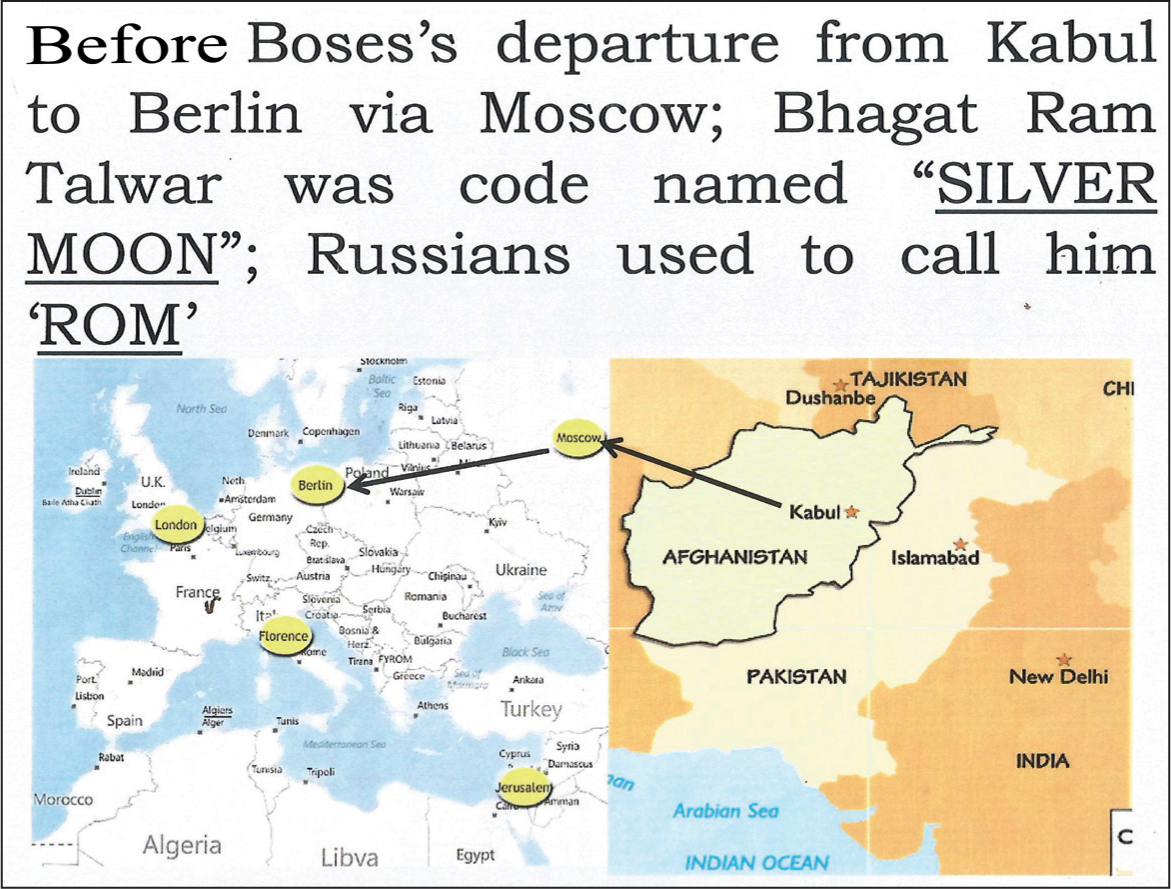
Bhagat Ram Talwar accompanied Subhas Chandra Bose to Kabul and started establishing contacts with the soviet and German emissaries in Kabul. Although all relevant papers and documents related to Subhas Chandra Bose were all in Commintern’s custody, following certain developments, Kremlin’s reaction was negative. The situation at the Southern border of the USSR during 1940–1941 was tense. On the basis of German misinformation, the British government allegedly apprehended an attack on India by the Red Army and worked out a plan to bombard the oil industry in Baku. Under these circumstances, the Soviet Government was unable to provide a positive response to the proposal by the Third International Subhas Bose’s visit to the USSR.
Therefore, all the above uncertainties from the Soviet end influenced Subhas Chandra to proceed to Berlin but with a Soviet transit visa and an Indian passport in the name of the Orlando Mazzatto (Passport No. 647932).
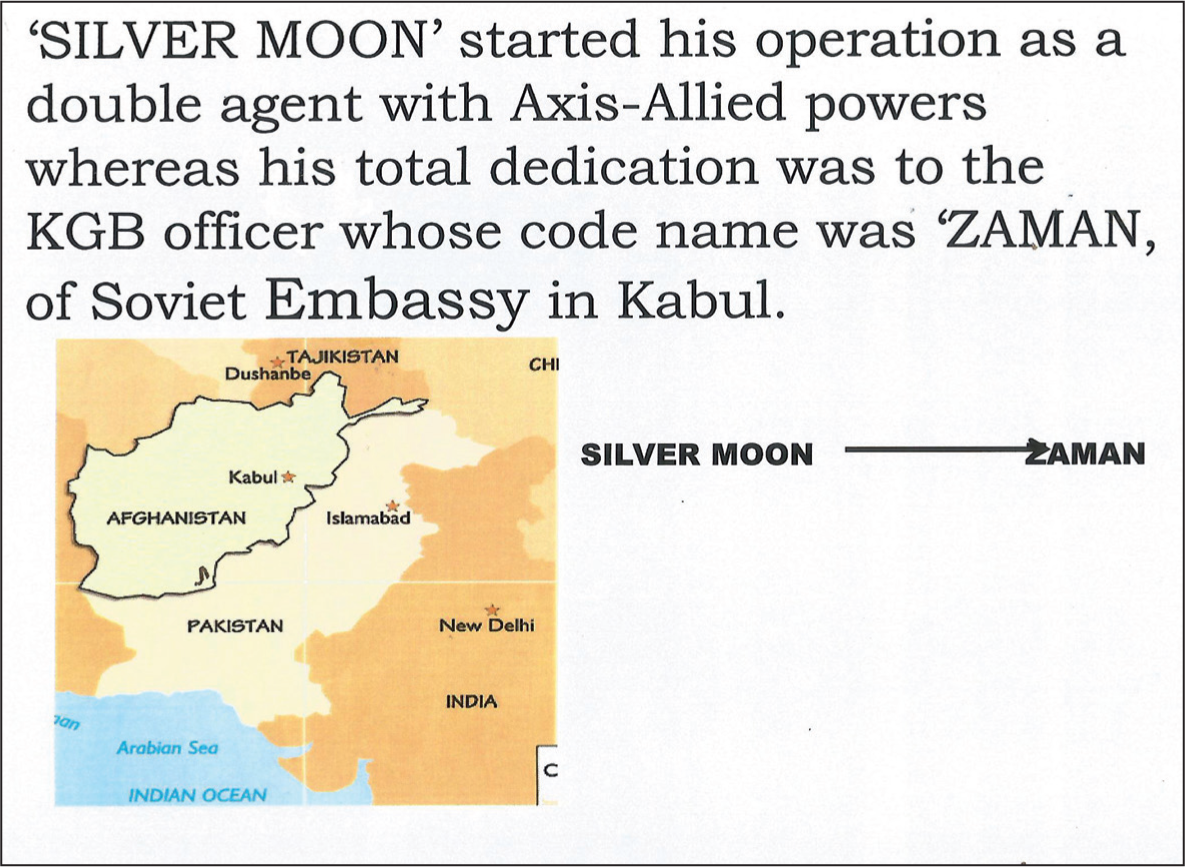
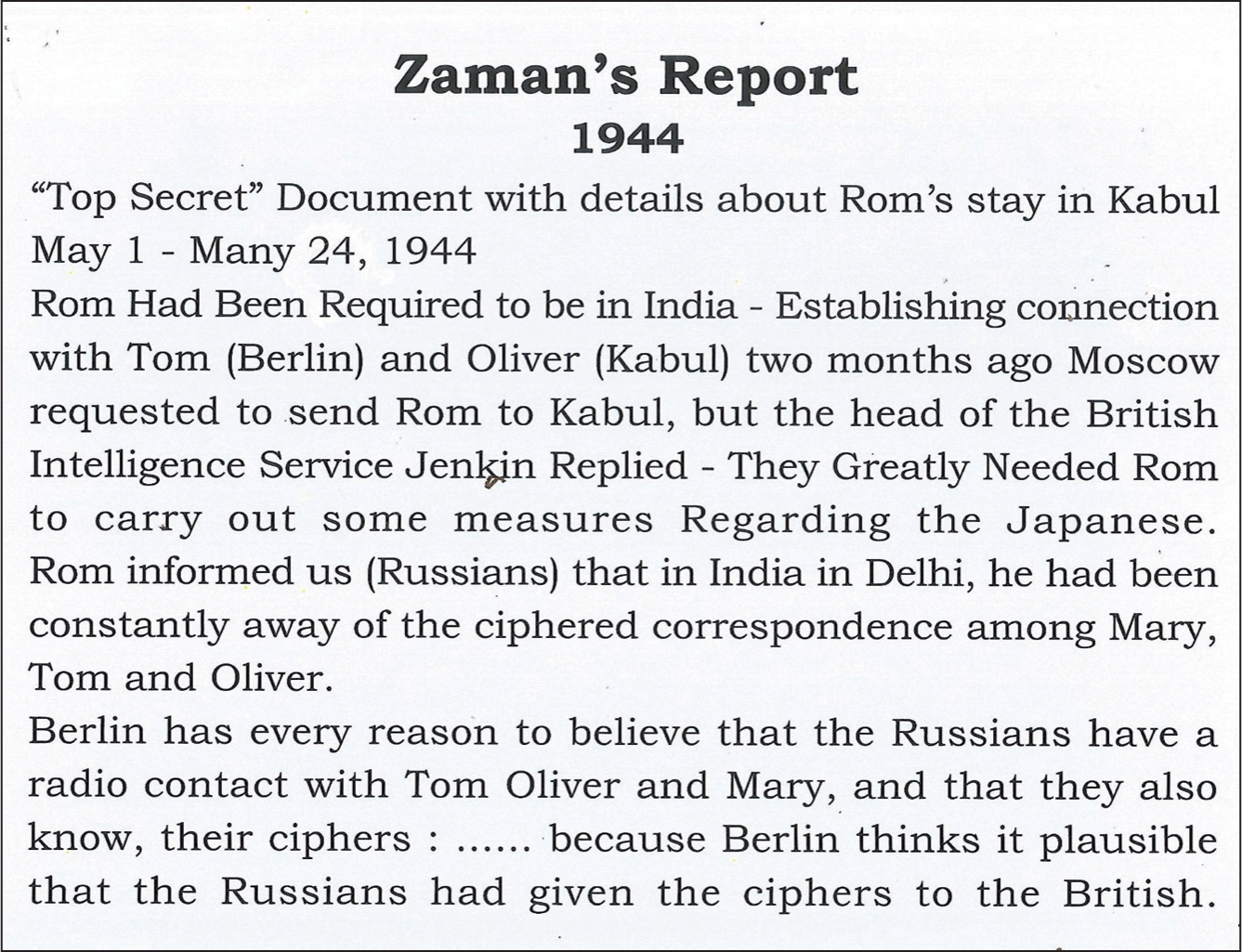
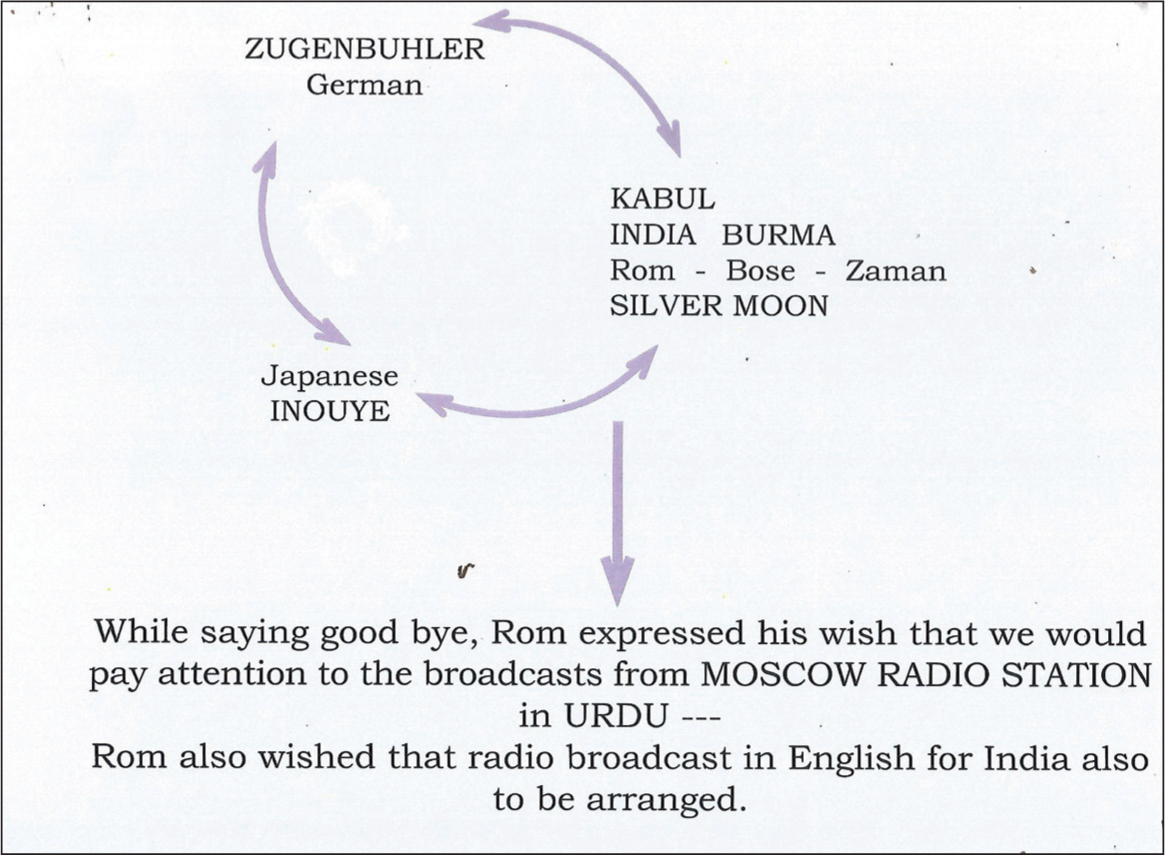
Bose left for Germany while Bhagat Ram remained in Afghanistan, being recruited by the Germans in Kabul as an Axis agent, but Talwar was a communist whose primary loyalty was to the Soviet Union. As a dedicated Soviet loyalist, ‘ROM’ (Bhagat Ram Talwar) regularly conveyed every bit of information to ‘Zaman’ (Mikhail Andreevich Allakhverdov) the then KGB officer of the Soviet Embassy in Kabul.
The German representative in Afghanistan as well as the Foreign Office in Germany was equally cautious about Subhas Bose. On the eve of the Second World War, in the leading circles of Germany, Bose was suspected of being unfriendly to Germany and a leftist. The Germans apprehend Bose to have sought contact with the Russians.
Subhas Bose had to overcome immense difficulties to establish an independent Indian organisation in Berlin and his most important work was to organise the INA. Its training centre was at Frankenberg near Dresden. Major Krappe was in charge of the military training. Bose was, however, fortunate in having the support of some important Germans Foreign Office Men such as State Minister Keppler and Dr Von Trott Zu Solz.
The voice of Subhas Chandra Bose started thundering over the Azad Hind Radio, Berlin and Azad Hind Muslim Radio, Waziristan. In addition, Domei agency of Japan, Stefany of Italy and many other centres started operating from various ends. Subhas Bose in his broadcasts however made it clear that neither his armed forces nor his Azad Hind Radio service could be used for anti-Soviet purposes.
During the war period, the broadcasts from Azad Hind Radio, Berlin were recorded by the Soviets mainly in two major cities—Khavarovsk and Tashkent. The texts were collected and preserved by the Soviet Press Agency TASS and on several occasions were transmitted anonymously from the Indian Section, Radio Moscow.
Subhas Chandra Bose arrived in South East Asia theatre and took over the leadership of the Indian Independence Movement from Rash Behari Bose and shouldered the responsibilities of conducting war for India’s liberation from there. He took over complete command of the army and reorganised the Azad Hind Fauj INA and proclaimed the formation of Arzi Hukumat-e-Azad-Hind (Provisional Government of Free India).
After that Bose made attempts to establish contacts with the Soviet leadership.
For the war theatre, Bose was in favour of wireless link. T. Holt writes, ‘In A. D. Division channel “SILVER” was one of the great deception double agent channels of the war.… Real name “Bhagat Ram Talwar”’. 22 Bose with his extensive intelligence and competency operated the network of various channels along with silver.
In Bose’s plan, the creation of revolutionary conditions in India was a pre-condition for the success of the INA
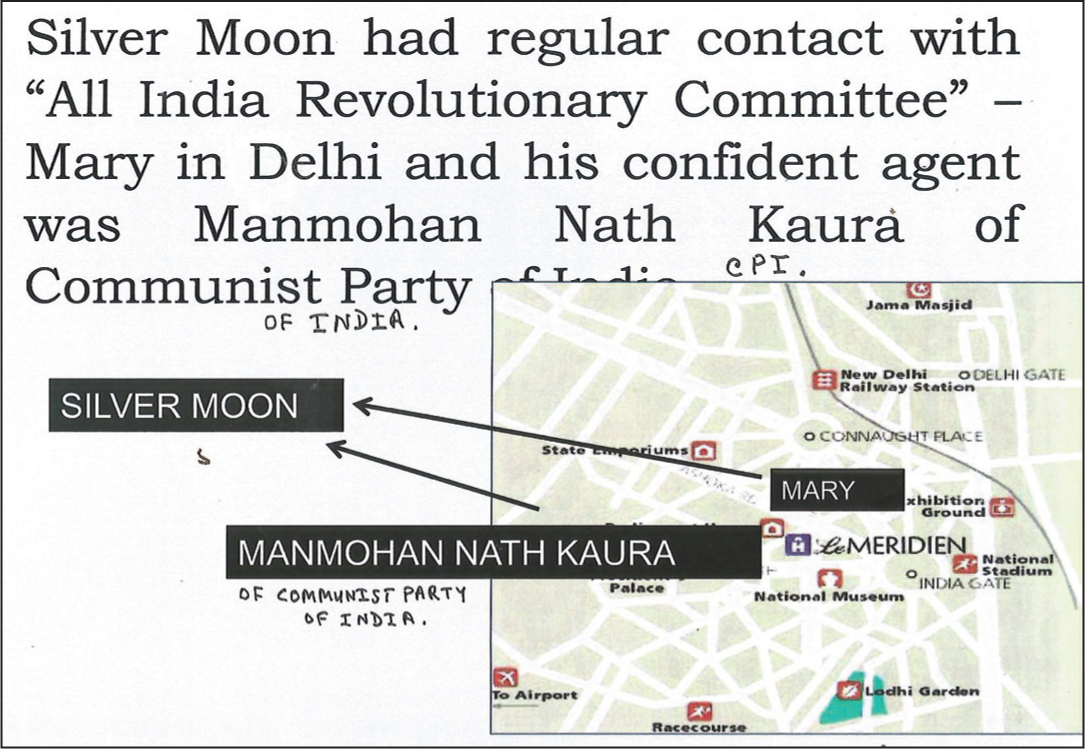
All India Revolutionary Committee with members throughout India was formed. Silver was the Game master whose operations were conducted through Manmohan Nath Kauraof CPI, whose office was at 16 Queensway Road, Janpath, Delhi.
Silver made five journeys to Kabul from 1943 to 1945 to report to the Germans and later, the Japanese, and from July 1943 to the end of the German war communicated directly with Kabul and Germany through a wireless station in Delhi ‘MARY’—the All India Revolutionary Committee—a high-quality channel through which much information of a very high grade was passed. Throughout the war period, Silver communicated with Kabul station code-named ‘OLIVER’ and with the station in Germany code-named ‘TOM’ through the wireless station ‘Mary’ in Delhi.
When in an organised manner Netaji set up his headquarters in Burma, the existence of the Committee was foisted upon him—and a radio link or a wireless station was set up between the Committee ‘Mary’ in Delhi and Netaji in Burma with Japanese assistance. Such a link code-named ‘RHINO’ was arranged at Netaji’s headquarters to communicate with the committee’s ‘MARY’ station in Delhi.
In addition to the Japanese sponsored ‘RHINO’ German sponsored wireless link ‘ELEPHANT’ for Netaji’s headquarters was arranged. 23
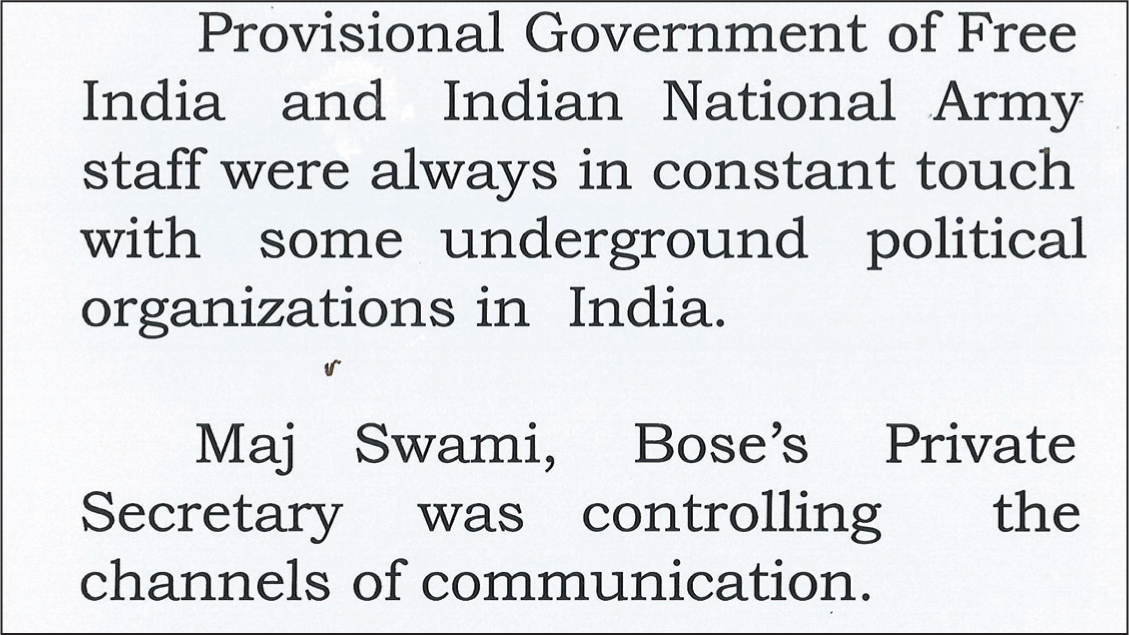
It was commonly believed by the provisional Government of India and INA staff that Netaji was in constant touch with some underground political organisation in India that regularly kept him informed about all the political developments in the country.
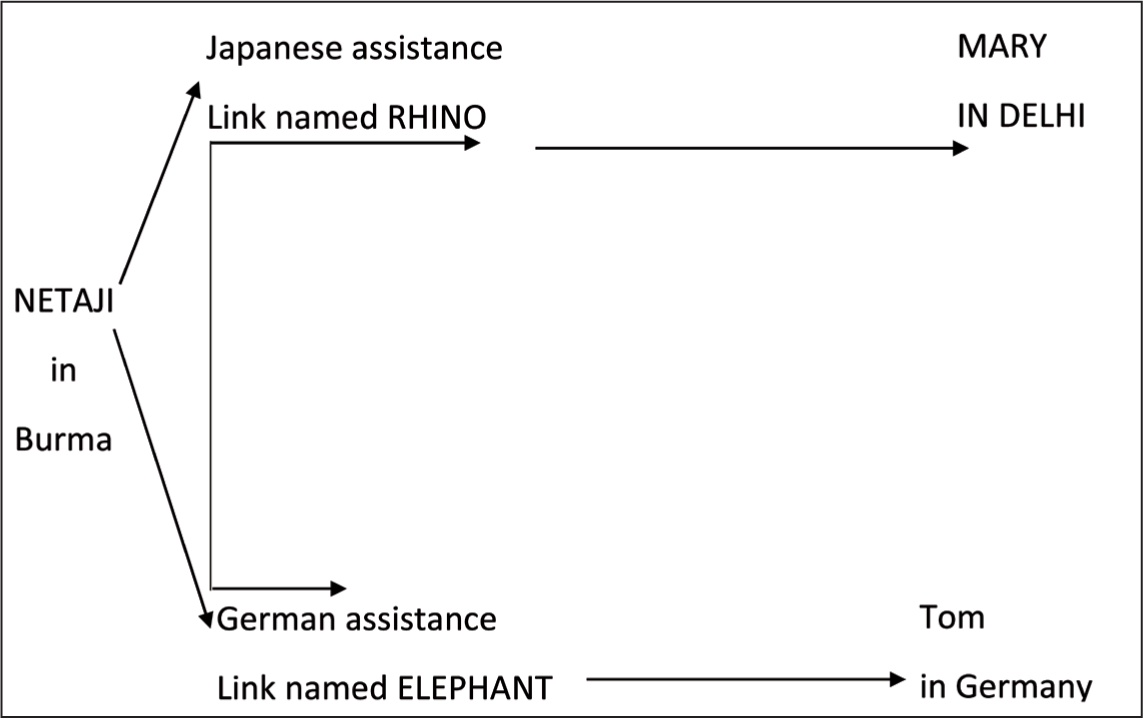
The strategic operation planning of the double agent network of the Second World War had been conducted through various channels of various Divisions. A few details of the channels (men) recruited to operate by the Japanese and the entourage of Subhas Chandra Bose has been unravelled and detailed by Thaddeus Holt in his book The Deceivers: Allied Military Deception in the Second World War.
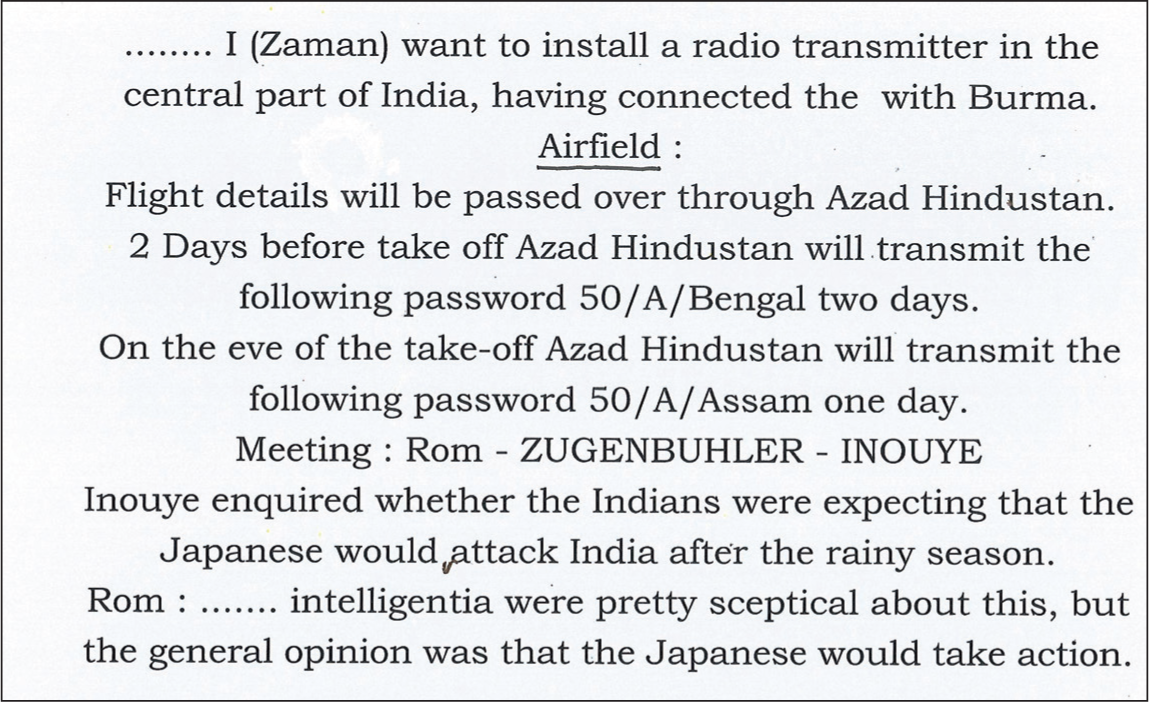
The channel SILVER MOON (Bhagat Ram Talwar) to the British he was SILVER and his connection with the Russian Foreign Intelligence Service in the report of Zaman (Mikhail Andreevich Allakhverdov) KGB officer in Soviet Embassy. Kabul British Intelligence service mentioned that SILVER (Bhagat Ram Talwar) was one of the closest persons to Subhas Chandra Bose. In 1943, SILVER had agreed with the Germans to set up a wireless station in Delhi dubbed MARY: The station at the German legation in Kabul to which it worked was dubbed OLIVER–MARY–OLIVER contact was established. The German radio operator ZUGENBUHLER hinted to SILVER that he had been betrayed by a member of the committee. SILVER himself was evidently back in the German’s good books 24
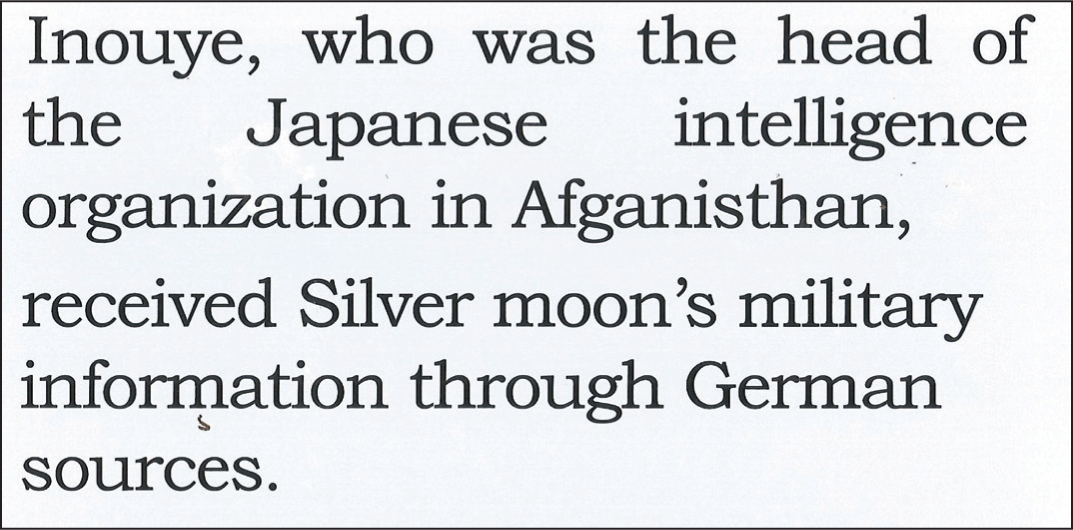
What was more important, from this time forward, the German passed all SILVER’s military information to the Japanese. The Germans put SILVER in touch with the Japanese in Kabul, a legation official named INOUYE, who was in fact head of the Japanese intelligence organisation in Afghanistan. INOUYE became one of SILVER’s staunchest champions, and by the latter part of 1944.SILVER would become almost a monopoly of the Japanese
25
The Russians were aware about the connection of the Germans and the Japanese with Bose’s organisation in India. SILVER said ZUGENBUHLER had told about it. Rom told INOUYE that if there was even the slightest suspicion about him for benefit of the future good work, they could discontinue contacts with him … INOUYE answered that neither the Germans, nor the Japanese nor Bose had absolutely any doubts about ROM.
26
SILVER’s next visit to Kabul took place in March and April 1945. He was fine in fettle, exuberant over the Soviet military success. 27
SILVER’s relation with INOUYE remained intact in addition, the Japanese passed on to him seemingly panicky instructions from Bose for the committee to begin large—scale sabotage activity throughout India. 28
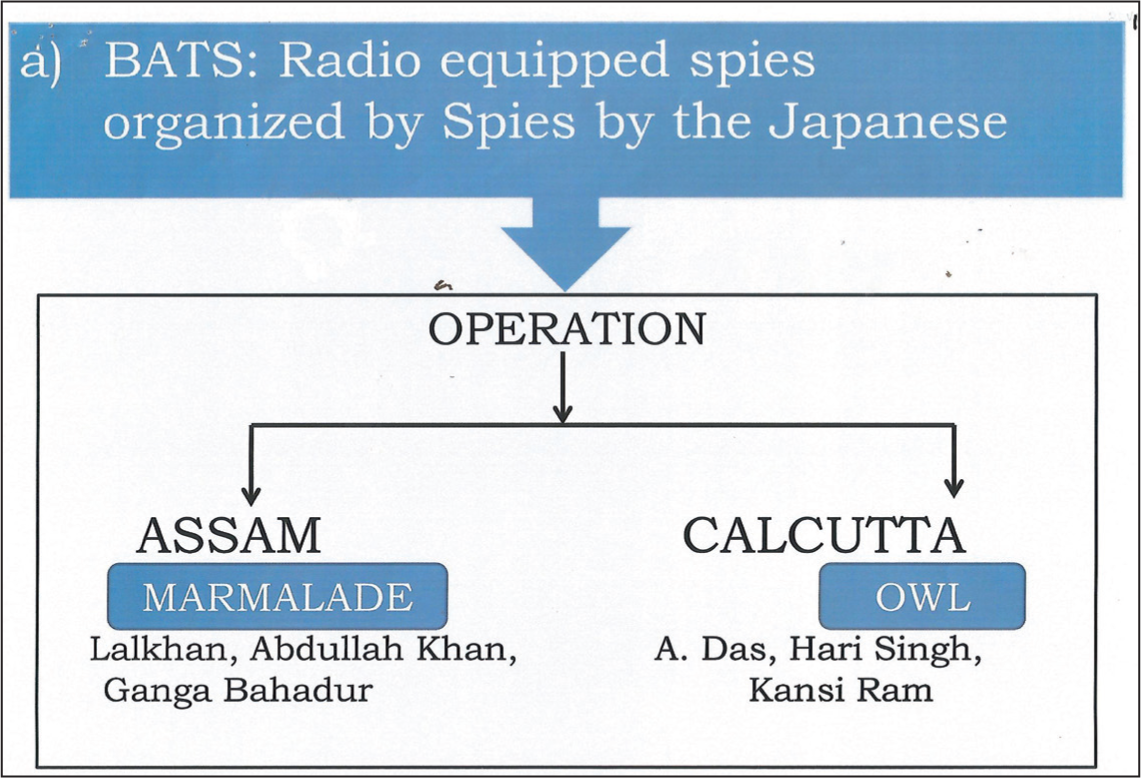
The following references elucidate how the operation was conducted through various channels:
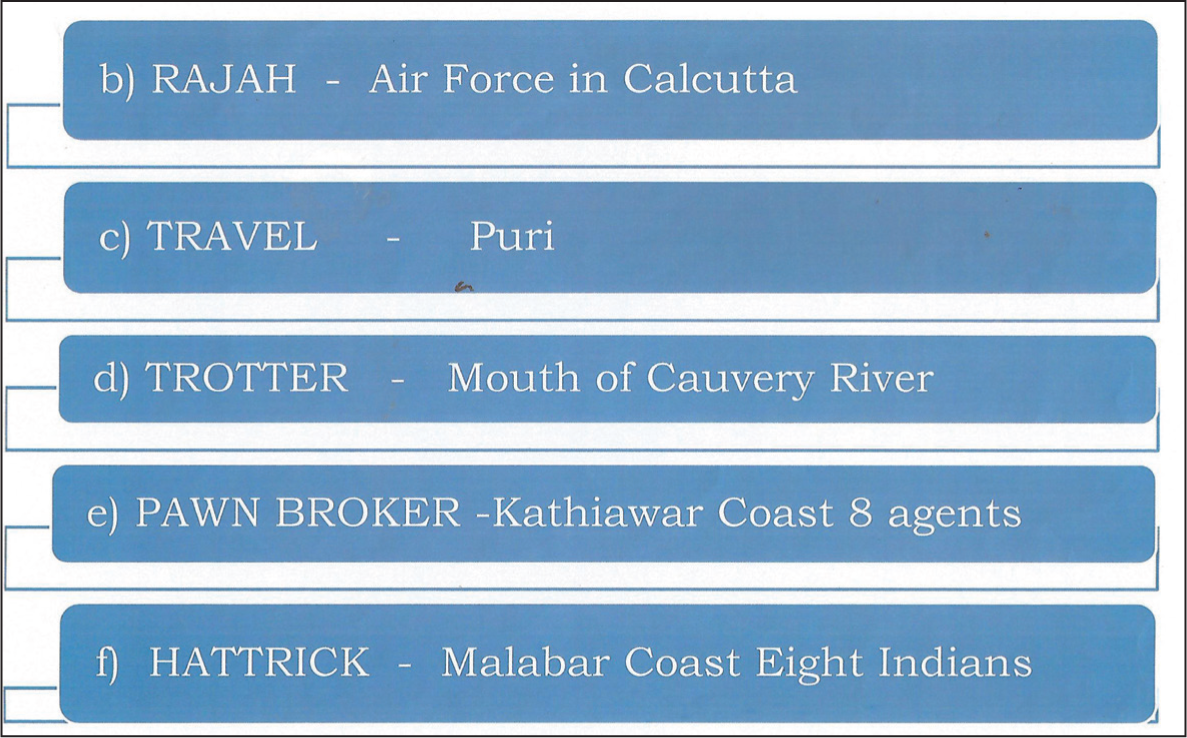
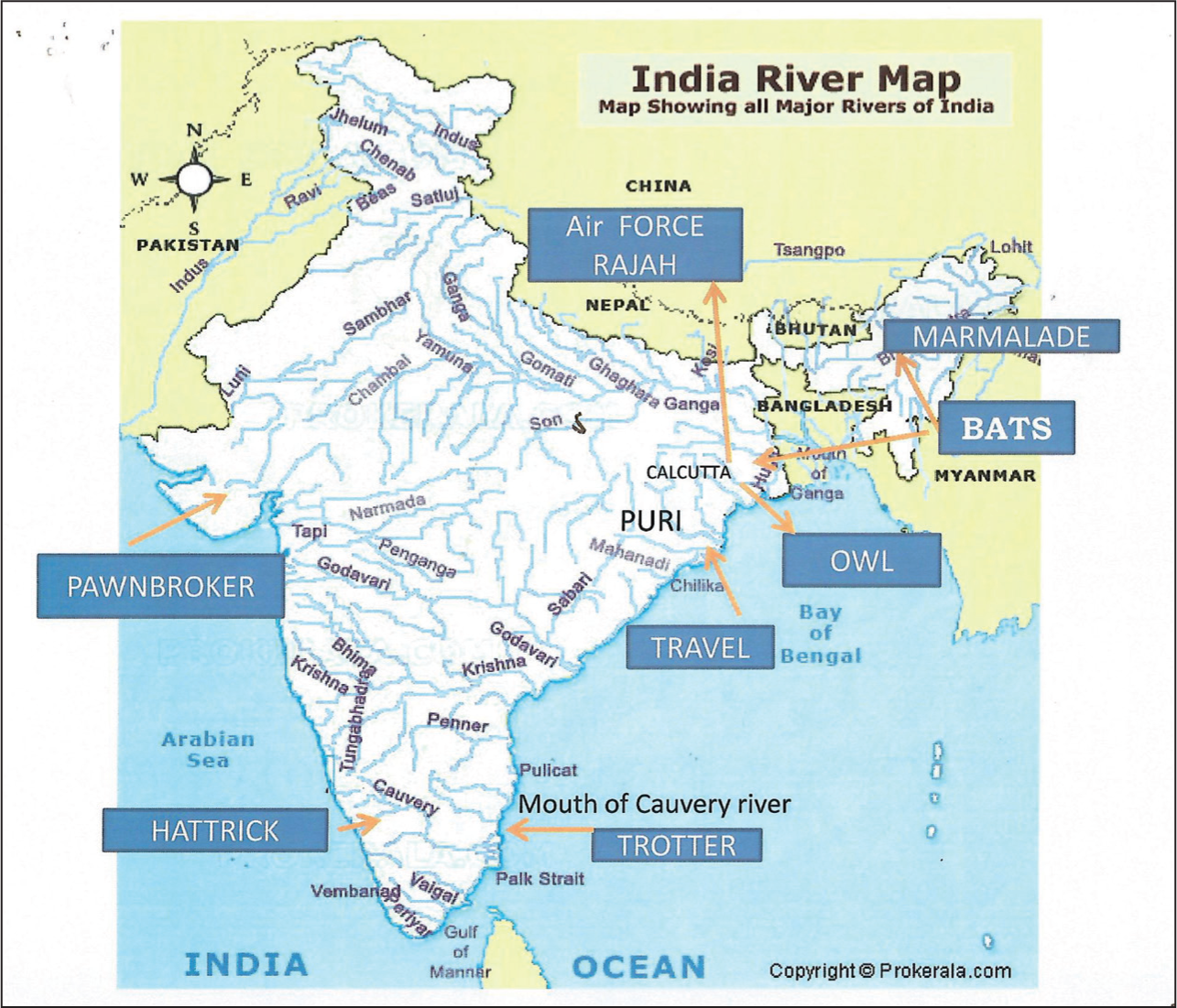
He built up a national network of sources in Calcutta—a Bengali Radio-babu with a radio shop and a brother in Ranchi, a Sikh cab driver named Hari Singh, and Kanshi Ram an Indian Navy sailor. He kept a stream of information. On 12 January 1945, his message was that the British would cross the Irrawaddy at Chawk. OWL got a farewell from his control after the Japanese surrender. ‘Thanks for the trouble’ was the message on 17 August ‘Good-bye’.
Conclusion
Netaji is a legendary icon, a revolutionary with militant nationalism, a clear thinker, and a highly creative, imaginative and instinctive military strategist. Netaji shocked the world community for proving India’s ability to wage a conventional military war against the British.
During the Second World War, Netaji, the leading Indian collaborator with the Japanese, was very skilfully contrived the Secret Service of INA. It is interesting to note that within such short period of time, his secret service of deception plans worked so well. Especially the unknown story of Bhagat Ram Talwar as double agent ‘Silver Moon’. But how the Axis engage in strategic deception remained secret for decades.
Netaji Subhas Chandra Bose has given us riveting secret information about the Axis deception operations in the Second World War.
Footnotes
Declaration of Conflicting Interests
The author declared no potential conflicts of interest with respect to the research, authorship and/or publication of this article.
Funding
The author received no financial support for the research, authorship and/or publication of this article.