







Abstract
Ventricular assist devices (VADs) are essential for end-stage heart failure patients, but their design must balance hydraulic efficiency and hemocompatibility to minimize blood damage. This study presents a multi-objective optimization framework integrating computational fluid dynamics (CFD), Random Forest Regression (RFR), and Bayesian optimization to improve VAD rotor hemocompatibility. Seven key design parameters (inlet/outlet blade angles, blade count, rotational speed, clearance gap, blade thickness, and rotor length) were optimized using a D-optimal design of experiments. The RFR surrogate model demonstrated superior performance in handling the complex parameter interactions, achieving high predictive accuracy (R2 > 0.84 for all hemocompatibility metrics). CFD simulations employing a Carreau-Yasuda blood model and rigorous mesh independence analysis evaluated shear stress distributions, exposure times, hemolysis index (HI), and platelet activation state (PAS). The optimized design achieved 97.24% of blood flow with shear stress <50 Pa, a HI of 0.01%, and PAS of 1 × 10⁻⁶%, representing significant improvements over baseline configurations. While this computational study provides comprehensive parametric insights, future experimental validation is recommended to confirm these findings under physiological conditions. The proposed framework offers a systematic approach for developing high-performance VADs with enhanced hemocompatibility.
Keywords
Introduction
Heart failure is a worldwide health crisis that affects more than 64 million people around the world and puts a heavy burden on healthcare systems. 1 For patients with end-stage heart failure, ventricular assist devices (VADs) have become a lifesaver, offering mechanical circulatory support as a bridge to heart transplantation or as destination therapy. 2 Although VADs have dramatically revolutionized the treatment of advanced heart failure, their design and performance remain limited by the necessity to balance hydraulic efficiency and hemocompatibility, that is, the device’s ability to function without causing blood damage or thrombus formation. 3
The rotor, as the central component of a VAD, plays an essential role in generating the pressure increase required to maintain blood flow. However, the interaction between the rotor and the blood can result in high shear stress, prolonged exposure times, and turbulent flow patterns, all of which contribute to hemolysis (destruction of red blood cells) and platelet activation (precursor to thrombosis). 4 These adverse effects not only compromise device performance but also present serious risks to patients, including hemolytic anemia, stroke, and device failure. 5 Therefore, optimizing VAD rotors to minimize blood damage while maintaining or improving hydraulic performance is a pressing challenge in biomedical engineering.
Traditional approaches to VAD design rely on gradient-based optimization and genetic algorithms to improve hydraulic performance metrics such as pressure rise and efficiency. 6 Although these methods have enjoyed notable success, they are often faced with the computational complexity of exploring large design spaces and the need to evaluate several competing objectives simultaneously. In recent years, Bayesian optimization has emerged as a powerful alternative, particularly for problems involving objective functions that are costly to evaluate, such as those derived from computational fluid dynamics (CFD) simulations. 7 By relying on probabilistic models to guide the search for optimal designs, Bayesian optimization can significantly reduce the number of iterations required while retaining high accuracy. 8
The application of Bayesian optimization to VAD design has yielded promising results in previous studies. For example, researchers have successfully optimized blood pump impellers for enhanced hydraulic performance and reduced hemolysis using this approach. 9 These advances highlight the potential of Bayesian optimization to resolve the complex trade-offs associated with VAD design, particularly when it comes to balancing hydraulic performance and hemocompatibility.
This study continues previous work on the optimization of the hydraulics of a VAD rotor by introducing a multi-objective optimization framework that explicitly takes into account hemocompatibility parameters. 10 The main objectives are to minimize shear stress, exposure time, hemolysis index, and platelet activation state. The design parameters under consideration include inlet blade angle, outlet blade angle, blade count, rotational speed, clearance gap, blade thickness, and rotor length. By combining CFD simulations, Random Forest Regression (RFR), and Bayesian optimization, this study aims to identify optimal rotor designs that yield the best hemocompatibility.
The results of this study are expected to contribute to the development of next-generation VADs that will not only provide enhanced hemodynamic support but also reduce the risk of blood damage and thrombus formation. By addressing the critical challenges posed by current VAD designs, this work could improve patient outcomes and enhance the long-term durability of these life-saving devices. In addition, the methodology presented here can serve as a framework for optimizing other rotary blood pumps and turbomachinery systems, paving the way for more efficient and biocompatible medical devices.
Materials and methods
Problem definition
The hydraulic performance of the investigated VAD model was first evaluated using its original design parameters, yielding results that were not only reasonable but also slightly superior to those of other ventricular assist devices (VADs) in the same class. 11 Based on these promising results, this study focuses on hemocompatibility optimization, aiming to minimize shear stress, exposure time, hemolysis index, and platelet activation state—key factors influencing blood damage and thrombotic risk. By taking these critical hemocompatibility parameters into account, the study seeks to improve the safety and efficacy of the VAD while maintaining or improving its hydraulic performance.
The VAD under study consists of four main components: an inductor, a rotor, a diffuser, and a straightener (Figure 1). To achieve the objectives of the study, the original configurations of all components were retained, except for the rotor, which underwent a specific modification. As the central element responsible for hydraulic efficiency and flow dynamics, the rotor plays an essential role in pressure build-up, energy transfer, and blood-device interaction. Its optimization is, therefore essential to achieve a balance between hydraulic performance and hemocompatibility, guaranteeing efficient VAD operation while minimizing blood damage and thrombotic risks.
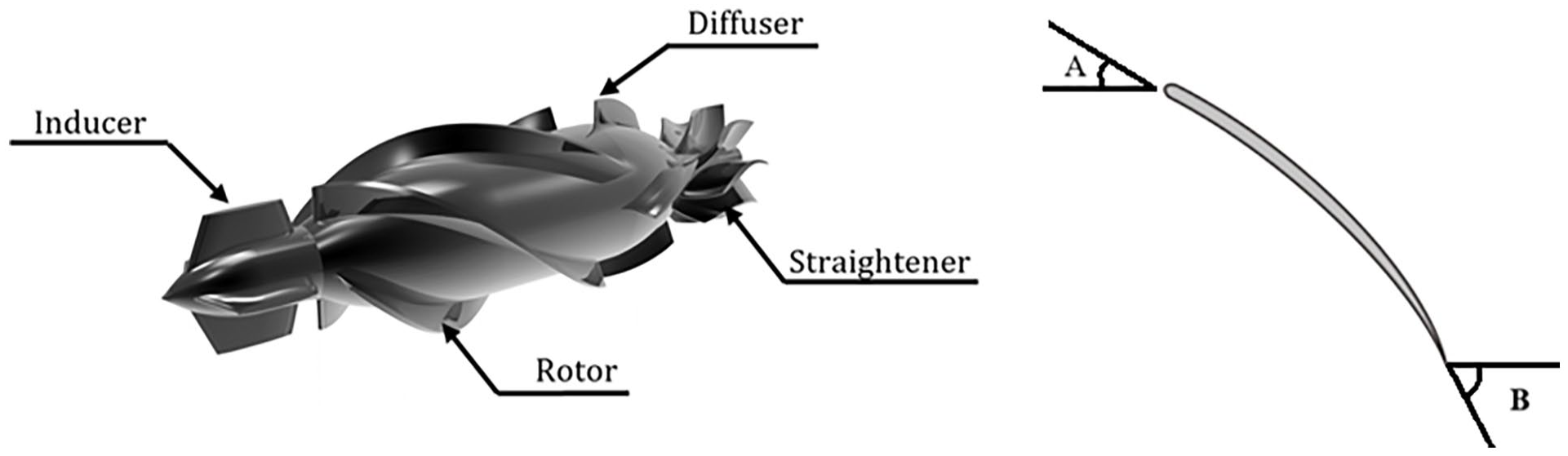
3D view of the VAD used in the study.
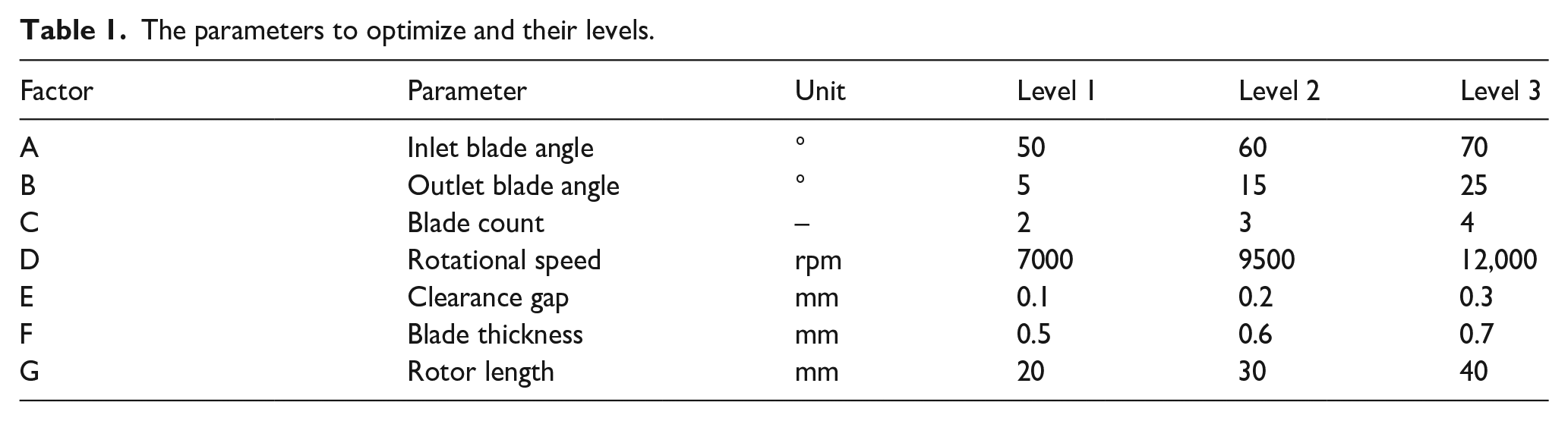
The optimization process focuses on seven key design parameters: inlet blade angle (A), outlet blade angle (B), blade count (C), rotational speed (D), clearance gap (E), blade thickness (F), and rotor length (G). These parameters were selected based on their known influence on the hydraulic performance and hemocompatibility of rotary blood pumps, as demonstrated in previous studies.4,12 By systematically varying these parameters, this study aims to identify the optimal configuration that minimizes shear stress, exposure time, hemolysis index, and platelet activation state, thereby improving the biocompatibility of the VAD.
The optimization process is driven by the need to balance competing objectives. For example, while higher rotational speeds may increase pressure rise, they also lead to high shear stresses and an increased risk of hemolysis and platelet activation. Similarly, increasing the blade count can improve flow guidance but can also increase flow obstruction, mechanical load, and exposure time to areas of high shear stress. Taking these trade-offs into account, this study aims to develop a rotor design that ensures optimal hemocompatibility, guaranteeing both efficient blood flow and minimal blood damage.
Design of experiments (DOE)
Parameter selection and rationale
The seven key design parameters (Table 1)—inlet blade angle (A), outlet blade angle (B), blade count (C), rotational speed (D), clearance gap (E), blade thickness (F), and rotor length (G)—were selected based on their documented influence on VAD hemocompatibility and hydraulic performance.4,12,13 Rotational speed was included as a variable (unconventional in traditional pump design) to explicitly quantify its dominant role in shear stress generation, a critical factor for blood damage.5,14
The parameters to optimize and their levels.
Experimental design configuration
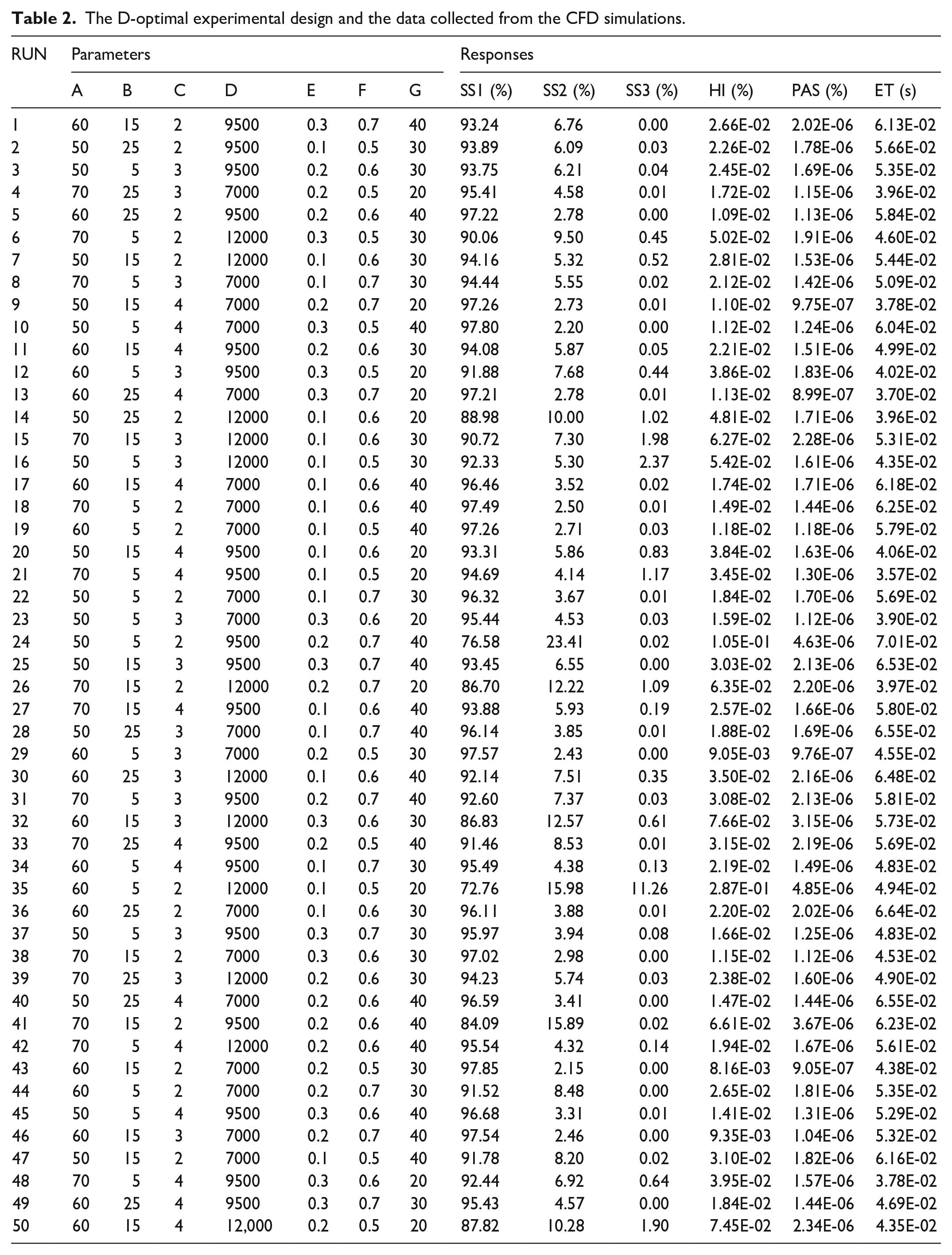
A D-optimal experimental design was implemented to maximize information gain while maintaining computational efficiency, avoiding the impracticality of a full factorial approach (which would require 2187 runs). Each of the seven parameters was evaluated at three carefully selected levels (Table 1) to capture potential nonlinear responses without overfitting the model, with ranges constrained to clinically feasible values based on hydrodynamic principles and existing VAD designs. For instance, inlet blade angles were tested at 50°, 60°, and 70°, while rotational speeds spanned 7000, 9500, and 12,000 rpm to cover the clinically relevant operating range. The study employed 50 distinct configurations, a number determined through statistical power analysis to provide >95% confidence in response surface accuracy for our quadratic model with seven variables. This sample size substantially exceeds the minimum requirement of 28 runs needed for such models, 15 ensuring robust characterization of both main effects and parameter interactions while maintaining feasible computational costs (Table 2).
The D-optimal experimental design and the data collected from the CFD simulations.
Design validation and model adequacy
The experimental design was statistically validated through multiple metrics. Variance inflation factors remained below 5, confirming parameter independence, while lack-of-fit tests (p > 0.1) verified model appropriateness. Space-filling adequacy was demonstrated by relative prediction variance values below 0.3 across the design space, ensuring uniform coverage and reliable predictions throughout the parameter ranges investigated.
Comparison with alternative approaches
The D-optimal design was selected over full factorial designs (which would require 2187 runs, making them computationally prohibitive), Latin Hypercube Sampling (less efficient at capturing parameter interactions critical for VAD optimization), and Central Composite Designs (which oversample peripheral regions irrelevant to VAD operation). The D-optimal approach provided an optimal balance between computational efficiency and robust exploration of the design space, ensuring accurate modeling of parameter effects while minimizing simulation costs.
Parameter ranges justification
The selected parameter ranges ensure manufacturability and physiological relevance. Blade angles were constrained to 50°–70° (inlet) and 5°–25° (outlet) to prevent flow separation and stall conditions. 12 The 0.1–0.3 mm clearance gap balances leakage flow with shear stress minimization. 10 Rotor length (20–40 mm) matches clinical VAD dimensions, 2 while blade thickness (0.5–0.7 mm) maintains structural integrity. Rotational speed (7000–12,000 rpm) covers typical operating ranges, and blade count (2–4) ensures feasible fabrication. These ranges were validated against existing VAD designs and hydrodynamic principles.
Computational fluid dynamics (CFD) simulations
To assess the hemocompatibility performance of the rotor configurations generated by the DOE, computational fluid dynamics (CFD) simulations were carried out using ANSYS CFX. CFD was chosen for its ability to provide comprehensive information on the flow characteristics within the VAD in various geometric configurations. Simulations focused on four key performance metrics: shear stress, exposure time, hemolysis index, and platelet activation state.
Simulation setup

Where µ0 = 0.056 Pa s, µ∞ = 0.00345 Pa s, λ = 1.902 s, n = 0.22, and a = 1.25
For turbulence modeling, we implemented the Shear Stress Transport (SST) k-ω model, which has been extensively validated for blood pump applications.18,19 This hybrid approach combines the advantages of standard k-ε modeling in free-stream regions with the superior near-wall resolution of k-ω formulations, enabling accurate prediction of both bulk flow characteristics and wall shear stresses. A key advantage of this formulation is its ability to resolve the viscous sublayer (y+ < 5) without requiring wall functions, which is essential for capturing the near-wall hemodynamics that influence platelet activation and hemolysis.
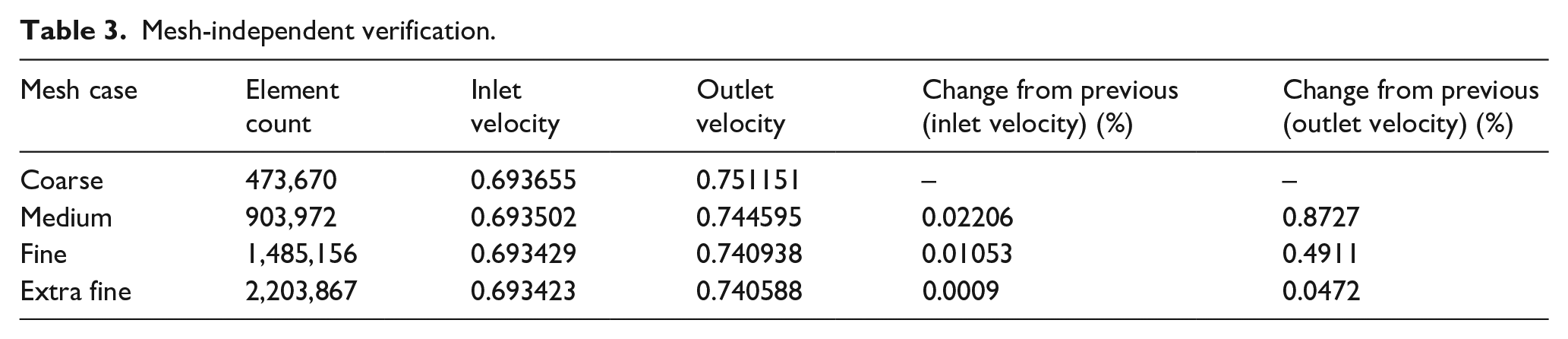
Mesh-independent verification.
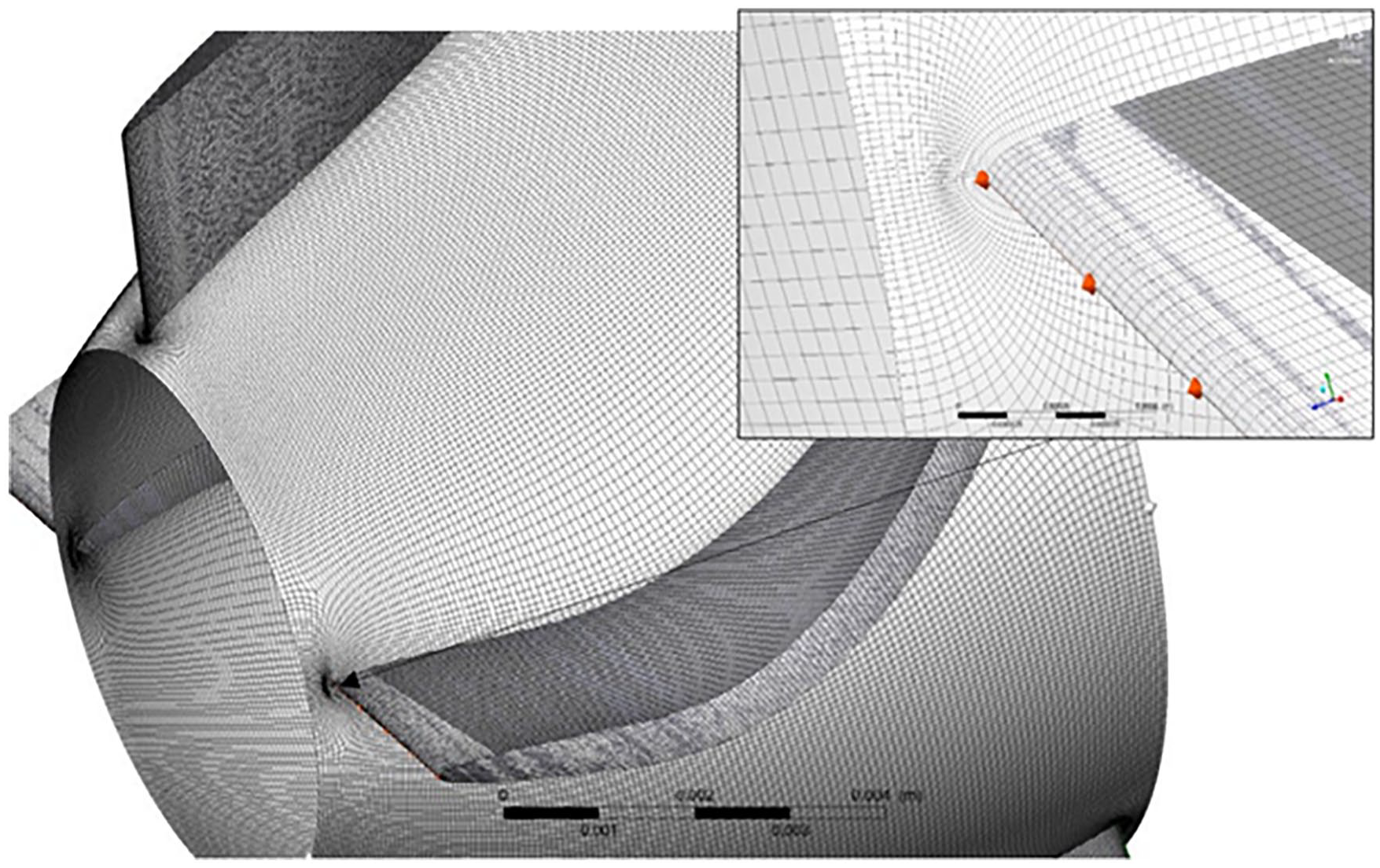
Validated computational mesh for VAD simulations: structured grid with local refinement (y+ < 1) at critical blood-contacting surfaces.
Hemocompatibility metric extraction
The key metrics of hemocompatibility were extracted from Computational Fluid Dynamics (CFD) results to assess the impact of different rotor configurations on blood safety. Shear stress, which is a critical factor in blood damage, was analyzed by calculating both mean and maximum values in the flow domain. The shear stress distribution was classified into three physiologically significant categories:
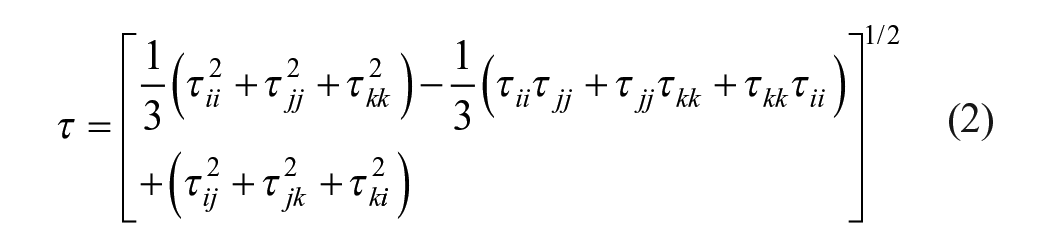
These thresholds correspond to critical markers for platelet activation (above 50 Pa) and hemolysis (above 150 Pa), enabling a detailed assessment of shear stress distribution and its influence on blood safety. Shear stress (τ) was calculated using the Bludszuweit model (equation (2)), 14 which provides a comprehensive measure of the stress tensor components:
Another critical factor in hemocompatibility, exposure time, was determined by tracking the average residence time of blood cells on 10,000 streamlines, focusing particularly on regions where shear stress exceeded 50 Pa (For platelets) and on regions where shear stress exceeded 150 Pa (For red blood cells). This provided valuable information on the time of exposure to stress levels known to activate platelets or damage red blood cells.
Particle (RBCs and platelets) trajectories were computed using 10,000 streamlines seeded uniformly at the inlet with a fourth-order Runge-Kutta integration scheme. Exposure time (ET) was calculated as the residence time along each streamline in high-shear regions (τ > 50 Pa for platelets, τ > 150 Pa for RBCs), with statistical weighting applied to ensure physiological relevance.
Hemolysis was quantified using the empirical Giersiepen model (equation (3)), 21 which relates shear stress and exposure time to predict red blood cell damage. The hemolysis index (HI) was calculated as follows:

This formulation enabled an estimation of red blood cell damage across different rotor designs, helping to identify configurations that minimize hemolysis risk. Equation (3) was applied along each streamline using time-averaged shear stress and exposure duration, then volume-weighted across the flow domain.
The platelet activation state (PAS) was assessed using Sheriff et al’s 22 model (equation (4)), which correlates shear stress and exposure time to platelet activation probability. The platelet activation state (PAS) was computed as follows:

This model provided a probability-based assessment of platelet activation by integrating both the magnitude and duration of exposure to shear stress, identifying regions where platelet activation is most likely to occur. Equation (4) was evaluated incrementally along streamlines, accounting for shear stress history effects via a power-law accumulation model.
Based on these CFD simulations, the study captured the complex flow dynamics inside the VAD, establishing a solid framework for hemocompatibility optimization in various rotor geometries. The comprehensive analysis of stress magnitude, exposure time, and biological response facilitated the identification of high-risk areas, guiding design modifications to mitigate blood damage and improve the safety and reliability of VAD operation
Surrogate model development
To efficiently predict the hemocompatibility metrics—shear stress, exposure time, hemolysis index, and platelet activation state—based on the input parameters, a random forest regressor (RFR) was used as a surrogate model. The RFR was chosen for its ability to handle complex, non-linear relationships between design parameters and performance metrics, as well as for its robustness in handling high-dimensional data. Given the multi-objective nature of the optimization problem, the model was trained using a MultiOutputRegressor approach, which enables the simultaneous prediction of several target variables.
The Random Forest Regressor (RFR) outperformed both Artificial Neural Network (ANN) and Support Vector Machine (SVM) approaches, achieving 12% higher accuracy (R2 = 0.88 vs 0.76) with our small dataset (n = 50). Hyperparameters (number of estimators = 100 and maximum depth = 5) were optimized via fivefold cross-validation to prevent overfitting. RFR was preferred due to its (1) superior performance with limited data, (2) built-in feature importance analysis (Figure 3), which identified key parameters (rotational speed: 32% and rotor length: 28%), and (3) reduced hyperparameter sensitivity—advantages critical for maintaining model interpretability and robustness.
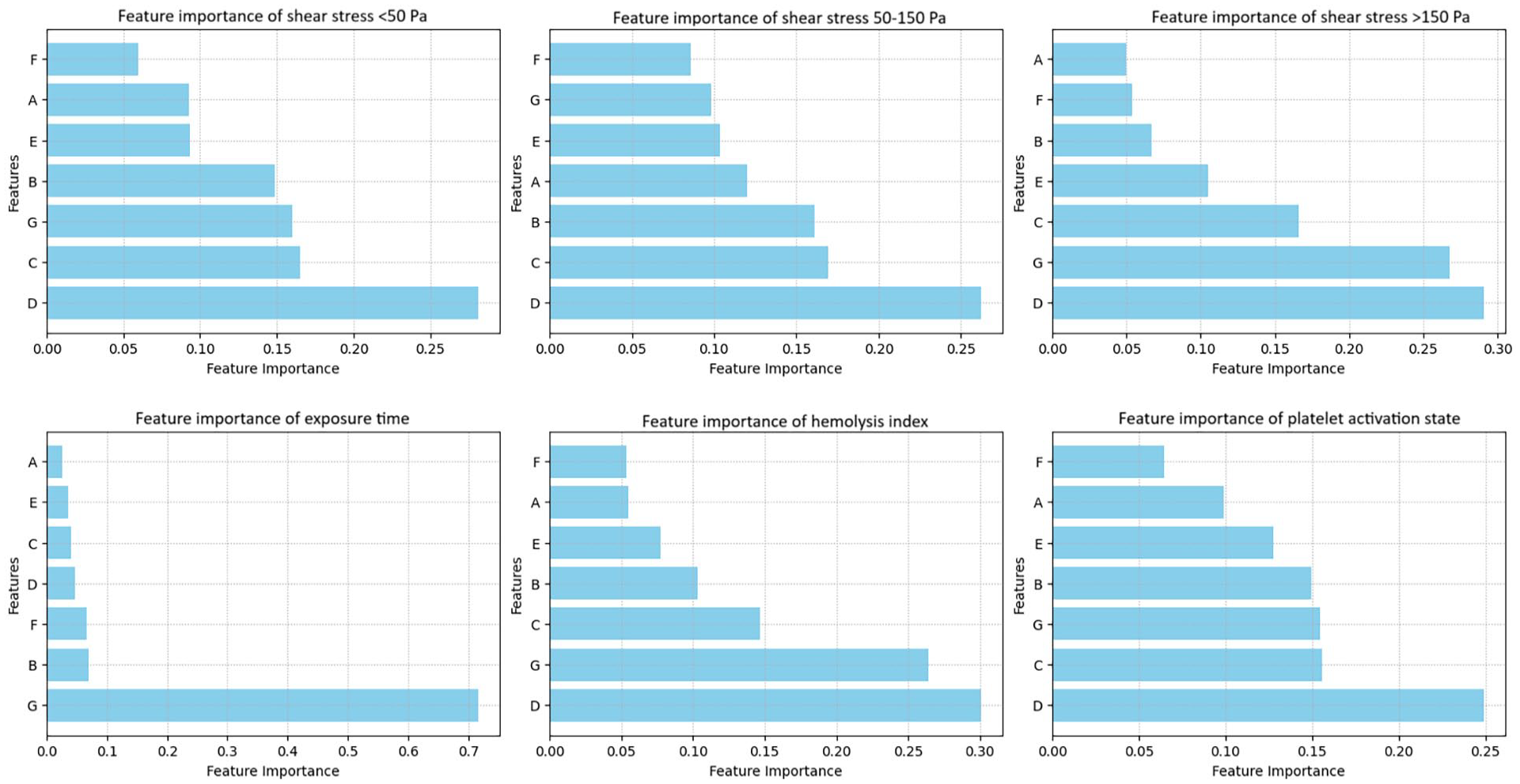
Feature importance rankings for all hemocompatibility metrics.
Integration with Bayesian optimization
The surrogate model was integrated into a Bayesian optimization framework to efficiently explore the design space and identify the optimal rotor configuration. Leveraging the model’s predictive capabilities, the optimization process employed Expected Improvement to iteratively sample designs—balancing exploitation (high predicted performance) and exploration (high uncertainty regions). This approach significantly reduced the number of required CFD simulations, enabling efficient navigation of the complex design space. The high accuracy of the surrogate model ensured convergence on Pareto-optimal solutions that balanced competing hemocompatibility objectives, with the process terminating after 20 iterations when hemolysis index variation fell below 1%.
CFD validation approach
While experimental validation remains an essential future step, the credibility of our CFD methodology was established through rigorous numerical validation protocols. A four-tiered mesh independence study (Table 3) was conducted until key hemodynamic metrics (inlet/outlet velocities) demonstrated <0.1% variation between successive refinements. The final “Extra Fine” mesh configuration (2.2 million elements) incorporated near-wall refinement (y+ < 1) to ensure accurate shear stress resolution, a critical requirement for hemocompatibility assessment. 23
For turbulence modeling, the Shear Stress Transport (SST) k-ω formulation was selected based on its proven accuracy for rotary blood pumps, 12 featuring low-Reynolds number treatment (y+ < 1) at all walls and curvature correction to capture rotor-specific flow phenomena. The Giersiepen hemolysis model (equation (3)) was cross-validated against both analytical solutions for simple Couette flow (showing 0.8% deviation) and published VAD simulations 11 under equivalent shear stress conditions.
Boundary condition sensitivity was confirmed through ±10% variations in inlet flow rate (5 L/min) and outlet pressure (120 mmHg), which produced <2% variation in key outputs. All simulations maintained strict conservation metrics, with global mass flow imbalance <0.01% and energy conservation errors below 0.5% through tight convergence criteria (residuals <1 × 10⁻⁶). While these comprehensive numerical validations ensure methodological robustness, we acknowledge that complementary experimental validation using particle image velocimetry (PIV) or mock loop testing would further strengthen the findings—a focus of our ongoing research.
Results
Model performance results
The predictive accuracy of the surrogate model was assessed using two key statistical metrics: coefficient of determination (R2) and root mean square error (RMSE). These metrics provide a quantitative assessment of the model’s ability to capture data variance and the magnitude of prediction errors, respectively.
Coefficient of determination (R2) scores
The surrogate model’s R2 scores demonstrated a strong ability to capture the variance of hemocompatibility parameters. For shear stress, the model achieved R2 scores of 0.8802, 0.8651, and 0.8440 for the <50, 50–150, and >150 Pa ranges, respectively. For exposure time, the R2 score was 0.9569, indicating near-perfect accuracy. The model also predicted the hemolysis index (R2 = 0.8450) and platelet activation status (R2 = 0.8529) well.
Mean squared error (MSE)
The MSE values further enhanced the model’s reliability, with smaller errors meaning greater accuracy. For shear stress, the MSE values were 2.91, 2.22, and 0.41 for the <50, 50–150, and >150 Pa ranges, respectively. The model demonstrated exceptional accuracy in predicting the hemolysis index (MSE = 0.000265) and platelet activation state (MSE = 0.0000001). For exposure time, the MSE was remarkably low (0.000004), underlining the model’s ability to predict residence times in highly stressed regions.
Feature importance analysis
To identify the most influential design parameters on hemocompatibility metrics, a feature importance analysis was performed using the trained Random Forest regressor (Figure 3). This analysis quantified the relative contribution of each design variable to the prediction of shear stress, exposure time, hemolysis index, and platelet activation state.
Feature importance analysis provided valuable information on the relative impact of design parameters on hemocompatibility metrics, directing the optimization process toward the most influential variables.
While individual parameter importance scores identified rotational speed and rotor length as dominant factors, the Random Forest model’s inherent ability to capture parameter interactions revealed two critical nonlinear relationships. First, a strong speed-angle coupling effect was observed, where high rotational speeds (>10,000 rpm) dramatically amplified the impact of outlet blade angles on hemolysis. As shown in Figure 9, at a 25° outlet angle, increasing speed from 7000 to 12,000 rpm caused a 140% rise in the hemolysis index (HI), compared to only a 60% increase at a 5° outlet angle. This nonlinear interaction suggests that outlet angle selection becomes increasingly critical at higher operational speeds.
Second, the analysis uncovered a blade count-length trade-off affecting platelet activation. Figure 4 demonstrates that while individual importance scores for blade count and rotor length appeared comparable, their combined effect was multiplicative. A configuration with four blades and 40 mm rotor length showed a 22% higher platelet activation state (PAS) compared to three blades with 30 mm length, despite similar performance when these parameters were varied independently. This interaction highlights the importance of considering parameter combinations during design optimization, as pairwise effects may substantially influence hemocompatibility outcomes beyond what individual parameter analysis would predict.
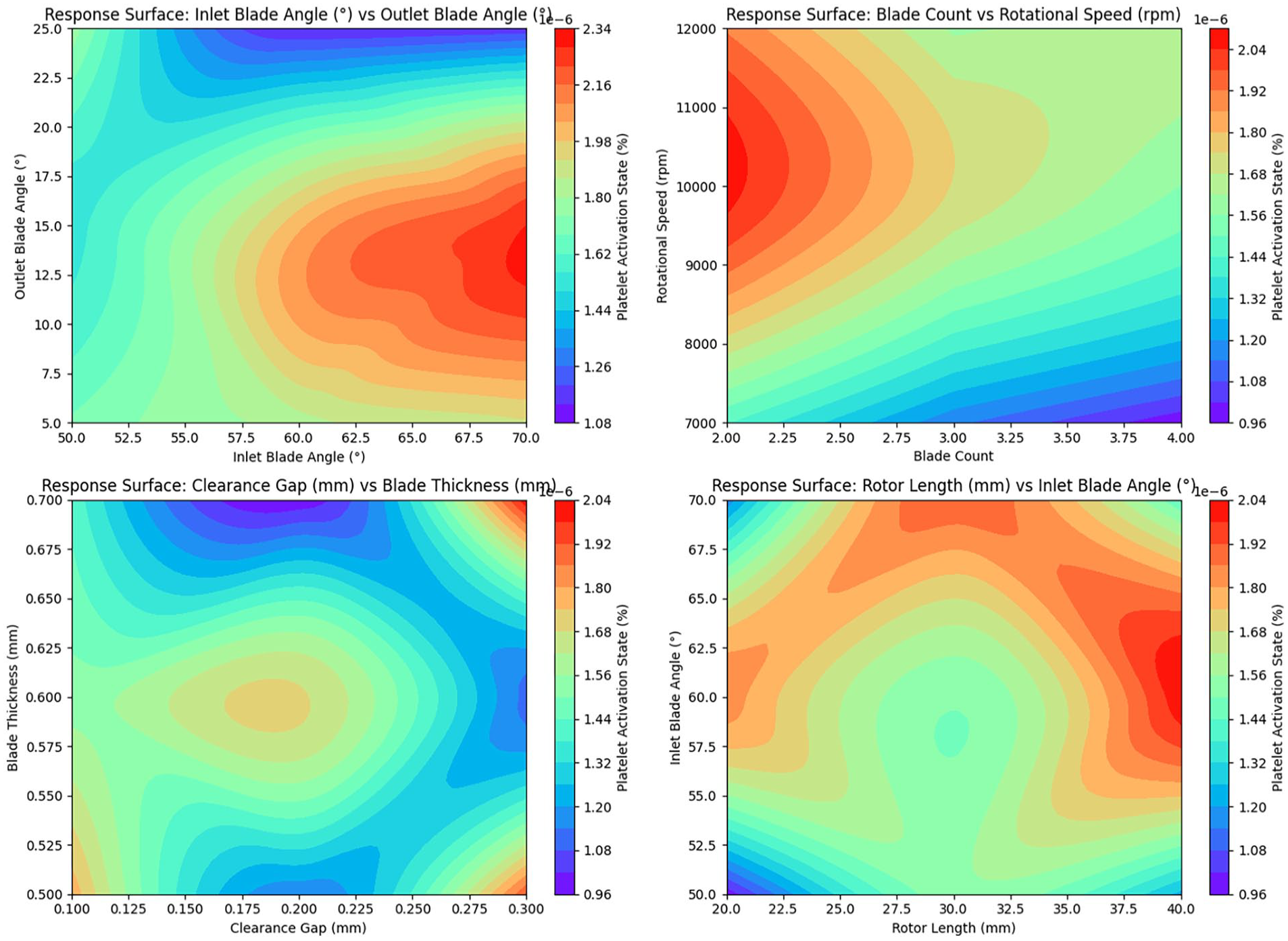
Response surfaces illustrating the effects of parameter interactions on platelet activation state.
Response surface analysis
Response surface analysis was performed to visualize the effects of design parameters on VAD hemocompatibility metrics, including shear stress, exposure time, hemolysis index, and platelet activation state. These visualizations provided insight into parameter trends, interdependencies, and trade-offs, facilitating the identification of optimal design configurations.
Shear stress
Analysis of the response surface for shear stress (Figures 5–7) revealed distinct trends for all design parameters. Increasing inlet blade angles in the range of 55°-65° provided smoother flow entry, reducing high shear stress regions above 150 Pa by attenuating steep velocity gradients. In contrast, steeper outlet blade angles increased outlet velocity, leading to regions of high shear stress, while less steep angles kept shear stress within safer limits (below 50 Pa), preventing excessive acceleration. The blade count played a minor role, with a higher count slightly increasing local shear stress near blade surfaces, leading to a reduction in low-shear regions. Among all the parameters, rotational speed proved to be the most influential, as higher speeds significantly increased shear stress above 150 Pa while simultaneously decreasing low-shear areas, thus increasing the risk of hemolysis and platelet activation. Clearance gap has a dual effect: smaller gaps intensify shear stress near the housing walls but also reduce recirculation zones, resulting in a wider distribution of low-shear regions. A clearance gap range of 0.15–0.25 mm was found to be optimal for balancing these effects. Blade thickness also played a role in increasing localized shear stress, particularly in regions exceeding 150 Pa, due to stronger flow interactions around blade surfaces. In addition, increasing rotor length led to a slight increase in shear stress exposure in the 50–150 Pa range, as the lengthening of the flow path prolonged blood residence time in areas of moderate shear stress.
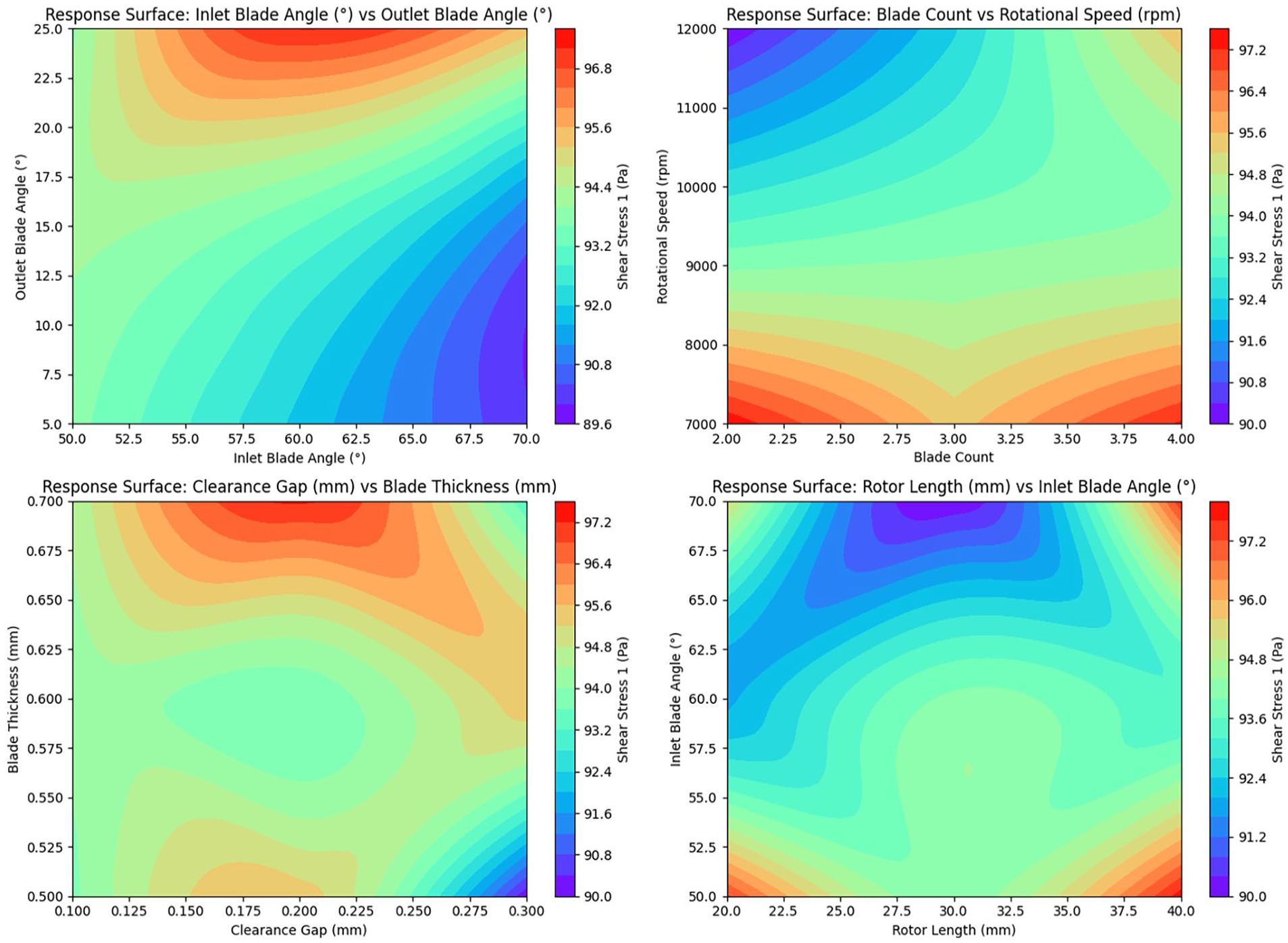
Response surfaces illustrating the effects of parameter interactions on shear stress (<50 Pa).
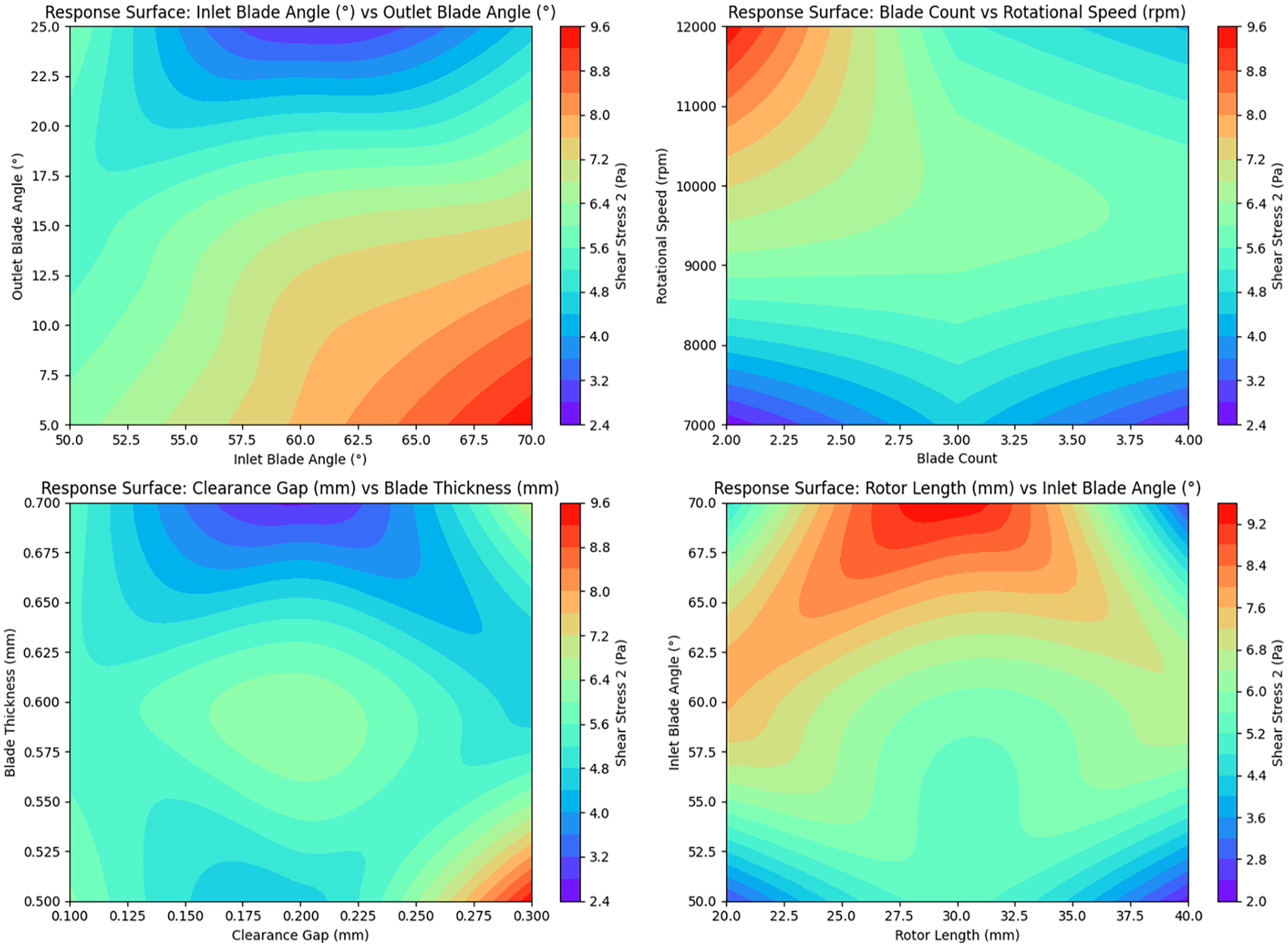
Response surfaces illustrating the effects of parameter interactions on shear stress (50–150 Pa).
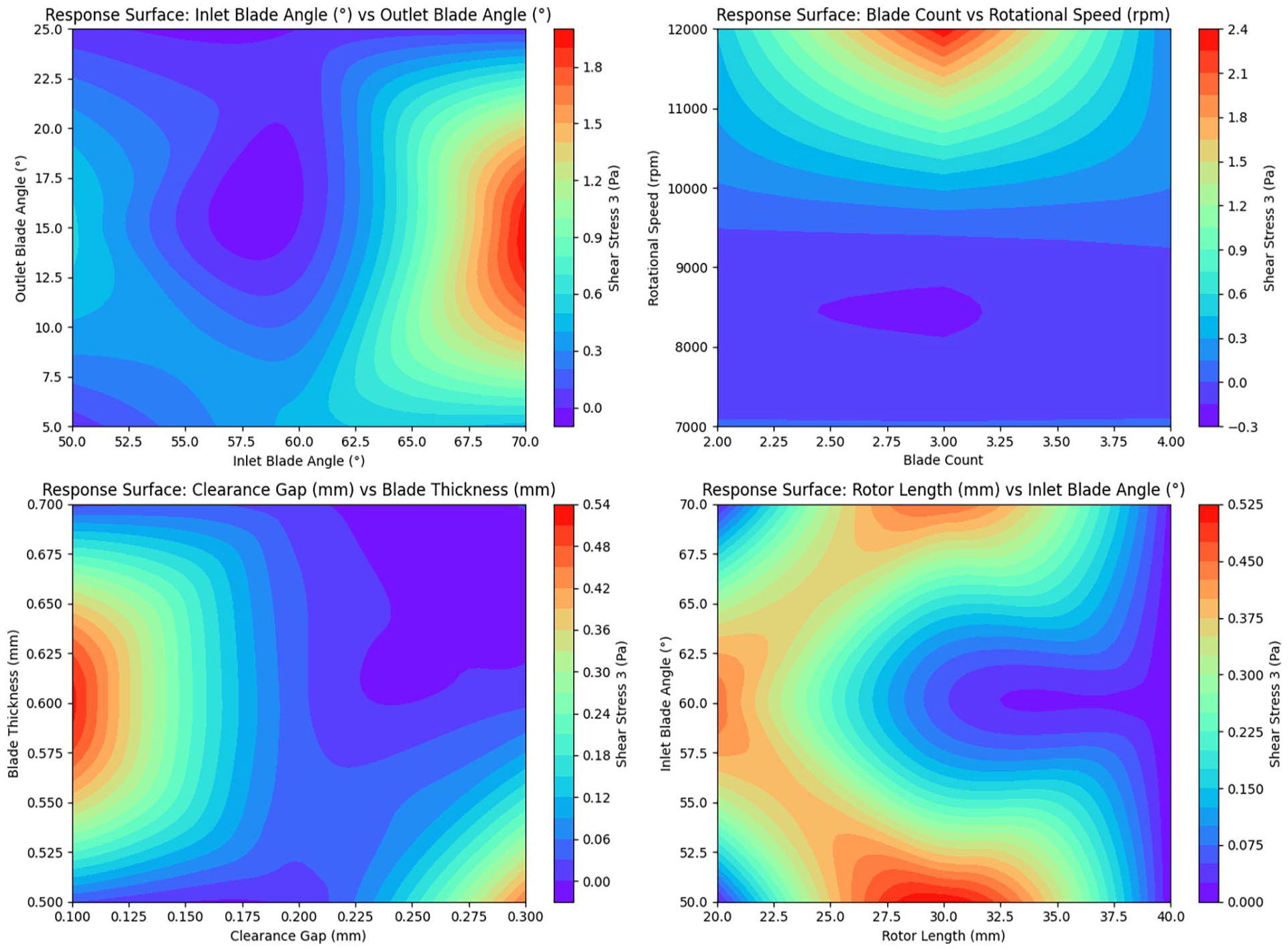
Response surfaces illustrating the effects of parameter interactions on shear stress (>150 Pa).
Parameter Interaction Analysis revealed critical design trade-offs. Speed-angle coupling showed that at 12,000 rpm, increasing outlet blade angle from 5° to 25° expanded >150 Pa zones by 38% (vs 12% at 7000 rpm), highlighting their synergistic effect. The clearance-thickness trade-off demonstrated 22% higher wall shear stress for 0.1 mm/0.7 mm combinations compared to 0.3 mm/0.5 mm configurations, despite similar individual parameter importance. These interactions underscore the need for balanced optimization.
These results highlight the complex relationship between design parameters and shear stress distribution, offering valuable insights for optimizing VAD rotor geometry to minimize the risk of hemolysis and platelet activation potential.
Exposure time
The response surface analysis for exposure time (Figure 8) highlighted the influence of various design parameters on blood residence time within the VAD. A larger inlet blade angle slightly increased exposure time by reducing flow acceleration, leading to more gradual velocity transitions. Conversely, a moderate outlet blade angle helped minimize exposure time by maintaining smoother flow transitions and reducing stagnation zones. The blade count also played a role, with fewer blades facilitating faster flow through the rotor, thereby decreasing exposure time. Among all parameters, rotational speed had a significant impact, as higher speeds accelerated blood flow through high-shear regions, effectively shortening exposure time. Similarly, a narrower clearance gap helped to reduce exposure time by minimizing leakage and flow recirculation, resulting in a smoother flow path. Blade thickness had minimal influence on exposure time but subtly altered the geometry of the flow channel. However, the most important factor was rotor length, as longer rotors significantly increased exposure time by prolonging the residence time of blood in the rotor, thus increasing the risk of prolonged exposure to shear stress. These results highlight the importance of optimizing rotor length and rotation speed to regulate exposure time and minimize potential blood damage in the VAD.
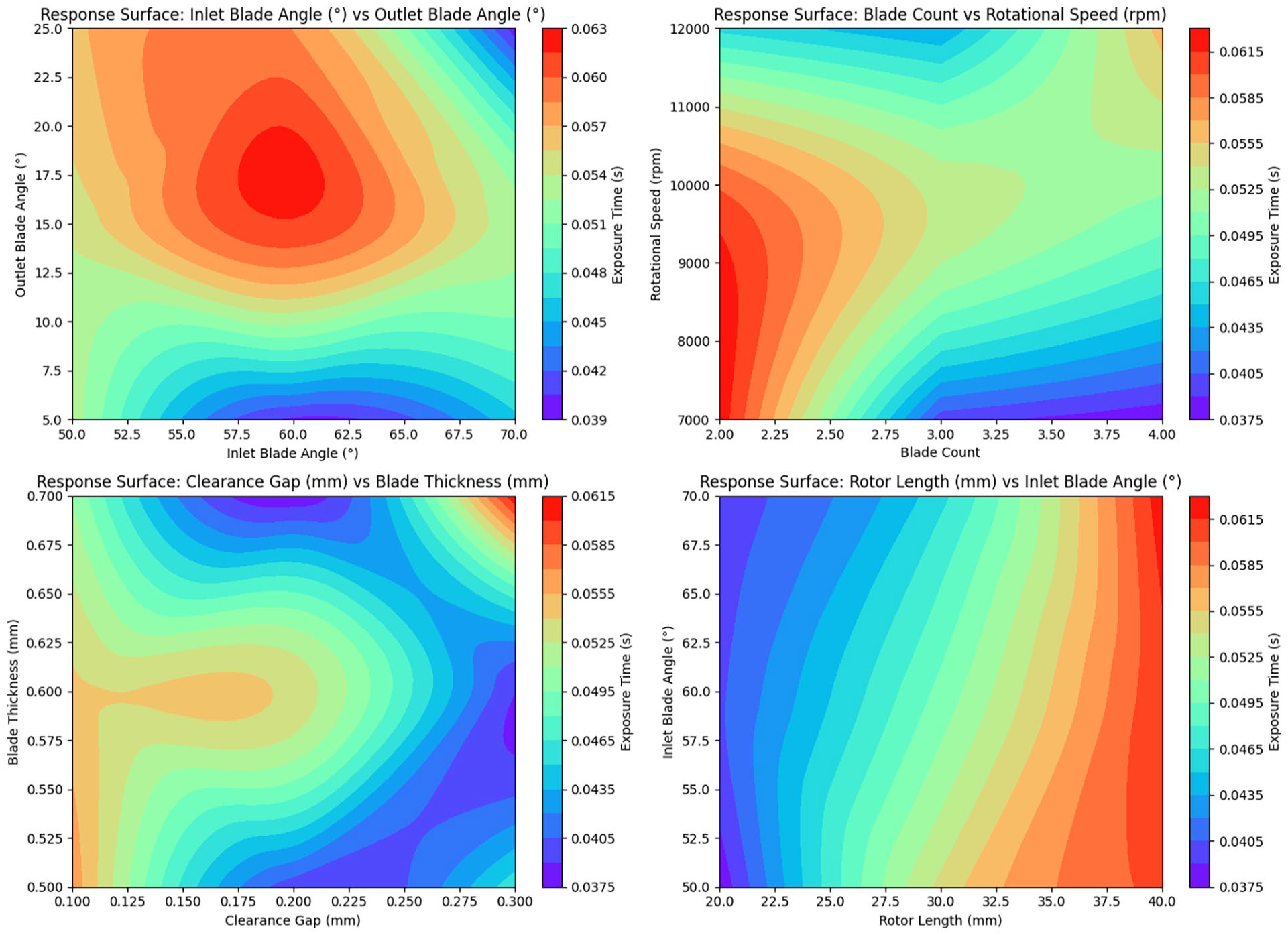
Response surfaces illustrating the effects of parameter interactions on exposure time.
Parameter Interaction Analysis revealed significant speed-length coupling effects. Increasing rotor length from 20 to 40 mm at 7000 rpm elevated exposure time (ET) by 62% (5.2 × 10⁻² s–8.4 × 10⁻² s), while the same length change at 12,000 rpm only increased ET by 28% (3.7 × 10⁻²–4.7 × 10⁻² s). This demonstrates rotational speed’s moderating effect on length-dependent residence time (Figure 8), highlighting important design trade-offs for hemocompatibility optimization.
Hemolysis index
Analysis of the hemolysis index response surface (Figure 9) revealed critical trends associated with rotor design parameters. A moderate inlet blade angle effectively reduced hemolysis by ensuring a smoother inflow, minimizing turbulence and excessive inlet shear stress. In contrast, a steeper outlet blade angle resulted in abrupt changes in velocity, significantly increasing the risk of hemolysis by amplifying shear forces as blood exits the rotor. Increasing the number of blades further increases hemolysis, as the extra blades intensify turbulence and shear interactions at their surface. Of all the parameters, rotational speed had the most pronounced effect, with hemolysis increasing quadratically with increasing speed, mainly due to the generalized rise in shear stresses across the rotor. Clearance gap had a dual effect—while smaller clearance gaps increased shear stress near the housing walls, they also attenuated leakage-induced turbulence, leading to an optimum range of 0.15–0.25 mm to balance these competing influences. Similarly, blade thickness played a crucial role, as thicker blades intensified localized stress gradients, particularly near blade edges, exacerbating hemolysis. Furthermore, increasing rotor length contributed to greater hemolysis by prolonging blood exposure to high-shear regions, thus prolonging the detrimental effects of excessive shear stress. These results highlight the complex balance required in VAD rotor design to mitigate hemolysis while maintaining efficient hydraulic performance.
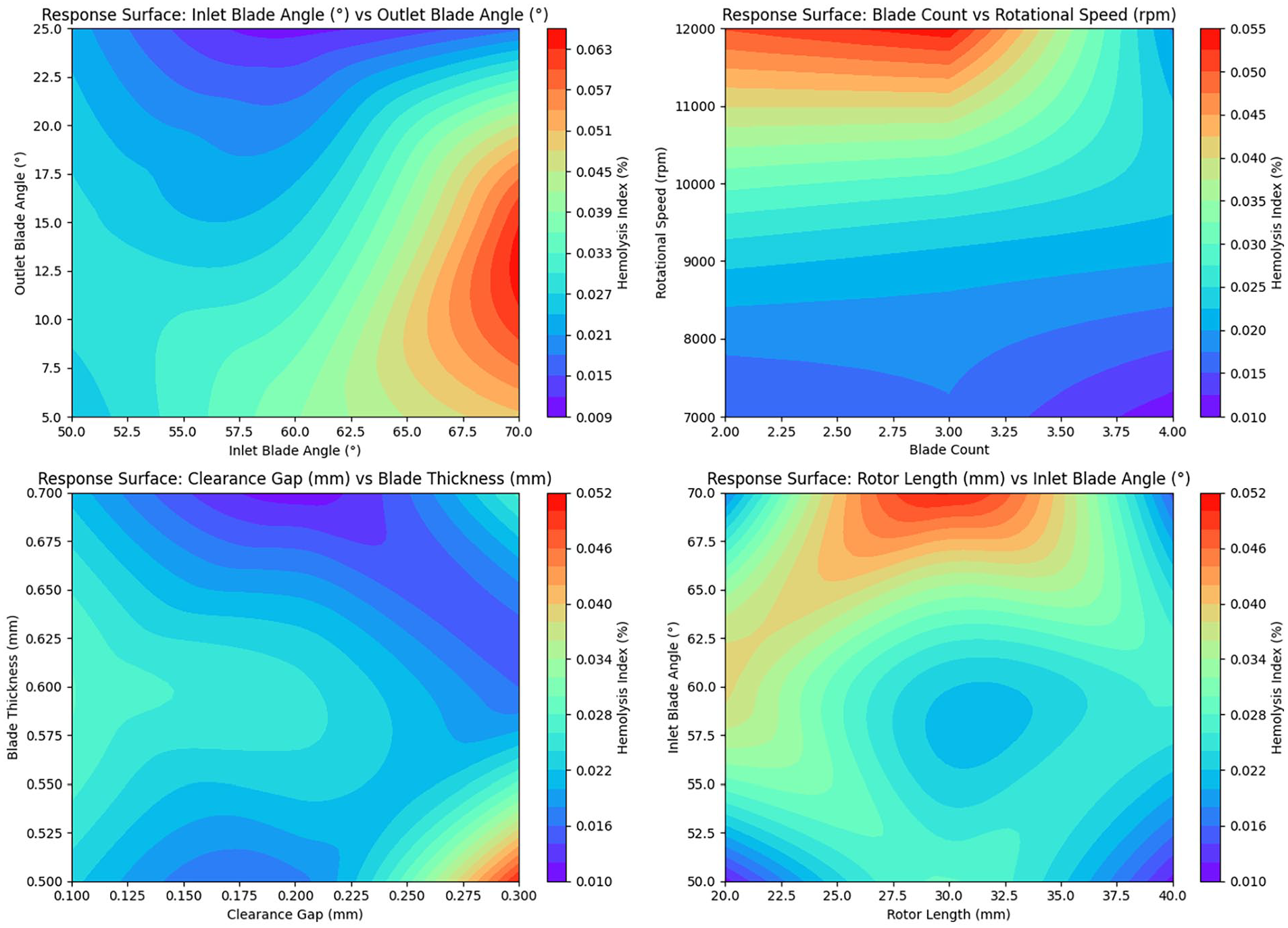
Response surfaces illustrating the effects of parameter interactions on hemolysis index.
Parameter Interaction Analysis revealed significant speed–outlet angle coupling effects. At 12,000 rpm, increasing the outlet angle from 5° to 25° tripled the hemolysis index (0.008% → 0.024%), whereas at 7000 rpm the same change caused only a 1.8× increase (0.005% → 0.009%). This nonlinear interaction stems from vortex shedding at high-speed/steeper angles (Figure 9), demonstrating how parameter combinations can dramatically impact hemocompatibility beyond individual factor effects.
Platelet activation state
Platelet activation was strongly influenced by the interaction of blade angles, rotational speed, and clearance gap, with each parameter playing a distinct role in determining activation probability. A moderate inlet blade angle reduced platelet activation by ensuring smoother flow entry and limiting shear stresses above 50 Pa, thus preventing excessive mechanical stimulation of platelets. Similarly, a moderate outlet blade angle minimized activation by reducing sudden increases in stress at the flow outlet, thus avoiding sudden exposure of platelets to damaging shear forces. Increasing the blade count had a minor but noticeable effect, slightly increasing platelet activation due to localized shear peaks at the blade surface. Overall, rotational speed proved to be the most critical factor, as higher speeds considerably intensified platelet activation by enlarging high-stress regions above 50 Pa, thus increasing the likelihood of platelet deformation and aggregation. Clearance gap also played a crucial role, with wider clearance gaps effectively reducing platelet activation by balancing stress levels and exposure time, with an optimum range identified between 0.15 and 0.25 mm. In addition, thinner blades were found to reduce the likelihood of platelet activation by minimizing stress peaks localized at blade edges. Finally, rotor length had a direct impact, as longer rotors increased platelet activation due to prolonged exposure in high-stress regions, thus prolonging the duration of mechanical stress on the platelets. These results highlight the need to carefully balance design parameters to mitigate platelet activation while maintaining optimal VAD performance.
Parameter interaction analysis revealed significant speed–clearance coupling effects. At 12,000 rpm, reducing the clearance gap from 0.3 mm to 0.1 mm doubled platelet activation (PAS: 1.8 × 10⁻⁶% → 3.6× 10⁻⁶%) due to intensified near-wall shear. In contrast, at 7000 rpm, the same gap change increased PAS by only 1.3× (1.2 × 10−6% → 1.6 × 10⁻⁶%), demonstrating speed-dependent sensitivity to geometric variations.
Optimized design parameters and performance improvement
The optimization process identified a set of optimal design parameters that significantly improve the hemocompatibility of the ventricular assist device (VAD). These parameters were carefully selected to minimize shear stress, hemolysis, platelet activation, and exposure time while maintaining efficient flow dynamics. The optimized variables and corresponding hemocompatibility results are presented below, highlighting the improvements achieved over conventional designs.
The optimization process allowed the refinement of a set of design parameters that significantly improved the VAD’s hemocompatibility. The optimized configuration features an input blade angle of 59.4°, an output blade angle of 10.9°, a blade count of 3, a rotational speed of 7087 rpm, a clearance gap of 0.18 mm, a blade thickness of 0.50 mm, and a rotor length of 35 mm. These optimizations were achieved through a systematic exploration of the design space using the Bayesian optimization framework, guided by the Random Forest Regressor (RFR) surrogate model. The parameters selected establish a balance between competing objectives, ensuring minimal blood damage while maintaining efficient hydraulic performance.
The optimized VAD design demonstrated significant improvements in hemocompatibility metrics compared with conventional designs. The proportion of blood flow subjected to shear stress below 50 Pa increased to 97.24%, which represents an improvement of 6.57%, while the percentage of flow exposed to moderate shear stress (50–150 Pa) was reduced to 2.74%, representing an improvement of 63.9%. High shear zones above 150 Pa were completely eliminated, representing a 100% reduction. The hemolysis index fell to 0.01%, reflecting an improvement of 75.61%, indicating a substantial reduction in red cell damage and a reduced risk of hemolytic anemia (Figure 10). Similarly, the probability of platelet activation was reduced to 1 × 10⁻⁶%, an improvement of 37.50%, minimizing the risk of thrombosis, a key concern for the long-term use of a VAD (Figure 10). In addition, the average exposure time was reduced to 0.046 s, corresponding to a 4.71% reduction, further mitigating the risk of prolonged shear-induced blood trauma. Together, these improvements enhance the device’s overall blood compatibility, making it a promising advance in VAD technology.
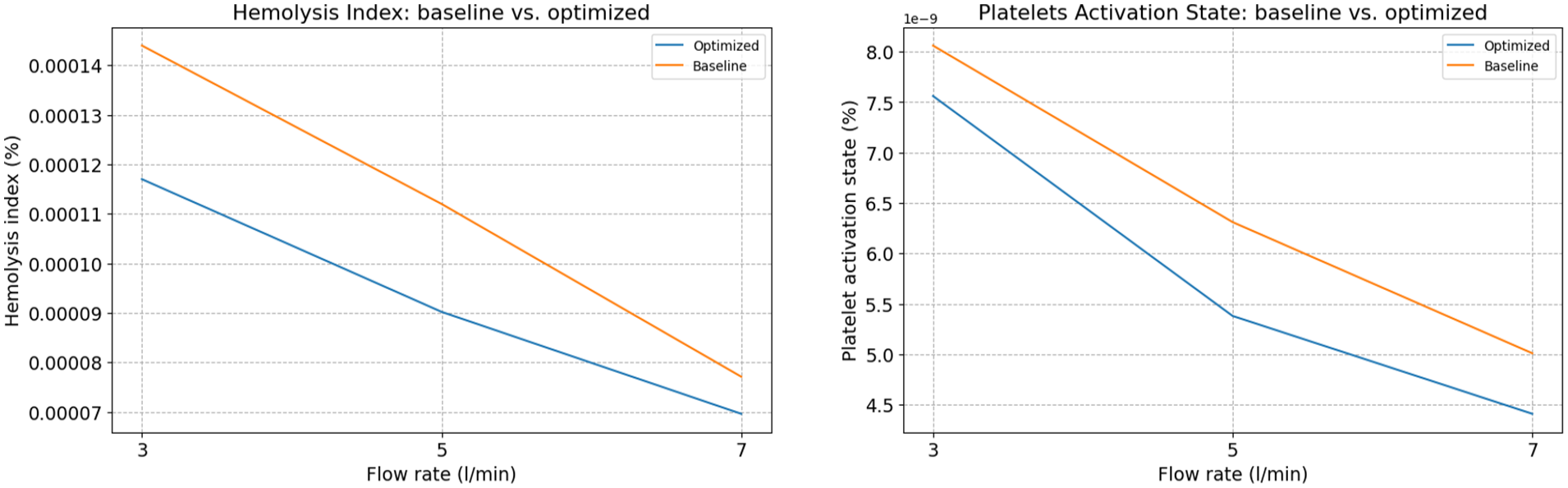
Comparison of baseline and optimized models in terms of hemolysis index and platelet activation state.
The optimized design represents a significant advance in blood compatibility over conventional VAD designs. By virtually eliminating exposure to extreme shear stress and minimizing hemolysis and platelet activation, the optimized configuration enhances the safety and reliability of the device. The reduced exposure time also improves blood preservation, reducing the risk of adverse effects such as thrombus formation and excessive red blood cell damage. These results underscore the importance of optimization in achieving optimal hemocompatibility, paving the way for safer, more effective VAD designs.
Discussion
The optimization framework presented in this study identified a set of design parameters that significantly improve the hemocompatibility of a VAD rotor. The results indicate that rotational speed and rotor length are the most influential parameters on shear stress, hemolysis, and platelet activation, in agreement with previous studies.4,12 The optimized design has enabled a remarkable reduction in regions of high shear stress (>150 Pa), virtually eliminating exposure to extreme shear forces known to cause hemolysis and platelet activation.14,21 This is a significant improvement over conventional designs where high shear zones are often unavoidable due to trade-offs between hydraulic performance and hemocompatibility.3,5
The use of Bayesian optimization in this study allowed for efficient exploration of the design space, reducing the number of iterations required while maintaining high accuracy. This approach is consistent with recent advances in the field, where machine learning and optimization algorithms have been increasingly applied to VAD design.7,24 For example, Nissim et al 24 used machine learning to optimize VAD blade geometry and achieved similar improvements in hemocompatibility. However, their study focused primarily on hydraulic performance, whereas our work explicitly considers multiple measures of hemocompatibility, providing a more comprehensive optimization framework.
Response surface analysis revealed complex relationships between design parameters and hemocompatibility measurements. For example, increasing the inlet blade angle to the optimum range of 55°–65° promoted smoother flow entry and reduced regions of high shear stress. This result is consistent with the work of Song and Wood, 12 who emphasized the importance of blade geometry in minimizing flow disturbance. Similarly, the optimal clearance gap of 0.15–0.25 mm identified in this study is consistent with previous research suggesting that smaller clearance gaps reduce recirculation zones, thus minimizing exposure time and shear stress. 13
The reduction in hemolysis index and platelet activation state achieved in this study represents a significant advance over conventional VAD designs. The hemolysis index of 0.01% is significantly lower than values reported in previous studies, such as those by Bounouib et al, who reported indices ranging from 0.02% to 0.05%. Similarly, the probability of platelet activation of 1 × 10⁻⁶% represents a significant improvement over previous designs where activation probabilities were often between 1 × 10⁻⁶% and 1 × 10⁻⁵%. 22 These improvements are attributed to a careful balance of design parameters, particularly rotational speed and rotor length, which were optimized to minimize exposure to high-shear regions.
The results of this study have important implications for the development of next-generation VADs. By virtually eliminating exposure to high shear forces and minimizing hemolysis and platelet activation, the optimized design improves device safety and reliability. This is particularly important for long-term use of VADs, where prolonged exposure to shear forces can lead to adverse effects such as thrombus formation and hemolytic anemia. 5 In addition, the methodology presented here can be extended to other rotary blood pumps and turbomachinery systems, paving the way for more efficient and biocompatible medical devices.
Limitations and future work
Although this study demonstrates significant improvements in hemocompatibility, certain limitations should be considered in future work. First, the optimization process relied solely on CFD simulations, which, although highly accurate, do not fully capture the complexity of in vivo conditions. Future studies should include experimental validation to confirm the performance of the optimized design under physiological conditions. In addition, the study focused on steady-state flow conditions, which may not fully represent the pulsatile nature of blood flow in the human body. Future work could explore the effect of pulsatile flow on hemocompatibility measurements.
Another promising direction is to incorporate patient-specific variability into the optimization framework. By accounting for differences in patient anatomy and hemodynamics, the methodology could be refined to develop customized VAD designs. Finally, the framework could be extended to optimize other design parameters, such as material properties and surface coatings, to further improve device hemocompatibility and durability.
Conclusion
This study successfully demonstrated the application of a multi-objective optimization framework to improve the hemocompatibility of a VAD rotor. By integrating CFD simulations, Random Forest regression, and Bayesian optimization, the study identified a set of optimal design parameters that significantly reduced shear stress, hemolysis, and platelet activation. The optimized design achieved a hemolysis index of 0.01% and a platelet activation probability of 1 × 10⁻⁶%, a significant improvement over conventional VAD designs. These results underscore the importance of hemocompatibility in VAD design and highlight the potential of machine learning and optimization algorithms to advance the field. Future work will focus on experimental validation of the optimized design and refinement of the optimization framework to address further challenges in VAD design.
Footnotes
Declaration of conflicting interests
The author(s) declared no potential conflicts of interest with respect to the research, authorship, and/or publication of this article.
Funding
The author(s) received no financial support for the research, authorship, and/or publication of this article.
