







Abstract
Infertility is a disease of the reproductive system which is defined as the inability to conceive after more than 12 months of unprotected intercourse. It affects millions of people and has far-reaching impacts on quality of life, sexual dysfunction, marital impact, and societal implications. Despite advancements in understanding infertility, the cause of infertility in around 28% of cases remains unclear. This review addresses the pivotal relation between Gut microbiota (GM) and infertility. GM is now believed to interplay with the human body at different levels and is essential for our well-being. The abnormal translocation of GM to the systemic circulation, known as dysbiosis triggers an over-stimulated immune response associated with a marked increase in pro-inflammatory cytokines. This inflammatory situation may disrupt the hypothalamic-pituitary-gonadal axis and lead to disseminated inflammation ending in adhesions and obstructive lesions of the reproductive tract. Dysbiosis can also predispose individuals to obesity and insulin resistance, where both are risk factors for diabetes, hypertension, polycystic ovary syndrome (PCOS), impaired spermatogenesis, erectile dysfunction, and infertility. GM has an inevitable role in the pharmacokinetics of many drugs and can regulate the expression of many cytochrome P450 enzymes and several transporters. Further research is needed to validate the possible implication of GM in the pathophysiology of infertility, the efficacy of infertility medications, and the potential of GM-based therapies to treat infertile couples.
Background
Infertility is defined as failure to get pregnant after 12 months or more of regular and unprotected sexual intercourse. Infertility not only affects the psychological well-being of individuals but also affects the survival of the human species and the economic status of the countries. 1 According to WHO estimates of infertility (2020), nearly one out of every six people experiences infertility during their reproductive age. 2
Trillions of microorganisms reside in the human gut, collectively known as gut microbiota (GM). These GMs play a crucial role in human health and disease by performing unique secretory and metabolizing functions, as well as contributing to the host’s immune system. Recently, there has been a growing interest in GM as a potential therapeutic option for various autoimmune, neuropsychiatric, and gastrointestinal disorders. 3
In this narrative review we will summarize the importance of GM, the causes of infertility in both genders, and how could GM contribute to the pathophysiology of infertility. We will also discuss the possible impact of GM on the therapeutic modalities of infertility and the prospects of GM-based therapies for the management of some infertility causes.
GM: The hidden organ
GM can be divided into pathogenic, opportunistic, and commensal categories. Bacteroidetes, firmicutes, proteobacteria, and actinomycetes collectively form around 90% of the gut bacteria. This ecosystem, however, is dynamic and changes under the influence of many factors such as; (1) the use of some medications (e.g. anti-microbial and laxatives), (2) the type of diet, and (3) the state of oral hygiene. 4
The current knowledge about the physiological role of GM in human bodies is rapidly growing and the therapeutic use of beneficial bacteria called “probiotics” is emerging. Some scientists have even nominated the GM to be our secret hidden organ. GM deserves this name for being involved in regulating our immune system, for their crucial role in digesting complex carbohydrates, and for sharing in glucose and lipid metabolism. GM is also capable of secreting many important active substances for example, dopamine, gamma-aminobutyric acid (GABA), serotonin, norepinephrine, choline, orexin, leptin, ghrelin, and neuropeptide Y. These bioactive substances are vital regulators of neuroplasticity, mood, satiety, and sleep patterns. 5
Those gut bacteria can also produce short-chain fatty acids (SCFAs) named: acetate, propionate, butyrate, valerate, and formate (not detected in physiological conditions). These SCFAs are produced in the small intestine through the fermentation action of GM on the non-digested carbohydrates and proteins. Lactate is also one of the products of this digestion process, and can be further metabolized to acetate, propionate, and butyrate. These three SCFAs are up-taken and metabolized, to some extent, inside the colonic cells as energy sources. Those molecules that escape the colonic metabolism are delivered to the liver. SCFAs that escape the hepatic metabolism are delivered to the systemic circulation. 6 Among those three SCFAs, acetate has the highest concentration and can also be produced from ketone bodies in some physiological statuses such as fasting and during ketosis. 7
Anaerobic Bacteroides, lactobacillus, bifidobacterial, streptococci, and eubacteria are the main contributors to SCFA production. 8 The production of these SCFAs not only is dependent on the type of bacteria but also on the particular type of sugar ingested. For example, though the production of propionate is produced by many bacterial groups, Akkermansia municipally species are considered the major propionate-producing organism, through the fermentation of de-oxy sugars, particularly fucose and rhamnose. Similarly, Ruminococcus bromii, Eubacterium rectale, Faecalibacterium prausnitzii, and Eubacterium hallii are the main sources of butyrate production through the fermentation of starch. In the same context, many studies reported the correlation between low-fat, high-fiber diet and butyrogensis. 9 Thus, the type of diet is a main determinant of SCFAs’ composition.
Though SCFAs can enter into target cells by simple diffusion or via transporters, recent studies have referred to a special type of G-protein coupled receptors (GPCRs) specifically; free fatty acid receptor 2 (FFAR2) and FFAR3 as one of the pathways mediating SCFAs’ actions. Those receptors were found to be widely distributed in the colon, intestine, adipose tissue, pancreatic beta cells, liver, and immune cells. FFAR3 receptors were also expressed in skeletal muscles. 6 These sites are the primary sites for the immune-modulatory and metabolic actions of the SCFAs, besides their important role in maintaining the integrity of the intestinal epithelial cells. 10
GM and host immunity
As regards the role of GM and the SCFAs in the host immune reaction, SCFAs, particularly butyrate—a primary source of energy for cells in the colon, have been discovered to aid in preserving the integrity of the tight junctions in the intestinal epithelial cells through enhancing the expression of claudin-1 and Zonula Occludens-1.11,12 This action prevents the translocation of the bacteria or any of the microbial-associated molecular patterns (MAMPs) such as the bacterial lipopolysaccharide (LPS), lipoproteins, and peptidoglycans to the systemic circulation in a process called dysbiosis. 13 In dysbiosis, loss of the intestinal barrier will allow MAMPs to reach the systemic circulation along with chylomicrons. Pattern-recognizing receptors (PRRs) such as the Toll-like receptor-4 (TLR-4) immune cells identify these bacterial foreign components and trigger an inflammatory cascade through the activation of macrophages, monocytes, and Kupffer cells. These cells in-turn activate a nuclear factor-kappa B (NFкB) signaling pathway to secrete pro-inflammatory cytokines such as tumor necrosis factor-alpha (TNF-α), interleukin-6 (IL-6), IL-12, and nitric oxide9,14 and result in Th17/Treg imbalance. To these findings, Malesza et al. reported that a high diet was associated with increased expression of inflammatory cells (i.e. CD3+ and CD68+) and proinflammatory cytokines (TNFα, IL-6, IL-12), which can be attributed to the reduction in SCFAs production and the consequent loss of their protective effects. 15 Furthermore, butyrate mainly, together with propionate and acetate are histone deacetylase (HDAC) inhibitors. So, they are anticipated to play a crucial role in facilitating the gene expression of various anti-inflammatory, anti-microbial, and anti-cancer peptides. SCFAs-mediated HDAC inhibition is also important to adjust the proliferation of regulatory T cells to prevent immune overactivity. 16
Correspondingly, the alteration in GM composition, dysbiosis, and the subsequent overactive immune response were found to be associated with autoimmune diseases such as rheumatoid arthritis (RA), systemic lupus erythematosus (SLE), an inflammatory bowel disease (IBD). 17
GM and metabolism
Under physiological conditions, GM plays an important role in glucose and lipid metabolism, evidenced by the role of SCFAs in stimulating glucagon-like peptide 1 (GLP1) secretion. GLP1 is crucial in: controlling satiety and, prevention of postprandial hyperglycemia and can also stimulate chylomicron production which regulates postprandial triglyceride levels. Yet, enhanced microbial capacity for energy extraction attor energy storage may predispose individuals to metabolic disorders. In addition, under certain conditions, SCFAs may act as substrates for hepatic lipogenesis and so can increase very low-density lipoproteins (VLDL) production. 18 Another mechanism by which GM regulates lipid metabolism is its ability to regulate the bile acid signaling receptor farnesoid-X-receptor (FXR) that is involved in lipid, as well as glucose metabolism. 19
Accumulating evidence from animal studies has also linked dysbiosis with some metabolic disorders such as obesity and diabetes. Though the diet nature plays a significant role in determining metabolic outcomes, the abundance of specific GM strains has a substantial impact on lipid and glucose homeostasis. Mice treated with special GM strains that is, Lactobacillus rhamnosus gg showed significant weight gain and increased cholesterol levels compared to the control group. 20 On the other hand, mice treated with Akkermansia muciniphila showed significant improvement in diet-induced obesity and obtained better glycemic control. 21 In another study, Leone et al. reported that germ-free mice (GFM) were resistant to developing obesity when they were subjected to a high-fat diet. This action was referred to as the disturbed lipid digestion and the subsequent impaired absorption and transport of fatty acids due to the loss of GM digestive function. 22
GM in health and disease
Owing to the aforementioned anti-inflammatory, immunomodulatory, and metabolic actions of GM, researchers were prompted to investigate the potential therapeutic uses of probiotics and fecal microbiota transplantation (FMT) in certain disorders such as diabetes mellitus, RA, SLE, IBD, depression, anxiety, and autism spectrum. 17
Moreover, the secretory function of GM can explain the positive results of GM-based therapies to treat conditions such as anxiety, depression, and schizophrenia, as these disorders are primarily attributed to abnormal activity of some brain neurotransmitters (such as serotonin, dopamine, GABA, and catecholamine), as well as defective brain-derived neurotrophic factor (BDNF) amount or function, which can be improved after restoring GM diversity. 23
Some GM metabolites (i.e. trimethylamine-N oxide (TMAO), indoxyl sulfate, and p-cresyl sulfate) are also of special importance for human health. For example, TMAO has been implicated in the pathophysiology of atherosclerosis, ischemic stroke, heart failure, cardiac arrhythmia, type-2 diabetes mellitus (T2DM), chronic kidney disease, and Alzheimer’s disorder. The underlying mechanism behind TMAO-related disorders lies in its capability to activate proinflammatory signaling pathways, enhance platelet hyperactivity, elevate the expression of certain adhesion molecules, induce vascular inflammation, contribute to endothelial dysfunction, and facilitate the formation of foam cells. 24 Furthermore, we need to consider the interaction between GM and certain medications, as GM can alter the pharmacokinetics of these drugs, as will be discussed later.
Causes of infertility
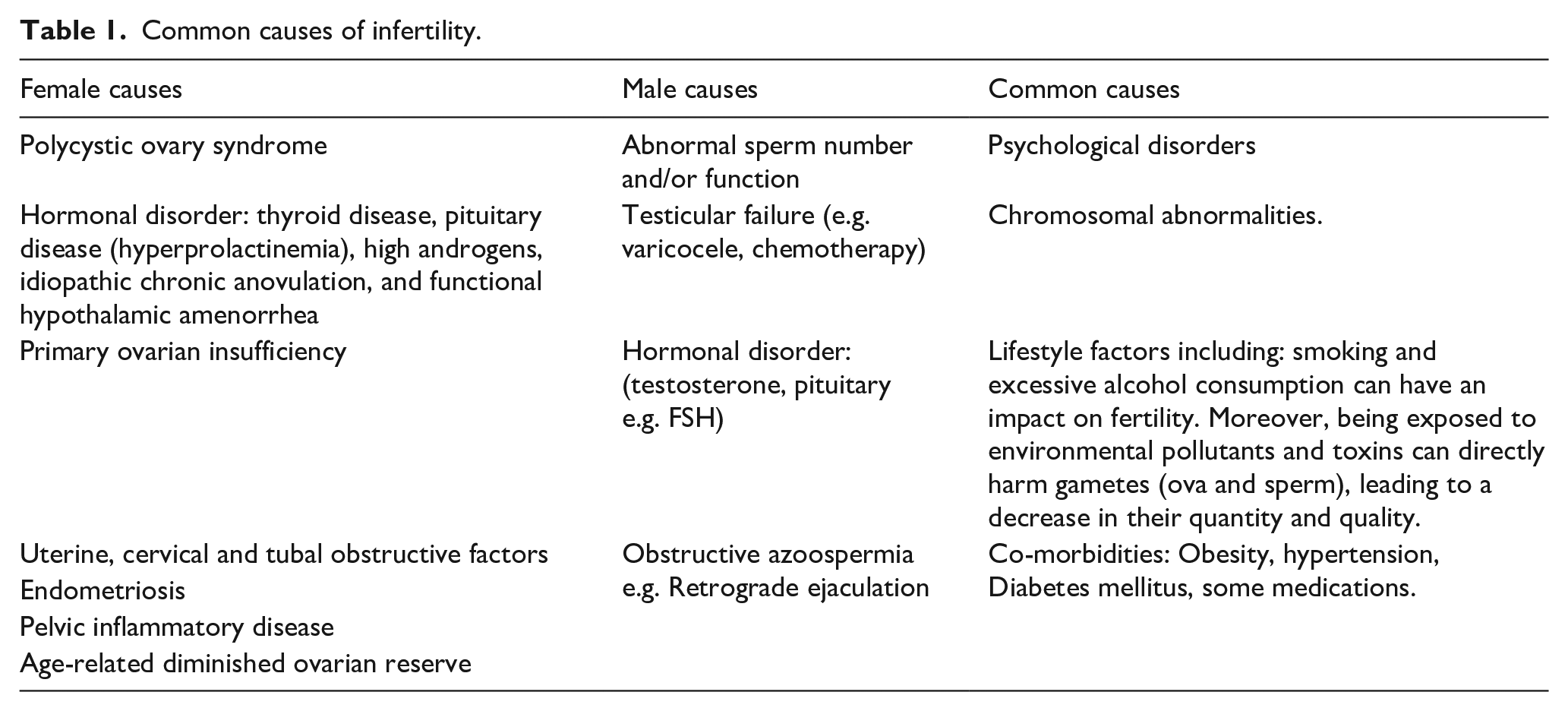
Fertility does not only depend on normal ovulation and spermatogenesis. It also requires healthy and patent reproductive tracts, and regular, unprotected sexual intercourse. Approximately 50% of infertility causes are due to female factors, while 20%–30% are caused by male factors. The remaining 20%–30% are a result of common causes affecting both males and females. 2 Yet, in around 28% of cases, the cause of infertility for a couple may remain unexplained. 25 The causes of infertility can be summarized as shown in Table 1. These causes can be categorized as: hormonal, inflammatory, obstructive, and miscellaneous factors.
Common causes of infertility.
As shown in Figure 1., gut dysbiosis or the “leaky gut” and the accompanied systemic inflammation may provide a good explanation for the hormonal dysregulation and the genital inflammation seen in some infertility cases, which could be also complicated by adhesions and obstructive lesions, ending by infertility. Chronic inflammation was also found to decrease insulin signaling, leading to insulin resistance (IR) that could furtherly result in hypogonadism and polycystic ovary syndrome (PCOs).26,27 GM was also linked to erectile dysfunction (ED) and impaired sexual life, which both can be attributed to infertility. We will discuss the possible implications of GM in infertility in the coming sections.
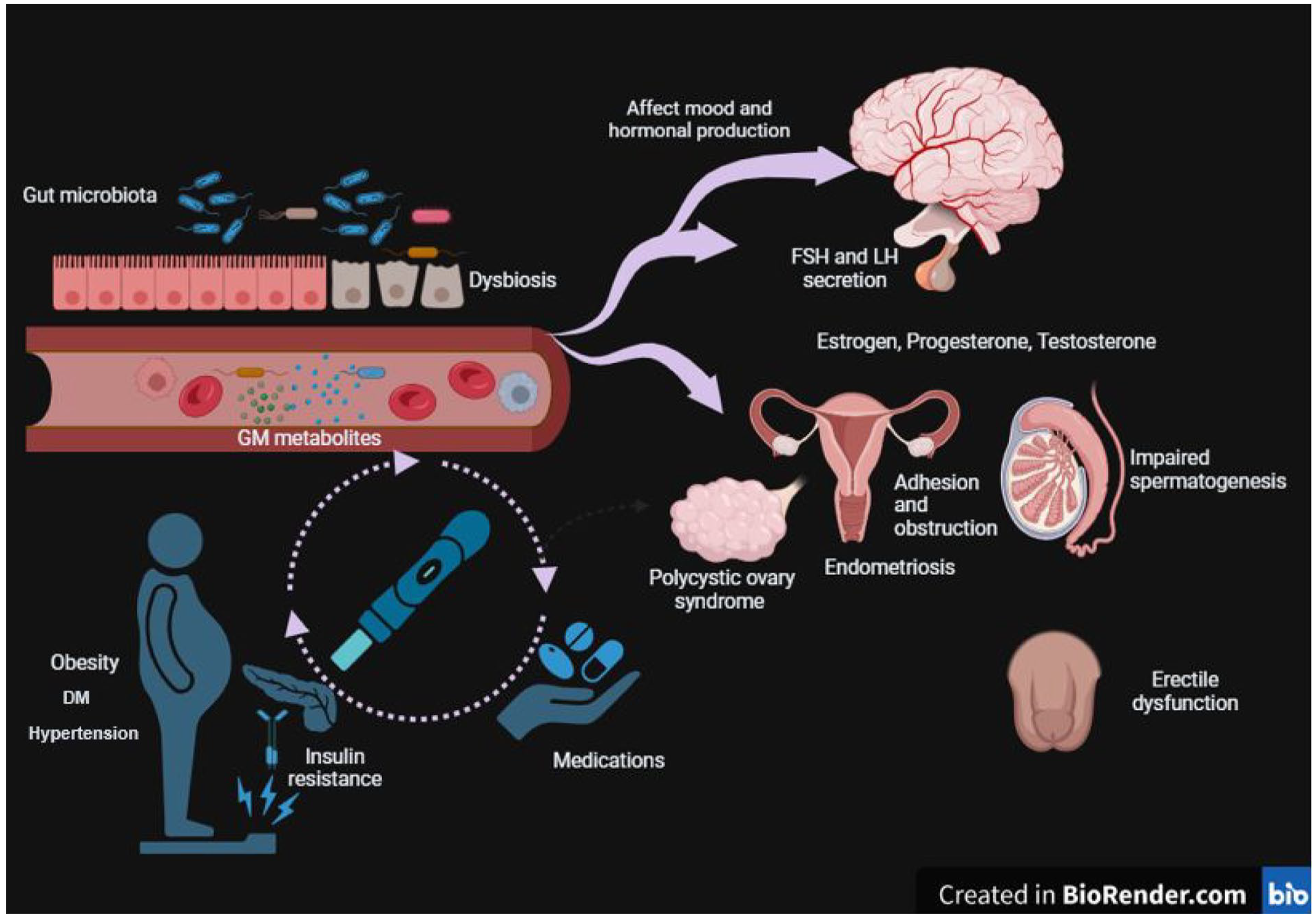
The relation between gut microbiota and infertility.
The possible impact of GM on hormonal dysregulation
Ovulation and spermatogenesis are regulated by the orchestration of many hormones: gonadotropin-releasing hormones (GnRH), follicular stimulating hormone (FSH), and luteinizing hormone (LH). Besides, the presence of normal estrogen, progesterone, and androgen (particularly testosterone) concentrations is essential to the occurrence and stabilization of conception. 28 By impacting reproductive hormones, GM can cause infertility. 29
The interaction between GM and steroid hormones has been addressed in a few studies. In these studies, GM was reported to possess many enzymatic activities that are involved in steroid hormones synthesis and degradation, such as the β glucuronidase and the hydroxysteroid dehydrogenase (HSD) enzymes.30,31 β glucuronidase has a vital role in estrogen homeostasis by deconjugating estrogen-glucuronide secreted in bile to release free estrogen that can be reabsorbed into systemic circulation. Normal estrogen level is not only important to maintain regular ovulatory cycles, but also to regulate uterine-tubal activity and to ensure cervicovaginal health through promoting glycogen deposition. Lactobacillus spp. was found to act on this glycogen to maintain a low pH and a low inflammation environment for a proper conception process. 32 Thus, gut dysbiosis may increase or decrease the availability of estrogen, according to the abundance of the β glucuronidase-secreting bacteria, with a subsequent loss of the menstrual cycle’s regularity. In the case of increased estrogen, the associated increased cervicovaginal glycogen could enrich bacterial overgrowth and cause cervicovaginal dysbiosis. Estrogen can also increase the vascularity and the inflammatory lesions of endometriosis, as well as it has the potential to increase the proliferation of the cervicovaginal cells, causing female reproductive tract cancers. 30 Contrarily, low estrogen concentration is associated with hypoestrogenic pathologies such as cardiovascular disorders, obesity, and metabolic syndrome, which are risk factors for infertility. 33
As regards HSD activity, Mayneris-Perxachs et al. showed in an interesting study that GM of pre-menopausal women have a greater presence of pathways related to the biosynthesis and breakdown of steroids. The authors discovered that premenopausal women had higher levels of Actinobacteria species, including several Bifidobacterium species which are known for their HSD-secreting activity, compared to men. Those bacteria were not only linked to higher progesterone and lower testosterone concentrations but also were predictive of the progesterone level. 31
In the same context, GM plays an important role in mediating some progesterone actions. This relation was reported by Sovijit et al. in a study that described the anxiolytic effect of progesterone in ovariectomized mice to be mediated by GM. Sovijit described progesterone to be able to improve the concentration of Lactobacillus spp. Especially the Lactobacillus reuteri. In turn, Lactobacillus reuteri, through increasing the level of BDNF is capable of improving anxiety and depression symptoms, and this anxiolytic effect, interestingly was abolished with antibiotic treatment. 34 To be mentioned that even oral progesterone is affected by GM, as progesterone was found to be rapidly and completely metabolized within 2 h (t1/2 28 minutes) after incubation with colonic bacteria. 35
GM has also been linked to plasma testosterone levels. On one hand, castration of male mice was found to abolish the sexual difference in GM diversity. On the other hand, the testosterone level was positively correlated with some GM families (Cytophagaceae, Prevotellaceae, Fibrobacteriaceae, Idiomarinaceae, and Prevotellaceae) and negatively correlated to (Actinobacteria, Firmicutes, Proteobacteria, and Verrucomicrobia) phylum. 31 The impact of GM on male reproduction will be discussed in detail down ahead.
Hormonal dysregulation can also be seen in cases of precocious puberty. Li et al. detected a positive correlation between Parabacteroides (which is found to be enriched in cases with central precocious puberty) and GnRH. On the other hand, Akkermansia, a producer of serotonin, showed negative relationships with FSH and LH. 36 Last but not least, gut dysbiosis and the related inflammation may lead to dysfunction of the hypothalamic-pituitary-adrenal (HPA) axis 81 , ultimately resulting in infertility.
GM, insulin resistance and infertility
Insulin resistance (IR) is one of the leading causes of infertility. 37 In IR, hyperinsulinemia and the resulting hyperlipidemia can suppress the secretion of FSH and LH. Additionally, higher insulin levels can restrict the production of the sex hormone-binding globulin (SHBG) in the liver, which will ultimately limit the transportation of testosterone and estrogen to peripheral tissues. This limitation will increase free testosterone and estrogen levels. In male patients, this significant increase in free testosterone, negatively affects the hypothalamic-pituitary-gonadal (HPG) axis, leading to further inhibition of the gonadotropins, thus impairing the production of steroids by Leydig cells and inhibiting spermatogenesis.38,39 Similarly, in susceptible females, the high androgen level will result in hirsutism, and acne, and could arrest the growth of the ovarian follicles, which are the features of PCOs. 40
The relation between GM and IR has been addressed in several animal and human studies. Although IR and obesity almost always co-exist, non-obese individuals with higher total body and abdominal adipose tissue tend to have IR as well. 41 Yet, the majority of studies that discussed the link between GM and IR were conducted on obese cases. For example, compared to conventional mice, GFM showed resistance to gaining weight, through being fed on high-fat diet. However, when the intestinal flora of those healthy conventional mice was transplanted to the GFM, the latter acquired body fat and developed IR. 42 Similarly, Vrieze et al. reported improved insulin sensitivity in obese patients with metabolic syndrome after receiving GM transplants from healthy people 43 .
At the level of phylae, Akkermancia muciniphila was found to be reduced in obese patients compared to lean individuals. A. muciniphila is known as a producer of SCFAs and was correlated with reduced adipose size, better insulin sensitivity, and improved glucose tolerance, possibly through the anorectic effect of acetate and its role in preserving intestinal cell integrity, preventing dysbiosis. 44 Zhang et al. reported also a negative correlation between the abundance of A. muciniphila and insulin resistance in lean type-2 diabetics. 45 However, unregulated overgrowth of A. muciniphila might result in deleterious effects on the host gut for example, exacerbate Salmonella typhimurium infection. 46 Furthermore, subjects who are either obese or overweight were reported to exhibit a lower abundance of Firmicutes (butyrate producer) and increased Bacteroidetes. This finding is along with Gao et al. who found that supplementing mice fed on a high-fat diet, with butyrate prevented the development of IR and obesity, possibly by enhancing energy expenditure and preventing dysbiosis. 47
The possible impact of GM on PCOs
PCOs are considered to be the most common endocrine abnormality among women of childbearing age which leads to menstrual and infertility disorders. 48 As mentioned before, the cornerstone of PCOS revolves around the promotion of IR in the body, which causes an overall metabolic derangement and pro-inflammatory state. Studies have shown that the composition of GM is closely intertwined with how the body regulates glucose and lipid metabolism hence the development of IR and PCOs. 49 The GM of PCO patients has some remarkable findings about the species’: type, number, and the metabolites produced by them. For example, the levels of Lactobacillus, Escherichia/Shigella, Bacteroides, Porphyromonas spp., Bacteroides coprophilus, and Blautia spp. were found to be higher in patients with PCOs, while species such as Odoribacter, Roseburia spp., Anaerococcus spp., and Ruminococcus bromii were found to be lower.50,51 Provotella species were also found to be higher in PCOs and were positively associated with inflammation androgen, and a negatively regulated estradiol. 52 Bacteroides vulgatus was also found to be increased in PCOs, and the transplantation of B. vulgatus into healthy cases, results in the disruption of ovarian follicles and the development of IR.53,54
A clear link between GM and the dysregulated steroid hormones seen in PCOs exists, with examples such as the administration of probiotics like Lactobacillus, Bifidobacterium resulting in a decrease in hirsutism and the total levels of estrogen. 55 Meanwhile, vitamin D deficiency, which is commonly found in PCO patients, can result in impaired intestinal innate immunity 56 and bacterial translocation, resulting in endotoxemia, a proinflammatory state, and the development of IR.57,58
The effects of GM on bile acids are also linked to PCOs. Bile acids can prevent the excessive growth of gut bacteria, in addition to regulating glucose tolerance and IR, and therefore changes in bile acid homeostasis can result in a dysregulated metabolism. 59 GM plays a critical role in the regulation of CYP7A1 and CYP7B1, which is associated with the formation of bile acids. 60 In PCOs, ursodeoxycholic acid (UDCA) therapy was found to improve ovarian morphology and decrease the total level of insulin and testosterone in murine models. 61 Furthermore, glycodeoxycholic acid and tauro-ursodeoxycholic acid were found to be markedly reduced PCOs. 54
Other studies supported the role of GM in PCOs by suggesting a therapeutic role for the restoration of GM in patients with PCOS. Probiotics can regulate the levels of Bifidobacterium and Lactobacillus spp., proteobacteria, and helicobacter, which are implicated in PCO pathophysiology. 62 Meanwhile, probiotics such as myo-inositol and α-lactalbumin can improve IR and have been found to re-establish ovulation in PCO patients. 63 Furthermore, Lactobacillus transplantation has been found to reduce the circulating androgen and to improve the cycles in PCOs’ murine models.63,64 Nevertheless, dietary interventions that affect the GM composition can be considered in PCOS. These include the avoidance of high-fat diets which are known to directly alter the levels of Lactobacillus, known for promoting a healthy metabolic state, while the introduction of a Mediterranean diet can restore the levels of Bifidobacterium, Lactobacillus, and Prevotella. 65 Vitamin D supplementation can restore the gut-tight junctions and oppose bacterial translocation and the development of endotoxemia as well, and hence would protect against PCOs. 66
The possible impact of GM on endometriosis
Endometriosis is characterized by an abnormal growth of the endometrial tissue outside the uterus, which affects around 10%–15% of females in their reproductive age. Although the relationship between endometriosis and infertility is ambiguous, 30%–50% of endometriosis patients may suffer from infertility. 67 The pathophysiology of endometriosis-associated infertility is complex. The inflammation and adhesions, seen in endometriosis can be complicated with anatomical distortion that could cause mechanical obstruction to the release of the oocyte. It may also impair the transfer of the ovum and/or the sperm to the site of fertilization. Furthermore, the pro-inflammatory peritoneal fluid microenvironment could impact sperm function by causing sperm DNA fragmentation. Inflammation can also disrupt the permeability of the sperm membrane, reducing sperm motility, and thus impairing the interaction between the sperm and the oocyte. 68 Though often neglected, the pain factor related to dyspareunia may lead to avoidance of engaging in sexual activity. 69 Nevertheless, some medications used to treat endometriosis for example, GnRH analogs and antagonists, would cause hormonal suppression, complicated with infertility. 70
Endometriosis is considered to be estrogen-dependent. Thus, the level of estrogen and the influence of GM on estrogen level could directly affect the pathogenesis of endometriosis. 71 Many theories linked endometriosis to gut dysbiosis, influenced by the presence of inflammation in both conditions. Also, endometriosis is believed to have great similarities with the characteristics of autoimmune diseases, such as reduced apoptosis, elevated cytokine levels, and abnormal cell-mediated pathways, which can be all influenced by GM. However, only a few human studies demonstrating the GM-endometriosis relationship are available. Ata et al. stated that, compared to free controls, the GM of women with stage 3/4 endometriosis had a dominant Escherichia/Shigella ratio. 72 In the same group, Svensson et al. reported increased Firmicutes/Bacteroidetes ratio and decreased alpha diversity, with significant abundance of Actinobacteria, Saccharibacteria, Cyanobacteria, Fusobacteria, and Acidobacteria. 73 Svensson et al. also described the control group as having higher levels of both alpha and beta diversities compared to patients with endometriosis. Therefore, the restoration of the GM ecosystem could be a promising therapy for endometriosis in the future.
GM and male causes of infertility
Male causes of infertility include factors affecting the synthesis, the number, and the viability of sperm. Although mood status, sexual drive/libido, and sexual performance are not direct causes of infertility, yet we will discuss the implication of GM on all these factors in this section.
FSH and androgen, particularly testosterone are responsible for induction of spermatogenesis in the seminiferous tubules, while LH is responsible for androgen secretion from Leydig cells. Testosterone is essential for libido, masculine features, and importantly, for spermatogenesis. 74
As described before, GM has a profound regulatory function on the HPG axis. Abnormal GM composition could hence alter the physiological process of spermatogenesis. Additionally, the recognition of MAMP by the host immune cells initiates an inflammatory signaling pathway that includes the activation of both innate and adaptive immunity. The LPS-TLR4 complex activates the secretion of several inflammatory cytokines including xanthine oxidase, resulting in the generation of reactive oxygen species (ROS) and induction of a status of oxidative stress. This chronic inflammation and the overactive immune response can disrupt the blood testis barrier, complicated with Leydig cell damage and impaired spermatogenesis. 27 The migrating activated macrophages can also reach the epididymis where they can trap the spermatozoa inducing immune-mediated damage. 75 By these speculations, when the GM of high-fat diet-fed mice were transplanted to normal diet-fed mice, a significant elevation in endotoxins was detected and was associated with impaired spermatogenesis. The authors also reported a significant inverse relationship between the abundance of Bacteroides-Prevotella and sperm motility. 76
GM can also interfere with sexual activity, affecting sexual desire and contributing to ED. As regards sexual desire, in gut dysbiosis, the upregulated inflammatory cytokines can be transported to the brain where they may cause what is called “sickness behavior.” This condition is characterized by reduced activity, depressed mood, loss of appetite, and loss of libido.76,77 GM is also one of the main producers of serotonin which is a direct regulator of sexual activity. 78 In a recent systematic review and a meta-analysis, Gonçalves et al. reported a significant correlation between major depressive disorder and the prevalence of sexual dysfunction in both, men (63.26%) and women (82.75%). 79 Given the significant association between the gut-brain axis and depression disorders, it is crucial to focus on the role of the GM in sexual dysfunction.
On the other hand, the pathophysiology of ED is complex and includes different neuro-hormonal and vascular factors. GM was recently found to crosstalk with the different ED pathophysiologies at different levels. In a study that included 238 men who reported ED, 52% were found to have IR, which was identified as the most common independent factor linked to ED. 80 As described before GM has an intimate relation with IR. IR can result in vascular endothelial injury and impaired nitric oxide synthase function interfering with erection. IR also through upregulating endothelin (ET-1) results in penile flaccidity and impaired vascularity to corpus cavernosa tissue, thus causing further deterioration in erection. 81 Along with the aforementioned information, Geng et al. reported in their study, which aimed to investigate the link between GM and ED, that the structure and diversity of the microbial community exhibited notable disparities, with ED patients having lower GM diversity. The authors also reported a significant increase in streptococci and Subdoligranulum, and a significant decrease in Prevotella sp.9, Blautia, Roseburia, and Lachnospiraceae NK4A136 groups in ED patients compared to healthy controls. 82
From this information, the imbalanced GM ecosystem could sequentially affect the male sexual and reproductive life through mediating; hormonal dysregulation, abnormal spermatozoa profile, inflammation of the testis and epididymis, and by causing sexual dysfunction.
GM and infertility co-morbidities
Obesity
GM has a close relation with obesity which is one of the main co-morbidities for infertility and a risk factor for other comorbidities like diabetes and hypertension. Obesity has been linked to poor sperm quality, erectile dysfunction, impaired spermatogenesis, and hypogonadism because of reduced FSH, LH, inhibin B, SHBG, and increased E2 due to higher rates of peripheral testosterone aromatization to E2. 83
As described before, GM has been found to affect fat storage, energy regulation, and nutrient acquisition.84,85 In animal models of obesity versus lean mice, diet changes could account for 57% of GM structural variation. 86 One human trial that investigated GM transplantation found that obese volunteers had improved insulin sensitivity and decreased adiposity after 6 weeks following GM transplantation from a lean donor. Upon further analysis, it was found that obese individuals had a greater Firmicutes to Bacteroidetes (F/B) ratio than lean individuals. 86 Subcutaneous injection with bacteria that contains high levels of LPS (e.g. E. coli) led to increased inflammation and obesity because of metabolic endotoxemia, which suggests that having a dysbiosis of GM that leads to elevated ratios of bacterial species with high LPS content may also play a role in the development of obesity. 85 Even, different obesity therapeutic modalities have been linked to changes in GM. Abenavoli et al. demonstrated that 2 weeks following bariatric surgery, the GM dysbiosis returned to normal with a higher ratio of good colonizing bacteria. 87
Diabetes
Diabetes is a multisystem disorder that has been linked to infertility88,89 From a neurological standpoint, diabetes may result in hypothalamic-hypophysial dysfunction leading to endocrinal infertility, especially in males. This endocrinal dysfunction can result in erectile dysfunction, impotence, and decreased libido. 88 Diabetes results in micro- and macrovascular complications which also can result in erectile dysfunction, reduced spermatogenesis, and psychological erectile dysfunction. Females with diabetes may develop infertility via dysfunctional hypothalamic-pituitary-ovarian dysregulation causing menstrual abnormalities including premature menopause or delayed menarche.88,89
Numerous studies have demonstrated the role of microbiota in diabetes. As mentioned earlier, the lack of healthy diversity of the GM increases the risk and development of obesity which is a significant mitigating factor for the development of insulin resistance and diabetes. 90 Studies have also demonstrated the relationship between high dietary fiber intake and an increase in gut microbial diversity and richness, which has a direct blood glucose-lowering effect. A study by Cani and Delzenne demonstrated that intestinal flora regulates lipopolysaccharide levels which are involved in the pathogenesis of T2DM, and they noted that diabetic patients had lower levels of butyrate-producing bacteria than individuals without diabetes.90,91 Various studies noted the impact of GM diversity on the development of diabetes, but most of these studies are animal models, which highlights the need for more human studies that can help provide a definitive conclusion as to how GM influences the development of diabetes.
Hypertension
The contribution of GM dysfunction in the pathogenesis of obesity and diabetes predisposed to the pathogenesis of hypertension as well, possibly via microvascular complications and atherosclerosis development.92,93 GM that predominately showed impaired (F/B ratio) has been correlated with angiotensin II-induced, as well as spontaneous hypertension in animal models and a group of humans diagnosed with essential hypertension.94,95 In addition, in a systematic review and meta-analysis, higher probiotic consumption for at least 8 weeks was found to significantly lower both systolic and diastolic blood pressure.92,95 Fertility statistics have demonstrated that more people had children 30 years of age or older. With an increase in paternal and maternal age comes the risk of comorbidities and diseases like hypertension.93,96,97 Hypertension has been linked to both female and male infertility. In terms of male infertility, hypertension is involved in the pathogenesis of erectile dysfunction, reduced quality and count of spermatogenesis, and hypothalamic-pituitary-gonadal dysregulation, while in females it can reduce the chances of conceiving.96,97
The interplay between GM and the pharmacokinetics and pharmacodynamics of some medications used to treat infertility
Cytochrome P 450 enzymes are responsible for the metabolism of many endogenous substrates (e.g. steroids, cholesterol, and lipids) as well as xenobiotics. In the intestine, CYP3A is the most abundant among the CYP 450 families (around 80%), while CYP3A4 is the main drug-metabolizing enzyme (metabolizes almost 50% of marketed drugs, eliminated by metabolism). CYP3A4 is present in the liver and gut and can be also detected in the prostate, breast, brain, and intestine.98,99
GM plays a significant role in the interindividual variations observed toward certain drugs that result in influencing drugs’ effectiveness or toxicity. Recently, well-established data have indicated that the pharmacokinetics of at least 30 drugs are influenced by GM. Although the relationship between GM and fertility drugs is not well understood, it is important to take into account the potential interaction based on the known metabolic abilities of GM. 100
Meanwhile, GM is capable of secreting some metabolizing enzymes that can directly affect some drugs’ bioavailability (i.e. β-glucosidase, β-glucuronidase, nitro-reductase, nitrate reductase, azo reductase, and aryl-transferase).100,101
Also, it’s of utmost importance to mention that GM can also alter the expression of certain CYP450 enzymes, particularly CYP3A, and secrete CYP-like enzymes (cyp) as well, thereby influencing the rate at which the drugs are activated or deactivated. 101 Gao et al. reported a significant decrease in intestinal expression of CYP3A in rats subjected to dysbiosis by dextran-sulfate ingestion, which induced colitis. They also reported that P-glycoprotein (P-gp) was significantly decreased in the affected rats. 102 Similarly. Togao et al. studied the effect of GM on CYP3A using midazolam (primarily metabolized by CYP3A) and the GFM model. They found that the concentration of midazolam in the brain of the GFM is 14-fold higher than that of specific-pathogen-free mice. Accordingly, they concluded that GM has a significant impact on CYP3A and hence the metabolism of many xenobiotics. 103 Also, in an experimental model of diabetes in rats, Hu et al. reported increased hepatic expression of CYP3A1 and P-gp that were simultaneously decreased in the colon and ileum. Both enzymes were positively correlated with Lachnoclostridium and negatively correlated with Clostridium_sensu_stricto_1, Ruminococcaceae_UCG-005, Turicibacter, and many genera that belong to the Prevotellaceae family. 104 In another study, animals colonized with B. thetaiotaomicron showed a marked decrease in the levels of the glutathione S-transferase and CYP2D2, as well as the transporter p-gp, multidrug resistance 1a (MDR1a). 105 Moreover, TNFα which is correlated with dysbiosis was found to be inversely proportional to CYP2C8 and CYP2C76 expression, 27 LPS was also found to be inversely proportional to CYP1A1, CYP2E1, CYP3A11, CYP4F4, and CYP4F5 activity 106 and directly proportional to CYP 4A2, 4A1, and 4A3. 107
Based on this information and as presented in Table 2, it can be observed that a majority of oral medications utilized for infertility treatment undergo metabolism by CYP3A isoenzymes. Consequently, it is important to contemplate the potential changes in their pharmacokinetics based on the composition of GM and the presence or absence of dysbiosis.
Pharmacokinetic properties of some oral medications used to treat infertility and erectile dysfunction.
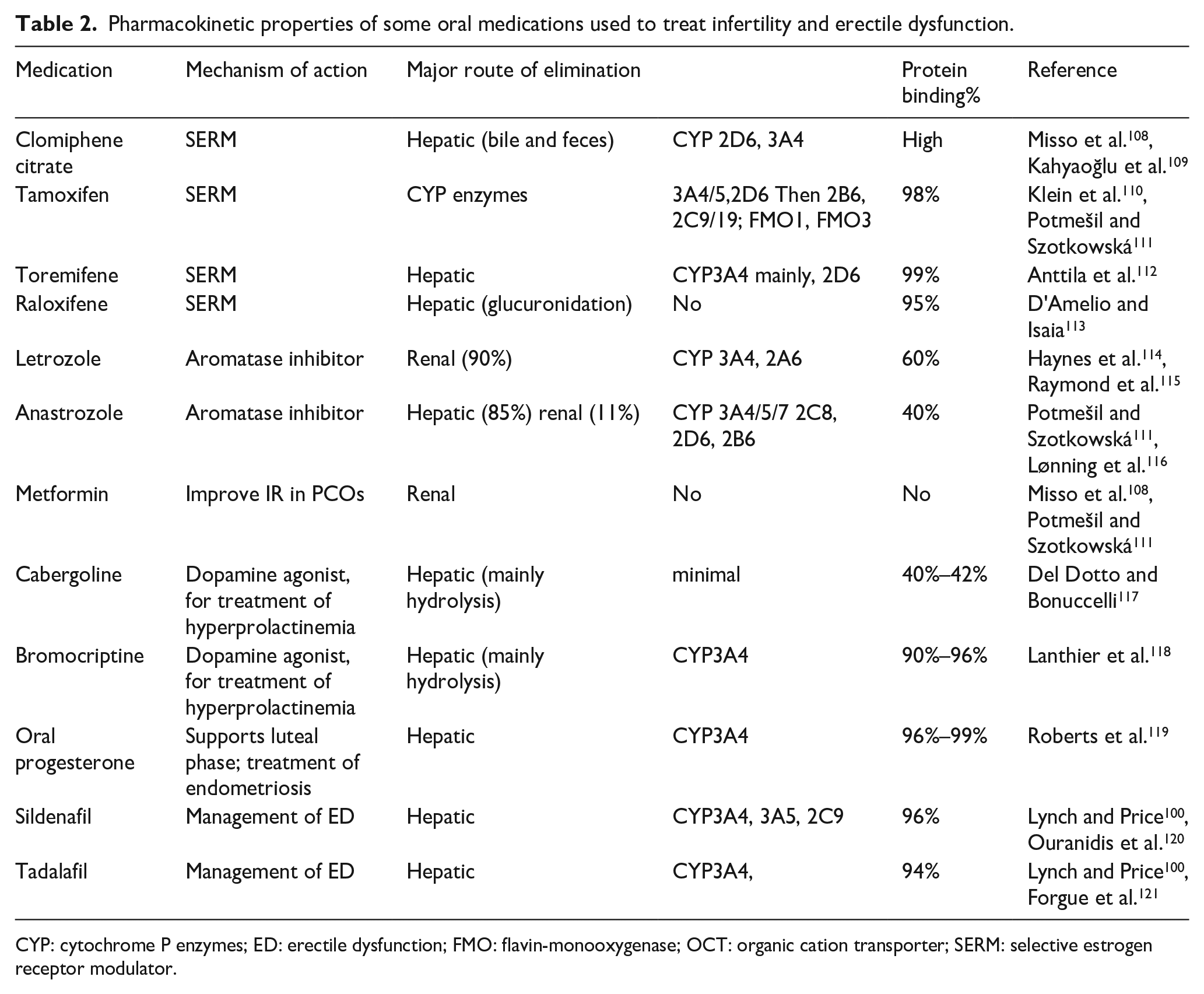
CYP: cytochrome P enzymes; ED: erectile dysfunction; FMO: flavin-monooxygenase; OCT: organic cation transporter; SERM: selective estrogen receptor modulator.
Moreover, the selective estrogen receptor modulator (SERM), tamoxifen is not only bioactivated to endoxifen by a CYP2D6 activity, but also tamoxifen is a substrate to breast cancer resistant protein (BCRP), and multidrug resistance-associated protein-1 (MDR-1)/P-gp transporters. The expression of both transporters was found to be correlated to GM composition.105,122 Infertility drugs can also affect the CYP450 activity, which can alter their own as well as other drugs’ metabolism. For example, anastrozole can decrease the activity of CYP450 isoenzymes: CYP1A2, CYP3A4, CYP2C8, and CYP2C9, while letrozole moderately inhibits CYP1A1 and CYP2A6 and weakly inhibits CYP3A4. Meanwhile, sildenafil is a weak inhibitor of CYP 1A2, 2C9, 2C19, 2D6, 2E1 and 3A4. 123
On the other hand, the GM metabolites, p-cresol, and indoxyl sulfate, were found to exhibit a strong affinity for binding with albumin, which can consequently reduce the effectiveness and elimination of certain drugs. 124 As shown in Table 2. some drugs used for the treatment of infertility especially the SERMs have a high protein binding capacity. Thus, the plasma level of those drugs might be affected by the competitive affinity of that GM metabolite to plasma proteins. Gupta and Khanna observed that zuclomiphene, a clomiphene citrate metabolite was found to stay in the body for up to a month after treatment, owing to plasma protein binding and enterohepatic circulation. 125 Also, it is to be mentioned that clomiphene citrate itself can affect hepatic protein synthesis and hence the plasma protein level. 126 However, more precise studies are required to confirm the exact impact of GM on the metabolism of these drugs.
At the same time, we need to be cautious about drugs that may disturb the host-microbiota ecosystem. 127 Proton pump inhibitors (PPI) were found to increase the concentration of oral bacteria in the gut by decreasing the acidity of the stomach. Antibiotics and laxatives can decrease gut bacteria. 128 Special attention is to be paid to the use of metformin which is commonly used to induce ovulation in PCO patients. Metformin can affect various metabolic pathways associated with fatty acid metabolism and the synthesis of SCFAs by directly increasing the activity of the responsible bacteria.
Role of probiotics in the management of infertility
As mentioned before, many experimental studies supported the use of GM-based therapy in the management of infertility by treating the underlying for example, PCOs, endometriosis.27,32 Researchers also found a positive impact of the use of specific probiotics to overcome dysbiosis and the related complications that cause infertility. The use of probiotics was found to reduce intestinal permeability and endotoxemia. 129 By the same intimation, FMT succeeded in restoring the intestinal mucosa integrity and regulating the composition of the intestinal microbiota.
Although there are only a limited number of human studies available on the role of probiotics in infertility, most of them have primarily examined the effects of vaginal bacteria rather than gut bacteria. However, the findings from these studies are contradictory when it comes to the pregnancy rate. Nevertheless, they do indicate a beneficial influence on sperm motility.27,130,131
It is highly recommended that future research endeavors focus on confirming the potential impact of probiotics in the effective management of infertility. By expanding the scope of investigation, researchers can shed light on the intricate mechanisms through which probiotics may influence fertility. This in-depth exploration will not only validate the existing claims but also contribute to a broader understanding of the role probiotics play in addressing infertility concerns.
Conclusion
GM plays an inevitable role in determining human health. The secretory and metabolizing functions of microbiota besides the important role of gut bacteria in shaping host immunity paved the way for many studies to investigate the possible implication of GM in infertility. GM has a significant influence on the HPA axis and can regulate the level and activity of sex steroid hormones. Owing to the role of dysbiosis and inflammation in disorders such as hypogonadism, IR, obesity, diabetes, ED, PCOs, endometriosis, and pelvic inflammatory disease, researchers considered GM-based therapies in the management of infertility. GM can also alter the activity of many drugs by changing the rate of their bioactivation and/or deactivation. The plasma binding capacity and the transporters of some of those drugs have also been reported. All these factors suggest the potential therapeutic role for the restoration of intestinal integrity and GM diversity in patients with infertility. These include the use of probiotics and prebiotics, FMT, antibiotics, and dietary interventions. However, well-designed clinical trials are needed to validate the potential of GM in the management of infertility.
Footnotes
Acknowledgements
Not applicable
Author’s contributions
O.A.N was responsible for the study conception. O.A.N., R.M., and EM wrote the main manuscript. O.A.N. prepared the figure, and all authors reviewed and approved the manuscript.
Declaration of conflicting interests
The author(s) declared no potential conflicts of interest with respect to the research, authorship, and/or publication of this article.
Funding
The author(s) received no financial support for the research, authorship, and/or publication of this article.
Ethics approval and consent to participate
Not applicable.
Consent for publication
Not applicable.

Availability of data and material
Not applicable.