







Abstract
In India, the politics of hope around slum relocation is created through claims that it would improve living standards of the poor and vulnerable families. Families, however, are not a unitary entity whose members are affected by relocation in the exact same ways. Motivated by the sets of feminist literature that problematize the family as a locus of both cooperation and conflict, and displacements as a gendered process, this article examines how forced relocation alters labor market engagements of (relocated) women, and why. Using an in-depth fieldwork-based case study of slums and a resettlement colony in Delhi, it elucidates if relocation-led sociospatial changes are reproducing gendered vulnerabilities in the city. Through that, my work underscores the need to transform the current policy into one that is gender sensitive and, hence, truly inclusive.
Keywords
1. Introduction
The relentless drive to demolish inner-city slums and redevelop freed-up land into more “productive” uses constitutes an integral part of the neoliberal capitalist project in Indian cities. 1 To gather legitimacy for the project, policy makers have claimed that the “relocation” of poor and vulnerable families from “illegal” settlements (slums) to formally recognized localities (resettlement colonies [RCs]) would arrest multidimensional urban problems of poor-quality housing, unemployment, and segregation (IANS 2009; Kumari 2010). But critical scholarship on lived realities in the RCs has cast doubts on this distributional rhetoric of the demolition-relocation policy, especially given the fact that such colonies have been established in far-off rural-urban fringes (Menon-Sen and Bhan 2008; Rao 2013; Ramakrishnan 2014). It has illustrated how housing conditions remained poor and, in many cases, even deteriorated, public services severed, and employment opportunities substantially compromised in those peripherally located neighborhoods.
Though enlightening and pertinent, most of the research in the area focuses on examining the policy’s impacts at the level of (displaced) families. Families, however, are not a unitary entity whose members are affected by displacement in the exact same ways. Motivated by the sets of feminist literature that problematize the family as a locus of both cooperation and conflict (Hartmann 1981; Folbre 1986) and displacement as a gendered process (Moghissi 1999; Bisht 2009; Levien 2017), this article examines the effects of displacement on women’s participation in market work in India’s capital city. It asks how eviction from central city areas and displacement to far-off isolated localities affect the workforce participation rate (WPR) among women belonging to the lowest echelon of the working class. Does the subsequent disruption of livelihoods and life-making processes push more women to take up market work, or does it further hinder their WPR? And why so?
Even with slum eviction and displacement measures gaining valence in policy circles within cities, research on their gendered effects has remained underexplored. In the Indian context, such effects have been better studied in relation to “development”-induced displacement under process in rural areas (for instance, displacement for the construction of large dams). Yet, the sparse literature on the theme in an urban setting has initiated a discussion on the loss of paid work options for women of the affected families and changes in the nature of such jobs. Menon-Sen (2006) has discussed how petty traders and shopkeepers were worst hit by displacement as their grocery shops, tea and cigarette stalls, fish carts, etc. did brisk business in and around slums. But most of them had not built up enough asset base to allow them to set up shops again in the RCs. Along with these sources of self-employment, paid domestic work in nearby middle-class colonies provided a source of income to women in the slums. Unfortunately, this work also got severed with displacement to peripheral areas as commuting to nearest middle-class neighborhoods cost significant amount of time and money (Menon-Sen 2006; Coelho, Venkat, and Chandrika 2013). The most common form of employment available to the displaced people is precarious, back-breaking, and often hazardous work in factories located in the nearby industrial zones (Menon-Sen and Bhan 2008; Coelho, Venkat, and Chandrika 2012). My article aims to contribute to this discussion by examining how these altered work options interact with other sociospatial factors in the RCs to generate changes in the incidence of women’s workforce participation. 2
Apart from participating in the discussion on gendered effects of displacement in cities of the global South, I believe this work has the potential to make two more contributions. First, by substantiating how displacement can significantly affect the sociospatial milieu of people and in turn women’s market work decisions, this study throws open fresh preliminary hypotheses as to why female WPR might be unusually low and stagnant in neoliberal urban India. Scholarly debates have mainly attributed this trend to increasing household incomes, intensifying domestic work burden, and deteriorating employment opportunities, among others. Klasen and Pieters (2015) have argued that because women are regarded as secondary earners in the Indian society, an increase in their household income has spurred the classic income effect and led them to withdraw from the labor force (LF). Naidu (2016) and Rao and Vakulabharanam (2018) have emphasized the need to see insufficient welfare measures of the Indian state as a major reason behind the worsening of domestic work burden of women, proposing the resultant accelerating drudgery as the driving force of the stagnating female LF participation trend in urban India. On the other hand, Ghosh (2009) and Chen and Raveendran’s (2012) detailed analyses of labor market trends have demonstrated that the trend can be explained by declining employment opportunities as well as deteriorating quality of work for female workers. I propose that forced displacement also plays a significant role in altering women’s LF participation, and it does so through some of the above mechanisms and some yet understudied channels.
Second, in exploring how spatial factors could affect care burden and, in turn, women’s WPR, it emphasizes the need to revisit our understanding of care work categories. These categories as they exist in the present literature mostly emanate from an examination of the context of the global North, and in doing so, fall short of illustrating what the Southern context—particularly, unsafe urban environment there—entails. For instance, supervisory care work, like that of keeping an eye on young children who are unable to care for themselves, is deemed less intense than other forms of care, simply because it can be combined with other domestic chores like cleaning, cooking, washing clothes and dishes, etc. (Folbre 2018). But what if a household lives in a highly unsafe neighborhood where keeping a constant eye on not only young but also adolescent children (especially girls) is a necessity? Can it be a relatively more onerous and stressful task than active care work like bathing kids then? This article, focusing on unsafe neighborhoods like that of slums and RCs, forces us to ask and answer some such questions.
2. Data and Methodology
In India, the only source of large-scale data along disaggregated spatial axis within an urban (as well as a rural) region is the Indian Census. The spatial hierarchy it utilizes comprises the Urban Agglomeration, District, Census Ward, and Enumeration Block. The last two rounds of the census data, namely, 2001 and 2011, brought forth sample microdata on certain dimensions of economic activity and the corresponding residential locations of individuals, and that could have potentially served as a rich quantitative data set for calculating changes in women’s WPR following displacement in early to mid-2000s. However, the information on economic engagement of individuals was limited only to variables like “worked anytime during last year” and “category of economic activity” (viz., cultivators, agricultural laborers, workers in household industry, and other workers). That made it difficult to assign employment statuses (viz., employed, unemployed, and out of the LF—it cannot be determined just on the basis of the information as to whether one worked anytime in the last one year or not) and precise occupational engagement (e.g., if one is a factory worker or a paid domestic help, etc.) to individuals, both of which are important for the present analysis. 3
Given these considerations, I designed and conducted a spatially representative survey in two inner-city slums and one of the oldest and largest post-1990s RC in the National Capital Territory of India, Delhi. The reason I selected Delhi as my research site is that it has been a vicious experimental field for slum clearance over the past three decades. In 1991–1992, the government of Delhi adopted a threefold strategy of in situ upgradation of slums whose land was not needed for any project implementation for the next fifteen to twenty years, relocation of slum clusters whose land was needed for projects in the “larger public interest” and environmental improvement in terms of provision of basic amenities in other clusters (Dupont 2008). However, the prevalent strategy followed was that of demolition of slums, leading to a sharp decline in the size of Delhi’s slum population in the 1990s for the first time since Independence. In my study, the slums are chosen based on their location—they are located close to areas from where some other slums got demolished in the early 2000s with inhabitants relocated to the chosen RC. I compare women’s WPRs and contributing factors in these two sets of locations as a proxy for the comparison between pre- and post-eviction scenarios, which one cannot undertake because of paucity of data from pre-eviction sites and times. Given some very sensitive data my field research has collected and made use of, I have decided to keep these sites anonymous. My sample size was 3 percent of the population in each of the sites. I utilized the Enumeration Block data provided by the Census to stratify my population into spatially located categories. I then randomly selected 3 percent households from each stratum, making the sampling design one of stratified random sampling.
The first step in the nine-month-long fieldwork that this article draws upon involved testing a detailed, yet preliminary, survey instrument that had questions on demographic and employment particulars in all the three research sites. Following the pilot survey in November 2019, I revised the survey instrument to make it more context suitable and then conducted quantitative surveys of a total of 195 households—20 in one slum, 21 in the other slum, and 154 in the RC—spread over the months of December 2019 and January to April 2021. 4 Finally, to complement the survey data with qualitative data, I conducted semistructured interviews of some selected households in all three sites, activist groups in the RC, and villagers near the RC between July and September 2021. I also drew insights from ethnographic observations that I had made along the way over the whole 9-month period.
3. Gendered Effects of Urban Displacement
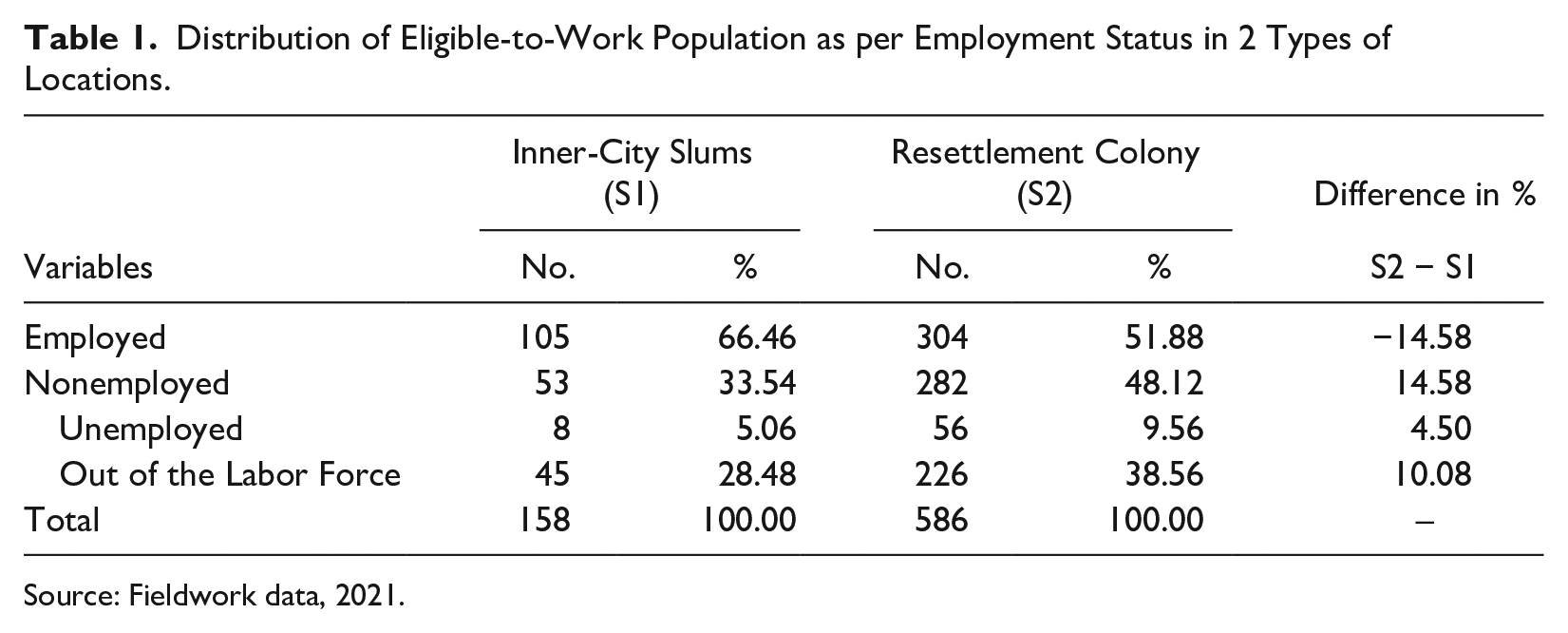
As described in the literature, displacement from central city areas to underdeveloped peripheries jeopardizes people’s employment opportunities not only in the short run but also over the longer term, discouraging many from actively looking for market work and, eventually, withdrawing from the LF (Coelho, Venkat, and Chandrika 2012, 2013). A comparison of employment statuses of people in inner-city slums and the RC from my field data confirms this. 5 Table 1 notes how the share of employed people in the slums is 14.58 percentage points higher than that in the RC. Moreover, the corresponding difference in nonemployment (i.e., unemployment and withdrawal from the LF) is mainly driven by the difference in LF withdrawal rate, with it being 10.08 percentage points lower among people in the slums as compared to people in the RC. These figures indicate how displacement can cost people livelihood options and, concomitantly, capabilities to live the kind of life they value living.
Distribution of Eligible-to-Work Population as per Employment Status in 2 Types of Locations.
Source: Fieldwork data, 2021.
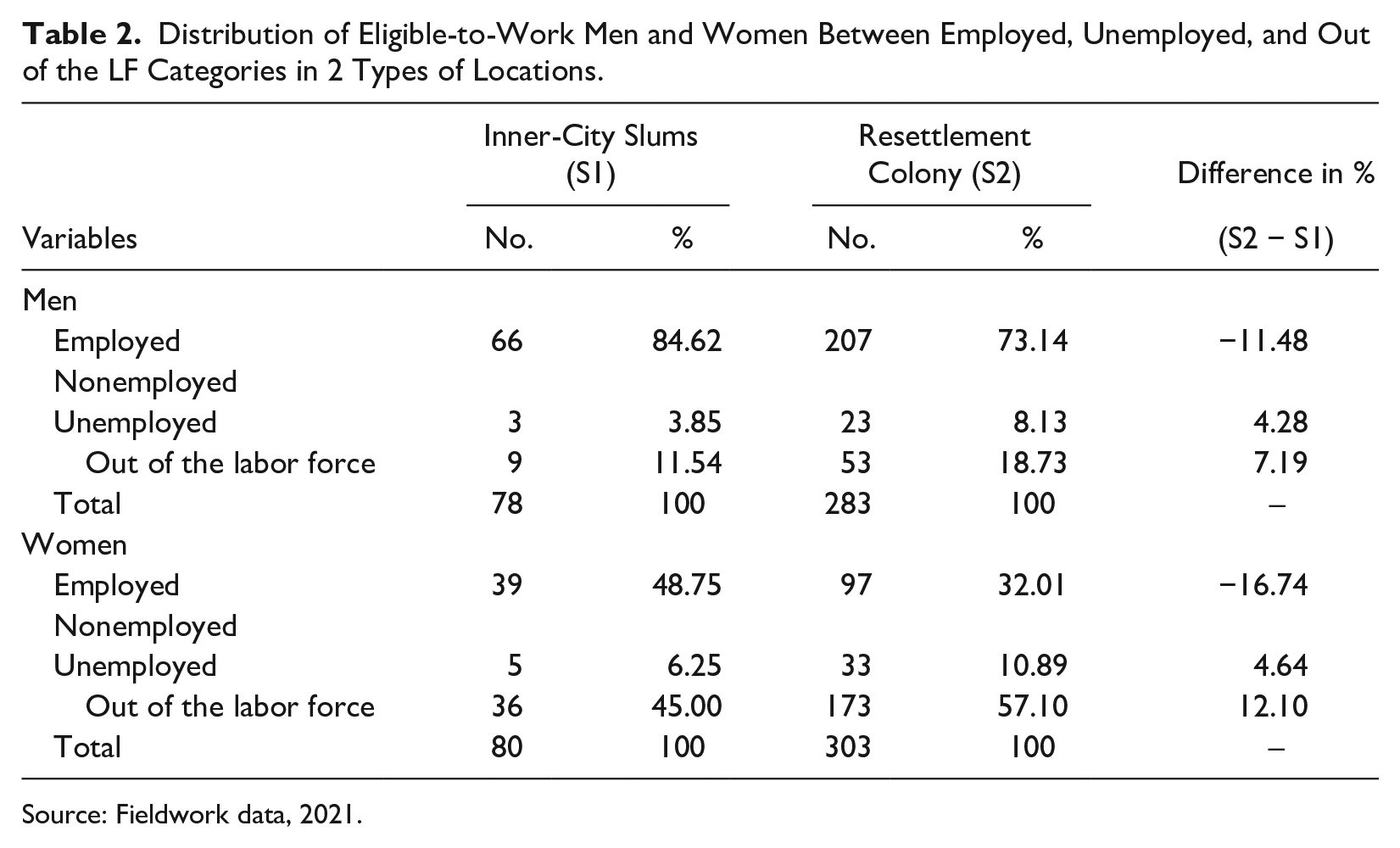
Upon decomposing the employment numbers by gender, we can see that the cost of displacement is borne disproportionately by women. Table 2 shows this by noting that the share of employed women in the slums is 16.74 percentage points higher than that in the RC, while the difference between the percentage of employed men in the two sites is 11.48 points. Additionally, the tendency to exit from the LF is seen to be substantially higher among women in the RC than men there, when compared to their respective tendencies in the slums.
Distribution of Eligible-to-Work Men and Women Between Employed, Unemployed, and Out of the LF Categories in 2 Types of Locations.
Source: Fieldwork data, 2021.
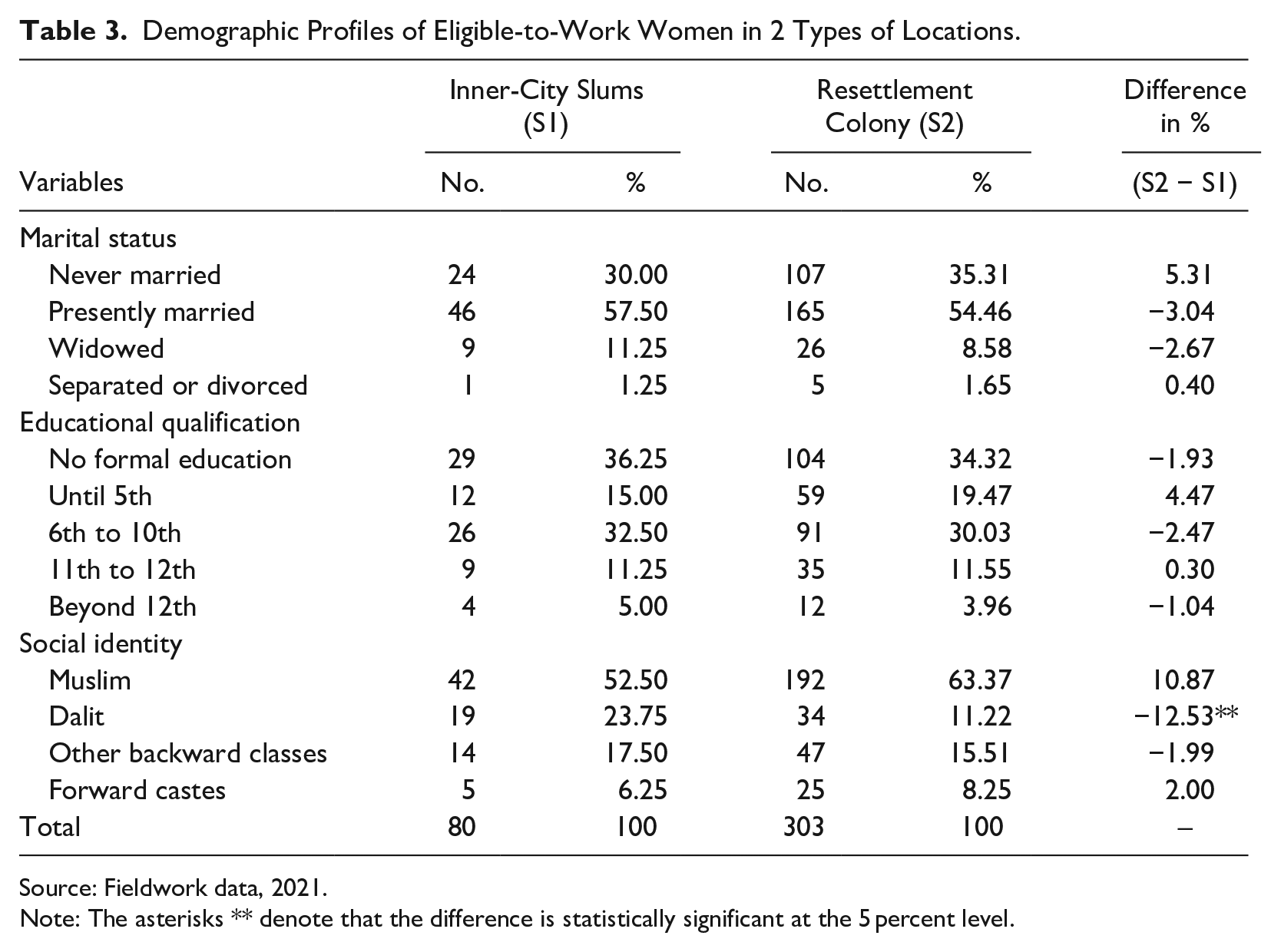
What are the potential factors that can lead employment and nonemployment rates to differ significantly between the two locations? To ensure that the differences are not driven by demographics of the women inhabiting the two research sites, I compute descriptive statistics on demographic profiles of the two sets. Table 3 presents the findings. None of the differences in the proportions except for the difference in percentage of Dalit women in the two sets are statistically significant. 6 This indicates that there is not much compelling reason to think that the differences in employment-related specifics are dictated by differences in demographic composition of the women in question.
Demographic Profiles of Eligible-to-Work Women in 2 Types of Locations.
Source: Fieldwork data, 2021.
Note: The asterisks ** denote that the difference is statistically significant at the 5 percent level.
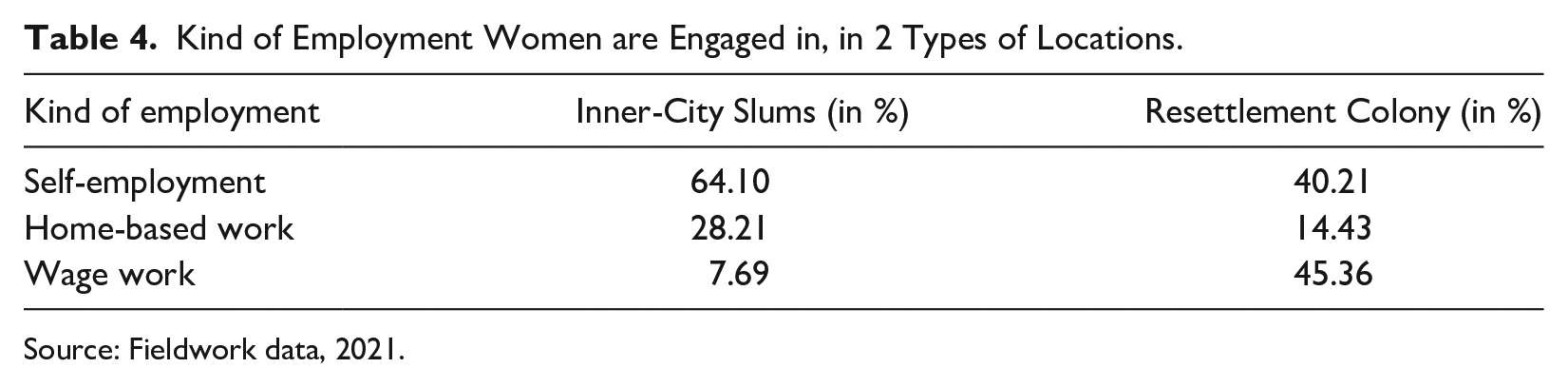
A cursory look at the data reveals that the kind of jobs available in the two sets of locations are quite different. As noted in table 4, an overwhelming majority (92.31 percent) of employed women in the slums work as self-employed and home-based workers. This kind of labor is mostly undertaken within or in close proximity to the places of residence. On the other hand, as much as 45.36 percent of employed women in the RC work as hired wage workers. Most of them travel to the nearby industrial area, which is approximately 2.24 miles away from the RC. Does this shift in the nature of employment opportunities partly explain the declining LF participation of women in the RC?
Kind of Employment Women are Engaged in, in 2 Types of Locations.
Source: Fieldwork data, 2021.
The literature qualifies multiple factors as having important explanatory power to female workforce participation decisions. They include individual-level factors like marital status of the woman and her educational qualification as well as household-level factors like social identity, economic status, and care burden borne by the woman. For the present analysis, I draw on this literature and check for their influence on the concerned womenfolk’s workforce-participation decisions in both the sites. I utilize bivariate analysis to that effort, which I complement with my qualitative findings and ethnographic observations from the field.
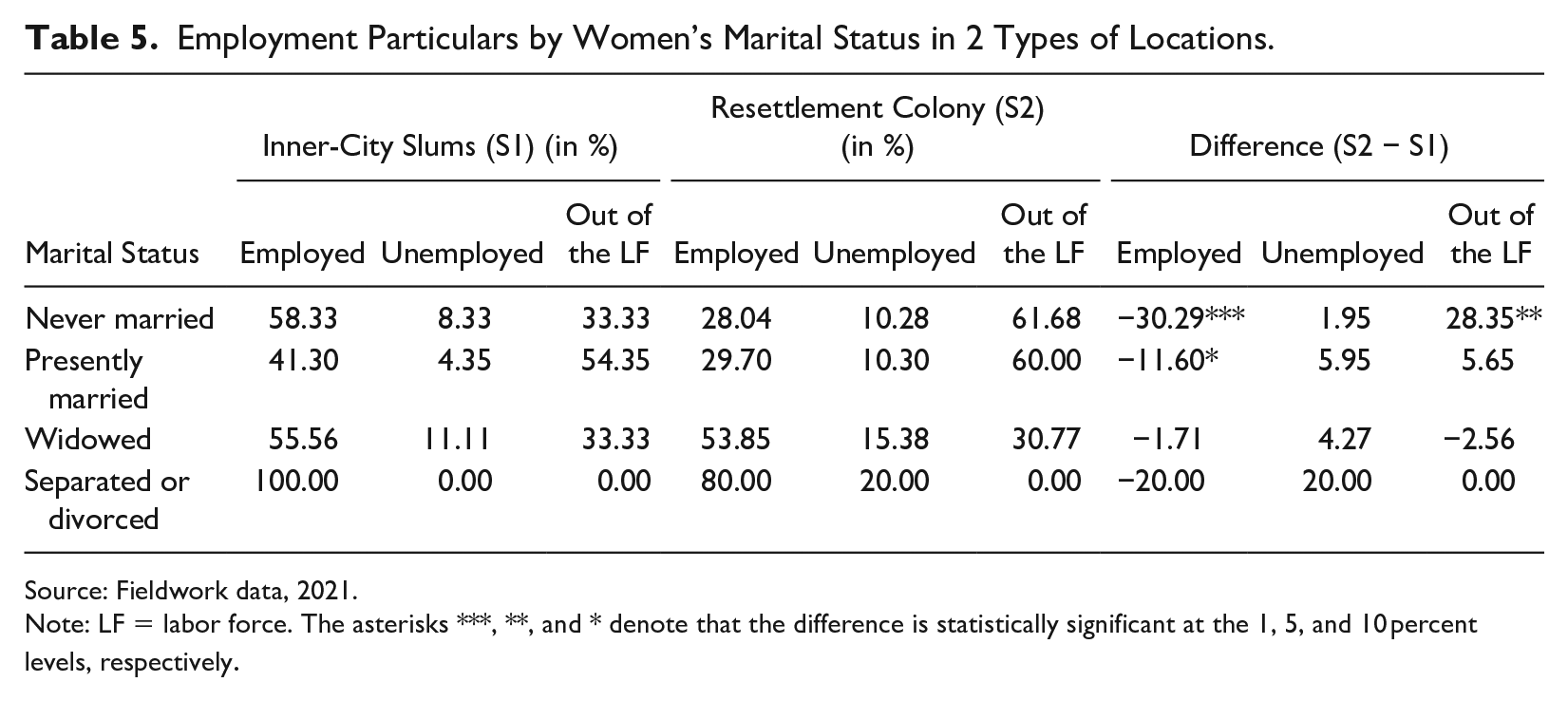
As table 5 shows, never married and presently married women in the RC are significantly less likely to be employed as compared to their counterparts in the slums. Ethnographic observations and interviews reveal that this might be caused by the coming together of two factors: first, the heightened risk against physical and sexual safety in and around the RC, and second, greater spatial and temporal disassociation between home and place of paid work for the women living in the RC. Women of all age group and marital statuses reported being at risk of harassment while traveling to and working at factories in the industrial area, but families of girls/women who are yet to be married seemed most worried about their daughters’ safety. 7 While the risk against safety was undeniably palpable in the slums too, it is exacerbated in the RC because of the increased incidence of alcohol and drug addiction among men, which in turn is influenced by disruption of livelihood options upon displacement. The latter is borne out by table 2, which shows that employment among men is almost 11.5 percent lower in the RC as compared to the inner-city slums.
Employment Particulars by Women’s Marital Status in 2 Types of Locations.
Source: Fieldwork data, 2021.
Note: LF = labor force. The asterisks ***, **, and * denote that the difference is statistically significant at the 1, 5, and 10 percent levels, respectively.
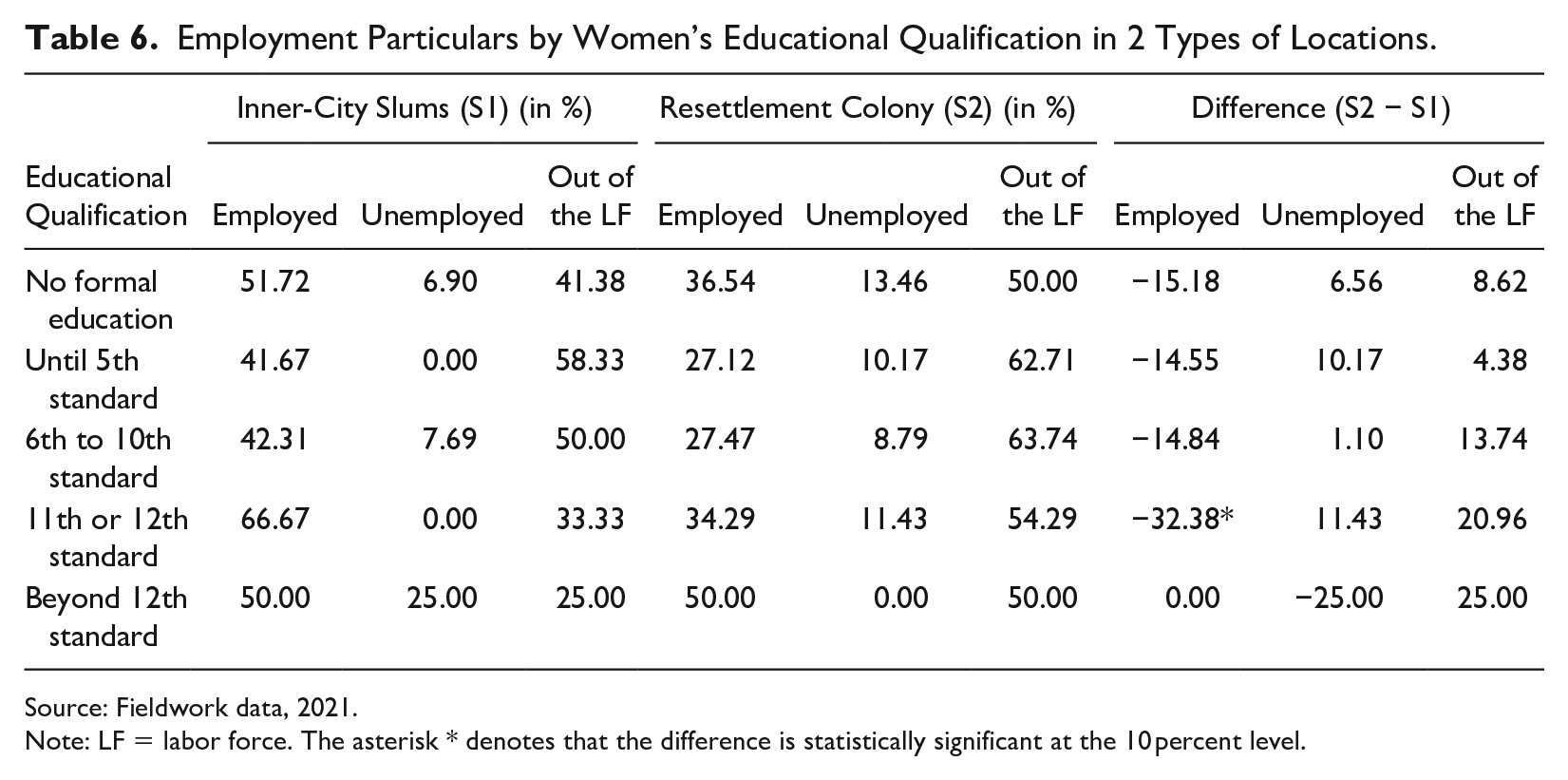
Table 6 depicts employment engagements of women having different educational qualifications. Note that the sample size of women having post–high school qualification is rather low in my research sites, and so, I analyze the data with caution. The numbers in the table show that women with relatively higher formal qualification (i.e., with 11th or 12th standard degree) are significantly less likely to be employed when living in the RC as compared to the slums. Qualitative data attributed this to the lack of decent job opportunities in and around the RC. Sakeena, a 21-year-old high school graduate remarked how the available menial factory work is not worth her educational qualifications. 8 Some other women reported how the more reputed teaching and social work jobs are reserved for women coming from outside the RC, since RC people are seen as “polluted social elements.”
Employment Particulars by Women’s Educational Qualification in 2 Types of Locations.
Source: Fieldwork data, 2021.
Note: LF = labor force. The asterisk * denotes that the difference is statistically significant at the 10 percent level.
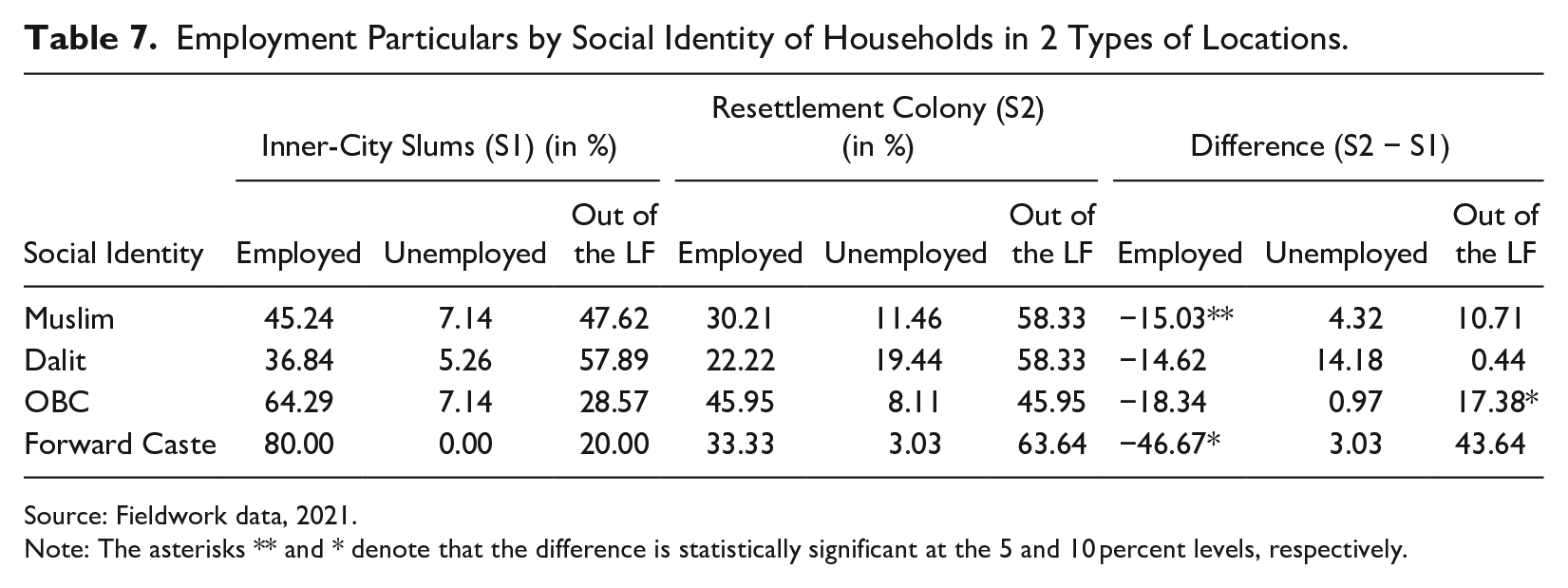
Considering the correlation between social identity of the households of the concerned women and their employment engagements, table 7 shows that the employment rate is significantly lower among Muslim and forward-caste women in the RC than in the slums. This could be because Muslim women have to follow purdah and many forward-caste families also strictly police their women’s mobility outside of the domestic space (Liddle and Joshi 1989; Eswaran, Ramaswami, and Wadhwa 2013). The more stubborn restriction on forward-caste women’s freedom of finding employment outside the home space is borne out by Pramila’s (42 years) testimony. She reported how she cannot think about going to the factory to work because that would lead her upper-caste in-laws in the village to ask her to come back to the village. Given that a significant share of jobs available for women living in the RC requires them to step out of the house, that location witnesses a far lower employment rate as compared to the slums, where home-based work and self-employment constitute the majority of employment opportunities.
Employment Particulars by Social Identity of Households in 2 Types of Locations.
Source: Fieldwork data, 2021.
Note: The asterisks ** and * denote that the difference is statistically significant at the 5 and 10 percent levels, respectively.
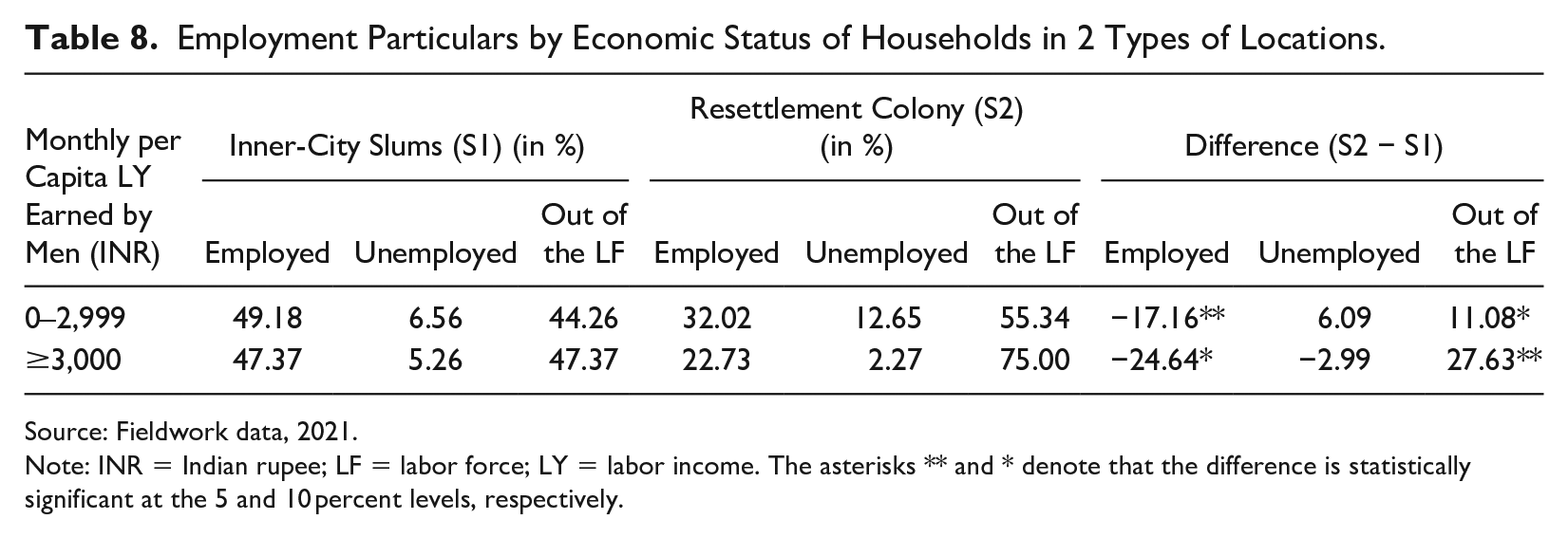
Table 8 presents the bivariate correlation in differences in such rates between the two sites and economic status. As economic status—measured by male household members’ monthly per capita labor income (LY)—of a household improves, women’s employment rate in the RC declines more dramatically than that in the slums. To be more specific, the gap in the rate between the two locations increases from 17.16 to almost 25 percentage points. Concomitantly, the rate of LF withdrawal increases from 11 to 28 percentage points.
Employment Particulars by Economic Status of Households in 2 Types of Locations.
Source: Fieldwork data, 2021.
Note: INR = Indian rupee; LF = labor force; LY = labor income. The asterisks ** and * denote that the difference is statistically significant at the 5 and 10 percent levels, respectively.
Finally, the association between women’s unpaid care burden and their LF participation is examined. 9 For that, I construct a proxy categorical variable for care labor (CL) following two steps. First, I attempt to capture the care load by computing a variant of the dependency ratio in a household. I define it as follows:
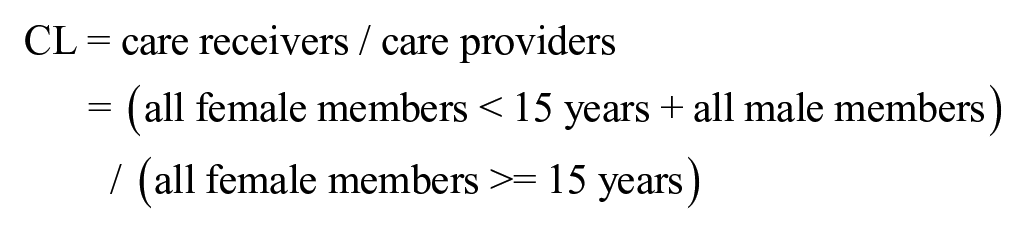
The rationale to classify all girls below 15 years as care receivers is that in neighborhoods such as slums and RCs, the sexual safety and sanctity of young girls is a major issue. Families expect older female members to keep a constant eye on the younger ones so that they do not come in contact with unsuitable male members of the community. 10 In fact, that, in my field locations, comprises a major component of CL of the older female members of the household, which need them to do intensive supervisory care. Ethnography as well as qualitative interviews with mothers and grandmothers of young girls reflected how stressful and anxiety-provoking such CL can be, making it imperative to understand it as a whole new category of CL. I preliminarily call it “vigilance CL.”
Upon estimating CL, which is a discrete variable, the second step is to convert it into a categorical variable by dividing the sample set into two equal halves. The first half consists of CL from 0 (or the minimum CL) to 1.667 and the latter half from 1.75 to 8 (i.e., the maximum CL).
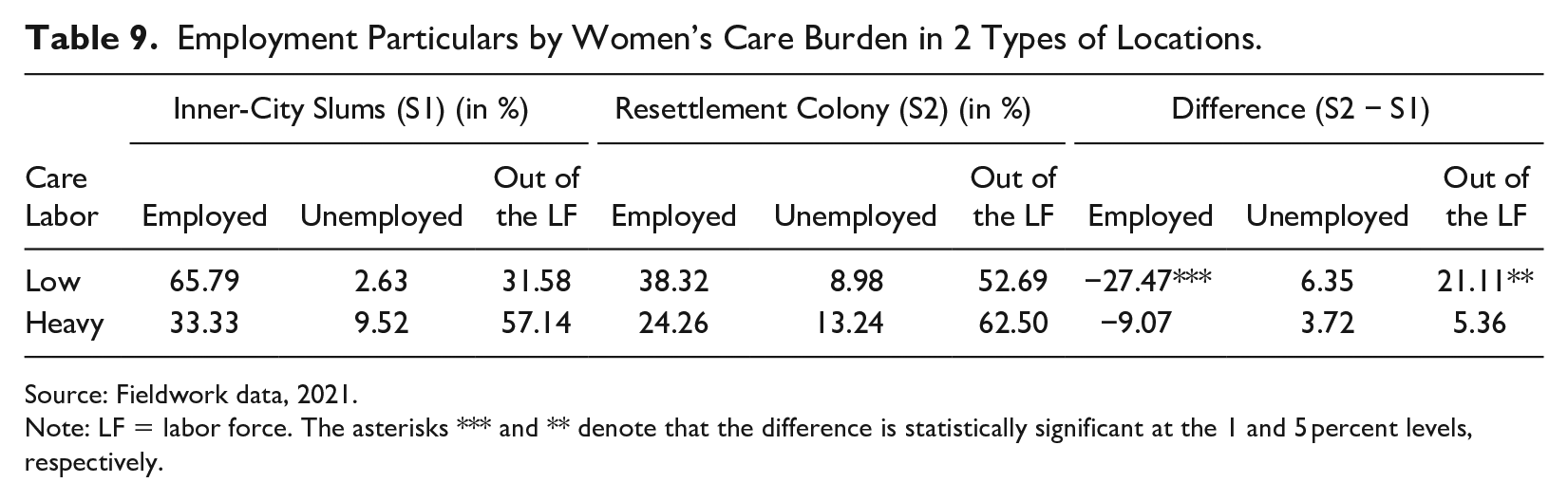
Table 9 shows that at low level of CL, the employment rate of women in the RC is significantly lower than that in the slums. This lower employment rate among women in the RC can be explained by the coming together of several factors in the RC: heightened safety issue given the accelerating incidence of alcohol and drug addiction, erosion of community bonding that reduces the ability to share care labor among neighbors, and deteriorating public provision of institutionalized care services (like hospitals) make the need for familial CL more stringent. Here, the breakdown of community ties that jeopardizes the sharing of care labor among neighbors in the RC deserves further comment. In the slums I surveyed, people from the same village or caste or ethnicity or, at times, even extended family, live next to each other. Carving out a life together through the years has helped them strengthen social ties among themselves. On the contrary, in the RC, people have been allocated plots randomly (on the basis of a lottery system) by the government, forcing those from different religions, castes, or ethnicities to live side by side. My interviews with activist groups from the RC revealed that the propagation of deep communal politics at the national level is prohibiting community formation among Hindu and Muslim or backward- and forward-caste neighbors there. Along with that, limited livelihood opportunities in a peripheral location of the city compel them to see and treat each other as competitors. At the same time that these factors make vigilance CL at the level of the family more demanding, the spatiotemporal disjunction between the spaces of residence and paid work in the RC makes it impossible for women to combine it with market work. Together, these force many of them to exit the labor market. Rabia (37 years) tells me how she cannot think about leaving home to go do paid work even though her husband’s—the sole breadwinner of their household—wages do not meet all their needs because she has an adolescent girl and a boy at home. The “kharaab mahaul” (“bad environment”) of the RC, she says, necessitates that she keep her children under careful observation all the time.
Employment Particulars by Women’s Care Burden in 2 Types of Locations.
Source: Fieldwork data, 2021.
Note: LF = labor force. The asterisks *** and ** denote that the difference is statistically significant at the 1 and 5 percent levels, respectively.
As CL intensifies, the employment rate of women falls in the slums as well as in the RC. However, the fall is steeper in the slums as compared to the RC, making women’s employment rate in the RC not statistically significantly different from that in the slums. The fall could be steeper in the slums partly because the percentage of employed women is pretty high at low level of CL there. But as CL becomes heavier, many of them possibly find it difficult to combine domestic work with market work even when the two are not spatially disconnected or are in close proximity of one another.
4. Discussion and Conclusion
In this short article, I have called into question the policy claims that slum eviction and “relocation” would improve living standards of the poor and vulnerable families. Focusing on the gendered impacts of such displacement in the capital city of India—one that has emerged as a ferocious experimental ground for such policies, I highlight that displacement-led sociospatial changes are reproducing gendered vulnerabilities in the city. Through carefully collected field data of both the quantitative and qualitative kind, I show how women’s WPR in the RC has undergone a larger decline than that of men’s. A number of sociospatial factors—like the breakdown of close-knit communities as an aftereffect of extreme exclusion caused by dispossession, deterioration of public provisioning of care, compromised status of physical and sexual safety due to accelerated incidence of drug addiction among the menfolk, and disruption of socially accepted paid work opportunities for women—have contributed to this. The coming together of these factors aggravated the reproductive burden at the level of individual women but also made it more difficult for them to find market work that could be combined with care work, eventually leading to a substantial proportion of women stepping out of the LF in the RC.
This work underscores the need to preserve the strengths of marginalized neighborhoods in terms of community building and solidarity. Displacement, especially to isolated areas with insufficient public goods and livelihood options, just goes on to show how the state has failed them and their needs yet again. And to prove this wrong, the state must consider the option of in situ slum rehabilitation seriously.
Footnotes
Acknowledgements
I would like to thank the two reviewers and the editor for their insightful comments on an earlier draft that helped me improve the article. I would also like to thank Vamsi Vakulabharanam, Smriti Rao, Joya Misra, and James Boyce for their useful feedback on ideas presented in the article. The usual disclaimers apply.
Declaration of Conflicting Interests
The author declared no potential conflicts of interest with respect to the research, authorship, and/or publication of this article.
Funding
The author disclosed receipt of the following financial support for the research, authorship, and/or publication of this article: The author received financial support from the Department of Economics, UMass-Amherst, and the Graduate School, UMass-Amherst, for carrying out field research for the article.
1
Here, neoliberal capitalism refers to the regime starting in India in 1991 wherein the accumulation dynamics were primarily determined by private capital with the state committing to create conditions for faster accumulation ( ). In the context of the present article, it encapsulates city authorities’ making land available to private and public developers for industrial, commercial, and residential growth.
2
I use the phrase “sociospatial factors” to assign causal significance to both the social and spatial features of the RCs (and slums) in influencing women’s WPR there.
3
The other large-scale databases that allow us to utilize employment particulars of individuals are the National Sample Survey (NSS) and the Periodic Labor Force Survey (PLFS), but they do not offer detailed location data needed for our analysis. The highest level of locational disaggregation they contain is that of district.
4
The surveys I undertook in December 2019 were useful mainly in order to draw qualitative insights, but not for direct quantitative comparison with surveys I conducted in 2021. I could not continue with the surveys in 2020 due to the pandemic.
5
People who are bodily abled and between 15 and 65 years are considered eligible to do paid work.
6
I have used Pearson’s chi-squared test when sample size is large and Fisher’s exact test when sample size is small to test for statistical significance of differences between proportions in this article.
7
Note that most employed women travel either on foot or by cycle-rickshaws to their workplaces, and not by private vehicles of family members even if they own one.
8
Names have been changed to protect people from identification.
9
Care burden (or care labor/work/load) refers to unpaid care burden in this article.
10
Here, female members aged ≥15 years are treated as caregivers for the sake of consistency because by the age of 15, they turn eligible to do paid work. That also makes it difficult to keep them under close observation all the time.