







Abstract
The paper contributes to the ongoing debates on capitalist climate governance by drawing from a case study of Gilgit Baltistan (GB), Pakistan. The article underscores what has been largely ignored by economists, namely, that agroecological farming practices of small peasants offer useful insights for sustainable climate governance because they are rooted in a holistic conceptualization of nature that transcends the ontological separation between human and nonhuman nature. Further, it illustrates that a meaningful analysis of climate governance in the Global South should be grounded in the historical and localized socio-institutional milieu. As the power balance between capitalists and the local community has steadily shifted against the latter, climate governance has degenerated into green grabbing and carbon colonialism. This climate governance regime has undermined both the agroecological livelihoods of small peasant communities and environmental sustainability in GB.
1. Introduction
Recent empirical studies on climate change have revealed a clear trend of “elevation-dependent warming” in mountainous regions around the world (Mountain Research Initiative EDW Working Group 2015). Elevation-dependent warming implies that higher-elevation regions are experiencing warming at a faster rate than lower-elevation areas. In this article, we critically analyze environmental policy regime and its impact on agrarian livelihoods in one of the highest mountainous regions in South Asia: Gilgit Baltistan (GB). Situated at the confluence of the Karakoram, the Himalayas, the Hindu Kush, and the Pamir Mountain ranges, GB is home to some of the world’s highest peaks, including K2. Because of its high altitude, GB is particularly vulnerable to the adverse effects of climate change. Further, what makes GB an interesting case study is its unique administrative status in the context of South Asia. At the time of the independence of India and Pakistan in 1947, GB was part of the princely state of Jammu and Kashmir. The territories of this princely state were divided between the two countries, with GB coming under Pakistan’s control while India continues to lay claim to it. This makes GB part of the wider dispute of Jammu and Kashmir. Since 1947, GB has been under the administrative control of the federal government of Pakistan. As a federation, Pakistan is divided into four provinces: Punjab, Sindh, Khyber Pakhtunkhwa, and Baluchistan. Each has its own legislative assembly. Each province also elects representatives to Pakistan’s National Assembly and Senate. However, Pakistan has not granted provincial status to GB, as it considers GB to be part of the conflict of Jammu and Kashmir. Pakistan’s official position is that GB should decide its future just like every other part of Jammu and Kashmir through a plebiscite whether to join Pakistan or India. GB has its own legislative assembly, elected through multi-party elections, but lacks representation in Pakistan’s National Assembly and Senate.
In the mainstream imagination of Pakistan, GB is primarily known for its pristine nature (Ali 2019). As a result, GB has been subjected to most aggressive type of environmental conservation policies in the context or Pakistan. The article argues that the environmental policies implemented in GB are an extension of the global neoliberal climate governance regime that is driven by the imperative of capital accumulation rather than the logic of ecological sustainability. In particular, the article makes an argument that the top-down environment (climate) governance regime imposed on GB, centered on two contradictory tendencies of “conservation” and “commodification” of nature, such as the creation of national parks and gaming reserves, is threatening the agroecological livelihoods of local communities in GB. In other words, environmental policies have a class bias against small peasant communities of GB. Agroecological farming communities in GB have practiced ecologically sustainable agriculture for centuries but are now confronting a twofold existential crisis of postcolonial environmental capitalism. First, the rising Earth temperature makes them highly vulnerable to increasingly unstable local climate 1 (Khan 2017). Second, neoliberal environmental governance regime via conservation is separating small farmers from their means of subsistence and agroecological practices. This is directly tied to the broader logic of “managing” the environmental crisis. As Burkett (1999) and Foster (2022) have illustrated, the underlying logic of capitalism and neoliberal global climate governance is to safeguard the interests of global capital. The implementation and results at the local level of the neoliberal paradigm are mediated by the power balance between the state, capitalist class, and the local community (Calel and Dechezleprêtre 2016). As the power balance in social settings such as GB is stacked against local communities (including small peasants), climate and environmental governance tends to degenerate into moments of green grabbing and carbon colonialism (Borras et al. 2022).
Historically, GB has remained on the margins of Pakistan’s economic development initiatives. However, since 2013, its economic and environmental significance has grown, as it has become a key spatial node in the China-Pakistan Economic Corridor (CPEC) (Karrar 2021). It is important to ask why CPEC investments have flown into GB (Pakistan) at this particular time? This is directly tied to the overaccumulation of capital in China. Under CPEC, new public and private investments are flowing into physical infrastructure and the mining industry associated with the extraction of GB’s natural resources. This has created new socioeconomic and ecological problems in the region, such as an increase in air pollution, higher rates of deforestation, dispossession, and displacement of historically disadvantaged segments of society. Moreover, hundreds of villages have been inundated, and agroecological communities have lost access to their livelihoods as a result of natural calamities (GB-EPA 2017). There is a growing concern that new investments under CPEC are likely to disrupt the ecological balance in GB. Therefore, the vulnerability of GB’s agroecological communities is intricately tied to the prevailing power structure of the postcolonial state of Pakistan and the growing crisis of overaccumulation of capital in China.
In the name of climate governance and environmental sustainability, the federal government of Pakistan has invoked eminent domain laws to “conserve” and “protect” large parts of GB, without the consent of local communities (Dawn 2021). These technocratic and authoritarian measures deprive and alienate agroecological communities in GB from their socio-natural habitat, which is integral for their subsistence-based livelihoods. The federal government of Pakistan is presenting its technocratic extractive move as a “nature corridor” to not only protect GB’s wilderness but also to create new tourism-based economic activities in the region for the people of GB (Geo 2020). The case of GB provides another illustration that powerful actors (state and transnational flows of capital) use historically disadvantaged places and marginalized classes to further their socioeconomic interests in the name of “environmental sustainability” (see Borras et al. 2022; Scoones et al. 2017; Fairhead et al. 2012).
In terms of the contribution of this article to the wider literature, we argue that the case study of GB offers interesting insights for radical political economy on the issue of state-led versus neoliberal policies for development. The case of GB shows that marginalization of small peasantry can take place without privatization of natural resources and under state-led developmental projects like CPEC as small peasants are separated from their means of subsistence under the pretext of “conservation.” The bargaining power of working people and peasants plays a critical role in regulating advantages and disadvantages of developmental and environmental policies. Further, the article illustrates that the contemporary socioeconomic processes in GB are directly tied to the overaccumulation of capital in China and its underaccumulation in Pakistan. CPEC provides the material foundation for inflows of investments in the physical infrastructure of GB, and it enables the postcolonial state of Pakistan to restructure GB internal socioeconomic relationships. The story of GB is also about the resilience and agency of the small farming communities who offer a pathway to fight against the encroachment of capital on their spaces. They have collectively refused to abide by the restrictive regulations of national parks. In other words, to protect and defend their agroecological livelihoods, small peasants (agroecological communities) in GB are challenging the hegemonic nexus of the postcolonial state, capital, and the neoliberal environmental governance regime at the local level. Agroecological communities in GB are posing both theoretical and practical challenges to the neoliberal discourse and practices of environmental governance. Agrarian resistance and resilience by local communities in GB have made visible the central problematic of the top-down environmental governance regime: Without addressing questions of class and equity, the paradigm of top-down environmental governance regime is not just insufficient but also counterproductive in building an ecologically sustainable and just society.
This also brings to the fore the fact that effective environmental governance has to go beyond an abstract notion of human activity and specify what is at the root cause of the contemporary climate and environmental crises: pursuit of endless capital accumulation (Hickel 2018). Human activity that is predicated on the endless accumulation of capital and/or extraction of natural resources for exchange value is detrimental to the environment (see Akram-Lodhi 2015, 2021; Holt-Giménez et al. 2021). On the other hand, agricultural practices in GB suggest that community-based subsistence farming practices tend to have a positive environmental impact because (1) they are in sync with the local ecosystem and biodiversity and (2) they are primarily rooted in the production of use value rather than exchange value. Therefore, we argue that the agrarian resilience witnessed in GB offers important insights for the global climate governance regime. First and foremost, it illustrates that ecological sustainability requires us to reimagine “nature” in its social context, that is, human and nonhuman nature as parts of a dialectical unity (Moore 2017). Second, “nature” needs to be respected everywhere all the time rather than only “conserved” in “particular” places at a particular time.
In terms of methods, we use a historical socio-institutional analysis to develop a theoretically reflexive and empirically grounded critique of the neoliberal environmental governance regime in GB. We substantiate our arguments by drawing from both quantitative and qualitative data. We use official data sets of the Government of Pakistan, the Government of GB, and the World Bank on key developmental and environmental indicators of GB. We also draw from key informant interviews with Pakistani government officials, members of GB’s legislative assembly, and grassroots activists that were conducted between January 2022 to August 2022.
The rest of the article is structured as follows: Section 2 critically reviews the political-economic essence of the neoliberal climate governance regime from a heterodox political economy lens. In section 3, we discuss how overaccumulation of capital in China is tied to the CPEC and its impact on GB’s development and environmental landscape. In section 4, we explain concrete modalities through which GB’s nature has been appropriated and misrepresented by the postcolonial state of Pakistan. Section 5 delineates the inherent contradictions in the prevailing regime of climate governance in GB. Section six discusses specific examples of agrarian resilience shown by agroecological farming communities in GB against the postcolonial state and the neoliberal climate governance regime. The conclusions of the article are presented in the final section.
2. The Neoliberal Climate Governance Regime: A Critique from a Marxian Perspective
The neoliberal climate governance regime in this study refers to the ideology, policies, and practices that are widely adopted by most of the national governments and the international organizations, such as the United Nations and the World Economic Forum, to conceptualize and address the issue of climate change. The neoliberal climate governance regime draws its inspiration from mainstream economics, which traces the origin of climate change to the lack of well-defined and fully protected climate property rights that directly leads to a myriad of “externalities” (Baiman 2016). Climate change is an overproducing and overconsuming equilibrium in the fossil fuel markets where the “social cost” of climate change is not paid for by private consumers (Nordhaus 2008), and the solution is straightforward: getting prices right by “internalizing” the negative externalities. Carbon tax and carbon trade are the two major approaches toward the process of internalization. The former emphasizes the direct government intervention in energy prices while the latter creates a market for emission allowances. 2 The current consensus in the neoliberal climate governance regime is that the carbon market 3 is more efficient since businesses, with the help of a full-fledged carbon market, are better equipped than the government, with the knowledge in balancing their own cost of purchasing emission allowances and their own cost of emission reduction through technological and organizational adjustments (Hussain 2013; Calel and Dechezleprêtre 2016).
Both approaches fall into what Borras et al. (2022) refer to as the “corporate-driven, technological narratives” which emphasizes that climate change is something “exogenous” to the functioning of capitalism and can thus be fixed by mobilizing corporations in advancing “greener” technologies. From the Marxian perspective, the neoliberal climate governance misses out the main driving force of climate change, that is, the unrestrained pursuit of capital accumulation (Kenis and Lievens 2015). Environmental degradation is an unavoidable consequence of capitalist development, and any discussion of climate governance in the capitalist epoch without addressing the inherent contradictions in processes of capital accumulation is a chimera (Burkett 1999; Foster 2022). Therefore, we argue that the neoliberal climate governance regime’s claims of being “scientific,” “efficient,” and “frictionless,” which has much to do with what is happening in GB, must be taken with a grain of salt.
The “scientific” self-image of the neoliberal regime is associated with its claim to precisely balancing the cost and benefit from climate change and climate governance. The emission of different kinds of greenhouse gases is first converted into the rise of temperature, which is later translated into the loss of discounted income, which is then balanced with the cost of climate governance. Rather than preventing climate change, the purpose is to slow it down to an optimal level where the overall economic interest is maximized (Nordhaus 2008). This seemingly neutral narrative is deeply biased in favor of the powerful countries and classes. The relationship between human nature and nonhuman nature is treated as an input-output schedule, and the only purpose of human activities supposedly is to extract the greatest amount of monetized output in an economically sustainable manner (Shiva 2016). This perceived relationship is further translated into the top-down, authoritarian structure of the neoliberal climate governance regime where the policy makers and specialists, who are an incarnation of the “scientific knowledge,” have a disproportionately large power in deciding who is to be protected or sacrificed in climate governance. Small peasants in agrarian communities, who are far away from the power centers, are considered as not being able to comprehend the overall interest, or even their own immediate interest. Therefore, they may oppose the “optimal” climate governance policies because of their limited understanding and/or narrow vested interests (Griliches 1960; Cavanagh and Benjaminsen 2014; Akram-Lodhi 2021; Holt-Giménez et al. 2021; Keen 2022). Within the mainstream framework, when the climate “value” of agroecological farming and the associated community structure, social relations, and lifestyles are discounted into dollar values, the losses of the peasant communities, either through climate change and/or climate governance, are inherently underestimated because their per capita income is low (Xie and Cheng 2021). The standard, “scientific” cost and benefit accounting takes the cost of climate-change governance that occurs at one place as equal to the same amount of cost that occurs at a different place. For example, a $2,500 loss of income (paying for climate governance) for an American middle-class family is considered to be equal to the loss of the same $2,500 for a peasant family in GB. To state the obvious, the loss of $2,500 has substantially different implications for households in America as compared to GB. In other words, the “scientific” narrative of the neoliberal climate governance regime, while claiming to maximize the general social welfare, actually consolidates and perpetuates the systemic undervaluation of agrarian labor in the Global South and tends to justify the “green grabbing” in the name of climate governance (Fairhead et al. 2012). 4
The “efficient” self-image of the neoliberal regime comes from the belief of the “invisible hand” in market economy. The implicit assumption of a carbon market is the existence of private property rights over the climate. In order to be traded in the carbon market, the climate property rights should be priced to make them comparable to other commodities (Castree 2003). Boyce (2002) demonstrated that the actual distribution of environmental “property” does not follow the egalitarian idea of equal rights, but the existing power distribution, which is seldomly egalitarian. While the neoliberal climate governance regime advocates for the protection of climate property rights, it is nevertheless complicit in and contributing to dispossession of small peasants from their land and the local environment in the pretext of “conservation” and protecting the environment, that is, the green grabbing (Borras et al. 2022; Fairhead et al. 2012). The very existence of the unequal power distribution between peasant communities in the Global South, global and local capitalist firms, and climate governance institutions at the national and international level creates numerous structural, institutional, and informational barriers that slows down and adds complexities to the market process, which can be anything but “efficient.” The carbon financial market, with its inherent problem of uncertainty and speculation, tends to exacerbate the problem rather than alleviate it (Lohmann 2012; Lipow 2015). 5
The “frictionless” self-image is derived from the neoliberal regime’s confidence in the implementation of emission reduction. In fact, emission reduction fraud takes place in every phase of climate governance. For example, governments and carbon businesses falsely claim the environmental benefits of carbon market investment; emission offset projects manipulate measurements to fraudulently claim additional emission permits; and traders sell carbon credits that do not exist. There are also fraudulent transactions in the carbon financial market, just as in any deregulated financial markets (Lipow 2015; Mason 2018). The logical and theoretical foundation of the frictionless administrative and business processes is the underlying assumption that the state apparatus is “class-neutral” and are mere instruments to promote the global common interest of climate governance. One does not necessarily need Marxian state theory 6 but only an appreciation of colonial and postcolonial histories to realize that “class-neutral” understanding of the state is in effect an ahistorical and apolitical understanding of the postcolonial state. Even when the state provides “sufficient” financial compensation for those who are to be displaced because of climate governance, there is no guarantee that local agrarian communities will not resist because of their emotional, ecological, and historical ties with the space and place. Given the reality of the postcolonial states that tend to avoid fully compensating historically disadvantaged groups, it is more realistic to assume that the most common way for them to address the climate-related agrarian struggles is not liberal but Machiavellian: force and fraud (see Khan 2023).
From the agrarian Marxism perspective, the “scientific” self-image of the neoliberal climate governance regime is actually a purposeful degradation of peasant communities’ knowledge and practices of agroecological farming. The “efficient” self-image is a coverage if not a justification of the accumulation by dispossession and green grabbing. The “frictionless” self-image is an ignorance of agrarian resilience of agroecological communities.
3. Gilgit Baltistan: A Dialectic of Overaccumulation and Underaccumulation
In this section, we delineate the on-ground concrete manifestation of the neoliberal climate governance regime in the context of GB, Pakistan. The rise of China as an economic powerhouse has significant implications for Pakistan given that the two countries are not just neighbors but close allies. Therefore, it is important to contextualize the significance of GB as a territorial unit against the backdrop of economic development in China. In 2006, the China-Pakistan Free Trade Agreement was signed to reduce trade tariffs between the two countries. In 2013, CPEC was announced to expand economic cooperation between China and Pakistan. The territorial significance of GB, with a total area of 72,496 square kilometers surrounded by the world’s greatest mountain ranges, has increased substantially since the launch of CPEC in 2013. Khunjerab (Hongqilafu) Pass in GB connects Pakistan with China. CPEC enjoys support from the ruling elites of Pakistan and China since it serves their needs for capital accumulation and the geopolitical goals of both countries.
While the China-Pakistan Free Trade Agreement mainly focused on trade, CPEC involves massive Chinese direct investment in Pakistan, especially in the transportation and energy sectors. CPEC comprises sixty-billion-dollar investments in Pakistan’s road, railway, energy (including coal power plants), and manufacturing sectors. It includes the construction of new road networks that directly connect Kashgar (Kashi) China and Pakistan’s deep-sea port in Gwadar through GB. CPEC is not just about the continuation of the existing geopolitical cooperation between China and Pakistan but is intricately intertwined with the processes of capital accumulation in both countries.
Overaccumulation of capital is depleting China’s reserve army of labor, leading to working-class militancy and a rising labor income share since 2007 (Li 2021). Being the world’s factory also means a growing reliance on imported raw materials, semifinished goods, and energy (Piovani and Li 2013). China had to import 71 percent of the global oil and 42 percent of the world’s natural gas in 2020 (BP 2021). China’s ambitious Belt and Road Initiative, where CPEC is the crucial link, is a strategy to help Chinese capital circumvent domestic class struggle and stabilize an alternative energy trade route that is less vulnerable to global geopolitical turbulence since it will not go through the Indian Ocean, the Malacca Strait, or the South China Sea. Moreover, in the process, China’s overaccumulated capital is getting a geostrategically favorable and economically profitable outlet in Pakistan. 7
For Pakistan, the pressing issue is not an overaccumulation, but the underaccumulation, of industrial capital (Khan 2022). Insufficient capital accumulation severely limits the state’s ability to extract and invest surplus in industries of strategic importance or those promising in the global market (Wan 2020). Specifically, inadequate manufacturing, transportation, and energy infrastructure not only slow down the integration of the national labor force, hindering the extraction of surplus value, but also limit the control of the federal government (Islamabad) over the border territories. The mountainous GB area, where the transportation infrastructure is very poor, is both far away from the power center of the Pakistani federal government and is also a part of the disputed area of Jammu and Kashmir between Pakistan and India.
Since 1947, GB has been under the de facto control of Pakistan and has been primarily viewed through the territorial rather than economic lens (Ali 2019). Consequently, GB was officially referred to as the “Northern Areas” until 2009 by the state of Pakistan. GB has unique geo-strategic importance for Pakistan as it shares a border with Afghanistan’s Wakhan province to the north, China’s Xinjiang Uygur autonomous region to the northeast, as well as Pakistani-controlled Jammu and Kashmir and Indian-controlled Jammu and Kashmir to the south and the southeast. Being a peripheral remote area, GB has been historically marginalized and neglected by the state of Pakistan. For example, the people of GB gained the right to elect their own representatives only in 2009. Basic amenities such as road networks are underprovisioned compared with other remote areas of Pakistan. For instance, road density in GB is 0.06 km/sq km and it is substantially low compared to Pakistan’s national average of 0.32 km/sq km (World Bank 2010:147; Khan 2021). The socioeconomic indicators 8 of GB are worse than Pakistan’s average, while it is one of the most well-endowed territories in South Asia in terms of resources. For example, 70 percent of the gem reserves of Pakistan (world’s fifth largest gemstone reserves in the world) are located in GB (World Bank 2010: 46). Thirty-four different types of gemstones have been discovered in GB so far, but gemstones are only extracted from GB, and processed and refined in the major cities of mainland Pakistan (World Bank 2010). As a result, GB only gets a small share in the local value chain of the gemstone industry, and less than 1 percent of GB’s labor force gets employed in the local mining and quarrying sector (World Bank 2010: 45–46). Furthermore, the extraction of gemstones is primarily done through rock blasting using explosives, which is not just inefficient and dangerous but also extremely detrimental to local biodiversity as it disrupts the ecological balance of mountain ranges and exacerbates the melting of glaciers. In other terms, the developmental regime in GB is of an extractive rather than inclusive nature.
There has been a sharp increase in heavy traffic since the CPEC route was opened. Given the mountainous topography of GB, new roads for CPEC have been built by cutting the mountains. New road infrastructural development alongside sharp increase in heavy traffic (loading trucks and trailers) tends to disrupt the geological balance. Rockfalls and mountain slides also lead to extra vulnerability of the local environment, which has already been disrupted by global warming (GB-EPA 2017: vi). It is observed that there has been a steady increase in the average temperature by 0.15 degrees Celsius in the past decade (GB-EPA 2017: 4). Similarly, the precipitation level has been trending upward for the months of January and February in GB (GB-EPA 2017: 5). A steady increase in the intensity of flooding, landslides, windstorms, snowstorms, GLOFs, and avalanches has been observed in recent years. 9 According to estimates by the Gilgit-Baltistan Disaster Management Authority, at least 306 people have lost their lives, and 174 individuals have been injured because of climate change–related natural disasters between 2010 and 2015 (GB-EPA 2017: vi). During the same time period, at least 5,062 livestock animals have been killed as a result of climate change-induced natural disasters. Moreover, local communities have suffered immense financial and psychological losses. It is estimated that 17,743 houses have been fully damaged, and 12,759 have been partially damaged because of climate change (GB-EPA 2017).
How CPEC has been perceived by the people of GB, especially at the grassroots level, is not well documented. To get the perspective from the ground, we did key informant interviews with three members of GB’s legislative assembly and five grassroots activists involved in agrarian and climate justice struggles in GB. Overall, they expressed concern that GB is yet to receive any substantive investments in the manufacturing sector that can create new employment opportunities for the local population. Recent ethnographic work by Karrar (2019) in GB also points to the frustration among the local population about CPEC, as they feel left out from processes of economic development. We also interviewed two federal government officials who are familar with processes of climate governance in GB. They acknowledged the vulnerability of GB to climate change but argued that any negative environmental impact of CPEC in GB, if any, is being compensated for by protecting the wilderness of GB. They praised the conservatory efforts of Islamabad, in particular, the creation of “national parks” in GB. It is true that conservation efforts have picked up the pace in GB since CPEC has been initiated to potentially “offset” its negative impact on the environment. In December 2020, the Prime Minister of Pakistan at the time, Imran Khan, unilaterally announced two new national parks, the Himalaya National Park, which would cover 1989 sq. km, and the Naga Parbat National Park, which spanned over 1196 sq. km. But when we interviewed the opposition leader of the legislative assembly of GB, Mr. Amjad Hussain, about the formation of new national parks, he expressed his concerns about Islamabad’s lack of consultation with local stakeholders. He said, “It seems like they [the federal government of Pakistan] want to declare the whole of GB as a national park without thinking about how it will impact the people.” 10
“Conservation” of nature is a buzzword in the neoliberal climate governance regime, especially in the context of the Global South (Blanc 2022). It is portrayed as a tool to magically “offset” the negative environmental impact of capitalist development centered on the consumption of fossil fuels and consumerist culture. One of the inherent shortcomings of this approach toward climate change is that it creates an ontological separation between environment/nature from human existence (Moore 2017). Building on works of Moore (2017) and Buscher et al. (2012), we develop a historically informed, theoretically and empirically grounded critique of the neoliberal climate governance regime in GB by underscoring the significance of the following three processes: (1) appropriation and misrepresentation of nature in GB, (2) the stimulation and concealment of contradictions in GB, and (3) the disciplining of dissent and agrarian resilience in GB.
4. Appropriation and Misrepresentation of Nature in Gilgit Baltistan
To understand how the postcolonial state of Pakistan conceptualizes GB as a sociospatial unit, it is important to contextualize the role of GB as a frontier land in the historical context. During colonial rule in the Indian subcontinent, the British initiated forest regulation and “protection” of wildlife in GB for a specific purpose: to ensure a smooth and continuous supply of fuelwood to the colonial troops stationed in Jammu and Kashmir by restricting local communities’ access to forests. 11 The colonial government also engaged in “conserving” GB’s wilderness so that British officers can enjoy the “pristine” nature of the area (MacKenzie 1988). In the present postcolonial period, GB continues to be portrayed as an exotic pristine territory in the mainstream imaginary of Pakistan (Ali 2019). In effect, the conservation policies imply that GB must be “protected” from its local inhabitants and conserved for national and international metropolitan elites who can admire and appreciate GB’s nature and biodiversity. In this context, the federal government of Pakistan has taken a myriad of conservatory measures—setting aside the legal standing of these measures as GB is not a de jure province of Pakistan—by declaring large parts of GB as “national parks.”
The first formal national park in GB was created in 1975, called Khunjerab National Park (KNP), through the Northern Areas Wildlife Preservation Act. This act provides eminent domain powers to Islamabad to declare any land or area in GB as a national park, wildlife reserve, or wildlife sanctuary (Ali 2019: 202). In political and economic terms, colonial-style eminent domain laws are being invoked to notify “national parks”—appropriation of nature by alienating local human populations from their surroundings—on the pretext of preserving biodiversity and promoting tourism, particularly ecotourism in GB. It is important to point out that international conservation agencies, including NGOs, have been largely supportive of the Pakistani government’s conservatory measures in GB, especially the International Union for Conservation of Nature and the World Wide Fund for Nature (see Ali 2019). According to the Gilgit-Baltistan Environmental Protection Agency, more than 50 percent of GB’s total area has been protected or conserved in the form of national parks, wildlife sanctuaries, game reserves, and hunting areas, making GB the most “protected” and “conserved” territory in Pakistan (GB-EPA 2017: vi). Here it is important to point out that the story of GB is a manifestation of what Guillaume Blanc (2022) has called green colonialism in the context of Africa. The situation regarding endangered species hunting is illustrated in figure 1.
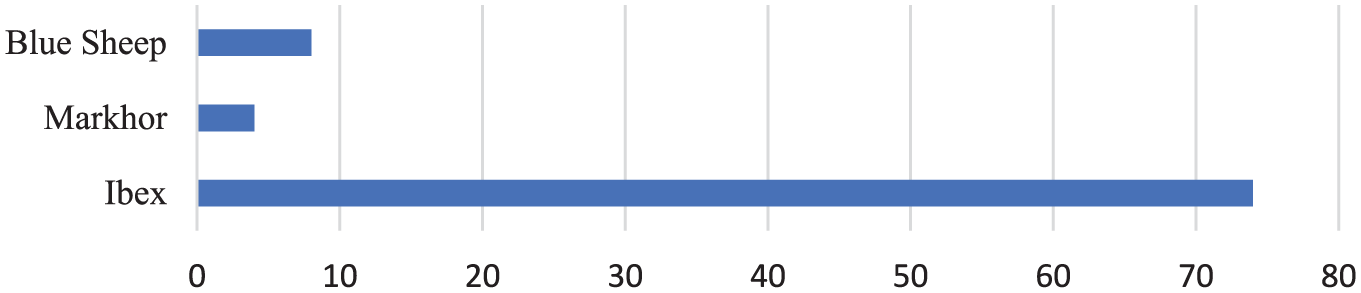
Species hunted in protected areas of Gilgit Baltistan.
One must ask if it is a coincidence that GB has the highest share of protected areas in Pakistan, while its residents tend to be extremely vulnerable and marginalized in socioeconomic and political terms. Moyo et al. (2013) have argued that agrarian struggles in countries of the Global South cannot be decoupled from the national question, and because GB’s national question remains unresolved, it makes it a peripheral and marginalized 12 region within the context of South Asia. Naidu (2021) has shown that contemporary conservatory practices in the Global South tend to reproduce colonial and imperialist practices in which peripheral areas are primarily seen from a territorial lens and their residents are often invisibilized. This explains why peripheral areas within the Global South are being targeted for the conservation of nature (see Foster 2022). The following words of one United States Agency of International Development (USAID) official capture the essence of this argument: “It is easier to do biodiversity overseas than in this [United States] country because the conflicts don’t involve constituencies of Congress” (Brockington and Duffy 2010: 475). Declaring a territory as a “protected area” is a politically challenging endeavor because local populations are likely to be negatively impacted by it. In the context of Pakistan, it is easier to declare national parks in GB because people of GB do not get to vote in Pakistan’s general election. In other words, climate governance around conservation is not independent of local political and power hierarchies. Not to mention, conservation can be another way to commodify nature. In the age of neoliberalism, a spectacle must be created to get the attention of potential tourists and investors.
The spectacle of nature allows powerful actors to intertwine “propaganda, marketing, and governmentality to open up new conservation spaces for capitalist expansion” (Buscher et al. 2012: 18). In GB, tournaments of trophy hunting—local population cannot hunt markhor, but foreign tourists are allowed to hunt them for the right price—are the spectacles that bring national and international tourists and generate economic rents for the elites. In other words, conservation becomes a commercial project that not only “manages” the ecological crisis but also offers new avenues for accumulation (Castree 2003). Conservation of nature in this capitalist way produces a derivative nature, that is, selective use of “social and material landscapes as underlying assets for the kind of images and slogans that speak to global tourism and consumption circuits” (Buscher et al. 2012: 19).
One of the major issues with the ongoing conservatory practices in GB is Islamabad’s (aka the postcolonial state of Pakistan) efforts to protect GB’s nature from its local population so that it can be sold to affluent tourists. 13 This approach is not only morally and ethically wrong but also ecologically counterproductive (Moore 2017). One must ask why GB has such rich biodiversity in the first place? The answer lies in the agroecological farming practices of the local community, which has helped in protecting the rich biodiversity in GB. In other words, GB’s biodiversity is intricately tied to the agroecological 14 farming practices of local communities (Akram-Lodhi 2021). Eighty-six percent of GB’s population live in rural areas and are primarily engaged in small-scale subsistence-based agriculture, livestock, and forestry (World Bank 2010: 33). Only 15 percent of the total farm output is sold on the market; in other words, 85 percent of all the produce is either directly consumed by producers or exchanged among community members via non-market exchange mechanisms. The local subsistence-based economy is primarily centered on growing cereal crops (such as wheat, barley, and maize) and livestock. Livestock in GB is primarily used for self-use and subsistence by local communities. Here it is important to underscore that industrial-scale capitalist livestock farming leaves a significant negative footprint on the environment. Livestock are fed grass and straw rather than industrial feed. Organically farmed livestock, including cows, goats, sheep, donkeys, buffalos, horses, mules, and yaks, is the mainstay of the local subsistence economy (GB-EPA 2017: 24). Industrial capitalist livestock is produced for profit and needs to grow at an exponential rate to sustain high profitability. On the other hand, small-scale livestock production can promote biodiversity and environmental sustainability (Dumont and Bernues 2014).
Agroecological farming communities of GB have been living in harmony with nature for centuries and have preserved and protected the rich biodiversity of the region. Figure 2 shows that farm production is primarily for self-consumption in GB. Ongoing efforts of “conservation” of nature are threatening agroecological farming practices in GB. Given the significance of livestock in GB’s agroecological communities, the formation of national parks imposes major constraints on agroecology, as they restrict livestock access to grazing fields. Further, it perpetuates economic security of the local community because they rely on wood collection from their surroundings (national parks), which is used as fuel for cooking and heating homes in the absence of piped gas connections or expensive propane cylinders.
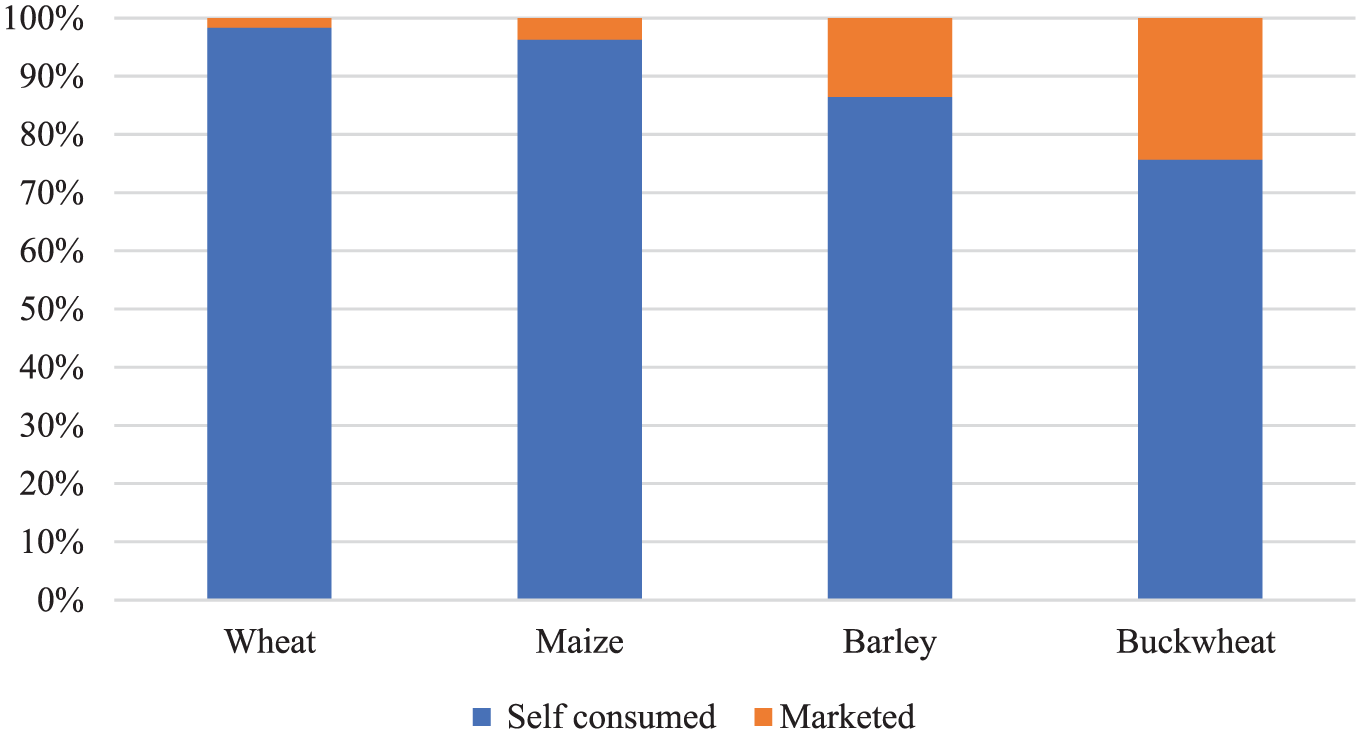
Percentages of wheat, maize, barley, and buckwheat to be marketed or to be consumed by producers.
In other words, national parks and trophy hunting schemes are destroying the enabling environment that has produced the rich biodiversity at the first place in GB. Therefore, we argue that the threats to GB’s biodiversity and the ecological vulnerability do not stem from local agroecology but come from the neoliberal regime of climate governance centered on the appropriation of nature in GB.
5. Stimulation and Concealment of Contradictions in Gilgit Baltistan
A major contradiction of state-led top-down conservation of nature efforts is its selective and piecemeal approach toward ecological sustainability. For example, there is a deafening silence among state elites on the negative climate and environmental impact of coal-based power generation projects under CPEC. 15 In other words, when it comes to economic development in mainland Pakistan, the discussion of conservation takes a back seat. As of 2021 the share of coal is 25 percent in the total power generation of Pakistan. More importantly since the advent of CPEC projects, consumption of coal has increased substantially. At the moment, CPEC is financing 9 new coal power plant projects in Pakistan, that is, addressing the overaccumulation of Chinese capital and building Pakistan’s energy infrastructure (see table 1). Furthermore, per capita carbon dioxide (CO2) emissions in Pakistan have increased by 29 percent since 2013 and CPEC-based coal power projects have an important role in the rise of CO2 emissions. Per capita CO2 emissions in Pakistan are illustrated in figure 3.
CPEC’s Coal Power Projects.
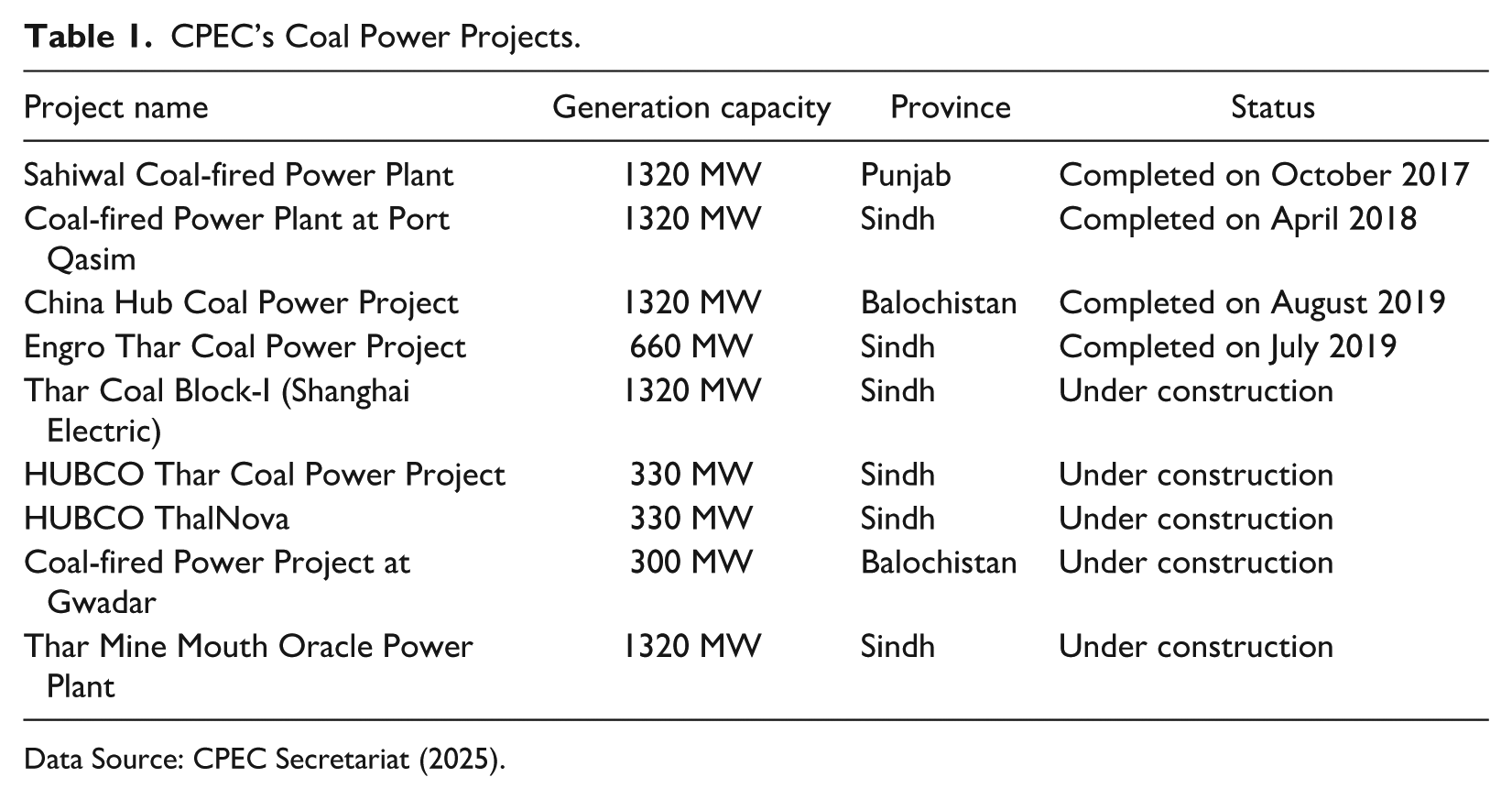
Data Source: CPEC Secretariat (2025).
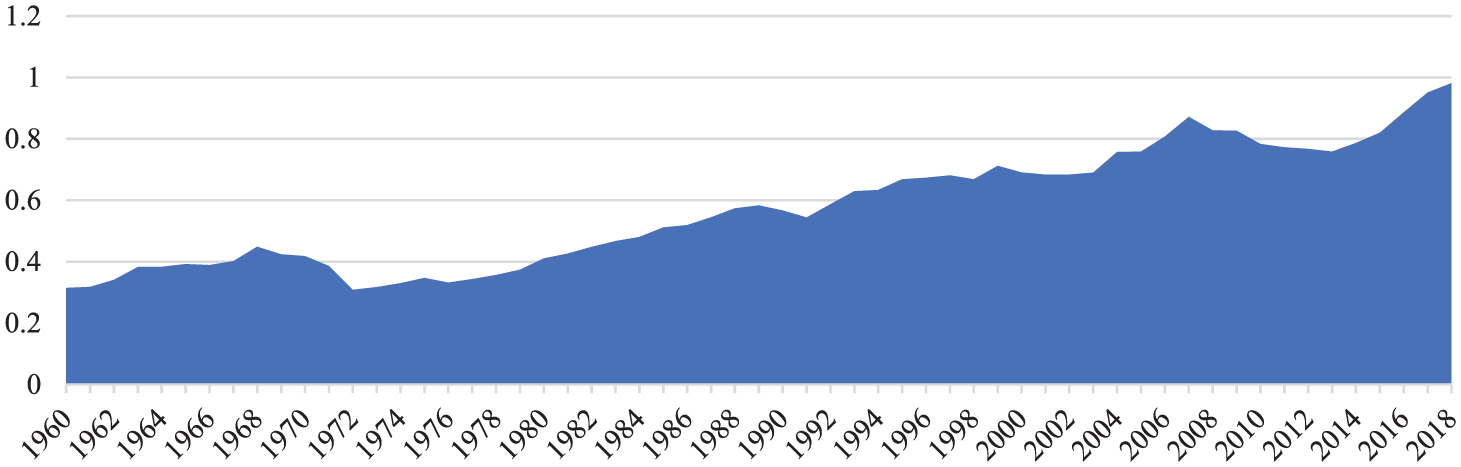
Per capita CO2 emissions in Pakistan, metric tons, 1960–2018.
Another major contradiction is in the claim that GB’s economy will get a boost with ecotourism. One of the logics of the national parks, gaming reserves, wildlife sanctuaries, and hunting areas in GB is to attract affluent (often western) tourists to the “pristine” nature of GB. This is an attempt on the part of the state of Pakistan to remake GB as an exotic tourist destination, and tourists are sold the idea that all they need to do is “consume in order to conserve” environment (Buscher et al. 2012: 20). Since 2007, the number of tourists entering GB has increased by 31 times (see figure 4). An important point to note here is that ecotourism is created at the expense of agroecological farming practices with the creation of national parks. To state the obvious, tourism in GB contributes more toward pollution as a result of the high inflow of traffic in the region as compared to subsistence-based farming. In other terms, the neoliberal regime of climate governance, on the one hand, assumes that interaction between human and nonhuman nature at the community level is a threat to the environment, but at the same time, it is promoting another type of human activity in the region, that is, tourism, whose negative impacts on climate stability are completely ignored.
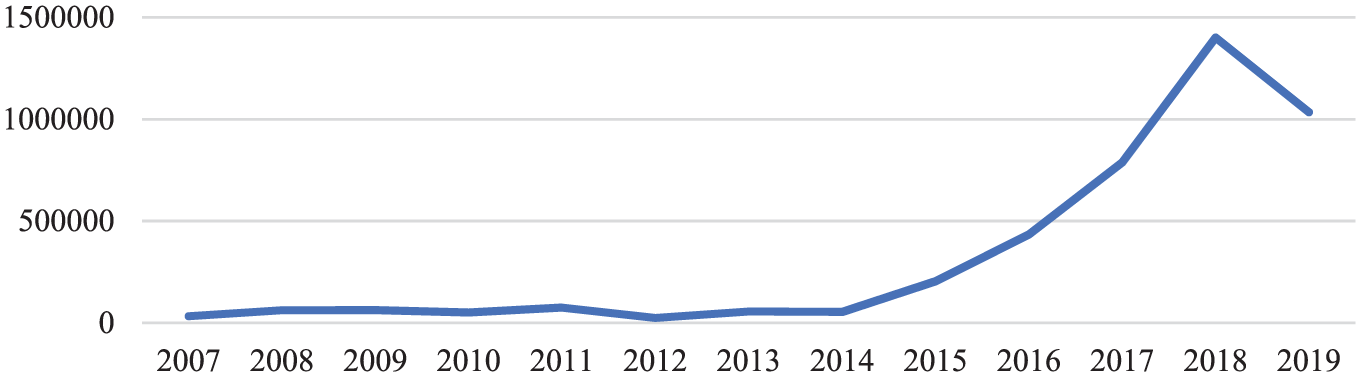
Tourist inflow in Gilgit Baltistan, 2007–2019.
Even if we assume that conservation stimulates the local economy, it is important to point out that economic growth is a multivariate function but generally there is a trade-off between an investment-driven economic growth on the one hand and the sustainability of peasant communities and the environment on the other. The latter are sometimes also perceived as the price for development. This trade-off is also shown as the earlier phase of the “Kuznets curve” and the “Environmental Kuznets Curve” (Dinda 2004). From 2013, when CPEC was announced, to 2022, the per-capita GDP of Pakistan measured by purchasing power parity increased from $4,530 to $5,599, with an annual growth rate of 1.9 percent. 16 Local residents of GB do get some new employment opportunities (e.g., low-wage service jobs) in the tourism sector, but tourism in GB comes with its own unique socioeconomic and ecological issues. For example, in the absence of an adequate solid waste management system in GB, tourism brings pollution of water and soil. COVID-19 lockdown provides us with an interesting natural experiment setting to approximate the impact of tourism on GB’s air quality.
Prior to the COVID-19 lockdown in December 2019, particle pollution (particulate matter) in GB was 60 µg/m³. The lockdown in GB primarily impacted the tourism industry, and the inflow of tourists declined substantially in 2020, while agroecological farming continued. In April 2020, the particle pollution in GB was reduced to 3 µg/m³ (see figure 5). Although there can be other factors for the reduction of particle pollution, it is fair to assume that decline in tourism played an important role in reducing the environmental pollution in GB. 17
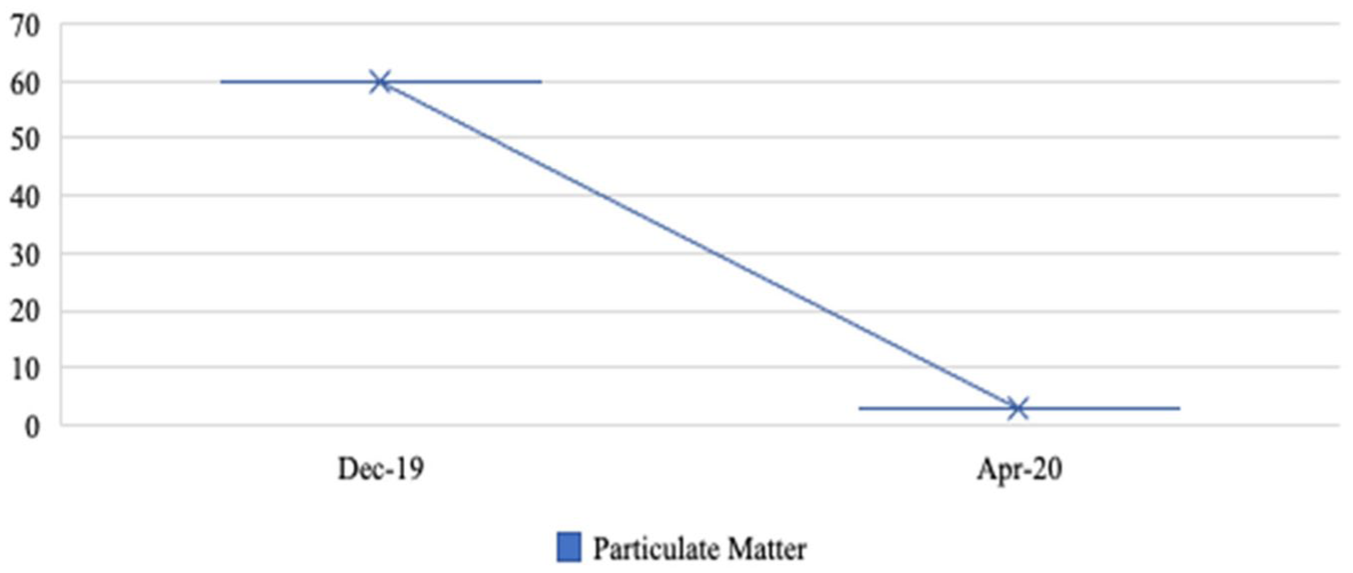
Particulate matter (PM 2.5) index in Gilgit Baltistan, before and during COVID-19 lockdown.
In short, economic growth at the expense of peasant communities and environmental sustainability tends to create more losers than winners, and it should be problematized from an ethical perspective. Our claim here is not to suggest that everything was perfect in GB’s agroecological communities before interventions from the state and private capital. According to estimates, 80 percent of the population in GB relies on “wood as their primary source of cooking fuel” (UNDP 2018: 46). Especially using wood as a fuel for indoor cooking can lead to respiratory issues, so there is a need for adoption of more health-friendly fuels for cooking. Our claim here is much more modest and that is, if the goal of the postcolonial state is to promote ecological sustainability, then subsistence agroecological farming communities should be supported rather than undermining them because they are best placed to keep their economic activities in sync with ecological sustainability.
6. Disciplining of Dissent and Agrarian Resilience
Local grassroots activists who have been vocal against the encroachment of capital on GB’s natural resources face intimidation and arrests (Karrar 2021; Ahmad 2020). Criticism of the neoliberal climate governance regime from local activists is often equated with anti-environmentalism. Disciplining dissent is achieved not only through ideological discourse but also through coercive 18 measures (Khan and Akhtar 2022). One particular incident, highly relevant to our discussion on disciplining dissent, is the postcolonial state’s response after the tragedy of the Attabad Lake in 2010. A new lake (Attabad) was formed after a landslide from a cracked mountain that slid into Hunza River, creating a new lake across 25 sq. km of the area. Seven small nearby villages were completely destroyed, 20 people lost their lives, and thousands of local residents were displaced (GB-EPA 2017: 6). The government of GB announced an aid package to help victims—climate refugees—of the Attabad Lake in rebuilding their lives and livelihoods. However, the promised help never arrived for many victims. On the other hand, Attabad Lake became a major tourist attraction in the mainland Pakistan’s imagination, and the pain and misery of the victims of Attabad were overshadowed by this new “exotic” natural wonder: the Attabad Lake. Instead of addressing the misery of local communities, the state’s focus shifted toward the new “spectacle” of the Attabad Lake and boosting tourism through it. This exacerbated resentment and anger among local climate refugees, leading to massive protests against local and federal governments. Grassroots community-based activists led these protests. They problematized the intricate relationship between natural calamities and the extractive capitalist developmentalist regime in GB.
To quell this grassroots protest movement centered on agrarian and climate justice, the state of Pakistan and its local allies in GB pursued an aggressive crackdown against grassroots activists, who were then imprisoned on phony charges of being anti-state. We interviewed one of the leading activists of this protest movement, and one of the first “climate prisoners” in Pakistan, Mr. Baba Jan, who is out of prison now, but he spent more than ten years behind bars for leading the struggle against the developmental and climate policies of the postcolonial state of Pakistan. Baba Jan said, “The state wanted to make an example out of us so no one can dare to challenge them.” 19 Baba Jan continues to mobilize local peasant communities on climate justice–related issues in GB, and he is one of the most vocal and influential voices against the formation of national parks in GB. He is optimistic that collectively, the people of GB will counter the onslaught of Islamabad on GB’s sociospatial environment. He noted: “We reject this false narrative presented to us that the conservation of nature is done by the state of Pakistan. Local farming communities of GB do not see themselves separate from nature; conservation of nature is not something you do in one good day. It is part and parcel of the way of living for local farming communities who ‘conserve’ and protect by not commodifying and exploiting it for profit.” 20
Agroecological farming communities in GB are resiliently fighting against the appropriation and commodification of nature. In particular, the agroecological community of Shimshal in GB has successfully defended its spaces and ecology when the state tried to appropriate them through the notification of KNP 21 (Ali 2019). Historically, small peasants in Shimshal used community pastures for livestock grazing, but because of the notification of KNP, a category II park under the classification of International Union for Conservation of Nature, livestock grazing became “illegal” overnight. Furthermore, no alternative was offered to local residents to compensate for their livelihood losses (Ali 2019). While locals are denied access to their own spaces, Pakistani state authorities can use and market the park for recreational purposes. The creation of KNP not only exacerbated power asymmetries between Shimshal’s agroecological communities and the postcolonial state but also produced agrarian distress for the local population, as their capacity to successfully secure their livelihoods was substantially curtailed.
From a political economy perspective, the formation of KNP can be conceptualized as a moment of accumulation by dispossession (redistribution of resources from bottom to top), as local agroecological communities of GB are forced to subsidize the recreational activities of top-end state bureaucrats and affluent tourists. In response, the local community in the village of Shimshal decided to collectively engage in the agrarian struggle against the appropriation of nature (Ali 2019: 204). With exemplary solidarity and concerted effort, the agroecological community of Shimshal defied the administrative authority of the KNP’s bureaucracy by refusing to collaborate and facilitate government officials and conservatory NGOs who were tasked to manage KNP. In effect, the agroecological community of Shimshal collectively defied the de jure notification of the national park and substantially halted its de facto implementation. Furthermore, the local community questioned the legal and moral legitimacy of the state and NGOs in the realm of ecological conservation because the very fact that Shimshal has rich biodiversity should be at least (partially) credited to local communities. Local community members argue that they are better placed to take care of the ecological biodiversity and sustainability of the area. Therefore, conservatory efforts should be locally managed by the community in a democratic manner (Ali and Butz 2005).
In this regard, they formed a local community-based organization called Shimshal Nature Trust (SNT) in 1997 to oversee and regulate the community’s pastures, agricultural lands, and wilderness areas (Ali and Butz 2005). SNT is based on the principle of collective and democratic governance in which every member of the local community has a direct voice and stake in the stewardship of the environment. SNT centralizes the significance of sustainable ecological practices rooted in indigenous knowledge, while also acknowledging the need to be open toward new scientific insights from the outside to better manage agriculture and ecology. The founding document of the SNT explicitly states that environmental conservation is not possible without acknowledging the intertwined nature of “socio-cultural and ecological components” (Ali and Butz 2005: 7). These are the key lessons that the mainstream climate governance regime needs to learn from the people of Shimshal; that is, climate governance requires a holistic approach that not only transcends the ontological dualism of society versus nature but rather sees both as part of a dialectical unity (Moore 2017). In other words, ecological sustainability can be best ensured by democratically empowering rather than undermining agroecological communities. 22
7. Conclusion
The article has critically analyzed conservatory efforts of the postcolonial state of Pakistan in GB from a heterodox political economy lens. It has argued that the prevailing regime of environmental sustainability in GB is primarily centered on the commodification of nature. Historically, GB’s agroecological farming communities has played an integral role in sustaining the rich biodiversity of the region. Instead of supporting agroecological farming in GB, the neoliberal climate governance regime undermines the livelihoods of local agrarian communities in the name of conservation of nature. This is primarily done through the establishment of “national parks” in GB by denying local agroecological communities access to their natural habitat so that it can be marketed to eco-tourists—an act of commodifying nature through green grabbing. This forced separation between local human and nonhuman species severely undermines agroecological farming practices that promote biodiversity and ecological sustainability. The article adds to this rich strand of literature on green-grabbing such as Borras et al. (2022), Naidu (2021), and Fairhead et al. (2012) by contextualizing environmental conservation as moments of green-grabbing against the backdrop of contradictions of capitalist accumulation at the regional scale. In particular, the article argues that the ongoing processes of green-grabbing in GB are directly tied to overaccumulation of capital in China and its underaccumulation in Pakistan. GB is at the helm of this because it is one of the most important sociospatial and economic nodes in the CPEC that provides new investment opportunities to overaccumulated capital in China across Pakistan. There are inherent contradictions in these processes: for example, multiple energy projects (including coal-based) are built under CPEC to fulfill the energy requirements and underaccumulation of capital in Pakistan. On the other hand, the postcolonial state of Pakistan tries to balance this with conservation efforts in GB that are akin to appropriation of nature under the aegis of ecological sustainability. Overall, the article argues that the neoliberal environmental governance regime is not only ineffective but also counterproductive because it perpetuates immiseration and marginalization of agroecological farming communities in GB who are suffering from the meteorological disasters and are also bearing the negative consequences of the top-down approach to climate governance.
But the article shows that agroecological farming communities of GB are not passive actors; in fact, they exemplify an interesting case of community-based solidarity movement. Collective effort has allowed them to defiantly challenge and resist this onslaught of neoliberal climate governance. Local farming communities in GB are organizing to push back against commodification and the appropriation of nature. While the postcolonial state of Pakistan is aggressively trying to discipline the local dissenters by using ideological and coercive tools, local climate justice activists and farming communities of GB are fighting back by advocating for a holistic conceptualization of nature in which human and nonhuman nature are seen as parts of a dialectical unity. The agrarian struggles in GB against the neoliberal climate governance regime can be illuminative for agrarian communities across the Global South in their struggle to defend themselves from the encroachment of capital and state on their spaces.
Footnotes
Acknowledgements
We would like to thank our two research assistants Fatma ElRefaei and Najam Hameed. Fatma helped us with the literature review and Najam helped us with interviews. We would also like to thank the three reviewers from RRPE for their valuable feedback on an earlier draft.
Declaration of Conflicting Interests
The authors declared no potential conflicts of interest with respect to the research, authorship, and/or publication of this article.
Funding
The authors received no financial support for the research, authorship, and/or publication of this article.
1
Climate change is a planetary process, and policies of the postcolonial state of Pakistan cannot be held solely responsible for the climate vulnerability of Gilgit Baltistan (GB).
2
3
There have been intensive and fruitful debates among radical economists on the effectiveness and implications of the carbon market. For example, Hahnel (2012, 2015) argues that, if properly managed, a global carbon market is “the only way to avert climate change fairly before it is too late.”  questions this conclusion for distributional and technical reasons. We do not object to Hahnel’s proposal as a theoretical possibility, but in an era of rising geopolitical uncertainties, it is extremely difficult to have a properly managed global carbon market.
4
See Baiman (2001, ) for a detailed critique of the neoclassical welfare economics of climate change and climate governance.
5
What needs to be noted here is that there are different perspectives on the role of market in climate governance. One perspective views market mechanism to be inherently detrimental to climate governance. Another perspective takes market as the very mechanism through which the initial social inequality manifests itself. From the latter perspective, through effective coordination under a Global Green New Deal, within which carbon-related transferred payments are enforceable, carbon market may become an effective instrument for climate governance (Baiman 2021, ). It is beyond the scope of this article to engage in this discussion. However, under a climate governance dominated by neoliberal ideology, institutions, and interests, expanding the carbon market alone cannot fundamentally address climate change.
6
Postcolonial states can be conceptualized in multiple ways within Marxian/heterodox frameworks. But there is an underlying convergence among Marxian state theorists that capitalist states are not inherently “class-neutral.” Instead, class struggle plays a key role in the functioning of the state ().
7
What need to be noted here is that we are not defining the Chinese economy per se as neoliberal or neocolonial. Instead, we are underscoring those Chinese investments in Pakistan, without any conditions on labor and environmental standards, materially extends the administrative reach of the post-colonial state of Pakistan and enables it to extract surplus value from GB in a neoliberal fashion.
8
9.
We are not making a causal argument here between the rise in average temperature and natural calamities. There can be multiple factors behind the rise in natural calamities.
10
Interview conducted on March 7, 2022.
12
It can be argued that people of GB are socioeconomically and politically marginalized because (a) physical infrastructure is underdeveloped as compared to mainland Pakistan and (b) the people of GB are politically marginalized because they do not get to elect people in Pakistan’s parliament unlike the other four provinces of the country (see ).
13
One alternative framework could be community-owned and -controlled conservatory efforts.
14
We are not claiming that all traditional practices of agriculture are necessarily good for environmental sustainability and the well-being of the local communities. also criticized the moral relativism that may be associated with an abstract preference of traditions. However, in the case of GB, it is clear that environmental degradation has picked up since the dissolution of traditional agricultural practices.
15
16
17
Our arguments do not imply that there are no other important socioeconomic issues for subsistence farming communities other than air quality.
19
Interview was conducted on February 28, 2022.
20
Interview was conducted on February 28, 2022.
21
KNP spans over 2,270 square kilometers in the upper Hunza region of the GB and comprises grasslands of the small valleys of Shimshal, Ghujerab, and Khunjerab.
22
We are not implying that there is no role of macro (state) level coordination and planning, but it has to be democratically done, and it cannot at the expense of local communities.