







Abstract
The purpose of this study is to conduct a quantitative analysis and comparison of social science research output among BRICS (Brazil, Russia, India, China, and South Africa) countries. Data were collected through the open-access SCImago portal and Scopus. The number of documents and citable documents, global share and ranking, the number of citations per document, the h-index, and international collaboration were all analyzed. Except for China, none of the BRICS countries made the top 10 global rankings during the 1996–2021 period, but three of them (China, India, and Russia) did so in 2021. China has the most documents and the greatest h-index score, whereas South Africa has the highest number of citations. For China, on the other hand, more than half of the citations are self-citations. More than 50% of Russian documents are not cited in the subsequent literature. The study’s findings highlight publication trends and collaboration pattern among the BRICS countries in social sciences, which benefit the academic community, decision-makers, and the economy of the BRICS countries.
Introduction
Science and technology have a significant influence on the financial advancement, which ultimately leads to the overall development of a country in today’s knowledge-based society (Aswathy and Gopikuttan, 2014). The published output of the research processes is established as a valid measure of its activity by the number of journals and articles that have been utilized as indicators of scientific growth (Russell, 2001).
Jim O’Neill coined the acronym BRIC (Brazil, Russia, India, and China) in a report in 2001 (O’Neill, 2001). It is often referred to as ‘the BRIC’, ‘the BRIC countries’, ‘the BRIC economics’, or the ‘Big Four’. South Africa joined the BRIC group in 2010, which was renamed as BRICS after the leaders of the original BRIC group met in 2009 to formally establish it. In November 2021, the BRICS group commemorated its 20th anniversary (Chatterjee and Naka, 2022). The group’s goal was to create a fair, democratic, and multipolar global order. Compared to other groups around the world, this group possesses distinctive characteristics. For instance, it accounts for 41% of the world population, 24% of world GDP, and 16% of world trade (https://brics2021.gov.in/about-brics). Furthermore, the BRICS countries share many characteristics with ancient learning and knowledge hubs. Every year, a summit of the heads of state of the member countries is alternately hosted. Due to the COVID-19 pandemic, the last three summits (2020, 2021, and 2022) were held virtually. The New Development Bank (formerly known as the BRICS Development Bank) was established in 2014 (https://www.ndb.int/) with the aim of assisting public or private projects through credit, guarantees, equity participation, and other financial instruments. Table 1 displays the key statistics for the BRICS countries, including population, gross domestic product (GDP), gross domestic expenditure on research and development (GERD), number of higher education institutions in the Quacquarelli Symonds (QS) ranking, income group and classification, and region. Only India belongs to the low-middle-income group among the others, which are categorized as upper-middle-income economies. While other countries distantly follow, China is spending more than 2% of its GDP on research and development. Notably, R and D spending in India and South Africa is less than 1% of GDP. Considering the number of higher education institutions, China has the most (n = 71) while South Africa has the fewest (n = 9) in the recent QS World University Rankings 2023.
General overview of the BRICS countries.
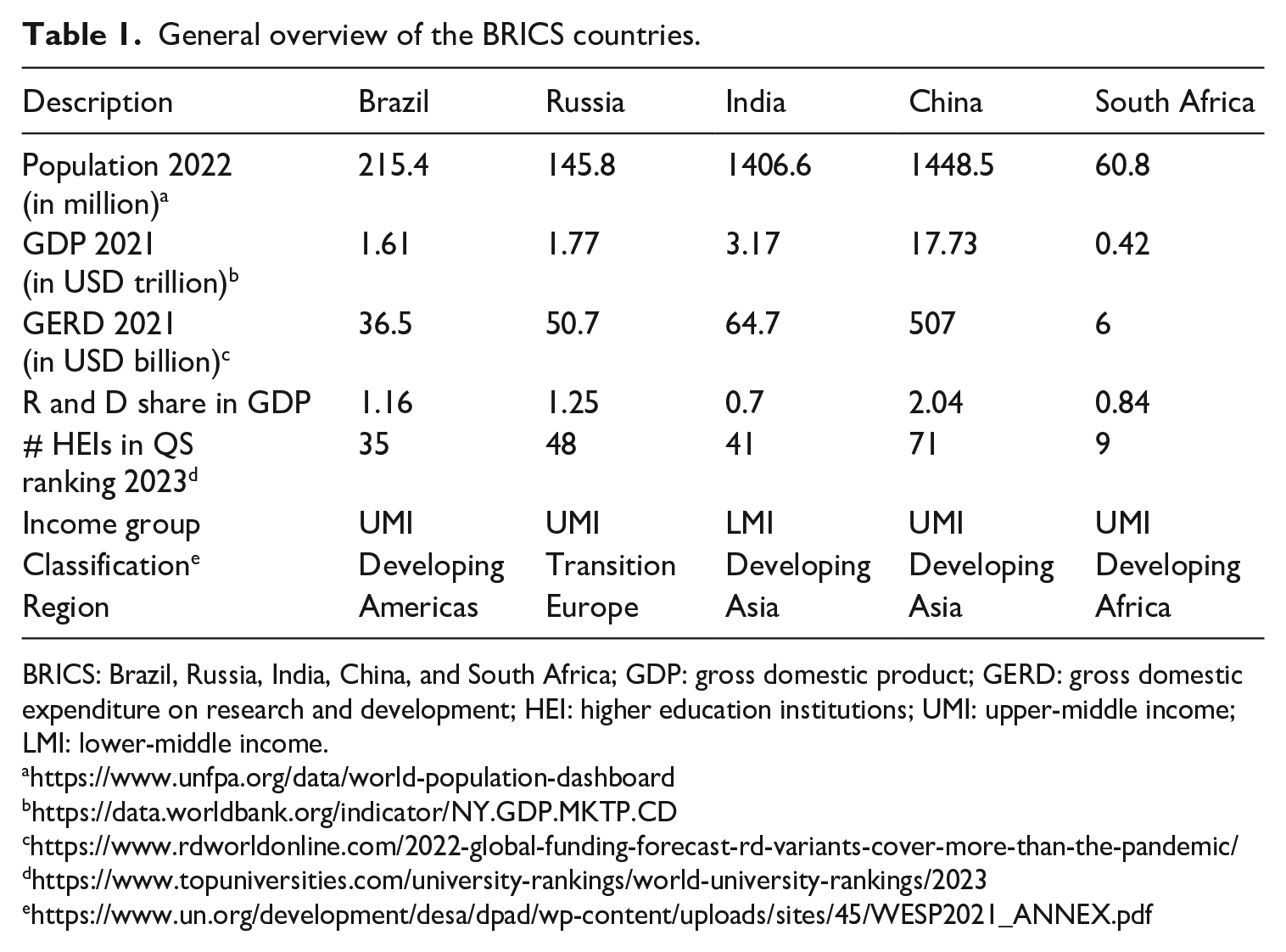
BRICS: Brazil, Russia, India, China, and South Africa; GDP: gross domestic product; GERD: gross domestic expenditure on research and development; HEI: higher education institutions; UMI: upper-middle income; LMI: lower-middle income.
Due to its importance, some 19 countries (Afghanistan, Algeria, Argentina, Bahrain, Bangladesh, Belarus, Egypt, Indonesia, Iran, Kazakhstan, Mexico, Nicaragua, Nigeria, Pakistan, Saudi Arabia, Senegal, Sudan, Syria, Thailand, Tunisia, Turkey, the United Arab Emirates, Uruguay, Venezuela, and Zimbabwe) have expressed their wish to join this group, as of April 2023. The BRICS summit, held in South Africa in August 2023, has taken a significant step in expanding its reach by inviting six countries, namely Argentina, Egypt, Ethiopia, Iran, Saudi Arabia, and the United Arab Emirates, to this group. These invited countries will become full members starting from January 1, 2024.
Although the BRICS countries contribute significantly to the world’s scientific production, their patterns of scientific productivity are rarely examined. Analysis of the research output of the BRICS countries has only been carried out in a small number of studies, for instance, Aswathy and Gopikuttan (2014) in the field of renewable energy, Mulimani and Hadagali (2018) in the field of pharmacy and pharmacology, Upadhyaya and Rajasekharan Pillai (2019) in the field of management research, Savanur (2019) in the field of economics, Hulloli and Savanur (2020) in the field of thin films, Castor et al. (2020) in the field of tuberculosis, Awe et al. (2021) in the field of anemia, Kavitha (2022) in the field of climate change, Dissanayake et al. (2022) in the field of corporate governance, and Gupta and Chakravarty (2022) in the field of library and information science. The literature review reveals that no study on social sciences covering the BRICS countries has been conducted, and this study aims to fill that gap.
Scopus classifies the sources into 27 subject disciplines using the All Science Journal Classification (ASJC) scheme under the four broad categories of physical sciences, health sciences, social sciences, and life sciences based on the aim and scope of the source title and its content. There are six subject disciplines under the social sciences category: (1) arts and humanities; (2) business, management, and accounting; (3) decision sciences; (4) economics, econometrics, and finance; (5) psychology; and (6) social sciences. From these, social sciences discipline has been chosen for this study, and it has the following sub-disciplines:
Anthropology
Archeology
Communication
Cultural studies
Demography
Development
Education
E-learning
Gender studies
Geography, planning, and development
Health (social science)
Human factors and ergonomics
Law
Library and information sciences
Life-span and life-course studies
Linguistics and language
Political science and international relations
Public administration
Safety research
Social sciences (miscellaneous)
Social work
Sociology and political science
Transportation
Urban studies
Objectives
The major aim of the study is to investigate the social science research activities of the BRICS countries (Brazil, Russia, India, China, and South Africa) with the following specific objectives:
Growth pattern of documents
Quality of documents by the citations per document, not cited and the h-index
Changes in the global share and related rank
Global rankings in the sub-disciplines of social sciences
Trend of international collaboration
Top 10 countries for international collaboration
Data and methods
The SCImago Journal and Country Rank portal (http://www.scimagojr.com) and Scopus databases were used to gather the data for the current study. The SCImago database is now utilized extensively to evaluate the scientific community’s output (Elango et al., 2021; Elango and Oh, 2022; Frizon and Eugénio, 2022; Vaccaro et al., 2022). The number of documents published between 1996 and 2021 in the field of social sciences and its sub-disciplines along with citable documents, uncited documents, citations per document, h-index, and number of international collaborative documents have been collected for each BRICS country between September and November 2022 and processed in an MS-Excel spreadsheet (Elango, 2019a). The following indicators have also been used.
Growth Rate (GR)
Compound Annual Growth Rate (CAGR)
Relative Citation Impact (RCI)
Relative Rank Index (RRI)
Citations Per Paper (CPP)
Results and discussion
The general bibliometric information for the BRICS countries in social science research from 1996 to 2021 is shown in Table 2. In terms of the quantity of documents, only China was ranked among the top 10 countries in the world. India ranked 11th, Brazil 12th, Russia 13th, and South Africa 16th. CAGR (Elango, 2019b) was used to estimate the growth of documents. Accordingly, China experienced the highest growth with almost 20%, followed closely by Brazil and Russia with 17.74% and 17.29%, respectively, and distantly by India and South Africa with 13.43% and 10.63%, respectively. All the BRICS countries published more than 94% of their work in the form of articles, reviews, and conference papers, which are the documents used in bibliometric evaluation (Elango et al., 2013). In terms of international collaboration, South Africa, Brazil, and China frequently collaborate with international counterparts, contributing more than 30% of all documents, compared to Russia and India, which contribute 24% and 17%, respectively. China has garnered more than 50% of citations as self-citations, closely followed by Russia with 47%, and others distantly. Russia had the highest percentage of documents (>50%) that were not cited in the subsequent literature, followed closely by Brazil and other countries. China had the highest h-index value; however, South Africa had the highest CPP value compared to other countries.
Bibliometric indicators of BRICS in social science research (1996–2021).
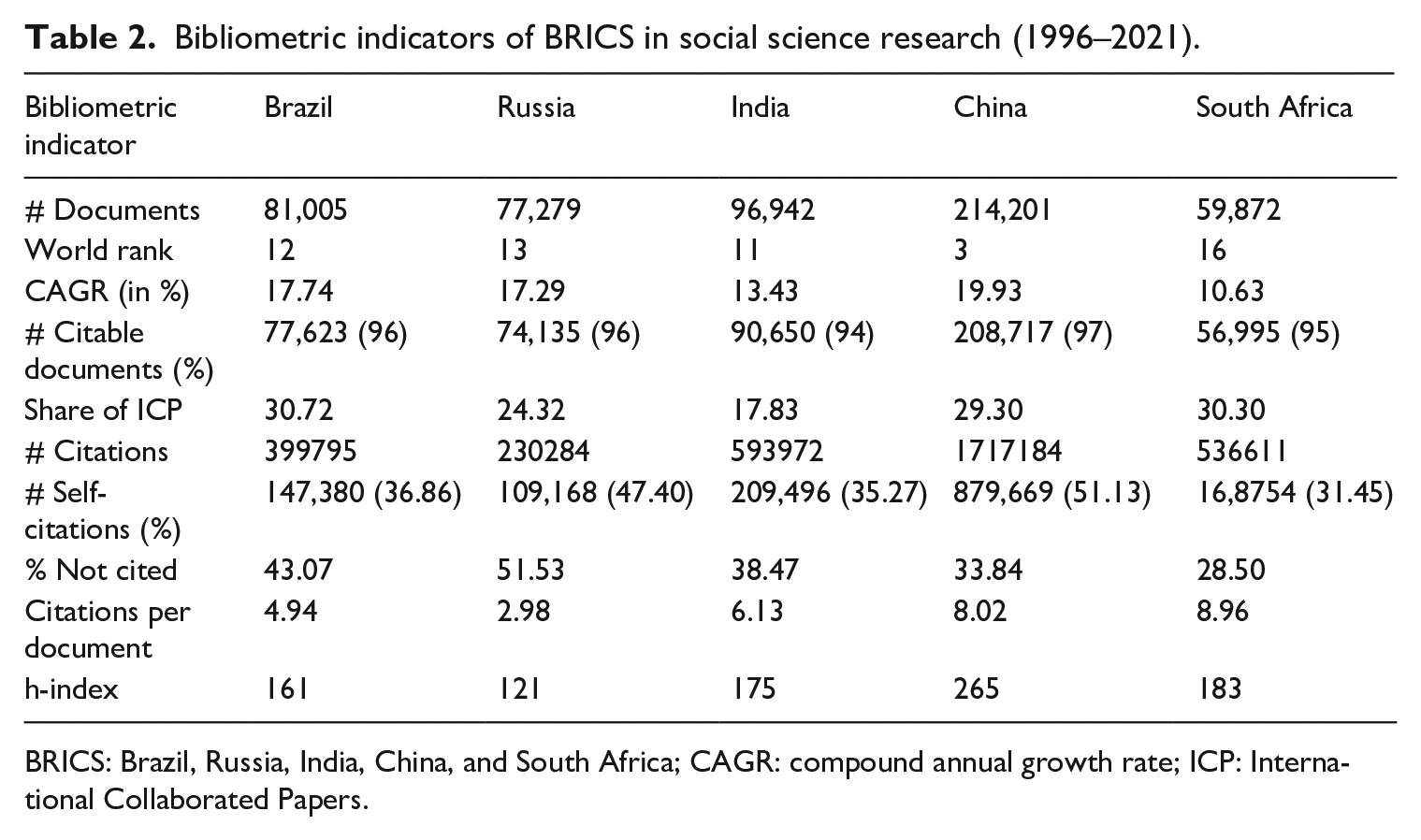
BRICS: Brazil, Russia, India, China, and South Africa; CAGR: compound annual growth rate; ICP: International Collaborated Papers.
The progression of the BRICS’ global ranking from 1996 to 2021 is shown in Table 3. Only South Africa dropped two positions from 13th in 1996 to 15th in 2021 among the BRICS countries, with the others moving up. In 2021, China, Russia, and India were among the top 10 countries, while Brazil and South Africa were ranked 11 and 15, respectively, on the global scale. All the BRICS countries saw a growth in their global share. More significantly, compared to 1996, China obtained over 20 times the global share in 2021. It has been noted that South Africa, which was first among the BRICS countries in 1996, fell to last place in 2021. China achieved the third position worldwide in the field of social sciences in 2021. In contrast, it emerged as the leading country in terms of productivity on a global scale in the same year (Elango, 2022).
Change in world share and rank of BRICS.
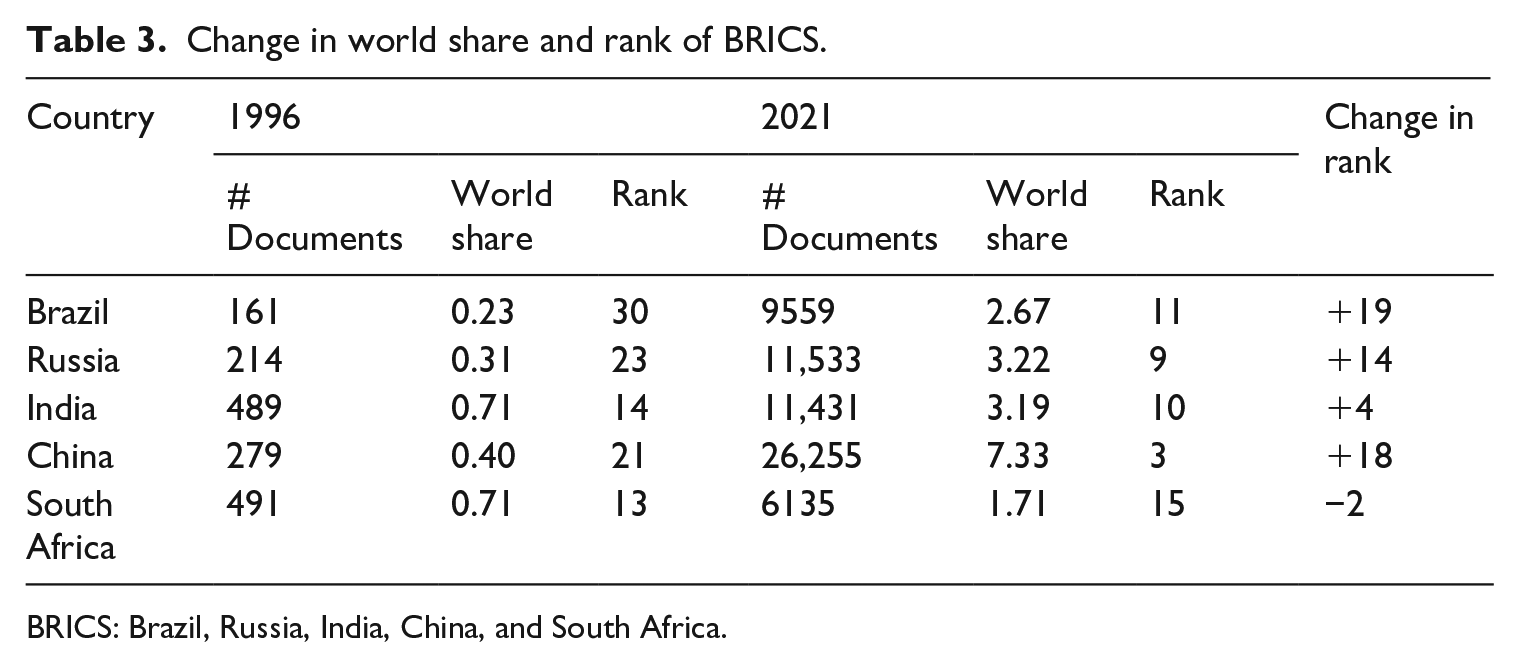
BRICS: Brazil, Russia, India, China, and South Africa.
In 1996, the global share of all countries was less than 1%, as seen in Figure 1, which shows the global share of BRICS countries over time in social science research. Only India and South Africa were among the top countries among this group in 1996, but by 2021, China was leading the pack, distantly followed by Russia and India. Each of the BRICS country has a unique growth path. For instance, India attained the 1% global share in 1999, China did in 2001, Brazil in 2007, South Africa in 2009, and Russia at the most recent time in 2014.
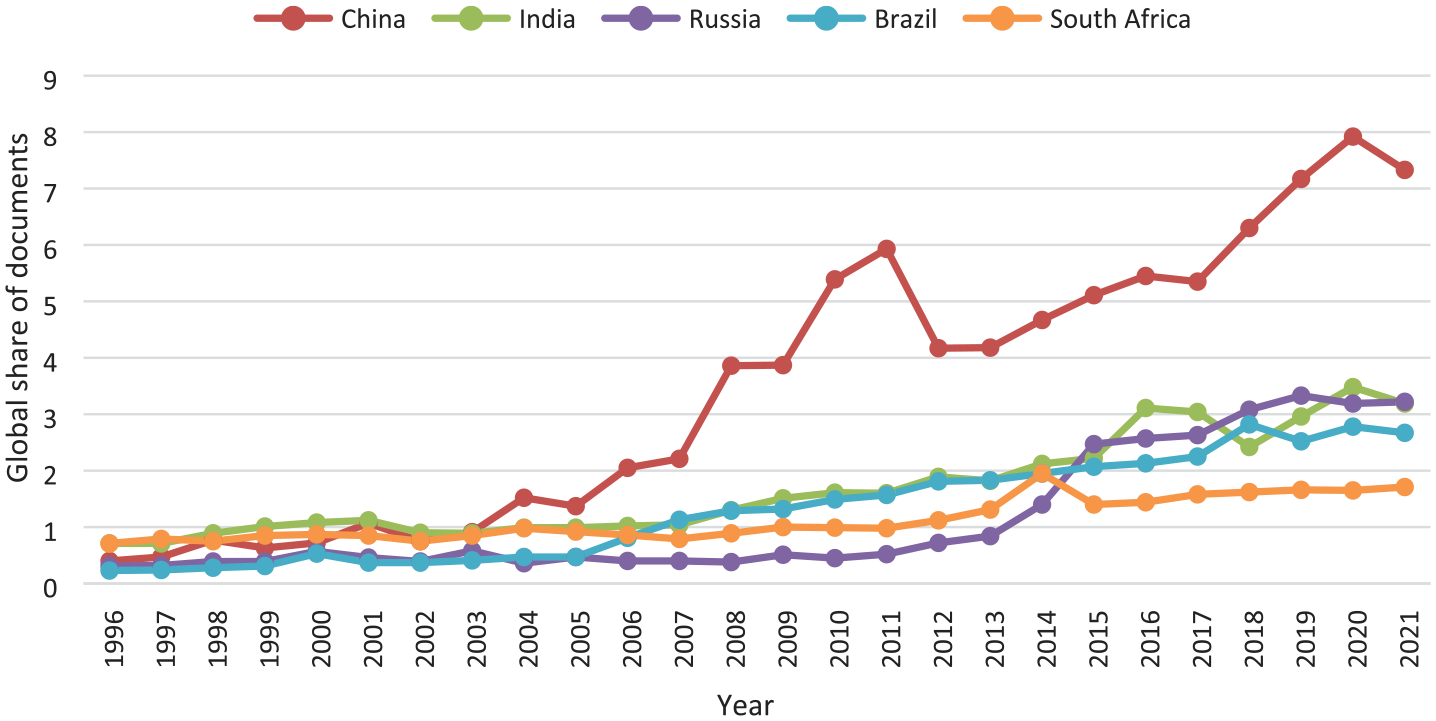
Trends of global share of BRICS.
Figure 2 shows the percentage of documents for the BRICS countries from 1996 to 2021 that were not cited in the subsequent literature. In this instance, the proportion of uncited documents published after 2018 is minuscule since others need to read them. The percentage of documents that are not cited varies throughout the BRICS countries. Since 2018, Brazil has had a larger percentage of uncited documents than the average of 43%, compared to that in 2019 for India, Russia, and South Africa and in 2020 for China. The percentage of uncited documents was also greater in the earliest Chinese documents (published in 1998, 2009, 2010, and 2011) than the average.
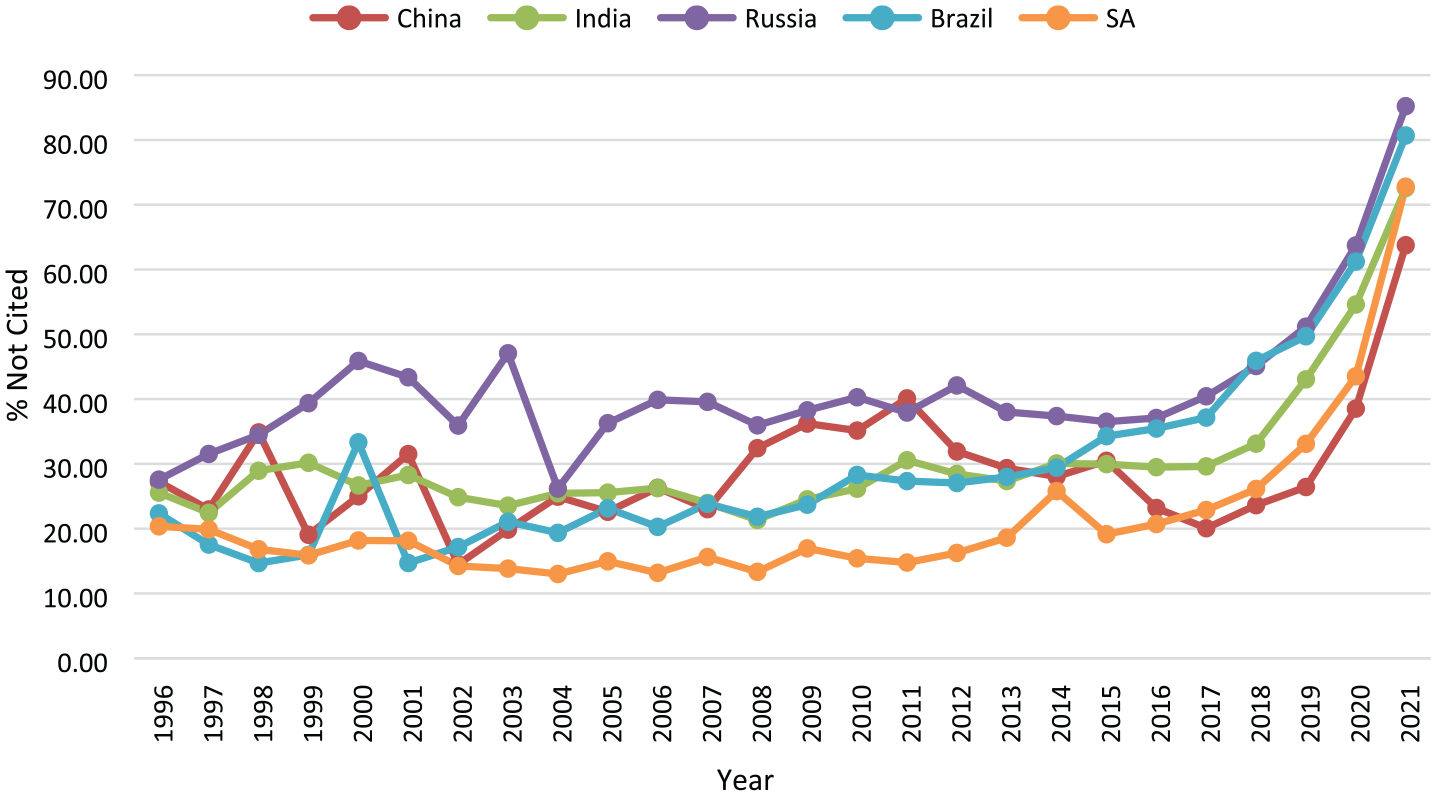
Share of uncited documents.
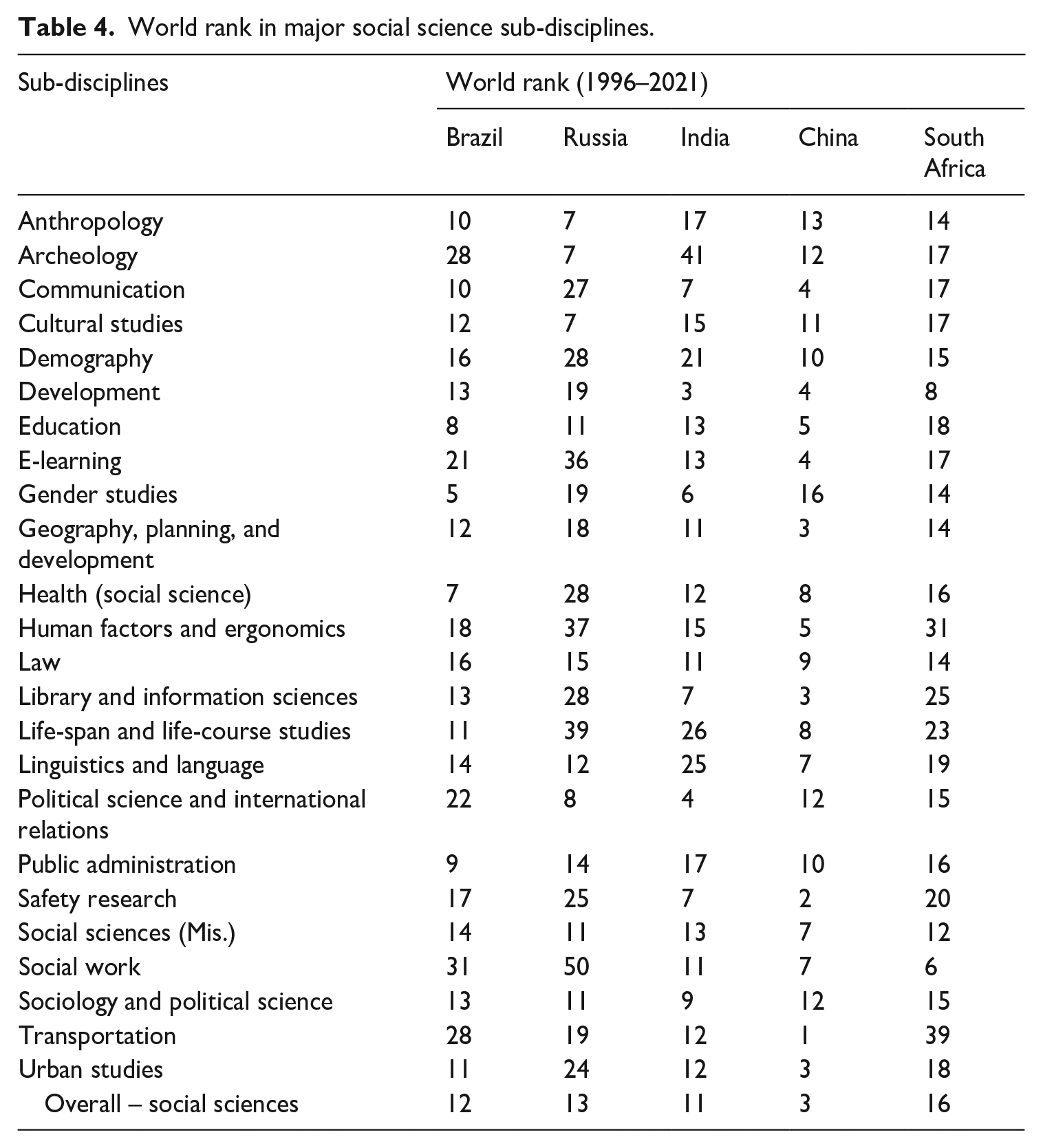
The global rankings for BRICS countries in social science sub-disciplines during the 1996–2021 period are shown in Table 4, which demonstrates that there is no consistent trend in the rankings. The table also shows which BRICS country and which pair performs well in which sub-disciplines. For instance, (1) Brazil, Russia, and South Africa did well in the field of anthropology; (2) Brazil and India in the field of communication; (3) India and South Africa in the fields of development, law, and social work; (4) Brazil, India, and South Africa in the fields of gender studies and sociology and political science; (5) India and China in the fields of library and information sciences and safety research; (6) Russia, India, and South Africa in the field of political science and international relations; (7) Brazil and South Africa in the field of public administration; and (8) Russia and China in the field of urban studies.
World rank in major social science sub-disciplines.
The RRI (Elango, 2020) has been used to compare the BRICS country’s ranking in a particular sub-discipline of social sciences to its overall ranking in the social sciences. By dividing the rank position in a certain sub-discipline by the rank position in social science in that country, the RRI is calculated. An RRI of 1 indicates that a certain country’s rank in a given sub-discipline is equal to the country’s overall rank in social sciences over a given time period, and an RRI > 1 (<1) indicates that a country’s rank in a given sub-discipline is lower (or better) than the country’s overall ranking in the social sciences. The relative positions of the BRICS countries in the major social science sub-disciplines are shown in Figure 3: There was no common pattern, and in several disciplines, a particular country performs better. For instance, Brazil is ranked higher in the fields of health social science, life-course studies, public administration, and urban studies; Russia in the fields of archeology, cultural studies, and linguistics and language; India in the field of library and information sciences; China in the field of transportation; and South Africa in the fields of demography, geography, law, and social work. Similar to this, multiple countries receive higher ranks in various sub-disciplines. For instance, Brazil, Russia, and South Africa in the field of anthropology; Brazil and India in the field of communication; India and South Africa in the field of development; Brazil and Russia in the field of education; Brazil, India, and South Africa in the field of gender studies; Russia, India, and South Africa in the fields of political science and international relations and sociology and political science; and India and China in the field of safety research.
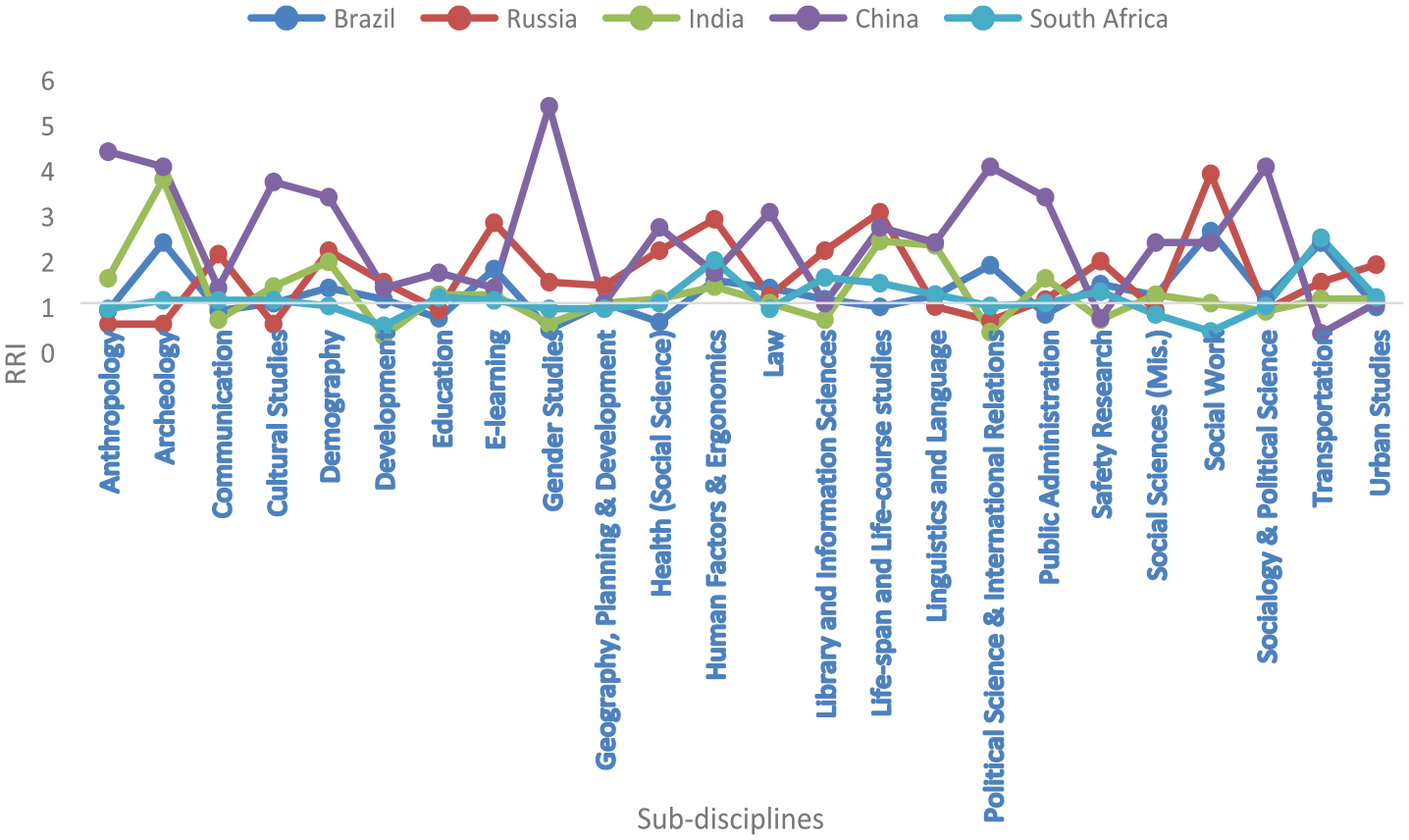
Relative Rank Index of BRICS in sub-disciplines of social sciences (1996–2021).
To assess the influence and visibility of BRICS country’s research output in social science sub-disciplines, the RCI has been used (Kumari, 2009). It is calculated by dividing the number of citations per document in a specific sub-discipline by the number of citations per document in social sciences in that country (Dayal et al., 2021). RCI of 1 indicates that a certain sub-discipline’s impact is equal to that of social sciences, while RCI < 1 (>1) indicates that a particular sub-discipline’s impact is lower (or higher) than that of social sciences. Figure 4 illustrates the RCI of the BRICS countries in the sub-disciplines of social sciences during the period of 1996–2021. To make it easier to grasp, a horizontal line is drawn at 1 to indicate the average. It has been highlighted that some countries have attained high citation impact in a specific sub-discipline. For instance, Russia had the highest impact in the fields of library and information sciences and life-course studies, whereas Brazil had the greatest impact in the field of social work, and India, China, and South Africa in the field of archeology. In addition, China had the greatest impact in the field of human factors and ergonomics.
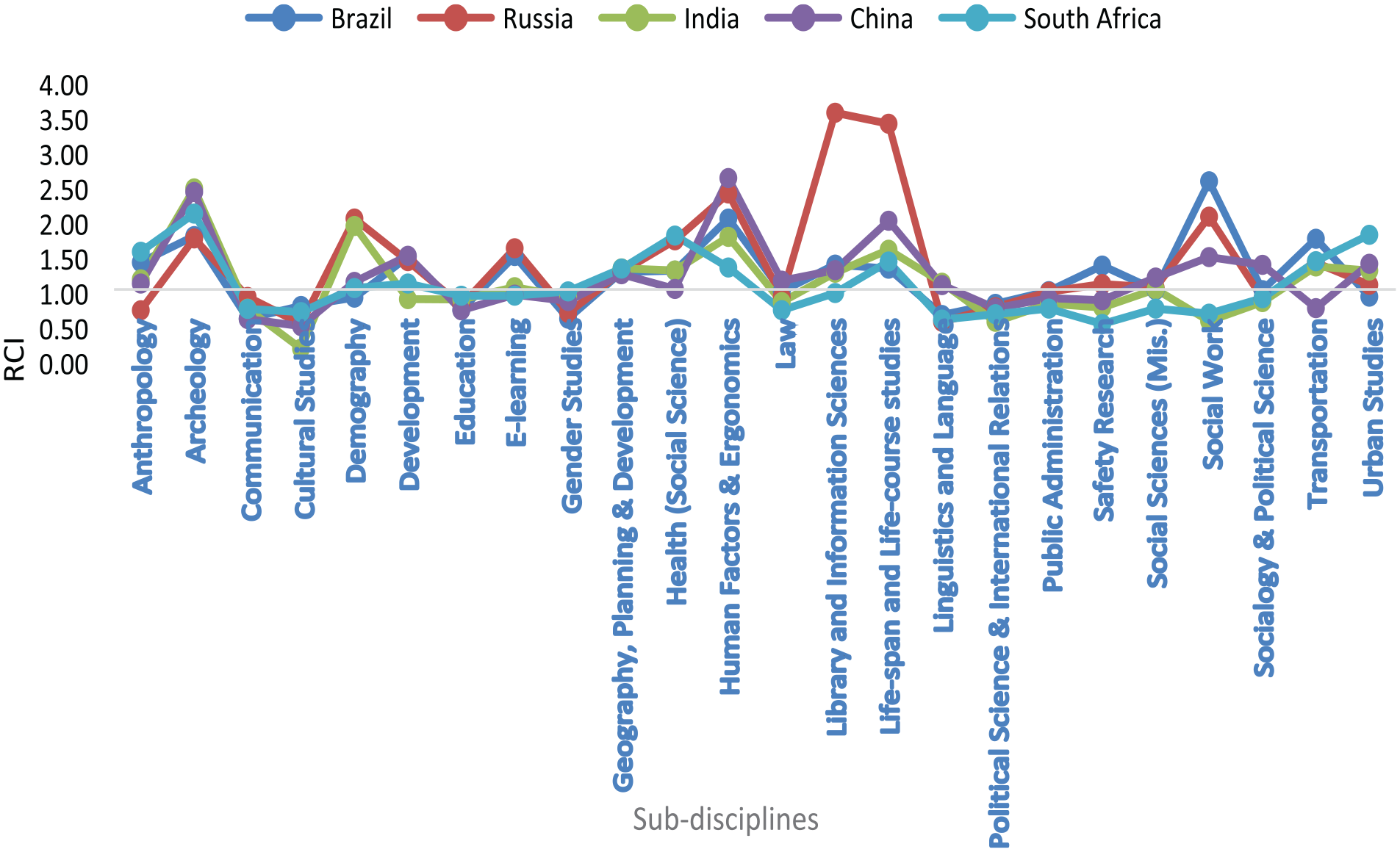
Relative citation impact of BRICS in sub-disciplines of social sciences (1996–2021).
The annual output and corresponding growth of social science research in the BRICS countries are shown in Table 5. Brazil experienced the biggest rise in research productivity in the year 2006, followed by China in 2008, South Africa in 2014, Russia in 2015, and India in 2016. With regard to the COVID-19 pandemic’s first year, 2020, Brazil experienced the biggest growth of publications over the prior year, demonstrating that the pandemic had no effect on social science research in any of the BRICS countries. Figure 5 shows how the social science research productivity expanded among the BRICS countries between 1996 and 2021.
Temporal evolution of social science research among BRICS.
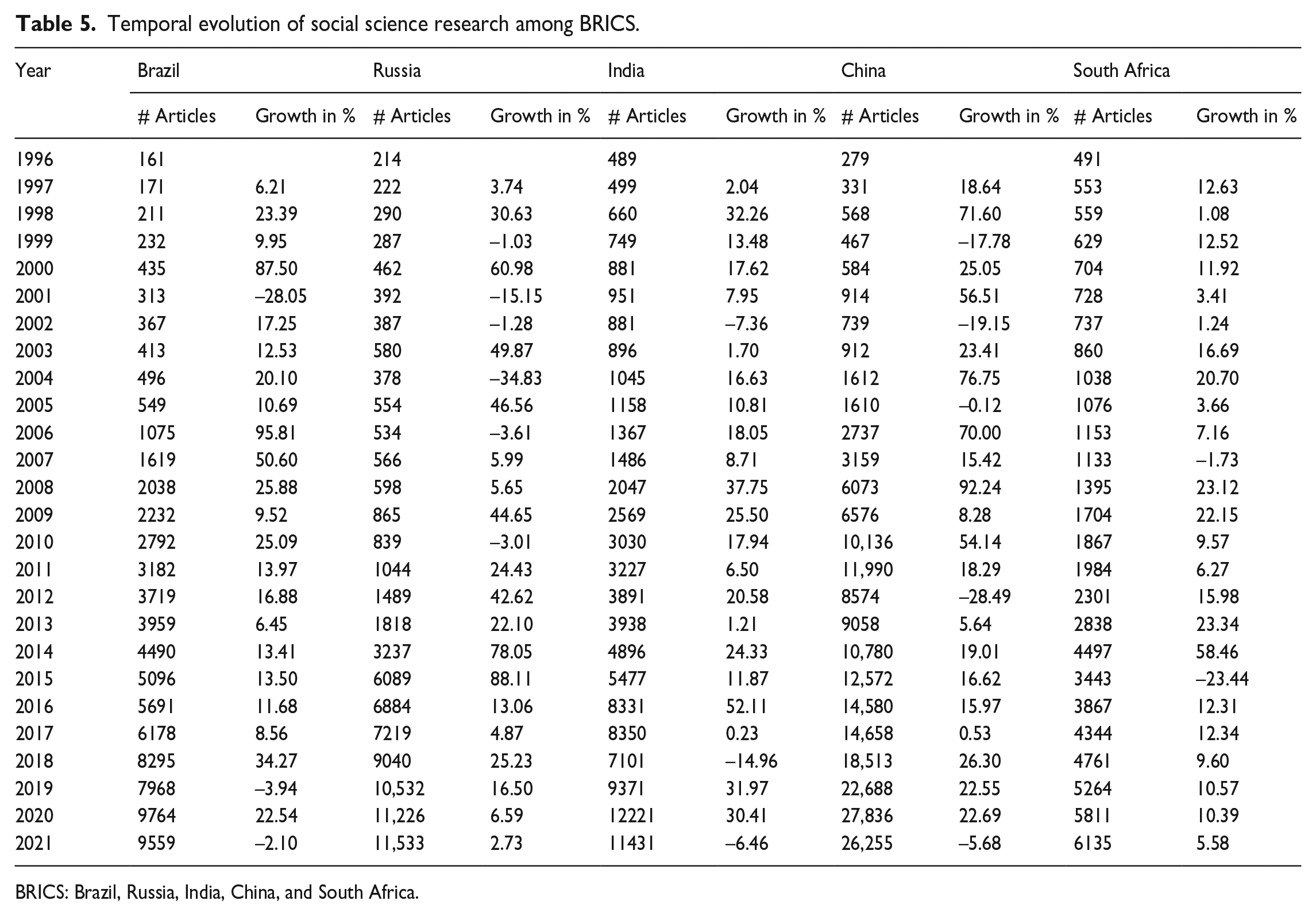
BRICS: Brazil, Russia, India, China, and South Africa.
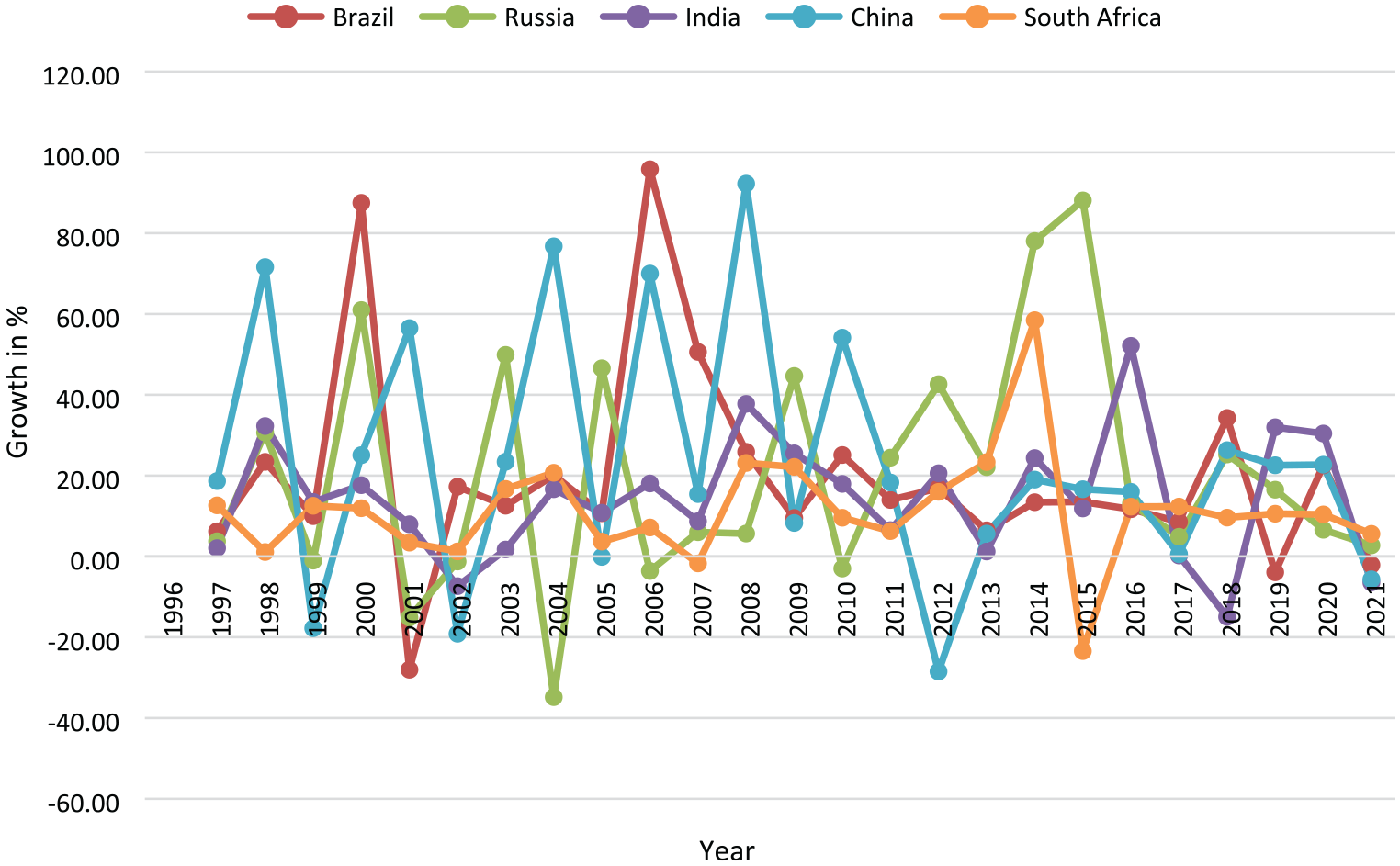
Growth of social science research among BRICS.
The depth and scope of the connections of BRICS researchers are interestingly revealed by an analysis of global collaboration patterns. It is observed from Figure 6 that the highest percentage of international collaborative documents was registered by Russia in the year 2006 and other BRICS countries in 2021. The authors from the BRICS countries showed a fluctuating pattern in their international collaboration over that time. The top 10 collaborative countries of BRICS in the field of social sciences are listed in Table 6. Regardless of country, it was discovered that the United States was the most preferred country for international research collaborations. Unsurprisingly, the existence of BRICS country collaboration has been unrecognized. For instance, only China is mentioned among the top 10 countries with whom Russia and India most commonly collaborate, and no other country is listed among the top 10.
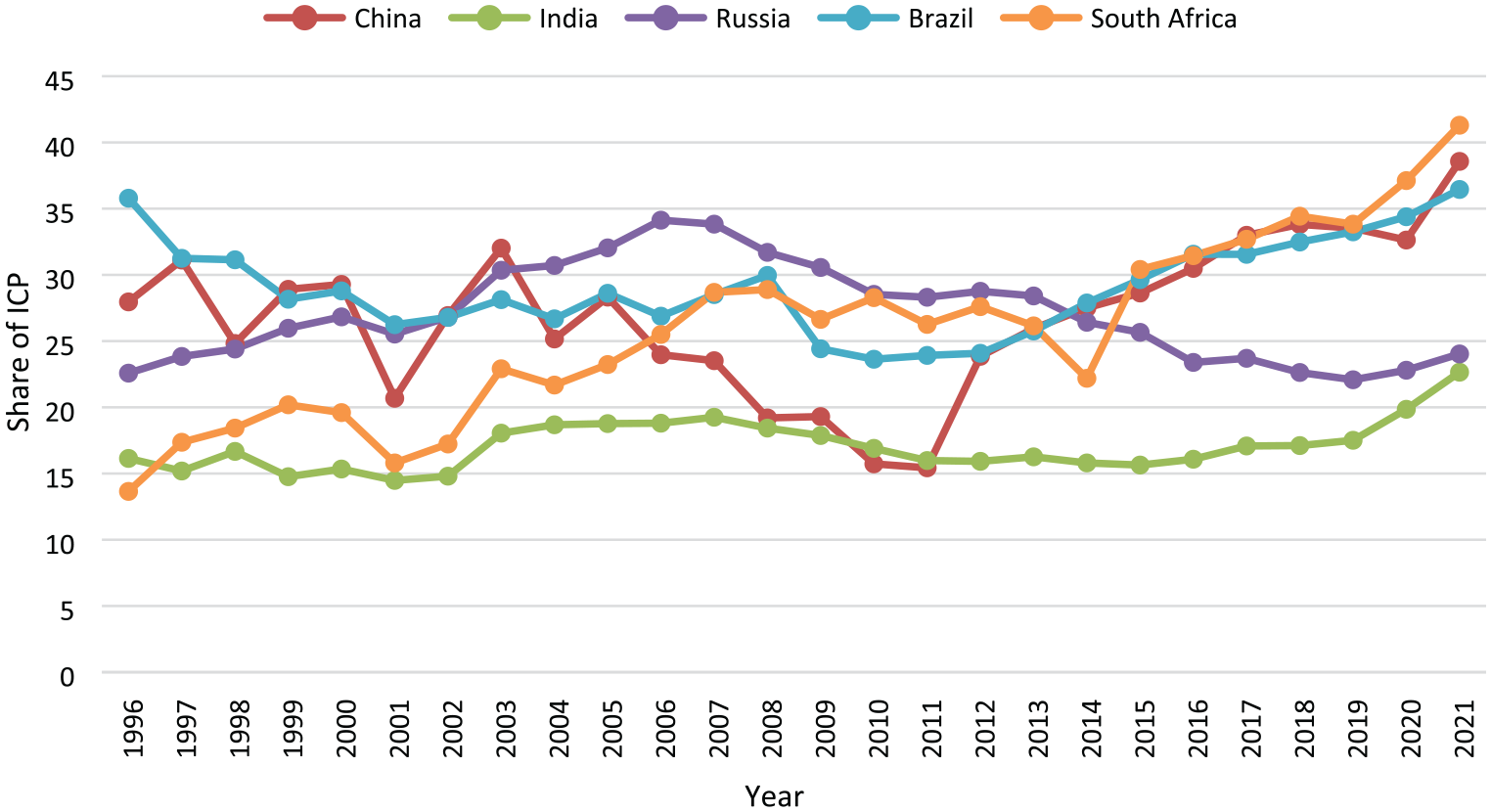
International collaboration trend of BRICS.
Most frequent collaborative countries of BRICS.
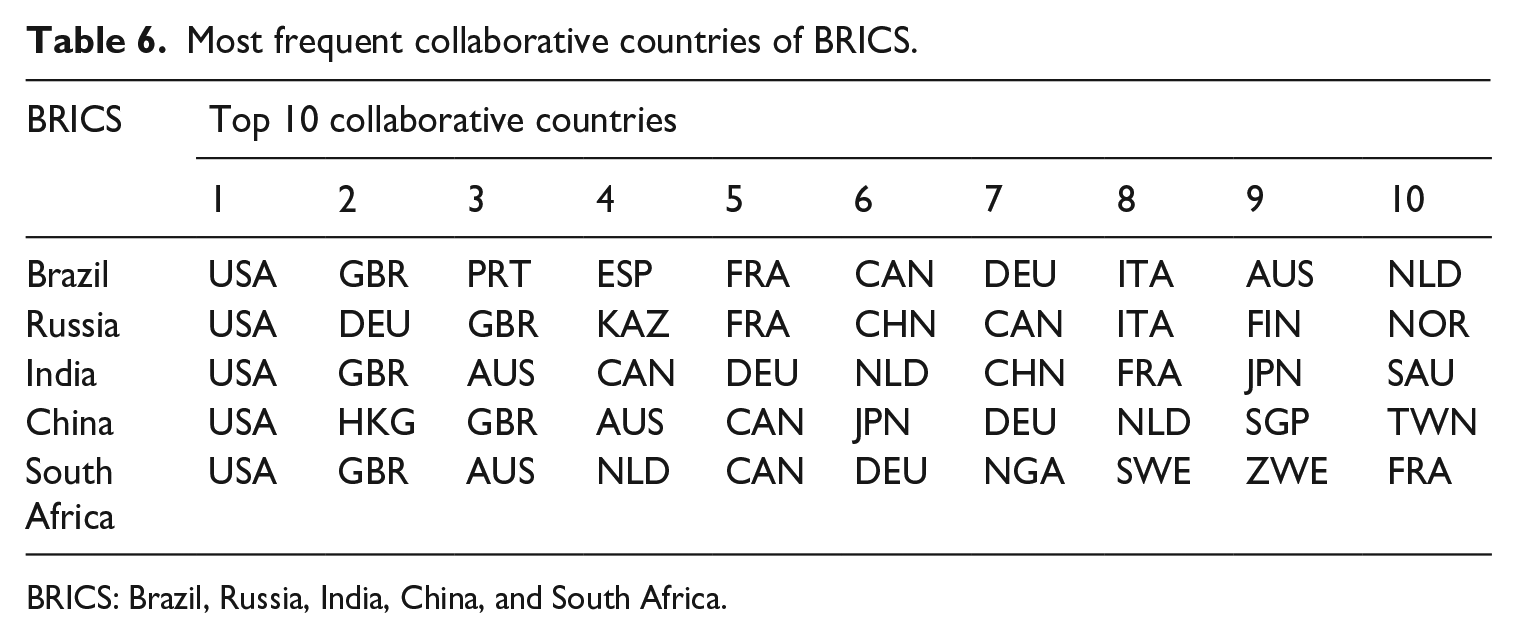
BRICS: Brazil, Russia, India, China, and South Africa.
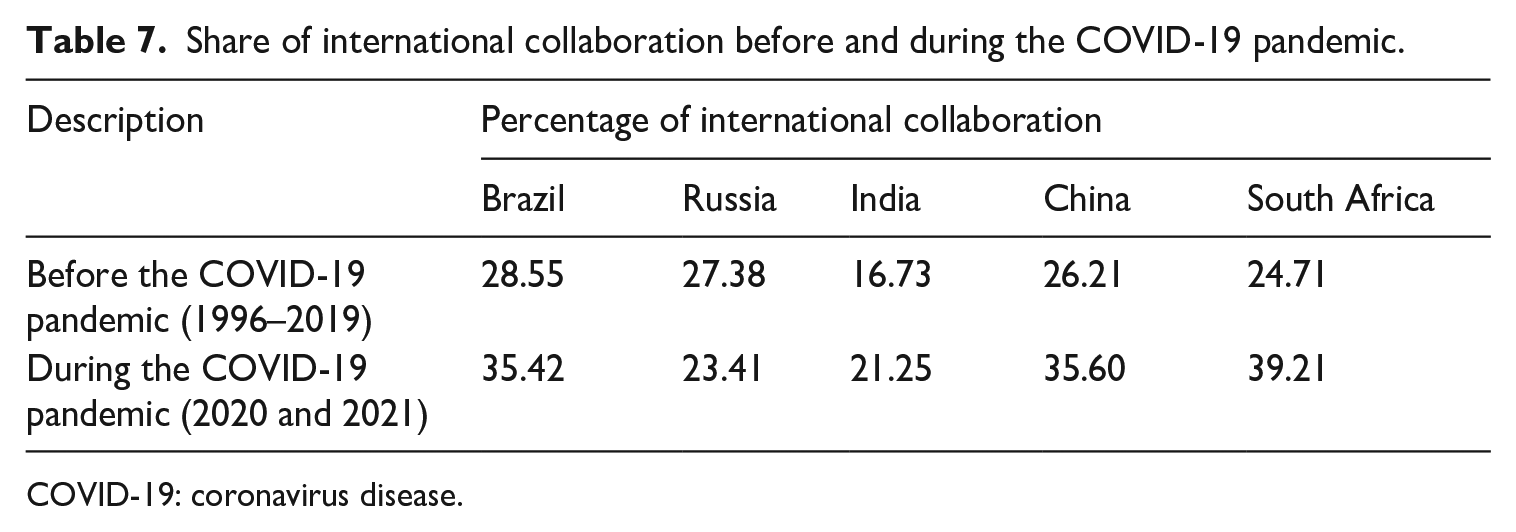
All of the BRICS countries had a larger percentage of international collaborations during the COVID-19 pandemic (2020–2021) than they did before the pandemic except Russia (see Table 7). Particularly, it is more than 50% for South Africa.
Share of international collaboration before and during the COVID-19 pandemic.
COVID-19: coronavirus disease.
Conclusion
In this study, a comparison of the BRICS countries in the social sciences research was conducted using data from the SCImago and Scopus databases, and the results were quite interesting. In terms of number of documents, China was ranked third in the world, followed by India at 11, Brazil at 12, Russia at 13, and South Africa at 16, during the period of 1996–2021. South Africa dropped two places, from 13 in 1996 to 15 in 2016, while others improved. China recorded the highest average yearly GR with 20% among this group, followed by South Africa with 11%. Regarding the quality, the proportions of documents that are not cited in the subsequent literature are higher than 50% for Russia, followed by Brazil with 43% and lower than 40% for other BRICS countries. This is due to the fact that a majority of documents (~44%) published by Brazilian and Russian researchers were written in regional languages other than English, which is only readable by a small percentage of researchers globally (Elango, 2016). South Africa (~9) received the most citations per document while Brazil and Russia received the least. Despite having the highest h-index (265), China trails South Africa in terms of number of citations per document since more of its documents are written in non-English language. Each BRICS country focuses on a distinct sub-discipline of the social sciences, such as gender studies in Brazil, anthropology and archeology in Russia, political science and international relations in India, transportation in China, and social work in South Africa. The findings of this study paved the path for international partnerships among the BRICS countries by identifying which BRICS country is stronger/weaker in which sub-discipline of social sciences.
The SCImago database can be used to undertake this type of research and provides a number of opportunities for additional investigation although it has some limitations. It is planned to combine socio-economic indicators with scientometric mapping technology in the future.
This study has some limitations. (1) The Scopus database indexes articles with affiliation information rather than the authors’ nationality. (2) Scopus has a bias because it is an international database which focused on the documents in English language. Hence, this analysis did not include the comprehensive list of publications from BRICS countries.
Footnotes
Data availability
The data used in this study have been collected from Scopus and SCImago portal.
Funding
The author(s) received no financial support for the research, authorship, and/or publication of this article.
