






Abstract
What are the Behavioral Sciences? Despite their widespread use in governments, international organizations, and policy innovation contexts, the term circulates with conceptual ambiguity and permeable boundaries. From a Science and Technology Studies (STS) perspective, this ambiguity is not an anomaly but evidence of an evolving and heterogeneous epistemic configuration, marked by competing epistemologies, practices, and regimes of expertise. Yet few studies have examined how specialists themselves define and demarcate this field. This study seeks to answer this question by examining the current understanding of the Behavioral Sciences using a two-round Delphi design informed by scientometric mapping, interviews, and a survey. The scientometric stage analyzed 4429 open-access publications (1956–2023) indexed under the term behavioral sciences, identifying 47 structuring references through co-citation network analysis. Subsequently, semi-structured interviews were conducted with 27 experts from universities, governments, and international organizations (Round 1), followed by an online questionnaire with 23 experts (Round 2) to validate areas of consensus and dissent regarding definitions, paradigms, and methods. The results suggest the presence of three main paradigmatic configurations, namely decision-making processes (95.6%), individual behavior planning (91.3%), and behavior change according to context (69.6%). In terms of methods, the findings indicate the centrality of an empirical-experimental axis, particularly advanced statistical analyses and randomized controlled trials. A high level of consensus was reached regarding the proposed general definition of the Behavioral Sciences (91.3% agreement among experts), whereas consensus was low regarding the object of study (50%). In summary, a key contribution of this study is demonstrating that Behavioral Sciences cannot be reduced to a set of techniques aimed at inducing desirable behaviors but should instead be understood as a sociotechnical project of knowledge production and social intervention.
Introduction
The title of this article may sound provocative, yet it poses neither a trivial nor a straightforward question – while being a fundamental one to ask. Over the past 15 years, governments, multilateral agencies, and international organizations have promoted the application of behavioral insights and interventions, reformulated public action strategies, and established units, departments, and laboratories under the banners of the Behavioral Sciences across multiple sectors (Afif et al., 2019; Ghebreyesus, 2021; Hallsworth et al., 2018; John et al., 2013; Organisation for Economic Co-operation and Development (OECD), 2017; Oliver, 2013; Pete, 2014; United Nations, 2021, 2022; White, 2015).
This institutional trend, which has rapidly spread through governmental and corporate contexts, has consolidated what has come to be known as the behavioral turn in contemporary public governance (Feitsma, 2018; Mukherjee and Giest, 2020; Neuhaus1 and Curley, 2022). The behavioral turn is characterized by the convergence of psychology, economics, political science, and data science, accompanied by the promise of more effective and evidence-based public policies (Kahneman, 2011; Thaler and Sunstein, 2009). This movement has also introduced new forms of governmental rationality (Herfeld, 2021; Whitehead et al., 2019), reframing human behavior as a technical problem and an object of intervention.
Despite the diffusion and political impact of the behavioral turn, few studies have sought to understand how behavioral scientists themselves conceptualize the field to which they belong. Most research focuses on its products–intervention outcomes, nudge effectiveness, or policy impacts (Hallsworth and Sanders, 2016; Hallsworth et al., 2018; Hansen, 2019; Sanders et al., 2018) – while epistemological and methodological dimensions remain marginalized. More reflexive analyses of the field’s boundaries and definitions are rare and fragmented (Gintis, 2007; Hansen, 2019; Herfeld, 2017; Kappes, 2016; Mauro, 2020a, 2020b; Mukherjee and Giest, 2020; Pooley, 2016; Rutherford, 2022; Timon, 2020; van Aaken, 2024; Varazzani and Hubble, 2023) and do not yet constitute a systematic effort to characterize the Behavioral Sciences as a scientific field in formation. This gap suggests that although the term has acquired practical and institutional legitimacy, it still lacks internal consensus regarding its epistemological and methodological contours.
From the perspective of Science and Technology Studies (STS), the practical and institutional expansion of the Behavioral Sciences reveals a field with unstable boundaries – epistemologically heterogeneous and socially contested. As argued by Gieryn (1983, 1999), the constitution of scientific fields involves continuous boundary-work operations, through which actors seek to demarcate what counts as science and who holds epistemic authority. Such indeterminacy is not a deviation, but rather a constitutive feature of processes of scientific consolidation (Bourdieu, 2004; Cetina, 1999). The absence of a clear conceptual demarcation of what constitutes the Behavioral Sciences thus reflects not only semantic ambiguities but also symbolic disputes among different regimes of truth and practices of legitimation (Collins and Evans, 2002; Jasanoff, 2004; Latour and Woolgar, 1997).
In this context, this study examines how the Behavioral Sciences are currently practiced and interpreted by their own specialists from a sociotechnical perspective. The investigation employs the Delphi method (Okoli and Pawlowski, 2004; Turoff and Linstone, 2002), articulating two complementary approaches: a scientometric analysis aimed at mapping patterns of co-citation, intellectual organization and production that reflect the field’s currently codified knowledge structure (Spinak, 1996; Velho, 1990), and an empirical investigation conducted through interviews and questionnaires with experts engaged in self-declared Behavioral Science research in academia, government, and/or international organizations. This methodological combination enables the integration of objective dimensions of scientific production with the subjective dimensions of expert interpretations, revealing both the structures of legitimation and the internal divergences within the field.
By analyzing the Behavioral Sciences as a sociotechnical practice, this study seeks to understand the contemporary processes of demarcation, negotiation, and provisional stabilization through which the field is defined and contested. It thereby contributes to a broader reflection on how domains of knowledge are actively constituted, acquire legitimacy, and become articulated with public policy and contemporary governance (Callon, 1984; Jasanoff, 2003). The implications go beyond mere empirical characterization: they propose an exercise in scientific reflexivity by making visible the rules of the game that structure the Behavioral Sciences, fostering a critical dialogue between theory and practice, epistemology, and application.
Previous attempts
The question of what constitutes the Behavioral Sciences has been approached from multiple perspectives, ranging from historically situated accounts to contemporary conceptual and applied interpretations. Rather than providing a comprehensive historiographical reconstruction of the field, this section highlights selected contributions that illustrate how the term has been variously defined, institutionalized, and contested across contexts.
Authors such as Herfeld (2017), Pooley (2016), and Rutherford (2022) highlight that the term Behavioral Sciences emerged in the mid-20th century, associated with the Ford Foundation’s Behavioral Sciences Program. This program sought to institutionalize the field by promoting interdisciplinary research on human behavior, emphasizing empirical methods and controlled experiments. Under the leadership of Bernard Berelson and influenced by the Gaither Report, the initiative was designed to foster interdisciplinary collaboration across different social sciences, including interactions between economists, psychologists, and political scientists. However, as the historiography suggests, rather than constituting a fully integrated interdisciplinary field, these interactions were selective rather than the rule, reflecting both the ambitions and the limits of interdisciplinarity at the time (Herfeld, 2017). Although it lasted only until 1957, the program left a legacy of interdisciplinarity and the application of scientific methods to social problems, contributing to subsequent developments in related areas of research.
However, the literature already reveals signs of significant tensions and cross-disciplinary connections during the formative phase of the field. On one hand, economists linked to the Cowles Commission, for instance, resisted joining the movement, prioritizing mathematical and deductive approaches over empirical experimentation (Pooley and Solovey, 2010). On the other hand, Herbert Simon’s theory of bounded rationality exemplifies how certain bridges were established between economics and psychology, exposing both the potential and the challenges of interdisciplinarity (Herfeld, 2017; Simon, 1955). Taken together, these accounts suggest that the configuration of the field during this period was neither uniform nor stable, and the relationships among disciplines – particularly between economics and other social sciences – were marked by tensions, asymmetries, selective forms of engagement, and discontinuities (Herfeld, 2017; Pooley and Solovey, 2010).
In contemporary debate, scholars have discussed whether the field should be considered disciplinary or not. Timon (2020), through a semiotic analysis, revealed plural perceptions among students and professionals – sometimes associating the field with psychology and economics, at other times emphasizing its interdisciplinary vocation. Gintis (2007) advocated for an integrative model grounded in evolutionary theory and game theory, while Mauro (2020a, 2020b) proposed an ‘undisciplinary’ perspective capable of crossing disciplinary boundaries. Kappes (2016), drawing on consultations with researchers from the London School of Economics, showed that the field is understood both as an open interdisciplinary science and as an applied practice operating at individual, group, and organizational levels.
This plurality of interpretations is also evident among multilateral organizations that have incorporated the Behavioral Sciences into their public policy agendas. The United Nations, through the UN Innovation Network, defines them as a tool for steering behaviors toward the Sustainable Development Goals (van Aaken, 2024). The OECD, in turn, characterizes them as an interdisciplinary approach aimed at understanding and changing human behavior, drawing on psychology, economics, and neuroscience ( Hansen, 2019; Varazzani and Hubble, 2023). The World Bank and the Inter-American Development Bank (IDB), however, emphasize their practical dimension without proposing explicit conceptual definitions. This contrast reveals different modes of appropriation of the field, oscillating between conceptual and pragmatic approaches.
Although the question of what Behavioral Sciences are remains unresolved, some studies have begun to explore what they should become, such as those by Hallsworth (2023) and Barr and Peters (2024). Hallsworth (2023) proposes understanding them as an interdisciplinary lens oriented toward social solutions – one that should broaden its methodological repertoire and account for sociocultural contexts. Barr and Peters (2024), in an even more forward-looking tone, argue that the field will be crucial in light of emerging technological and ethical transformations, reinstating the question ‘should we?’ as being as relevant as ‘can we?’ when designing behavioral interventions.
Thus, the field remains permeated by a multiplicity of conceptions, encompassing historical attempts at institutionalization, applications in multilateral organizations, and reflections on its future. Rather than converging toward a stable theoretical core, what emerges is a mosaic of interpretations that reflect ongoing processes of conceptual negotiation, disciplinary boundary-making, and practical appropriation. This mosaic reflects the field’s limited conceptual consolidation and the coexistence of multiple approaches to its definition and delimitation. STS offer a well-established analytical lens to examine these processes of epistemic negotiation, boundary-work, and provisional stabilization in the present, as discussed in the following section.
Understanding scientific fields: Theoretical perspectives
Understanding science as an object of inquiry – and not merely as a producer of knowledge – constitutes one of the central tasks of fields such as historiography, the sociology of science, and, more recently, STS. These fields mobilize different conceptions to address a common question: what is science, and how can it be analyzed? Interpretations vary according to the theoretical lens adopted, encompassing rational and cumulative progress (Chalmers and Fiker, 1993; Popper, 1963, 2005), the dynamics of thought collectives (Fleck, 2010) and paradigm shifts (Kuhn, 1970), institutional norms and structures (Merton, 1973), as well as the sociotechnical networks and symbolic disputes that sustain knowledge production (Bourdieu, 2004; Callon, 1984; Latour, 2000, 2012; Latour and Woolgar, 1997; Latour et al., 2013; Peterson, 2017).
Among the most widespread interpretations of how science operates is the positivist perspective, which conceives of science as a rational, cumulative, and progressive enterprise grounded in empirical observation and systematic experimentation. From this viewpoint, scientific knowledge advances through the successive verification of theories, in a process of continuous refinement of reason. Francis Bacon, Galileo, and Newton are considered foundational figures of this tradition (Chalmers and Fiker, 1993), later reformulated in logical positivism. Even Karl Popper (1963, 2005), by proposing falsificationism as a criterion of demarcation, maintained faith in the rational and cumulative advancement of knowledge – albeit through conjectures and refutations.
Other authors have proposed alternatives to this linear vision. Ludwik Fleck (2010) introduced the notion of thought collectives, emphasizing that scientific facts are shaped by shared styles and specific contexts. Thomas Kuhn (1970), in turn, argued that scientific progress occurs through cycles of normal science, crises, and paradigm shifts – ruptures that radically transform scientific practice. Imre Lakatos (1978) sought to reconcile these perspectives by proposing research programs, in which a central theoretical core is protected by auxiliary hypotheses, allowing for both continuity and adaptation. In sum, the contributions of Fleck (2010), Kuhn (1970), and Lakatos (1978) shifted the focus from the internal logic of science to its epistemic plurality and paradigmatic dynamics.
Bloor (1991) and Merton (1973) further advanced this shift by highlighting the social and institutional dimensions of scientific practice. Merton (1973) defined science as an institution guided by an ethos composed of four principles – universalism, communalism, disinterestedness, and organized skepticism – that ensure its integrity and legitimacy. Within this framework, the ‘Matthew Effect’ explains the concentration of prestige and resources among already established scientists, revealing the competitive dimension of knowledge production. In contrast, the Strong Programme in the Sociology of Knowledge, proposed by Bloor (1991), introduced a causal and symmetrical interpretation of science, according to which both true and false beliefs are social products. This approach breaks down the distinction between internal and external factors, conceiving scientific knowledge as socially produced and situated.
From a constructivist standpoint, various theories have emphasized the role of disputes and nonhuman agents in the constitution and practice of science. Actor–network theory (Callon, 1984; Latour, 2000, 2012; Latour and Woolgar, 1997) dismantled the divide between humans and nonhumans, recognizing instruments, artifacts, and institutions as active participants in the production of knowledge. Science, in this sense, is the outcome of heterogeneous networks in constant negotiation. Pierre Bourdieu (2004), in turn, conceived of science as a relatively autonomous field structured by symbolic and institutional struggles. The concept of illusio reveals the practical and affective engagement of scientists in this ‘game’, while scientific capital – both symbolic and institutionalized – regulates positions and strategies of consecration.
Recent studies, such as Peterson (2017), show that divergences do not occur only between disciplines but also within the sciences themselves. Drawing on Cetina (1999), Galison and Stump (1996), Gieryn (1999), and Longino (2019), Peterson analyzes how different epistemic subcultures within the mind and brain sciences manage depth of field – that is, how they broaden or narrow their focus on particular objects, methods, and values. This ongoing management enables the coexistence of heterogeneous perspectives, articulated through flexible boundaries around what is considered legitimate or relevant. The unity of a scientific field, therefore, is always constructed, negotiated, and provisional – an outcome of negotiations among thought styles, practices, and regimes of visibility. Recognizing this internal plurality is essential for analyzing any field of knowledge, as it reveals science as a socially, epistemically, and institutionally situated practice.
These multiple interpretations – from rational progress to falsificationism, from paradigms to institutional norms, from thought collectives to sociotechnical networks and scientific fields – demonstrate that science cannot be reduced to a single logic. Rather, it must be understood as a socially, historically, and materially situated practice, shaped by disputes, values, technologies, and contexts. Drawing on this plurality, this study mobilizes these perspectives not to reconstruct the historical development of Behavioral Sciences as a scientific field, but to examine how it is currently defined, negotiated, and stabilized by its own practitioners. In this sense, the focus is not on tracing the field’s historical trajectory, but on examining its contemporary epistemic configuration, as reflected in both codified knowledge structures and expert interpretations.
Method
This study adopted an exploratory approach and was approved by the Ethics Committee of the University of Campinas (Unicamp) (CAAE No. 74818323.9.0000.8142). The data collection instruments and interview guides, as well as the analytical workflows and supporting materials, are presented in Supplementary Material. The study followed the DELPHI-STAR Protocol (Niederberger et al., 2024), which provides transparent and detailed guidance for conducting Delphi studies. The protocol covers key aspects such as the definition and selection of experts, the type of Delphi design, sample composition, questionnaire development, number of rounds, and the feedback and data analysis procedures, which are described below.
Body and integration of knowledge
The experts in this study were researchers engaged in self-declared Behavioral Science research within universities, governments, and/or non-governmental organizations.
Delphi type
This study is characterized as an adapted classical Delphi. The Delphi method, originally developed within Cold War research at RAND, reflects early efforts to formalize expert-based forecasting under conditions of uncertainty (Dayé, 2020). More broadly, such methodological developments are embedded in the historical context of Cold War science, which shaped epistemic practices and the role of expertise in policy-oriented research (Aronova and Turchetti, 2016). Traditionally, the method involves at least two stages: an initial one, consisting of open-ended questions, followed by subsequent, quantitatively oriented rounds aimed at refining and prioritizing responses until stability in results is achieved, with the same participants taking part in each round. In this research, the process was also structured in two rounds but with certain modifications: in the first, in addition to consulting experts through open-ended questions, a scientometric analysis was conducted alongside a thematic analysis of the core literature of the field. Together with the interview data, these analyses informed the construction of the questionnaire applied in the second round. In the latter, both researchers who participated in the first round and additional researchers – selected for their representativeness in the field’s scientific production – were invited to participate.
Sample of experts
The sample definition was developed separately for each of the two rounds. Recruitment employed the snowball technique and direct contacts established during academic and governmental events. The first-round sample consisted of 27 participants from nine countries, most of whom were university faculty members (16 experts). In addition, consultants affiliated with behavioral insights firms, public servants, and doctoral students also participated. Their educational backgrounds included leading universities in Latin America, Europe, and the United States (see Supplementary Material for detailed frequency distributions by institution, background, and geographic location).
The second Delphi round was conducted through an online questionnaire, designed based on the qualitative results of the first round and distributed via the Qualtrics platform to two groups: the 27 experts from the first phase and a sample of 200 researchers identified during the scientometric stage. This sample was proportionally stratified according to the geographic distribution of scientific production, ensuring diversity and balance by selecting the calculated quota per region in descending order of average citation counts (i.e. the ratio between the number of identified publications and the total number of citations).
As a result, 23 experts from 13 countries participated in this round, with the largest representation from Argentina (21.7%), followed by the United States and Brazil (13% each). University faculty predominated – eight full professors, four associate professors, and two assistant professors – accounting for 60% of the sample, alongside postdoctoral researchers, doctoral students, consultants, and professionals working in public and private institutions. In disciplinary terms, the majority were affiliated with Psychology and Cognitive Sciences (52.2%), followed by Economics and Business and other Social Sciences (13% each). The institutions represented included leading universities across Latin America, Europe, Asia, and North America.
Survey
The survey with experts was conducted through interviews and an online questionnaire. In the first round, interviews were carried out between November 2024 and July 2025, either in person or remotely (via Google Meet), with an average duration of 45 min and based on informed consent. One case was conducted asynchronously via WhatsApp, and all recordings were fully transcribed. The interview guide sought to characterize the participant, their research practices, and their perceptions of what constitutes the Behavioral Sciences (see Supplementary Material). In the second round, the instrument included questions for expert profiling, assessment of the centrality of methods and techniques, evaluation of the paradigms identified in the scientometric analysis, and the examination of a proposed synthesized definition of the field.
Delphi rounds
Two Delphi rounds were conducted. The first round aimed to identify the general characteristics of the field and its definition through interviews with experts and a scientometric analysis. Rather than reconstructing the historical evolution of the field, this analysis was designed to map patterns of co-citation, intellectual organization, and scientific production that reflect the field’s currently codified knowledge structure. Scientometrics, understood here as the quantitative study of scientific activity, goes beyond mere publication counting, allowing for the examination of collaboration networks, intellectual structures, and citation patterns (Spinak, 1996; Velho, 1990).
The corpus for this analysis was retrieved from the Dimensions.io database on 30 January 2024, due to its breadth and comprehensive coverage of bibliographic productions (Singh et al., 2021). The search employed the descriptors ‘behavioral sciences’, ‘ciências comportamentais’, and ‘ciencias del comportamiento’, restricted to open-access documents classified as articles or book chapters, published up to December 2023. This choice allowed for the identification of works that self-declared association with the field, thereby avoiding biases stemming from the inclusion of more specific terms such as ‘behavioral psychology’ or ‘behavioral economics’.
The second round aimed to standardize the responses and assess the degree of agreement with the findings from the first round.
Data analysis and feedback
The analysis was developed according to the technique employed. The interview analysis followed the thematic analysis approach proposed by Braun and Clarke (2006), which enables the identification of recurring patterns and meanings in a flexible and interpretive manner. The responses were organized in an analytical matrix, categorized by thematic axes, and iteratively refined as new conceptual connections emerged.
The scientometric analysis followed the classical laws (Bradford, 1976; Lotka, 1926; Zipf, 1949), which allow for assessing the degree of consolidation of a scientific field based on, respectively, the distribution of author productivity, the frequency of terms, and the concentration of articles in core journals. The data were processed using the VOSviewer software (Van Eck and Waltman, 2010), which enabled the analysis of co-authorship, term co-occurrence, and, in particular, co-citation networks. This technique, as proposed by Small (1973), allows the mapping of a field’s intellectual structure based on references cited together, indicating patterns of association within the field’s codified knowledge base (McCain, 1990; Marshakova, 1973). A minimum threshold of 20 co-citations was adopted, resulting in the identification of 47 structuring references. The corresponding texts were qualitatively analyzed, allowing for the categorization of theoretical and methodological clusters and informing the design of the subsequent phase of the study.
The results from the interviews and scientometric analysis were consolidated into statements and evaluated in the second round. These statements were assessed on a Likert-type scale (1–7), with open-ended fields for justification, allowing both descriptive and qualitative analyses. Convergence in responses was examined through frequency concentration, with consensus defined as 70% or more of responses scoring 6 or 7. Divergences, in turn, were qualitatively analyzed based on participants’ written justifications.
Results and discussion
The results are presented following a two-round structure (Figure 1). In the first round, findings from scientometric analysis and expert interviews are integrated to produce an initial draft comprising definitions, paradigms, object of study, methods, and techniques. In the second round, these propositions are validated through survey results, leading to a consolidated understanding of how the Behavioral Sciences are currently interpreted by specialists from a sociotechnical perspective.
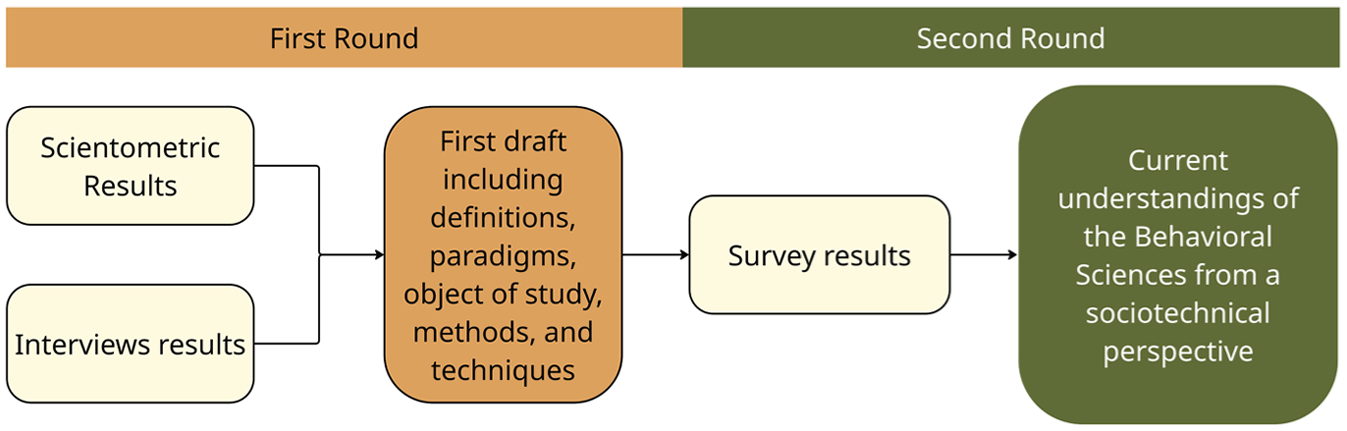
Two-round Delphi results integration.
Round 1 – First draft of concepts
Scientometrics
The publications identified under the term behavioral sciences display a cumulative growth pattern with a recent inflection point. After a period of low output up to 2006, with an annual average of approximately 12 publications, an exponential increase is observed between 2007 and 2023, reaching an annual average of 223 publications. In total, 4429 works were mapped between 1956 and 2023, evidencing the recent expansion, consolidation, and scientific diffusion of the field (Figure 2). The profile is distinctly multidisciplinary, with strong interactions among Psychology, Health Sciences, and Biomedical/Clinical Sciences, as well as notable connections with Statistics and Computer Science. The co-authorship and term co-occurrence clusters revolve primarily around the words health, interventions, and evidence synthesis (systematic reviews/meta-analyses), along with interfaces related to public policy and COVID-19 (Figure 3).
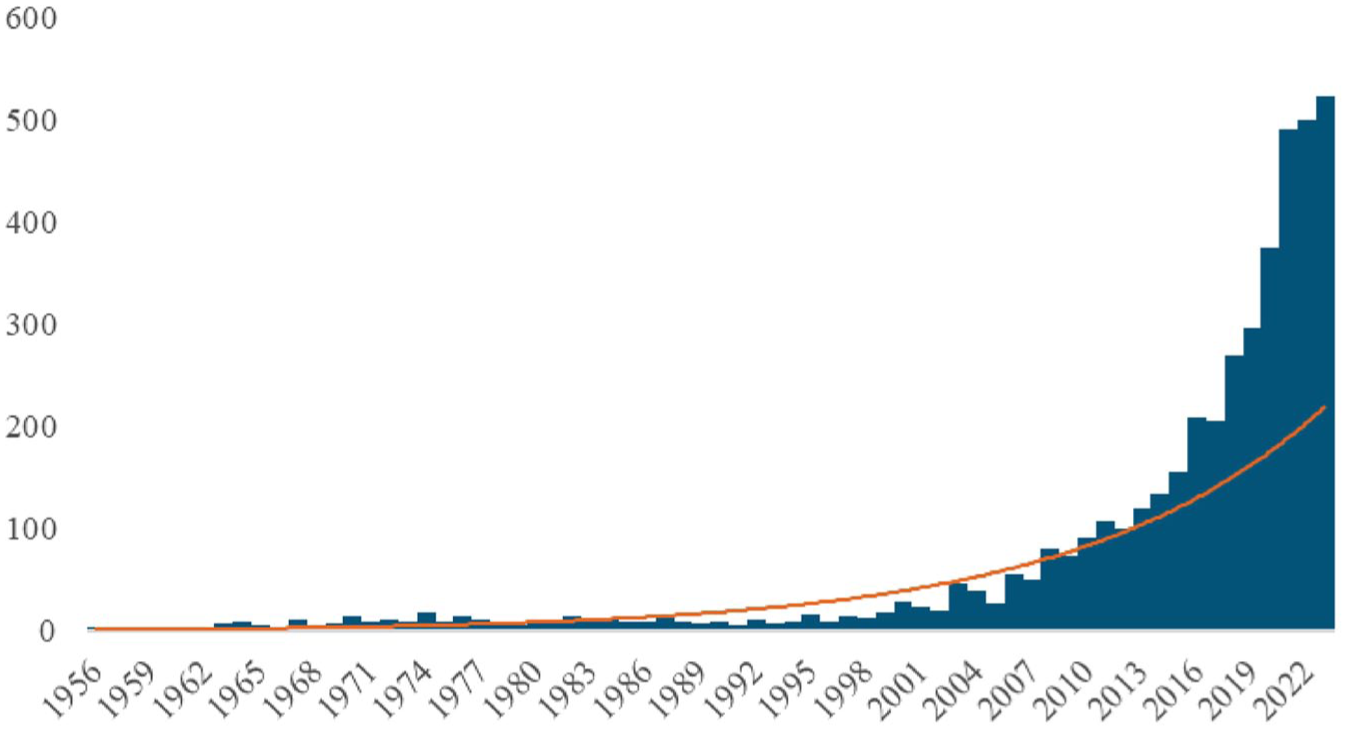
Publications per year.
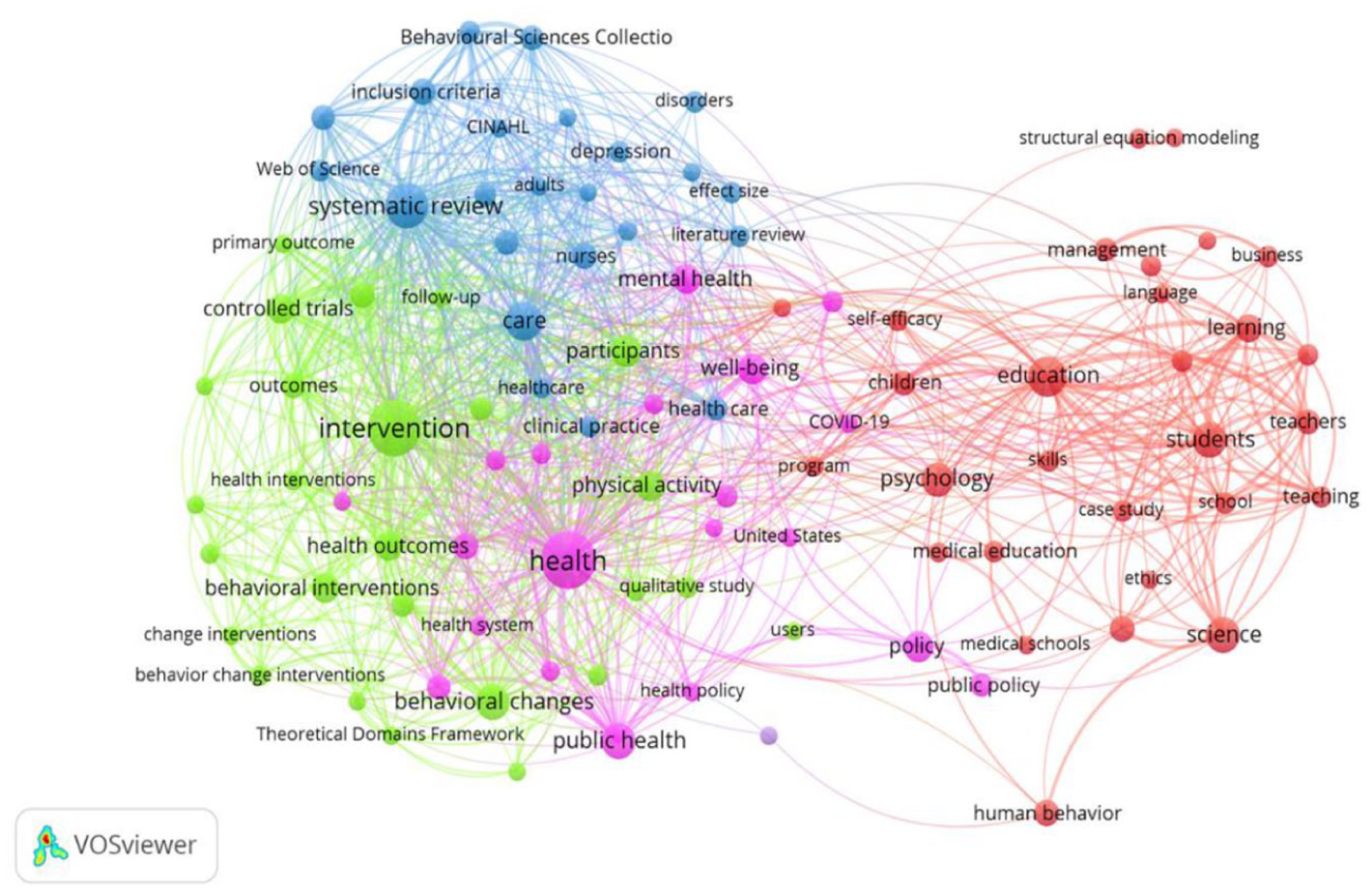
Keywords visualization network.
Authorship follows a highly concentrated distribution (Lotka’s law), with a few high-productivity and high-impact poles (e.g. Susan Michie and Cass Sunstein) and a long tail of occasional authors, reflecting internal hierarchies and the Matthew Effect (Figure 4). Publication outlets are likewise concentrated (Bradford’s law), with a core of 73 journals (Figure 5) – most notably Behavior Research Methods – accounting for a substantial portion (1,333) of the total output and citations. Geographically and institutionally, the United States and the United Kingdom predominate, with leading universities such as Harvard, UCL, Michigan, Stanford, and Oxford/Cambridge forming central collaboration and co-citation networks ( Supplementary Material ). This panorama indicates a significant degree of consolidation within the field, even as the perception persists that it remains in the process of stabilization.
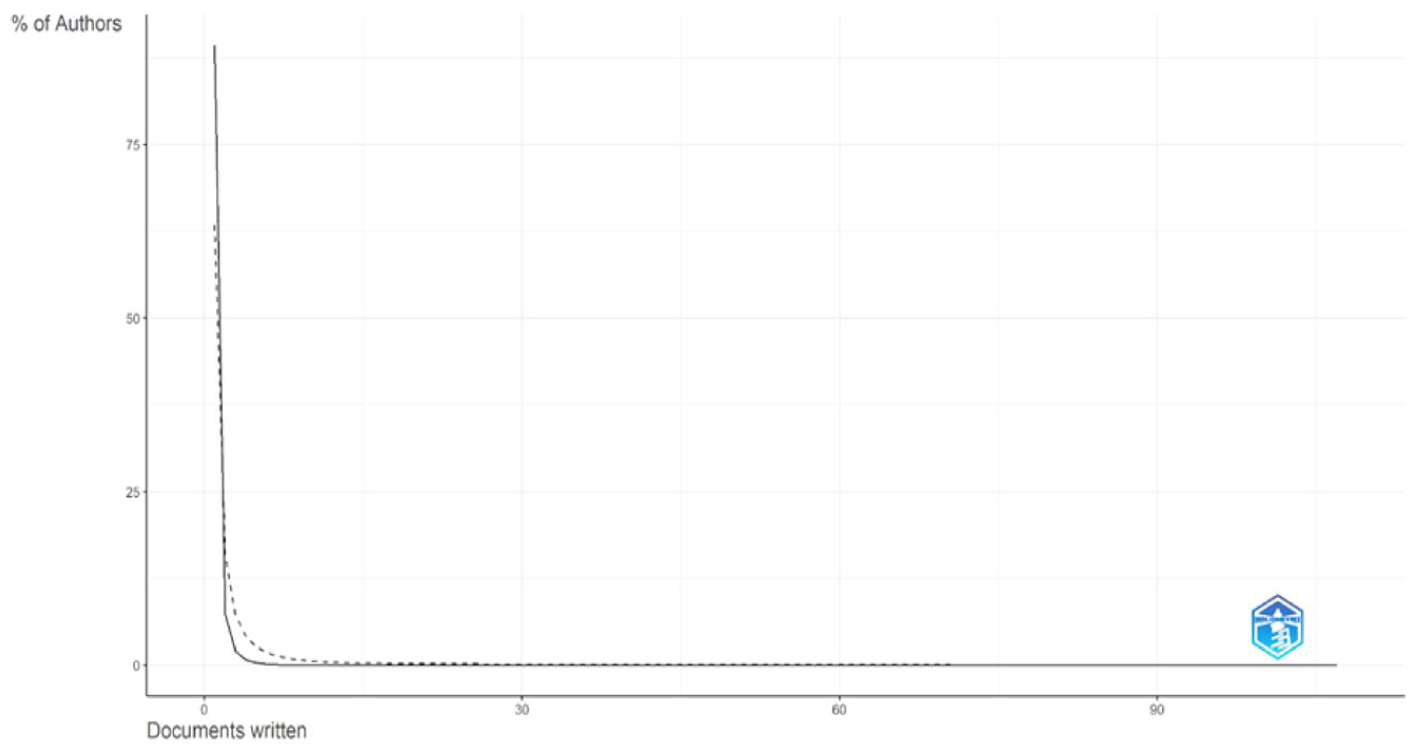
Lotka’s law visualization.
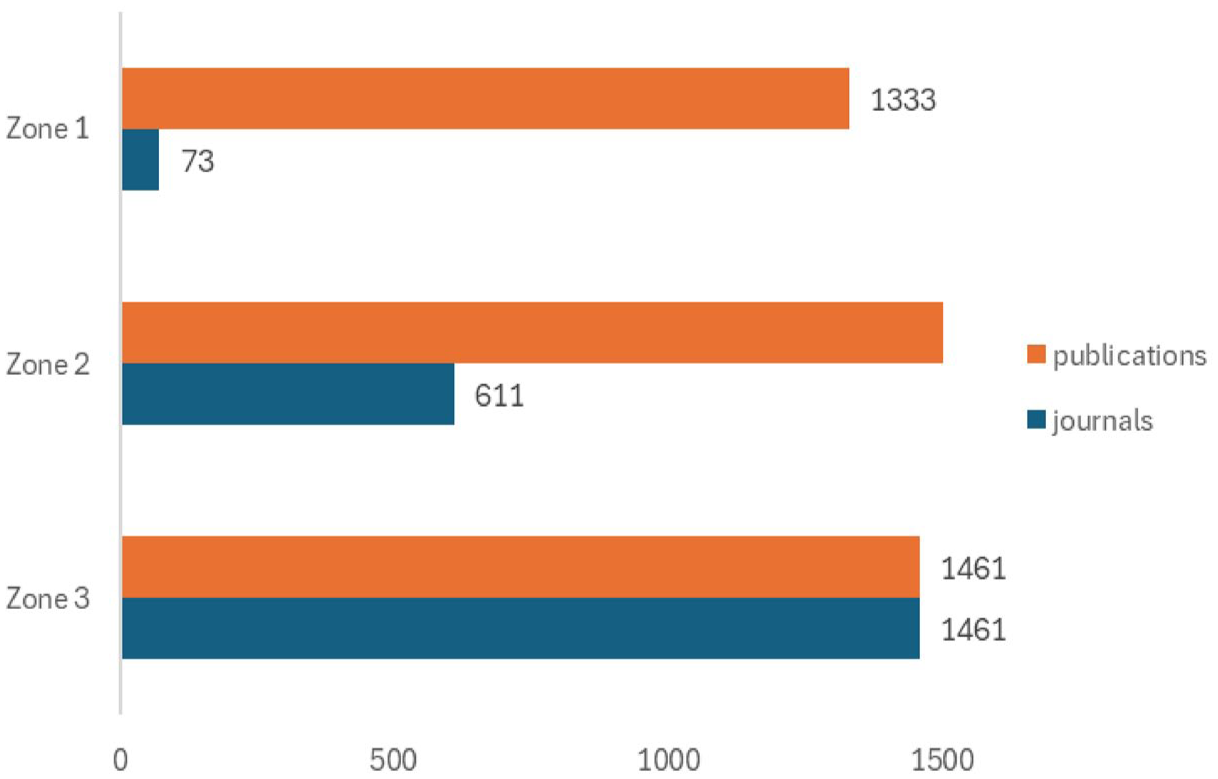
Bradford’s law visualization.
The qualitative analysis of the shared references (co-citation analysis) among studies associated with the term ‘Behavioral Sciences’ suggests the presence of three paradigmatic clusters that emerge from patterns of co-citation and organize the field’s currently codified intellectual repertoire. The first paradigm, of a cognitive–decisional nature, comprises authors such as Kahneman (2003), Kahneman and Tversky (1979), Simon (1955), Thaler and Sunstein (2009), Tversky and Kahneman (1974, 1981, 1992). It focuses on understanding the cognitive limitations and systematic biases that influence decision-making, giving rise to applications such as nudge theory and choice architecture. The second paradigm, of a psychological and motivational nature, encompasses theories that explain the internal determinants of behavior – such as those of Ajzen (1991), Bandura (1977), Ryan and Deci (2000) – emphasizing processes of self-efficacy, self-determination, and behavioral intention. The third paradigm, of an interventionist and methodological nature, brings together behavioral change frameworks and instruments developed by Susan Michie and collaborators (Atkins et al., 2017; Cane et al., 2012; Davis et al., 2014; Michie et al.,2005, 2013, 2011) integrating theoretical and methodological approaches applied to implementation science and public health. Collectively, these paradigmatic configurations reflect recurrent patterns of association within the field’s codified knowledge base (see Supplementary Material).
Moreover, the qualitative analysis of shared references indicates that empirical practices occupy a central position within the field’s codified repertoire, underpinning the legitimacy and reproducibility of the evidence produced. The predominant methodologies, concentrated in the fourth identified cluster, suggest ongoing effort toward standardization, transparency, and scientific rigor. Among the main methods and guidelines are the systematic and scoping review protocols – such as PRISMA (Moher et al.,2009, 2015; Page et al., 2021) and PRISMA-ScR (Tricco et al., 2018) – the Medical Research Council framework for developing and evaluating complex interventions (Craig et al., 2008), and detailed intervention reporting tools such as the TIDieR Checklist (Hoffmann et al., 2014). In addition, both quantitative and qualitative approaches are identified, such as the statistical reliability analysis (Landis and Koch, 1977) and the thematic analysis method (Braun and Clarke, 2006). Furthermore, studies introduce critical reflections on bias, replicability, and scientific transparency, reaffirming the field’s methodological commitment to empirical validity (Ioannidis, 2005; Munafò et al., 2017; Simmons et al., 2011). These findings point to the salience of methodological rigor within the field’s contemporary configuration. More recently, studies (Van Bavel et al., 2020) illustrate moments of intensified visibility and application, particularly in the context of the COVID-19 pandemic (see Supplementary Material).
In summary, the data suggest the presence of five main clusters of association, as illustrated in Figure 6. The yellow region includes studies that underpin Paradigm 1; the green, Paradigm 2; and the blue, Paradigm 3, while the red regions represent the identified methodological foundations. Highlighted in purple is the production of Van Bavel et al. (2020), illustrating the field’s increased prominence in specific contexts such as the post–COVID-19 period.
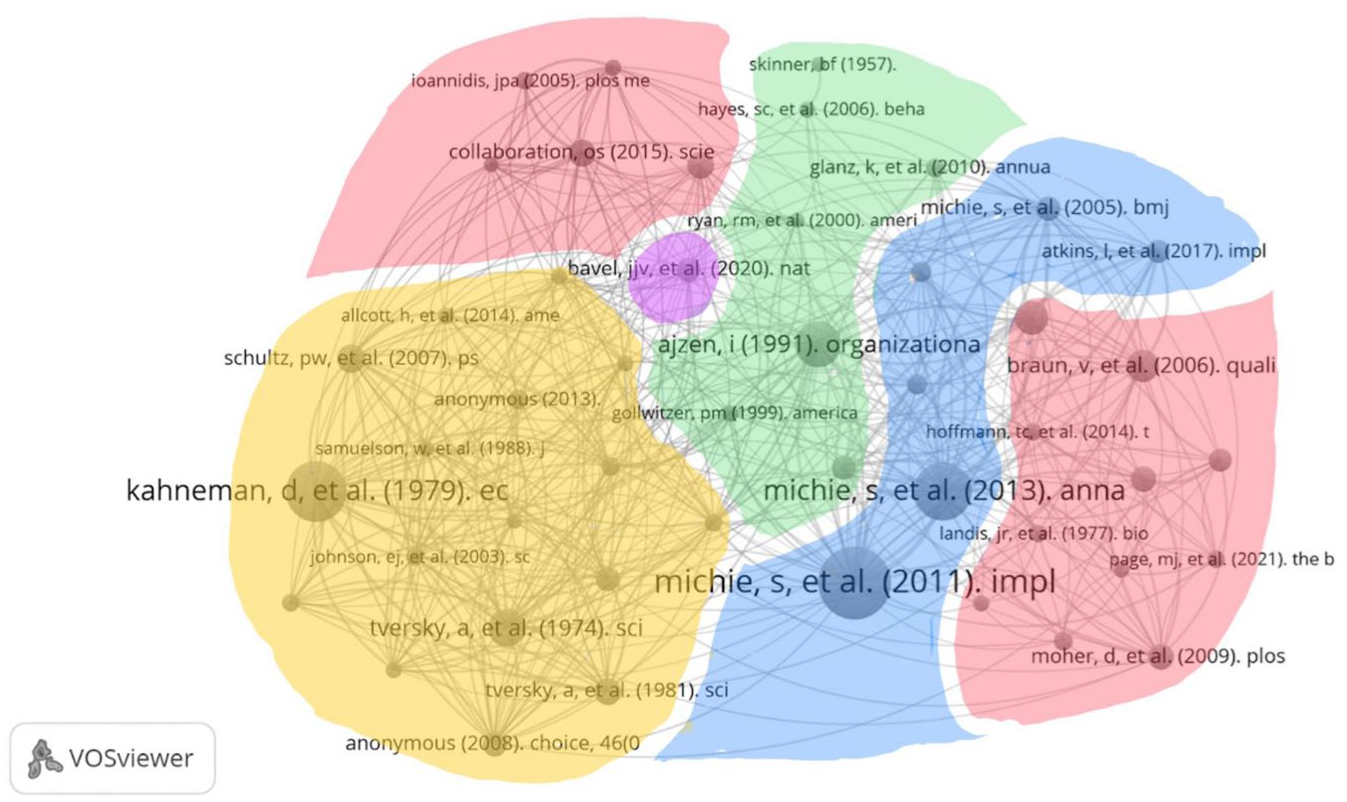
Qualitative groupings of epistemological and methodological foundations.
Expert-based delineations of the field
The results obtained through the interviews made it possible to identify the methodologies used by the specialists in their daily research practice, their objects of study, and how they conceptualize Behavioral Sciences. Regarding methodologies, the interviewees spontaneously mentioned the methods and frameworks already identified in the scientometric analysis. A predominance of quantitative and experimental approaches was observed, with emphasis on randomized controlled trials (RCTs), described by several interviewees as the ‘gold standard’ for the empirical validation of interventions. In some reported experiences, participants stated that, in the projects or initiatives in which they were involved, the application of RCTs was considered an ideal goal: ‘Yes. Our idea was always to conduct RCTs. [. . .]’ (Interviewee 10). In this sense, as summarized by Interviewee 01: The RCT is what people say, ‘it’s the gold standard’, right? That is, it’s . . . Then you do a meta-analysis of the RCTs, even more robust, etc.[. . .] If it’s possible, if there’s money, if the logistics are possible, and if the effort is worthwhile [. . .] I think an RCT should be done.
In parallel, frameworks such as COM-B, EAST, MINDSPACE, and BASIC were widely mentioned by the specialists as central tools for the design and implementation of public policies and behavioral solutions. As explained by Interviewee 09, Now, in terms of practical tools, I use the COM-B system model [. . .] which is for identifying behavioral barriers. I think it’s fantastic; for me, it’s my bread and butter, because I really enjoy this exploratory phase. In terms of tools and frameworks, I always think of BASIC, which is an OECD toolkit that’s even being used by CINCO [. . .] the Behavioral Sciences Unit. It’s a framework for behavioral interventions; it’s almost a step-by-step guide to identifying barriers, challenges, creating interventions, testing them, and then scaling them.
Furthermore, there is a difference between the role of frameworks and experimental approaches. Interviewee 03 explains that there are ‘[. . .] two perspectives. One involves frameworks, methodologies, and models for developing specific interventions. [. . .] This involves the classic or widely used tools of models and methodologies for generating behavioral change models. [. . .]’ Another perspective is ‘[. . .] experimentation, statistical models for experimentation. Design of RCTs, randomized controlled trials, or A-B testing’.
Despite the predominance of quantitative and experimental methods, several interviewees mentioned the complementary use of qualitative techniques – such as interviews, focus groups, and observations – especially in exploratory stages, since ‘[. . .] qualitative, are very important. Especially if you’re talking about interventions in cultures you know little about or that you think you know the worst about’, as highlighted by Interviewee 01. In addition, Interviewee 20 describes that\ While RCT, Randomized Controlled Trials, is quite systematic, there’s a good dose of qualitative research involved here. In the sense of observing, [. . .] conducting interviews and focus groups [. . .] Doing a bit of ethnography [. . .] That’s where the control group and intervention group come in, basically. [. . .] So, you have to use all the methodological tools available.
However, as explained by Interviewees 22 and 10, qualitative methods often play a secondary role or are considered viable only depending on the availability of time and resources.
Otherwise, the methods are primarily quantitative in nature. I’ve rarely used qualitative methods, yes, sometimes marginally doing some content analysis, open-ended responses from participants, using some programs that allow for that content analysis, but there’s a relatively smaller aspect: the more qualitative data’. (Interviewee 22) When we had time, we would do a more qualitative analysis, but in general, we relied much more on quantitative methods. (Interviewee 10)
The responses also revealed two main profiles of practice: one group focused on empirical validation and theoretical refinement, and another with a more applied orientation, prioritizing pragmatic and action-oriented approaches in governmental and social contexts. This is exemplified by the activity profile described by Interviewee 22, ‘[. . .] in terms of methods, this is what I mainly do. [. . .] it’s behavioral data, experimental in nature, and quantitative’, and by Interviewee 13, ‘We conduct the entire diagnostic and exploratory phase [. . .] the intervention design phase [. . .] the implementation period is closed, we evaluate the results, and based on that, we make scaling recommendations [. . .]’.
In terms of how Behavioral Sciences are conceptualized, the collected perceptions reveal a description of a plural field whose boundaries are constantly negotiated between disciplinary traditions and practices. In general, the specialists situate the field between two major traditions: the psychological and the economic, complemented by an empirical and experimental methodological dimension and an emphasis on interdisciplinarity and multidisciplinarity.
Several participants recognized that Behavioral Sciences originate from the attempt to understand human behavior through empirical and experimental logic. As summarized by E02: Well, that’s a good question because, for me, behavioral science is something that has always existed as long as we’ve been trying to understand human behavior, right? So, for me, economics has always been a behavioral science because we’re trying to understand a certain type of behavior, how people organize themselves to produce goods and services and to distribute goods and services among themselves, so it’s an essence of behavior. All of psychology, anthropology, sociology, everything for me is behavioral science, but this newer thing that has emerged as behavioral science, I think it came more with an approach, right? And a set of more specific methods for conducting controlled experiments, like control groups, experimental groups, looking at the details, like, if we alter a small part of this decision-making context, how does that affect the decisions people make? So I think behavioral science has always existed since we’ve been trying to understand human behavior. And the modern term evolved with technologies that have developed more recently, which I also think have contributed to creating a more prominent field, but one that is super multidisciplinary.
The psychological and economic traditions are sometimes evoked in the specialists’ statements. In part, there is a tendency to associate the field with the tradition in which the specialist was trained. However, even with the recognition or attempt to identify the genesis of the scientific tradition that gave rise to the field, Interviewee 04 summarizes the relationship between these domains by illustrating the dynamic flow of knowledge between these disciplines, stating that [. . .] since the authors of Nudge were an economist and a psychologist, suddenly what the psychologists were doing came to be called behavioral sciences, and then behavioral economics, like any conjunction, brings together two fields, economics and behavioral field. So you’re actually reducing what would be economics, as if it were a specialization of economics. In fact, behavioral sciences is an expansion of disciplines to create an interdisciplinary field.
In this sense, although statements such as that of Interviewee 10 appeared – ‘I’m a psychologist, right? For me, psychology is fundamental to behavioral science [. . .]’ – this description is not limited to his field of training, as he recognizes the dialogue among different areas of knowledge as part of the Behavioral Sciences, as he further explains: ‘[. . .] law is also important, as is economics, and sociology. [. . .] Obviously, some disciplines are more important at certain times and others at other times, but I think this interdisciplinarity is fundamental’ (Interviewee 10).
Interviewee 01 notes that, in Brazil, there is a recurring confusion between science of behavior (singular), associated with Behaviorism, and Behavioral Sciences (plural), which have a broader and more applied character: I make distinctions between behavioral sciences, in the plural, behavioral science in the singular, nudging, behavior insights, and behavioral economics. People use all of these more or less as interchangeable terms. They are not. They are all different things. [. . .] Behavioral sciences are all largely based on cognition, a conception that takes into account key aspects, the main aspects being cognitive. I don’t quite know how that works, how people manage to do this. This happens a lot in Brazil; in other places, it doesn’t seem to happen much.
In contrast, Interviewee 08, affiliated with the subfield of experimental analysis of behavior, acknowledges connections between Behaviorism and the Behavioral Sciences but highlights the ontological and methodological distance between cognitive psychology and the behavioral-analytic approach. He describes cognitive psychology as a field based on a ‘hypothetical-deductive’ approach and a ‘dualism’ framework, emphasizing the risks of confirmation bias inherent in this perspective, while defining Behaviorism as a ‘monist’ tradition centered on the relationship between organism and environment: The big difference between experimental behavior analysis and empirical cognitive psychology is that we don’t use constructs, concepts, names, or entities–I’ll put it bluntly–invented to explain behavior.[. . .] In behavior analysis, we don’t say that bias is the cause. We say that bias is a name you gave to summarize a series of things you observe. The truth is, confirmation bias isn’t an explanation; it’s something to be explained. (Interviewee 08)
These statements illustrate the presence of epistemic tensions within Psychology–between a cognitive strand and a behavioral-analytic one – that reverberate in the understanding of the Behavioral Sciences. Even when starting from a common object – human behavior – these subfields differ profoundly in the ontologies they assume and in the criteria they consider legitimate as scientific.
The metaphor of the ‘big umbrella’ was recurrent, representing both the integrative character and the absence of a rigid conceptual core. As highlighted by Interviewees 07 and 23, [. . .] behavioral sciences is an umbrella term for various approaches related to human behavior, theories, and applications related to human behavior. (Interviewee 07) ‘Behavioral Economics’ isn’t the best name, but rather ‘Behavioral Sciences’. I see Behavioral Sciences as a large umbrella term encompassing Behavioral Economics [. . .] (Interviewee 23)
In addition to these tensions, it was noted that the prestige of certain areas of knowledge played a strategic role in their insertion into governmental agendas – ‘a smuggling’ as highlighted by Interviewee 04, And I think, on the one hand, the wave of behavioral economics was very good, because if it weren’t for the word ‘economics’ in front, [. . .] We wouldn’t have been invited to the table in public policy discussions. So there was this ‘smuggling’ there, I think it was useful for us, but we have to know that it’s much more than a subdivision of economics.
In summary, there is a shared understanding of the dialogue among areas of knowledge as a structuring basis of the Behavioral Sciences. Interviewee 10 explains that ‘Whenever I’m asked what behavioral science is, I say it’s the interdisciplinary science that studies how people make decisions’, while Interviewee 18 emphasizes that they are ‘a set of disciplines that scientifically study human behavior, human conduct, through observations, surveys, and experiments’. Finally, this idea of interdisciplinarity is also presented by Interviewee 21, who summarizes some of the disciplines involved in the development of studies related to the field: ‘I would say that behavioral sciences are attempts to work with the human phenomenon, which would include psychological decisions, economic decisions, even our biological constitution, and that depends on a perspective where you work with the behavioral phenomenon’.
When presenting their perceptions of what constitutes the Behavioral Sciences, the specialists highlighted delimitations regarding their object of study. Although the term ‘behavioral’ may lead to the interpretation that the focus is restricted to individual behavior, the interviews reveal a broader understanding: the object of study includes the context, human behavior, and the conditions that shape it. This contextual understanding of behavior was reiterated in other statements that link human action to environmental interactions (Interviewee 02), to the social and cultural dimensions of decisions (Interviewee 18), and to the biological adaptation and ecological rationality of individuals (Interviewee 24) (Supplementary Material). This perspective is illustrated by Interviewee 14, who states that: People’s behavior is highly susceptible to being dictated by the context, the situation, and how information is presented. [. . .] that it doesn’t depend solely on our personality, but also on the context and the circumstances in our environment. These factors will change our behavior because the context will make certain behaviors easier, more accessible, and more viable.
A conceptual proposal for ‘Behavioral sciences’
The exploratory stage enabled an initial analytical delineation of Behavioral Sciences. The scientometric analysis suggests the presence of an expanding and increasingly visible area of knowledge, organized around three paradigmatic configurations that emerge from patterns of co-citation – cognitive–decisional, motivational–psychological, and interventionist–methodological – supported by empirical practices such as RCTs, systematic reviews, and applied frameworks (COM-B, EAST, MINDSPACE, and BASIC). The interviews confirmed and deepened these findings, highlighting the centrality of experimentation, the simultaneous presence of psychological and economic traditions, and the interdisciplinary and applied nature of this field of knowledge.
Regarding methods and techniques, the recurrence of empirical and experimental approaches in both publications and interviews indicates a strong orientation toward experimentation and methodological rigor. Accordingly, we identified eight methodological approaches potentially central to the current configuration of Behavioral Sciences: (1) RCTs; (2) Advanced statistical analyses; (3) Longitudinal studies; (4) Applied frameworks (COM-B, EAST, MINDSPACE, BASIC, etc.); (5) In-depth interviews; (6) Focus groups; (7) Case studies; and (8) Mixed methods.
Concerning the field’s structuring paradigms, the co-citation analysis and interviews suggest the presence of three paradigmatic axes that organize patterns of scientific production and practice within the Behavioral Sciences, as discussed in the previous section. A synthesis of the identified paradigms is presented in Table 1.
Summary of the three paradigmatic axes identified in behavioral sciences.
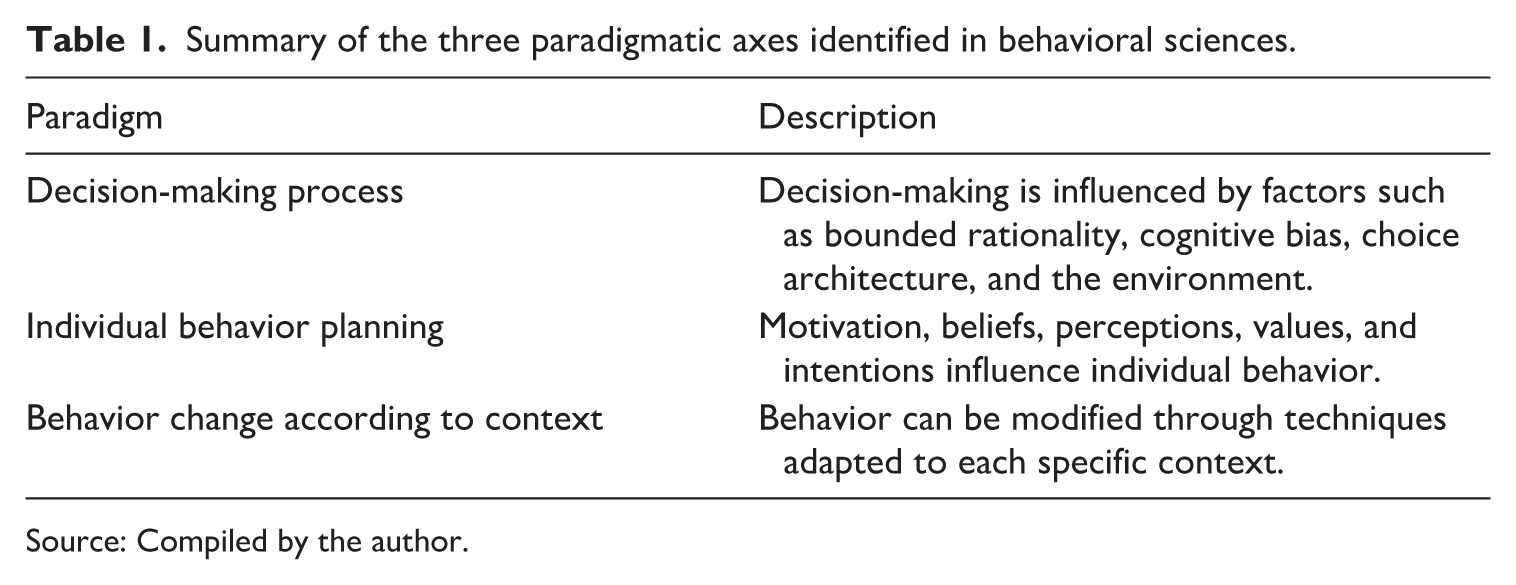
Source: Compiled by the author.
Regarding the object of study of the Behavioral Sciences, both the interviews and the analysis of the core literature indicate that the object of the Behavioral Sciences is not behavior in isolation, but rather the relationship between the individual and the context – physical, social, and symbolic. Based on this, we propose the following formulation for the object of study: ‘The relationship between the individual and the environment in shaping human behavior’.
Finally, drawing on the interviews and scientometric analysis, we propose the following definition of the Behavioral Sciences: Behavioral Sciences are an interdisciplinary and dynamic field that articulates diverse theoretical and methodological traditions originating from the human, social, statistical, and cognitive sciences in order to understand and intervene in human behavior. Predominantly structured around empirical and experimental approaches, Behavioral Sciences investigate mechanisms of influence, develop explanatory models, and contribute evidence to inform areas such as public policy, health, transportation, and governance. Despite the epistemological tensions and conceptual disputes that run through the field, it is characterized by the centrality of experimentation, the emphasis on empirical evidence, and the capacity to address social problems at different scales.
These propositions suggest a provisional and analytically constructed delineation of the epistemological, methodological, and conceptual core of this field of knowledge and served as the foundation for constructing the instrument used in the second round of the Delphi study, aimed at validating these dimensions with the experts.
Round 2 – Concept validation with experts
The results obtained from the second consultation with experts made it possible to identify points of consensus, dissent, and recommendations regarding paradigms, their object of study, core methodologies, conceptualization, and future trends for the field.
Regarding the identified paradigms, the results reveal varying levels of consensus among the experts. The item referring to the decision-making process showed 95.6% agreement (n = 22), indicating a high level of consensus that human decisions are shaped by bounded rationality, cognitive biases, choice architecture, and environmental factors. Similarly, the item on individual behavior planning reached 91.3% agreement (n = 21), showing broad convergence around the idea that motivations, beliefs, perceptions, values, and intentions influence individual actions. In contrast, the item behavioral change according to context obtained 69.6% agreement (n = 16), representing a moderate level of consensus. This result suggests that, while participants acknowledge the relevance of context-adapted techniques, there remain disagreements regarding their application and effectiveness. Taken together, these findings reinforce the centrality of paradigms related to decision-making and individual planning, while also revealing an ongoing debate around contextual approaches to behavioral change.
In relation to the core methodologies, the results indicate that quantitative methods – especially advanced statistical analyses (x̄ = 6.52; SD = 0.79) and RCTs (x̄ = 6.00; SD = 1.51) – are perceived as the most central to the Behavioral Sciences, showing high and moderate consensus, respectively. Next, longitudinal studies (x̄ = 5.26; SD = 1.98) and mixed methods (x̄ = 5.39; SD = 1.80) occupy an intermediate position, reflecting recognized importance but greater dispersion of perceptions. Theoretical and applied frameworks (x̄ = 4.70; SD = 2.03), as well as qualitative approaches – in-depth interviews (x̄ = 4.87; SD = 2.01), focus groups (x̄ = 4.35; SD = 2.17), and case studies (x̄ = 3.91; SD = 2.15) – presented lower means and higher standard deviations, indicating less consensus and reinforcing the idea that, although present, these methods still occupy a peripheral and contested position within the epistemological and methodological configuration of the field. The distribution of these values is illustrated in Figure 7, and the detailed numerical results are provided in the Supplementary Material.
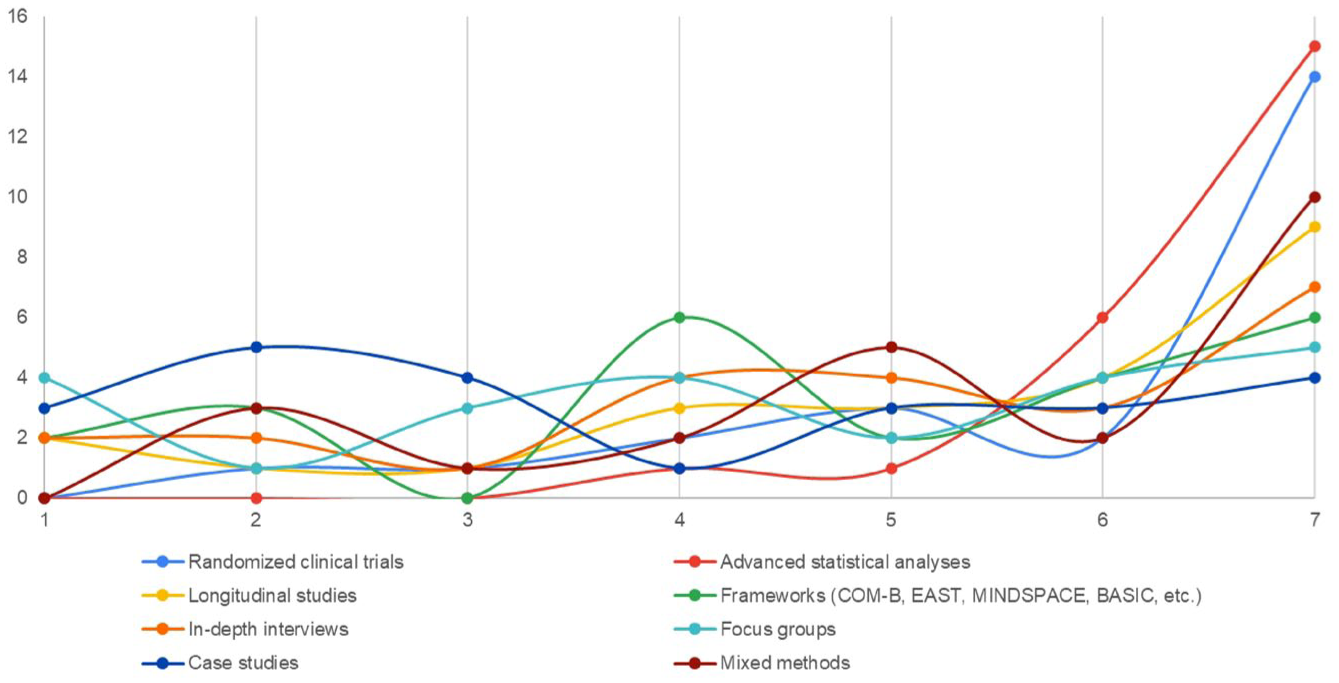
Core methodologies evaluated.
A high level of consensus was reached regarding the proposed general definition of the Behavioral Sciences, with 91.3% agreement (n = 21) among the experts. However, the item referring to the object of study of Behavioral Sciences showed 50% agreement (n = 12), indicating low consensus among the specialists. Half of the respondents recognized that the field is dedicated to studying the relationship between the individual and the environment in shaping human behavior, while the other half expressed distinct or complementary views.
This result highlights the conceptual heterogeneity of the field and suggests that there is still debate about the boundaries and nature of the Behavioral Sciences’ object of study, reflecting the coexistence of different theoretical traditions and methodological approaches. Among the experts who assigned scores below 6, most perceived the proposed definition of the Behavioral Sciences’ object as correct but incomplete. Their comments emphasized the need to broaden the understanding of the field beyond the individual – environment relationship, incorporating broader cognitive, genetic, sensory, and contextual factors. Some participants suggested placing greater emphasis on interdisciplinarity and on the role of cognitive biases and individual characteristics in explaining behavior, while others advocated for the inclusion of more complex collective and environmental dimensions. This diversity aligns with discussion of the depth-of-field metaphor (Peterson, 2017), according to which a scientific domain can frame its objects of analysis in broader or narrower ways, depending on the values, methods, and perspectives that guide researchers’ practices.
In addition, other characteristics identified in the findings resonate with perspectives from STS. The recognition, by specialists, of the origins of the Behavioral Sciences in ‘traditional’ fields of knowledge reveals dynamics consistent with the formation of new paradigms (Kuhn, 1970), by indicating the emergence of approaches that challenge classical models of rationality – such as bounded rationality proposed by Simon (1955).
At the same time, the current understanding of ongoing debates regarding the use of qualitative or quantitative approaches allows for different interpretations. In Fleck’s terms (2010), the results suggest the coexistence of distinct thought collectives, particularly between quantitative approaches, which occupy a dominant position, and qualitative approaches, which remain marginal. In line with a positivist interpretation (Chalmers and Fiker, 1993; Popper, 1963, 2005), the field appears to be sustained by an empirical core that guides theoretical development, granting centrality to experimental and quantitative methodologies while positioning alternative approaches as peripheral. This configuration may also be interpreted, following Lakatos (1978), as a research program structured around a methodological ‘hard core’.
Regarding the consensual definition of the Behavioral Sciences, it aligns with Merton’s scientific ethos (Merton, 1973), as it reflects the centrality of empirical validation (universalism), an orientation toward problem-solving across different scales (communalism and disinterestedness), and the coexistence of epistemological tensions (organized skepticism). On the other hand, there is evidence – particularly from the interviews – that its consolidation depends on processes of social and institutional recognition (Bloor, 1991), in dialogue with the contributions of Bourdieu (2004) and Latour (2012), although these perspectives require further exploration in future studies. The findings suggest the presence of dynamics that extend beyond the limits originally described by these authors, indicating that the symbolic and institutional power of agents may contribute not only to the structuring of established fields but also to the emergence and legitimation of new domains of knowledge, including beyond their original disciplinary boundaries, as illustrated by the ‘economists’ mentioned by Interviewee 04. From the perspective of actor–network theory, there is also evidence that nonhuman elements play a relevant role in shaping the recognition and understanding of the Behavioral Sciences, particularly considering the increasing capacity for data processing and analysis enabled by recent technologies (Interviewee 02).
In summary, the findings portray the Behavioral Sciences as a scientific field with a more consolidated contemporary understanding and more clearly defined contours than those identified in previous studies (Barr and Peters, 2024; Gintis, 2007; Hallsworth, 2023; Hansen, 2019; Herfeld, 2017; Kappes, 2016; Mauro, 2020a, 2020b; Pooley and Solovey, 2010; Rutherford, 2022; Timon, 2020; van Aaken, 2024; Varazzani and Hubble, 2023), albeit still permeated by potential tensions and power struggles.
Conclusion
The investigation conducted in this study made it possible to understand Behavioral Sciences not merely as a set of techniques or intervention practices, but as a domain of knowledge characterized by an evolving and heterogeneous epistemic configuration, whose recent and expressive production remains anchored in the theoretical traditions and conceptual frameworks of already consolidated disciplines. In this process, epistemological tensions – both inter- and intra-disciplinary – emerge alongside legitimacy disputes and efforts toward conceptual stabilization, indicating an ongoing process of epistemic negotiation rather than a linear trajectory of formation. The Delphi study suggests the presence of three main paradigmatic configurations – cognitive-decisional, motivational-psychological, and interventionist-methodological – supported by an empirical–experimental axis that provides it with identity and scientific legitimacy. At the same time, this configuration does not eliminate its internal plurality: competing views persist regarding the role of theory, the status of qualitative methods, and the delimitation of the field’s object of study.
The results of the second Delphi round not only indicate a high level of consensus regarding the field’s core foundations, especially concerning the paradigms of decision-making and individual planning, as well as the integrative definition proposed, but also reveal dissensus around the contextual dimensions of behavioral change and methodological diversity. These divergences do not represent fragmentation but rather a reflexive process characteristic of major knowledge domains, in which tensions are observed between broader and narrower approaches related to depth of field and to the degree of integration across analytical levels (Peterson, 2017). This feature is consistent with the interdisciplinary nature of Behavioral Sciences and with ongoing processes of epistemic configuration, where unity emerges less from stable conceptual definitions and more from shared investigative and validation practices.
From a methodological standpoint, this study contributes by demonstrating the potential of integrating scientometric and expert consultation approaches for analyzing contemporary configurations of knowledge domains. By combining co-citation networks with experts’ reflective judgments, it was possible to build a triangulation model that translates cognitive structures into perceptual dimensions, allowing the identification of convergence points and tensions between theory and practice. This procedure not only strengthened the validity of the findings but also generated empirical inputs for future attempts at conceptual systematization, making the very process of scientific construction more transparent and auditable.
The implications of this study go beyond the empirical characterization of Behavioral Sciences. They point to the need to revisit the epistemological foundations that sustain the field’s authority and to foster critical reflection on how this area of knowledge is embedded within institutional and political contexts. If the behavioral turn has been a driver of innovation in public policy, it also carries the responsibility of reflecting on the risks of producing evidence detached from the ethical, cultural, and contextual dimensions that shape human behavior.
In summary, this study demonstrates that Behavioral Sciences cannot be reduced to a set of techniques aimed at inducing desirable behaviors; rather, they should be understood as a sociotechnical project of knowledge production and social intervention. The perceptions and professional trajectories of experts reveal that this body of knowledge has been increasingly integrated into diverse governmental, corporate, and institutional practices, where the production and co-production of knowledge play a central role in its ongoing stabilization and reconfiguration.
What is meant by ‘Behavioral Sciences’, therefore, does not correspond to a static definition. Although this study presents an analytical and provisional conceptual proposal capable of guiding researchers, policymakers, companies, and civil society organizations, it is essential to recognize that a scientific field is continuously negotiated and redefined, in which empirical practices, symbolic disputes, and institutional arrangements intertwine to shape a domain that, while seeking scientific predictability, must also confront the complexity, diversity, and contingency of human behavior. Thus, as a practical proposition for specialists in the field, this study emphasizes the importance of a more reflexive and inclusive epistemic governance – one that recognizes the legitimacy of multiple methods and contexts.
This study presents some limitations that should be acknowledged. First, while the scientometric analysis allows for the identification of patterns in the currently codified knowledge base, it does not capture the full historical complexity and discontinuities underlying the development of the term ‘Behavioral Sciences’. In this sense, the study does not aim to provide a comprehensive historiographical reconstruction, but rather a present-oriented analysis of how the field is currently structured and interpreted. Second, the reliance on expert-based data through the Delphi method reflects the perspectives of a specific group of practitioners, which, although diverse, may not fully encompass all existing interpretations and practices associated with the field. Finally, while the integration of quantitative and qualitative approaches strengthens the analytical robustness of the study, the interpretation of results remains conditioned by the selected data sources and methodological design. Future research could build on these findings by undertaking in-depth historiographical analyses of the use and appropriation of the term ‘Behavioral Sciences’ across different periods and contexts, as well as by exploring, from an STS perspective, the interactions between human and nonhuman actors in the production of knowledge and their implications for decision-making in governments, organizations, and society.
Supplemental Material
sj-docx-1-ssi-10.1177_05390184261461510 – Supplemental material for What are behavioral sciences? Epistemic boundaries and paradigms from a Delphi study
Supplemental material, sj-docx-1-ssi-10.1177_05390184261461510 for What are behavioral sciences? Epistemic boundaries and paradigms from a Delphi study by Guilherme Atanazildo Leme, Denis dos Santos Alves and Milena Pavan Serafim in Social Science Information
Footnotes
Acknowledgements
We thank all experts who participated in this study for their time and dedication. We also acknowledge the support and infrastructure provided by the University of Campinas (Unicamp) and the financial support from the São Paulo Research Foundation (FAPESP). Finally, we thank the anonymous reviewers and the journal’s editorial team for their valuable contributions.

Ethical considerations
This study was approved by the Ethics Committee of the University of Campinas (Unicamp) (CAAE No. 74818323.9.0000.8142).
Consent to participate
Written informed consent to participate in this study was obtained from all participants.
Funding
The authors disclosed receipt of the following financial support for the research, authorship, and/or publication of this article: This research was funded by the São Paulo Research Foundation (FAPESP), grant number 2023/08699-5.
Declaration of conflicting interests
The authors declared no potential conflicts of interest with respect to the research, authorship, and/or publication of this article.
Data availability statement
All data and materials used in this study are available in the supplementary material submitted with the manuscript.
Supplemental material
Supplemental material for this article is available online.
Author biographies
References
Supplementary Material
Please find the following supplemental material available below.
For Open Access articles published under a Creative Commons License, all supplemental material carries the same license as the article it is associated with.
For non-Open Access articles published, all supplemental material carries a non-exclusive license, and permission requests for re-use of supplemental material or any part of supplemental material shall be sent directly to the copyright owner as specified in the copyright notice associated with the article.
