Abstract

Introduction
The Thesis Eleven Centre for Cultural Sociology was formally established in 2001 and commenced activities in 2002. It is closely aligned with the international critical theory and historical sociology journal of the same title, published by SAGE, London. The journal was founded in 1980. Initially known as the Thesis Eleven Centre for Critical Theory, the centre changed its name as of 17 December 2007. The broad horizon of cultural sociology is a more accurate indicator of what the Centre actually does in its operations. Critical theory is a major source and tradition for us, but cultural sociology is a more expansive description of what we do and where we are heading.
We are pleased to present the 14th and 15th Annual Reports to cover both 2016 and 2017 respectively in the one document. This is the final report of the Centre. The Centre officially closed on 31 December 2017. As from 1 January 2018, Thesis Eleven Forum for Social and Political Theory is based in the School of Humanities and Social Sciences. It will operate as an informal network of interested staff members and research associates.
Objectives
The Centre has nine main aims, as set out in its constitution: To encourage the development and application of social and political theory throughout the world through publishing and presenting material in printed and electronic form and through delivering educational workshops, forums and conferences; To facilitate international exchanges of internationally recognized scholars in the field of social and political theory; To attract overseas students to enrol in the Faculty’s postgraduate programs in the field of social and political theory; To encourage local postgraduate research culture and scholarly research in the field of social and political theory; To promote Thesis Eleven as an international journal of social and political theory; To significantly expand the opportunities for research in the field of social and political theory; To promote the teaching and research activities of members of staff of the university in the field of social and political theory; To promote the training of postgraduates in research in the field of social and political theory; To do all such things as are incidental or conducive to the attainment of the above aims.
Membership
How the Centre works:
The Centre focuses on organizing four kinds of events: Annual and public lectures by leading and renowned intellectuals and scholars, both here and overseas; Full day seminars on the work and thought of such intellectuals with them present and working in conversation with a range of local interlocutors and discussants of their work; Half day seminars on particular themes with invited speakers; Symposia and colloquia in other cities either connected to the work of the journal or to international social theory and social science conferences.
The Centre has four fields of operation: local Bundoora and City campuses, the University of Melbourne; regional, especially Mildura Campus; national (e.g. in recent times we have put on events with academics and centres based at Curtin, Murdoch and University of Western Australia in Perth; Adelaide University, Flinders University and The Hawke Institute, the University of South Australia in Adelaide, and Sydney University); and international (spanning four continents: Europe, Asia, Africa and North America but also the island nation-state, New Zealand – see our federation of seven research centres affiliated with Thesis Eleven journal in the inside cover). We are a member of the International Consortium for Critical Theory and the International Consortium for Social Theory, respectively; both consortia are based in North America.
In all cases we are pro-active, working through our own international and national professional and intellectual networks, minimizing overheads and resources and maximizing local-global connections and networks, and ensuring intensive face-to-face encounters.
The co-ordinating editor of the journal Thesis Eleven is the Director of this Centre. The commissioning editor, Dr Raul Sanchez-Urribarri, is the Deputy Director of this centre: As such, they are also Chair and Deputy Chair of the Board of Management.
Ordinary Members of the Centre are the Director and Deputy Director, as above, as well as the following staff members of the School of Humanities and Social Sciences: Andrew Butt, Vincent Alessi, Miriam Bankovsky, George Vassilacopoulos, Toula Nicolacopoulos, Adrian Jones, Katie Wright and Gregoria Manzin. The Head of School, Professor Tanya Fitzgerald is an ex officio member.
Student Members are Alonso Casanueva Baptiste, Julian Potter, Harry Paternoster, Andrew Gilbert, Joseph Salazar, and Tim Andrews.
Associate Members are Professor Simon Marginson (University of London), Professor Peter Murphy (James Cook University), Professor David Roberts (Monash), Dr Eduardo de la Fuente (Flinders), Dr Sian Supski (Monash), Dr Tom Heenan (Monash), Professor Anthony Elliott (UniSA), Professor Terri-Ann White (UWA), Dr Suzi Adams (Flinders), Dr Stefan Auer (La Trobe), Dr Priti Singh (Jawaharlal Nehru University, Delhi) and Professor Sambuddha Sen, Professor Sumanyu Satpathy, Dr Brinda Bose, Dr Ira Raja, and Dr Udaya Kumar (all of Delhi U); Dr Mark Davis (Leeds); Professor Peter Vale (Johannesburg); Professor Anders Michelson (Copenhagen), Dr Divya Anand (Boston).
Honorary Members are Professor Stuart McIntyre (Melbourne), Professor Jeffrey Alexander (Yale), Professor Joanna Bourke (London), Professor Craig Calhoun (LSE), Dr Luis David SJ (Ateneo de Manila), Professor Alastair Davidson, Professor Maria Pia Lara (Mexico City), Professor Tessa Morris-Suzuki (Canberra), Professor Peter Newman (Curtin), Professor George Ritzer (Maryland), Professor Keith Tester (Hull), Professor Philippa Mein-Smith (University of Tasmania), Professor George Steinmetz (Michigan), Professor Ron Jacobs (Albany, NY), Professor Eleanor Townsley (Mount Holyoke), Professor Peter Thomas (Brunel), Nikos Papastergiadis, Professor Chiara Bottici, Professor Noëleen Murray.
In Memoriam: Bernard Smith (Melbourne), George and Maria Markus (Sydney).
Administration
The Centre is a small operation with big ambitions. It runs on the entrepreneurial imaginations of its Directors and their colleagues in the journal, and the research associates. It depends on the support of the School of Humanities and Social Sciences and the goodwill of academic and general staff in the Department of Social Inquiry. In particular we record our thanks to the initiative, drive and support of Merran Hunt and Jane Rowe, under the direction of School Managers, Geraldine Doherty and Maria Pavlovski.
The Centre depends on the goodwill and work of our colleagues in the School of Humanities and Social Sciences, and in particular the Department of Social Inquiry. It also piggybacks on the resources of the journal and in particular of the work of the Production Assistant, Julian Potter. The Directors of the Centre report regularly to the Editors’ meetings of the journal and we are particularly grateful to our colleagues on the editorial team who are always imaginative, good humoured, generous-spirited and hard working.
+++++++++++++++++++++++++++++++
Honorary Research Fellows, 2016–2017
Professor Peter Beilharz, Culture and Society, Curtin University and Emeritus Professor of Sociology, La Trobe University
Professor Peter Murphy and Adjunct Professor, La Trobe University
Professor Keith Tester, and Adjunct Professor, La Trobe University
Dr Rachel Busbridge, La Trobe University
Dr Ira Raja, Department of English, Delhi University
Dr Sian Supski, Monash University
Dr Divya Anand, Boston University
Mr Clinton Walker, Macquarie University (finished, 2016)
In 2018, Associate Professor John Rundell (the University of Melbourne) joins us also.
(see below for list of their publications)
+++++++++++++++++++++++++++++++
2016: The Year in Review
23 March 2016
Sisonke Msimang: Sook and Tired: A conversation about race and the media
In the last few years, questions of racial justice have re-emerged in America, South Africa and Australia. This conversation will look at media coverage of police brutality against African-Americans, and the #BlackLivesMatter protest movement that has developed in response. We will then look at media coverage of events in South Africa as it has grappled with the end of the ‘non-racial’ era and the emergence of the movement to tear down statues of John Cecil Rhodes and other colonial figures, before turning our attention to how Australia talks about race and racism, as exemplified by the Adam Goodes case.
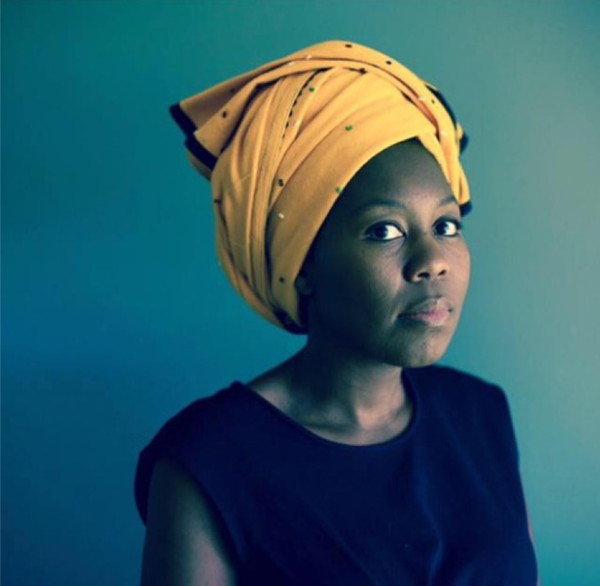
Sisonke Msimang
26 July 2016
Thesis Eleven annual lecture
Associate Professor Chiara Bottici, New School for Social Research, New York: Bodies in Plural: Towards an Anarcha-Feminist Manifesto
Since the crisis of Marxism as a political ideology, it has become something like a common place to state that domination takes place through a multiplicity of axes, where gender, class, race, and sexuality intersect with one another. While a lot of interesting empirical work is being done under the heading of intersectionality, it is very rarely linked to the anarchist tradition that preceded it. In the following lecture, I would like to articulate this point by showing the usefulness but also the limits of the notion of intersectionality to understand mechanism of domination and then move on to argue for the need of an anarcha-feminist program (I). Secondly, I will try to provide the philosophical framework for such an enterprise by arguing that it is in a Spinozist ontology of the transindividual that we can best find the conceptual resources for thinking about the plural nature of women’s bodies and thus of their oppression (II). This will allow me to attempt to articulate the question ‘what it means to be a woman’ in pluralistic terms and thus also to defend a specifically feminist form of anarchism (III). In conclusion, I will go back to the anarcha-feminist tradition and will show why today it is the best possible ally of feminism in the pursuit of a critical theory of society (IV).

27 July 2016
Thesis Eleven Centre Masterclass with Associate Professor Chiara Bottici, New School for Social Research, New York: Imaginal Politics
Philosophy is most of time the result of a contest between an entrenched vocabulary, which has become a nuisance, and half-formed new vocabulary, which vaguely promises great things. In this talk, I will explore the contest between the entrenched vocabulary of imagination (and ‘the imaginary’ as its necessary counterpart) and a half-formed vocabulary that promises a lot of interesting things: the vocabulary of ‘the imaginal’. After introducing the concept of the imaginal, I will move on to show its force and, in particular, the role it plays in contemporary politics and in so-called post-Fordist capitalism. This will lead us to explore the emancipatory potential that images, understood as representations that are also presences in themselves, can have in our time. In an epoch where the global society of the spectacle seems to have exhausted our creative capacity, reo-orientation and subversion of the ongoing spectacle is the only possible homeopathic remedy left for us: curing the evil with small doses of the evil itself.

Dr Chiara Bottici
24 October 2016
Thesis Eleven Centre Seminar
Dr Ronald Kramer, Senior Lecturer in Sociology and Criminology at the University of Auckland and Associate Professor Jacqueline Z Wilson, Collaborative Centre for Australian History at Federation University Australia:
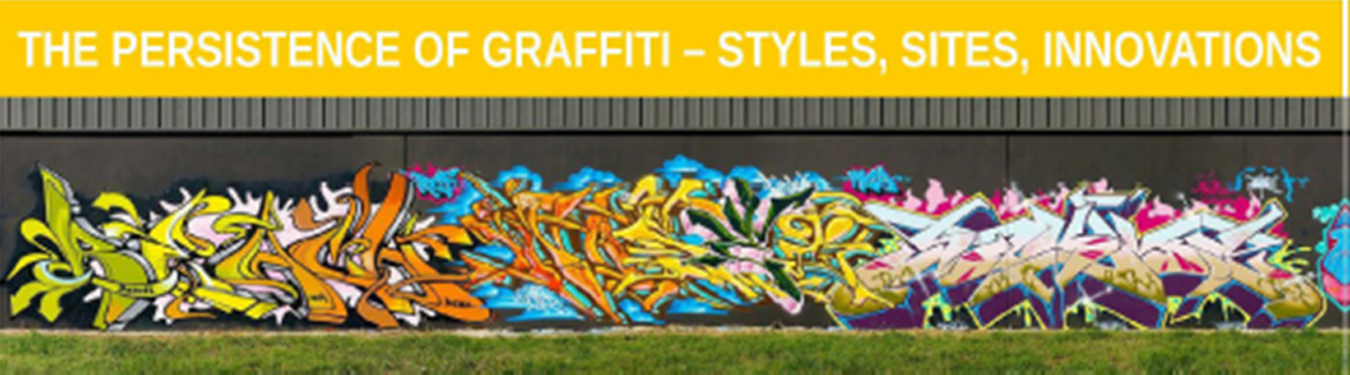
The Persistence of Graffiti – Styles, Sites, Innovations
The resilience of graffiti writing culture (Ronald Kramer)
From humble beginnings in Philadelphia and New York City, graffiti writing spread across the globe, rapidly becoming an aesthetic feature of countless cities and their surrounding areas. Alongside the spread of graffiti, one can easily identify a concomitant proliferation of discourses on the topic. Academic accounts often romanticize graffiti, seeing it as a mode of resistance to current social contradictions. Against this, the state and mass media have typically denounced the practice, routinely construing it as a threat to civic life. This presentation will delve into the history of graffiti in order to account for its resilience. How to explain that – despite 40 or so years of adversity – the commitment to graffiti writing shows no sign of coming to an end any time soon?
Inside: Prison inmate graffiti
This paper examines inmate-created graffiti in Australian, US and UK prisons. Despite its unique nature, few studies of prison graffiti have occurred. A visual ethnographic approach is employed to interpret the images’ meanings and infer something of their creators’ experiences. While street graffiti, ‘paint-ups,’ ‘tagging,’ and so on are for public viewing, much prison graffiti is ‘private’ and hidden from view. Inmate-graffitists’ motives tend to reflect concerns arising from total, often dangerous, confinement. Their graffiti echoes prison-specific issues of personal power: sexual frustration and aggression as self-assertion; resistance to perceived oppression; or reactions to boredom. Some prison graffiti function as a form of personal diary. The stylistic and motivational differences between inmate graffiti in private spaces and that found outside underscore the need for further research.
28 November 2016
Thesis Eleven Centre hosted The 9th Annual Castoriadis in the Antipodes
Conference 2016: Postscripts from the Antipodes
9:40 am Welcome and Introduction
Timothy Andrews and Alonso Casanueva, La Trobe University
10:00 am Terry Eyssens, La Trobe University and Federation University
Ecology – An Antipodean Postscript is a Preface
10:40 am Alonso Casanueva Baptista, La Trobe University
Paideia and pedagogy in the work of Cornelius Castoriadis
Coffee Break (11:20 am -11:30 am)
11:30 am Peter Murphy, Adjunct Professor of Humanities and Social Sciences, La Trobe University and Research Fellow, Cairns Institute, James Cook University
Castoriadis, Creation in Time and the Homeomorphic Imagination
Lunch (12:10 pm – 1:20 pm)
1:20 pm Natalie Doyle, Monash University
Marcel Gauchet as intellectual heir to Castoriadis’s pioneering analysis of modern culture
2:00 pm Suzi Adams, Flinders University
Castoriadis and the Question of Historical Discontinuity: Social-Historical Creations, the Project of Autonomy, and Cultural Memory
3:00 pm Vrasidas Karalis, The University of Sydney
Castoriadis and Sappho: The Strange Dialogue between Philosophy and Poetry
3:40 pm Peter Beilharz, Curtin University
Remembering Castoriadis
4:20 pm Open Discussion (Moderated by George Vassilacopoulos)
5:00 p.m. Conference Close
2017: The Year in Review
15 May 17
Thesis Eleven Centre, in collaboration with The Research Unit in Public Cultures and the Greek Centre for Contemporary Culture, present

16 May 2017
Thesis Eleven Centre in collaboration with Research Focus Area, Building Healthy Communities, La Trobe University present:
Dr Pam DeLargy has spent 20 years engaged in UN humanitarian response, with particular attention to the needs of women and adolescents in emergency and conflict settings, and served in numerous countries in Africa and the Middle East. Most recently, she was Senior Advisor to the UN Special Representative for Migration, focusing primarily on policy responses to the cross-Mediterranean migration to Europe. Her graduate training was in political science and public health and she is a specialist on the Horn of Africa.
17 May 2017
Thesis Eleven Centre, in collaboration with the La Trobe University Office of the Vice Chancellor, the Office of the Pro Vice Chancellor, and College of Arts, Social Sciences and Commerce present:
Professor Craig Calhoun, President of the Berggruen Institute, Los Angeles, USA: The Future of Nations: Anxieties about Voice and Belonging to a Global World
In an era of globalization, it has been common to assert that nations and nation-states will lose significance and perhaps even fade away. Observers have accordingly been surprised by the renewal of nationalist politics around the world. But in fact, nation-states are still of enormous practical influence, and socio-cultural nations are basic to the way they work. Nations are also important to the identities of individuals and to projects of social cohesion. Nationalism need not always be belligerent or oppressive but for the foreseeable future it will remain important, influencing both domestic politics and international relations. The key question is not whether nations have a future, but whether in the future nations and national politics can be organized for greater global cooperation, and better domestic integration.
Professor Calhoun’s visit to La Trobe is part of the 50th anniversary celebrations and is jointly sponsored by the Office of the Vice Chancellor, The College for the Arts, Social Sciences and Commerce, and the Thesis Eleven Centre.
27–30 June 2017
Thesis Eleven Centre for Cultural Sociology
Three-day conference in collaboration with Curtin University, Western Australia – Writing Place, Pushing Genre: Adventures across South Africa and Australia
MCCA’s event, ‘Writing Place, Pushing Genre: Adventures across South Africa and Australia’, ran from 27–30 June, and was a collaborative effort between MCCA, Thesis Eleven journal, and visiting academics from South Africa. This series of research-focused events was funded by a MCCA Strategic Research Grant, Humanities Research & Graduate Studies, Thesis Eleven and CUSP. The opening public lecture, ‘Writing South African Cities’, was presented by Noëleen Murray from Wits City Institute, South Africa, with Peter Newman from CUSP as discussant. This was followed by two full day workshops. The first was an informal opening conversation presented by Noëleen Murray and Ivan Vladislavić from the University of Witwatersrand, with responses from Peter Beilharz, Trevor Hogan, Sian Supski, and comments from Sisonke Msimang, John Mateer and Meg Samuelson. The second workshop was a mix of conversations and short papers by Peter Beilharz, Sian Supski, Ivan Vladislavic, Sean Gorman, Kim Scott, Naama Grey-Smith, Matt Roberts, Meg Samuelson, Renee Schipp, Peter Newman and Dora Marinova. A final public talk was held at Pakenham Street Art Space in Fremantle on Friday, 30 June, with an audience of more than 50. This event was held in collaboration with Another Antipodes, a WA based arts organization which strives to strengthen communication and understanding between Australia and Africa.
Thanks to Sian, Tim Dolin, Steve Mickler, Pakenham Street Art Space, Thesis Eleven and Another Antipodes. Special thanks go to Stephanie Sik from MCCA Admin for her exceptional administrative and logistical support. We began the first day of workshop by applauding her in and presenting her with a sign of our appreciation – flowers from WA and South Africa.
The outcomes of the events are as follows:
We propose that in result of these proceedings and their success, further prospects for collaboration now present themselves. The Wits City Institute is keen to discuss the possibility of personnel exchange, especially at postdoc level. We propose to hold a follow-up meeting in Joburg in 18 months including senior Curtin executive staff (Mickler, Dolin) and the most active Curtin professorial staff (Scott, Newman). This event should also include Meg Samuelson, who has recently relocated from Cape Town to the University of Adelaide, and who is connected to the JM Coetzee Institute there. There are commonalities across Curtin, Wits, Adelaide and Thesis Eleven in the areas of place, writing, race, camps, mining, and so on which can now be further explored.
Thesis Eleven will establish a direct link with the Wits City Institute, joining our other affiliates in Delhi, Leeds, Copenhagen, New Haven, Chengdu, Delhi and Manila. We propose to develop two research canopies here, one open and general and following on from the discussion proceedings held at Bentley, including the interest in writing and place; and a second, more closely defined thematic and comparative platform where parallel experiences such as camps, mining, city design, race regulation, antipodes and the south and cultural traffic might be pursued.
The editors of Thesis Eleven have placemarked a dedicated issue of the journal for the publication of outcomes. The presenting challenge here is how best to achieve project development, i.e. how best to cultivate the most suitable papers from the Perth events and how to complement them creatively with other pieces yet to be solicited, in order to build upon the previous three South African issues and the West Australian issue of the journal. This new special issue needs to be comparative, both to reflect these events and to develop the existing record of achievement. Supski and Beilharz will take immediate responsibility for this next step, in direct liaison with Noëleen Murray. These three will also begin the conversation as to the next step, in Joburg for 2019.
This was a great opening, bringing together common themes and opening up new paths for collaboration. We are deeply grateful for the financial and moral support, which made this possible.
We are grateful for the support shown by Steve, Tim, MCCA Admin staff (including Stephanie and Marissa) and to Andrew McLean for stewardship of the events and their planning and execution.
Peter Beilharz, 3 August 2017
4 July 2017
Thesis Eleven Centre Annual Lecture
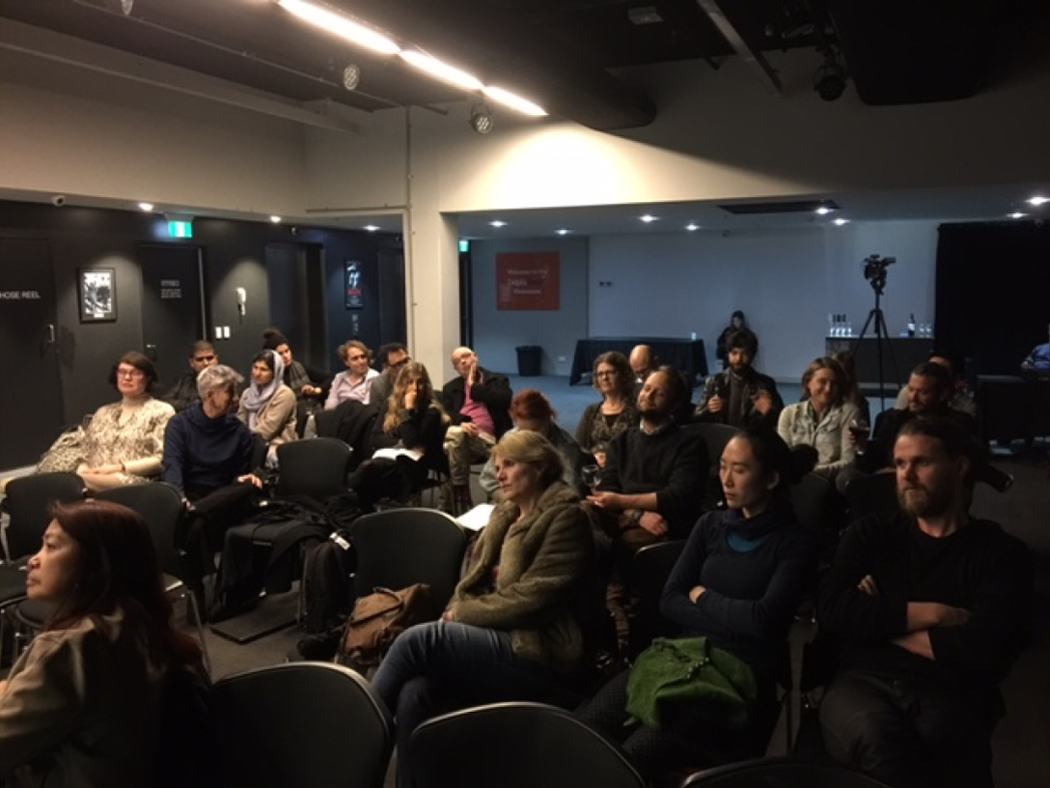
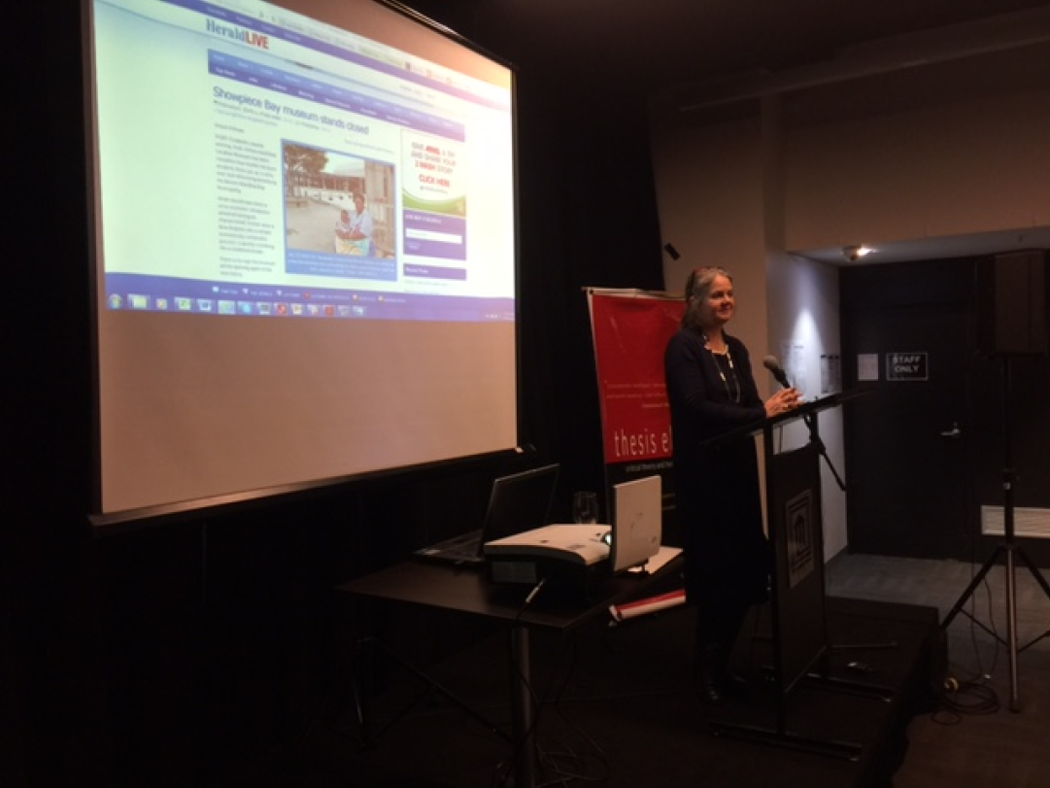
Professor Noëleen Murray, Director of the Wits City Institute at the University of the Witwatersrand, Johannesburg, South Africa: Unsettled
Raging wild fires, drought, big weather patterns and urban unrest – renewed protests, burning of trains and busses, land invasions and contestations over private property and development. These have been the issues sending shock waves through the South African press in the last months, where cities across the county have been faced with renewed crises of ‘service delivery’, ‘disaster management’ and all at once the question of the promise of the post-apartheid has become terrifyingly, devastatingly erased.
Thinking through the question of South African space right now, through the notion of being Unsettled, I shall bring together illustrations of how the interplay between forms of spatial practice and resistance to these practices have played themselves out. In thinking anew about material realities and public processes at play in the post-apartheid city, I shall argue that growing inequality and state failure are affecting and complicating the lives of poor and rich alike. From the violence at the mine in Marikana to the almost daily scenes of evictions from occupied buildings in the inner city of Johannesburg, and from the protests in working-class areas like Eldorado Park, to the perfect storm and raging wild fires that have surrounded the drought stricken province of the Western Cape – I shall be working with notions of how the histories of settlement and the settler state underpin the present, and how these might and might not resonate with Australian realities.
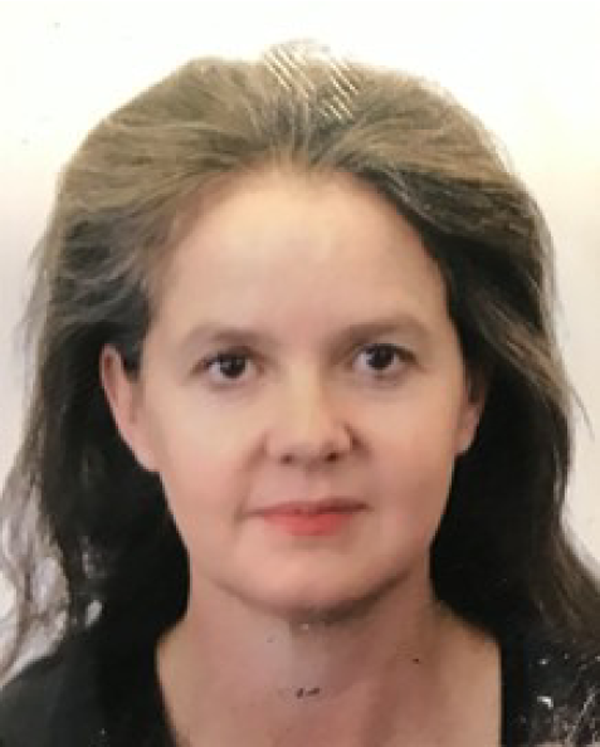
Professor Noëleen Murray
5 July 2017
Thesis Eleven Centre Masterclass with
Professor Noëleen Murray, Director of the Wits City Institute at the University of the Witwatersrand, Johannesburg, South Africa: Critical reflections on space and placemaking: South Africa and Australia
6 July 2017
Thesis Eleven Centre and the Collaborative Research Centre in Australian History, Federation University present:
A conversation with Professor Noëleen Murray, Director of the Wits City Institute at the University of the Witwatersrand, Johannesburg, South Africa: A conversation on space and place-making with Noëleen Murray
Hosted by Trevor Hogan and chaired by David McGinniss
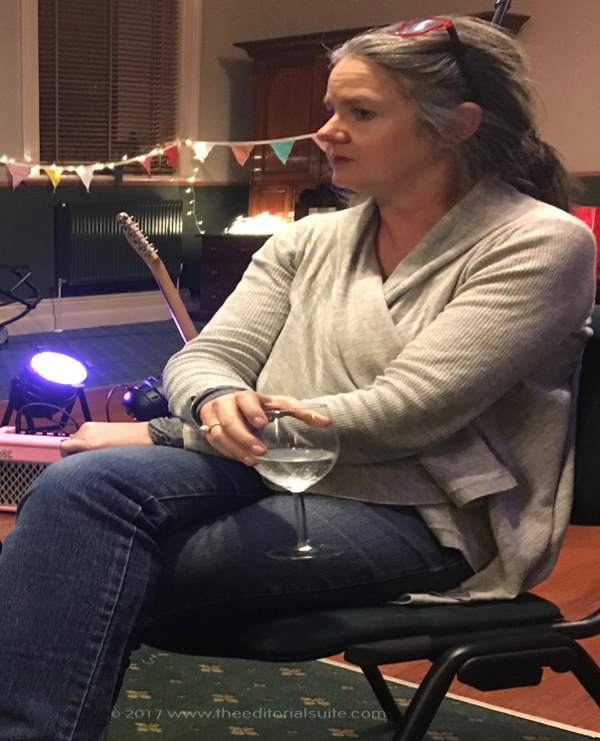
Photo supplied by Ailsa Brackley du Bois, Creative Director, The Editorial Suite
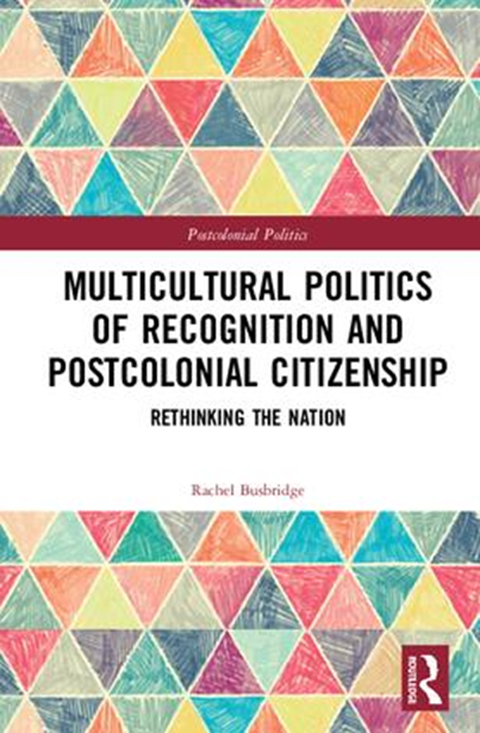
21 September BALLARAT
Organized in conjunction with Minerva’s Books, this event at the glorious Ballarat Mechanics’ Institute was a great opportunity to connect with scholars from the nearby Federation University Campus. Associate Professor Jeremy Smith of Federation University very kindly agreed to launch the book and offered many insightful comments. Robust discussion between attendees engaged the changing shape of multiculturalism in Australia as well as its regional variances.
12 October MELBOURNE
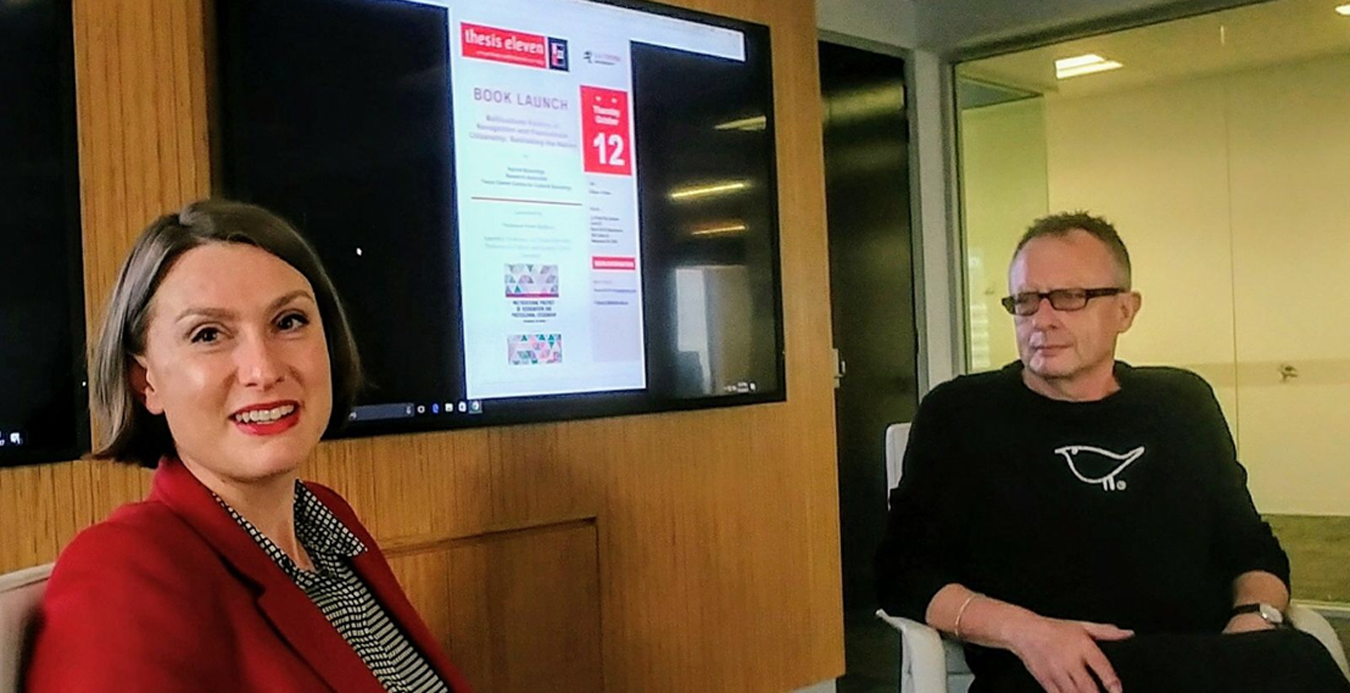
Professor Peter Beilharz graciously launched the book at this event and made a thought-provoking contribution, which focused on its postcolonial aspects. In the very interesting discussion that ensued, attendees considered the different ways in which Australia’s colonial history frames contemporary intercultural encounters while enjoying wine and nibbles.
28 NOVEMBER TO 2 DECEMBER

The Centre for the Study of the Inland in association with Thesis Eleven Centre for Cultural Sociology presents:
WATERSHEDS

Visit of Professor Fu Qilin, Director, College of Literature and Journalism, and Ms Frencesca Jianyang Qin (Doctoral Student), Sichuan University, Chengdu, China.
2–9 December
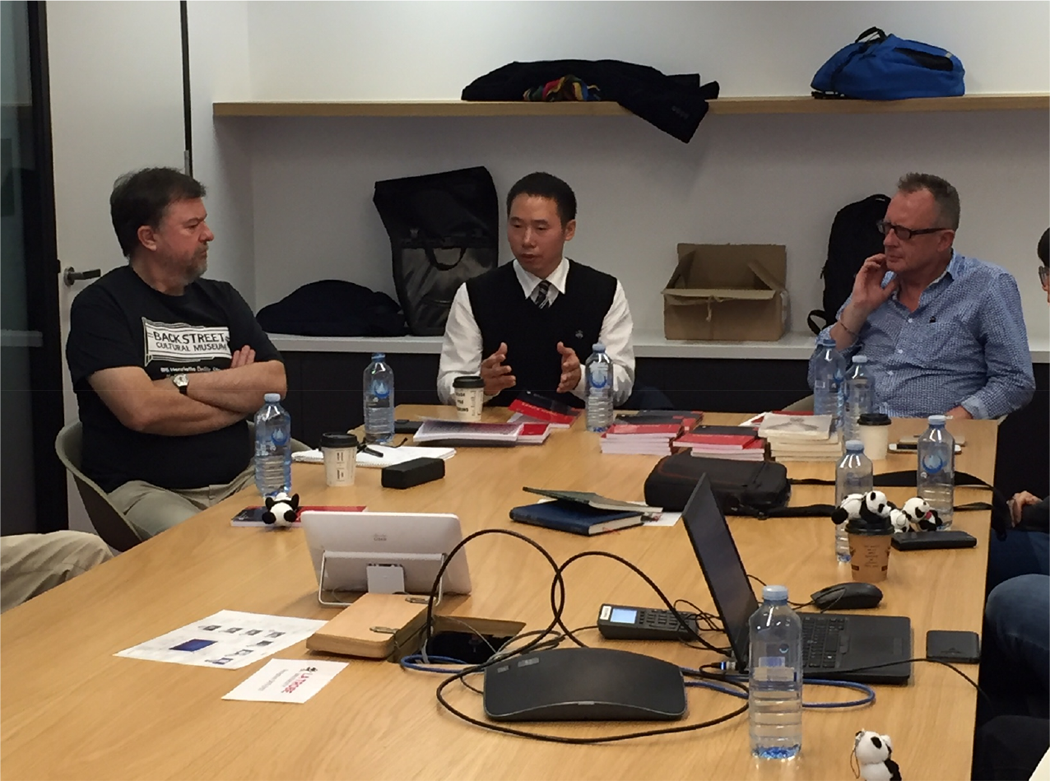
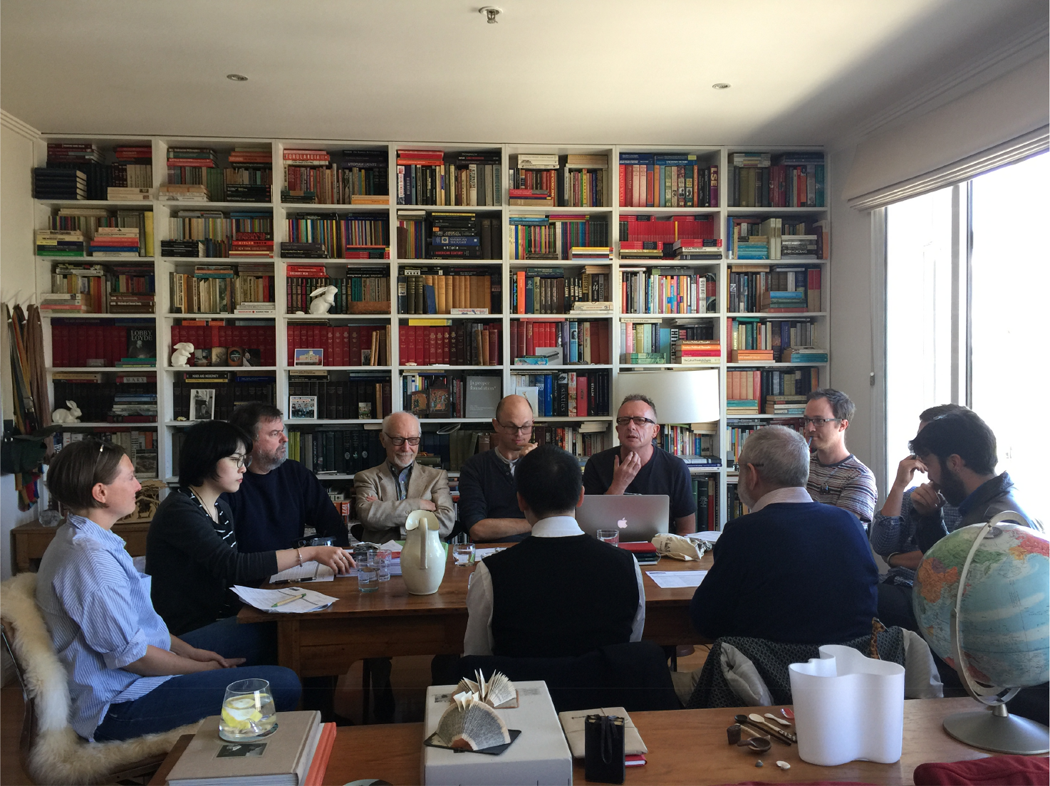
Prof Fu Qilin, Dean, College of Literature and Journalism, Sichuan University, and his doctoral student, Frencesca Qin, visited Melbourne from Sichuan University in Chengdu, 2–9 December 2017. This was to follow up on the November 2016 visit to Chengdu by Emeritus Professor Peter Beilharz and Dr Sian Supski, and to develop our collaboration further into 2018, with two events in Chengdu in July and November 2018. The second is a shared international event cosponsored by Professor Fu’s unit and Thesis Eleven, and featuring Professor Agnes Heller (New York and Budapest) as guest of honour. In Melbourne, Professor Fu visited Bundoora to meet with Professor Nick Bisley, Director, LTA and Professor Tanya Fitzgerald, Head, School of Humanities and Social Sciences. He joined in the Annual Agnes Heller Lecture hosted by the Sociology Department and participated in several public sessions and master classes, but perhaps more importantly, met other local actors and engaged in sustained private discussions with the Thesis Eleven team. From the latter it became clear that we have at least three vital things in common: trust, shared interests, and complementary senses of capacity. Ms Qin participated in all activities across the week; she was given a tour of the Bundoora and Collins Street campuses and introduced to her peers in HDR social sciences community here at La Trobe, ahead of an application to the Chinese government for a scholarship to visit La Trobe University in the second half of 2018 and first half of 2019 for her doctoral research.
Thesis Eleven remains grateful for the strategic support of La Trobe Asia and look forward to ongoing support this year as we prepare a large delegation of up to 15 scholars to participate in events at Sichuan University in November.
+++++++++++++++++++++++++++++++
15 December 2017
Cornelius Castoriadis: The formative years and beyond
Venue: CCANESA Board Room, Madsen Building, The University of Sydney.
Conveners: Vrasidas Karalis & Craig Brown
In 2016 Thesis Eleven centre hosted this conference. This year we had four of our forum members attend the conference – Alonso Casanueva Baptista, Timothy Andrews, Peter Beilharz and Peter Murphy.
11.00-11.45:
Professor Peter Beilharz
How Did Pierre Chaulieu Become Cornelius Castoriadis? Looking Back from Autonomy to Socialisme ou Barbarie and the Detroit Moment
11.45-12.30
Professor Peter Murphy
Two Pods in a Pea: James Burnham and Cornelius Castoriadis and Their Divergent Critiques of Bureaucratic Collectivism
12.30 -1.15
Dr Craig Browne
Cornelius Castoriadis and the Concept of the Dialectic of Control
1.15 -1.45: Lunch Break:
1.45- 2.30:
Alonso Casanueva Baptista
Considerations of the Relation between Politics and Pedagogy in Castoriadis’ Project of Autonomy
2.30-3.15
Professor Vrasidas Karalis
Cornelios Castoriadis and Thucydides
3.15-3.45
+++++++++++++++++++++++++++++++
Discussion
FORTHCOMING EVENTS IN 2018
We directors are currently involved in preparing a number of events and visits for 2018 including:
13–17 MARCH 2018
Thesis Eleven delegation to the ‘World literature and its post-colonial discontents’ conference at Delhi University co-organized by Dr Ira Raja (Delhi University) and Professor Dick Wieman, Potsdam University, Berlin: Dr Rachel Busbridge (Sociology, Australian Catholic University), Dr Meg Samuelson, (English Literature, University of Adelaide) and Mr Julian Potter (HDR, Sociology, La Trobe university).
+++
Also in late July we will host our Annual lecture…watch this space – we are currently in talks with our guest speakers for 2018–2020!
+++
Conference at Sichuan University, Chengdu, China, November 2018.
Thesis Eleven is co-hosting a conference on the Budapest School and Critical Theory and will be sending a delegation with partial sponsorship by La Trobe Asia.
+++++++++++++++++++++++++++++++
Research (2016–2017)
Centre Research Associates: Emeritus Professor Peter Beilharz
2018 ed Alastair Davidson – Gramsci in Australia, Brill
2018 ed Circling Marx – Essays on Marx and Marxism, 1980–2018, Brill
2018 The Bauman Phenomenon – Living with Bauman, and After, Manchester UP
2016 ‘All That is Solid…Maelstrom and Modernity in Zygmunt Bauman’, Revue Internationale de Philosophie, 3, 291–304
2016 ‘From Marx to Gramsci to Us’, Thesis Eleven 132, 77–86
2017 ‘The Power of Culture, and response to critics’, Prace Kulturoznawcze, 20, 19–28, 43–46
2017 Bernard, Wordsmith, in J. Anderson et al. (eds) The Legacies of Bernard Smith, Power Institute, 129–139
2017 ‘The Legacy of Zygmunt Bauman’, J of Sociology, NYP
2017 ‘Zygmunt Bauman’, Global Dialog/ISA, 7/2, 21–22
2017 ‘Zygmunt Bauman and Thesis Eleven’, Thesis Eleven 142, 3–4
2017 ‘Bauman and Heller – Two Views of Modernity and Culture’, Comparative Literature: East and West, 1/1: 51–60
2017 ‘Provincializing Frankfurt?’, American J Cultural Sociology, June, 1–7
2017 ‘The Decline of the West’, Promoteo, Dec NYP
2017 ‘The Roots of Radicalism’, Thesis Eleven 138, 140–2
2018 ‘The Budapest School – Travelling Theory?’, in J Rundell (ed.) The Budapest School, Routledge, RKP
2018 ‘Modern and Postmodern’, in J Hall et al. (eds) Routledge Handbook of Cultural Sociology, rev ed, NYP
2018 ‘The Marxian Legacy’, in P. Kivisto (ed.) Cambridge Encyclopedia of Social Theory, Cambridge UP, NYP
2016 with Jon Stratton, ‘Mapping Western Australia’, Thesis Eleven 135, 3–13
2016 ‘Finding Ivan Vladislavic’, Thesis Eleven 136, 5–19
2016 ‘A Tale in Two Cities’, Thesis Eleven 136, 20–30
2016 with Sian Supski, ‘Writing Sideways’, Thesis Eleven 136, 3–4
2017 with Fu Qilin, ‘The Conference on East European Marxist Aesthetics’, Thesis Eleven 142, 56–68
2017 ‘A Sociology of Caravans’, Thesis Eleven 142, 34–43
2018 with Supski and Macainsh, ‘From Sharpies to Skyhooks’, Thesis Eleven, NYP
Adjunct Professor Keith Tester
Peer-reviewed academic articles
‘Culture: Two Theses and Deathworks’, Prace Kulturoznawcse, no. 20, 2017: 53–62. ‘Sociology: The Active Catastrophe’, Revue Internationale de Philosophie, vol. 70, no. 277, 2016: 399–412.
Contributions to edited books
‘Zygmunt Bauman’, in B. Evans and T. Carver (eds) Histories of Violence: Post-War Critical Thought, London: Zed Books, 2017 ‘Per un Futuro Temibile’, in C. Bordoni (ed.) Immaginare il Futuro, Milan: Mimesis, 2016.
Translations
Zygmunt Bauman ile Söyleşiler, Ankara: Heretik, 2017.
Adjunct Professor Peter Murphy
Books
Auto-Industrialism: DIY Capitalism and the Rise of the Auto-Industrial Society (London: Sage, 2017), pp. 136.
Chapters
‘Conservative Thought as a Form of Dissident Thinking’, in Patrick Boumard, Vito A. D’Armento and Antonio Carnevale (eds) Etnografie del dissenso Volume 1 ‘Teorie e Discorsi’ (Lecce: PensaMultimedia, 2017).
‘Topological Creation and the Homoeomorphic Imagination’, in Cort Ross Dinesen, Morten Meldgaard, Anders Michelsen, Henrik Oxvig, Inger Berling (eds) Architecture Drawing Topology (Baunach: AADR/Spurbuch Verlag, 2017).
‘Combination, Collaboration and Creation: The Case of Jasper Johns’, in Sondra Bacharach, Siv B. Fjærestad and Jeremy Neil Booth (eds) Collaborative Art in the Twenty-First Century (New York: Routledge, 2016), pp. 179–186.
‘The Platform University: The Destruction and Resurrection of Universities in the Auto-Industrial Age’, in R. Barnett and M. Peters (eds) The Idea of the University: Contemporary Perspectives (New York: Peter Lang, 2017).
Articles
‘Design Research: Aesthetic Epistemology and Explanatory Knowledge’, She Ji: The Journal of Design, Economics and Innovation 3:2 (Shanghai: Tongi University Press and Elsevier, 2017).
‘Land versus Sea’, Thesis Eleven 142: 130–145.
‘Christianity’s Paradox: Chesterton after Kierkegaard’, Budhi: A Journal of Culture and Ideas 20:3 (Manila: Ateneo de Manila University Office of Research, 2016), pp 1–21.
Commentary
‘University Rankings and the Coming of the Auto-Industrial Age’, She Ji: The Journal of Design, Economics and Innovation 2: 3 (Shanghai: Tongi University Press and Elsevier, 2016), pp. 231–233.
Dr Divya Anand
Re-imagining Nations and Rethinking Nature: Contemporary Eco-political Controversies in India and Australia. Primus Books, New Delhi. 2018. Currently negotiating an Australian university press edition rights.
Dr Rachel Busbridge
Multicultural Politics of Recognition and Postcolonial Citizenship: Rethinking the Vation. Oxon & New York: Routledge, 2017.
‘Israel-Palestine and the settler colonial “turn”: From interpretation to decolonisation’, Theory, Culture & Society, 2017. DOI: 10.1177/0263276416688544
‘The wall has feet but so do we: Palestinian workers in Israel and the “separation” wall’, British Journal of Middle Eastern Studies 44(3), 2017: 373–390.
‘Between continuity and change: Contemporary indigenous identities and Māori in Aotearoa New Zealand’, International Sociology Reviews 31(5), 2016: 515–524.
‘Postcolonial negotiations of national identity: From Australia beyond’, in Diversity Encounters: Intersectional and Post-colonial Perspectives Conference, Humboldt University Berlin, Germany, May, 2016.
Dr Ira Raja
Publication
Short article on ‘Funda’, pp. 308–310 in Special Issue titled ‘Keywords’, of South Asia: Journal of South Asian Studies 40(2) (2017): pp. 308–310, Guest Editors: Meera Ashar, Trent Brown, Assa Doron, and Craig Jeffrey.
Conference organization
Organized an international conference titled ‘Writing the Cosmopolitan Imagination: Genre Transactions in a Globalising World’, at the University of Delhi, 12–13 December 2016. A seven-member delegation from Potsdam University, including faculty members and doctoral students, arrived in Delhi for the two-day conference, which also saw the participation of nearly 14 faculty members and students from the departments of English and Germanic and Romance Studies (GRS), Delhi University. The proposal for publishing a volume of selected papers presented at the conference is underway.
Any other relevant information
Dr Ira Raja was nominated to visit the Department of English, Potsdam University, for a period of six weeks, as part of a faculty exchange program between the universities of Delhi and Potsdam. 1 May 2017 to 15 June 2017.
Invited lecture
‘When Ripeness Isn’t All: Ageing and Death in Three Indian Short Stories’, Guest Lecture, Department of English, Potsdam University, 7 June 2017.
Conference paper
‘‘To Everything There is a Season’: Some Speculations about Body and Iime in Indian Fiction’, National Conference on Ageing, Ageism and Cultures,
Jadavpur University, Kolkata, India, 21 September 2017.
Dr Sian Supski (see Peter Beilharz)
Research Outputs and Service by Directors: Trevor Hogan
2017 Australian Government. Department of Foreign Affairs and Trade. New Colombo Plan Mobility Grant Scheme. ‘Manila: Culture & Place’: $49,500 in total funding for 15 students to undertake short-term study in the Philippines for the program with Ateneo de Manila University and Carlos Cedran Walk This Way. (=15 students @ 3 k, staff admin fund, 4.5 k). With Andrew Butt, Vincent Alessi, Hannah Robert.
2017 Australian Government. Department of Foreign Affairs and Trade. New Colombo Plan Mobility Grant Scheme. ‘Women’s Health and Rights in the Philippines: Multidisciplinary Approaches’: $33,000 in total funding for 10 students to undertake short-term study in the Philippines for the program with Ateneo de Manila University and a variety of partners like the Human Rights Resource Centre and the University of the Philippines (Diliman & Baguio) to name a few. (=10 students @3 k, staff admin fund, 3 k). With Hannah Robert, Kerstin Steiner, Kristin Duncanson, Kayli Wild, Emma Henderson, Anastasia Kanjere, Sonia Reisenhofer.
2017 La Trobe Asia China Strategy Implementation Grants scheme: (2017: $ 6,650; 2018: $8,560) Project Title: Developing Formal Partnership between La Trobe University and Sichuan University and Two Social Theory Journals with Sichuan University.
2017 La Trobe University. Office of Deputy Vice Chancellor Academic. ‘Enhancing Global Citizenship through Transformative Study Abroad Programs: A Study Tour to New Orleans and Mississippi’ – with Raul Sanchez-Urribarri and Terrie Waddell. $2,000 for a Project officer to assist us in writing a research article on the course learning and research goals and outcomes relating to developing graduate capabilities of social responsibility and global citizenship.
2016 Australian Government. Department of Foreign Affairs and Trade. New Colombo Plan Mobility Grant Scheme. $33,000 (= 10 students @ 3 k, staff admin fund, 3 k) and to be repeated in 2019 a further $33,000 for international study subject HuS3RS1: Tracking Indigeneity in the Philippines. Subject ran from 1December 2016 to 1 March 2017 and the study tour component ran from 27January to 14February, 2017. With Mark Rose and Julie Rudner.
2016 Australian Government. Department of Foreign Affairs and Trade. Endeavour Mobility grants (SMTP) $43,000 = 20 students @2 k plus 3 k for staff admin fund for international study subject HUS2IST/HUS3STT: ‘When the Levee Breaks: New Orleans and the Mississippi’. With Raul Sanchez-Urribarri and Terrie Waddell.
(We applied for same in 2017 but a La Trobe IT submission error meant all La Trobe applications were not received by the government, so the La Trobe Study Abroad office offered us $22,500 = 10 student grants @2 k plus 1.5 k staff administration fund by way of compensation for this bureaucratic and technological error.)
2015–16: La Trobe, School of Humanities and Social Sciences - Internal Research Grant Scheme: $10,000 for organising Philippine Indigenous Research Delegation to Manila for a week of public and academic events and a 3 day field trip to indigenous region of Cordillera, January–February, 2016.
Chapters in books
2017 ‘Twenty-first Century Asian Urban Imaginaries and the Longue Durée: An Antipodean Perspective’, in Urban Asias: Essays on Futurity Past and Present. Co-edited by Tim Bunnell and Daniel P.S. Goh, Berlin: Jovis.
2016 ‘Australian Suburbia as Material Culture and Civilization: Some Ruminations on Driving Home and Away’, in Indo-Australian Connections: Retrospect and Prospects. Edited by Santosh Sareen, Swati Pal, GJV Prasad, and Meenakshi Bharat. India-Australia Studies Association. New Delhi: Pinnacle Learning Publishers, pp. 48–54.
2017 Calhoun, Craig, ‘The Roots of Radicalism: Tradition, the Public Sphere and Early Nineteenth-Century Social Movements’, Thesis Eleven 138: 146–148.
PhD Thesis completions
Principal supervisor:
2017 Timothy Andrews: ‘Everyday life at the Cross-roads of Modernity: Intersections in the Thought of Cornelius Castoriadis, Agnes Heller and Henri Lefebvre’. (with Peter Beilharz)
2017 Andrew Gilbert ‘The Crisis Paradigm: The Concept of “Crisis” and its Limits in Lukács, Koselleck, Arendt and Habermas’. Winner of University Nancy Millis Award 2017 for PhD of outstanding merit. (with Peter Beilharz)
2016 Andrew Butt ‘Planning out of Place and the Place of Planners: Culture, Landscape and Planning for Farmland Protection in Peri-urban and Multi-functional Regions in Australia’. Special commendation in Rhys Isaac Prize, School of Humanities and Social Sciences.
2016 Scott Doidge ‘The Anxiety of Ascent: Middle Class Narratives in Germany and America’. Book ms in consideration by Continuum. Winner of University Nancy Millis Award 2017 for PhD of outstanding merit. Winner of Rhys Isaac Award for best doctoral thesis, School of Humanities and Social Sciences, 2016–2017. (with John Carroll)
2016 Marby Villaceran ‘Seeking Love in a Strange Land: The Lives of Filipina Marriage/Partner Migrants in Cross-cultural Relationships in Australia’. (with Helen Lee)
Co-supervisor:
2017 Medha Gunawardhana: ‘Integration of Community Decision Making Into Planning Practice: Five Case Sites on Understanding Community Coping Behaviour in Response to Rapid Socio-Economic Change and Natural Disaster, Hambantota Sri Lanka’. (with Julie Rudner and Cecilia McMichael).
2016 Gary Devilles: ‘City Sense: An Interdisciplinary Essay on Sensing Manila’. (with Norie Neumark, Creative Arts program) Winner of Nancy Millis Award, awarded by Graduate Research School for PhD thesis of outstanding merit, 2016.
PhD Supervisions in progress
Principal supervisor
Alonso Casanueva Baptista: ‘Padeia and Pedagogy in the Concept and Practice of Education: Castoriadis, Dewey, Illich and Freire’. (commenced August, 2014; due to submit October, 2018) (with George Vassilacopoulos)
Julian Potter: ‘Faust and Technological Modernity’. (due to submit February, 2018). (with Peter Beilharz)
Magdalena Szypielewicz: ‘Hipsterism as Urban Subculture and the Gentrification Conundrum’. (commenced February, 2017) (with Andrew Butt)
Humaira Tabassum: ‘Terrorism and Planning in Pakistani Cities’. (commenced December, 2013; due to submit, June, 2018) (with Julie Rudner)
Nguyen Khai Huyen Truong: ‘Housing in Ho Chi Minh City, Vietnam’. (commenced April, 2013; on maternity leave, due to submit April, 2018) (with Andrew Butt)
Co-supervisor (with Julie Rudner)
Fatemah Shahani ‘Creating Muslim Spaces in a Multi-cultural Public Sphere’. (commenced October, 2014; due to submit October, 2018)
Raul Sanchez-Urribarri
Publications 2016–2017
‘The Informal Dimension of Judicial Politics: A Relational Perspective.’ 2017. With Bjoern Dressel and Alexander Stroh. Annual Review of Law and Social Science 13.
‘Venezuela (2015): Un Régimen Híbrido en Crisis.’ 2016. Revista de Ciencia Política 36(1): 365–81.
‘Constitutional Courts in the Region: Between Power and Submissiveness.’ 2017. In Comparative Constitutional Law in Latin America. Rosalind Dixon and Tom Ginsburg (Eds.). Northampton, MA: Edward Elgar, 276–299.
‘A Tale of Two Waves: Latin American Migration to Australia.’ 2016. With Vicente Perez de Leon, Mara Favoretto, Elizabeth Kath, John Sinclair and Annie Fergusson. Australian-Latin American Relations: New Links in a Changing Global Landscape. Elizabeth Kath (Ed.). Palgrave Macmillan, 15–33.
Book reviews
‘Perils of Judicial Self-Government in Transitional Societies.’ By David Kosař. 2017. I-CONnect, Blog of the International Journal of Constitutional Law, June.
‘Constitutional Courts as Mediators: Armed Conflict, Civil-Military Relations, and the Rule of Law in Latin America.’ By Julio Ríos Figueroa. 2017. Law and Politics Book Review – Law and Courts Section of the American Political Science Association
‘Police, Picket-Lines and Fatalities: Lessons for the Past.’ By David Baker. 2016. Labour History, November (111).
Select publications in professional outlets
‘Introduction: The 2017 (Authoritarian) Venezuelan Constituent Assembly.’ Introduction to Mini-Symposium organized dabout the 2017 Venezuelan Constituent Assembly, at I-CONnect, Blog of the International Journal of Constitutional Law. August 2017.
‘Debates: Venezuela.’ LASA Forum: Official publication of the Latin American Studies Association.’ Coordination of Symposium and Introduction (with John Polga-Hecimovich, U.S. Naval Academy, and Iñaki Sagarzazu, Texas Tech University). December 2016.
‘Venezuela: Towards Regime Change?’ Australian Outlook. Australian Institute of International Affairs. May 2017.
‘Witness of Venezuela’s Crisis’ Australian Outlook. Australian Institute of International Affairs. February 2017.
‘Venezuela on the Verge of Dictatorship: Can Dialogue or Demonstrations Turn it Around?’ (With Laura Gamboa, Utah State University) The Conversation, December 2016.
‘La Politización de la Justicia en Regímenes Autoritarios: Notas para Analizar el Caso Venezolano.’ Con Distintos Acentos. Online publication edited by the Iberoamerican Institute of the University of Salamanca. November 2016.
‘The Suspension of the Recall Referendum in Venezuela.’ (with Laura Gamboa, Utah State University) Democracy Blog, Wissenschaftszentrum Berlin für Sozialforschung (WZB), Online publication, December 2016.
‘Venezuela: Demise of the Bolivarian Revolution?’ Australian Outlook. Australian Institute of International Affairs. September 2016.
PhD Thesis completions
Principal Supervisor
Silvana Grande (LLM by Research, March 2017),
PhD Supervisions in progress
Principal Supervisor
Kyle Slade (PhD, Legal Studies); Michael Ramos (MA, Politics).
Co-Supervisor
Eshan Arya (PhD, Politics); Gonzalo Carrasco (MA, Latin American Studies); Perla Guarneros (PhD, Law); Stephen Cuttriss (PhD, Latin American Studies); Thomas Rose (PhD, Latin American Studies).
Additional activities
Professor Jennifer McCoy (GSU) presented at La Trobe University Social Inquiry’s Staff Seminar, invited by Thesis Eleven. Her talk was titled ‘Polarization in Comparative Perspective’. McCoy presented and discussed an analytical framework to conceptualize and explain political and societal polarization across regions and levels of development. The talk summed up initial results from an international comparative project looking at causes and consequences of ‘pernicious polarization’ in Bangladesh, Egypt, Greece, Hungary, Thailand, Turkey, Venezuela, United States, and Zimbabwe.
Professor McCoy is Distinguished University Professor of Political Science at Georgia State University. She served as Founding Director of the Global Studies Institute at GSU (2015–16), and Director of the Carter Center’s Americas Program (1998–2015), leading projects on democratic strengthening, mediation and dialogue, and hemispheric cooperation. A specialist on democratization and polarization, mediation and conflict prevention, election processes and election observation, and Latin American politics, Dr. McCoy has authored or edited six books and dozens of articles. Her latest book is International Mediation in Venezuela (with Francisco Diez, 2011). She teaches courses on comparative democratization, international norms, and Latin American politics. She recently completed a collaborative research project funded by USAID and NSF on Legitimacy Deficits in Transitional Justice in the Colombian Peace Process.
Thesis Eleven Centre for Cultural Sociology Annual Lectures
2002 Bernard Smith 2003 Gyorgy Markus 2004 Tessa Morris-Suzuki 2005 Joanna Bourke 2006 Maria Pia Lara 2007 Stuart Macintyre 2008 Alastair Davidson 2009 Philippa Mein Smith 2010 George Steinmetz 2011 Ron Jacobs and Eleanor Townsley 2012 Peter Thomas 2013 Krishan Kumar 2014 Keith Tester 2015 Nikos Papastergiadis 2016 Chiara Bottici 2017 Noëleen Murray
The Annual Lecture series will continue in 2018 under the new auspice of Thesis Eleven Forum for Social and Political Theory.
+++++++++++++++++
Trevor Hogan, Director
Email:

Raul Sanchez-Urribarri, Deputy Director
Email:
Julian Potter, Production and Editorial Assistant
Email:
Merran Hunt, Administrative Officer
School of Humanities and Social Sciences
Email: