







Abstract
In the last few decades, the United States has experienced several related and significant societal trends—the transition of the energy system away from coal, the intensification of partisan polarization, and the rise of a populist right-wing political ideology, perhaps best exemplified by the election of Donald Trump. We build Gramling and Freudenberg’s little-explored concept of “development channelization” to argue that nostalgic right-wing populism, grievances directed toward the federal government, and partisanship converge to potentially thwart efforts to transition and diversify rural economies. Populist nostalgia and blame are associated with support for expanding the collapsing coal industry but do not predict support for other types of development. There are patterns of partisan polarization in support for extractive industries and wind power, but many development options appear to be relatively nonpartisan. We discuss these findings in terms of populism, nostalgia, partisan polarization, and the potential for rural renewal in the United States.
Introduction
Energy systems change in tandem with social systems (Rosa, Machlis, and Keating 1988; Smil 2008). In the United States, the last few decades have seen three seemingly unrelated yet fundamentally coupled phenomena. First, the fortunes of most rural places have declined precipitously. Large swaths of rural America are facing increasingly intractable poverty, loss of working age population, a widening urban-rural mortality gap, and anemic economic development (Carr and Kefalas 2009; Cromartie 2017).
An overlapping trend is the rapid transition of the energy system away from coal toward natural gas and, to a much lesser extent, renewables such as wind and solar. The contraction of the coal sector has enormous environmental and public health benefits (Gohlke et al. 2011; Hendryx 2015; Hendryx, Zullig, and Luo 2020). Yet, the looming death of this industry poses palpable challenges for rural places that have historically relied upon the industry to provide jobs and tax revenue, creating dependency upon the industry. These concerns have led scholars and activists to call for a “just transition” for these fossil-fuel or “upstream” communities as they struggle during this time of energy transition (Mayer 2018a; Crowe and Li 2020; Healy and Barry 2017). Just transition efforts can range from programs to assist displaced workers to economic diversification.
A third trend has been the rise of a manifestation of right-wing populism that is ostensibly especially prevalent in rural places, a type of right-wing politics that is less centered on conventional conservative concerns (e.g., reducing taxes on investment, rolling back social welfare policies) and characterized by a profound distrust of the federal government and a deep sense of nostalgia for an ostensibly better time. 1
This right-wing populism has parallels with that found in Europe (Basile and Mazzoleni 2020; Mudde 2004). Arlie Russell Hochschild (2018) and Robert Wuthnow (2019) describe a resentment of urban spaces and the federal government prevalent in this new right-wing populism. Indeed, this populism often blames the federal government, particularly former president Obama or the Environmental Protection Agency (EPA), for local economic and social challenges.
Although calls for a just transition are becoming increasingly widespread, the extent to which rural places struggling in the face of coal’s contraction embrace alternative development pathways has not been fully documented. Although we might intuitively expect that said communities might welcome any opportunities to improve their collective livelihoods, the literature points to several reasons why this might not be the case. Robert Gramling and William R. Freudenburg (1996) described “development channelization” wherein communities with a historically significant industry direct new development efforts at attempting to resurrect said industry. Notably, coal also carries a cultural significance that far exceeds its economic importance in some regions of the country (Bell and York 2010; Lewin 2019; Olson-Hazboun 2018), creating the preconditions for development channelization.
In this paper, we investigate possibilities for alternative development pathways in Western Colorado, a region that historically relied upon coal mines and coal-fired powerplants as its economic bedrock. Using novel survey data and qualitative interviews, we investigate barriers to economic diversification in this rural space. That is, we ask how the rise of polarization and right-wing populism impact the future of rural places in the United States. More specifically, we investigate how factors such as political partisanship, populist nostalgia for an ostensibly better past, and blame for coal’s collapse influence support for new types of economic development. Our results imply that nostalgia and populism are associated with support for coal, although these effects vary across party groups, and there is broad support for many development options. To the best of our knowledge, this is the first study that links populist nostalgia and grievance, partisanship and economic development while leveraging both primary survey and qualitative data. The next section provides background on rural economic development, energy transitions, partisanship, and populism.
Background
The Collapse of the U.S. Coal Industry
Rural sociologists have long documented the impact of extractive industries upon communities, with scholarship in the “energy boomtown” and “natural resource dependence” traditions often finding that extractive industries cause heighted poverty, slower economic development, and social problems in the long run (Douglas and Walker 2017; England and Albrecht 1984; Freudenburg and Wilson 2002; Gilberthorpe and Papyrakis 2015). Coal has long been associated with anemic economic development, poor public health outcomes, and a range of other problems in the Appalachian region of the United States, to the extent that coal-producing Appalachia has been referred to as an “internal colony” (Hendryx and Ahern 2008; Nyden 1979; Perdue and Pavela 2012). More recent research has qualified the impact of the coal industry on local populations, finding that the socioeconomic effects of coal vary across time and place (Loboa et al. 2016). Still, the effects of coal on local communities are rarely unambiguously positive, even if they may be associated with some short-term economic benefits in some settings.
The coal industry has changed markedly in the last century. Automation and other changes in extractive methods have decoupled production and employment—coal employment peaked in the 1920s yet production peaked in 2006 (Saha and Liu 2017). The coal industry is currently undergoing a slow implosion in the United States as part of a broader transition in the U.S. energy system (see Appendix A for a visualization of coal production in the entire United States and the state of Colorado). Energy systems historically have shifted from one fuel source to another, creating groups who benefit and groups who suffer as a result (Fouquet 2016; Melosi 2017; York 2017). The uncompetitive cost of coal coupled with its deleterious public health and environmental impacts renders it less viable than other fuel sources. Although natural gas is by far the most significant cause of coal’s decline (Coglianese, Gerarden, and Stock 2020; Houser, Bordoff, and Masters 2017), prevailing discourses often place sole blame on other factors, such as federal environmental regulations or the administration of former president Barack Obama (Kojola 2019; Lewin 2019; Marley 2016). These discourses of blame are often promoted by coal industry public relations (PR), politicians (especially conservative Republicans), and right-wing media figures (e.g., Bell and York 2010; Lewin 2019). Former President Trump campaigned on a very explicit promise to resurrect the coal industry (J. M. Smith 2019).
Although coal has long been associated with economic and social problems, the collapse of coal also presents immense challenges to dependent communities—that is, the closure of coal mines is unlikely to reverse the long-run problems facing many communities that host coal, but rather amplify them. Displaced workers will likely struggle to find new employment that pays as well as the sector (Jolley et al. 2019)—the loss of high-paying jobs undoubtedly has negative spillovers in a local economy. Furthermore, municipal and county governments often receive significant tax revenue from coal mines and coal-fired power plants (Mayer 2018b; Morris, Kaufman, and Doshi 2019). This deficit of local tax revenue will place enormous pressure on public services, such as local schools, and may exacerbate some of the long-term demographic and economic challenges already faced by coal-producing rural areas.
Coal holds a special place in the cultural imaginary of the United States, with folk songs, films, and other media both decrying and celebrating the industry (Sharp 1992; Sweet 1996). Informed by John Gaventa (1982), Shannon Elizabeth Bell and Richard York (2010) introduced the concept of “community economic identity” to describe the cultural centrality of coal in the Appalachian region of the United States. They describe a process wherein the industry has successfully leveraged the historical legacy of coal and turned to regional celebrities and aggressive marketing to create a broad acquiescence to the industry—even as the coal sector continually provides fewer and fewer jobs, and negative impacts on public health continue. For Bell and York (2010), the aggressive PR efforts of the industry are tantamount to “ideology construction.” Philip G. Lewin (2019) argues that Appalachians feel neglected by the rest of the nation and that the industry effectively uses these feelings to foster a sense of loyalty. Debra Blaacker, Joshua Woods, and Christopher Oliver (2012), relying on a sample of college students, report that the size of the coal industry—in terms of the jobs it provides—may be drastically overestimated by residents of coal-producing regions. Research conducted in other places with declining, yet historically important industries, suggests that a problem of “cognitive lock-in” can occur, where communities struggle to adapt to changing livelihoods during a time of rapid industrial change (Hudson 2005; Power 1995). The cultural centrality of coal may bolster the development channelization described by Gramling and Freudenburg (1996); that is, historically coal-dependent communities may make efforts to revive the coal sector rather than encourage new types of development or economic diversification.
Coal and Right-wing Populism
The study of coal in Appalachia is more mature than in the case of the Intermountain West, but there are several key pieces that suggest similarities and differences. For instance, mining in Appalachia is a decidedly masculine affair, and the industry appeals to conventional understandings of rural masculinity in its marketing (Bell and Braun 2010; B. E. Smith 2015). Yet, Smith (2014) conducted an exhaustive ethnography of a coal mine in Wyoming, finding that men and women often worked side by side—indeed, workplace discourse suggested that women were better than men in some aspects of the job. Shawn K. Olson-Hazboun (2018) studied a rural region of Utah that has long been dependent upon coal mining, noting similar dynamics to those observed in Appalachia (Lewin 2019). Study participants felt that the coal industry, and by extension their local community, was being unfairly targeted by the federal government, clean energy industries, and other forces external to their community.
Collectively, Olson-Hazboun (2018), Bell and York (2010), and Lewin (2019) imply a nostalgia around the coal industry in diverse areas of the rural United States. Nostalgia has often been mobilized by right-wing movements, with some of the earliest studies of nostalgia evaluating the use of reactionary nostalgia by British politicians such as Margaret Thatcher and Enoch Powell (Kenny 2017; L. Smith and G. Campbell 2017). However, the politics of nostalgia are not fundamentally left wing or right wing, nor are the impacts of nostalgia always deleterious (Lammers and Baldwin 2020; Van Tilburg et al. 2019). Still, a unique form of industrial nostalgia, often centered on extractive industries, was prevalent in the discourse of the Donald Trump campaign and subsequent presidency (Kojola 2019; Polletta and Callahan 2019).
These findings about industrial nostalgia for coal are paralleled in a broader sense by an emerging literature on populism. Ben Stanley (2008) and Cas Mudde (2004) explain that populism is a “thin” ideology that is not intrinsically left wing or right wing. Rather, populism can serve as a vessel for a range of political agendas. Scholarship, primarily from Europe, has identified distinct characteristics of right-wing populism. Mudde (2004) explains that right-wing populism is animated by a sense of anti-elitism, a generalized portrayal of a pure people juxtaposed against a corrupt elite. Themes of loss of control and desire for sovereignty run throughout the literature on populism (e.g., Basile and Mazzoleni 2020). Coupled with insights from Lewin (2017, 2019) and Bell and York (2010) about the local cultural salience of coal, the industry may act as a vessel for this yearning for local sovereignty and control.
Hochschild (2018) interviewed political conservative residents of the rural, Southern United States. Her informants report a deep sense of estrangement and loss, claiming that the nation that they once knew was changing too rapidly. Wuthnow (2019) documents a similar emotional terrain in his interviews with residents of small towns in the rural United States—his informants are deeply skeptical of the federal government, and some hold a very idealized vision of the past. Svetlana Boym (2007) refers to this phenomenon as “restorative nostalgia.”
We suggest that at least some of the nostalgia for coal is part of a broader phenomenon of nostalgia that appears to pervade right-wing politics in the United States, especially the right-wing politics that has been documented in rural places. Across the globe, right-wing populists employ variations of the anti-elite discourse described by Hochschild (2018) and Katherine J. Cramer (2016) and make appeals to returning to a past with different demographic and industrial characteristics than the present. Given this overlap between cultural nostalgia and coal, scholars working on just transitions from coal should more carefully attend to the problem of political partisanship. In particular, the cultural salience of the coal industry documented by Bell and York (2010) and Lewin (2019) may converge with broader populist nostalgia to create the conditions for development channelization. In the next section, we discuss relevant literature on political partisanship that informs the current study.
Political Partisanship
Partisanship in the United States is often understood from the social identity perspective, which implies that most partisans do not have a coherent, logically consistent set of political preferences that is informed by some underlying ideology (Greene 1999, 2004; Bankert, Huddy, and Rosema 2017). Partisan social identities set boundaries for who is “in” and “out” of their group (Colvin, Witt, and Lacey 2015; Iyengar, Sood, and Lelkes 2012). Individuals develop a belonging to their “in-group” (Tajfel 1982), an emotional connection that drives people to adopt norms and attitudes that are common to the group (Weisberg and Greene 2003). Partisan individuals are likely to adjust their attitudes to be in line with other group members, particularly on salient issues (Unsworth and Fielding 2014); the result is a smoothing-over process, harmonizing attitudes within a partisan identity group. This process of consolidation can lead to increased polarization, as people become less likely to adopt the attitudes of the “out” groups (Greene 2004; Mason 2015).
Partisanship also provides people with in-group informational cues, providing guidance to members as to which views and behaviors are socially appropriate for their group (Leeper and Slothuus 2014). Much research has documented the effect of cues from elite partisan actors such as politicians or leading media figures (e.g., Mayer 2019; Cohen 2003). A prominent example of this phenomenon is the rise of stark partisan polarization observed in beliefs about climate change (Dunlap, McCright, and Yarosh 2016; McCright and Dunlap 2011a, 2011b). In the case of climate change, a network of think tanks and PR firms funded by the fossil-fuel industry were successfully able to generate significant partisan polarization around climate change, such that conservatives and Republicans are much less likely to believe that the climate is changing and that these changes represent a threat to human populations (Carmichael and Brulle 2017; Farrell 2016a, 2016b; McCright and Dunlap 2003).
Partisan polarization has also been observed around energy and energy policy, yet not all energy topics are starkly partisan. For instance, Mayer and Smith (2017) found small differences on many national energy policies (e.g., regulating power plants, increasing the production of fossil fuels) between Democrats, Independents, and Republicans but found that Tea Party-supporting Republicans were more apt to oppose renewable energy and support the fossil-fuel sector. The Tea Party was, in some ways, an important precursor to the presidency of Donald Trump. Several studies document support for renewable energy or energy efficiency among conservatives, especially when these issues are framed in terms of economic development and cost-saving as opposed to sustainability and social justice (e.g., Coley and Hess 2012; Hart and Feldman 2018). Mayer (2019) considered the role of elite cues in the context of the Clean Power Plan and, although support for the Clean Power Plan maps unambiguously along partisan lines, the effect of elite cues is rather muted. More specific to a just transition for coal communities and workers, Mayer (2018b) finds broad, nonpartisan support for policies to assist displaced miners and their communities.
Yet, conservative discourse often blames the decline of industries (e.g., coal, manufacturing) on environmental regulations, evoking apocalyptic imagery in the process (Peeples et al. 2014). Schneider and Peeples (2018) argue that the Trump administration’s invocation of “Energy Dominance” links the energy sector, particularly extractive industries, with the right-wing nostalgia and grievance discussed in the last section. Indeed, President Trump famously campaigned on an express promise to restore the coal industry to its former heights (Heal 2018). Yet, the administrations’ efforts to assist the coal industry never addressed the underlying factors contributing to its decline—cheaper, cleaner fuel sources and a lack of demand. Mine and coal-fired powerplant closures continued under President Trump—more coal mines closed from 2017 to 2019 than during the entire period of the Obama administration (Weir 2019).
Recent research has also found evidence of a unique, populist variant of conservatism that seems to have taken root in many rural places. 2 Hochschild (2018) conducted interviews and observations in the Lake Charles region of Louisiana. Her conservative participants routinely cite the federal government, particularly environmental regulations and the EPA, as the primary cause of the struggles of their region—this is despite living in one of the most polluted areas of the nation. Cramer (2016) studied rural Wisconsin, and notes a similar resentment toward the federal government, especially social welfare policies. These studies imply that many conservative residents of rural areas appear to be frustrated with a perceived loss control and view the federal government and metropolitan areas as elite outsiders. These general beliefs clearly manifest themselves for the nostalgic discourse around coal.
Synthesis and Research Questions
The literature above suggests that recent years have seen several coupled trends—the transitioning energy system (the death throes of coal are a major part of this transition), the economic and social struggles gripping many rural places, the rise and intensification of political partisanship, and the emergence of a right-wing populism characterized by a sense of resentment and blame, particularly toward the federal government and environmental regulations and a yearning nostalgia for a forgone past. Although right-wing populism and associated nostalgia are increasingly well-documented, several questions remain. First, returning to the notion of development channelization, it is unclear if right-wing populism, partisanship, and nostalgia lead to maladaptive development outcomes. That is, do rural people simply hold out hope for a renaissance for dying industries (e.g., coal) at the expense of other possibilities for their community? Following these gaps in our knowledge, the analysis we present in the next section is organized around two hypotheses concerning development channelization:
Data, Measures, and Method
Data
The data presented here are part of a larger project concerning energy transitions in the Mountain West. This project has relied on funding from the Rural Sociological Society and internal sources. This region (Figure 1) is home to some 450,000 residents and, although most of the sampled counties skew rural, contains a great deal of economic and political diversity. For instance, Moffat County, Colorado, most closely resembles the prototypical natural resource community characterized by classic research in rural sociology. Some 60 percent of the counties’ tax revenues are derived from its two coal mines and coal-fired power plants, and the county has shed population for the last few decades. In contrast, other counties have diverse and growing economies, and coal is an economic niche. Gunnison County, nestled in the Rockies, is an excellent example of this type of county. It hosts an ample outdoor recreation and tourism economy, significant second homeownership, a hospital, and a small college. Appendix B provides more details about the economic and social characteristics of the sample counties.
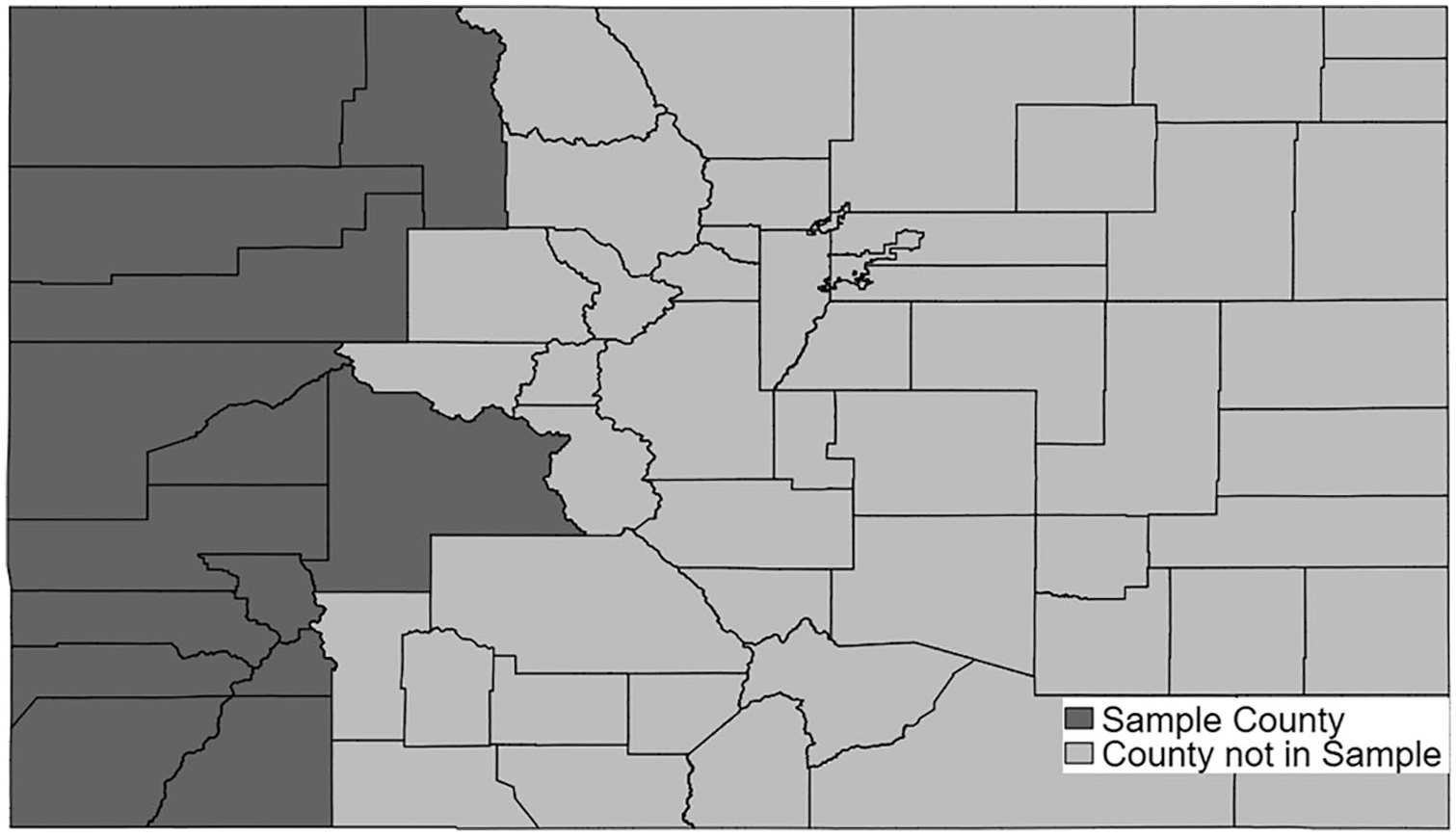
Sample counties in Western Colorado.
The first step of the project involved qualitative interviews with 14 informants. Informants were recruited via chain referral sampling (Heckathorn and Cameron 2017) and were primarily involved with efforts to promote economic development and economic diversification in the region. For the current analysis, the qualitative interviews were used to inform survey development, as opposed to acting as a standalone analysis. We preceded inductively through interviews to develop key survey themes. We undertook this step because there is relatively little quantitative research on coal policy and coal nostalgia from which we could procure well-vetted survey questions. The qualitative interviews helped inform the kinds of questions that we asked. Before administering the survey, we conducted cognitive pretesting with a convenience sample from the target population.
The next step of the analysis involved survey data collection in the fall of 2019. We contracted with Qualtrics, a research firm, to provide data for this project given practical constraints facing the research team. Online panels are increasingly common in the social sciences (e.g., Porter et al. 2019) including at leading sociology journals (e.g., Hayes and O’Brien 2021; Miles, Charron-Chénier, and Schleifer 2019). Meta-analysis suggest that online panels typically produce similar results to more conventional sources of survey data (Kees et al. 2017; Walter et al. 2019). This type of data is especially appropriate for investigations of relatively new topics, preliminary analyses, and hard-to-reach populations. We remind readers that the usual caveats regarding Internet panels apply to this study (Roulin 2015).
Qualtrics collects responses by aggregating many online panel surveys that are distributed to respondents in a dashboard style wherein potential respondents see a dashboard of surveys that they may qualify for. Qualtrics also recruits via e-mail, and respondents are compensated via a variety of means (e.g., cash payments, sweepstakes, rewards points). Respondents are tracked as soon as they engage with the survey.
We concentrated data collection on Western Colorado (see Figure 1), a region that has historically hosted ample coal mining and is home to several coal-fired powerplants. The survey was primarily focused on issues of economic development and energy production in the region. Respondents completed the survey in an average of 7.5 minutes. A total of 487 respondents entered the survey, with 29 screened for not living in the study region and 14 disqualified due to age. Roughly halfway through the survey, we performed a simple attention check. Four respondents failed this attention check and were excluded from the data. We also removed six respondents who completed the survey very quickly (e.g., well under the average of 7.5 minutes). Please note that response rates for more conventional survey modes (e.g., mail, random digit dial) have no clear analogue for online panels. We reweighted the data using the entropy balancing method to approximate state demographics for age and sex.
Outcome Variables
Alternative development pathways
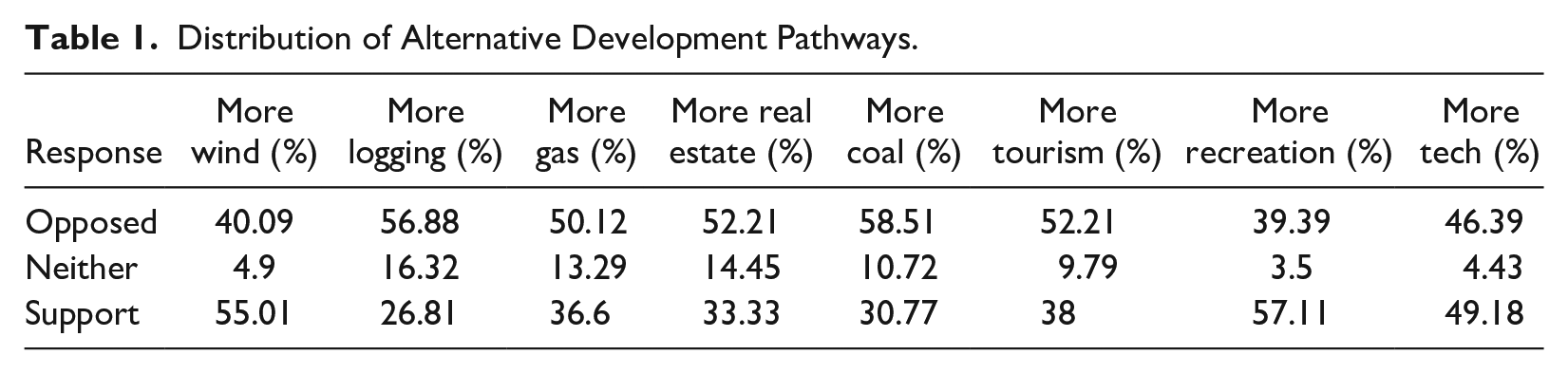
Transitions can involve a range of policies such as efforts to directly assist displaced workers, create more equitable planning processes, or encourage economic diversification for places hit hard by technological change. To understand development channelization, we adapted a series of questions from Mueller and Tickamyer (2019) to capture the extent to which our respondents support alternative development pathways for their community. The question read as follows: “Regardless of how realistic you think it may be, how supportive or opposed would you be to the following activities occurring where you live?” with seven response categories ranging from “strongly oppose” to “strongly support.” The economic activities were as follows: increased coal mining, increased natural gas development, increased wind energy development, further real estate development, increasing coal mining, increased tourism, increased outdoor recreation, and increased tech industry (e.g., Internet and computer-related). We provide the distribution of these items in Table 1—we combined the “oppose” and “support” categories to facilitate an easier interpretation.
Distribution of Alternative Development Pathways.
Predictor Variables
Blame variables
As we noted earlier, right-wing populism is often motivated by a sense of blame toward outsiders—such as the federal government—for local problems. To assess the perceived causes of coal’s decline, respondents were asked, “What do you think is responsible for the decline of the coal industry in Western Colorado?” and could choose as many of the following responses as they deemed appropriate: natural gas substituting for coal, federal environmental regulations, state or local environmental regulations, the Obama administration, solar energy, wind energy, or international markets. Respondents were also given the option of an “other” category and could enter an additional cause, though few respondents chose “other.”
Few respondents chose only a single cause, suggesting that most recognize that the causes of coal’s decline are multifaceted. We opted to create a series of binary variables, one for each distinct cause. No respondents named “international markets” as a reason for coal’s decline—given this lack of variation, this variable is dropped from subsequent analysis. Figure 2 displays the distributions of these binary variables. Although natural gas is undoubtedly the primary driver of coal’s decline, only 44.7 percent named it as a cause. Large minorities also named federal and state environmental regulations, while other possible causes such as renewable energy or the Obama administration were named comparatively less often. Interestingly, there is no single cause identified by most respondents, implying limited consensus as to what is leading to the collapse of the coal sector in Western Colorado.
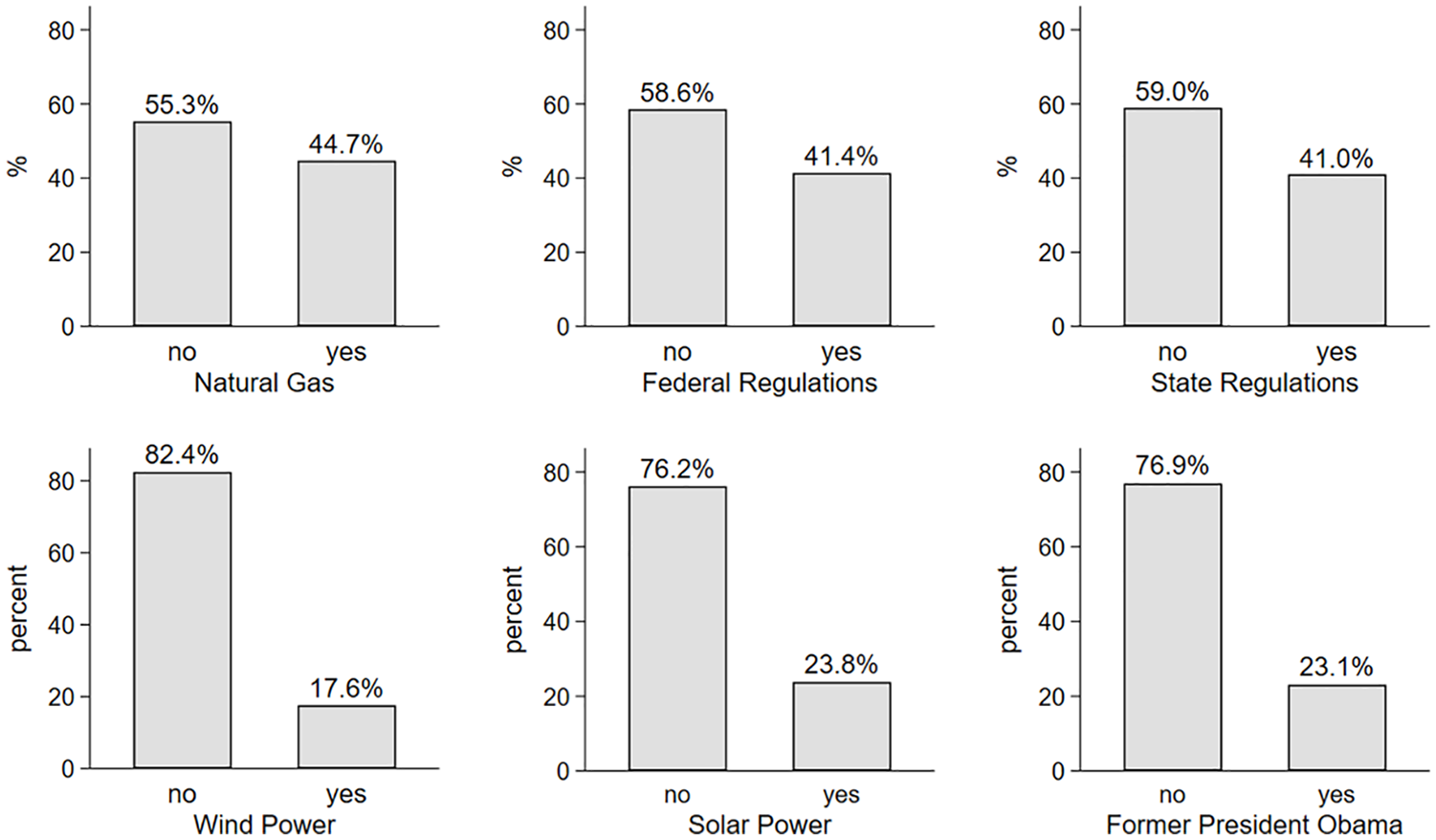
Distribution of blame items.
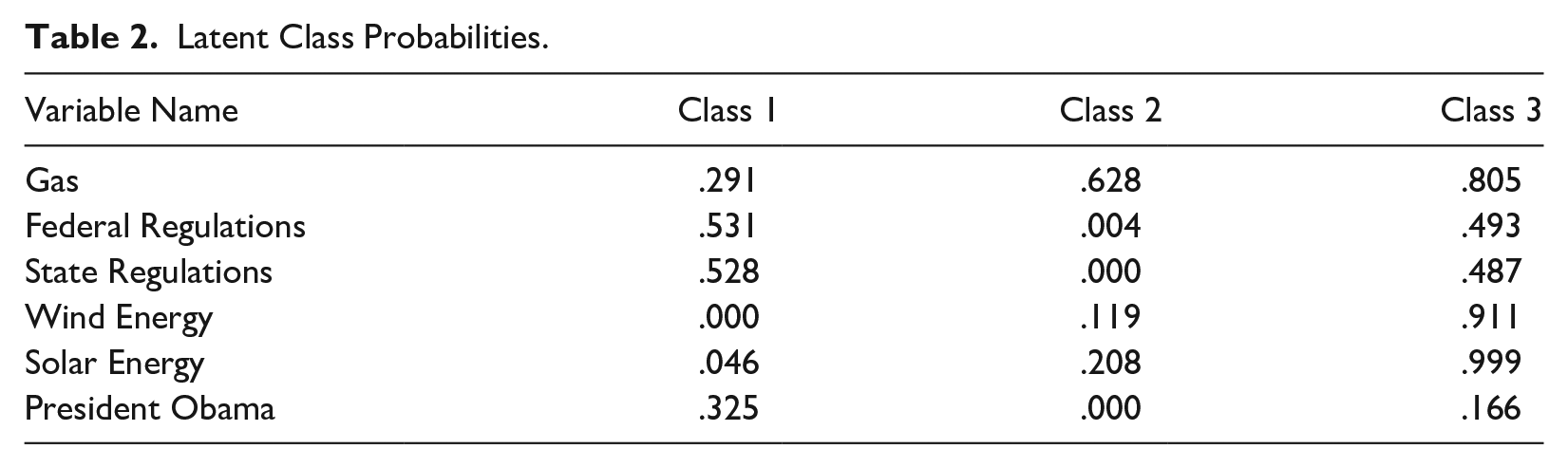
Next, we used latent class analysis on these binary variables to identify underlying latent groups of respondents (Hagenaars and McCutcheon 2002). We approached these data with no a priori assumptions about the number of latent classes. Rather, we relied upon Akaike Information Criterion (AIC) and Bayesian Information Criterion (BIC) statistics to determine which number of classes fit the data the best, ultimately leading to a three-class solution (see Appendix C). In Table 2, we display predicted means of the outcome within each latent class. Table 2 suggests that members of the first class largely blame environmental regulations and the Obama presidency, while allowing some role for natural gas. Class 2 places emphases on natural gas, with almost no role for the regulatory environment and a small impact from solar and wind. Finally, class 3 members view coal’s decline as multicausal, with significant emphasis on alternative energy sources and regulations. We call these latent classes the Obama-regulation class, the Alternative Fuels class, and the Multicausal class. A total of 63 percent of respondents were classified into Obama-regulation, 19 percent into Alternative Fuels, and 18 percent were grouped into the Multicausal latent class.
Latent Class Probabilities.
Nostalgia and party affiliation
As noted above, prior research associated a sense of nostalgia with blame for the coal industry’s poor fortunes and, by extension, the struggles of rural places earlier (e.g., Hochschild 2018; Lewin 2019). We developed three novel indicators of nostalgia for use in this project. We asked respondents if their local economy was better in the past, if their area used to have more jobs, and if, in general, things were better in their area in the past. Figure 3 provides the distribution of these variables. Generally, responses skewed toward more nostalgia than less, though a nontrivial portion stated “neither.”
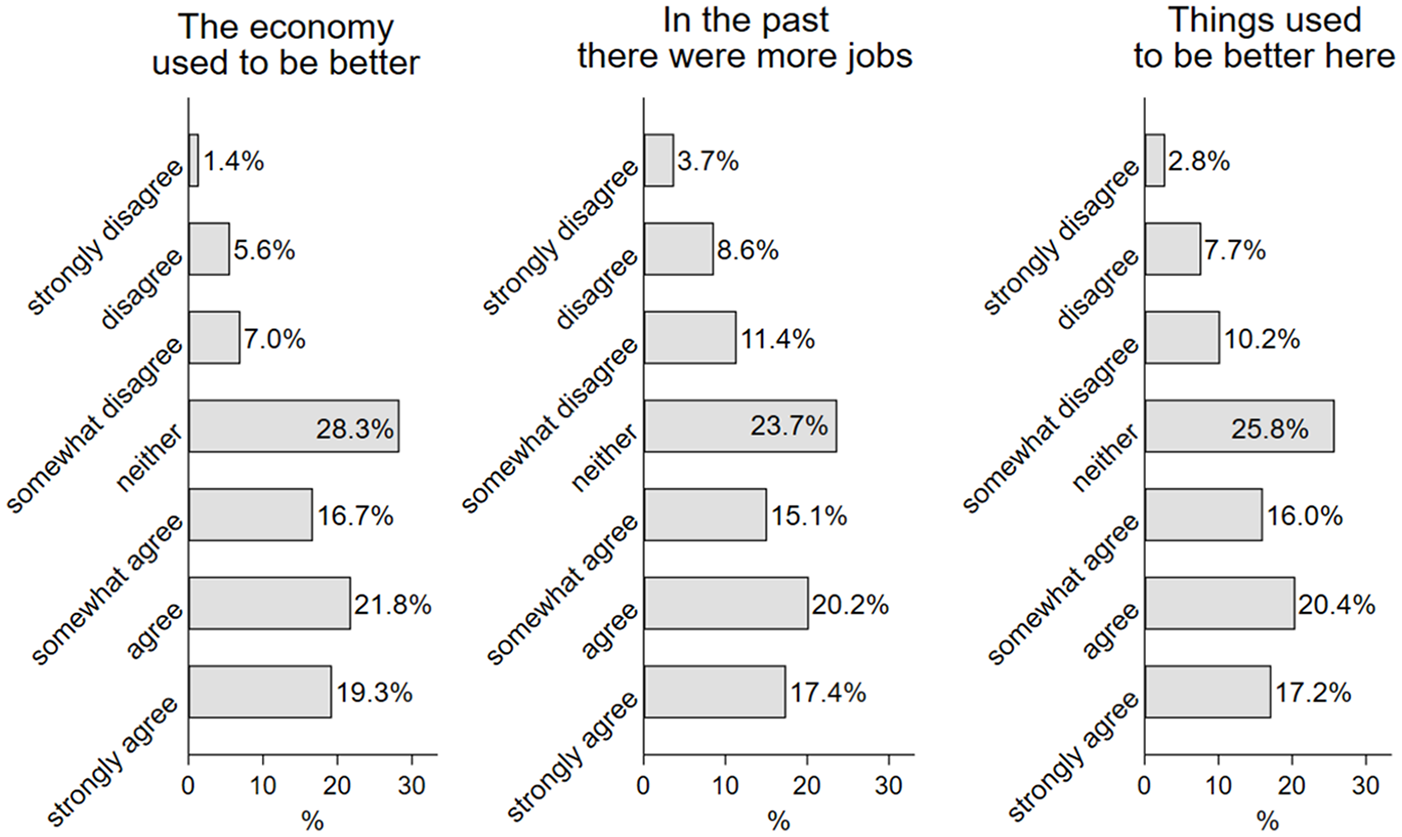
Distribution of nostalgia items.
We then used factor analysis on a polychoric correlation matrix to identify the dimensionality of these items—this factor analysis strongly indicated a single factor solution (Appendix D). From here, we calculated a factor score to use as a predictor in our regression model.
For party affiliation, respondents were asked to report their strength of relationship to each party (ranging from strong Democrat to strong Republican). To mitigate against data sparsity, we recoded this variable into three categories (Republican, Democrat, and Independent). A total of 26 percent of the sample identified as Republican, 20 percent as Democrat, and the remainder as Independent.
Controls
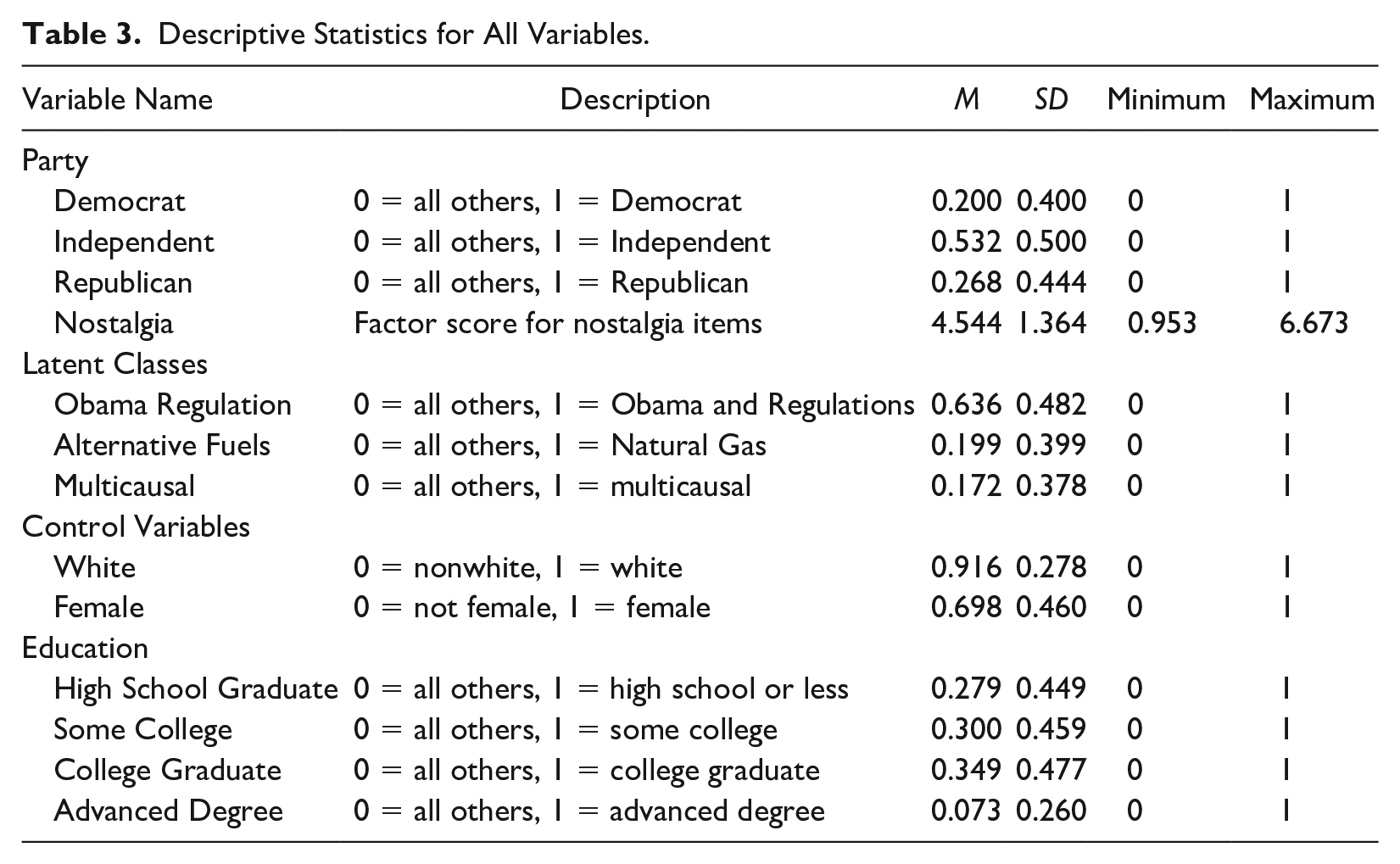
We also include several control variables. We measured standard sociodemographics, such as income, education, Hispanic ethnicity, and sex. Table 3 provides descriptive statistics for all variables. Our dataset also includes potential control variables that we opt not to use. Respondents reported their race, but nearly 92 percent of the sample identified as white. Given this lack of variability, we do not include a control for race in our models. We also asked respondents if they or anyone in their household worked in the coal industry. However, only 11 (2.75 percent) respondents answered “yes” to this question, so we do not include it as a predictor here.
Descriptive Statistics for All Variables.
Modeling Strategy
Our dependent variables are seven items measuring alternative development pathways, and are all scored on an ordinal scale. However, we face an additional challenge in that our sample size, while adequate for many purposes, could have potential data sparseness that limits more complex modeling approaches for categorical outcomes (such as ordinal logistic regression across six outcome categories). Some development pathways are very popular, with very little variation across respondents. To avoid problems with data sparsity, we recoded our outcome variables before entering them into our models. We dichotomize the alternative development pathway variables where a zero represents “opposition” or the few respondents who stated “neither,” and a “1” represents respondents who had some degree of support for this development option. 3
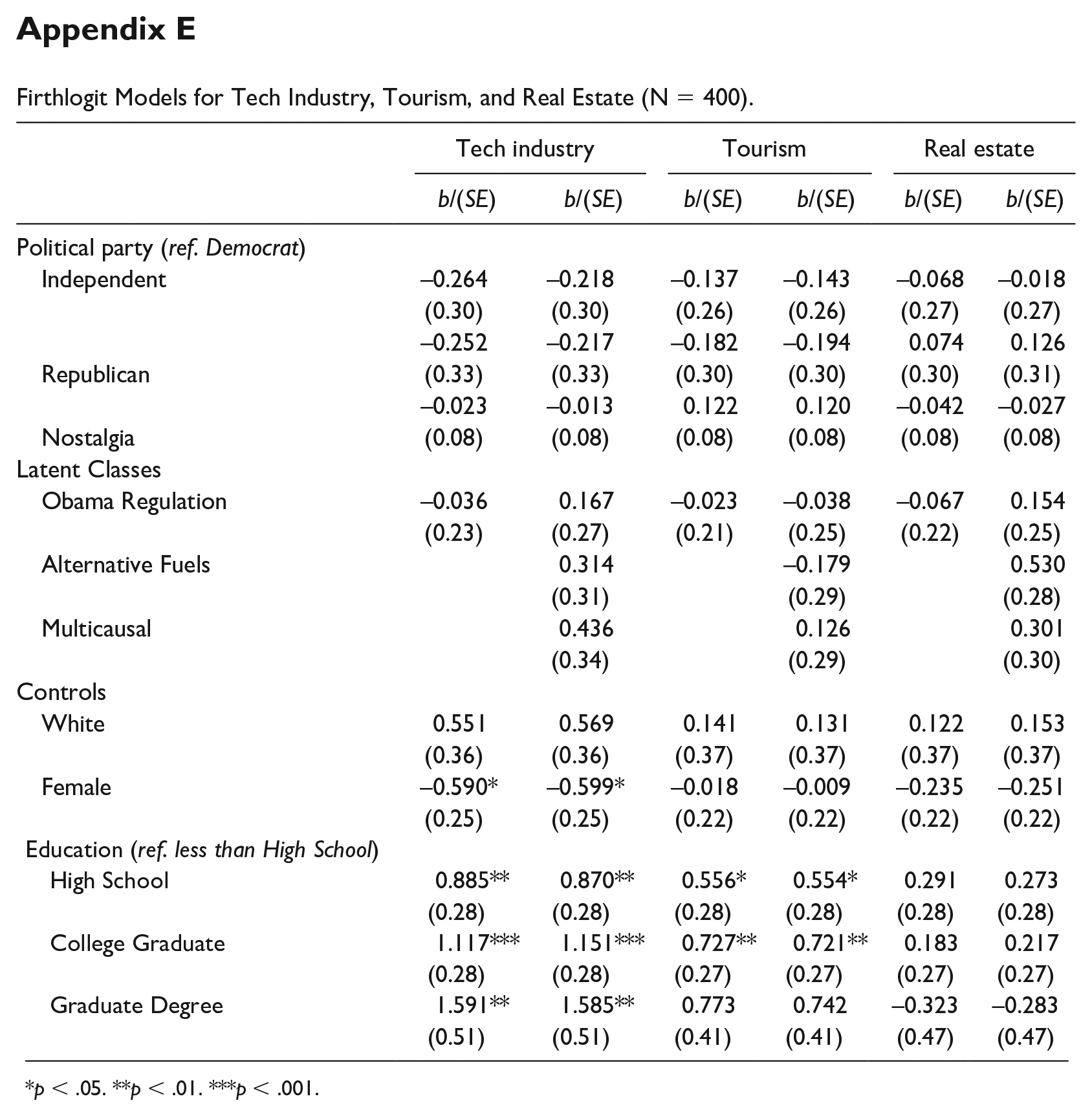
Several development pathways enjoyed broad support that cuts across partisan groups. These were increased real estate development, increased tourism, increased outdoor recreation, and increased tech industry. Using these variables as outcomes, we estimated a series of unreported models, finding that few of our predictors reach statistical significance and seem to have substantively small effects—these null findings are an artifact of the broad popularity of these development options (see Appendix E). We will return to these findings in the discussion as these null results have theoretical importance. But, for the analytical section below, we focus on development pathways that focused on energy and extractive industry alternatives (increased natural gas, increased coal, increased wind energy, and increased logging).
We rely on a variant of logistic regression first proposed by Firth (1993) that performs uniquely well when datasets are sparse. For each outcome, we estimate a model that includes the indicators for party affiliation, the latent classes for the “blame” items, our factor scores for nostalgia, and standard control variables. When the direct effects for the blame clusters or nostalgia are significant, we estimate interactions of these indicators with party affiliation. For the four development pathway items, only coal is found to be appropriate for such interaction analyses. Furthermore, we estimate AIC and BIC statistics to determine improvements in model fit.
Given the notorious difficulty in interpreting substantive effects of coefficients on a logistic scale (Mood 2010), we use average marginal effects (AME) to intuitively understand the effects of our statistically significant predictors. Furthermore, as coefficients of the product term do not provide sufficient information on the significance or magnitude of an interaction with nonlinear outcomes (Mize 2019), we plot AME to determine the nature of these interactive effects (Brambor, Clark, and Golder 2006).
Results
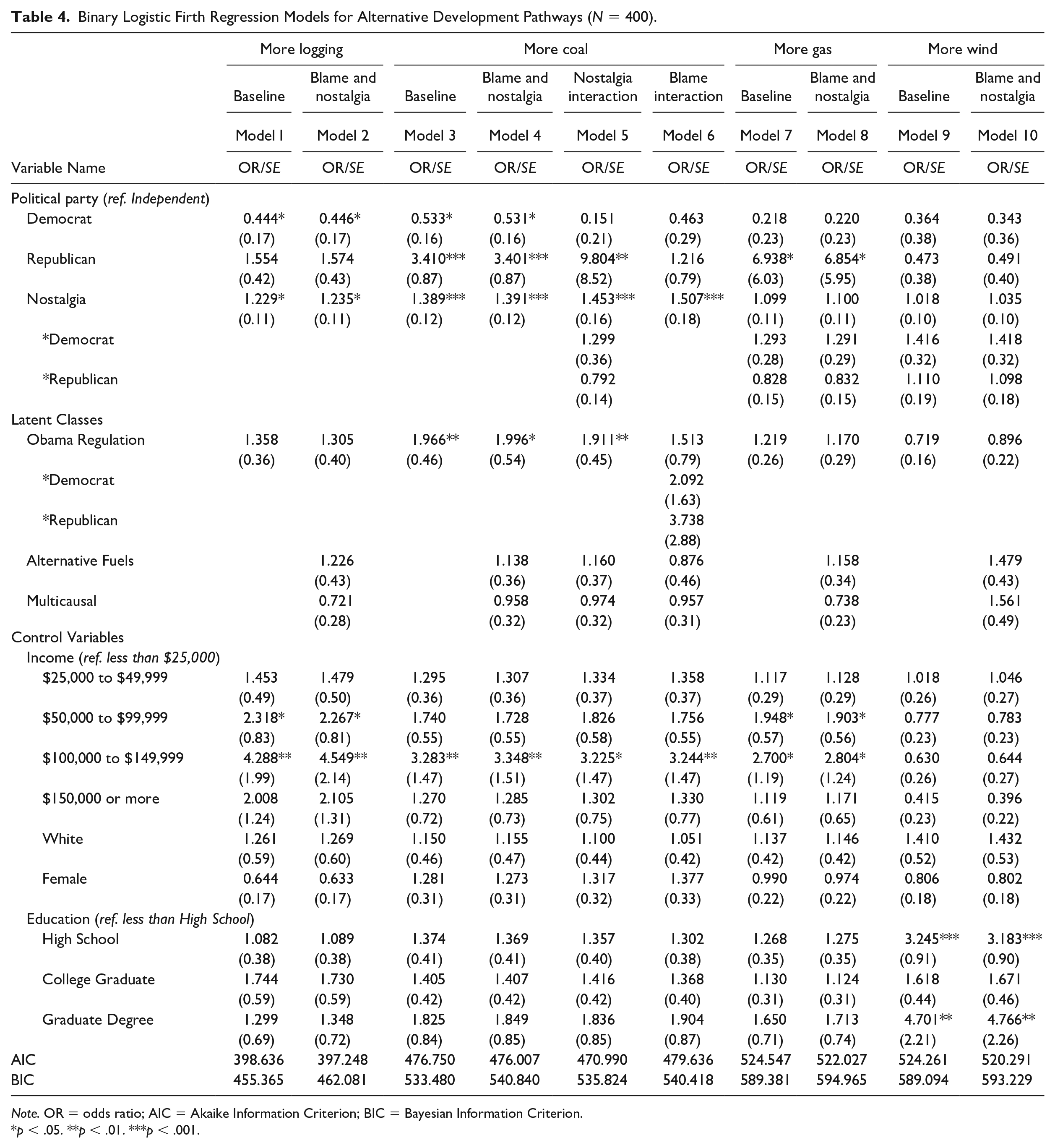
In Table 4, we display the results of our Firth logistic regression models. We implement a stepwise modeling approach for each of the four alternative development pathways. First, we present a model that includes party affiliation, nostalgia, and the control variables. Next, we include the blame latent clusters. Last, for the coal models, we present the interactive product terms. As noted above, we use AME when appropriate for our main effects (Figure 4) and interaction terms (Figure 5).
Binary Logistic Firth Regression Models for Alternative Development Pathways (N = 400).
Note. OR = odds ratio; AIC = Akaike Information Criterion; BIC = Bayesian Information Criterion.
p < .05. **p < .01. ***p < .001.
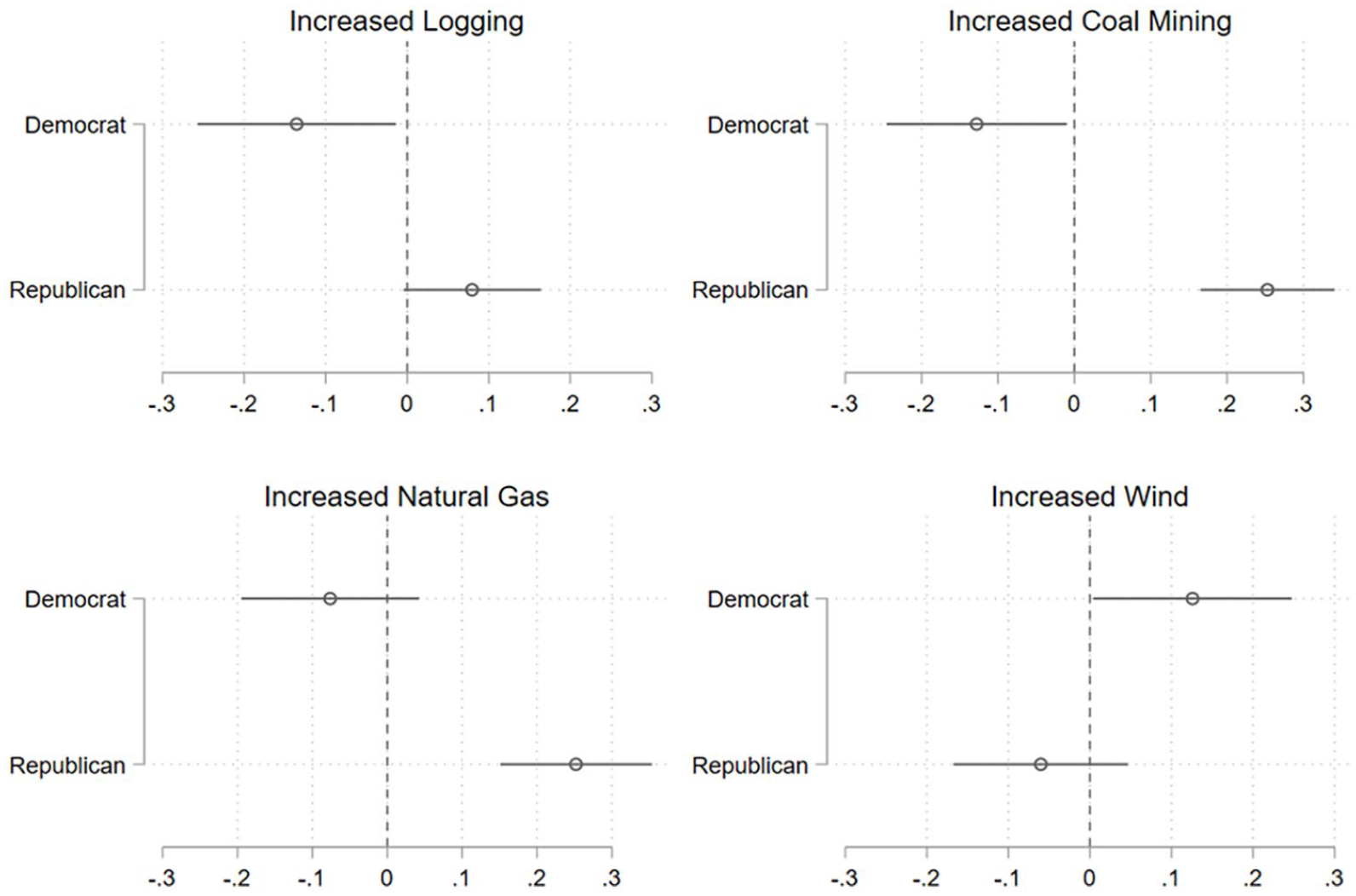
Average marginal effect of party identity by development options.
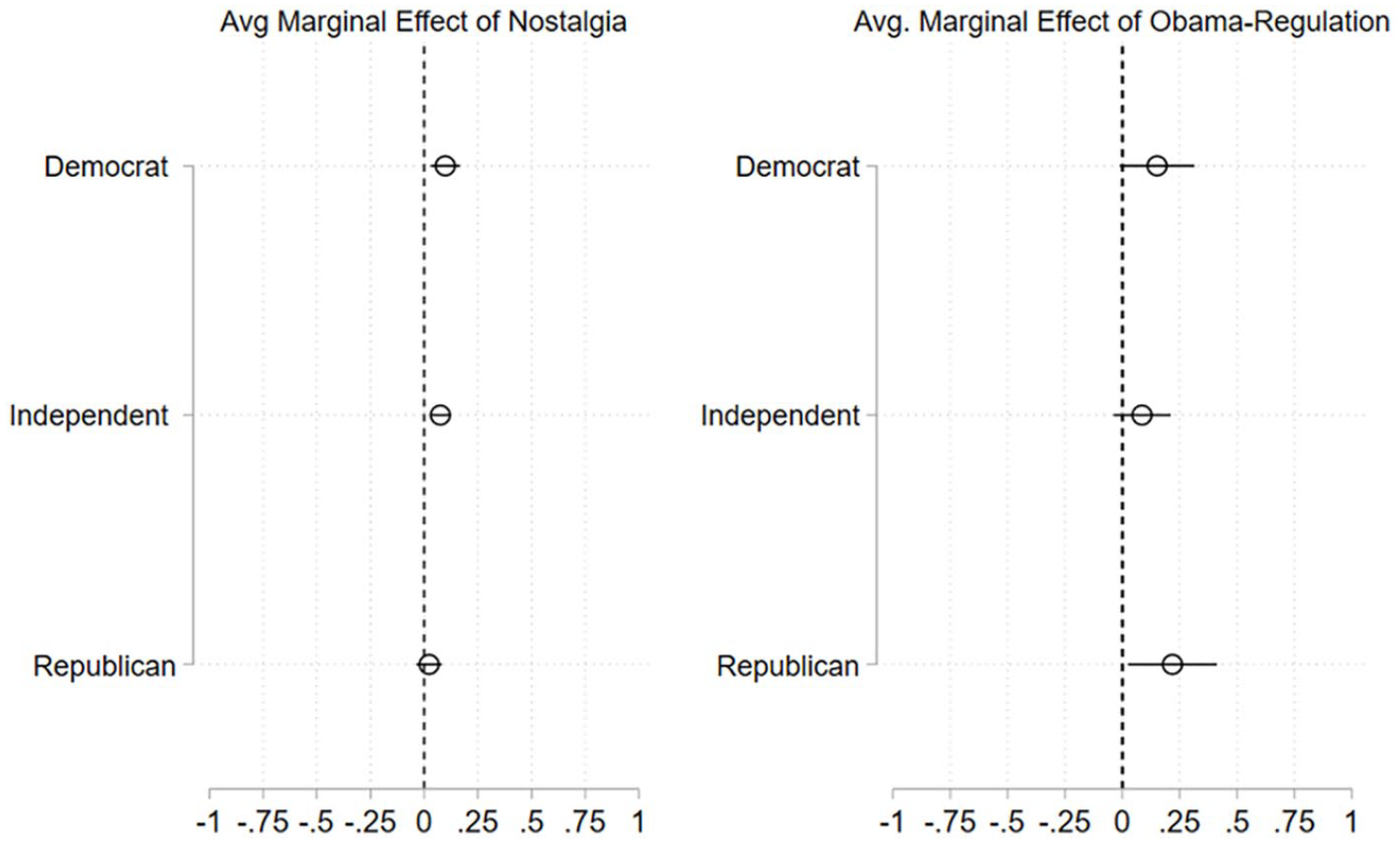
Average marginal effects of interaction terms for “more coal.”
First, we turn our attention to support for increased logging. Republicans are more likely to support increased logging in their community, but nostalgia does not approach statistical significance. In model 2, we added the “blame” items, and these variables also do not reach statistical significance. In model 2, the AIC has marginally improved but the BIC—which penalizes for the number of predictors—has increased, implying that the additional predictors did not enhance model fit. For “More Logging,” the AME for Republicans is some .20—that is, Republicans are 20 percent more likely than Democrats to support increased logging (Figure 4). 4 Thus, support for the logging industry appears to be somewhat partisan but is not tied to populist nostalgia and constructs of blame.
Models 3 to 6 use the “more coal” variable as the outcome. Political party is a consistent predictor across all three model specifications. In Figure 4, the AME for “Increased Coal Mining” is even more powerful, wherein Republicans are 40 percent more likely to indicate support than Democrats. The factor score from the nostalgia items is also remarkably consistent; across all three models for coal, more nostalgic individuals are more supportive of increasing the use of coal mining. In model 4, we added the latent class membership variables for the “blame” items. Respondents who primarily blamed former president Obama and regulations for coal’s decline were more likely to support increasing coal mining, while both the Alternative Fuels and the Multicausal latent class did not reach statistical significance.
In model 5, we interact our indicator of political party with nostalgia to determine if nostalgia conditions the effect of partisanship, visualized in Figure 5, panel 1. This panel suggests little to no interaction between political party and nostalgia. In model 6, we substitute an interaction between the Obama Regulation latent class indicator and political party. We are especially interested in determining if Republicans who blame Obama-era regulations are more likely to support coal, visualized in Figure 5, panel 2. We find that the AME of Obama-era regulations on preferring more coal is greatest for Republicans (22 percent), but also substantive for Democrats (15 percent), while having a much more modest effect for Independents (.08 percent). That is, assigning blame to Obama administration and federal regulations seems to intensify support for coal across all partisan groups, but this effect is most powerful for Republicans. Furthermore, the AME is only statistically significant for Republicans (p = .027). Blaming Obama and regulations seems to intensify the effect of Republican Party identity.
The next two models, models 7 and 8, consider support for natural gas development, an industry that has grown immensely in certain parts of our study region. Political party is a relevant predictor in both models, yet we observe a different pattern than for coal. Democrats are less supportive, although the 95 percent confidence interval crosses over zero, implying the AME could be zero. Yet Republicans are much more supportive of expanding natural gas development. Nostalgia appears to play no part in support for natural gas, nor do our latent classes for the “blame” items, suggesting that views about the natural gas industry are not a function of populist nostalgia and grievances.
Models 9 and 10 use support for increased wind power as the outcome variable. These models again reveal some important findings regarding partisanship—compared with Democrats, Republicans are less supportive of growing the wind power sector in their community but the AMEs in Figure 4 imply that this difference could be substantively small and statistically null. However, none of the other theorized predictors—nostalgia or blame for coal’s decline—reach statistical significance.
Discussion
In this paper, we have proposed that multiple trends—the energy transition (particularly the collapse of the coal industry), the rise of right-wing populism characterized primarily by grievance and blame, the intensification of partisan polarization, and the economic struggles of rural America—are all related. Informed by theoretical accounts of right-wing populism (e.g., Mudde 2004), we argued that populist nostalgia, blaming the government for economic problems, and partisanship could all contribute to “development channelization” wherein residents of rural places might oppose some economic development pathways while supporting seemingly traditional industries, however dubious a comeback for those industries might be (Gramling and Freudenburg 1996). We argued that the coal industry has a special place in the cultural backdrop of communities that have historically relied upon the industry (Bell and York 2010; Lewin 2019), perhaps leading some residents to hope against all hope for a coal renaissance despite indications that the industry is in its death throes. Furthermore, coal may also be a potent symbol for a nostalgic, right-wing populism that promises to restore the nation to its ostensibly superior past. In this section, we discuss our findings in the context of this theoretical backdrop and questions of development in rural places.
In H1, we suggested that a Republican Party affiliation would lead to development channelization wherein Republicans would be more supportive of the coal industry and less supportive of other options. Our findings for political party are also indicative of some degree of development channelization via partisanship. Republicans, Independents, and Democrats did, indeed, have some different development preferences. Republicans—and to a lesser extent, Independents—were more supportive of expanding extractive industries such as logging, natural gas, and coal and less apt to support increased wind power. However, for other development options, such as our unreported models for tourism and tech industry, there were essentially no important partisan differences. This result implies that Republican constituents, and perhaps even Republican politicians, might channel some development efforts toward extractive sectors and away from renewables, or perhaps be less likely to support local renewable energy projects in some contexts. Thus, there is some evidence for development channelization, but it comes with many significant qualifications.
For H1, we proposed that right-wing populism—grievances directed toward the federal government and nostalgia—might influence support for development opportunities for rural places, potentially leading to development channelization. Nostalgia may lead some to support dying industries and hold profound hopes for their renaissance. Our analysis reveals a very important qualification. Nostalgia does not appear to decrease support for alternative types of development. Besides the “more coal” models, nostalgia never approaches statistical significance and has substantively small effects. Thus, our models suggest some degree of development channelization via nostalgia. Yet nostalgia does not drive individuals to oppose developing industrial sectors such as natural gas and wind or long-run economic cornerstones such as recreation and tourism. These complicated effects suggest that scholars whose work speaks to issues of nostalgia in rural places carefully qualify the role of nostalgia as it may coexist with support for incumbent industries and new technologies.
Right-wing populism typically involves a discourse of “the people” versus “the elites” and highlights issues of local control and sovereignty (e.g., Mudde 2004). In the case of the United States, this often manifests itself in claims that the federal government is to blame for local problems (e.g., Hochschild 2018). We assessed who respondents blamed for the decline of coal in their community and used latent class analysis to discover that they fell into three main groups. Some blamed former president Obama and regulations, others placed more blame on Alternative Fuels, and still others blamed nearly all possible causes to some extent. Those who blamed Obama and the regulatory state were much more likely to support expanding the coal industry than others. Furthermore, blaming the federal government and Obama intensified the effect of Republican identity. Thus, our results imply that grievances directly toward the federal government may contribute to development channelization, particularly support for the coal industry.
Our results imply several important findings related to the future of development possibilities in rural places. First, it seems clear that coal mining is, indeed, a special industry with unique cultural significance. Our indicator of nostalgia had little to no effect on all development pathways except for coal. Furthermore, the effect of partisanship was most powerful for coal, and our latent class for blaming Obama and the government had a strong effect. Together, these findings indicate that, compared with all other possible development pathways, coal mining has a unique cultural position, especially among people who have adopted aspects of right-wing populism. We suggest that some of the nostalgia for coal is independent of coal’s historical or contemporary economic importance. Rather, coal acts as a potent symbol for nostalgic, right-wing populism—a symbol of a socially constructed past. Hope for a coal rebirth may be part of a broader phenomenon of restorative nostalgia, wherein some communities ache for a return to an ostensibly better collective past and the resurrection of industries culturally associated with that past. Our findings imply that nostalgia, partisanship, and populist grievances may drive some communities to encourage the further development of coal, even if, by most accounts, the collapse of coal is imminent due to substitute fuels and waning demand; that is, right-wing populism can potentially channel efforts to some dubious and maladaptive local development outcomes.
Large sections of the rural United States are struggling with obdurate problems such as population loss, anemic or negative economic development, life expectancy lower than urban places, and changes wrought by globalization and automation. Although there is also great diversity across rural places in the United States (Johnson 2012), many will continue to face significant challenges for the foreseeable future. Against this backdrop, it is not surprising that a nostalgic form of right-wing populism, especially one that promises to resurrect the local economy of the past, might resonate. The current research has some broader implications for the future of the rural United States beyond the case of coal in Western Colorado. Although our findings imply that nostalgia for coal may be a barrier to economic diversification in rural regions, there are also some very hopeful takeaways for planners and activists working on rural economic diversification. Notably, several possible development pathways transcended partisan differences. This implies that not all efforts to improve the fortunes of rural places will arouse partisan passions or populist nostalgia. Furthermore, only coal appears to be associated with nostalgia and populist grievances against the federal government, implying that there are development opportunities that will not be thwarted by these forces. Still, there is the possibility that nostalgia for dying industries and grievances against the federal government might, at times, channel resources away from viable economic diversification options.
Footnotes
Appendix
Firthlogit Models for Tech Industry, Tourism, and Real Estate (N = 400).
| Tech industry | Tourism | Real estate | ||||
|---|---|---|---|---|---|---|
| b/(SE) | b/(SE) | b/(SE) | b/(SE) | b/(SE) | b/(SE) | |
| Political party (ref. Democrat) | ||||||
| Independent | –0.264 | –0.218 | –0.137 | –0.143 | –0.068 | –0.018 |
| (0.30) | (0.30) | (0.26) | (0.26) | (0.27) | (0.27) | |
| –0.252 | –0.217 | –0.182 | –0.194 | 0.074 | 0.126 | |
| Republican | (0.33) | (0.33) | (0.30) | (0.30) | (0.30) | (0.31) |
| –0.023 | –0.013 | 0.122 | 0.120 | –0.042 | –0.027 | |
| Nostalgia | (0.08) | (0.08) | (0.08) | (0.08) | (0.08) | (0.08) |
| Latent Classes | ||||||
| Obama Regulation | –0.036 | 0.167 | –0.023 | –0.038 | –0.067 | 0.154 |
| (0.23) | (0.27) | (0.21) | (0.25) | (0.22) | (0.25) | |
| Alternative Fuels | 0.314 | –0.179 | 0.530 | |||
| (0.31) | (0.29) | (0.28) | ||||
| Multicausal | 0.436 | 0.126 | 0.301 | |||
| (0.34) | (0.29) | (0.30) | ||||
| Controls | ||||||
| White | 0.551 | 0.569 | 0.141 | 0.131 | 0.122 | 0.153 |
| (0.36) | (0.36) | (0.37) | (0.37) | (0.37) | (0.37) | |
| Female | –0.590* | –0.599* | –0.018 | –0.009 | –0.235 | –0.251 |
| (0.25) | (0.25) | (0.22) | (0.22) | (0.22) | (0.22) | |
| Education (ref. less than High School) | ||||||
| High School | 0.885** | 0.870** | 0.556* | 0.554* | 0.291 | 0.273 |
| (0.28) | (0.28) | (0.28) | (0.28) | (0.28) | (0.28) | |
| College Graduate | 1.117*** | 1.151*** | 0.727** | 0.721** | 0.183 | 0.217 |
| (0.28) | (0.28) | (0.27) | (0.27) | (0.27) | (0.27) | |
| Graduate Degree | 1.591** | 1.585** | 0.773 | 0.742 | –0.323 | –0.283 |
| (0.51) | (0.51) | (0.41) | (0.41) | (0.47) | (0.47) | |
p < .05. **p < .01. ***p < .001.
Author’s note
Adam Mayer is now affiliated with Michigan State University, East Lansing, MI, United States.
Declaration of Conflicting Interests
The author(s) declared no potential conflicts of interest with respect to the research, authorship, and/or publication of this article.
Funding
The author(s) received no financial support for the research, authorship, and/or publication of this article.
