






Abstract
In this article, the effect of water glass on the mechanical and thermooxidative properties of kenaf and sisal fibres has been investigated. Single fibres were manually separated from the bundles and immersed in liquid water glass that produced a thick polysilicate coating. The water glass treatment significantly improved the tensile strength and the Young’s modulus of the kenaf and sisal fibres, in relation to the untreated fibres. The improved failure strain of sisal fibre could have occurred because the axial splitting is promoted and the transverse cracking is delayed by the water glass treatment. The reduced thermal resistance of the water glass treated sisal is even more interesting when considering that NaOH treatment (major constituent of water glass) of sisal caused an opposite effect. The thermogravimetric analysis results showed that the water glass treatment strongly affected the chemical composition of the kenaf and sisal fibres. The water glass based thick polysilicate coating was about 40 wt%, which was unusually high.
Introduction
The use of natural fibre reinforced polymer composites has attracted attention from academia and various industries. This is in an effort to replace synthetic fibres, especially glass fibres in composites, for different applications. These applications include (but not limited to) building, construction, automotive and packaging. Plant fibres such as flax, hemp, kenaf and sisal are considered to be environmentally friendly, biostable, biodegradable and relatively low-cost alternatives to glass fibres in structural engineering composites. 1 Ecological concerns have resulted in a renewed interest in these materials; mainly due to their unique characteristics, such as abundance, lower raw material price, biodegradability, low density, non-toxic nature, less abrasive to plastic processing equipment and useful mechanical properties. 2 – 6 The cell wall of natural fibre consists of cellulose micro-fibrils, bound together by an amorphous lignin matrix, hemicellulose, pectin, protein or mineral substances and a small amount of waxes and fat.7,8 There are major drawbacks, e.g. low permissible processing temperatures, tendency to form clumps and the hydrophilic nature, associated with the use of natural fibres for reinforcement of synthetic resin matrices. Natural fibres tend to absorb considerable amount of moisture which causes deterioration in mechanical properties.9,10
The commercially available natural fibres are not as strong as Kevlar or aramid fibres. Netravali et al. 11 stated that the specific properties of natural fibre-reinforced thermoplastic composites could favourably compete with those of their glass-fibre-reinforced thermoplastic counterparts. Therefore, physical or chemical modification of natural fibres is necessary in order to improve their surface and mechanical characteristics. Chemical methods such as: mercerisation (alkali treatment), silane treatment, acetylation, benzoylation, permanganate, isocyanate treatment, acrylation and acrylonitrile grafting and maleated coupling agents have been investigated by many researchers. 12 – 14 Of these methods, mercerisation (alkali treatment) process used to produce high quality fibres that removes the unwanted surface impurities, hemicelluloses, pectin and lignin, is the most preferred method.15,16 Alkali treatment was found to be efficient in decreasing the lignin and hemicellulose contents, of kenaf fibre (unbleached pulp) from 12.7 to 2.5 wt% and 17.6 to 12.7 wt%, respectively. The cellulose content in the alkali-treated, unbleached pulp increased from 63.5 to 81.5 wt%. 17 Similarly, the chemical composition of kenaf fibre before and after alkali treatment was studied and it was found that kenaf fibre had the highest percentage of cellulose and the lowest percentage of hemicelluloses and lignin. 18 Barreto et al. 19 observed that the crystalline region of the sisal fibre increased from 60.5% to 69.2% after alkali treatment, which removed some of the amorphous components of sisal fibre. Pimenta et al. 20 and Rong et al. 21 showed that the untreated sisal fibre diameter was reduced following mercerisation treatment. The decrease in fibre diameter was caused by the removal of hemicelluloses and lignin during alkali treatment, which leads to the fibrillation of the fibre bundles into small fibres. The development of a rough surface topography and an increase in the aspect ratio offer better fibre–matrix interface adhesion and an improvement in the mechanical properties. 22 Fibre separation process significantly determines the quality of the fibre and its mechanical properties. 23 – 25 The fibre cross-sectional area strongly influences the fibre strength. 26 The shape of the fibre varies from polygonal to oval and sometimes irregular shape. The shape partly depends on its growth environment and maturity. The microfibrils are helically wound around the fibre axis, forming a hollow cell. Uncoiling of these spirally oriented fibrils consumes large amount of energy and it is one of the predominant failure modes. In the middle of the elementary fibre cells, there is a small lumen or hollow canal which is the empty space that was formerly occupied by the protoplasmic material that forms the living part of the cell. 27
A new method (sodium silicate treatment) of surface modification of natural fibres has been developed in order to improve their thermal stability and mechanical properties. Sodium silicate (water glass) is a highly alkaline medium and is used as a surface modification agent and flame retardant for fibre composites. However, few works have been published on the surface modification of natural fibre using water glass. Medina et al. 28 studied water glass as a hydrophobic and flame retardant additive for natural fibre reinforced composites. They reported that the mechanical properties of hemp and kenaf fibre blends decreased with an increase in water glass content in the matrix system, but improved the fire resistance of the composites. Sheng et al. 29 studied the mechanical properties of sodium silicate treated-moso bamboo particles reinforced polyvinyl chloride composites. They reported an improved tensile strength and Young’s modulus of water glass-treated moso bamboo particles. Thiruchitrambalam et al. 30 reported that sodium laulryl sulphate treated banana and kenaf fibres showed good mechanical properties in polyester hybrid composites, when compared to that of alkali treated fibres. Thermal stability analysis of sisal/polypropylene composite has been carried out and it was observed that the alkali-treated sisal/polypropylene composites stability improved, due to the improved fibre–matrix adhesion. 31
This study was undertaken because it is believed that the enormous potential for cultivating natural fibres is underutilized and under-developed in South Africa. In South Africa, only limited natural fibre supply chain is in place and no meaningful downstream composite applications have been developed. The growing and processing of better quality natural fibres could open-up market opportunities for the composite industry in South Africa. Sisal and kenaf are materials that are available in abundance in South Africa and are hardly used in civil engineering construction. The mechanical, thermal and morphological properties of untreated and water glass (WG) treated fibres were studied. This has been proved in many countries and we believe it should apply to SA because these fibres are the same. WG coating was selected because it is believed that the related silica coating might improve the mechanical properties of the fibres. The thermogravimetric analysis (TGA) of fibres was done in order to study the degradation of untreated and WG-treated fibres at elevated temperatures.
Experimental
Materials
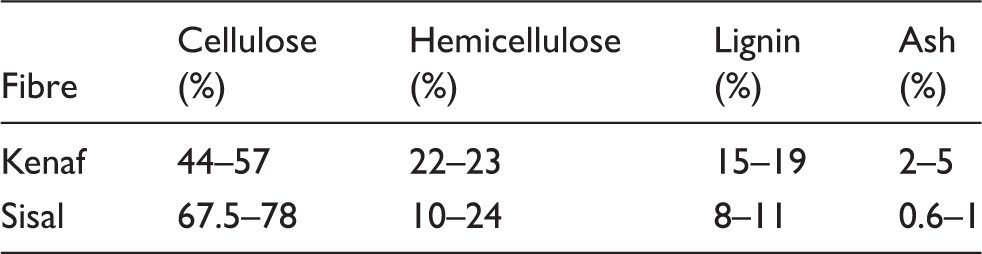
Chemical composition and physical characteristics of kenaf and sisal fibres. 7
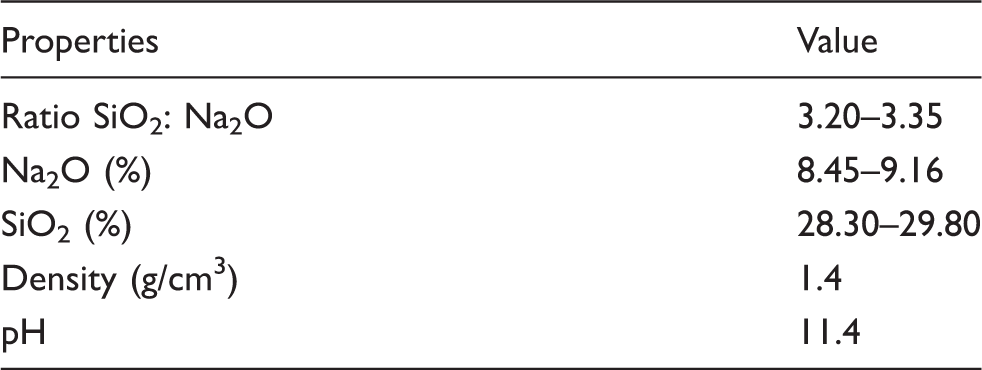
Properties of water glass
Sample preparation
The single fibres were manually separated from the bundles and soaked in liquid WG at room temperature for 2 min. The fibres were then dried at 80°C in an air-circulating oven for 4 h. Neat fibres were used for comparison purposes. The diameter of each fibre specimen was measured using an optical microscope (Olympus BX51, U-TVIX-2, Japan). Three measurements were taken at different cross sectional areas in each fibre and an average diameter was determined. A total of ten fibres were measured from each kenaf and sisal fibre specimen and the average diameter was calculated according to the following equation:
Characterisation
The fibre was glued to a paper frame with a rectangular hole of 25 mm length × 10 mm width (Figure 1), according to ASTM D3379-75 standard method. The paper frame was cut before the start of the test. The fibres were then subjected to tension using a universal testing machine (Zwick/Z005, Ulm, Germany) with a load cell of 20 N. The fibres were tested at a constant crosshead speed of 2 mm/min and the distance between the grips was fixed at 25 mm. The Young’s modulus, maximum stress and strain-at-break, were calculated from the stress–strain curve.
Schematic diagram of single fibre testing set-up.
Thermogravimetric analysis
Thermogravimetric analysis (TGA) traces of untreated and WG-treated fibres were performed in a Perkin-Elmer TGA thermal analyzer in a nitrogen atmosphere, at a flowing rate of 50 mL/min. The change in weight with respect to temperature, programmed between 25°C and 900°C at a rate of 10°C/min was determined.
Morphological properties of the fibres
The micrographs of the cross sections of the untreated and WG-treated fibres (and the tensile fractured surfaces of untreated and WG-treated fibres), coated with gold were examined using a scanning electron microscope (SEM; JEOL 6380 LA, Tokyo, Japan.
Results and discussions
Fibre diameter
Comparison of the average diameter of WG-treated and reported alkali-treated fibres
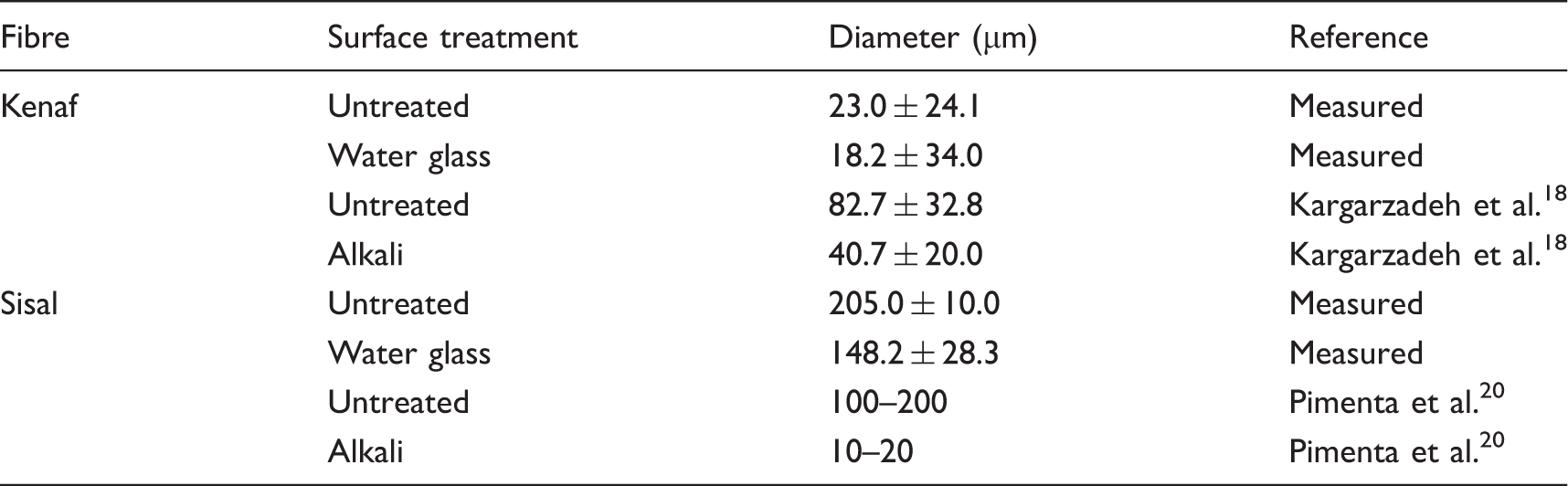
The SEM micrographs of untreated and WG-treated fibres are shown in Figure 2. It is evident that the untreated kenaf fibre surface contained considerable amounts of unwanted impurities when compared to sisal fibre surface, hence non-constant cross-sections of the fibres are observed. It is also clear that WG coating (silica gel) on the surface of fibres was achieved as shown in Figure 2(b) and (d). The WG-treated fibres show rougher surface topologies when compared to that of untreated fibres. This can be explained in terms of the unwanted impurities being successfully removed on the fibre surface and possible reaction sites were increased that allow better fibre wetting.
22
SEM micrographs of the unfractured surfaces of: (a) untreated kenaf, (b) WG-treated kenaf, (c) untreated sisal and (d) WG-treated sisal fibres.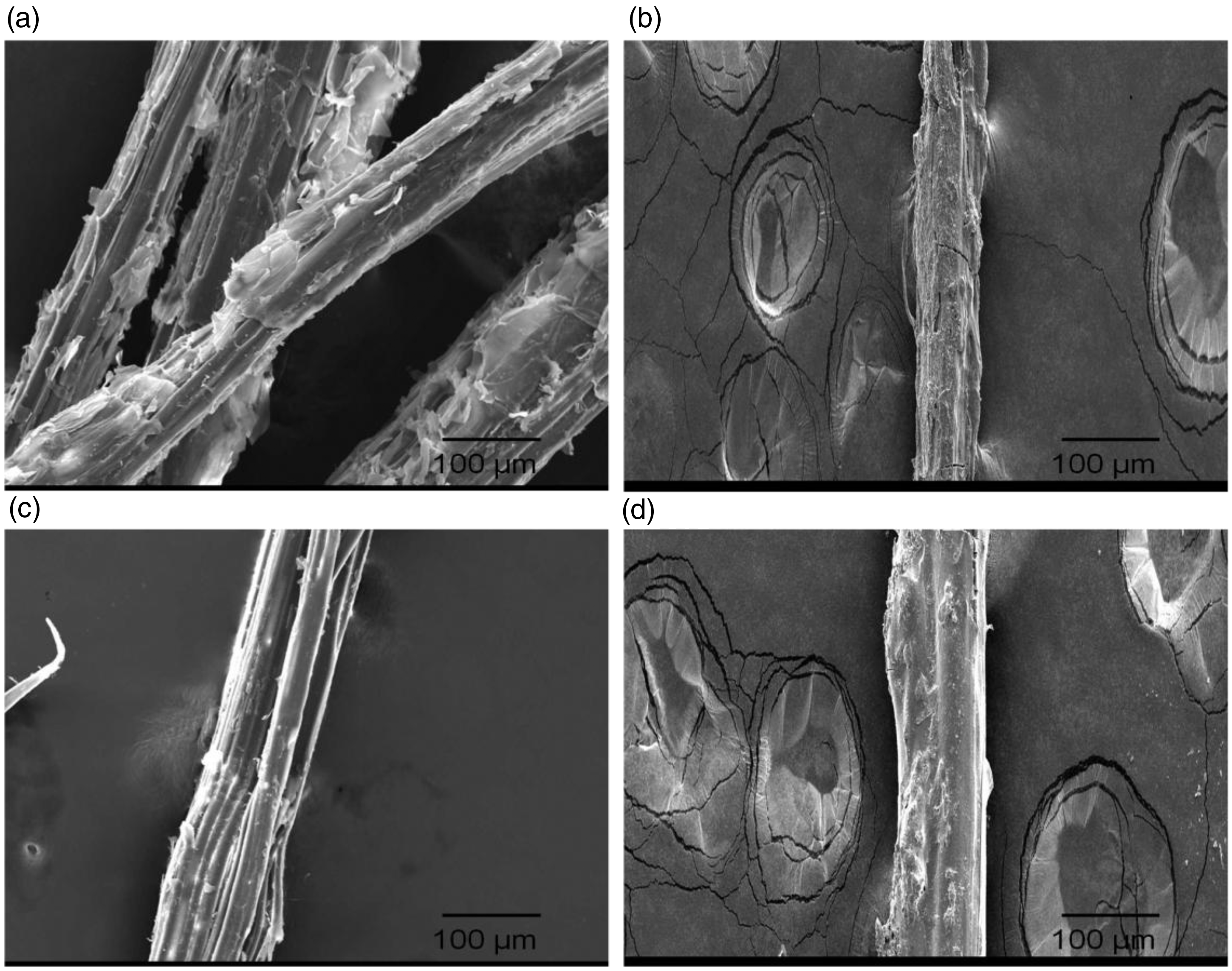
Tensile properties of fibres
The stress–strain curve of some of the selected individual fibre samples during testing is shown in Figure 3 and Table 4. The WG-treated kenaf and sisal fibres showed a linear stress–strain character up to the failure point at about 1.6% and 4.8% strain, respectively, when compared to the untreated fibres. It is shown that the WG-treated samples displayed a slight decrease in the failure strain of the kenaf fibre, while the failure strain of the WG-treated sisal fibre increased when compared to the untreated fibres. For the sisal fibre, the enhanced strain could have occurred because the axial splitting is promoted and the transverse cracking is delayed by the WG treatment. This enhances the ‘tearing type’ failure of the elementary fibres, which is accompanied by the long range slippage before final fracture.
33
However, the WG treatment is highly alkaline and is capable of removing the impurities, leading to the fibrillation of the fibre bundle.
Stress–strain curve of selected untreated and WG-treated fibres. (a) Measured and (b) reported values of untreated and WG-treated kenaf and sisal fibres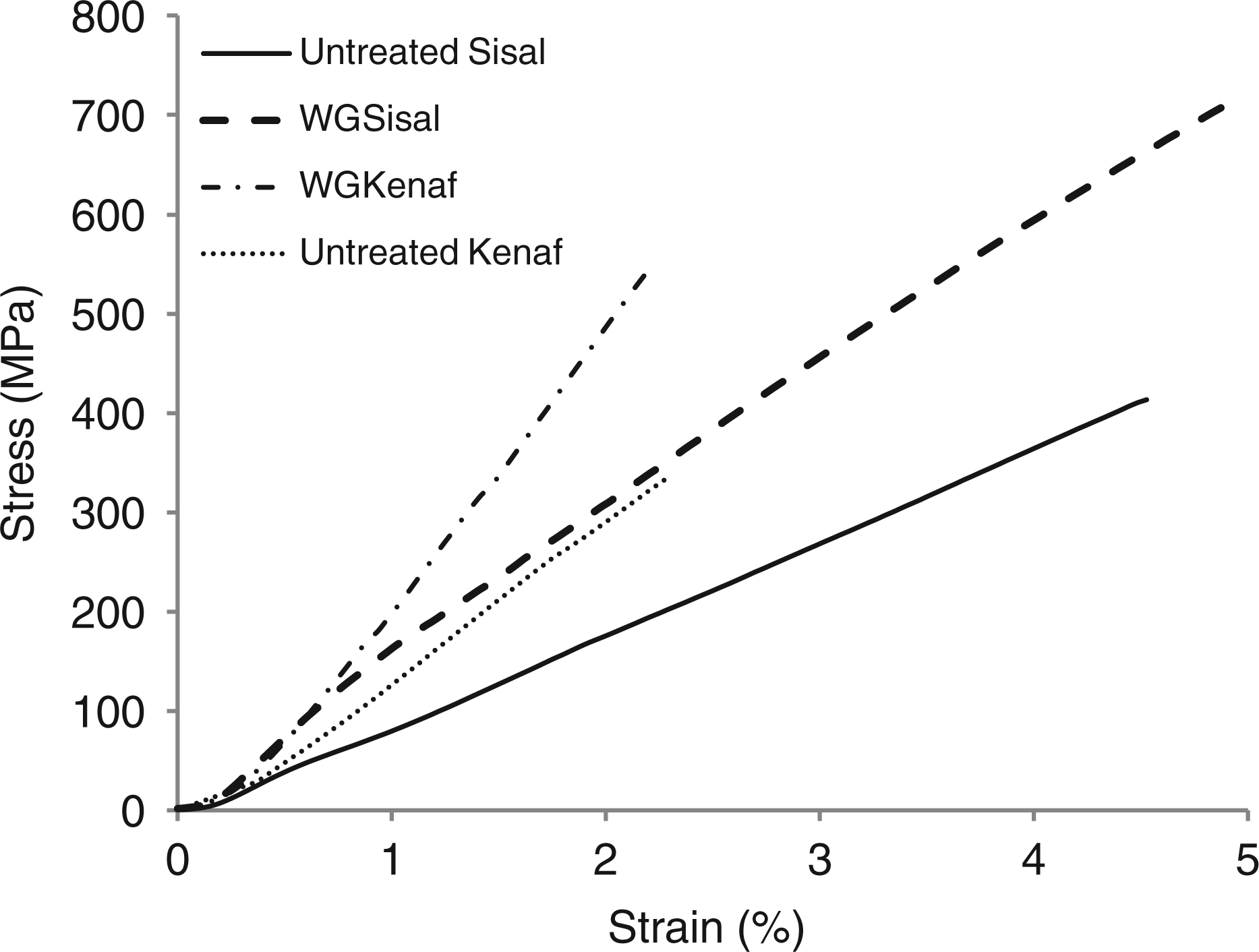
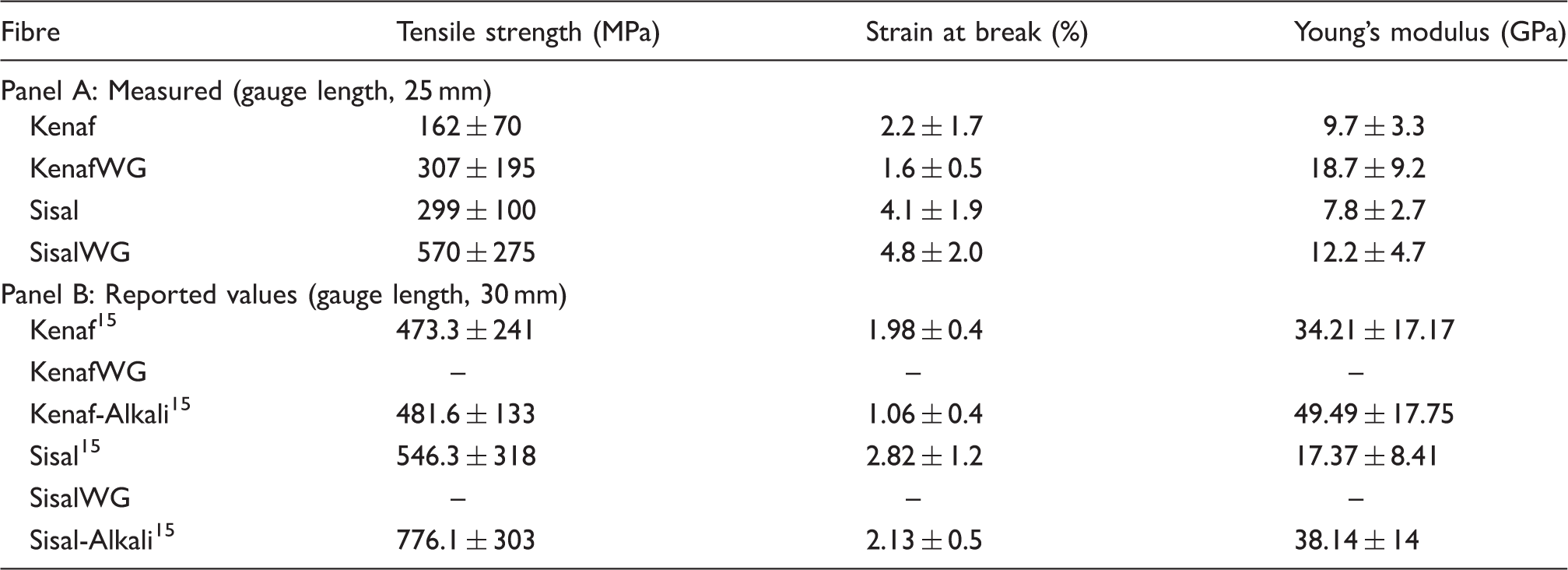
The average tensile strength and Young’s modulus of the fibres are summarised in Table 4. It can be seen that WG treatment significantly increased the tensile strength and the Young’s modulus of the fibres, in relation to those of the untreated fibres. The WG-treated sisal fibre showed an average tensile strength value of 570 MPa when compared to that of the control (299 MPa), while the treated kenaf fibre showed a tensile strength value of 307 MPa when compared to that of the untreated fibre (162 MPa). This is attributed to the improvement of cellulose chain packing after treatment. Reduction in microfibril angle caused by transferring load closer to the fibre axis improves load alignment, thereby increasing molecular orientation that resulted in the rearrangement of the cellulose chains and therefore improves tensile strength. 34
The Young’s moduli of all treated fibres increased significantly when compared with those of untreated fibres, as shown in Table 4 (Panel A). The average Young’s moduli of kenaf and sisal fibres were found to have improved from 9.7 to 18.7 GPa and 7.8 to 12.2 GPa, respectively after WG treatment. The increase in Young’s modulus occurred due to the thick polysilicate coating that was deposited on the surface of the fibre. This deposition caused the removal of hemicelluloses and lignin in the interfibrillar regions of the fibre and the fibrils are capable of rearranging themselves along the direction of tensile deformation. This promotes load distribution, increases molecular orientation and reduces stress concentration in the fibres. 15
The SEM micrographs of fractured untreated and WG-treated fibres are shown in Figure 4 (a--d). It is also clear from these images (b and d) that the surface of the fibres was adequately coated with WG. The micrographs of fractured WG-treated fibres show that the fibre test piece contained more than one single fibre that could influence the tensile strength of the fibre (distribution of fibre splits during tension).
35
Wang et al.
36
reported that the concentration and treatment time of sodium hydroxide and sodium silicate have great influence in the removal of hemicellulose, lignin, pectin and other impurities. It was reported that high alkali concentrations and long treatment time weakens the fibres resulting in cellulose degradation thereby negatively affecting the mechanical properties of fibres.
15
The WG-based thick polysilicate coating was about 40 wt%, which was unusually high.
SEM micrographs of the fractured surfaces of: (a) untreated kenaf, (b) WG-treated kenaf, (c) untreated sisal and (d) WG-treated sisal fibres.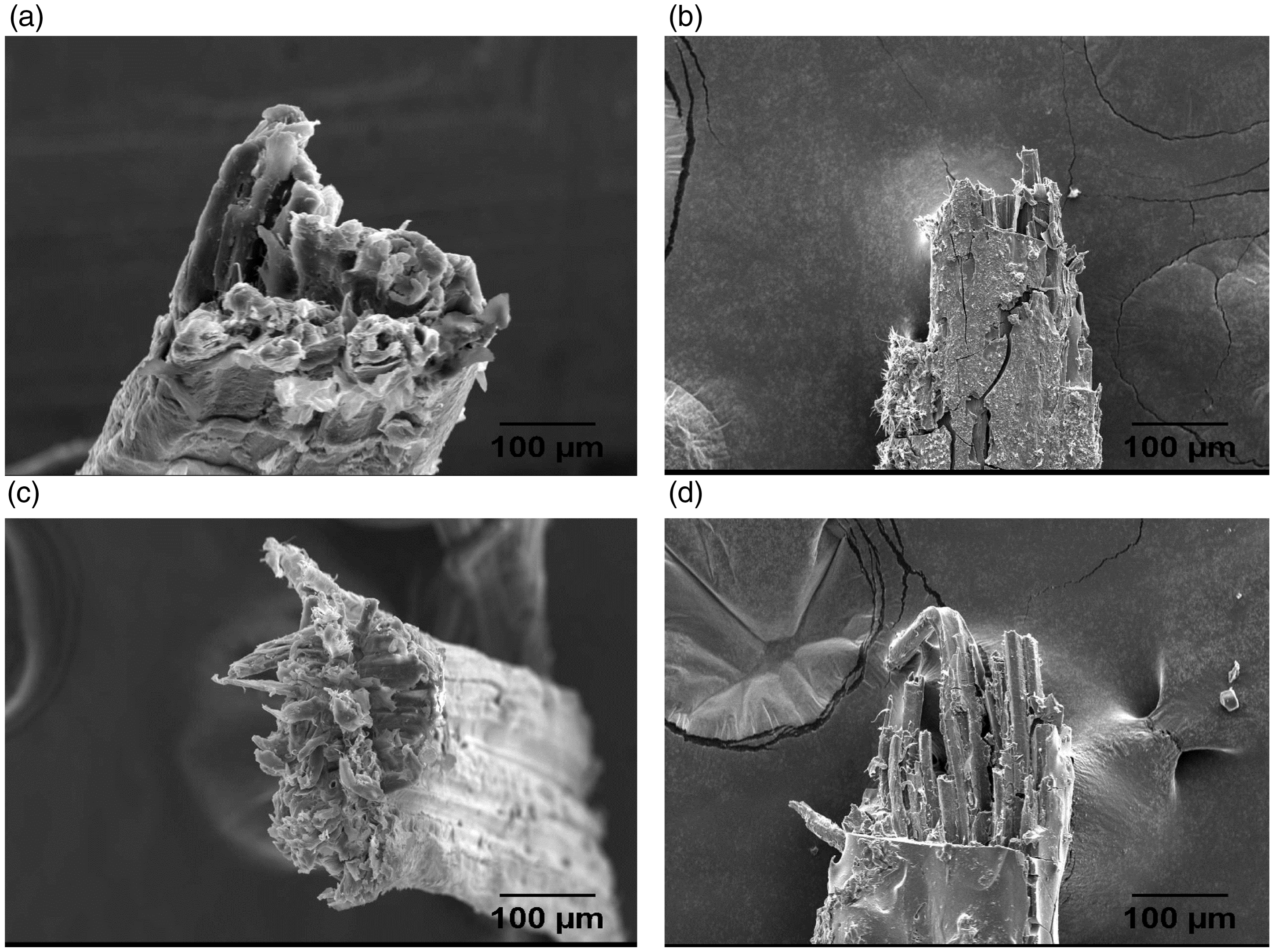
TGA of the fibres
Figures 5 and 6 show the TGA and the corresponding derivative thermographs (DTGA) of untreated and WG-treated sisal and kenaf fibres. It is clear from Figure 5 that an initial weight loss of approximately 4.4% for the untreated fibres and between 2.3% and 2.6% for the WG-treated fibres were observed over a temperature range of 25–200°C. The initial weight loss observed is attributed to the evaporation of water (or the moisture absorbed from the fibres). Thermal decomposition of fibres occurs in two steps that are linked to the chemical composition of fibres, as shown in Table 5. The fibres (kenaf and sisal) decompose at different temperatures because of the differences in hemicellulose, cellulose, lignin and ash contents. The first peak for all the fibres is due to the thermal depolymerisation of hemicelluloses, the cleavage of the glycosidic linkage of cellulose and the degradation of pectins, while the second peak is related to the decomposition of α-cellulose, as reported in Bisanda and Ansell,
37
Albano et al.
38
and Ramiah.
39
In the DTGA curves, the early degradation peaks, at 165°C and 295°C, for the untreated kenaf and sisal fibres, respectively, and 158°C and 164°C for WG-treated kenaf and sisal fibres, respectively are attributed to the decomposition of hemicellulose and a mild degradation of lignin. Hemicellulose decomposes between 200°C and 260°C, while lignin decomposes from about 160°C and continues to decompose until 400°C.
7
TGA thermographs of kenaf and sisal fibres, untreated and treated with WG. DTGA thermographs of kenaf and sisal fibres, untreated and treated with WG. Thermogravimetric analysis of kenaf and sisal fibres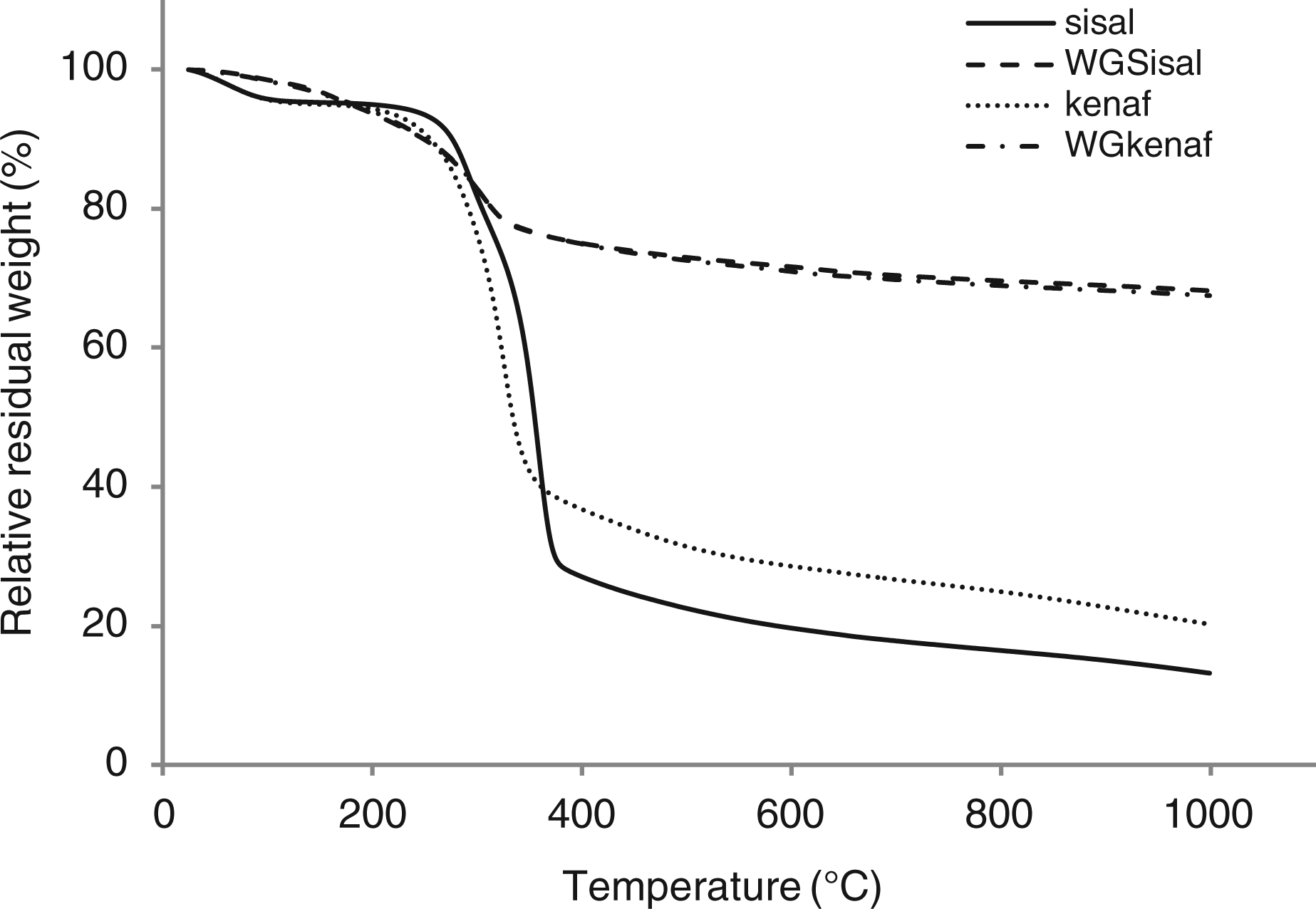

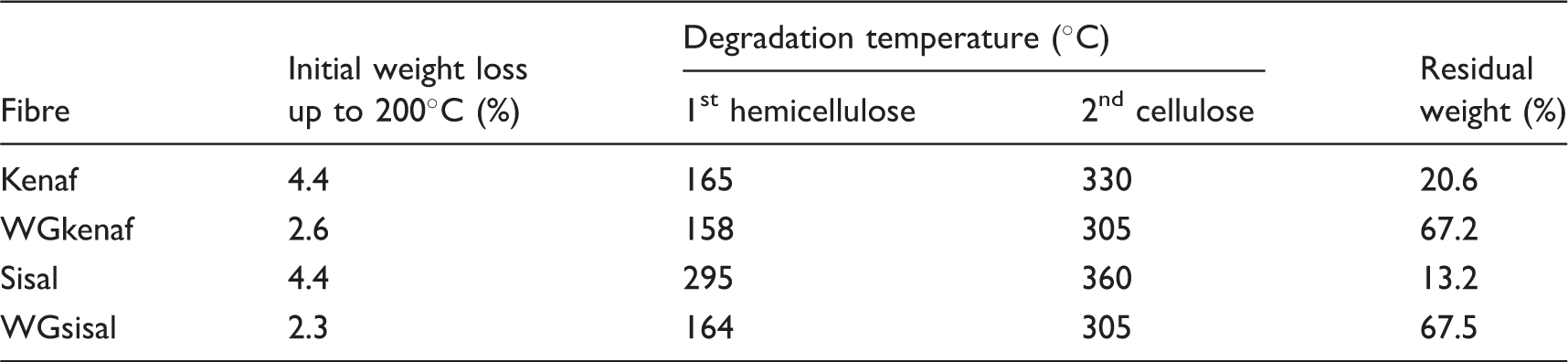
For the WG-treated fibres, the DTGA peaks appeared at lower temperatures, when compared to those of untreated fibres. The small curve observed for WG-treated fibres can be attributable to the removal of hemicelluloses and pectins. Mondragon et al. 40 reported that alkali treatment of flax fibre removed the hemicelluloses and pectins, which degrade at low temperatures. This could be due to the high concentration of WG; resulting in the degradation of hemicellulose and cellulose, as stated previously. 36 The second peak observed at 330°C and 360°C for the untreated kenaf and sisal fibres, respectively, occurred because of the pyrolysis and generation of combustible gases due to the decomposition of cellulose. 41 The thermal stability of WG-treated kenaf and sisal fibres decreased to 305°C. This observation is due to the thermal degradation of cellulose and the weak bonds in lignin that starts to break down at lower temperature, while the cleavage of stronger bonds in the aromatic rings takes place at higher temperature. 42
The main degradation peaks of untreated fibres are in line with the observations of other authors. 17 – 19 Sisal fibre showed better thermal stability, when compared to kenaf fibre. The improved thermal stability of sisal could be due to its lower lignin content, when compared to kenaf fibre (Table 1). Fibres with low lignin content tend to degrade at higher temperatures, but with low oxidation resistance in relation to the aromatic rings in lignin. 43 The residual weight content of untreated fibres is in the range of 13.2–20.6%, while the residual weight content of WG-treated fibres is approximately 67%. The high amount of residue in the WG-treated fibres is attributed to the presence of ash, lignin and thick polysilicate coating that was deposited on the surface of the fibres, which have a slow degradation rate.
Conclusions
It has been shown that the diameters of kenaf and sisal fibres were significantly reduced as a result of the treatment with WG. The SEM micrographs of fibres showed that the WG coating (silica gel) on the surface of the fibres was achieved. The improved failure strain of sisal fibre could have occurred because the axial splitting was promoted and the transverse cracking was delayed by the WG treatment. WG-treated samples displayed significant improvement in the tensile strength and Young’s modulus of kenaf and sisal fibres, in relation to those of the untreated fibres. The TGA analysis results showed that WG treatment strongly affected the chemical composition (i.e. reduced the cellulose content) of the sisal which was, however, not studied in details. The reduced thermal resistance of the WG-treated sisal is even more interesting when considering that NaOH treatment (major constituent of WG) of sisal caused an opposite effect. However, WG treatment markedly increased the residue content.
Footnotes
Funding
This research received financial grant from the South African National Foundation (NRF).
Acknowledgement
The authors acknowledge the technical support received from Tshwane University of Technology.