







Abstract
Gomuti fibre is obtained from Arenga pinnata tree and is known with other names such as sugar-palm fibre, gomutu, ijuk, serat aren and black fibre. This article presents a review on the physical, mechanical, chemical and thermal properties of gomuti fibre in comparison with other common natural fibres. Furthermore, this article reviews the mechanical properties of gomuti fibre composites with thermoset polymer resins based on the existing published literature. It is observable that gomuti fibre has a close similarity to coir fibre in its physical and mechanical properties than the other natural fibres. It has the characteristics of lower density, strength and modulus, but higher elongation. The composites with gomuti fibre also exhibit properties similar to coir fibre composites.
Introduction
Composites incorporating natural fibres are becoming an alternative engineering material with more attention shown by the significant number of research studies in the field. Although combining natural fibres and another material is not a new invention, the re-emerging interest in this type of composite has just started in the past few decades. Early usage of natural fibre includes textile, roof, bricks and insulating material for walls. Modern usage of natural fibre composites stretches from the applications in automotive interior and textile industries to civil infrastructure.
Composites are developed from two or more components to obtain a material with required properties and performance; it is therefore essential to evaluate the characteristics of the composite in relation to the characteristics of the constituents. The potentiality of natural fibres as composite materials is justified when their properties and behaviour can be carefully examined and understood.
Unlike their synthetic counterparts, the incorporation of natural fibres often resulted in a large variability of composite properties which are influenced by natural conditions such as temperature, humidity, moisture and climate, harvesting process and manufacturing process. However, the exploitation of natural fibres for use in composites offers advantages in term of friendly processing, reduced risk of environmental damage due to fibre production and fibre decomposable issues, their cost competitiveness and economical assistance to rural communities in developing countries. Friendly processing means that compared to the processing or handling of synthetic fibres, there is minimal risk of skin and respiratory irritation when handling natural fibres.
Many types of natural fibres have been developed into composites. Examples are jute, kenaf, hemp, cotton, coir, banana leaf, sisal, pineapple leaf and sugar-cane bagasse. These fibres can be grouped into bast fibres, leaf fibres, seed fibres, core fibres, grass and reed and other fibres. 1 The use of these natural fibres in composites is particularly beneficial when they are developed in their native countries where there is continuous and adequate supply.
Among many types of natural fibres available in Indonesia, gomuti fibre is one of the versatile and durable fibres. It has been used traditionally by Indonesian people for various applications such as roof, broom, water filter and ship rope. Overtime, however, the use of gomuti fibre is decreasing due to the introduction of many other materials such as metal roofing, plastic roofing, synthetic or plastic ropes and brooms. Production and utilisation of gomuti, which actually supported the economy of local people, seem to diminish and be replaced by other materials. Gomuti may have failed to compete with other products due to aesthetic and less convenience of usage rather than performance reason. Therefore, a study into the characteristics of gomuti fibre will provide important information on its usefulness and viability as a natural fibre composite material and justify its further potentials.
This article aims to provide a review on the characteristics of gomuti fibre and its composites with thermoset resins, based on the existing information and published literature.
Characteristics of gomuti fibre
General
Gomuti is the black fibre that covers the trunk and the pinnate-leaf bases of Arenga pinnata or Arenga saccharifera tree, as illustrated in Figure 1. Other names associated with gomuti are sugar-palm fibre, A. pinnata fibre, ijuk, injuk, gomutu, gomutus and black fibre.
Arenga pinnata is one of main sugar-yielding pa l m2 and is native to South-East Asia, India, Sri Lanka and Papua New Guinea.2,3 The trees can be found in most of the Indonesian islands and is particularly known for its product of palm sugar,2,4 vinegar, a distilled alcoholic drink and its sweet sap. Generally, in Indonesia, gomuti can be purchased for a relatively low price, approximately less than US$1/kg. Another positive aspect of using gomuti fibres is that when obtaining the fibres, there is no need to cut or harvest the whole tree, hence preserve the plantation of A. pinnata.
The original form of gomuti fibre is as random, intermingled long fibres, as shown in Figure 2. The fibre can be manually spun to make rope or brushed to make it unidirectional. For roofing, the common practice is to use gomuti in its original fibre orientation. Gomuti roof sheets is made by stacking, aligning and trimming layers of gomuti into a rectangular shape with dimensions of 1000–1500 × 400–500 mm2 or according to consumer specifications. The layers in rectangular shape are then fixed into a bamboo clamp. Several of this rectangular gomuti roof sheets are then laid onto timber or bamboo purlins until the whole house or building is covered.
Gomuti is a durable natural fibre as proven by its usage for traditional roofing, water filter, ship rope, broom and reinforcement to traditional cement-mortar walls. It is one of the cheapest options for traditional roofing which can sustain tropical climate for a number of years. Furthermore, the fibre also has been used in road construction, as base of sport course and as shelters for fish breeding. 2 The fibre is also durable against seawater. 2
Observing the features of gomuti fibre, such as physical characteristics, single-fibre tensile properties, chemical composition and thermal stability, are therefore important in assisting the development of gomuti fibre composites and evaluating their behaviour.
Physical characteristics
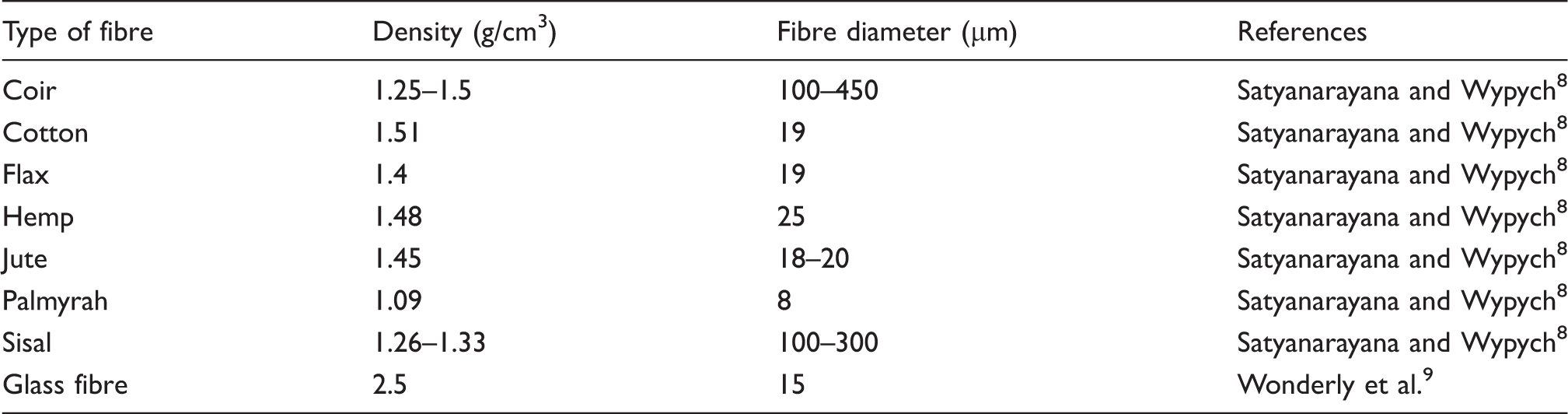
Physically, gomuti fibres are coarse and black coloured with diameter ranging between 50 and 1000 µm. Different studies reported different values of diameter range of gomuti fibre. Suriani et al. 5 informed the range as 94–370 µm and Bachtiar et al. 6 as 99–311 µm, while Razak and Ferdiansyah 7 informed 300–500 µm.
Table 1 presents a compilation of the diameter and density of several natural fibres based on the information in Satyanarayana and Wypych, 8 in comparison with the diameter and density of glass fibre. 9 As observed from the table, the diameter range of gomuti is similar to coir and sisal, which is about 10–20 times of cotton, flax, hemp, palmyrah and glass fibre.
Even though coir and sisal have larger diameters, especially when compared to glass fibre, their densities are lower (Table 1). It means that they typically have lower weight. Gomuti exhibits similar characteristics, having larger diameter with lower density. Bachtiar et al. 6 informed the density of gomuti (sugar-palm fibre) as 1.29 g/cm 3 , while Razak and Ferdiansyah 7 as 1.05 g/cm 3 .
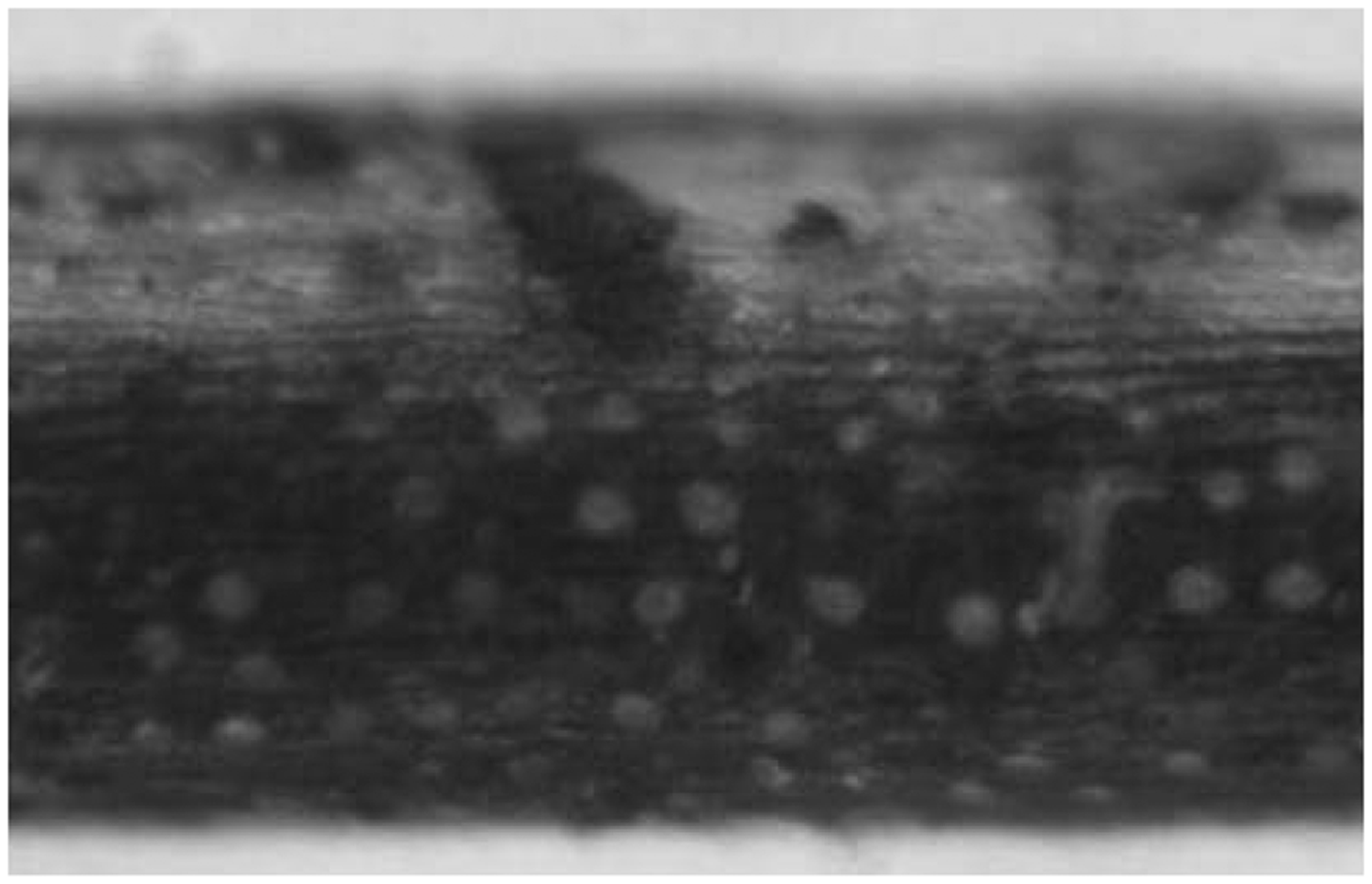
Further similarity of gomuti fibre to coir is based on the fibre surface. A picture of gomuti under optical microscope (Figure 3) shows parallel lines along the length of the fibre, and on the fibre surface, there are pore-like spots that are present in almost regular spaces, which is quite similar to the surface of coir. In the case of coir, the spots are referred to as tyloses which cover the pits on the cell walls
10
and the parallel lines may be referred to as microfibrils. A picture of scanning electron microscopy of coconut fibre after
Arenga pinnata trees (a) and a sketch of A. pinnata tree (b).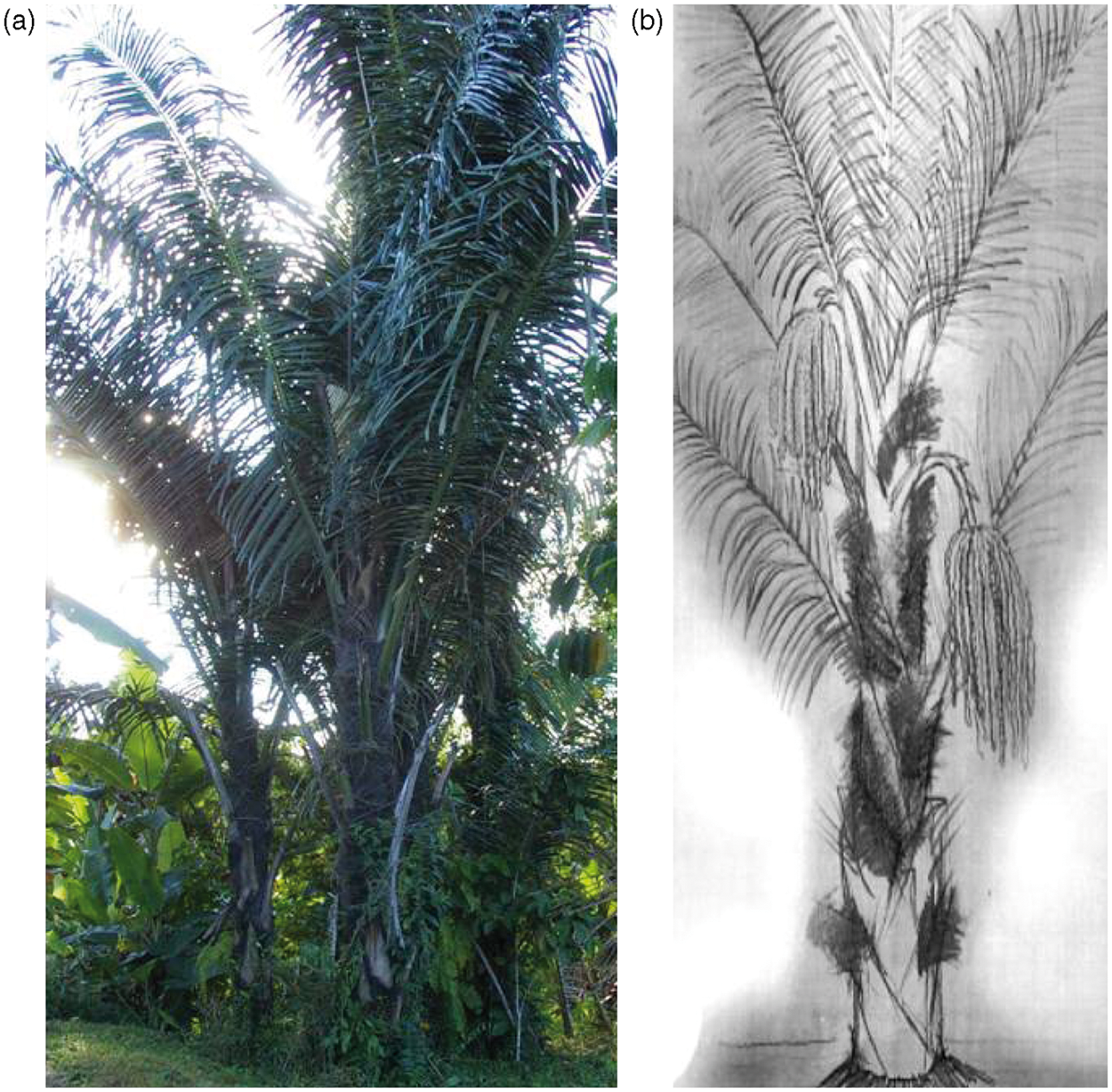
Surface morphology of natural fibre affects the fibre–matrix adhesion in a composite. If the surface of the fibre is waxy, the resin is difficult to penetrate and grip the fibre. This occurrence can be described as the fibre and the matrix do not bond properly. Low fibre–matrix adhesion leads to poor performance of a composite.
Properties of single fibre
Strength, modulus of elasticity and elongation of single fibre can be obtained from single-fibre tensile test (SFTT). The properties of single fibre are important information in evaluating the fibre’s behaviour as an individual and in a composite.
Various methods can be employed to obtain the single-fibre properties, two of which are ASTM 3822–0712 and ASTM 3379–75. 13 Principally, the technique is to elongate the single fibre under tensile load until it fails or breaks.
Figure 4 shows the schematic figure of the mounting tab for SFTT. A piece of thick paper is cut according to the required dimension, one for each single fibre to be
Gomuti fibre: original form. Density and diameter of natural fibres compared to glass fibre Surface morphology of gomuti fibre under optical microscope.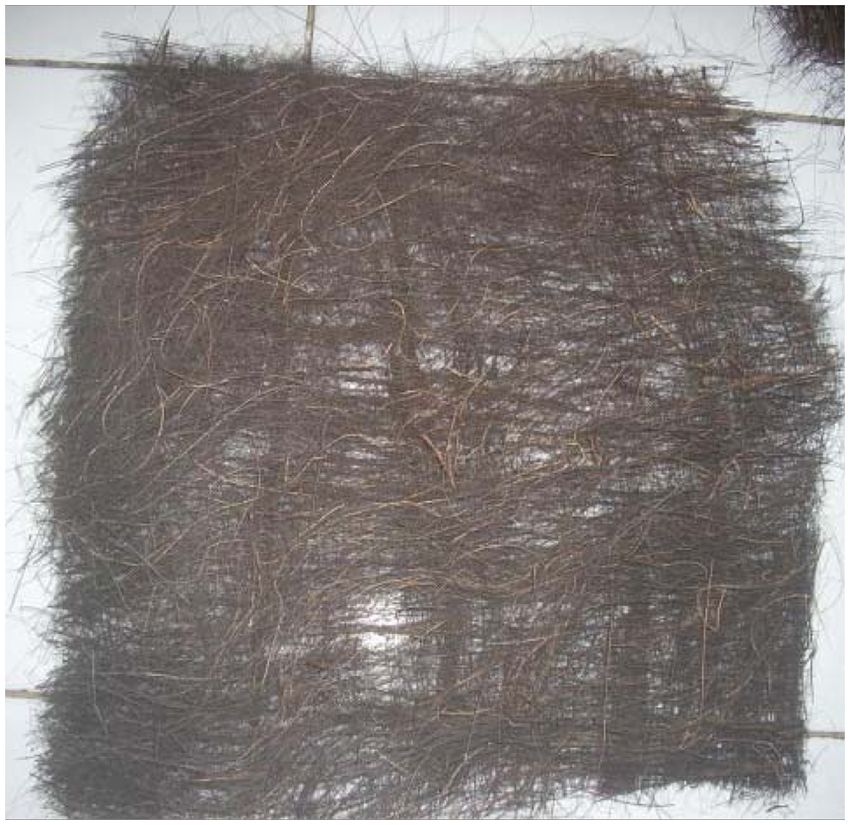
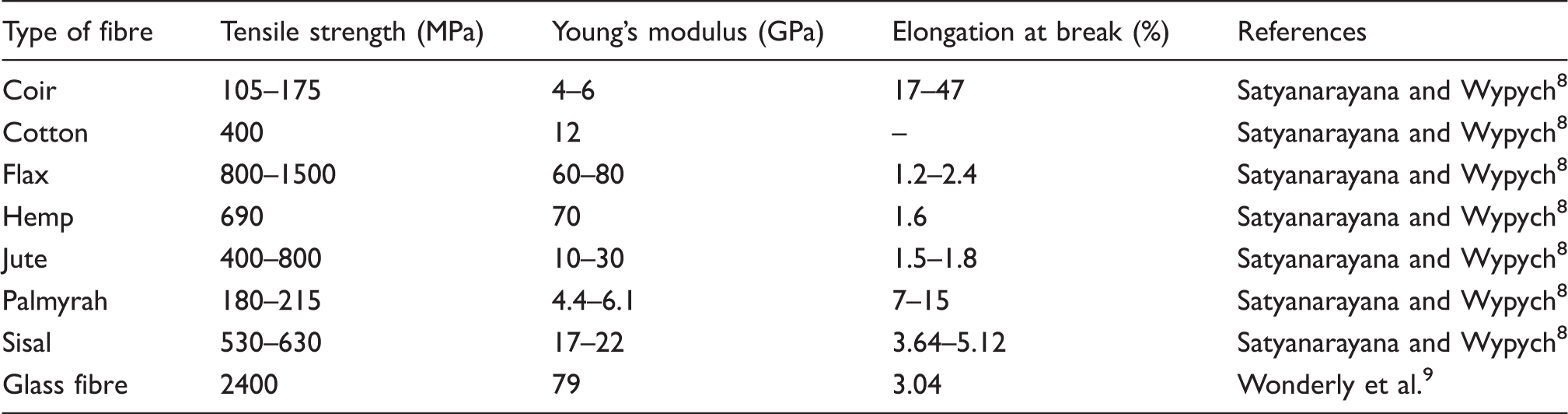
Tensile strength of single natural fibres is in the range 100–1500 MPa, as presented in Table 2. In contrast, the typical strength of glass fibre is 2400 MPa. 9 Hence, the strength of natural fibres is approximately 4–60% of the strength of a single glass fibre. Moreover, the modulus of natural fibres is approximately 5–38% of the modulus of the glass fibre, except in the case of flax and hemp. Elongation at break of several fibres such as flax, hemp, jute and sisal is close to the elongation of glass fibre (Table 2). Coir and palmyrah fibres, however, have a distinctive difference because the values of elongation are higher.
Various results of the properties of single gomuti fibre have been reported in several studies. Bachtiar et al.
6
reported that the average stress at break of a single fibre was 190.29 MPa while Ishak et al.
14
reported the value to be between 201 and 292 MPa (for fibres taken from 7, 9, 11, 13 and 15 m of the tree) and less than 150 MPa (for fibres taken from 1,
Schematic figure of a mounting tab for SFTT.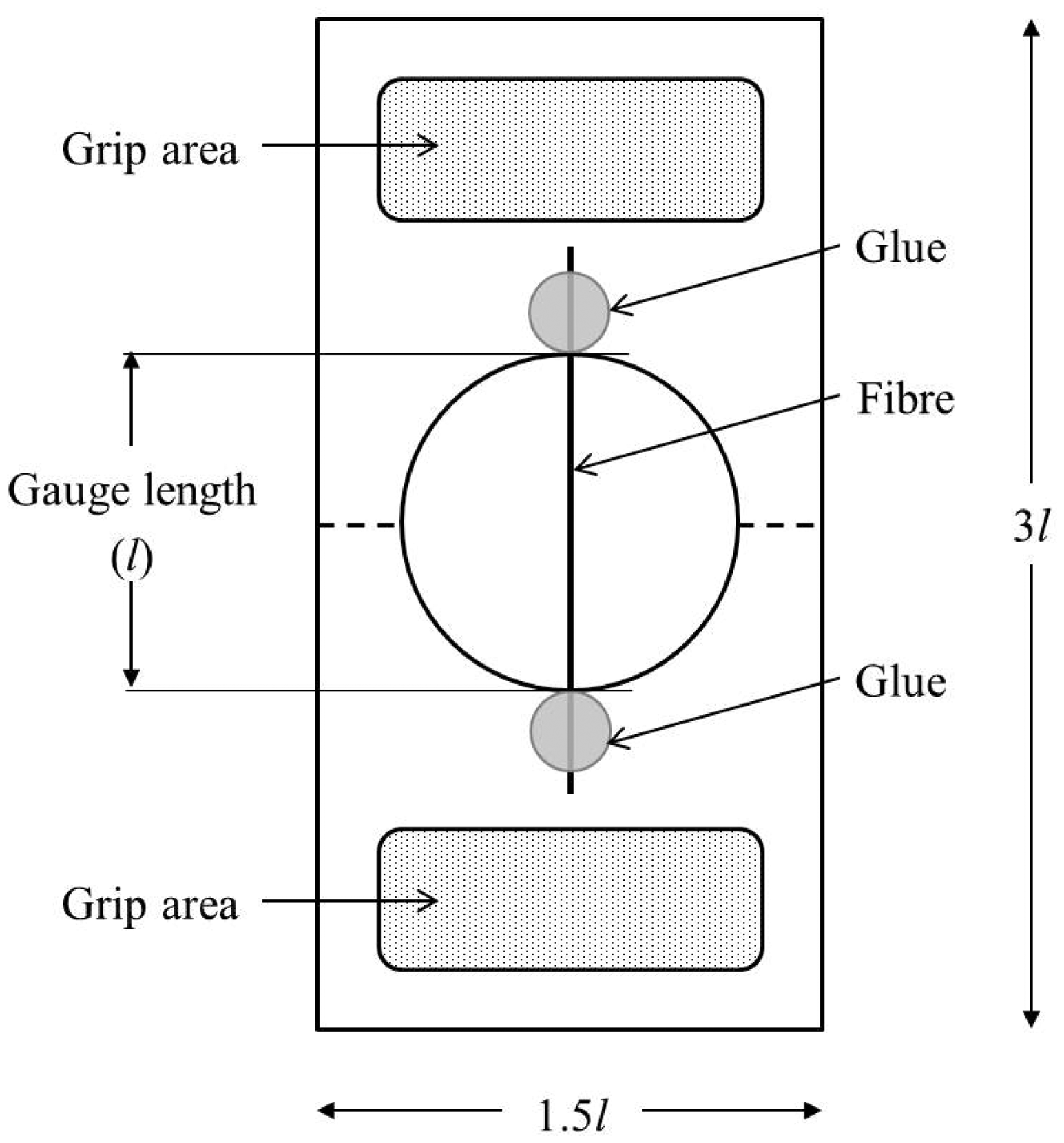
Variation of properties even from the same type of fibre is common in the case of natural fibre. Many factors such as environmental conditions, temperature, humidity, climate, cultivation, harvesting, fibre separation process, fibre’s chemical compositions and moisture content contribute to the variation.
Single-fibre properties of natural fibres compared to glass fibre
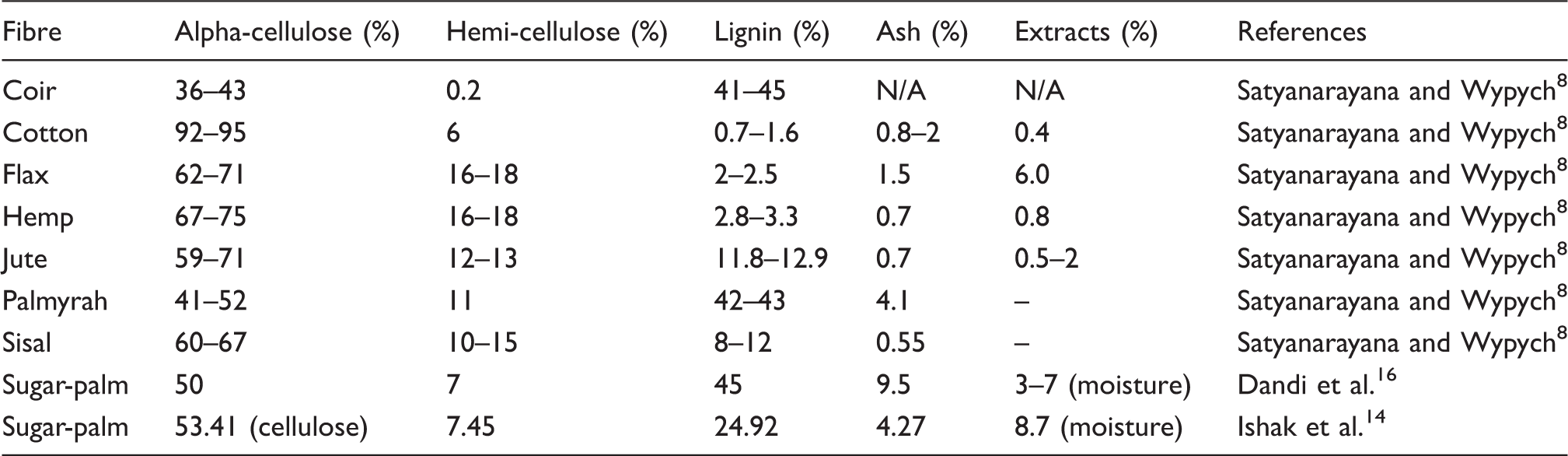
Chemical compositions of various natural fibres compared to gomuti fibre
Chemical composition and thermal stability
Chemical composition of natural fibres reveals the amount of cellulose, lignin, ash and other naturally occurring chemicals in the fibres. Trindade et al. 15 outlined the process for determining the chemical composition of natural fibres which include determination of klason lignin content by TAPPI T13M-54, holocellulose content by TAPPI T19m-54 and determination of alpha-cellulose content.
Chemical composition of various types of natural fibres is found in many papers and there is a broad list found in Satyanarayana and Wypych 8 and Rowell. 1 Table 3 is a compilation of the chemical composition of several natural fibres 8 in comparison with that of gomuti fibre.14,16 It can be observed that gomuti fibre has an alpha-cellulose that is similar to palmyrah and lignin that is similar to both coir and palmyrah. Fibres with higher amount of lignin generally exhibit higher elongation characteristics and their composites tend to have lower tensile strength and modulus compared to those with high cellulose content.
The main chemical components (hemi-cellulose, alpha-cellulose and lignin) present in natural fibre degrade at a particular temperature. The profile of the fibre’s thermal degradation can be measured as weight changes vs temperature using thermogravimetric analysis (TGA) technique. During TGA scans of the fibre, the temperature range where there is no significant weight loss of the fibre is the thermal range where the fibre is considered to be thermally stable. The corresponding thermograph (change in weight vs temperature) is recorded. The TGA requires placing a small amount of finely chopped fibres (approximately 10–50 mg) into the TGA furnace where the fibres are heated to a maximum temperature of 600°C or more.
In the case of jute fibre,
17
first weight change which indicates the loss of moisture occurred before the temperature reaches 100°C. The second weight change at 297°C was referred to the degradation of hemi-cellulose and the third weight change at 362.2°C to the degradation of alpha-cellulose.
17
Degradation of lignin happens slowly during the TGA process,
18
after which the remaining weight is considered as the percentage of ash or residue.
TGA curve of untreated gomuti fibre.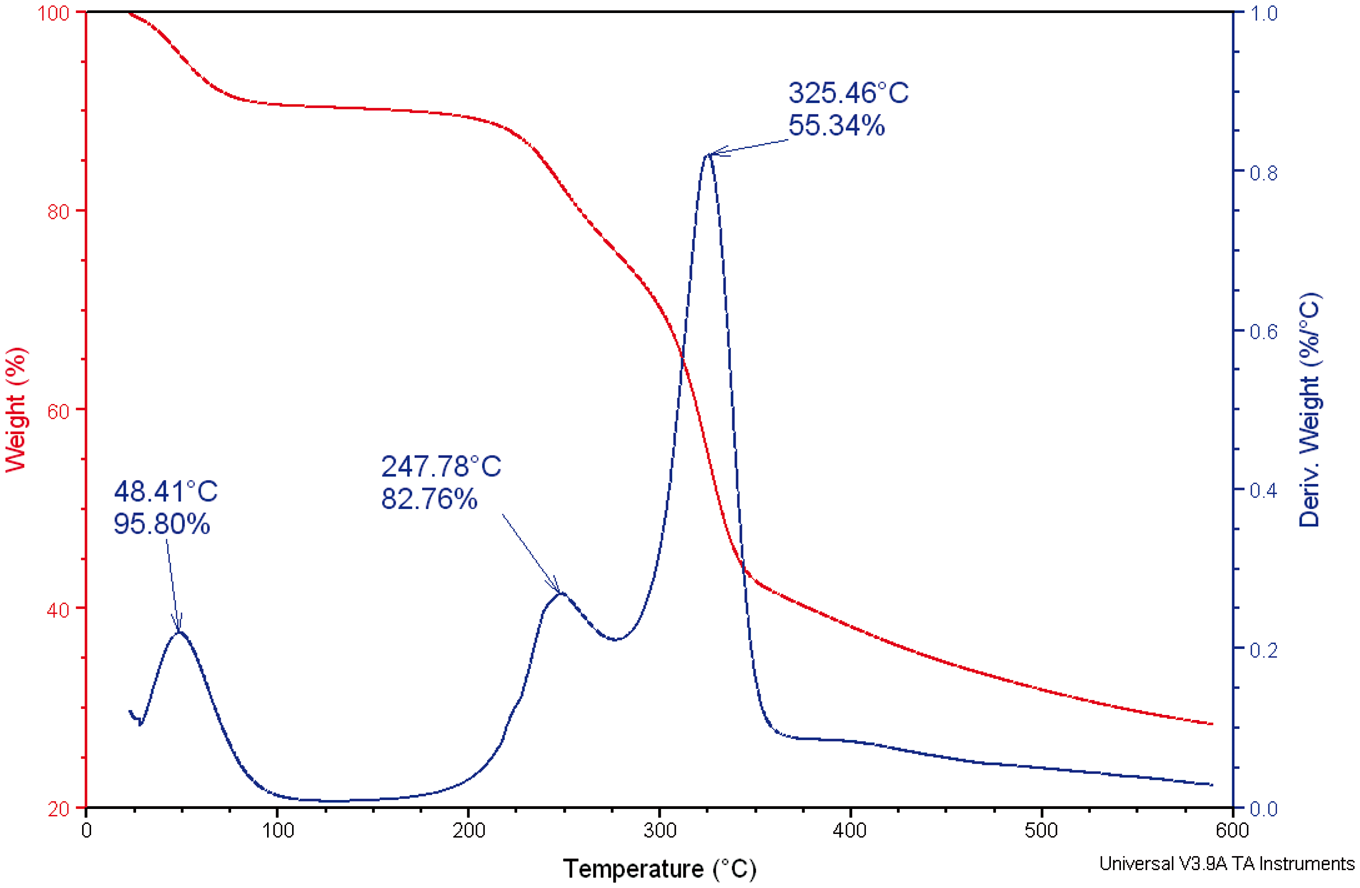
For typical natural fibres, at a temperature between 100°C and 200°C, the fibres can be considered as thermally stable. After 200°C, a decline in the fibre’s thermal stability can be observed with significant reduction in weight. Figure 5 shows a TGA curve of untreated gomuti fibre. First weight change occurred at temperature below 100°C with the weight loss up to around 10%. Second weight change occurred at around 247°C and the third weight change at around 325°C. As with other natural fibres, gomuti fibre can be considered to be thermally stable at a temperature around 100–200°C.
Results of TGA may vary according to the type of natural fibres and also the condition of the fibres itself. It is reasonable to expect different results even from the same type of natural fibre. Any treatment to the fibre will also affect the TGA results.
Characteristics of gomuti fibre composites with thermoset resins
General
On its own, gomuti fibre can be considered as resilient and durable fibre because it has been used as a roofing material which sustains tropical climate and it is known as a seawater-resistant fibre. 2 However, its potentiality and application are limited by its original form and physical appearance. As with many other natural fibres, there is an opportunity to improve the application and usage of gomuti fibre by developing natural fibre composites with polymer resins. The polymer resin acts as a matrix material to provide shape and binds the fibre filaments so that together they can carry the design load. Examples of natural fibre composites with polymer resins are coir/polyester, 10 jute/vinylester, 19 cotton/epoxy, 20 sisal/epoxy, 21 flax/phenolic, 22 hemp/polypropylene, 23 kenaf/poly-lactic-acid, 24 and hemp/cashew-nut-shell-liquid. 25 Choosing a matrix material can be largely influenced by the type of fibres used, the intended applications, fabrication method and cost consideration.
Research into the feasibility of gomuti fibre for natural fibre composites have been reported in several literature. Thermoset resin, particularly epoxy, has been used in most of the published literature on gomuti fibre composites.5,26–32 The use of epoxy may have been favourable due to its excellent properties and good bonding features. Therefore, the following overview on the characteristics of gomuti fibre composites will be dominated by the composites with epoxy resin. A few publications were found on the mechanical properties of gomuti fibre composites with polyester resin.33,34 However, the studies are limited to 10% 33 and 18% 34 fibre fraction by weight of untreated fibre. Moreover, publications on gomuti/vinylester or gomuti/phenolics are difficult to find. Therefore, there is a need for more comprehensive studies on gomuti fibre thermoset composites with polyester, vinylester and phenolics matrices. These gaps are valuable benchmarks for further investigations into gomuti fibre composites with thermoset resins.
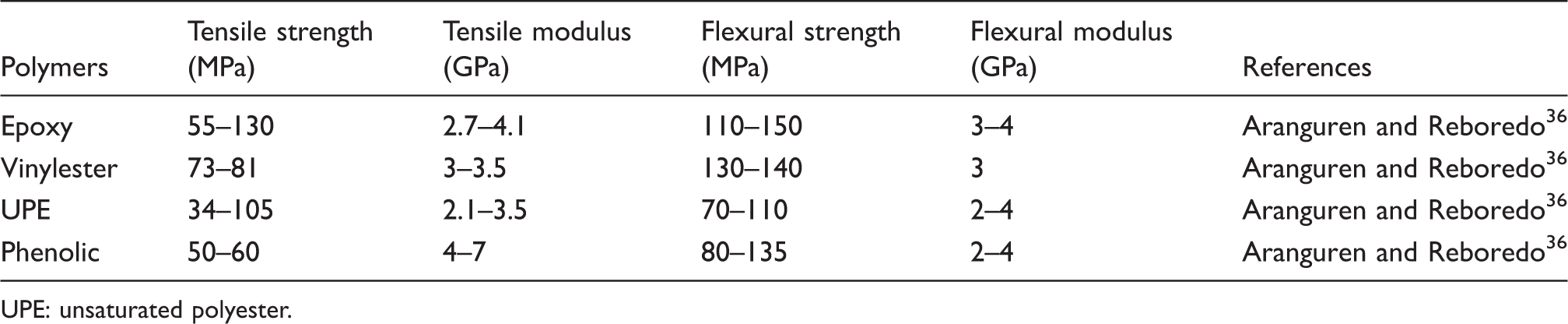
Typical tensile and flexural properties of some common thermoset polymers
UPE: unsaturated polyester.
Choice of matrix
Choice of matrix can make a significant difference in terms of performance, cost and compatibility with the fibre, especially in the case of natural fibre. A suitable type of matrix will also assist in the fabrication process. Two broad categories of polymer resins are thermosets and thermoplastics.
Polymer thermoset resin is the type of polymer that will harden when cured and, unlike thermoplastic resins, do not liquefy when heated above their curing temperature. Therefore, thermosets cannot be remoulded. Examples are unsaturated polyester (UPE, a thermoset form of polyester), epoxy, vinylester and phenolics.
UPE offers the advantages of lower price, acceptable properties and easy processing despite its poor temperature and UV-light tolerance. 35 Epoxy is suitable when a combination of economical value and excellent properties is sought. It is more expensive but provides advantages such as low viscosity, low shrinkage and good bonding. 35 Properties of vinylester are in between polyester and epoxy. It is produced by the reaction of an epoxy with an unsaturated acid and was developed to have fast, simple crosslinking of UPE with mechanical and thermal properties of epoxies. 35 Phenolics are resins made of formaldehyde. Except their brittle characteristic, they provide excellent fire resistance, high service temperatures, good electrical properties, high tensile modulus, excellent chemical resistance and low cost. 36 Table 4 presents the typical properties of common thermoset polymers.
Composite fabrication and fibre treatment
Fabrication process of natural fibre composites can generally follow the methods used for synthetic fibre composites such as hand lay-up, vacuum-assisted processes, compression moulding and pultrusion. Hand
Voids in gomuti/vinylester specimen manufactured by vacuum infusion.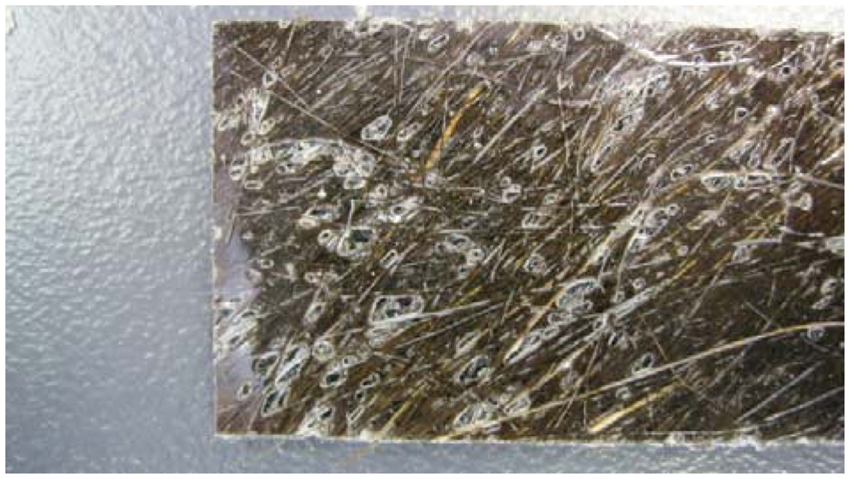
Fabricating gomuti fibre composites can be done with hand lay-up as well as other methods. Existing published studies have attempted hand lay-up method, 26–29,33 compression moulding 37 and hot press moulding. 30 However, it was acknowledged in Leman et al. 30 that producing gomuti composites to the expected surface morphology was unsuccessful when using hot press moulding or aluminium mould because many voids were observed in the resultant composites. Similarly, a trial fabrication using vacuum infusion process by the author has produced a panel with poor surface because of voids (Figure 6). However, higher fibre content (up to 50 %wt) was achievable, which means that less resin was used and therefore lighter and thinner panel can be produced.
Void content affects the quality and strength of the composites; 38 therefore, it is necessary to eliminate as much voids as possible when fabricating a composite test panel. However, complete removal of voids is not an easy task, not only with vacuum infusion but with hand lamination as well. In vacuum infusion process, it is recommended to dry the fibres and degas the resin. 39 In hand lamination, because the density of gomuti is about the same as the resins, when the resin is applied to the fibre, the fibre tends to drift up from the resin. Therefore, one possible technique is to put weight or pressure on top of the uncured panel. To remove the air voids, careful attention is required in wetting the fibre with roller or squeeze. Leman et al. 30 advised that the best method employed in fabricating gomuti fibre composite with hand lay-up process was by using the heat-resistant transparent plastic or Mylar.
The extent of wetting during manufacturing of composite affects the adhesion between the fibre and the matrix. 39 Many studies in natural fibre composites have attempted to improve the bonding characteristics between the fibre and the matrix by means of treatments.
Different treatments are found in literature for natural fibres such as alkali treatment,17,40,41 hot water treatment 42 and silane treatment. 43 The correct amount and duration of alkali treatment assisted in the removal of lignin, pectin and hemi-celluloses and therefore improvement in the fibre’s properties. 40 However, an incorrect treatment may degrade the fibre. For example, over-treatment with alkali will reduce fibre properties. 40 Effects of alkaline, freshwater and seawater treatments to gomuti–epoxy interface and to the mechanical properties of gomuti fibre composites are discussed in several papers.26–29
There is no exact matching of treatments for every natural fibre. Treatment effects are mostly studied experimentally. Experimental trials have so far been beneficial in determining the optimum treatment time, type and concentration.
Tensile properties
Tensile properties such as tensile strength and modulus are some of the basic information of mechanical properties that allows the evaluation of strength and stiffness of a material. Based on the published literature, Table 5 presents the compilation of tensile properties of gomuti (sugar-palm)/thermoset composites. To date, published studies on gomuti/thermoset composites have been mainly on the composites with epoxy and a few studies with polyester.
For gomuti/epoxy composites, it can be observed from Table 5 that regardless of the weight fraction, treatment and fibre forms, the tensile strength is between 13 and 52 MPa and the moduli between 1 and 4 GPa.5,26,29,31 The values are comparable to 30%-chopped-coir/epoxy composite which has a tensile strength of 13.05 MPa and modulus of 2.06 GPa. 44 Combination of gomuti with polyester offered lower strength (approximately 9–25 MPa) compared to gomuti with epoxy.
Variations in fibre forms or fibre orientation, as can be examined from Table 5, show that composites with chopped fibres have generally lower tensile strength. In the case of gomuti/epoxy, composites with woven fibres achieved highest average tensile strength. For gomuti/polyester, composites with unidirectional fibre achieved the highest average tensile strength. However, there is limited study on composites made of unidirectional and woven gomuti. For woven fibre, there is also limited information on the details of the weave pattern. Furthermore, Sastra et al. 31 informed that the availability of woven form of gomuti is limited because it needs to be pre-ordered.
Chopped fibre in a composite gives lower strength but it is also simple in processing. Chopped gomuti/polyester composites obtained an average tensile strength of 14.52 MPa. 33 Meanwhile, as presented in Table 5, the value of tensile strength of chopped gomuti/epoxy is approximately 30–34 MPa. There is no significant variation of tensile strength for chopped gomuti/epoxy even with weight fraction differences, except one study that reported 13.78 MPa. 29 Moreover, for gomuti/epoxy composites, distinction between the results of chopped random and long random fibre was insignificant when the composites contain 20% fibre by weight.
Based on the tensile properties summarised in Table 5, it can be inferred that gomuti fibre functioned as tensile reinforcement in epoxy composites with 10% long random and 10% woven fibres. The tensile strength of these composites is higher than the neat epoxy resin reported in Sastra et al. 31 Gomuti/polyester composites with 10% fibre by weight as reported in Ticoalu et al. 33 obtained lower tensile strength, approximately 8–70% of the strength of the typical neat polyester resin. 36 Similarly, Misri et al. 34 reported that the strength of gomuti/polyester with 18% fibre fraction by weight was 19.21 MPa. When strength of the composites is lower than that of the neat resin, several explanations are likely, such as ineffective bonding between fibre and matrix and/or the presence of voids.
Summary of tensile properties of gomuti (sugar-palm fibre)/thermoset composites from various literature
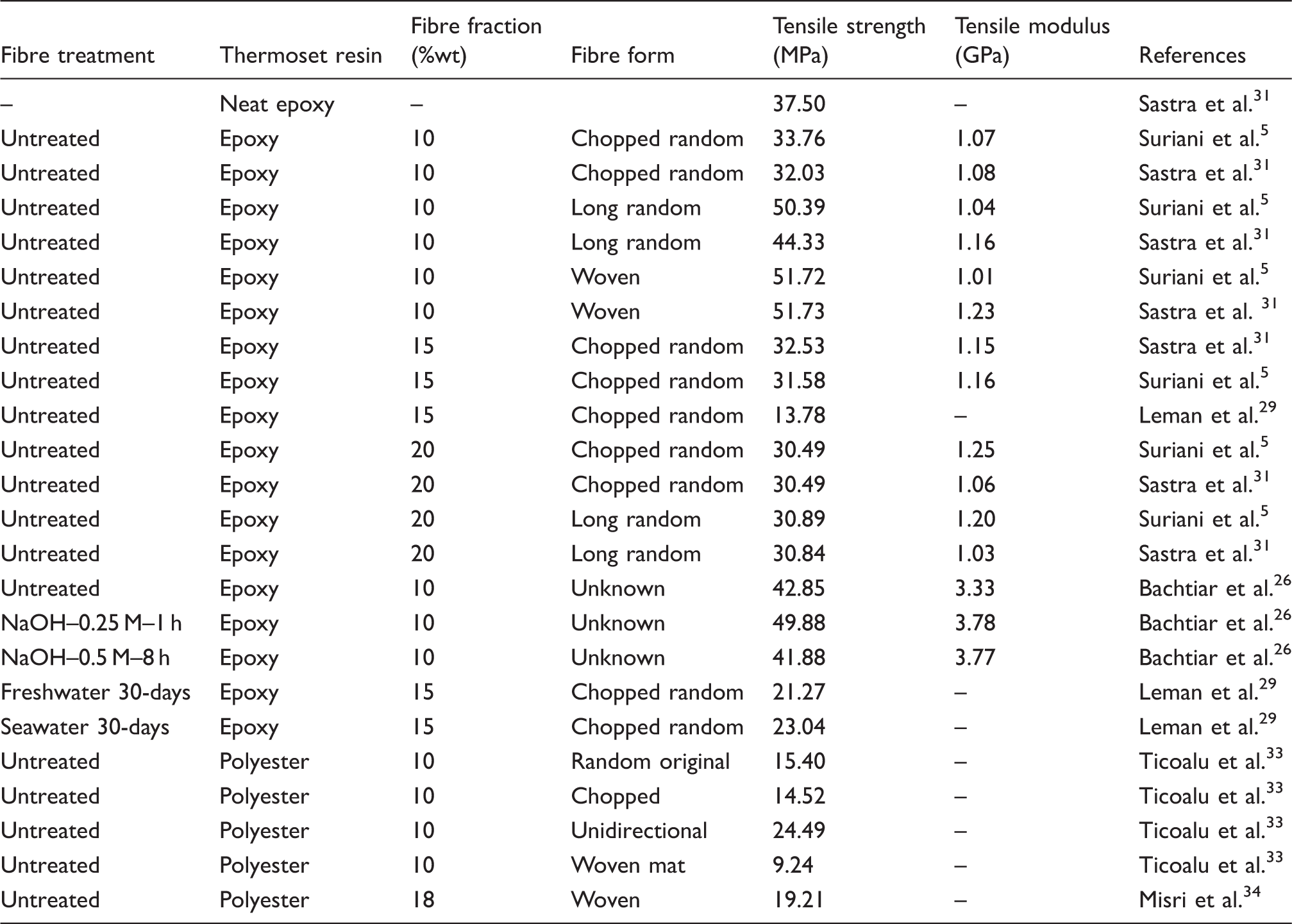
Comparing the values of gomuti/epoxy composites presented in Table 5 to the reported neat epoxy in Sastra et al., 31 it can be inferred that the best composites of gomuti fibre can be manufactured when long random or woven fibre is used with 10% fibre weight. Increasing the amount of fibre to 15% and 20% by weight has decreased the tensile strength.
Based on the compilation in Table 5, there is a need for a thorough research which evaluates the properties consistently with a controlled experimental plan including testing of the properties of neat resin.
Prediction of tensile strength and modulus
Strength and modulus of composites can be predicted by analytical models. Several models have been established for composites made of synthetic fibres. Efforts to predict the strength and modulus of natural fibre composites have led to the modification of the models. Facca et al. 45 have evaluated various models such as rule of mixtures (ROM), inverse ROM, Halpin–Tsai equation, Nairn’s generalised shear-lag analysis and Mendels et al.’s models, to predict the elastic modulus of hemp fibre, rice hulls and oak wood flour short-fibres in high-density polyethylene, with consideration on the changes in moisture content and fibres’ density.
ROM is a prediction model used for unidirectional continuous-fibre composites
46
which is commonly used due to its simplicity. The following formula is the general ROM formula for the determination of elastic modulus

In the practice of fabricating natural fibre composites, fibre fraction is usually determined by weight fraction. The fibre and matrix are weighed and determined first before fabrication. Therefore, modulus of the composite can be calculated by substituting the volume of
Stress–strain curve of single gomuti fibre and neat resin.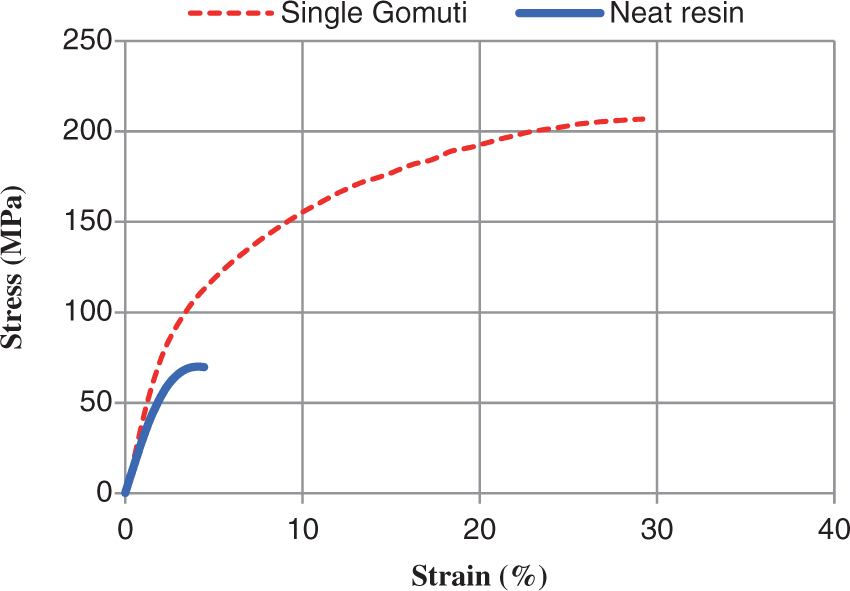

For strength prediction, following is the ROM model to calculate the stress of the composite under uniaxial loading
46


Prediction of strength and modulus of gomuti fibre composites based on the properties of gomuti fibre and resin requires the consideration of the fact that unlike some other natural fibres, gomuti fibre has higher strain value. Whereas, the ROM formula was initially developed assuming similar strain of the fibre and resin. 46 Therefore, when thermosets such as epoxy, polyester or vinylester are used with gomuti, the relationship falls into the category of ductile fibre/brittle matrix. This category for gomuti is illustrated in Figure 7.
Theoretically using ROM prediction of strength and stiffness, the strength and stiffness of a composite will have a value in between the value range of the constituents. For natural fibre composites such as gomuti fibre composites, adjustments are needed in the prediction of strength and modulus. The adjustments shall incorporate factors that represent the experimental investigations.
Flexural properties
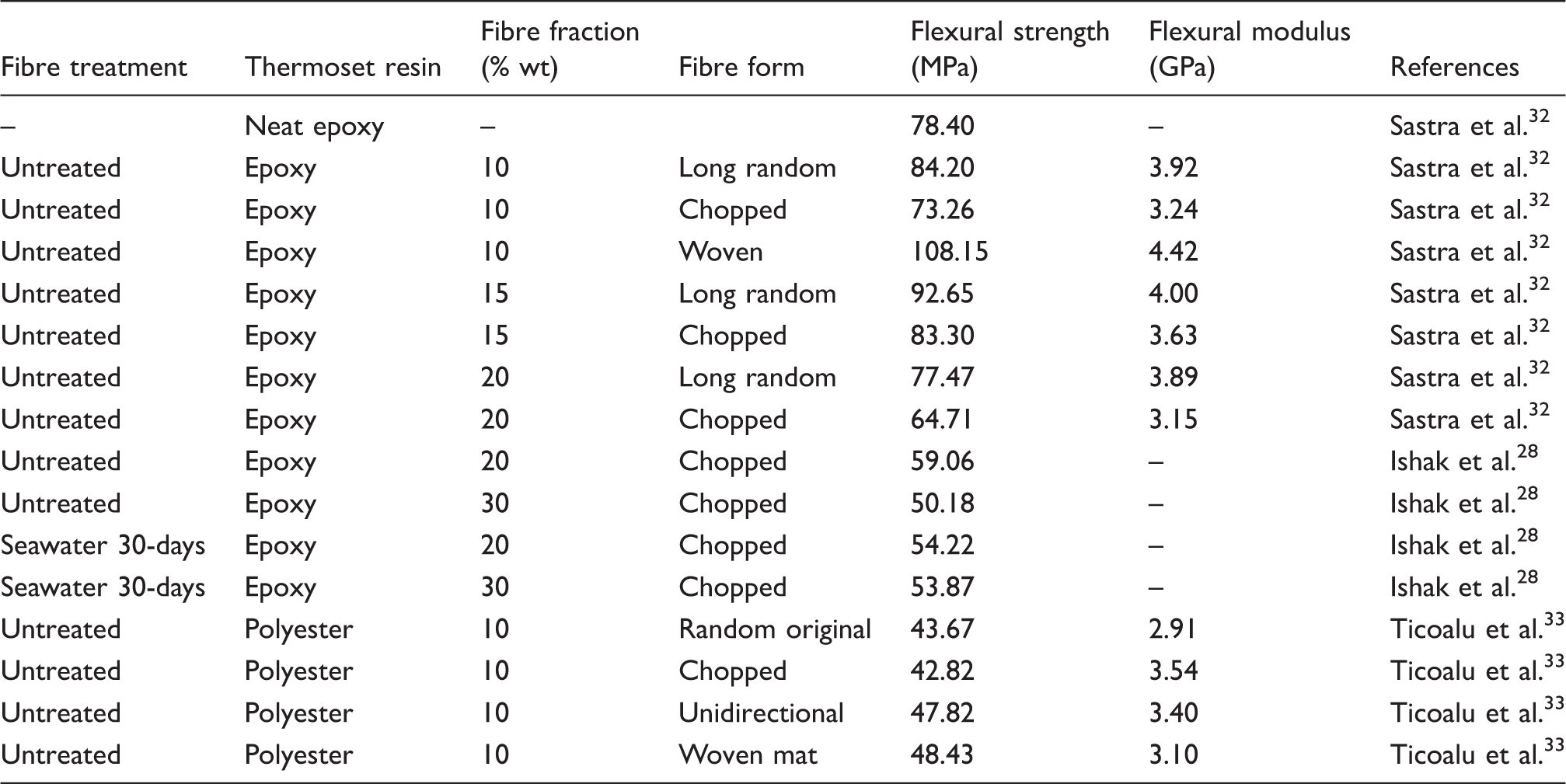
Flexural properties of gomuti fibre/epoxy composites exhibit a tendency similar to the tensile properties. Composite specimens with chopped fibres have lower value while specimens with woven fibres have the highest value of flexural strength. When the value of neat epoxy from Sastra et al. 32 is used as comparison, from all the listed gomuti/epoxy composites in Table 6, the best combinations are 10% long random, 10% woven, 15% long random and 15% chopped. Overall from Table 6, it is shown that the flexural strength of gomuti/epoxy is between 50 and 108 MPa, while the flexural modulus is between 3 and 4.5 GPa.28,32 For both long random and chopped fibres, the strength and modulus increased when the weight fractions increased from 10% to 15%. However, when the weight fractions were further increased to 20%, there is a decrease in the flexural strength and modulus.
Flexural strength of gomuti/polyester composites exhibit a trend that is different from their tensile strength. 33 The composites containing woven fibre has the highest flexural strength, followed by the composites with unidirectional, random and chopped fibre. However, gomuti/polyester composite specimen with chopped fibre has the highest flexural modulus. Overall, flexural strength of untreated 10% gomuti/polyester composites is in the range 42–48 MPa for all four different fibre forms, and the flexural modulus is between 2.9 and 3.5 GPa.
Contrasting results of flexure test are reported in Ishak et al., 28 where a different trend can be observed for the variations in weight fractions and fibre treatment. For the composite specimens containing 20% fibre, the flexural strength of the seawater-treated specimen is lower than the specimen with untreated fibre. 28 On the contrary, the flexural strength of the seawater-treated specimen is higher than the untreated specimen when the composites are made of 30% fibre. 28 Possible clarifications of the contrasting results may relate to the fabrication process of the chopped fibres.
Potential applications of gomuti fibre composites
Summary of flexural properties of gomuti (sugar-palm fibre)/thermoset composites from various literature
Finding a suitable end-use of natural fibre composites that match the properties is an essential factor in developing a beneficial and economical product. Existing applications of natural fibre composites include car roof and interior, 47 fibre-boards and flush doors, 48 natural fibre composite panel,48,49 roof, 50–52 furniture, 38 fluid container, 47 bone and tissue repair,53,54 small boats 34,47 and structural rehabilitation of underground drain pipes or water pipes. 55
Apart from the traditional applications, such as roofing, broom, water filter and ship cordage, existing development of gomuti fibre composites have looked at the application as hybrid fibre for manufacturing a small boat. 34
Based on its characteristics, untreated gomuti fibre exhibits properties similar to that of untreated coir. Newman 56 suggested that fibres from fruit or seed, such as coir and cotton, may be more ideal for insulation materials rather than reinforcements due to their low bulk density. Therefore, it can be assumed that gomuti can also be used as insulation material or in applications where lower strength is acceptable, such as low-cost roofing panels, insulating fibre-boards and wall cladding.
Concluding remarks
Gomuti fibre from A. pinnata tree is comparable with coir fibre in its characteristics. Compared to other common natural fibres such as flax, hemp and jute, both gomuti and coir have the features of lower strength and lower density but higher elongation and similar lignin content. One of the main differences is that coir is fruit fibre and gomuti is obtained from the outer part of the tree trunk.
In combination with polymer thermosetting matrices such as epoxy, gomuti fibre composites can typically offer tensile strength of up to 50–60 MPa and flexural strength of up to 100 MPa. Lower tensile strength (less than 25 MPa) and flexural strength (less than 50 MPa), however, are obtained when gomuti is combined with polyester. Chemical, water or saltwater treatment to gomuti fibre alters the properties of the composites. However, a more thorough investigation is needed and further verification in this area needs to be devised in order to provide more references of gomuti fibre polymer thermoset composites.
The usage of gomuti fibre as a composite ingredient can be explored more with emphasis on the usage for low-cost, lower-to-moderate load-bearing element. While the strength of gomuti fibres/epoxy composites showed the need of improvement, it is feasible to do further study into this kind of fibre due to its environmental and cost benefit.
Footnotes
Funding
This study received no specific grant from any funding agency in the public, commercial, or not-for-profit sectors.