







Abstract
During the last few years, the hybrid composite materials are replacing the conventional composite materials because of their superior properties. In the present communication, unidirectional banana–jute hybrid fiber-reinforced epoxy composites were prepared by varying the fiber content from 0 to 40 wt% with different weight ratios. The physical and thermal properties of the hybrid composites were tested as per ASTM standards. The influence of fiber content on density, thermal conductivity, specific heat, thermal diffusivity, thermal stability, and water absorption of hybrid composites was investigated. A new micromechanical model for the transverse thermal conductivity of hybrid fiber-reinforced polymer composites is developed using the law of minimal thermal resistance and equal law of specific equivalent thermal conductivity. The results are validated with the results obtained by experimental, numerical simulation, and analytical methods existing in the literature. In numerical, steady state heat transfer simulations were performed to calculate thermal conductivity by using ANSYS software. It is encouraging to notice that the experimental and numerical results are in close approximation with the values predicted by the micromechanical model suggested in this work. It is found that the measured properties of the hybrid composites are suitable for building components and automobiles in order to decrease energy consumption.
Keywords
Introduction
There is always an increasing demand for advanced materials with better properties to meet new requirements or to replace existing materials. With growing environmental awareness and ecological concern, natural fiber-reinforced polymer composites have received increasing attention during the recent decades. Natural fibers such as banana, coir, jute, sisal, and hemp attracted the attention of researchers and material scientists for the application in automotive components, consumer goods, and civil structures because synthetic fibers are highly expensive and limited to aerospace and military applications. Natural fibers have many advantages compare to the traditional fibers like low cost, light weight, low density, biodegradability, renewability, nontoxicity, combustibility, and high specific mechanical properties. 1 In the past few years, a lot of research works have been reported on polymer composites using natural fibers as reinforcement and shown that it is possible to obtain well-performing materials using environmentally friendly reinforcements.2–4 Idicula et al. 5 evaluated the thermophysical properties of short randomly oriented banana fiber-reinforced polyester composites at constant fiber loading of 0.40 volume fraction of fiber. It was concluded that the chemical treatments of the fibers improved the thermal conductivity of the composites in comparison with the untreated fiber composites. Ramanaiah et al. 6 studied the thermal properties of biodegradable Typha angustifolia natural fiber-reinforced polyester composites by experimentally and analytically. It was found that the values of thermal conductivities obtained from empirical models were in good agreement with the experimentally measured values. Zainudin et al. 7 studied the effects of resin modification and fiber loading on the thermal stability banana pseudostem-reinforced unplasticized polyvinyl chloride composite by means of thermogravimetric analysis. It was found that the thermal stability of composite decreases by incorporation of banana fiber for the case of nonacrylic.
The conventional composites normally possess only one type of reinforcement and termed as monocomposites. Composites having more than one type of filler contained in a single matrix are called hybrid composite. Hybrid composites have unique features that can be used to meet various design requirements in a more economical way than conventional composites. 8 Few researchers also have been worked on hybrid fiber-reinforced composites. Jawaid et al. 9 studied the mechanical and thermal properties of oil palm/jute bilayer hybrid composites. From this study the thermogravimetric analysis showed that thermal stability of oil palm composites increased with incorporation of jute fiber due to higher thermal stability of jute fiber. Boopalan et al. 10 studied the thermogravimetric analysis and water absorption of the woven jute and banana fiber-reinforced epoxy hybrid composites. It was concluded that the addition of banana fiber in jute/epoxy composites of up to 50% by weight results in increasing the mechanical and thermal properties. Aji et al. 11 studied the thermogravimetric and derivative thermogravimetric analyses hybridized kenaf/PALF fiber-reinforced HDPE composites. From this study the hybrid fibers have been shown to improve thermal stability of hybrid composites at lower fiber loading.
The material properties of a composite depend on various factors such as individual properties of the components that form the composite, the volume fractions of constituents, the microstructural arrangement, and the interfacial bonding between the two components. Modeling and prediction of material properties of hybrid composites based upon the knowledge of the properties of the constituents and their volumetric fractions are an active research area for the past two decades. Micromechanical analysis is used to study the composite material behavior at the fiber and matrix level. The unit cell plays an important role in the micromechanics and physics of random heterogeneous materials with a view to predict material properties. 12 Advances in computational micromechanics allow us to study the various hybrid systems by using finite element simulations. A number of analytical methods have been reported by researchers13–15 to predict the composite materials properties such as strength, stiffness, and thermal conductivity.
Liang and Li16,17 developed a theoretical model of heat transfer in the polymer hollow micro-sphere composites based on the law of minimal thermal resistance and the equal law of the specific equivalent thermal conductivity. Sihn and Roy 18 reproduced and reinvestigated both analytic and numerical models for the prediction of transverse thermal conductivity of laminated composites. The results are significantly affected by the random fiber distributions, especially at high fiber volume fractions. Liu et al. 19 evaluated the transverse thermal conductivity of natural fiber composites by using the theoretical method and finite element method. The theoretical results are compared with the experimental data showing good agreement. Agrawal and Satapathy20,21 developed a mathematical model for effective thermal conductivity of particulate-filled polymer composites with single and hybrid filler. The experimental results are in close approximation to the values predicted by the mathematical model. Springer and Tsai 22 studied the composite thermal conductivities of unidirectional composites and expressions are obtained for predicting these conductivities in the directions along and normal to the filaments. Islam and Pramila 23 predict the effective transverse thermal conductivity of fiber-reinforced composites by using finite element method. Square and circular cross section fibers for perfect bonding at fiber–matrix interface as well as with interfacial barrier by using four different sets of thermal boundary conditions. Davoodi et al. 24 developed the car bumper beam by using kenaf/glass fiber-reinforced epoxy composite to study the impact properties. The low impact test simulations were performed in finite element analysis software using Abaqus V16R9 under different bumper beam concepts with the same frontal curvature, thickness, and overall dimensions. Mansor et al. 25 proposed the conceptual design of hybrid glass-kenaf composites automotive parking brake lever using an integration of the theory of inventive problem solving (TRIZ), morphological chart, and analytic hierarchy process (AHP) methods. The finite element analysis of the automotive parking brake lever was performed using Abaqus software.
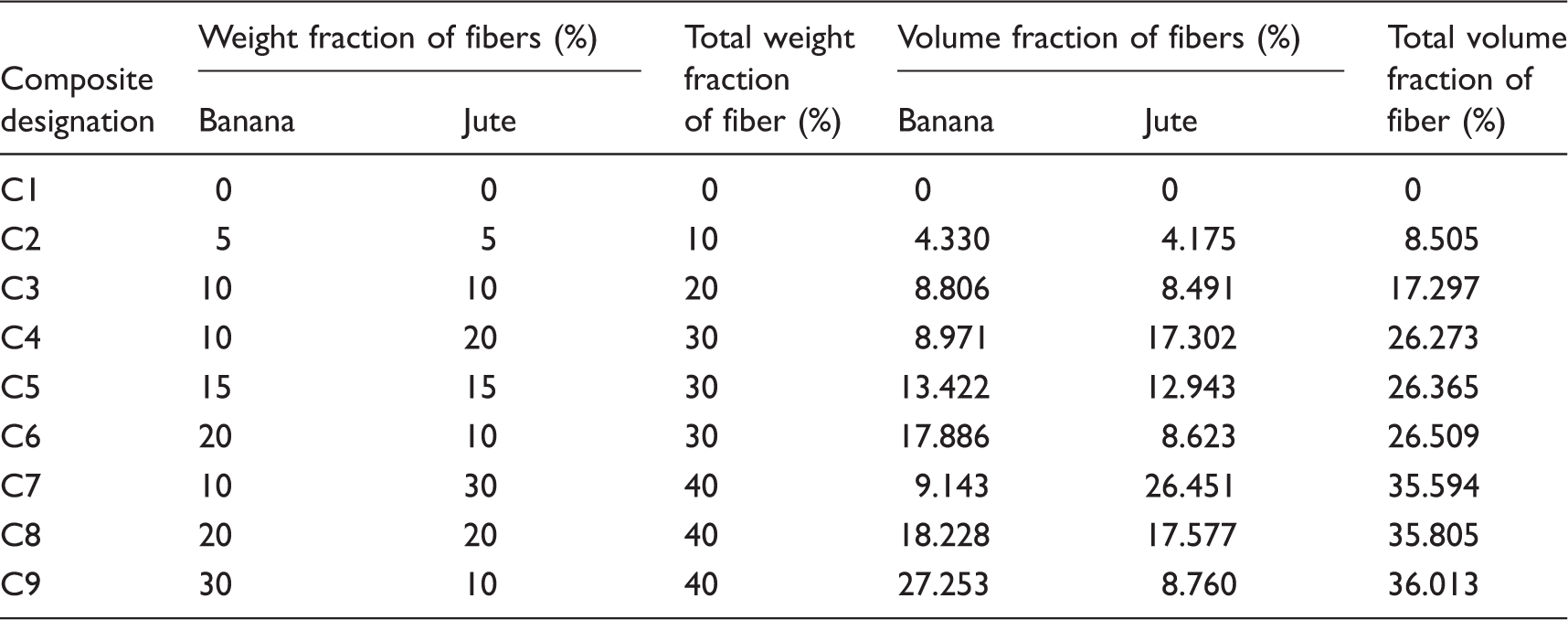
A great deal of work has already been reported on single fiber-reinforced polymer composites. However, very limited literature is available on thermo-physical properties of hybrid natural fiber-reinforced composites. Keeping in view the easy availability, low cost, and eco-friendly advantages, the overall objective of this work is to study the physical and thermal properties of unidirectional banana–jute hybrid natural fiber-reinforced epoxy composites. The effect of fiber loading and each fiber proportions on density, thermal conductivity, specific heat capacity, thermal diffusivity, thermal stability, and water absorption properties were investigated. A new micromechanical model for transverse thermal conductivity of hybrid fiber-reinforced polymer composites was developed. A numerical homogenization technique based on the finite element analysis was used to evaluate the thermal conductivity along the longitudinal and transverse direction. Finally, the proposed model is validated with the experimental results and finite element method. The aim is to demonstrate applicability of homogenization technique by using finite element method to predict material characteristics in advance.
Materials and methods
Material description
In the present work, epoxy resin (LY 556) is used as the matrix material and its common name is Bisphenol-A-Diglycidyl-Ether chemically belongs to the “epoxide” family. The resin and the corresponding hardener (HY 951) were supplied by Ciba Geigy India Ltd. Epoxy is chosen primarily because of low thermal conductivity (0.363 W/m K) and it possesses low density (1.15 g/cm3). Banana (Musa sapientum) and jute (Corchorus capsularis) fibers are used as reinforcement materials for fabricating the composite laminate. Unidirectional banana fiber has been obtained from V. K Enterprise, Gujarat and unidirectional jute fiber has been obtained from the local supplier. Banana fiber has a density of 1.35 g/cm3, whereas jute fiber is having density of 1.4 g/cm3. Natural fibers are chosen primarily because of its insulating nature, banana fiber has a thermal conductivity of 0.09 W/m K, whereas jute fiber is having thermal conductivity of 0.036 W/m K.
Fabrication of composite laminates


Weight fraction and volume fraction of the constituent materials.
Density measurement
The theoretical density of composite materials in terms of weight fractions of different constituents can easily be obtained from equation (3) given by Agarwal and Broutman.
26


Thermal conductivity measurement
The guarded heat flow meter test method was used to measure the thermal conductivity of hybrid composites along the longitudinal and transverse direction by using Unitherm Model 2022 instrument in accordance with ASTM-E1530.
27
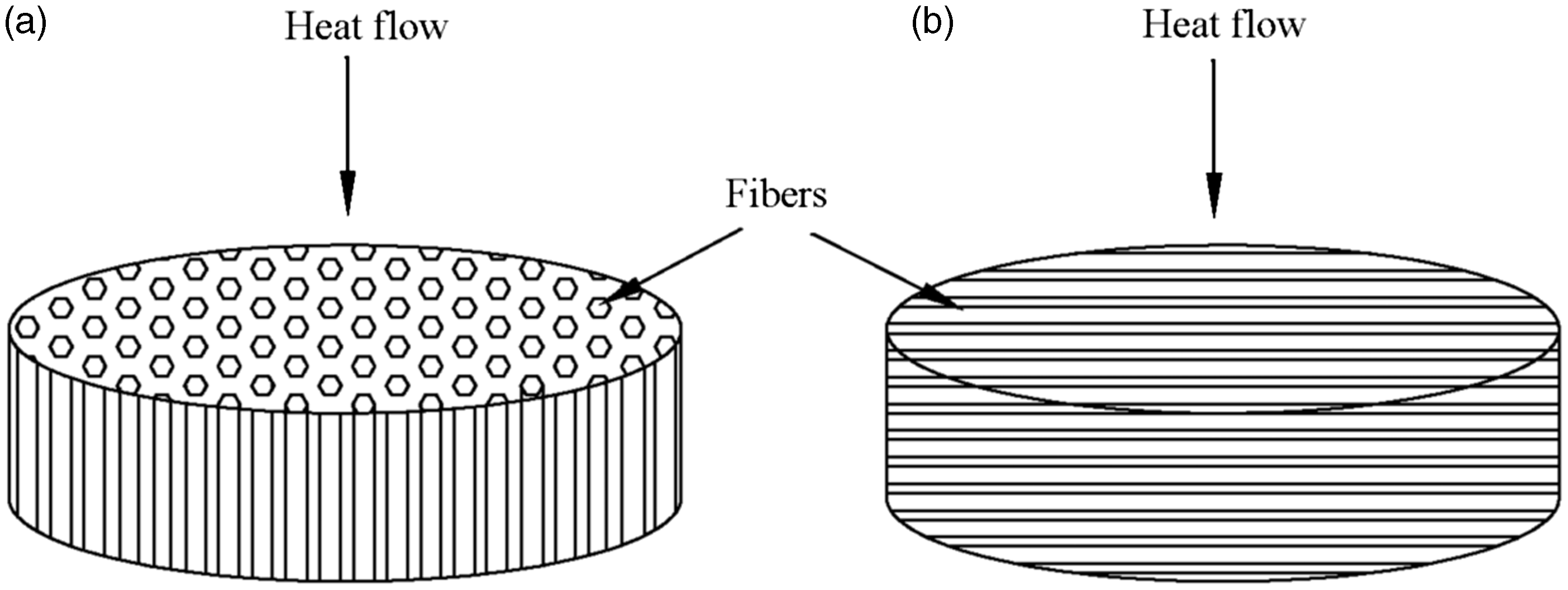
The arrangement of fibers along the longitudinal and transverse direction is shown in Figure 1. The specimen of size 50 mm in diameter and 4 mm in thickness was placed between two polished surfaces and the pressure of 10 lbf/in2 was applied on the top portion of the stack. For one-dimensional heat conduction the formula can be given as equation (5).
Arrangement of fibers in (a) longitudinal and (b) transverse direction.


Specific heat capacity and thermal diffusivity measurement
The specific heat capacity of samples was measured using a differential scanning calorimeter at a heating rate of 10℃/min.
28
The thermal diffusivity values of the hybrid composite samples were determined using thermal conductivity and specific heat capacity values and knowing the density.

Thermogravimetric analysis
Banana–jute hybrid composites and neat epoxy were subjected to thermogravimetric analysis using NETZSCH STA 449 C Jupiter® equipment. Samples weighing approximately 10 mg were subjected to pyrolysis in oxygen environment. The temperature range was taken from 30 to 600℃ at a heating rate of 10℃/min. The mass loss was recorded in response to increasing temperature, with final residue yield on set of degradation temperature and number of degradation steps reported.
Water absorption
The analysis of water absorption in hybrid composites was performed based on Fick’s law. Fick’s law predicts that the sorbed mass of water increases with the square root of time, and then gradually slows until an equilibrium plateau is reached. The kinetics of water absorption was evaluated applying equation (9) or its linearized version, equation (10), obtained from Fick law



Development of micromechanical model
Existing analytical methods of thermal conductivity for composites
To predict the properties of hybrid composite materials, several theoretical and empirical models have been proposed in the literature. Rule of hybrid mixture, Halpin–Tsai model, and Lewis and Nielsen models were used to evaluate thermal conductivity of hybrid composites along the longitudinal and transverse direction.
Rule of hybrid mixture model
The well-known models that have been proposed and used to evaluate the properties of unidirectional composites are the Voigt and Reuss model is also known as the rule of mixture model and inverse rule of mixture model. The rule of hybrid mixture is mathematical expressions which gives the property of the composite in terms of the properties, quantity, and arrangement of its constituents. The longitudinal property of the hybrid composite is calculated by using rule of hybrid mixture is shown in equation (12).


Halphin–Tsai model
The most useful semi-empirical models were proposed by Halpin and Tsai.
31
Halphin and Tsai developed their models as simple equations by curve fitting to results that are based on elasticity. The longitudinal and transverse thermal conductivity of hybrid composite is calculated by using Halpin–Tsai model is shown in equation (14).

Lewis and Nielsen model
Lewis and Nielsen
33
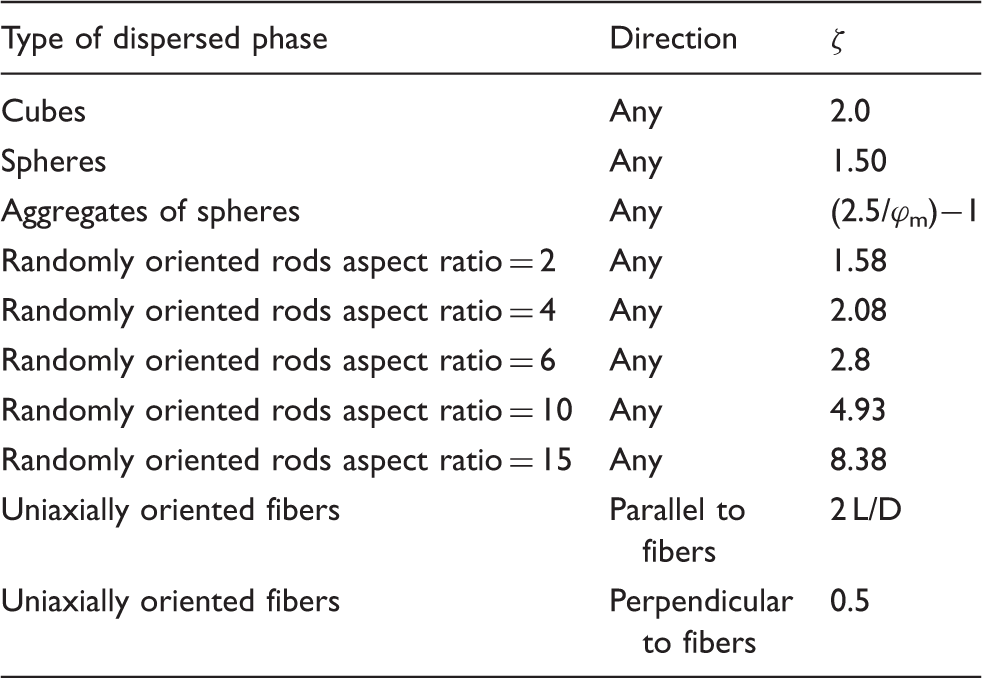
derived a semi-theoretical model by a modification of the Halpin–Tsai equation. Lewis and Nielsen include the effect of the shape of the particles and the orientation or type of packing for a two phase system for calculating material property. The longitudinal and transverse thermal conductivity of hybrid composite is calculated by using Lewis and Nielsen model and is shown in equation (15).

Value of ζ for various systems.
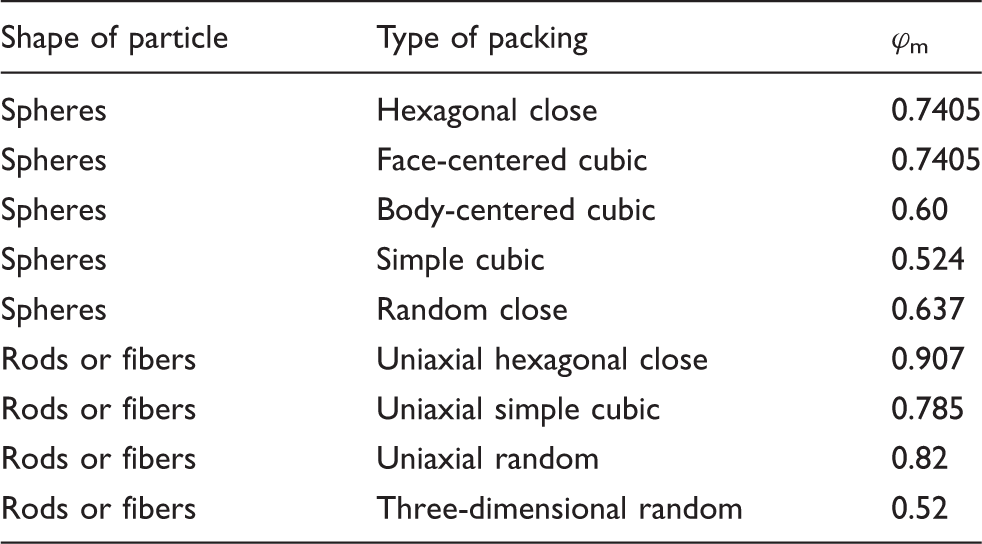
Value of ϕm for various systems.
Generation of the unit cell
In a real unidirectional fiber-reinforced composites, the fibers are arranged randomly, and it is difficult to model random fiber arrangement. For simplicity reasons, most micromechanical models assume a periodic arrangement of fibers for which a unit cell can be isolated. The periodic fiber sequences commonly used are the square array and the hexagonal array. The schematic diagram of the unidirectional hybrid fiber composite where the fibers are arranged in the square array is shown in Figure 2. A single unit cell is taken out from the square array of fiber composites for further study as shown in Figure 3. The unit cell having side length a1 and radius of fibers are rf1 and rf2. The theoretical analysis of heat transfer in composite material is based on the assumptions like fibers are uniformly distributed in the matrix, locally both the matrix and fibers are homogeneous and isotropic, there is perfect bonding between fibers and matrix, and the composite body is free from voids, the thermal contact resistance between the fiber and the matrix is negligible, the temperature distribution along the direction of heat flow is linear.
Arrangement of unidirectional hybrid fibers in a square array. Three-dimensional view of square unit cell.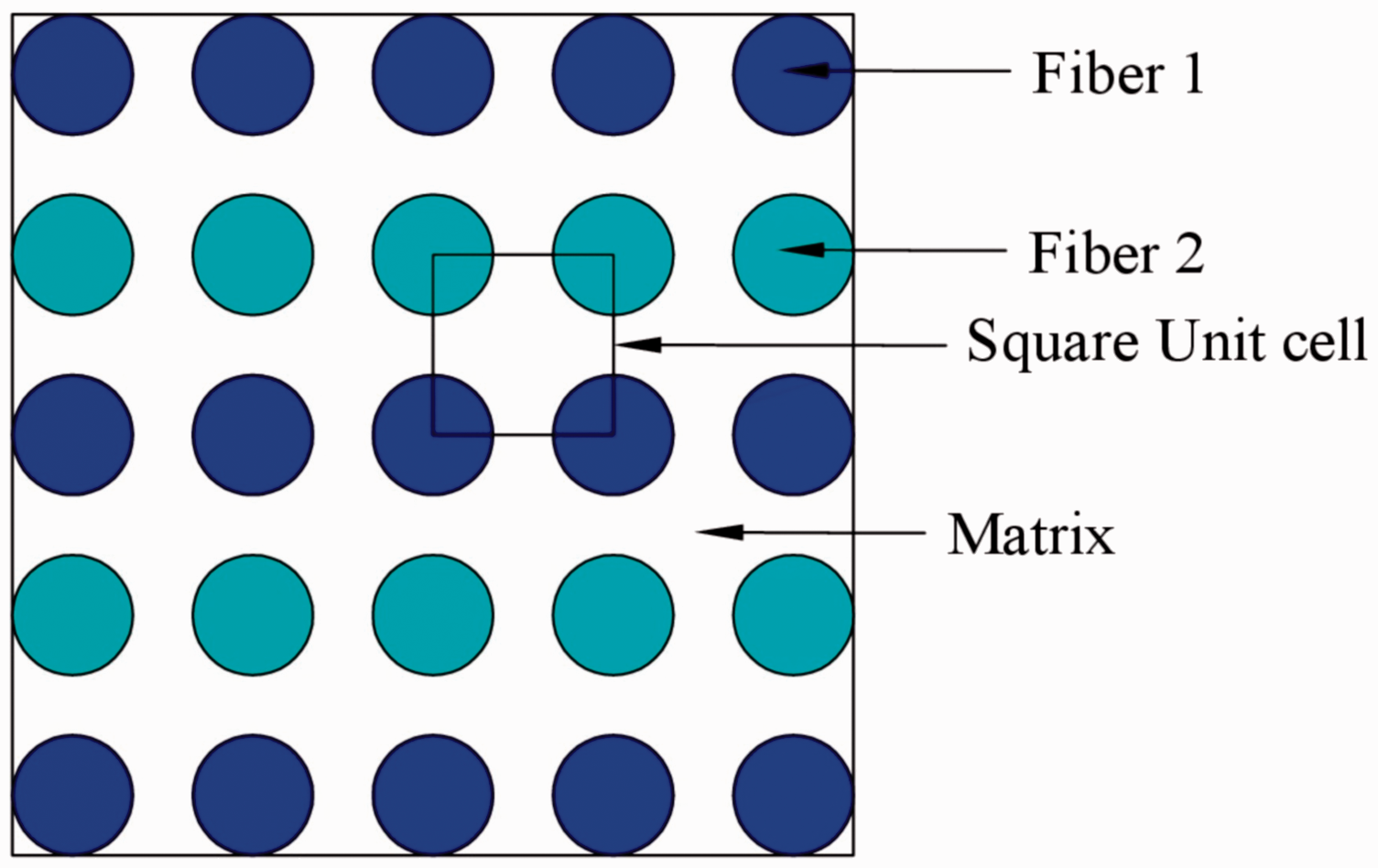
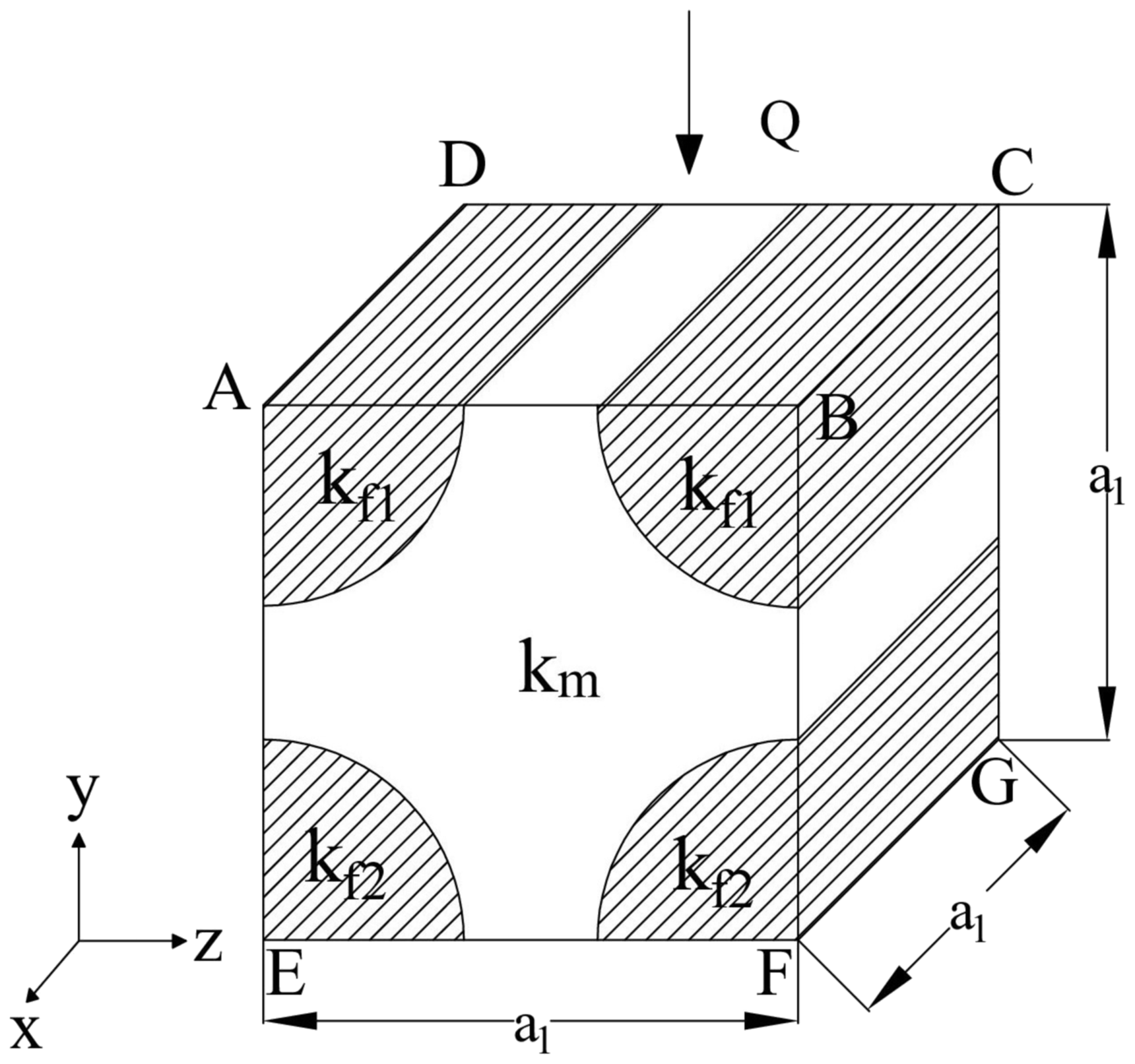
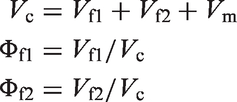
The direction of heat flow is considered from top to bottom. km, kf1, and kf2 are the thermal conductivities of the matrix material, fiber material 1, and fiber material 2, respectively. Am, Af1, and Af2 are the cross-sectional area of the matrix material, fiber material 1, and fiber material 2 in the element, Vc, Vf1,Vf2, and Vm are the volume of composite material, fiber material 1, fiber material 2, and matrix material in the element and Qm, Qf1, and Qf2 are the heat flow through the cross-sectional area of matrix material, fiber material 1 and fiber material 2 in the above element, dT is considered as the temperature difference between two sides of the element, whereas Φc, Φf1, Φf2, and Φm are the volume fraction of the composite, fiber material 1, fiber material 2, and matrix material in the composite. For the hybrid composite material, the volume of the composite and volume fraction of the fiber is given by equation (16).

Modeling
Figure 4 shows a series model of heat conduction through the square unit cell considered for present study. The element is divided into four parts, parts 1 and 4 represent the combination of fiber and matrix material while parts 2 and part 3 represent the neat matrix; k1, k2, k3, and k4 are the mean conductivity coefficient of respective parts. The thicknesses of part 2 and part 3 are h2 and h3, respectively, where h2 = a1/2 − rf1 and h3 = a1/2 − rf2. Part 1 and part 4 having thicknesses of h1 = rf1 and h4 = rf2, respectively. To determine the effective thermal conductivity of the whole element, the law of minimum thermal resistance is required to combine the heat resistances of these four parts to get the heat resistance of the complete element and the equal law of specific thermal conductivity is applied to predict the transverse thermal conductivity of the complete element.
Series model of heat transfer in square unit cell.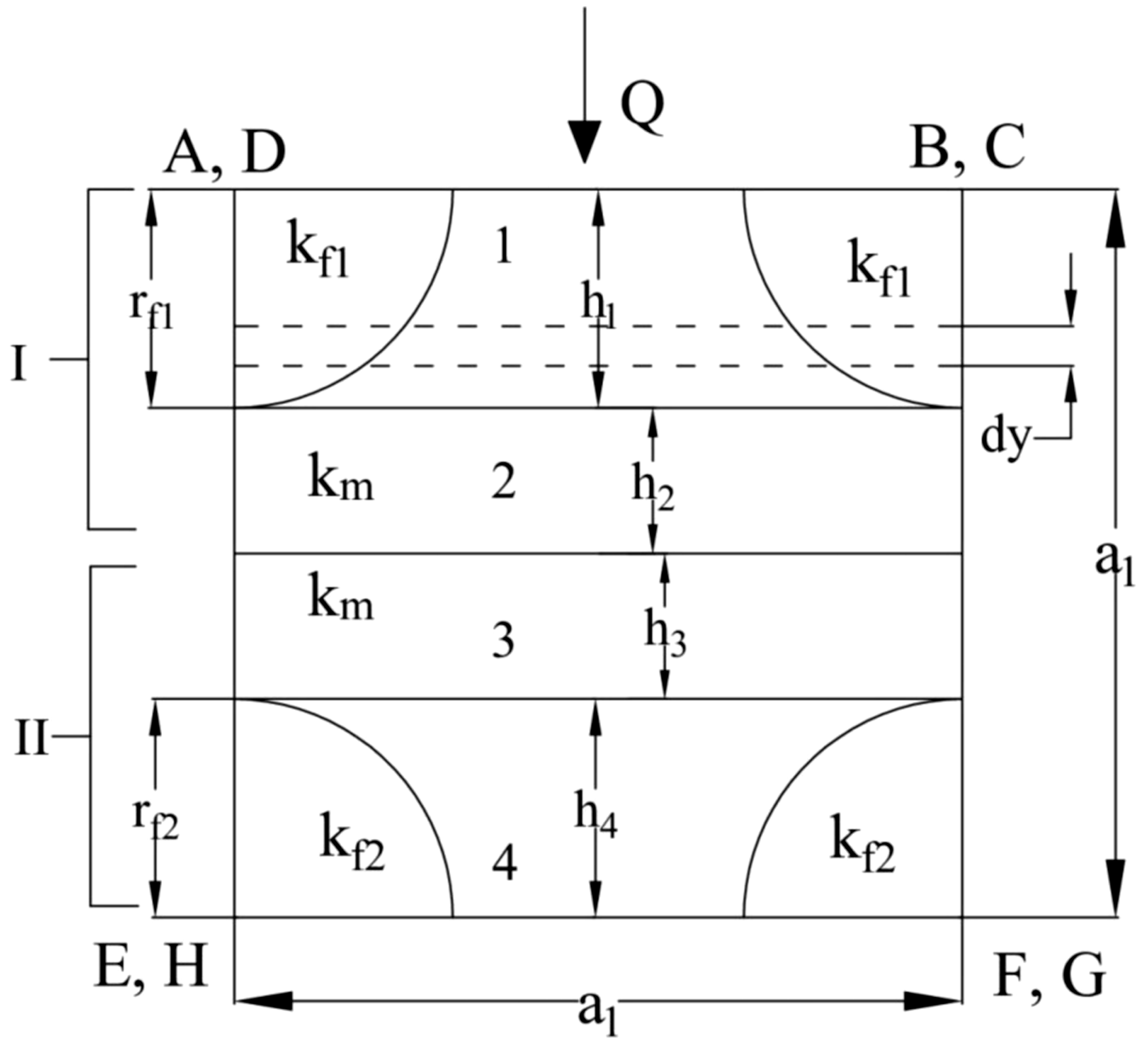
For parts 1 and 4
This section consists of both the fiber and matrix phases, its thermal conductivity is the combined effect of matrix and fiber material. Taking a thin piece with thickness dy, applying Fourier’s law of heat conduction, the thermal conductivity for parts 1 and 4 is given by equations (17) and (18).

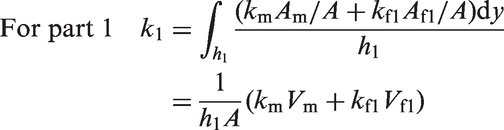
Integrating equations (17) and (18) over the complete thickness, we get equations (19) and (20).
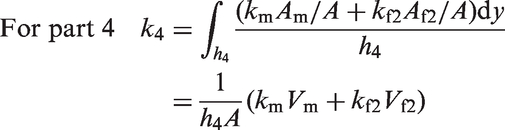

For parts 2 and 3
Since no fiber is there in the parts 2 and 3, thermal conductivity of that region will be same as that of matrix material.

As the series model is considered for heat transfer in the element, the transverse thermal conductivity of the composite is given by dividing the element into two parts I and II. The thermal conductivity is calculating its individual parts and then combining it for series connection.


The thermal resistance of the four parts is given as:




As the series model is considered for heat transfer in the element, the transverse thermal conductivity of composite is given by:
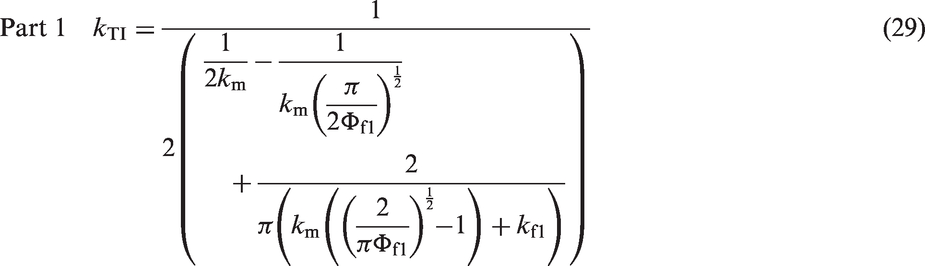
Substituting equations (24)–(27) into equations (22) and (23), thermal conductivities of part I and part II are given as:
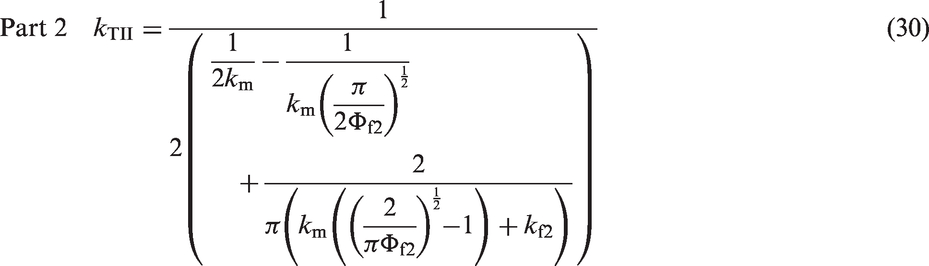
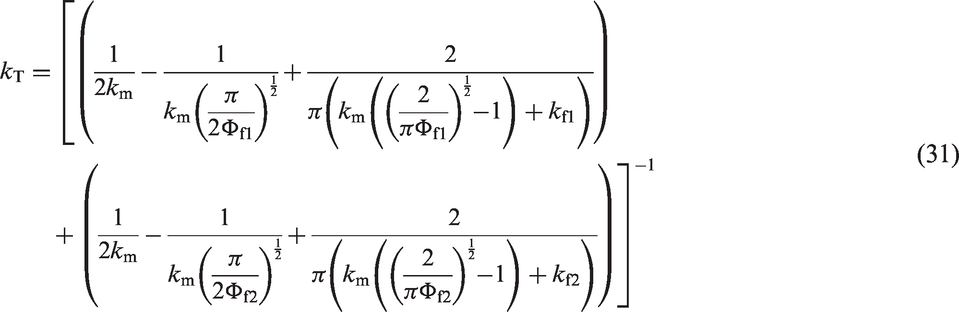
Finally, substituting equations (29) and (30) into equation (28), the transverse thermal conductivity of the hybrid fiber-reinforced polymer composite is obtained as:
Finite element method
The basic approach of finite element method is decomposition of the domain into a finite number of elements for which the systematic approximate solution is constructed by applying the residual methods. In order to evaluate the transverse thermal conductivity of hybrid composite numerically, the finite element software package ANSYS is used. The program is written in APDL (ANSYS Programming Design Language), which is delivered by the software and it makes the handling much more comfortable. In the study of hybrid fiber-reinforced materials, it is convenient to use an orthogonal coordinate system that has one axis aligned with the fiber direction. The axis X is aligned with the fiber direction; the axis Y is in the plane of the unit cell and perpendicular to the fibers and the axis Z is perpendicular to the plane of the unit cell and is also perpendicular to the fibers as shown in Figure 3. Dimensions considered for the analysis are a1 = 10 µm. The radius of fibers was calculated from corresponding fiber loading ranging from 0 to 40 wt%. A three-dimensional quadratic brick element SOLID90 is used for discretization of the constituents and is defined by 20 nodes with a single degree of freedom i.e. temperature at each node. The meshed model of square unit cell at 10 wt% banana and 30 wt% jute of fiber loading are shown in Figure 5.
Meshed model of square unit cell at 10 wt% banana and 30 wt% jute of fiber loading.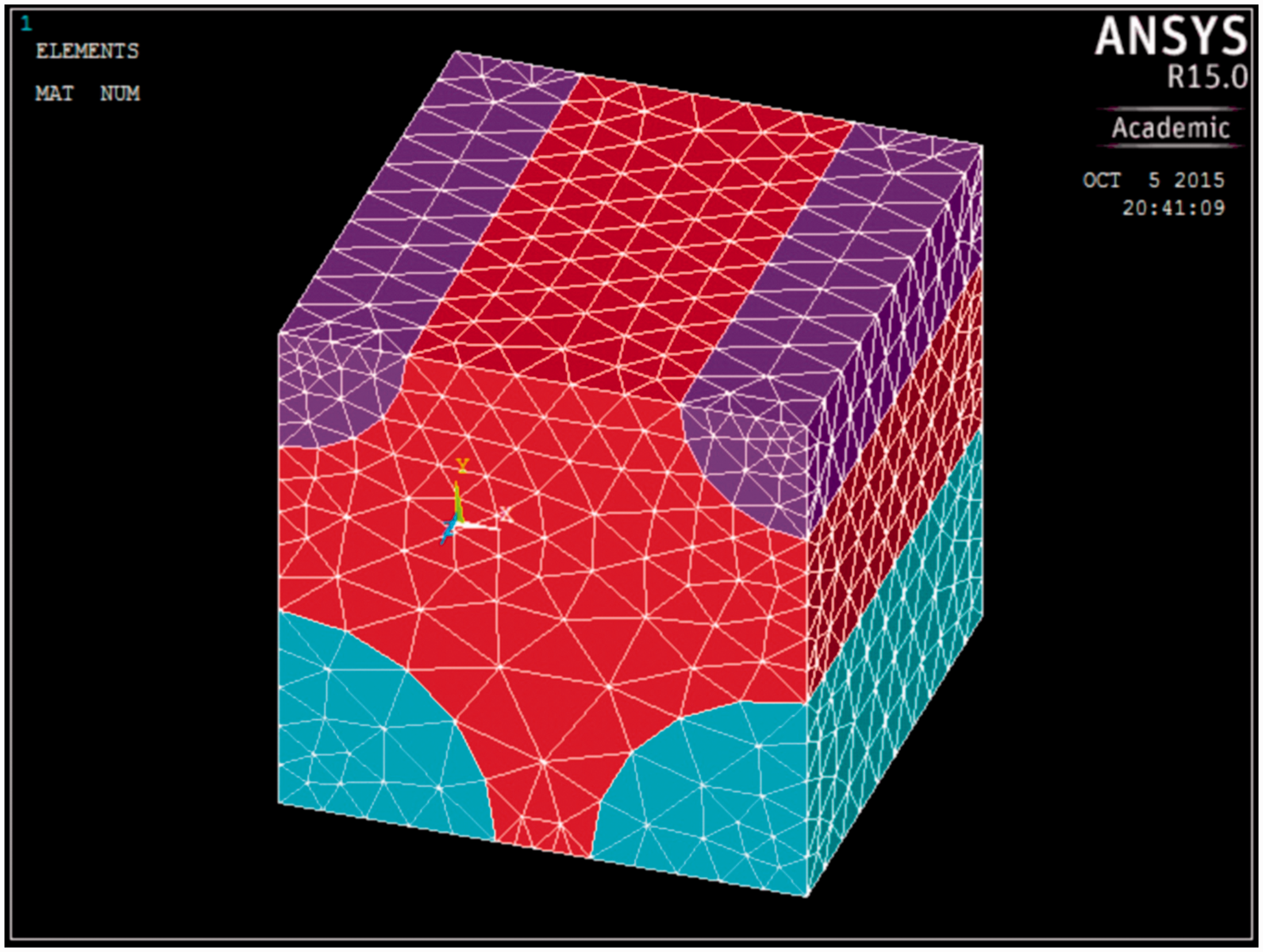
Boundary conditions for the evaluation of thermal conductivity
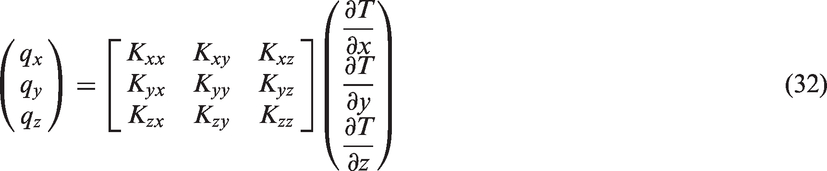
The applied thermal boundary conditions to model plays significant role in determination of heat transfer and thermal conductivity. One-dimensional steady state heat transfer simulations are performed by using FEA to predict thermal conductivity of composite material along the longitudinal and transverse direction. As the model generated represents a unit cell in the composite, therefore a homogenization scheme could be used to define the thermal conductivity of composites along the longitudinal and transverse direction. The thermal conditions could be represented by the following equation (32)

The thermal boundary conditions considered in the present analysis are shown in Figure 3. One wall CDGH of the unit cell is kept isothermal at elevated temperature and the corresponding wall ABEF is subjected 90 K to maintain temperature difference for the calculation of longitudinal thermal conductivity. In the second instance, to calculate the transverse thermal conductivity one wall ABCD of the unit cell is kept isothermal at elevated temperature and the corresponding wall EFGH is subjected 90 K to maintain temperature difference. All other surfaces of the unit cell are subjected to insulation boundary conditions. Using these temperature gradients, the heat flux is obtained from ANSYS software. The thermal conductivity is established from the fundamental heat conduction law, found by Fourier’s, which states that the heat flux is proportional to the temperature gradient.
34
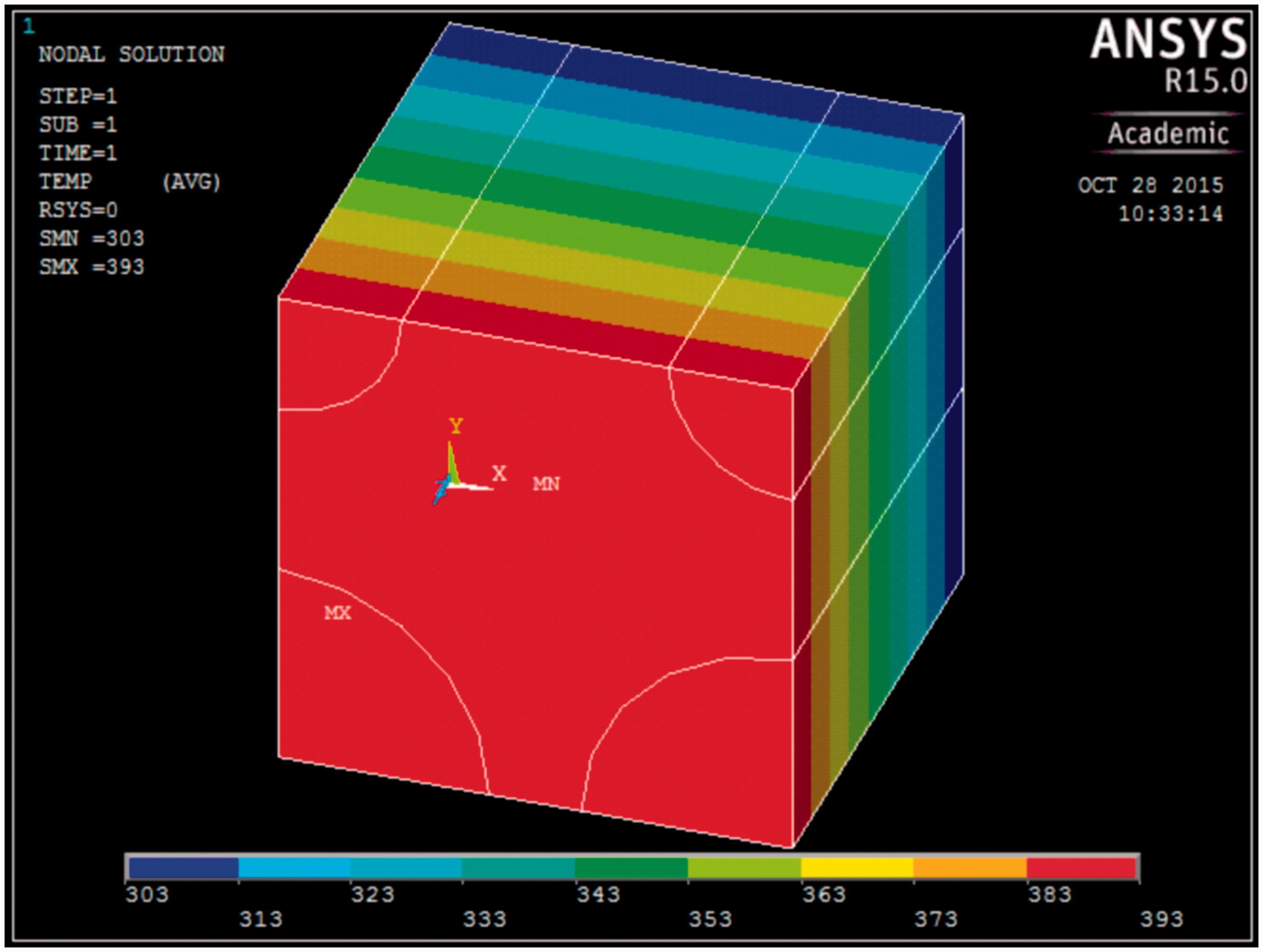
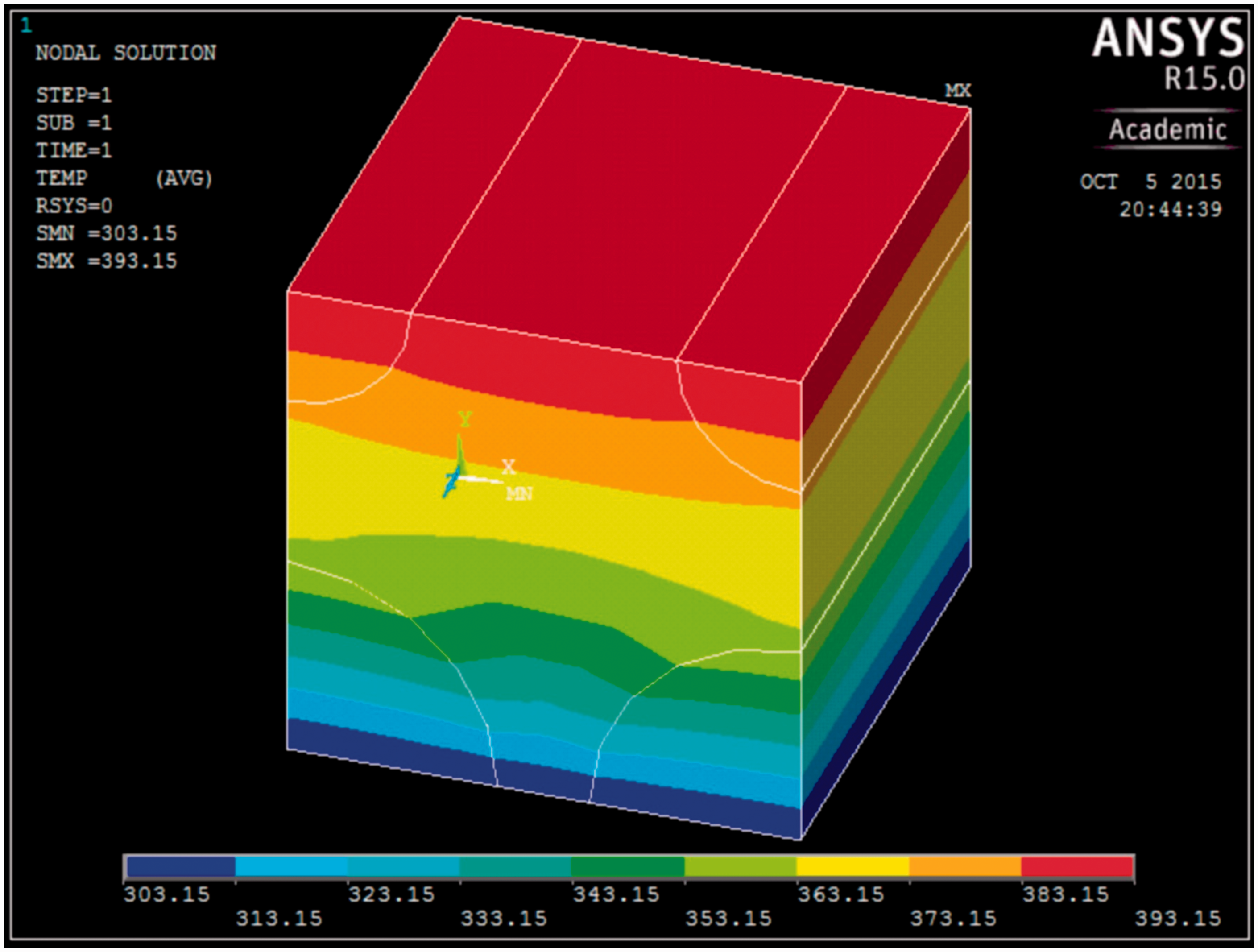
The longitudinal thermal conductivity of the composite is calculated by using equation (33). The temperature distribution along the longitudinal direction in square unit cell at 40 wt% of fiber loading is shown in Figure 6.
Longitudinal temperature distribution in square unit cell at 10 wt% banana and 30 wt% jute of fiber loading. Transverse temperature distribution in square unit cell at 10 wt% banana and 30 wt% jute of fiber loading.

Results and discussion
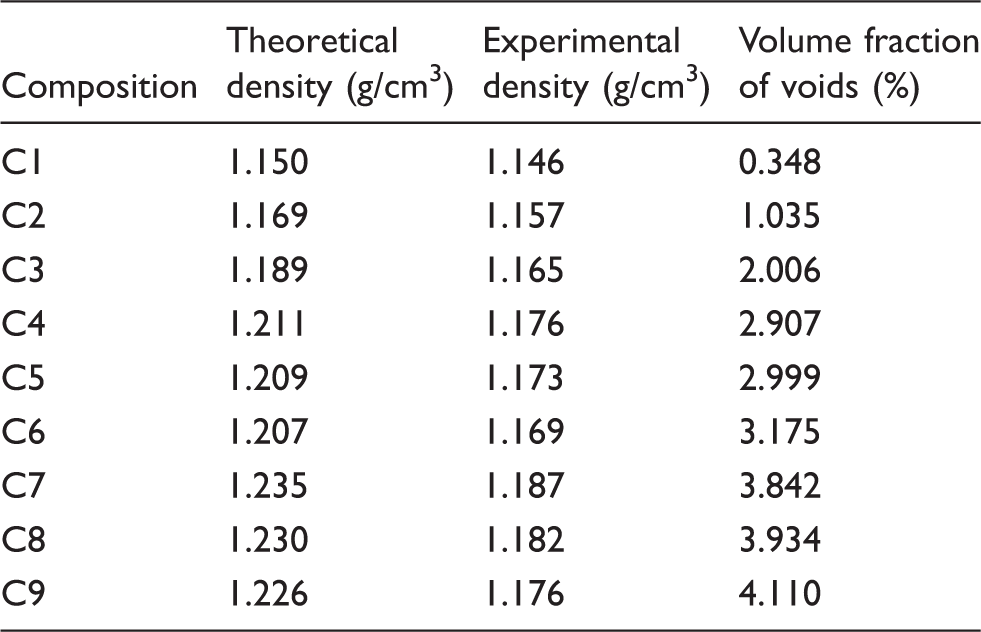
Density of hybrid composites
Theoretical and experimental densities of the hybrid composites.
Thermal conductivity of hybrid composites
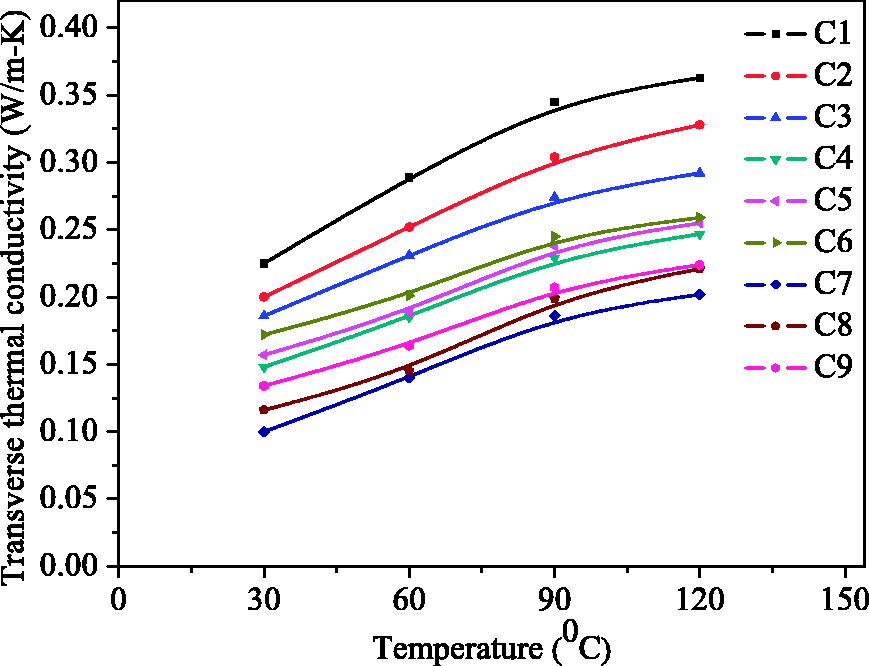
In this study, thermal conductivity was measured experimentally by using guarded heat flow meter along the longitudinal and transverse direction. Longitudinal and transverse thermal conductivities of the hybrid composite are properties of the material to conduct heat in parallel and perpendicular to the direction of the fibers, respectively. The longitudinal and transverse thermal conductivities of banana–jute hybrid fiber-reinforced composites as a function of temperature from 30 to 120℃ are shown in Figures 8 and 9. It was observed from the figures, the longitudinal thermal conductivity of the hybrid composite is more than transverse thermal conductivity because the alignment of fibers in composites is parallel to heat flux direction. Similar trend of results observed by Kalaprasad et al.
37
The thermal conductivities of all the composites increases with increase of temperature because of the moisture in the fibers begin to evaporate by increasing in the temperature. The experimental results were used to comparing the proposed model, numerical and analytical solutions at different fiber loadings. The graphs were drawn for the minimum values of thermal conductivity at each fiber loading.
Variation of longitudinal thermal conductivity of hybrid composite with temperature. Variation of transverse thermal conductivity of hybrid composite with temperature.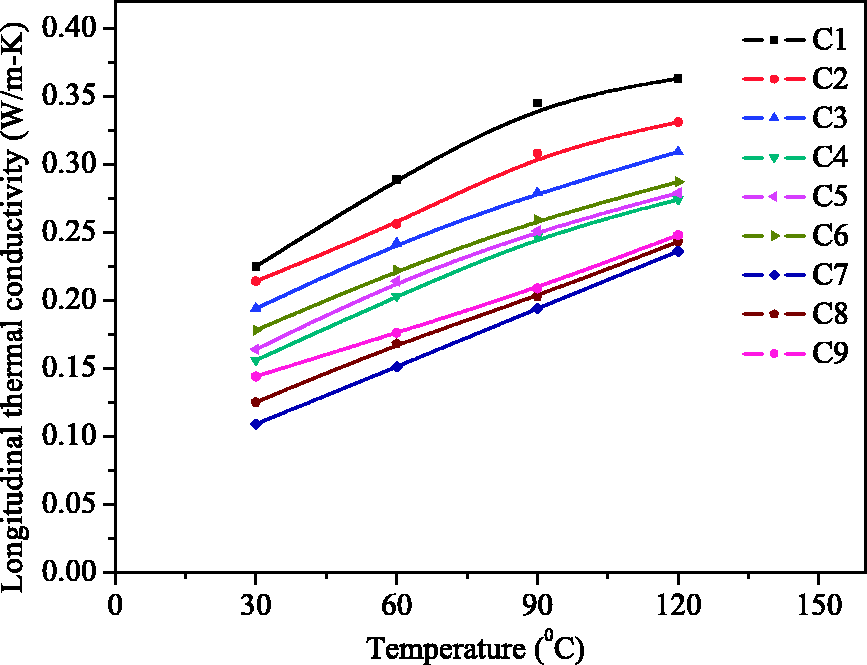
Effect of fiber loading on longitudinal thermal conductivity
The longitudinal thermal conductivity of the hybrid composites reinforced with banana and jute fiber with different fiber loadings are shown in Figure 10. The thermal conductivities of hybrid composites decrease with the increasing of the fiber loading due to the lower thermal conductivity of individual fibers. The experimental results show that the minimum longitudinal thermal conductivity of the hybrid composite is 0.236 W/m K at 10 wt% of banana and 30 wt% of jute fiber loading. The thermal conductivity of the hybrid composites decreased 34.98% at the maximum fiber content over the pure epoxy. The finite element results exactly obey the rule of hybrid mixture as compare to the other two analytical methods. Rule of hybrid mixture has been generally accepted as the exact solution for the longitudinal thermal conductivity for hybrid fiber-reinforced composites with isotropic constituents. The difference between the simulated values and the experimental values of thermal conductivity may be attributed to the fact that some of the assumptions taken for the numerical analysis are not real. In experimental, the volume fraction of voids present in the hybrid composite material is a very important factor which affects its thermal conductivity. However, it is encouraging to note that the finite element results are close approximation with the analytical and experimental results within an acceptable range error. These results indicate that the banana–jute hybrid fiber-reinforced composites have good thermal insulation properties. Hence, these hybrid composite materials can be considered in building components and automobiles in order to decrease energy consumption.
Effect of fiber loading on longitudinal thermal conductivity of hybrid composite.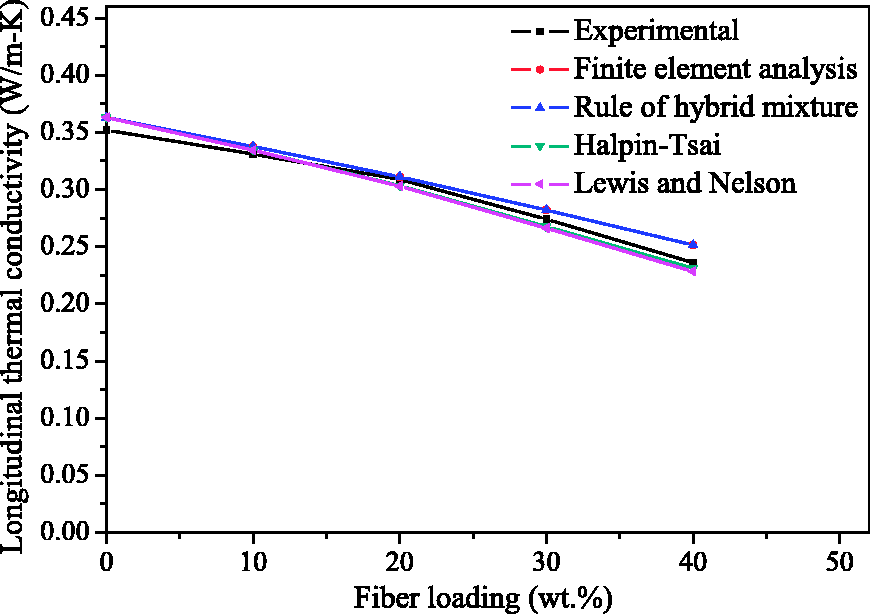
Effect of fiber loading on transverse thermal conductivity
Figure 11 shows the validation of transverse thermal conductivity of hybrid fiber-reinforced epoxy composite with various established analytical models and the value obtained from model proposed by authors together with the finite element and experimental results. The transverse thermal conductivities of hybrid composites decrease with the increasing of the fiber loading due to the lower thermal conductivity of fiber. The experimental thermal conductivities decreased 44.35% at 10 wt% of banana and 30 wt% of jute fiber loading over the pure epoxy. It can be seen in figure, the results achieved from the proposed model are in good agreement with the experimental, finite element analysis as well as existing analytical models. It can further be noticed that the proposed model value remains on the higher side as compared to experimental values and deviated with increasing the fiber loading. Some more obvious observations are seen from figure. In experimental, hybrid fibers arrangement is not a regular periodic array as assumed but very much randomly distributed in the matrix. With increasing the fiber loading, this randomness causes some fibers to be in contact with other fibers and hence a higher thermal resistance and a lower thermal conductivity for the hybrid composites are attained. The other influences which may also contribute to this are the nonhomogeneity of the matrix material and experimental imprecisions. Sihn and Roy
18
developed a periodic arrangement and randomly distributed models for measuring transverse thermal conductivity. The randomly distributed model has shown a better agreement with the experimental data than the other periodic models. This deviation can be attributed to the fact that the numerical analysis does not take interfacial thermal barrier resistance into account which strongly affects the thermal conductivity of composites.
Effect of fiber loading on transverse thermal conductivity of hybrid composite.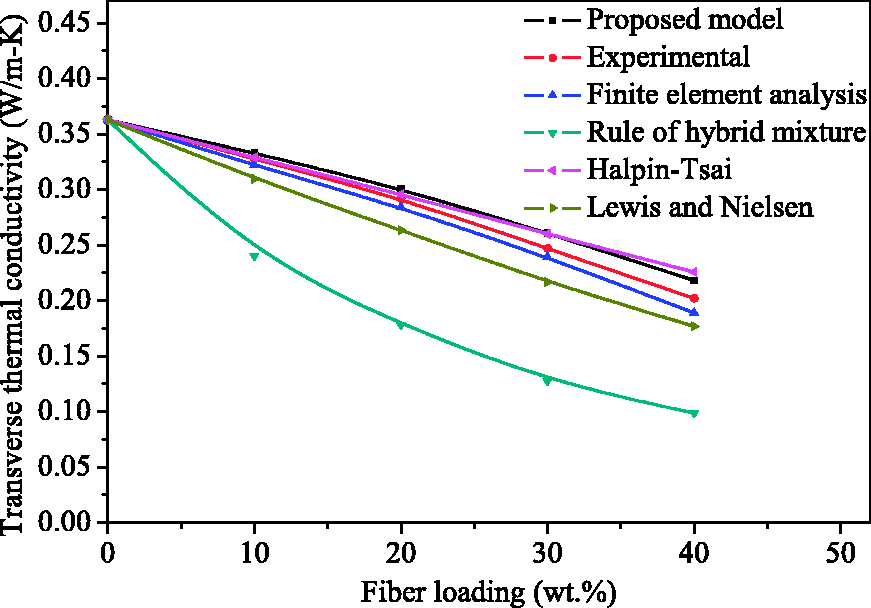
Specific heat capacity and thermal diffusivity
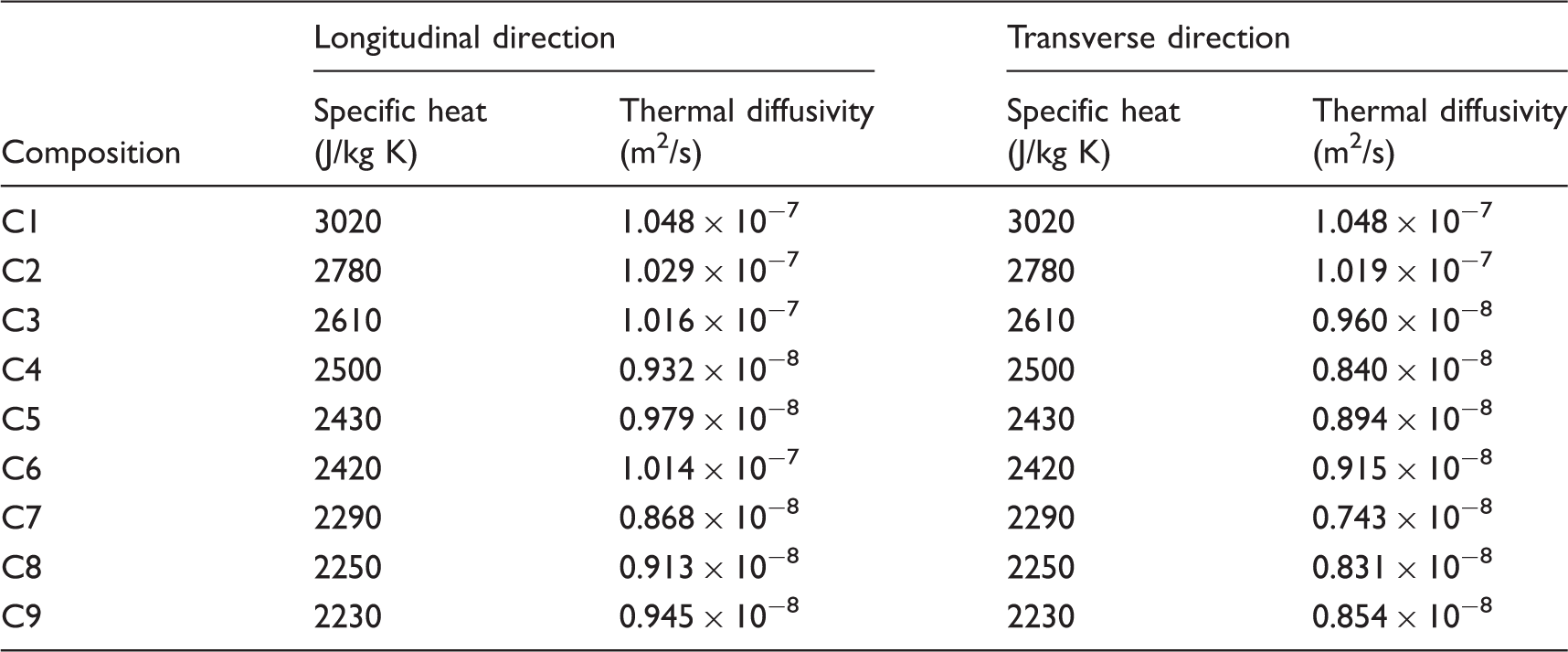
Specific heat and thermal diffusivity of the hybrid composites.
Thermal analysis of hybrid composites
The influence of processing temperatures on natural fiber-reinforced composite materials is very important because there is always thermal stress during the manufacturing of composites. Thermogravimetric analysis is a useful method that based on the measurement of mass loss related to temperature for the quantitative determination of the degradation behavior and the composition of the fiber and the matrix in a hybrid composite. The thermogravimetric curves of hybrid composites reinforced with banana and jute fiber with different ratios and neat epoxy are presented in Figure 12. The result shows that banana–jute hybrid fibers have weaker thermal stability compared with neat epoxy matrix at lower temperatures. This means that the interfacial bonding and degree of compatibility is dependent on the mixing ratio of banana and jute. It can be seen that the incompatibility between the hydrophilic fibers and the hydrophobic thermosetting epoxy resin results in there being poor interfacial bonding. This reduction in thermal stability of the hybrid composite with increase in fiber content became obvious after the dehydration process. It was observed that the thermal degradation of all the composite specimens has taken place within the scheduled temperature range of 30–600℃. The decomposition of neat epoxy started at a temperature of 345℃ and 98.8% decomposition occurred at 504℃. Compare to all the composite specimens at maximum fiber loading, 10 wt% of banana and 30 wt% of jute fiber composite show maximum thermal stability at highest temperature. The result shows that the thermal stability of the banana fiber composite increases as the jute fiber loading increased. Incorporation of jute fiber has resulted in considerable increase in the thermal stability of hybrid composites which is possibly due to higher thermal stability of jute fiber than banana fiber. The initial low temperature weight loss occurs at 295℃ corresponds to removal of solvent in polymer matrix. The major weight loss occurs at 565℃ due to degradation and volatization of epoxy along with fibers present in the hybrid composite.
10
Variation of thermal degradation of hybrid composite with temperature.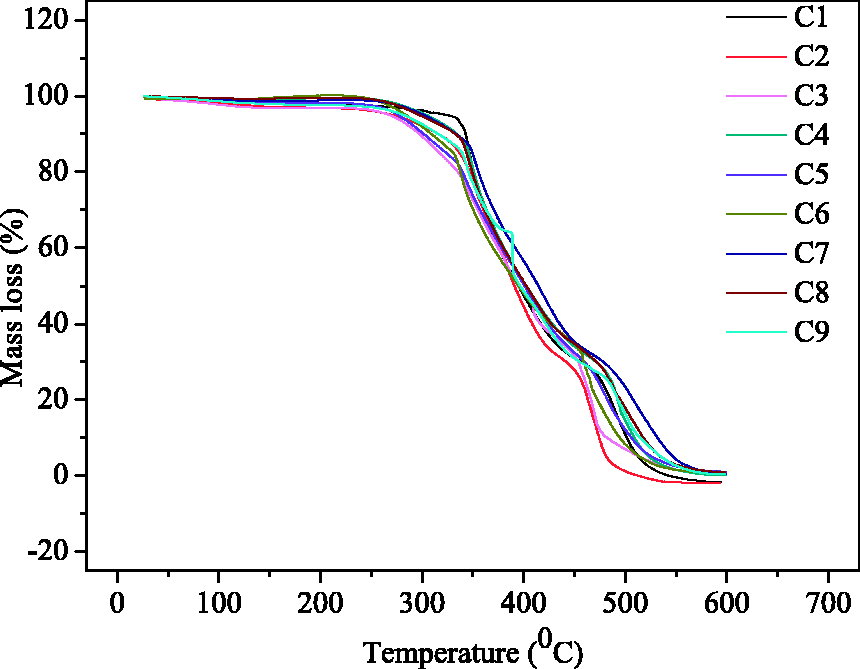
Water absorption of hybrid composites
Water absorption behavior of the hybrid-reinforced polymer composites depends on the ability of the fibers to absorb water due to the presence of hydroxyl bonding, fiber loading, volume fraction of voids, and viscosity of matrix. The effect of fiber loading and weight ratio on the water absorption of the banana–jute hybrid fiber-reinforced composites with increase in immersion time is shown in Figure 13. The water absorption capacity increases with increase in fiber loading, due to the presence of voids and high porosity on the surface of composite. It is found that the water absorption becomes stabilized around 216 h. After this time period, no significant changes in weights of hybrid composite samples were observed. The maximum water absorption percentage is 8.49 for composite made of 30 wt% of banana and 10 wt% of jute fiber. At 40 wt% fiber loading the hybrid composite made of 30 wt% of jute and 10 wt% of banana fiber shows lowest water absorption compare to the other two composite samples. Jute fiber has better aspect ratio, lowest sorption, permeability coefficients, and diffusion than banana fiber resulting in lower water absorption capability to the composite made of jute fiber as higher weight ratio. The rate of water absorption is greatly influenced by the materials density and void content.39,40 The water absorption for the neat epoxy composite was the lowest water absorption percentage with the value of 0.12. This is because epoxy resin acts as water resistant matrix. From figure the highest water absorption percentage is for sample having maximum content of banana fibers. The reason may be due to the banana fibers contain abundant polar hydroxide groups, which result in a high water absorption level compare to the jute fiber.
Effect of immersion time on water absorption properties of hybrid composites.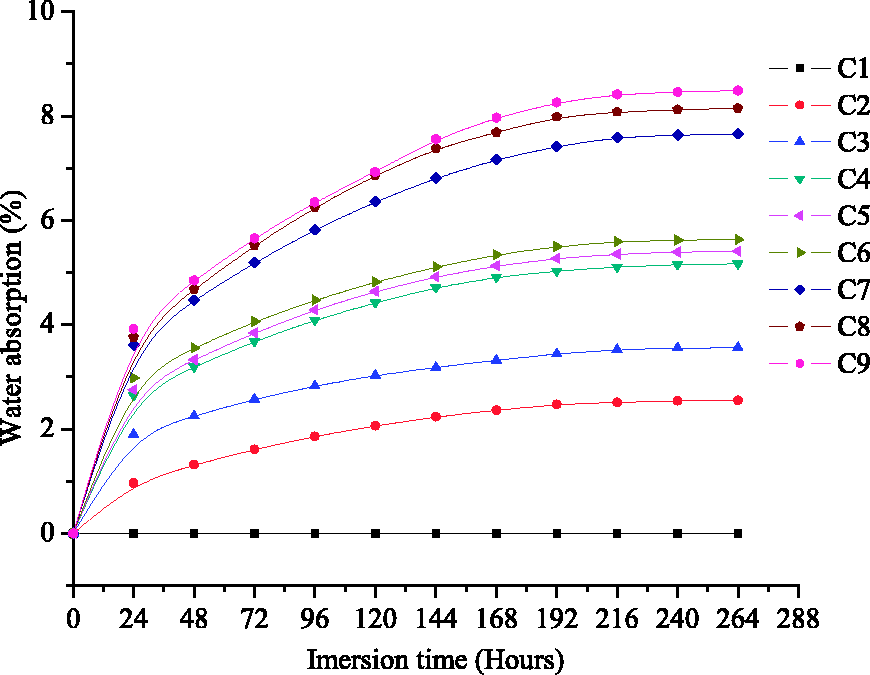
Conclusions
A new micromechanical model for transverse thermal conductivity of hybrid fiber-reinforced polymer composites is developed using the law of minimal thermal resistance and equal law of specific equivalent thermal conductivity. The void content of hybrid composites increases with increase in the fiber loading. The longitudinal and transverse thermal conductivity of the hybrid composites decreased 34.98 and 44.35%, respectively at 10 wt% of banana and 30 wt% of jute fiber loading over the pure epoxy. The longitudinal thermal conductivity of finite element results is good agreement with the experimental results and rule of hybrid mixture as compared to the Halpin–Tsai, and Lewis and Nielsen models. The transverse thermal conductivity predicted by proposed model and finite element analysis are good agreement with the experimental values is well within an acceptable error range of 0–6% and 0–7%, respectively. The specific heat capacity and thermal diffusivity of the hybrid composites decreases with fiber loading. The composite consists of 10 wt% of banana and 30 wt% of jute fiber composite shows maximum thermal stability at highest temperature. The water absorption for the hybrid composite made of 10 wt% of banana and 30 wt% of jute fiber shows the lowest water absorption at maximum fiber loading. The newly developed unidirectional banana–jute hybrid composites are light weight, economical, and possess good thermal insulating properties. Hence, these materials can be used for applications such as automobile interior parts, low cost building components, false ceilings, and electronic packages.
Footnotes
Declaration of Conflicting Interests
The author(s) declared no potential conflicts of interest with respect to the research, authorship, and/or publication of this article.
Funding
The author(s) received no financial support for the research, authorship, and/or publication of this article.