







Abstract
In recent years, coated fabrics have become the major material used in membrane structures. Due to the special structure of base layer and mechanical properties, coated biaxial warp-knitted fabrics are increasingly applied in pneumatic structures. In this article, the mechanical properties of coated biaxial warp-knitted fabrics are investigated comprehensively. First, off-axial tensile tests are carried out in seven in-plane directions: 0°, 15°, 30°, 45°, 60°, 75°, and 90°. Based on the stress–strain relationship, tensile strengths are obtained and failure modes are studied. The adaptability of Tsai–Hill criterion is analyzed. Then, the uniaxial tensile creep test is performed under 24-h sustained load and the creep elongation is calculated. Besides, tearing strengths in warp and weft directions are obtained by tearing tests. Finally, the biaxial tensile tests under five different load ratios of 1:1, 2:1, 1:2, 1:0, and 0:1 are carried out, and the elastic constants and Poisson’s ratio are calculated using the least squares method based on linear orthotropic assumption. Moreover, biaxial specimens under four load ratios of 3:1, 1:3, 5:1, and 1:5 are further tensile tested to verify the adaptability of linear orthotropic model. These experimental data offer a deeper and comprehensive understanding of mechanical properties of coated biaxial warp-knitted fabrics and could be conveniently adopted in structural design.
Keywords
Introduction
There has been an increasing trend in the application of composite materials over the past several decades, especially in structure engineering, vehicle application, and aerospace industries. Composite materials offer higher strength to weight ratios, noncorrosive properties, dimensional stability (preserving the formed shape over a range of operation temperature, time, etc.), and good conformability compared to several traditional materials. 1 Among different types of composites, coated fabrics can offer advantages over the unidirectional fiber-reinforced composites. In the field of structure engineering, membrane structure has become an important form of large-span structures such as stadiums and exhibition halls, and polyvinyl chloride (PVC)/polytetrafluoroethylene (PTFE) coated fabrics are widely used as roofing membranes. In these applications, coated fabrics normally withstand stresses from various directions simultaneously. It is essential to investigate the mechanical performance of coated fabrics under multiaxial tensile loading conditions. Therefore, according to the off-axial tensile test results along different directions, the tensile strength, fracture elongation, and failure modes can be analyzed to preliminarily understand the weak part of coated BWK fabrics.
Different substrate structures have a great impact on the mechanical properties of membrane materials. Considering the different structure of basic fabric layer, coated fabrics can be divided as two types: coated woven fabrics and coated knitted fabrics. For woven fabrics, warp yarn and weft yarn are interlacing 2 ; for knitted fabrics, weft and warp yarn layers are held together by a stitching yarn system. 3 In order to acquire the mechanical properties of membrane materials used for the structural design and analysis of membrane structures, many experimental research studies have been carried out in the open literatures.4–9 Usually, uniaxial tensile test, biaxial tensile test, multiaxial tensile test, and bubble test are mainly employed to study the mechanical properties of polymers and fabrics. 10 Ambroziak et al.11,12 have studied the mechanical properties of PVC coated fabrics subjected to monotonous and cyclic loadings based on the uniaxial and biaxial tensile tests. The material parameters of the coated fabric AF 9032 are specified on the basis of the uniaxial and biaxial tensile tests and techniques based on the least squares methods are used. 13 Ambroziak et al. 14 investigated the mechanical properties of Precontraint 1202 S2 based on uniaxial tensile tests and creep tests. Uniaxial tensile tests and three-point bending tests were conducted to obtain the mechanical properties of carbon fiber/epoxy composites according to the input power and the processing time. 15 Qu et al. 16 investigated the macroscale Young’s modulus of polyimide film by uniaxial tensile tests.
Compared with coated woven fabrics, coated BWK fabrics are a relatively new type used as membrane materials and there are only a few research studies about mechanical properties of this material. Luo et al.17,18 have conducted a series of research on biaxial knitted coated fabrics; they presented the tensile strength and tearing strength under uniaxial load in seven in-plane directions and gave the conclusion that the biaxial knitted coated fabrics show strong orthotropic behavior, but the mechanical properties under multiaxial show isotropic behavior. Chen et al.19,20 presented a new equation to estimate Poisson’s ratio of coated biaxial warp-knitted fabrics under bias tensile loading by testing the uniaxial behavior in seven directions of 0°, 15°, 30°, 45°, 60°, 75°, and 90°. Dinh et al. 21 investigated the mechanical behavior of knitted fabrics by numerical method, using representative unit cells to analyze the tensile and tearing strength. Results show that the predicted mechanical behavior of knitted fabrics is in good agreement with the corresponding experimental data. In addition, tearing properties and mesoscale mechanism of multiaxial warp-knitted fabric from various architectures were also investigated by other scholars.22–24 In this article, off-axial tensile tests, uniaxial tensile creep tests, and tearing tests are all performed; then, Tsai–Hill strength criterion is presented and its applicability is investigated.
Due to the anisotropic property of coated fabrics, the biaxial tensile test is an important way to study the constitutive model. One of the contemporary issues in this field is to find an adequate material model for coated fabrics which not only can capture the complicated mechanical behavior but also has a good performance in computation. Dinh et al. 25 proposed a new elastoplastic model for coated fabrics based on the uniaxial and biaxial tension test data, which can exhibit the nonlinearities, orthotropic effect, and permanent strains in the constitutive behavior of this architectural material. Besides, a simple model based on experimental observations of the yarn-parallel biaxial extension of PVC coated polyester fabric cruciform specimens was proposed by Ref. 26. Yang et al. 27 developed the nonlinear orthotropic material model describing the biaxial tensile behavior of PVC coated fabrics based on energy function. Guo et al. 28 established a viscohyperelastic model to predict the rate-dependence mechanical behavior of directional polymethylmethacrylate at different temperatures. However, relative research studies mainly targeted to coated woven fabrics; barely no one has investigated the biaxial constitutive model of coated BWK fabrics.
For design convenience, coated woven fabrics are often regarded as linear orthotropic material. 29 However, the nonlinear characteristic occurs in the beginning of tension due to the crimp interchange between warp and weft yarns, which means the linear orthotropic assumption is inaccurate for coated woven fabrics. As for coated BWK fabrics, whether the linear orthotropic material model is applicable needs further study since there is no crimp interchange between yarns. In this article, biaxial tensile tests under nine different load ratios are carried out in order to verify the adaptability of orthotropic constitutive model.
Based on a number of mechanical tests, the comprehensive and detailed study on mechanical properties of coated biaxial warp-knitted fabrics is presented in this article. First, off-axial tensile tests were carried out in seven directions: 0°, 15°, 30°, 45°, 60°, 75°, and 90° in a Cartesian plane, and the stress–strain curves in seven directions were analyzed in detail. Accordingly, tensile strength and elongation at break were obtained. Second, uniaxial tensile creep tests were also carried out to understand the time-dependent properties of the fabrics. Then, Tsai–Hill strength criterion was presented and its applicability was investigated. Finally, the biaxial tensile tests under nine different load ratios (1:1, 2:1, 1:2, 1:0, 0:1, 3:1, 1:3, 5:1, and 1:5) were performed according to the Membrane Structures Association of Japan standard, to verify the adaptability of linear orthotropic model. Moreover, the elastic constants and Poisson’s ratio were calculated using the least squares method based on linear orthotropic assumption. Three-dimensional strain surfaces were plotted by linear orthotropic material model and fit well with tested biaxial stress–strain data under all nine different biaxial ratios. Results show that the stress–strain relationship, deformation stiffness, and failure mode in different directions are significantly different and these characteristics evolve regularly. Tsai–Hill strength criterion can describe the off-axial strength to some extent, but there exist some deviations of predicting 15° off-axial strength. The ratio of creep elongation to elastic elongation exceeds 20% which shows the impact of creep must be considered in structural design, especially the cutting pattern analysis. The 3D strain surfaces were plotted and fit well with biaxial tensile test data under all nine different biaxial ratios, which means the linear orthotropic constitutive model can make a good representation of coated BWK fabrics’ biaxial tensile stress–strain relationship.
Materials and methodology
In this part, the experimental materials and methodologies are introduced.
Materials
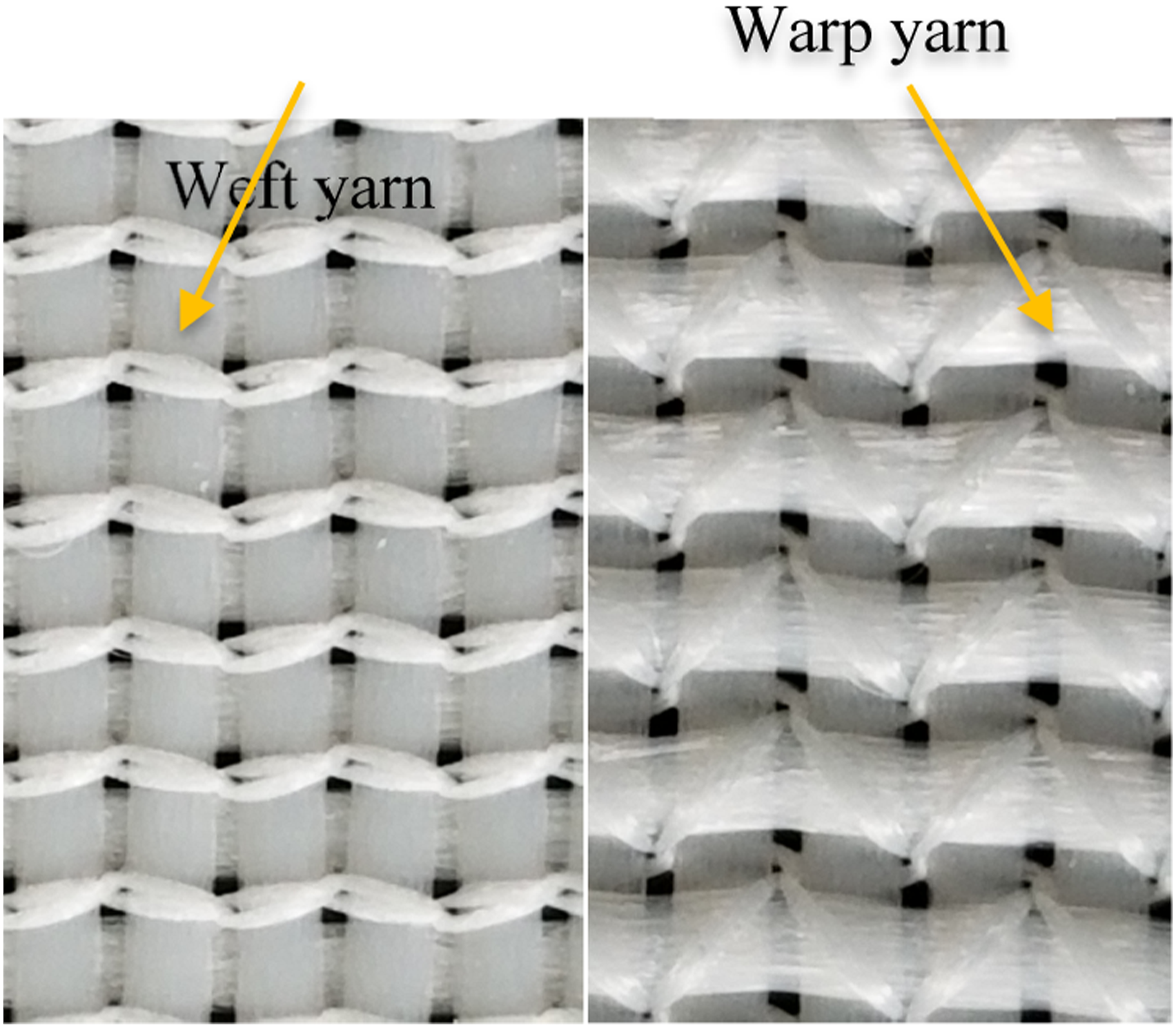
Coated biaxial warp-knitted (BWK) fabrics being used in this study are all commercial products produced by Seaman Corporation. The coated BWK fabrics (Seaman PVDF8028) consist of architectural colored exterior polyvinylidene Fluoride ( PVDF) layer and the white interior PVC layer, as shown in Figure 1. The detailed illustration of the base layer of warp-knitted fabrics is presented in Figure 2. Compared to ordinary plain woven fabrics, the warp and weft yarns of knitted fabrics are connected by the loop stitches, thus the yarns are parallel to each other and no crimp exists in yarns. Meanwhile, specifications of the tested coated BWK fabrics are listed in Table 1. Appearance of coated biaxial warp-knitted fabric. Base fabric layer. Specifications of the coated biaxial warp-knitted fabrics.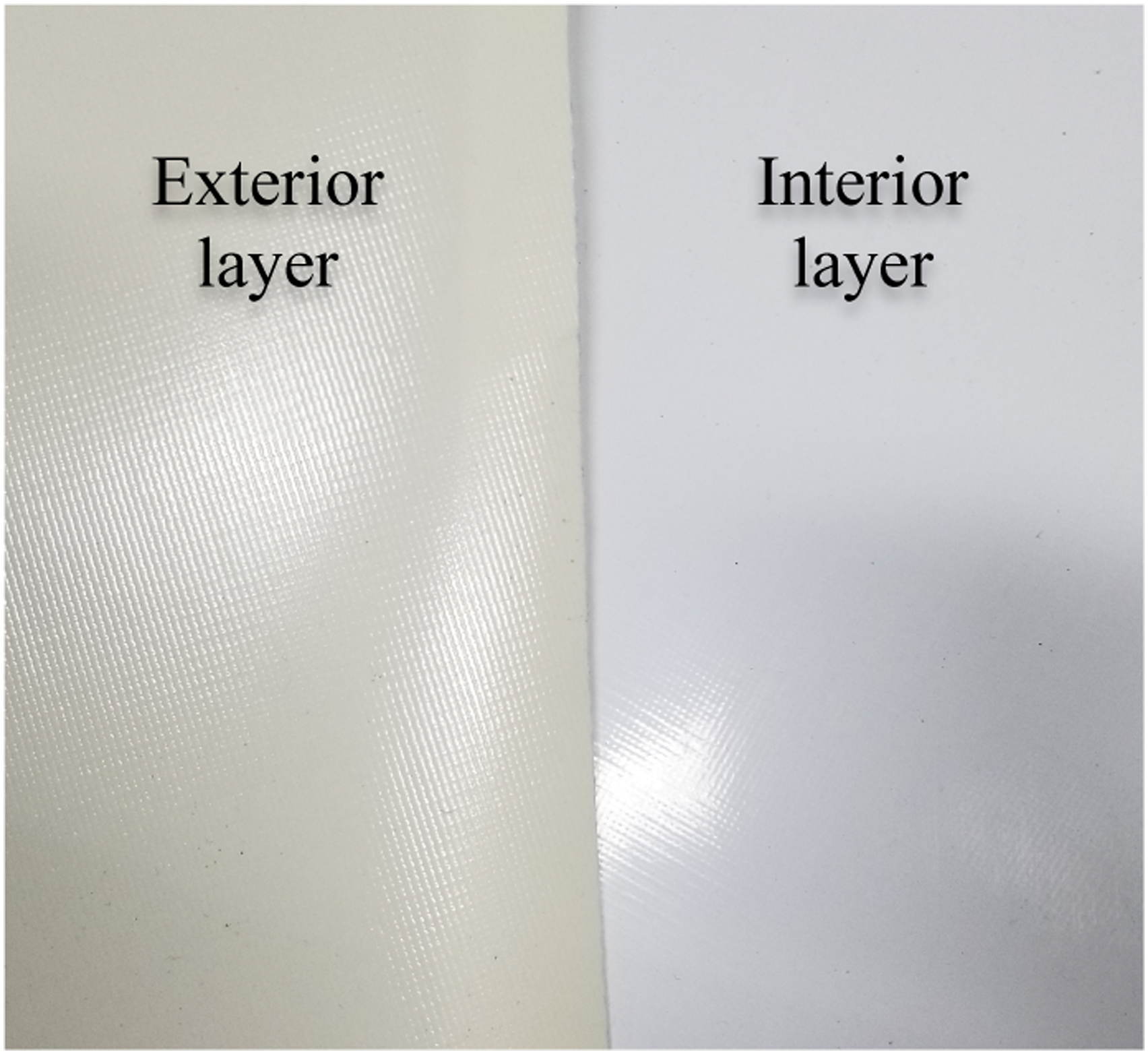

Off-axial tensile tests
The uniaxial tensile test is the most practicable and frequently used method for testing the mechanical properties of coated fabrics in research and engineering. The common strip specimen with clamping end was first used in the test, as shown in Figure 3(a). However, when the off-axial specimen (15°, 30°, 60°, or 75°) was stretched, damage always occurred at the clamping area which will lead to a highly reduced off-axial tensile strength. In order to reduce the stress concentration and avoid local damage in the clamped region and obtain the real off-axial tensile strength, the clamp area of tensile specimen was finally changed to winding area. The detailed illustration of the off-axial tensile specimens is presented in Figure 3(b). Rectangular specimens were used with length and width of 1000 mm and 50 mm, respectively. Along the length, deformation of the middle 200 mm part was recorded and its two ends were winded. Size of the winding area was 400 mm × 50 mm. Specimen dimension of off-axial tensile tests: (a) clamp end and (b) winding end.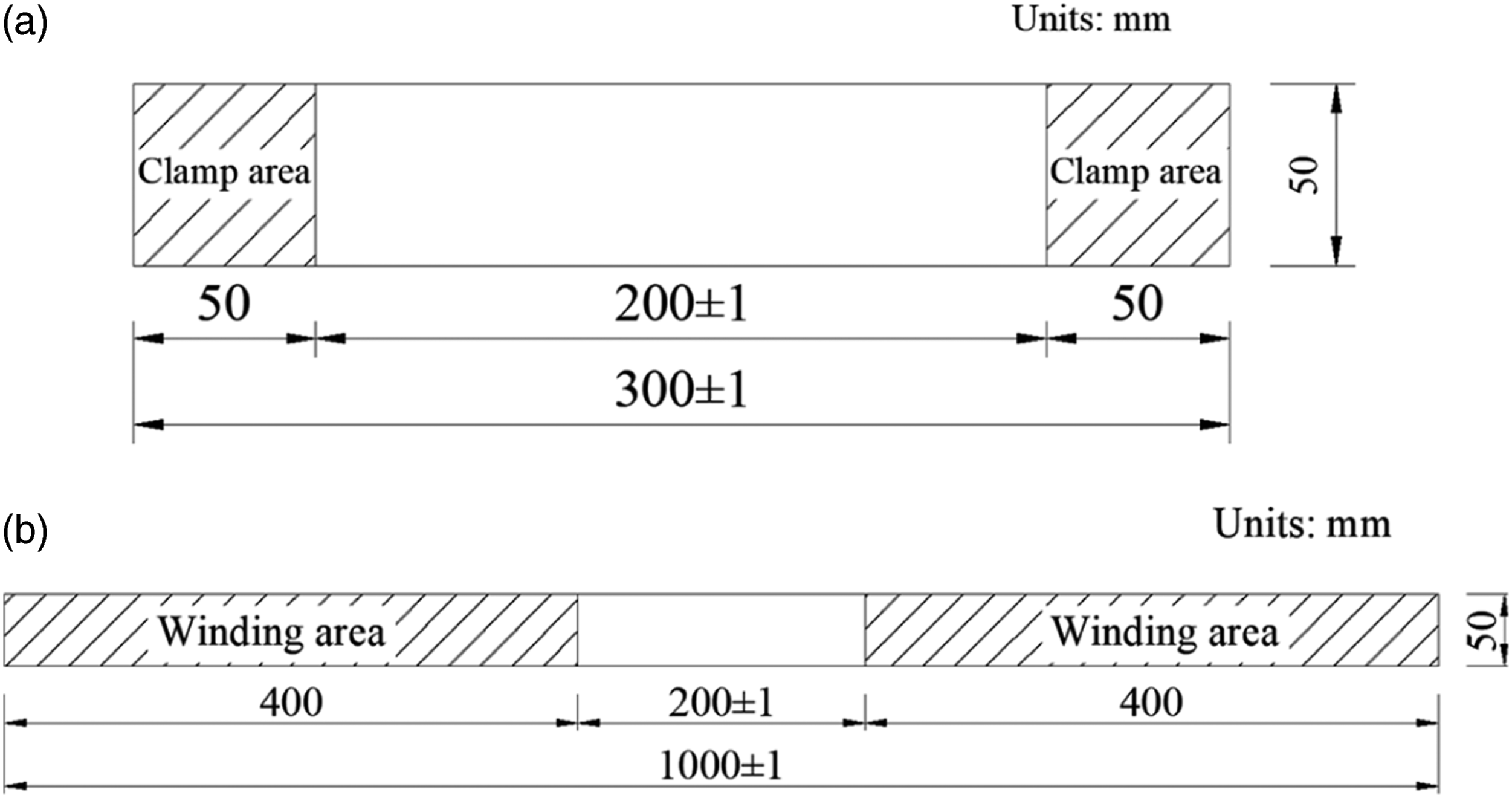
Off-axial tensile tests were carried out on a SANS-CMT4204 (MTS System, Shenzhen, China) testing machine, as shown in Figure 4. This machine was computer controlled, its precision in recording deformations was ±0.01 mm, and the precision of the recorded force was ±1.0 N.
30
All uniaxial tensile tests were carried out at the temperature of 20 ± 2°C and a relative humidity of 65 ± 4%. In addition, 5 N force preload was applied to the specimen before the formal loading, and the loading rate of these tests was fixed and set as 100 mm/min, which is recommend by Chinese Technical specification (DG/TJ08-2019–2007)
29
and ISO 527–1:2012 (ISO 2012).
31
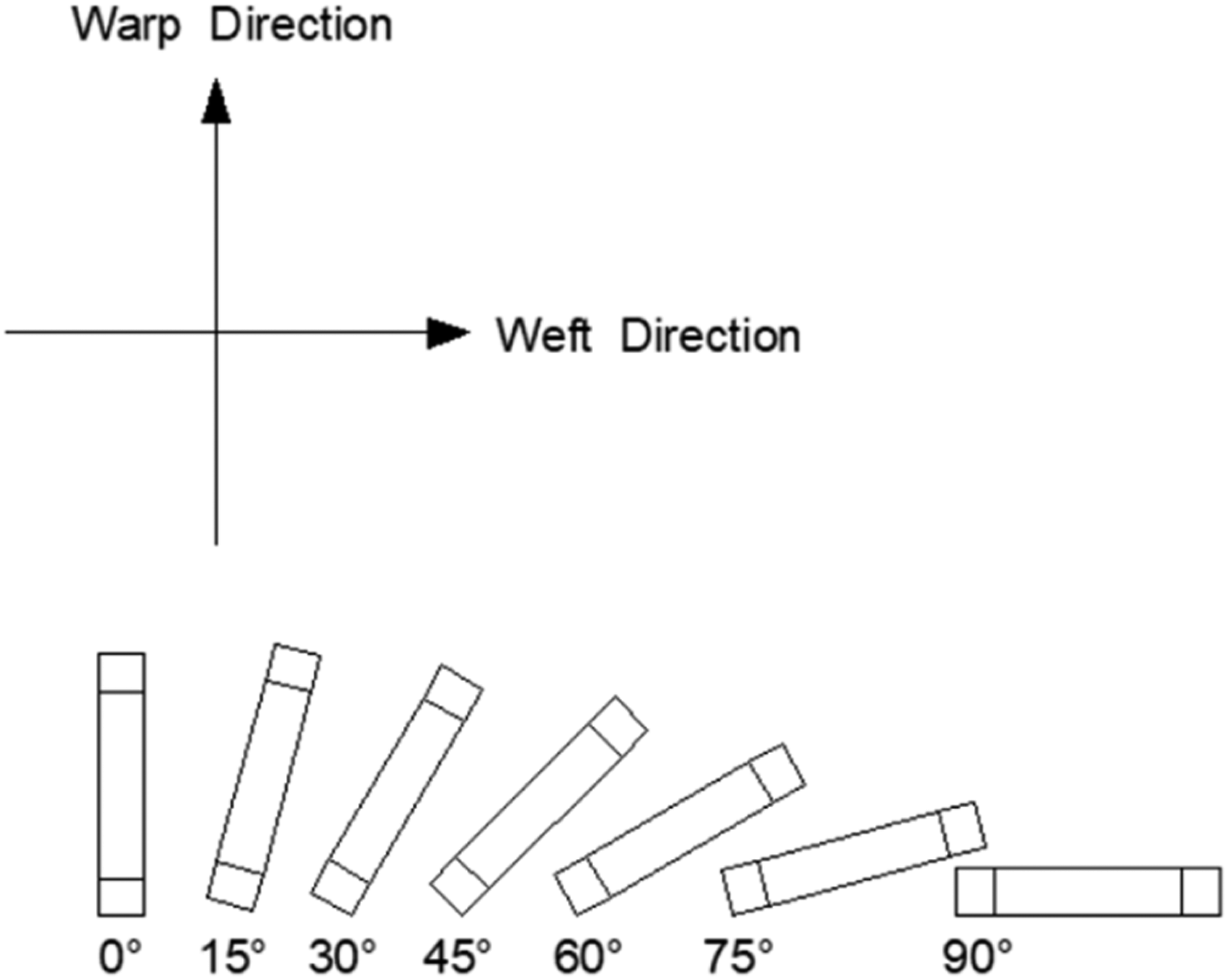
Preload was applied in order to eliminate wrinkles of the specimen and keep it flat, thus the impact of rigid displacement on deformation measurement can be reduced. The force is very small and has little influence on the test results like strength and stiffness. Rectangular specimens for off-axial tensile tests were cut from the whole piece of membrane material in seven directions: 0°, 15°, 30°, 45°, 60°, 75°, and 90° in a Cartesian plane, as shown in Figure 5. For each direction, five specimens were tested in order to minimize the experimental error. Every specimen was cut carefully, to ensure its edges are smooth. Equipment of off-axial tensile tests. Distribution of rectangular specimens for off-axial tensile tests.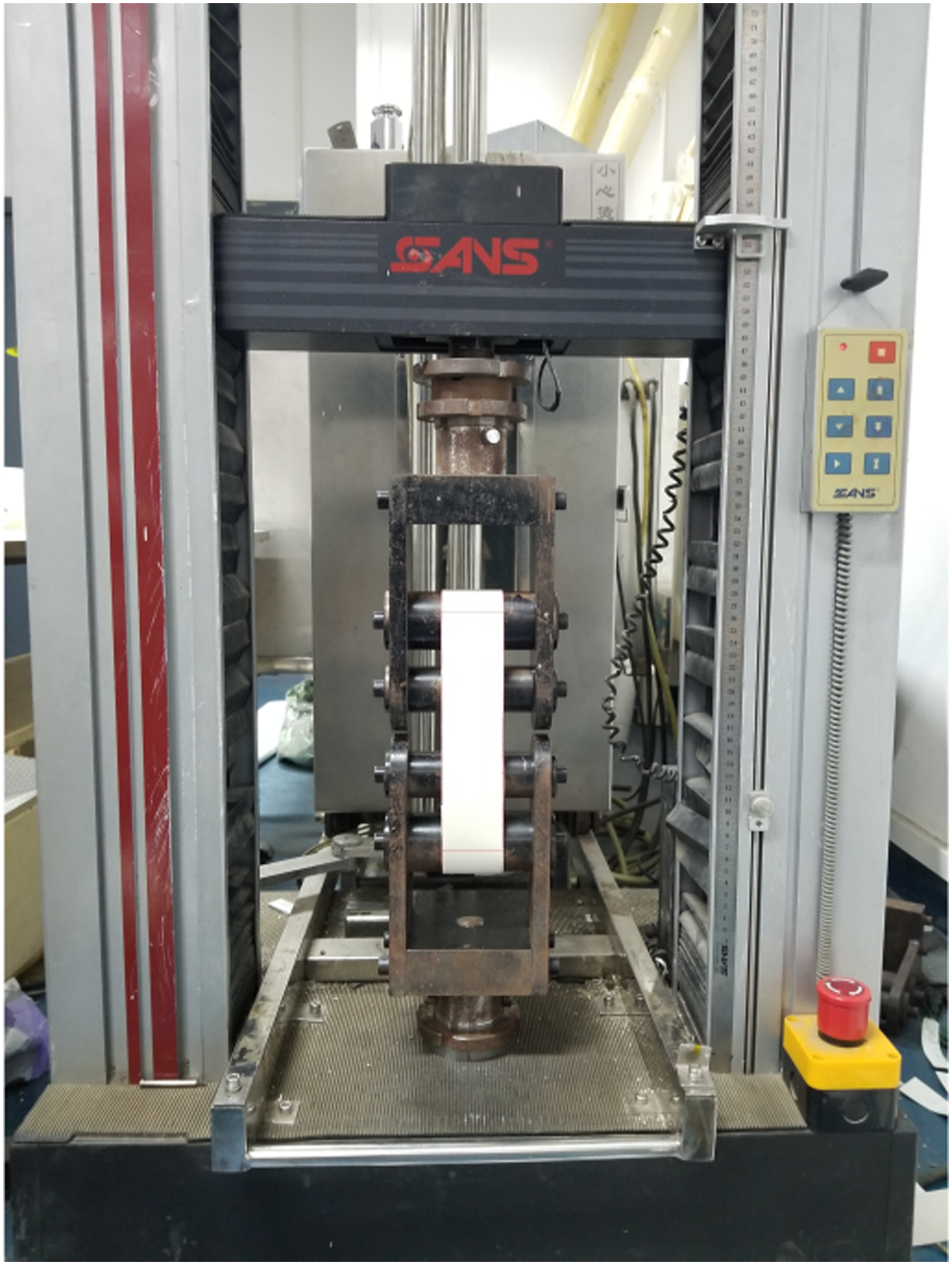
Uniaxial tensile creep tests
As the recently popular materials, membranes are significantly different from the traditional rigid materials in terms of the time-dependent characteristics, such as the creep and relaxation properties during long-term services. 32 This is because the geometric shapes and bearing capacity of membrane structures used to resist the external loads can only be achieved by introducing the prestress into membrane materials, which means that membranes will be always kept in the stressed conditions. Under the condition of external tension, the membrane will creep significantly with the passage of time.
In this regard, uniaxial tensile creep experiments were also carried out to understand the time-dependent properties of the coated BWK fabrics (refer to Chinese Technical specification (DG/TJ08-2019-2007)). 29 The creep tensile test specimen size was the same as uniaxial tensile test as shown in Figure 3(a), and five specimens were tested in both warp and weft directions. All uniaxial tensile creep tests were carried out at the temperature of 20 ± 2°C and a relative humidity of 65 ± 4%.
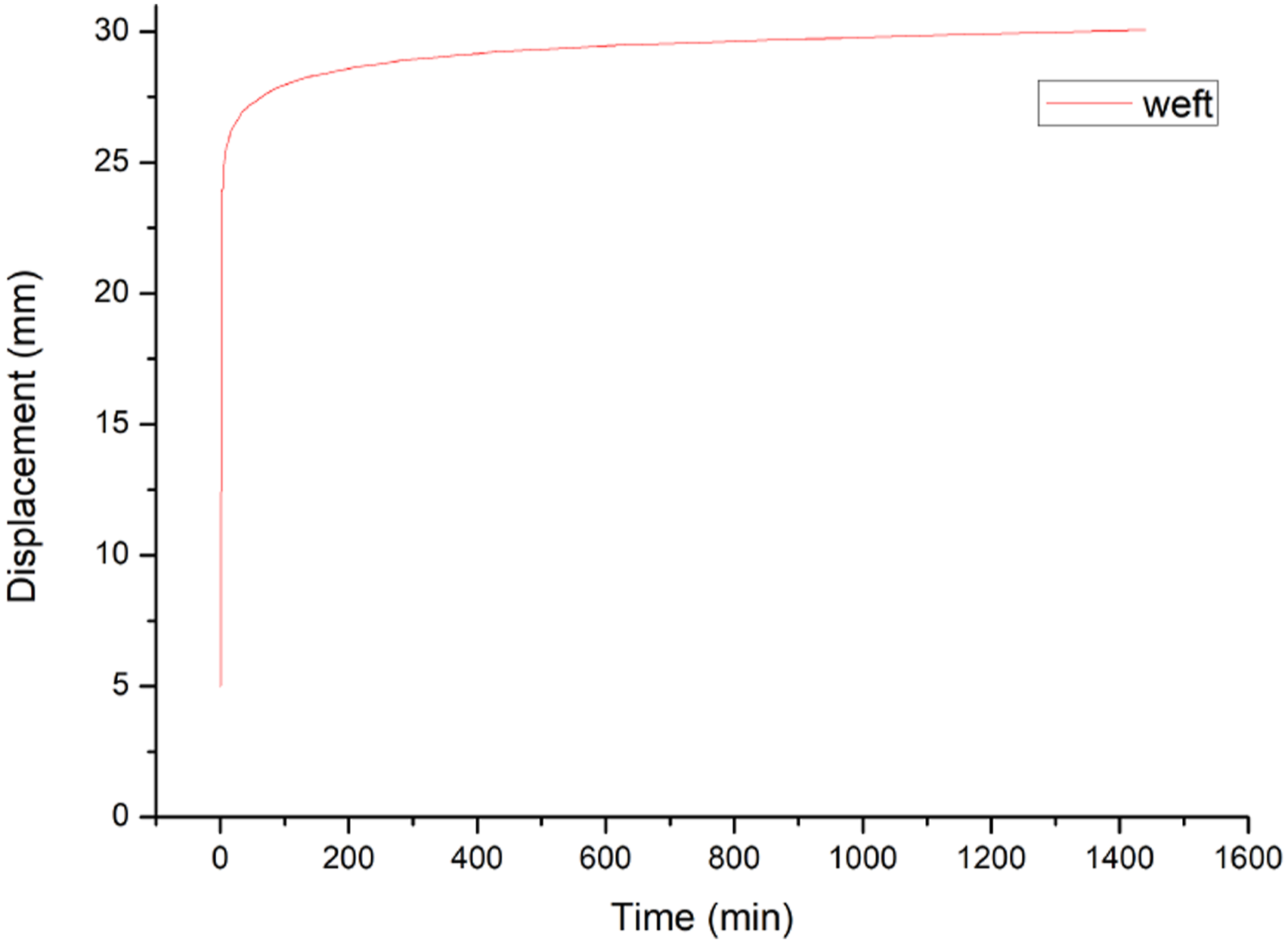
First, the specimen was loaded to 1/4 tensile strength, and the distance between the two clamping ends L1 at this time was recorded. Then, the constant tension level was maintained for 24 h. During this process, the displacement between the clamping ends will slowly increase and creep elongation can be calculated by
On one hand, the actual prestress of membrane structure is small, no more than 1/4 tensile strength as a rule. On the other hand, the maximum load of the biaxial tensile test is 1/4 tensile strength as well. So creep test load above 1/4 tensile strength is generally not considered. The theoretical and experimental studies on the stress relaxation and creep of membrane materials are very complicated. In this article, only routine and preliminary research studies have been done, and corresponding experimental phenomena and conclusions are obtained. The influence of load ratio and temperature on creep behavior will be further studied.
Tearing tests
After uniaxial tensile tests were performed, including off-axial tensile tests and uniaxial tensile creep tests, tearing tests of coated BWK fabrics were carried out.
Catastrophic failure caused by crack propagation is one of the most common failure modes of tensile membrane structures, so the tearing resistance of the coated fabric is the key issue of structural design as well. At present, the commonly used testing methods for measuring tearing strength of coated fabrics are trapezoidal 33 and tongue tearing method. 34 Because the tearing mode of the trapezoidal specimen is simple and the results are consistent, it is adopted by Chinese code. 29
The trapezoidal specimens were adopted for tearing strength tests of coated BWK fabrics, according to DG/TJ08-2019–2007.
29
Tearing tests were also carried out on the SANS-CMT4204 testing machine, as shown in Figure 6(a). Dimension of tearing tests specimen is shown in Figure 6(b). The specimen was first cut into a 180 mm × 50 ± 0.5 mm rectangle with an isosceles trapezoid marked on it. Then, a cut of 25 ± 0.5 mm in length was made at the center of smallest base of the trapezoid. During tearing test, the shadow area was clamped along the nonparallel sides of the trapezoid in jaws of the testing machine. Therefore, the short base was kept tensioned while the long base was folded. When the machine started, an increasing force acted on the specimen, tearing it along the incision until it was all torn. The rate of loading was 100 mm/min. For tearing tests, five specimens in warp direction and five specimens in weft direction were experimented, respectively. The average tearing strength of five specimens in each direction was taken as the test result. Equipment and specimen dimension of tearing tests: (a) equipment of tearing tests; (b) dimension of tearing specimens (mm).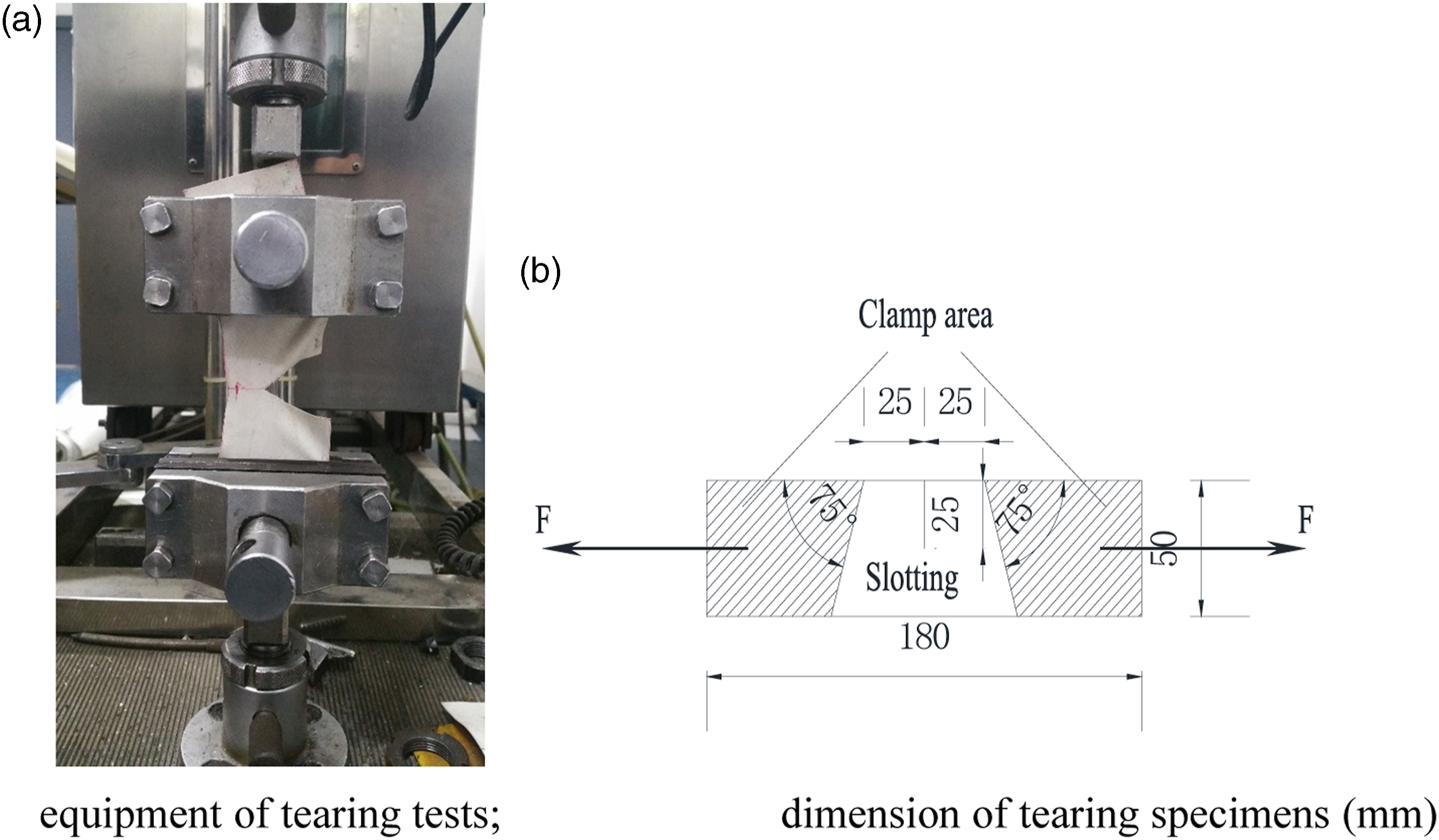
Biaxial tensile tests
Coated BWK fabrics are commonly biaxial tensioned in practical engineering application. To investigate their biaxial mechanical properties, biaxial tensile tests were performed in this article. Membrane Structures Association of Japan (MSAJ)
35
proposed a detailed test procedure in evaluating the elastic constant of membrane materials under biaxial loading. Standard biaxial test procedure is described in Figure 7 by the following steps: (1) prepared specimens as shown in Figure 8 and fixed four arms of the specimen on the biaxial tensile machine; (2) pre-stretched the specimen three times under loading ratio 1:1; and (3) tensed the specimen under the certain ratio and recorded the stress–strain curves. The loading rate was 100 mm/min and the loading ratio (warp/weft) was in the following order: 1:1, 2:1, 1:2, 1: 0, and 0:1. During this process, the stress–strain data of five specified load ratios (warp: weft) are recorded. As can be seen, three times 1:1 biaxial loading procedure should be completed in order to remove the residual strains before each specified load ratio is performed. The maximum load range is set as 1/4 tensile strength (minimum tensile strength in warp and weft direction) with a standard tensile rate of 2-4 mm/min. Biaxial test procedure. Equipment of biaxial tensile tests.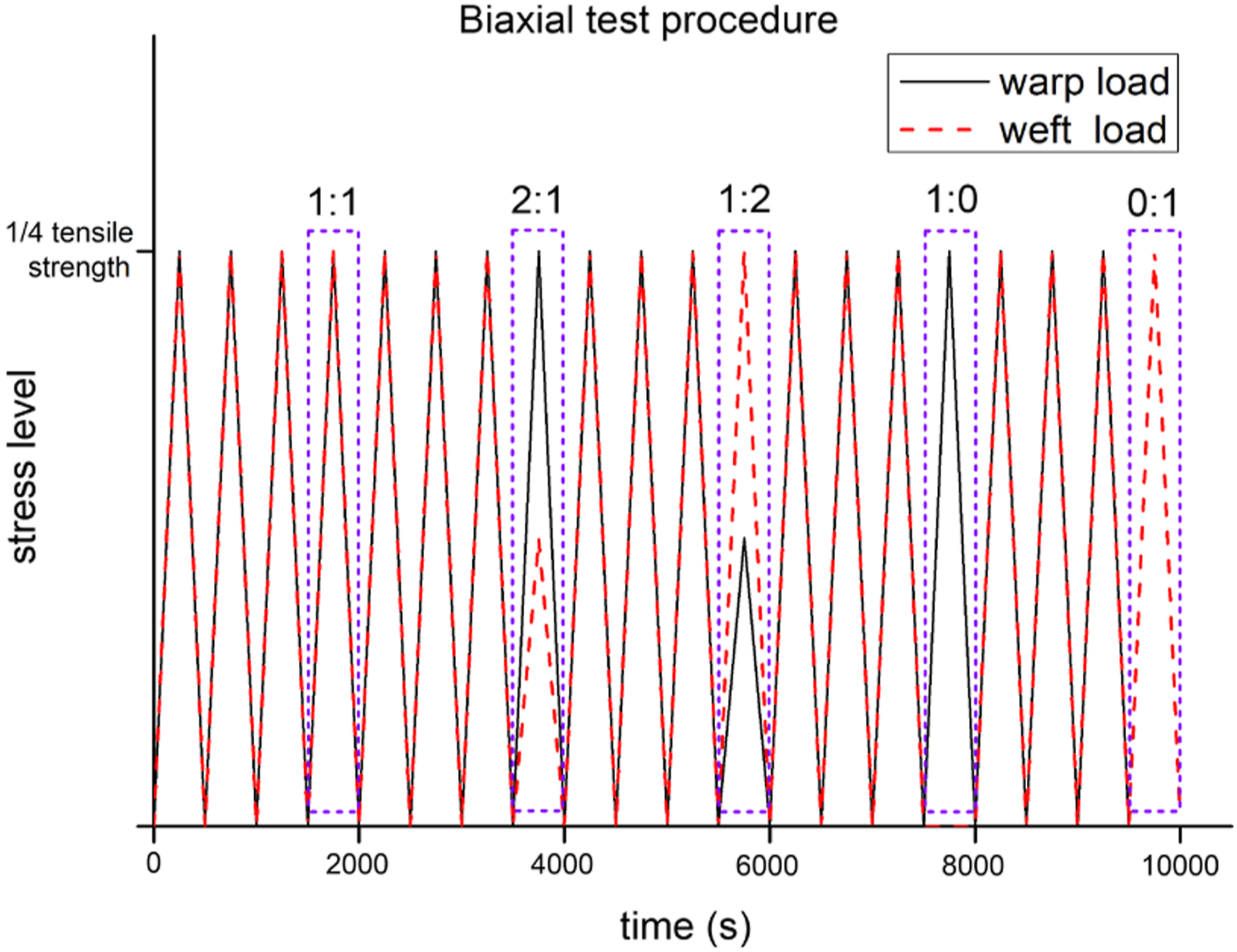

The biaxial tensile testing machine is developed by Tongji University. As shown in Figure 8, it is composed of servo loading device, membrane clamping device, and tension sensor. The control system consisting of computer, control module, and correlative software completes biaxial loading and unloading of membrane materials. 36 The Digital Image Correlation method (DIC) was utilized to measure the strain of the fabrics during the tensile progress. Stress–strain data are selected per 1 kN/m under five load ratios for calculation.
Flat cruciform specimens were adopted in these tests, as illustrated in Figure 9. It was with the cross area of 16 cm × 16 cm, and the cantilever of 16 cm. The shape of the cross corner was rounded with a radius of 10 mm in order to avoid the stress concentration. In order to eliminate wrinkles in the arms of the specimen and transfer the force effectively, five long slits were set in each tensile arm. During the biaxial tensile tests, the ends of four arms were clamped. For biaxial tensile tests, three coated BWK fabric specimens were tested according to MSAJ.
35
Dimension of biaxial tensile specimens (cm).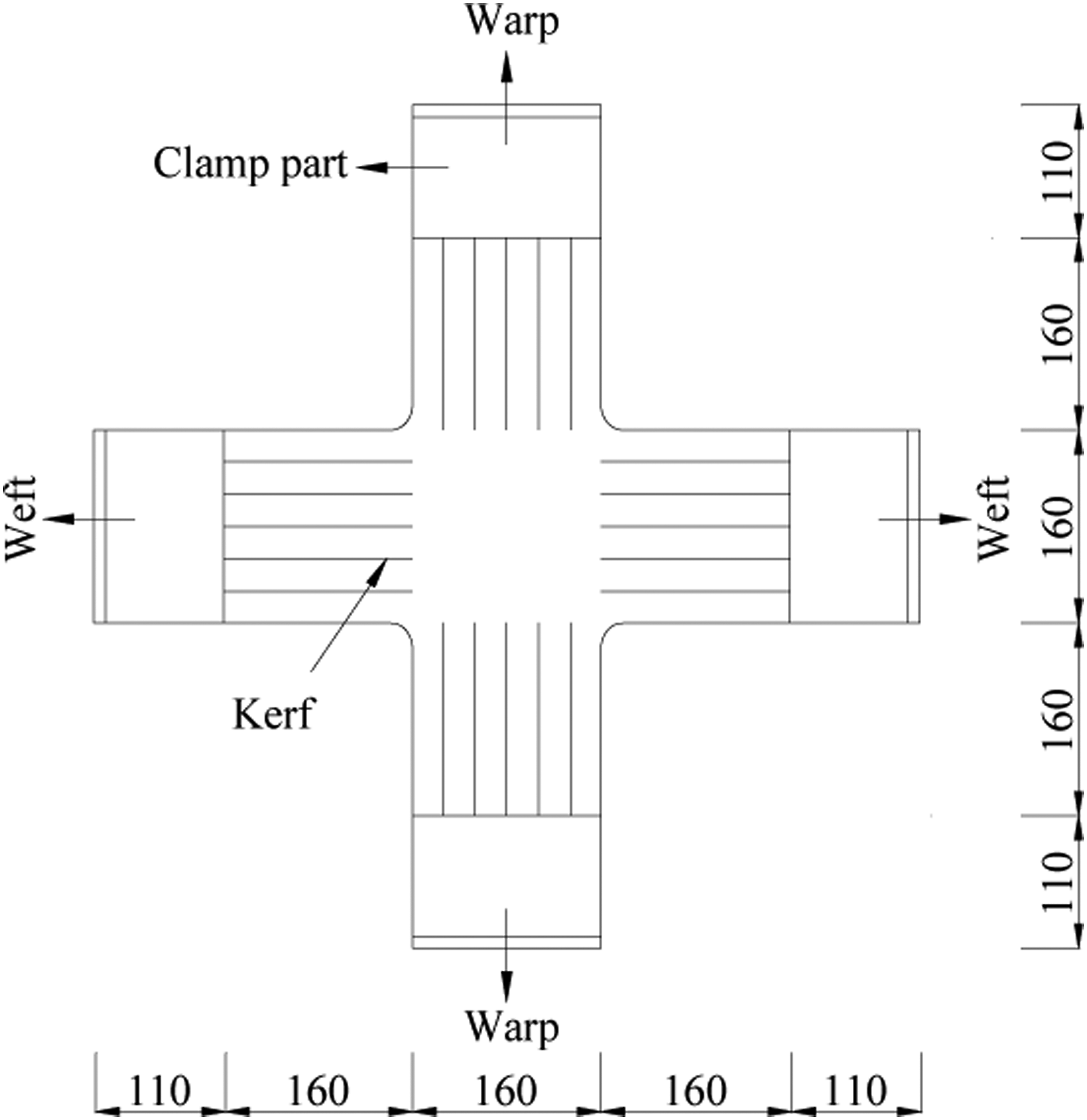
In recent years, Digital Image Correlation instrument has been widely used to measure the strain field. The DIC technique consists in recording the surface image of the object at least twice, once before loading the sample and the others after deforming the sample. The strain field is then obtained by derivation of the displacements measured between these graphs. This technique allows determining in-plane strain fields on the surface of material samples.23,37
In this test, the strain in the central area of biaxial test specimens is measured for calculating, and a random grainy pattern is drawn in order to be identified by the DIC instrument. The surface image sampling frequency is 1 Hz (sampling one image in one second), and after calculating these images in whole biaxial loading process by DIC technique, we can get the measured strain field.
For coated woven fabrics, crimp interchange is the interaction between orthogonal warp and weft yarns, which leads to fundamentally nonlinear stress–strain behavior. Under biaxial load, the ratio of the applied loads will determine the equilibrium configuration of the crimp, and this balancing of the crimp results in a highly variable Poisson’s ratio. However, the stress–strain curves of coated BWK fabrics are basically linear under five different biaxial load ratios, as shown in Figure 10. Even under the load ratios of 1:2 and 2:1, the curve of the less loaded direction has no negative strain or nonlinear part, which is different from the biaxial test results of coated woven fabrics. Stress–strain curves under biaxial load.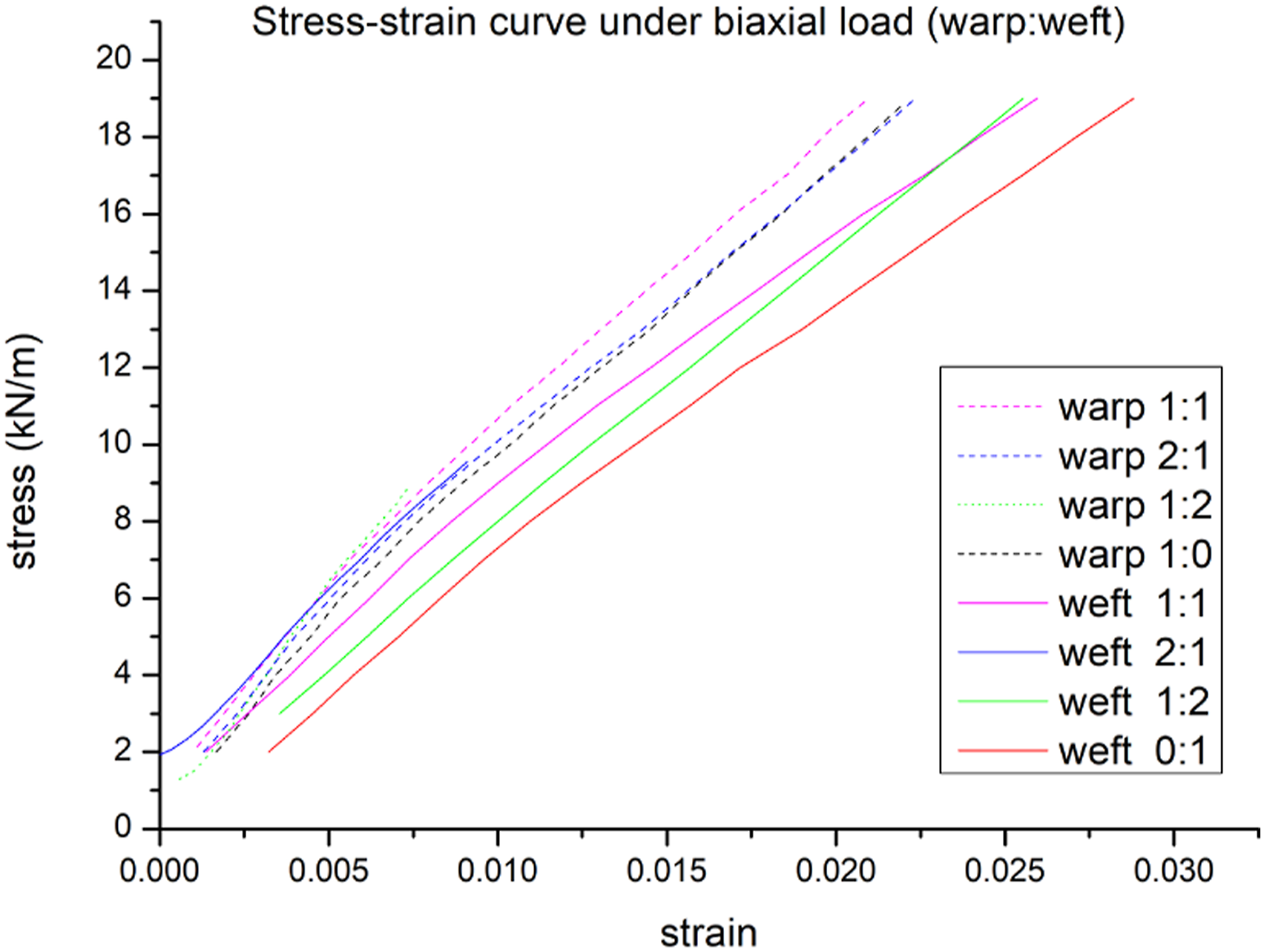
Results and discussion
In this part, results of all tests are presented, such as off-axial tensile tests, uniaxial tensile creep tests, tearing tests, and biaxial tensile tests. Moreover, the adaptability of linear orthotropic model is verified, and the elastic constants and Poisson’s ratio are calculated using the least squares method based on linear orthotropic assumption.
Results of off-axial tensile tests
As we know, the strength criteria and failure mechanisms are important for the design and analysis of membrane structures. Nowadays, off-axial tensile tests may be the most suitable method to analyze the failure mechanism of coated fabrics, although it can only produce some simple stress states. The fracture morphologies of tested off-axial tensile specimens along different loading directions are shown in Figure 11. Failure modes of off-axial tensile specimens.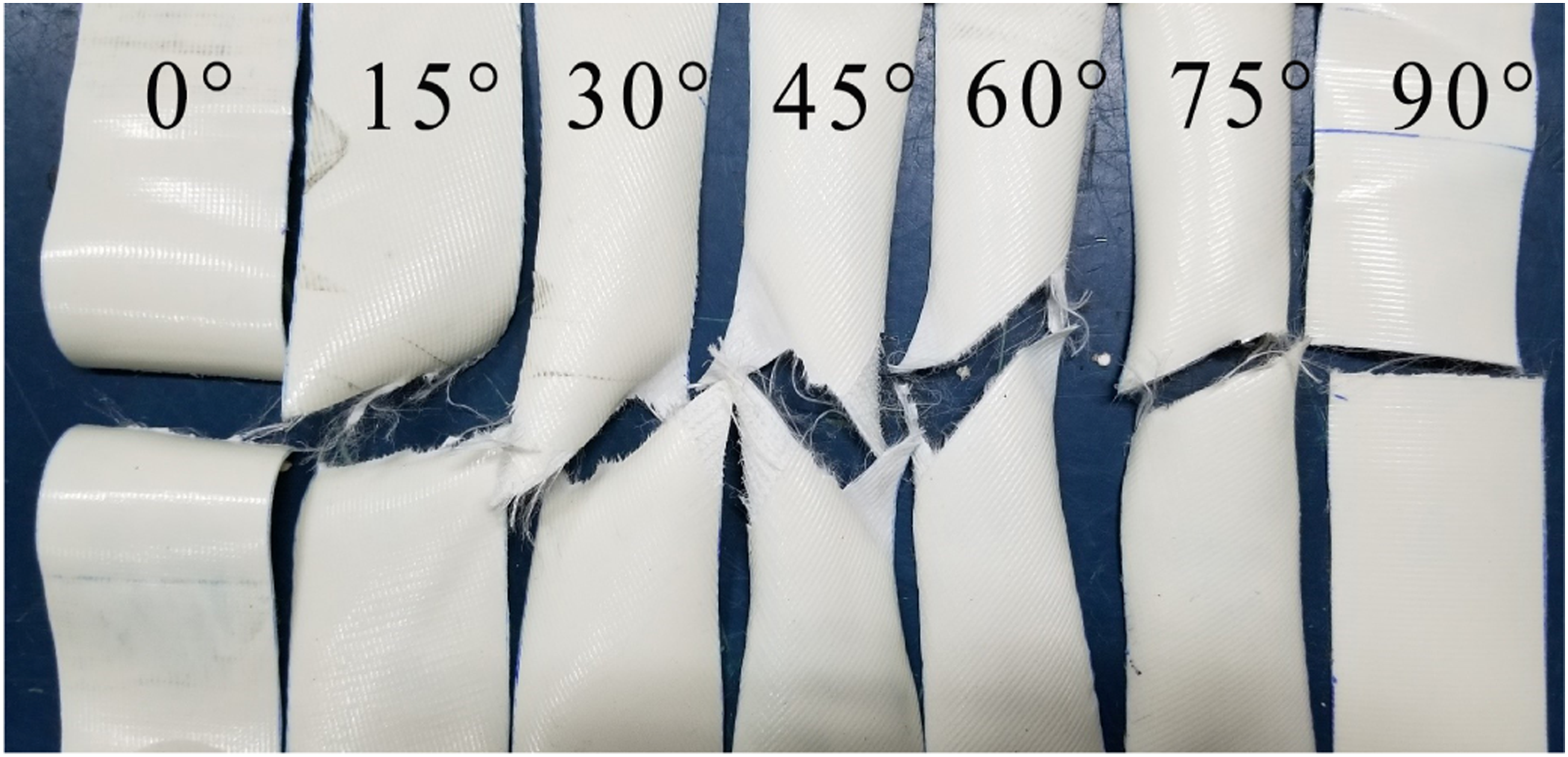
As can be seen, (1) the specimens of warp (0°) and weft (90°) directions both show a simple tensile failure mode, characterized by the fact that all the fibers were fractured at the same location and the neat fracture section was perpendicular to the loading direction. (2) As for the off-axial specimens at 15° and 75° direction, the angle between fracture surface and the stretching direction is about 75°, which means the fracture surface is still in the weft and warp directions, respectively. Similarly, the angle between the fracture surface and stretching direction of the specimens at 30° and 60° direction are both 60°, meaning the fracture surfaces are in the weft and warp directions as well. These specimens at 15°, 75°, 30°, and 60° direction show mixed tensile-shear failure mode. The feature is that under the joint action of tensile stress and in-plane shear stress, the coating and yarns were detached at the edge of specimens, and the middle fibers were broken, leading to the material failure. (3) Besides, the failure mode of the specimens at 45° direction is totally different, the damage is no longer a cross section and the failure section is in the shape of a 45° sharp angle. It can be seen that the warp and weft yarns on both sides of the specimens are fractured and detached from the coating. It is worth mentioning that, with the stretching direction changing from warp (0°) or weft (90°) direction to 45° direction, the lateral shrinkage deformation increases due to structure of the basic fabric.
Therefore, for the off-axial tensile tests, damage always occurs at the fiber of lower strength or its interface with the coating. The joint action of tensile stress and shear stress accelerates the failure of membrane material.
The stress–strain curves of off-axial tensile tests are illustrated in Figure 12. As can be seen from the curve of specimens in warp (0°) and weft (90°) directions, the stress–strain relation is apparently different from that of typical coated woven fabrics. The reasons are easy to fathom. As for coated woven fabric materials, due to the warp and weft yarns are cross-woven, there is crimp interchange during the initial stretching, resulting in a nonlinear stress–strain relationship with small rigidity. However, the warp and weft yarns of the coated BWK fabrics are arranged in parallel and no crimp exists, as mentioned above from chapter 2.1, so that both warp and weft yarns can directly bear the external load during the initial stretching. Stress–strain curves of off-axial tensile tests.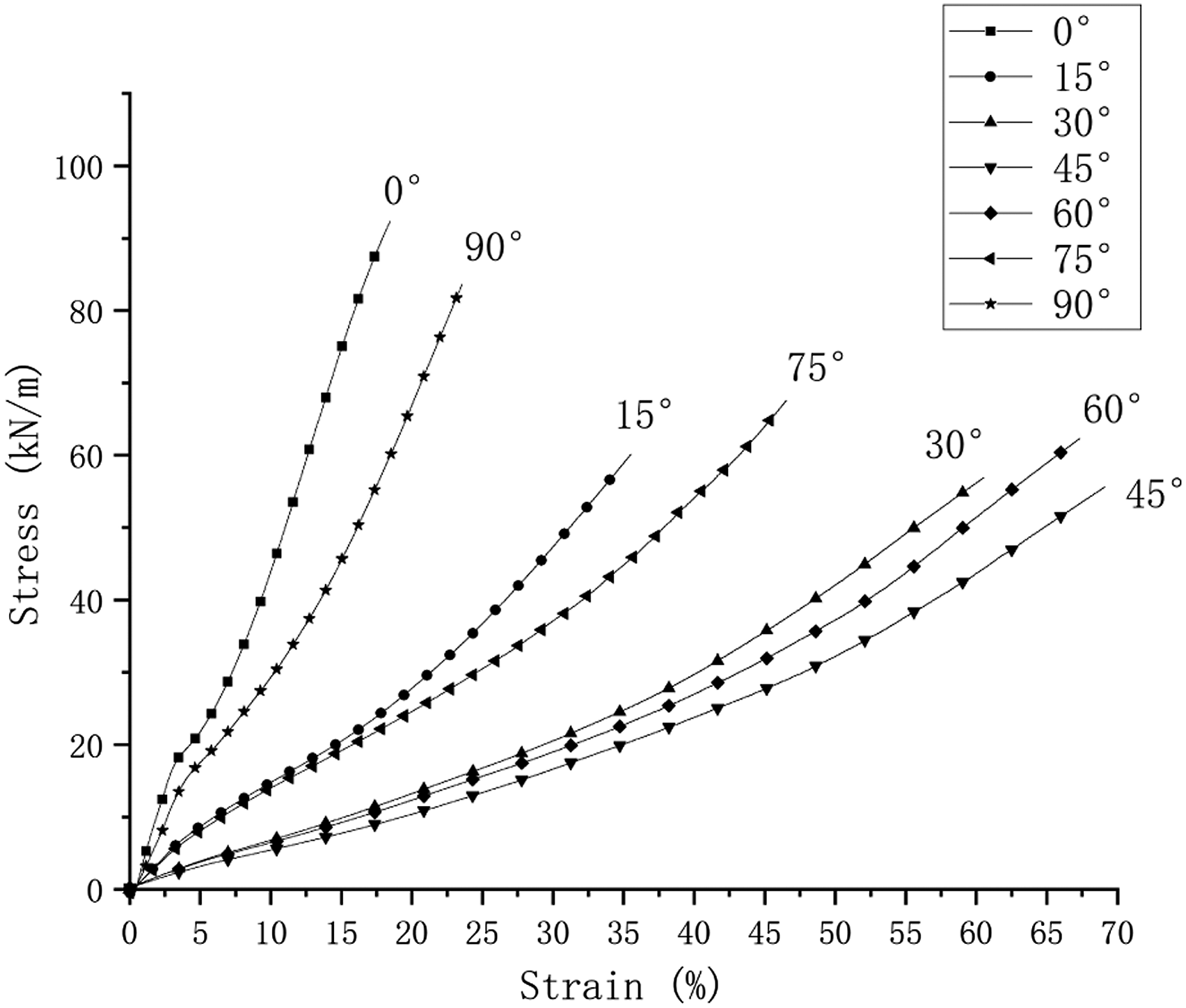
As can be seen from Figure 12, the nonlinear characteristics of coated BWK fabrics are significant. Meanwhile, the mechanical properties are significantly affected by its off-axis angle, so that the coated BWK fabrics demonstrate obvious anisotropy. The stress–strain curves can always be considered as three stages: the initial linear elastic stage, the strain hardening stage, and the stress strengthening stage, as described in Figure 13. Three-stage nonlinear constitutive relation of off-axial tensile stress–strain curves.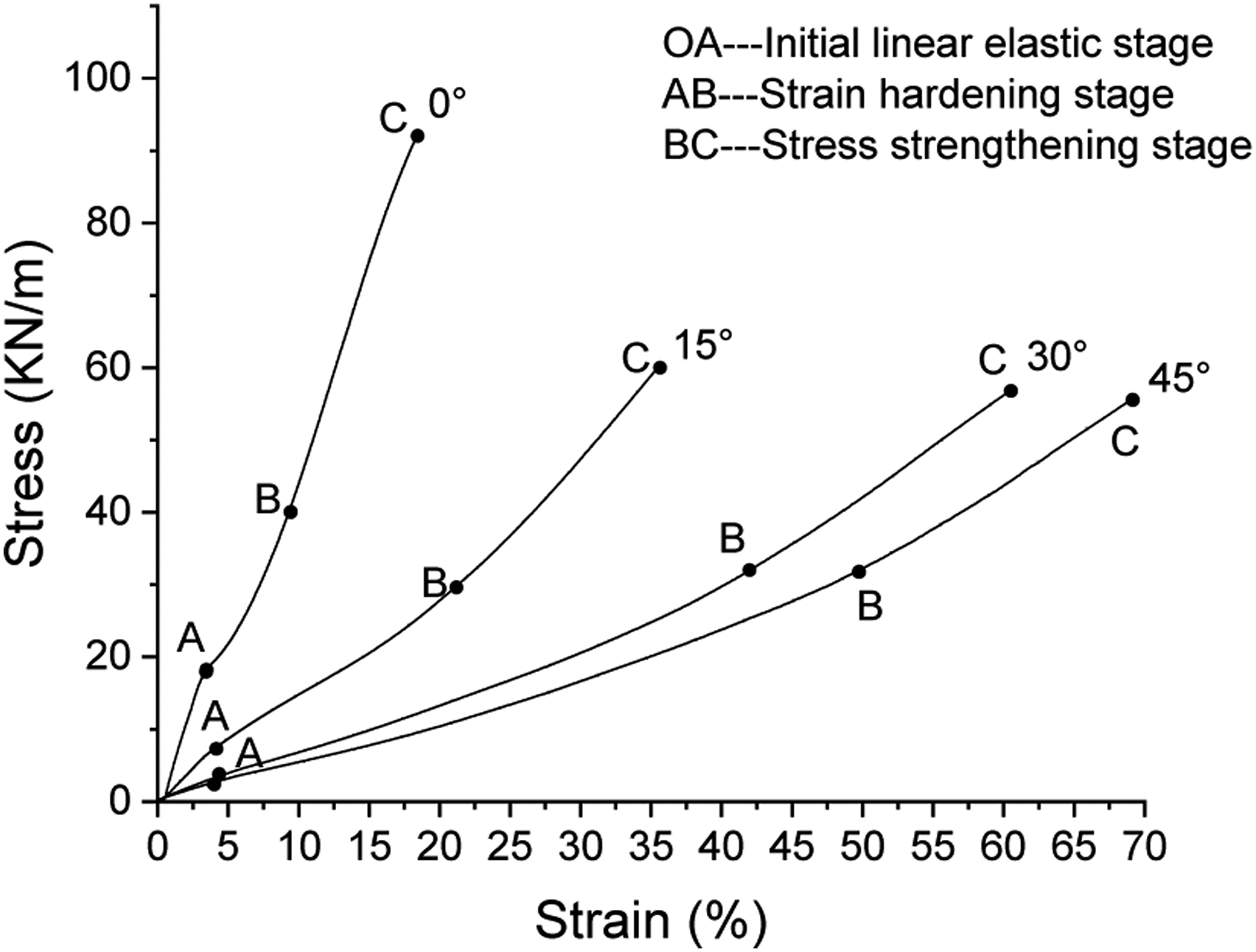
(1) OA (initial linear elastic stage): In the first quasi-linear stage, the deformation is small and the linear characteristics are obvious. At this time, both the polymer coating and the base fabric fibers bear the external load. With the increase of off-axis angle, the strain range in the OA stage decreases first and then increases, which reaches the minimum at 45°.
(2) AB (strain hardening stage): In this nonlinear stage, strain increases faster and stress increases slowly, and the polymer coating bears the load together with base fabrics. With the increase of strain, the coating begins to detach from the base fabrics, thus the stress is gradually carried by the base fabrics only. In this stage, the shearing effect is obvious, which accelerates the deformation process. With the increase of off-axis angle, the strain range in the AB stage increases first and then decreases, which reaches the maximum at 45°.
(3) BC (stress strengthening stage): In this second quasi-linear stage, the load is mainly born by yarn fibers. The stiffness of yarn is relatively large and the stress increases more quickly than the AB stage. In the later stage, the necking phenomenon appears on the specimen, indicating that the material is close to the bearing limit. The strain range in the BC stage differs as the off-axis angle changes, which reaches the minimum at 45°.
In summary, comparison of the stress–strain curves of off-axial tensile tests shows that (1) the stress–strain curves of seven different off-axis angles basically conform to a three-stage nonlinear constitutive relation. (2) The mechanical properties of fabrics are symmetrically related to the 45° axis, as shown in the three groups of curves, 0° and 90°, 15° and 75°, and 30° and 60°. (3) When the off-axis angle gets closer to 0° or 90°, the membrane can withstand a larger tensile load and the tensile strain gets smaller. Conversely, the closer the off-axis angle gets to 45°, the larger the tensile strain withstands and the smaller the tensile strength is. (4) With the off-axis angle getting closer to 0° or 90°, the nonlinear characteristics of the stress–strain curve become more obvious.
The stiffness of coated fabrics is related to the base fabrics and coating. Comparing the initial stiffness of the specimen at the seven directions under the stress level of 10 kN/m, the gradation of material stiffness is 0° > 90° > 15° > 75° > 30° > 60° > 45°. This property of coated BWK fabrics is also different from coated woven fabrics. As we know, the stiffness of coated woven fabrics is not sensitive to different off-axial directions, considering that the coating is generally an isotropic material. For BWK fabrics, the yarns are directly stretched when applied load at 0° direction and thus the initial stiffness is the largest. From 15° to 30° and finally to 45° direction, with the off-axis angle enlarging, the deformation of base fabric structures increases accordingly since the external tensile load cannot directly act on the main direction of the yarn. Therefore, the initial stiffness of coated BWK fabrics continues to decrease. The similar conclusion can be drawn if off-axis angle changes from 90° to 45°. Since the BWK fabric has a greater stiffness in warp direction than in weft direction, the corresponding off-axial stiffness of the warp direction is also greater than that of the weft direction (15° > 75°, 30° > 60°).
Average value of off-axial tensile strength and elongation at break.

It can be summarized by analyzing the test data in Table 2: (1) When the off-axis angle is 0° or 90°, the tensile strength of coated BWK fabrics gets the maximum value, while the elongation at break gets the minimum value. The tensile strength in the warp direction is slightly greater than that in the weft direction, and the fracture elongation in the warp direction is less than that in the weft direction. (2) To the contrary, when the off-axis angle is 45°, the tensile strength is the smallest, and the elongation at break is the greatest. Compared with the pure tensile failure of uniaxial tensile specimen (0° or 90°), off-axial specimens are subjected to mixed tensile and shear action, leading to yarns pulling more easily, especially when the off-axis angle is 45°. (3) The gradation of elongation at break of the coated BWK fabrics is opposite to that of the stiffness, with a maximum value at 45° off-axial direction since the warp and weft yarns can bear the external forces together.
Besides, the tensile stress (kN/m) at break of off-axial specimens at different directions is illustrated in Figure 14. Results show that the tensile stress in two main directions (warp and weft directions) is larger than others, while the specimen at 45° off-axial direction gets the minimum tensile stress. Considering the symmetric material structure of coated BWK fabrics, the tensile stress at break also shows symmetry. The unit of tensile stress of membrane material is kN/m, which can be referred to other literatures10,36 and specifications for membrane structures.29,31 Because the thickness of the tested biaxial warp-knitted fabrics is 0.88 mm, 1 kN/m is equivalent to 25/22 MPa in this article. Tensile stress at break of the off-axial specimens at different directions.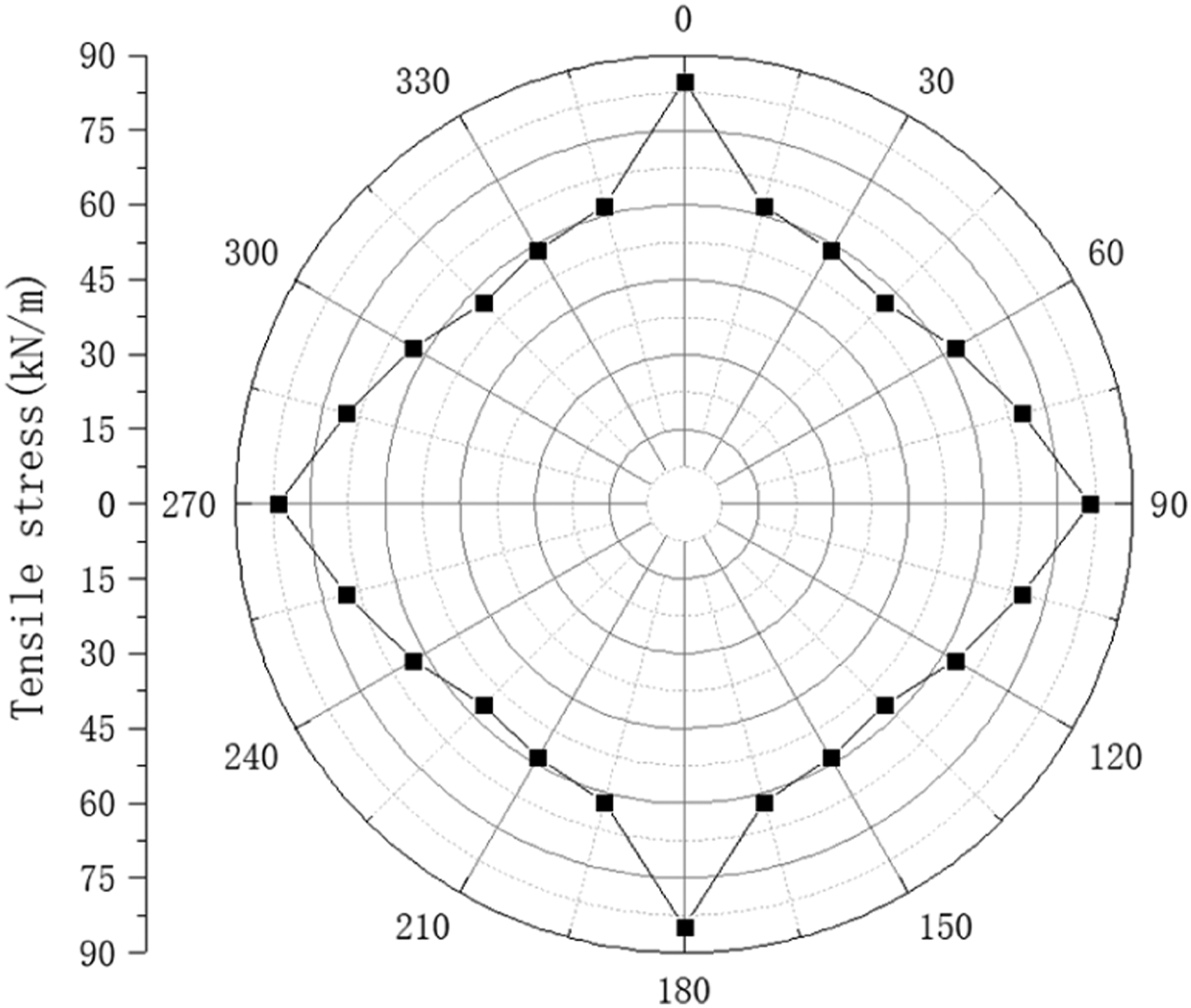
Strength criterion applicability verification
In membrane structures, materials are often under complex stress states, so it is necessary to judge the safety–damage limit state of materials and establish the strength prediction criterion. The strength criterion is an important foundation for theoretical research and engineering application.
The strength criterion should have the following characteristics. First, it can reflect the fundamental properties of materials, such as tensile or compressive strengths. Second, the equation should be mathematically simple and be suitable for different materials under various stress states. Third, it should be easy for application in an analytical and numerical solution. 38
Several strength criteria used in composite materials may be applicable, such as the maximum principal stress criterion, the maximum principal strain criterion, the Tsai–Hill criterion, and the Norris criterion. Among them, the Tsai–Hill strength criterion is most widely used because of its high precision. It can consider the interaction of the warp and weft directions. Moreover, it is simple and concise for engineering applications. Coated BWK fabric is a type of composite material which is orthogonal anisotropic; the adaptability of Tsai–Hill strength criterion and Norris strength criterion are investigated in this article. The Tsai–Hill strength criterion can be expressed as
Therefore, the Tsai–Hill strength criterion for off-axial tensile tests can be expressed as
At present, there is no suitable method to test the in-plane shear strength; 7 the in-plane shear strength can be calculated by equation (3), using the tensile strength of 0°, 90°, and 45° off-axial specimen.
Besides, the Norris strength criterion can be expressed as
In a similar way, the Norris strength criterion for off-axial tensile tests can be expressed as
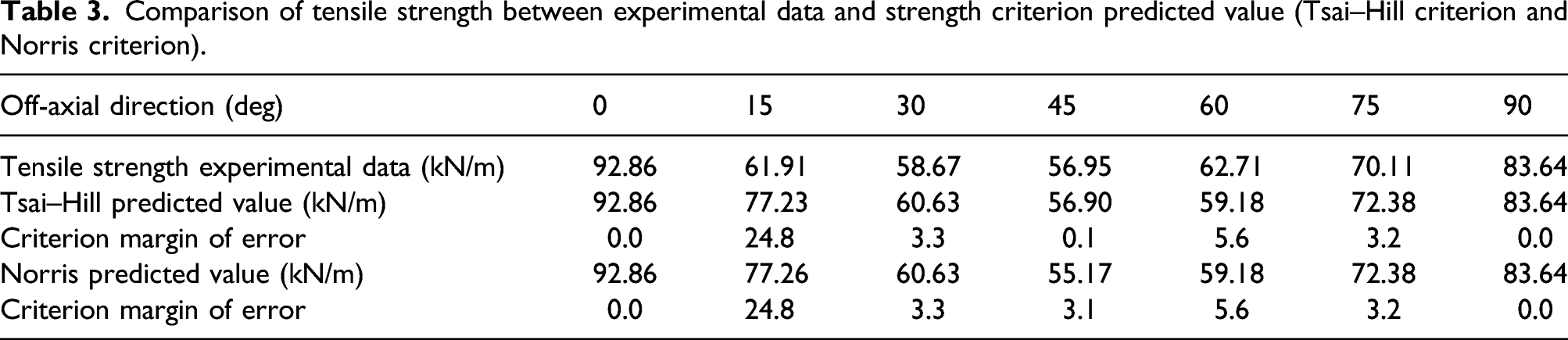
Using equations (3) and (5), the applicability of Tsai–Hill strength criterion and Norris strength criterion can be verified, respectively, based on experimental data of off-axial tensile tests. The comparison of tensile strength between experimental data and values predicted from Tsai–Hill criterion is shown in Figure 15. As for off-axial specimens of 60° and 75° angle, Tsai–Hill strength criterion can make a good prediction for the tensile strength. Moreover, the off-axial tensile tests with a small off-axis angle (θ = 15° or θ = 30°) show some deviations in the prediction of the tensile strength. This is because when the off-axis angle is small, the two ends of the main force fiber bundles are directly stretched in an oblique direction, resulting in excessive shear stress, which speeds up the destruction of the material. According to the analysis of the fracture mechanism of the coated fabrics, the failure mode of the specimen at 15° or 30° direction is tensile-shear mixed fracture. As can be seen from Figure 15, the prediction of the fracture strength of the coated BWK fabrics under this mixed tensile-shear failure mode seems not very successful. Comparison of tensile strength between experimental data and Tsai–Hill criterion predicted value.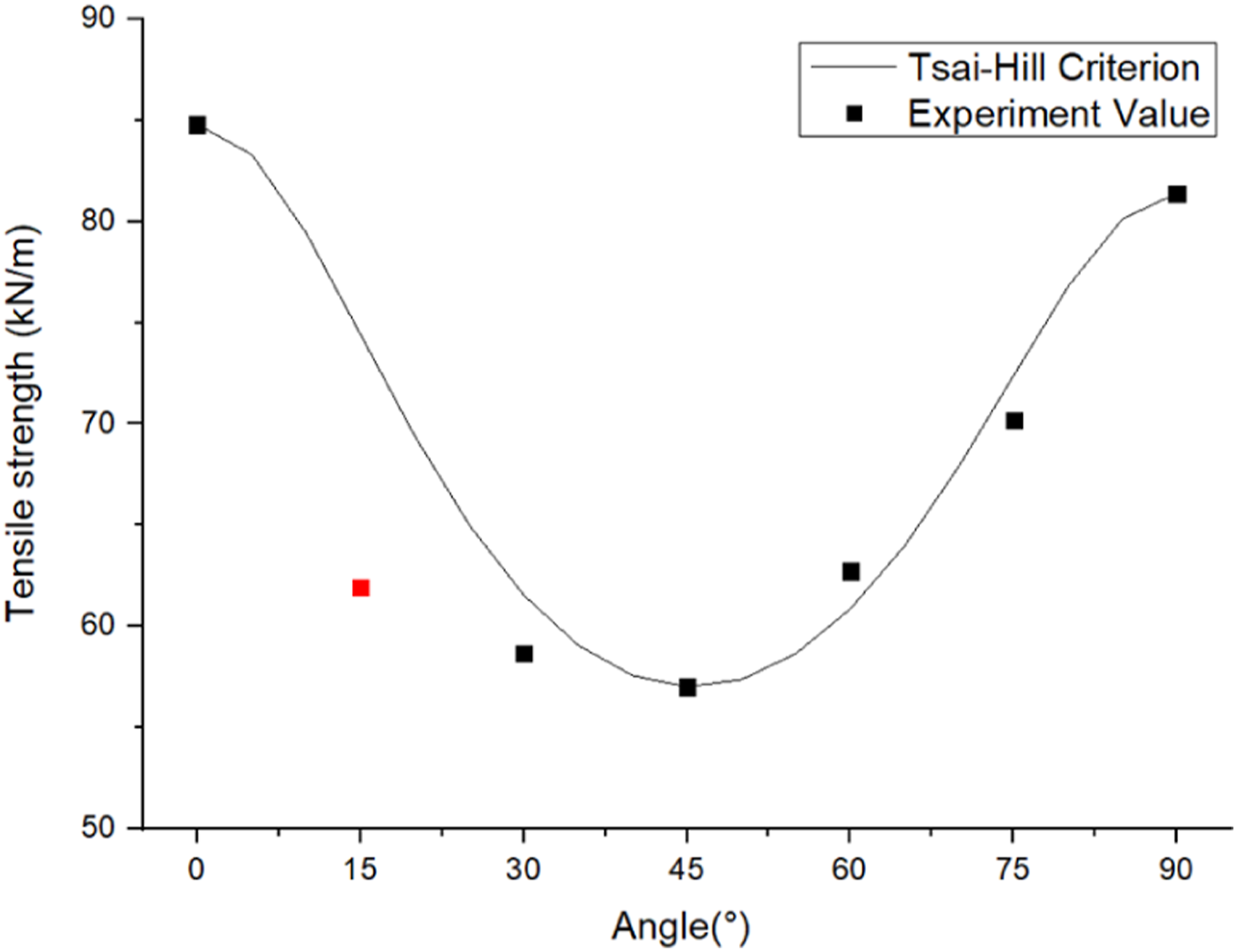
The comparison of tensile strength between experimental data and values predicted from Norris strength criterion is shown in Figure 16. Similar to results of Figure 15, the predicted values of Norris strength criterion still have errors, especially in the case of tensile tests for small off-axis angle, which is mainly attributed to the fact that the coated BWK fabrics are fibrous reinforced heterogeneous and discontinuous material in the microscopic scale. Comparison of tensile strength between experimental data and Norris criterion predicted value.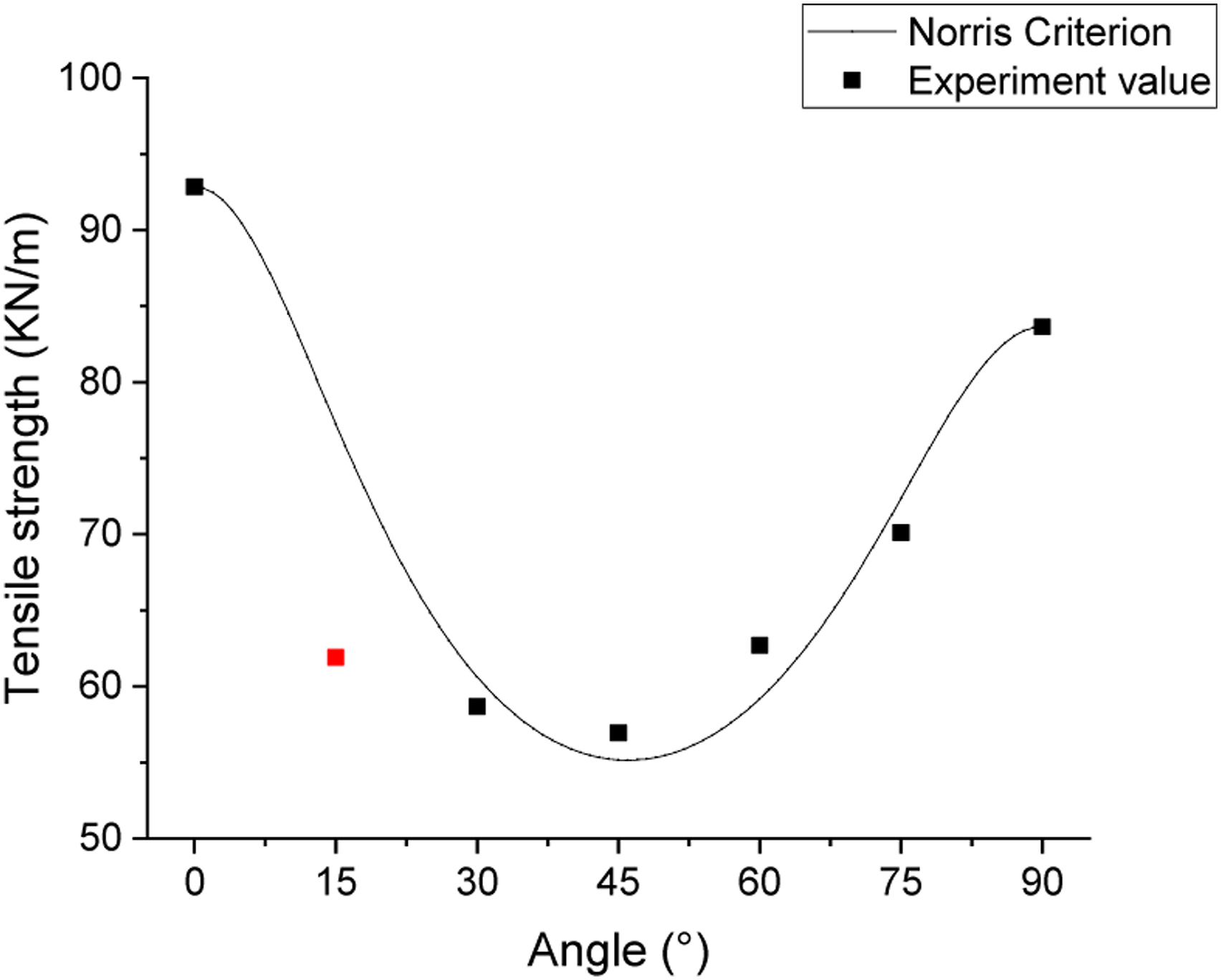
Comparison of tensile strength between experimental data and strength criterion predicted value (Tsai–Hill criterion and Norris criterion).
As we know, Tsai–Hill criterion and Norris criterion are based on the strain energy theory of homogeneous continuous materials. In the process of fabric weaving, the fiber bundles appear to be distributed periodically, and the coating makes the material approximately homogeneous and continuous in the macroscopic scale. This makes it possible to predict the off-axial tensile strength of the coated BWK fabrics to a certain extent. During the tensile testing, the load is mainly carried by the fiber bundles of fabrics. The damage often appears in the weakest places, such as fiber-matrix bonding interface, initial defect of fiber, initial defect of matrix, etc., and extends rapidly through the fiber. However, the traditional strain energy theory based on homogeneous continuous materials cannot describe such kind of damage, especially under the complex stress state formed by off-axial tensile tests. Therefore, the traditional strength criterion is a more phenomenological calculation of the damage strength, but it cannot effectively reflect the damage mechanism of the membrane material. Further detailed research should be explored to propose a better strength criterion related to failure modes.
Results of uniaxial tensile creep test
Among the material properties, the long-term creep properties of membrane materials are the key influence factor on geometric shape deformation, stress relaxation, and stress redistribution. 39 Therefore, the creep properties of coated BWK fabrics should be urgently tested for the long-term safety analysis of membrane structures.
Results of the creep elongation in warp and weft directions.
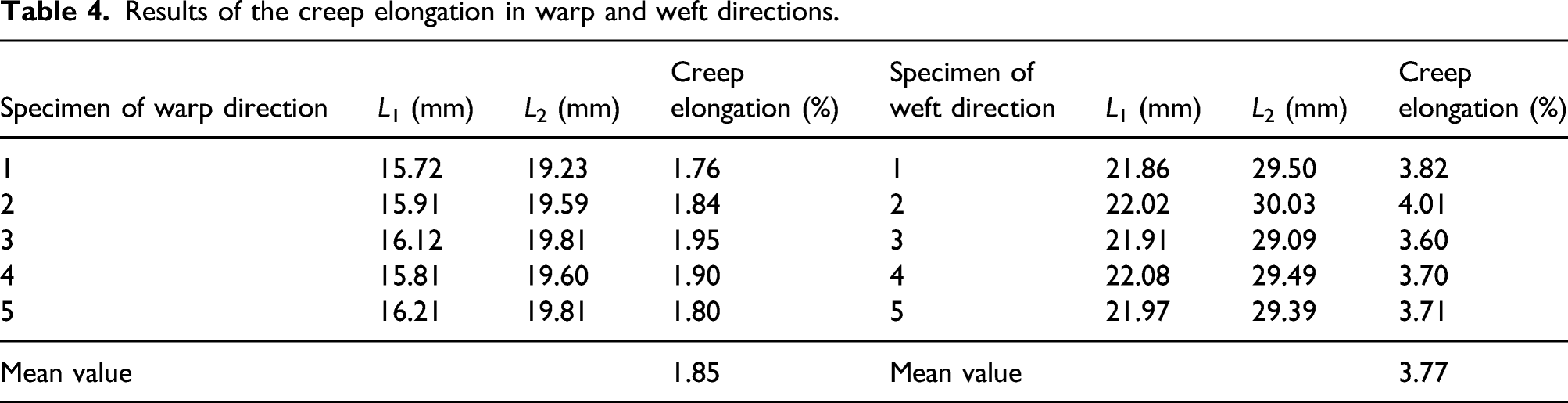
The displacement curves of the tested specimens during the whole creep process are plotted in Figures 17 and 18, respectively. From the perspective of the entire creep loading process, the rapid change in displacement occurs in the first 100 min, after that the creep slows down and displacement almost remains constant. The ratio of creep elongation to elastic elongation is also calculated by equation (1), and the ratio is 23% in warp direction and 31% in weft direction. In a word, most of the creep deformation is completed in a short time after the load is applied, which means the impact of creep must be considered in structural design, especially the cutting pattern analysis. Therefore, the BWK fabrics should be pretensioned in practical engineering to complete most of the creep in a short period of time, so as to prevent too much material deformation over time. Creep history in warp direction. Creep history in weft direction.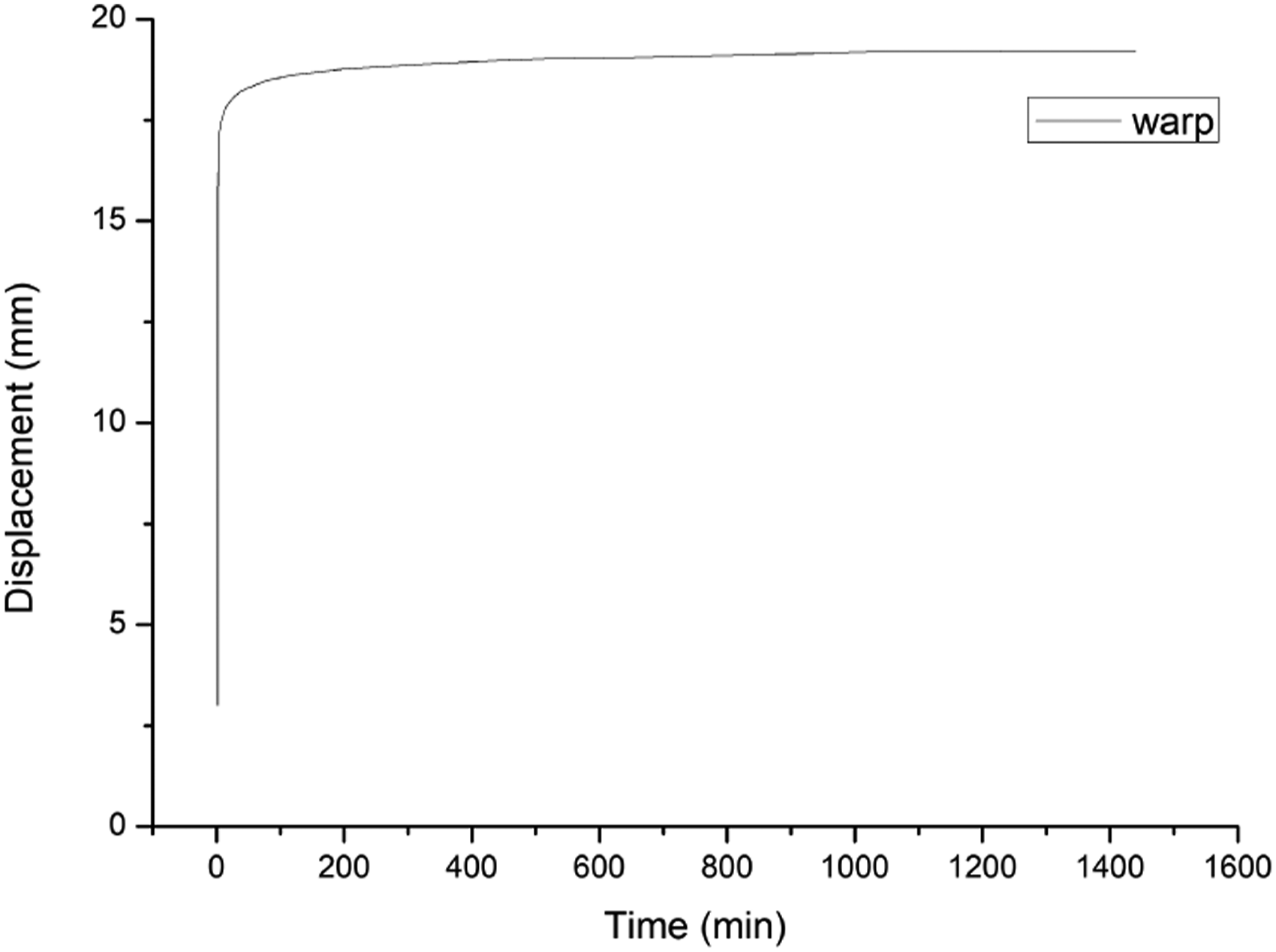
Results of tearing tests
Tearing tests were carried out in both warp and weft directions and five specimens were taken in each direction. Force–displacement curves of the tearing tests are illustrated in Figure 19. As shown in Figure 19, the force–displacement curve of the tearing test is formed by continuous crests and troughs alternately. The tearing strength of the fabrics is essentially the statistical result of the single breaking force of the fiber.
36
According to DG/TJ08-2019–2007,
29
the average value of the five maximum load peaks recorded in each specimen was calculated as the tearing strength of the specimen. The calculated results of tearing strength in warp and weft directions are listed in Tables 5 and 6. As for coated BWK fabrics, the tearing strength in weft direction is greater than that in warp direction, which is different from typical coated woven fabrics. Force–displacement curves of the tearing tests: (a) the warp direction; (b) the weft direction. Tearing strength of specimens in warp direction. Tearing strength of specimens in weft direction.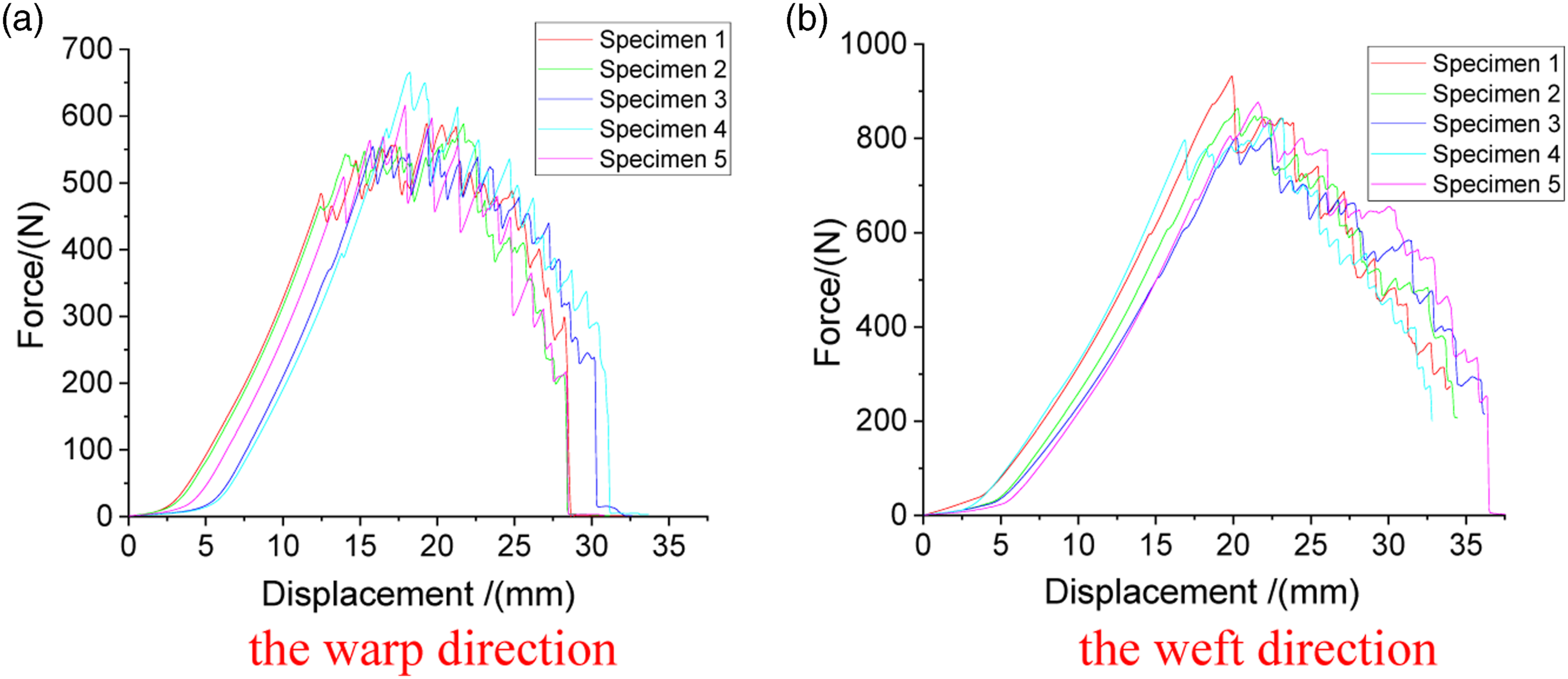
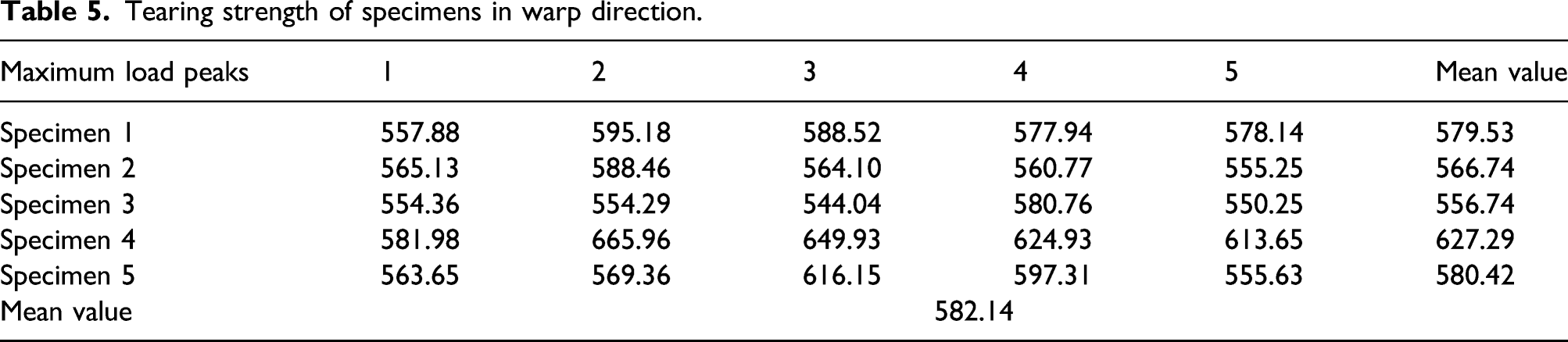
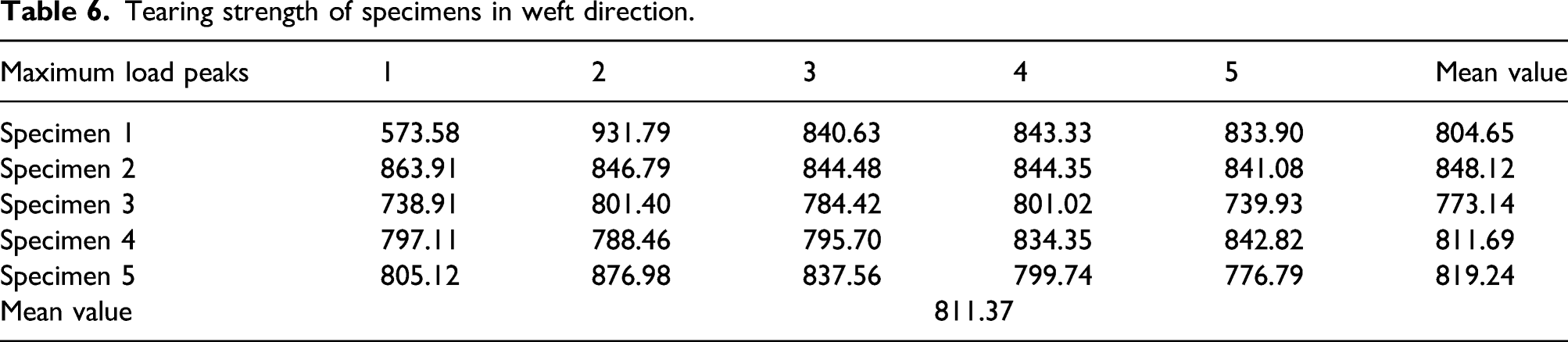
For membrane structures, there are always some initial defects such as cracks in membrane materials. Sometimes, the actual failure mode of membrane materials is not tensile failure, but tearing failure caused by gradual expansion of initial defects. Therefore, tearing strength is one important mechanical performance index. The study of tearing strength of membrane material can provide valuable reference data for engineering design.
Results of biaxial tensile tests
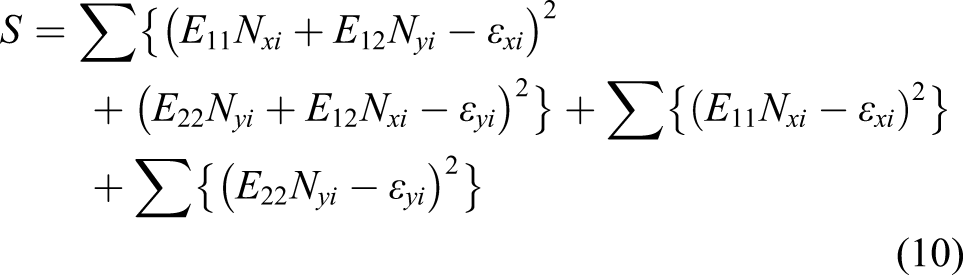
Compared with uniaxial tensile test, stress condition of biaxial tensile test is more close to the actual working state of membrane materials, so it is of great significance to study the stress–strain relationship of membrane materials under biaxial tensile condition. As stated in Biaxial tensile tests, biaxial tensile tests were performed at low stress level below 1/4 tensile strength. At this stress level, the traditional woven fabric is usually assumed as linear orthotropic material. As for coated BWK fabrics, whether the constitutive model meets this assumption remains to be studied. In this section, the elastic modulus and Poisson’s ratio of coated BWK fabrics are calculated on the basis of biaxial tensile test data. The theoretical strain values (in warp and weft directions) of the membrane predicted by the linear orthotropic constitutive model were obtained. Moreover, the root mean square (RMS) of the strain difference between measured data and predicted strain surface is obtained to evaluate the applicability of the constitutive model.
As shown in Figure 10, the stress–strain curves of coated BWK fabrics are basically linear under five different biaxial load ratios. Therefore, whether the linear orthotropic constitutive model is applicable to the experimented material is mainly explored. The stress–strain relationship of linear orthotropic materials can be expressed by equations (6) and (7). In the equation, 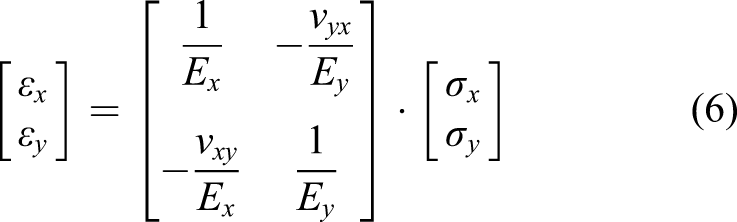



Elastic modulus or Poisson’s ratio of specimens of biaxial tensile tests.
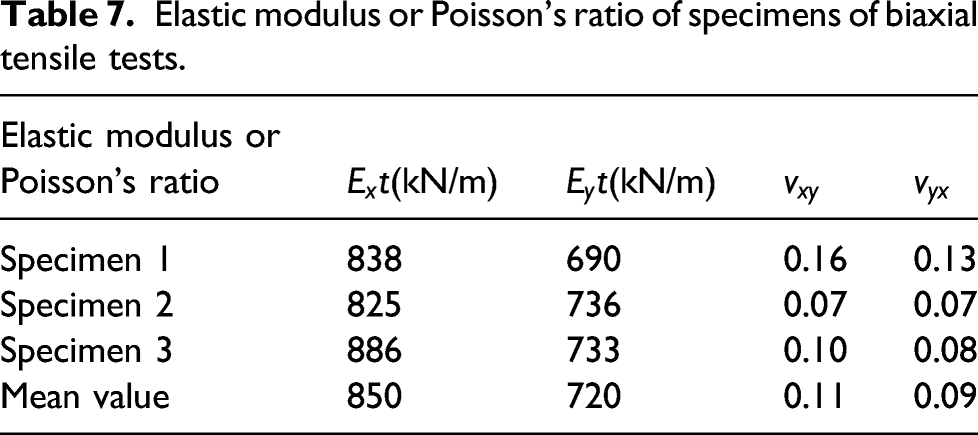
As illustrated in Table 7, the calculated elastic modulus in warp and weft directions is 850 kN/m and 720 kN/m, respectively, and Poisson’s ratio (
Moreover, the strain surfaces in warp and weft directions based on the linear orthotropic constitutive model are plotted. As shown in Figure 20, both strain surfaces fit well with biaxial tensile test data. The comprehensive analysis shows that the constitutive model selected in this article can fit the stress–strain relation of coated BWK fabrics well. Comparison between biaxial tensile test data and numerical calculated strain surface. (a) Strain surface in warp direction. (b) Strain surface in weft direction.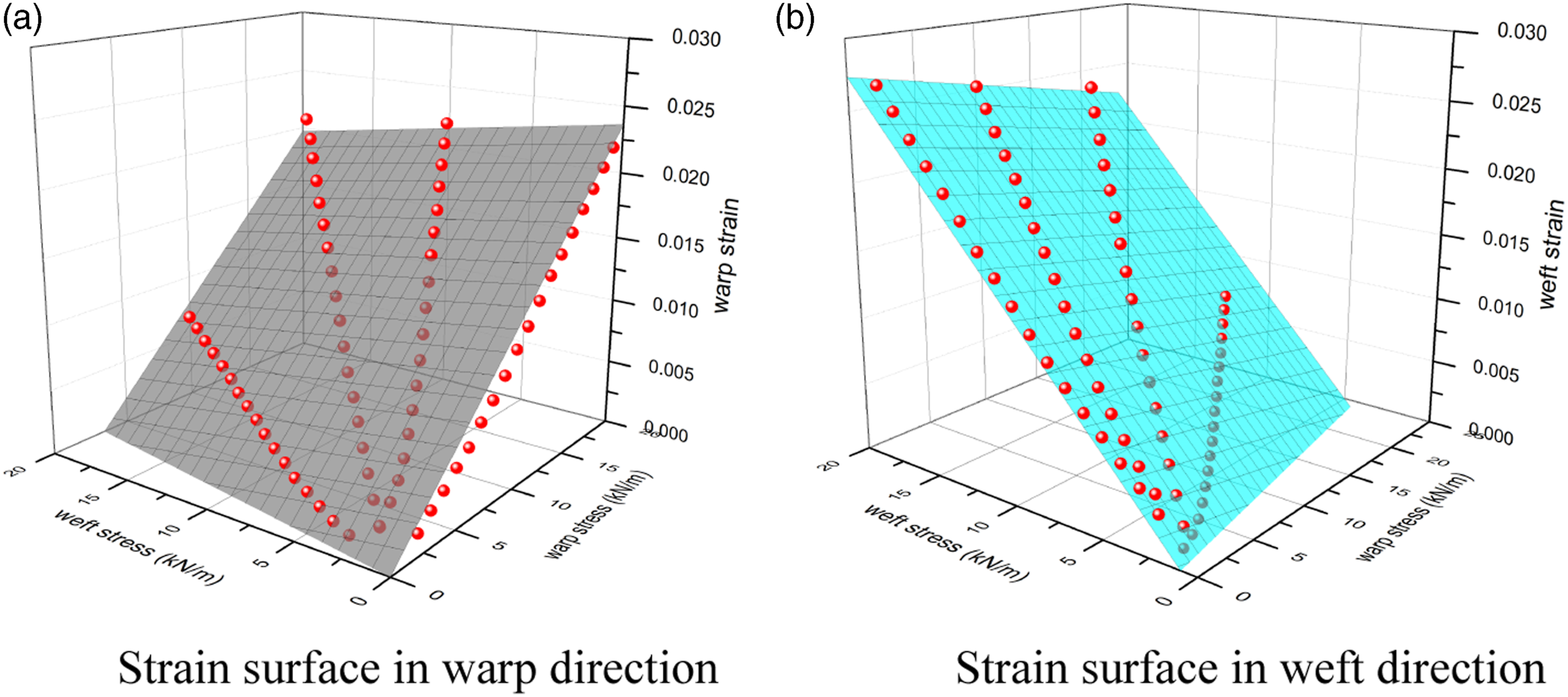
RMS strain difference(%) of coated BWK fabrics based on the linear orthotropic constitutive model.
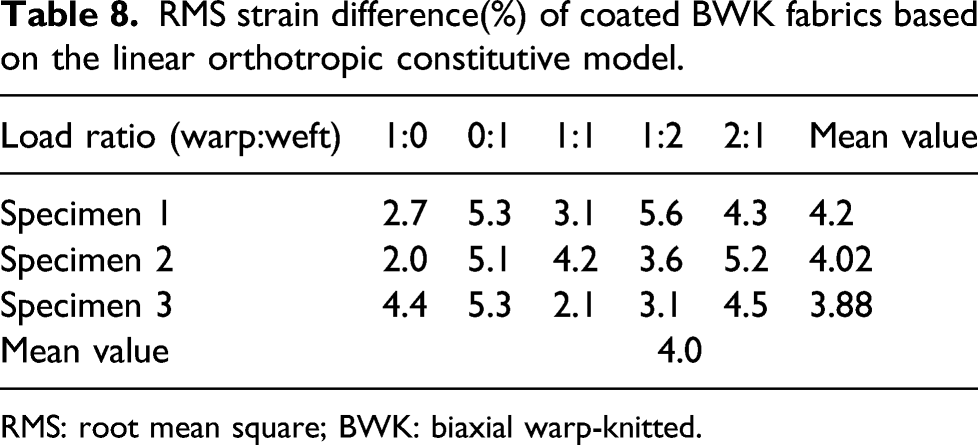
RMS: root mean square; BWK: biaxial warp-knitted.
Besides, comparison of RMS strain difference between coated woven fabrics and coated BWK fabrics is shown in Figure 21, where the 250T, 350T, and 450T refer to the coated woven fabrics type from article.
27
In this biaxial tensile test, the RMS strain difference of coated BWK fabrics is 4.0%, which is much smaller than that of coated woven fabric. Results show the coated BWK fabrics are conform to the linear orthotropic assumption, and the constitutive equation can well describe the biaxial mechanical behavior. Comparison of RMS strain difference between coated woven fabrics and coated BWK fabrics. RMS: root mean square; BWK: biaxial warp-knitted.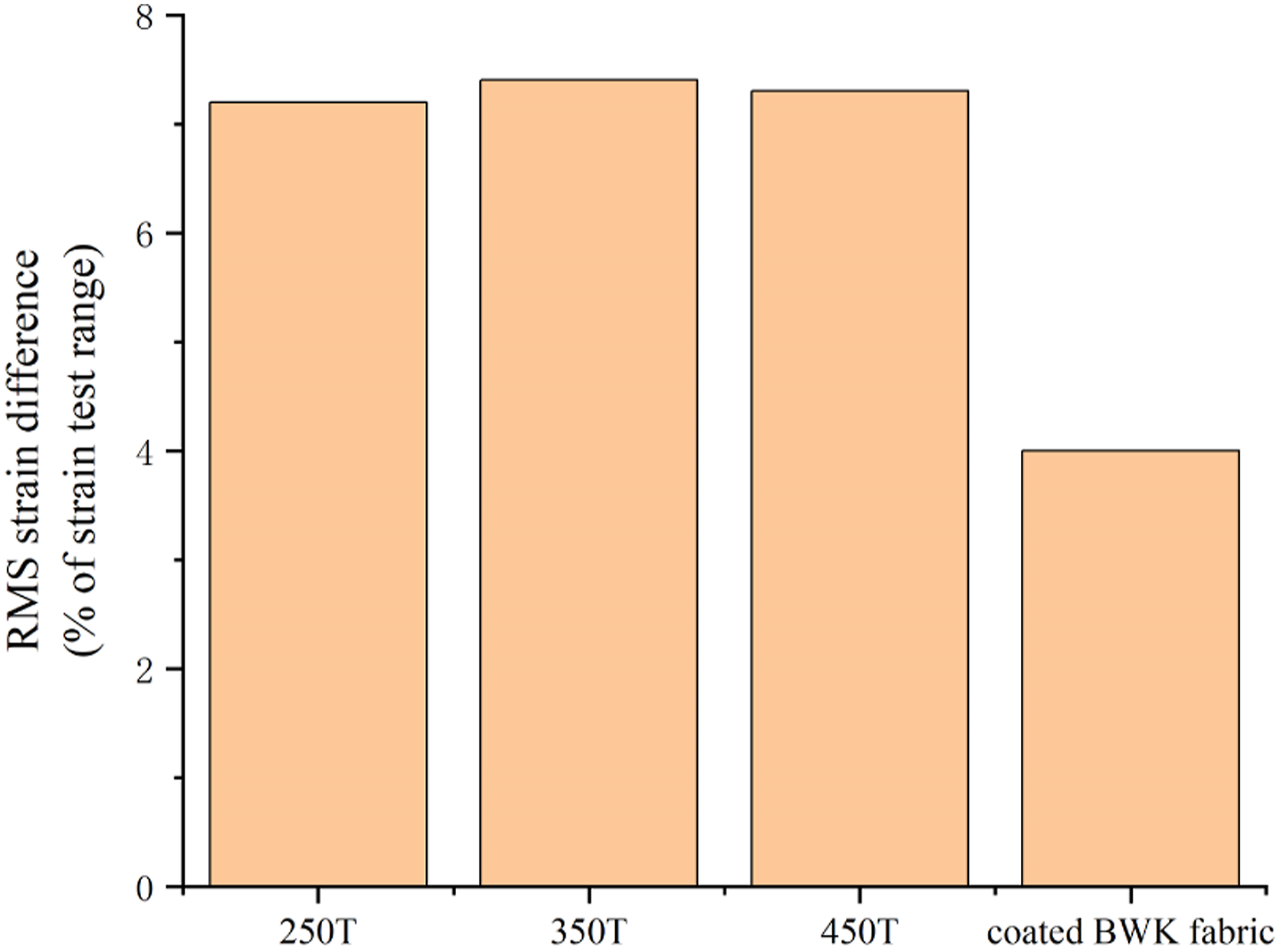
In order to further investigate the suitability of the linear orthotropic assumption for coated BWK fabrics, the biaxial tensile tests under other four different load ratios (warp: weft) of 3:1, 1:3, 5:1, and 1:5 were also carried out. The same biaxial loading procedure was adopted as mentioned above, and biaxial loading procedure of 1:1 load ratio should be completed three times before each specified load ratio was performed. Comparison between test stress–strain data and numerical calculated strain surface is plotted in Figure 22 ((a) warp direction and (b) weft direction). The strain surfaces are calculated results based on linear orthotropic material model, which is the same as Figure 20. As can be seen, the stress–strain data of 3:1, 1:3, 5:1, and 1:5 load ratios are near the strain surface, which further verify the good prediction of the linear orthotropic material model. Due to the stress stiffening phenomenon after many cycles of biaxial tensile loading, there are some strain differences between test data and calculated strain surface. However, these differences are small and the overall increasing trends of biaxial tensile stress–strain data under four load ratios agree well with the theoretical strain surface. To sum up, the experimental results under load ratios (warp: weft) of 3:1, 1:3, 5:1, and 1:5 further prove the adaptability of the linear orthotropic material model for coated BWK fabrics. It should be noted that the proposed linear model is based on MSAJ biaxial loading procedure for the specific load range, whether it is suitable for other biaxial loading procedure needs further verification. Comparison between biaxial tensile test data and numerical calculated strain surface (load ratios (warp: weft) of 3:1, 1:3, 5:1, and 1:5). (a) Warp direction. (b) Weft direction.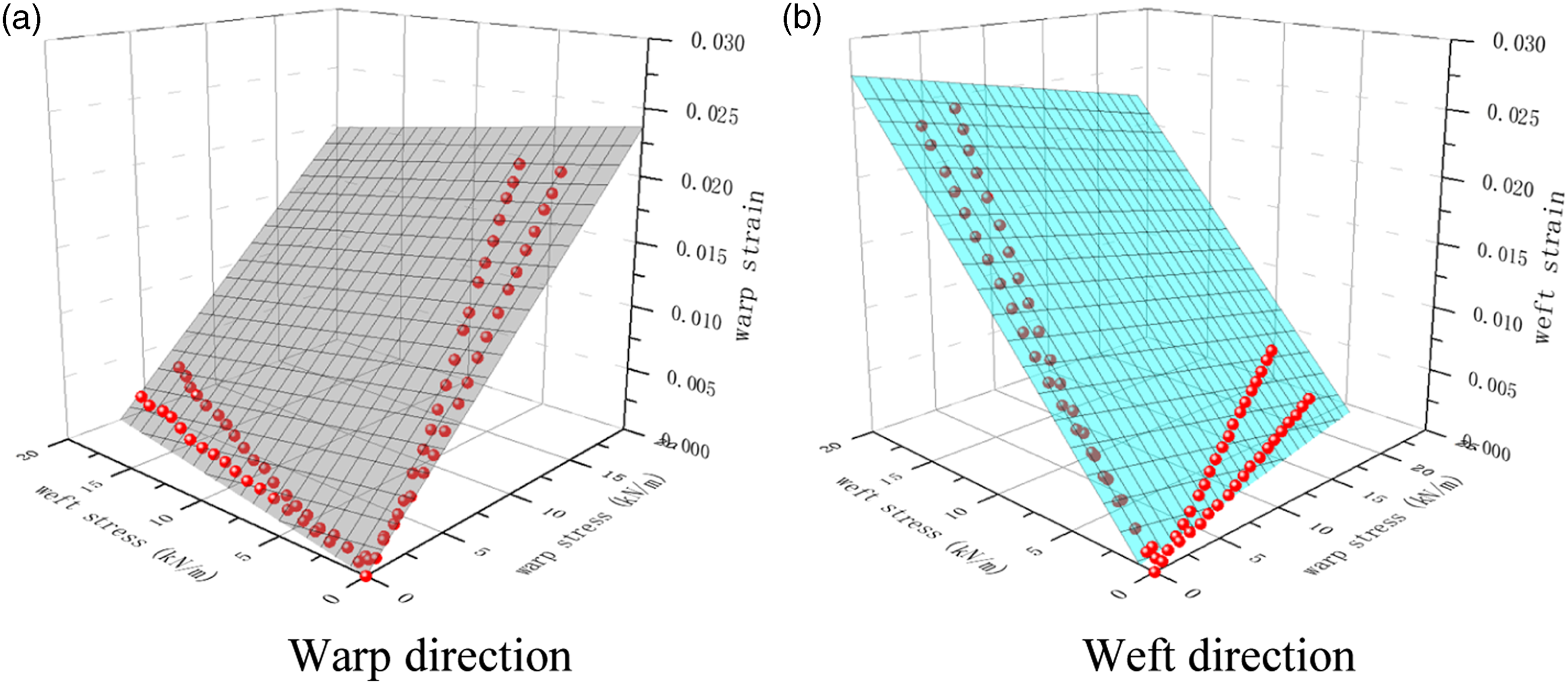
Conclusion
Coated BWK fabrics have been widely used in construction projects; however, there have been relatively few research studies about mechanical properties of these fabrics. Compared with coated woven fabrics, coated BWK fabrics are a relatively new type used for membrane structures and their substrate structures are special and different. Therefore, it is important to study the mechanical properties and the constitutive model of such fabrics, which provides a theoretical basis for the design of membrane structures. In this article, the mechanical properties of coated biaxial warp-knitted fabrics are investigated comprehensively, which can help provide a good guidance for engineering design. The following conclusions can be drawn: Off-axial tensile tests are performed at seven different directions (0o, 15o, 30o, 45o, 60o, 75o, and 90o), the stress–strain curves and tensile strengths are obtained, and failure modes are presented. Results show that specimens in warp direction get the highest tensile strength and specimens in 45o direction get the lowest tensile strength. Moreover, the gradation of tensile stiffness and elongation at break are analyzed in detail. Except for the small off-axis angles, especially 15°, Tsai–Hill criterion and Norris criterion can make a good prediction for the tensile strength of coated BWK fabrics. The specimen at 15° off-axial direction shows comparatively large deviations due to the tensile–shear mixed failure mode. Therefore, more off-axial tensile tests along other different directions are needed to further verify the applicability of the strength criterion. Probably, the strength criterion can be modified in the next step to better describe the mechanical performance of coated BWK fabrics. Uniaxial tensile creep tests are carried out to understand the time-dependent properties of coated BWK fabrics. The ratio of creep elongation to elastic elongation is 23% in warp direction and 31% in weft direction, which means the impact of creep must be considered in structural design, especially the cutting pattern analysis. Besides, tearing tests of coated BWK fabrics are performed in both warp and weft directions and tearing strengths are calculated. It is found the tearing strength in weft direction is greater than that in warp direction. By means of biaxial tensile tests, stress–strain curves under five different load ratios of 1:1, 2:1, 1:2, 1:0, and 0:1 are analyzed, and the elastic modulus and Poisson’s ratio are calculated. Besides, the 3D strain surfaces in warp and weft directions are plotted and RMS strain difference is compared with that of typical coated woven fabrics. Results show the linear orthotropic material model agrees well with the experimental stress–strain data of coated BWK fabrics. Biaxial tensile tests under four different load ratios of 3:1, 1:3, 5:1, and 1:5 are performed likewise. Results show that the theoretical linear orthotropic model can well predict these stress–strain data under four load ratios, which further prove the adaptability of the linear orthotropic material model.
Footnotes
Acknowledgments
This work is supported by National Natural Science Foundation of China (No. 51778458). China National Electric Apparatus Research Institute Co., Ltd. and Shanghai Seman Trading Co., Ltd. China are greatly appreciated for providing naturally aged coated fabrics.
Declaration of conflicting interests
The author(s) declared no potential conflicts of interest with respect to the research, authorship, and/or publication of this article.
Funding
The author(s) disclosed receipt of the following financial support for the research, authorship, and/or publication of this article: This work is supported by National Natural Science Foundation of China (No. 51778458).
Data availability statement
The raw/processed data required to reproduce these findings cannot be shared at this time as the data also form part of an ongoing study.
