







Abstract
This study conducted a bibliometric review of the literature on the importance of embeddedness in internationalization processes in order to map the research on this topic, identify its main trends, and propose future lines of investigation. The review covered articles published in academic journals listed in the Web of Science database. The analysis of the data obtained relied on the functions offered by IRaMuTeQ software. The results confirm internationalization is important in current business contexts in terms of the development of companies’ activities and these firms’ local relationship networks. Four clusters of articles were identified as major trends in the literature: international strategic management, networking through international joint ventures, international entrepreneurship, and trade and international relations. The findings contribute to mapping the existing literature on the importance of embeddedness to the development of companies’ international activities, as well as identifying potential new lines of investigation.
Introduction
Given the emergence in recent decades of a global market, companies’ presence in markets outside their original market has become quite common as firms are either seeking a way to increase their competitiveness or responding to market pressures (e.g., Cavusgil and Knight, 2015; Knight and Liesch, 2016; Vahlne and Johanson, 2017). By acting quickly and effectively, these companies can gain important advantages through cross-border activities (Lehrer et al., 2009). Research on internationalization processes has thus become increasingly important, and understanding more fully the factors that influence these processes can be a decisive advantage for firms seeking to succeed in international markets (Lehrer et al., 2009).
The present study specifically focused on the factor of embeddedness, namely, organizations’ efforts to become more deeply rooted in the environments in which their activities take place (Leppäaho et al., 2018). According to Andersson et al. (2002), embeddedness’s importance in relationships with customers, suppliers, and local partners has been extensively studied in various contexts, including multinational corporations. Some researchers (e.g., Lattemann et al., 2017; Jack et al., 2015) have found that embeddedness has a positive effect on companies’ sales growth, market share, and profits.
The literature reveals a marked growth in the number of studies on this topic in recent years (e.g., Brandão et al., 2019; Burt et al., 2017; Propris et al., 2008), which has contributed to a fragmentation of this area under study, giving rise to different clusters/trends. However, no evidence exists of bibliometric or systematic reviews that have linked internationalization with embeddedness and that map existing studies. As has happened with other similar areas, namely, internationalization and family businesses (Alayo et al., 2020) or internationalization and international joint ventures (IJVs) (Ren et al., 2009). The current research thus sought to map the studies on embeddedness and internationalization to identify this field’s main trends and propose appropriate paths for future investigations to follow.
The Web of Science database was selected for this bibliometric review as this is the most influential database, which is utilized by the majority of bibliometric studies. To include as many articles as possible on this topic, the keywords “embeddedness” and “international*” were used, resulting in an initial sample of 195 documents. However, proceedings, reviews, books, book chapters, and early access articles were excluded as the present study needed a sample including only documents whose contents have been validated by scientific consensus. A final sample of 170 articles served as the basis for the bibliometric review.
Given the scarcity of reviews focused on the connection between internationalization and embeddedness, a literature review was conducted using bibliometric tools to explore the relevant academic publications on this subject matter. The bibliometric analysis proved fruitful in terms of gathering and synthesizing the existing perspectives on how firms’ surroundings influence their exploration of international markets. This study thus sought to contribute to the literature on embeddedness and internationalization by providing an overview of the existing knowledge and identifying the types of investigations that could contribute significantly to this field of research. This study also sought to add to the literature on internationalization by improving the existing understanding of embeddedness as an important variable at the level of global business activities. The results provide a platform for a better practical grasp of this topic for both scholars and organizations, as well as for other stakeholders to whom embeddedness in internationalization may prove relevant.
This paper is divided into six sections. The above introduction briefly introduces the research topic, while the second section presents a literature review of various theoretical approaches to the concept of embeddedness, as well as how this concept has influenced business internationalization processes. In the third section, the methodology is described so that other researchers can duplicate this study as needed. The results are analyzed in the fourth section, and the fifth discusses the current state of research on this topic based on the publications reviewed. The last section presents the study’s conclusions, implications, and limitations and suggests future lines of research.
Literature review
Internationalization’s definition has been the focus of much discussion. This term has been used for centuries in political science and government relations contexts (Knight and Liesch, 2016). However, internationalization began to be more frequently mentioned as this phenomenon increasingly replaced imperialism as the main principle guiding how organizations engaged in cross-border interactions between market economies from the 1920s onwards (Hussain et al., 2006). The process of economic internationalization accelerated in the post-World War II period, and this process remained the most prominent pattern until the early 1970s, when the new phenomenon of globalization began to emerge (Gjellerup, 2000). Globalization usually refers to a stage in which companies’ operations are managed on a global level. Globalization is, therefore, characterized by the worldwide integration of increasingly competitive markets and firms that engage in global competition (Hussain et al., 2006).
In the present era of globalization, the differences between business activities at the local and international levels are slowly diminishing (Ratajczak-Mrozek, 2014). Even organizations that do not operate in markets outside their country of origin can be involved in internationalization through relationships with foreign suppliers or cooperation with globalized firms in domestic networks (Welch and Luostarinen, 1988). Internationalization is thus a process by which companies increase their level of involvement in foreign markets over time (Welch and Luostarinen, 1988), developing international activities over time through evolving events (Jones and Coviello, 2005). Business internationalization in macroeconomic terms is linked to the exchange flows of “raw materials, finished and semi-finished products, services, money, ideas and people between two states or nations” (Lobo, et al., 2020, p. 620).
In more recent studies, internationalization has been conceptualized as the result of organizations’ positioning in networks of relationships in foreign markets. According to Johanson and Vahlne (2009), “everything that happens, happens within the context of a relationship, and a company that is well established in a network or networks is an ‘insider’” (p. 1415).
In addition, motivations to internationalize can be either proactive or reactive. They are proactive whenever organizations go international in order to increase their profits, technological advantages, tax benefits, and economies of scale, among other things. Motivations are reactive when firms respond to external threats, such as competitive pressure or even market saturation (Czinkota, et al., 1999). Dunning (1993) further categorizes motivations based on four main reasons for internationalization: companies’ search for markets, resources, efficiency, and strategic resources.
The risks associated with conducting business activities in given markets must be assessed so that good investment decisions can be made that consider each market’s size and characteristics and use company resources as efficiently as possible (Alon et al., 2009). The choice to internationalize can be influenced by external opportunities and/or by organizations’ internal threats or weaknesses highlighted by strategic analyses. Companies are usually forced to internationalize due to unfavorable conditions in their local market, which often include a large concentration of competitors, small number of consumers, lack of demand, and government policies regarding local companies (Sekliuckienė and Mačiulskaitė, 2013).
Internationalization is a strategy that involves complex, multidimensional decision processes (Kraus et al., 2017) and that can offer growth opportunities to various types of organizations (Jiang et al., 2020). Various factors determine the success or failure of implementing predetermined international strategies, such as executors, communication, implementation tactics, consensus, commitment, organizational structure, and administrative systems (Li et al., 2010). Another of these factors is embeddedness (Ratajczak-Mrozek, 2014).
The term “embeddedness” was initially introduced by Karl Polanyi, who is commonly considered to have introduced this concept in his book, The Great Transformation (1944). Polanyi (1944) argues that, as individuals have always been primarily social rather than economic, embeddedness is a necessary, basic condition of all economies (Dacin et al., 1999). The concept of embeddedness is rooted in economic sociology, but this term is also quite important in international management (Heidenreich, 2012; Mainela and Puhakka, 2008). Polanyi (1944) argues that economic behaviors of all types are kept consistent with the relevant social systems through precise requirements, institutions, and market norms, especially given that social relationships themselves are embedded in economic systems (Rašković, 2014). Polanyi (1944) conceptualization retained its duality and vagueness until Granovetter (1973, 1985) seminal work.
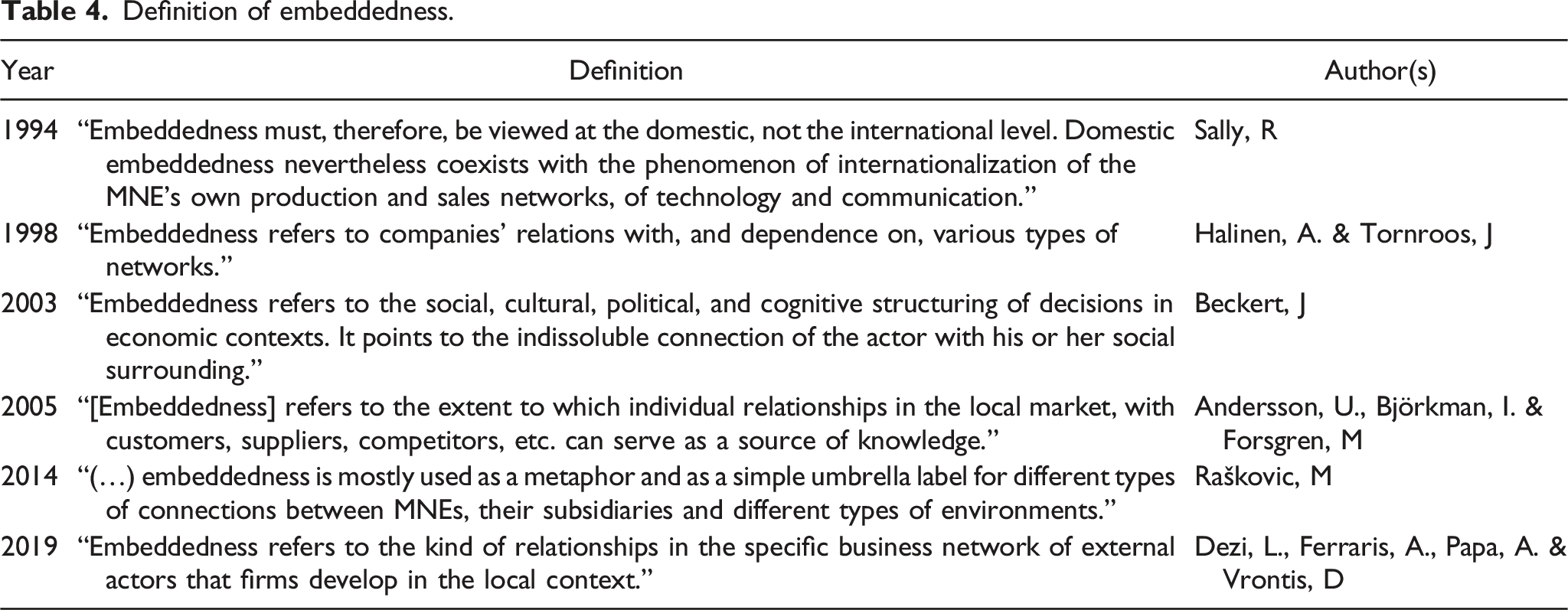
This term has evolved over time to become a consolidated concept in sociology, reflecting the idea that companies are associated through networks of personal relationships and that economic behaviors are rooted in networks of interpersonal connections (Granovetter, 1985). After providing a theoretical introduction to embeddedness based on the above conceptualization, Heidenreich (2012) asserts that the concept is multidimensional, dynamic, and dual. Beckert (2003, p. 769) subsequently proposed the following definition. “Embeddedness refers to the social, cultural, political, and cognitive structuring of decisions in economic contexts. It points to the indissoluble connection of the actor with his or her social surrounding.”
In addition, the issue of “multiple embeddedness” has also been highlighted. Multinationals appear to benefit from multiple embeddedness through which they essentially get involved with institutions and resources from both the host and home countries (Buckley, 2014). These large firms must formulate strategies that make use of these differences, thereby obtaining knowledge from the different contexts in which other actors operate. This process implies managing a portfolio of subsidiary activities in numerous and diverse local contexts while constructing strategies to embed operations more efficiently into these multiple environments (Meyer et al., 2011).
Embeddedness is, therefore, the state of being part of a broader context or entity. Companies’ economic activities take place in particular territories, and business operations are incorporated into social and cultural relationships that reflect specific characteristics of places, infrastructure, operating environments, and production conditions (Uzzi, 1996). Researchers have demonstrated that participation in business clusters increases firms’ embeddedness and enhances their formation of ties (Firth and Ghauri, 2010).
Embeddedness within local clusters and national networks of firms’ country of origin influences the likelihood of international new ventures successfully expanding abroad (Al-Laham and Souitaris, 2008). Entrepreneurs’ embeddedness in their domestic markets also has a profound impact on the development of their relationship portfolios both nationally and internationally (Sigfusson and Harris, 2013). From the moment that companies’ connections extend beyond their country of origin’s local structures, these organizations’ networks become international or even global (Ratajczak-Mrozek, 2012).
In terms of business networks, international embeddedness is often analyzed from a spatial perspective (Halinen and Törnroos, 1998). Spatial embeddedness refers to industrial activities’ spatial dimensions in specific business environments, including international components. This approach suggests that business players can be incorporated internationally, nationally, regionally, and locally into different types of networks (Halinen and Törnroos, 1998).
Various researchers (e.g., Escandon-Barbosa, et al., 2019; Fernhaber, et al., 2009; Zahra, et al., 2000) report that, through network embeddedness, companies can overcome resource and knowledge limitations and internationalize in ways that would not be possible if these firms remain isolated. Companies’ successful entry into new international markets may depend more on these organizations’ relationships in their original domestic markets than on the new markets’ characteristics (Johanson and Mattsson, 2015). Thus, the social capital generated by previous relationships influences the formation of new relationships in later phases (Gulati, 1999).
Methodology
The present study conducted a bibliometric review of the literature on embeddedness’s importance in internationalization processes, seeking to map out the studies on this subject and identify the field’s main trends in order to propose future lines of investigation. This review also assessed the relevant publications’ impact and identified the journals and authors who have contributed the most to advancing research on this topic. Bibliometric methods have shown great potential for conducting quantitative verifications of subjectively derived categories related to published documents and for investigating research landscapes and structuring the results (Zupic and Čater, 2015). Systematic literature reviews are extensively used in the social sciences, including business management (Abatecola et al., 2013; Crossan and Apaydin, 2010; Newbert, 2007).
The reviews’ findings facilitate the recognition of links among future lines of research and unanswered questions posed in prior studies (Thorpe et al., 2005). Systematic mapping techniques combined with bibliometric methods are valuable in two important ways: helping new researchers in a specific field rapidly understand its structure and ensuring rigorous quantitative methods in conventional literature reviews (Zupic and Čater, 2015). Bibliometric reviews’ basic principles include transparency and replicability (Armitage and Keeble-Allen, 2008). The quantitative and statistical techniques used facilitate the measurement of knowledge production and dissemination rates, thereby monitoring the evolution of various areas of scientific research and their levels of authorship and publication, as well as applications of research results. This type of review has been used mainly to evaluate authors’ productivity and carry out citation studies (Araújo, 2006; Burgers et al., 2019).
The current research used the Web of Science because it is the most recognized, influential database in the academic community. In addition, the Web of Science has been used in the majority of bibliometric studies (e.g., Rashman et al., 2009; Torchia et al., 2015; Unger et al., 2011). To find published documents on embeddedness in internationalization, the keywords “embeddedness” and “international*” were selected to ensure the search was as comprehensive as possible and that it did not exclude any important studies. Initially, these keywords were limited to the documents’ topic fields (i.e., titles, keywords, and abstracts), but a number of articles found were unrelated to this research’s objective since some articles only discussed internationalization quite superficially. The decision was made to use “embeddedness” in the topic search because it is a more specific word and “international*” in the title search in order to eliminate the documents that addressed internationalization in a more cursory way.
Stages of methodological process.
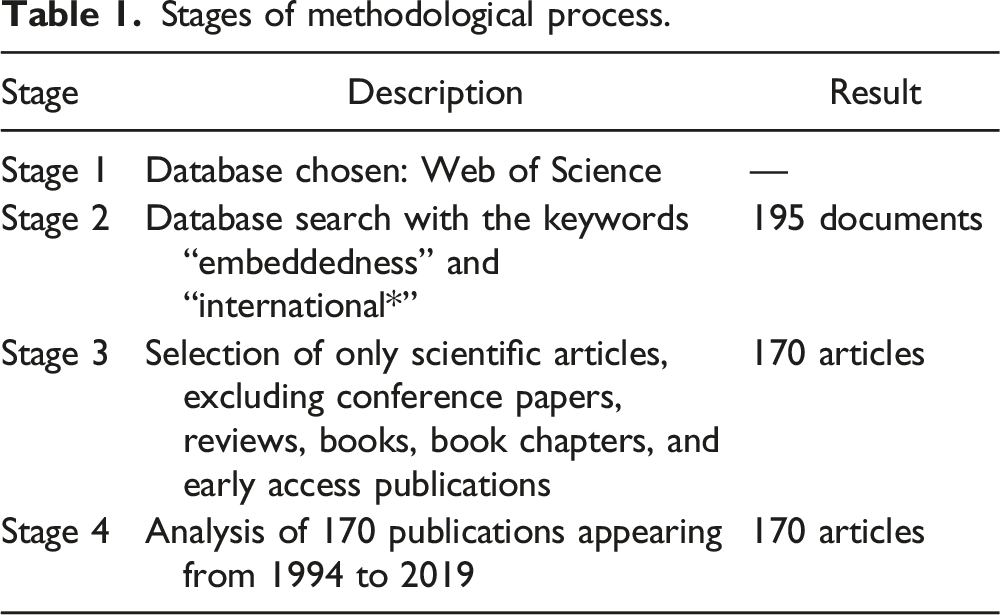
The sample data were processed using the analysis functions offered by the Web of Science platform and Interface de R pour les Analyses Multidimensionnelles de Textes et de Questionnaires (IRaMuTeQ) software. These tools generate bibliometric maps with a strong visual component (e.g., Perianes-Rodriguez et al., 2016; van Eck and Waltman et al., 2009; Waltman et al., 2010). IRaMuTeQ software is a tool anchored in the R programing language, which facilitates statistical analysis of texts written by different authors. This software optimizes the literature organization process and a more specific delimitation of the articles, enabling surveys of the essential elements of socially shared representations (Mutombo, 2013). IRaMuTeQ software thus made possible a deeper analysis of the 170 abstracts of the articles reviewed, which identified four clusters.
Analysis of results
Evolution of publications (1994–2019)
As can be seen in Figure 1, the number of publications on embeddedness’s importance in the context of internationalization began to increase significantly from 2010 onward. A peak volume of 22 articles were published in 2017, which demonstrates that the subject under study is associated with a quite recently developed field. At the beginning of the second decade of the 21st century, the number of publications on this topic began to stabilize since, previously, only 40 articles had appeared in 16 years (1994–2009). Over the next 10 years (2010–2019), 130 papers were published, which is approximately 77% of all publications in this field. The annual average of published articles rose from approximately 2.5 articles per year in the first 16 years to 13 articles per year in the last 10 years. Publications per year.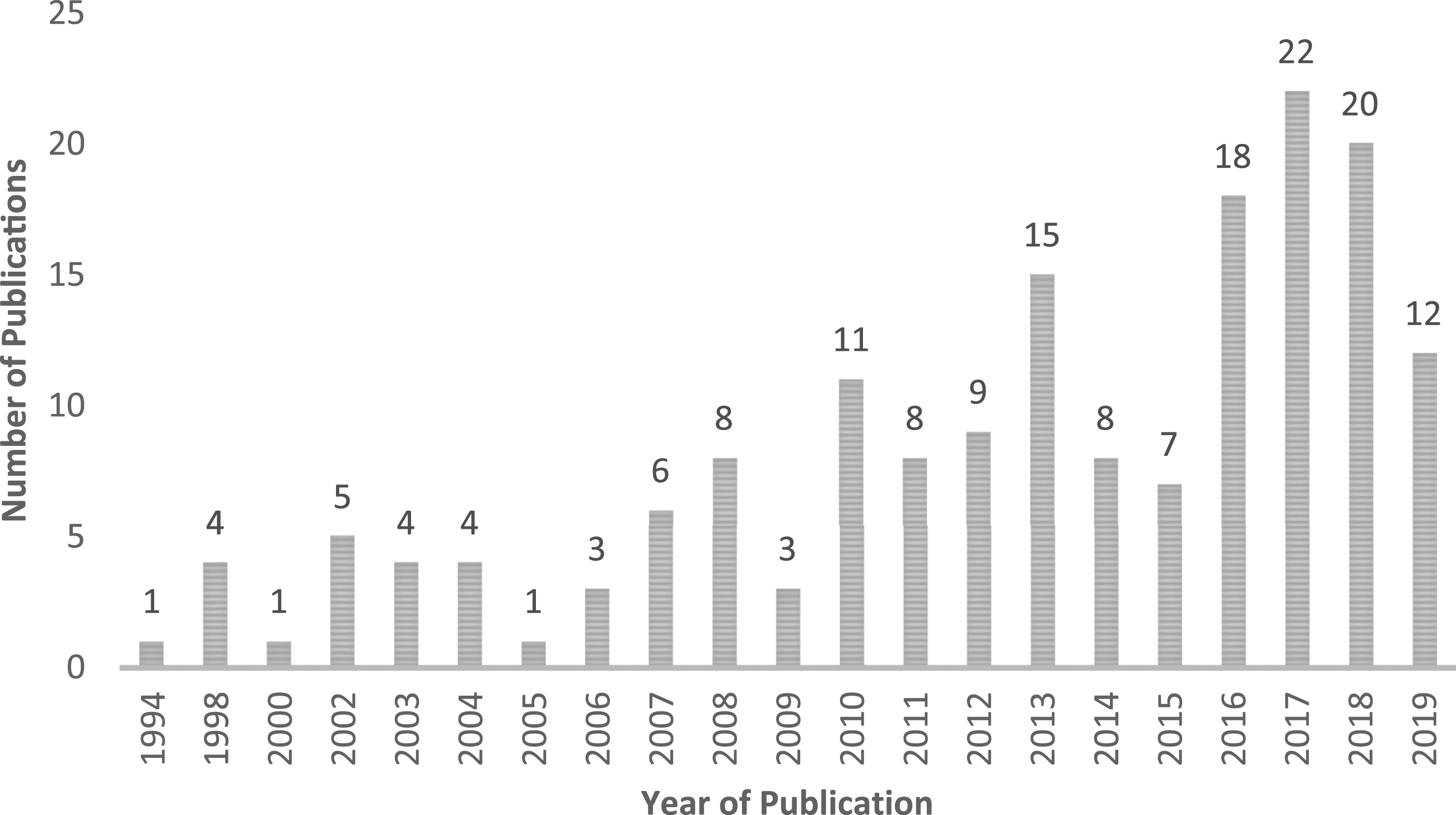
The first article to be published on this topic (Sally, 1994) deals specifically with multinational companies’ embeddedness in networks of domestic relationships. These connections include not only governmental organizations but also non-governmental entities, highlighting various types of organizations’ importance in internationalization processes. Figure 2 shows the countries that have contributed to the field’s existing literature as listed in the Web of Science. Countries with more publications.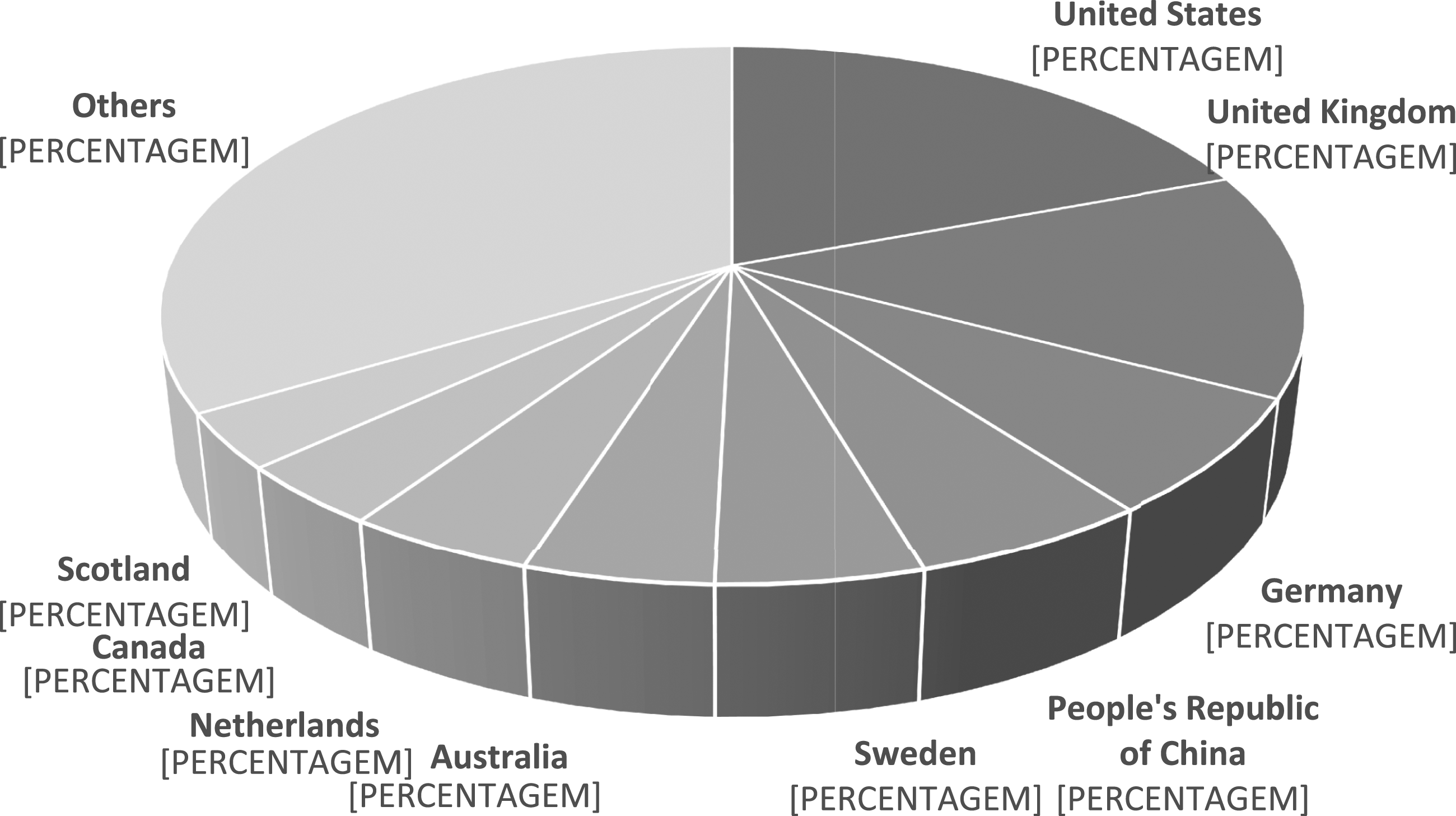
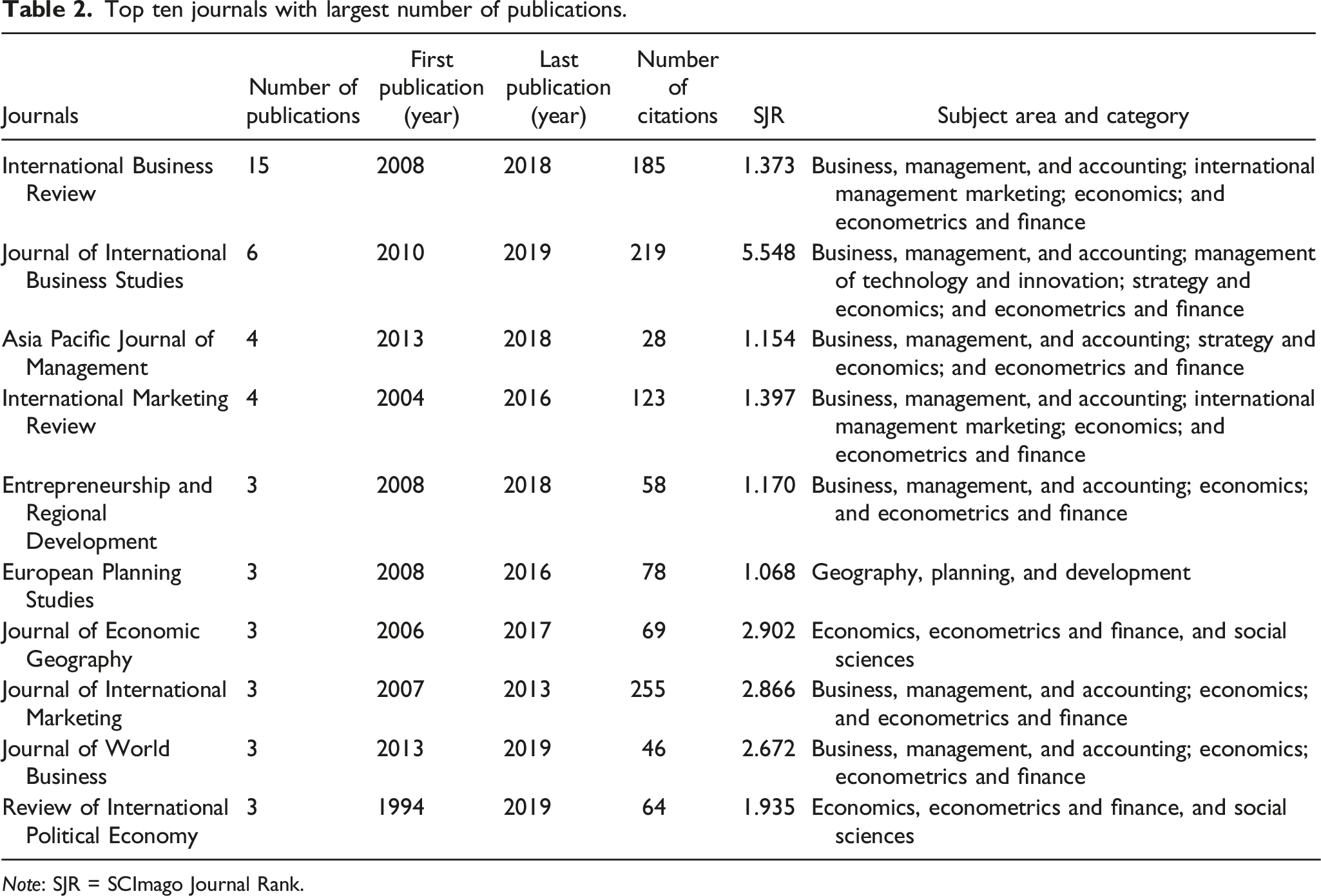
Top ten journals with largest number of publications.
Note: SJR = SCImago Journal Rank.
According to Table 2 above, nine of the ten journals listed began to publish articles in the 21st century’s first decade on the subject in question, accepting related articles for the last time between 2013 and 2019. These statistics demonstrate the significance of and current interest in this field.
In terms of areas of study, the results reveal that management, business, and accounting appear most frequently in the top ten journals. This focus could mean that a strong interest exists among journals in these areas and that business administration can be understood as a strategic tool in embeddedness during the internationalization process.
Based on the abstracts of the 170 publications found in the selected database, IRaMuTeQ software was used to do a word analysis (see Figure 3). The results verify that the words “international,” “network,” “firm,” “embeddedness,” and “internationalization” are the most important and that they are given a strong weight in articles, so these words played a decisive role in this bibliometric review. Most used words.
Top ten authors with most publications.
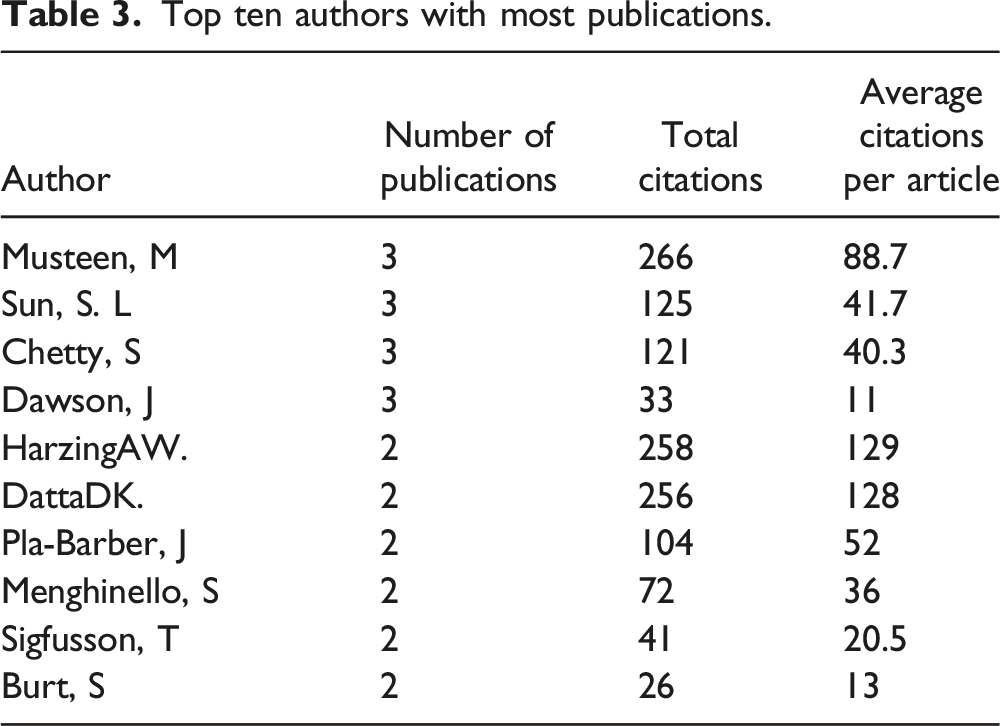
Among these authors, Musteen, Chetty, Sun, and Dawson have registered the highest number of citations, with Musteen receiving the most (i.e., 88.7 citations per article). Of the remaining 336 authors, 21 had published two articles, with the remainder credited with only one article within the field under study.
Figure 1, below, shows a distinction between empirical and theoretical articles, considering the 170 articles under study.
According to Figure 4, it is possible to verify that 58% of the publications in our database are empirical articles and 42% are theoretical articles. Empirical articles versus theoretical articles.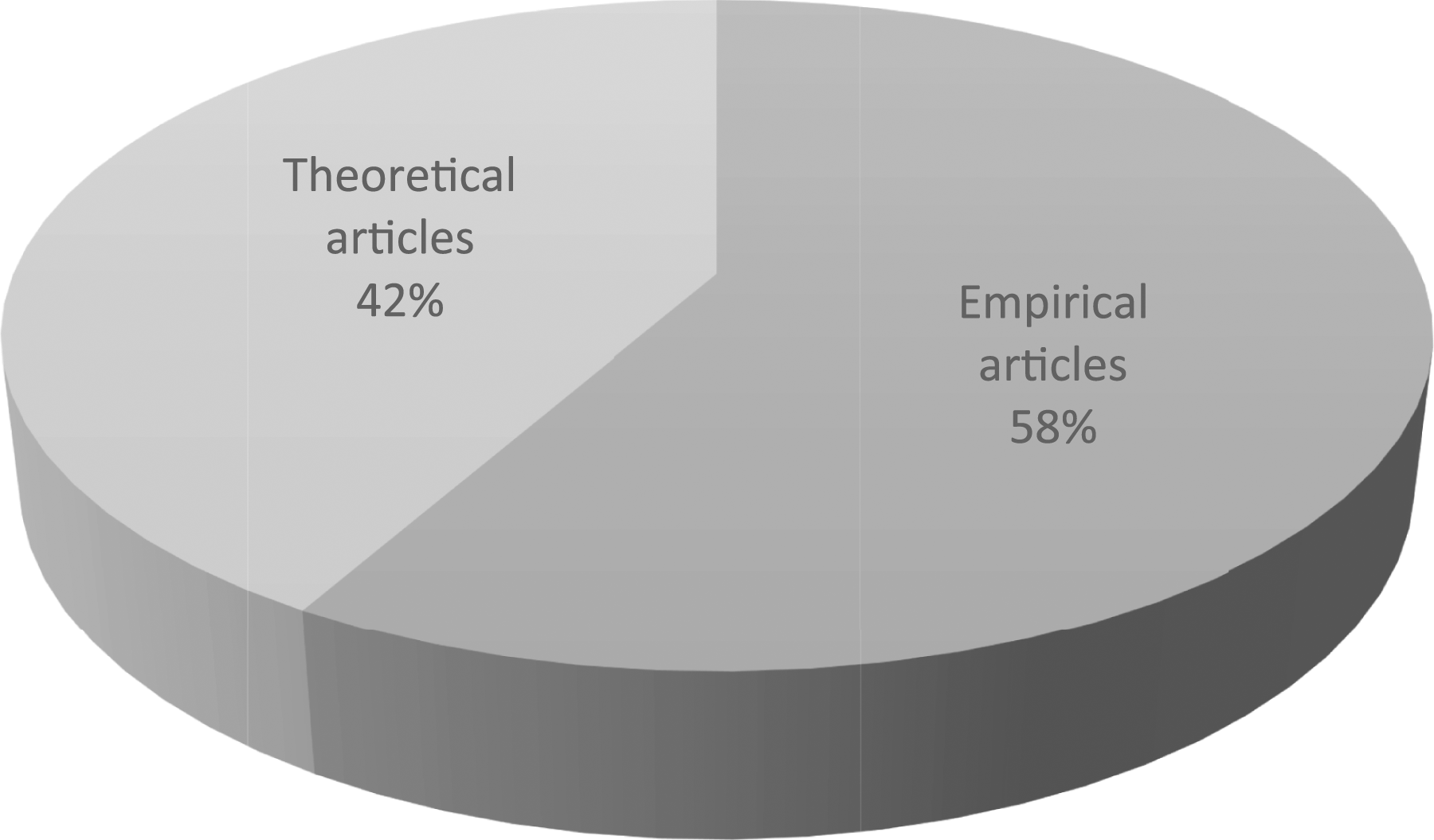
Definition of embeddedness.
Cluster analysis
An analysis of the 170 articles’ abstracts was conducted to identify possible clusters related to the main topic, again using IRaMuTeQ software. Each article corresponds to an initial context unit (ICU), while each part of that article is treated as an elementary context unit (ECU). Thus, the corpus is composed of 170 ICUs with a total of 752 ECUs, which contain 4101 different words with an average frequency of occurrence of 36.09% per ECU. A full 90.03% of the ECUs were retained for analysis.
After reducing the words to their roots, 3206 stem cells were obtained, resulting in 677 ECUs, 2814 analyzable words or active forms, and 392 supplementary forms. A descending hierarchical classification revealed four classes composed of different text segments. The words considered were those with the highest degree of significance based on chi-square analysis (p < 0.0001). The words’ distribution into clusters can be seen in Figure 5. Dendrogram of descending hierarchical classification—identified clusters.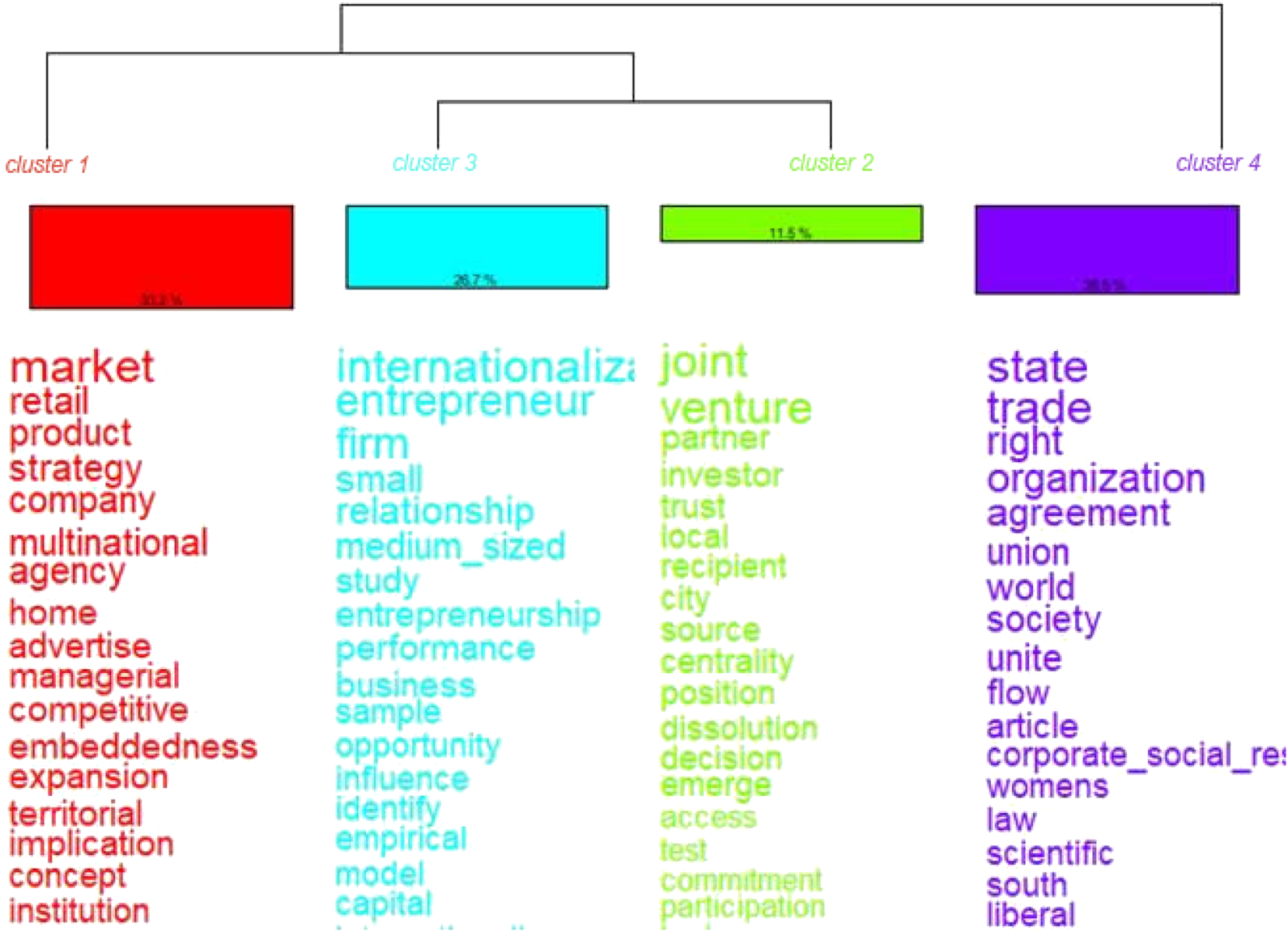
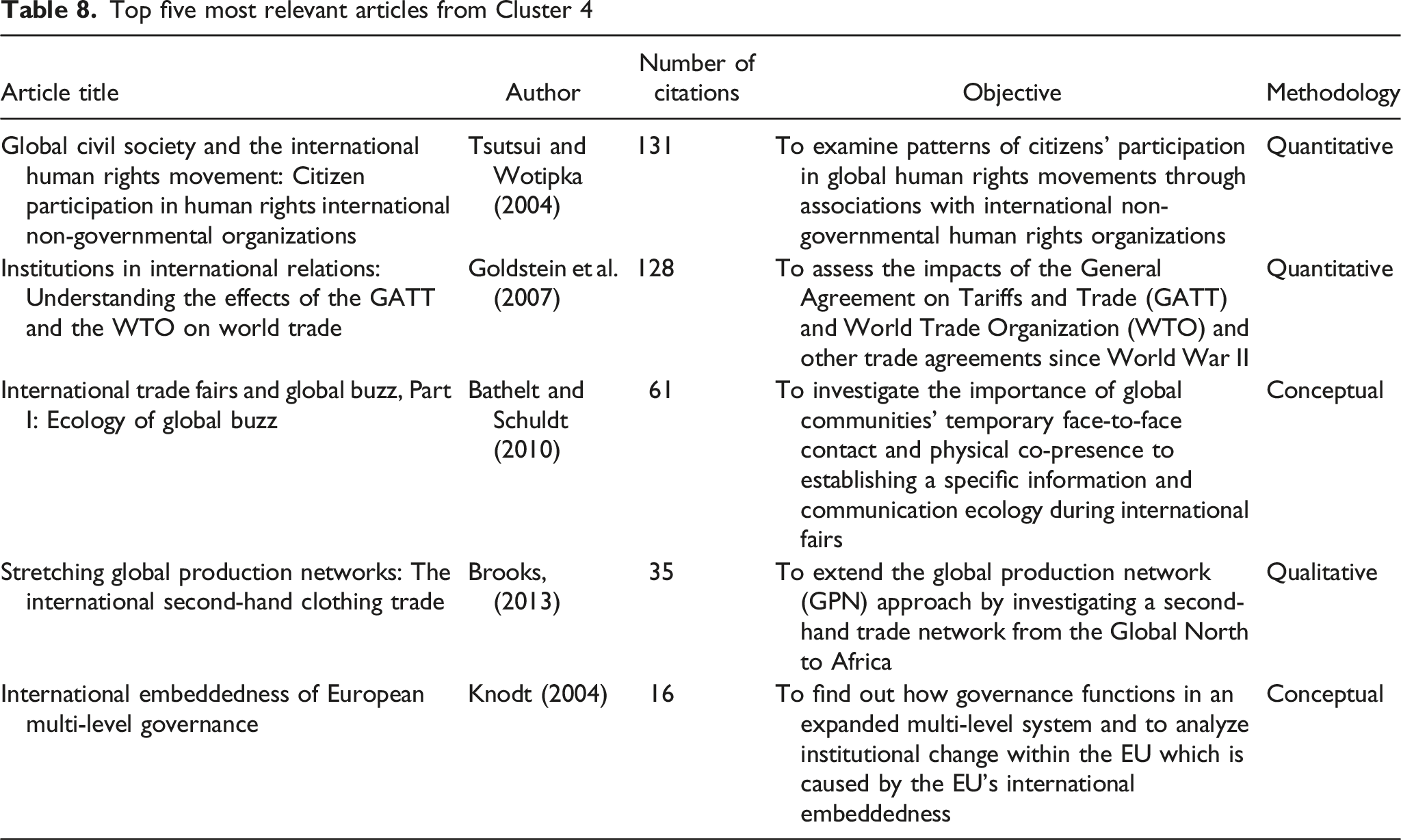
Based on the results shown in Figure 5 , four distinct clusters could be identified, each constructed around associations between the most used terms in the articles under analysis. The red-colored expressions form Cluster 1, the green ones Cluster 2, the aqua ones Cluster 3, and the purple ones Cluster 4. Each cluster was assigned a label as shown below: ➢ Cluster 1: International Strategic Management (33.2%). ➢ Cluster 2: Networking through IJVs (11.5%). ➢ Cluster 3: International Entrepreneurship (26.7%). ➢ Cluster 4: Trade and International Relations (28.5%).
Figure 4 above reveals strong relationships between the subtopics of International Strategic Management, networking through IJVs, and International Entrepreneurship. However, trade and international relations do not appear to have as close a relationship with the other subtopics.
Three of the four clusters in question (i.e., 1, 3, and 4) have a similar level of significance in terms of published articles. However, Cluster 2 is less important (only 11.5%). As shown in Figure 6, Clusters 1 and 3 share some terms. The same is true to an even greater degree for Clusters 2 and 3. Cluster 4 appears at a greater distance from the other clusters in the figure, which denotes a weaker relationship with them. After reviewing the 170 articles’ abstracts, a brief literature review was conducted of the subjects on which the clusters focus, and tables were constructed highlighting the five most important articles on each cluster topic. Correspondence factor analysis.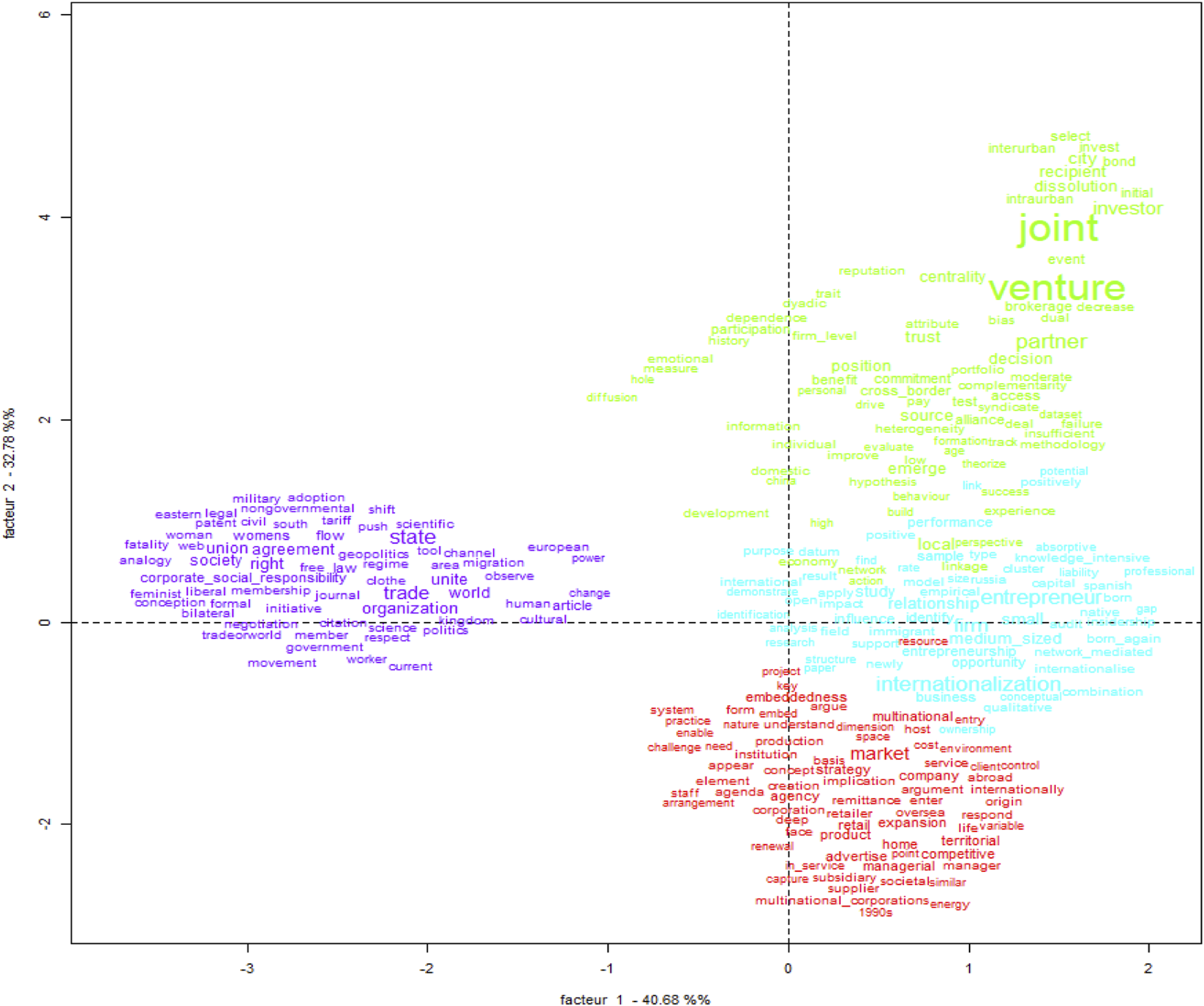
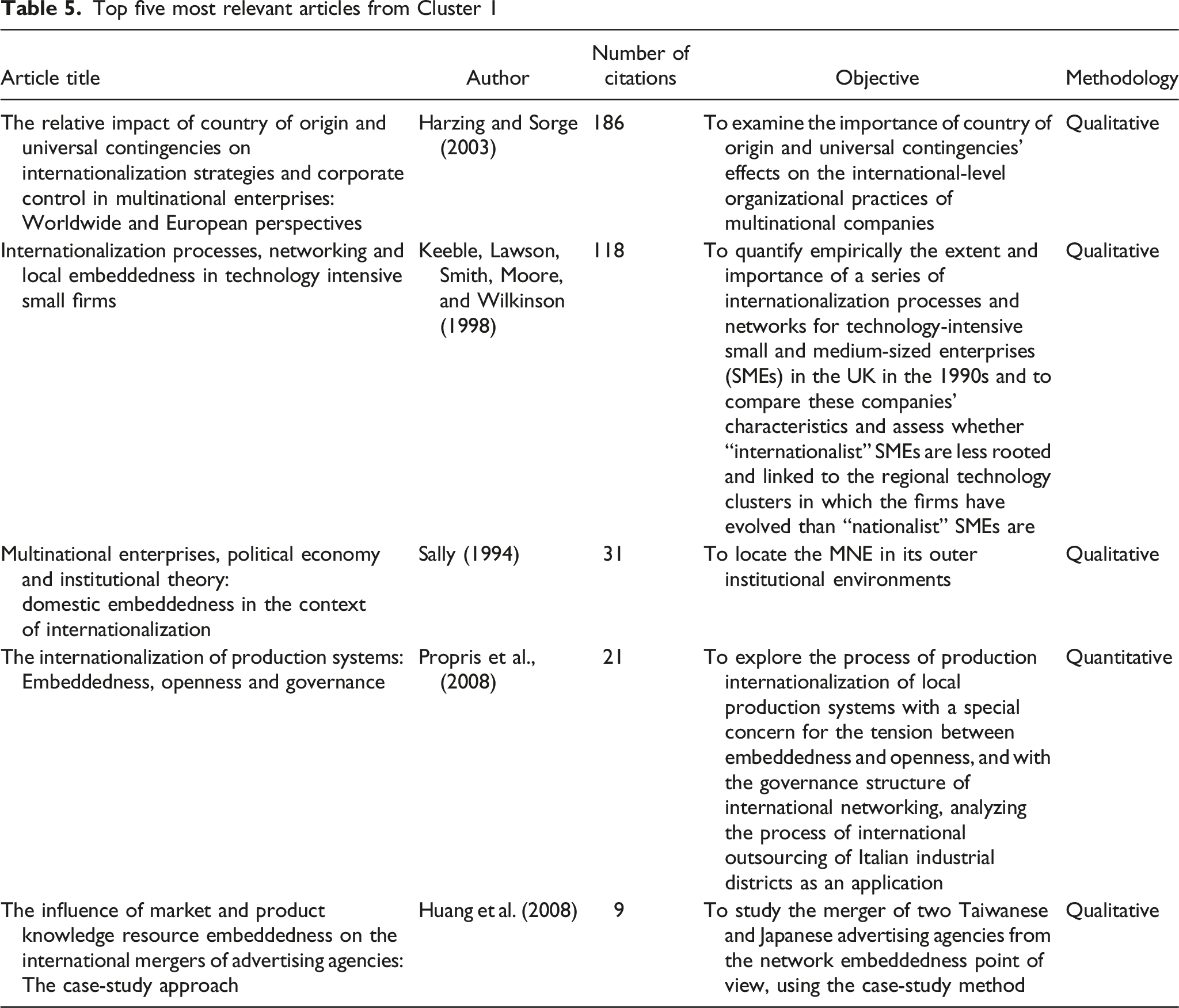
Cluster 1: International strategic management
The first cluster is a set of studies focused on international strategic management. International strategic management includes multinational companies’ overall ability to develop and implement action plans to carry out their mission and achieve general objectives within the business world (Buckley, 1994). International strategic management is a multidisciplinary area involving fields as diverse as economics, finance, law, organizational studies, marketing, sociology, political science, and psychology (White et al., 2016).
Firms’ degree of embeddedness in their domestic market and integration into, for example, national economic and political networks are influential factors shaping these companies’ internationalization strategy. The latter includes the amount of foreign direct investment, type of competitive advantage firms seek, and way in which they combine locally based activities with globally focused activities (Lane, 1998).
Top five most relevant articles from Cluster 1
Cluster 2: Networking through international joint ventures
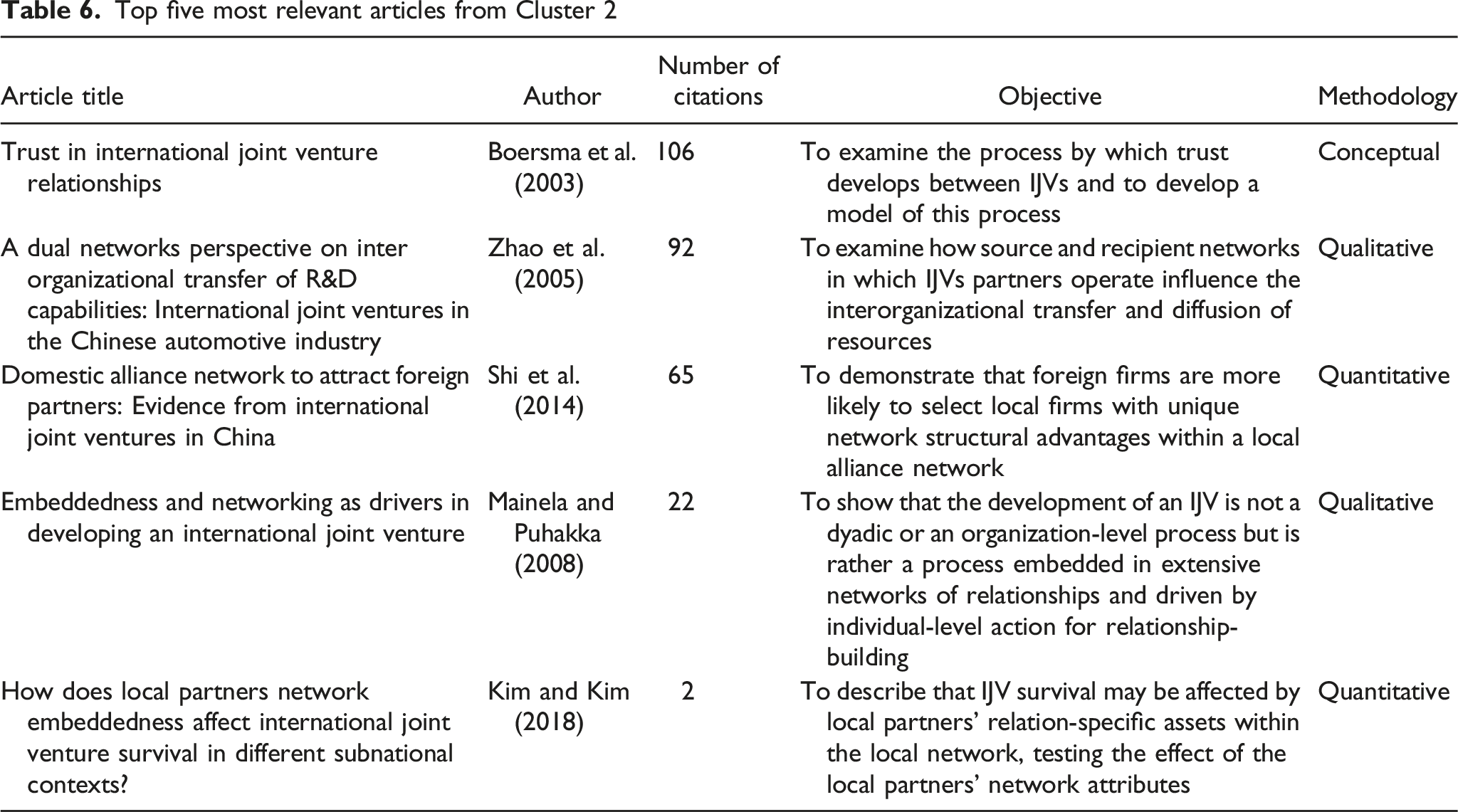
Studies in the second cluster address issues related to relationships between partners from different regions, which are developed to facilitate internationalization. IJVs are among the most prominent modes of international business (Delios and Beamish, 2004). By definition, an IJV is a small international network (i.e., a triad) that is the sum of at least two firms’ contributions (Mainela and Puhakka, 2008). According to (Shenkar and Zeira, 1987), “an IJV is a separate legal organizational entity representing the partial holdings of two or more parent firms, in which headquarters of at least one is located outside the country of operation of the joint venture” (p. 547). Companies that plan to operate in an external market seek to reduce uncertainties. IJVs allow firms with complementary capabilities and resources to benefit from each other’s strengths and reduce the risk of working alone in new international markets (Ren et al., 2009).
Top five most relevant articles from Cluster 2
Cluster 3: International entrepreneurship
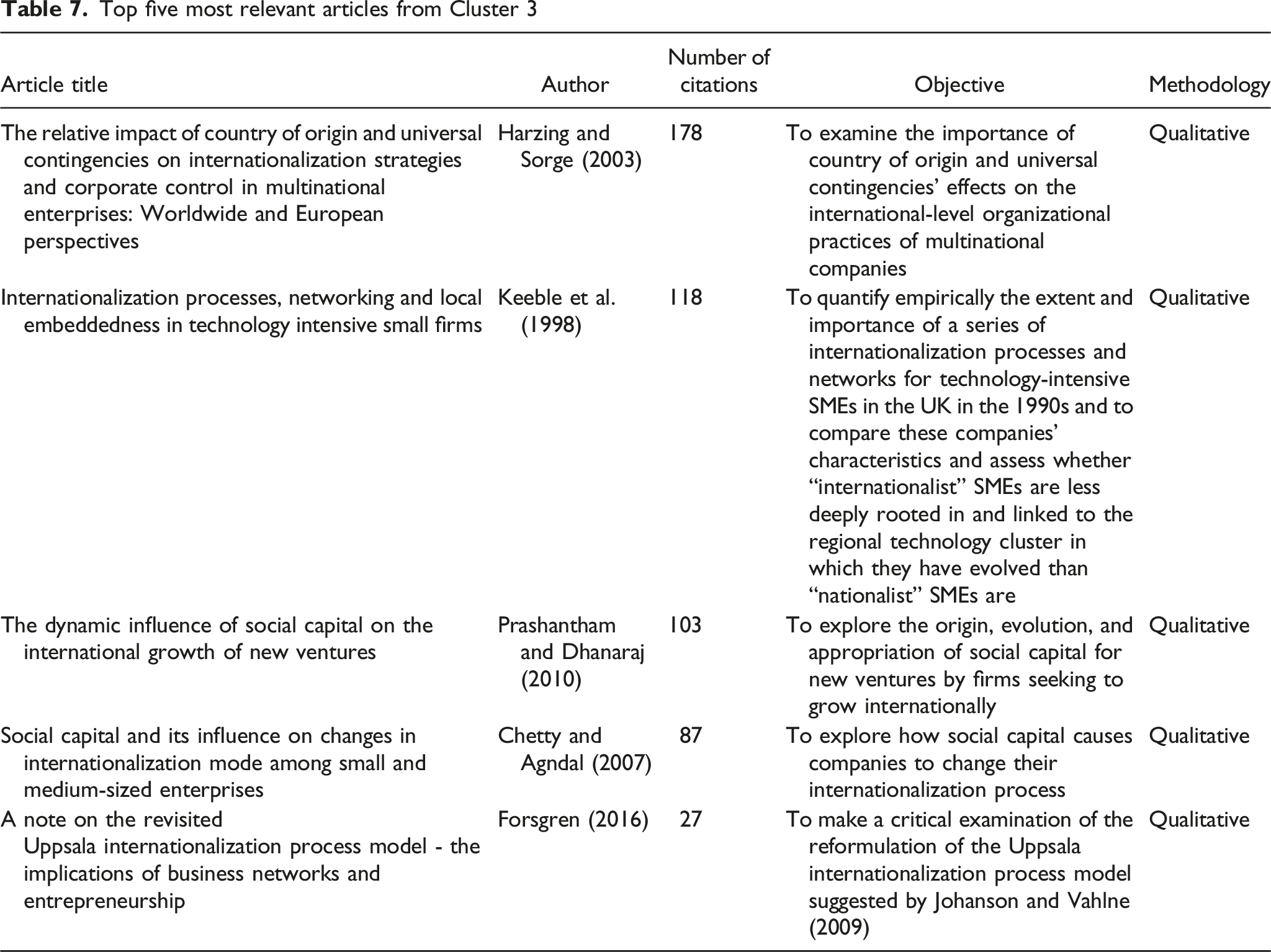
The third cluster comprises studies related to various firms’ exploitation of foreign markets. International business has been dominated by large multinational corporations. However, globalization has combined with the evolution of information and communication technologies to foster SMEs’ growing role in international business (Knight and Liesch, 2016). Globalization has had a positive impact on many entrepreneurial companies’ (Safa, 2018). One result of a more globalized world is the advent of start-ups that have an international vision from the start. These firms may even engage in different activities along their value chains in distinct countries, which blurs the relevant companies’ national identity (Burgel and Murray, 2000).
Researchers have suggested that, while organizational learning improves performance, firms’ learning capacity is moderated by the foreign environments involved and these companies’ resource base (Oviatt and McDougall, 1997). Competing in diverse international markets and foreign cultures exposes organizations to different customers and competitors and to distinct sets of institutional rules, standards, and regulations (Eriksson et al., 2000).
Top five most relevant articles from Cluster 3
Cluster 4: Trade and international relations
The fourth cluster comprises papers dealing with two topics: international trade and international relations. In recent decades, the global economy has grown at a remarkable rate in terms of the international movements of factors and goods, and the flow of international trade has increased rapidly (Zhang, 2008). International trade as a research field reflects a clear split between how economics and sociology approach this topic. Economists study trade as part of structures made up of economic actors interested in maximizing utility, with models generally including actors’ (i.e., countries) dyadic and economic attributes as independent variables. Sociologists criticize economic and dyadic reductionism, so they examine trade in order to highlight the social and structural influences affecting trading activities (Kim and Skvoretz, 2013).
Top five most relevant articles from Cluster 4
Discussion of results
As previously mentioned, the internationalization process’s importance is currently generally acknowledged since it provides various types of organizations opportunities for expansion (Jiang et al., 2020). Embeddedness is a factor with special relevance to internationalization studies, which can indirectly determine the success or failure of an internationalization strategy’s implementation (Li et al., 2008). The main lines of research on embeddedness and organizational internationalization are represented by the clusters described in the previous section.
The model shown in Figure 7 reflects the relationships between the main concepts in the articles under study. The term “international” logically is given special emphasis. Figure 6 shows that “embeddedness” is closely linked to the topic of internationalization, as well as with relationship networks (i.e., local networks). These networks are developed by organizations within—or in association with—their domestic market, and the relationships can facilitate these entities’ internationalization process through the sharing of, among other things, knowledge and resources. This process allows smaller companies to overcome any scarcity of necessary resources and information, as verified by the present study’s literature review (e.g., Escandon-Barbosa et al., 2019; Fernhaber et al., 2009). Model of relationships between main terms.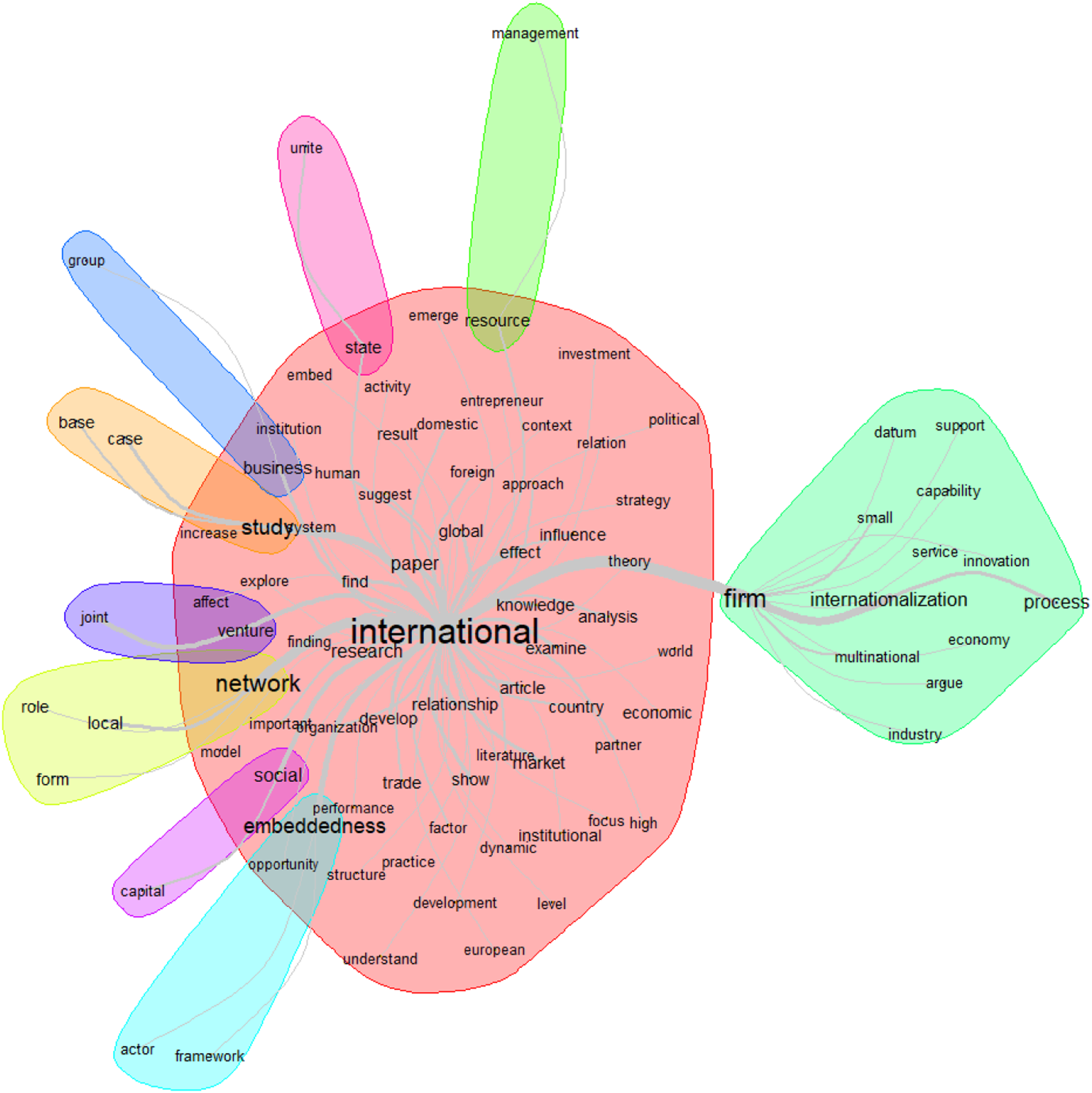
The internationalization process is currently an important part of organizations’ strategic management. Companies seeking to expand their activities need, in most cases, to extend their operations across borders (Sekliuckienė and Mačiulskaitė, 2013). However, this expansion can incur high costs, so it must be carefully planned and carried out efficiently through appropriate strategies (Alon et al., 2009).
In addition, internationalization is now a significant trend and one of the most frequently studied topics (e.g., Oviatt and McDougall, 2005; Prashantham and Dhanaraj, 2010; Safa, 2018). As previously mentioned, the exploration of foreign markets has become practically an inevitable part of SMEs’ growth, allowing companies to develop and thus reach specific objectives that contribute to these firms’ success. Networking with local partners who offer complementary ways to internationalize can boost this process (Escandon-Barbosa et al., 2019). Thus, a growing number of organizations are involved in the global market, expanding to markets outside their home countries and stimulating international trade (Brooks, 2013). International relations become a naturally predominant (Goldstein et al., 2007) and inevitable part of moving goods and services between countries.
Conclusion
Markets’ globalization and intensified competitiveness at the international level has, in recent decades, made internationalization essential for organizations, countries, and regions (e.g., Fu and Larbi, 2020; Inouye, et al., 2019; Santangelo and Meyer, 2017). Consequently, research on this process and the factors influencing it has become much broader and more relevant. The present analysis of articles covering this field of study supports the conclusion that embeddedness, which is one of these factors, has relatively recently occupied a more significant place in this research. The tendency to emphasize this factor began essentially at the beginning of the current century, becoming even more marked in the last decade.
A comprehensive review of the articles in question revealed a consensus about the important role that internationalization and/or international entrepreneurship presently plays in the development of companies’ activities (e.g., Kraus et al., 2017; Sekliuckienė and Mačiulskaitė, 2013). The results also confirm that the local relationships built by organizations, namely, local embeddedness, can influence their international expansion process, so these connections are a factor that should be considered significant (e.g., Harzing and Sorge, 2003; Lane, 1998). Notably, although embeddedness appeared as a term in the 1940s, the regular flow of investigations dedicated to this subject matter only developed more recently (e.g., Dacin et al., 1999; Leppäaho et al., 2018; Ratajczak-Mrozek, 2014).
The present study identified four clusters of articles related to the topic under study. The first cluster focuses on International Strategic Management, while the second addresses networking through IJVs. The third cluster examines international entrepreneurship, and the last cluster covers trade and international relations. Although the four clusters differ, the results reveal some connections and complementarity between them, especially the first three clusters, with the fourth appearing at a distance from the rest. Thus, to study local relationships’ influence on companies’ internationalization processes, special attention needs to be paid to multinational strategic management across borders, international entrepreneurship, and international relations and trade. Research on these areas appears to contribute the most to the field under study.
This study’s findings include various important contributions. First, the research produced a map of the existing literature on embeddedness and internationalization, which facilitated the identification of the studies, journals, and authors that have contributed the most to the field’s development. This type of map is extremely important because it helps researchers to gain a better understanding of the topic under study from a single visualization.
Second, this study identified four clusters that highlight what the existing literature has analyzed about embeddedness and internationalization. The cluster analysis also prepared the ground for future investigations by summarizing the main gaps in knowledge and emerging trends in studies. Last, the findings reveal that embeddedness and networks can play an important role in companies’ internationalization.
The results should be useful to policymakers who wish to understand the factors (i.e., embeddedness) influencing firms’ internalization processes. The findings highlight the motivations and reasons for companies’ entrepreneurship in international markets, which can help policymakers direct their attention to areas that can affect internationalization. According to Granovetter (1985), companies’ business activities are incorporated—depending on the territories involved—into the firms’ particular social and cultural relationships. This perspective sees relationships as difficult to replace since, over time, both sides adapt their resources and activities to suit each other in ways that make every relationship unique (Andersson et al., 2005).
Thus, the present study’s results could provide an incentive for the creation of policies that promote companies’ internationalization and take into consideration variations of embeddedness, for example, social, territorial, or cultural variables. In addition, more policies must support the creation of cooperation networks, which allow companies to internationalize in more sustainable ways and with shared risks.
Throughout this study, some limitations were identified that need to be considered in future related research. One limitation was the study sample’s restriction to only one database (i.e., the Web of Science). Therefore, further research would ideally combine this database with, for example, the Scopus database in order to cover a larger number of articles. Another limitation was subjectivity since, even after taking the necessary precautions, this type of study always involves some subjectivity in articles’ classification, the keywords chosen, the labels assigned to the clusters, and subsequent research phases. The final limitation is the non-inclusion of book chapters, books, conference articles, and early access publications in the initial document analysis.
Future research agenda
This review of the existing body of research on embeddedness in internationalization exposed ample opportunities for future investigations. Due to the underresearched nature of certain aspects of this field, the present results raise new questions. The findings also facilitate the identification of gaps in the existing literature and thus provide recommendations for future lines of research within the four clusters identified.
Regarding the first cluster identified (i.e., International Strategic Management), the analysis of firms’ performance aspects through an examination of the type and strength of the relationship networks used and these variables’ impact on organizations’ international performance, should be taken into account in future investigations. This, due to the likely high importance that the results of these investigations can have in practical terms, in the management of organizations, especially at the international level. Likewise, the types of embeddedness and the ways each can influence organizations’ internationalization strategy is a topic that seems to have academic relevance. The study of the social and territorial dimensions of this concept, for example, can be very useful in the decision-making process within the scope of international activity of companies. Companies’ involvement in international markets, which relates to the way they intensify their engagement in foreign markets, is a research area related to international management that also deserves attention in future studies. Over time, newly internationalized corporations will embark on the process of adjusting to the international environment. As they gain experience, various organizational and strategic changes occur (Calof and Beamish, 1995). The study of these strategic nuances will certainly be important for the structuring of the internationalization approach chosen by each organization.
With regard to the second cluster (i.e., Networking through IJVs), the research on joint venture performance has been extensive but fragmented and disorganized. This lack of cohesion makes separating out what truly contributes to IJVs’ performance or obtaining a comprehensive understanding of this topic quite challenging (Ren et al., 2009). Although most research on IJVs has focused on interpartner relationships, the multi-level disposition of IJVs justifies additional assessments. Empirical research on various IJV settings (e.g., IJVs in developed vs developing countries or similar vs different cultures) would also allow researchers to determine what makes IJVs more successful.
In relation to the third cluster (i.e., International Entrepreneurship), the study of individual entrepreneurs, and their profile (including characteristics and personal motivations) might be interesting, through an examination of how they use previous experience, social environments, reasoning, and logic to establish effective networks. Scholars may also benefit from examining entrepreneurs’ perspectives on the importance of exploring international markets in order to understand how these economic actors’ connections to local environments can play an important role in their organizations’ internationalization. In addition, exploring which sectors are more or less receptive to international entrepreneurship and the factors that determine this receptivity, considering the apparent scarcity of studies related to the theme, is something that seems quite interesting, in the sense of helping organizations to make the best decisions as part of their future in foreign markets. It should also be noted that the study of internationalization capabilities, which refer to the organization’s skill to engage with distinct stakeholders in external markets, can be of great interest. Researchers should seek to explain the capabilities needed to create links with the different stakeholders above mentioned and provide a deeper understanding of the interactions between these capabilities and business contexts and networks, for example, the social and political environments in which these capabilities actually determine or enable firms’ internationalization.
Concerning the fourth cluster (i.e., Trade and International Relations), the recent changes documented in the world’s political and economic spheres are likely to be quite important to internationalization. Researchers will need to review the findings on embeddedness’s effect on foreign direct investment and international trade, taking into account these new circumstances. Finally, studies should pay attention to the constraints resulting from recent tariff wars and their significance in terms of international trade volume, which has been heavily affected (Gruszczynski, 2020).
Footnotes
Declaration of Conflicting Interests
The authors declared no potential conflicts of interest with respect to the research, authorship, and/or publication of this article.
Funding
The authors disclosed receipt of the following financial support for the research, authorship, and/or publication of this article: This work is supported by national funds, through the FCT – Portuguese Foundation for Science and Technology under the project UIDB/04011/2020.
