







Abstract
The present work aims to investigate the thermal stress distribution in an infinite symmetrical laminated composite plate with a polygonal cutout to determine the laminate failure strength based on the first ply failure according to Hashin–Rotem and Tsai–Wu criteria. Lekhnitskii’s solution technique has been used to obtain the required potential functions. The extension of the technique used for the circular and elliptical cutouts into polygonal cutouts was performed using conformal mapping function in accordance with the procedure of complex variables. The main parameters such as cutout orientation, bluntness factor, the aspect ratio of the cutout, as well as stacking sequences in composite plates with symmetrical laminates made of glass/epoxy material containing triangular, square, pentagonal, and hexagonal cutouts have been examined. According to the research findings, it is possible to improve the failure strength of perforated plates by appropriate selection of cutout shapes along with the optimum values of the effective parameters. The unexpected result was that circular geometry was not always the best choice for the cutout because the selection of appropriate values for the parameters under consideration for a laminate with non-circular cutout leads to higher failure strength compared to the same plate with circular cutout.
Keywords
Introduction
Composite laminates have played a significant role in the development of technology due to their high strength-to-weight ratio. Various applications of these composites can be observed in different industries such as marine, automotive, aerospace, oil, and gas. The aim of creating cutouts with various shapes in structures is to meet the design requirements including ports for mechanical and thermal systems; In addition, cutouts can be used to reduce the stress concentration in some structures, they can also be used to reduce the weight of the structure. 1 Sometimes, the structures do not have the cutout as a part of their primary design. It means that damage of structural elements happens over their service life. 2 Their structural strength is undermined when a cutout is present in these laminates and can even result in structural failure in the area nearby the cutout. 3 Thus, the examination of perforated laminates failure strength seems necessary for their structural behavior prediction along with the improvement of the design reliability of structures created with the use of such materials.
An analytical solution was employed by Lekhnitskii 4 to examine the boundary value problems with the use of complex variable procedure according to the Kolosov–Muskhelishvili formulas considering anisotropic plates which have circular and elliptical cutouts.
The complex variable method was first applied by Florence and Goodier5,6 for isotropic plates considering the boundary value problems in 2D thermo-elasticity. The thermal stress around the cutouts subject to uniform heat flux was then investigated for the elastic isotropic plate with circular and elliptical cutouts. The relations associated with 2D thermo-elastic problems were obtained by Hasebe. 7 The complex variable method was applied to obtain complex functions for different thermal and mechanical conditions. Lekhnitskii’s complex potential procedure was exerted by Tarn and Wang 8 to investigate thermal stresses in an anisotropic elastic plate having a circular cutout or a rigid inclusion, with the assumption of plane strain along with stress conditions. The utilization of the dragonfly algorithm technique was employed by Jafari and Bayati 9 with the aim of achieving the lowest amount of stress around the triangular cutout in an infinite orthotropic plate. Accordingly, the optimum values of parameters influencing the minimum normalized stress surrounding the triangular cutout subject to mechanical loadings were achieved. The design variables included the angles of the load, rotation, and fiber, along with the bluntness and the mechanical properties of plate material. The analytical solutions were applied according to the complex variable method.
The macro-mechanical features impacts, including volume fraction and fiber orientation, on the distribution of stress around polygonal cutouts with regular and complex geometries under in-plane loadings were studied by Patel and Sharma. 10 The complex variable technique along with the conformal mapping function was employed by the authors for the stress functions estimation. The optimum design of isotropic finite plates considering various polygonal cutouts was studied by Bayati and Jafari 11 who focused on the plate dimension ratios impacts to reduce stress concentration surrounding polygonal cutouts. The complex variable method was also applied by Ukadgaonker and Rao 12 in identifying the distribution of the mechanical stress around different cutouts in symmetric laminates. The significant parameters examined by them included the cutout orientation and the stacking sequence.
Sharma 13 obtained a general solution based on the complex variable method to determine the stress around a non-circular cutout in an infinite laminated composite plate with different stacking sequences subjected to arbitrary biaxial loading. Chaudhuri and Seide 14 applied the equilibrium/compatibility technique to obtain the transverse and inter-laminar shear stresses over elliptical and circular cutout, respectively, in an edge-loaded laminated composite plate.
Application of an analytical method by Barut and Madenci 15 with the aim of determining thermal stresses in multilayer plates with elliptical holes under non-uniform temperature distribution .The principal of minimum potential energy was used together with the complex variable technique to approximate the displacement and stress components. The thermo-elastic stresses in an isotropic plate having a polygonal hole subject to constant heat flux were analyzed by Jafari et al. 16 using the Florence and Goodier procedure. An analysis of an infinite orthotropic plate with two parallel cracks under constant heat flux was carried out by Choi. 17 In the presence of insulated cracks, uniform heat flux disturbance was observed.
The relations associated with the bending problem of an infinite thin plate having an elliptical cutout subject to uniform heat flux were obtained by Hasebe and Han. 18 The problem of the interaction of elliptic hole and cracking in a thin plate under uniform heat flux was also performed. The complex variable technique was developed to consider the thermos-elastic bending problem. A system of differential equations was introduced by Janjgava and Narmania 19 to describe the thermo-elastic equilibrium of homogenous isotropic plates. Accordingly, the analytical functions of complex variables were used in order to achieve a general solution. The thermal stresses in an elastic body with an insulated sheet-type inclusion under a uniform heat flux were studied by Kaczynski and Kozlowski 20 who determined the general solution of the problem with the use of a harmonic stress function. The use of a general analytical solution by Kaczynski 21 was conducted to investigate the thermal stresses in a transversely isotropic plate having insulated inclusion subject to a uniform heat flux. Conformal mapping method was used by Rasouli and Jafari 22 along with the development of the Lekhnitskii’s technique for the computation of thermal stress values around circular and elliptical cutouts in an anisotropic plate under a uniform heat flux. The orientation of the cutout and angle of flux were considered of importance in affecting the distribution of stress.
The introduction of a new analytical solution with respect to the complex variable technique was performed by Chao et al. 23 to determine the stress distribution around two circular inclusions in an infinite plate subject to remote uniform heat flux. The Lekhnitskii’s procedure was employed by Chao and Gao 24 to introduce a general analytical solution for an infinite anisotropic laminate with an elliptical inclusion under uniform heat flux. Distribution of stress and displacement around the triangular hole in an orthotropic infinite plate under uniform heat flux was examined by Jafari. 25
Zhao et al. 26 determined the compressive failure behaviors of composite laminates using an analytical solution. Laminates with a symmetrical cutout across the loading axis was considered to test the uniaxial compression. Accordingly, the analytical solutions and experimental results were compared so that the efficiency and precision of the suggested analytical model were taken into account.
Using experimental as well as analytical procedures, the stress analysis together with the strength prediction for carbon/epoxy laminate with cutouts in special orientations were investigated by Guler et al. 27 It was possible to find the maximum stress at the edge of the cutouts for a variety of cutout orientations. Ye et al. 28 studied the failure in fiber reinforced composites under uniaxial and biaxial loadings along with various temperatures according to the theory of classical laminated plate. Based on their conclusions, the small fluctuations in temperature affect the composite laminates stiffness negligibly, but various temperatures not too far from the room temperature affect the stiffness more prominently compared to the strength.
Rao et al. 29 used Tsai–Hill, Hashin–Rotem, and Tsai–Wu criteria to determine the failure strength of a symmetric composite laminate containing a square cutout under in-plane loading. They used the complex variable formulation and mapping function to obtain the stress concentration around the cutout. Zhou et al. 30 examined the effect of material properties, fiber, and matrix damage in a multilayer composite plate with cutouts based on Tsai–Wu and Hoffman failure criteria under mechanical loading. Patel and Sharma 31 applied an analytical solution based on the complex variable method to obtain the optimum stacking sequence in a composite laminate with triangular and square cutouts subjected to in-plane loading. They analyzed failure strength using the Tsai–Hill criterion.
Zhou et al. 32 studied the effect of different stacking sequences of composite laminates with a cutout on the failure of laminates under tensile loading by finite element and analytical methods. Khechai et al. 33 analyzed the stress distribution around a circular cutout in isotropic and symmetric laminated plates subjected to mechanical loading using a finite element method. They also investigated the effect of circular cutout on the failure strength of the laminates both with and without circular holes using failure criteria. Sharma et al. 34 obtained the optimum value of stress concentration factor in a symmetric multilayer composite with an elliptical cutout subjected to mechanical loading. They used complex variable method and Tsai–Hill criterion to achieve the failure strength of the laminate.
The main purpose of this paper is to investigate thermal stresses and strength prediction surrounding a polygonal cutout within a symmetric composite laminate using an analytical method. In this paper, an analytical method is developed to analyze the thermal stresses and strength prediction in perforated symmetric laminates containing a polygonal cutout subjected to uniform heat flux. Thermal stresses around the cutouts and failure strength prediction are determined using the Lekhnitskii complex variable method and the Hashin–Rotem and Tsai–Wu failure criteria. In this article, by introducing an appropriate mapping function, the laminates weakened by cutouts with different shapes can be analyzed. Moreover, the effect of significant parameters such as the cutout geometry, cutout orientation, cutout aspect ratio, bluntness, and the stacking sequence on the fracture strength of the perforated symmetric laminates is investigated. The composite laminates made of glass/epoxy with two different stacking sequences of [45/–45]S and [0/90]S are studied. This study is organized as follows: following the brief introduction, the problem is introduced in the “Materials and methods” section. Next, basic equations of the used analytical method are outlined based on the complex variable technique. Then, some numerical results are presented showing the influence of effective parameters on strength and stress distributions around a non-circular cutout and concluding remarks are made.
Materials and methods
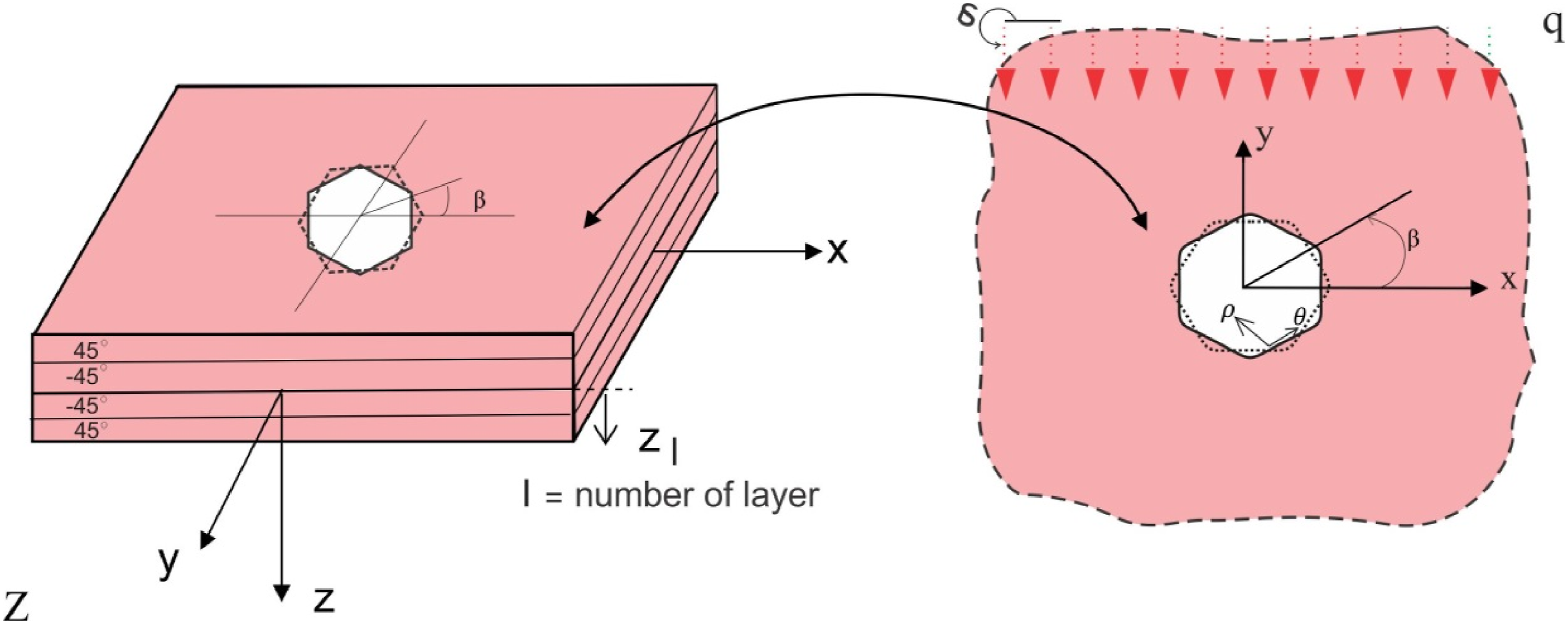
The linear elastic range has been considered for the symmetric laminate. The laminae are perfectly bonded and do not slip relative to each other and the bond between the lamina is infinitely thin. Also, the laminate has the properties of a thin sheet. The assumption of the insulation of the polygonal cutout edge is discussed. The size of the cutouts is considered small enough relative to the dimensions of the laminate so that the laminate can be supposed infinite with confidence. The cutout angular position (β) indicates the cutout orientation relative to the horizontal axis. Based on Figure 1, the laminate is exerted under a remote uniform heat flux of q with an arbitrary angle of δ with respect to the x-axis when steady state conditions are established. The presence of a polygonal cutout whose edges are thermally insulated disrupts the uniform heat flux, resulting in thermal stresses surrounding the cutout. Given that the heat source is absent in the laminate, the maximum stress takes place at the cutout edges. In addition, considering the system of normal and tangential coordinates (ρ,θ) according to Figure 1 and considering the boundary conditions applied to the cutout edge, only σθ is generated at the edges of the cutout. Plane stress and small deformations are assumed. Table 1 presents the properties of materials used in the present work.
35
Symmetric composite laminate containing a hexagonal cutout under uniform heat flux. The mechanical and thermal properties of the glass/epoxy lamina.
35

Basic relations
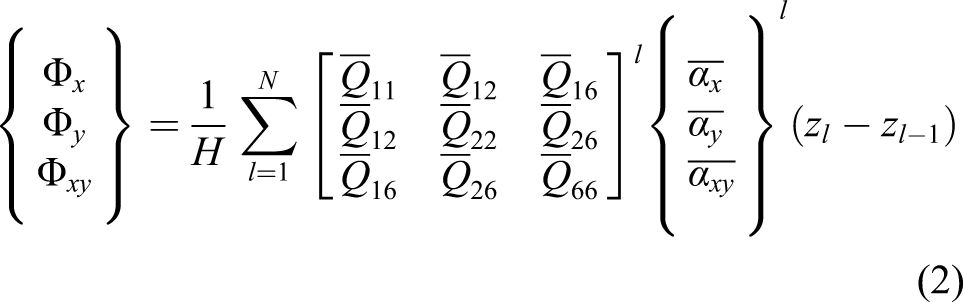
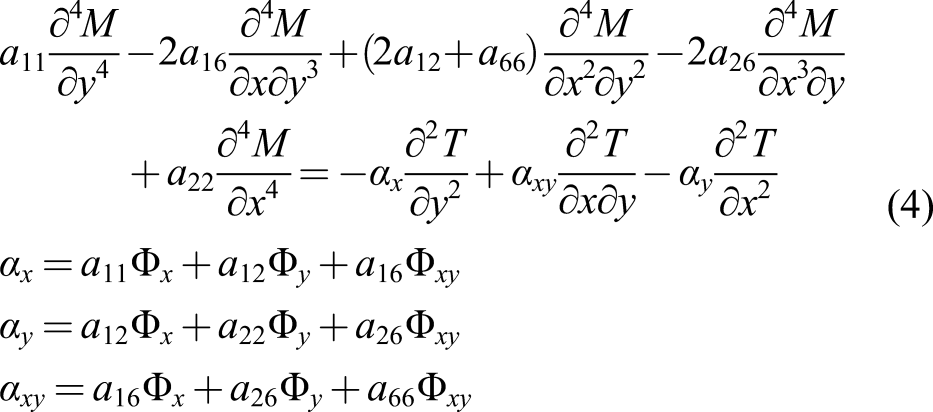
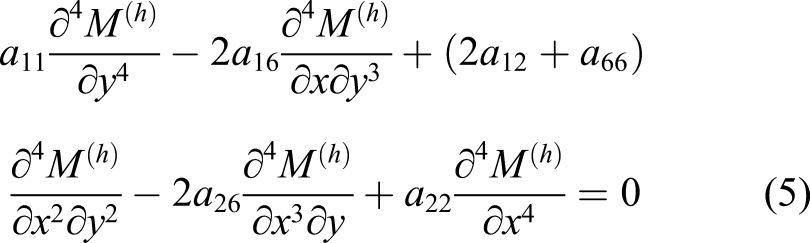
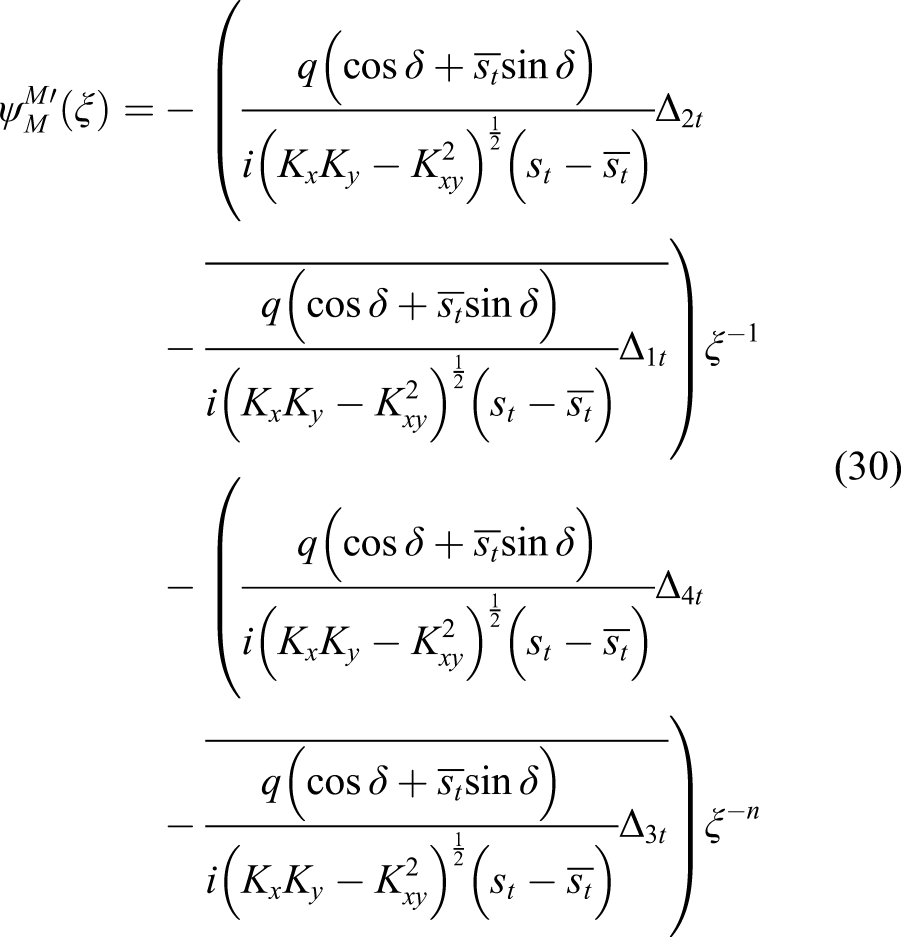
According to the generalized Hooke’s law, the thermal stress components can be obtained using equation (1)
36






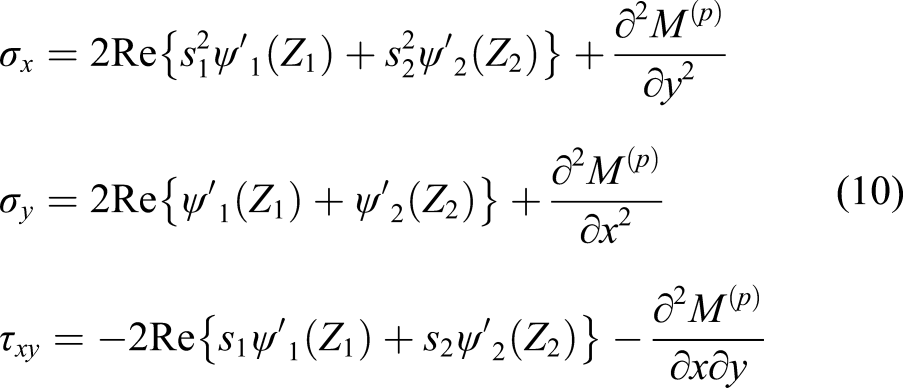





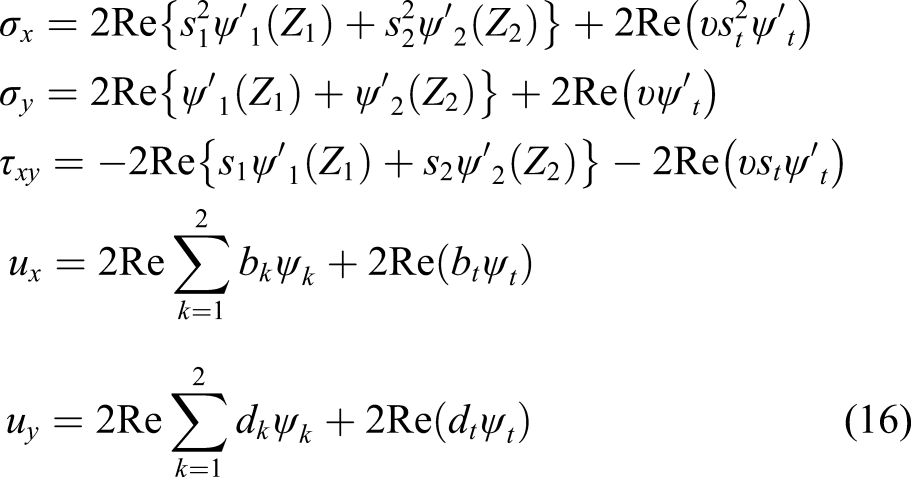
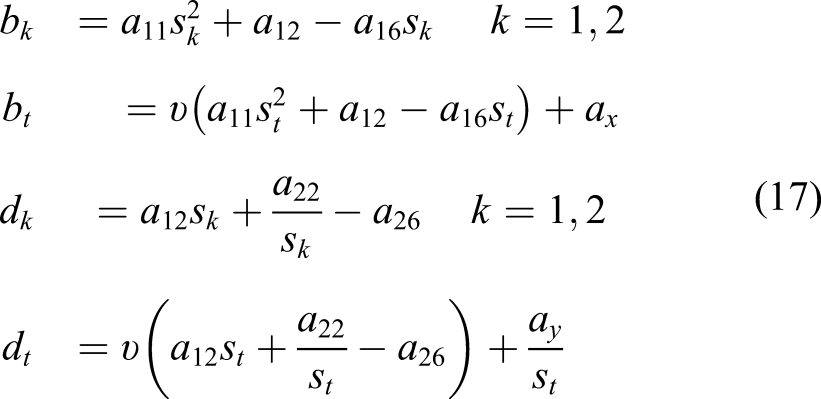

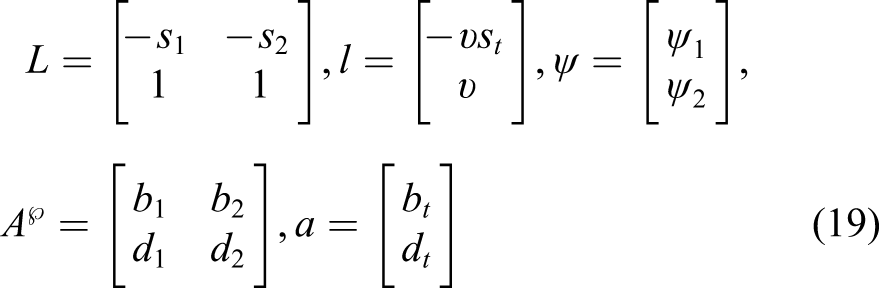






Failure strength criteria
Predicting the failure strength of the perforated symmetric laminated composite is the primary objective of identifying the distribution of thermal stress surrounding the cutout in laminate. The values of stresses σ
x
, σ
y
, and τ
xy
are transferred to the principal material coordinates in each layer (σ
1
,σ
2
,τ
6
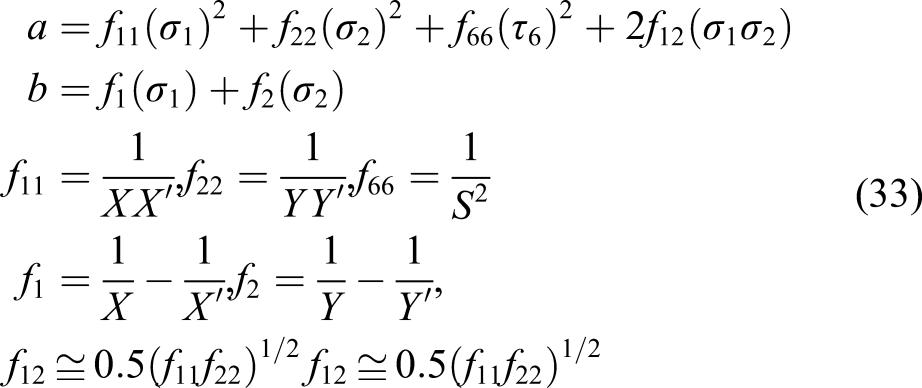
) and then different equations of failure criteria are introduced. Among all layers, the minimum value of the failure strength in the layer will be regarded as the laminate failure strength according to the first ply failure (FPF) scheme. By substituting the stress components in the principal material coordinates in each of the relations (31) and (32), the failure strength will be evaluated using each of the Hashin–Rotem and Tsai–Wu criteria, respectively
29


Conformal mapping
The mapping of an infinite plate with a polygonal hole to the outside of a unit circle is illustrated in Figure 2 to develop an analytical solution for a plate with a circular cutout to a plate with a polygonal cutout. Conformal mapping.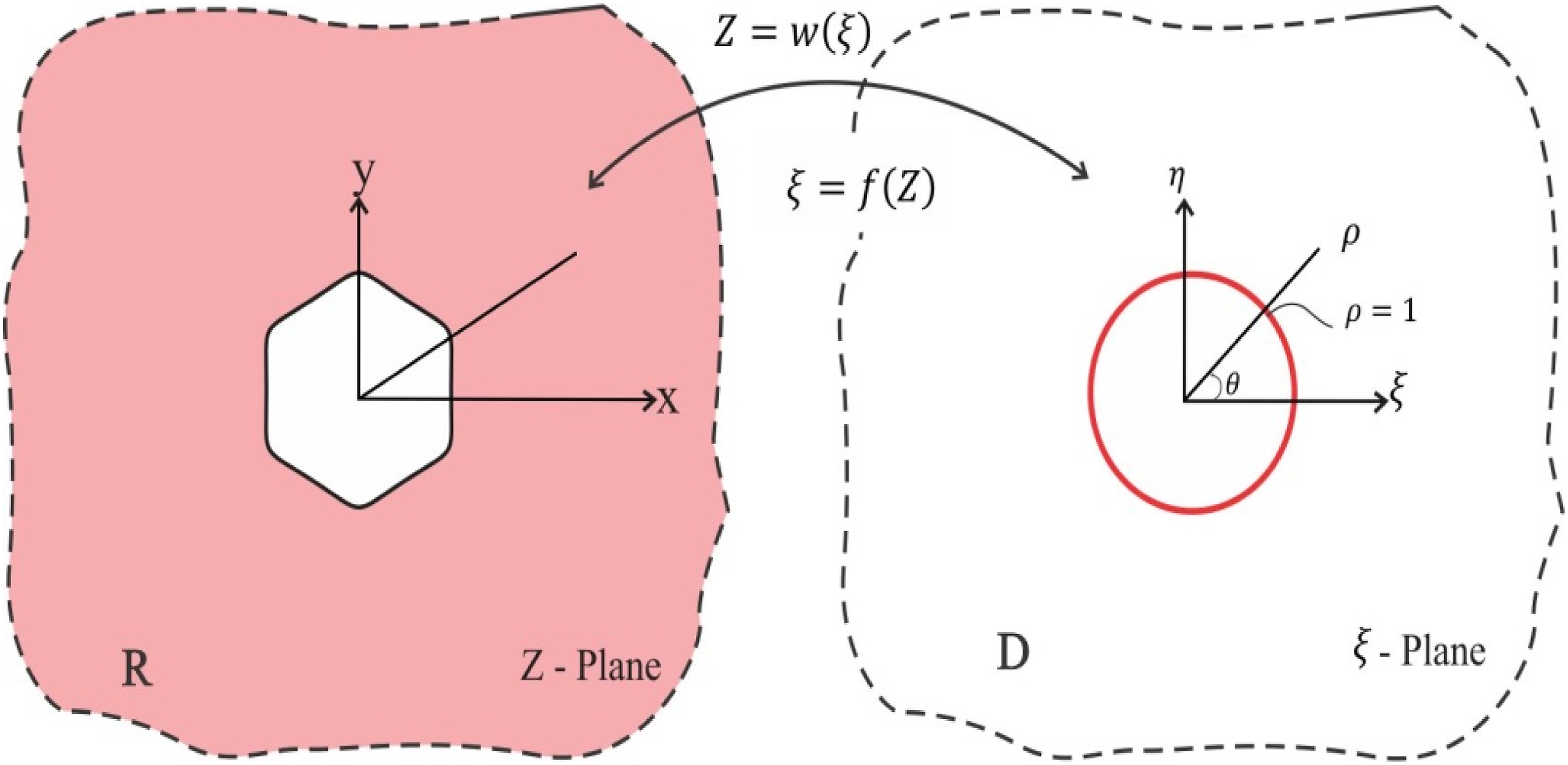
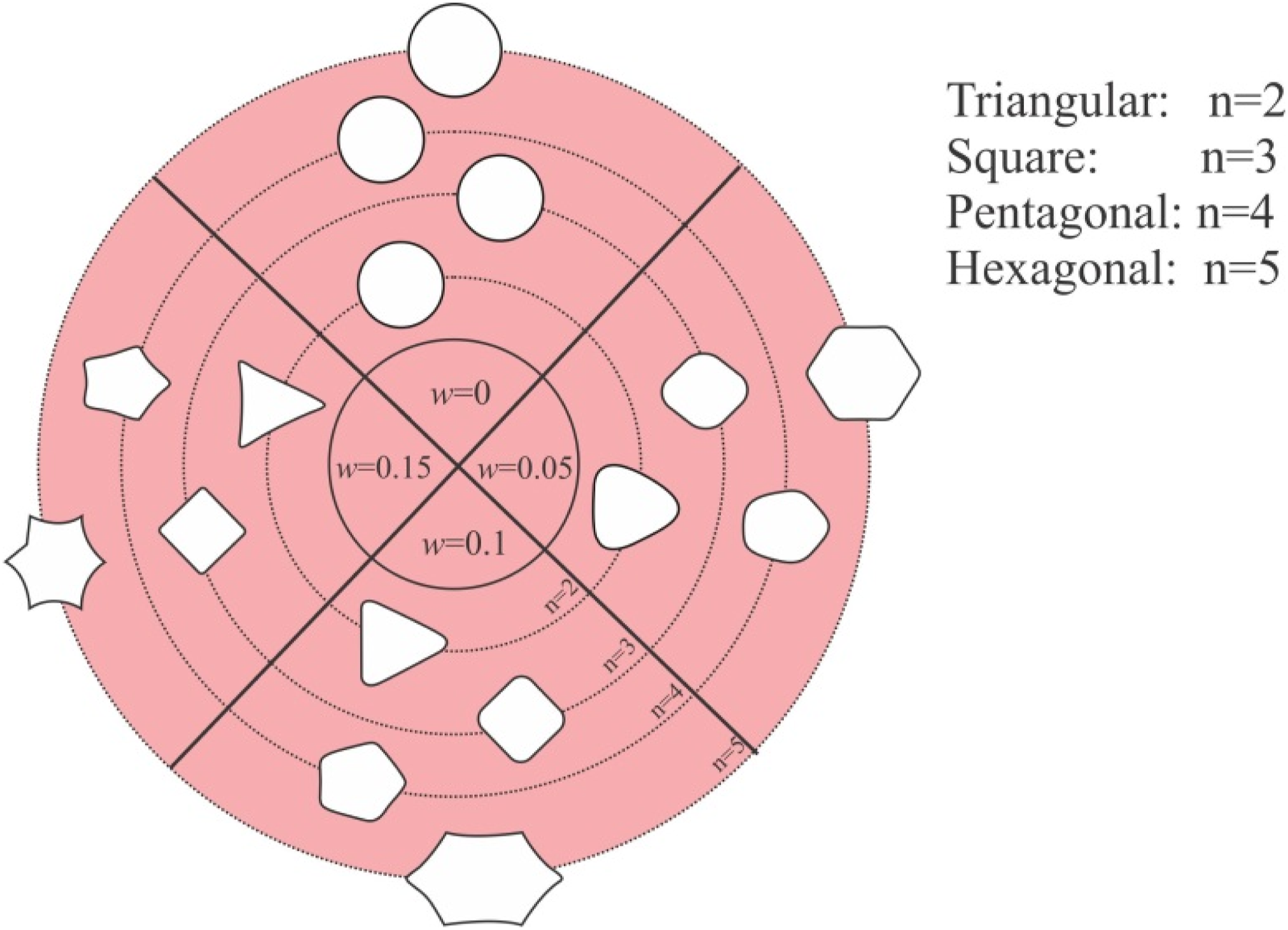
Equation (34) presents the conformal mapping function for a polygonal cutout by the application of the Euler’s formula Effect of the parameters n and w on the shape of cutouts.
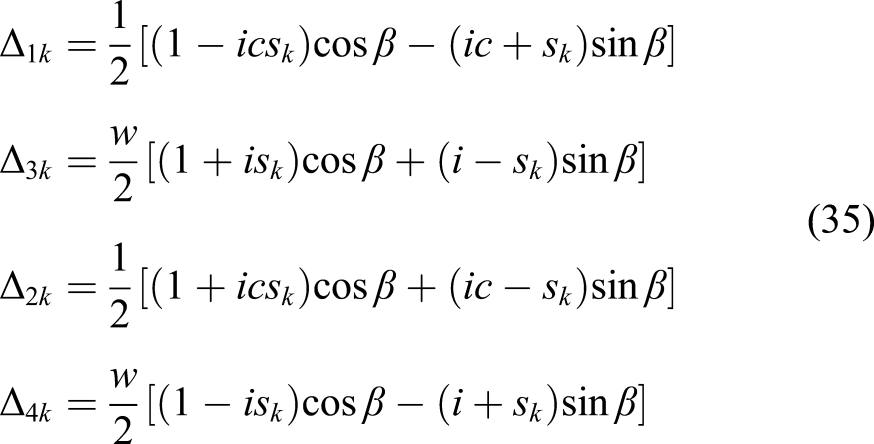
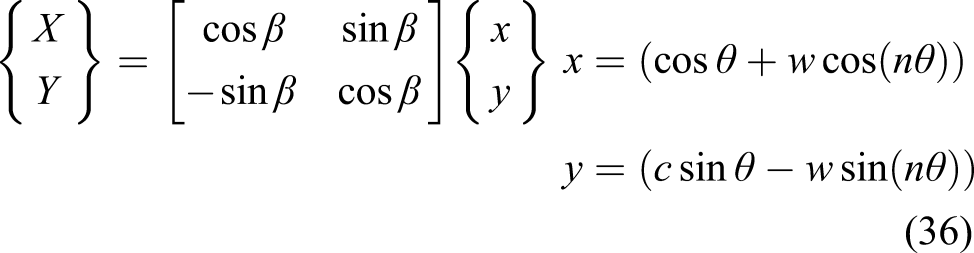
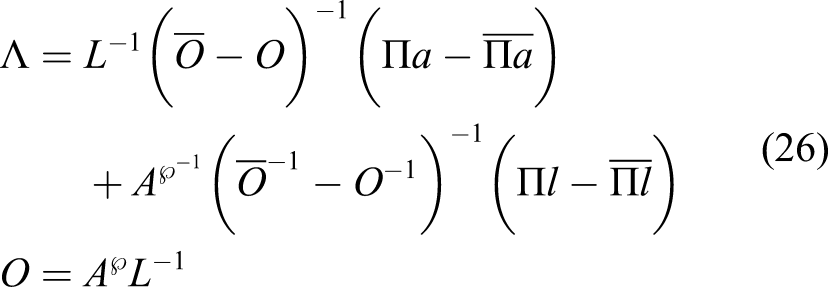
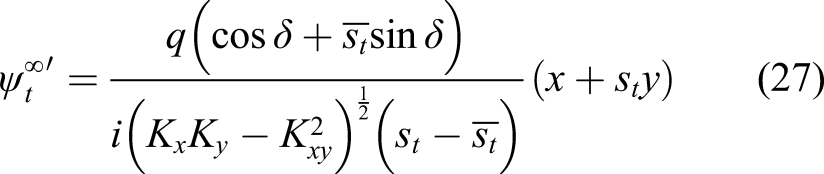
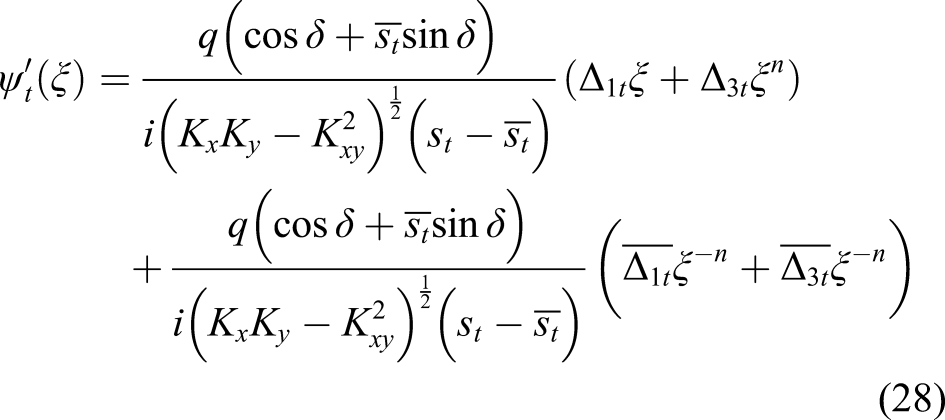
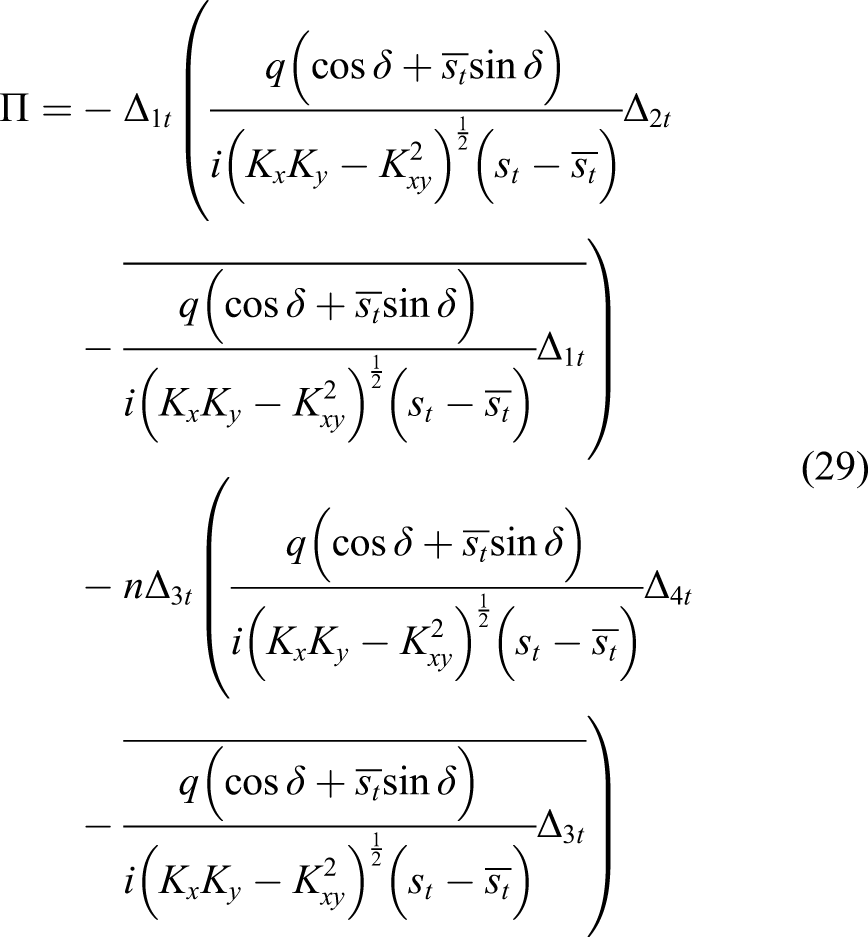
According to the stated mathematics method, the analytical solution flowchart of the present method is as follows: 1. Determining the form of mapping function according to the cutout geometry and its orientation by defining the stacking sequence and the parameters c, n, w, and β 2. Determining the equation {Φ} 3. Determining the roots of the characteristic equation 4. Determining the value of υ factor 5. Determining the complex constants bk, dk, bt, and dt 6. Formation of matrices L, l, a, ψ, and A℘ and then calculate the values of Λ and Π 7. Determining the stress functions ψand ψt 8. Calculation of stresses and failure strength
Validation of the analytical results
The accuracy of the results of the analytical method is checked by the numerical method. For this purpose, the commercial ABAQUS finite element software has been utilized. In order to model the cutout geometry in ABAQUS, the values of the effective parameters such as rotaion angle, bluntness, etc. is applied in MATLAB software to obtain the exact geometry of the cutout. After obtaining the exact geometry of the cutout shape from MATLAB software, these values are entered into Solidworks software, then the geometric coordinates of the cutout are selected through the curve file option. At this stage, a laminate containing a cutout is drawn according to the problem assumptions. Then, the geometry of the perforated laminate is entered into the ABAQUS software A deformable model type is selected then the mechanical properties of the laminate are applied. The type and category of laminate are shell and composite, respectively. Also, the sensitivity of the mesh and the selection of the optimal number of elements for each case have been accomplished. The S4R quadrilateral element is used in ABAQUS finite element program. The distribution of circumferential thermal stress (σθ) around different polygonal cutouts located in an infinite symmetric laminated with the application of the numerical as well as analytical solutions are compared, the results of which for square cutout with the stacking sequence of [45/−45]s (δ = 270 Comparison the results of numerical and analytical methods: (a) square cutout and (b) pentagonal cutout.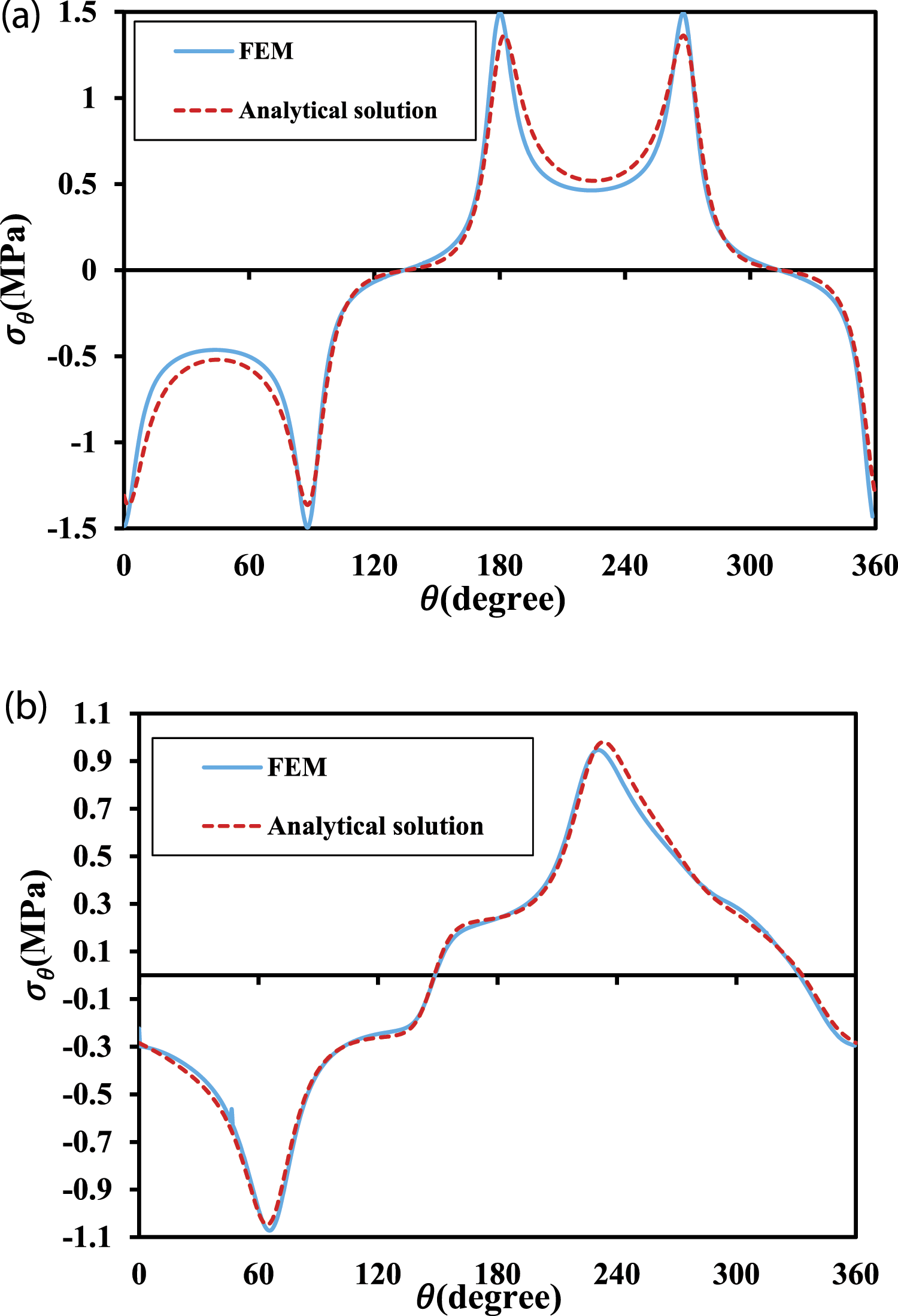
Results and discussion
Findings associated with the failure strength together with thermal stress distribution around a polygonal cutout in a symmetric composite laminate subject to a uniform heat flux are provided in the present section. As shown in Figure 3, parameter w has direct impacts on the geometry of cutout, which means that when the value of this parameter changes, it is possible to control the curvature radius at the cutout corner. Bluntness can be considered among the most important parameters in distribution of thermal stress around regular cutout for the prediction of the failure strength of the laminate which contains cutout. Beside the bluntness, another parameter which is of importance in affecting the failure strength around the cutout is the cutout orientation. When the proper value for the cutout orientation is selected, it is possible to establish remarkable increase in the value of the failure strength. Furthermore, the cutout aspect ratio and the stacking sequence are another important parameter affecting the failure strength of the laminate with polygonal cutout. For this reason, the effect of these parameters on the thermal stress and the failure strength of the laminate for symmetric composite laminates with a polygonal cutout has been studied. Laminated plates made of glass/epoxy with stacking sequences [45/−45]s and [0/90]s containing polygon holes under the uniform heat flux are considered. The maximum normalized thermal stress is defined as
Failure strength based on first ply failure
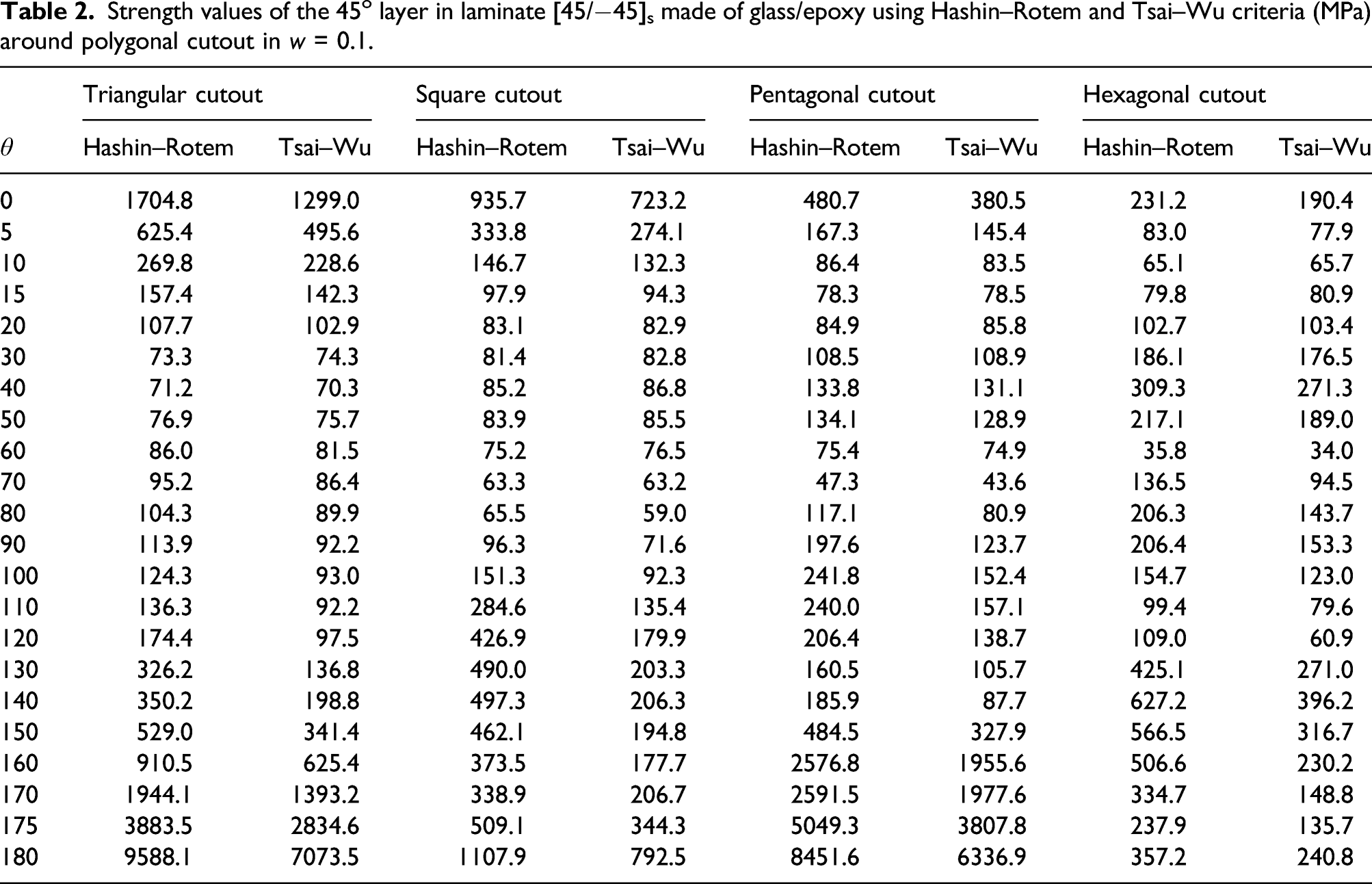
Strength values of the 45o layer in laminate [45/−45]s made of glass/epoxy using Hashin–Rotem and Tsai–Wu criteria (MPa) around polygonal cutout in w = 0.1.
Strength values of the −45o layer in laminate [45/−45]s made of glass/epoxy using Hashin–Rotem and Tsai–Wu criteria(MPa) around polygonal cutout in w = 0.1.
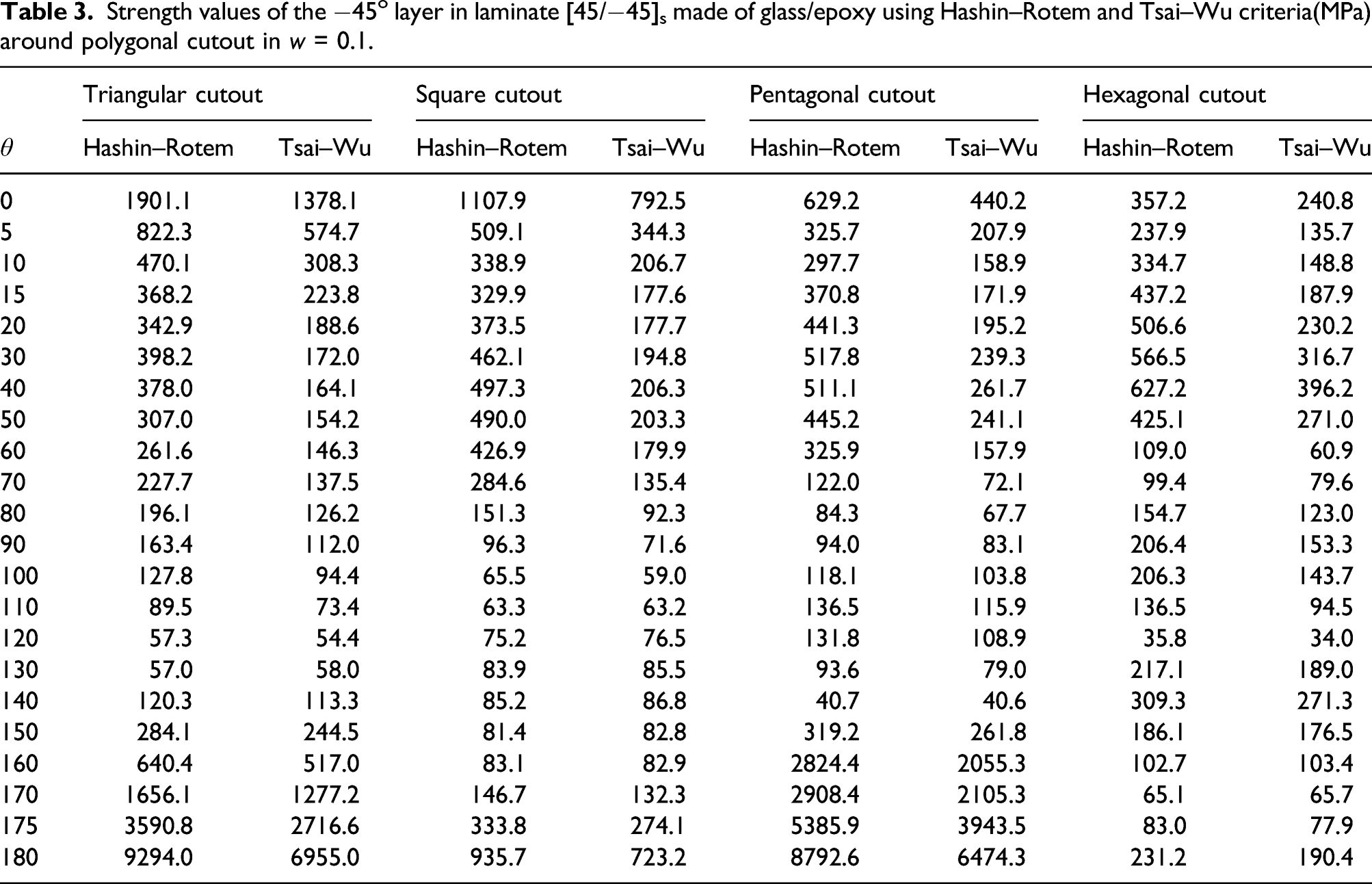
Figure 5 demonstrates the thermal stress distributions induced in different laminates made of glass/epoxy around different polygonal cutouts for the stacking sequence of [0/90]s. For laminated composite plate of glass/epoxy with a triangular cutout, the maximum normalized thermal stresses in the 0o layer and 90o layer are situated at θ = 102o, 258o with the values of −1.686 and 1.686 and are arisen in θ = 104o, 256o with the values of −0.5066 and 0.5066, respectively. Further, for the square cutout, the maximum normalized thermal stresses in the 0o layer and 90o layer happen at θ = 90o and θ = 270o with the values of −2.171, 2.171, −0.646, and 0.646, respectively. For pentagonal cutout, the maximum normalized thermal stress in the 0o layer is obtained at θ = 76o and θ = 284o with the values of −2.367 and 2.367, respectively. Also, for the 90o layer, the maximum normalized thermal stress is achieved at θ = 75o and θ = 285o with the values of −0.708 and 0.708, respectively. Moreover, for hexagonal cutout, the maximum normalized thermal stress in the 0o layer is gotten at θ = 64o, 116o, 244o, and 296o with the values of −2.485 and 2.485, respectively. Also, for the 90o layer, the maximum normalized thermal stress is attained at θ = 63o, 117o, 243o, and 297o with the values of −0.7603 and 0.7603, respectively. The results indicated in Tables 2 and 3 and Figure 5 were gotten for w = 0.1. Thermal stress distribution around different cutouts in a glass/epoxy plate with a stacking sequence of [0/90]s: (a)Triangular cutout, (b) square cutout, (c) pentagonal cutout, and (d) hexagonal cutout.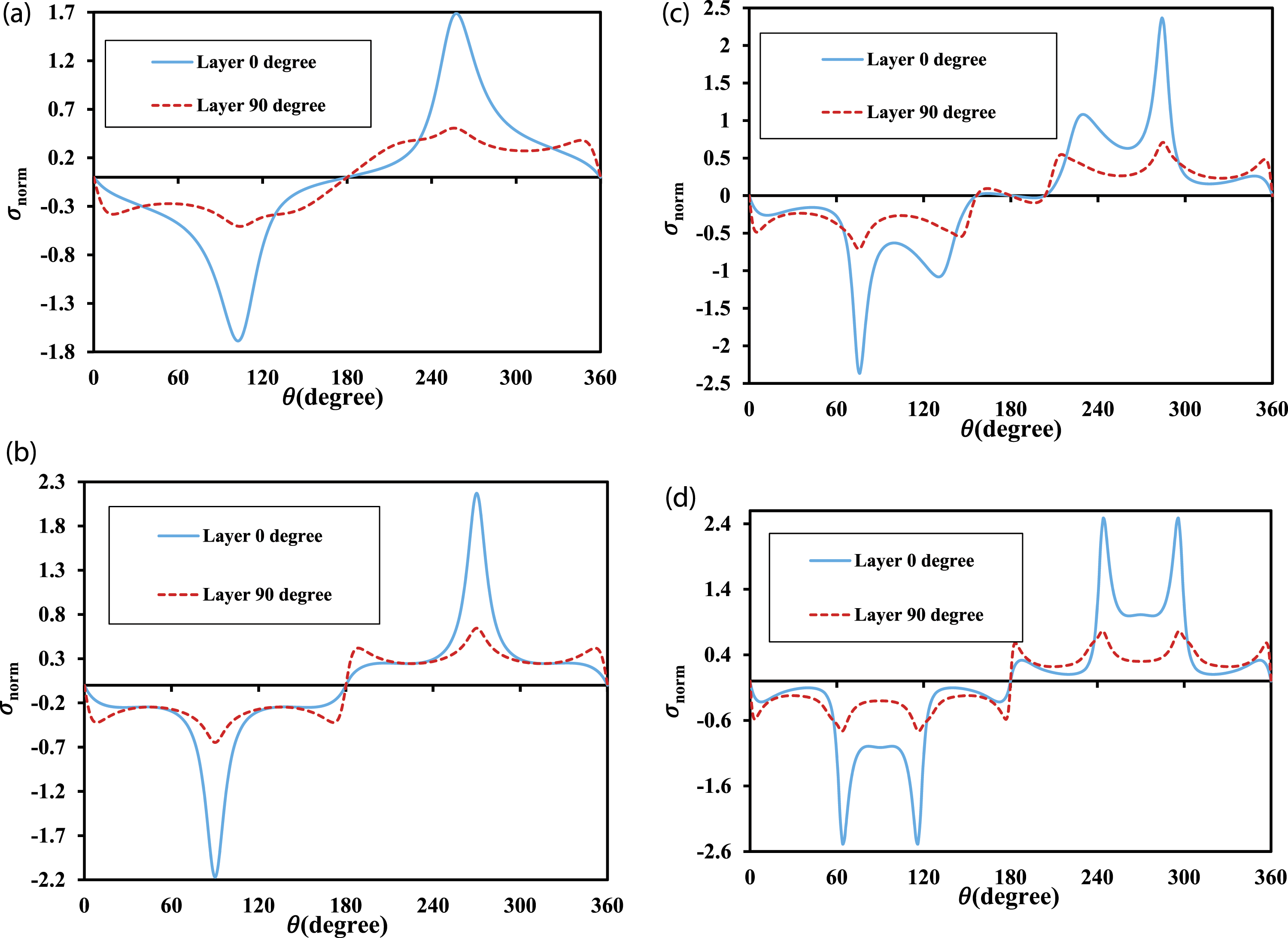
Effect of bluntness in different range of rotation angle
For each cutout, a periodic behavior is observed in the variation of thermal stress in terms of cutout orientation (β). Period of these changes is different for different cutouts. For triangular cutout, the period of the variation of thermal stress with rotation angle is 60°. Figure 6 shows the values of the circumferential thermal stress and the failure strength of symmetric laminates with a triangular cutout in terms of cutout orientation in different values of the bluntness parameter in the stacking sequences of [45/−45]s and [0/90]s. As can be seen in Figure 6, the minimum thermal stress and the maximum failure strength values occur in w = 0. According to the Figure 6, the highest value of the failure strength is attained when the rotation angle is 30° for the stacking sequence of [45/−45]s, while for the stacking sequence of [0/90]s, this value happens at β = 0° and 60°. According to the Tsai–Wu criterion, in the case of [0/90]s, the maximum value of failure strength 67.604 MPa and in case of [45/−45]s, the maximum value of strength is 63.508 MPa. According to the results of the Figure 6, for a triangular cutout, the minimum value of the thermal stress for the stacking sequences of [45/−45]s and [0/90]s happens in a w = 0 that is equivalent to a circular cutout. Variation of normalized thermal stress and failure strength for triangular cutout with cutout orientation (a) thermal stress for [0/90]s ,(b) Hashin–Rotem criterion for [0/90]s, (c) Tsai–Wu criterion for [0/90]s, (d) thermal stress for [45/−45]s, (e) Hashin–Rotem criterion for [45/−45]s, and (f) Tsai–Wu criterion for [45/−45]s.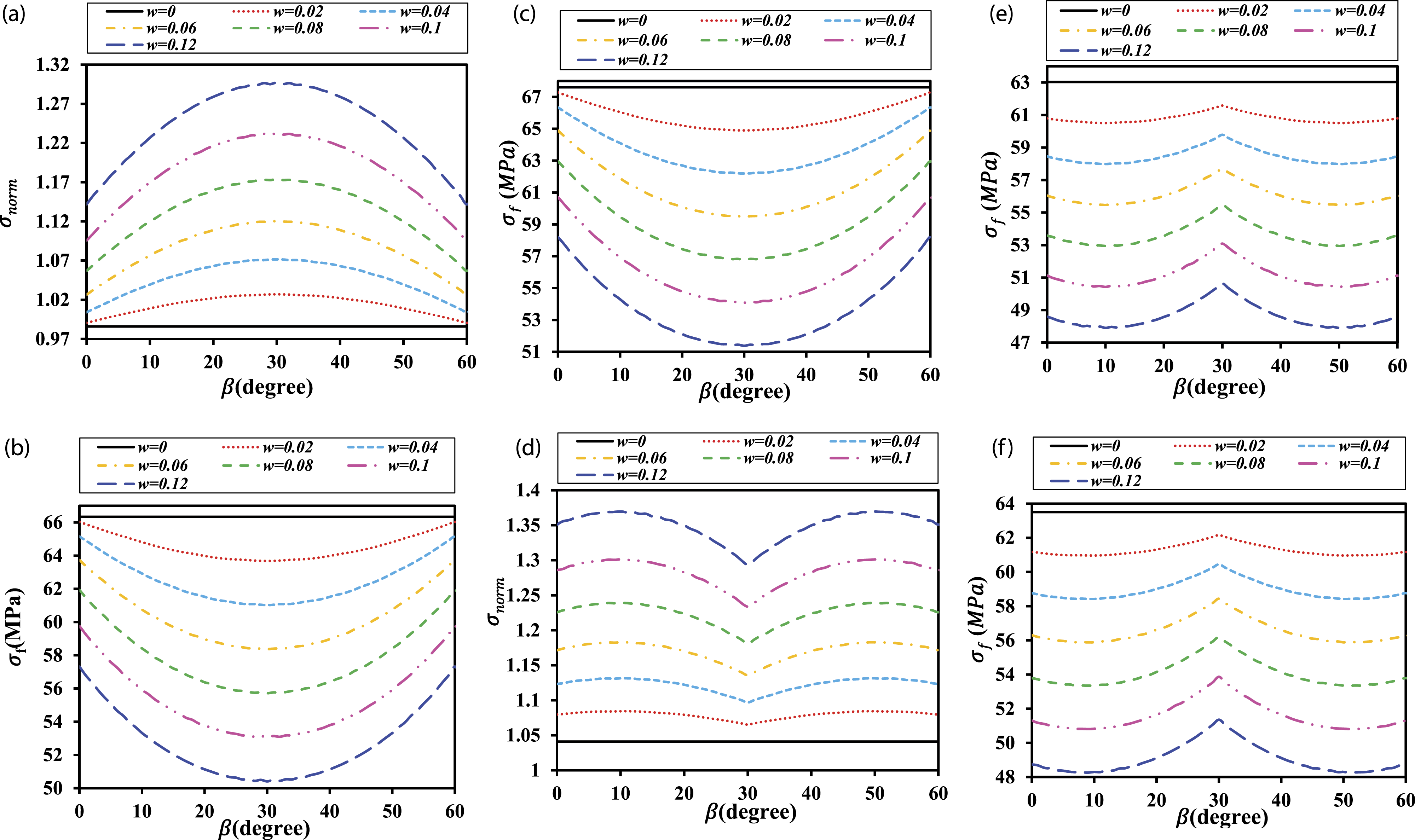
Figure 7 gives the effect of cutout orientation and bluntness parameter on values of the circumferential thermal stress and the failure strength of the glass/epoxy symmetric laminates with stacking sequences of [45/−45]s and [0/90]s around the square cutout under the uniform heat flux. For square cutout, the variation of thermal stress in terms of rotation angle has a periodic function with a period of 90°. Therefore, the results of Figure 7 are presented up to rotation angle of 90°. As observed in Figure 7, unlike the triangular cutout, the value of failure strength for some rotation angles increases with increasing w. Variation of normalized thermal stress and failure strength for square cutout with cutout orientation (a) normalized thermal stress for [0/90]s, (b) Hashin–Rotem criterion for [0/90]s, (c) Tsai–Wu criterion for [0/90]s, (d) normalized thermal stress for [45/−45]s, (e) Hashin–Rotem criterion for [45/−45]s, and (f) Tsai–Wu criterion for [45/−45]s.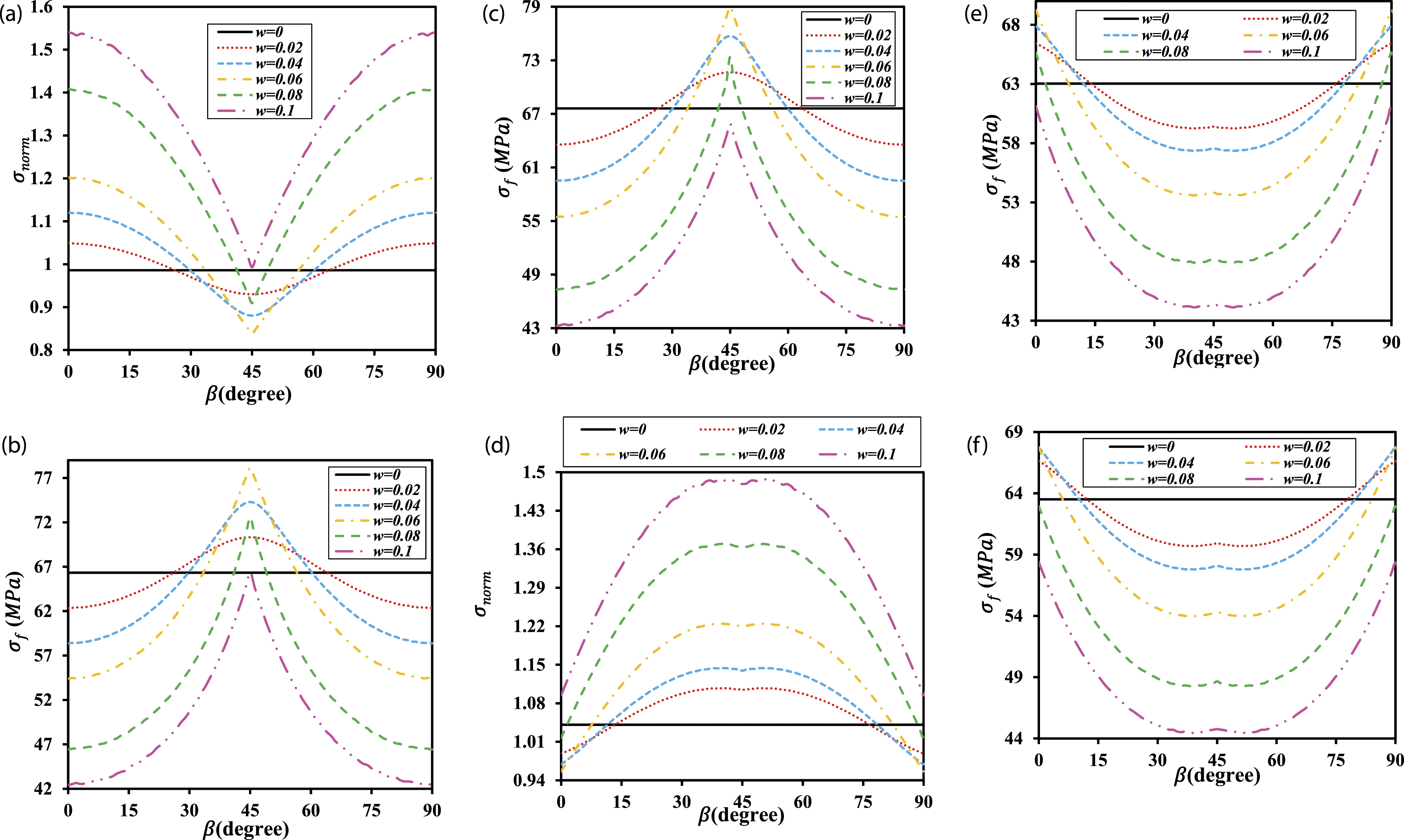
According to the Tsai–Wu criterion, in the case of [0/90]s, the maximum value of failure strength is 79.01 MPa when w = 0.06 and β = 45°, and in the case of [45/−45]s, the maximum value of failure strength is 67.749 MPa that happens when w = 0.06 and β = 0° or 90°. As shown in this figure, for a large range of rotation angle, the highest value of failure strength of symmetric laminated composite plate with square cutout is greater than the similar laminates with a circular cutout (w = 0).
Thus, the circular cutout is not the best shape for the cutout in this case. As can be seen in Figure 7, the stacking sequence of laminate and cutout orientation play a key role in the values of failure strength in the perforated composite laminates made of glass/epoxy materials. Further, the maximum value of the failure strength for the stacking sequences of [45/−45]s and [0/90]s is obtained at
For pentagonal cutout, the variation of thermal stress in terms of the rotation angle is a periodic function with a period of 36°. Figure 8 shows the effect of rotation angle on the thermal stress and the failure strength of the laminate based on the Hashin–Rotem and Tsai–Wu criteria for pentagonal cutout located in symmetric composite laminates made of glass/epoxy material in the stacking sequences of [45/−45]s and [0/90]s. As shown in this figure, the desirable thermal stress is obtained at a rotation angle of zero or 36°, and undesirable thermal stress happens when the cutout is oriented at angles 18°. In the case of [0/90]s and [45/−45]s, the variation of maximum value of the failure strength with rotation angle is similar to symmetric laminated composite plate with a triangular cutout. It is obvious that the failure strength of the laminate decreases with increase in w. Variation of normalized thermal stress and failure strength for pentagonal cutout with cutout orientation (a) normalized thermal stress for [0/90]s, (b) Hashin–Rotem criterion for [0/90]s, (c) Tsai–Wu criterion for [0/90]s, (d) normalized thermal stress for [45/−45]s, (e) Hashin–Rotem criterion for [45/−45]s, and (f) Tsai–Wu criterion for [45/−45]s.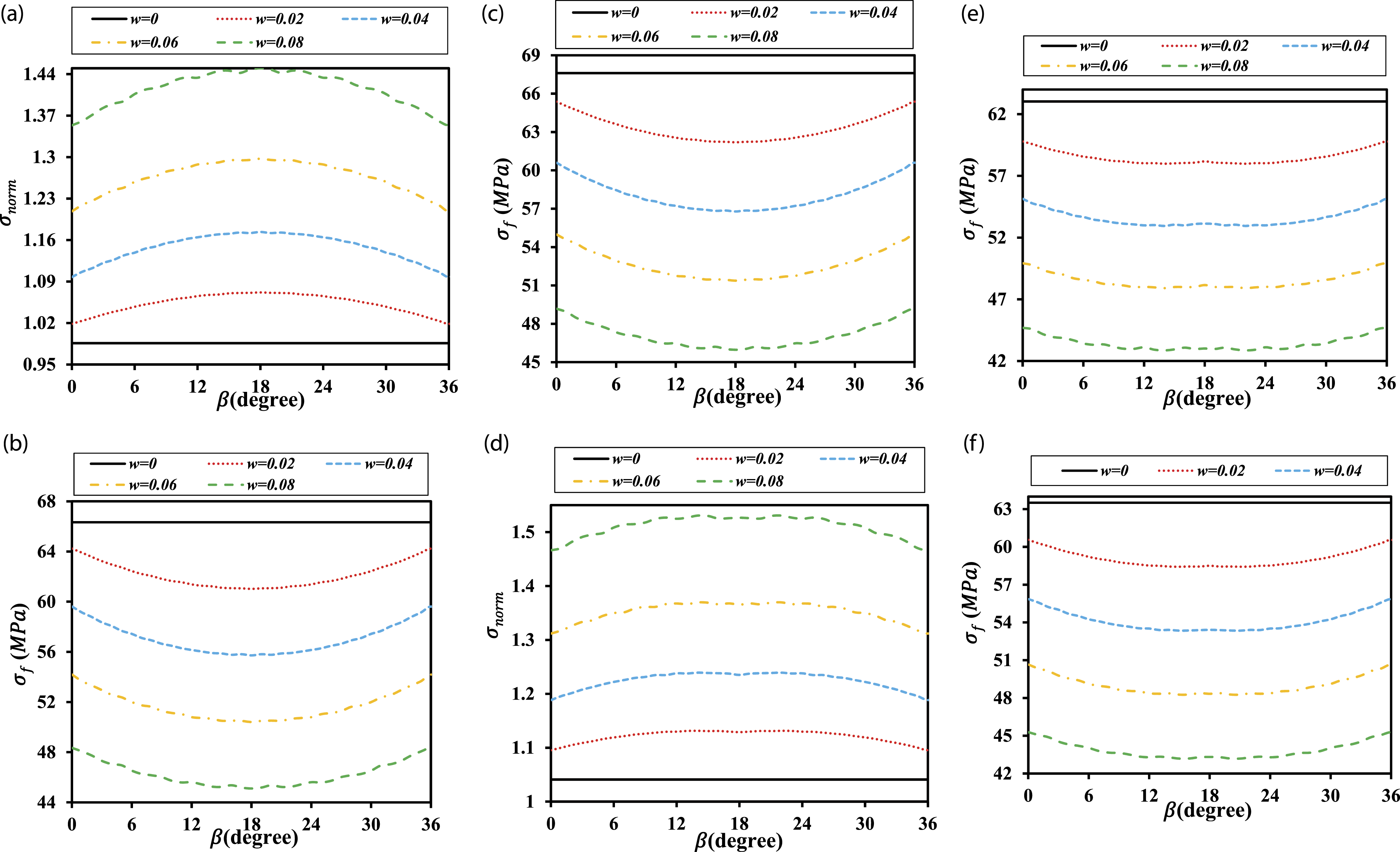
For hexagonal cutout, the change of thermal stress with rotation angle has a periodic behavior with a 60° period. Accordingly, Figure 9 indicates the thermal stress variation and the failure strength of the laminate according to the criteria of Hashin–Rotem as well as Tsai–Wu, considering symmetric composite laminates up to 60° rotation angle. Based on Figure 9, the desirable thermal stress is obtained for cross-ply laminate and angle-ply laminate at β = zero or 60° and β = 30°, respectively. Variation of normalized thermal stress and failure strength for hexagonal cutout with cutout orientation (a) normalized thermal stress for [0/90]s, (b) Hashin–Rotem criterion for [0/90]s, (c) Tsai–Wu criterion for [0/90]s, (d) normalized thermal stress for [45/−45]s, (e) Hashin–Rotem criterion for [45/−45]s, and (f) Tsai–Wu criterion for [45/−45]s.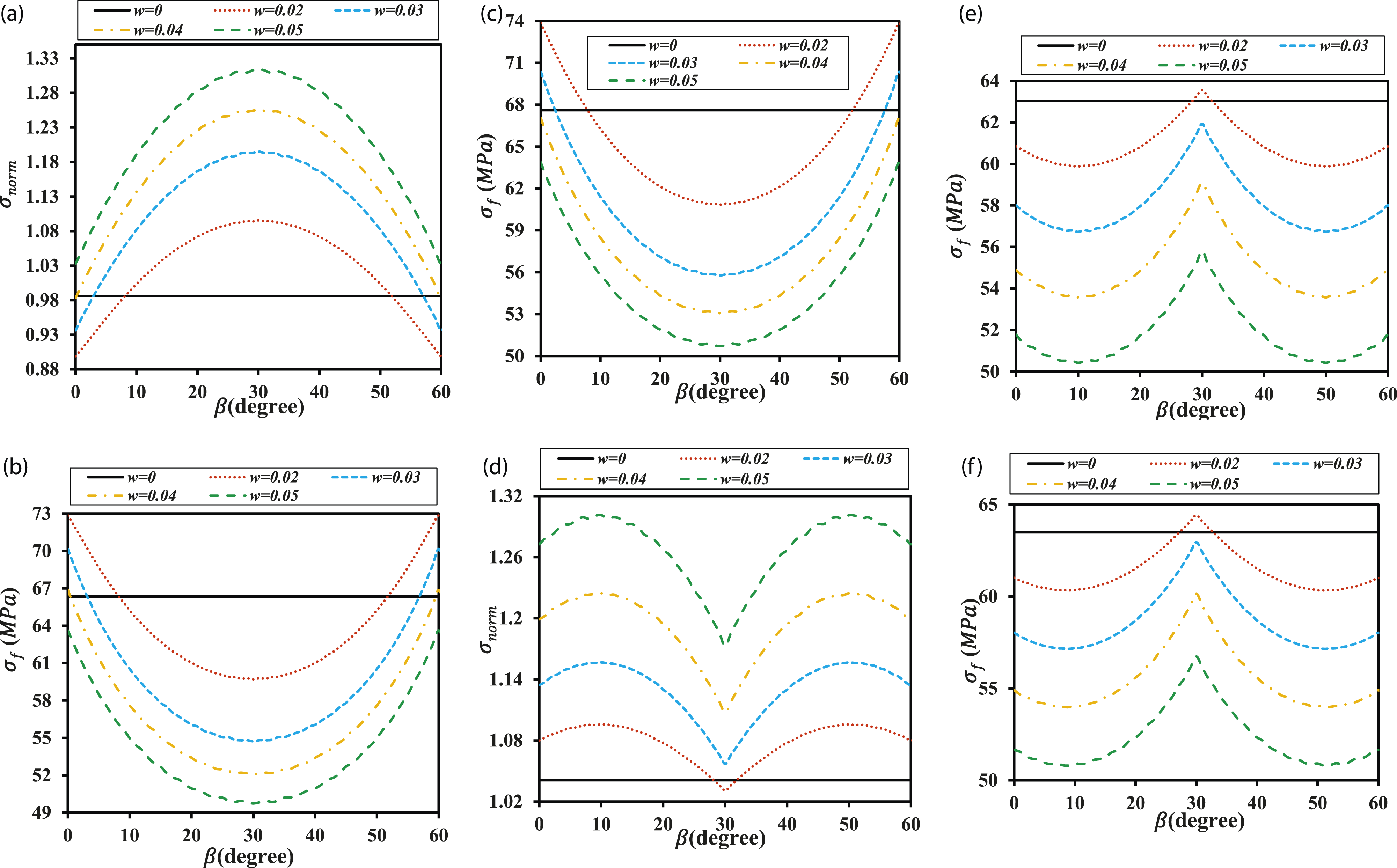
According to the Tsai–Wu criterion, in the case of [0/90]s, the maximum value of failure strength is 73.84 MPa that is situated at w = 0.02 and β = 0° or 60° and in the case of [45/−45]s, the maximum value of strength 64.418 MPa that is acquired at w = 0.02 and β = 30°. As illustrated in this figure, by selecting the appropriate values for rotation angle and bluntness parameter (w), the thermal stress less than the circular cutout can be achieved. For example, for the stacking sequence of [45/−45]s in w = 0.02 and in the range of 28°–32° for rotation angle, the thermal stresses of hexagonal cutout are less than those in similar laminates with a circular cutout (w = 0).
Effect of cutout aspect ratio in different range of rotation angle
Figure 10 shows the effect of cutout rotation angle on the failure strength of glass/epoxy laminate in different aspect ratios of the cutout. As it is clear, the failure strength of laminate containing a triangular cutout decreases by increasing the aspect ratios of the cutout. This is due to the fact that by increasing the value of c, the cutout is elongated in the y-direction, and the shape of triangular cutout is converted from the equilateral triangle to the isosceles triangle with sharper corners. Given that in these cases, the minimum values of the failure strength occur at the corners of the cutout. It is noteworthy here that, for laminated composite plates, in addition to stacking sequence and cutout orientation angle, the cutout aspect ratios have significant influence on the values of the failure strength. It can be seen that the highest value of strength for the stacking sequence of [0/90]s obtains according to the Hashin–Rotem criterion at β = 0° and 180°. In the stacking sequence of [45/−45]s, except for c = 1, for other cutout aspect ratios, the lowest strength occurs in the range of β = 90°.Therefore, the values of c as an important parameter have a significant effect on the failure strength of laminate. Effect of the rotation angle on the failure strength of triangular cutout in different values of c in w = 0.08 (a) the stacking sequence of [0/90]s and (b) the stacking sequence of [45/−45]s.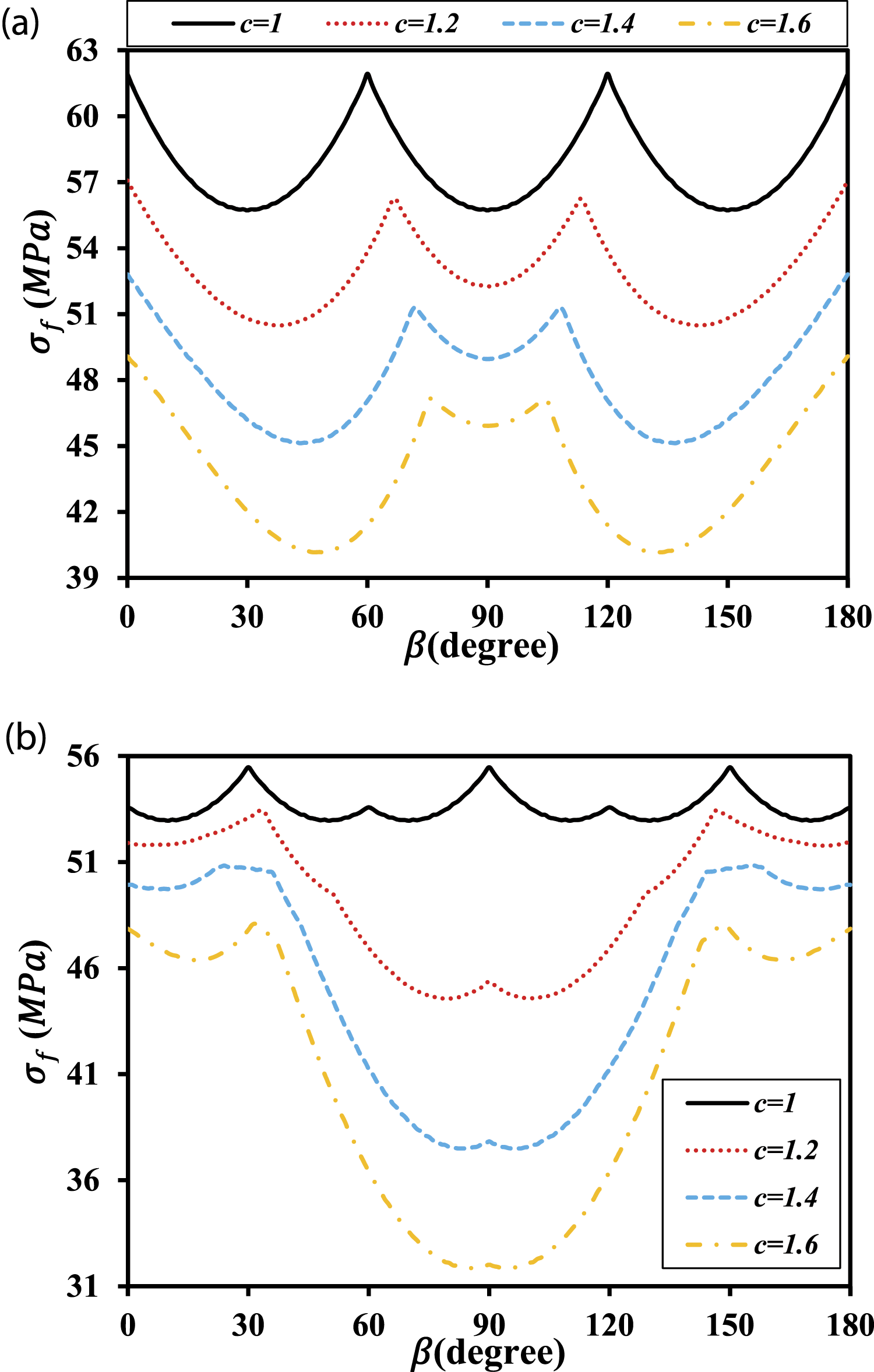
Figure 11 shows the effect of cutout orientation on the failure strength of composite laminate containing a square cutout in different values of c based on the Hashin–Rotem criterion. By increasing the value of c, the failure strength of laminate decreases. According to the results of the Figure 11, the highest value of the failure strength for the stacking sequence of [0/90]s is 77.196 MPa that happens at c = 1 and β = 45° or 135o and for the stacking sequence of [45/−45]s is 65.65 MPa at c = 1 and β = 0°, 90° and 180°. Effect of the rotation angle on the failure strength of square cutout in different values of c in w = 0.08 (a) the stacking sequence of [0/90]s and (b) the stacking sequence of [45/−45]s.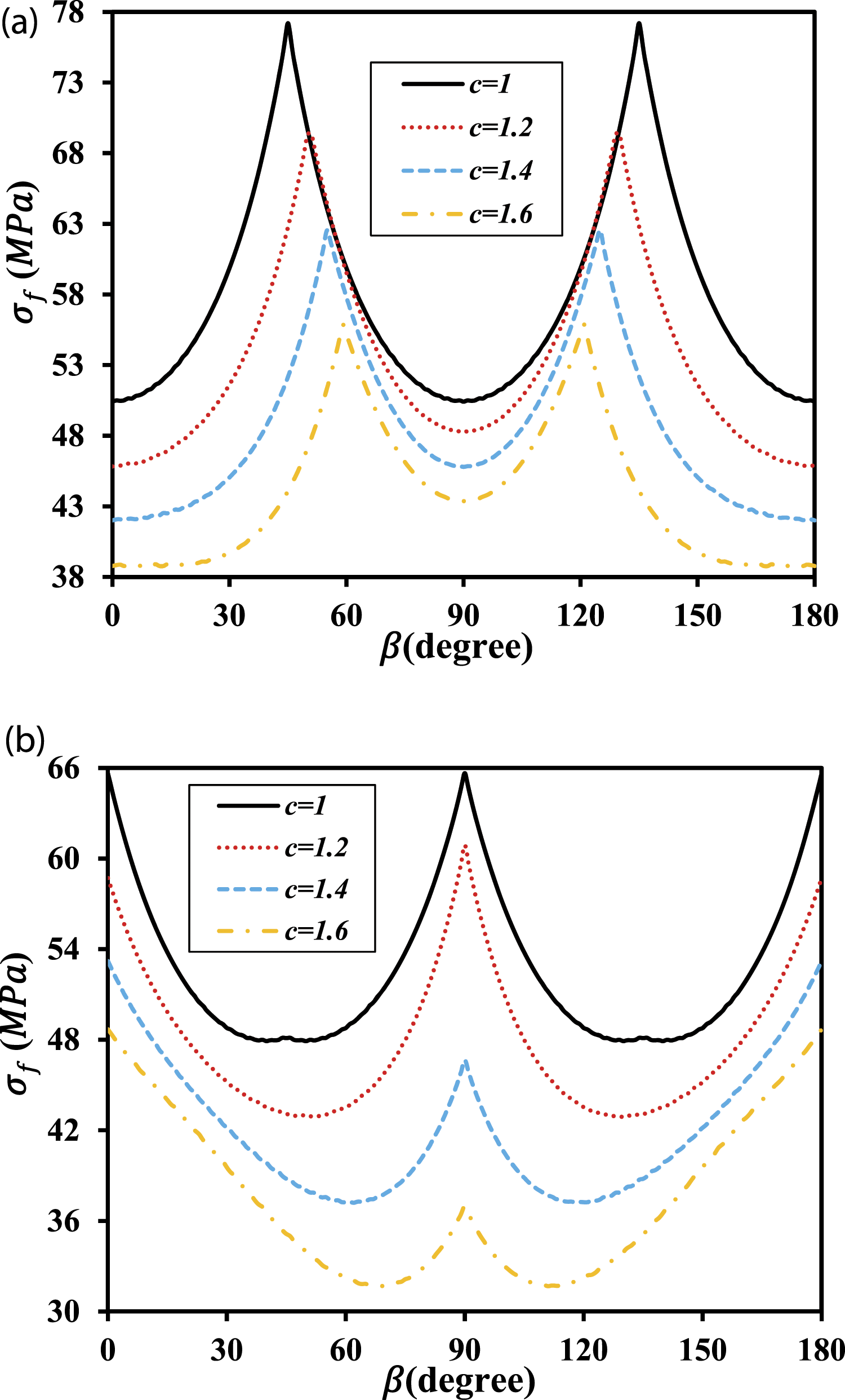
Figure 12 illustrates the effect of cutout orientation on the failure strength of pentagonal cutout in different cutout aspect ratios. Similar to triangular cutout for all cutout aspect ratios, the value of the failure strength decreases by increasing the cutout aspect ratios (c). It can be seen that the highest value of the failure strength for the stacking sequence of [0/90]s using the Hashin–Rotem criterion occurs at β = 0° and 180°. In the stacking sequence of [45/−45]s, except for the c = 1, for other cutout aspect ratios, the highest and lowest strength occur at the β = 0° or 180° and β = 86° or 94°,respectively. Effect of rotation angle on the failure strength of pentagonal cutout in different values of c in w = 0.05 (a) the stacking sequence of [0/90]s and (b) the stacking sequence of [45/−45]s.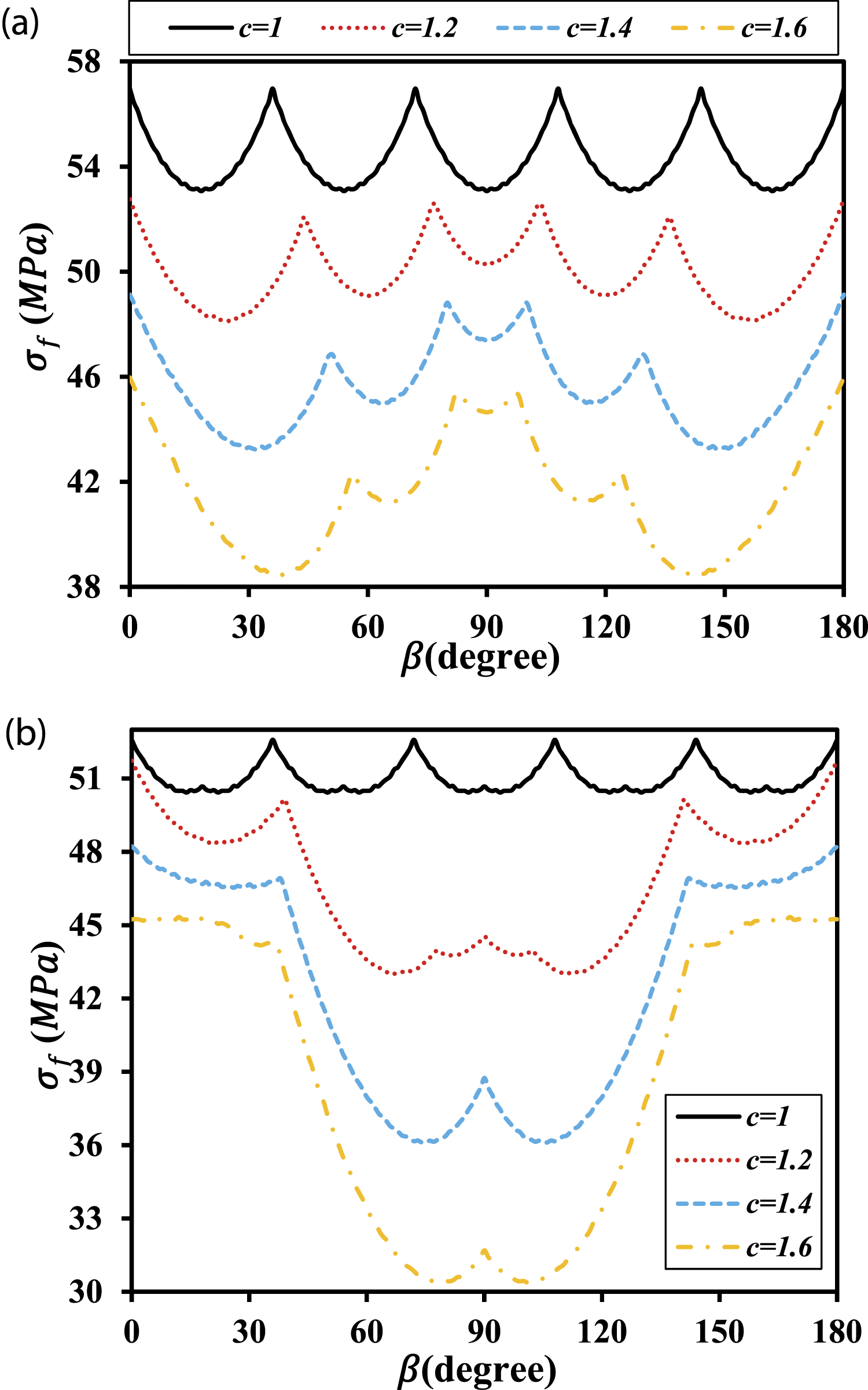
The variation of the failure strength in symmetric composite laminates with a hexagonal cutout in terms of cutout orientation for different cutout aspect ratios is shown in Figure 13. It can be seen that the highest value of the failure strength for the stacking sequence of [0/90]s is 63.62 MPa that happens at c = 1 and β = 0° and 180°. Whereas for the stacking sequence of [45/−45]s, the highest value of the failure strength is 53.42 MPa that arises at c = 1 and β = 30° and 150° and the lowest value of the failure strength is 28.94MPa that happens c = 1.6 and β = 90° based on the Hashin–Rotem criterion. Effect of rotation angle on the failure strength of hexagonal cutout in different values of c in w = 0.05 (a) the stacking sequence of [0/90]s and (b) the stacking sequence of [45/−45]s.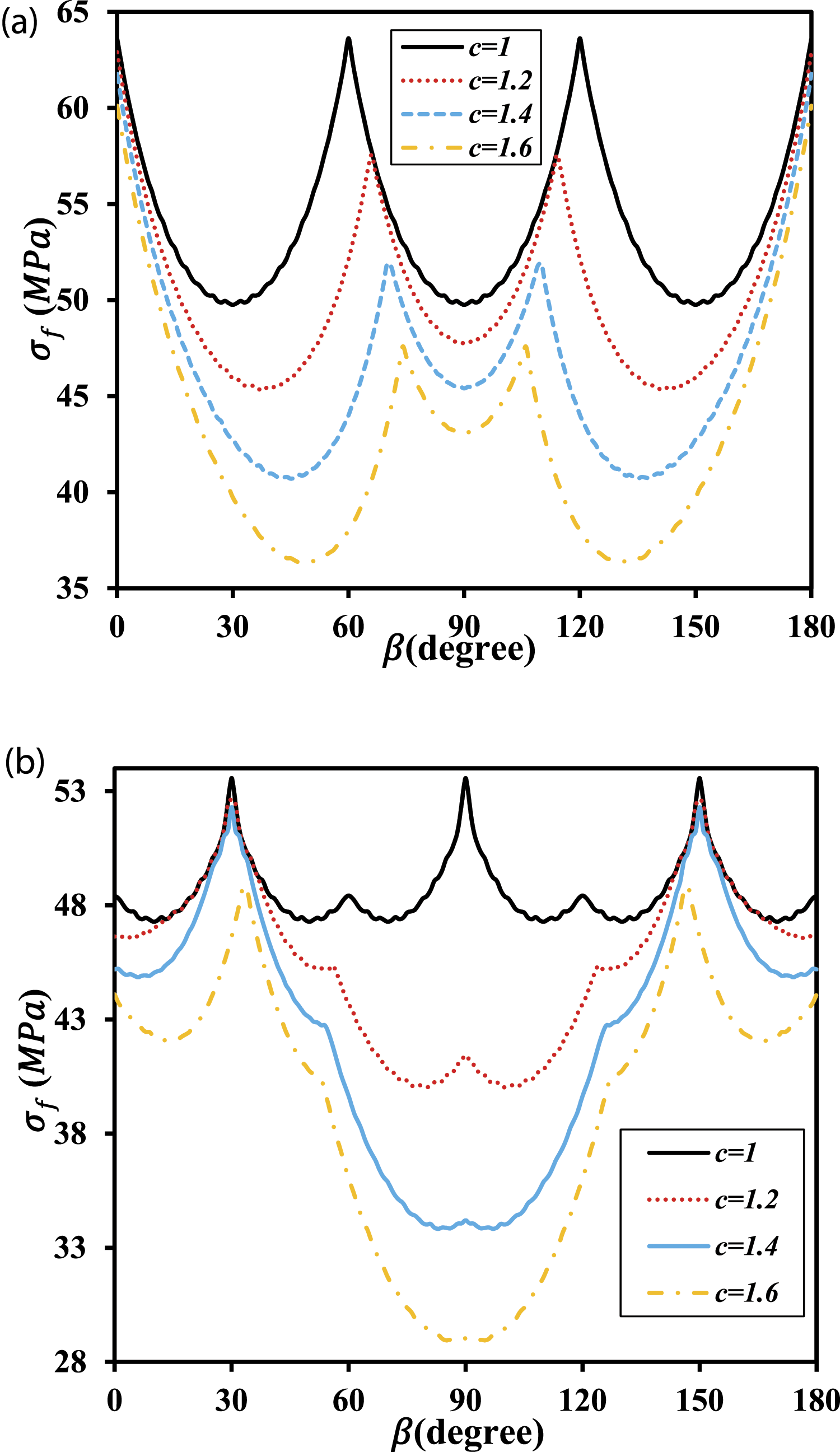
Effect of staking sequence on failure strength
The effect of the bluntness parameter on the failure strength of four-layer symmetric laminates with different stacking sequences at desirable rotation angles for different cutouts is illustrated in Figure 14. According to this figure, in the case of [0/90]s, the highest value of the failure strength based on the Hashin–Rotem and Tsai–Wu criteria for glass/epoxy laminate is achieved for triangular cutout at β = 0°, square cutout at β = 45°, pentagonal cutout at β = 36°, and hexagonal cutout at β = 60° .It can be seen, in the case of [0/90]s for triangular and pentagonal cutouts, the values of the failure strength decrease by increasing the values of bluntness. It is clear that the highest and lowest failure strength occur at w = 0 and w = 0.2, respectively. Furthermore, the trend of the failure strength for triangular cutout at β = 30°, square cutout at β = 90°, pentagonal cutout at β = 0°, and hexagonal cutout at β = 30° in the stacking sequence of [45/−45]s is studied. It can be seen, for square cutout at β = 90° and hexagonal cutout at β = 30°, in the case of [45/−45]s, the highest values of the failure strength based on the Hashin–Rotem and Tsai–Wu criteria happen at w = 0.06 and w = 0.02, respectively. In fact, the highest value of the failure strength based on Hashin–Rotem and Tsai–Wu criteria for the stacking sequence of [45/−45]s happens at Comparison of Hashin–Rotem and Tsai–Wu criteria around polygonal cutout in optimum values of β: (a) The triangular cutout for stacking sequence of [0/90]s at β = 0°, (b) the square cutout for stacking sequence of [0/90]s at β = 45°, (c) the pentagonal cutout for stacking sequence of [0/90]s at β = 36°, (d) the hexagonal cutout for stacking sequence of [0/90]s at β = 60°, (e) the triangular cutout for stacking sequence of [45/−45]s at β = 30°, (f) the square cutout for stacking sequence of [45/−45]s at β = 90°, (g) the pentagonal cutout for stacking sequence of [45/−45]s at β = 0°, and (h) the hexagonal cutout for stacking sequence of [45/−45]s at β = 30°.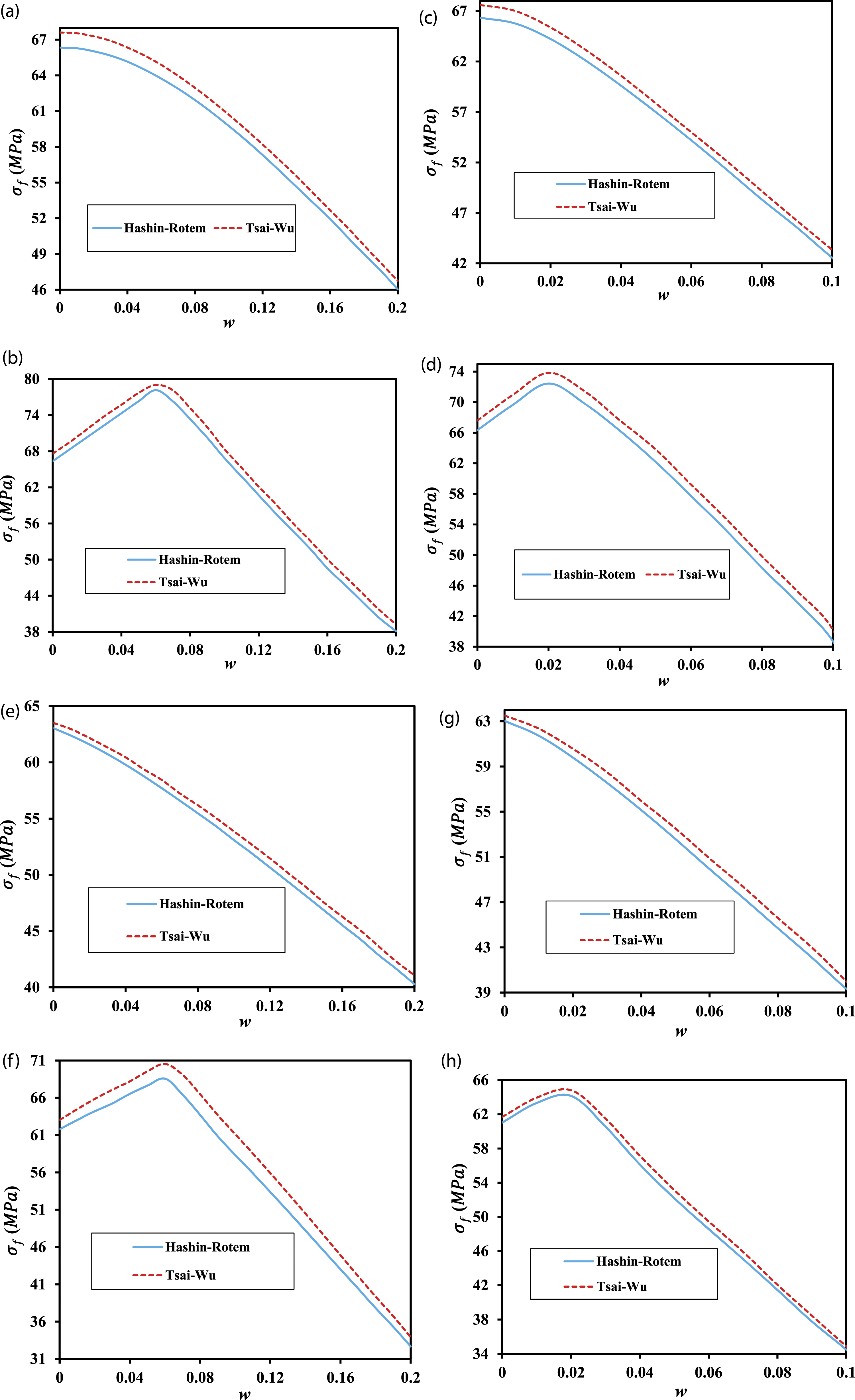
Conclusion
In this study, an analytical solution based on the complex variable method was employed to determine the thermal stress distribution around cutouts with different shapes to predict the failure strength of symmetric laminated composites under uniform heat flux. For this purpose, the Hashin–Rotem and Tsai–Wu criteria were applied. The effects of bluntness, rotation angle of cutout, cutout aspect ratios, stacking sequence, and cutout shape (triangular, square, pentagonal, and hexagonal) as significant parameters on the failure strength of the laminates with cutouts located in a glass/epoxy plate were studied. The results also showed that the cutout bluntness is not the only effective parameter on increasing the failure strength of the laminate, but also the cutout orientation, cutout aspect ratios, and stacking sequences play a major role in increasing the failure strength of the laminate so that by selecting the optimum values of these parameters in a specific curvature, the failure strength can be increased significantly. The failure strength values for all cutouts with an odd number of sides were always less than the corresponding value of a circular cutout, whereas all cutouts with an even number of sides were more efficient than circular cutout. In symmetric laminated composites containing square and hexagonal cutouts, for a wide range of bluntness, the desirable values of the failure strength were greater than the desirable failure strength values of similar laminates with a circular cutout. According to the results, the maximum failure strength in the laminate containing a triangular cutout obtains for the stacking sequence of [0/90]s at β = 0° and 60° and for stacking sequence of [45/−45]s at β = 30°. Also, the highest value of the failure strength in the laminate containing a square, pentagonal, and hexagonal cutout is attained when the rotation angle is β = 45°, β = 0° and 36°, β = 0° and 60° for the β = 0° and 90°, β = 0° and 36°, β = 30°, respectively. The failure strength of laminate containing a non-circular cutout decreases by increasing the aspect ratios of the cutout. This is due to a change in the cutout geometry and the sharpening of the cutout corner. Hence, for laminated composite plates, in addition to stacking sequence and bluntness, the cutout orientation angle and cutout aspect ratios have significant influence on the values of the failure strength. Finite element analyses were employed to validate the analytical solutions. There was a significant agreement between the finite element solution and the present results.
Footnotes
Declaration of conflicting interests
The author(s) declared no potential conflicts of interest with respect to the research, authorship, and/or publication of this article.
Funding
The author(s) received no financial support for the research, authorship, and/or publication of this article.
