







Abstract
Recently, there has been a tendency to use machine learning (ML)–based methods, such as artificial neural networks (ANNs), for more accurate estimates. This paper investigates the effectiveness of three different machine learning methods including radial basis function neural network (RBNN), multi-layer perceptron (MLP), and support vector regression (SVR), for predicting the ultimate strength of square and rectangular columns confined by various FRP sheets. So far, in the previous study, several experiments have been conducted on concrete columns confined by fiber reinforced polymer (FRP) sheets with the results suggesting that the use of FRP sheets enhances the compressive strength of concrete columns effectively. Also, a wide range of experimental data (including 463 specimens) has been collected in this study for square and rectangular columns, confined by various FRP sheets. The comparison of ML-derived results with the experimental findings, which were in a very good agreement, demonstrated the ability of ML to estimate the compressive strength of concrete confined by FRP; the correlation coefficient (R2) for MLP, RBFNN, and SVR methods was equal to 0.97, 0.97, and 0.90, respectively. Similar accuracy was obtained by MLP and RBFNN, and they provided better estimates for determining the compressive strength of concrete confined by FRP. Also, the results showed that the difference between statistical indicators for training and testing specimens in the RBFNN method was greater than the MLP method, and this difference indicated the poor performance of RBFNN.
Keywords
Introduction
Most of the existing reinforced concrete columns require retrofitting and strengthening for various reasons, including errors during the construction phase, design mistakes, changing the type of applications in structures, corrosion of steel and reinforcement, changes in design codes, the occurrence of strong beam–weak column mechanism, and the damages due to natural disasters such as earthquake, wind, and flood. In addition, the destruction and rebuilding of these columns are costly and often impractical. Note that strengthening and retrofitting techniques are affordable and reliable. 1 FRP is usually used for strengthening the existing reinforced concrete columns. One of the first experimental studies on FRP-confined concrete columns was presented by Nanni and Bradford in 1994. 2 Their specimens included the concrete with ordinary strength, wrapped by three kinds of FRP under uniaxial compressive loading. By investigating stress–strain curves, they indicated that compressive strength and ductility are raised using FRP confinement. Different studies were conducted for estimating the compressive strength of columns wrapped by FRP.3–15 Note that most of the proposed models were presented by limited specimens in the past.
Artificial intelligence and soft computing methods, more commonly known as machine learning methods, are widely used nowadays in many fields, especially in civil engineering, as effective methods to link complex experimental data.16–23 Thus, they are suitable alternatives for solving various problems, by minimizing the difference between actual and predicted results. Ilkhani et al. 16 provided a relationship for estimating the shear strength of RC beam-column joints strengthened by FRP using neural networks. In 2019, Rezaie-Balf, 17 by collecting 228 experimental case studies of the scour depth downstream of sluice gates with an apron and using multivariate adaptive regression splines (MARS), proposed a relationship for the scour depth. Moodi et al. 18 used the response surface methodology (RSM) to estimate the relative bond strength of lap-spliced RC beams with both tensile and stirrup bars corrosion. Behbahani et al. 21 in 2018, proposed models based on artificial neural network (ANN) and particle swarm algorithm (PSO) for estimating driving time. They showed that the performance of ANN method was better than that of the model based on PSO algorithm. Mai et al. 24 used a new combined artificial intelligence method (RBFNN with meta-heuristic algorithms) to estimate the compressive strength of concrete-filled steel tubular (CFST). A new optimization algorithm inspired by the frefy movement (FFA) was proposed in that study. They found that the proposed model by RBFNN-FFA has the highest efficiency and accuracy for predicting the axial compression capacity of CFST compared to ANN. In another study, axial compression capacity of these columns (CSFT) was estimated by developing novel models using the Gene Expression Programing (GEP). The results showed that GEP is a powerful tool for extracting a new model with complex behavior. 25 ANN, M5 Tree (M5Tree), MARS, locally weighted polynomials (LWP), Kriging (KR), and extreme learning machines (ELMs) were used for estimating the maximum pitting corrosion depth in oil and gas pipelines by Ben Seghier et al. 26
Methods used to estimate compressive strength of FRP-confined columns.
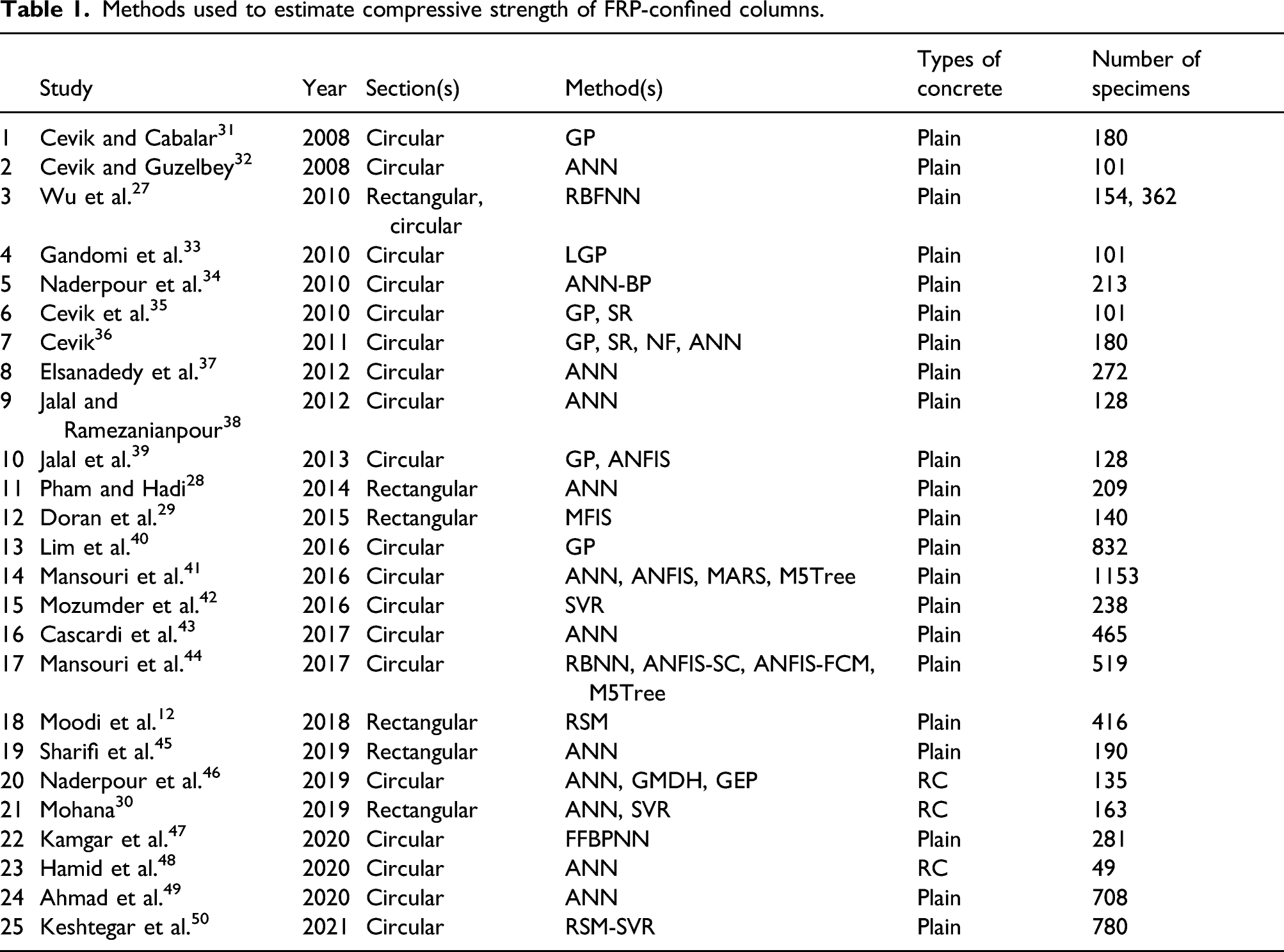
Finding a method to estimate compressive strength of square/rectangular concrete columns confined with FRP, that is suitable for all types of columns (columns with different unconfined compressive strength and different types of FRP), is one of the basic needs of structural strengthening for engineers. Note that in previous studies that have used ML methods to estimate the compressive strength of those columns, the FRP type and compressive strength of unconfined concrete have been limited. For this purpose, in this study, an attempt was made to collect a comprehensive database from previous studies, as an innovation. In this study, initially, experimental data of square and rectangular concrete specimens, confined by FRP, are collected from the available papers. Note that a wider range of statistical populations leads to more reliable results for the estimation purpose. The used statistical population of this study is wider compared to the previous studies. As shown in Table 1, the largest statistical population used in previous studies for rectangular/square specimens has been 416 (Moodi et al. 12 ). The database consisted of 463 specimens, 324 (70%) of which were used for modeling and 139 (30%) were employed for evaluating methods. This database includes normal strength concrete (NSC) and high strength concrete (HSC). Also, different types of FRP confinement were used in this database. Finding an accurate method for estimating the compressive strength of square/rectangular columns confined with FRP types and concrete types (NSC and HSC) is innovation of this study. Accordingly, machine learning methods were used to estimate the compressive strength of square and rectangular columns confined by various FRP sheets. The accuracy of such ML’s as the multilayer perceptron (MLP) combined with Levenberg–Marquardt algorithm, radial basis functions neural networks (RBFNN), and support vector regression (SVR), used in this study, was compared with one another and with those presented in previous studies, to select the best method to estimate the compressive strength of FRP-confined columns. The results showed that MLP and RBFNN methods estimate the compressive strength of FRP-confined columns more accurately compared to the SVR method and the models of previous studies.
Some existing models of previous studies
Some of available models for compressive strength prediction of FRP-confined rectangular and square concrete columns.
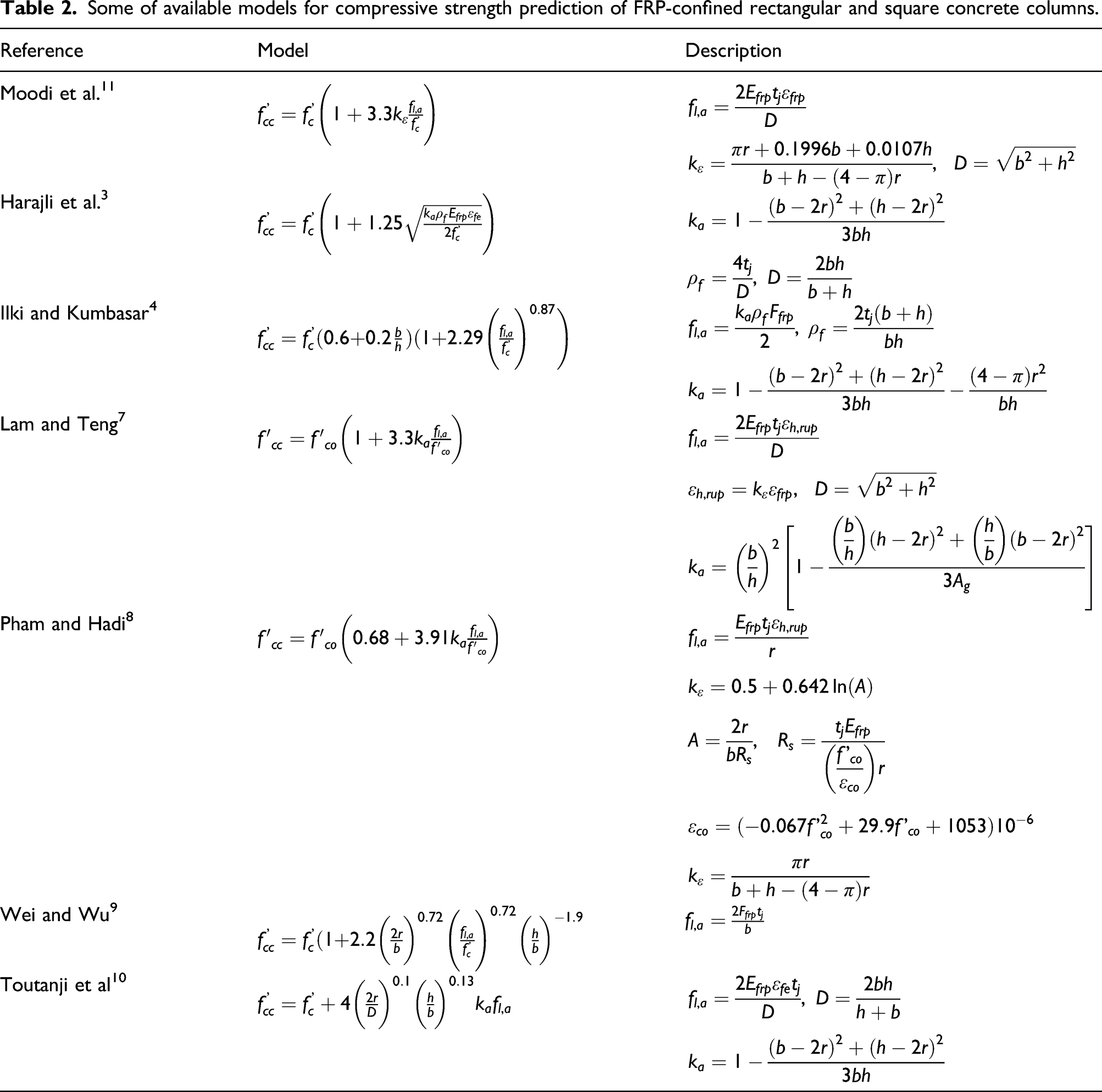
In the study by Lam and Teng,
7
the effective strain factor
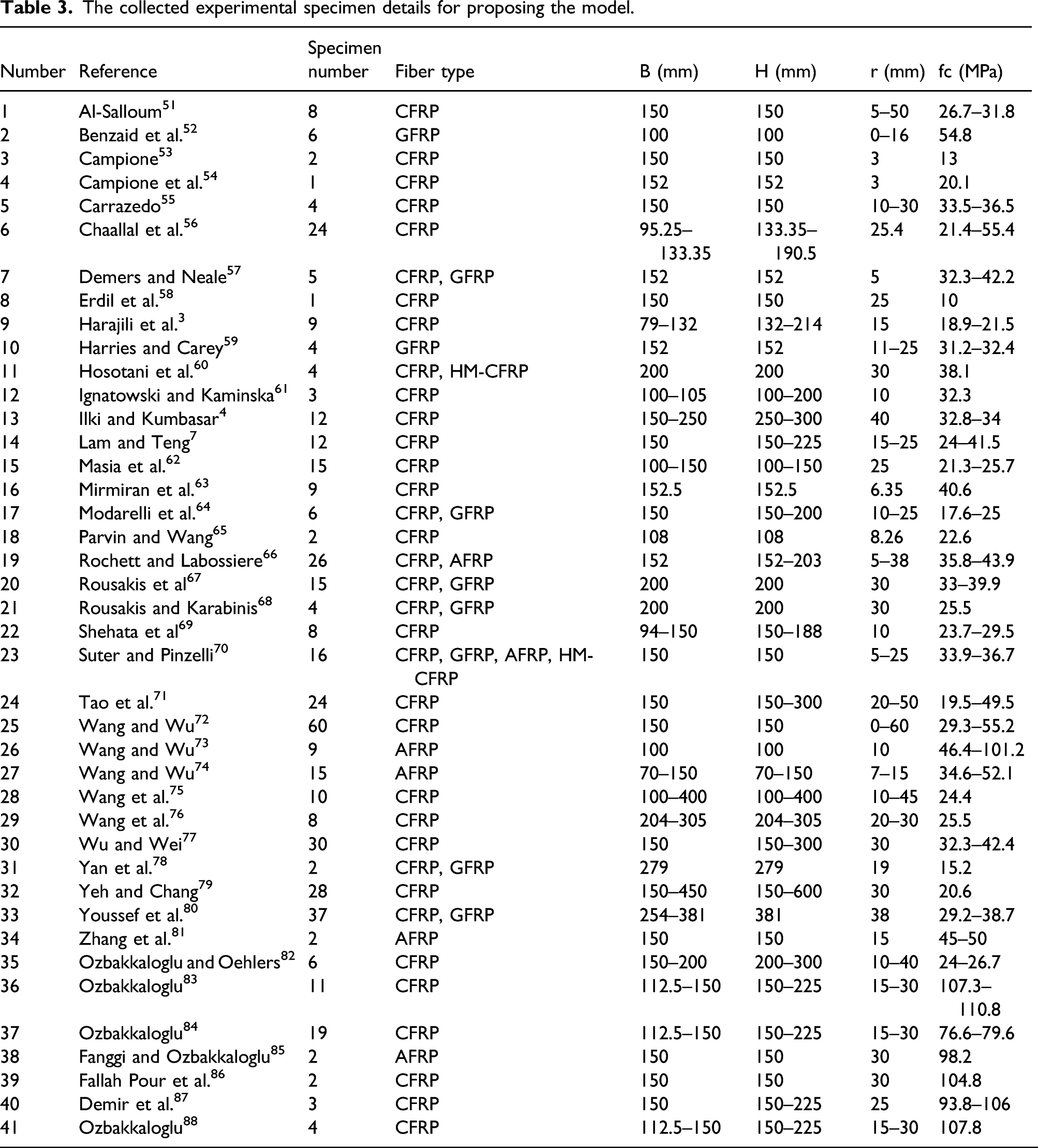
Experimental data
Many studies have been conducted on the concrete confined by FRP. In this study, a statistical population with 463 square and rectangular concrete specimens, confined by FRP, have been extracted from references as follows: Al-Salloum, 51 Benzaid et al., 52 Campione, 53 Compione et al., 54 Carrazedo, 55 Chaallal et al., 56 Demers and Neale, 57 Erdil et al., 58 Harajili et al., 3 Harries and Carey, 59 Hosotani et al., 60 Ignatowski and Kaminska, 61 Ilki and Kumbasar, 4 Lam and Teng, 7 Masia et al., 62 Mirmiran et al., 63 Modarelli et al., 64 Parvin and Wang, 65 Rochett and Labossiere, 66 Rousakis et al., 67 Rousakis and Karabinis, 68 Shehata et al., 69 Suter and Pinzelli, 70 Tao et al., 71 Wang and Wu,72–74 Wang et al.,75,76 Wu and Wei, 77 Yan et al., 78 Yeh and Chang, 79 Youssef et al., 80 Zhang et al., 81 Ozbakkaloglu and Oehlers, 82 Ozbakkaloglu, 83 Ozbakkaloglu, 84 Fanggi and Ozbakkaloglu, 85 Fallah Pour et al., 86 Demir et al., 87 and Ozbakkaloglu. 88
The collected experimental specimen details for proposing the model.
Machine learning methods for estimation
Due to their quick learnability and good output accuracy, ML is among the very efficient methods for different estimation cases. In general, ANN methods are inspired by the human brain’s neural system and its processing units, which are called neurons, to classify complex data and predict events’ behavior intelligently. In 1943, McCulloch and Pitts 89 designed the first artificial neuron that could, as its main feature, yield an output of 0 or 1, if all the weighted input signals were respectively less or greater than a certain threshold. In the late 1950s, Rosenblatt et al. 90 introduced the Perceptron Neural Networks where the neurons were similar to those designed by McCulloch and Pitts, but different in training rules to solve pattern recognition problems as perceptron networks were unable to implement a series of specific basic functions. 91 Finally, multi-layer perceptron networks and their related learning rules introduced in the late 1980s overcame these limitations. 92
In this study, MLP, RBFNN, and SVR methods were used to estimate the compressive strength of square and rectangular columns confined by FRP. Those methods have been introduced in the following sections.
Multilayer perceptron (MLP) artificial neural networks
The multilayer perceptron is a very powerful and widely used ANN with generally three input, hidden, and output layers; the input layer is generally a part of the hidden layer and the latter, with several layers, 93 is, indeed, the central core of the input processing which eventually transfers them to the output layer.
Each layer has a different number of neurons linked together with weights based on their values to which another component called “bias” is added.
94
The output of MLP can be explained as follows
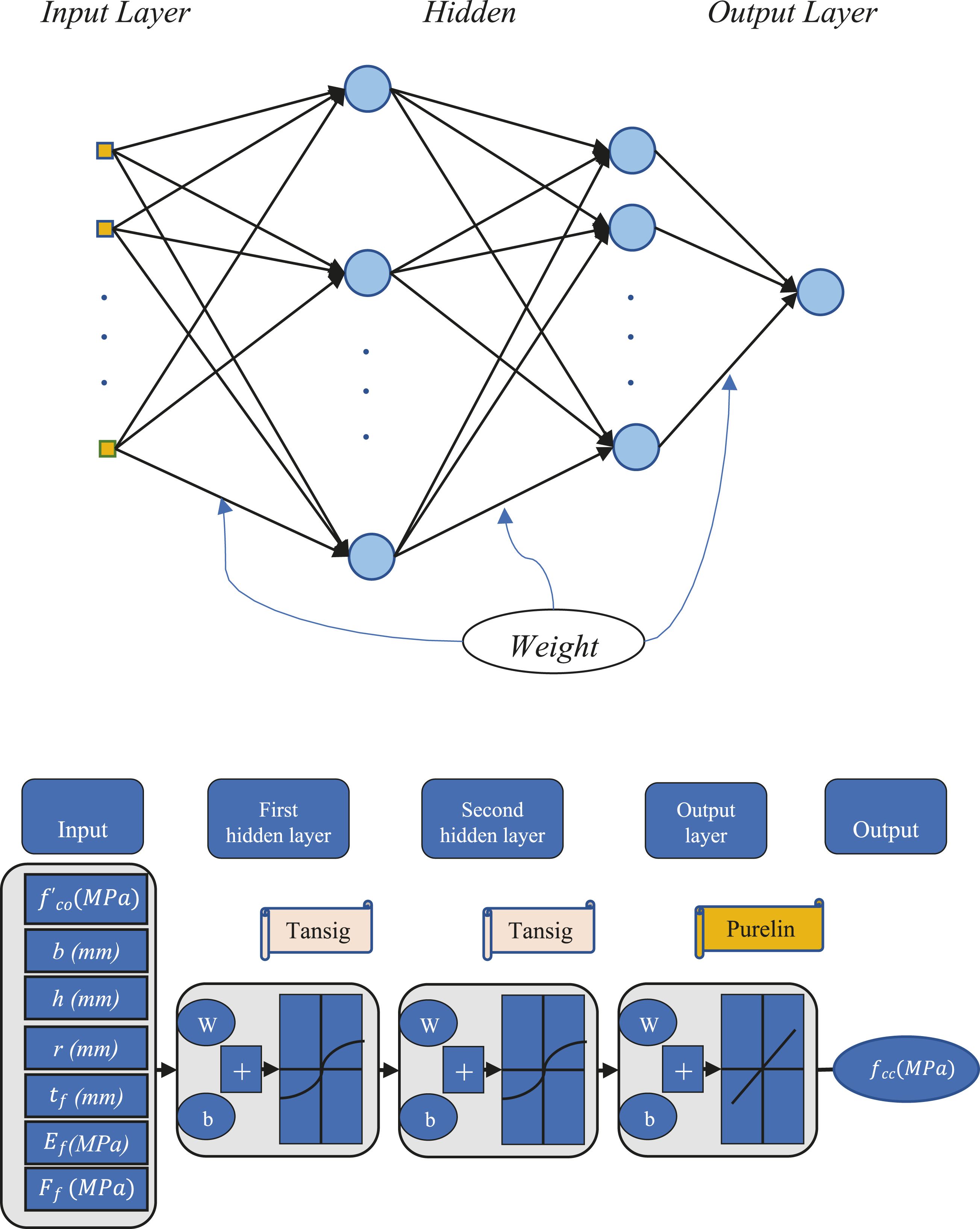
This layer-to-layer data-transfer is through “transfer functions” (g ()) also known as “activation functions” among which Tansig and Logsig (both subsets of sigmoid functions) are widely used for hidden layers, while the Pureline, defined as follows, is used for the output layer
95
Basic schematic and proposed MLP network for prediction of fcc.


Radial basis function neural networks (RBFNNs)
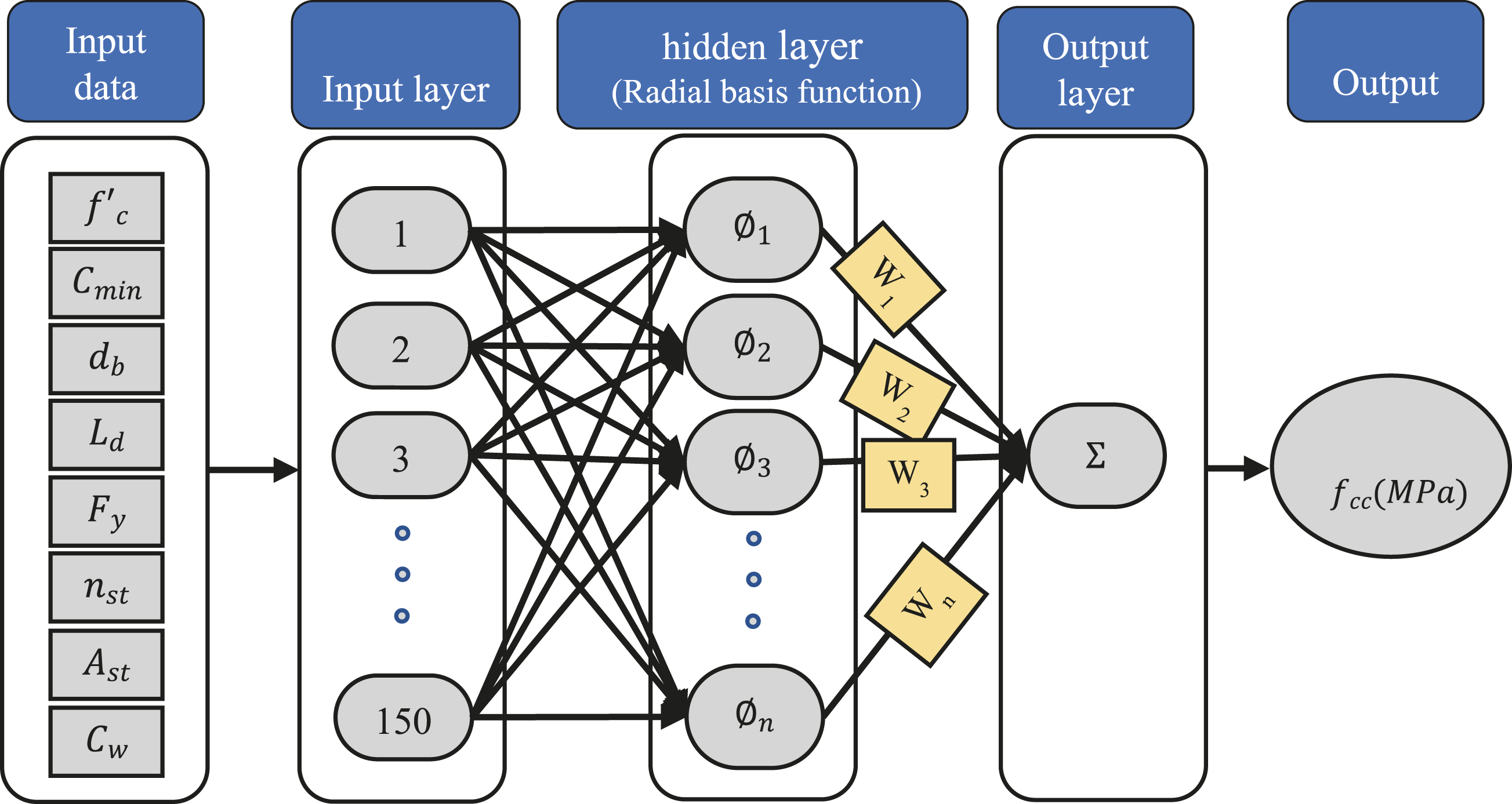
RBFs are forward propagation networks, in whose hidden layer, the radial basis function is used as the activation function. The RBF network estimates each function, using symmetric and local radial functions. 97
As with MLP networks, RBF networks also consist of input, hidden, and output layers with the difference that the hidden layer has only one layer. “Gaussian,” is the most widely used basic function used in RBF networks comparable to linear, polynomial, spline, and multi-degree inverse functions.
In this network, input variables are given to the network in the form of a vector and are subjected to a nonlinear transformation in the hidden layer. This suggests that the RBFNN activation function in the hidden layer serves as network neurons. Before applying a nonlinear change by the RBFNN activation function, the input variables must be multiplied by the corresponding bias. A vector whose difference between the multiplied inputs and their associated weights is given as the input of the RBF activation function.
98
The network output for an input pattern, such as x, can be expressed as Equation (5) Structure of RBFNN.
100



Support vector regression (SVR)
Support vector machines (SVMs) are, in fact, a subset of machine learning techniques that lie in the supervised learning category and are often used in classification, regression, and prediction problems. As with ANN, SVM is a data-driven algorithm that, unlike ANN’s that may sometimes converge in local responses, establishes a connection between the input data and the target-dependent variable, based on the structural risk minimization.101,102 Being based on the statistical learning theory, it considers the operational risk as a target function and pursues the optimal solution instead of reducing the computational error.103,104 It was developed by Vapnik in the mid-1990s 105 as it could solve complex structure problems, predict with minimal error, and provide the general optimal response.
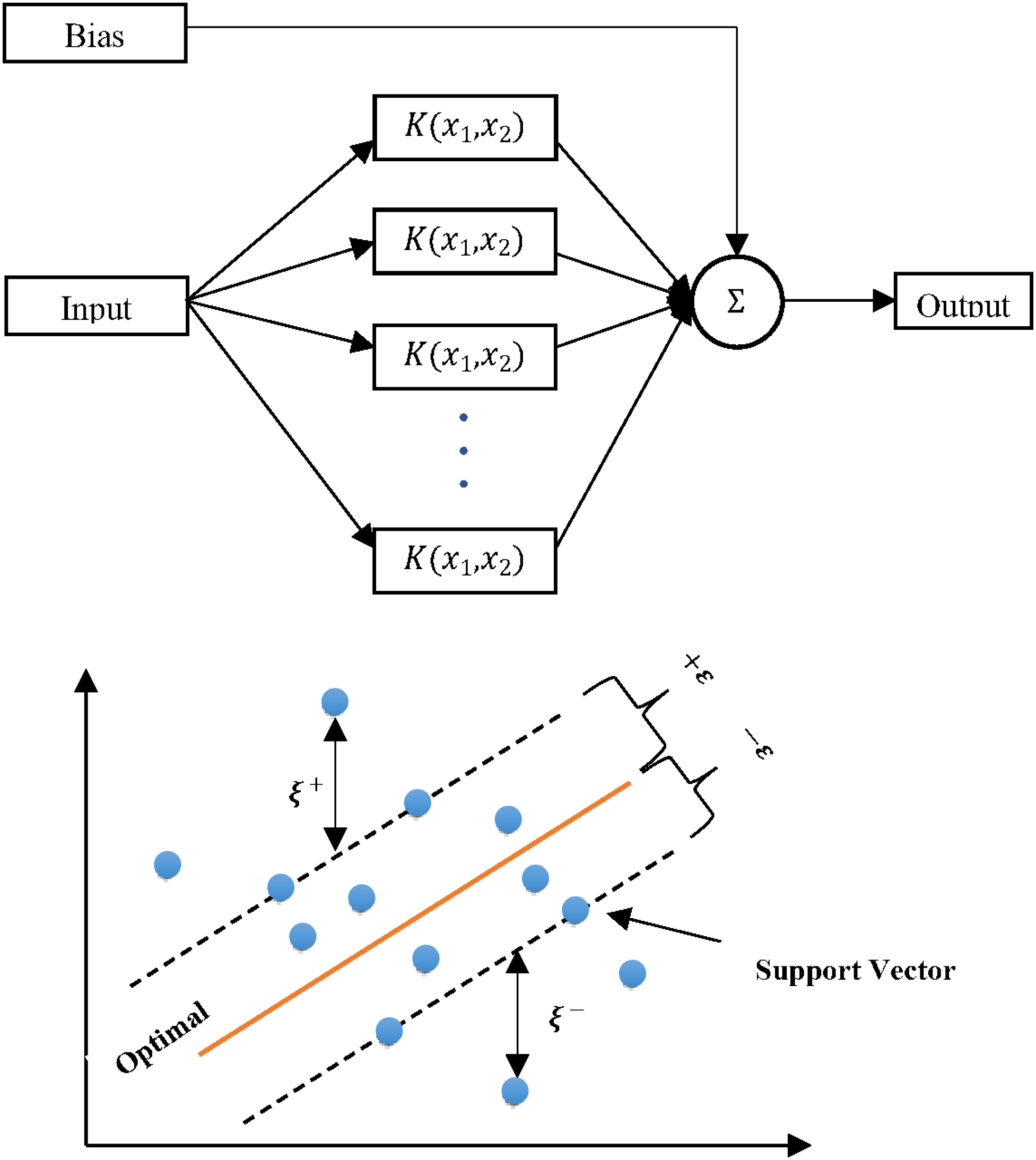
Assuming one dataset, infinite lines, planes, and hyperplanes can be considered as separators in 2D, 3D, and mD spaces, respectively, to divide the data into two classes.
106
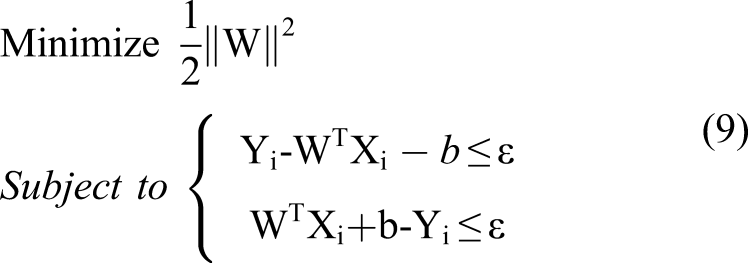
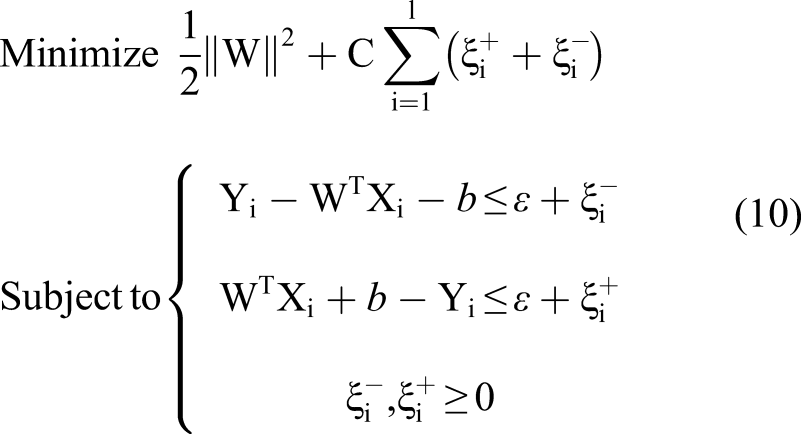
Any datum the least far from these lines, planes, or hyperplanes is called a support vector; the farther are the two, the more optimum is the separating member. As mentioned, one of the applications of SVMs is regression, hence the name support vector regression (SVR).
102
In SVMs, mapping is used to transfer data from an mD space to a higher dimensional feature space with separable linear output data. The equation of this hyperplane can be expressed as follows Flowchart and schematic of a typical support vector regression.


Method setting parameters
Artificial neural networks contain several regulatory parameters, whose optimal determination will contribute to the best network performance; the number of layers, the number of neurons in each layer, and transfer functions of each layer are the regulatory parameters in MLP networks. For estimating the compressive strength of square and rectangular columns confined by FRP, this study has used a 150-run trial and error method plus a 3-layer perceptron ANN with one output layer and two hidden layers with Pureline and Tansig activation functions, respectively, along with the Levenberg–Marquardt training algorithm and back propagation error technique. In RBF networks, where the number of neurons and training function are considered two parameters, “spread” is a parameter that indicates the extension of the radial functions. This means that the more scattered the data are, the larger the “spread” should be. Via trial and error, an RBF ANN has been used for this study with the Gaussian as its basic function with 150 neurons and a spread of 499. In SVR, parameters such as the allowable violation from the class borders, penalty coefficient, type, and the kernel function parameters play important roles in achieving the optimal solution. This study has used SVR with a regularization factor = 0.89, slack variable = 0.015, and Gaussian kernel function.
Results and discussion
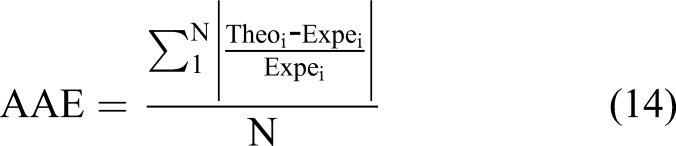
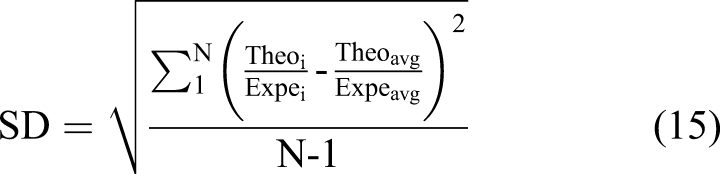
In this section, the performance of previous study models as well as the machine learning methods used in this study to estimate the compressive strength of square plus rectangular columns confined by FRP are compared and discussed. For this purpose, first, the models of previous studies were compared with each other where two models with more accuracy were selected. Accordingly, machine learning methods were more accurately compared with each other and with the models. To evaluate their performance, widely used indicators have been used including standard deviation (SD), mean squared error (MSE), absolute integral error (IAE), and total error (e
Total
). Their related equations are (13) to (16), respectively, as follows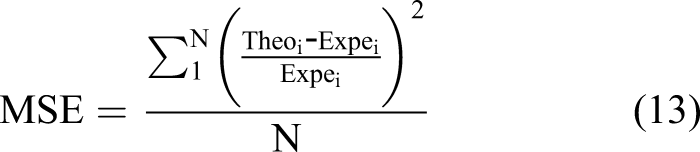

Performance evaluation of the previous studies models
Statistical indicators related to previous studies models.
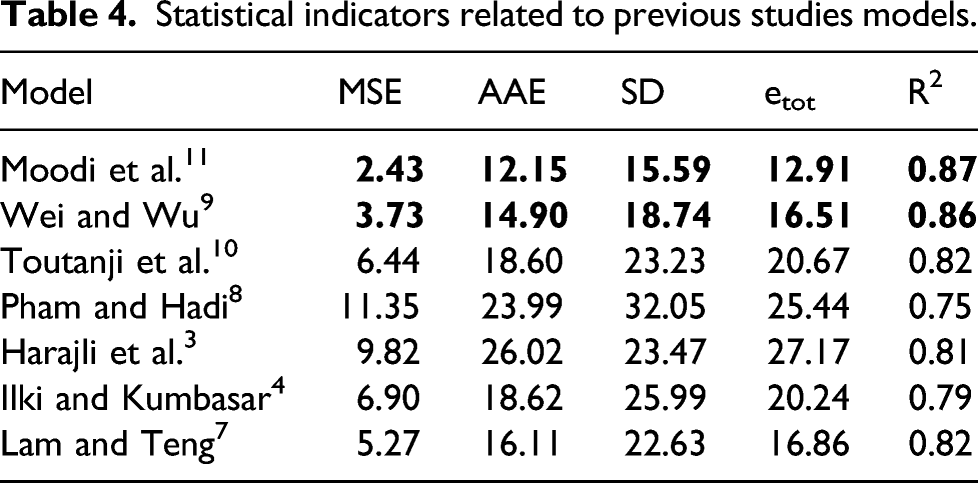
As reported in Table 4, statistical indicators related to Moodi et al. 11 and Wei and Wu 9 models are the lowest values in comparison with other models. The total error of Moodi et al. 11 as well as Wei and Wu 9 models are by average 42 and 25%, respectively, less than other models (Toutanji et al., 10 Pham and Hadi, 8 Harajli et al., 3 Ilki and Kumbasar, 4 and Lam and Teng 7 ). Hence, these two methods were selected as the best methods for estimating the compressive strength of square and rectangular columns confined by FRP.
Performance evaluation of the proposed LM methods
Statistical indicators related to LM methods.
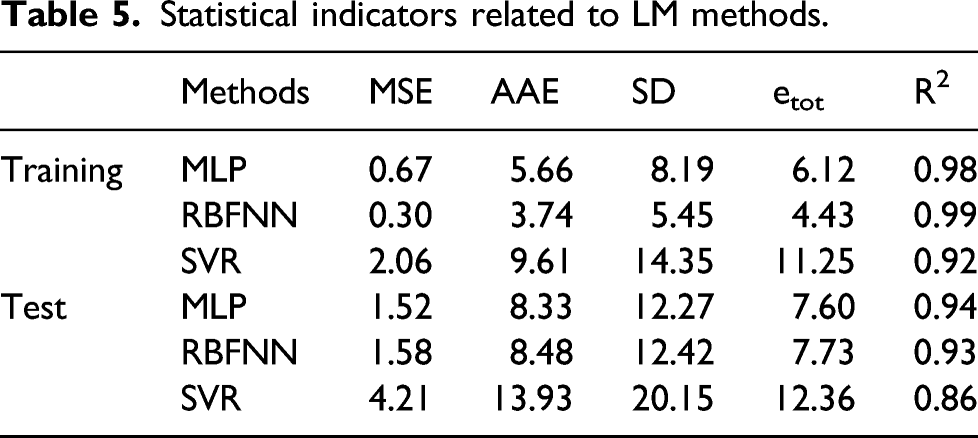
Comparison of LM methods and the models of previous studies
Statistical parameters for confined concrete specimens with FRP.
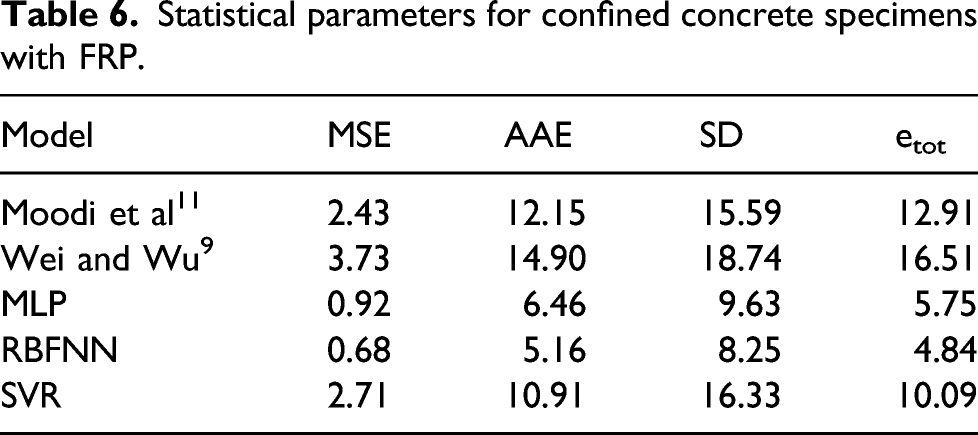
As shown in Table 6, the differences between the statistical indicators of MLP and RBFNN methods and the models of previous studies were significant, but those of the SVR method were close to Moodi et al. 11 and Wei and Wu 9 models.
To illustrate the efficiency of LM and the models of previous studies, experimental compressive strength against compressive strength resulting from MLP, RBFNN, and SVR methods and Moodi et al.
11
and Wei and Wu
9
is outlined in Figures 4(A) to (E). Among LM methods and the models of previous studies, LM methods have had a higher correlation coefficient (R2). Among the LM methods, the correlation coefficient of RBF and MLP methods has been the highest. Performance of models.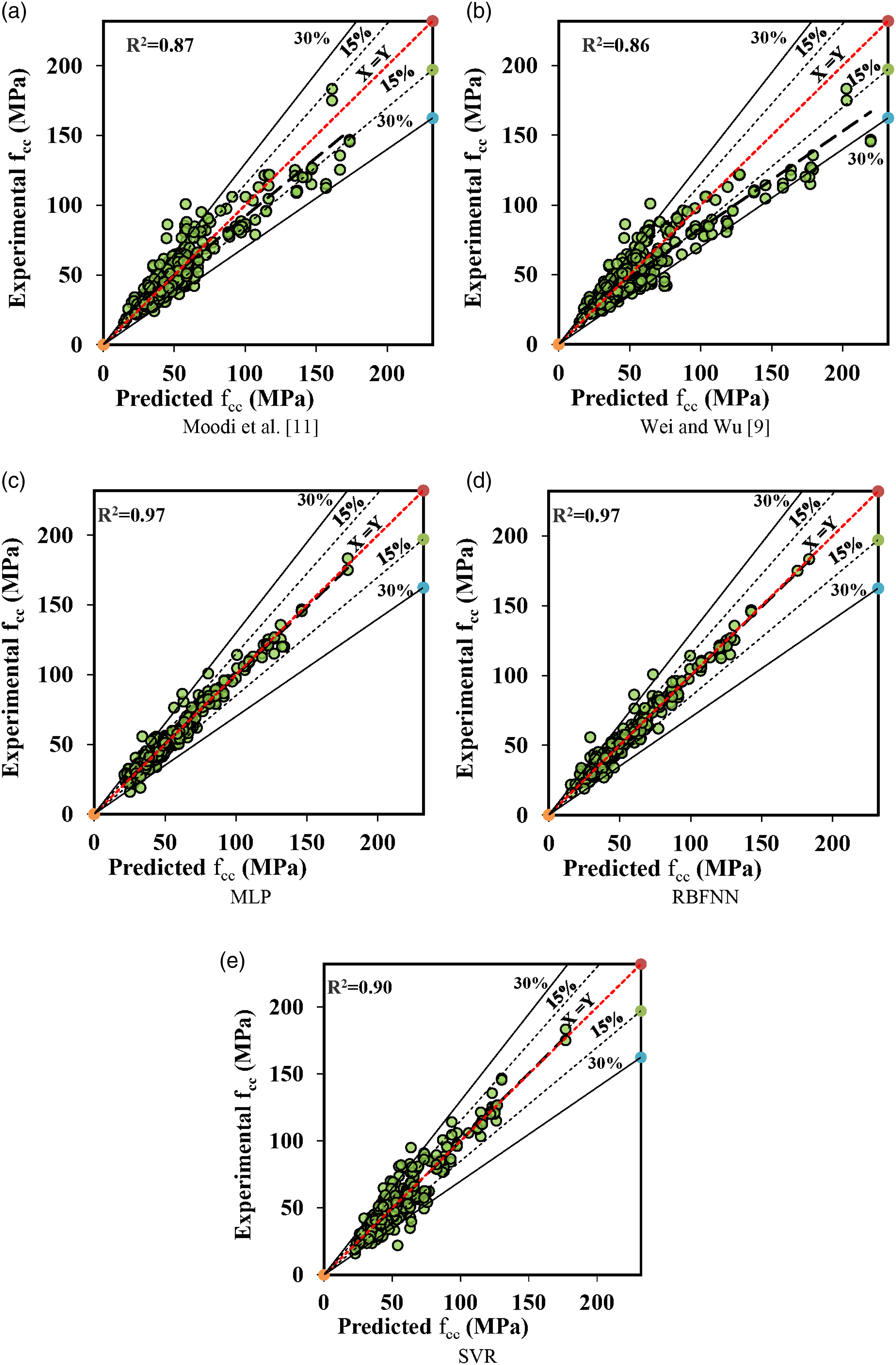
Figure 5 shows that the error values obtained from LM methods are acceptable and can estimate the values of the strength of the rectangular and square columns confined by FRP. Comparison of performance for experimental data.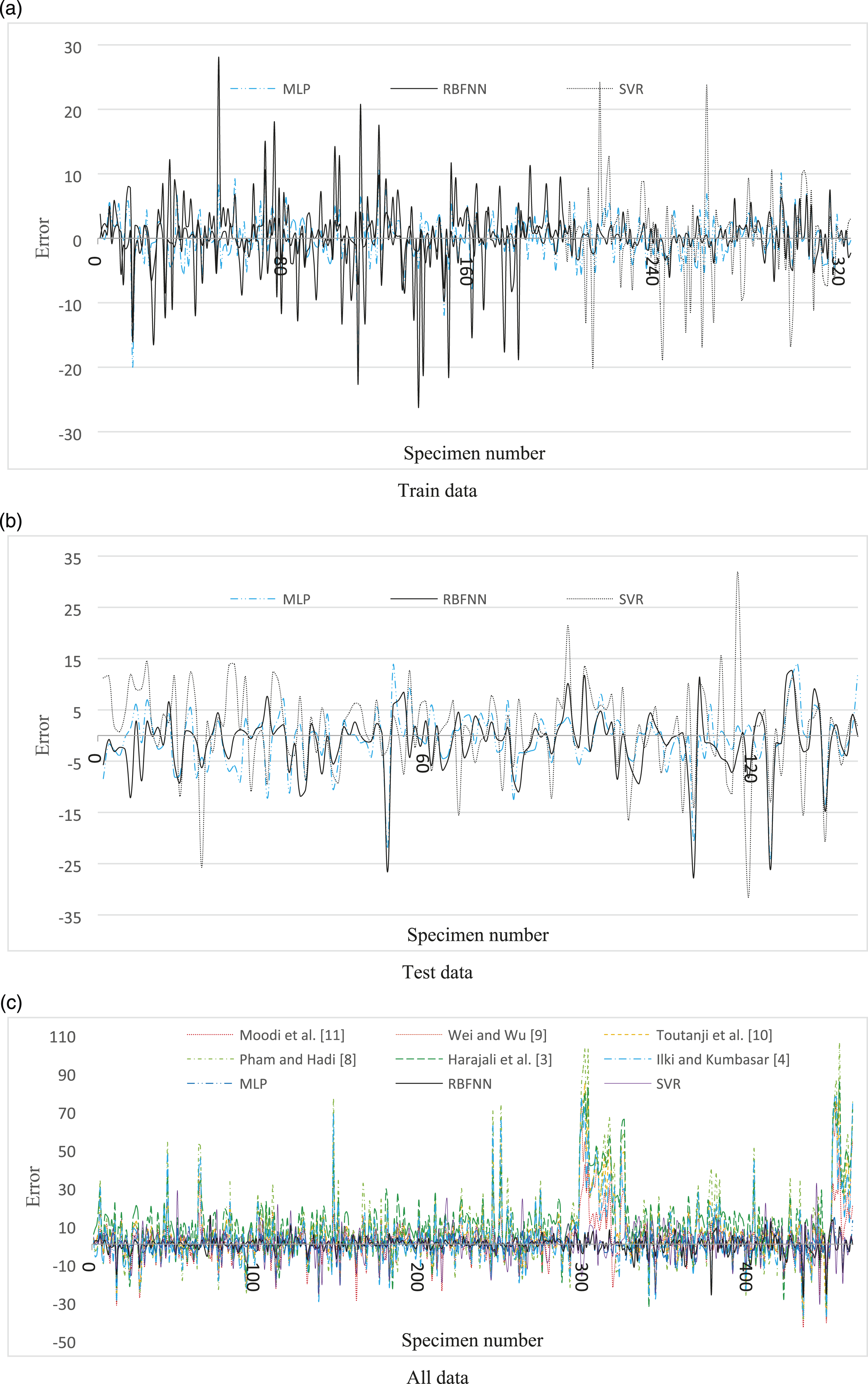
Taylor diagram
Finally, in order to determine the accuracy of the best or worst method/model, Taylor diagram was used. In past studies, this diagram has been used to compare estimating methods.108,109 This type of diagram combines several indices in order to present how the predicted values are matched against the real measurements. Using three error criteria, standard deviation, correlation coefficient, and RMSE, Taylor diagram was plotted for the total specimens as displayed in Figure 6. Note that any method closer to the observed point has greater accuracy for estimating the compressive strength of FRP-confined column. It can be seen that the RBFNN method is the closest to the observed result circle, followed by the MLP and SVR, but RBFNN and MLP methods are close to each other. Only in the SVR method, the division standard has been smaller than the observed value and this method has the closest value of division standard to the observed. Among the models of previous studies, the model of Moodi et al.
11
has been closer to the actual observed value. Taylor diagram plots of the ML methods and the models of previous studies for all specimens.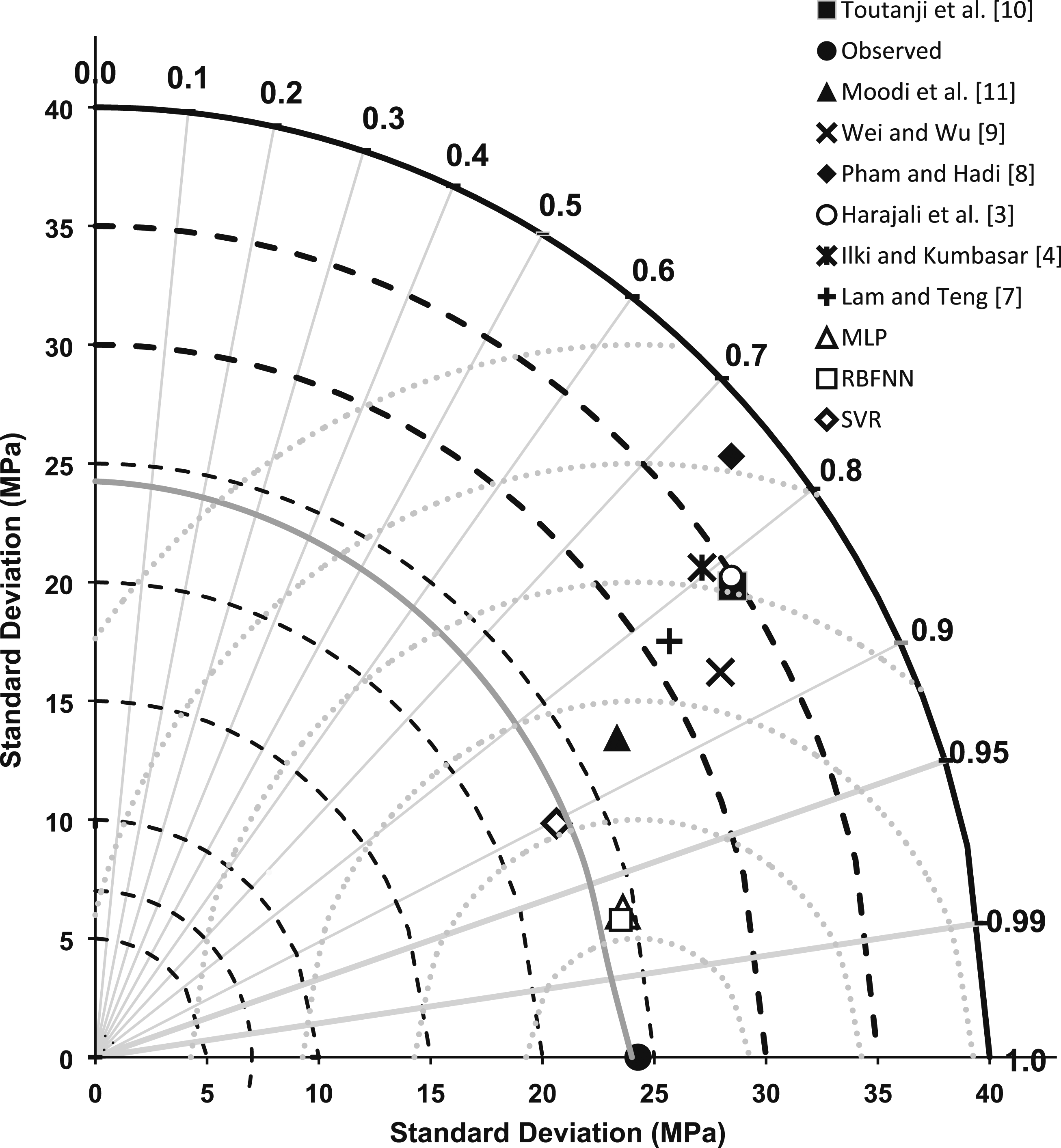
Conclusion
Estimation of compressive strength of concrete confined with FRP, that is suitable for all types of columns, is one of the basic needs of structural strengthening for engineers. In this paper, three machine learning methods were used to predict the compressive strength of the square and rectangular concrete columns confined with FRP types and concrete types (NSC and HSC). These methods included MLP, RBFNN, and SVR. Finding a suitable method for all types of concrete and FRP confinement has been the novelty of this study. To train and evaluate these methods, a comprehensive database, containing 463 specimens of FRP-confined rectangular/square concrete, was used. These machine learning methods were compared with each other as well as with the models of previous studies, with the following results obtained: 1 Among the models of previous studies, Moodi et al.
11
and Wei and Wu
9
models had a better performance for estimating the compressive strength of FRP-confined square/rectangular concrete columns, with the correlation coefficient of these models being 0.87 and 0.86, respectively. 2 All three machine learning methods for estimating the compressive strength of FRP-confined square/rectangular concrete columns were more accurate than the models of previous studies. 3 Among the methods of ML used in this study, MLP and RBFNN methods have better performance rather than the SVR method. 4 The difference between training statistical indicators and the test ones was high in the RBFNN method, with this difference reflecting the poor performance of RBFNN compared to MLP methods.
Nevertheless, more detailed studies are required for estimating the compressive strength of the square and rectangular concrete columns confined with FRP. The use of hybrid soft computational approaches (ANN methods with optimization algorithms) or new methods such as high correlated variables creator machine, multiple Ln equation regression, and genetic programming can be recommended for estimating this strength in future studies.
Footnotes
Declaration of conflicting interests
The author(s) declared no potential conflicts of interest with respect to the research, authorship, and/or publication of this article.
Funding
The author(s) disclosed receipt of the following financial support for the research, authorship, and/or publication of this article: This work was supported by the University Of Velayat (grant no: P-99-1-32).
