







Abstract
Lightweight materials with high structural damping and reasonably well flexural performance are demanded in some components of aerial vehicles such as interior part of helicopters where high levels of noise and vibrations exist. One of the best choices for this is through the use of a polymer matrix composite with suitable fiber orientations and a structural foam core. In this study, face sheets from a woven carbon fiber reinforced polymer plies and a foam core with three different thicknesses (10.7 mm, 25.4 mm, and 49.8 mm) have been used to manufacture sandwich structures to yield high dynamic values (damping and flexural rigidity). To measure these values, the sandwich beams with free-free boundary conditions were subjected to free vibration tests using a non-contact response measuring system. The measurements were made for the first, second and third natural frequencies, and compared to numerical modal analysis via the ANSYS package program. The results from experimental and numerical methods are found to be reasonably good in agreement and show that the sandwich structures are able to give high damping values, in general. It seems the specimens with relatively low thickness give relatively high damping values compared to the others, whereas the thicker ones are useful for high frequency domains and flexural rigidity. The behaviors of the beams have been found frequency dependent, due to the viscoelastic behavior of the foam cores at high frequency levels.
Keywords
Introduction
The use of sandwich structures in aerospace and automotive industries is increasing constantly due to their lightweight, high specific strength and stiffness. Due to their advantages, these structures have been one of the main focal points of interest for the researchers. Designing a sandwich structure for high levels of noise and vibrations requires a holistic approach that considers the face sheet materials, core, and geometry. In order to investigate the mechanical behaviors of sandwich structures made of different materials several researchers conducted experiments and numerical studies. For instance, Castine et al. 1 analyzed metal-skinned sandwich structures using a Nomex core, which was subjected to low velocity and low energy impact tests. The impact simulation was based only on a simple economical compression test on a block of the honeycomb core. A good agreement between the predicted and experimental results was obtained. Xie et al. 2 investigated sandwich panels under impact loads through experiments and numerical simulations. They focused on some parameters such as the density of honeycomb cores, face sheet thickness, the punch diameter and impact energy, which had some influences on the behavior of the structure. In another work, 3 the mechanical behavior and energy absorption property of two-layer Nomex honeycombs of different types were measured using compressive tests on different combinations, and the experimental results were compared with those from tests on single honeycomb specimens. It was found that the structures combining different honeycomb specifications could be adopted to control the ordered deformation and ladder energy levels.
Jen and Lin 4 investigated the monotonic and fatigue strengths of adhesively bonded aluminum honeycomb sandwich beams subjected to four-point bending at temperatures ranging from −25°C to 75°C. The experimental results showed that the ultimate loads in the monotonic tests and fatigue strengths in the fatigue tests decreased as temperature increased, and the failure mode changed from local indentation to debonding at the face sheet/core interfaces. In a similar work, 5 three types of aluminum honeycomb sandwich beam specimens with different face sheet thicknesses were employed in the four-point bending fatigue tests to study the effect of face sheet thickness on the fatigue strength. The experimental results showed that under the same applied bending loads, no evident relationship existed between the face sheet thickness and the fatigue life of the studied specimens.
Liu et al. 6 developed a three-dimensional Finite Element Analysis model to predict the flexural behavior of such sandwich structures using a commercial software package (i.e., Abaqus/Explicit). The predicted results were compared with the experimental ones. It was claimed that a good agreement was achieved between the experimental and the predicted results. Zhu and Sun 7 made analytical and experimental investigations on the low-velocity impact response of multilayer foam core sandwich panels with composite face sheets. An energy-based analytical model for multilayer sandwich panels was developed to predict contact force, impactor displacement and energy absorption. It was shown that the impact resistance of the multilayer sandwich panel was superior to that of the monolayer one with the same mass under the low-velocity impact. In another study, Liang et al. 8 used a short glass fiber (SGF) mat between the face sheet and foam core to enhance their bonding strength. The low-velocity impact as well as the compression-after-impact (CAI) performance were investigated. Low-velocity impact results showed that SGF mat filled sandwich panels with pure glass fiber face sheets displayed the maximum contact force. In the CAI test, wrinkling of the face sheet, buckling of the foam, and debonding between them were the major failure modes. Compared with contrast samples, SGF toughened sandwich panels showed the highest strength increase rate. Miao et al. 9 investigated fracture behavior of sandwich structures with foam core slits. In the study, the effective stiffness, the peak force, the displacement at crack initiation, and the dissipated energy during fracture of the sandwich structure were examined under shear loads. It was found that the sandwich structure with fully or partly resin filled slits in the foam core exhibited better fracture resistance than the ones with the intact foam and with unfilled slits. There have been more similar works for sandwich structures subjected to the destructive tests.10–12
It seems investigations on these structures under the vibratory conditions at low stress levels are quite limited. Sargianis and Suhr 13 are a few of those who investigated the effects of a Nomex honeycomb on wave number and vibrational damping behavior of carbon fiber sandwich composites. The results were compared to a Kevlar honeycomb and Rohacell foams with different densities and shear modulus. It was observed that the relationship between the slopes of the wave number data for frequencies above 1000 Hz is inversely proportional to the core material’s specific modulus. Low shear modulus cores had similar material damping values to structural damping values. In another work, 14 mechanical testing of entangled sandwich beam specimens was conducted, and the results obtained from the test were compared with standard sandwich specimens with honeycomb and foam as core materials. The entangled specimens had glass fiber cores and glass woven fabric as face sheet materials. The tested glass fiber entangled sandwich beams were found to have higher damping values, but lower compressive and shear modulus compared to honeycomb and foam sandwich beams of the same specifications.
Li et al. 15 carried out both theoretical and experimental works on vibro-acoustic characteristics of composite plates comprising fiber-reinforced polymer (FRP) laminates with a porous foam core (PFC) subjected to planar acoustic wave excitation. It was found that compared to the plate structure without porosity of the core, as the porosity coefficient increased from 30% to 90%, the resonant response of the PFC-FRP plate decreased with a maximum reduction degree of 15.6% whilst the sound transmission loss strengthened with a maximum rising degree of 6.1% due to the coupling effect of stiffness and damping properties. So, it was recommended the porosity coefficient of the core material be chosen as large as possible to possess a good vibro-acoustic suppression effect. Similar studies can be found in the literatures.16–18
The sandwich structures with foam cores possessing reasonably well properties of energy absorption capability and thermal tolerance have been subjected to many destructive tests to get necessary data for design purposes, but there is a lack of information about these materials under the vibratory conditions at low stress levels. To close this gap, it is believed that there should be more investigation about the dynamic (damping and flexural) performance of such structures.
The aim of this study is to investigate the dynamic performance of sandwich structures at low stress levels using a vibrating beam technique. For this purpose, face sheets of woven carbon fibers-polymer matrix composites and three different thicknesses of foam cores were used to manufacture the sandwich structures. In designing the structures, high damping values and a reasonably well level of flexural rigidity were aimed so that such sandwiches can be used in some applications where high noise and vibration problems exist. In considering high damping performance, the investigation was made on the core as well as on the face sheets. The damping values and natural frequencies of the specimens were measured using a non-contact vibrating beam technique with free-free end conditions. A Finite Element Method via ANSYS Package Program was also conducted to compare the predicted results with the experimental ones.
Experimental work
The materials used
The face sheets of the sandwich beams were manufactured from a prepreg of woven carbon fiber-reinforced epoxy matrix composite, Hexply 8552S/A280-5H, produced by Hexcel. The curing procedure for the prepreg of the composite was at 120°C for 120 min, after an initial heating-up procedure of 80°C for 90 min under a pressure of 5 bars. The material for bonding the face sheets to the foam cores was an epoxy resin and an amine type hardener system, Araldite LY5052 and Aradur 5052, respectively, produced by Huntsman Inc. The resin was cured at room temperature and under a pressure of 2 bars. The face sheets were manufactured from the plates of the cured prepregs and machined to the required dimensions. The core foam, produced by Metyx has a density of 54 kg/m3 and three different thicknesses. All the specimens cured in an autoclave were manufactured in a clean room under a controlled environment, 23°C and 50% relative humidity.
Test specimens
In this study, prior to testing of the sandwich beams, first, the dynamic properties of the foams (see Figure 1(a)) and the composite face sheets in beam configurations (see Figure 1(b)) were measured using the vibration test. Representative materials used for dynamic measurements (a) Foam specimens, (b) Face sheet in plate form, (c) Face sheet in beam forms, (d) Sandwich plates, and (e) Sandwich beam specimens.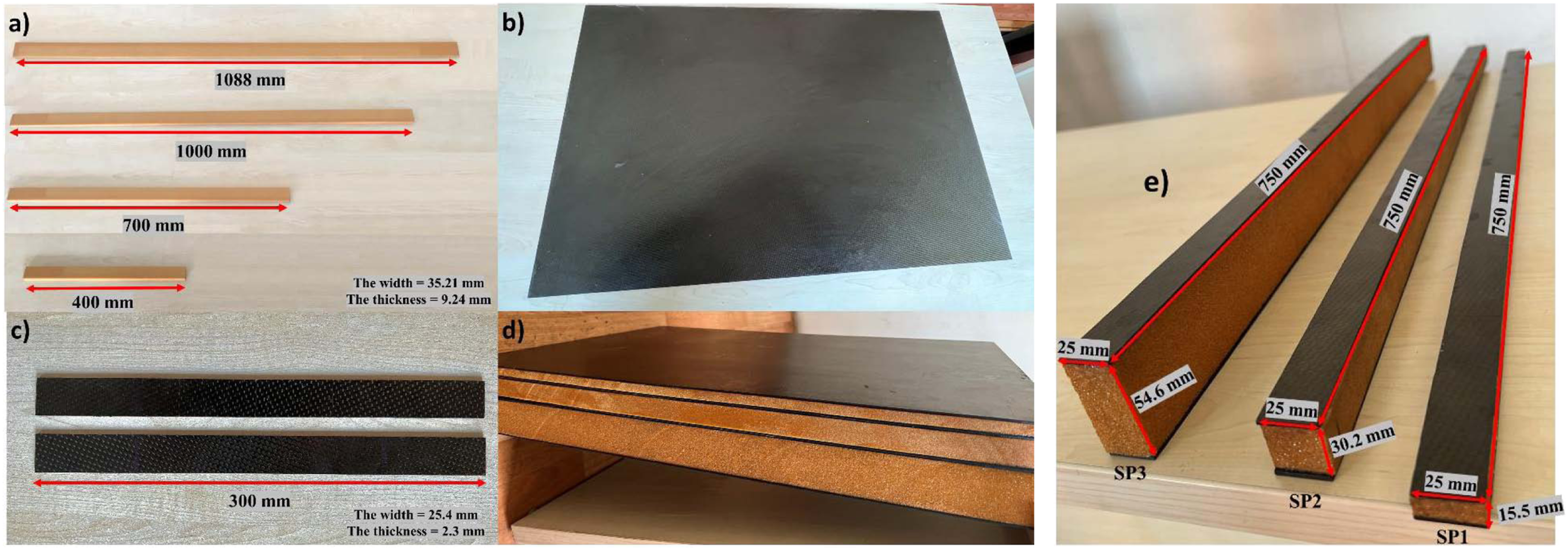
The face sheet beams with 300 mm length, 25.4 mm width and 2.3 mm thickness were machined from the face sheet plate shown in Figure 1(c). To find out the frequency dependence, the foam with different lengths (400 mm, 700 mm, 1000 mm, and 1088 mm) and a constant value of 35.21 mm width and 9.24 mm thickness were tested. The sandwich beams were machined from the sandwich plates shown in Figure 1(d). The sandwich beams have three different thicknesses, 15.5 mm, 30.2 mm, and 54.6 mm, and the same length and width, 750 mm and 25 mm, respectively (see Figure 1(e)). So, the core thickness of these sandwich beams are 10.7 mm, 25.4 mm, and 49.8 mm, respectively. The adhesive layer used as bonding material has a thickness of 0.1 mm.
The experimental set-up
Excitation of the specimens was produced by free-falling a small ball with 0.25 g of a mass, and the response was picked-up by a laser doppler (laser head), shown in the experimental set-ups in Figure 2(a) and (b). To give the same amount of excitation, the ball was released from a height of 10 cm to impact the beam at one end, while the response was measured easily at the other end. The excited specimen was aimed to give its natural frequencies within a required frequency domain, via some distinguished peak values of the amplitude, depending on the mode shapes. A sophisticated data acquisition card, HBM QuantumX MX410 B, was used to collect the digital values of the laser doppler. The set-up was supported by a software, HBM Catman data acquisition software, to process the data according to the required output format for visualization and analysis. (a) A schematic of experimental set-up (b) Real experimental set-up (c) A specimen at the first nodal position.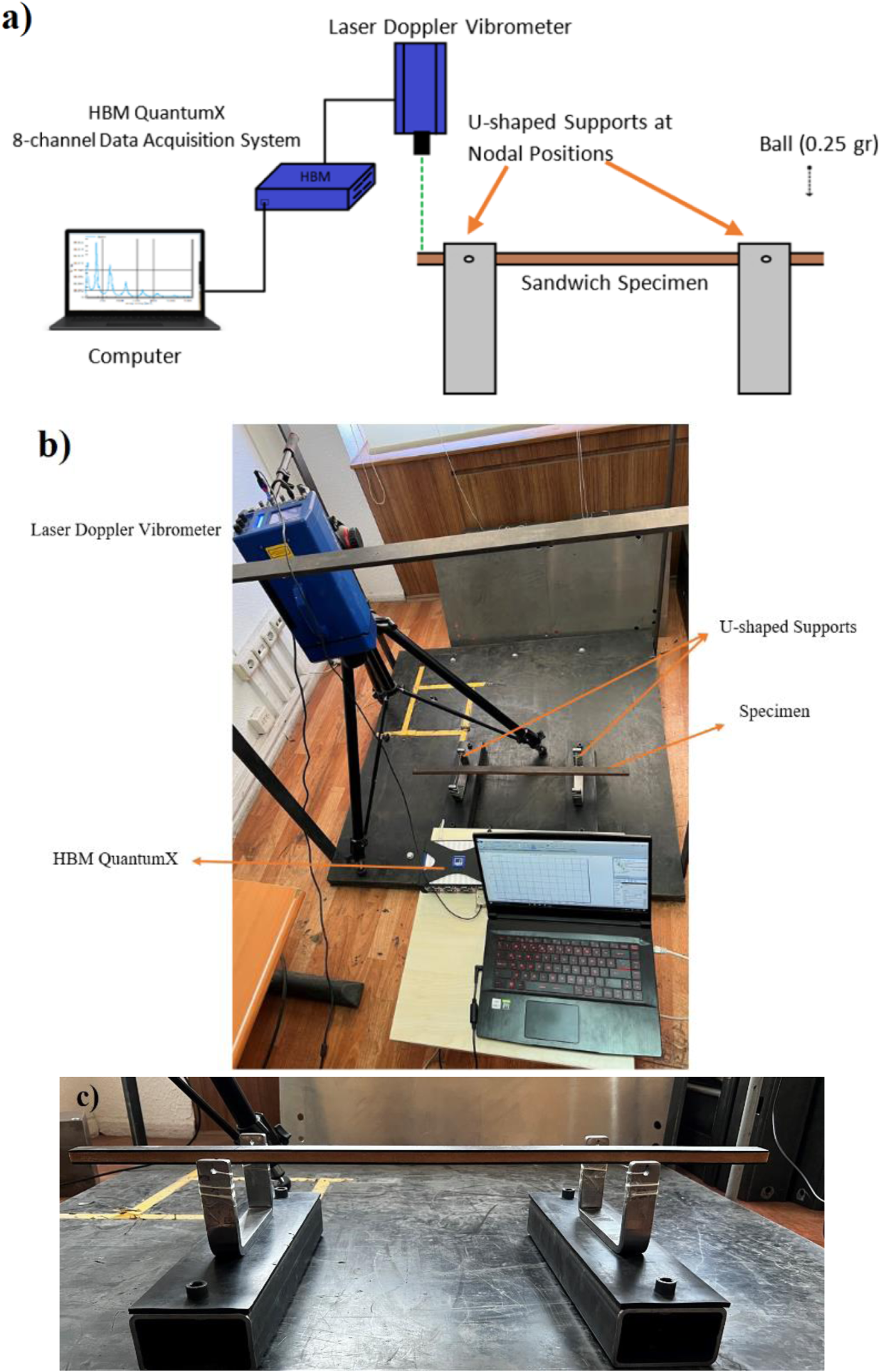
The natural frequency, equivalent flexural modulus, flexural rigidity and damping values of the specimens were measured easily via the technique. The measurements were made for the first (fundamental), second and third natural frequencies. For correct measurements of the damping values for each mode; the sandwich beams were located precisely at the nodal positions, that is, 0.224l and 0.776l for the first mode, 0.132l and 0.868l for the second mode, and 0.094l and 0.906l for the third mode shape, where l is the length of the specimen. For the nodal positions, U-shape portable supports were used in the experimental set-up shown in Figure 2(c).
Numerical works
The mechanical properties of the materials used as the input data for the modal analysis using ANSYS.

Theory
Measurement of the flexural modulus
For every solid structure obeying Hook’s Law, there is a specific natural frequency which is a function of its elastic modulus, geometry, density and the mode number. By using equation (1), the natural frequency of a beam is found as
19

The Euler-Bernoulli beam theory (EBT) is widely used to solve the bending behavior of the thin beams. When the beam is thick or short, usually the effect of the transverse shear deformation is considered,20–23 which requires refined shear deformation theories. In the current study, equation (1) obtained from the EBT has been used for practical reasons because this equation is easy to use and still give reliable results for the beams with long length (750 mm for this study).
Measurement of damping
Since damping is the conversion of the mechanical energy of a structure into thermal energy, it is defined in a number of different, yet related ways. Those commonly used are summarized by Singh.
24
For the current study, the half-power bandwidth method was used for measuring the damping value, formulated in equation (2).
Results and discussion
Experimental results of foam specimens with standard deviations.

Figure 3 shows a representative experimental results of natural frequencies versus amplitudes for the sandwich beam with 15.5 mm thickness (SP1). The first (fundamental), second and third natural frequencies are 131.83 Hz, 292.97 Hz, and 478.51 Hz, respectively. The experimental results for all the sandwich specimens are presented in Table 3. From the table, while the frequency values are 224.60 Hz, 439.45 Hz, and 649.41 Hz for the beam with 30.2 mm thickness (SP2), higher values compared to SP1, those of the thickness (54.6 mm) sandwich beam (SP3) are 341.97 Hz, 605.46 Hz, and 883.79 Hz for the first, second and third natural frequencies, respectively. The results show the core thickness has a considerable effect on the natural frequency. Experimental natural frequencies of SP1 (core thickness is 10.7 mm). Experimental natural frequencies of sandwich specimens with standard deviations.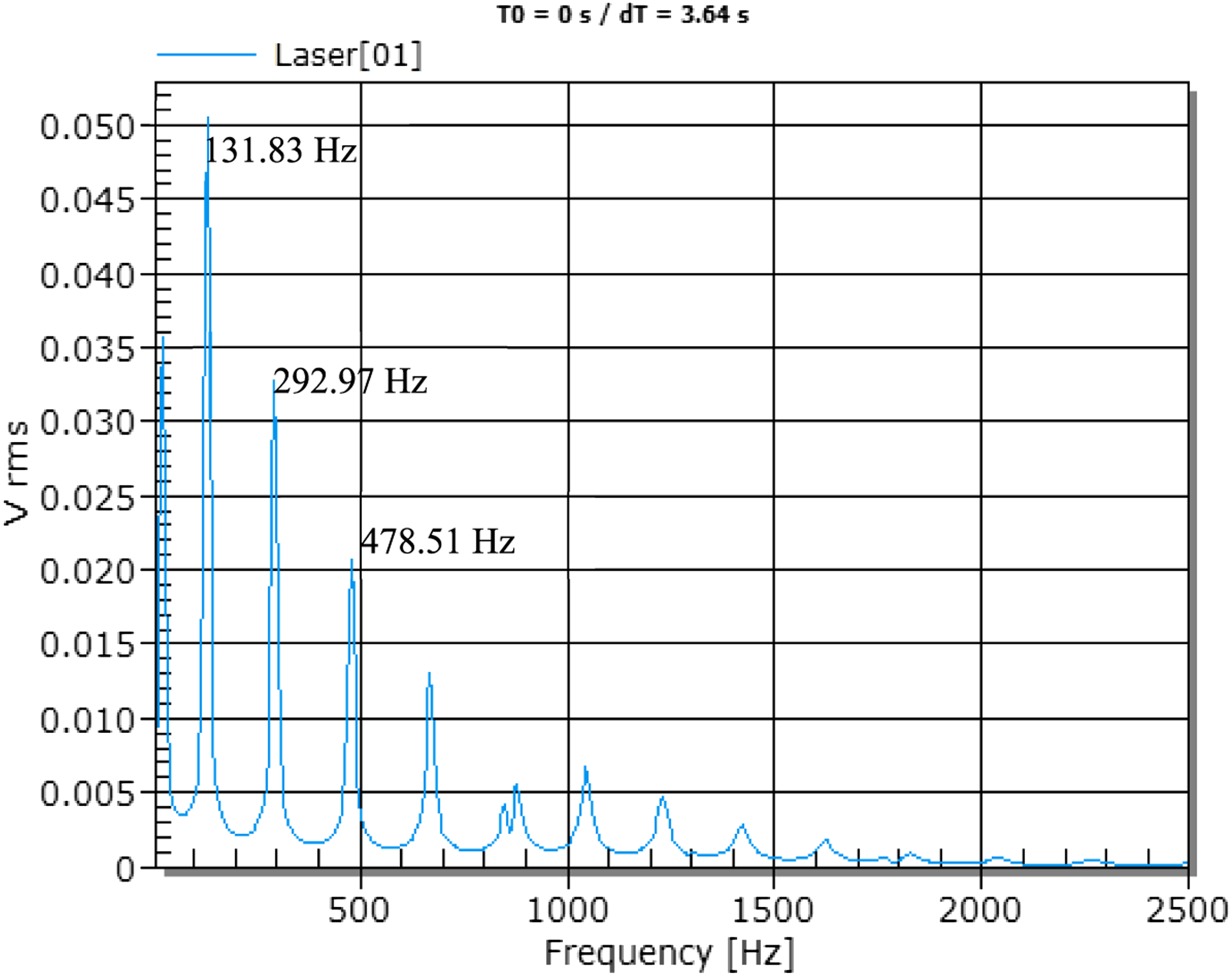

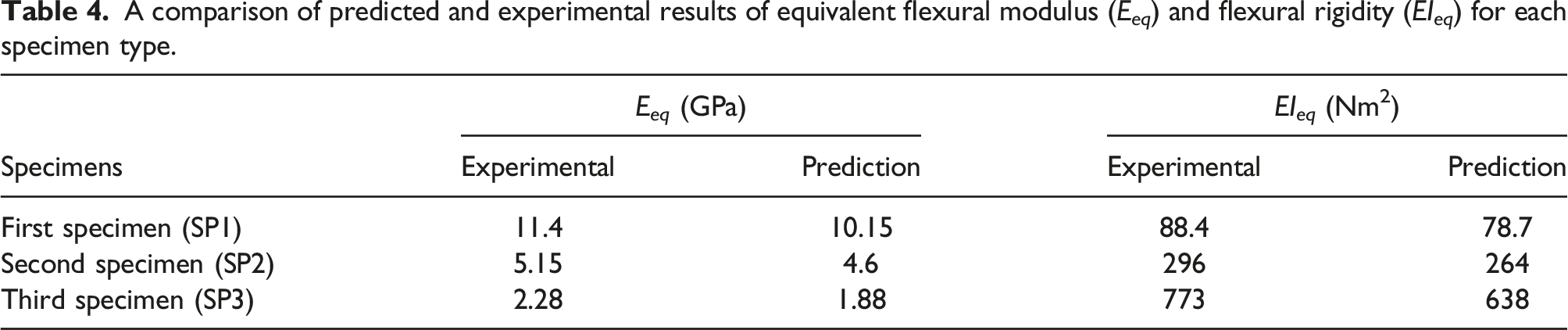
A comparison of predicted and experimental results of equivalent flexural modulus (E eq ) and flexural rigidity (EI eq ) for each specimen type.
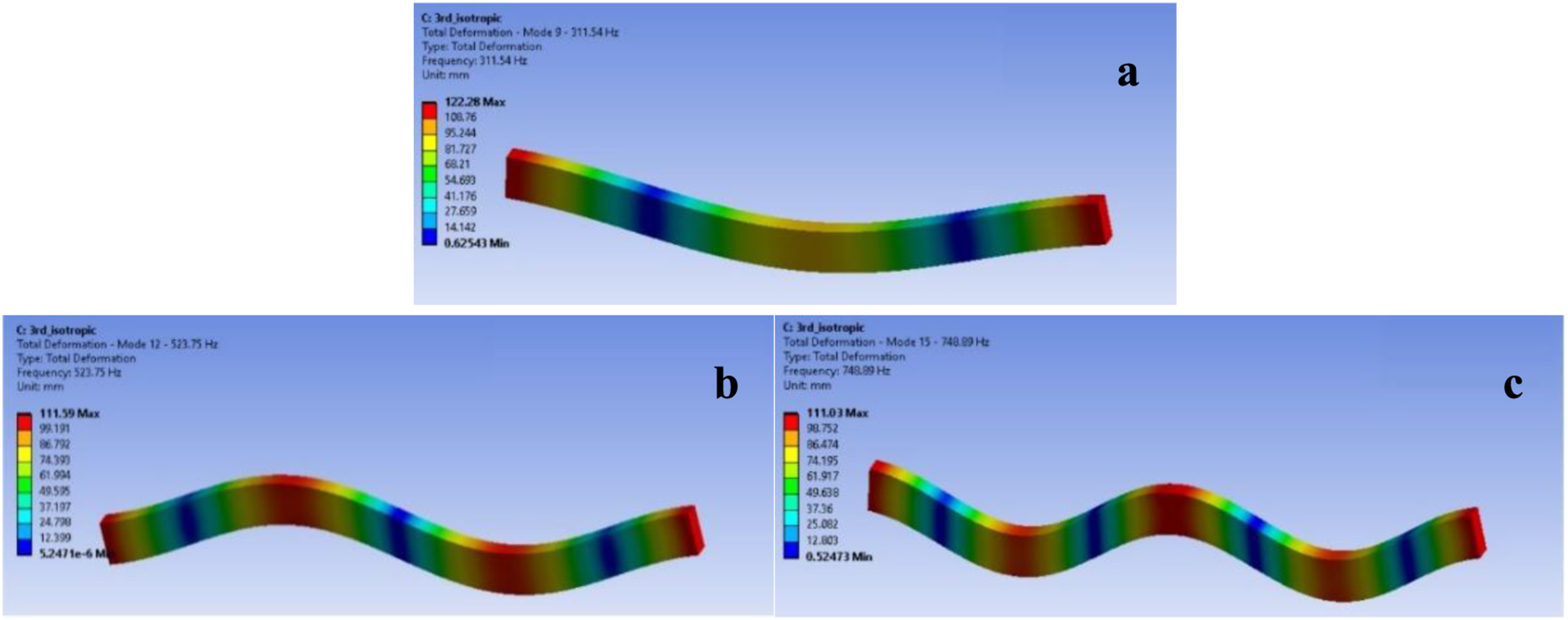
The predicted first, second and third natural frequencies of the SP1, SP2 and SP3 specimens are indicated in Figure 4 that agrees, in general, with the experimental results shown in Figure 3 and Table 3. As to be expected, the values of natural frequency increase with respect to the increase in mode numbers and the specimen thickness. For instance, while the predicted natural frequency values of SP1 with thickness of 15.5 mm are 124.31 Hz, 264.78 Hz, and 411.18 Hz for the first, second and third mode numbers, respectively, those are 213.61 Hz, 396.19 Hz, and 580.53 Hz for SP2, and 311.54 Hz, 523.75 Hz, and 748.89 Hz for SP3. The minimum difference between the predicted and experimental results is about 4.9% for the first natural frequency of SP2, while the maximum difference is about 15.2% for the third natural frequency of SP3. It seems the deviation increases with respect to the increase in the mode numbers. Representative predicted mode shapes are presented in Figure 5, for SP3, which includes predicted natural frequencies, too. Predicted first, second and third natural frequencies of SP1, SP2 and SP3. Flexural mode shapes of SP3: (a) first mode (b) second mode (c) third mode.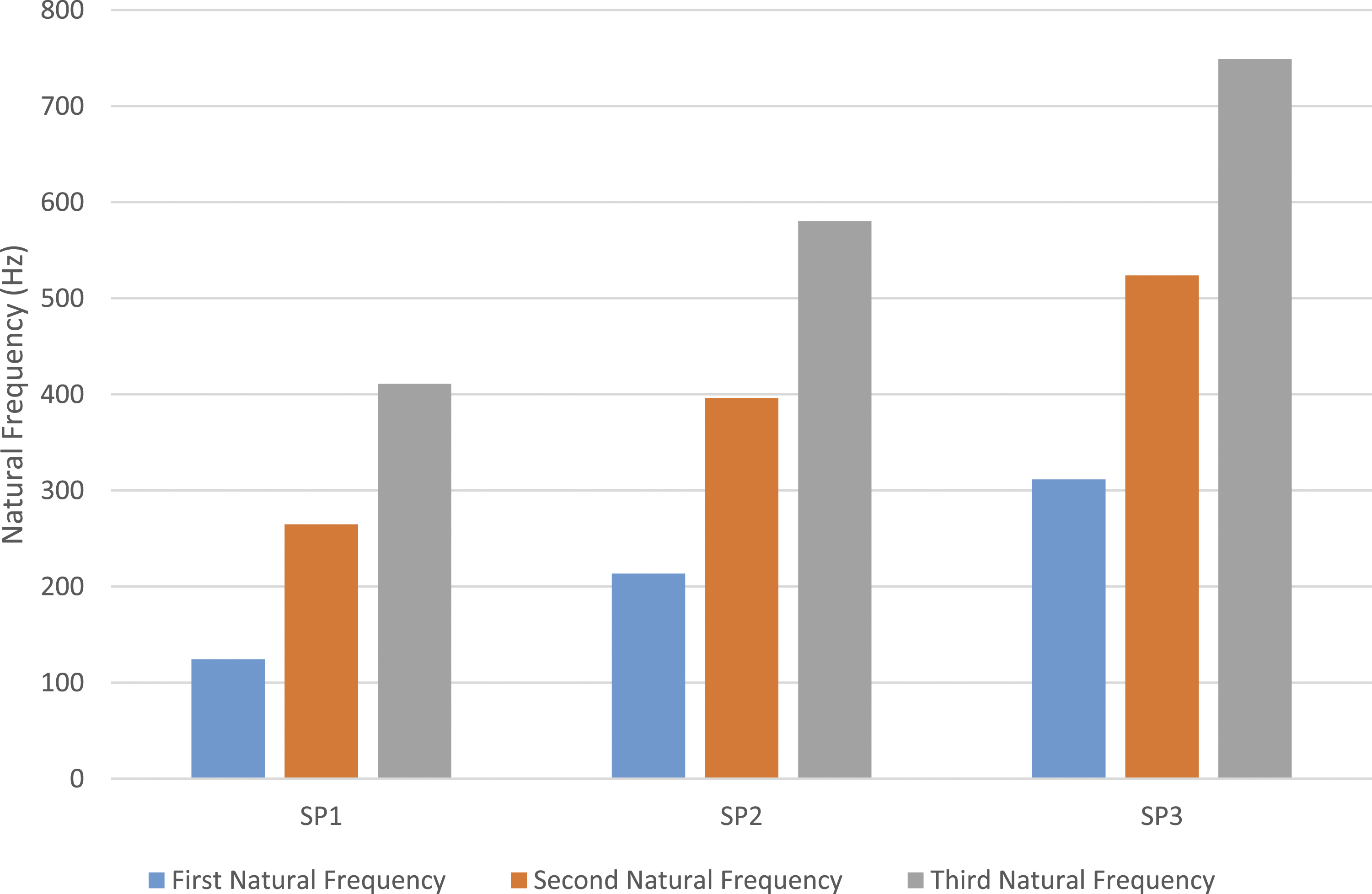
To evaluate the effects of the core thickness and mode shapes on the damping performance of the sandwich beams, the experimental set-up shown in Figure 2 was used. Loss factor results with respect to these parameters are indicated in Figure 6. Opposite to the values of the natural frequencies, the damping values seem to decrease with the increase in the core thickness and mode numbers. For example, the values of loss factors for SP1 are about 0.056, 0.047, and 0.03, for the first, second and third natural frequencies, respectively, while those are about 0.038, 0.022, and 0.012 for SP2, and about 0.024, 0.013, and 0.011 for SP3. Decrement in the relatively thick specimens is considerable; while the decrements in the values of SP2 are about 32%, 53%, and 58%, for the first, second and third natural frequencies, respectively, those are about 56%, 73%, and 62% for SP3, compared to SP1 (the thinnest sandwich beam). The loss factor (damping) values at the first, second and third natural frequencies for SP1, SP2 and SP3.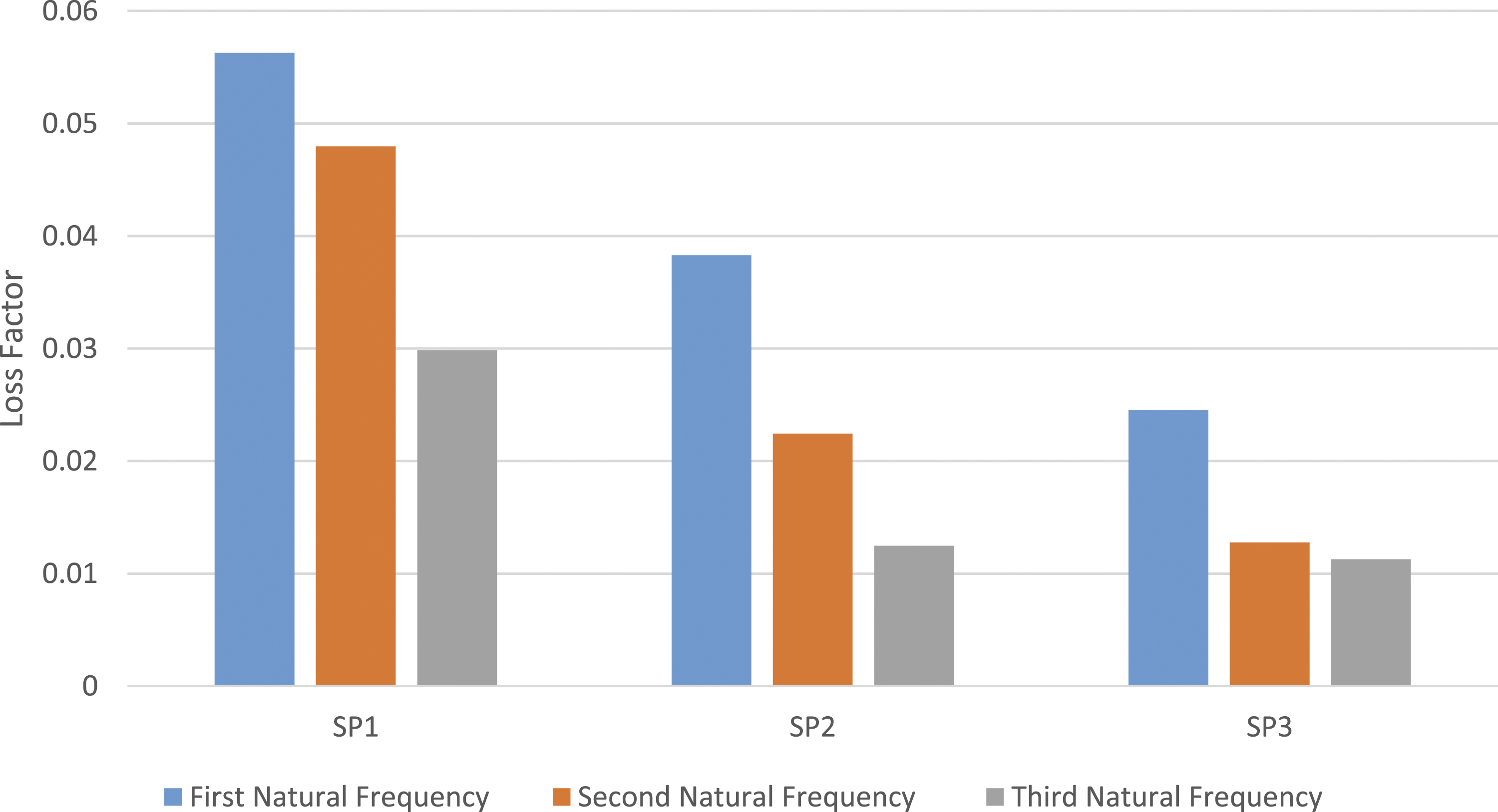
General results show that an increase in the core thickness has considerable impacts on the dynamic behavior of the sandwich beams; for high frequency domains, a relatively thick core is suggested for vibration and noise problems. In this context, the thickest beam (SP3) with its structural damping performance has a first natural frequency value of about 341.97 Hz, and it is expected to be effective from this value (341.97 Hz) to the higher ones depending on the mode numbers. On the other hand, high frequencies lead to relatively low damping performance. For example, the damping values for SP3 decrease 56%, 73%, and 62% for the first, second and third natural frequencies, respectively, compared to those of SP1 (the thinnest sandwich beam). As explained above, a similar tendency is also the case for SP2. It is believed that the dynamic behavior of the foam core is frequency (time) dependent, and the core shows a viscoelastic response at high frequency domains as claimed by Sargians and Suhr. 13 On the contrary, time dependent behavior of the core is not witnessed at low frequency domains, that is, between 5 Hz and 50 Hz (see Table 2). It is important to note that the results from the current work are supported by the previous studies; for instance, Nilsson 26 pointed out a decrement of loss factor with an increase in the core thicknesses. Sargianis and Suhr 27 found out that as frequency increased, so did each beam’s loss factor until a certain frequency was reached, after which the loss factor decreased. In the same work, the authors used the specimens with the clamped-clamped boundary condition that is expected to contribute extraneous damping to the measured values, as claimed by Guild and Adams. 28 So, those with free-free ends are believed to give much more reliable results, as presented in the current experimental set-up.
If the loss factor values of the specimens with different core thicknesses are to be presented in terms of Specific Damping Capacity (SDC) percentage that is equal to 2πη times (100), then, their SDC values are between 7.1% and 35.4%, depending on the core thickness and mode numbers. When compared to the damping values of different types of sandwich beams, between 0.81% and 1.45%, 29 the current values are considered quite high along with their reasonable values of flexural rigidity. It is believed that such structures (with high passive damping values and reasonably well flexural performance) can be used in some aerial vehicles such as the interior part of helicopters where high levels of noise and vibrations exist. For example, such structures can be positioned near the helicopter engine, where there is not too much structural load but too much noise to disturb the pilot in the cabin.
To further enhance the damping performance of the sandwich structures, the woven carbon fiber plies with the 45° fiber orientations were used as the face sheets. Because these plies are controlled by the matrix and the fiber parts of the composite, together, which is able to contribute to the damping value of the sandwich structure even more. As suggested by Essassi et al., 25 the face sheets can dissipate a major part of the energy, especially at the lowest (first) frequency.
Conclusions
This study has shown that the sandwich structures with foam cores and polymer composite face sheets with 45° angle of fiber orientations could provide a high capacity of passive damping. Such sandwich configurations could be useful for aerospace and automotive applications as these are quite effective for controlling noise and excessive vibrations. It seems an increase in the core thickness raises the frequency domains and flexural rigidity of the sandwich structures but decreases the damping performance. The dynamic behaviors of the specimens have been found frequency dependent, due to the viscoelastic behavior of the foam cores at high frequency domains.
Footnotes
Acknowledgments
We would like to thank the Turkish Aerospace Industry for supporting the current work.
Declaration of conflicting interests
The author(s) declared no potential conflicts of interest with respect to the research, authorship, and/or publication of this article.
Funding
The author(s) received no financial support for the research, authorship, and/or publication of this article.
