







Abstract
A numerical micromechanics approach based on the finite element method (FEM) is employed to evaluate the elastic modulus and coefficient of thermal expansion (CTE) of graphene nanoplatelet (GNP)-reinforced aluminum (Al) matrix nanocomposites. The modeling framework integrates representative volume elements (RVEs) with detailed consideration of GNP morphology in the nanocomposite structure. The critical role of GNP waviness and the formation of aluminum carbide (Al4C3) interphase, resulting from the interaction between graphene and the metal matrix, is examined in relation to nanocomposite properties. Variations in the volume fraction, geometry, and alignment of GNPs, along with the interphase thickness and its material properties, are considered to capture the microstructural influence on the elastic modulus and CTE of GNP/Al nanocomposites. The study reveals that the presence and growth of the Al4C3 interphase contribute positively to the mechanical and thermal elastic response of the nanocomposite. Although increasing graphene content, aspect ratio, and alignment enhances the elastic modulus and reduces the CTE, the presence of waviness in graphene nanofillers diminishes these benefits. Model validation is carried out through a comparison between micromechanics-based FEM outcomes and experimental data documented in the literature.
Keywords
Introduction
Aluminum (Al) is an extremely versatile non-ferrous metal that possesses important physical and mechanical properties, making it suitable for various structural applications, including the fabrication of Al-based metal matrix composites (MMCs).1–3 High specific strength, excellent corrosion resistance, reflectivity, ductility, and low density are among the key attributes that enable widespread applications of Al and its alloys in aerospace, marine, rail transport, and construction industries.4–8 However, the growing demand for MMCs with acceptable mechanical and thermo-mechanical performance, driven by the requirements of emerging engineering applications, has led to the incorporation of secondary reinforcement phases such as ceramics and nanofillers.9,10 The advancement of nanotechnologies demonstrates that nanoscale reinforcements can effectively enhance the mechanical and thermal performance of composites by increasing the surface-to-volume ratio and interfacial reactivity between the matrix and nanofillers.11,12 Graphene nanoplatelets (GNPs), a class of carbon nanostructures formed by stacking a few to several layers of graphene, possess a very high elastic modulus and a low coefficient of thermal expansion (CTE), thereby imparting superior properties to nanocomposites. GNPs have garnered particular attention due to their exceptional stiffness, high aspect ratio, low density, and two-dimensional planar structure. Compared to other carbon nanostructures, such as single-walled and multi-walled carbon nanotubes (CNTs), GNPs exhibit a rough laminated architecture with a larger surface area, making them a promising alternative reinforcement for metal matrix nanocomposites (MMNCs) and an effective means of addressing the limitations of conventional MMCs.13,14
Experimental and analytical studies available in the literature15–20 highlight the significant impact of carbonaceous nanofillers on the mechanical and physical behavior of MMNCs. In an experimental investigation on the mechanical properties of Al-based nanocomposites reinforced with varying concentrations of CNTs, Bradbury et al. 15 reported that the addition of 3% multi-walled CNTs resulted in approximately 160%, 262.7%, and 41.1% increases in hardness, tensile strength, and Young’s modulus, respectively. In addition to mechanical properties, the thermal expansion behavior of MMNCs must be investigated, as the structures made from such advanced materials are often exposed to elevated temperatures during manufacturing and service conditions. Such evaluation is essential for assessing the long-term reliability of MMNCs. 16 Using a micromechanics-based simplified unit cell model, Hassanzadeh-Aghdam et al. 16 investigated the influence of various microstructural parameters on the thermal expansion behavior of CNT/Al nanocomposites. These parameters include CNT volume fraction, aspect ratio, cross-sectional shape, waviness, orientation (either unidirectionally aligned or randomly dispersed), agglomeration state, and the formation of aluminum carbide (Al4C3) interphase resulting from the interaction between CNTs and the Al matrix. Their findings revealed that the cross-sectional shape of CNTs have a negligible effect on the CTE, whereas other factors, particularly agglomeration induced by strong van der Waals forces and CNT content, exert a significant influence. Empirical results reported by Tang et al. 17 indicate that by raising the CNT content to 15 vol%, the CTE of the composite is reduced by 65%. of CNT-reinforced Al-MMNC. Li and Xiong 18 investigated the influence of graphene nanosheet (GNS) content on the tensile properties and microstructure of GNS-reinforced Al-MMNC. Their study revealed that the Al4C3 phase forms at the GNS/Al interface, with its concentration directly correlated to the GNS content. The results demonstrated that incorporating 0.25 wt% GNS led to improvements of 38.27% in yield strength and 56.19% in tensile strength compared to pristine aluminum. In an experimental investigation into the effects of GNS volume fraction and alignment on the anisotropic thermal properties of MMNCs, Chu et al. 19 examined the thermal conductivity and CTE of copper (Cu)-MMNCs reinforced with highly aligned GNSs. Their findings revealed that increasing the GNS volume fraction up to 30% resulted in a 35% enhancement in thermal conductivity and a 64% reduction in CTE, indicating high in-plane thermal conductivity and low through-plane thermal expansion. Zhou et al. 20 fabricated Al-MMNCs reinforced with few-layered graphene (FLG) using spark plasma sintering followed by hot extrusion, and investigated the direct contribution of FLG to the thermal expansion behavior of FLG/Al nanocomposites. Their experimental results showed that the addition of 0.4 vol% FLG led to a ∼4.45% reduction in the CTE. It was observed that Schneider’s analytical model slightly underestimated the experimental values, likely due to interfacial effects. Furthermore, through a comprehensive comparison of conventional fillers, including multi-walled and single-walled CNTs, carbon fiber, graphite, silicon carbide, and titanium carbide, FLG was identified as the most effective reinforcement for improving the CTE of Al-based nanocomposites.
One of the key challenges associated with MMNCs is the extensive knowledge required to investigate microstructural effects at the nanoscale. Unlike polymer-based composites, the dispersion of nanoscale reinforcements within MMNCs, along with the evaluation of their geometrical characteristics, is highly complex and often not cost-effective in terms of time and financial resources.21,22 Hence, numerical schemes based on micromechanics-driven finite element method (FEM) serve as powerful and widely adopted tools for investigating the effective properties of MMNCs. Regarding the thermal expansion behavior of metal-based composites, Nam et al. 23 predicted the CTE of Al-MMCs containing a high fraction of SiC particles using analytical thermoelastic models and finite element analysis. Rezzig et al. 24 examined how Al4C3 interphase development and CNT clustering influence the overall properties of CNT-filled Al composites through a numerical micromechanics-based approach. It was observed that CNT agglomeration and interphase formation strongly affect the elastic behavior of Al nanocomposites, with the impact intensifying at greater CNT volume fractions.
Based on the preceding overview, graphene-based nanofillers demonstrate significant potential for enhancing the effective properties of MMNCs. However, research on the mechanical and thermal expansion behavior of graphene-reinforced MMNCs remains limited, largely due to manufacturing challenges that impede reliable experimental characterization. In this regard, simulations that incorporate critical microstructural phenomena such as morphological features and interfacial interactions are indispensable for improving the accuracy of nanocomposite modeling and aligning it more closely with physical reality. Notably, investigations addressing the influence of GNP waviness are particularly scarce. The present study aims to develop a micromechanics-based finite element model for evaluating the elastic modulus and CTE of GNP-reinforced Al-MMNCs. The structure of the paper is organized as follows: The second section introduces the governing equations and material properties of the MMNC constituents. The third section details the simulation framework of the three-phase representative volume element (RVE), including its constituent phases, modeling assumptions, and applied boundary conditions. In the fourth section, the micromechanics-based FEM is validated against available experimental data, followed by parametric studies examining the influence of microstructural factors on the effective properties. Finally, the fifth section summarizes the key findings and implications of the research.
Constitutive equations and material properties
The mechanical and thermal expansion properties of nanocomposite materials are extracted using finite element software packages. Nevertheless, the constitutive equations governing the computation of these properties are explicitly formulated and presented. Although heat generation typically results in non-uniform temperature distributions, the present study assumes that thermal diffusion leads to a uniform temperature field throughout the body volume. By neglecting inertial effects, the governing thermoelastic equation can be expressed as follows25,26:





The MMNC material selected in the present study comprises an Al matrix reinforced with either straight or wavy GNPs. Commercially available GNPs are typically produced with inherent morphological irregularities, including waviness, arising from synthesis and exfoliation processes. Achieving perfectly flat GNPs on a large scale remains challenging, as their morphology is strongly influenced by production methods, processing conditions, and dispersion techniques. Although advanced fabrication routes such as chemical vapor deposition or controlled exfoliation can yield relatively flatter graphene sheets, these approaches are not widely adopted for bulk production of GNPs intended for composite reinforcement. Consequently, waviness is generally regarded as an intrinsic characteristic of commercially available GNPs, and its complete elimination is difficult. Partial control may be achieved through optimized dispersion, alignment, or surface functionalization strategies, which can mitigate agglomeration and improve filler orientation. Accordingly, waviness is incorporated into the present modeling framework as a realistic microstructural feature to more accurately capture the behavior of GNP-reinforced MMNCs.20,26 Additionally, the contribution of the Al4C3 interphase, produced through GNP-Al interaction, is also included by modeling it with a prescribed thickness. To evaluate the elastic modulus and CTE of the Al-MMNC, isotropic behavior is assumed for the Al matrix, GNP, and the Al4C3 interphase. The Al matrix has a Young’s modulus of 76.5
Finite element micromechanical modeling
In analyses aimed at determining engineering constants of nanocomposites, bottom-up multiscale simulations are conducted across the nano-, micro-, meso-, and macro-scales. Among these, micromechanical modeling, used to extract various effective properties of nanocomposites while accounting for microstructural effects, offers enhanced flexibility in capturing the geometry of constituent phases at the meso-scale. Assuming that the macroscopic nanocomposite exhibits a periodic structure composed of numerous RVEs, the effective properties of the bulk material can be generalized from the RVE-level results by accurately specifying the dimensions and distribution of nano-additives within each RVE. The demonstrated proficiency of RVEs in evaluating various behaviors of nanocomposites, as reported in numerous studies, further supports this assertion.26–30 The three-dimensional RVEs considered in the present study are modeled as homogeneous cuboids, each having a length, width, and thickness equal to Dimensional specifications of the simulated samples: (a) straight GNPs, (b) wavy GNPs, and (c) the GNP/Al interphase region.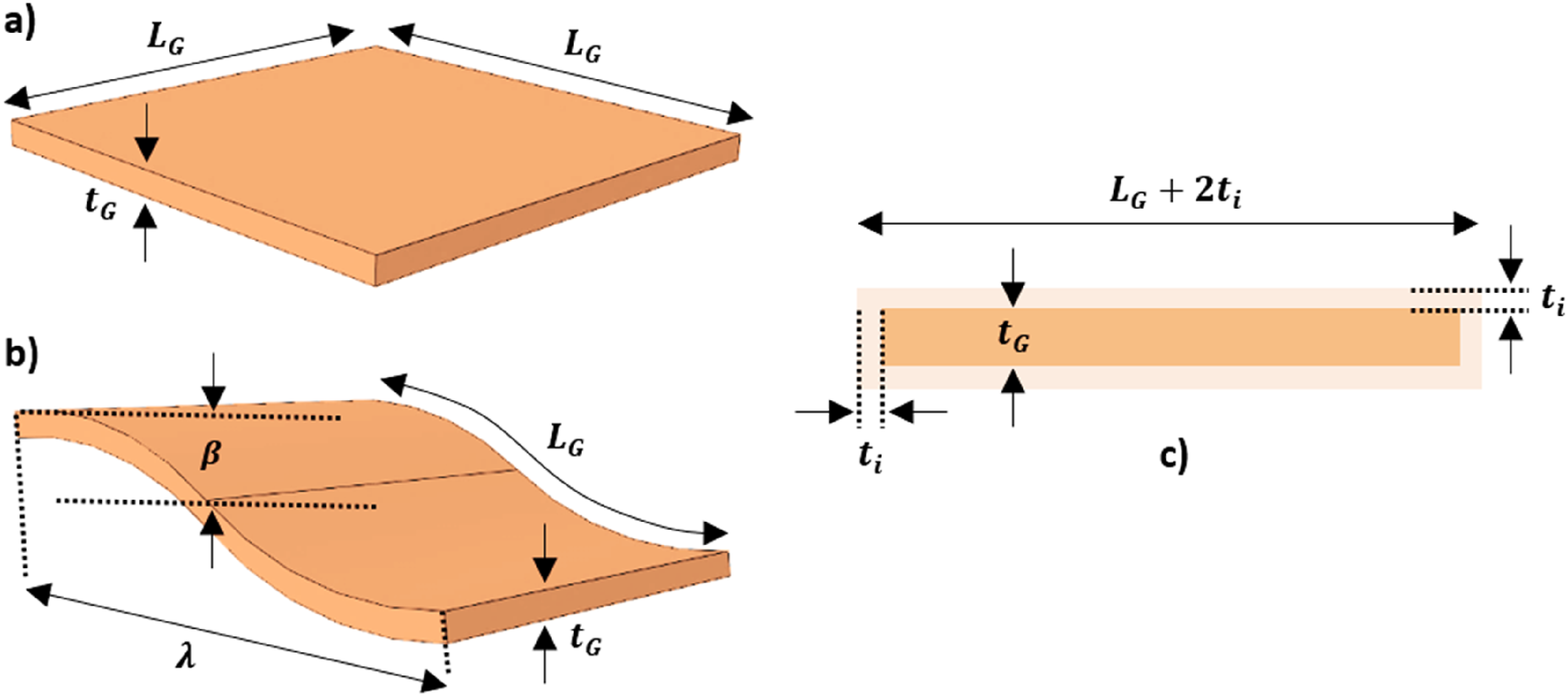
Since the study of microstructure-level features including orientation and waviness, volume fraction, aspect ratio, GNP/Al interphase, and other geometrical influences of GNPs is intended by employing a micromechanical finite element model formulated on the basis of the RVE concept, based on the shape of the simulated GNPs and their dimensions, we consider the volume fraction (


The RVE is generated under the assumptions of perfect bonding between components, avoidance of GNP intersection through defined minimum spacing, and periodicity in geometry. The minimum relative distance is defined to ensure that the distribution of GNPs within the RVEs approximates a uniform arrangement. If this value is set too large, the target volume fraction may not be achieved; conversely, if it is too small, overlap between particles may occur or a condition resembling agglomeration may arise. Moreover, based on the periodic geometry conditions, the parts of the fillers that are in the side volume elements of the RVE are transferred to the corresponding facing surface. Figure 2 displays a simplified view of the applied periodic geometry conditions. Simplified view of the periodic geometry conditions.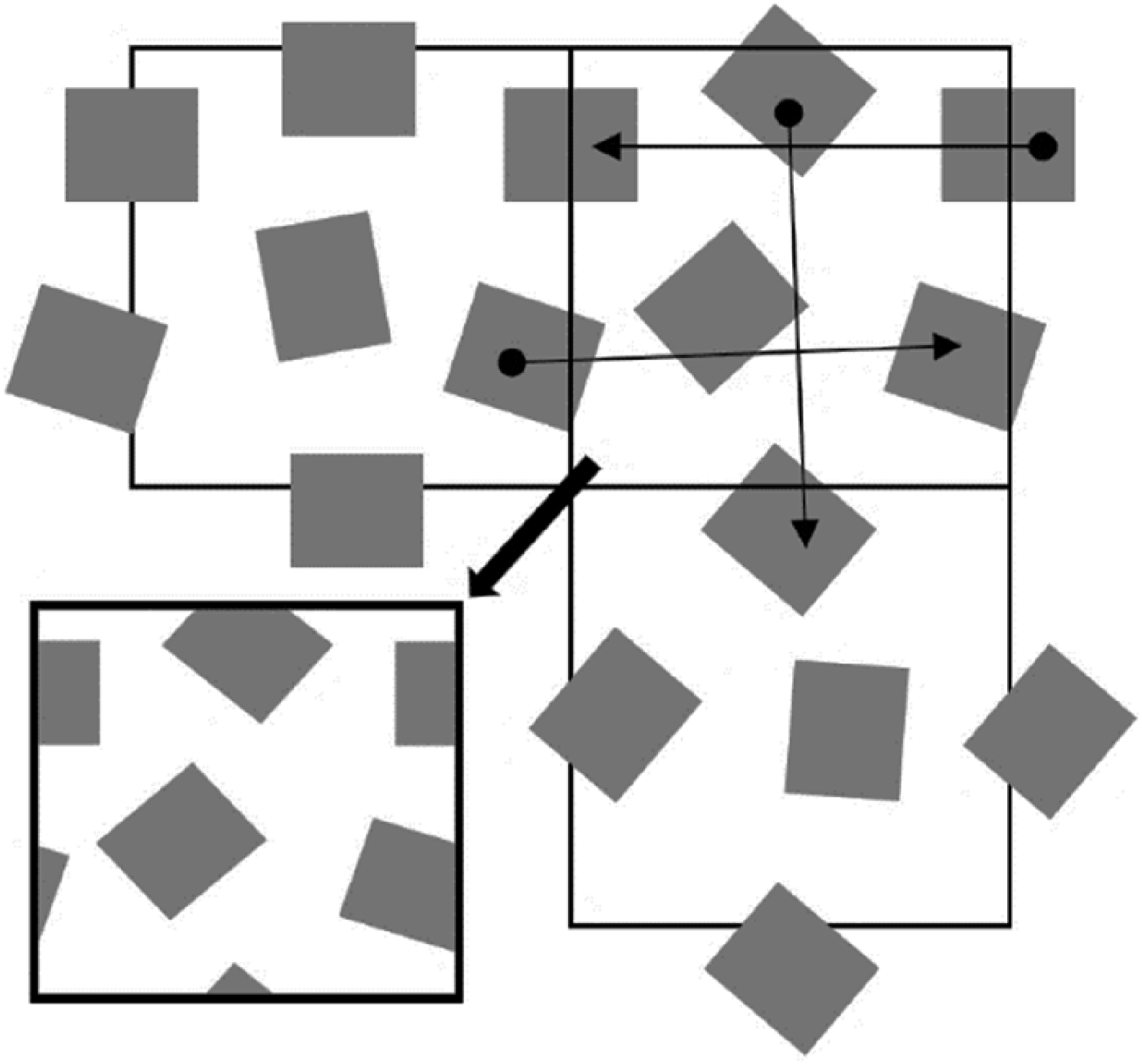
The initial step in the RVE generation process is to script a GNP (with interphase or without interphase) in a random origin with a random orientation (according to aligned or random distribution of GNPs). Afterward, other GNPs are transferred or rotated with the mentioned assumptions in relation to the initial GNP, so that the inputs of the problem, including the volume fraction and the number of GNPs, are satisfied. By establishing the volume fraction of GNPs embedded in the Al matrix, the RVE generation process is stopped. Figure 3(a) and (b) illustrate the generated RVEs with 2 vol% straight and wavy GNP, respectively, with an aligned distribution. Also, the random distribution of the straight and wavy GNP is displayed in Figure 3(c) and (d), respectively. It should be noted that all the RVE components, including the Al matrix, straight and wavy GNP, and GNP/Al interphase, are meshed with C3D10 elements. The C3D10 element is a three-dimensional, 10-node quadratic tetrahedral element available in the finite element software, in which each node possesses three translational degrees of freedom. This element type is particularly suitable for meshing complex geometries and curved boundaries, and provides higher accuracy compared to linear tetrahedral elements (Figure 3(e)). Aligned dispersion of 2 vol% (a) straight and (b) wavy GNPs in Al-MMNC, random dispersion of 2 vol% (c) straight and (d) wavy GNPs in Al-MMNC, (e) C3D10 element.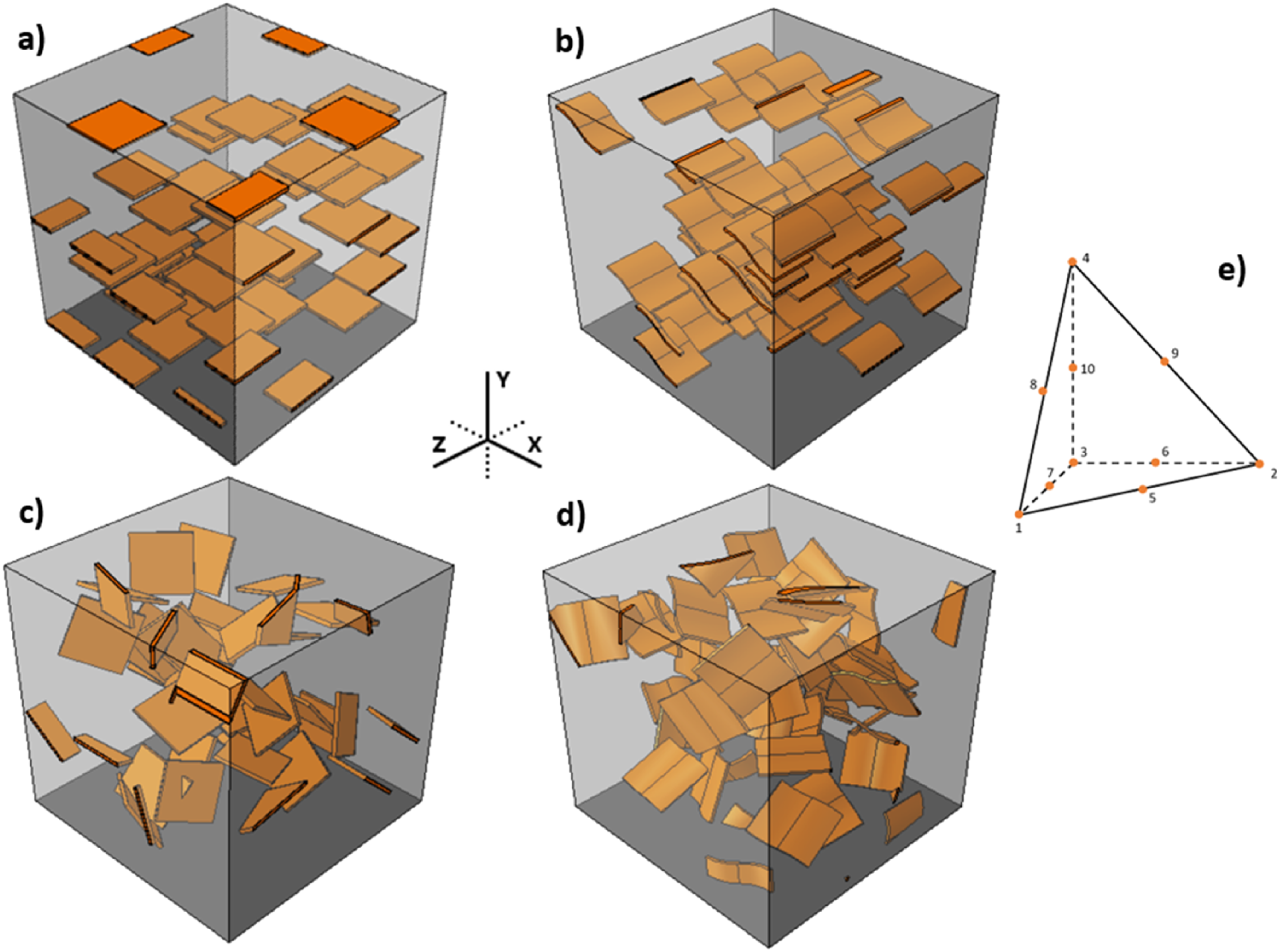
Additionally, optimizing the number of elements is necessary to avoid increasing the calculation time and extract accurate results, which will be discussed later. In order to calculate the elastic modulus, a uniaxial tensile test was performed. The RVEs have one side that is restricted, and the other side is subjected to the uniaxial displacement of
Boundary conditions applied to the RVE surfaces for the characterization of GNP/Al MMNC elastic modulus and CTE.
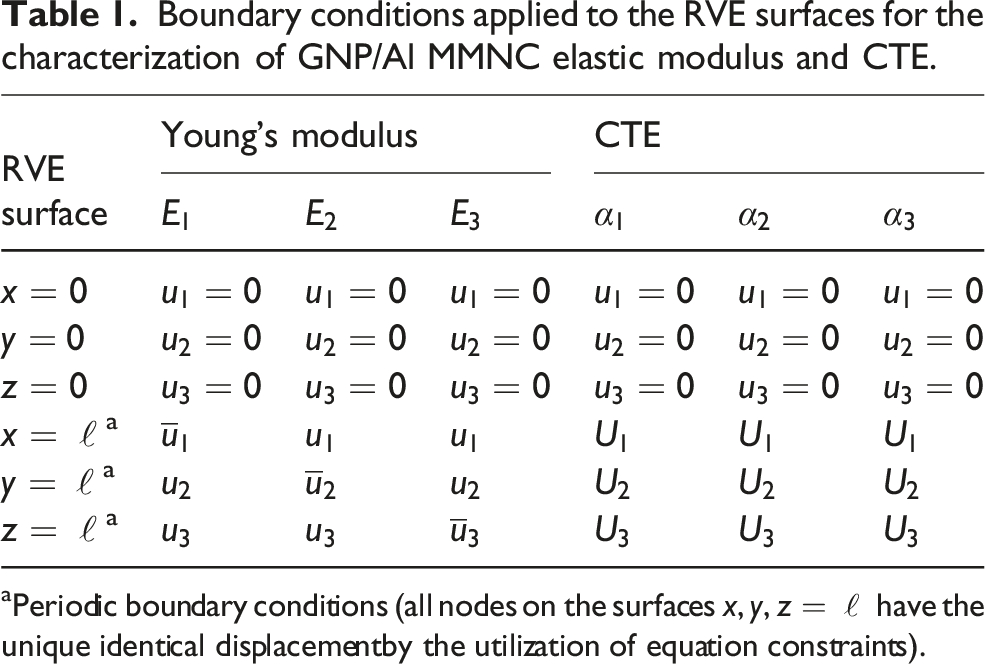
aPeriodic boundary conditions (all nodes on the surfaces
Results and discussion
Validation
Comparison between finite element predictions and experimental test results for GNP/Al MMNC CTE.
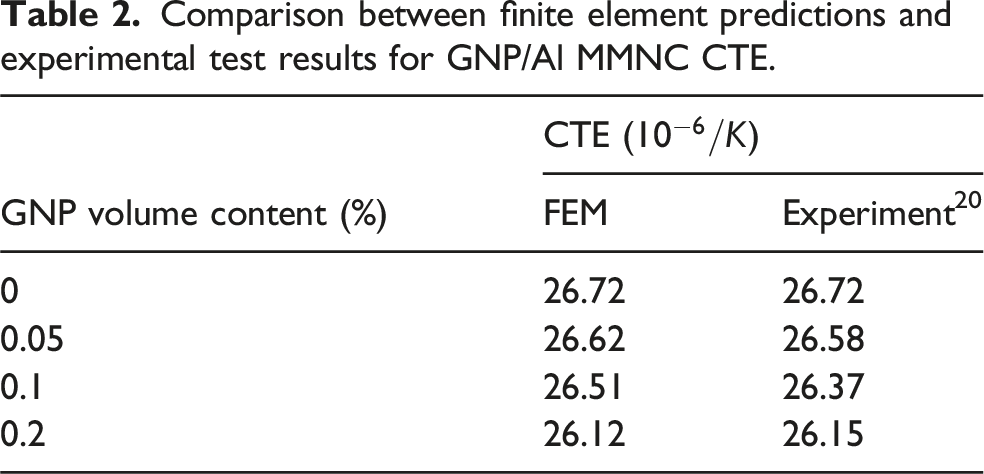
Convergence study
Finite element analysis results are sensitive to both the distribution of nanofillers in the RVE and the mesh size, which can compromise the clarity of the findings. It is necessary to select the number of nanofillers and elements in such a way as to optimize the calculation time in addition to achieving accurate results. For this reason, the convergence studies have been conducted on the number of GNPs and elements. For each case, multiple random realizations of the RVE were simulated. The variation across different realizations was found to be negligible, so the mean values are reported in the figures without explicitly plotting the standard deviations. With the GNP volume fraction maintained at 2%, Figure 4(a) demonstrates how the number of randomly dispersed GNPs without considering the interphase region affects the ultimate CTE of GNP/Al MMNC. It is clear that the determined CTE is saturated for values exceeding 35 numbers, and without changing the results, it is accompanied by an increase in the calculation time. For this reason, during this analysis, the number of GNPs distributed in the RVE is considered to be 40. As illustrated in Figure 4(b), RVE discretization with a coarse element size (a smaller number of elements) does not have high accuracy in determining CTE. With the increase in the number of elements, the CTE of GNP/Al MMNC does not change much compared to the number of elements beyond 70,000. In this research, taking into account the effects of different microstructure levels, RVEs have been discretized in such a way that the number of elements does not affect the results. Convergence study to optimize the number of (a) nanofillers and (b) elements.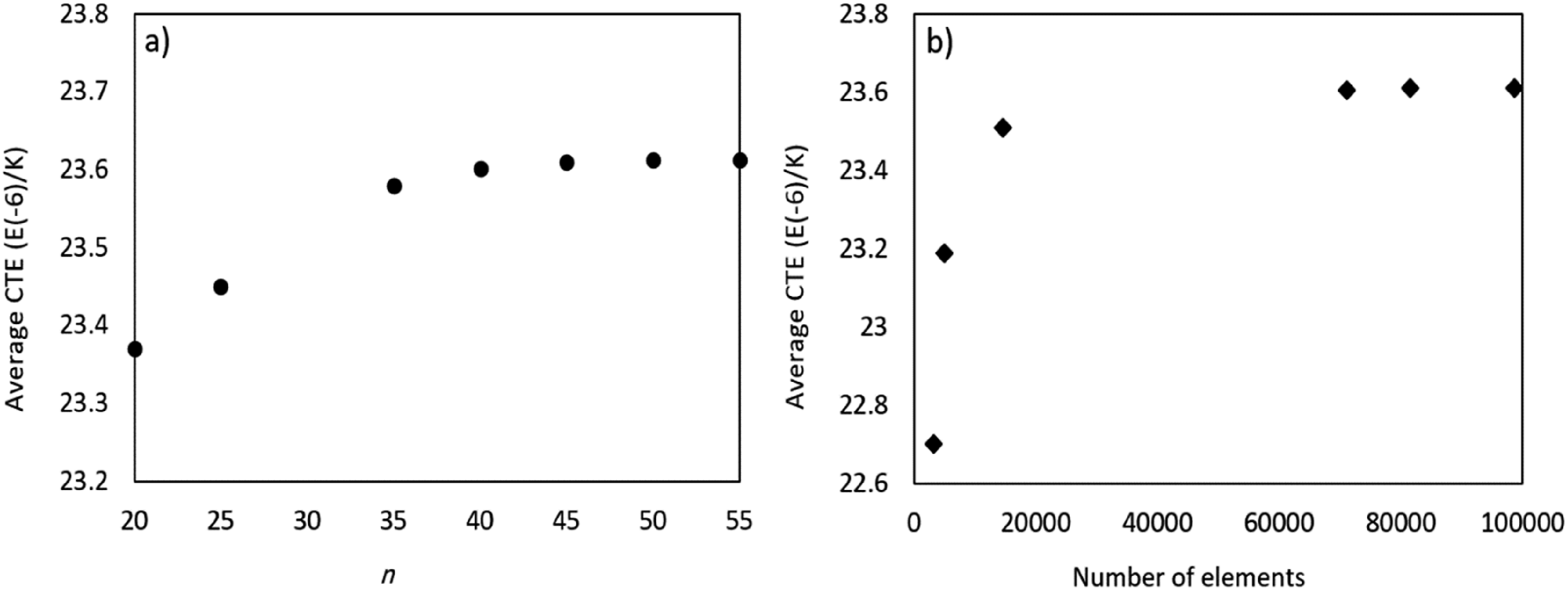
Parametric study
The elastic modulus of GNP-reinforced Al-MMNCs is a crucial property reflecting the composite’s ability to resist deformation under stress. Using the finite element micromechanical model and RVE approach, the influences of GNP volume fraction, aspect ratio, waviness, and the Al4C3 interphase features (thickness and material properties) on the engineering constants are investigated.
Figure 5 shows the variation of GNP/Al MMNC elastic modulus with the graphene volume fraction. The elastic modulus is improved significantly with increasing GNP volume fraction. For both straight and wavy GNPs, the trend is almost nonlinear. The straight GNP configuration consistently provides a higher elastic modulus compared to the wavy GNPs at all volume fractions. This superiority of straight GNPs arises from their more effective load transfer capability. Conversely, the graphene waviness reduces the efficiency of reinforcement. The results demonstrate that straight nanofillers provide better stress transfer and higher stiffness than their wavy counterparts. As shown in Figure 6, with the increase of GNP volume fraction, the MMNC CTE decreases significantly, which is more noticeable for straight GNPs. The results show that the straight GNPs can be better for improving the thermal expanding constant of MMNCs as they give lower CTE values. It is found from Figures 5 and 6 that the formation of carbide interphase notably affects the engineering constants of MMNCs as mentioned in the previous studies.31–35 Considering the Al4C3 interphase region with the assumed thickness, can be effective in improving the engineering constants of GNP/Al MMNCs. Effects of GNP volume fraction on the elastic modulus of GNP/Al MMNC. Effects of GNP volume fraction on the CTE of GNP/Al MMNC.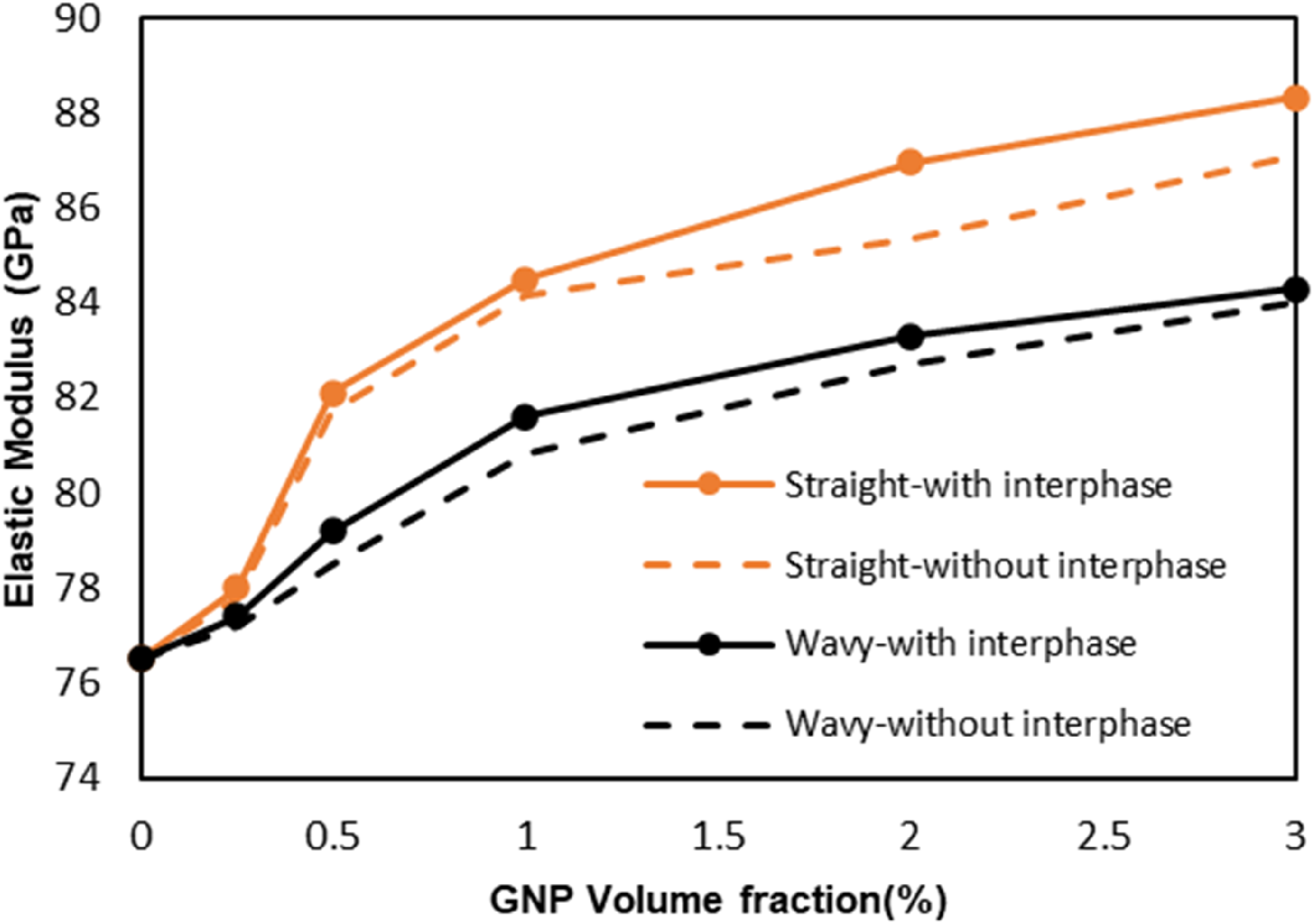
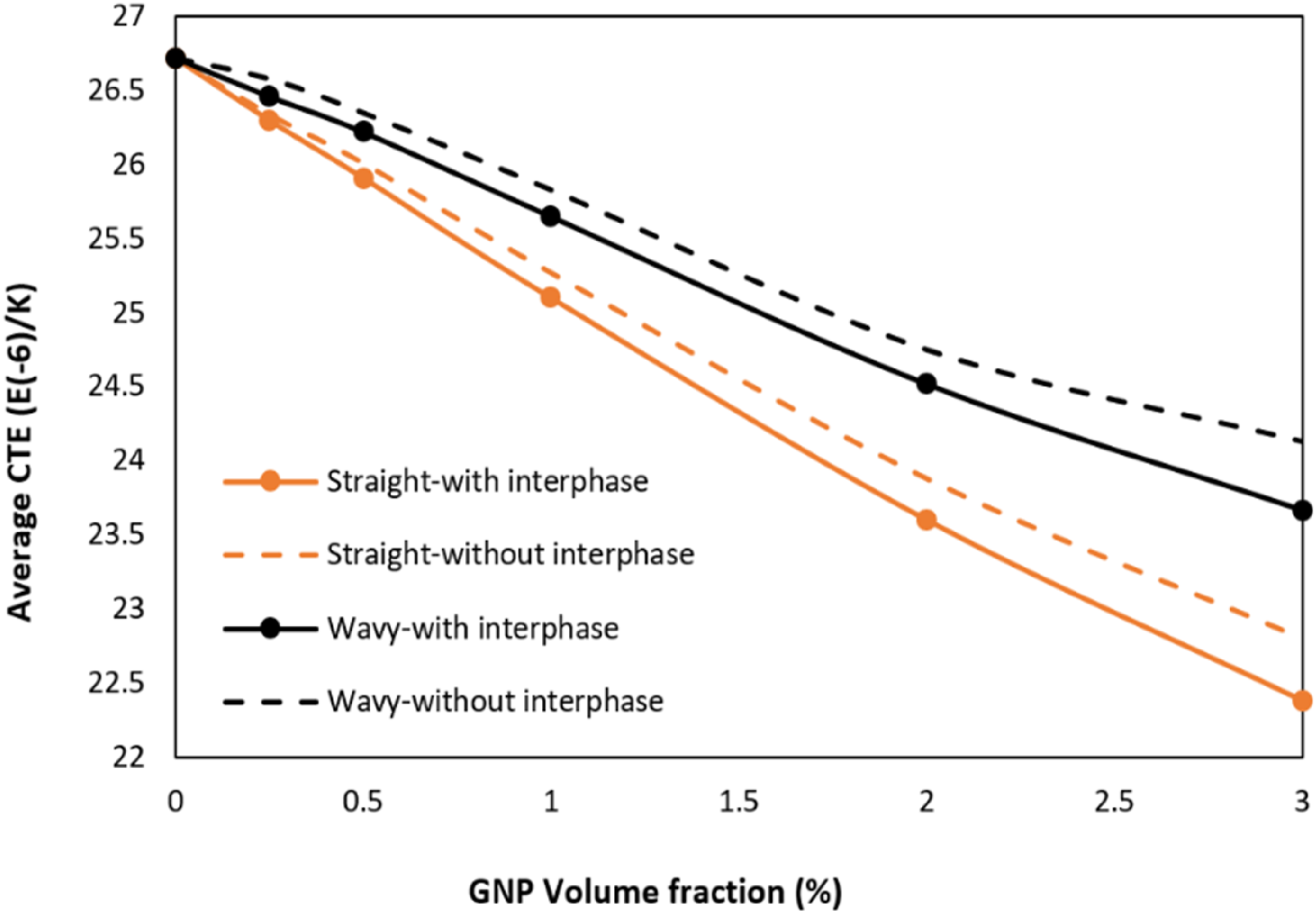
Figure 7(a) shows the variation of elastic modulus of GNP/Al MMNCs with the value of Effects of wavy GNP geometry on the (a) elastic modulus and (b) CTE of GNP/Al MMNC.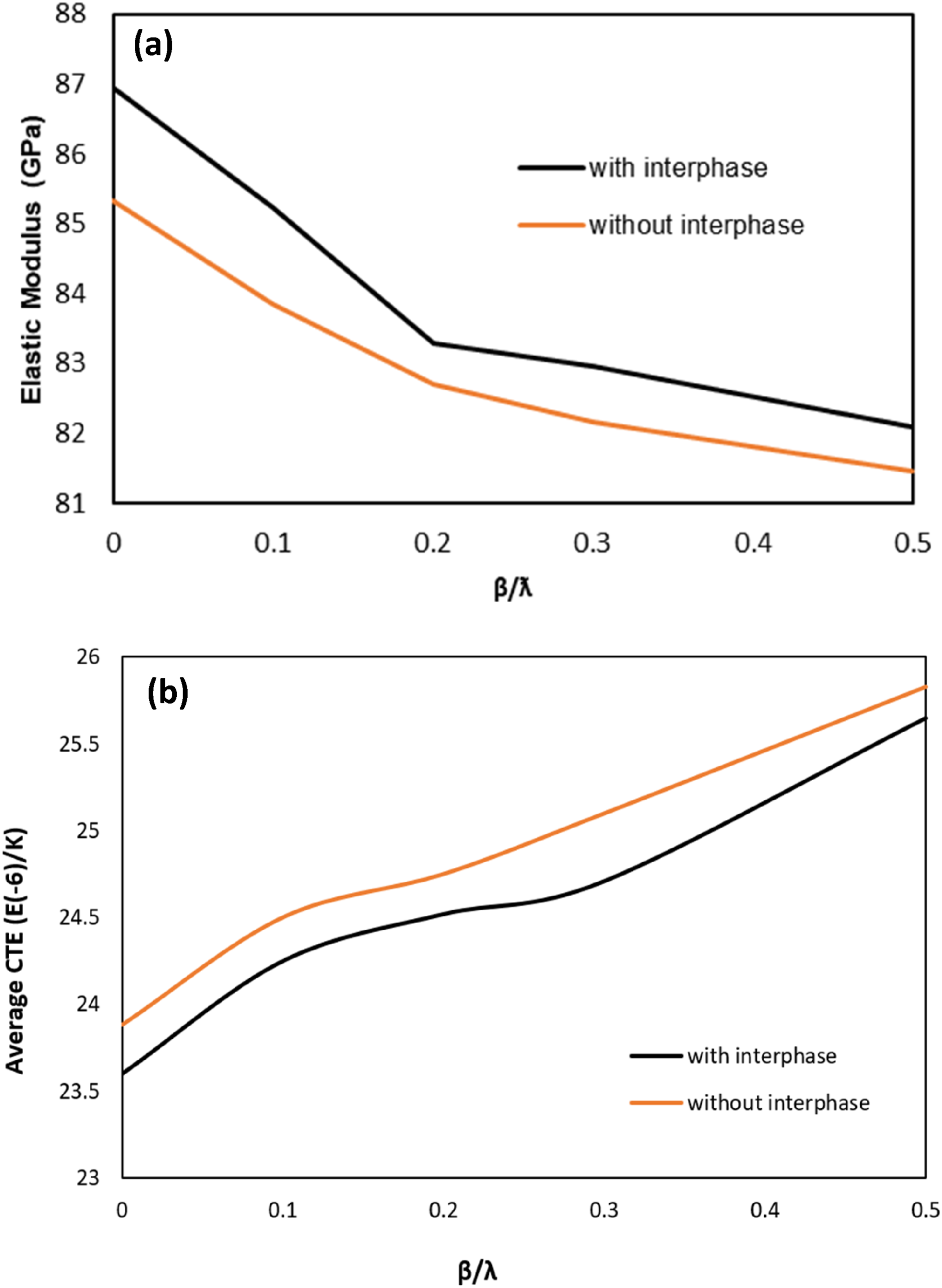
The thickness of the Al4C3 interphase significantly influences the elastic modulus of the MMNC, as shown in Figure 8(a). For both straight and wavy GNPs, increasing the interphase thickness results in a higher elastic modulus for GNP/Al MMNCs. The increase is more pronounced in the straight GNP configuration. The elastic modulus of the interphase also contributes to the overall stiffness of the GNP/Al MMNCs as can be seen in Figure 8(b). As the elastic modulus of the interphase increases, the Al nanocomposite becomes stiffer due to improved load transfer across the matrix-filler interface. (a) Effects of interphase thickness on the elastic modulus of GNP/Al MMNC; (b) effects of interphase elastic modulus on the elastic modulus of GNP/Al MMNC.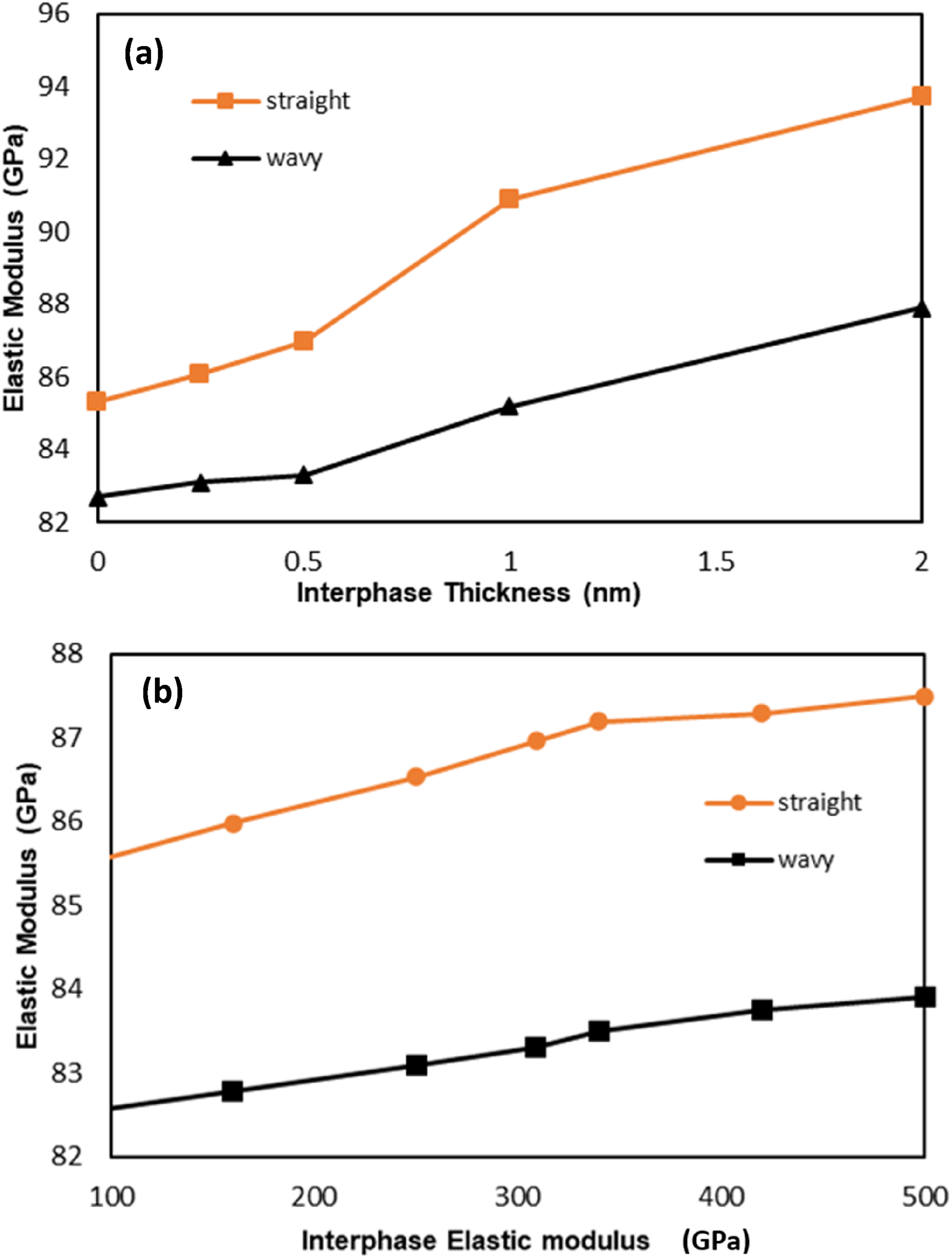
In addition, as seen in Figure 9(a), the increase in the thickness of the Al4C3 interphase is associated with the decrease in CTE. The decrease slope of CTE for MMNC reinforced with 2 vol% straight GNP is higher than that of the wavy GNP. It was clarified that the Al4C3 interphase region formed by the interaction between graphene nanofillers and metal matrix can be effective for the improvement of CTE of MMMCs. The importance of interphase led to the investigation of the effects of its Young’s modulus and CTE of on the thermal expansion constant of the GNP/Al MMNC. In Figure 9(b), the CTE of the present MMNC is plotted as a function of the elastic modulus of the interphase. It is known that with the increase of the elastic modulus of the interphase, the CTE of the MMNC decreases, which is very small due to the very small volume fraction of interphase compared to nanofillers. The effect of increasing the CTE of the interphase on the CTE of the GNP/Al MMNC is also shown in Figure 9(c). (a) Effects of interphase thickness on the CTE of GNP/Al MMNC; (b) effects of interphase elastic modulus on the CTE of GNP/Al MMNC; (c) effects of interphase CTE on the CTE of GNP/Al MMNC.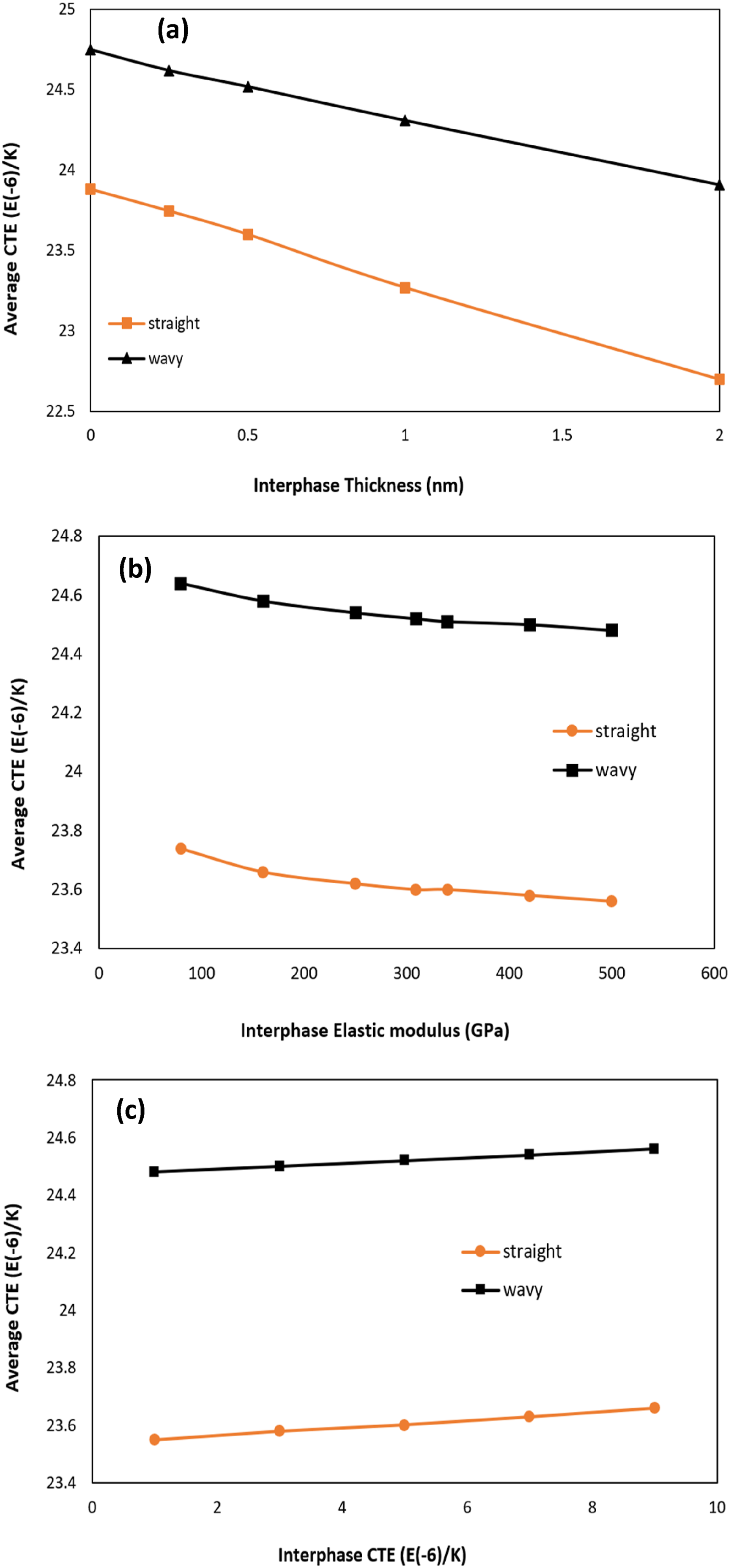
The effect of GNP aspect ratio on the engineering constants of GNP/Al MMNC is explored using the developed finite element technique by considering a fixed nanofiller volume fraction of 2% into the RVE. Figure 10(a) shows that the Al MMNC elastic modulus increases with the rise of GNP aspect ratio. It is obvious from Figure 10(b) that CTE decreases slightly by increasing the aspect ratio of randomly dispersed GNPs. (a) Effects of GNP aspect ratio on the (a) elastic modulus and (b) CTE of GNP/Al MMNC.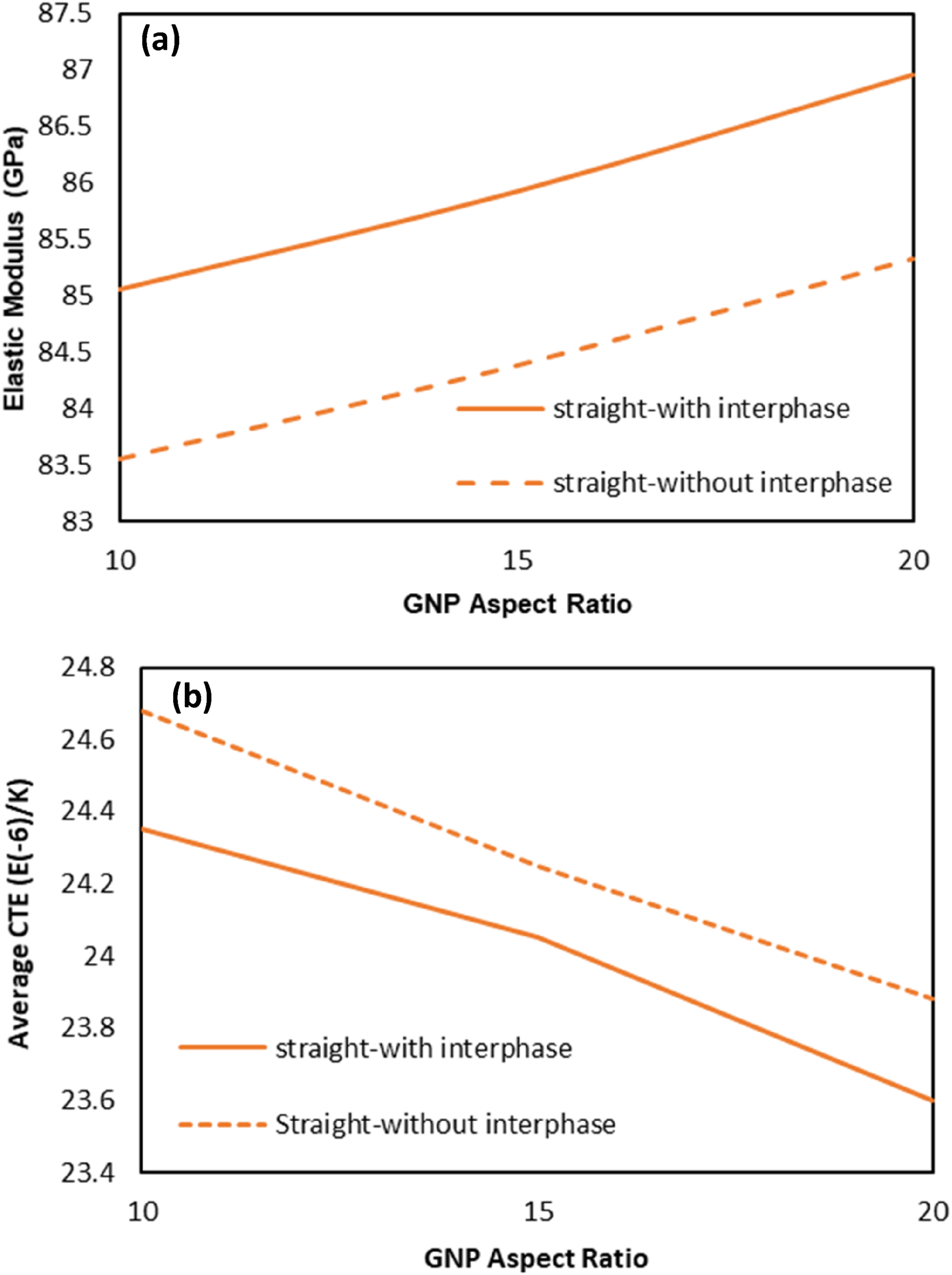
Effects of GNP dispersion type, waviness, and interphase on the elastic modulus and CTE of GNP/Al MMNC.
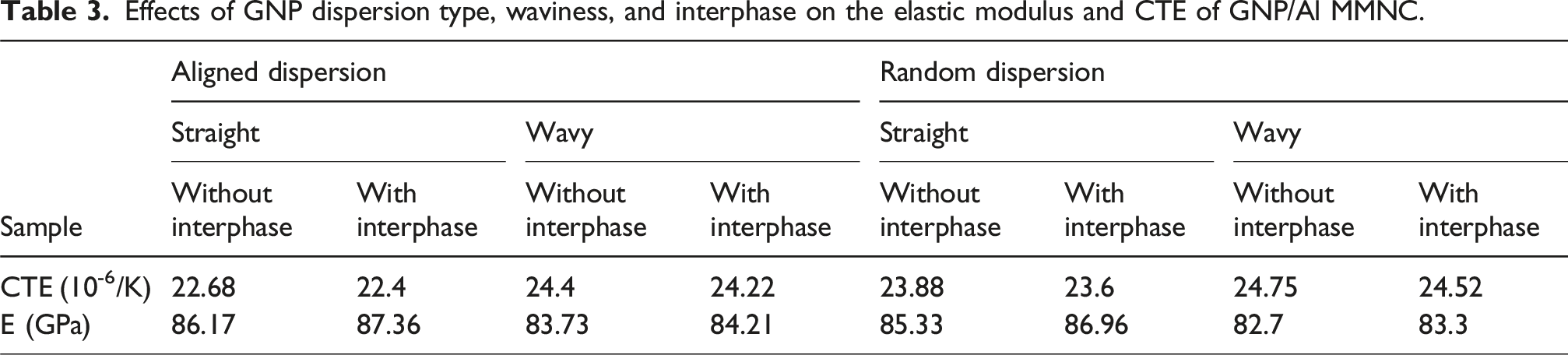
The observed reduction in modulus with increasing waviness can be attributed to the loss of effective load transfer efficiency between the GNPs and the Al matrix. As the waviness increases, the alignment of GNPs with the loading direction deteriorates, thereby reducing their reinforcing capability and diminishing the stiffness of the composite. Similarly, the diminishing advantage in the CTE with increasing waviness arises from the reduced constraint imposed by the GNPs on the thermal expansion of the matrix. Flatter GNPs provide stronger restriction against matrix expansion, whereas wavy morphologies weaken this effect, leading to higher effective CTE values. Although the presence of an Al4C3 interfacial layer can enhance bonding between GNPs and the Al matrix, thereby improving stress transfer and reducing thermal mismatch, it may also introduce potential drawbacks. Specifically, the brittle nature of the carbide phase can act as a preferential site for crack initiation and propagation under mechanical or thermal loading. This dual effect suggests that while the Al4C3 layer contributes positively to modulus and CTE control, its presence must be carefully considered, as it may compromise the long-term durability of the nanocomposite.2,40–44
Conclusion
Using a micromechanical model based on the FEM, the elastic modulus and CTE of GNP/Al MMNCs were investigated. The effects of microstructural contributors were evaluated through the RVE approach. Each RVE, comprising an Al matrix, straight or wavy GNPs, and an Al4C3 interphase, was subjected to a prescribed displacement and temperature gradient under the assumptions of perfect interfacial bonding and non-intersection between randomly dispersed nanofillers and their coatings. The results clearly demonstrated that the incorporation of graphene nanofillers into the Al matrix enhances the engineering constants of MMNCs. Furthermore, it was found that aligned dispersion of GNPs within the matrix yields superior thermo-mechanical properties compared to random dispersion. A reduction in CTE and an increase in elastic modulus were observed with increasing volume fraction and aspect ratio of GNPs. The detrimental effect of GNP waviness on the engineering constants was also evident. Additionally, the contribution of the interphase region was found to be significant; increasing its thickness led to a decrease in CTE and an increase in elastic modulus. These findings highlight that optimizing GNP geometry, specifically volume fraction, dispersion pattern, aspect ratio, and waviness, along with precise control of interphase characteristics, is critical for enhancing the engineering performance of GNP-reinforced Al-MMNCs.
Footnotes

Author contributions
Funding
The authors received no financial support for the research, authorship, and/or publication of this article.
Declaration of conflicting interests
The authors declared no potential conflicts of interest with respect to the research, authorship, and/or publication of this article.
Data Availability Statement
Data will be made available on request.