







Abstract
Polymer-matrix composites have recently been employed for electromagnetic interference (EMI) shielding materials for lightweight and flexibility. However, traditional polymer-matrix composites with high filler loadings often fail to possess both excellent mechanical and EMI shielding performance. In this work, a flexible and lightweight nickel oxide/polyimide/carbon nanotubes (NiO/PI/CNT) composite film with superior mechanical strength and outstanding EMI shielding properties was fabricated by electrospinning, vacuum-filtrating and coating methods. The composite film exhibited good mechanical performance, whose tensile strength was 43.2 MPa. Furthermore, the composite film achieved an excellent EMI shielding effectiveness of 89.96 dB in the X-band (8.2–12.4 GHz) with high absorption shielding effectiveness (SEA). Therefore, the NiO/PI/CNT composite film has a potential application for flexible electronics and aerospace fields.
Keywords
Introduction
The electronic equipment can generate numerous electromagnetic waves (EMWs), and the electromagnetic interference (EMI) has become an imperative issue that requires attention.1–4 A lot of researches have been focused on EMI shielding materials. Metals are commonly employed as commercial EMI shielding materials owing to their high electrical conductivity. However, the applications of metals are limited by their high density and lack of flexibility.5–7 Polymers have obtained much attention because of their high specific strength, corrosion resistance, and flexibility.8–11 Nevertheless, the electrically insulating property of polymers leads to poor EMI shielding performance.12–14
To improve EMI shielding properties, metals and carbon nanomaterials were utilized as conductive fillers of the polymer-matrix composites. However, the composites require high filler content to form continuous conductive networks, which often leads to mechanical performance degradation, owing to filler aggregation as structure defects.15,16 Therefore, it is necessary to fabricate lightweight and flexible polymer-matrix composites with both excellent mechanical and EMI shielding properties. Some researchers have employed the polymer electrospun film as scaffold and deposited the carbon nanomaterials on its one side via self-assembly method. The structural design not only effectively retains the mechanical properties of the polymer with high filler content, but also provides excellent EMI shielding performance.17,18
Polyimide (PI) is a promising polymer for the aerospace applications owing to outstanding thermal endurance, chemical stability, mechanical performance, and radiation resistance.19–21 Although the PI electrospun film displays promising applications in the EMI shielding materials, its insulating property results in poor EMI shielding performance. 22 Therefore, the EMI shielding property of PI matrix composite can be enhanced by adding conductive and magnetic fillers.23–26 Carbon nanotubes (CNTs) are commonly used as conductive fillers because of superior electrical conductivity27–29 and large aspect ratio, 30 which are easy to form continuous conductive networks at low percolation threshold. Moreover, nickel oxide (NiO) nanoparticles possess high specific surface area, excellent conductivity and strong magnetic property.31,32 Therefore, the introduction of the CNTs and NiO nanoparticles into the PI electrospun film can effectively improve the impedance matching between the composites and free space, which in turn strengthens the EMI shielding effectiveness (SE).
In this study, CNTs were deposited on one side of the polyimide electrospun film by vacuum filtration method to form a dense reflection layer, and NiO nanoparticles were introduced into the other side of the film by coating polyetherimide-NiO (PEI-NiO) solution as an absorption layer, to obtain the NiO/PI/CNT composite films with synergistic shielding mechanism of reflection-absorption loss. In addition, the dense CNT layer formed by the self-assembly method can avoid structural defects caused by the high CNT content, to enhance the mechanical properties of the composite film. Meanwhile, coating PEI-NiO solution can inhibit the destruction and slippage of PI fibers through the interfacial reinforcement effect between PEI-NiO solution and PI fibers, to further improve the mechanical properties of the film. As a result, the NiO/PI/CNT composite film display excellent mechanical and EMI shielding properties.
Experimental sections
Materials
All the 4,4’-diaminodiphenyl ether (ODA), pyromellitic dianhydride (PMDA, Analytical Reagent), N, N-dimethylformamide (DMF), sodium dodecyl sulphate (SDS), and N-methyl-2-pyrr-olidone (NMP) were purchased from Aladdin Biochemical Technology Co., Ltd. Single-walled carbon nanotube powders (SWCNT) were bought from OCSiAl Trading (Shenzhen) Co., Ltd. Polyetherimide particles (PEI) were purchased from Basic Innovation Plastic (USA). NiO nanoparticles were provided by Ying Tai Metal Materials Co., Ltd.
Fabrication of NiO/PI/CNT composite films
As our prior work,
33
PI electrospun film and PI/CNT composite film with CNT areal densities of 3 mg/cm2 were prepared. To prepare NiO/PI/CNT composite films, some PEI powders were dissolved in 50 mL of NMP by mechanical mixing at 80°C in a water bath. After complete dissolution, the solution was continued to stir at room temperature for 6 h, to obtain a 20 wt% PEI solution. After that, an appropriate amount of NiO nanoparticles were dispersed in 10 mL of the PEI solution through mechanical stirring for 3 h at room temperature to achieve uniform dispersion. The PEI-NiO suspension was coated on the PI layer surface of the PI/CNT film by a wire rod coater to keep 20 μm. Finally, the composite film was kept at 140°C for 6 h. The as-produced NiO/PI/CNT composite films with 1 wt%, 2 wt% and 3 wt% NiO nanoparticle contents were designated as 1NiO/PI/CNT, 2NiO/PI/CNT and 3NiO/PI/CNT composite films, respectively. Moreover, a PI/CNT composite film with 20 wt% PEI as a control specimen was fabricated by the same method and designated as 0NiO/PI/CNT composite film. Figure 1 presented the preparation process of NiO/PI/CNT composite films. Fabrication procedure for NiO/PI/CNT composite film.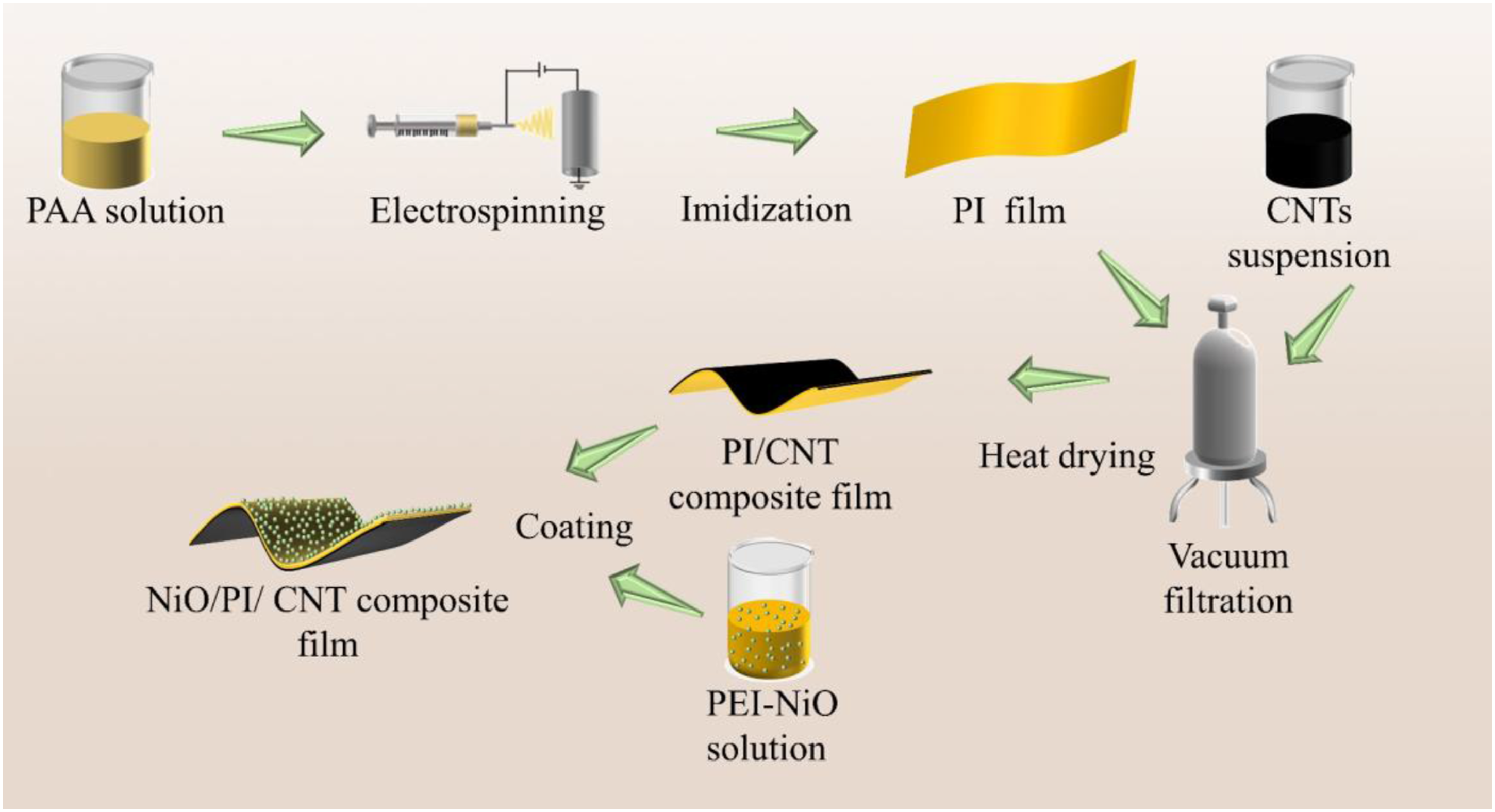
Characterization
The morphology and crystal structure of the composite were examined by using scanning electron microscopy (SEM, SU8020) and X-ray diffraction (XRD, Bruker D8 ADVANCE XRD), respectively. The conductivity of the composite films was tested by a four-point probe resistivity measurement system (RTS-9). The system consists of four equally spaced and collinear probes that are used to measure the conductivity of composite films. In this work, the four-point probe tips were gently placed on the surface of the CNT layer. First, the thickness of the composite films was input into the instrument. Next, the current was supplied via the outer probes, with the voltage being measured across the inner probes. Then, the obtained conductivity values were displayed on the instrument. Each sample was measured five times. The measured values were averaged to obtain the final conductivity of the composite films. The magnetic hysteresis loops of the composite films were characterized by a vibrating sample magnetometer (VSM, HH-20) with applying fields spanning ±20 kOe at room temperature. The mechanical properties of the films were analyzed by the dynamic mechanical analyzer (DMA, TA Q800). The scattering parameters of composite films were tested by a vector network analyzer (VNA, 3656D) in the X-band, including S11, S12, S21 and S22. The incident EMWs were incident from the NiO (absorption) side. The EMW absorption coefficient (A), reflection coefficient (R), transmission coefficient (T), reflection shielding effectiveness (SER), absorption shielding effectiveness (SEA), total shielding effectiveness (SET) of the films were calculated by the scattering parameters according to the following formulas.
34
According to the corresponding density and thickness of the composite, the absolute shielding effectiveness (SSE/t) can be also calculated by the following formula.
35







Results and discussion
As shown in Figure 2(a–c), the PI film was a porous structure which composed of numerous PI fibers bonded by electrostatic forces. Due to Van der Waals’ force, most of CNTs agglomerated into bundles or ropes. PI fibers were wrapped around the CNTs by vacuum filtration. Figure 2(d) exhibited that the size of NiO nanoparticles ranged from 100 to 500 nm. Figure 2(e) displayed that the PI fibers of NiO/PI/CNT films were stuck after coating PEI solution. Figure 2(f–h) showed that the NiO nanoparticles were uniformly dispersed in the PI layer without obvious agglomeration. With the increasing of NiO content, the numbers of the nanoparticles in the PI layer increased. As shown in Figure 2(i), the XRD pattern of NiO nanoparticles displayed characteristic peaks at 37.2°, 43.2°, 62.8°, 75.3°, and 79.3°, corresponding to (111), (200), (220), (311), and (222) planes of PDF#71-1179, respectively.
36
It confirmed the high purity of the NiO nanospheres. The NiO/PI/CNT composite films exhibited characteristic peaks at 20°, 37.2°, 43.2°, and 62.8°. The broad peak at 20° corresponded to amorphous PI and PEI, while the peaks at 37.2°, 43.2°, and 62.8° matched the (111), (200), and (220) planes of NiO. It proved that NiO nanoparticles were added into the composite films. In addition, diffraction peak intensity of the composites increased with NiO content. Microscopic morphology of (a) PI film, (b) CNT layer and (c) PI layer of PI/CNT film. (d) NiO nanoparticles, PI layers of (e) 0NiO/PI/CNT, (f) 1NiO/PI/CNT, (g) 2NiO/PI/CNT and (h) 3NiO/PI/CNT, XRD patterns of (i) NiO, 1NiO/PI/CNT, 2NiO/PI/CNT and 3NiO/PI/CNT.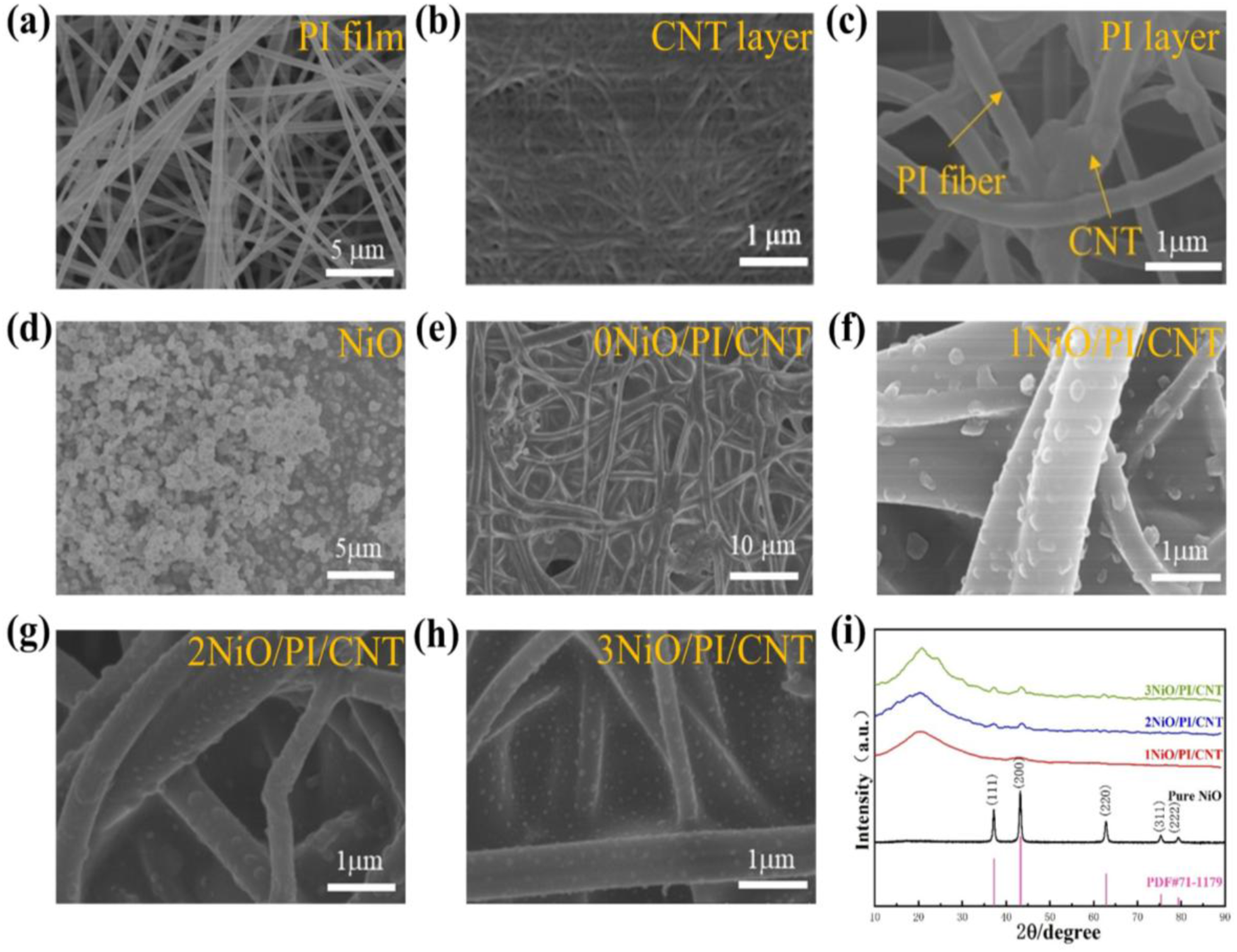
Influence of NiO nanoparticles loading on electrical conductivity and magnetic behavior of NiO/PI/CNT films was analyzed. Figure 3 a revealed that NiO nanoparticles enhanced the conductivity of composite films, increasing with NiO content. All the NiO/PI/CNT films exhibited higher conductivity than the 0NiO/PI/CNT film. The improvement resulted from the introduction of NiO nanoparticles, which provided electron transport pathways. The magnetic hysteresis loops for the NiO/PI/CNT films were presented in Figure 3(b). The 0NiO/PI/CNT exhibited negligible magnetism, while saturation magnetization of the other NiO/PI/CNT films showed an increase with rising NiO content. As a result, the 1NiO/PI/CNT, 2NiO/PI/CNT, and 3NiO/PI/CNT films exhibited strong magnetic attraction. Moreover, all the NiO/PI/CNT films exhibited magnetic properties due to (S-shaped hysteresis loops), which contributed to obtaining superior EMWs absorption performance, particularly at high frequencies.
37
Figure 3(c–f) were the mechanical properties of PI and NiO/PI/CNT films. The elongation at break values of PI and 0NiO/PI/CNT, 1NiO/PI/CNT, 2NiO/PI/CNT, and 3NiO/PI/CNT films were 42.8 ± 5.1%, 5.7 ± 0.6%, 6.4 ± 0.7%, 6.1 ± 0.8% and 5.8 ± 0.6%, respectively. The tensile strength values of the films were 14.5 ± 0.9 MPa, 47.2 ± 1.8 MPa, 45.1 ± 1.7 MPa, 43.2 ± 1.8 MPa, and 40.9 ± 2.1 MPa, respectively. Moreover, the Young’s modulus values of the films were 33.7 ± 4.1 MPa, 818.9 ± 25.2 MPa, 701.7 ± 27.6 MPa, 718.7 ± 27.9 MPa and 705.5 ± 28.5 MPa, respectively. Compared with 0NiO/PI/CNT film, the mechanical properties of NiO/PI/CNT films were reduced. The main reason was that the non-reactive mixing of NiO nanoparticles with the PEI solution. As the NiO nanoparticles increased, it was equivalent to introducing structural defects between the fibers and PEI solution. The structural defects diminished the mechanical properties of the composite films. However, the mechanical properties of NiO/PI/CNT composite films did not decrease significantly. It indicated that the addition of NiO nanoparticles did not seriously degrade the mechanical properties of NiO/PI/CNT composite films. This was because the agglomeration of NiO nanoparticles in PEI solution was not serious. (a) Electrical conductivity and (b) magnetic hysteresis loop of NiO/PI/CNT composite films, (c) Stress-strain curves, (d) Elongation, (e) Tensile strength and (f) Young’s modulus of PI and NiO/PI/CNT films.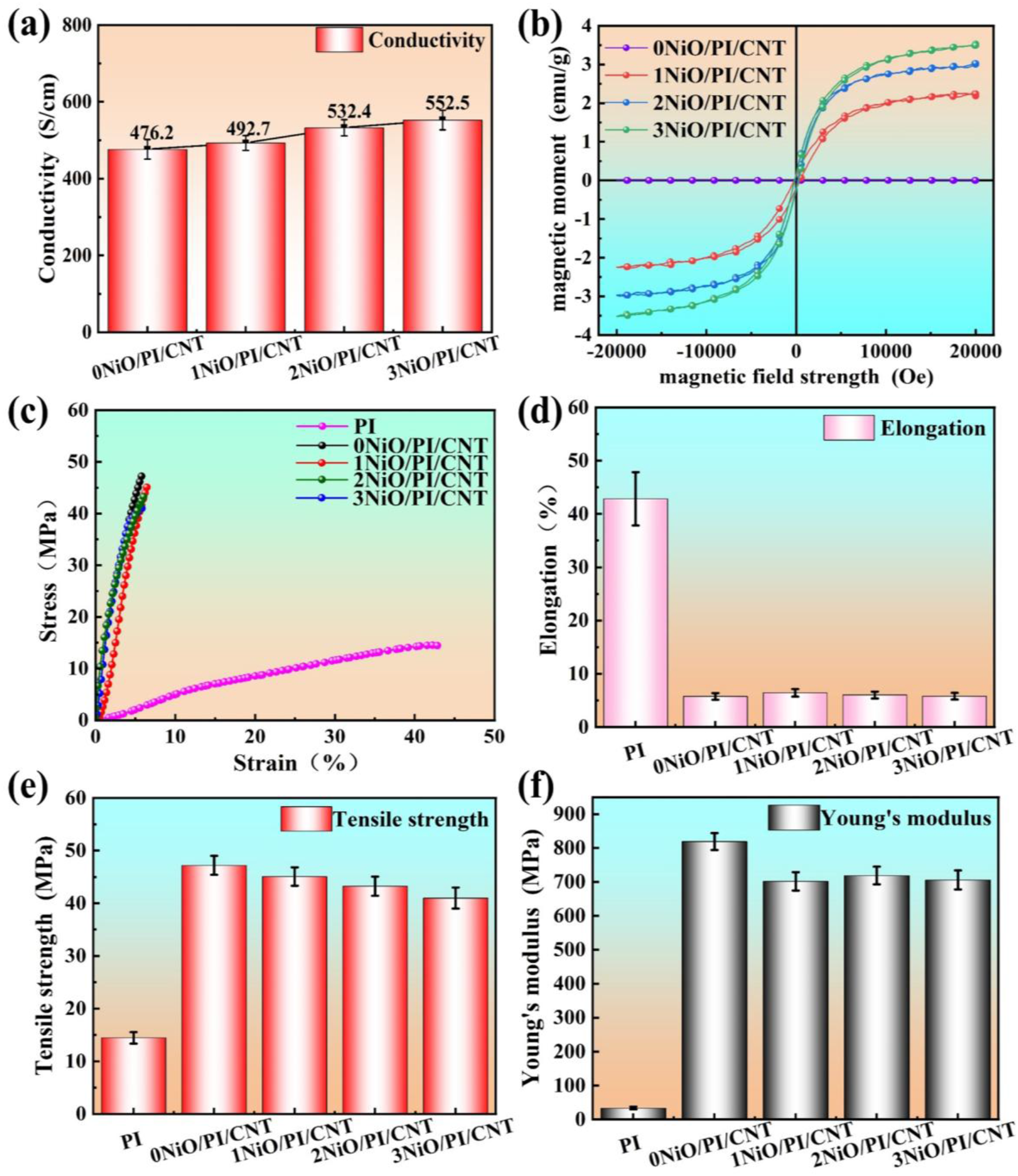
Figure 4 displayed EMI SE of the NiO/PI/CNT films in the X-band. As could be seen from Figure 4(a–c), the SEA, SER and SET values of the NiO/PI/CNT films showed an initial increase followed by a decrease with NiO nanoparticle content increasing. As displayed in Figure 4(d), the maximum SEA, the maximum SER and the maximum SET values of 2NiO/PI/CNT film were 70.97 dB, 23.76 dB and 89.96 dB, respectively. The reason was that the conductive and magnetic losses of the films increased with the NiO content increasing. The 2NiO/PI/CNT film struck a balance between electrical conductivity and magnetic property, resulting in suitable impedance matching and improving absorption loss. However, excessive NiO content could lead to impedance mismatch of the composite film, which could degrade the EMI shielding capability. Therefore, 3NiO/PI/CNT exhibited a lower SET than 2NiO/PI/CNT. The minimum reflection loss could enhance penetration of EMWs, and the maximum absorption loss strengthened dissipation ability of the composite. Thus, the 2NiO/PI/CNT film reached the highest SET value of 89.96 dB, with absorption loss playing a dominant role. It could effectively avoid secondary pollution caused by the reflection of EMWs. For the 2NiO/PI/CNT film, the highest SSE/t value of 9611.11 dB·cm2/g was obtained at a thickness of 0.18 mm and a density of 0.52 g/cm3. (a) SEA, (b) SER, (c) SET, (d) maximum SET, SER, and SEA values, (e) SSE/t of NiO/PI/CNT films and (f) density of PI, 3 mg PI/CNT and NiO/PI/CNT films.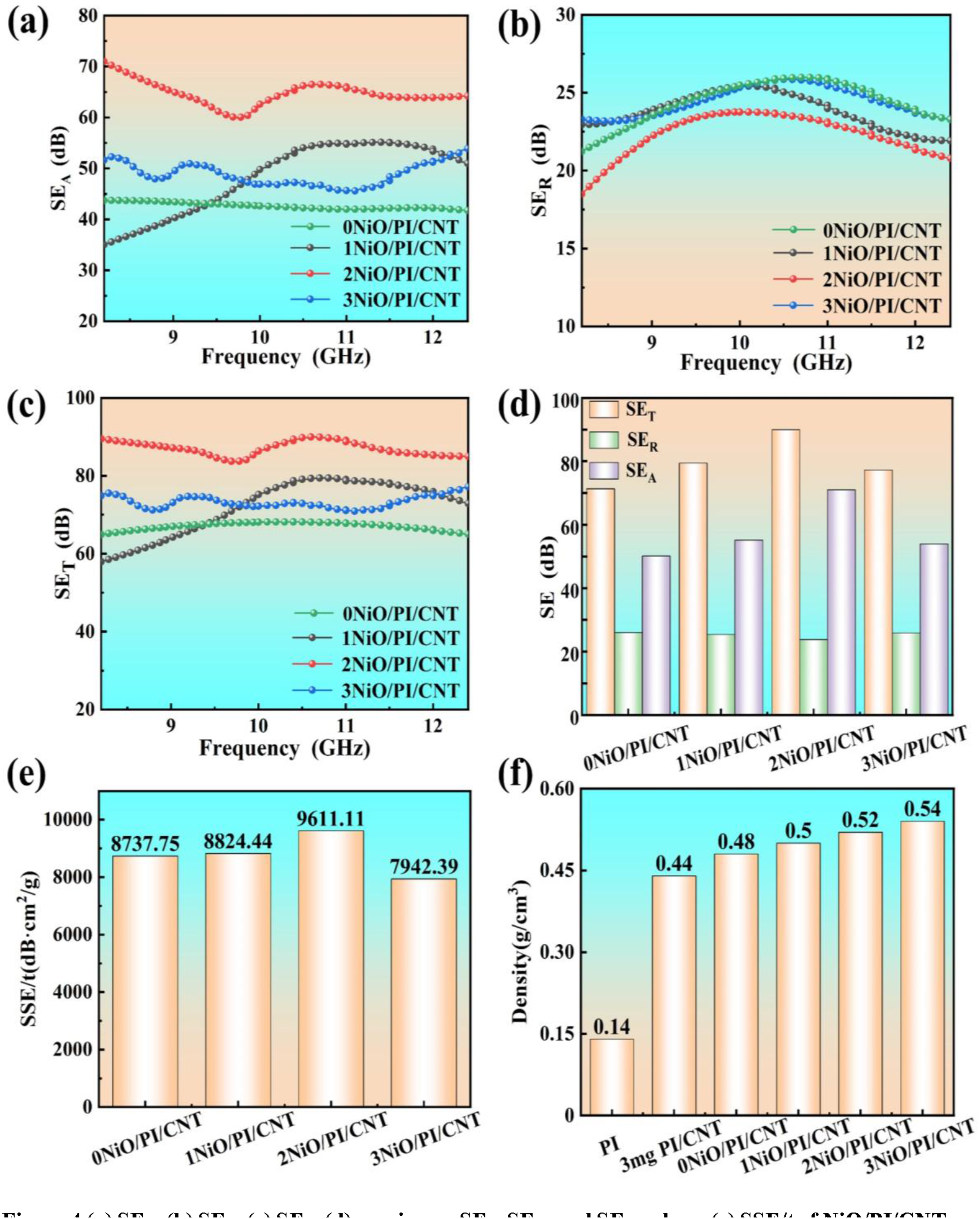
SE/t values of NiO/PI/CNT films for EMI shielding.
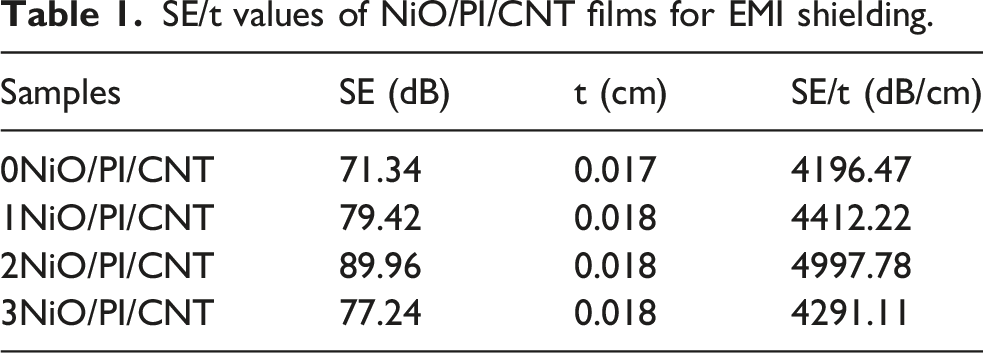
Figure 5 illustrates the EMI shielding mechanism for the 2NiO/PI/CNT film, which mainly involves the following two aspects. First, as EMWs penetrate into the absorption layer of the composite film, the EMW energy is dissipated primarily through magnetic loss by NiO nanoparticles. Meanwhile, PI fibers, CNTs, and magnetic nanoparticles different in conductivity, which create numerous heterogeneous surfaces in absorption layer. The surfaces can generate interface polarization loss, which significantly enhance the SEA of the 2NiO/PI/CNT film. Second, high electrical conductivity of the CNT network causes a part of EMWs reflection back toward the absorption layer as EMWs reach the CNT reflective layer. The reflected EMWs undergo further attenuation. Electromagnetic shielding mechanism of the NiO/PI/CNT composite films.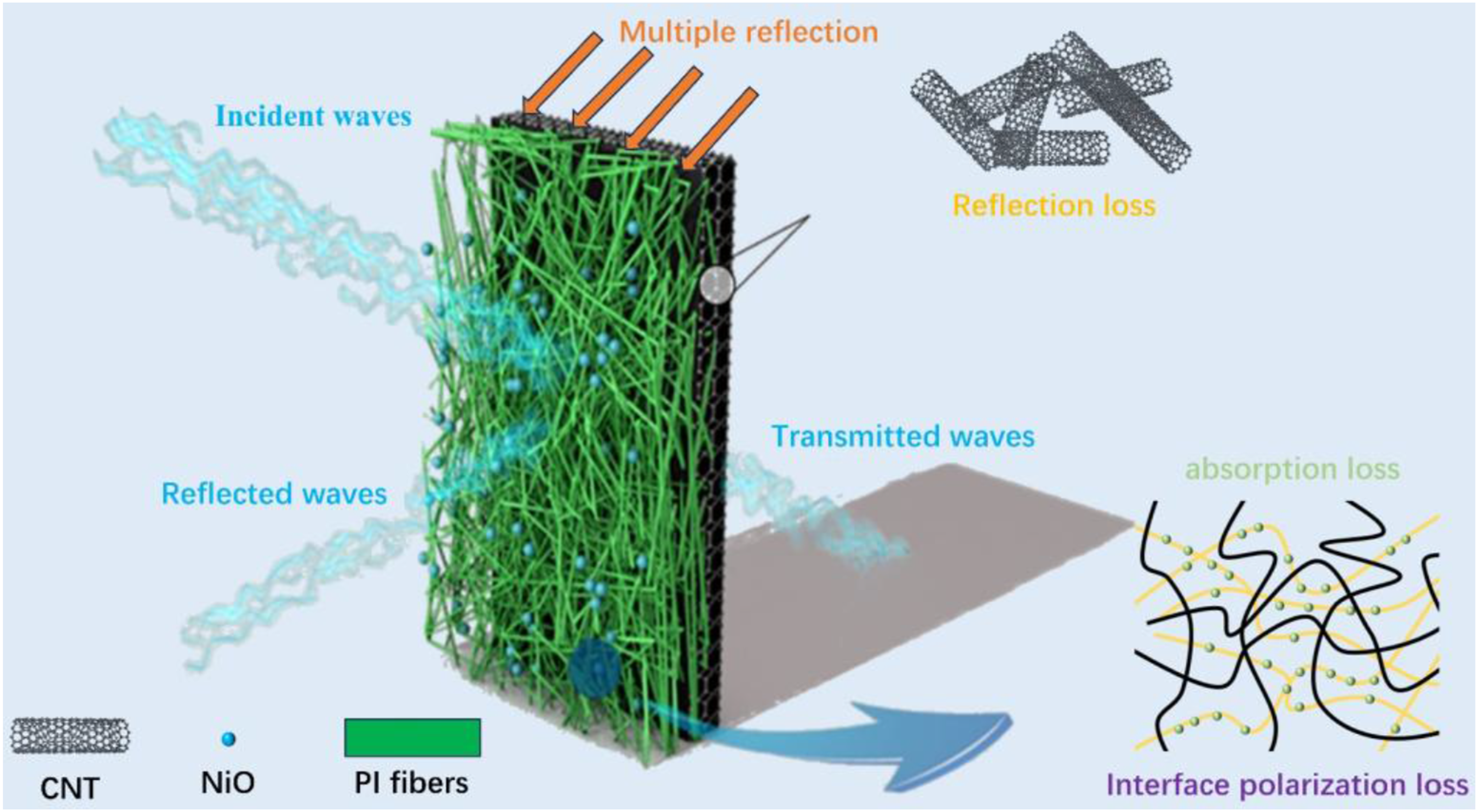
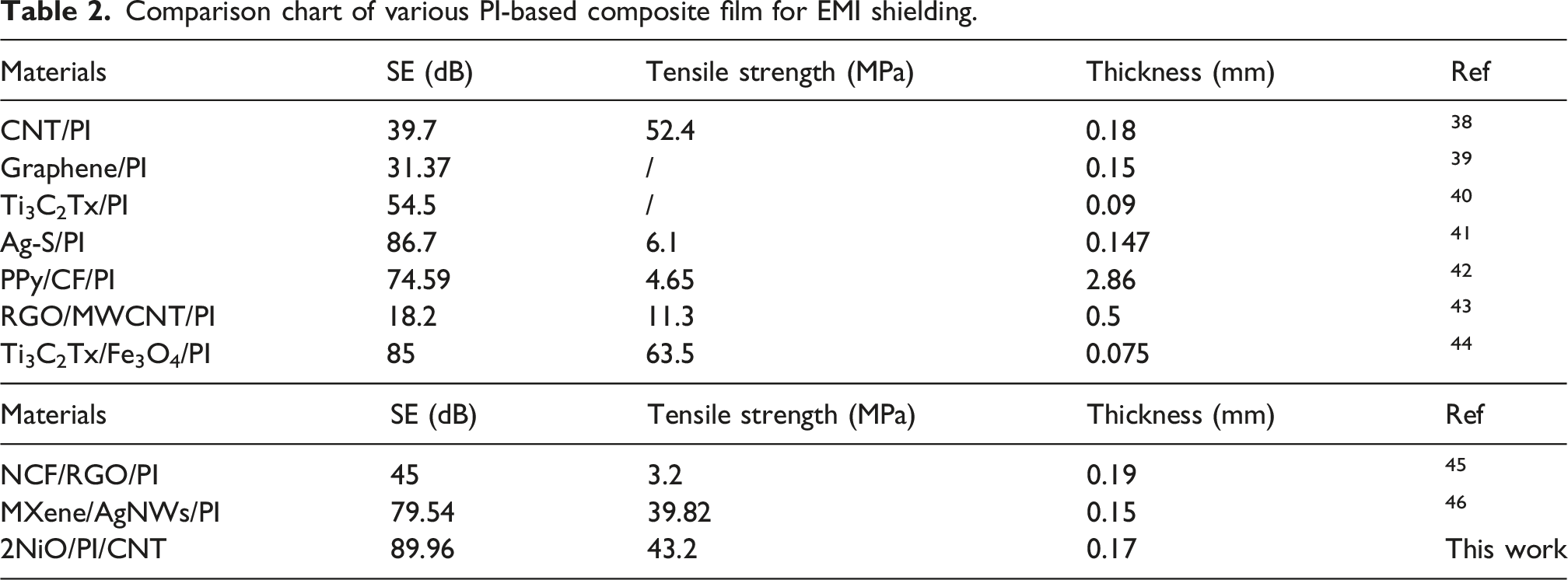
Comparison chart of various PI-based composite film for EMI shielding.
Conclusions
In this work, PI electrospun films were used as the matrix, and conductive and magnetic fillers were added via self-assembly and coating techniques to fabricate NiO/PI/CNT films with excellent mechanical and EMI shielding properties. A higher tensile strength of 43.2 MPa was achieved for the 2NiO/PI/CNT film compared to the PI film. The 2NiO/PI/CNT film exhibited an SET of 89.96 dB within the X-band. It can be concluded that the magnetic nanoparticle/polymer absorption layer and the CNT reflection layer of the composite film achieve a synergistic shielding effect of reflection-absorption loss, which can improve the EMI shielding performance. Owing to its outstanding mechanical and EMI shielding properties, the 2NiO/PI/CNT film shows great potential for EMI shielding applications.
Footnotes

CRediT statement
Funding
The authors disclosed receipt of the following financial support for the research, authorship, and/or publication of this article: This work was supported by the Financial assistance for this work was provided by the Aeronautical Science Foundation of China (2024Z056077001), China Postdoctoral Science Foundation (Grant No.2021M701019), Heilongjiang Postdoctoral Financial Assistance (Grant No. LBH-Z20069), and Fundamental Research Foundation for Universities of Heilongjiang Province (Grant No.2022-KYYWF-0152).
Declaration of conflicting interests
The authors declared no potential conflicts of interest with respect to the research, authorship, and/or publication of this article.
Data Availability Statement
The data that support the findings of this study are available from the corresponding author upon reasonable request.