







Abstract
Three-dimensional nonlinear elastic equations based on green strain tensor in the spherical coordinate system are developed to calculate the stress components of a thick FG-CNT spherical sector with a shape memory polymer (SMP) matrix subjected to blast loads. Implicit Euler’s-, Newton’s iteration-, and differential quadrature-methods are applied to solve the equations. The results of linear and nonlinear solutions are compared to those obtained by FEM. Moreover, the effects of mechanical properties of SMP, the angle of arrangement of FG-CNT fibers in the matrix, the environmental temperature, and the geometrical dimensions of shell on stress components, displacement, and velocity were presented.
Introduction
The development of highly intelligent materials has led to the production of nanostructures with shape memory matrix, and therefore, a more detailed and comprehensive study on these materials is really necessary. The debate and category of explosion is a very challenging issue and there is little research in this field in scientific circles. Now, when the discussion of explosions on nanocarbon composite structures with matrix made of SMP is raised when it is subjected to the blast loads, a challenging discussion, and a higher category than other scientific issues is inbred.
A preliminary definition of nanocarbon is given as a hallowed one-dimensional carbon tube with a nanometer range. The use of shape memory materials, especially polymer ones, along with nanocarbons is a useful idea in the aerospace, automotive, marine, and nuclear industries. Now, the theoretical knowledge and the use of its optimal model, including the correct geometric dimensions with the minimum acceptable material consumption, the establishment of the correct arrangement of the ply-angle of nanocarbons in the resin, as well as the selection of the appropriate working temperature is an unavoidable necessity that is going to be investigated in the current research.
Some investigations were carried out in the field of FG-CNT. Kumar et al. 1 studied buckling analysis of a plate with FG-CNT by using FEM. Yadav et al. 2 studied fracture analysis of CNT reinforced subjected to thermal and mechanical loads. In this investigation, the effects of geometrical dimensions as well as the mechanical properties of FG-CNT on fracture behavior were studied. Anh et al. 3 investigated the effect of the hygrothermal environment on the stress distribution of a sandwich plate with FG-CNT core. In this paper, higher-order shear deformation theory was used and the effects of the electrical and magnetic potential were considered. Sobhani et al. 4 studied vibration analysis of a sandwich conical cylindrical shell. In this investigation, Donnell’s approach was used to obtain the equations of motion. Raissi 5 studied the stress analysis of a spherical sandwich sector with piezoelectric face sheets and FG-CNT core subjected to blast loads, theoretically. In this study, linear strain-displacement assumption, higher-order shear deformation theory for shells, Hamilton’s principle, and Maxwell’s equations were used to derive the equations of motion. Zhu et al. 6 studied the vibration analysis of a nano-scale sandwich plate with FG-CNT face sheets. In this study, higher-order shear deformation theory for plates, nonlinear strain-displacement assumption, Galerkin, and Newton methods were used to calculate the dynamic response of the plate. Shakir and Talha7 7 studied the effect of mechanical properties of FG-CNT on dynamic response of a spherical panel subjected to blast loads, theoretically. In this investigation, Halpin–Tsai model, higher-order shear deformation theory for shells and the finite element method were used. Shao et al. 8 studied free vibration analysis of a FG-CNT plate. In this investigation, first-order shear deformation theory as well as Karhunen Loeve theory were used. Dastjerdi and Behdinan 9 studied free vibration analysis of a sandwich plate with FG-CNT and piezoelectric layers. In this study, third-order shear deformation theory and Eshelby–Mori–Tanaka model were used.
Shape memory polymers should be considered as super sensitive and advanced materials in the world of engineering. In these materials, the mechanical properties are defined as an exponential function in terms of the glass transition temperature and potentially the ambient temperature, so a surprising and strange behavior is observed in these materials when temperature is applied. The viscoelastic behavior of these materials, along with the category of memory behavior, leads to the creation of time and temperature-dependent behavior in these materials and creates excitement for the author to expand and investigate the theoretical problem.
There is no theoretical research on explosions in the field of shape memory polymer materials. There are some investigations in the fields of stress distribution and vibration investigation in these materials. Raissi 10 developed an exact solution for dynamic response of shape memory polymer plate subjected to the initial condition. In this study, first-order shear deformation theory, Hamilton’s principle, and Runge–Kutta method were used to calculate the effects of mechanical properties on the deformation of the plate. Liu and Yang 11 studied finite element analysis of a shape memory polymer mast subjected to mechanical and thermal loads. Xu et al. 12 studied the vibration analysis of a macro fiber of SMP in the plate. In this investigation, Kirchhoff plate theory, Hamilton’s principle, and classical proportional integral derivative procedure were used. Sharafi and Li 13 studied the dynamic behavior of a shape memory polymer fiber. In this paper, the effect of SMP damping on dynamic response of the fiber was investigated at several different ambient temperatures. Brown et al. 14 studied dynamic analysis of a shape memory polymer beam with a rapid large and reversible deformation. In this paper, the parametric approach was introduced to show the effects of material properties as well as geometric dimensions on natural frequencies.
Some investigations were carried out in the field of blast phenomena in the form of theoretical, numerical, and experimental research. Ram et al. 15 studied dynamic behavior of a composite laminate with fiber-reinforced polypropylene subjected to shock wave. In this study, the energy absorbing and failure of composite laminate were derived. Amnieh et al. 16 developed experimental tests and theoretical solutions to determine dynamic behavior of a non-homogeneous concrete block with SiO2 nanoparticles subjected to blast loads. In this study, Mindlin theory, Hamilton’s principle, Mori–Tanaka model, and DQM were used. Yahya et al. 17 studied the blast resistance of a carbon-epoxy composite laminate. In this investigation, the fracture of composite laminate was simulated and compared to that obtained by experimental tests. Zhang et al. 18 studied dynamic behavior of a sandwich circular tube with a foam core subjected to blast loads. In this investigation, both elastic and plastic deflections were derived and compared to those obtained by experimental tests. Yen et al. 19 studied the dynamic behavior of a composite laminate with carbon fibers subjected to blast loads. In this study LS-DYNA software was used and by using arbitrary Lagrangian–Eulerian method, the failure of the laminate was simulated. Maazoun et al. 20 introduced a numerical investigation to study the plastic damage behavior of a carbon fiber reinforced polymer subjected to blast loads. In this study, the cohesive bond interaction stresses between composite layers were derived. Gao et al. 21 developed both numerical and analytical investigations to calculate the stress distribution in a multi-cell steel-concrete-steel sandwich panel subjected to blast loads. Zhao et al. 22 studied the damage mode and dynamic response of a composite plate created with concrete and steel, numerically and experimentally. In this regard, LS-DYNA software was used and the effects of the plate thickness as well as explosive charge on displacement of the plate were calculated. Gabriel et al. 23 studied dynamic behavior of fiber-reinforced polymers subjected to blast load. In this investigation, jute and flax fiber reinforced polymer samples were performed and experimental blast tests were carried out. Pichandi et al. 24 developed a study to calculate the damage behavior of fibrous and composite materials used in civil building subjected to blast load, numerically. Shi et al. 25 studied the nonlinear dynamic analysis of a sandwich wing of an aircraft with composite face sheets and functionally graded graphene origami core subjected to blast loads. In this regard, higher-order shear deformation theory, Hamilton’s principle, von-Karman theory and mesh-free method were used to derive and solve equations. Hajmohammad et al. 26 developed a visco-sinusoidal theory to calculate the dynamic behavior of a sandwich plate with CNT face sheets and honeycomb core subjected to blast loads. In this study, by using Hamilton’s principle, sinusoidal shear deformation theory, Kelvin–Voigt theory, and differential cubature method, the equations of motion were derived and solved. Raissi 27 studied stress analysis of a cylindrical sector sandwich shell with FG-CNT core and piezoelectric face sheets subjected to blast loads, theoretically. In this study, Hamilton’s principle, Maxwell’s static equations, layerwise theory, and linear strain-displacement assumption were used. Mostafa et al. 28 studied dynamic analysis of a polyurethane plate subjected to blast load. In this study, they used experimental tests to determine deflection as well as failure of the plate.
In the current study, for the first time in the world, the study of the blast phenomenon in FG-CNT material with SMP matrix is presented in the form of a theoretical simulation based on a 3D-elasticity method that has very good agreement with the numerical solution. In Refs. 5 and 27, Raissi developed the theoretical solution based on layerwise theory (LT) to study the blast phenomenon in cylindrical and spherical shells with FGM and piezoelectric materials, and it was observed that the difference between the theoretical and numerical (obtained by FEM) results had a difference of 10%. According to the author’s knowledge to reduce computational error, the method based on a three-dimensional solution based on elasticity theory as well as the green strain tensor in the spherical coordinate system is more accurate than that based on LT. Therefore, in the current study, the research procedure based on the three-dimensional elasticity method is developed, expanded, and addressed to reduce the errors of the analysis.
According to the research sources that have been presented so far in various scientific circles, it was observed that the issue of explosion in FG-CNT materials is very low. This lack of scientific resources about SMP under explosion can be seen, dramatically. It can be said definitely that no scientific research has been done in the field of SMP under blast loads.
The purpose of the present research is to investigate the category of explosion in a thick spherical sector. Therefore, based on three-dimensional dynamic equations in spherical coordinates and also nonlinear strain-displacement relationships in spherical coordinates, three nonlinear differential equations are obtained. In order to solve the obtained nonlinear equations, the three-dimensional differential quadrature method (DQM) was used in spherical coordinates. Euler’s implicit method was also used to solve the equations in its time function parts. Finally, Newton’s iteration method is used to solve the set of nonlinear equations.
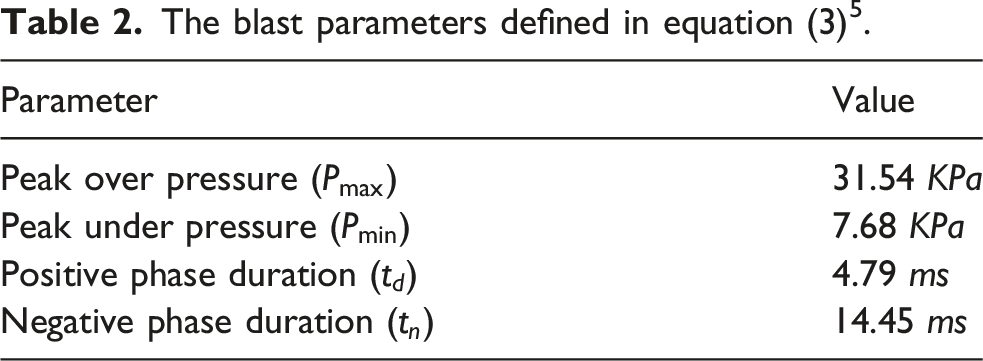
The modified Friedlander equation was used to simulate the explosion function. In this model, two positive and negative explosion waves are considered. In addition, the mechanical properties of SMP have been taken into account in terms of temperature and time, so that the effects of two categories of viscoelasticity and temperature can be observed together. In the simulation of FG-CNT, related relationships are used to define its mechanical characteristics.
The innovation of the current research is in the fourth category. First, as mentioned, no research has been done in the field of explosion in SMP materials, so the topic of the current study is completely new.
Secondly, based on the nonlinear strain-displacement relationships in the spherical coordinate system, the strain components of the sector can be written in terms of displacement and temperature. According to the nature of FG-CNT as well as SMP, the strain components in terms of displacement, temperature and time will be derived, which have not been introduced and studied so far.
The third innovation of the current study is the use of the three-dimensional DQM in the spherical coordinate system and Euler’s implicit method in solving nonlinear equations obtained by three-dimensional dynamic-elasticity theory in spherical coordinate system. Solving these equations is very complicated due to the nature of viscoelasticity and time dependent of SMP as well as the unique properties of FG-CNT, and it is very difficult to converge the system of nonlinear equations. In converging the results, according to the explosion pressure distribution in which two positive and negative wave parameters are included, as well as the working temperature, choosing the appropriate amount of gridding in three directions r, φ, and θ for DQM, as well as the appropriate time increment in Euler’s method is very important.
The fourth and last innovation of the present research is the presentation of a design package based on the effects of environmental temperature, sector geometrical dimensions, SMP mechanical properties and the angle of arrangement of FG-CNT fibers in the matrix on the stress distribution, displacement, and velocity. So far, the design catalog for the thick FG-CNT spherical sector with an SMP matrix has also not been provided.
Finally, it can be observed that the present study has structural and basic differences with Refs. 5 and 27 in the following areas: • Topic selection and investigation in defining the blast problem in the FG-CNT spherical sector with SMP matrix. • Three-dimensional analytical solution based on time-dependent nonlinear strain-displacement relationships for short time period loads due to the blast category. • Using the DQ method in a time-dependent solution for nonlinear displacement equations.
It can be observed that the present investigation is completely new in problem selection, how to solve it, and presenting its results. The procedure of the current investigation is as follows: first, in order to verify the results of the nonlinear solution, its results are compared with the results of the linear solution as well as the results of the finite element method obtained by ANSYS software based on the two assumptions of high displacement and high strain theories. In the second step, the effect of environmental temperature on stress distribution, displacement, and velocity in the sector is presented, and additional explanations are provided. In the third part of the research, the effects of sector geometrical dimensions, including equatorial and meridian angle values, as well as internal and external radii on the stress distribution, displacement and velocity are investigated. In the fourth part of the research, in order to find the effect of SMP mechanical properties, the effect of these characteristics on the stress distribution, displacement, and velocity is presented.
Material and methods
Figure 1 shows a thick clamped spherical sector with FG-CNT and a shape memory polymer matrix subjected to the blast load on its bottom surface. The variation of the mechanical properties of the FG-CNT along the sector thicknesses are defined in Appendix A. The mechanical properties of FG-CNT are defined in Table 1. (a) The clamped thick FG-CNT spherical sector with a shape memory matrix subjected to blast loads on its bottom face, (b) The location of points 1 to 4 on the bottom surface of the sector, (c) The angle (γ) between FG-CNT fibers and the equatorial curve in the sector, (d) DQM mesh grids in spherical coordinate system.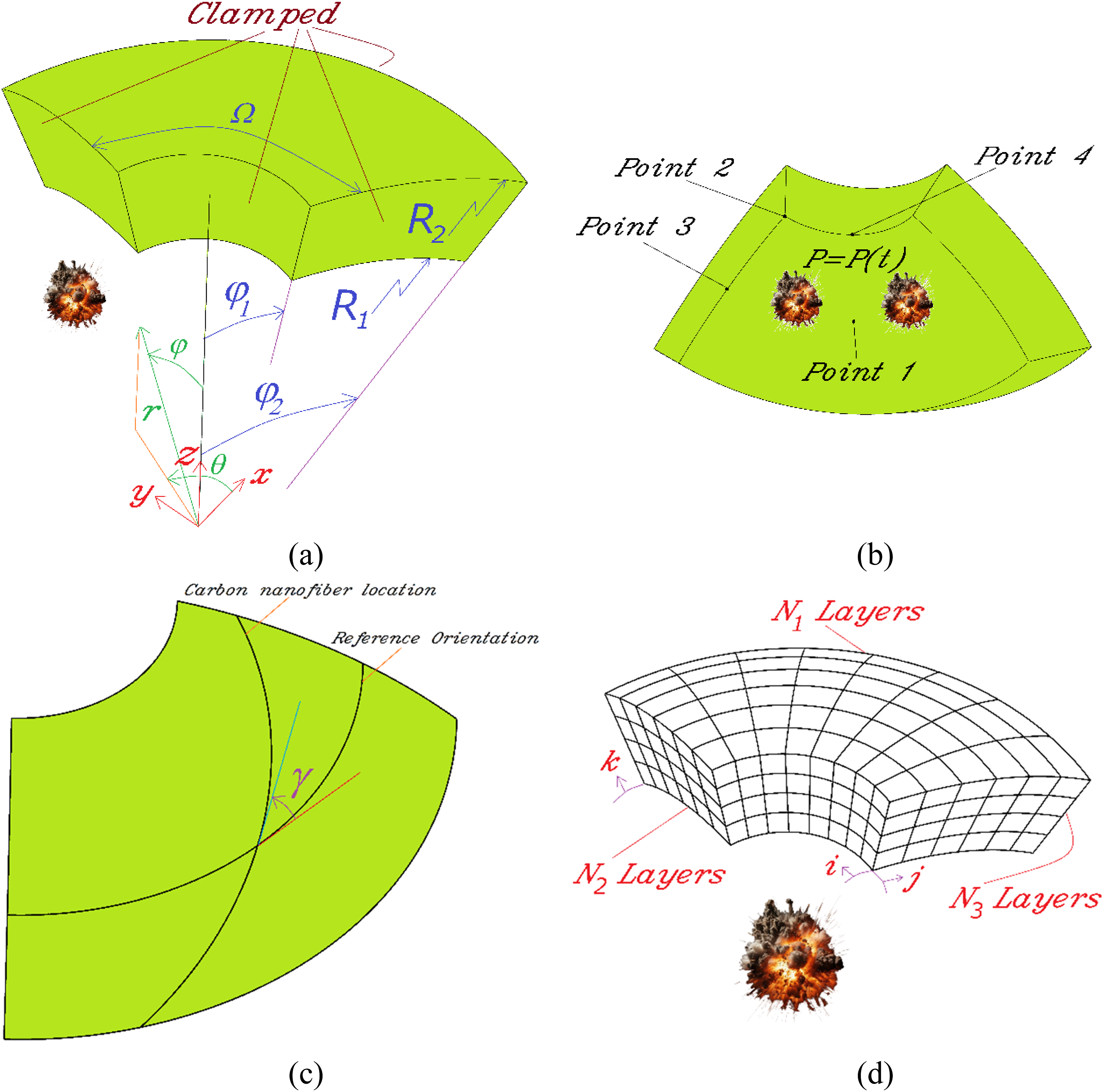
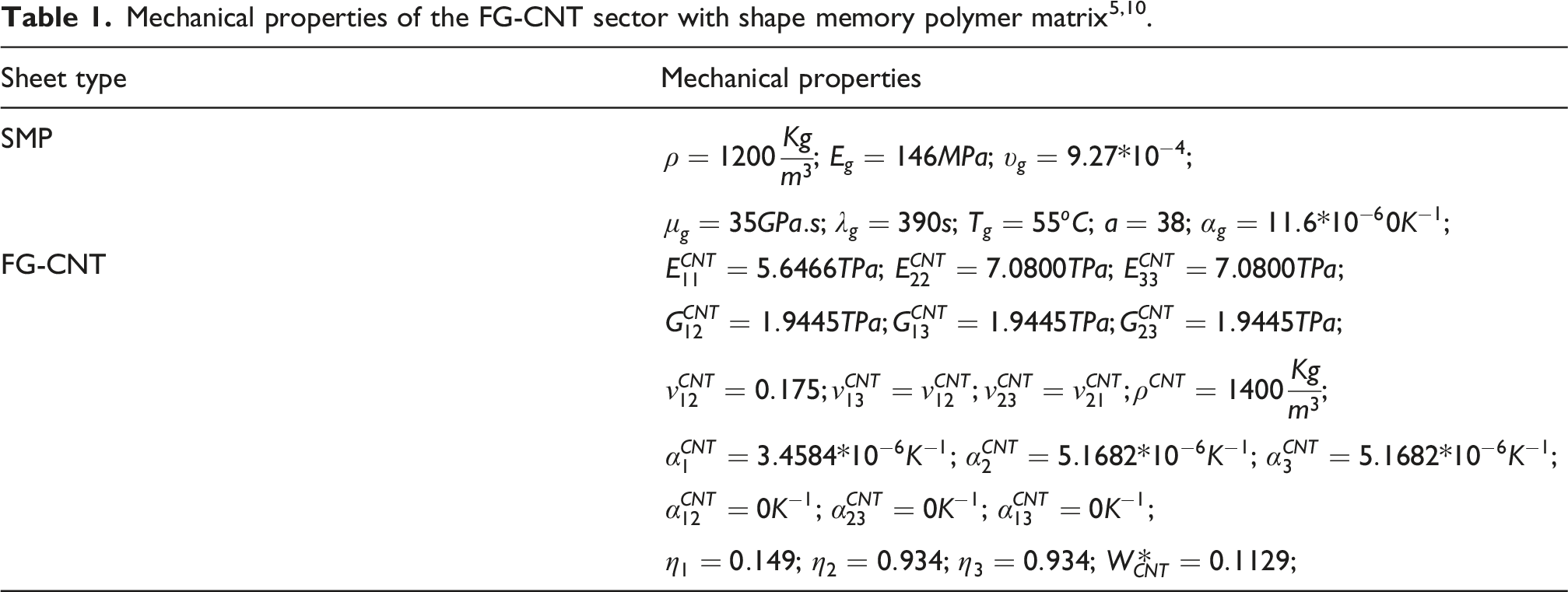
Equation (1) shows the variation of the stress and strain components of the SMP based on the linear viscoelastic model. It is assumed that there is no creep effect. Moreover, the duration of the explosion is so short that the SMP does not have the opportunity to behave nonlinearly in terms of viscosity.




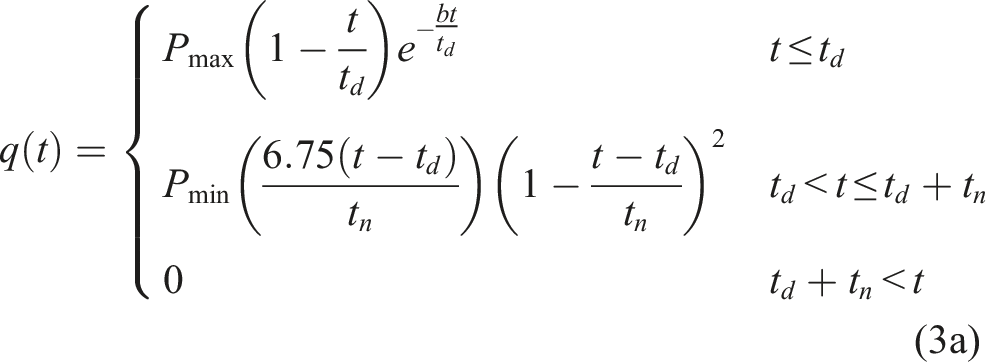

The blast parameters defined in equation (3) 5 .
According to Figure 1, the displacement components u
r
, u
φ
, and u
θ
at each point of the sector are defined along r, φ, and θ directions, respectively. Based on the nonlinear elasticity and Lagrangian strain theory, the strain components in the spherical sector can be written in terms of displacement and temperature variation as shown in equation (4). All relations presented in equation (4), were proved in Appendix B. In these equations, the index 
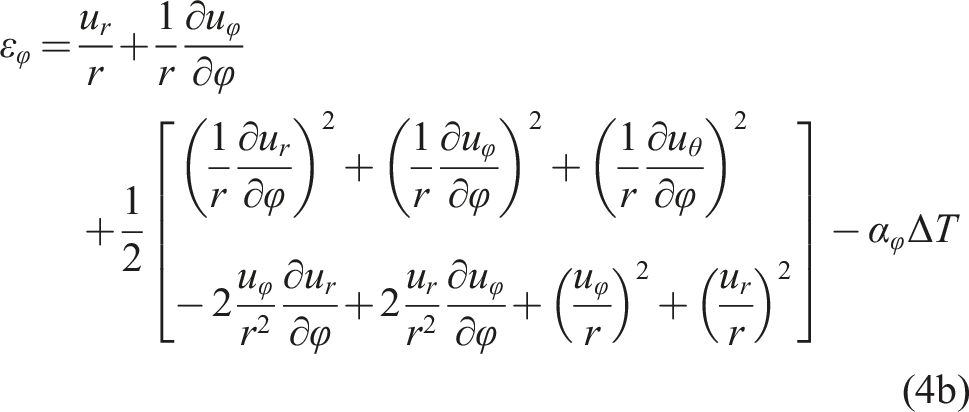
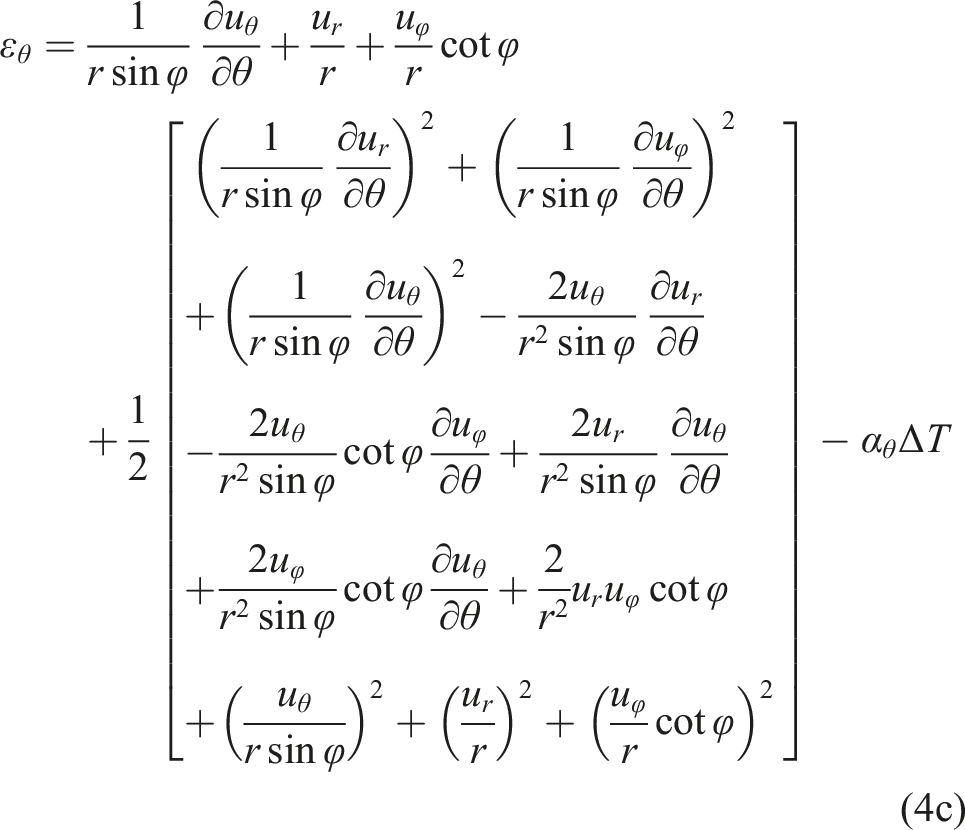
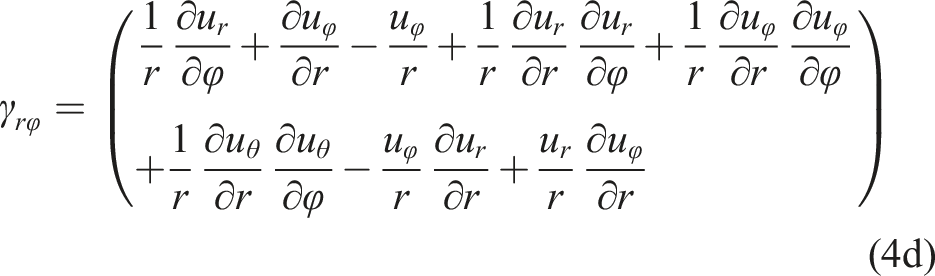
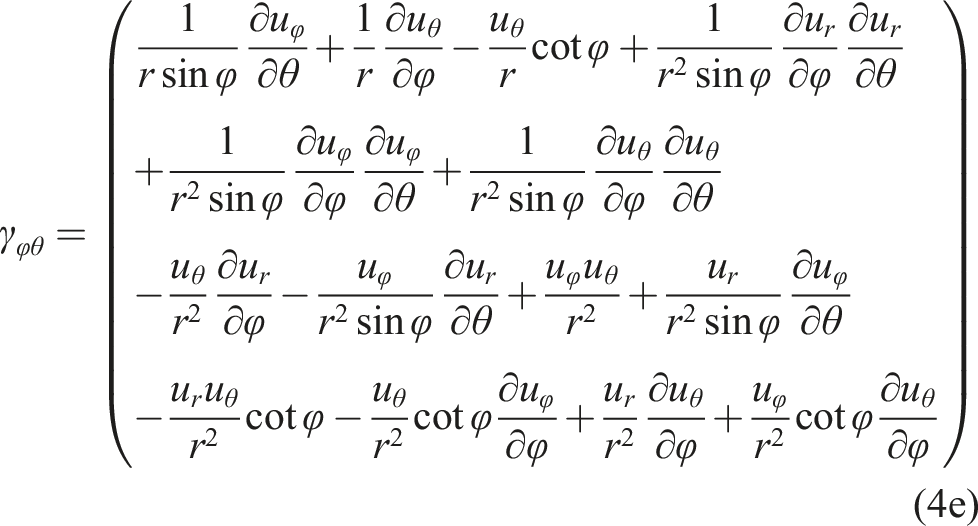
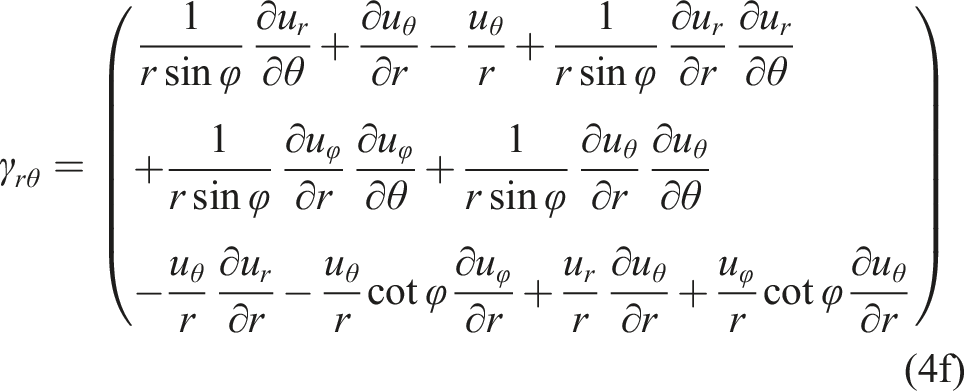
Based on Hooke’s principle, the stress-strain relation in the sector can be written as equation (5). The values of 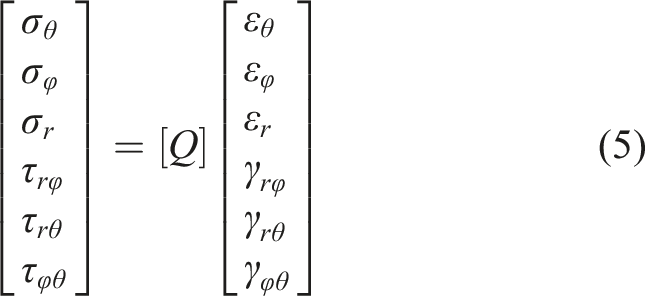
The equations of motion of the sector can be written as shown in equation (6) based on three-dimensional elasticity theory in the spherical coordinate system. In these equations, ρ is the density of the sector. By substituting equations (4) and (5) into equation (6), the equations of motion in terms of u
r
, u
φ
, and u
θ
can be derived as shown in Appendix D.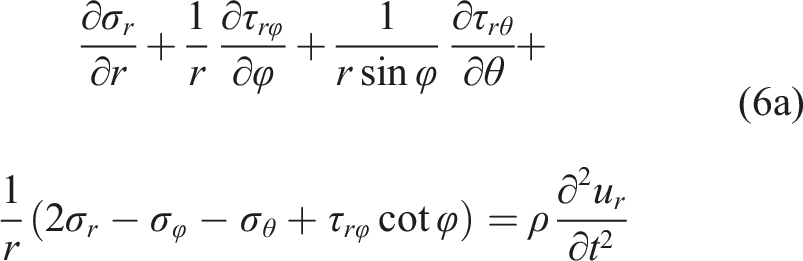
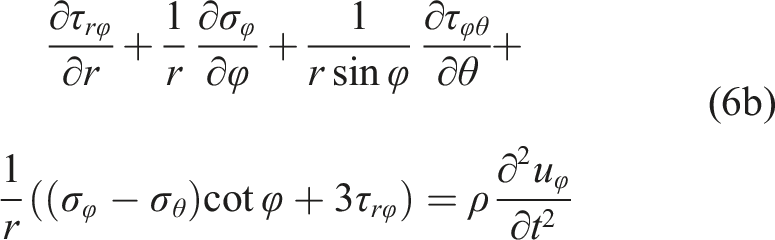

According to the definition of nonlinear relationships for strain components in terms of displacement, the relationship of stress in terms of displacement is also nonlinear. Therefore, equation (1), which expresses the strain rate of SMP, is nonlinear in terms of displacement. In the mentioned relation (equation (1)), only the assumption of linearity of viscosity is taken into account.
In order to solve the time-dependent solution, Euler’s implicit numerical method is used. According to Figure 1(d), a three-dimensional differential quadrature method in the spherical coordinate system is used to convert the category of nonlinear differential equations defined in equations (D1) to (D3) defined in Appendix D to the category of nonlinear algebraic equations. Finally, Newton’s iteration method is used to solve the set of nonlinear equations. It is noteworthy that both the initial velocity and the initial displacement of the sector at the start time of explosion (t = 0 s) are considered as zero. According to three components of displacement (u r , u θ , and u φ ) defined in the spherical coordinate system, and clamped support for the edges of the sector, three displacement equations as well as three slope equations at each edge are assumed to be zero. The expansions of differential equations in the form of DQM for the spherical coordinate system are presented in Appendix E.
Results and discussion
According to Figure 1(a), the clamped spherical sector is exposed to the blast pressure as a function of time defined in equation (3). According to Figure 1(b), in order to calculate stress distribution, displacement, and velocity, four pointes are defined in the bottom surface of the sector. The orientation of the FG-CNT fiber relative to the equatorial line of the sector is defined by the angle γ according to Figure 1(c). According to three components of displacement (u r , u θ , and u φ ) defined in the spherical coordinate system, and clamped support for the edges of the sector, three displacement equations as well as three slope equations at each edge are assumed to be zero.
In the present study, the angle γ varies from zero to ninety degrees. As shown in Figure 1(d), the mesh grids of the sector are shown and the differential quadrature method is used to solve the nonlinear equations. Therefore, the sector is divided into N 1 , N 2 , and N 3 layers in i, j, and k directions (see Figure 1(d)), respectively.
Mesh convergence analysis to derive maximum radial displacement and maximum velocity for a spherical sector with R 1 = 1 m, R 2 = 1.2 m, φ 1 = 45°, φ 2 = 60°, Ω = 60°, and T = 15°C, at point 1, for N2 = 50 and N3 = 30.

Mesh convergence analysis to derive maximum radial displacement and maximum velocity for a spherical sector with R 1 = 1 m, R 2 = 1.2 m, φ 1 = 45°, φ 2 = 60°, Ω = 60°, and T = 15°C, at point 1, for N1 = 82 and N3 = 30.

Mesh convergence analysis to derive maximum radial displacement and maximum velocity for a spherical sector with R 1 = 1 m, R 2 = 1.2 m, φ 1 = 45°, φ 2 = 60°, Ω = 60°, and T = 15°C, at point 1, for N1 = 82 and N3 = 93.

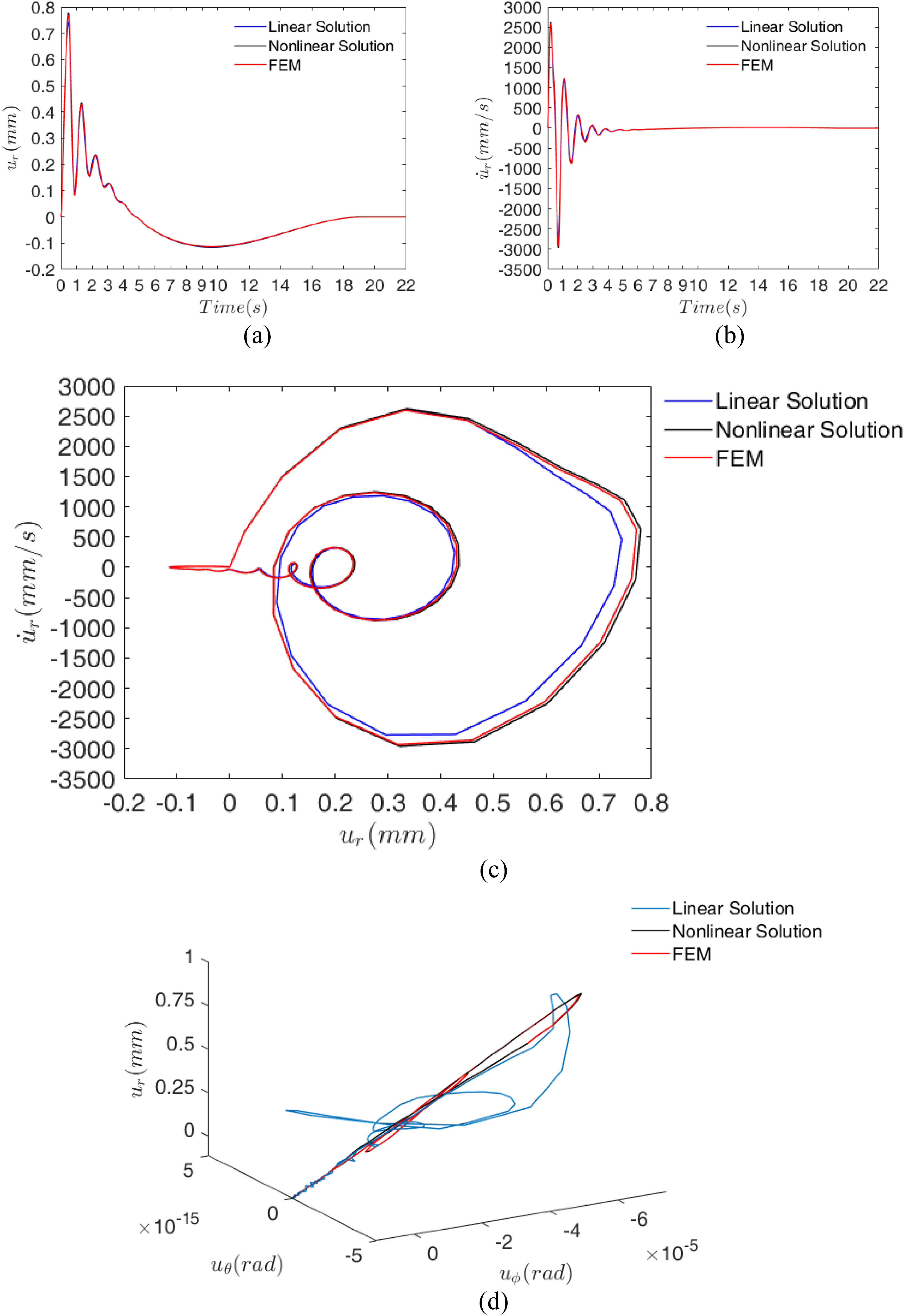
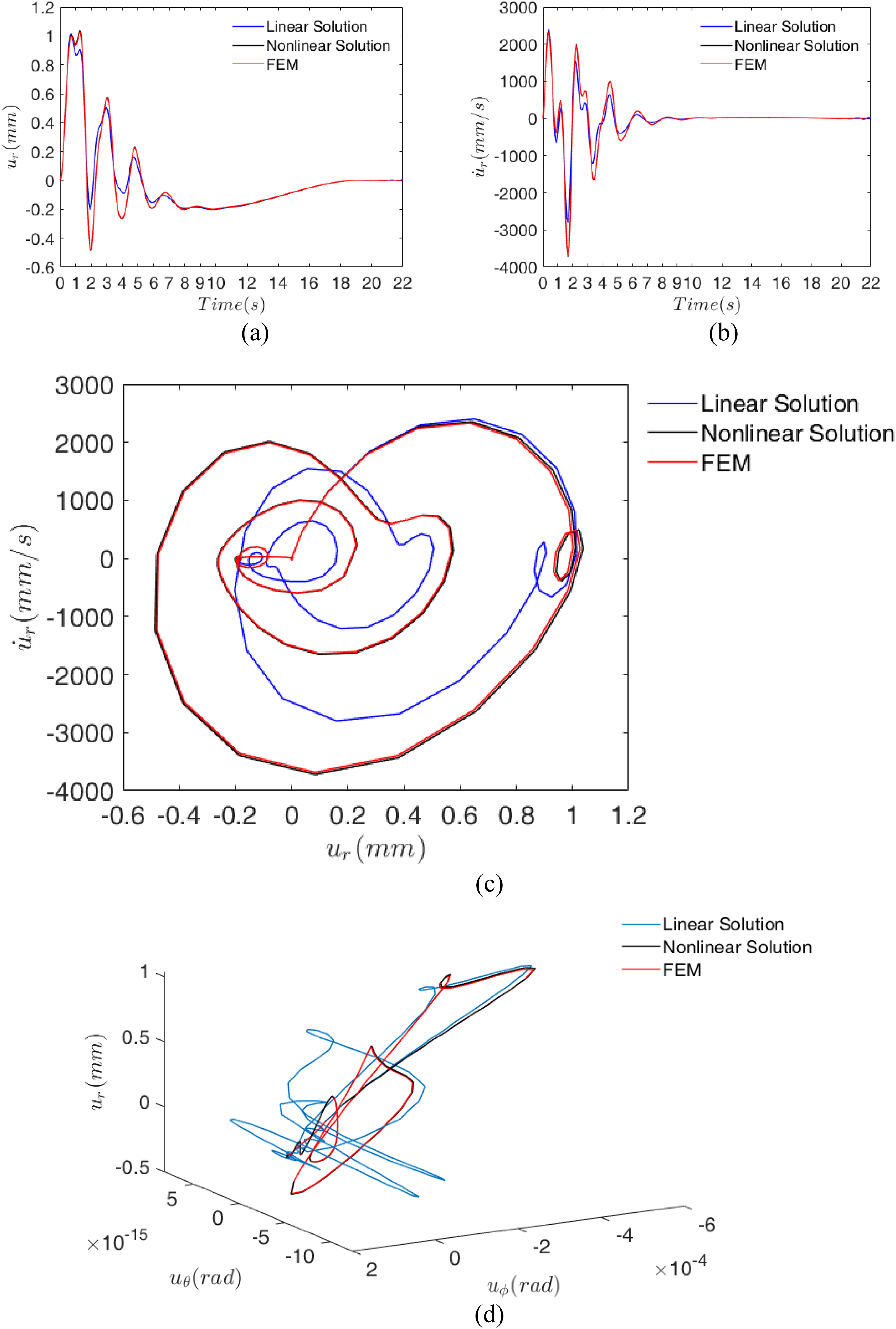
In the first step, it is necessary to confirm the results of the nonlinear solution. For this purpose, the results of the nonlinear solution are compared with those of the linear solution and then with those of FEM performed by ANSYS software. Figures 2–4 show the comparison between the radial component of displacement (u
r
), the radial component of velocity The comparison between the nonlinear, linear solutions and FEM for the variation of (a) r-component of displacement (u
r
), (b) r-component of velocity ( The comparison between the nonlinear, linear solutions and FEM for the variation of (a) r-component of displacement (u
r
), (b) r-component of velocity ( The comparison between the nonlinear, linear solutions, and FEM for the variation of (a) r-component of displacement (u
r
), (b) r-component of velocity (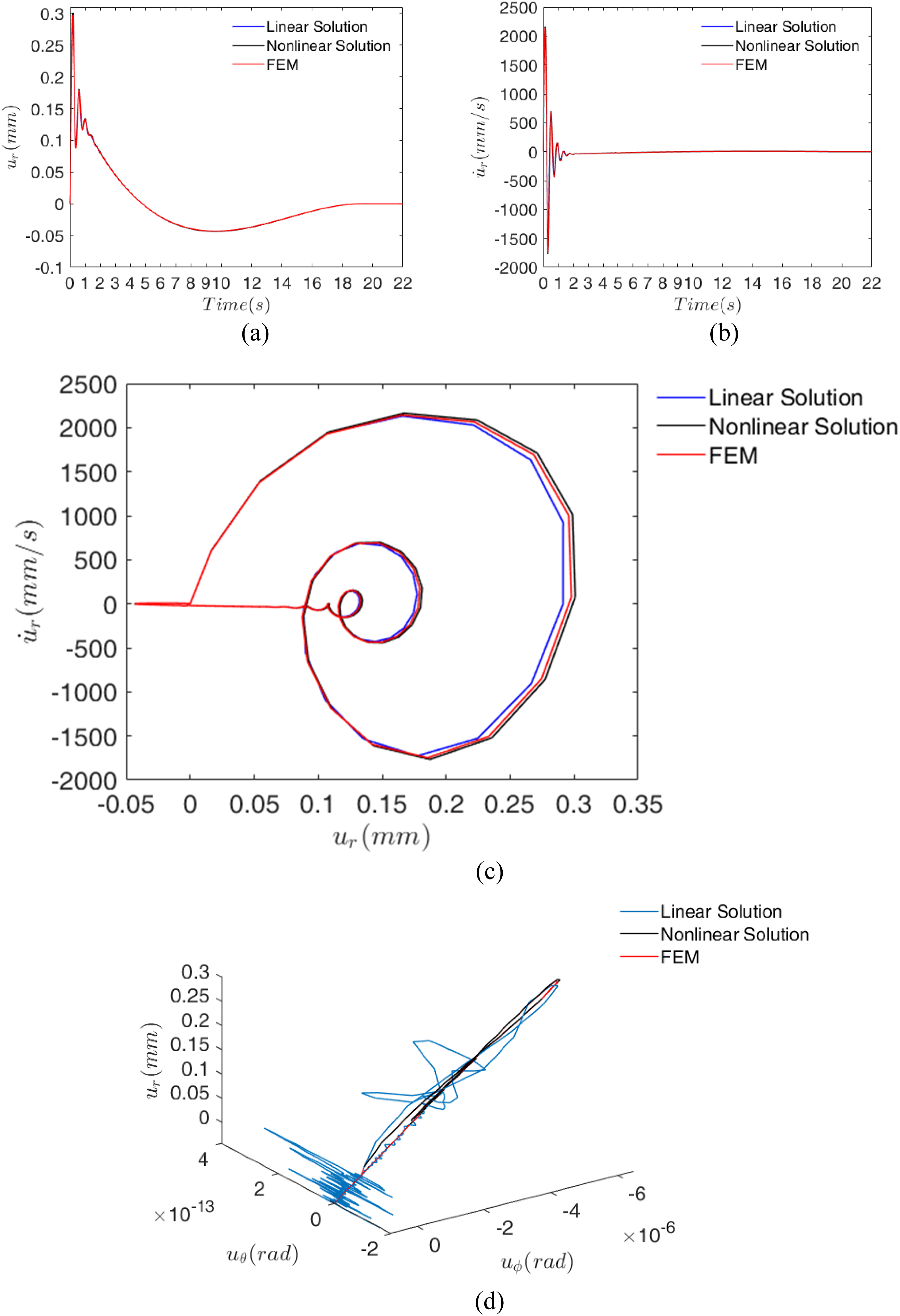
In order to simulate a finite element method, ANSYS software was used. Therefore, three-dimensional rectangular cube elements (Solid186) were used to calculate stress distribution in the sector. Solid186 is a higher-order element with twenty nodes that display quadratic displacement behavior. This element supports large deformation and large strain capabilities.
The comparison between linear and nonlinear solution results as well as FEM to determine maximum radial displacement and maximum velocity for a spherical sector with R 1 = 1 m, R 2 = 1.2 m, φ 1 = 45°, φ 2 = 60° and Ω = 60°, at point 1.
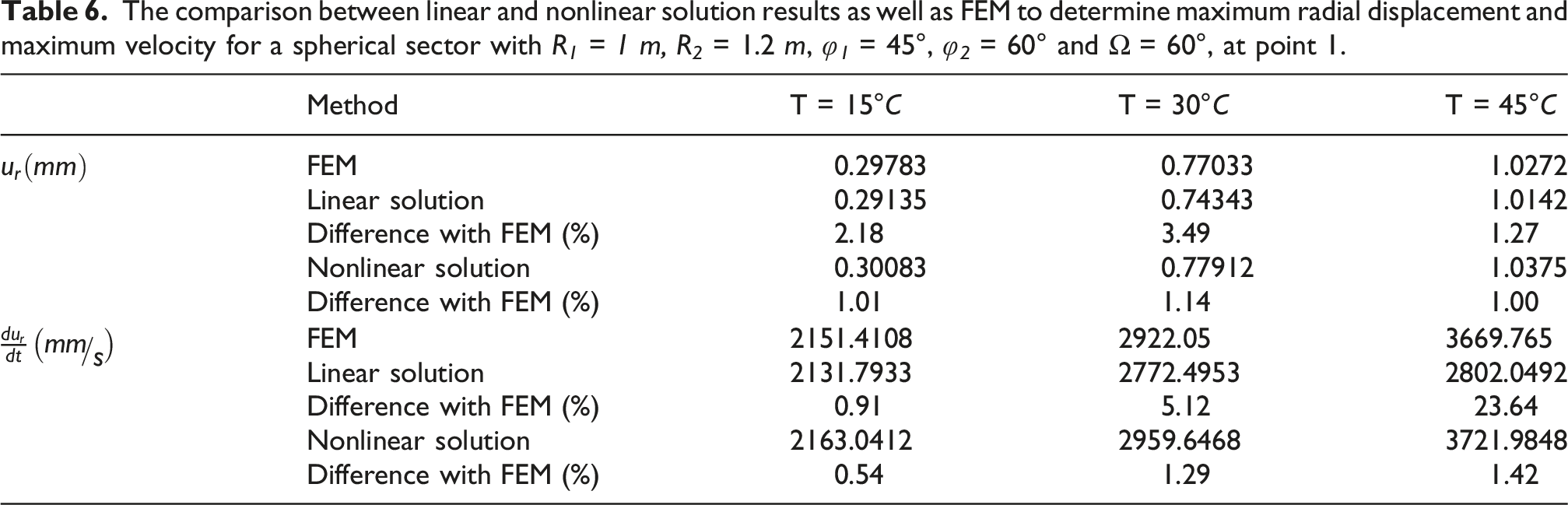
According to Figures 2–4, it can be observed that the results of nonlinear solution compared to those obtained by linear solution are very close to FEM. In addition, it is observed that the difference between the results of linear solutions and the same nonlinear ones increases strongly with increasing temperature. The reason for this is due to the high impact of the mechanical properties of SMP in terms of temperature, such that the increase in temperature leads to its softening and large deformations and strains occur during the explosion. It is noteworthy that temperature changes have little effect on the accuracy of nonlinear solution results compared to FEM. Therefore, it can be stated with complete certainty that the results of the nonlinear solution are much closer to the FEM ones compared to the linear solution.
In order to validate the solution method presented in the current study, the scientific study done in Ref. 27 is simulated according to the theoretical method introduced in the current research and the results are compared with those obtained in Ref. 27. According to Figure 5, consider a simply-supported spherical sandwich sector with FG-CNT core and piezoelectric face sheets subjected to blast load. The mechanical properties of the sector are presented in Table 7. The aim is to find the maximum stress components of the sector for three samples of FG-CNT in the form of FG-UV, FG-▽, and FG-O as well as for h/R = 0.1, h
1
/h = 0.1, R = 5 mm, and θ
0
= 30°. In Table 8, the results of the current study are compared with those of Ref. 27 to determine the maximum stress components of the sector shown in Figure 5. According to Table 8, it can be observed that the difference between the results is less than 5% and there is good agreement between the results. The simply-supported sector of spherical sandwich shell with the FG-CNT core and two piezoelectric face sheets subjected to blast pressure. Mechanical properties of the three-layer spherical sandwich shell
27
. The comparison between the stress components of the sector shown in Figure 5 subjected to blast load with h/r = 0.1, h
1
/h = 0.1, R = 5 mm, and θ
0
= 30°.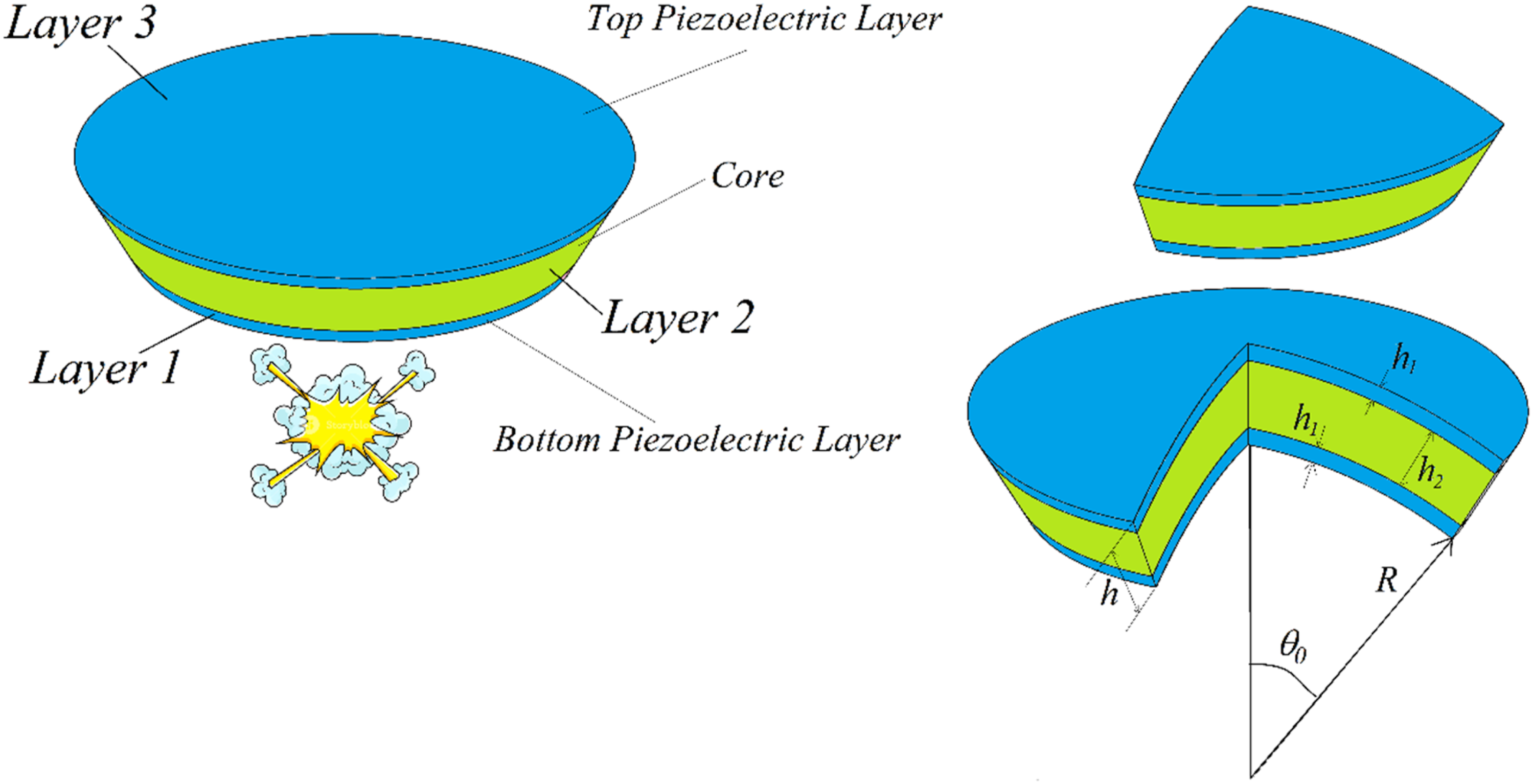
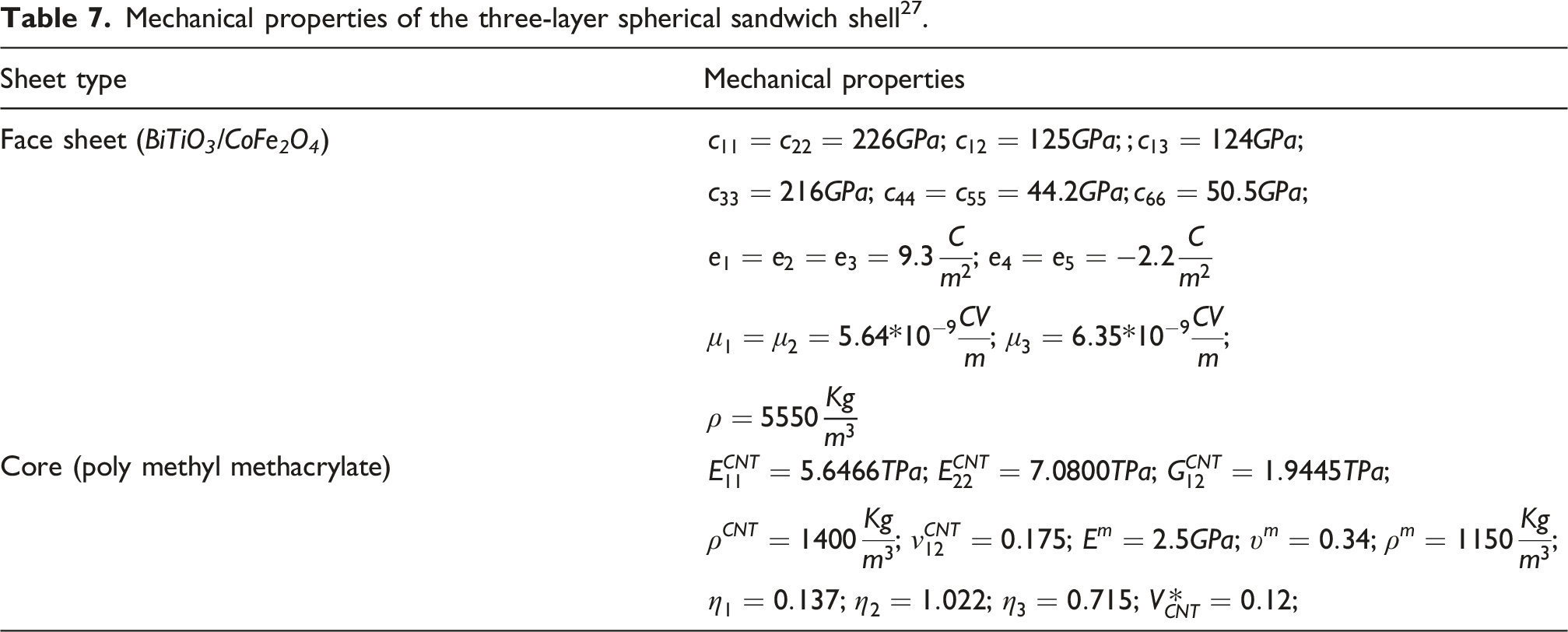
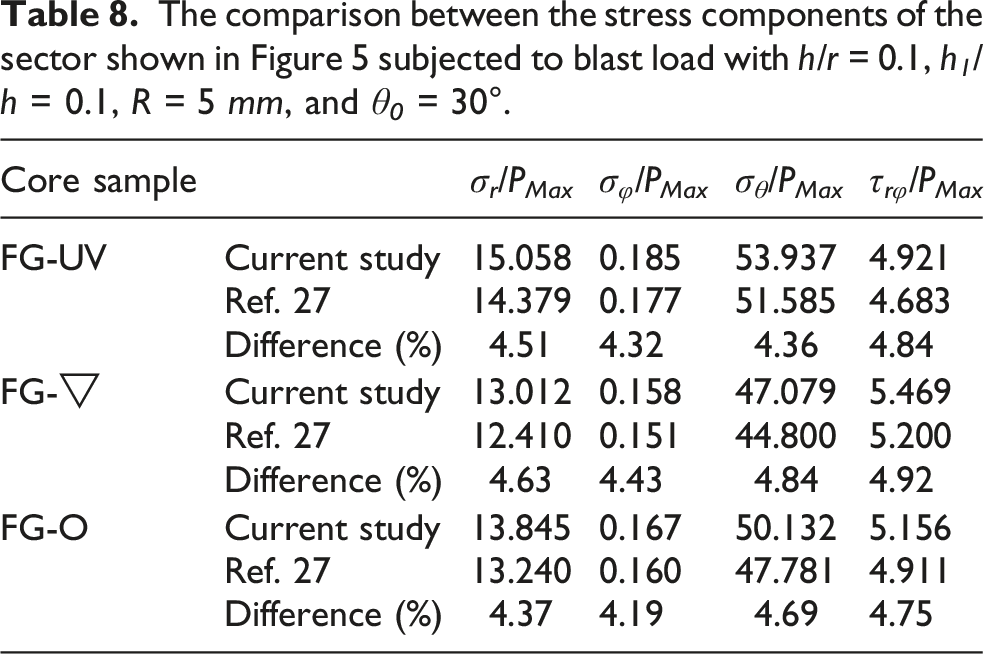
Figure 6 shows the effect of temperature changes on the stress distribution, displacement and velocity components of the sector with FG-UV layer and shape memory matrix for R
1
= 1 m, R
2
= 1.2 m, φ
1
= 45°, φ
1
= 60°, Ω = 60°, and γ = 0° at four points 1, 2, 3, and 4. The effect of temperature on stress distribution of (a) σ
r
at point 1, (b) σ
φ
at point 1, (c) σ
θ
at point 1, (d) τ
rφ
at point 4, (e) τ
rθ
at point 3, (f) τ
θφ
at point 2, (g) r-component of displacement (u
r
) at point 1 and, (h) r-component of velocity (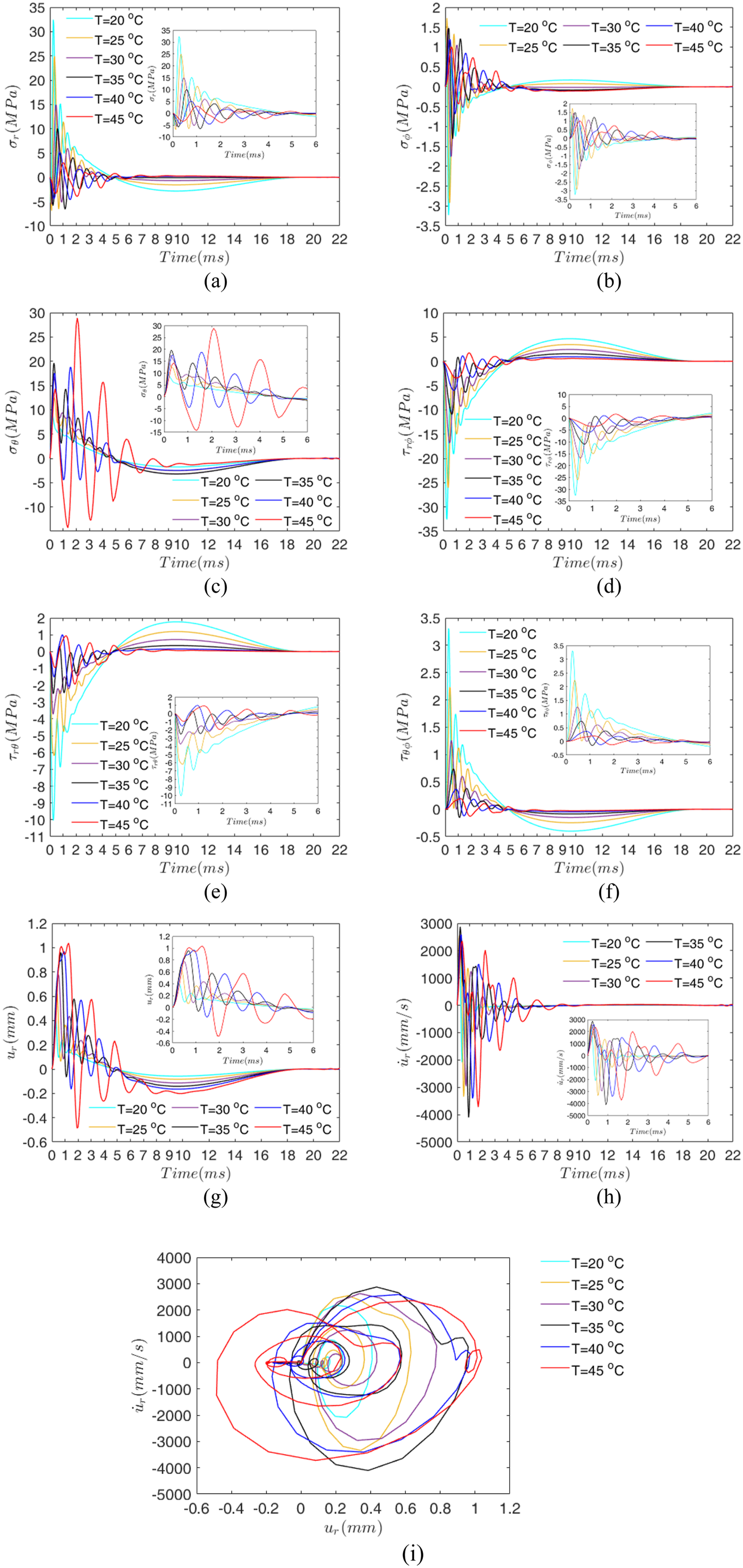
According to Figure 6, it can be seen that an increase in temperature causes displacement, velocity, and stresses to fluctuate over a longer period of time and eventually damped out. According to Figure 6(a) and (b), (d)–(f), it can be observed that an increase in temperature leads to a decrease in stress components. The reason for this is the decrease in the strength of the sector with the increase in temperature. According to Figure 6(c), it can be seen that the stress σ θ , unlike other stress components, decreases with increasing temperature. The cause of this category is due to the orientation of FG-CNT fibers (γ = 0°), as well as the clamped support conditions and finally, the thermal residual stress at the location of point 1.
Moreover, according to Figure 6(g) and (h), it is shown that an increase in temperature leads to an increase in amplitudes of displacement and velocity of the sector. The reason for this category is that the increase in temperature has led to the softening of SMP and, finally, the explosion has led to an increase in the displacement and velocity amplitudes of the sector at point 1.
Figure 7 show the influence of the orientation of FG-CNT fibers relative to the equatorial orbital line of the shell (γ = 0°). According to Figure 7, it can be observed that the stress components σ
r
, σ
θ
, and τ
rφ
decrease with increasing values of γ, while the stress components σ
φ
and τ
rθ
have increased. The reason for these changes is that by increasing the angle γ, the shell is strengthened in φ-direction compared to before, so the stress components σ
φ
and τ
rθ
increase and at the same time the stress components σ
r
, σ
θ
, τ
rφ
, and τ
θφ
decrease. According to Figure 7(f), an exception can be seen in the stress component τ
θφ
, which has reached its peak at the angle γ = 45°. The reason for this category is that at γ = 45°, the in-plane shear stress reaches its maximum level. The effect of ply-angle orientation of FG-CNT layer (γ) on stress distribution of (a) σ
r
at point 1, (b) σ
φ
at point 1, (c) σ
θ
at point 1, (d) τ
rφ
at point 4, (e) τ
rθ
at point 3, (f) τ
θφ
at point 2, (g) r-component of displacement (u
r
) at point 1 and, (h) r-component of velocity (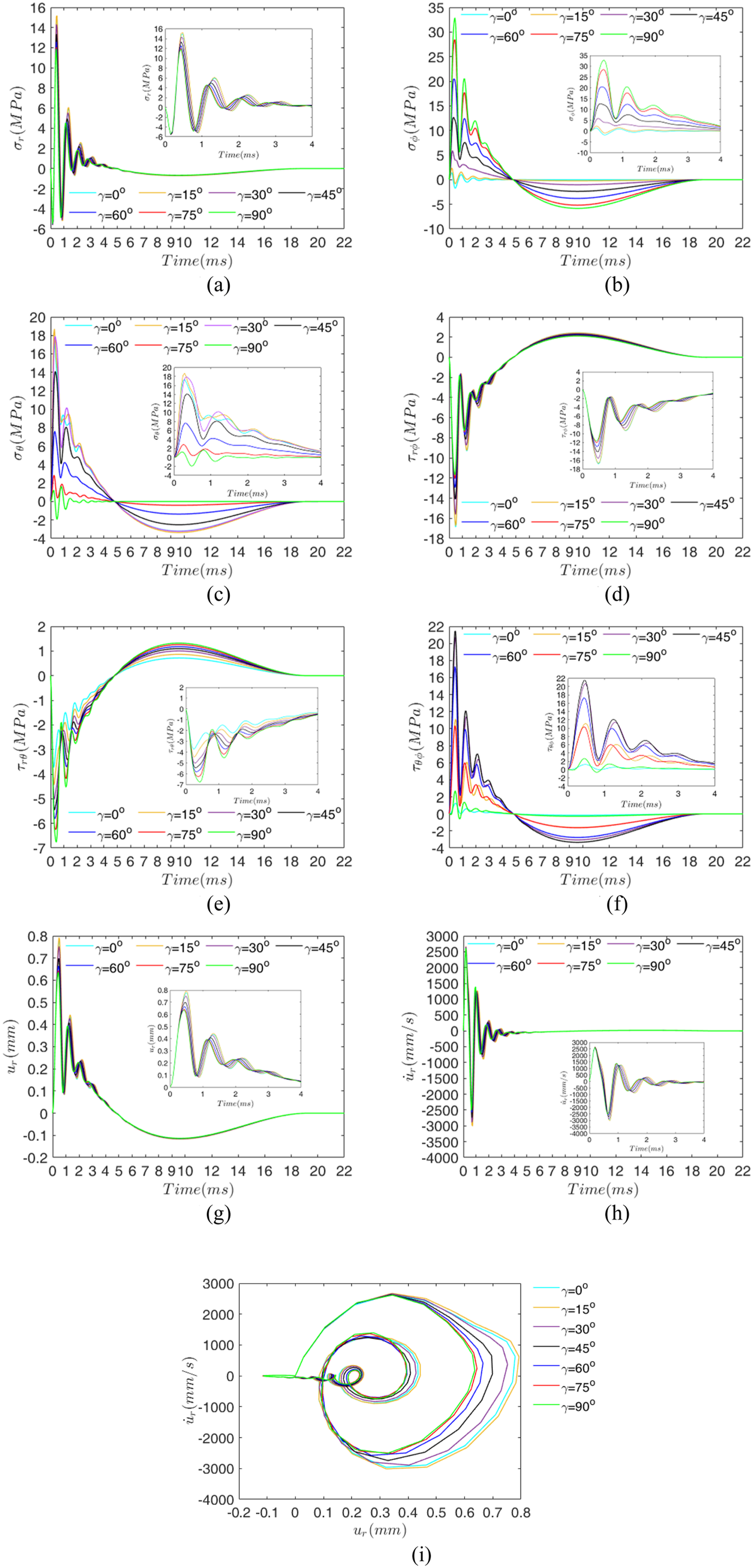
According to Figure 7(g) and (h), it can be seen that the change of angle γ has very little effect on displacement and velocity, but nevertheless, the increase of angle γ has led to an increase and decrease in displacement and velocity, respectively.
Figures 8–12 show the effect of geometrical dimension changes on the stress distribution, displacement, and velocity of the sector at points 1, 2, 3, and 4. The effect of angle Ω on stress distribution of (a) σ
r
at point 1, (b) σ
φ
at point 1, (c) σ
θ
at point 1, (d) τ
rφ
at point 4, (e) τ
rθ
at point 3, (f) τ
θφ
at point 2, (g) r-component of displacement (u
r
) at point 1 and, (h) r-component of velocity ( The effect of outer radius (R
2
) of the sector on stress distribution of (a) σ
r
at point 1, (b) σ
φ
at point 1, (c) σ
θ
at point 1, (d) τ
rφ
at point 4, (e) τ
rθ
at point 3, (f) τ
θφ
at point 2, (g) r-component of displacement (u
r
) at point 1 and, (h) r-component of velocity ( The effect of outer radius (R
1
) of the sector on stress distribution of (a) σ
r
at point 1, (b) σ
φ
at point 1, (c) σ
θ
at point 1, (d) τ
rφ
at point 4, (e) τ
rθ
at point 3, (f) τ
θφ
at point 2, (g) r-component of displacement (u
r
) at point 1 and, (h) r-component of velocity ( The effect of angle (φ
1
) of the sector on stress distribution of (a) σ
r
at point 1, (b) σ
φ
at point 1, (c) σ
θ
at point 1, (d) τ
rφ
at point 4, (e) τ
rθ
at point 3, (f) τ
θφ
at point 2, (g) r-component of displacement (u
r
) at point 1 and, (h) r-component of velocity ( The effect of angle (φ
2
) of the sector on stress distribution of (a) σ
r
at point 1, (b) σ
φ
at point 1, (c) σ
θ
at point 1, (d) τ
rφ
at point 4, (e) τ
rθ
at point 3, (f) τ
θφ
at point 2, (g) r-component of displacement (u
r
) at point 1 and, (h) r-component of velocity (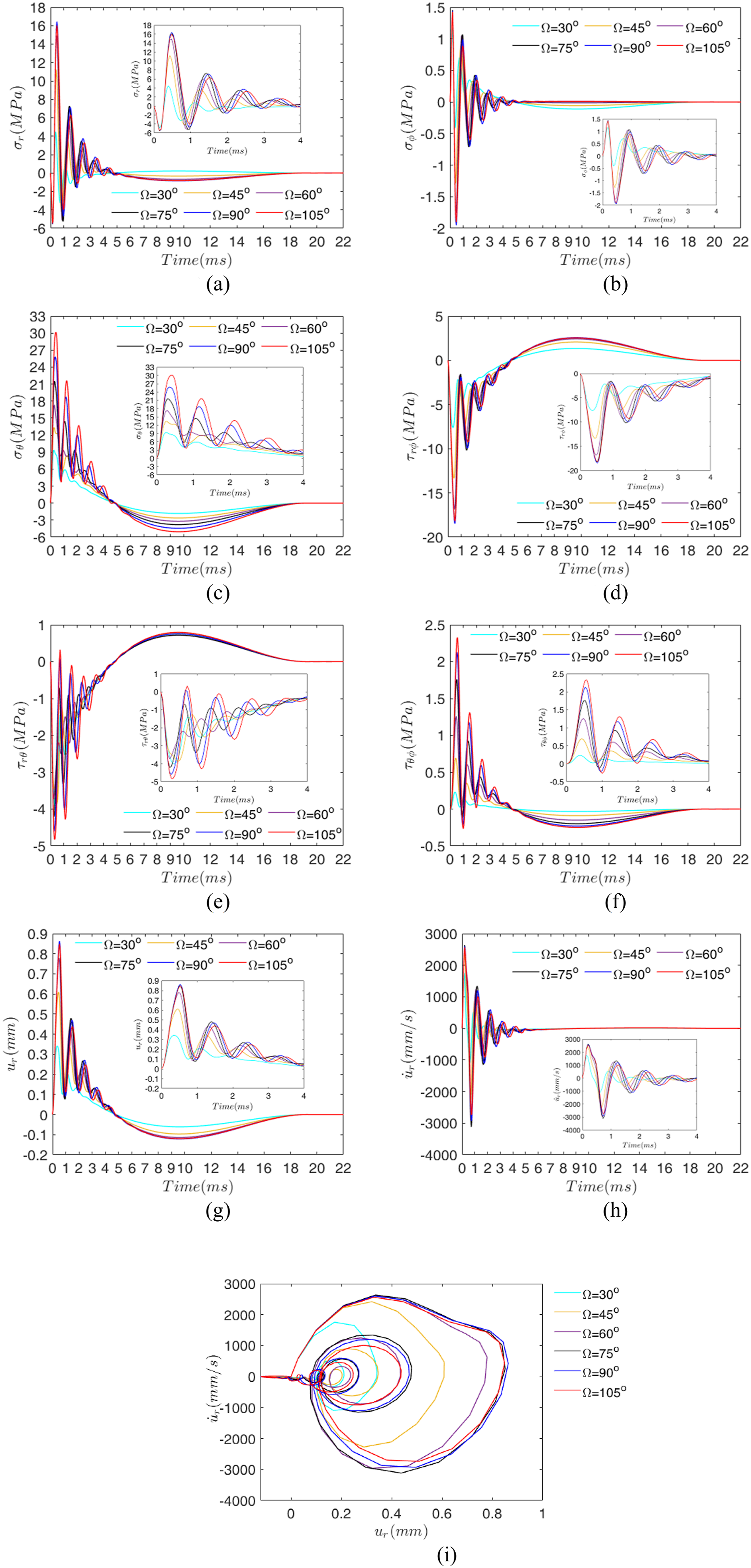
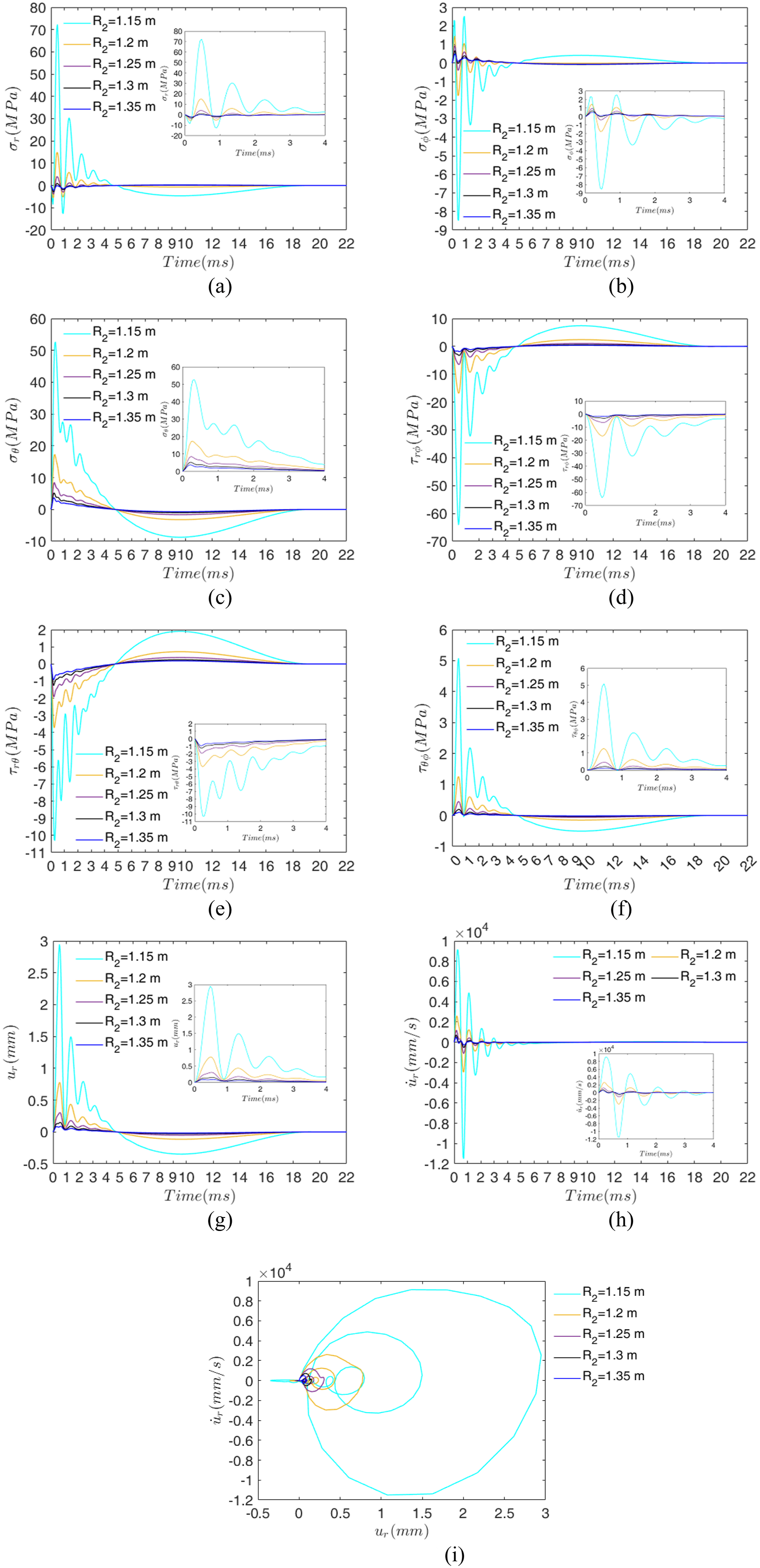
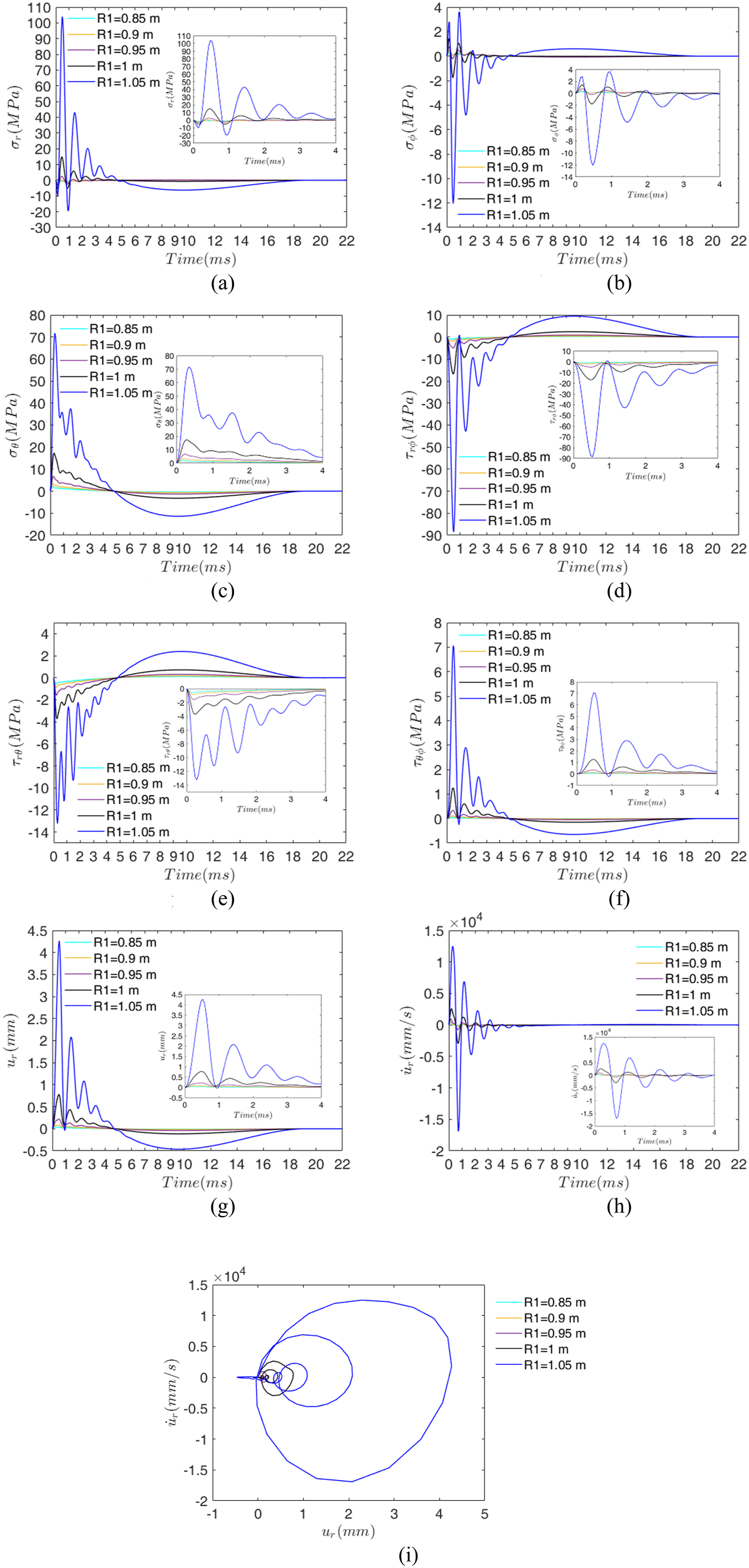
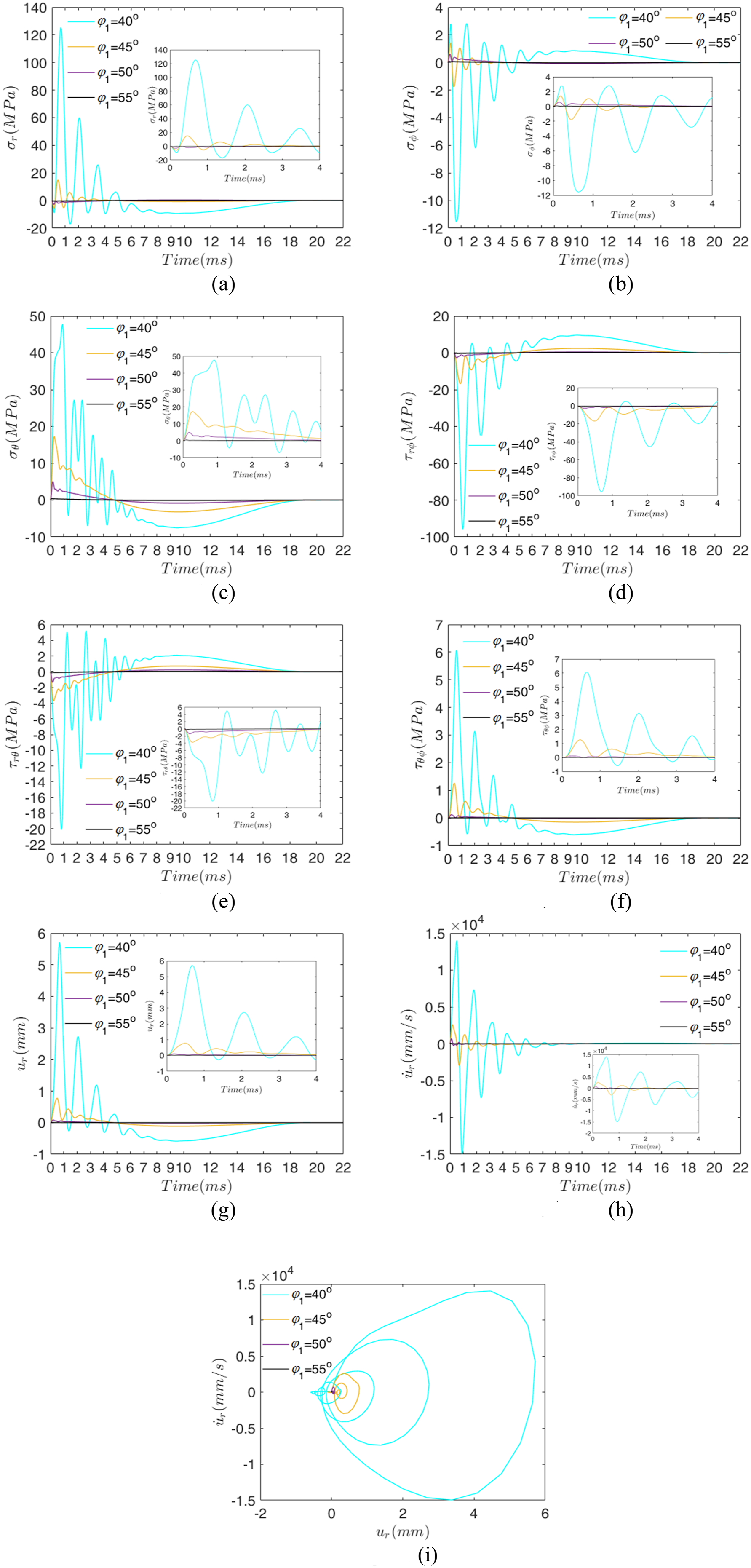
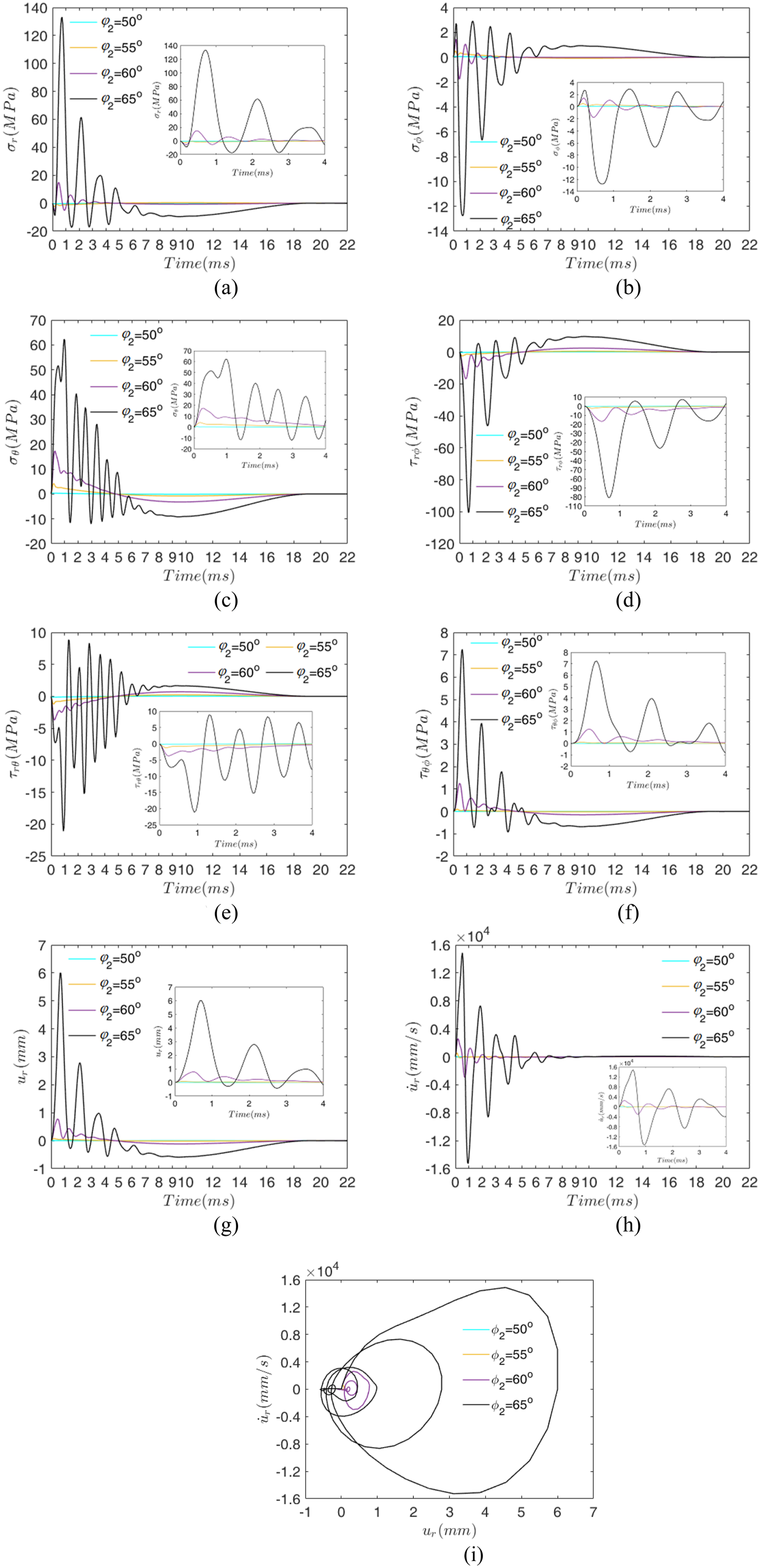
Figure 8 shows the effect of angle Ω on stress components, displacement, and velocity in the sector. According to Figure 8, it can be observed that increasing with the increase of angle Ω, which indicates the increase of the surface of the sector, the stress distribution, displacement, and velocity have increased. As mentioned, the cause of this increase is the increase in the surface of the sector, which has led to an increase in displacements and finally, an increase in stress components.
Figures 9 and 10 show the effect of external and internal radii of the sector on the stress components, respectively. According to Figures 9 and 10, it can be seen that the reduction of the outer radius and the increase of the inner radius will lead to an increase in stress components, displacement and velocity of the sector. The reason for this is quite clear, because the thickness of the sector is reduced with these mentioned changes and, finally, the components of stresses, displacement, and velocity increase. It is noteworthy that the R 2 /R 1 ratio, in the case of equality in Figures 9 and 10, does not create the same results in the stress distribution, displacement, and velocity in the sector. For example, we choose two modes: R 1 = 1 m, R 2 = 1.15 m, and also R 1 = 1.05 m, R 2 = 1.2 m. The R 2 /R 1 ratio in both cases is approximately 1.15 and equal, but the results of the stress components, displacement, and velocity are completely different. The reason for this is mentioned in the nonlinear relationships of strain in terms of displacement and it is evident that in nonlinear problems, making the relationships dimensionless may not give the correct answer.
Figures 11 and 12 show the effect of internal and external meridional angles (φ 1 and φ 2 ) of the sector on the stress components, respectively. According to Figures 11 and 12, it can be seen that the reduction of the internal meridional angle (φ 1 ) and the increase of the external meridional angles (φ 2 ) will lead to an increase in stress components, displacement, and velocity of the sector. The reason for this is quite clear, because with the decrease of φ 1 and also with the increase of φ 2 , the surface of the sector increases, and this change leads to the increase of stress components, displacement, and velocity.
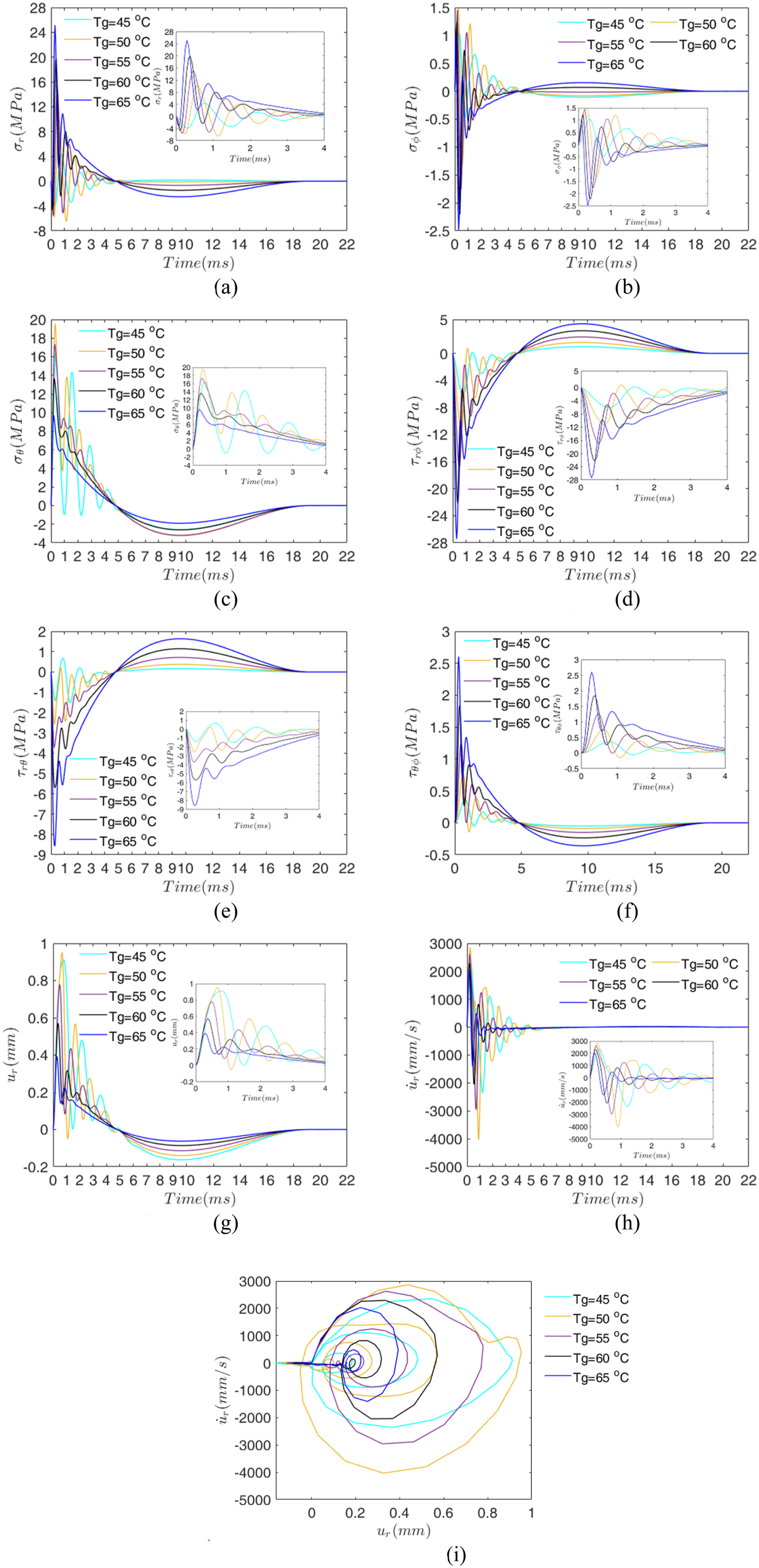
Figures 13–15 show the effect of mechanical properties of SMP on stress components. In obtaining the results of Figures 13–15, the ambient temperature is considered as 30°C. The effect of the constant value of SMP (a) defined in equation (2) on stress distribution of (a) σ
r
at point 1, (b) σ
φ
at point 1, (c) σ
θ
at point 1, (d) τ
rφ
at point 4, (e) τ
rθ
at point 3, (f) τ
θφ
at point 2, (g) r-component of displacement (u
r
) at point 1 and, (h) r-component of velocity ( The effect of the glass transition temperature (T
g
) defined in equation (2) on stress distribution of (a) σ
r
at point 1, (b) σ
φ
at point 1, (c) σ
θ
at point 1, (d) τ
rφ
at point 4, (e) τ
rθ
at point 3, (f) τ
θφ
at point 2, (g) r-component of displacement (u
r
) at point 1 and, (h) r-component of velocity ( The effect of the modulus of elasticity of SMP at the glass transition temperature (E
g
) on stress distribution of (a) σ
r
at point 1, (b) σ
φ
at point 1, (c) σ
θ
at point 1, (d) τ
rφ
at point 4, (e) τ
rθ
at point 3, (f) τ
θφ
at point 2, (g) r-component of displacement (u
r
) at point 1 and, (h) r-component of velocity (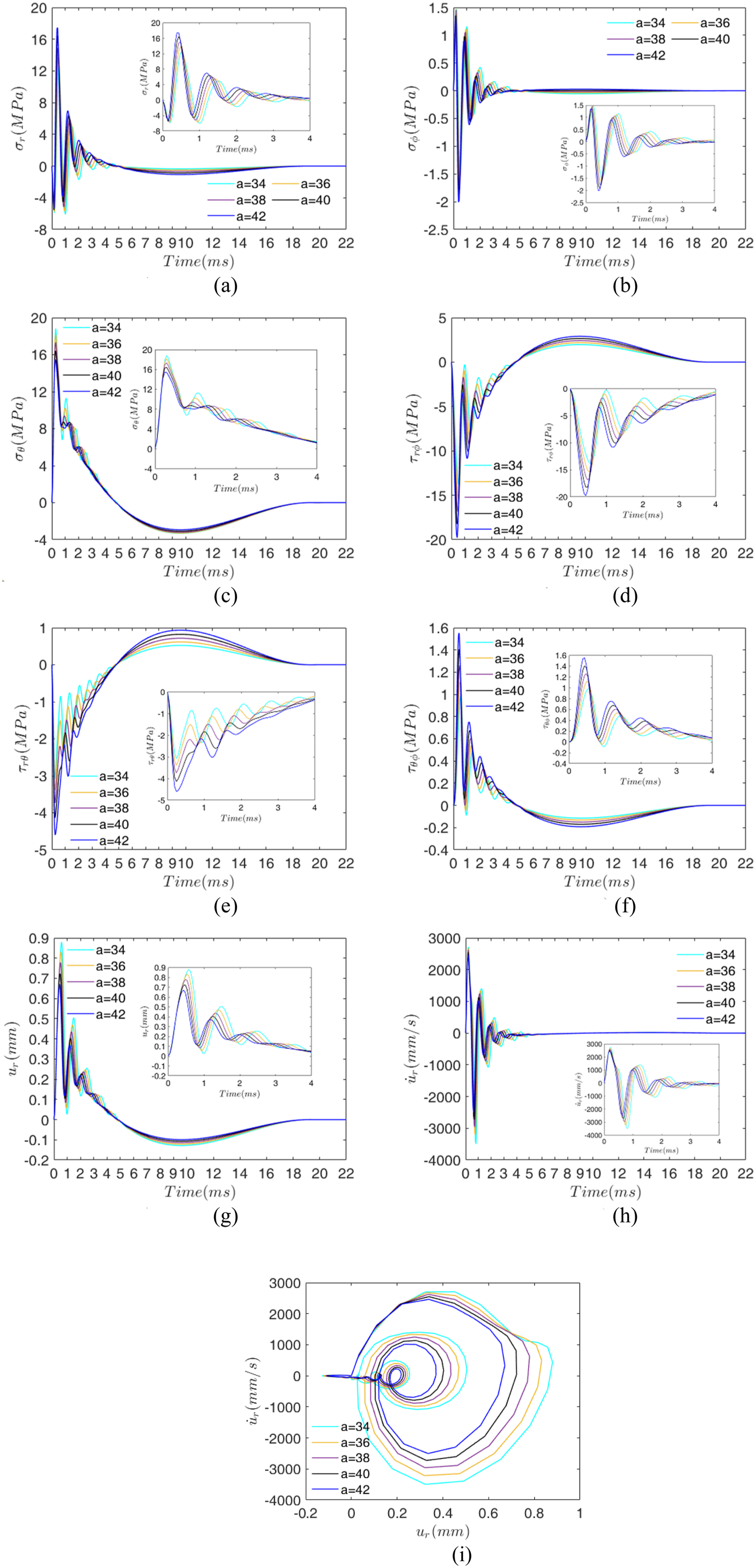
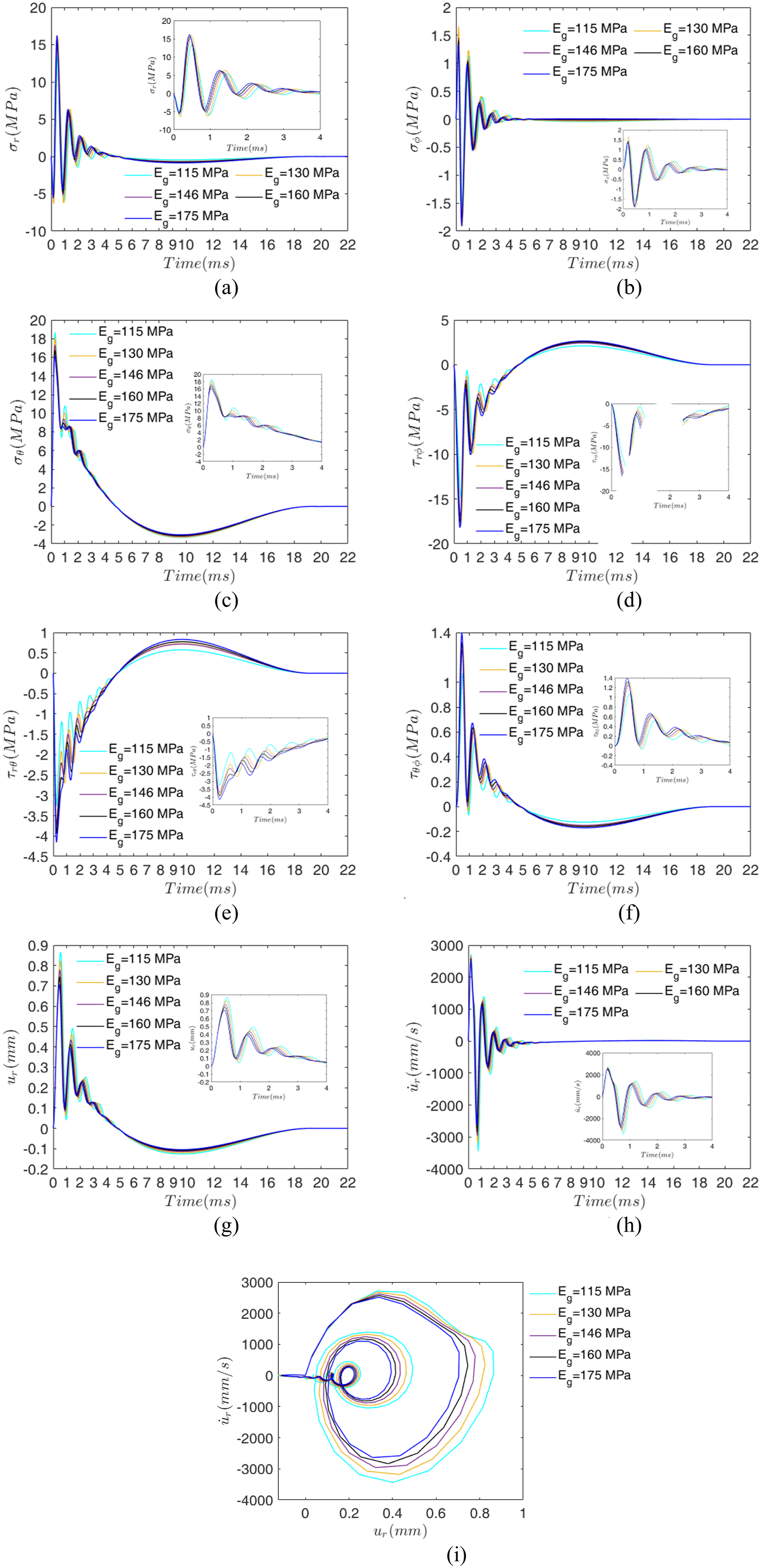
The effect of the constant value of SMP (a) defined in equation (2) on stress components, displacement, and velocity of the sector can be seen in Figure 13. Considering that the ambient temperature is 30°C, which is lower than the glassing transition temperature of SMP (T g = 55°C, See Table 1), and also according to equation (2), it can be seen that increasing the value of a means reducing the mechanical properties of SMP. According to the mentioned reasoning, it is estimated that increasing the value of a will lead to a decrease in the normal stress components and at the same time an increase in the shear stress components in the sector. In addition, increasing the value of a, which has led to the softness of the shape memory polymer, will lead to an increase in displacement and decrease in velocity.
Figure 14 shows the effect of the glassing transition temperature of SMP on the stress components, displacement, and velocity of the sector. According to Figure 14, it can be seen that with the increase of the glassing transition temperature, the tendency to increase the stress components has increased. As mentioned earlier, the ambient temperature is assumed to be 30°C in Figure 14, therefore, according to the mentioned conditions, with the increase in the glassing transition temperature, the shape memory material is actually strengthened and the increase in stress components can be predicted. Therefore, displacement and velocity decrease with increasing the glassing transition temperature.
According to Figure 14(c), this category does not apply to σ θ , and an increasing-decreasing behavior is observed for it when the glassing transition temperature increases.
Figure 15 illustrates the effect of the modulus of elasticity at the glassing transition temperature of SMP on the stress distribution, displacement, and velocity of the sector. According to equation (2), the relationship between the modulus of elasticity of SMP and E g is direct and linear. Therefore, increasing the value of E g as seen in Figure 15 leads to an increase in the strength of the polymer matrix and, conversely, an increase in stress components.
According to the results of Figures 13–15, it can be seen that the effect of the change in the glassing transition temperature of SMP is much higher than the change in the two components a and E g .
According to Figures 6–15, the effects of four categories of temperature, angle of arrangement of FG-CNT fibers in matrix, sector geometric dimensions and SMP material characteristics on the stress distribution, displacement, and velocity were investigated. According to the theoretical solution, the results showed that the changes in the characteristics that are categorized as below have an effect on the stress components created in the sector, in order from high to low. • Reducing the thickness of the sector strongly affects the increase of the stress components. This decrease can be caused by increasing the inner radius or decreasing the outer radius. • Changes in the meridional angles φ
1
and φ
2
, which mainly affect the applied stresses. • Changes in the glassing transition temperature of SMP, which have a large effect on the stress components. • A change in the ply-angle of FG-CNT fibers, which leads to a change in the mechanical properties of the sector and finally causes a change in the stress components. • Although the change in the equatorial opening angle (Ω) was small, it was signed on the stresses created on the sector. • The rest of the parameters, including a and E
g
, had little effect on changing the stress distribution in the sector.
Conclusions
In the current investigation, the exact solution of the dynamic behavior of a thick FG-CNT spherical sector with SMP matrix was developed based on nonlinear strain-displacement equations as well as three-dimensional elasticity theory. Three nonlinear time-dependent equations in the spherical coordinate system were derived and converted to algebraic equations by using DQM and Euler’s implicit method. Furthermore, Newton’s iteration method was used to solve these equations. In order to verify the nonlinear solution results, these results were compared with the linear solution ones as well as FEM results based on two assumptions of high displacement and high strain theories. Moreover, the effects of four categories of temperature, angle of arrangement of FG-CNT fibers in matrix, sector geometric dimensions and SMP material characteristics on the stress distribution, displacement, and velocity were investigated. Finally, the classification of the influence of geometrical dimensions, temperature changes, and mechanical properties on the stress distribution was presented.
Supplemental material
Supplemental material - Nonlinear time-dependent analysis of FG-CNT spherical sector with SMP matrix subjected to blast loads
Supplemental material for Nonlinear time-dependent analysis of FG-CNT spherical sector with SMP matrix subjected to blast loads by Hamed Raissi, in Journal of Reinforced Plastics and Composites
Footnotes

Ethical considerations
Authors state that the research was conducted according to ethical standards.
Funding
The author received no financial support for the research, authorship, and/or publication of this article.
Declaration of conflicting interests
The author declared no potential conflicts of interest with respect to the research, authorship, and/or publication of this article.
Data Availability Statement
Some or all data, models, or code that support the findings of this study are available from the corresponding author upon reasonable request.
Supplemental material
Supplemental material for this article is available online.
References
Supplementary Material
Please find the following supplemental material available below.
For Open Access articles published under a Creative Commons License, all supplemental material carries the same license as the article it is associated with.
For non-Open Access articles published, all supplemental material carries a non-exclusive license, and permission requests for re-use of supplemental material or any part of supplemental material shall be sent directly to the copyright owner as specified in the copyright notice associated with the article.
