






Abstract
The present work develops a novel size-dependent analytical framework for analyzing the thermo-mechanical behavior of laminated microplates by combining a refined couple stress model with an inverse-hyperbolic plate theory. The formulation captures anisotropic material characteristics while incorporating size dependency through an intrinsic length-scaling parameter aligned with the fiber orientation angle of the laminate. The use of the inverse-hyperbolic shear deformation function provides an improved representation of transverse shear behavior without requiring shear correction factors, offering a distinct advantage over conventional higher-order shear deformation theories. Using the principle of virtual work, the governing equations are established and solved using Navier’s closed-form technique under simply supported boundary conditions. An extensive parametric investigation is conducted to examine the effects of micro-scale shear deformation and thermal loads on the bending characteristics of micro-laminates. The results show that the inclusion of couple stress effects leads to a reduction in deflection of up to approximately 40%, while thermal loading further contributes to reductions of about 12–63% depending on the loading and geometric parameters. Additionally, the model converges to classical plate theory predictions at small length-scale values, validating its accuracy. The inverse-hyperbolic shear deformation model shows strong agreement with higher-order shear deformation theories without requiring shear correction factors. Overall, the comparative results validate the model’s accuracy and efficiency, establishing it as a comprehensive analytical framework for assessing the performance of numerical methods in the analysis and design of advanced micro-scale systems, including micro-electromechanical systems (MEMS), where precise prediction of thermo-mechanical deformation is critical for the reliability of sensors, actuators, and micro-structural components, where conventional plate theories fail to capture size-dependent effects.
Keywords
Introduction
In recent decades, the growing use of micro-scale structural elements has played a crucial role in advancing next-generation engineering systems, especially because of their significance in micro-electromechanical systems (MEMS) and other miniaturized technologies. Among the diverse class of engineered materials, laminated composite plates have emerged as indispensable constituents in critical domains such as aerospace, automotive, civil infrastructure, and marine engineering. This significance is largely due to their exceptional specific stiffness, high thermal resistance, and the ability to achieve customized anisotropic properties through controlled lamination.
The escalating demand for miniaturized high-performance devices, coupled with rapid progress in precision micro-manufacturing, has facilitated the fabrication of micro-scale laminated composites through sophisticated processes such as micro-rolling, micro-milling, micro-deep drawing, micro-drilling, micro-extrusion, and micro-grinding. 1 These advanced manufacturing routes offer fine-scale control over geometrical and material characteristics, which is essential for achieving functional reliability and dimensional accuracy at the micro-scale. Consequently, micro-laminated composite plates have become fundamental structural components not only in MEMS, but also in high-precision biomedical devices, implantable sensors, and environmentally responsive microsystems.1,2
Despite their expanding role in micro-scale engineering systems, the mechanical characterization of laminated microplates presents substantial theoretical challenges. At reduced length scales, conventional continuum theories fail to capture the pronounced size-dependent behaviors that arise due to the material’s micro-structural characteristics. These limitations are further exacerbated when structures are subjected to multiphysics environments, particularly combined thermal and mechanical fields, which are common in applications such as aerospace, biomedical, and marine structures.
Thermo-mechanical loading induces complex deformation mechanisms and stress redistributions that significantly influence the structural response of laminated composites. The differential expansion or contraction due to temperature gradients can lead to inter-laminar stresses, warping, and premature failure. Thermo-mechanical behavior of laminated microstructures has attracted significant attention due to its critical role in the performance of advanced engineering systems such as micro-electromechanical systems (MEMS), flexible electronics, and biomedical micro-devices. In these applications, temperature variations can induce coupled thermal stresses and deformations that significantly influence structural reliability and functional accuracy. In particular, heat shrinkage and thermal expansion variations in composite materials can alter the effective stiffness and deformation characteristics of laminated structures. Recent studies have highlighted that thermal shrinkage effects in composite and sandwich structures can strongly influence their thermo-mechanical response and stability characteristics.3,4 Accurate modeling of these phenomena is vital for the functional performance of micro-laminated plates deployed in advanced applications, such as flexible electronics, biomedical implants, aerospace insulation systems, and environmental sensing platforms.5,6 Recent studies have also highlighted the importance of tensile expansion and interfacial effects in laminated composites, particularly for MEMS applications, where tailored microstructures can significantly enhance strength, ductility, and thermo-mechanical performance.7,8
Consequently, the development of advanced theoretical frameworks that incorporate both scale-dependent elasticity and thermo-mechanical coupling has become a focal point in the mechanics of laminated composite microstructures.
Experimental investigations9–11 have consistently demonstrated that materials exhibit enhanced stiffness and strength when scaled down to micro- and sub-micrometer dimensions, a phenomenon widely recognized as the scale effect. This behavior stems from micro-structural constraints that become significant at small scales, leading to deviations from classical elasticity predictions. Traditional continuum theories, which assume scale-invariant material behavior and lack intrinsic length-scaling parameters, are inadequate for capturing such phenomena.
To overcome the limitations of classical continuum theories, higher-order models have been developed. The couple stress elasticity theory (CSET), originally formulated by Mindlin and Tiersten, 12 Toupin, 13 and Koiter, 14 incorporates couple stresses and a material length-scaling parameter into the governing equations, thereby enabling the accurate representation of size-dependent behavior in isotropic media. In parallel, Eringen’s nonlocal elasticity theory 15 offers an alternative framework by accounting for long-range interactions via nonlocal integral formulations, which further improves predictions of mechanical response at small length scales.
Subsequent developments in strain gradient elasticity16,17 introduced higher-order strain gradients to account for micro-structural interactions, while micropolar elasticity 18 extended the kinematics to include microrotations. Among these, the modified couple stress theory (MCST) by Yang et al. 19 has gained particular prominence for engineering applications due to its simplicity. It requires only one length-scaling parameter and adopts a symmetric couple stress tensor and augments classical equilibrium equations with additional moment equilibrium relations, offering a computationally efficient means to capture size effects.
Further refinement was introduced by Lam et al. 20 through the modified strain gradient theory (MSGT). These higher-order theories have been successfully employed in the modeling and analysis of micro-structural components using both analytical and numerical techniques.21–26 Specifically, MCST has been extensively applied to model the static and dynamic responses of micro-beams27–31 and microplates.32–39
While the modified couple stress theory (MCST) effectively models the size-dependent response of isotropic microplates, its application is confined to isotropic materials despite its computational efficiency. To address this shortcoming and extend the theory to anisotropic systems, Chen et al. 40 adapted the couple stress framework for the analysis of laminated micro-beams. Subsequently, Chen and Li 41 integrated CST with Kirchhoff’s plate theory to study laminated microplates. Nevertheless, the classical Kirchhoff formulation disregards transverse shear deformation, a factor that plays a critical role in the mechanical analysis of moderately thick and thick laminated plates.
To overcome the limitations of Kirchhoff’s plate theory, researchers have proposed several CST-based formulations that incorporate either the First-Order Shear Deformation Theory (FSDT)42–44 or the Higher-Order Shear Deformation Theory (HSDT).42,43 Among these methods, the results obtained from HSDT are more accurate in laminated composite plates due to its consideration of the actual distribution of transverse shear strains in the thickness direction. Moreover, in HSDT, it is not necessary to use empirical shear correction factors because the shear stress-free conditions in the top and bottom surfaces are automatically satisfied.
Chen and Wang 45 developed a global–local HSDT formulation within the CST framework to analyze the bending response of laminated microplates. Yang and He 46 explored the behavior of composite micro-laminates by integrating CST with zigzag theory, which enhanced the representation of inter-laminar continuity. Thanh et al. 1 proposed a CST-based model using Reddy’s HSDT for bending, vibration, and buckling analyses through an isogeometric approach. In a similar direction, Ma et al. 47 performed a finite element investigation of the size-dependent free vibration characteristics of composite microplates within a CST–HSDT framework. More recently, Joshan et al. 48 addressed the size-dependent static, free vibration, and buckling responses of composite microplates using non-polynomial HSDTs.
The thermo-mechanical analysis of micro-laminates has gained significant attention due to the increasing use of such materials in micro-scale devices operating under thermal environments. Traditional numerical methods often face challenges in accurately capturing size effects and maintaining geometric exactness. To address these issues, researchers have employed isogeometric analysis (IGA) in conjunction with non-classical theories.
Thanh et al. 49 formulated a refined HSDT within the CST framework to study the thermo-mechanical bending and buckling behavior of composite microplates, employing isogeometric analysis (IGA) for continuity and accurate geometry representation. Their approach effectively captured both size-dependent effects and thermal influences. Building on this, Ma et al. 47 combined CST with Reddy’s HSDT and applied the finite element method to investigate the free vibration characteristics of microplates in thermal environments.
A comprehensive review of existing studies indicates that CST-based higher-order plate models have been widely applied to analyze the size-dependent behavior of laminated microplates. In contrast, relatively limited attention has been given to their thermo-mechanical response, even though temperature variations are unavoidable in practical applications such as aerospace, marine, and biomedical structures. Moreover, various non-polynomial shear deformation theories (NPSDTs) such as trigonometric,50–52 exponential,53–55 inverse trigonometric,56,57 inverse hyperbolic,58–60 and hyperbolic61,62 shear deformation theories are presented for laminated structures in the last three decades. NPSDTs are recognized due to their high accuracy in modeling the effects of transverse shear without any correction factors. The precision of these theories has also been established in the literature for composite and functionally graded (FG) microplates.48,63–70 However, these theories have yet to be employed for the analytical thermo-mechanical modeling of laminated microplates within the CST framework. Integrating NPSDT with refined couple stress theory (RCST), therefore, holds significant potential for advancing robust and precise models for predicting the thermo-mechanical performance of anisotropic laminates at the microscale.
In this paper, a generalized size-dependent non-polynomial shear deformation model has been developed within the context of the couple stress theory to carry out thermo-mechanical analyses of laminated composite microplates. An inverse hyperbolic function 60 has been adopted to depict the variation of the displacement field through the thickness of the laminate, which offers an accurate description of the deformation of plates. To account for size effects, CST has been utilized by considering a material length-scale parameter along the fiber direction. The governing equations have been derived employing the virtual work principle, which have been solved analytically employing Navier’s method to validate the results for simply supported boundary conditions. Thermo-mechanical responses of micro-laminates have been analyzed, and results have been compared with those available in the literature employing other HSDT models. This comparison indicates the capability, accuracy, and efficiency of the proposed model to evaluate laminated composite microplates subjected to thermal loading.
Mathematical formulation
In this study, a Cartesian coordinate system (x1, x2, x3) defines a rectangular multilayered micro-composite micro-laminate. The laminate consists of N individual laminae with in-plane dimensions of a and b along the x1 and x2 axes, respectively, while the total thickness is denoted by h along the x3 direction. The geometric mid-surface of the laminate is assumed to lie at x3 = 0. The following assumptions are considered in this formulation: (1) The strains are taken to be infinitesimal. The material is assumed to be linear elastic. Additionally, the displacements and rotations are assumed to be sufficiently small such that the influence of geometric nonlinearity can be ignored. (2) The normal strain along the thickness direction is considered to be negligible. (3) The material properties in the microplate do not change with the change in temperature.
Since the variables are defined at the middle layer of the plate in the equivalent single-layer framework, the present work does not predict inter-laminar stresses accurately, which limits the scope of applicability. However, this can be achieved with the use of equilibrium equations or by defining the variables in zigzag/layerwise approach.
Principle of virtual work
The formulation of laminated composite microplates that incorporate couple stress theory is established using the principle of virtual work. This fundamental principle serves as the foundation for deriving the governing equations and can be expressed in its generalized form as follows
71
:


Here,
The components of the curvature tensor χ
ij
are defined as the spatial gradients of the rotation vector




Here, u1, u2, and u3 denote the displacement components along the x1, x2, and x3 coordinate directions, respectively. The virtual work δW associated with the externally applied forces, as referenced in equation (1), is defined as
72
:

Here, q is the transversely distributed load applied on the microplate.
Displacement function
The displacements of a material point (x1, x2, x3) are described in terms of mid-surface displacements and rotations, based on a shear strain function-driven shear deformation plate theory. Accordingly, the displacement field within this theoretical framework is given by
60
:



Here, u0, v0, and w0 correspond to the displacements of the mid-surface in the x1, x2, and x3 directions, respectively, while θ1 and θ2 denote the shear rotations about the x2 and x1 axes. The shear strain distribution is governed by the function f(x3), and specifically selected to satisfy the following conditions
73
:

Shear strain functions used in various shear deformation theories. A comparison of transverse shear strain variation functions f(x3) used in various higher-order shear deformation theories (HSDTs). These functions describe how transverse shear strain varies with the plate thickness coordinate x3, where h is the total thickness of the plate.
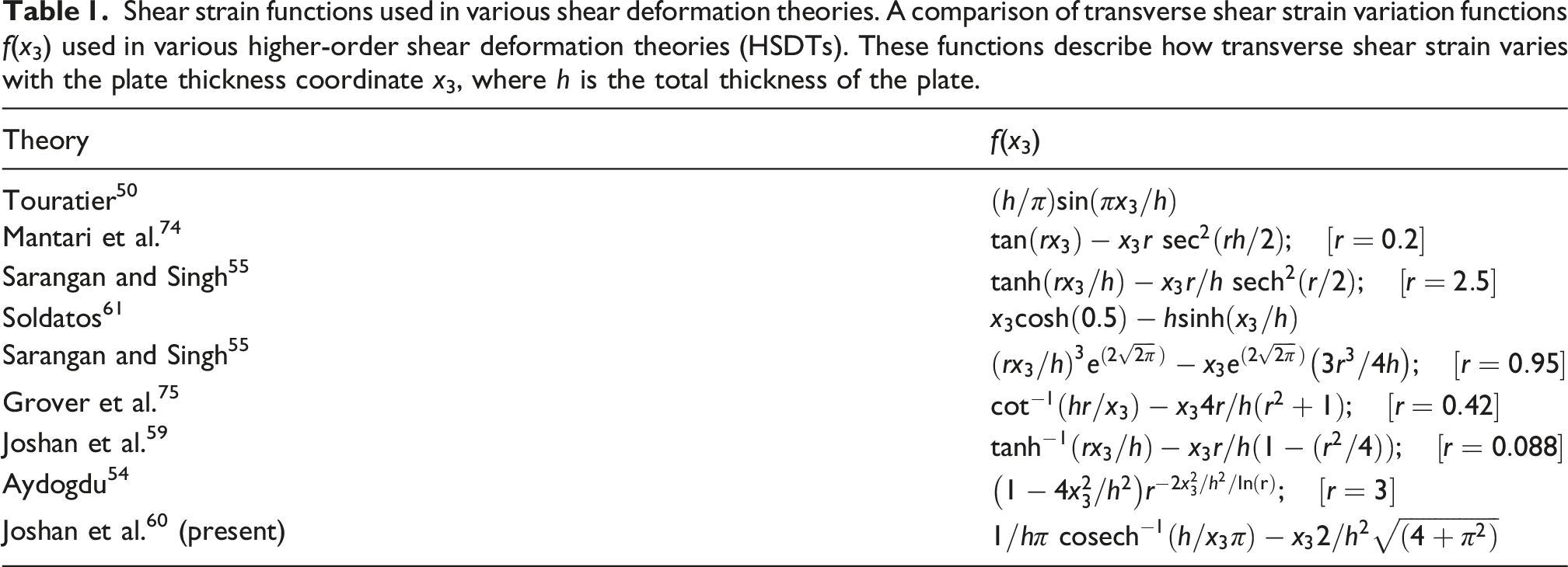
Some authors have proposed different expressions for the distribution of shear strain, such as trigonometric, 50 trigonometric and secant, 74 hyperbolic,55,61 inverse trigonometric, 75 and exponential functions, 54 in order to accurately capture the effects of transverse shear deformations and satisfy the traction-free conditions.
The current formulation employs an inverse hyperbolic function, and it can be seen that several advantages are incorporated in the analysis of the laminated microstructure by employing such a function. The inverse hyperbolic functions employed in the present formulation inherently have a smooth nonlinear distribution similar to the actual shear stress profile predicted by three-dimensional elasticity theory. This allows the function to accurately capture the rapid changes in transverse shear strains and predict the mechanical response of thick plates with greater precision compared to other theories considered in this study.
The infinitesimal strain components, that is, ɛ11, ɛ22, ɛ12, ɛ13, and ɛ23, are now determined using equations (8)–(10) as follows:




The rotation vector 


Furthermore, the components of the curvature tensor χ
ij
are found by using equation (3) as follows:








Constitutive relations
The equations establishing relationship between the stress components {σ11, σ22, σ12, σ23, σ13} (expressed in Voigt notation) and the corresponding strain components {ɛ11, ɛ22, ɛ12, ɛ23, ɛ13}, including the strain contributions induced by the applied thermal field, are expressed as follows
76
: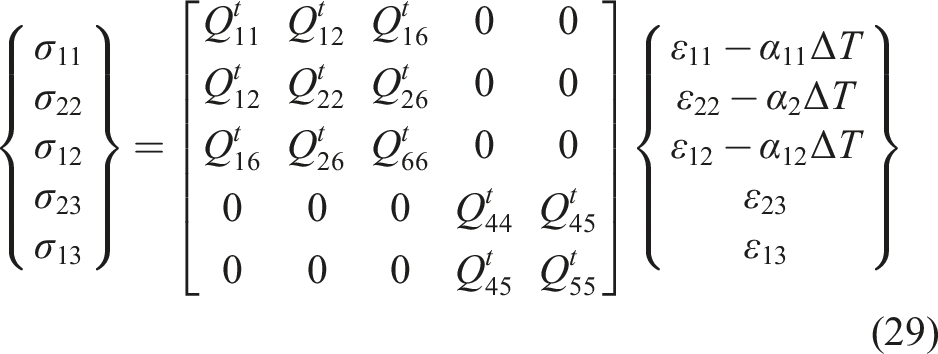
The parameters 
Here, T0, T1, and T2 represent the constant, linear, and nonlinear components of the temperature field, respectively, across the thickness of the microplate.
For an orthotropic lamina, the coefficients of thermal expansion in the global coordinate system depend on the fiber orientation angle Φ. The thermal expansion coefficients in the global coordinate system can be expressed in terms of the material principal coefficients as follows
71
:


Here, α1 and α2 represent the thermal expansion coefficients along the fiber direction and the transverse direction of the lamina, respectively.
Constitutive relations: Couple stress-curvature tensor relationship
Based on the refined CST presented by Chen and Li,
41
the constitutive relations specifically tailored for anisotropic materials are given by:
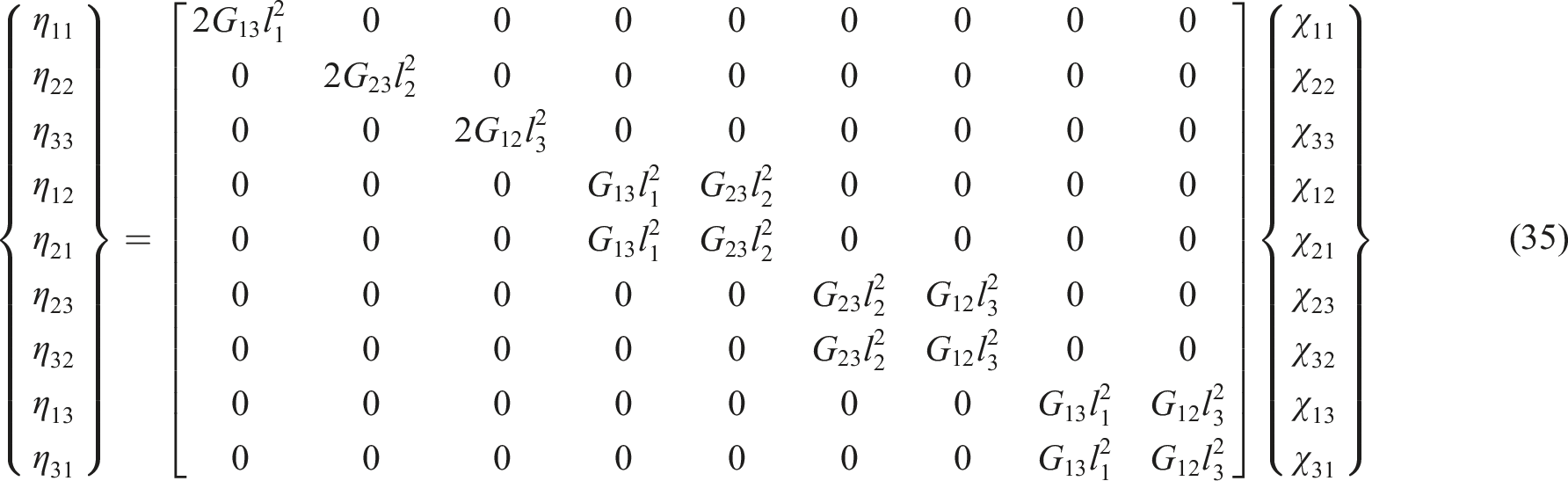
Such quantitative examinations by Thanh et al. 1 established that the contributions of the length-scaling parameters l2 and l3 on the structural behavior of composite micro-laminates are negligible.
The maximum percentage variance is found to be 0.136%, and practically no difference is observed between the cases l2/l1 = l3/l1 = 0 and l3 = l2 = l1 = 1.
78
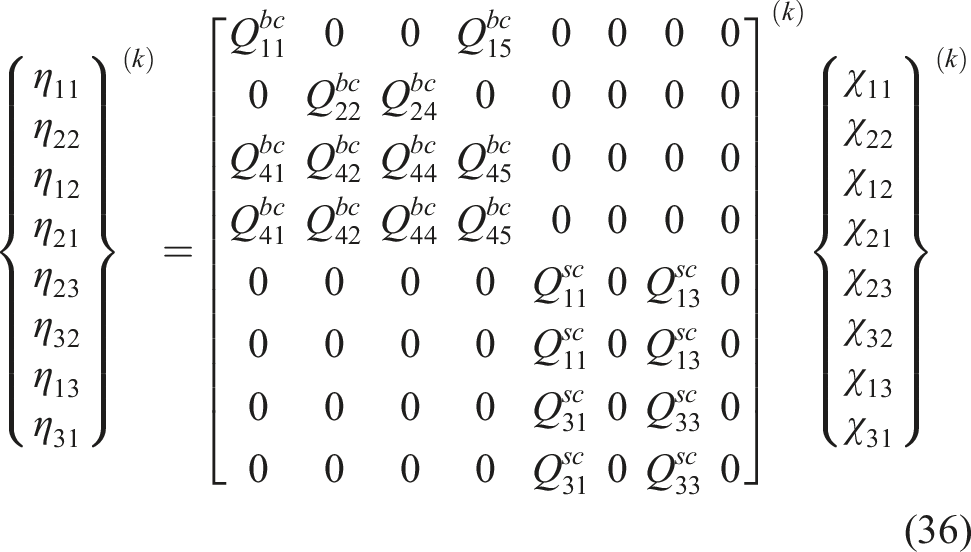
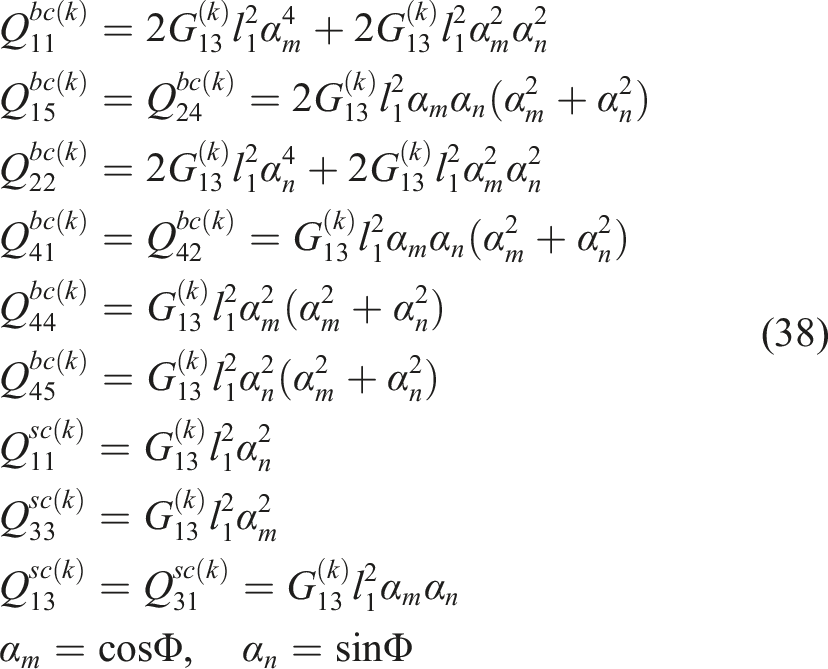
A similar trend is also observed in the thermo-mechanical analysis, where both thermal and mechanical loadings are simultaneously applied. In this case, the maximum percentage variance is found to be 0.139%, further confirming the minimal influence of these parameters on the predicted response. It is observed that the size-dependent effects are mainly influenced by the length-scaling parameter in the reference direction, l1. Thus, in simplifying the current formulation here, we keep only the fiber-direction length-scaling parameter (l1). In this manner, the transformed couple stress constitutive relations are given by
1
:

Derivation of governing equations
Based on the NPSDT framework, governing equations for the microplate are now obtained by substituting curvature tensor components (20)–(28) and strain components (12)–(16) into internal energy equation (2), the following expression is obtained: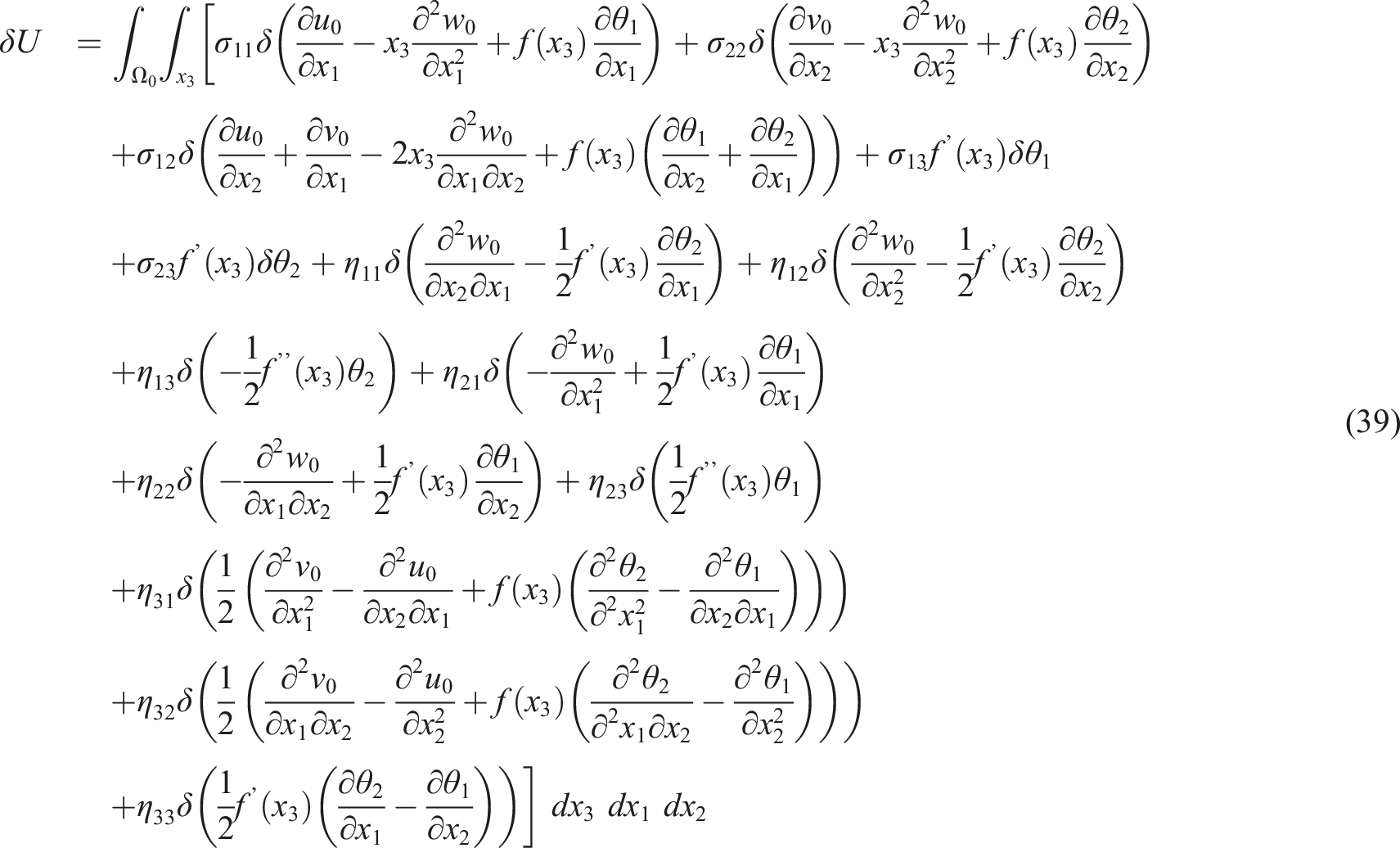
Upon integrating with respect to x3 through the thickness of the plate, the corresponding two-dimensional variational form of the governing equation is obtained as:
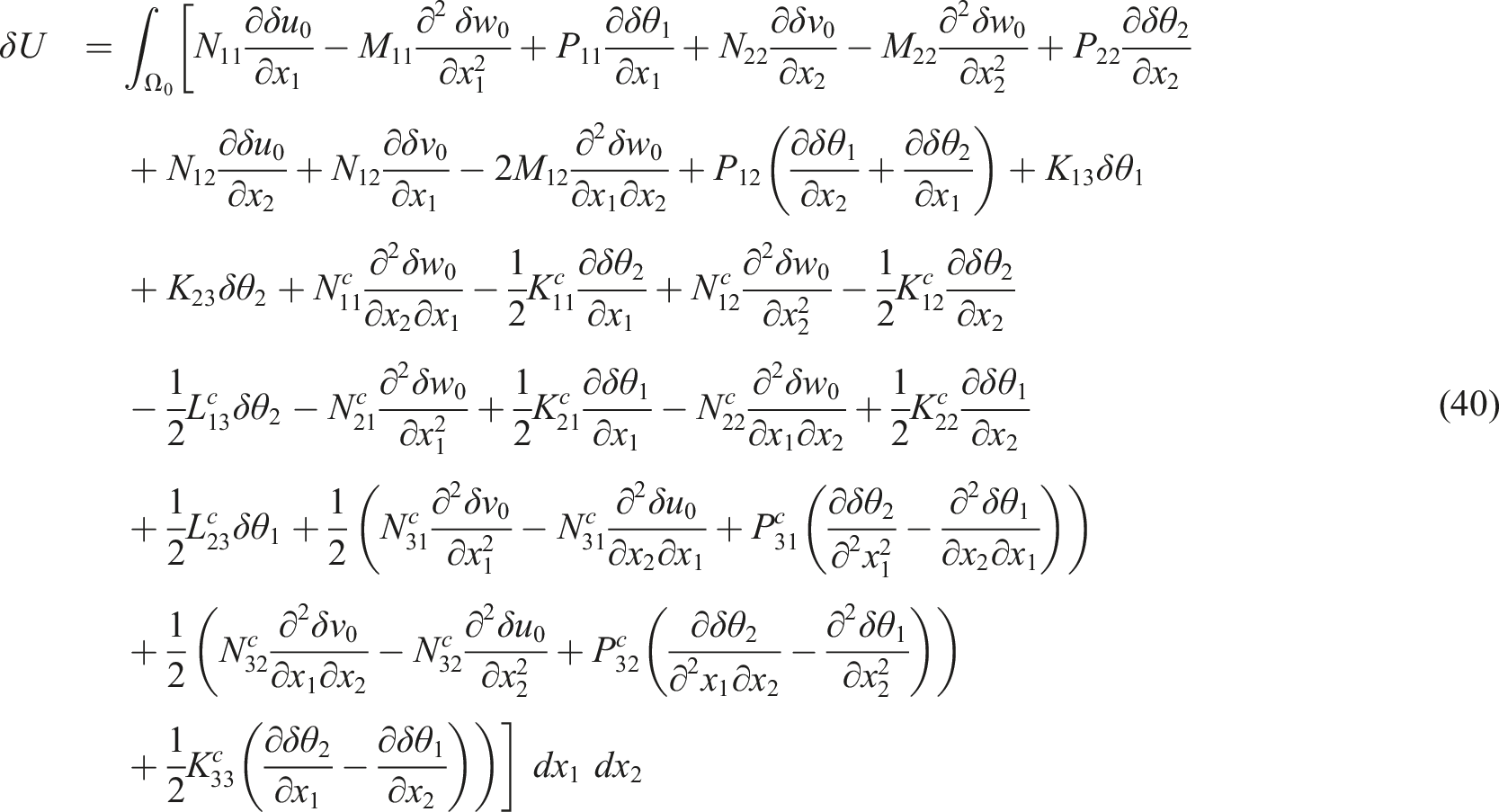
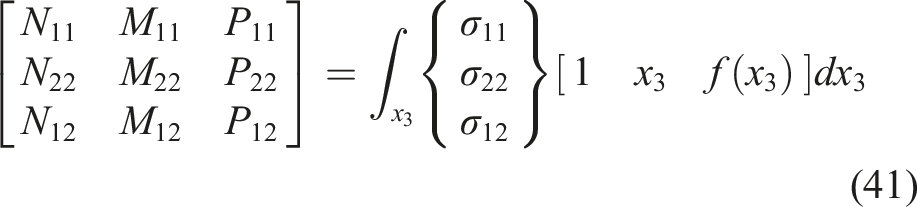

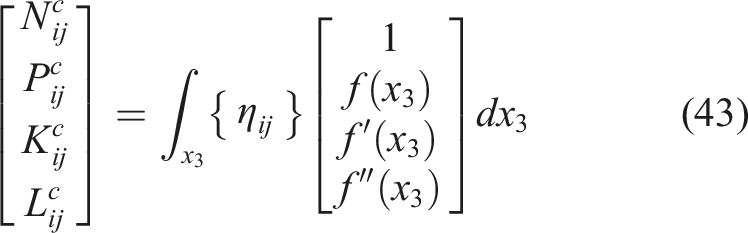
The governing equations can be obtained from equations (7) and (40) in the context of the principle of virtual work. These equations can thus be written as:

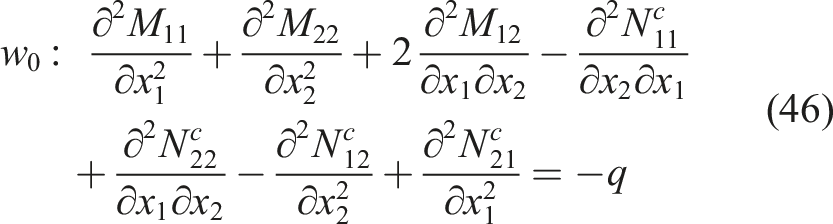
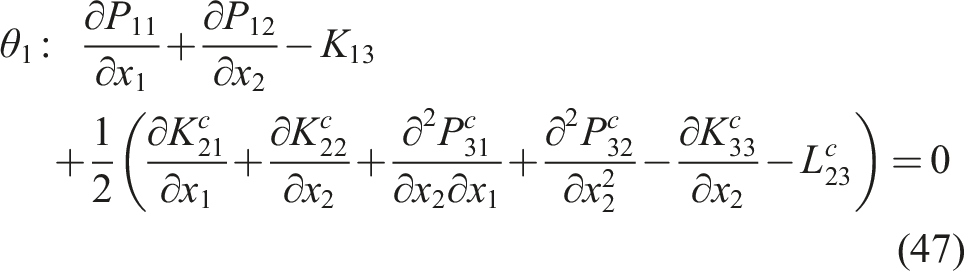
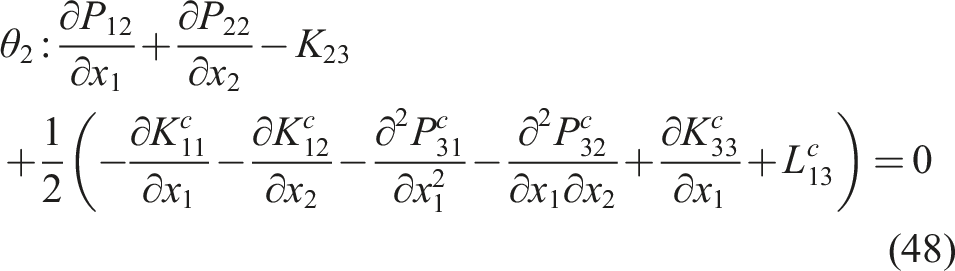
The corresponding boundary conditions in terms of natural and essential variables are given by: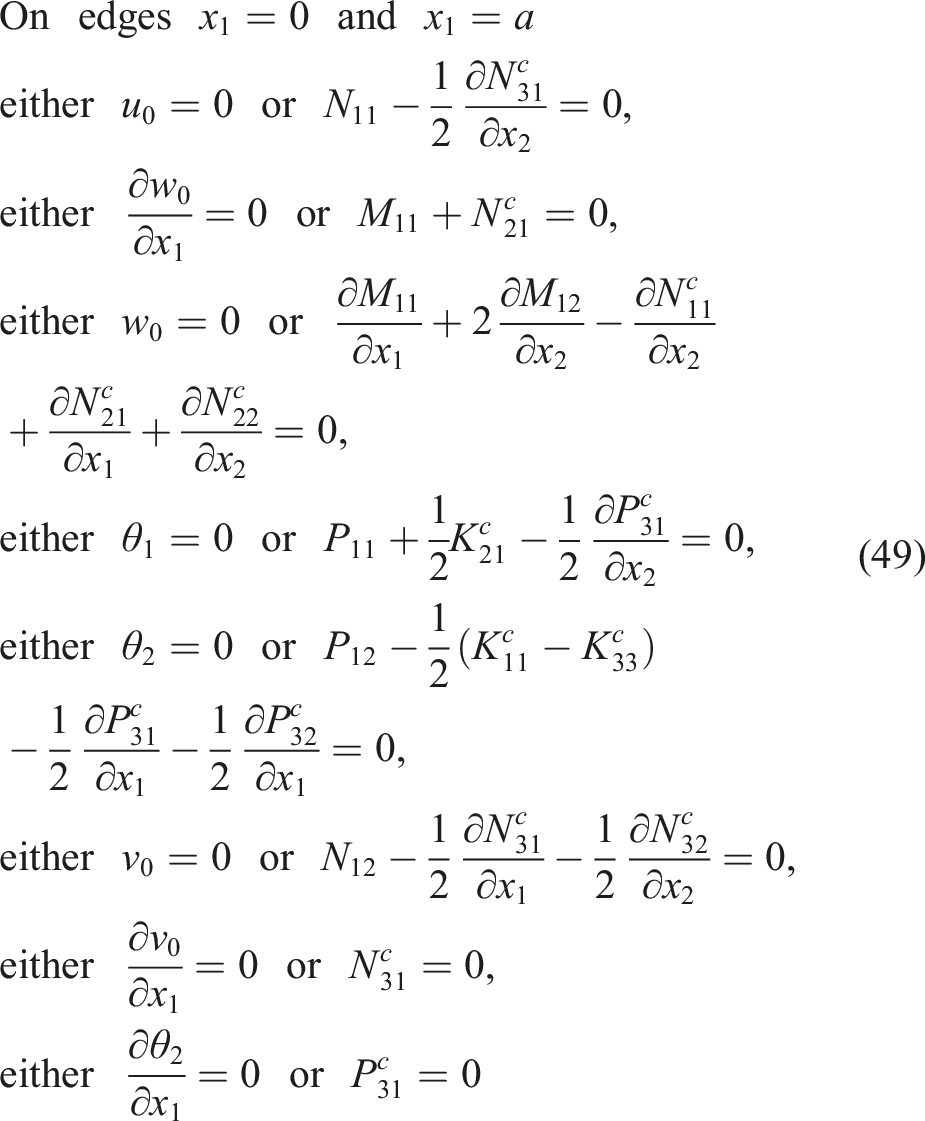
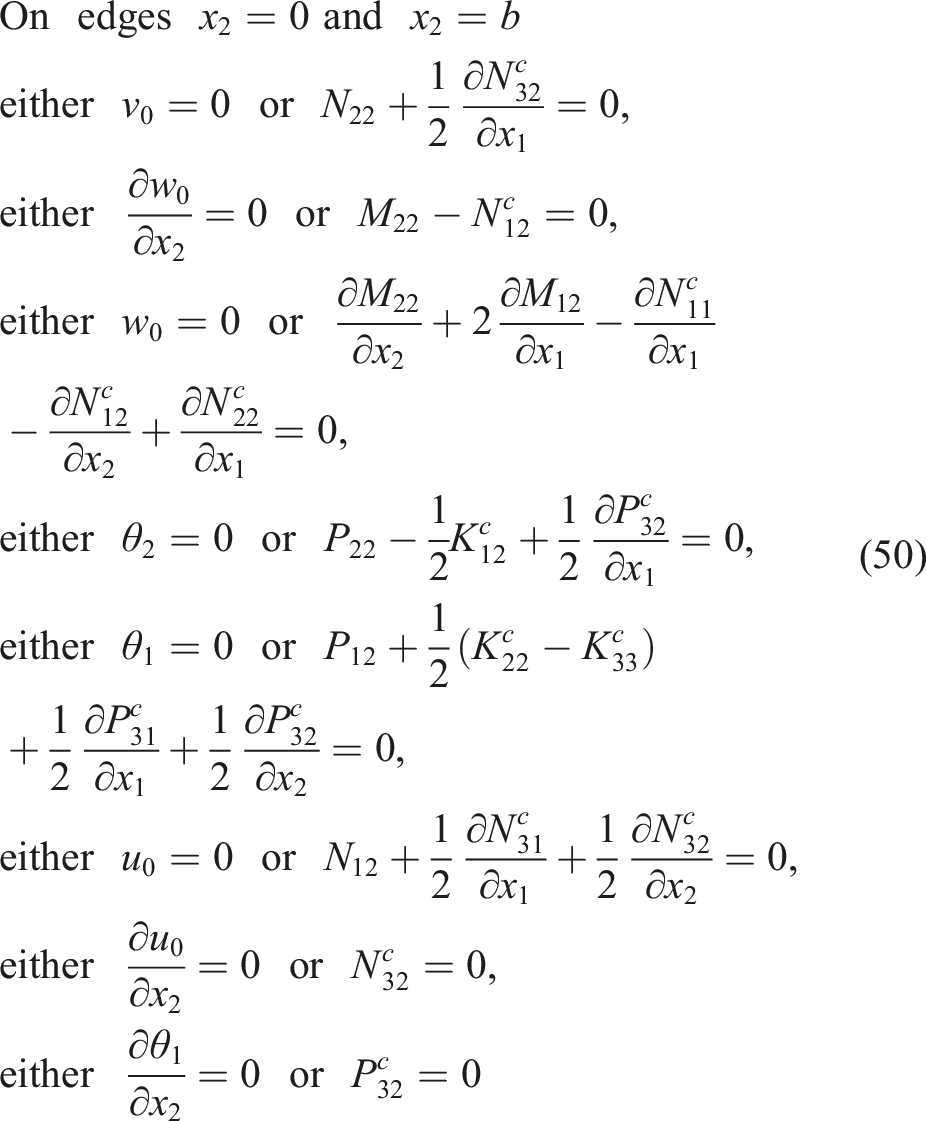
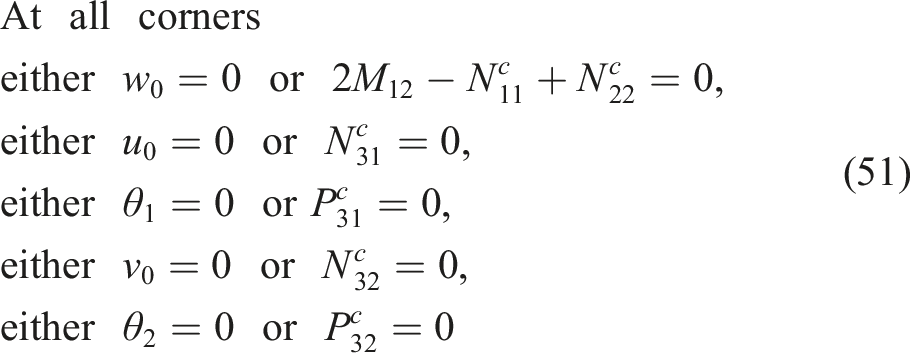
Additionally, the stiffness constants are introduced to describe the elastic stiffness response of the composite laminates described by
48
:
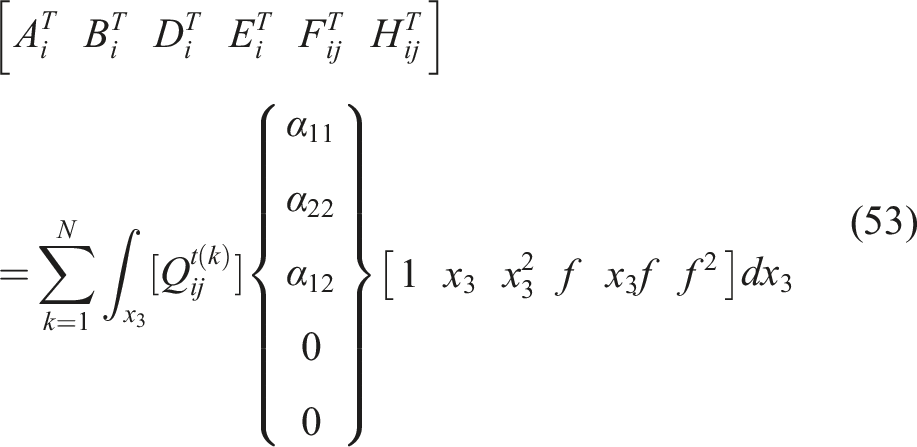






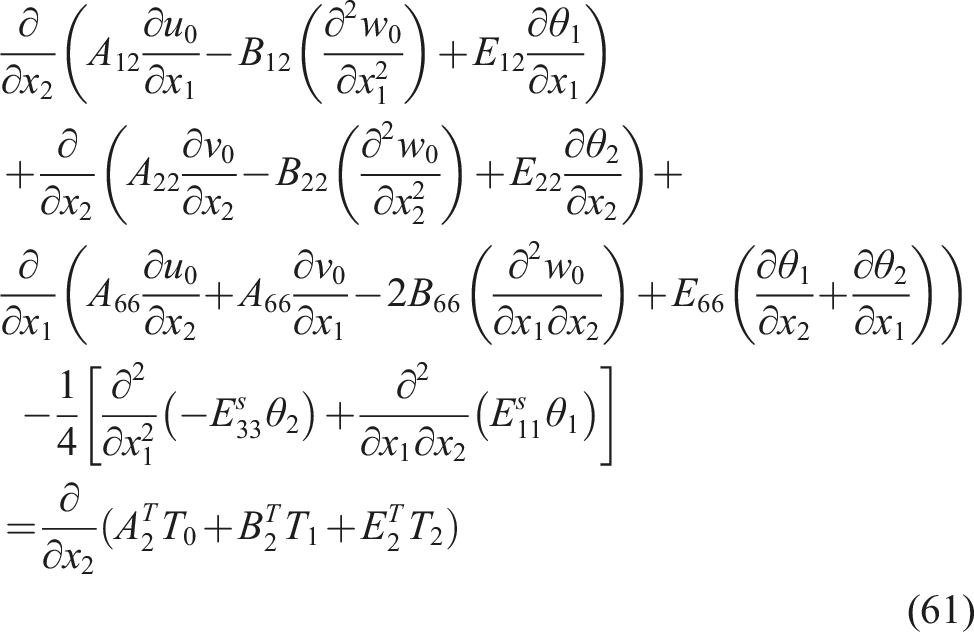
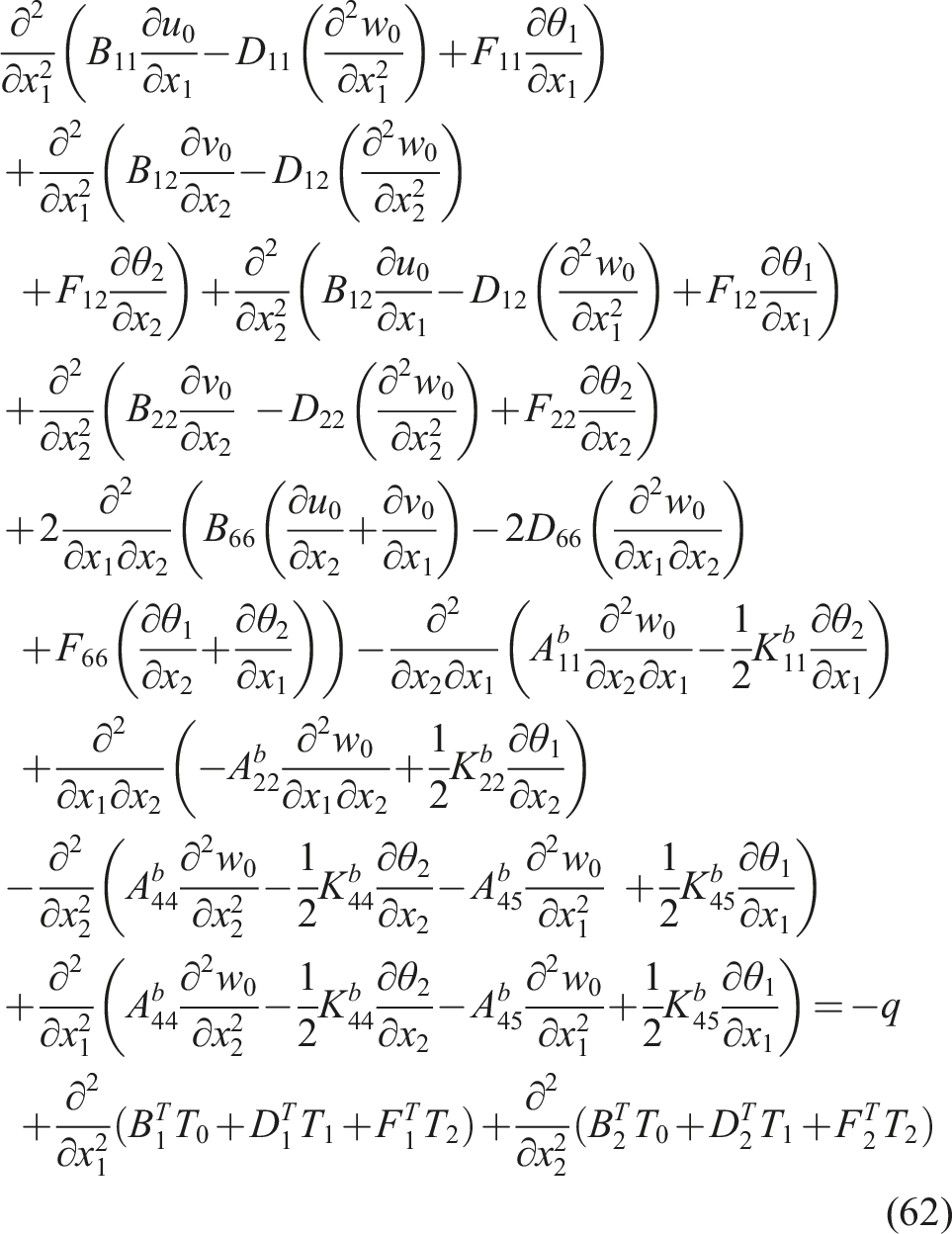
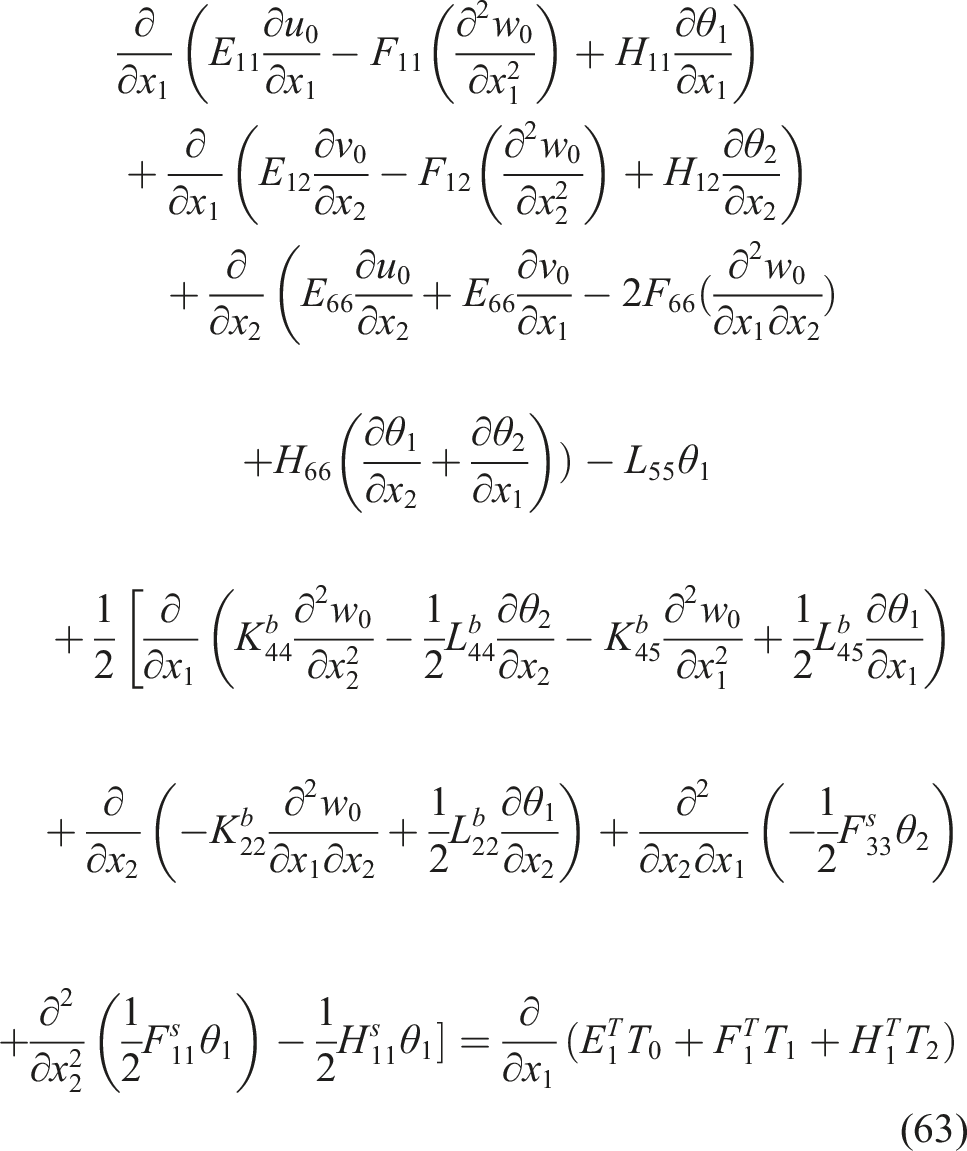
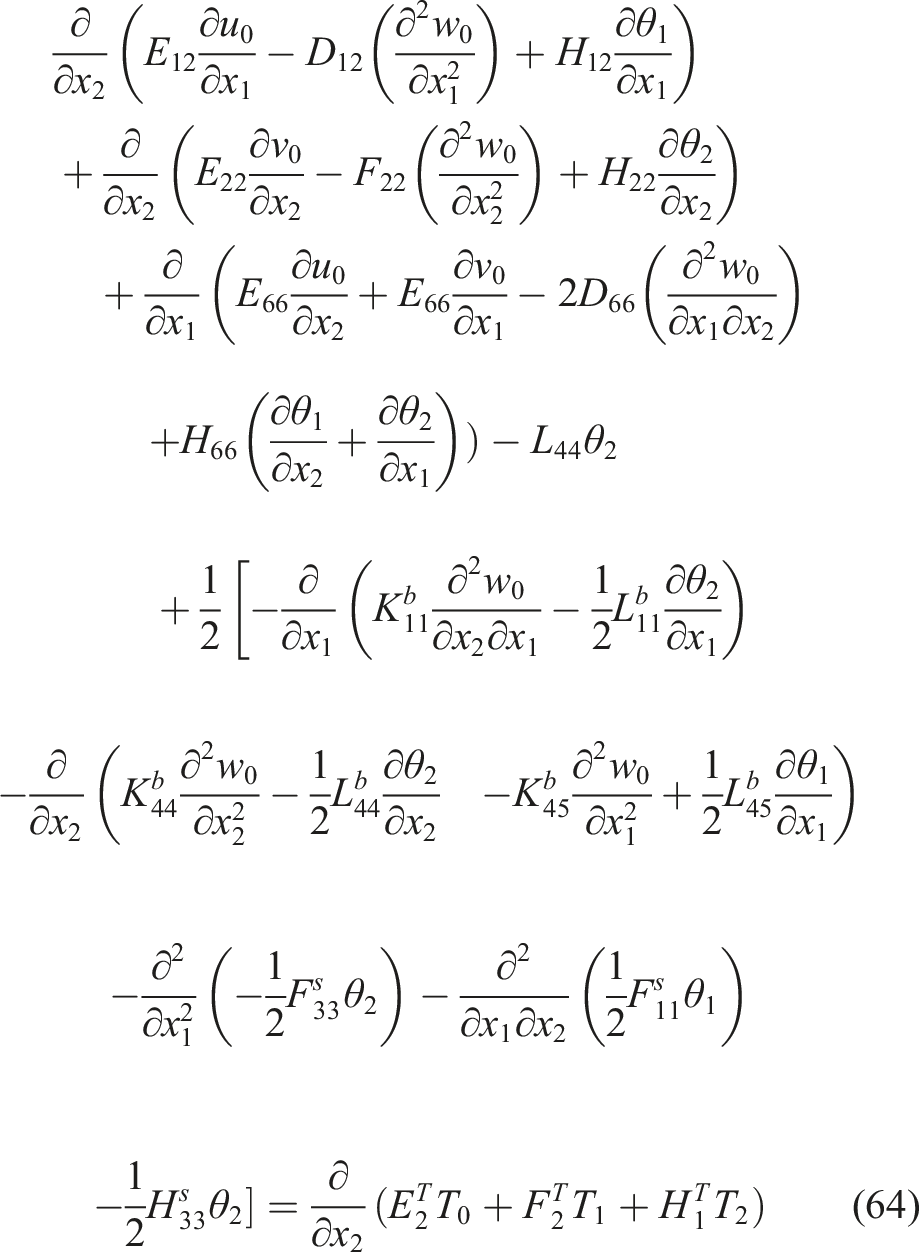
The use of these coefficients in the governing equations (44)–(48) gives rise to the determination of the governing equations (in explicit form) used for cross-ply micro-laminates given by: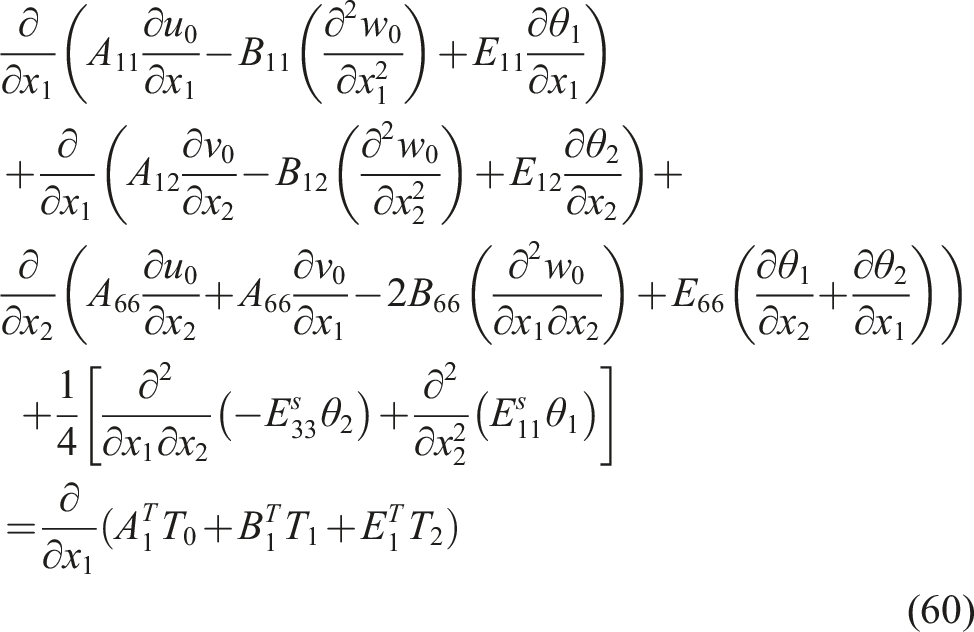
Solution methodology
The governing equations provided in their explicit forms (60)–(64) are solved using Navier’s solution procedure. This solution approach is applicable to plates with simply supported boundary conditions. For other boundary conditions such as clamped or free edges, alternative analytical approaches (e.g., the Lévy-type solution
71
) or numerical methods such as the finite element method may be employed to obtain the solution. The present formulation can be extended to such boundary conditions by adopting appropriate admissible displacement functions or numerical discretization schemes. The present solution assumes a simply supported arrangement, and the boundary conditions that apply on every edge of the microplate, are given as:
48
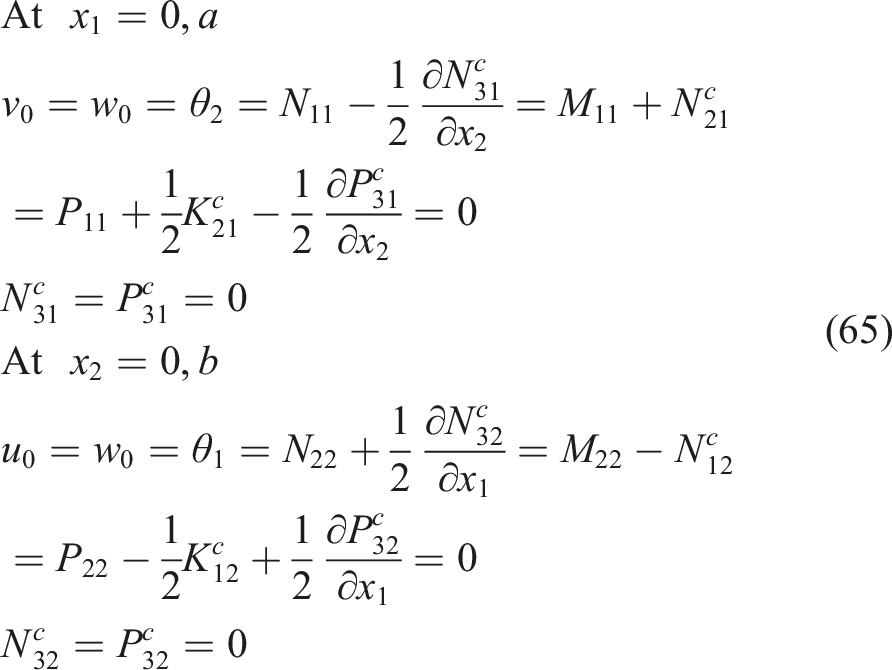
To satisfy the simply supported boundary conditions, the series solution for the displacement variables is given by
77
:









The series solutions given by equations (66)–(75) are substituted into the governing equations to transform them into an algebraic system. The resulting equations can be expressed in a compact matrix form as follows:

Results and discussion
In this section, a comprehensive investigation of bending response of laminated microplates under thermo-mechanical loading, with explicit consideration of the material length-scale effects. Numerical simulations are carried out for various laminate configurations, including single-layer, two-layer, three-layer, four-layer, and six-layer microplates, featuring cross-ply stacking sequences such as [0/90], [0/90/0], [0/90/0/90], [0/90/90/0], and [0/90/0/90/0/90].
The results are expressed as dimensionless transverse deflections under both sinusoidal and uniformly distributed loading conditions. Several examples are focused on the influence of size effects, that is, (l/h) ratio, which plays a critical role in capturing micro-scale size-dependent behavior. A systematic comparison with existing higher-order models is also carried out, demonstrating superior predictive capability of the present model. The findings highlight the necessity of incorporating scale-dependent effects for accurately modeling the mechanical response of micro-structured laminated plates.
For consistency and to facilitate direct comparison with previously published results, the present analysis employs a benchmark orthotropic material model, hereafter referred to as MM1. The constitutive behavior of each lamina is characterized by its orthotropic elastic constants, namely the Young’s moduli (Y11, Y22), shear moduli (G12, G13, G23), and Poisson’s ratio (ν12), which are specified as follows71,78: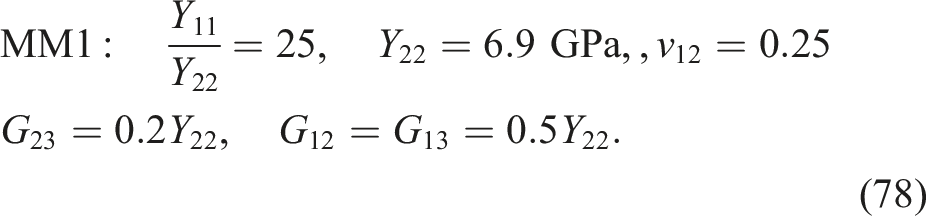
This formulation can also be used for isotropic FG materials if (Y11 = Y22) is considered, taking into account the gradation of material properties through thickness. The coefficients of stiffness (equations (52)–(59)) can be defined according to the gradation law used in FG materials. Moreover, the modified couple stress theory has been used in various works34,35,70 to study the structural response of FG structures. Unless otherwise stated, the thickness of the laminated composite microplate is assumed to be h = 25 µm for all numerical case studies presented in this section. 1 This thickness is consistent with typical dimensions of micro-electromechanical system (MEMS) components, ensuring that the selected configuration realistically reflects practical micro-scale applications.
Bending response of laminated microplates under pure mechanical loading
This subsection examines the bending behavior of laminated microplates subjected to a uniform transverse mechanical load q0. For this representative case, the dimensionless central deflection is introduced as
58
:
Dimensionless deflection
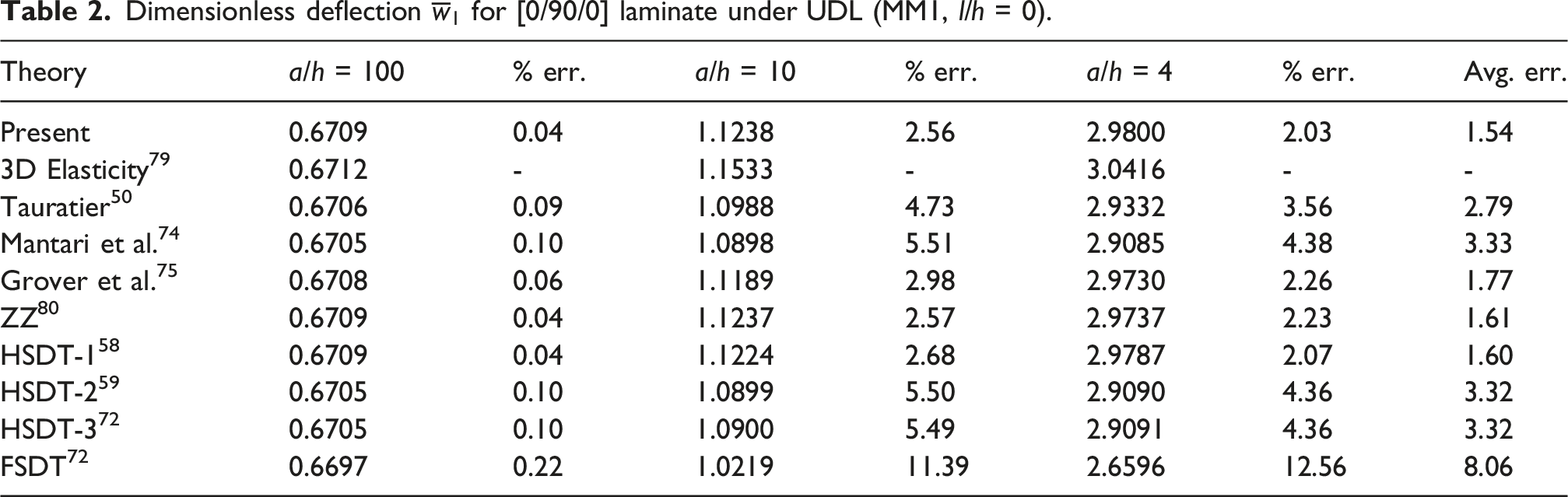


Dimensionless stresses and deflection for [0/90/0] laminated plate for different a/h values (MM1, l/h = 0, SSL).
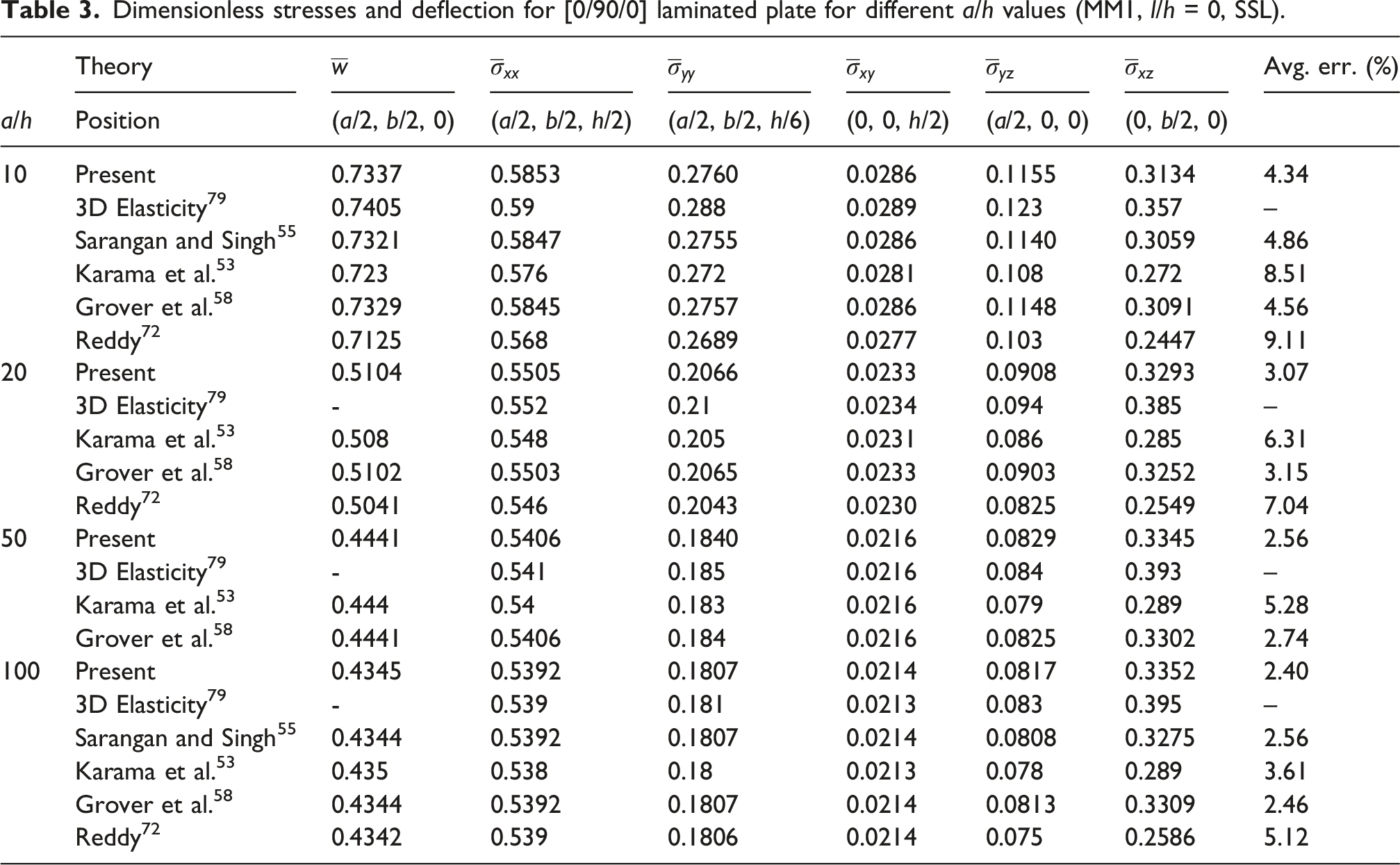
The results are compared with 3D elasticity solution, 79 Sarangan and Singh, 55 Grover et al., 58 Karama et al., 53 and Reddy’s HSDT. 72 It is observed that the present theory performs well even for thick plates (a/h ≤ 10). For the moderately thick plate case (a/h = 10), the present formulation predicts the response with an average error of approximately (4.34%) relative to the three-dimensional elasticity solution. This error level is slightly lower than that obtained from the zigzag theory of Sarangan and Singh 55 ((4.86%)) and is also marginally better than the higher-order theory of Grover et al. 58 (4.56%). In contrast, the formulations proposed by Karama et al. 53 and Reddy 72 exhibit significantly larger deviations, with average errors of approximately (8.51%) and (9.11%), respectively. This indicates that the present model provides improved accuracy compared with several classical higher-order shear deformation theories for moderately thick laminated plates.
For the thick plate case (a/h = 20), the present formulation demonstrates an average error of about (3.07%), which is comparable to the predictions of Grover et al. 58 (3.15%). The theories of Karama et al. 53 and Reddy 72 show larger deviations of (6.31%) and (7.04%), respectively. These results suggest that the present formulation maintains good predictive capability for thick plates where transverse shear deformation effects are significant.
For the intermediate thickness ratio (a/h = 50), the present formulation yields an average error of approximately (2.56%), which is slightly lower than the corresponding error obtained using the formulation of Grover et al. 58 (2.74%). The theory proposed by Karama et al. 53 shows a comparatively larger deviation of about (5.28%). This demonstrates that the present model retains good accuracy even for moderately thin laminated plates.
For the thin-plate case (a/h = 100), the present formulation provides highly accurate predictions with an average error of about (2.40%). Comparable results are obtained using the models of Grover et al. 58 (2.46%) and Sarangan and Singh 55 (2.56%). In contrast, the classical higher-order theories of Karama et al. 53 and Reddy 72 exhibit larger deviations of approximately (3.61%) and (5.12%), respectively.
Overall, the present formulation consistently demonstrates lower or comparable errors relative to several established higher-order and zigzag plate theories across a wide range of thickness ratios. The results indicate that the proposed theory is capable of accurately predicting both deflection and stress components of laminated composite plates under sinusoidal loading conditions.
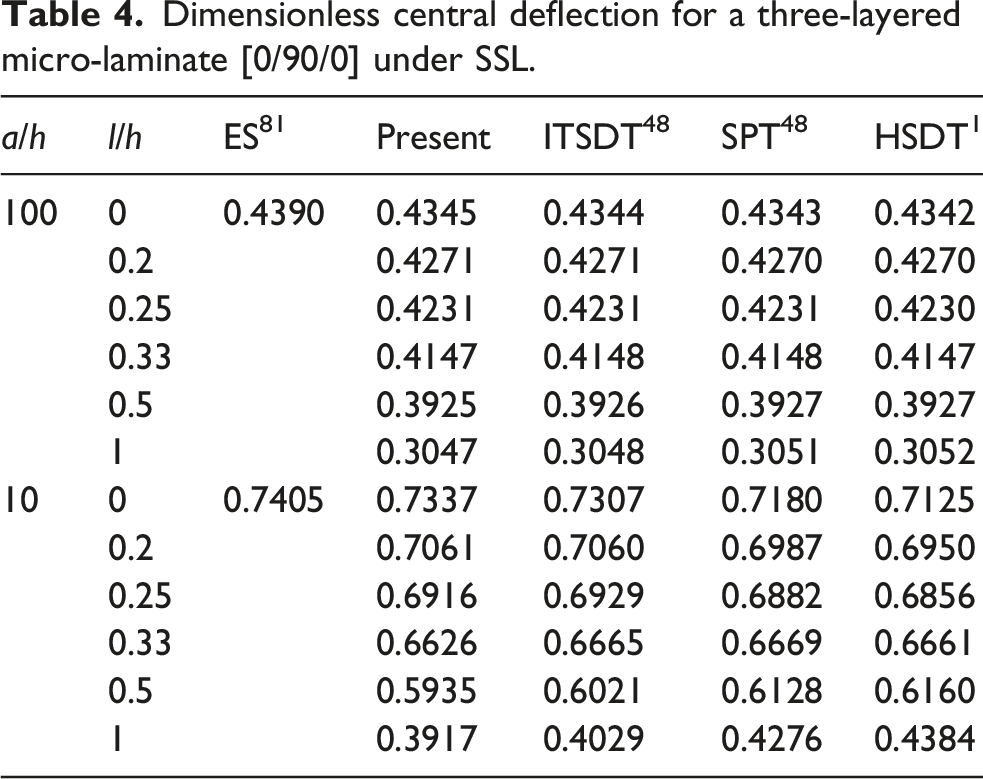
Dimensionless central deflection for a three-layered micro-laminate [0/90/0] under SSL.
Dimensionless central deflection for a four-layered composite microplate [0/90/90/0] under sinusoidal loading.
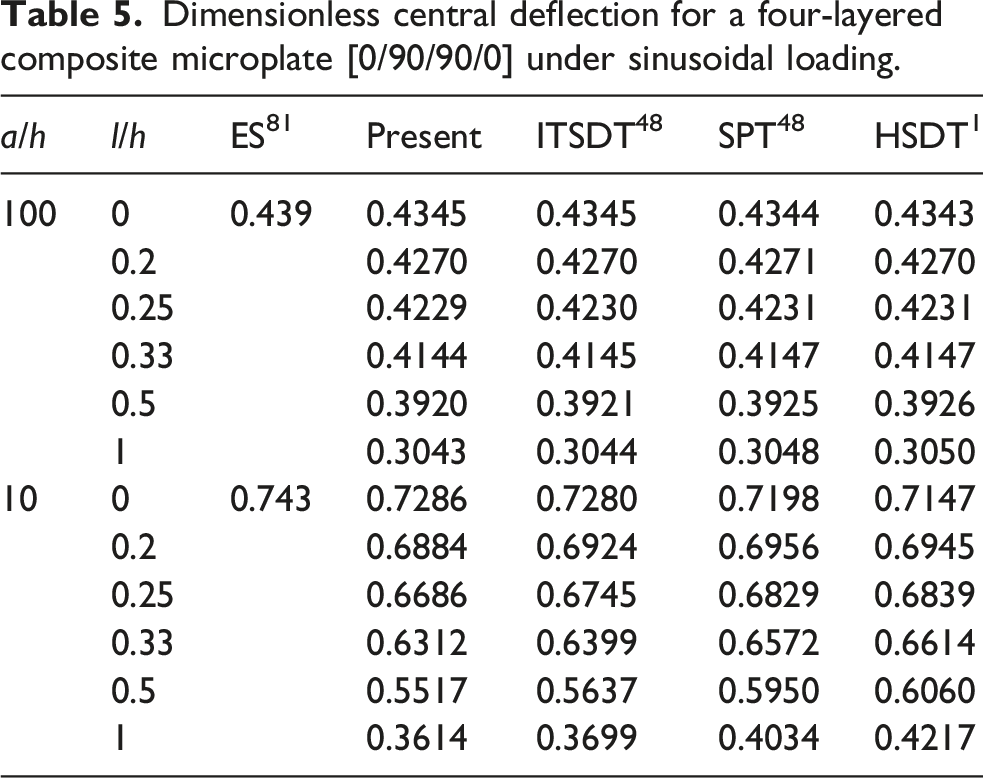
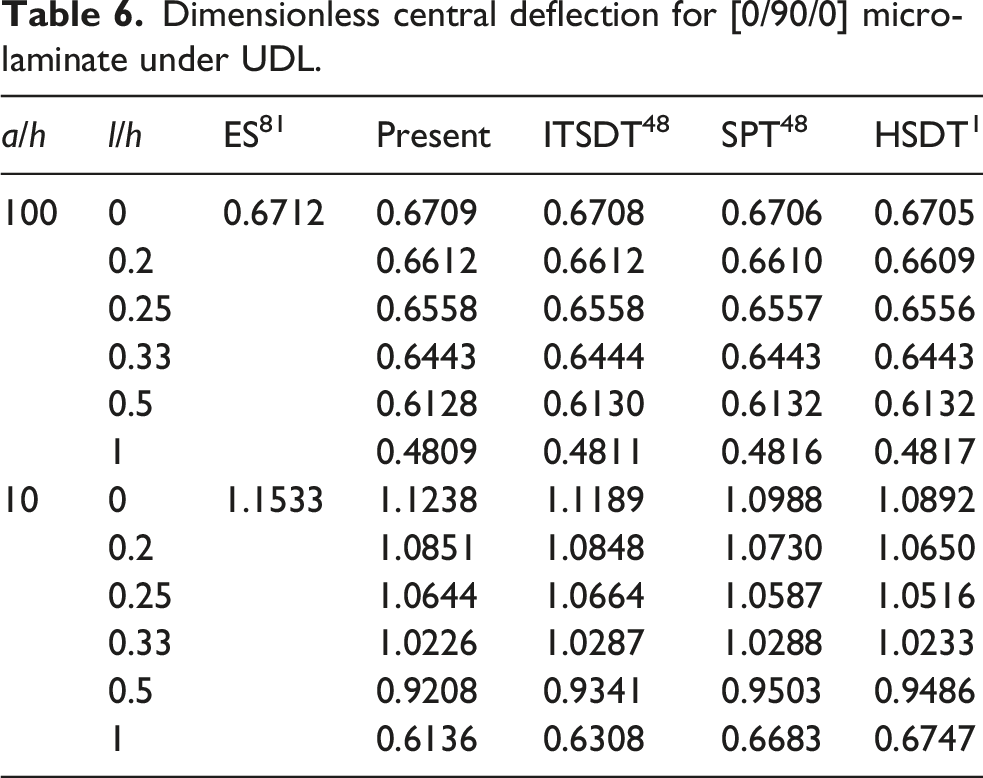
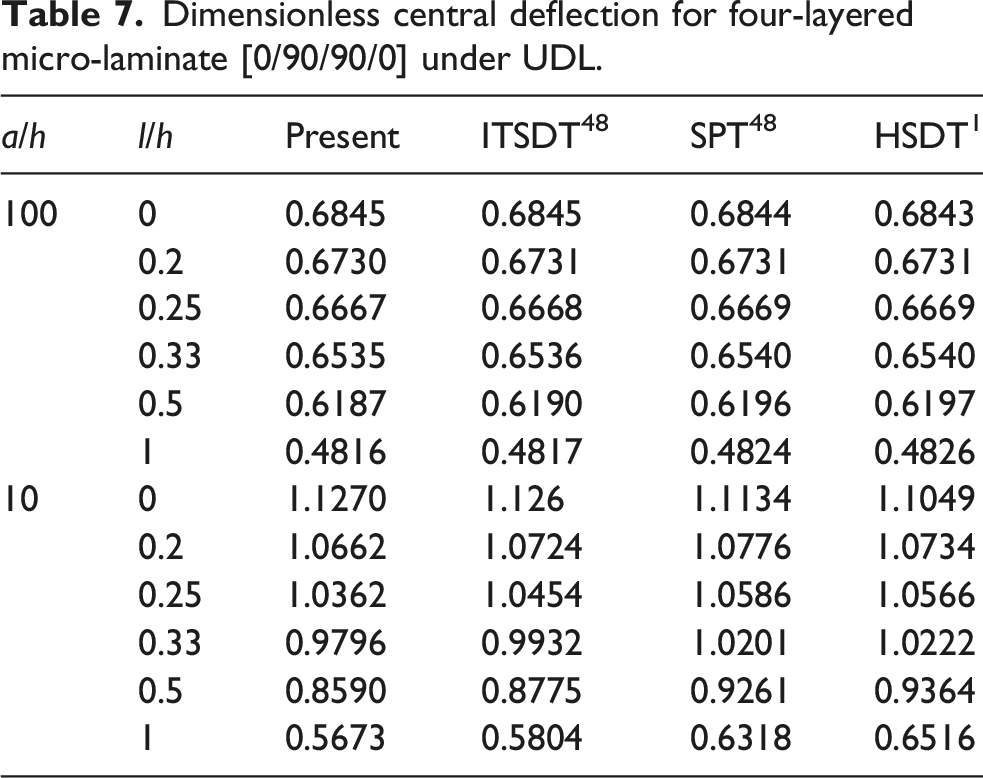
The present model exhibits superior agreement with the ES in the classical regime. For finite l/h, the proposed formulation consistently captures the stiffening behavior induced by micro-structural size effects while remaining in close correspondence with other refined theories. For example, at a/h = 10 and l/h = 1, results illustrate prominent size effects considered by present model in comparison to those from ITSDT, SPT, and HSDT. Moreover, as the plate becomes slender (a/h = 100), the discrepancies among various theories diminish, and all approaches tend toward the classical response. Notably, the present formulation accurately reproduces both the conventional plate behavior (l/h → 0) and the enhanced stiffness observed at higher l/h values.
Furthermore, the through thickness distributions of the dimensionless in-plane normal stresses and transverse shear stresses are investigated for the four-layered [0/90/90/0] laminate with a span-to-thickness ratio of a/h = 10 subjected to sinusoidal surface loading (SSL). The variation of in-plane stresses Through thickness plots for the dimensionless transverse shear stresses 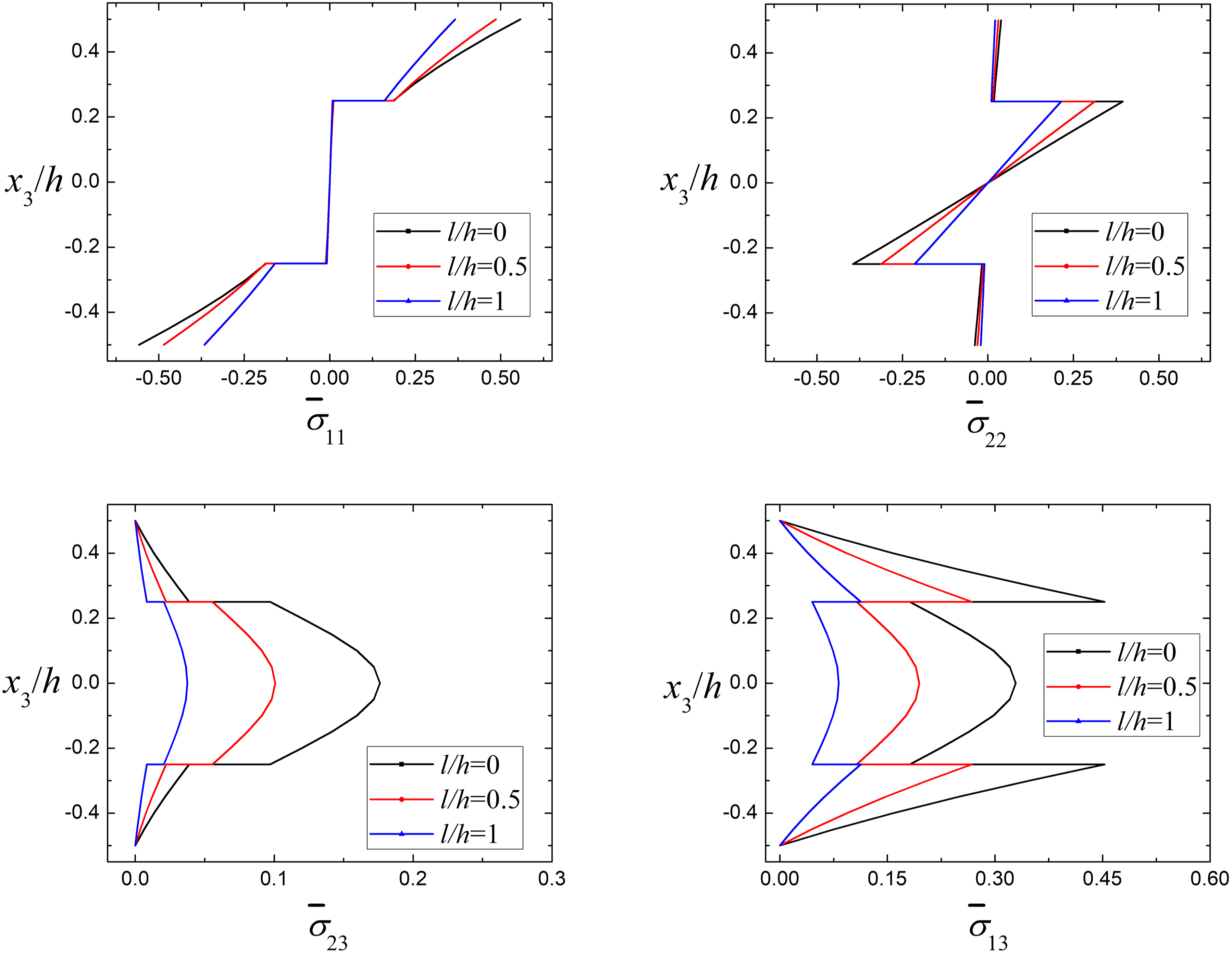
Dimensionless central deflection for [0/90/0] micro-laminate under UDL.
Dimensionless central deflection for four-layered micro-laminate [0/90/90/0] under UDL.
Finally, Figure 2 illustrates the influence of stacking sequence by comparing multilayered anti-symmetric laminates [0/90]
n
(n = 1, 2, 3) with a/h = 10 under SSL. A decreasing trend in deflection with l/h is evident, with the two-layered laminate showing the steepest reduction compared to the other cases. Dimensionless deflection for anti-symmetric [0/90]
n
microplates.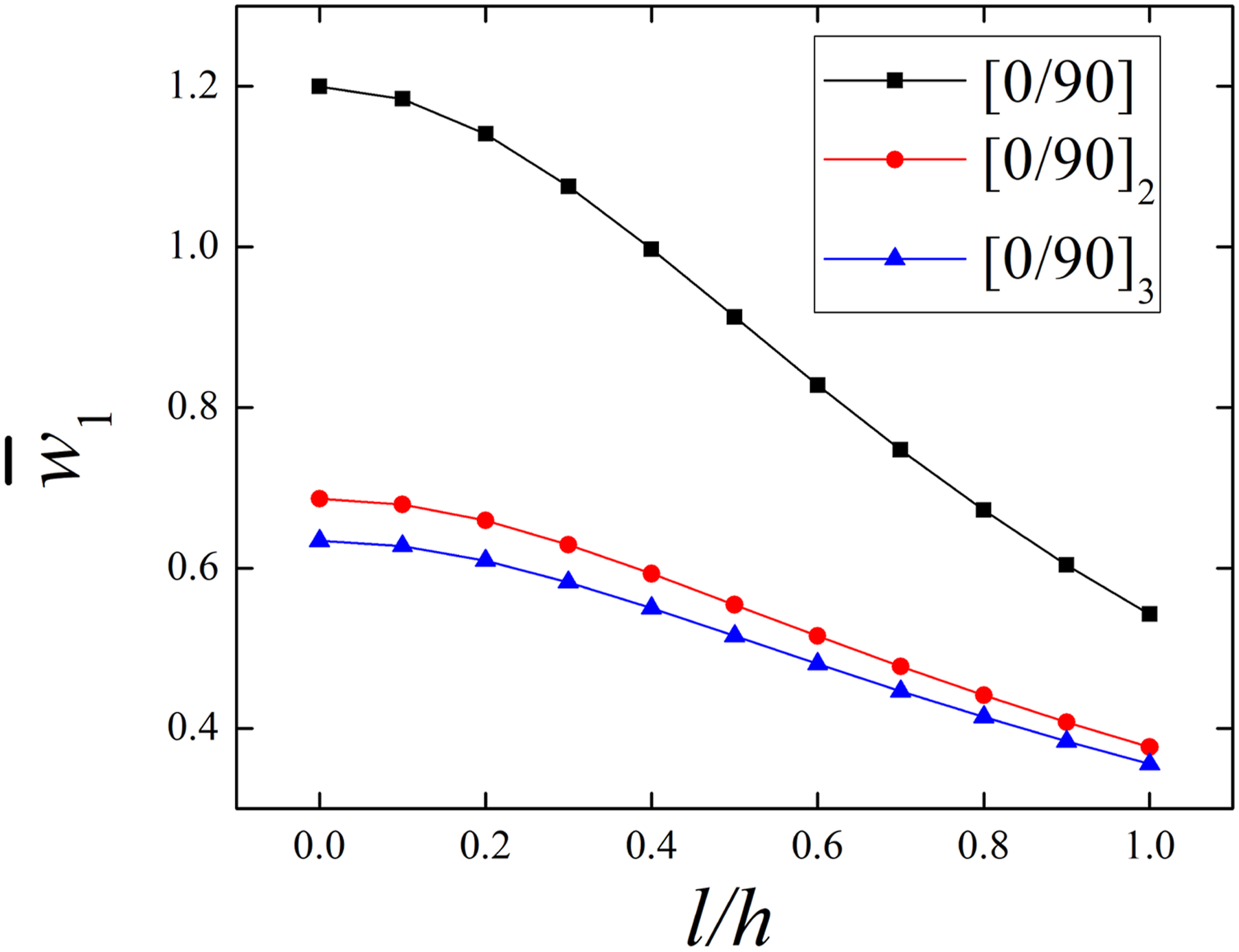
In addition, the effect of the modular ratio (Y11/Y22) is examined on the deflection response for [0/90/90/0] micro-laminate. The results thus obtained are given in Figure 3 for l/h ratios varying from 0 to 1 and a/h = 10. The ratio (Y11/Y22) has an inverse relationship with the deflection when it comes to dimensionless form. Dimensionless deflection with varying l/h for different (Y11/Y22) ratios for [0/90/90/0] microplates.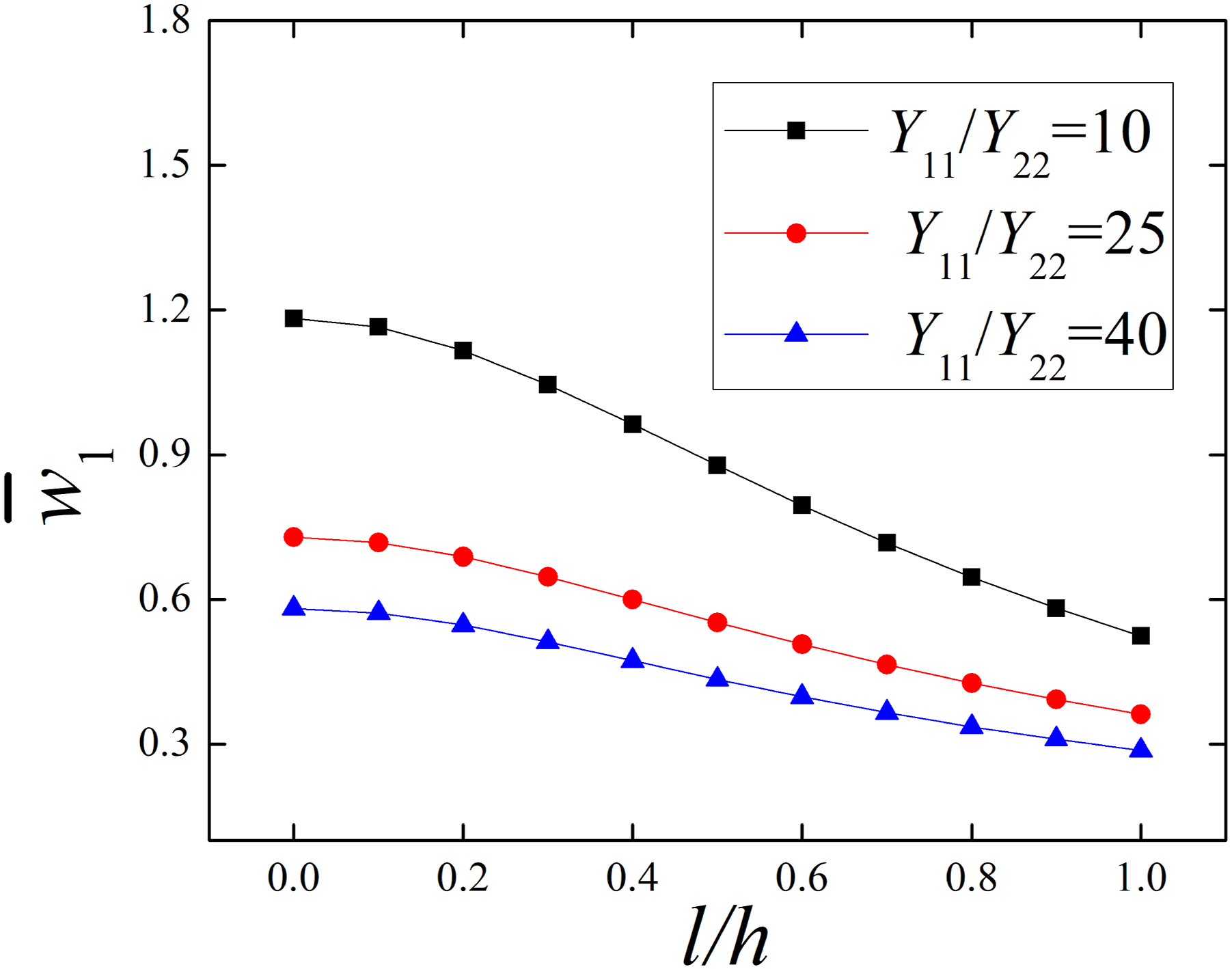
Bending response of laminated microplates under thermal loading
This subsection addresses the static bending behavior of cross-ply microplates under a pure thermal load. The dimensionless central deflection is defined as
76
:
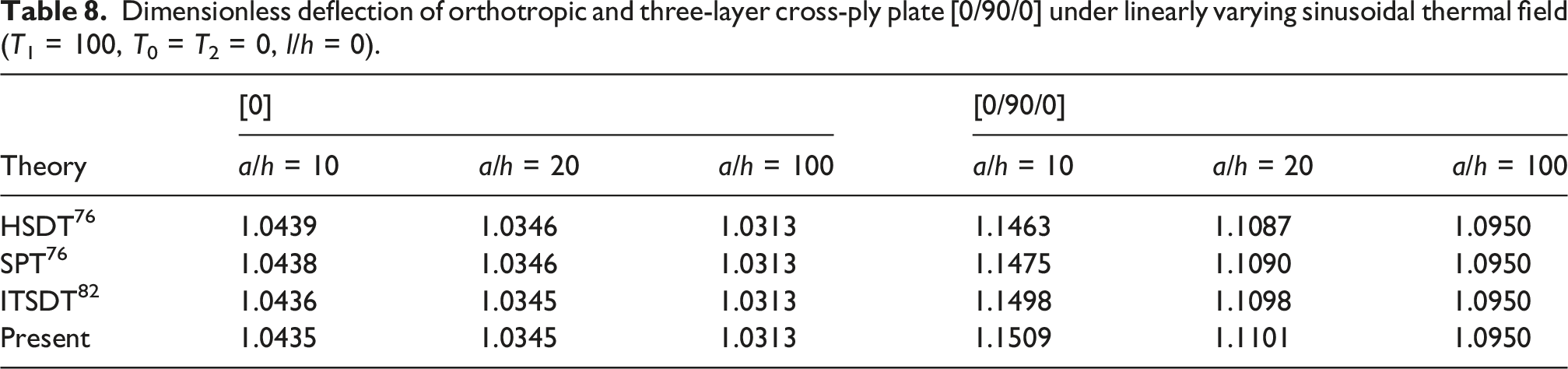
Dimensionless deflection of orthotropic and three-layer cross-ply plate [0/90/0] under linearly varying sinusoidal thermal field (T1 = 100, T0 = T2 = 0, l/h = 0).
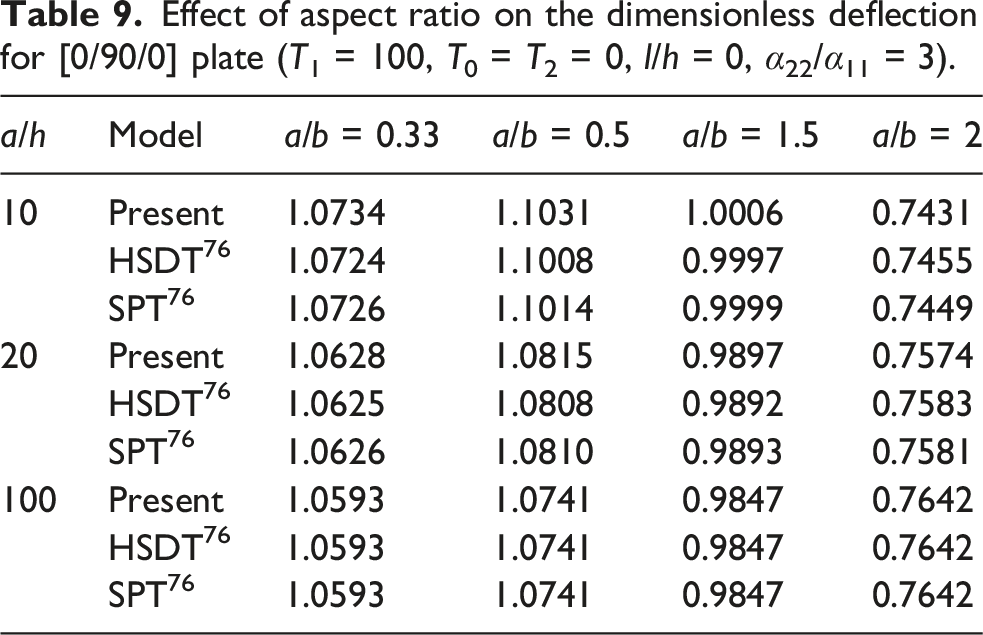
Effect of aspect ratio on the dimensionless deflection for [0/90/0] plate (T1 = 100, T0 = T2 = 0, l/h = 0, α22/α11 = 3).
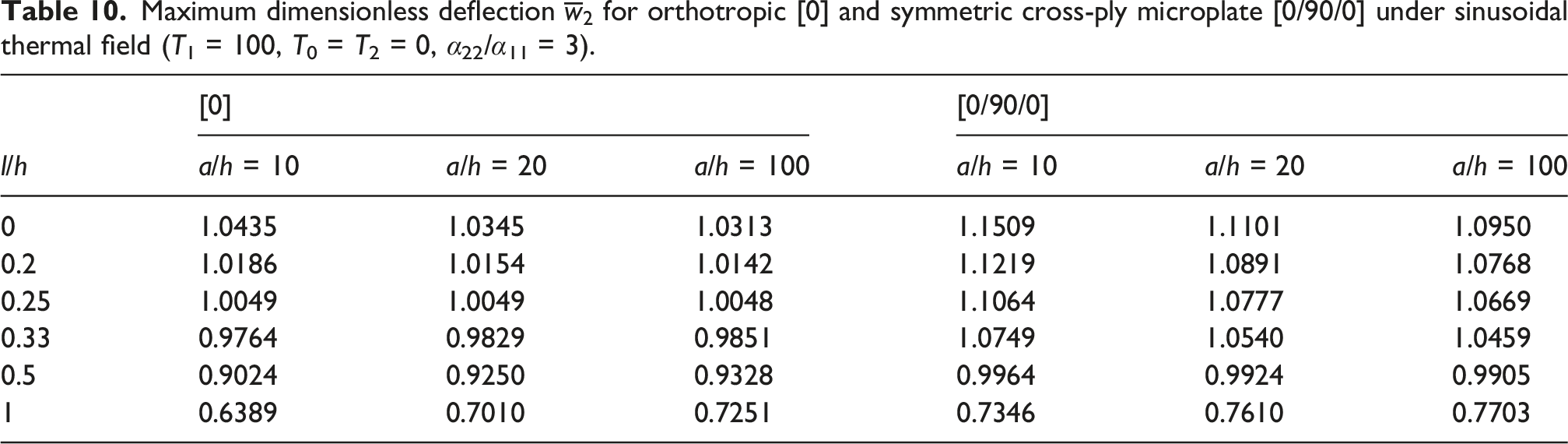
Maximum dimensionless deflection
Dimensionless deflection for orthotropic [0] and symmetric cross-ply microplate [0/90/0] under uniform temperature field (T1 = 100, T0 = T2 = 0, α22/α11 = 3).
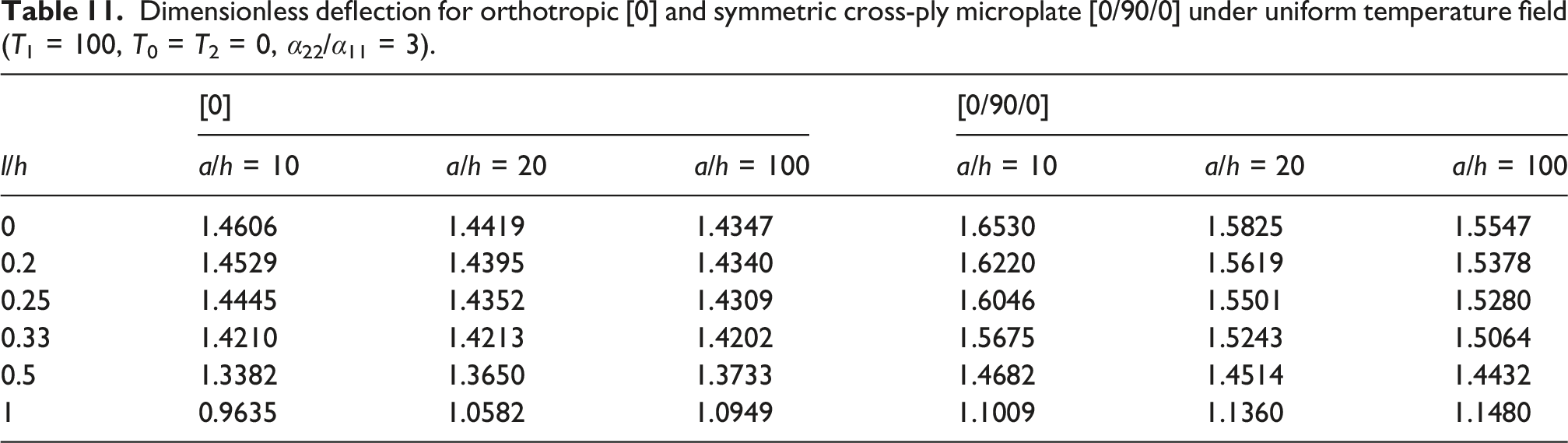
Moreover, the cross-ply [0/90/0] laminate consistently exhibits larger deflections than the single-layer [0] laminate across all a/h and l/h values. The effect is most significant for a/h = 10 and gradually diminishes for slender plates (a/h = 100), where the influence of transverse shear deformation and scale effects becomes negligible, and the responses approach those predicted by classical plate theory.
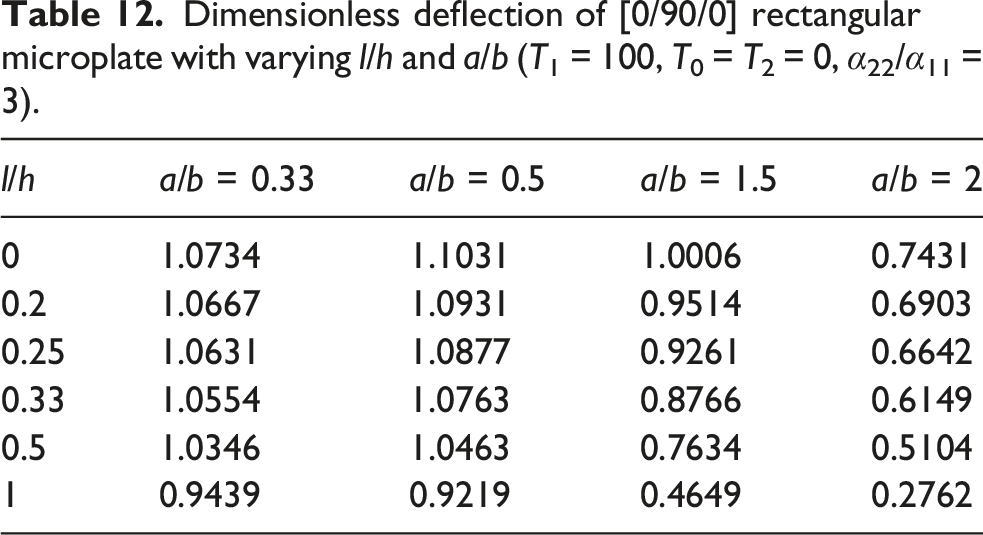
Dimensionless deflection of [0/90/0] rectangular microplate with varying l/h and a/b (T1 = 100, T0 = T2 = 0, α22/α11 = 3).
In addition to this, the study is further carried out for anti-symmetric micro-laminates having the stacking sequence [0/90]
n
(n = 1, 2, 3), which are exposed to sinusoidal thermal loading (T1 = 100, T0 = T2 = 0, α22/α11 = 3). The plot between Dimensional deflection 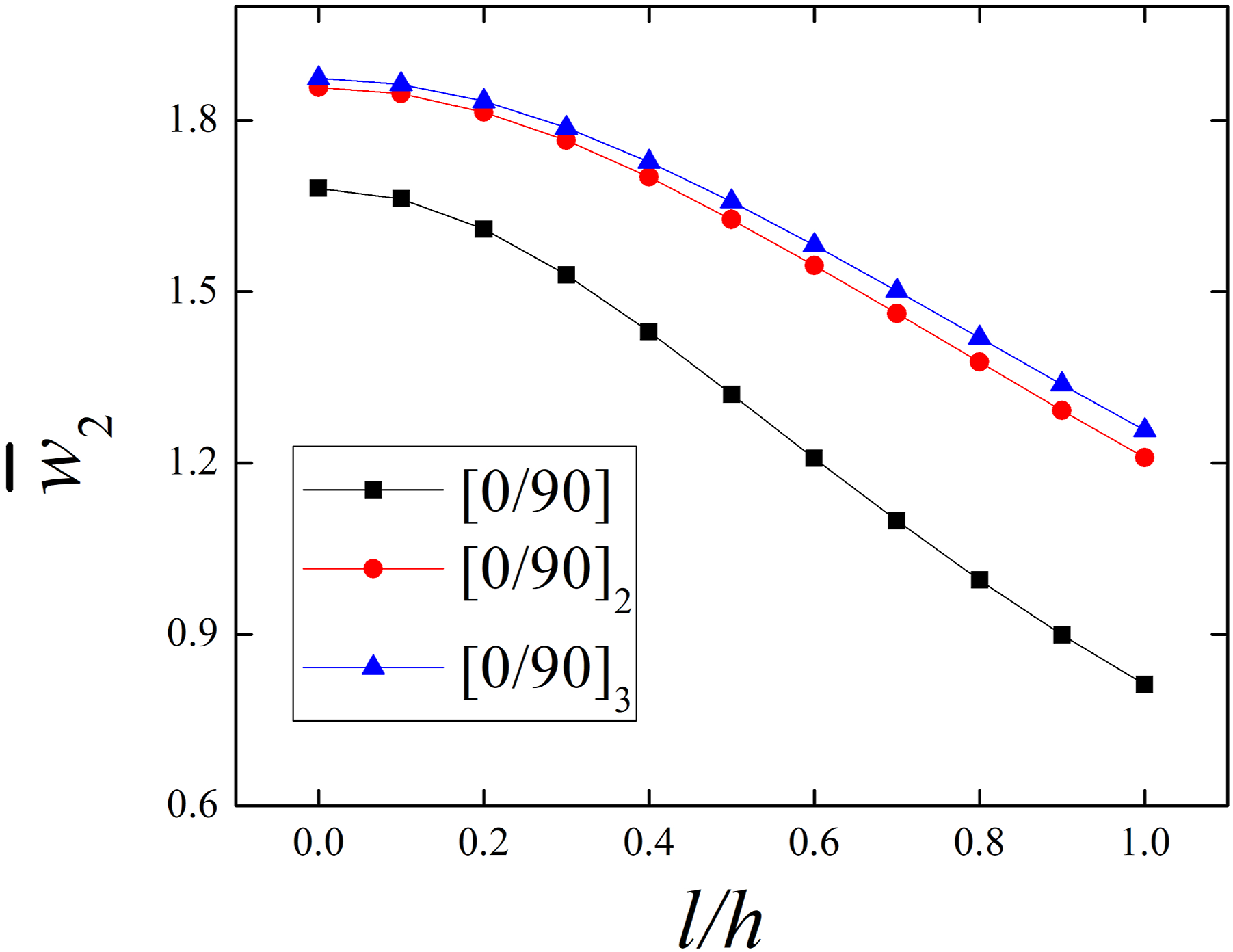
Furthermore, the effect of the thermal expansion coefficient ratio (α22/α11) on the dimensionless deflection Dimensionless deflection for varying l/h and different thermal coefficient ratios (α22/α11) for four-layered microplate [0/90/90/0].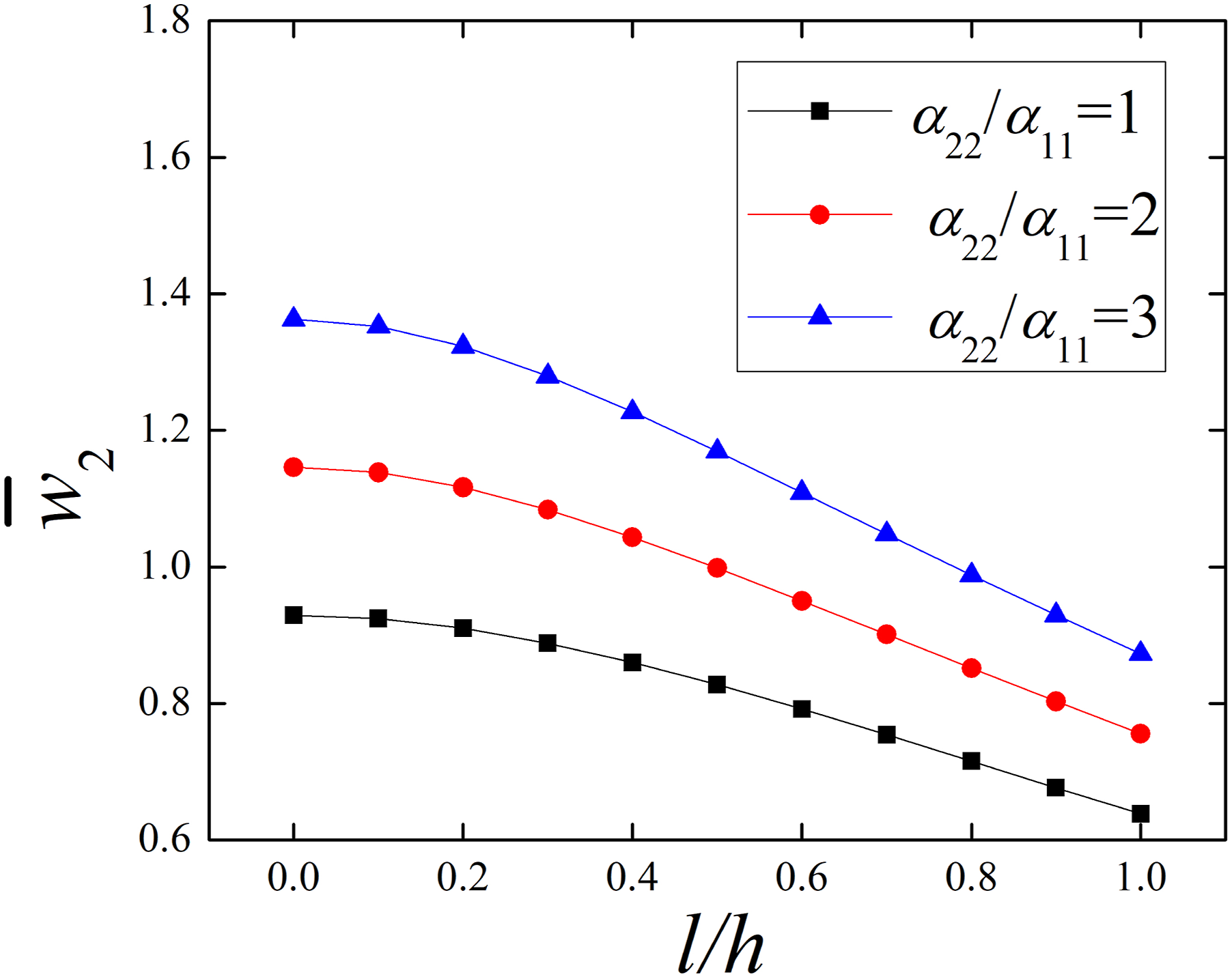
Figure 6 illustrates the variation of Variation in dimensionless deflection with l/h for different types of through thickness temperature variations for a three-layered microplate [0/90/0].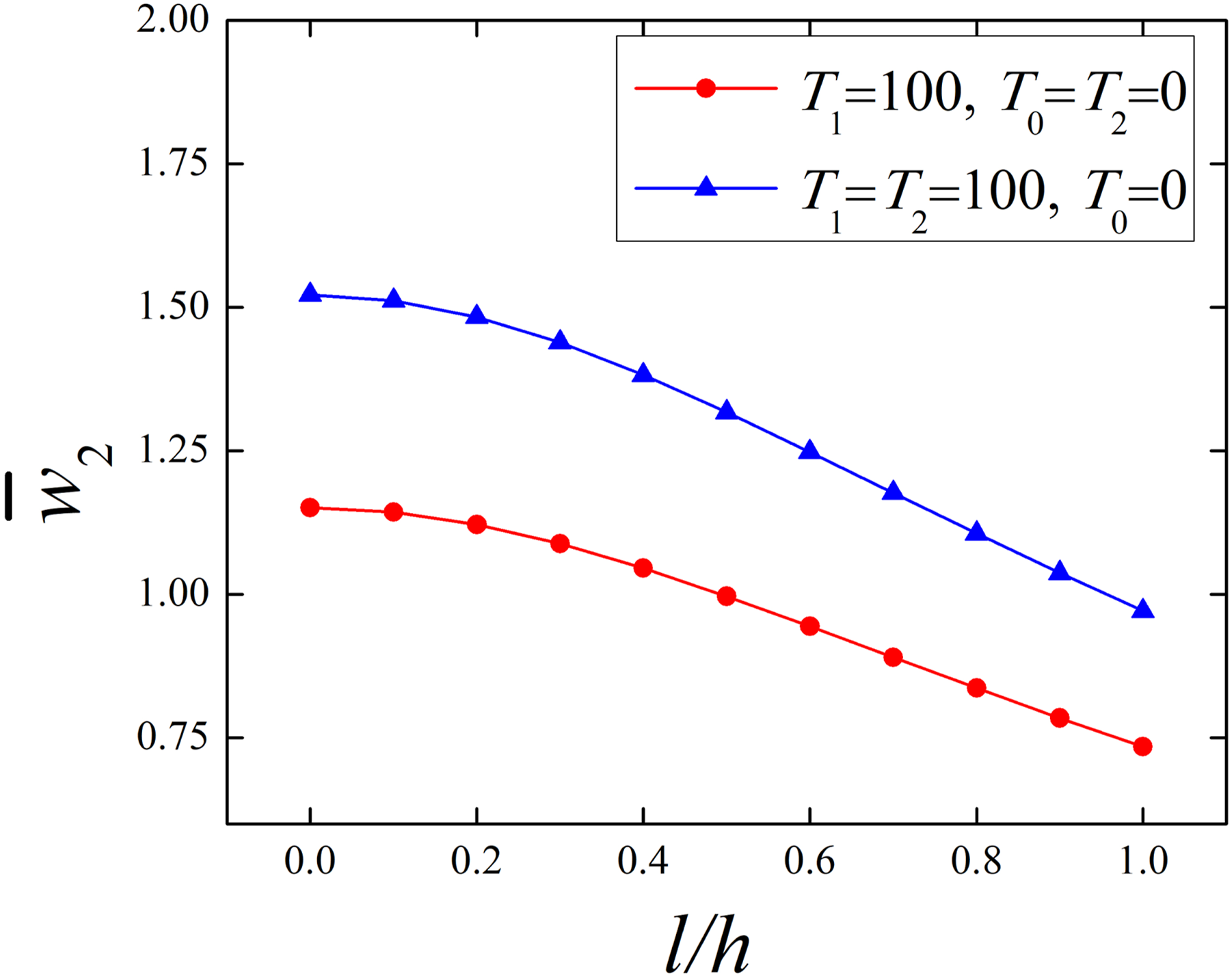
Bending response of laminated microplates under combined thermal and mechanical loads
This subsection addresses the static bending behavior of cross-ply microplates under combined thermo-mechanical load. For this case, the dimensionless central deflection is defined as
76
:

Dimensionless deflection
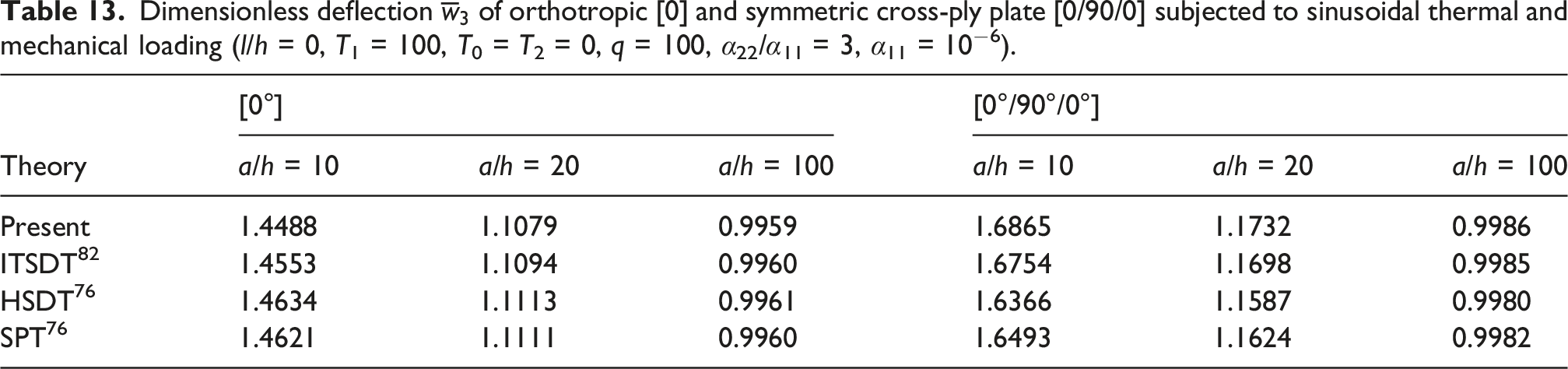
Size-dependent dimensionless deflection of single-ply [0] and [0/90/0] microplates under sinusoidal thermo-mechanical load (T1 = 100, T0 = T2 = 0, q = 100, α22/α11 = 3, α11 = 10−6).
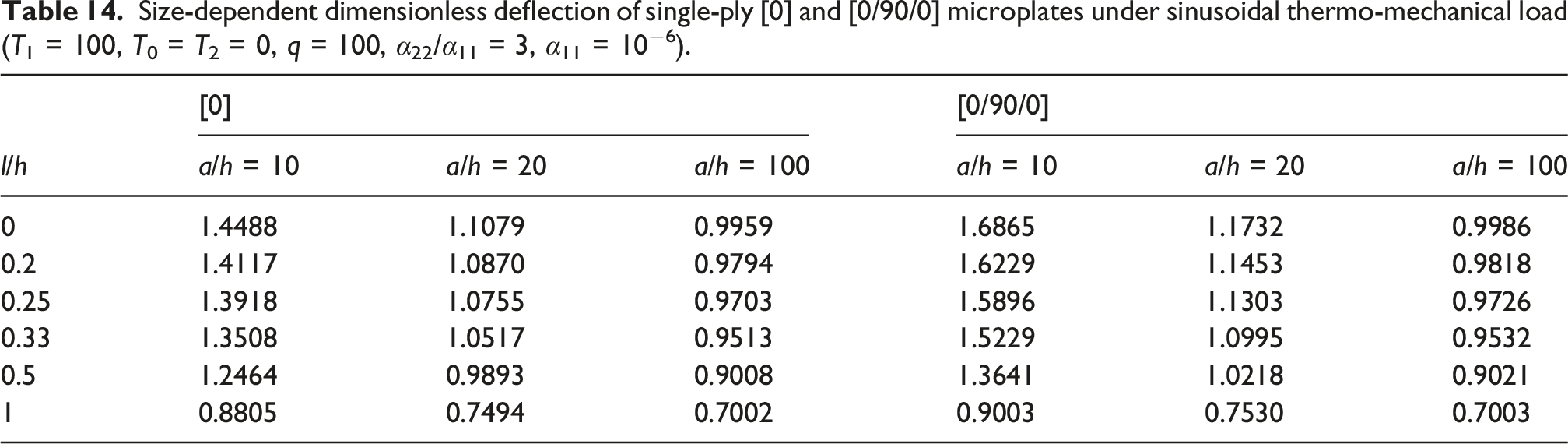
Size-dependent dimensionless deflection of single-ply [0] and symmetric three-layer [0/90/0] microplates under uniform temperature field and uniform transverse field (T1 = 100, T0 = T2 = 0, q = 100, α22/α11 = 3, α11 = 10−6).
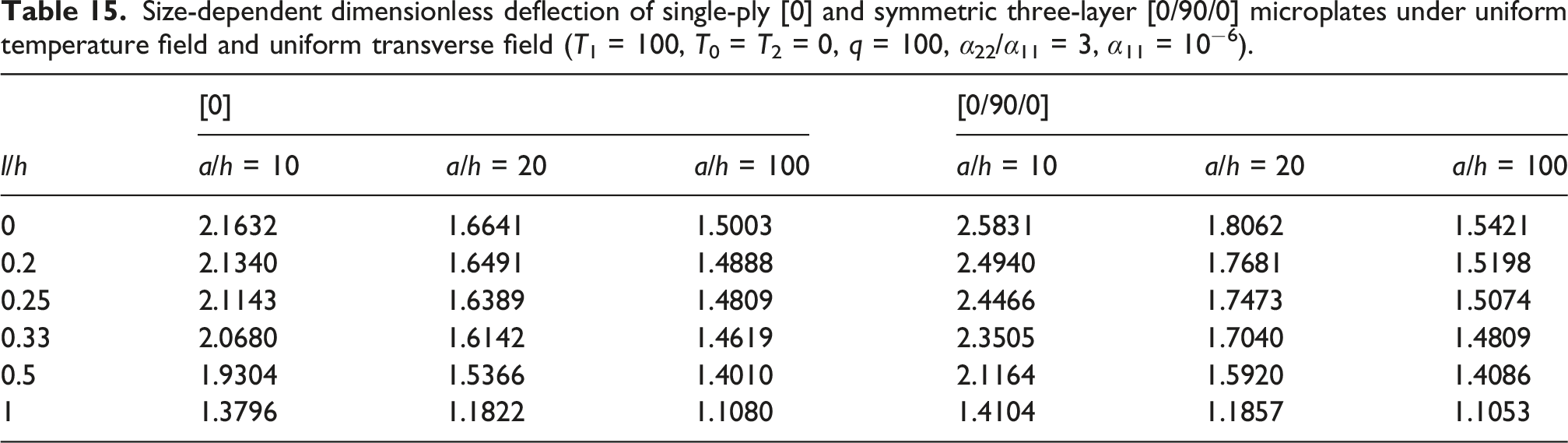
In addition, the response of the anti-symmetric micro-laminates [0/90]
n
(n = 1, 2, 3) is investigated when subjected to sinusoidal thermo-mechanical loading. Figure 7 shows the effect of (l/h) on Dimensionless deflection for [0/90]
n
microplate under sinusoidal thermo-mechanical load.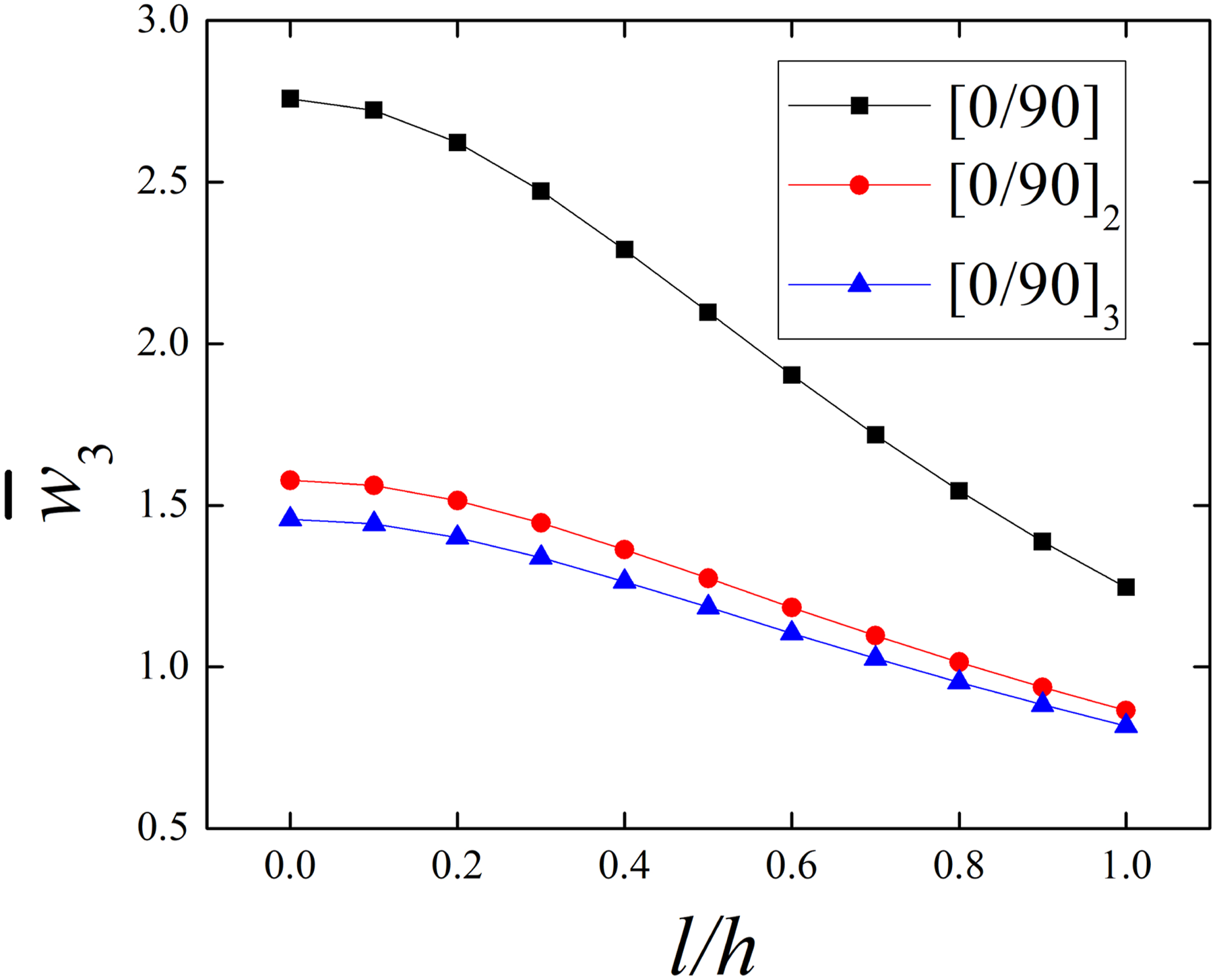
Finally, the influence of the material anisotropy ratio (Y11/Y22) on the dimensionless deflection Variation in dimensionless deflection 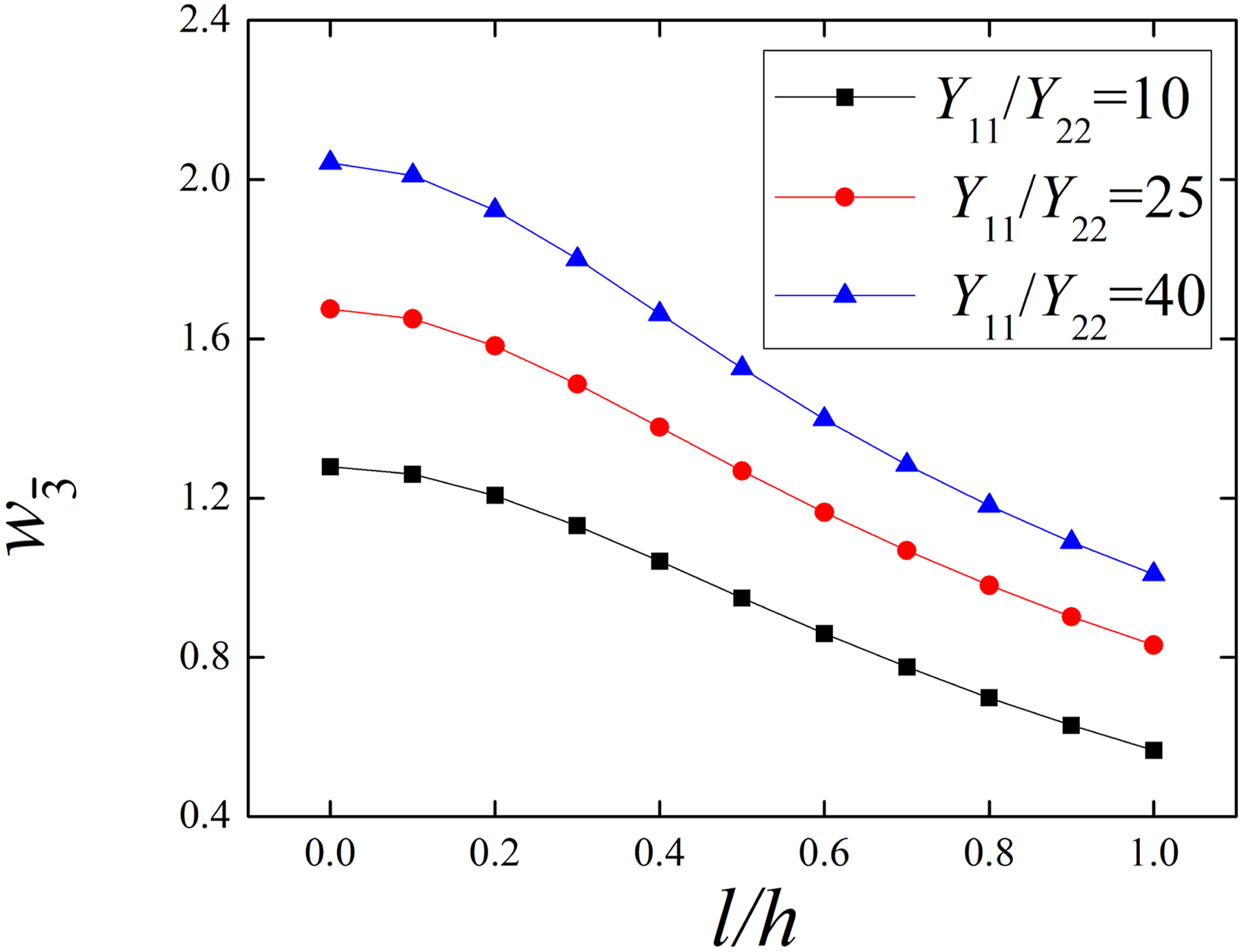
Conclusion
Laminated composite microplates have been analyzed within the framework of a scale-dependent higher-order shear deformation theory integrated with the refined couple stress theory. The proposed model incorporates material anisotropy and accounts for thermo-mechanical loading effects. Analytical solutions are obtained using Navier’s method for simply supported boundary conditions, and the results are benchmarked against established higher-order theories.
The influence of length-scaling effects, laminate configuration, and thermal loading on the structural response is systematically investigated, leading to the following key observations: • • • •
These findings confirm the effectiveness of the proposed scale-dependent model in capturing the thermo-mechanical response of laminated composite microplates. The proposed formulation serves as an analytical benchmark for assessing the accuracy of numerical methods in the analysis and design of advanced micro-scale structures, particularly in regimes where conventional plate theories fail to capture size-dependent effects. Furthermore, the model holds strong practical relevance for applications in micro-electromechanical systems (MEMS), flexible electronics, biomedical devices, and aerospace microstructures, where accurate prediction of thermo-mechanical behavior is essential for ensuring structural reliability and performance. Future studies might focus on experimental testing the proposed model for micro-scale structures to confirm its size-dependent predictions. Additionally, extending the current formulation to include dynamic, vibration, and stability analyses under varying thermo-mechanical loading conditions would provide a more comprehensive understanding of the behavior and performance of laminated microstructures.
Footnotes

Author contributions
Manu Dev Sharma: Formal analysis, investigation, methodology, software, validation, and writing—original draft.
Yadwinder Singh Joshan: Conceptualization, methodology, supervision, visualization, and writing—review and editing.
Neeraj Grover: Conceptualization, supervision, visualization, and writing—review and editing.
Lakshay: Solution methodology, supervision, visualization, and writing—review and editing.
Kishore Khanna: Numerical verification, supervision, and writing—review and editing.
All authors have read and approved the final version of the manuscript and agree to be accountable for all aspects of the work.
Funding
The authors received no financial support for the research, authorship, and/or publication of this article.
Declaration of conflicting interests
The authors declared no potential conflicts of interest with respect to the research, authorship, and/or publication of this article.
Data Availability Statement
No data was used for the research described in the article.