






Abstract
Thermoplastic starch (TPS) is a promising renewable and biodegradable material, but its poor water resistance and mechanical properties severely restrict its practical application in packaging and disposable container fields. The aim of this study is to improve the water resistance and mechanical performance of TPS by incorporating polyvinyl acetate (PVAc) and corn straw fiber (CSF). In the study, TPS/PVAc/CSF composites were prepared via melt blending, in which PVAc and CSF contents ranging from 27 wt% to 57 wt% (mass ratio of CSF to PVAc fixed at 27/10, g/g); meanwhile, a TPS/CSF composite without PVAc (TPS/CSF30) was prepared as a control. Various methods were applied to systematically evaluate the comprehensive properties of the products. Differential scanning calorimetry (DSC) results revealed that PVAc could inhibit the crystallization of TPS and formed a semi-crystalline structure at a TPS/PVAc mass ratio of 4.23/1, while the melting temperature (Tm) of the composites increased with the increase of PVAc and CSF contents, with PVAc reducing the Tm of TPS and CSF exerting the opposite effect. Scanning electron microscopy (SEM) images demonstrated that the fracture surfaces of TPS/PVAc/CSF composites were more rough and glossy than that of TPS/CSF30, and CSF had good compatibility with the matrix except for the sample with 57 wt% PVAc/CSF (TPS/PVAc/CSF57). Tensile test results indicated that the tensile strength of each TPS/PVAc/CSF composite was higher than that of TPS/CSF30, besides, with the increase in PVAc/CSF content, the tensile strength of TPS/PVAc/CSF composite first increased and then decreased, reaching the maximum value at 47 wt% PVAc/CSF, which was 1.5 times that of TPS/CSF30. Water resistance test results showed that samples containing PVAc had excellent water resistance, which improved with the increase of PVAc content. For instance, TPS/PVAc/CSF57 maintained a tensile strength of 14.3 MPa after soaking in water for 5 min, with a retention rate of 74.5%. Water absorption test results revealed that TPS/PVAc/CSF composites exhibited rapid water absorption at the initial stage, followed by a gradual slowdown. Nearly no mass loss was observed, demonstrating their favorable water-soluble substance retention ability. Soil burial biodegradation test results confirmed that TPS/PVAc/CSF composites still possessed biodegradability. It is concluded that TPS/PVAc/CSF composites prepared in this study exhibit high water resistance, improved mechanical properties, and retained biodegradability, making them suitable for short-term disposable containers for high-moisture items and promising green alternatives to traditional petroleum-based materials.
Introduction
Thermoplastic starch (TPS), as a material with wide sources, low cost, and biodegradability, shows great potential in the field of replacing petroleum-based polymers, and has been practically applied especially in the field of disposable tableware and other fields. 1 However, TPS has inherent defects such as low strength and high water absorption, which seriously restrict its further expansion into broader application scenarios.2,3,4 Therefore, TPS usually needs to be modified before use. 5
To retain the biodegradability of TPS, modifying materials are typically focused on biodegradable substances or environmentally friendly inorganic fillers.6,7 Plant fibers, such as straw fibers,8,9 wood fiber,10,11 coconut fiber, 12 and food residues,13,14 have become commonly used modifiers due to their renewability, reinforcing effect, and low-cost advantage. In addition, other high-strength biodegradable plastics, such as polylactic acid (PLA),15,16 poly (butylene adipate-co-terephthalate) (PBAT),17,18 Polycaprolactone (PCL), 19 etc., are also commonly used to modify TPS. They can not only improve the strength of TPS, but also enhance its water resistance.20,21,22
Polyvinyl acetate (PVAc) is a high-strength biodegradable plastic. 23 Chattopadhyay et al. 24 demonstrated the biodegradability of PVAc via enzymatic degradation (yielding specific products) and PTS-catalyzed degradation (yielding random products) in toluene solution. Besides, PVAc has excellent reinforcing effects and crystallization inhibition effect on the modified polymers.25,26 Wu et al. 27 prepared PVAc-modified cellulose nanocrystals (CNC-PVAc) via a one-pot method and used them as nanofillers for PLA, the results showed that CNC-PVAc had both nucleating and reinforcing effects. Shi etc 28 found that after stretching process, PVAc still inhibited the crystallization of PLA. In the TPS/polyethylene glycol (PEG)/PVAc blends, the crystallization-inhibiting effect on TPS was also found. 29 When the mass ratio of TPS to PVAc was 80/15 (g/g), PVAc promoted the formation of a semi-crystalline structure in TPS, with a cold crystallization peak appearing in its differential scanning calorimetry (DSC) curve.
Corn straw fiber (CSF), as an abundant agricultural waste, has natural reinforcing potential and environmental compatibility. The synergistic application of CSF and PVAc in TPS modification is expected to integrate the advantages of both—CSF provides low-cost reinforcement, while PVAc contributes to strength improvement and water resistance enhancement, thus forming a synergistic modification system. Based on this, this study intends to design and prepare TPS/PVAc/CSF composites with different contents of PVAc and CSF mixtures.
Despite extensive research on starch-based composites, most studies only focus on improving mechanical properties in a single dimension, neglecting the synergistic optimization of water resistance and biodegradability. Additionally, the interfacial interaction mechanism between PVAc and natural fibers in TPS composites remains unclear, which serves as the core research focus of this work.
This study systematically investigated the regulatory effects of CSF and PVAc on the structure and properties of the composites via differential scanning calorimetry (DSC), scanning electron microscopy (SEM), tensile property testing, water resistance and water absorption tests, and soil burial degradation experiments. It aimed to provide a theoretical basis and technical reference for developing high strength, high water resistance, high waterborne substance retention, low cost, and fully biodegradable TPS-based composites. The prepared highly water-resistant TPS/PVAc/CSF composites were expected to be applied in short-term high-humidity scenarios including fresh-keeping packaging, disposable tableware and agricultural seedling pots.
The advantage of this study was the use of renewable agricultural waste (CSF) and eco-friendly polymer (PVAc) as modifiers, which achieved the dual goals of reducing material cost and enhancing comprehensive performance. The limitation was that the long-term stability of the composites in complex natural environments (e.g., alternating temperature and humidity, microbial enrichment) was not investigated, and this aspect will be further and systematically explored in subsequent research.
Experimental
Materials
Corn starch (food grade, 12 ± 1% water, 0.4% protein, 0.2% ash, and 26 ± 1% amylose) was purchased from Henan Yongchang Feitian Starch Sugar Co., Ltd, China; glycerol (food grade), sodium hydroxide (AR), and hydrochloric acid (AR) were purchased from Aladdin biochemical Polytron Technologies Inc, Shanghai, China; PVAc with Mw of 300,000 g/mol and Mw/Mn of 1.54 was supplied by Shandong Wangsheng New Material Technology Co., Ltd, China. Corn straw fiber (20 mesh, ash content: 5.4%) was purchased from Lianyungang Huifeng Straw Agricultural Products Deep Processing Factory, Jiangsu, China.
Alkali treatment of the CSF
CSF was soaked with a concentration of 5% NaOH solution at room temperature for 2 h, 30 then washed with distilled water to remove the NaOH solution until the pH of the washing water reached the normal range for distilled water. Then, CSF was dried in an air oven at the temperature of 72°C until the whole fibers reached their constant weight, and then cooled to room temperature and sealed for further use.
Preparation of TPS/CSF/PVAc composites
Corn starch and glycerin (100/35, g/g) were firstly mixed at room temperature and placed for 4 h. They were then mixed with PVAc and alkali-treated CSF in a certain proportion via a high-speed mixer (Joyoung, JYL-C020 E, manufactured by Joyoung Co., Ltd, Shandong Province, China) for 10 min at 18,000 r/min. Based on preliminary studies (Figure 1(S) and Table 1S), the weight ratio of PVAc to CSF was fixed at 10/27 (g/g)—under the premise that the mass ratio of TPS to CSF was 70/30 (g/g), systematic investigation of PVAc content (0∼30 wt%) showed that 10 wt% PVAc yielded the maximum tensile strength and relatively high elongation at break, with the PVAc/CSF ratio exactly at 10/27 (g/g), maximizing their synergistic reinforcing effect. The total content of the PVAc/CSF mixture (coded as PVAc/CSF) was increased from 27 wt% to 57 wt% with an increment of 10 wt%.
Then the above raw materials were added to an internal mixer (RM-200C, Harbin Harper Electrical Technology Co., Ltd., China) and mixed at 180°C and 50 rpm for 8 min, thus obtaining TPS/PVAc/CSF composites. Besides, a TPS/CSF composite without PVAc was also prepared using the same method for comparison. All the samples were compression molded at 180°C under a pressure of 10 MPa for 5 min using a Model XLB-D/Q400 × 400 compression testing machine manufactured by Zhengzhou Xinhe Machinery Manufacturing Co., Ltd. (China) into 2 mm-thick sheets for subsequent measurements and characterizations.
Differential scanning calorimetry (DSC) analysis
The thermal transitions of TPS and LCF/CGTPS composites were measured with a DSC200F3, NETZSCH (Germany) differential scanning calorimeter equipment, fitted with a nitrogen based cooling system. All the measurements were performed in the temperature range of 25 to +200°C at a heating rate of 10°C/min in an unsealed pan corresponding to first heating.
Scanning electron microscopy (SEM)
SEM was conducted on a FEI INSPECT F50 (USA) with a working distance of 14 mm, acceleration voltage of 5 kV and SE mode. The specimens were immersed in liquid nitrogen and then fractured, subsequently sputtered with a gold-palladium mixture under vacuum before observation.
Tensile tests
Dumbbell specimens (length of parallel part 30 mm, width 4 mm, thickness 2 mm, total length 75 mm) were punched from pre-molded 2 mm-thick sheets using a GB/T 1040 Type 2 (4 × 75 mm) dumbbell sample cutter. All specimens were then tensile tested with a machine (WDW-10, Jinan Chuanbai Instrument Equipment Co., Ltd, China) after being placed at room temperature for one week. Tensile testing was determined at a crosshead speed of 10 mm/min at 25°C with a gauge length of 25 mm (GB/T 1040.1-2006). The data was the average of 5 specimens in each treatment.
Water resistance
The dumbbell-shaped splines were soaked in deionized water for different periods (5 min and 10 min). After being taken out, the water adsorbed on the surface of the splines was wiped off with paper towels. Then, their tensile properties were tested according to the previous tensile test conditions. The water resistance of each sample was analyzed based on the changes in the tensile strength of the splines before and after water immersion.
Water absorption and waterborne substance retention capacity
The water absorptions of the samples were obtained by immersing them in water for different periods of time.
31
The sample was cut into small pieces of 8 mm×8 mm, dried in an oven at 105°C until the weight became constant, and weighed as W1. Subsequently, the pieces were immersed in deionized water, taken out at regular intervals, and the excess water on the surface of the specimens was blotted with filter paper and weighed as W2. The water absorption (WA,%) of the composite material is calculated using formula (1):

The waterborne substance retention capacity can be analyzed according to a material’s ability to retain its own components or carried substances when soaked in water. The greater the weight loss of the material after being immersed in water, the poorer its waterborne substance retention capacity, and vice versa.
Biodegradability test
The biodegradability of samples was investigated with natural soil burial test.
32
The soil (pH = 6.7) was kept moist by sprinkling water at a regular time interval to maintain 20–40% humidity, and the temperature of compost soil was maintained at T = 30 ± 2°C. Every five days, specimens were removed from the soil, then washed in distilled water and wiped with absorbent paper to remove the moisture absorbed on the surface. Finally, the specimens were weighted and compared with specimens before testing. The percentage weight loss is calculated using the following equation:

Results and discussions
DSC analysis
Figure 1 shows the DSC first heating process curves of TPS/CSF and TPS/PVAc/CSF composites, and Table 1 presents the compositions of the aforementioned samples and the important parameters obtained from the DSC curves. As can be seen from Figure 1, both the TPS/CSF composite (TPS/CSF70) and the TPS/PVAc/CSF composite exhibit a broad, hump-shaped endothermic peak at about 75°C, which was the melting temperature (Tm) peak of the amorphous phase of thermoplastic starch.
33
DSC curves of the TPS/CSF composite and TPS/PVAc/CSF composites. The components and DSC results of the TPS/CSF composite and TPS/PVAc/CSF composites.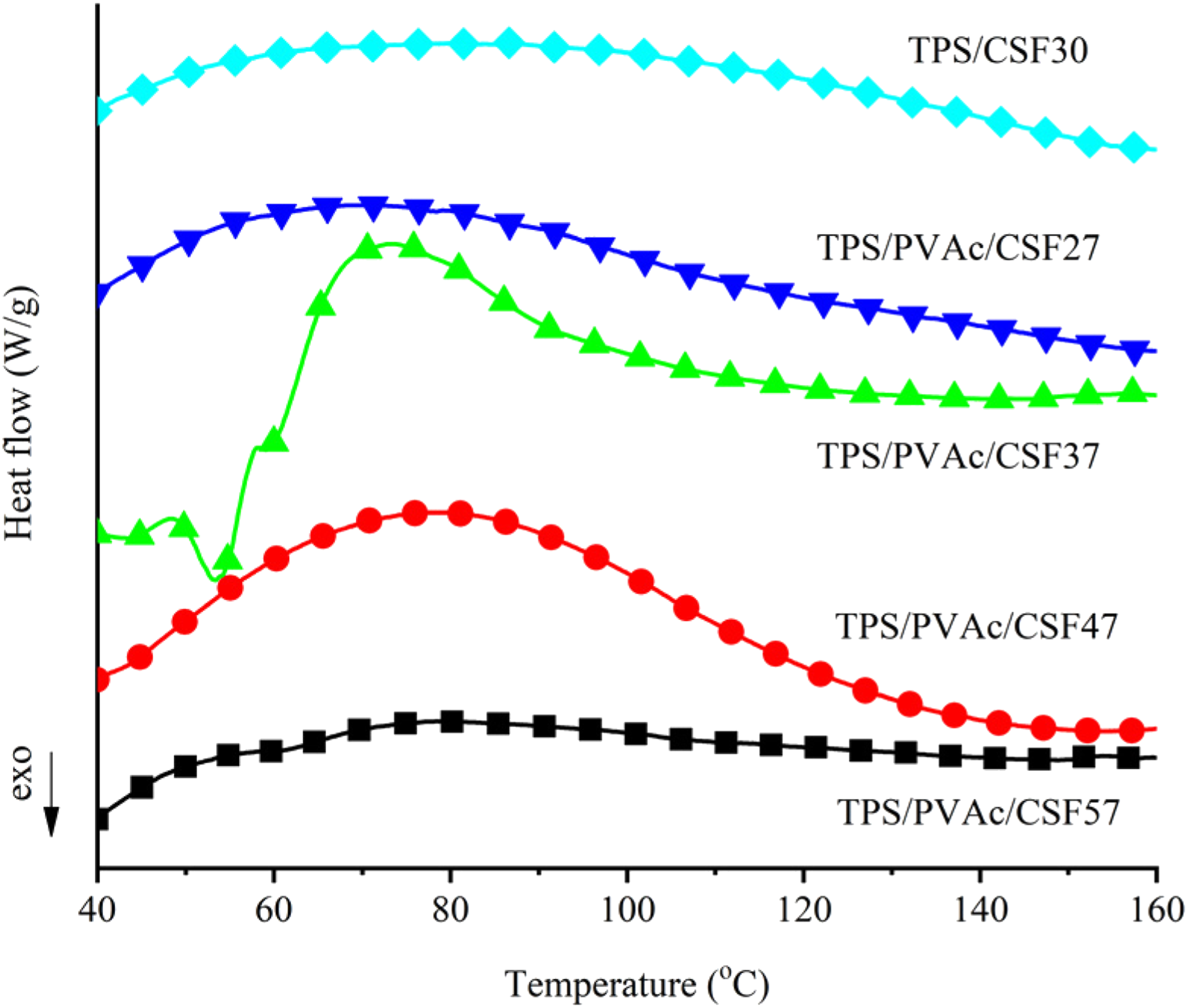

As can be seen from Table 1, Tm of the TPS/PVAc/CSF composite increases with the increase of the content of PVAc/CSF, rising from 67.9°C to 75.8°C. Moreover, when the weight ratio of TPS to CSF was the same (70/30, g/g), the Tm of the TPS/PVAc/CSF composite containing PVAc (TPS/PVAc/CSF63) was 72.8°C, lower than that of the TPS/CSF composite (TPS/CSF30), which was 74.2°C, indicating that the addition of PVAc was conducive to reducing the Tm of TPS. Jin et al. 34 reported that Tm of PLA in the PLA/poly (3-hydroxybutyrate-co-3-hydroxyhexanoate) (PHBH)/PVAc ternary blends were about 3°C lower than that of neat PLA. Therefore, it can be concluded that in the TPS/PVAc/CSF composites, the elevation of the Tm of TPS was attributed to the incorporated CSF, with a higher CSF content leading to a higher Tm of TPS This phenomenon is also observed in lignocellulosic fiber/CaCO3/TPS composites, where the Tm of TPS is mostly higher than that of pure TPS. 35 Wang et al. 36 reported that wheat straw fiber addition increased the Tm of TPS films from 77.4°C to 87.6°C. This is exactly the opposite of the effect of nanoscale straw fibers on the Tm of TPS. 37 This may be due to the fact that the plant fiber used in this study was non-nanoscale and had a high content (19.7 wt%–41.6 wt%), which reduced the thermal conductivity of the composites.
Furthermore, TPS/PVAc/CSF37 exhibited a cold crystallization temperature (Tcc) peak at 53.6°C. The phenomenon was also reported in the TPS/PEG/PVAc system. 29 This is because that PVAc has an inhibitory effect on the crystallization process of other polymers in the blend system, such as polylactide (PLA).34,38 And for TPS, PVAc not only hindered its crystallization process, but also promoted the formation of a TPS semi-crystalline structure when the ratio of TPS to PVAc was appropriate, and this structure underwent endothermic rearrangement at higher temperatures. In this study, the ratio of TPS to PVAc was 53.0/12.7 = 4.23, which was relatively close to the ratio (80/15 = 5.33) reported in the literature, 29 further confirming the above-mentioned regularity.
Besides, a new peak appeared at 51.8°C in the DSC curve of TPS/PVAc/CSF57, which was assigned to the glass transition temperature (Tg) of PVAc.39,40 Generally, a miscible blend exhibits only a single glass transition temperature corresponding to the homogeneous miscible system. 41 The emergence of a separate Tg peak for PVAc here indicated the formation of an independent PVAc phase in the system. This might be attributed to the fact that the proportion of PVAc was too high and exceeded its miscibility limit with TPS, thereby causing the excess PVAc to precipitate in the form of a homogeneous phase.
SEM observation
Figure 2 presents the SEM images of CSF powder and the fracture surfaces of TPS composites. As can be seen from Figure 2(a), CSF powder presented an elongated shape with a width of approximately 100 μm. Further magnified observation revealed that the straw fibers were composed of finer microfibers, and the compactness of the microfibers on both sides varied significantly: numerous pores with a diameter of several micrometers were distributed between the microfibers on the left side, while almost no pores were observed on the right side. Meanwhile, a small amount of detached microfibers were visible on the surface of the straw fibers, indicating weak bonding forces between the internal microfibers of the straw fibers. As shown in Figure 2(b), the fracture surface of TPS/CSF30 was relatively smooth, and no obvious CSF particles or fiber bundles were observed. This indicated that the CSF particles were further delaminated and refined during the internal mixing process, forming smaller fiber units that dispersed uniformly in the matrix. In addition, the interfacial compatibility between the fibers and the matrix was good, and the fiber surfaces were fully encapsulated by the matrix. The well-imbedded fibers in the thermoset starch composites were also reported by Duanmu et al.
42
SEM images of the fracture surfaces of CSF powder (a) and TPS composites: (b) TPS/CSF30, (c) TPS/PVAc/CSF27, (d) TPS/PVAc/CSF37, (e) TPS/PVAc/CSF47, and (f) TPS/PVAc/CSF57.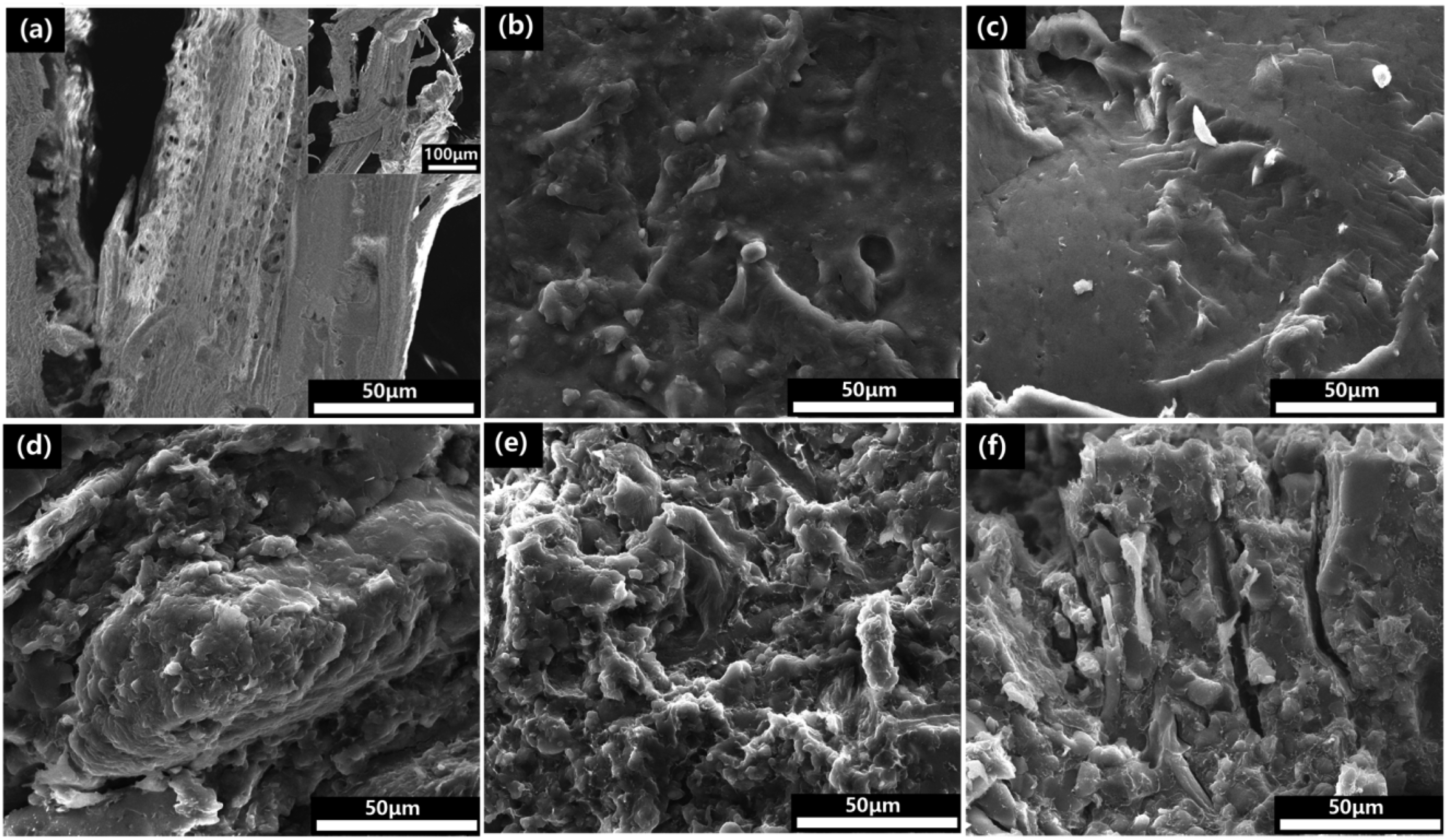
In contrast, the fracture surface morphology of the TPS/PVAc/CSF composite varied with the mass content of PVAc/CSF. For example, when the content of PVAc/CSF was 27 wt%, its fracture surface (Figure 2(c)) was similar to that of TPS/CSF30 due to the low content of PVAc. However, when the content of PVAc/CSF increased to 37 wt% and 47 wt%, namely, TPS/PVAc/CSF37 and TPS/PVAc/CSF47 (Figure 2(d) and (e)), their fracture surface became uneven and had better gloss. The high gloss of the fracture surface was likely due to the better plasticity of PVAc compared to TPS. However, when the content of PVAc/CSF further increased to 57 wt%, the fracture surface (Figure 2(f)) remained uneven and highly glossy, but the CSFs on the fracture surface were easily distinguished, and several smooth semicircular holes formed by the pull-out of CSF from the matrix appeared on the fracture surface, which might be due to the high content of CSF (41.6 wt%). This phenomenon was also observed in TPS/PCL/sisal fibers composites by Campos et al. 43 When the fiber content was below 10 wt%, the fibers were well dispersed in the matrix, while when the fiber content was higher than 20 wt%, the dispersion of some fibers became poor. The poor dispersion of CSF in the matrix might lead to a decrease in the strength of the composite, which was confirmed by the subsequent tensile results.
Tensile properties
Figure 3 shows the tensile curves of TPS/CSF30 and TPS/PVAc/CSF composites, and Table 2 lists their important tensile properties. From Table 2, it can be found that TPS/CSF30 and TPS/PVAc/CSF composites were hard and brittle materials with high strength and low toughness. Furthermore, all TPS/PVAc/CSF composites had higher tensile strengths than TPS/CSF30, showing that the addition of PVAc could strengthen TPS/PVAc/CSF composites.44,45 Besides, with the increase of the content of PVAc/CSF, the tensile strength of the TPS/PVAc/CSF composite was firstly increased and then decreased, and it reached the maximum when the content of PVAc/CSF reached 47 wt%, which was 1.5 times that of TPS/CSF30. The tensile curves of TPS/CSF30 and TPS/PVAc/CSF composites. The tensile properties of TPS/CSF and TPS/PVAc/CSF composites.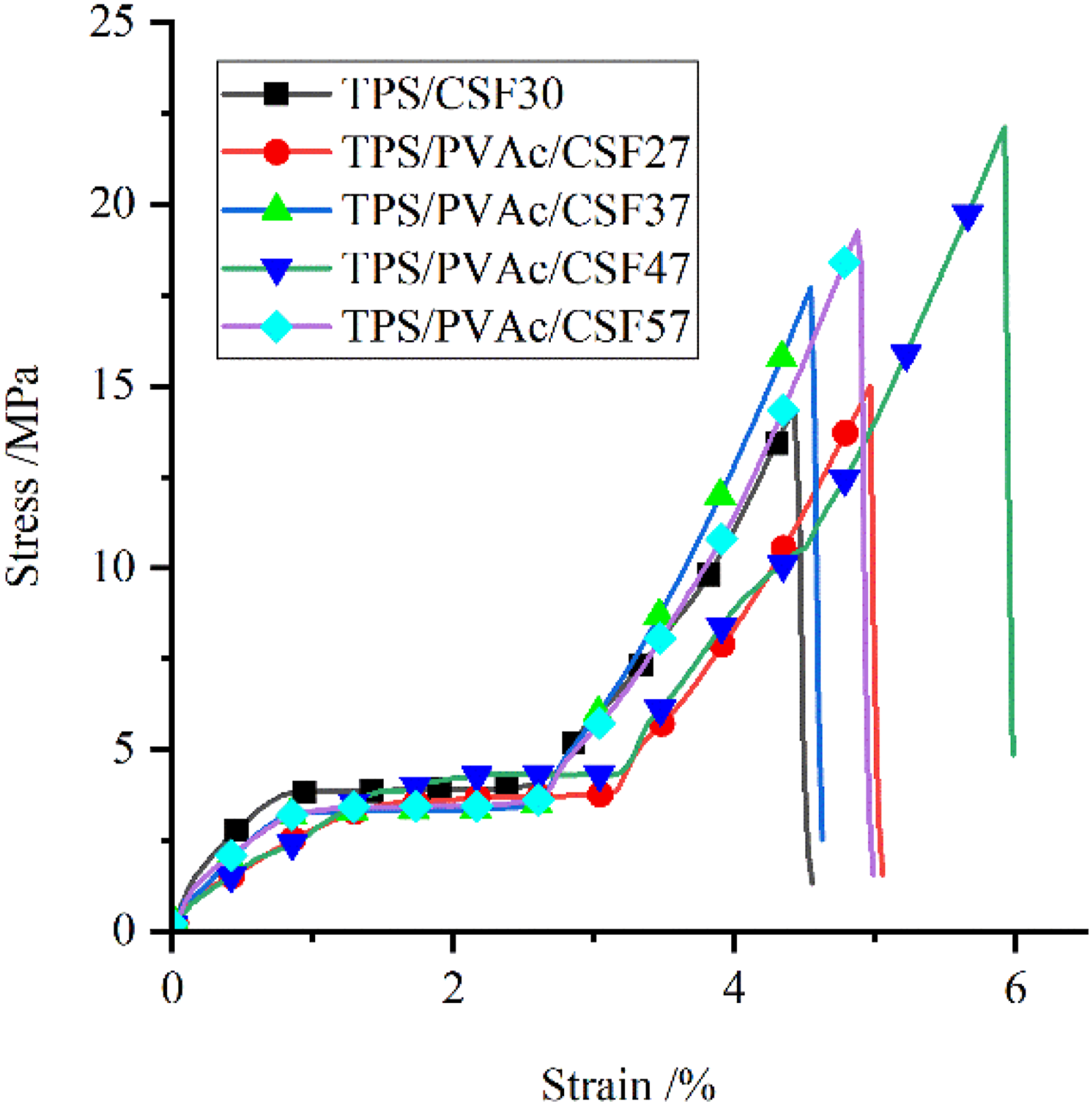

Water resistance test
The water resistance of the composites was studied by detecting the tensile strength changes of the samples before and after short-term water immersion. Figure 4 shows the tensile strength of TPS/CSF30 and TPS/PVAc/CSF composites under different soaking durations, and their tensile curves were showed in Figure 2(S). As indicated by Figure 4, the tensile strength of each sample decreased after water immersion, and the longer the immersion time, the lower the strength, such as TPS/PVAc/CSF composite containing 34 wt% of PVAc/CSF, after immersion in water for 5 min and 10 min, its tensile strength decreased from 17.7 MPa to 5.14 MPa and 2.95 MPa. Kuorwel et al.
46
found that all the TPS films demonstrated a considerable decline in their tensile strength when they were immersed in water containing mixtures for 5 min. The tensile strength of TPS/CSF30 and TPS/PVAc/CSF composites under different soaking durations.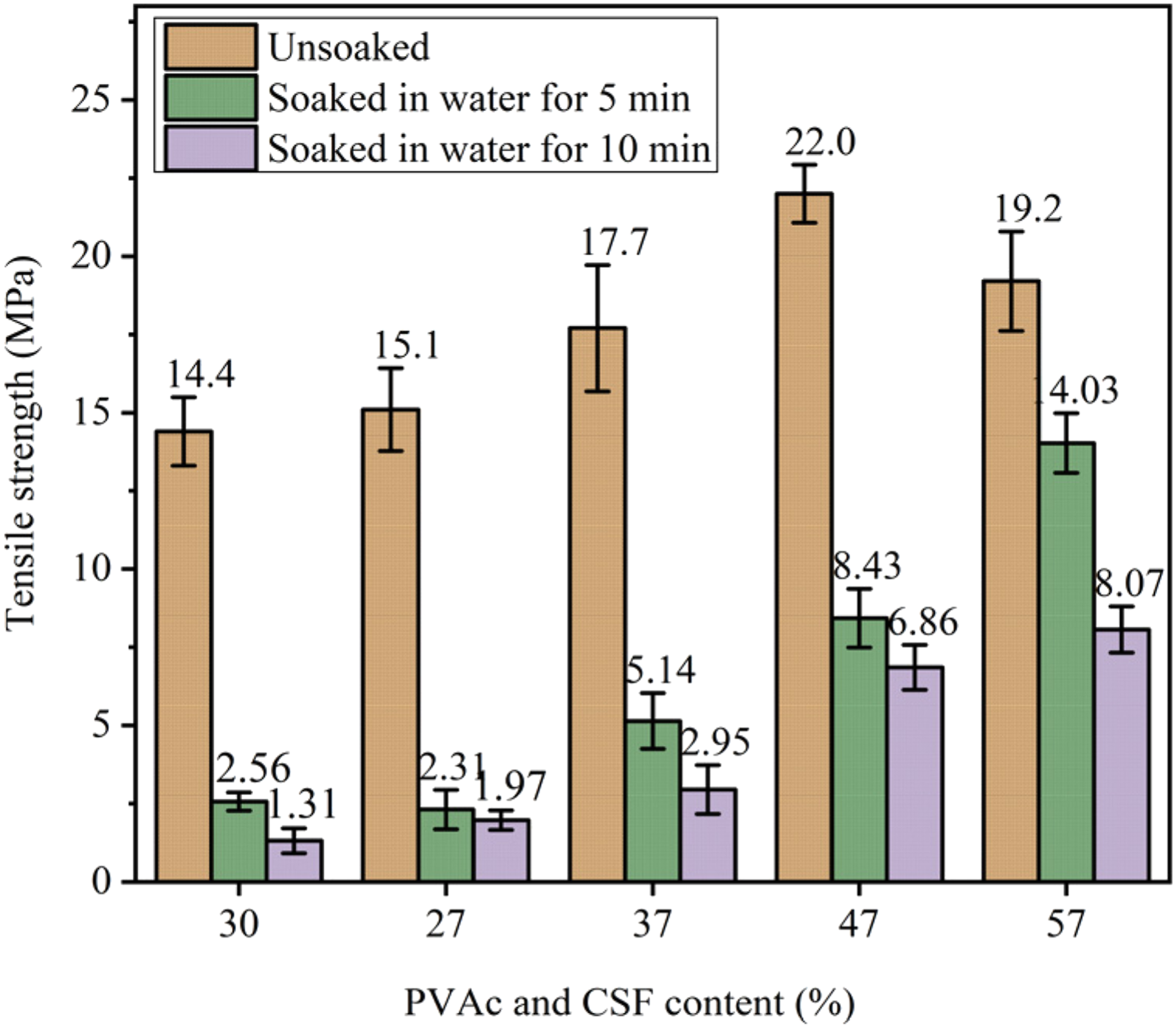
Further analysis of the performance of the composites after immersion revealed that, the composites retained higher strength after water immersion with the increase of PVAc/CSF content. Especially for the composite containing 57 wt% of PVAc/CSF, its tensile strength reached 14.3 MPa after 5 min of immersion, accounting for 74.5% of the strength of the non-immersed samples. These results demonstrate that the addition of PVAc helps improve the water resistance of composites, enabling them to retain sufficient strength even after short-term water contact, which meets the requirements for specific application scenarios such as disposable tableware. This is mainly attributed to the fact that the hydrophilicity of PVAc is significantly lower than that of TPS—the contact angle (CA) of TPS was 50.49°,22,47 while that of pure PVAc was 60°. 48 Therefore, the composites incorporated with PVAc possess superior water resistance.
Water absorption and waterborne substance retention capacity
Figure 5 shows the water absorption of TPS/CSF30 and TPS/PVAc/CSF composites, which were obtained by immersing them in water for different periods of time.
49
As shown in Figure 5, all composites exhibited rapid water absorption and weight gain upon initial contact with water,
50
primarily due to the highly water-absorbent nature of starch, glycerol, and CSF in the composites, and all TPS/PVAc/SCF composites had better water absorption than TPS/CSF30 except for TPS/PVAc/SCF27 with much lower CSF content in the early stage.
29
With the prolongation of immersion time, the TPS/CSF composite without PVAc (TPS/CSF30) began to show a mass decrease after being immersed in water for 90 min. This indicates that after immersion for this duration, the mass loss caused by the dissolution of glycerol and low-molecular-weight starch in the composite exceeded the mass gain from water absorption. The water absorption of TPS/CSF30 and TPS/PVAc/CSF composites.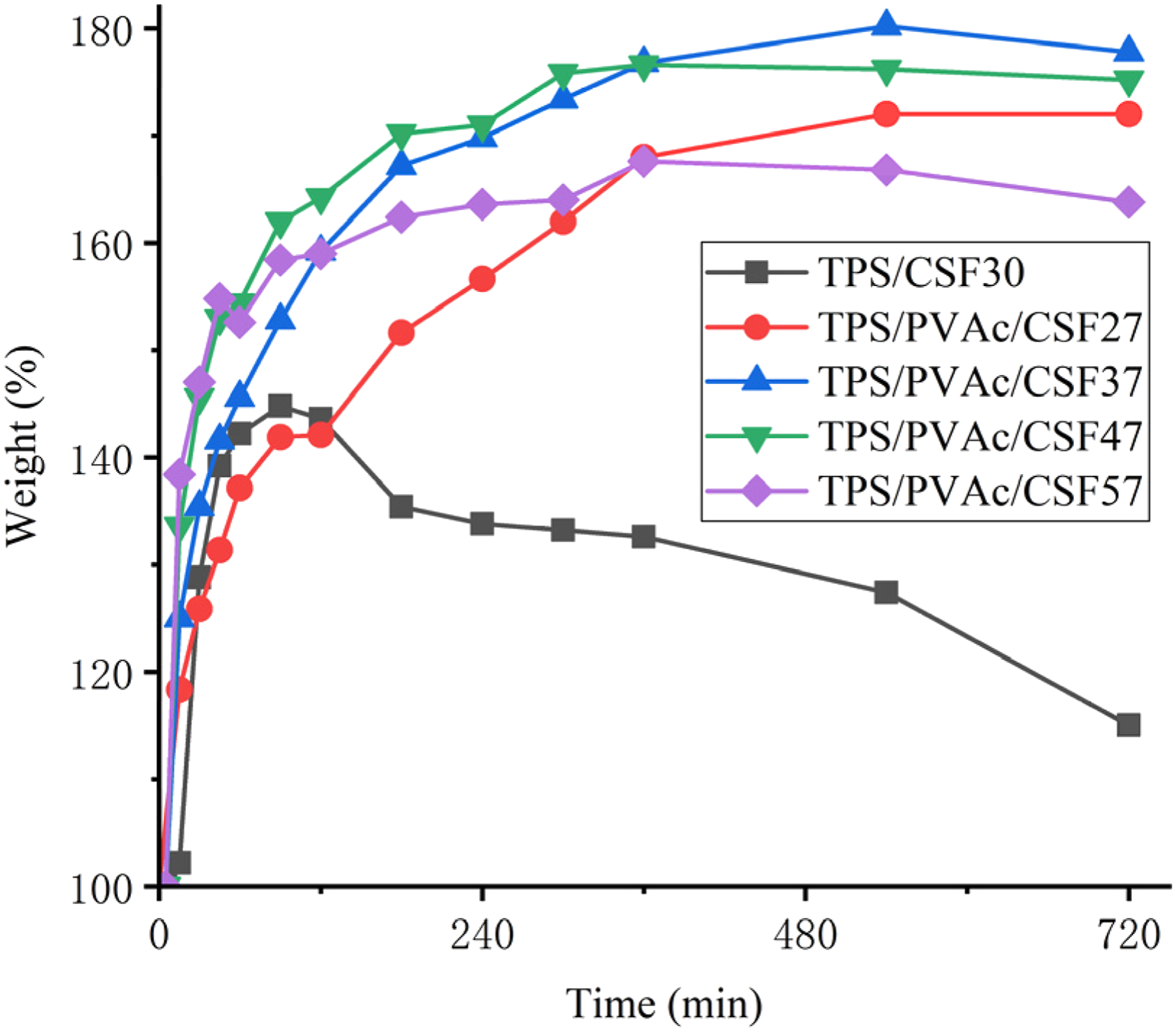
However, throughout the entire immersion process, the TPS/PVAc/SCF composites exhibited continuous water absorption characteristics; it was not until 360 min that the water absorption rate gradually slowed down, and these composites showed negligible weight loss. This phenomenon indicated that the composite not only had excellent moisture absorption performance, but also exhibited outstanding water-soluble substance retention capacity—it could effectively retain its components in an aqueous environment, releasing only a small amount of soluble substances such as glycerol during the initial stage of immersion. Therefore, the (TPS/PVAc/CSF) composites can meet the requirements for short-term packaging of moist items (such as food). This is because their good water retention can maintain the moisture content of food, and their excellent waterborne substance retention capacity can ensure that the material release few small molecules to contaminate food.
Biodegradation analysis in soil
The biodegradation performances of TPS/CSF30 and TPS/PVAc/CSF composites were studied by soil burial method. Figure 6 shows the weight change curves of TPS/CSF30 and TPS/PVAc/CSF composites as a function of soil burial time. Biodegradation curves in soil of TPS/CSF and TPS/PVAc/CSF composites.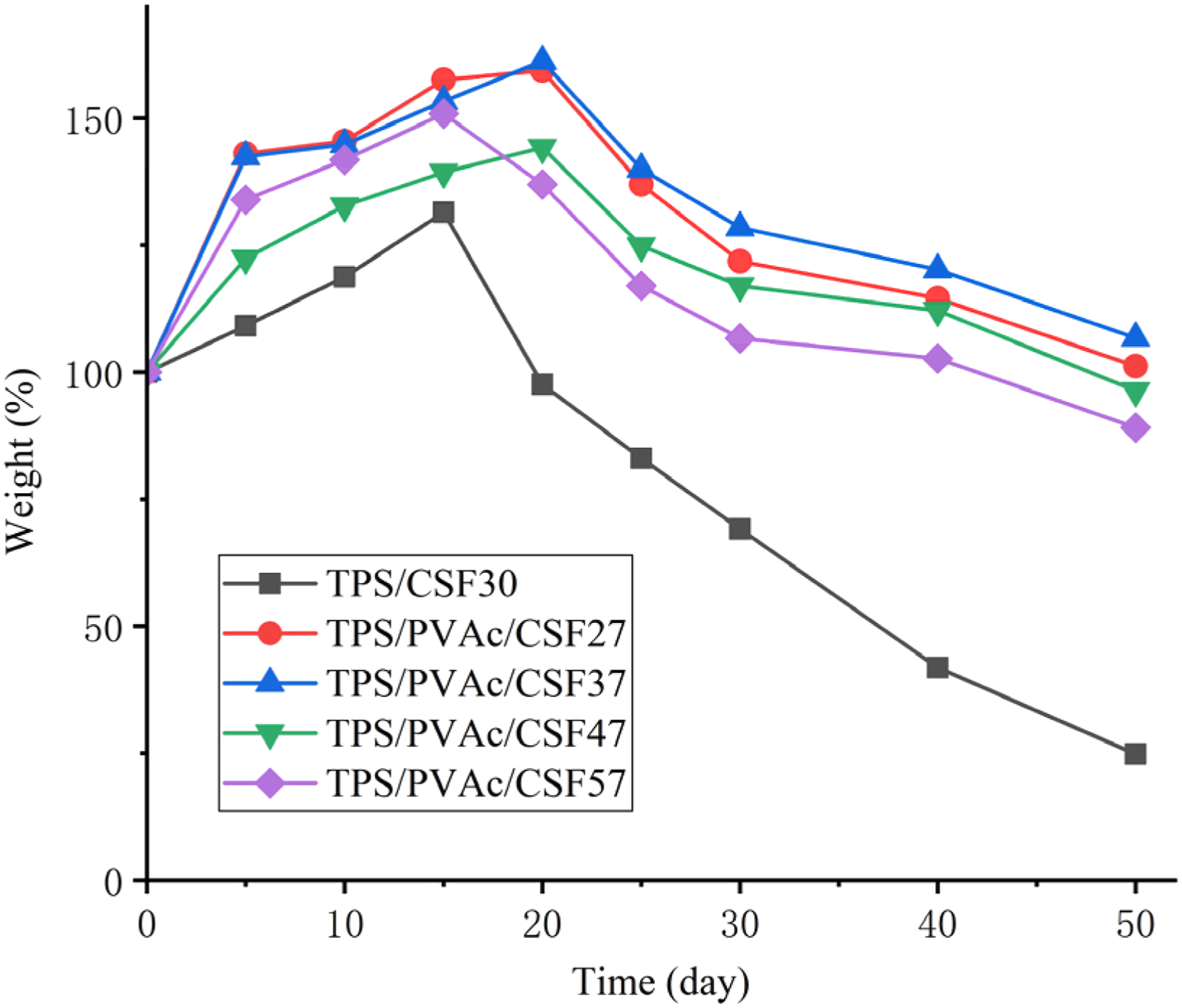
As shown in Figure 6, the weight of the composites increased continuously in the early stage of soil burial, reaching the peak at 15–20 days, followed by rapid weight loss. This is mainly because the degradation rate of the samples was slow at the initial stage after being buried in soil, while the samples absorb moisture from the soil, leading to weight gain. 26 Further analysis of the effect of PVAc revealed that TPS/CSF composite without PVAc reached the maximum weight at 15 days, then began to lose weight rapidly, and the weight at 30 days was less than 70% of the original weight. In contrast, for the TPS/PVAc/CSF composites, the weight inflection point was delayed to 20 days, and the weight after 30 days of soil burial was higher than the original weight, indicating that their degradation rate was significantly lower than that of TPS/CSF30. Hernandez-Gil et al. 14 reported that starch together with PVA does not degrade easily under environmental conditions.
Figure 7 displays the sample photographs of TPS/CSF and TPS/PVAc/CSF composites before and after biodegradation in soil for 30 days. As shown in Figure 7, both TPS/CSF30 and TPS/PVAc/CSF composites underwent obvious biodegradation reactions after 30 days of soil burial, their sample surfaces were all eroded by microorganisms, becoming uneven. Notably, the TPS/PVAc/CSF composite samples maintained relatively more intact morphology than TPS/CSF30, and the higher the PVAc content, the more complete the morphology remained.
29
While, TPS/CSF30 sample completely lost their original material morphology, which was consistent with the research reported by Saepoo et al.,
51
the pots made from neat TPS and TPS composite with 10 wt% of milled oil palm mesocarp fiber had lost their structural integrity. Photos of TPS/CSF and TPS/PVAc/CSF composites before/after biodegradation in soil for 30 days: (a) TPS/CSF30; (b) TPS/PVAc/CSF27; (c) TPS/PVAc/CSF37; (d) TPS/PVAc/CSF47; and (e) TPS/PVAc/CSF57.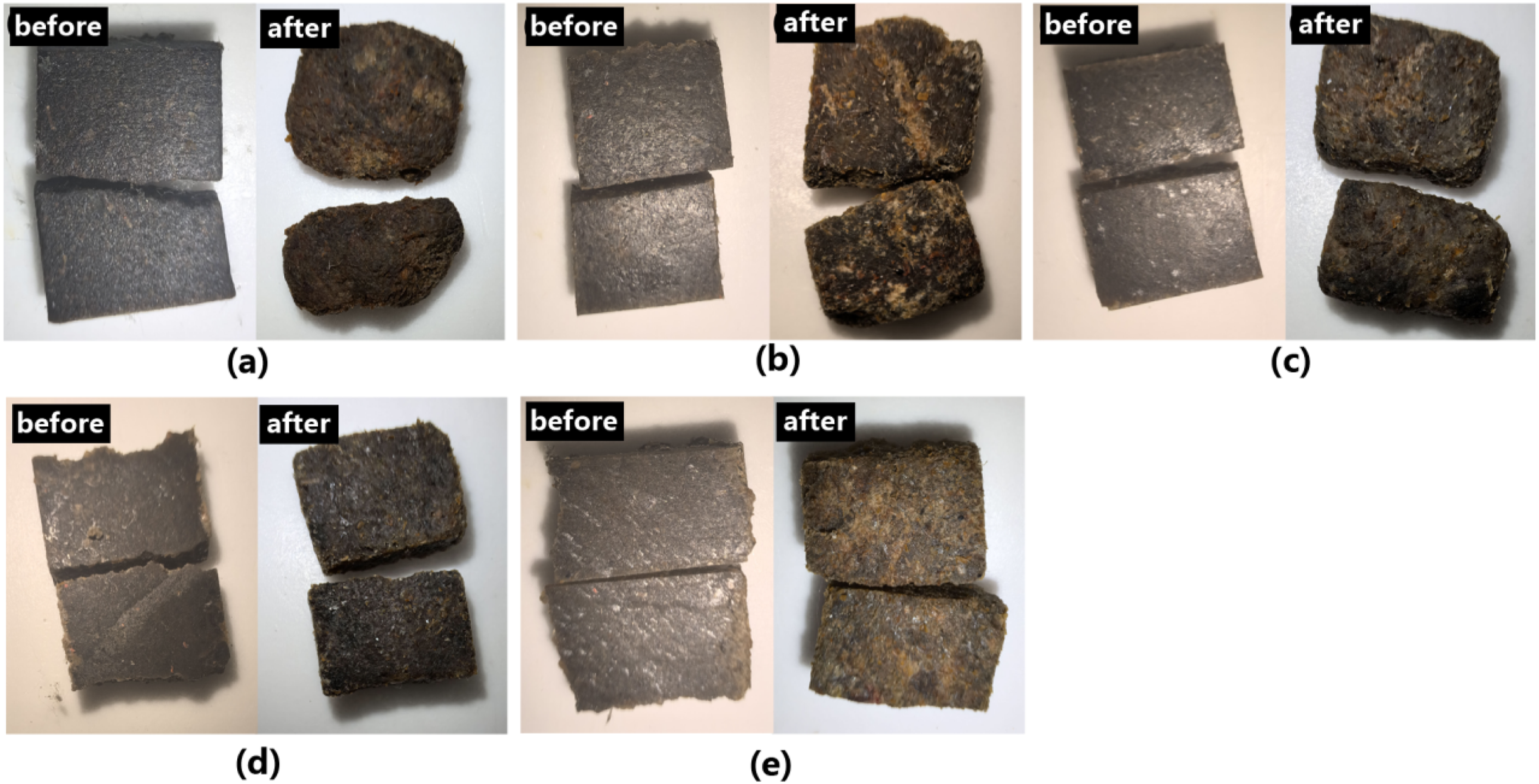
Conclusion
In this study, highly water-resistant TPS/PVAc/CSF composite materials with different PVAc/CSF contents were successfully prepared. The introduction of PVAc could significantly reduce Tm of TPS and inhibit its crystallization process, while CSF increased the Tm. When the mass ratio of TPS to PVAc was 4.23, PVAc could promote the formation of a semi-crystalline structure of TPS. With the increase of PVAc/CSF content, the tensile strength of the composite materials showed a trend of first increasing and then decreasing. Water resistance test results indicated that the composite materials with high PVAc/CSF content could maintain high tensile strength; among them, the sample containing 57 wt% PVAc/CSF had a tensile strength of 14.3 MPa and a retention rate of 74.5% after 5 min of water immersion. In addition, the composite materials exhibited good water absorption and waterborne substance retention capacity. Although the introduction of PVAc slowed down the degradation rate of the composite materials, it did not change their biodegradable property. In summary, the prepared TPS/PVAc/CSF composite materials possess the advantages of low cost, high rigidity, excellent water resistance, low soluble mass loss, and biodegradability, demonstrating good application potential in the field of disposable food packaging under short-term humid environments.
Supplemental material
Supplemental material - Preparation and properties of highly water-resistant thermoplastic starch/polyvinyl acetate/corn straw fiber composites
Supplemental material for Preparation and properties of highly water-resistant thermoplastic starch/polyvinyl acetate/corn straw fiber composites by Wenxi Cheng, Wei Miao, Zhijie Wang, Wenkui Wang, Yike Zhang, Zhiwei Jiang, Weiqiang Song, and Shiping Song in Journal of Reinforced Plastics and Composites
Footnotes

Author contributions
Funding
The authors disclosed receipt of the following financial support for the research, authorship, and/or publication of this article: This work was supported by the Science and Technology Research Project of Henan Province [No. 232102230097] and [No. 242102231028].
Declaration of conflicting interests
The authors declared no potential conflicts of interest with respect to the research, authorship, and/or publication of this article.
Data Availability Statement
The raw data can be obtained on request from the corresponding author.
Supplemental material
Supplemental material for this article is available online.
References
Supplementary Material
Please find the following supplemental material available below.
For Open Access articles published under a Creative Commons License, all supplemental material carries the same license as the article it is associated with.
For non-Open Access articles published, all supplemental material carries a non-exclusive license, and permission requests for re-use of supplemental material or any part of supplemental material shall be sent directly to the copyright owner as specified in the copyright notice associated with the article.
