






Abstract
In this work, the impact of fillers based on electrospun cellulose acetate (CA) nanofibers on the thermo-mechanical properties of banana fiber-reinforced composites is examined. Electrospun CA, CA:CL (nanoclay), and CA:SIL (silica) nanofibers were used as fillers in an epoxy polymer matrix reinforced with banana fibers, prepared by resin casting method. The outcomes show that the mechanical properties of the composites are significantly impacted by the addition of CA-based fillers at a very low loading of 0.3 wt%. These CA-based nanofibers strengthened the interaction between the banana fibers and the polymeric matrix and enhanced tensile, flexural, and thermo-mechanical properties. Particularly relevant mechanical improvements were achieved with nanofibers containing CL and SIL, with increments of up to 46% and 99% in the Young modulus and flexural modulus, respectively. The mechanical results were supported by morphological observations that suggested enhanced banana fiber–matrix adhesion when adding this small amount of CA-based electrospun nanofibers. In addition, water absorption was significantly reduced when CL and SIL are introduced into the CA nanofibers. Therefore, CA:CL and CA:SIL nanofibers are proposed as bio-based fillers to enhance the thermo-mechanical properties and prevent water absorption of banana fiber-reinforced composites, increasing their suitability for use in different environmentally friendly structural, semi-structural and packaging materials.
Keywords
Introduction
Natural fiber-reinforced composite materials have emerged as robust alternatives in a number of industrial domains such as construction, automotive, and aerospace, due to their high stiffness, hardness, heat resistance, and specific mechanical strength, among other qualities.1–3 The mix of constituents in these composites results in emergent properties that are necessary for specific applications.4–6 Recently, increasing research has been carried out on the remediation of environmental damage and the depletion of petroleum supplies. For instance, some research has focused on creating composite materials that can break down over time due to interactions with microorganisms and organic debris as Zhang et al. observed that by adsorption and interaction mechanisms, carbon nanomaterials can dramatically affect the environmental destiny and biodegradation behavior of organic contaminants in soil and Tyagi et al. reported that no single biodegradable polymer can simultaneously meet all environmental and industrial performance requirements.7,8,9 Some of these initiatives promote the use of different natural fibers to reinforce plastic substrates.10–13 These natural fibers are categorized after being collected from different plant components. Importantly, developing countries like Vietnam, Thailand, India and some sub-Saharan African countries have abundant supplies of natural fibers like jute, coir, sugarcane, bamboo, banana, and sisal.5,14,15
Studies on how banana fiber reinforcement in epoxy resins at varying loads of 0–20 wt% has been carried out, for instance according to Balaji et al.’s research, adding banana fibers greatly enhanced the epoxy composites’ mechanical properties up to an optimum fiber loading level. Likewise Karthick et al.’s work focuses in showcasing banana fibers’ potential as renewable and environmentally friendly reinforcing materials for polymer composites.16,17 The findings indicate that the mechanical properties of the epoxy matrix were generally improved when the amount of banana fiber reaches or exceeds 15 wt%. 16 Also, another study looked at the amount of banana fiber added to an epoxy resins at various weight percentages between 10 and 20 wt%. 17 The outcomes showed that mixing 20 wt% banana fiber with glass fiber-reinforced epoxy resin resulted in better mechanical properties, such as 12% increased tensile strength, 20% increased flexural strength, 23% increased impact strength, and 40% increased hardness than that of unfilled neat epoxy polymer. 17 Incorporating natural fibers, such as banana fibers, into epoxy resin bases to create more environmentally friendly composite materials, other different investigations reported the reinforcement of different polymers, usually polylactic acid (PLA), with banana fiber in varied proportions, 18 that is, 20, 40, and 60 wt% 19 ; and 10, 20, 30, and 40 wt% 20 which yielded improvements in storage modulus and degradation temperature of the composites by 17% and 22%, respectively. In order to replace traditional fiber-reinforced polymer composites, a composite material composed of 50% banana fiber and 50% epoxy resin was prepared and tested, which was capable of withstanding higher loads than other combinations. 21 Going a step further, aiming to improve the mechanical properties of composites reinforced with banana fibers, some studies have been done on hybridizing them with nano-additives, such as nanoclay and nanosilicon.22–24 The addition of these nano-additives to banana fiber improved the composite materials’ mechanical strength by 7.4% by promoting hydrogen bonding between the fiber–matrix interfaces and the fillers according to work carried out by D’Souza KP and D’Souza L. And also Balaji et al. gave a thorough explanation of how nanoparticle reinforcement can help create high-performance, lightweight, and sustainable composite materials for cutting-edge engineering applications by overcoming the main thermal constraints of natural fiber composites.16,23 The addition of these nano-additives to banana fiber improved the composite materials’ mechanical strength by 7.4% by promoting hydrogen bonding between the fiber–matrix interfaces and the fillers.23,25 It is known that polar polymer matrices that enhances fiber–matrix hydrogen bonding improve the matrix’s ability to transfer stress to fibers and decrease the development of voids and fiber pull out, thereby leading to higher tensile and flexural strength.26–28
Taking into account the aforementioned outcomes, it is hypothesized that electrospun cellulose acetate-based nanofibers, eventually containing silica or clay, added as fillers in small amounts to banana fiber-reinforced composites should improve their thermo-mechanical strength, as a consequence of both the nanometric size and the presence of polar functional groups (−OH, −OCOCH3) that have the ability to establish hydrogen bonds with banana fibers. Thus, the purpose of this study is to investigate the addition of cellulose acetate-based nanofibers as fillers to a banana fiber-reinforced composite material and assess the impact of this addition on its mechanical and thermal properties and other related features such as hydrophobicity and water absorption ability. It is shown that adding a small amount of electrospun cellulose acetate-based fillers to banana fiber-reinforced composites improves their mechanical characteristics and prevents water absorption, especially those containing silica or clay, which act as hybrid nano-reinforcements. This study on the effects of electrospun cellulose acetate-based nanofibers on the thermo-mechanical properties of banana fiber-reinforced composites attempts to remedy some key drawbacks of natural fiber composites while being in line with worldwide trends toward sustainable, lightweight, high-performance, and bio-based engineering materials. Enhancing the fiber–matrix interfacial bonding, mechanical strength, moisture resistance, thermal stability, and multifunctional performance of natural fiber composites has been a major focus of study in recent years. The electrospun CA fibers were further separately filled with silicon and nanoclay and the thermos-mechanical properties were studied and compared.
Experimental procedure
Materials
Epoxy resin LR 30 (density of 1.13 g/cm3) and hardener LH 30 (density of 0.94 g/cm3) were procured from AMT Composites (South Africa). Banana fibers were obtained from Reddcolt Enterprises (India). Cellulose acetate (CA, 30,000 g/mol and 2.41 degree of substitution) was purchased from Merck Sigma-Aldrich. A hydrophobic fumed silica surface-treated with dimethyldichlorosilane (Aerosil R-974) and a modified montmorillonite (Cloisite 30B, methyl) were supplied by Evonik (Germany) and Southern Clay Products, Inc. (USA), respectively, and used together with CA to form electrospun nanofibers. Other common chemicals and solvents were purchased from Merck Sigma-Aldrich.
Fabrication of composite panels
Compositions of composite formulations.

Previously, banana fibers used as reinforcement phase in the epoxy polymer matrix, were cut into 50 mm length and then exposed to alkaline treatment. The chopped fibers were initially soaked at 5% NaOH solution for 4 h at ambient temperature. This alkaline treatment aids the removal of lignin and other non-cellulosic phase and impurities. The treated fibers were taken out, washed with the running tap water to eliminate excess of chemicals and impurities. Finally, the washed fibers were then dried in open air medium for 72 h and then applied for composite sample preparation.
Characterization techniques
Scanning electron microscopy (SEM)—The broken surface and microstructure of the composite panel were examined and analyzed by SEM. After being coated with gold to stop charging, the broken samples were examined using a scanning electron microscope Carl Zeiss Microscopy GmbH, model Sigma 500 with resolution of up to 10 nm and magnification of up to 15Kv. The produced composite samples’ microscopic images were contrasted. The morphologies of electrospun CA-based nanofibers were also examined by SEM using a JXA-8200 SuperProbe (JEOL) microscope.
Water contact angle—Water droplet method using the DropMeter A-100 contact angle system (Maist Vision Inspection & Measurement Co. Ltd) was used to determine the wettability of the composite panels. 30 60 × 10 × 3 mm composite panels were positioned on a glass slide and a 25 µL microsyringe was used to place droplets of deionized water at five separate points on the composite panel’s surface. The water contact angle was determined at room temperature by analyzing the images taken with a camera of imaging rates around 25 fps and sensor resolutions in the range of 1.3 MP to 13 MP.
Water uptake—Following ASTM D570-98 guidelines,
31
the composite panel’s maximum proportion of water absorbance was examined. The samples were submerged completely in distilled water for a whole day before being taken out of the water. Following the removal of all surface water with a fresh, dry cloth, the samples were weighed. This procedure was carried out at regular intervals of 24, 48, 72, 96, 120, 144, 336, and 720 h. Water absorption percentage was calculated as following:
Thermal analysis—A SDT Q600 thermal analyser (TA Instruments) was used to perform TGA tests. About 5 mg of the material was put in an alumina crucible and heated from ambient temperature to 600°C under air atmosphere at a scanning rate of 10°C/min. Differential Scanning Calorimetry (DSC) tests were performed using a DSC-250 calorimeter (TA Instruments) under inert nitrogen flux (50 mL min-1). Tests were carried out using 5–10 mg of the samples sealed into hermetic aluminum pans where they received a first heating step up to 250°C to remove the thermal history of the composite, following of a cooling step to −80°C and a second heating step up to 250°C at a rate of 10°C/min.
FTIR analysis—Fourier-transform infrared (FTIR) spectra for selected samples were acquired in an FT/IR 4200 instrument from Jasco, Inc. (Tokyo, Japan) over the wavenumber range 4000−400 cm−1 (4 cm−1 resolution and 200 scans per spectrum), using an attenuated total reflectance (ATR) accessory furnished with a monolithic diamond crystal.
Mechanical tests—A dynamic mechanical analyzer equipment of TA Instrument (Model Q800 V20.6) was used to perform dynamic mechanical analysis (DMA) on the composite panels. Three samples of each specimen, measuring 60 × 10 × 3 mm, were tested. The test was conducted in compliance with ASTM D4065-0139, in the 3-point bending mode, with a 50 mm support span length, 1 Hz frequency, and 20 μm amplitude. Temperature ramps from 20°C to 180°C, at 3°C/min, were applied.
Flexural tests were conducted in the three-point bending mode using the same apparatus and following the ASTM D790-02 standard.32,33 Sample dimensions were 125 × 14 × 4 mm while span length was maintained at 48 mm. A displacement control mode was used for the tests, and the crosshead speed was set at 2 mm/min. Samples were deflected until their outer surfaces ruptured or until they reached a maximum strain of 5.0%, whichever came first. Four replicates for each sample were performed and the flexural strength, maximum strain and flexural modulus were provided as the mean value ±standard deviation.
Tensile tests were performed utilizing the universal testing machine configuration. The ASTM D638 Type I standard 34 was followed to create dog bone-shaped specimens. The specimens had a gauge length of 50 mm and were machined to a standard size of 165 × 13 × 4 mm. Tests were conducted in a displacement control mode by applying 2 mm/min crosshead speed. Samples were elongated until their outer surfaces ruptured or until they reached a maximum strain of 5.0%, whichever came first. At least, four replicates for each sample were performed and the elasticity modulus, strain at break, and tensile strength values were expressed as the mean value ±standard deviation.
Unnotched Charpy impact test was conducted on the composite samples using Hounsfield impact test equipment, using ASTM D6110 test method. Three samples were tested and the mean value was reported. It was observed that the standard deviation of all the test results was within 3% from the mean value.
Rheological properties of composite panels were also evaluated in an ARES-G2 rheometer (TA Instruments), equipped with a convection oven, under small-amplitude oscillatory torsional deformation within the linear viscoelastic regime. Temperature ramps from 25°C to 140°C, at 1 Hz and a heating rate of 2°C/min were applied on rectangular specimens of 11 × 5 × 3 mm size.
Results and discussion
Morphological characterization
Figure 1 shows the morphology of the electrospun CA-based nanofibers added as fillers to the composite samples: BF + CA, BF + CA:CL, and BF + CA:SIL, respectively. As shown, the inclusion of SIL or CL favors the formation of beaded fibers (Figures 1(b) and 1(c)), non-detected in pure CA nanofiber mat (Figure 1(a)). As previously reported by Toro-Gallego et al.
29
the addition of SIL to CA spinning solutions generally hinders electrospinnability due to the increased heterogeneity and the reduction of the effective polymer fraction at a given total concentration. It was observed that the transition from beaded fibers to relatively homogeneous fiber mats is delayed (i.e., achieved at higher concentrations) as the SIL proportion increases. This occurs despite the similar physico-chemical properties of the precursor solutions. As well-known electrospinnability is governed not only by the physico-chemical properties (conductivity, surface tension, or viscosity) but also by molecular-level interactions, chain entanglement density, and the overall stability of the electrospinning jet. These factors can be significantly altered by the presence of SIL or CL, even when bulk properties appear comparable. SEM images of electrospun (a) CA, (b) CA:CL (clay), and (c) CA:SIL (silica) nanofibers, added as filler to banana fiber-reinforced composites.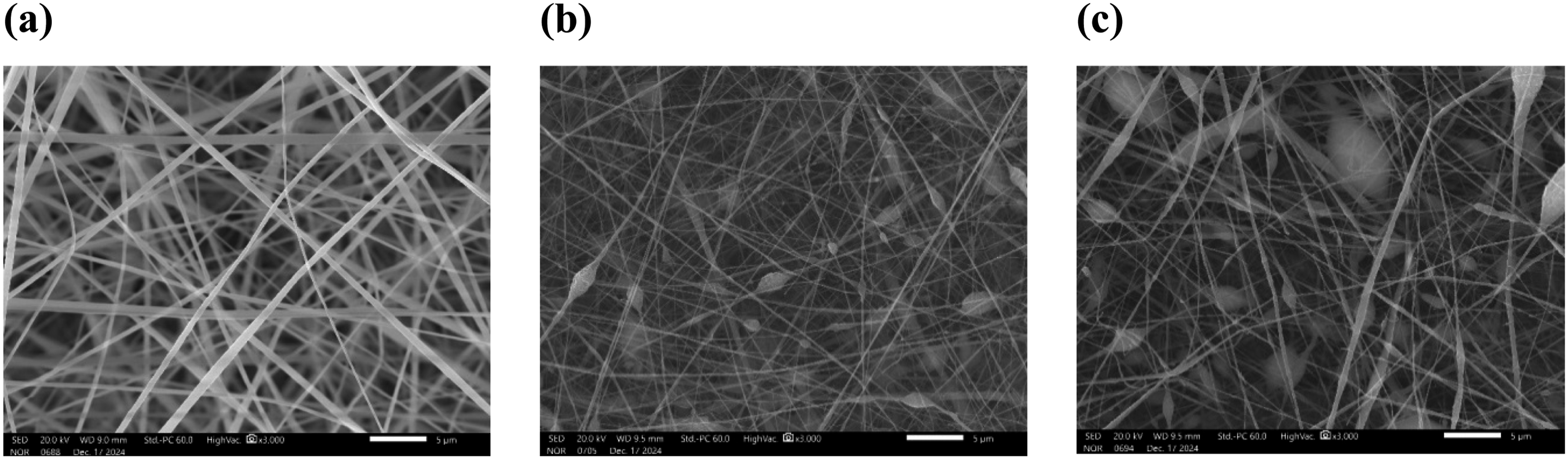
Figure 2(a)-(e) show the SEM images of the composites examined after the composite was broken. The fractured surface appeared smooth and with no visible flaws, according to the SEM scan. In these images banana fibers are clearly visible and generally appear well bonded to the resin. The addition of electrospun CA-based nanofibers to the resin matrix resulted in improved interfacial adhesion between banana fibers and this matrix as illustrated in Figure 2(b)-(d), thus reducing fiber pull out and formation of internal voids. The presence of nanofillers is clearly visible in the CA-based fillers filled composites in the epoxy matrix phase. The presence of fillers is shown by highlighted arrow marks. The dispersion of the fillers in the epoxy matrix phase appeared to be uniform across the matrix phase. In general, it can be inferred that banana fibers effectively adhere to and better functions with the CA-based nanofiber filling. Thus, the presence of CA-based fibers enhances the hydrogen bonding between the banana fiber and the matrix owing to its polar acetate moiety.35,36 Overall, these results demonstrate that the presence of electrospun CA-based nanofibers improve the reinforcement action of banana fibers and adds value to their usage in the production of composites with cellulosic resources. SEM images of (a) BF (b) BF + CA (c) BF + CA:CL (d) BF + CA:SIL and (e) BF + CA (powder) composites.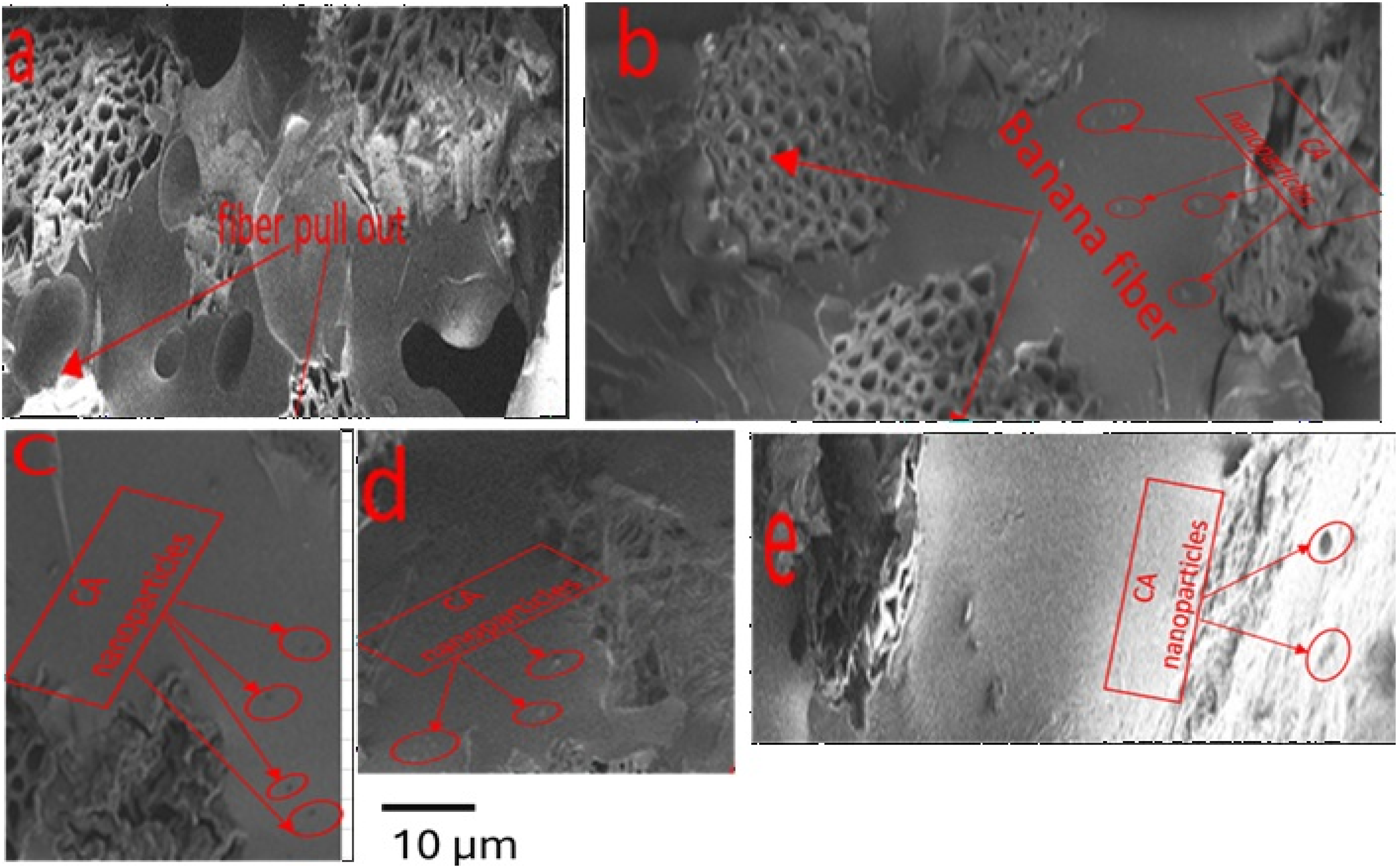
To support the presence of electrospun CA-based fillers in the epoxy matrix and the intensification of hydrogen-bonding interactions, FTIR analysis was performed. Figure 3 shows the comparison of the IR spectra between BF (reference) and BF + CA:CL composites. Since the electrospun nanofibers were incorporated at a very low concentration and the epoxy resin/banana fiber matrix is quite complex, as can be observed, FTIR spectra of both samples are rather similar. However, some slight differences confirming the presence of cellulose acetate and silanol groups, as well as an intensification of the hydrogen-bonding interactions, can be observed. The characteristics peaks of the epoxy resin/banana fiber matrix appear easily detectable, that is, a broad band at around 3200–3500 cm−1 attributed to stretching vibrations in O−H groups forming inter- and intramolecular hydrogen bonds in cellulose-derived polymers, the intense band at around 2900 cm−1 probably attributable to both the commercial epoxy resin (vibration of aromatic protons) and the C‒H stretching vibrations of cellulose CH and CH2 groups, the bands corresponding to stretching vibrations of C–O–C (1170 cm−1) and C–O (1030 cm−1) groups, or the out-of-plane deformation vibration associated with the β-1,4-glycosidic linkage (at around 820 cm−1).37,38 In addition, a new band corresponding to the stretching vibration of the acetyl C = O, at around 1730 cm−1 39 and a small peak at 920 cm−1 40 corresponding to bending vibration of silanol groups confirm the presence of the electrospun CA:CL nanofibers. Moreover, an intensification of the hydrogen-bonding interactions can be observed at around 3000–3200 cm−1 in sample BF + CA:CL as compared with the reference system.39,40 FTIR spectra of BF (reference) and BF + CA:CL samples. 1 refers to the region associated to hydrogen-bonding interactions, 2 refers to stretching vibration of the acetyl C = O group, and 3 refers to the characteristic peak of silanol groups.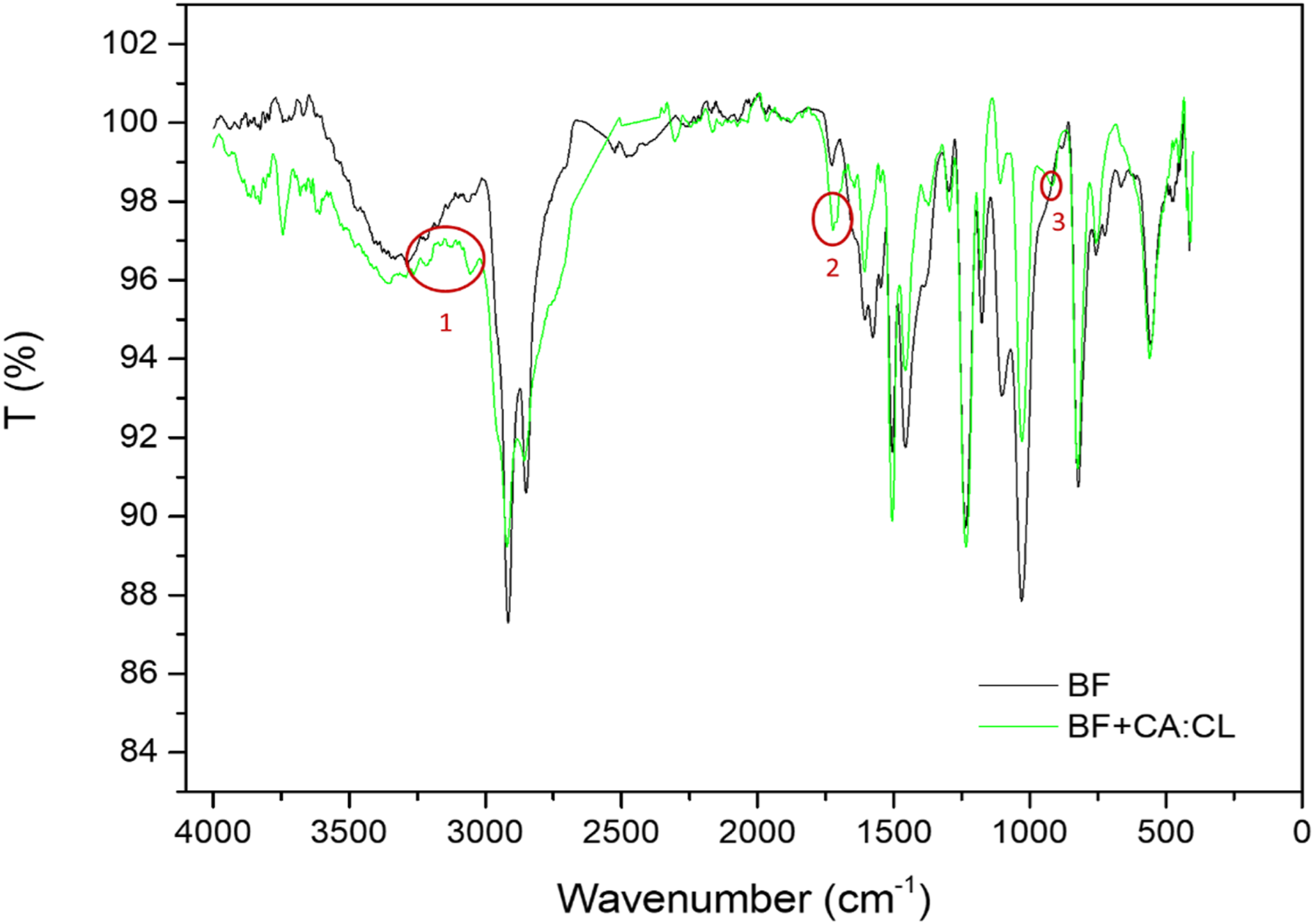
Tensile properties
The tensile profiles of banana fiber-reinforced composites containing different CA-based fillers are shown in Figure 4. The Young modulus was measured within the elastic limit as shown in the exploded view within Figure 4(b). As shown in Table 2, the value of the Young modulus is lower for the filler-free composite as compared to samples containing CA-based fillers, being the tensile behavior generally inferior, which is attributable to a poorer banana fiber/matrix adhesion. CA:CL filled composites resulted in the highest modulus value (46% higher than the unfilled sample, BF), followed by other filler series. The nanoclay dispersion at molecular level might have resulted in increased stiffness in comparison to CA:SIL and CA series. Moreover, CA:SIL resulted in the highest tensile strength over other series. Whereas CA-based nanofibers have resulted in better tensile strain values. The possible inducement of brittleness due to clay and silica components would have resulted in this reduced elongational outcome. (a) Images of BF, BF + CA:SIL, BF + CA (Powder), BF + CA:CL and BF + CA specimens, respectively, and (b) tensile stress–strain curves of these specimens. Tensile properties of composite panels.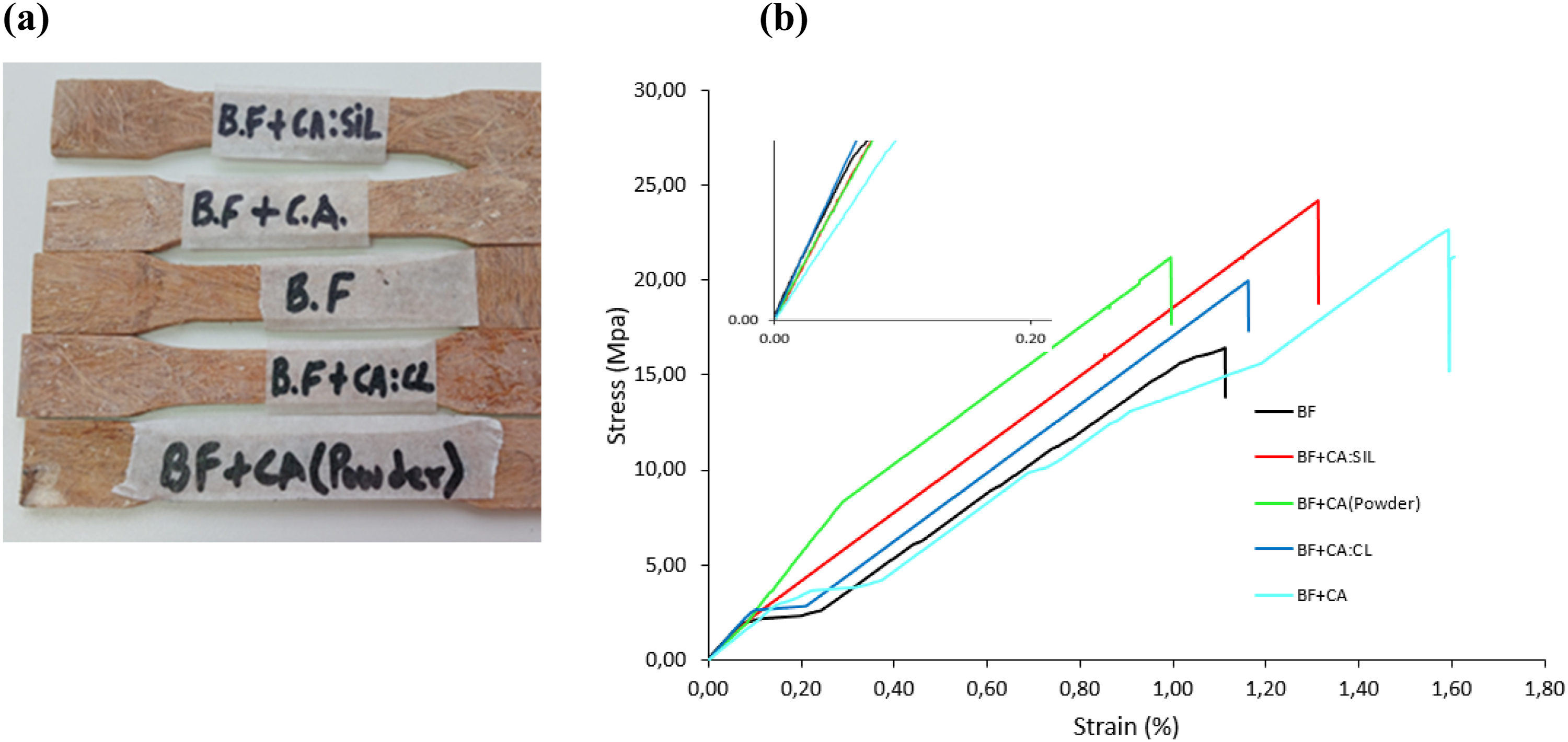
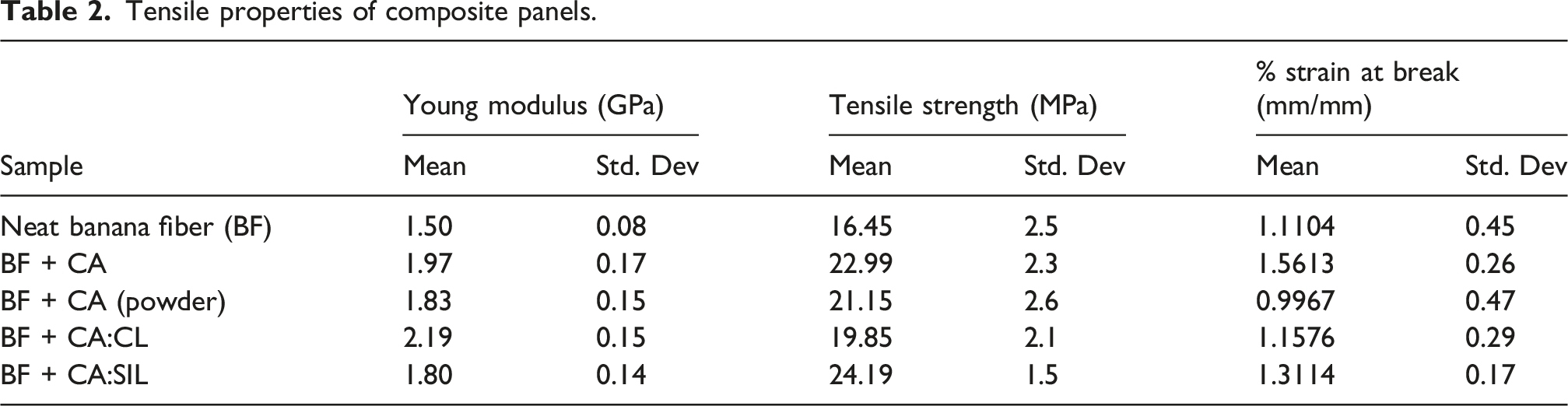
In general, CA-filled composite series have resulted in better tensile properties than that of unfilled BF composite. This benefit is probably due to the high aspect ratio of the nanofibers, which improved filler’s dispersion and created a sizable surface area for the transfer of stress between the filler and the matrix. Consequently, better particle distribution improves the composite’s modulus and tensile strength. However, slightly higher value of the strain at break was found for nanofibers composed of pure CA respecting those containing CA and an inorganic component such as silica or clay. This result may be explained attending the morphology of CA:CL and CA:SIL composed of beaded nanofibers (refer Figures 1(b), 1(c)), in principle more fragile to stretching than the homogeneous fiber mat found in CA nanofibers (Figure 1(a)). In addition, banana fibers are more chemically compatible with CA because of their similar polar properties while silica and clay were hydrophobically modified. On the contrary, the use of original CA powder as filler does not significantly improve the tensile properties of the reference filler-free system, showing lower values of the strain at break, despite the filler effect is evident imparting higher values of the maximum stress and Young modulus. Therefore, it must be concluded that the additional benefit of CA-based fillers in tensile properties is mainly due to the morphological characteristics of electrospun nanofibers rather. In summary, CA-based nanofibers are chemically and physically compatible with the epoxy resin and banana fibers, improve the interfacial adhesion among them and enhance efficient stress transfer from the matrix to fibers, thereby increasing tensile strength and strain at break.
Flexural properties
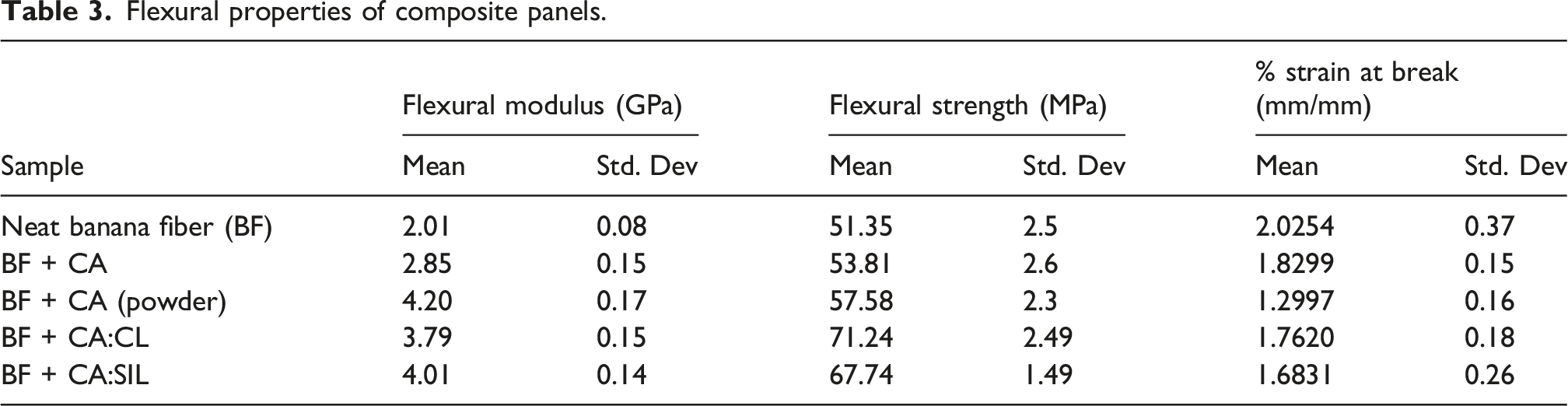
The assessment of the flexural strength and stiffness of banana fiber-reinforced composites containing different CA-based fillers was also addressed in the bending mode. Figure 5 depicts the stress–strain curves for the different composite panels. As can be seen, the most remarkable results are that composite’s flexural modulus and maximum strength noticeably increased with the addition of CA-based nanofibers (see also Table 3), which can be again associated with the reinforcing action inside the polymeric matrix, resulting in an enhancement of the composite resistance to bending deformation by facilitating nanoscale pull-out and crack deflection mechanisms. Relevant increments of 99% and 88% in the flexural modulus, respecting the filler-free reference system, were achieved with nanofibers containing clay and silica, respectively, associated with increments of 39% and 32%, respectively, in the maximum flexural strengths. Additionally, the mobility of the nearby polymer chains is reduced by the CA-based fillers, which lessens the material’s propensity to undergo plastic deformation and increases the composite’s stiffness. This results in lower elasticity thus reducing strain at break values. The increase in flexural strength and stiffness is again related to the morphological characteristics of the electrospun nanofibers, since original CA powder included as a filler does not exert a significant impact with respect to the reference system, that is, the filler-free composite. Moreover, in the bending mode, the inclusion of silica or clay in the nanofibers improves the elasticity enlarging the strain at break in comparison with the CA nanofibers, unlike in the tensile mode. Therefore, the additional reinforcing effect of both clay and silica enhances stiffness, load transfer, and resistance to bending deformation overall. Flexural stress-strain curves of BF, BF + CA, BF + CA:SIL, BF + CA:CL, and BF + CA (Powder) composite panels. Flexural properties of composite panels.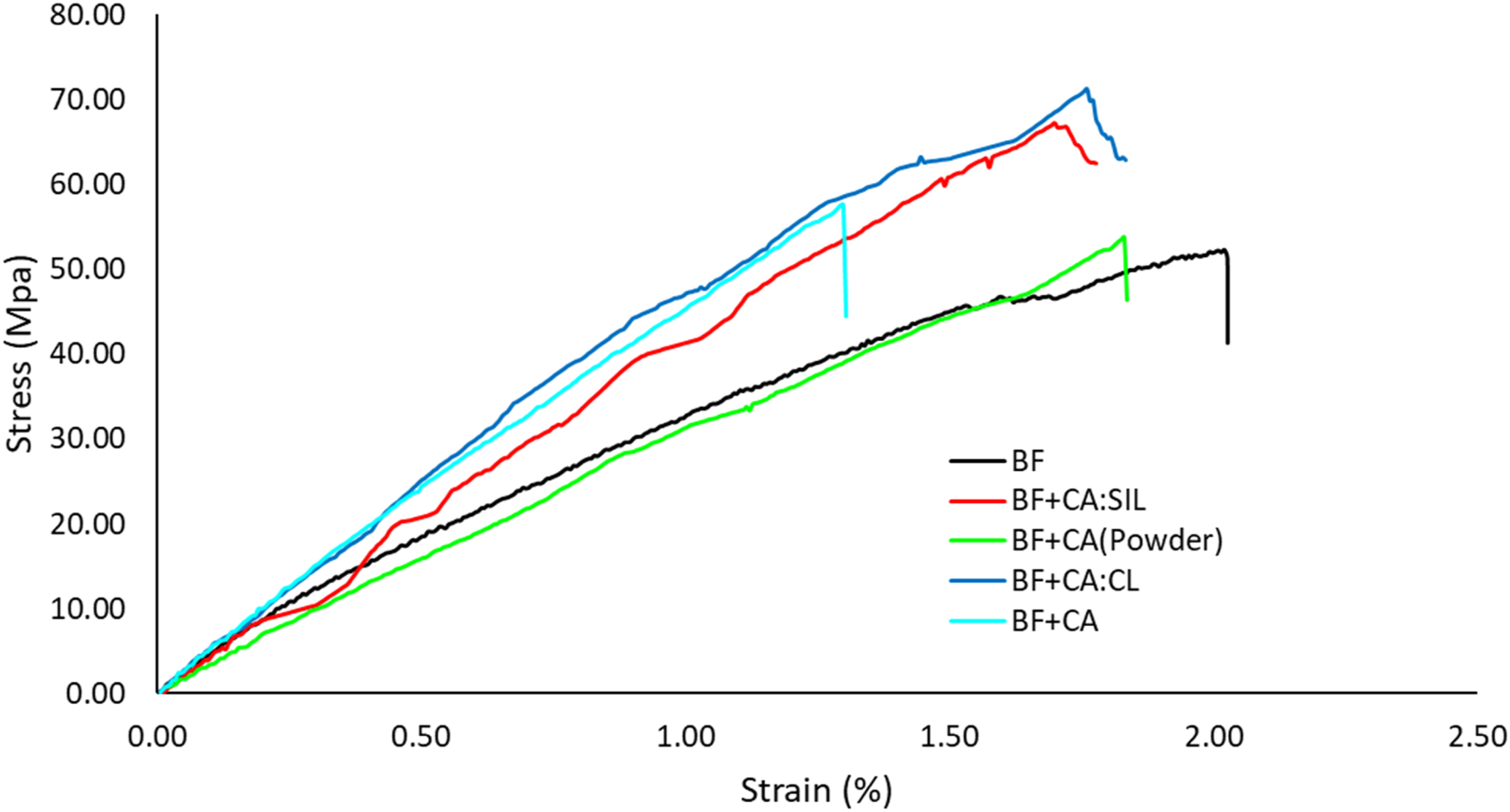
Impact strength
The toughness of a composite material is determined by impact tests. A material’s ability to absorb energy during plastic deformation is measured by its toughness. The effects of filler/fiber loading on the impact energy of banana fiber-reinforced composites are shown in Figure 6. The impact energy of banana fiber-reinforced composites filled with BF + CA:SIL has the highest impact strength of 193.37 kJ/m, followed by BF + CA:CL. As previously discussed, electrospun nanofibers, especially those containing silica or clay, improve the interaction between the banana fibers and matrix thereby improving the load transfer efficiency and the crack resistance of the reinforced composites. The incorporation of other cellulose acetate fillers in other composition also significantly improves the impact strength of the reference banana fiber-reinforced composite through enhanced fiber–matrix adhesion and better distribution. Impact strength of BF, BF + CA, BF + CA:SIL, BF + CA:CL, and BF + CA (Powder) composite panels.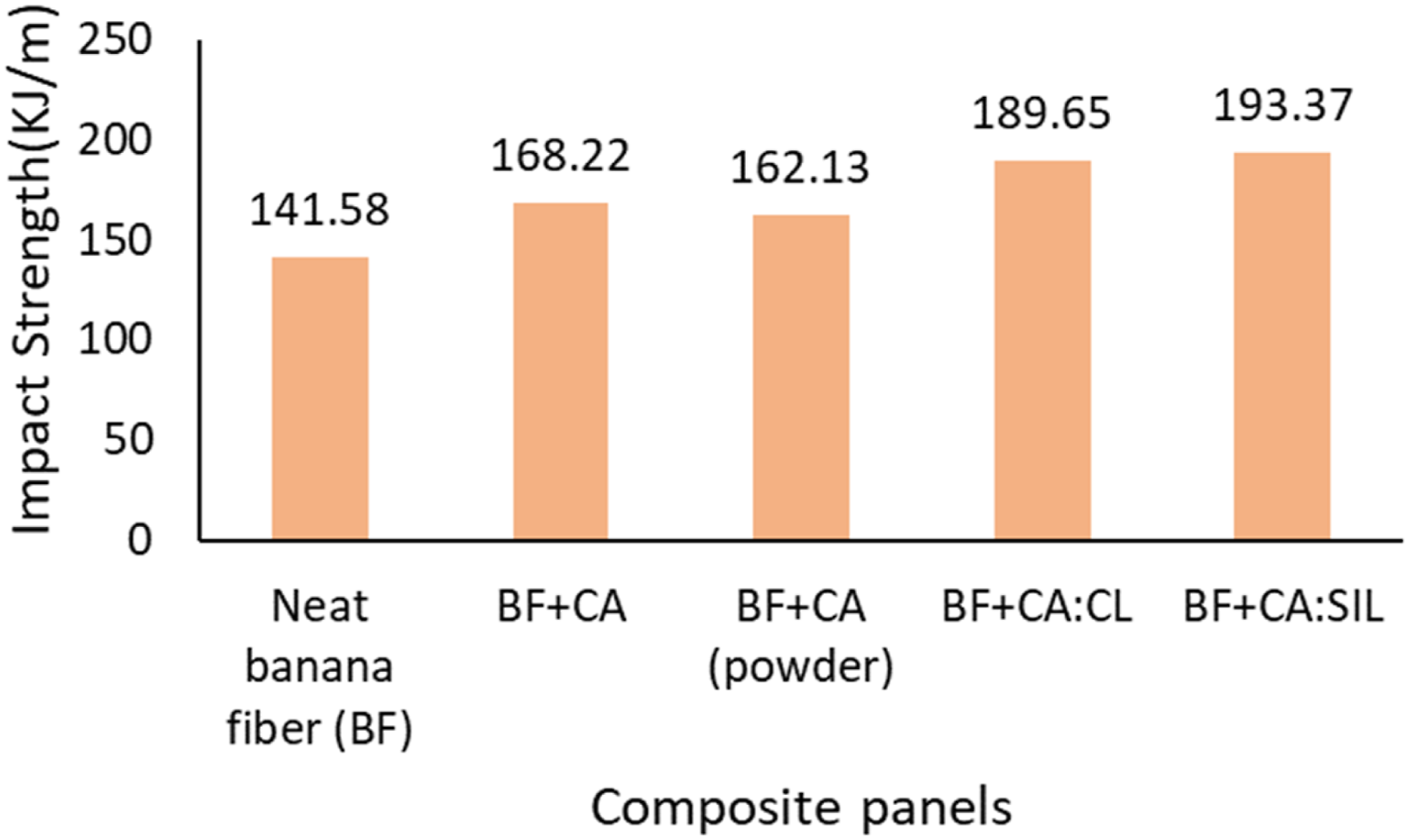
Thermomechanical viscoelastic characterization
Figure 7 shows the viscoelastic properties of banana fiber-reinforced composites as a function of temperature were investigated by means of DMA tests. As illustrated in Figure 7(a), the storage modulus, E′, dramatically decreased at the glass transition temperature (Tg), whereas the loss modulue, E″, peaks at this temperature (Figure 7(c)). According to the evolution of the loss tangent (tan δ), the addition of any filler shifts the glass transition to higher temperatures (Figure 7(c)). In general, at around Tg the composites filled with nanofibers composed of CA and clay or silica presented the higher E′ and E″ values, especially the BF + CA:SIL composite, while the material containing electrospun CA nanofibers presented values of E′ and E″ moduli comparable to the reference system. In addition, as previously mentioned, E′ starts to decrease earlier than samples containing CA:SIL or CA:CL. A higher E″ peak value of 428 MPa was observed for the BF + CA:SIL composite which is roughly a 35% increment referred to the neat BF sample. Therefore, hybrid nanofibers (BF + CA:SIL and BF + CA:CL) used as fillers seem to improve the crosslinking density of the cured composites, which is not only determinant of the glass transition temperature but also of maximizing the mechanical moduli of the composites, as also observed in elongational and flexural deformations (Figures 4 and 5). However, in DMA tests, CA powder confers higher values of viscoelastic moduli to the composite than pure CA nanofibers. Evolution of (a) the storage modulus, (b) the loss modulus and (c) the loss tangent with temperature, for BF, BF + CA, BF + CA:CL, BF + CA:SIL, and BF + CA (Powder) composite panels in DMA tests.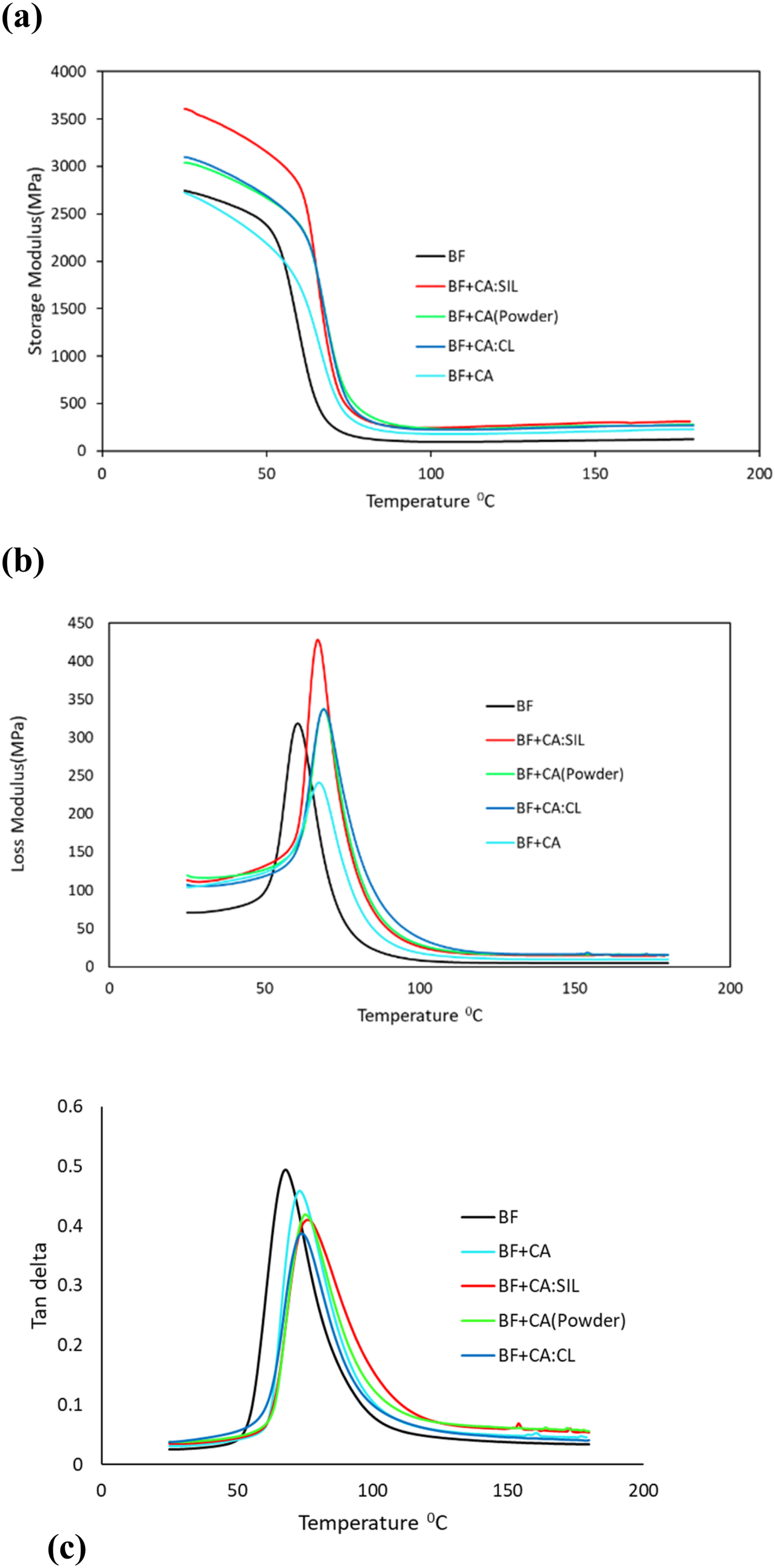
Figure 8 shows the rheological response of these composites was also evaluated as a function of temperature under small-amplitude oscillatory torsional deformation within the linear viscoelastic regime. Figure 8(a) shows the evolution of G′ and G″ with temperature, and Figure 8(b) shows the evolution of tanδ with temperature. The evolution of both moduli is very similar to that found in DMA tests, where G′ dramatically decreases at around Tg, and G″ reaches a maximum value. In agreement with DMA tests, the addition of any filler shifted the maximum in G″ and/or the G′ decay to slightly higher temperatures. Evolution of the storage and loss moduli (a) and the loss tangent (b) with temperature, under small-amplitude oscillatory torsional deformation, for BF, BF + CA, BF + CA:CL, BF + CA:SIL, and BF + CA (Powder) composite panels.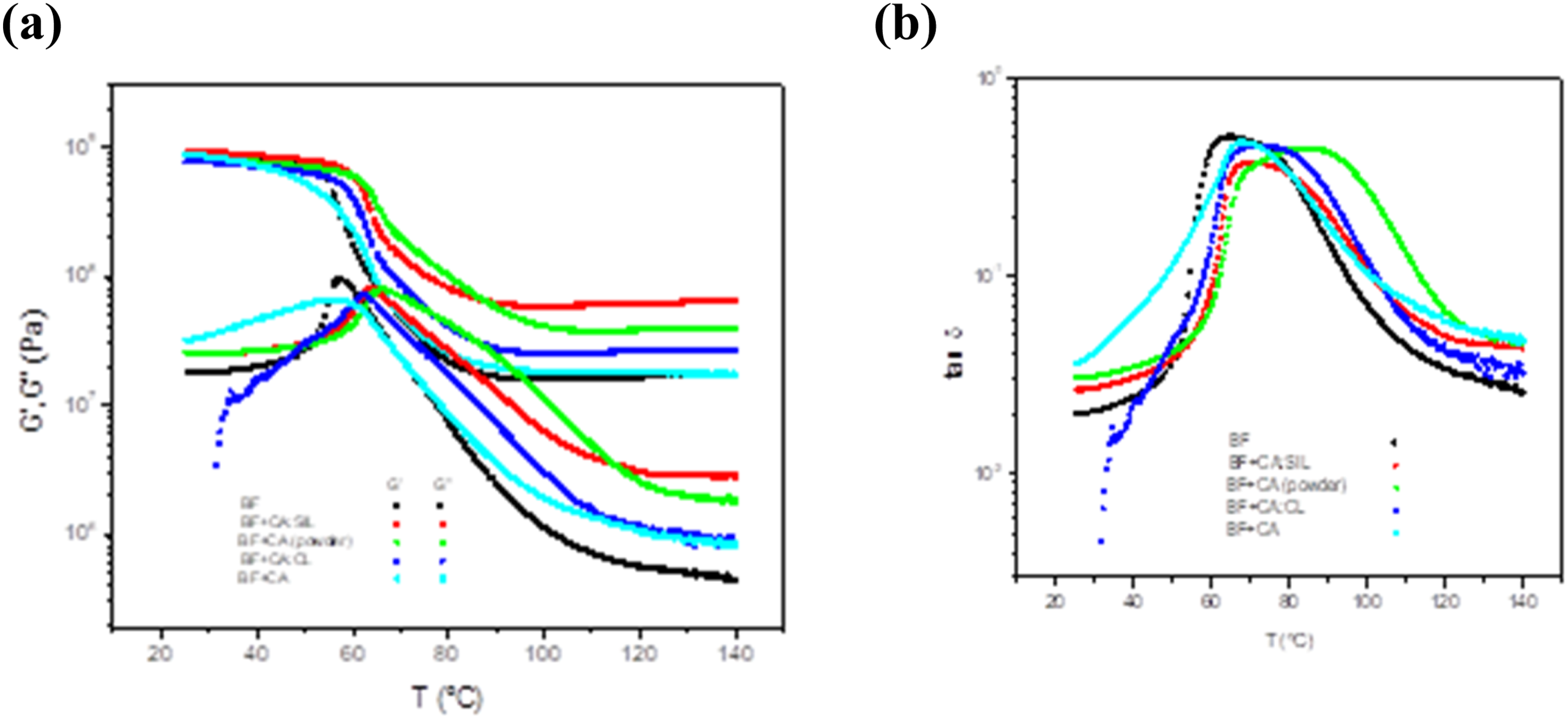
Thermal analysis
Thermogravimetric analysis (TGA) was performed to study any possible effect of fillers on the composite thermostability. Figure 9 shows the TGA curves of composites filled with CA-based nanofibers. All samples show a very similar TGA profile with one main degradation event starting at around 300°C, characteristic of lignocellulosic materials.
41
As expected, according to the small amount of filler added to the composite, the mass loss profile is almost identical for all specimens. However, as can be seen, lower final residue value was found for the filler-free composite, indicating high thermal stability due to Si and nanoclay addition. TGA curves for BF, BF + CA, BF + CA:CL, BF + CA:SIL, and BF + CA (Powder) composite panels.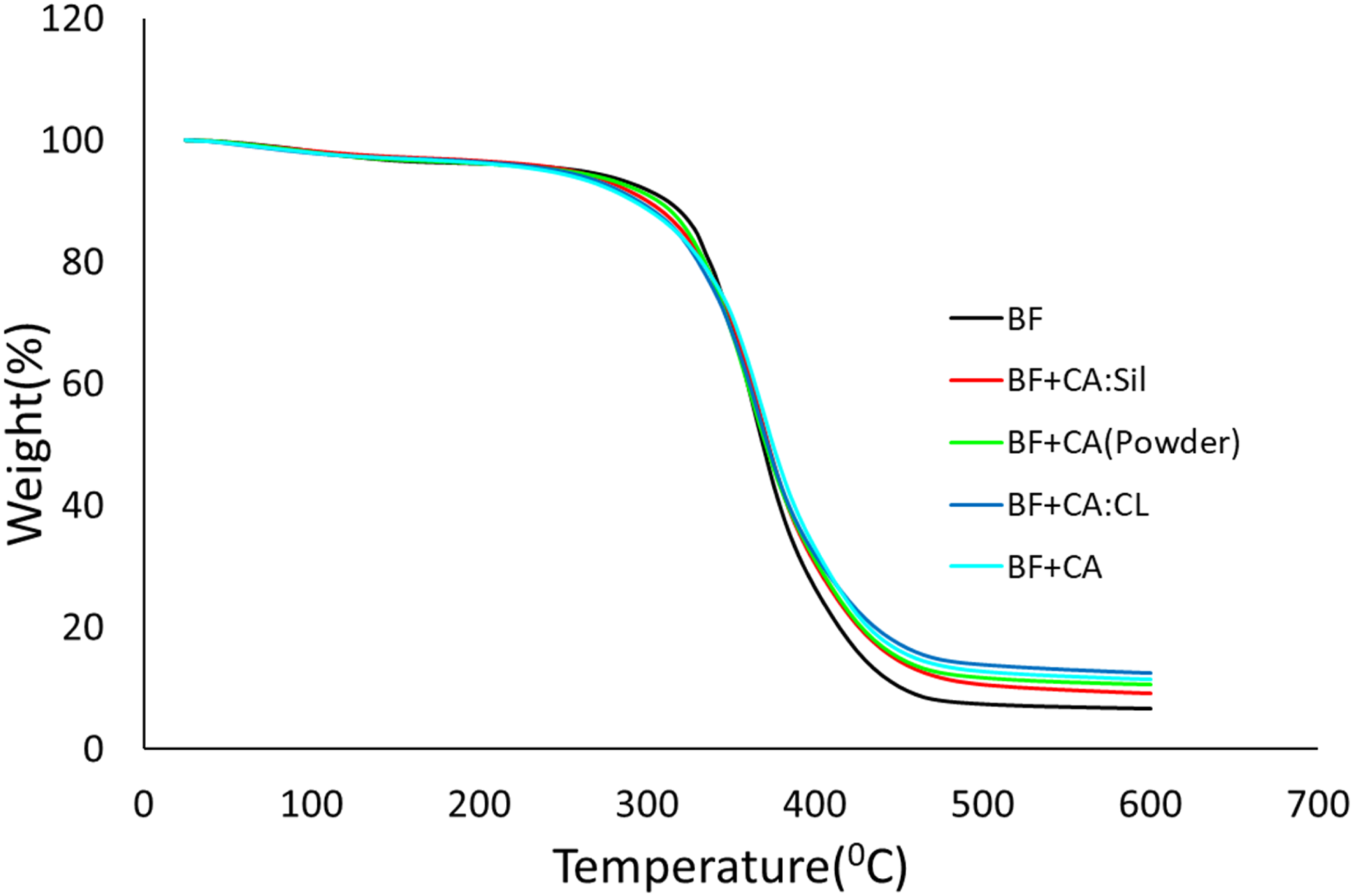
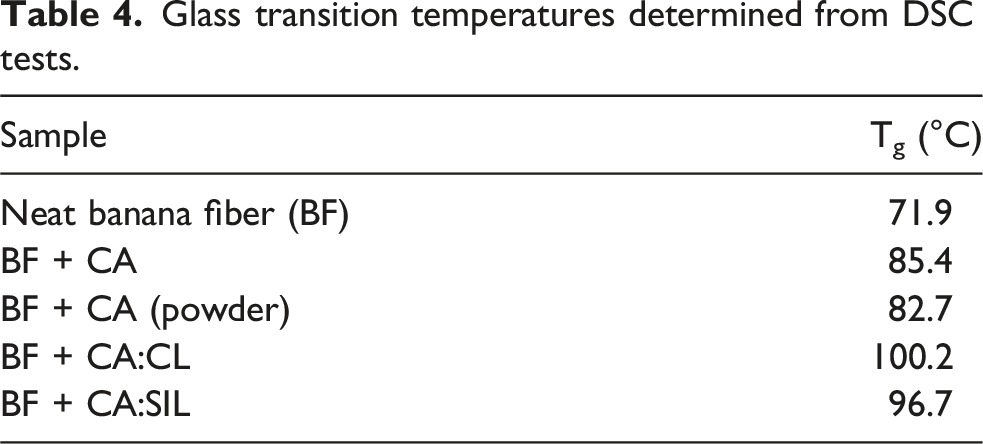
DSC experiments were also conducted in a wide temperature range below the degradation temperature determined in TGA tests. As shown in Figure 10, only one thermal event, corresponding to the glass transition the resin matrix, was detected, in agreement with the thermo-mechanical analysis (see section 3.5). However, slightly higher Tg values were determined from DSC measurements (see Table 4), probably because the heating rate applied was higher than in DMA tests. According to these results, the glass transition temperature was increased by the action of the filler, especially when adding CA nanofibers containing silica or clay. DSC heat flow curves for BF, BF + CA, BF + CA:CL, BF + CA:SIL, and BF + CA (Powder) composite panels. Glass transition temperatures determined from DSC tests.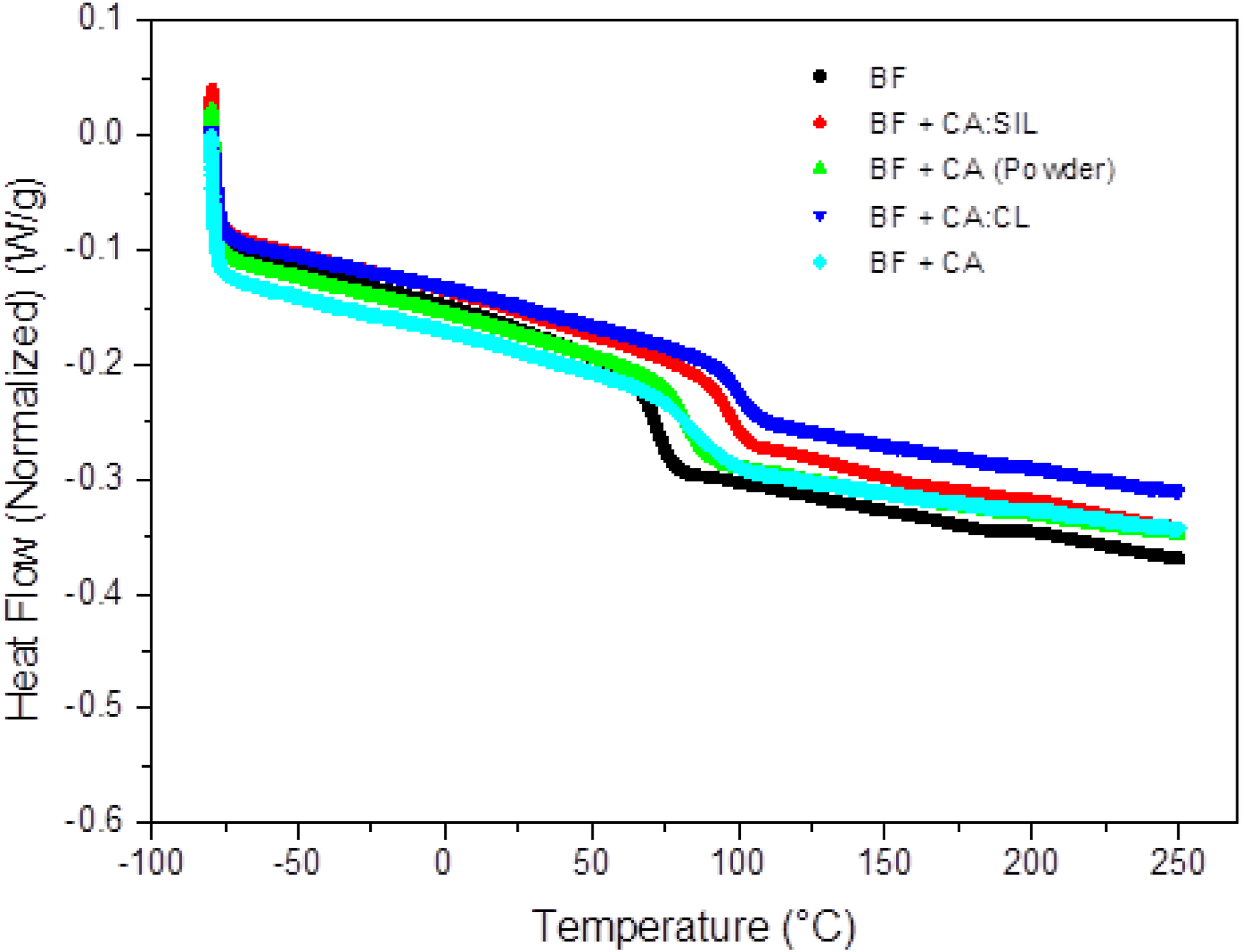
Water absorption
The water absorption capacity of banana fiber-reinforced composites containing different CA-based fillers is illustrated in Figure 11 as a function of time. By taking into account the material’s surface and subsurface properties as well as internal porosity, the water absorption of the composites occurs through different mechanisms along time. When the sample is submerged in water, moisture may be first trapped in the surface pores before the actual diffusion has occurred. Since it is not possible to accurately calculate the diffusivity of the composite material at this stage, we will consider both mechanisms together over time. All banana fiber-reinforced composites absorb some water when submerged in an aqueous environment; however, to preserve the material and prevent serious degradation of its qualities, composites should exhibit low water absorption rates. Samples were submerged in the water all at once and therefore the same time range was considered for all the composite compositions, as shown in Figure 11. The first wet measurement was taken 24 h later, and 336 h was the last time taken into consideration. As all samples spend more time in the water, the proportion of water absorption intake rises over time. Percentage of water absorption of BF, BF + CA, BF + CA:CL, BF + CA:SIL, and BF + CA (Powder) composite panels.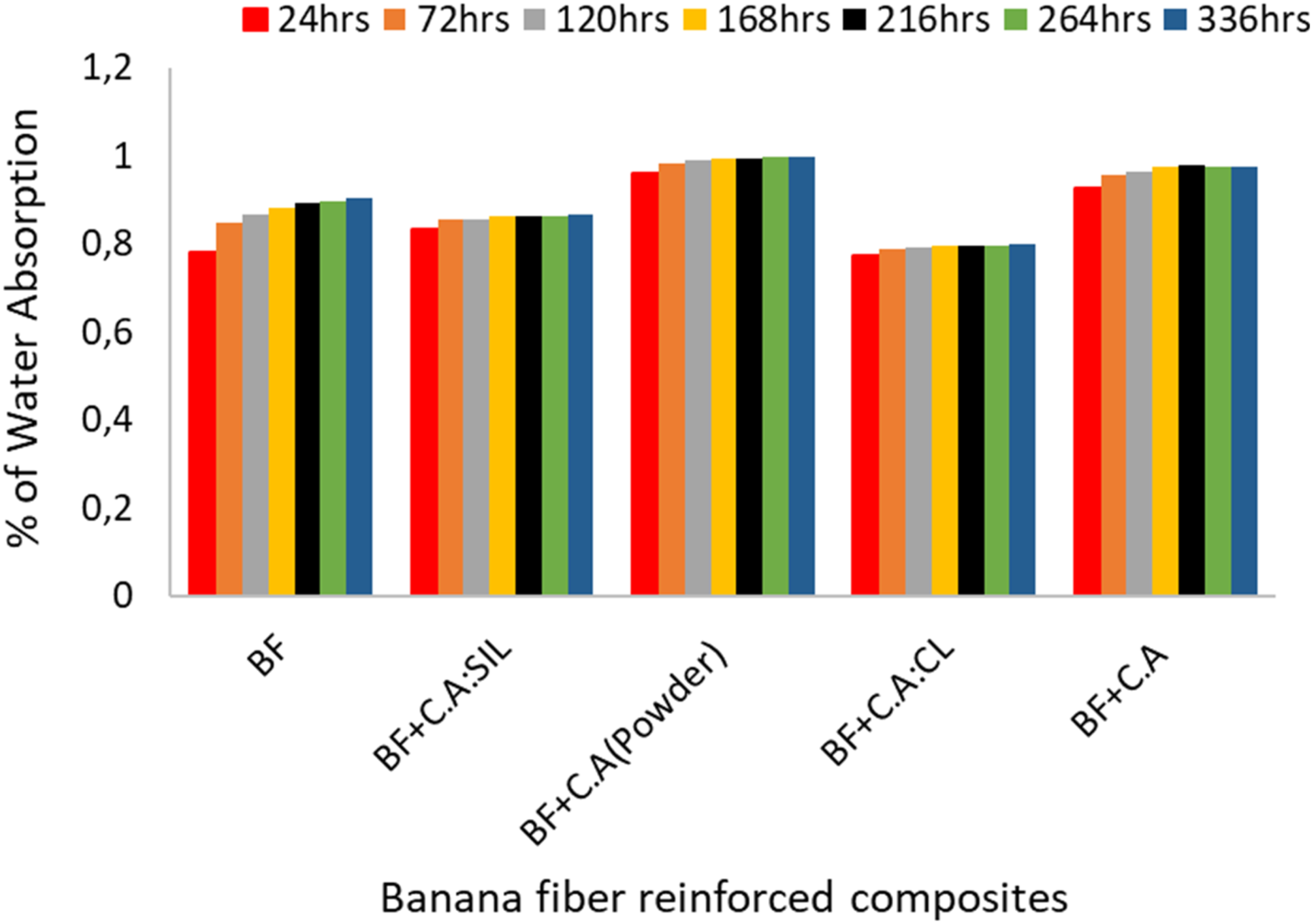
Compared to the reference system, the addition of fillers comprising CA and inorganic components, that is, CA:CL and CA:SIL nanofibers, significantly lower the water uptake of the composite, which also increase with time however at a lower rate. This effect is attributed to the hydrophobic surface treatment previously applied to SIL and CL. In this sense, it has been previously reported a water repellent effect of nanoclays added to banana fiber-reinforced composites, which help in reducing water absorption rate more efficiently. 42 On the contrary, the inclusion of pure CA as filler, either as a powder or in the form of electrospun nanofibers, favored the water absorption. As well known, cellulose acetate is a highly hygroscopic biopolymer 43 due to two main mechanisms associated with the free volume of the polymer and the cellulose acetate’s hydroxyl group. 44 The percentage of water absorbed by the composite filled with CA powder is the highest after 24 h, which is about 0.961% and reaches the maximum percentage of water uptake rate after 336 h (0.998%). These water uptake values were only slightly reduced when adding CA in the form of nanofibers. Instead, when a nanoclay or a modified silica was introduced into the CA nanofibers, there was a significant drop in the percentage of water absorption indicating its ability to repel moisture. Thus, the BF + CA:CL composite shows the lowest value of percentage of water uptake among all the prepared composites after 336 h which is 0.799%. Therefore, cellulose acetate and silica/nanoclay hybridization performs well to increase the composite’s water resistance.
Water contact angle (WCA)
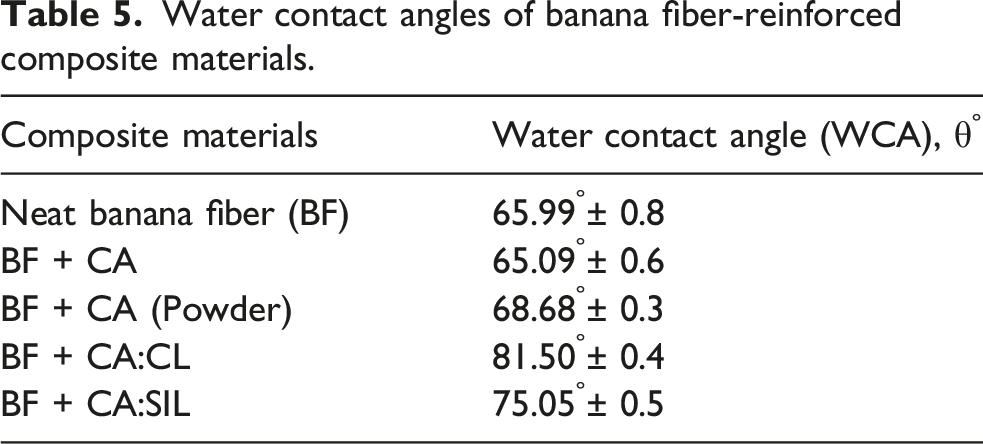
Water contact angles of banana fiber-reinforced composite materials.
Conclusions
This study demonstrates that the thermo-mechanical properties of polymer composites can be improved by natural fiber reinforcement and green nanofillers addition as secondary reinforcement, thereby opening up scope for environmentally sustainable material development. Banana fiber-reinforced epoxy polymer composites thermo-mechanical properties are improved by the addition of electrospun cellulose acetate-based nanofibers at a very low loading of 0.3 wt%. CA-based nanofibers were also filled with Si and nanoclay and compared. Electrospun cellulose acetate-based nanofibers enhance the mechanical strength of the composites against tensile and flexural deformations, which is mainly attributed to the morphological characteristics of these nanofibers, as well as the impact strength. The aspect ratio rather than the chemical composition of nanofibers especially impacts the tensile strain at break. Thus, not noticeable improvements in the mechanical properties were obtained when the composite was filled with cellulose acetate in the form of powder instead of nanofibers. Particularly, relevant enhancements of mechanical properties were achieved with nanofibers containing hydrophobically modified clay or silica, reaching maximum values of 2.19 GPa and 4.01 GPa for the Young (in tensile tests) and flexural moduli, respectively, representing increments of 46% and 99% respecting the filler-free reference system. While maximum tensile and flexural strengths of 24.19 MPa and 71.24 MPa, respectively, were achieved by adding these hybrid nanofibers, which represent increments of 47% and 39% respecting the filler-free composite. Moreover, impact strength reached values of 193.37 and 189.65 kJ/m for the composites reinforced with nanofibers containing hydrophobically modified clay and silica, respectively, that is, 37% and 34% increments. The addition of cellulose-based nanofibers at such small amounts slightly shifts the glass transition of the resin matrix to higher temperatures, especially when adding CA nanofibers containing silica or clay. Moreover, the viscoelastic moduli of these filled composites are generally higher than the filler-free composite across the temperature range analyzed. The mechanical results are supported by morphological observations, which suggest enhanced adhesion between banana fiber and the epoxy resin matrix when adding this small amount of CA-based electrospun nanofibers. Finally, water absorption was significantly reduced by roughly 12% and 8% when introducing nanofibers containing hydrophobically modified clay and silica, respectively, which is in agreement with an increase in the water contact angle. Overall, electrospun cellulose acetate/clay or cellulose acetate/silica hybrid nanofibers can be proposed as green bio-based and environmentally friendlier fillers to enhance the thermo-mechanical properties and prevent water absorption of banana fiber-reinforced composites, increasing their suitability as structural materials.
Footnotes
Acknowledgments
The last author gratefully acknowledges the funding support provided by South African Department of Higher Education and Training (DHET) through the Future Professors Programme to carry out research engagement with Pro2TecS at the University of Huelva (Spain). The authors are grateful to Durban University of Technology’s Research and Postgraduate Support Office for providing funding for all aspects of this study.

Funding
The authors disclosed receipt of the following financial support for the research, authorship, and/or publication of this article: Department of Higher Education and Training South Africa; Future Professors Programme (FPP), 2023-2024.
Declaration of conflicting interests
The authors declared no potential conflicts of interest with respect to the research, authorship, and/or publication of this article.
Data Availability Statement
All the data are already available in the results and discussion section of this paper.